Skip to content
Latham Hi-Tech Seeds

(641) 692-3258

  • Home
  • Performance
  • Products
    • Corn
    • Soybeans
    • Alfalfa
    • Corn Silage
    • Seed Guide
  • Find a Rep
  • Media
    • Blog
    • News
    • Videos
    • Podcasts
    • TECHTalk
  • About Us
    • Company History
    • Our Mission
    • Careers
    • Become a Rep
    • Sowing Seeds of Hope
  • Contact Us
  • Latham Hi‑Tech Seeds

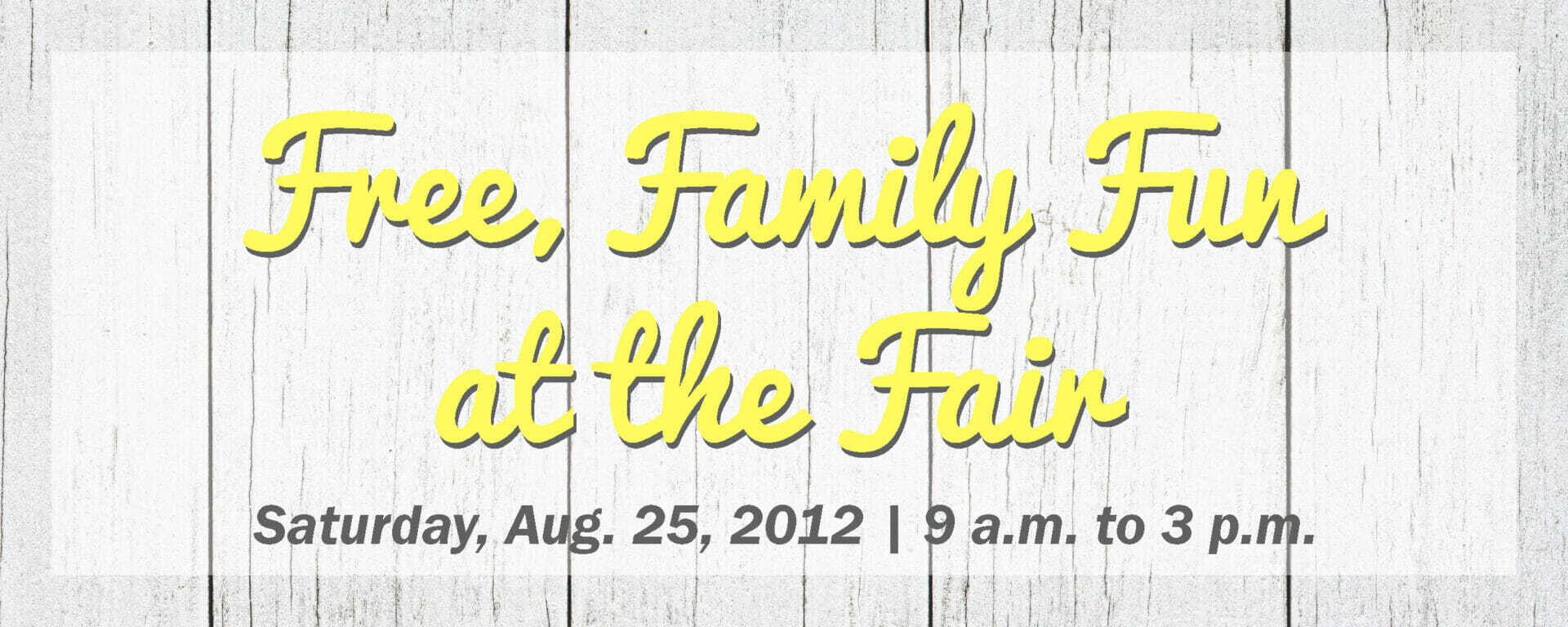
    FREE, Family Fun at the Fair

    CountryTimeBLOG1

    Although the Iowa State Fair gets underway today, we’re making plans for our very own country celebration. Join us Saturday, Aug. 25, for a full day of entertainment for the entire family!

    The Latham Country Fair gets underway at 9 a.m. with field tours and a craft show. Professional agricultural speakers take the stage, beginning with Dr. Fred Below at 9:30 a.m. Click here for the full speaker lineup.

    It’s all fun and games for kids, beginning at 10 a.m. Kids of all ages can participate in a variety of activities including: pedal tractor pull, burlap bag races, train rides on the GBO Railroad, inflatibles, petting zoo plus intricate face painting.

    A schedule of kids’ activities:

    In addition to all of this, there will be presentations by Farm Safety 4 Just Kids and Ag in the Classroom. P.S. We’ve also planned special presentations for moms and grandmothers. Watch for more details to be posted next week about those!

    Team Latham

    August 9, 2012
    Agriculture, General, Industry News
  • Latham Hi‑Tech Seeds

    In Pursuit of Fair and Balanced Communications, Part II

    LarrybyIFT1
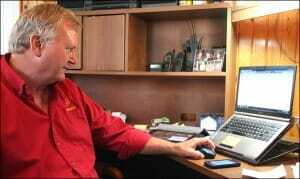
    Larry Sailer is constantly connected to ag news and market information via his smartphone, iPad, office laptop and piles of newspapers at home near Iowa Falls. Photo Courtesy of IFT Photo by Zoe Martin

    Last week I shared with you my Pursuit of Fair and Balanced Communications,  but I didn’t have enough space to go into detail about my experience trying to “speak up for agriculture” as a panelist on live television.  Let’s begin by setting the stage, so to speak…

    Mike Haley, one of the founders of AgChat, asked me to appear on a live panel hosted by the Huffington Post.  Since AgChat’s mission is to empower farmers and ranchers to connect communities through social media platforms, I have no doubt that Mike believed this panel would represent both sides of the issue.  Panelists were supposed to include a person from the American Meat Institute, another hog farmer in addition to me, a food blogger from California, and an animal rights activist.

    Nothing went according to plan from the start.  When I arrived on the campus of Iowa State University that Tuesday morning (July 31) for the live news feed, IT pros worked diligently to get me connected.  The live video feed kept dropping, so the show’s producer told me via the telephone that our panel discussion would take place as audio only.

    The next thing I know – without any introduction at all – the panel “discussion” got underway.  Someone with an English accent started talking about pigs being tortured, and then the foodie blogger chimed in with similar opinions.  Then without any setup, I was introduced as a hog farmer and asked to explain how I raise pigs.  I explained that animals today are raised in environmentally-controlled buildings that keep them safe from harsh weather like we experience during cold Iowa winters and excessively hot summers.

    So far so good, right?  Wrong!  Although I couldn’t see it, I could hear a video playing that was narrated by Bob Barker.  (Apparently, the video feed was working for everyone else but me.)  Very eerie sounding music was playing in the background as horror stories of animal abuse were shared.

    After the video ended, the animal rights person and the foodie blogger proceeded to tell everyone how horrible these pigs were treated. I wanted to interrupt their one-sided conversation and explain that no farmer or rancher condones abuse or neglect.  But, the other two guests never stopped talking!  When I tried to talk, I realized they could not hear me.  My microphone had been muted.

    This so-called “panel discussion” ended without any discussion.  I don’t know what happened to the other hog producer or representative from the Meat Board Institute.  This Huffington Post “panel” was nothing more than a platform for animal rightists to broadcast their video.

    While I knew about the leanings of Huffington Post before agreeing to be a guest, I felt it was worth the risk because I try very hard to communicate (and that includes listening) with anyone who’s interested in how I farm.  I’m not sure if my participation ended up hurting my cause in this case, but I’m not giving up!  The experience only made me more determined to share my message.

    Next week is another busy week with speaking engagements.  I’ll be attending the Iowa State Fair on Thursday, Aug. 16.  Come visit me on the fairgrounds in Farm Bureau Park between 8 a.m. and noon.  I’ll also be speaking in Ames on Friday, Aug. 17, during AgIowa State of Now Mini-Conference at the Scheman Building.  Tickets are available, and I hope to see you there!

    Larry Sailer, Musings of a Pig Farmer

    August 7, 2012
    Agriculture, General, Industry News
  • Latham Hi‑Tech Seeds

    In Pursuit of Fair & Balanced Communications, Part I

    Myplate1

    “Musings of a Pig Farmer”
    by Larry Sailer

    So much has happened this past week that I had more than enough material for today’s blog!  All of my experiences this week reiterated the need for fair and balanced communications.  I’ll begin by addressing an internal memo that surfaced within the U.S. Department of Agriculture in support of Meatless Mondays.

    Although the USDA was quick to retract this memo after coming under heavy fire by the National Cattlemen’s Beef Association, its message will have a long-lasting impact.  Most environmentalists hail it as a victory.  Meanwhile, most farmers feel they’ve been blind-sided.

    The USDA memo in support of “Meatless Monday” outraged many farmers and ranchers, who had thought of this governmental agency as a cheerleader for agriculture.  Perhaps that was the case when the Farm Bill was actually a Farm Bill.  When a person stops to consider that 80% of the USDA’s budget is now allocated toward welfare-type programs, it’s plain to see how different the USDA’s agenda is from mine – and from most farmers and ranchers.

    What happened to the USDA’s position as an advocate for American agriculture?  Iowa Senator Chuck Grassley posed this question this week as he feasted on barbecued beef brisket, ribs and sausage.  During a Meat Monday celebration, Texas Senator John Cornyn added that “cattle ranchers and farmers deserve an administration who works with them, not one who undermines them.”  I’d like to second that!  Plus, I’d like to add that all U.S. livestock producers (including pork producers) deserve an administration that works with them.

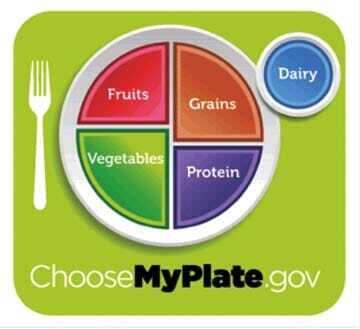
    Putting all politics aside, it’s ironic the USDA would advocate for anything but a balanced diet.  Just about one year ago, the USDA announced it was replacing the Food Pyramid with the Food Plate to help people understand what they should eat each day.  The first part of the Food Plate campaign was to encourage Americans to make half their plate – not all of the plate – fruit and vegetables. Later in the campaign, the USDA was to encourage Americans to avoid oversize portions and replace sugary drinks with water.

    It makes me wonder if the new Food Plate was really an underhanded way of advocating less meat consumption overall.  As I learned this week from a Huffington Post “panel discussion,” everything is not as it first appears to be.  Next Tuesday, I’ll share that experience with you in Part II of my blog about my quest for “Fair & Balanced Communications.”

    Larry Sailer, Musings of a Pig Farmer

    July 31, 2012
    Agriculture, General, Industry News
  • Latham Hi‑Tech Seeds

    The Pig Farmer Buys 2 Horses

    Horse1
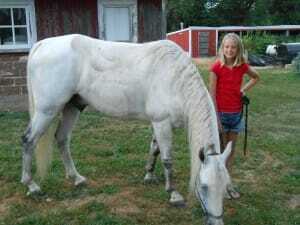
    Carlie with Chester

    “Musings of a Pig Farmer”
    by Larry Sailer

    A funny thing happened last Saturday… I bought two, old horses on an auction. While this may not seem odd to most people, I can assure it that’s it’s not a normal thing for an old pig farmer to do!

    I grew up on a diversified farm in North Central Iowa. My transportation in the late 1950s and 1960s was a big Thoroughbred horse named Mollie Bee. That horse was so high-strung that she always wanted to run. As a young boy, of course, I was curious to see just how fast she could run. Running along the side of a car, I learned Mollie Bee could maintain 45 mph for a fairly long distance.

    The problem with Mollie Bee’s love of speed was that she didn’t slow down for turns. She turned into our neighbor’s driveway at break-neck speed, and it was then I discovered I could fly at an early age – without an airplane. I sailed over a fence along the neighbor’s driveway and landed in the garden! I went 20 years with-out any horses after that.

    When my kids and wife decided we have should have some horses, somehow I completely forgot about the flying incident. Fortunately, our horses were slower. We had some mares and colts, but the event that did in was when one of the babies died. None of us could handle seeing such a pretty little animal die.

    Well, 20 years went by again and now we’re finding ourselves owning horses again. No more fast horses. No more baby horses. We have two, old geldings. One of these old nags was even named “Grandpa” when we bought him! Needless to say, our grandchildren thought that horse was “just meant to be.”

    Darin with Chip

    Our grandchildren Darin and Carlie have been out to the farm several times over the last two days to visit “Chip” and “Chester.” They even helped build fence on Monday in the 100° heat. Now we’ll need to do a little tack shopping since I got rid of all the horse equipment we had. Here’s hoping the “third time is a charm” and that we’ll experience a smooth horse ownership this time!

    Larry Sailer, Musings of a Pig Farmer

    July 24, 2012
    Agriculture, General, Industry News
  • Latham Hi‑Tech Seeds

    Hoiboar “Brings Home the Bacon” for Charity

    Fred Hoiboar1

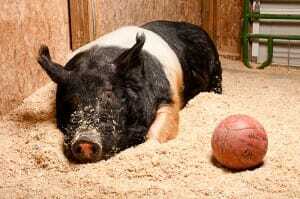
    I was attending a 4-H Meet and Greet in Hampton Last Thursday evening when Franklin County native Paul Kruse asked me, “So have you heard about our big pig?”  His son, Harrison, flashed a grin as the duo told me their pig tale.

    And what a great tale it is!  Paul and Harrison are two of the Iowa State fans, who have invested in Fred Hoiboar.  (Yes, it’s intentional that this big boar’s name sounds remarkably close to the name of ISU Men’s Basketball Head Coach Fred Hoiberg.)

    Fred Hoiboar, the 1,000+ pound Hampshire, is eating 25 pounds of feed daily.  With an average daily gain of 2 pounds, Hoiboar is on track to bust the Biggest Boar record at the 2012 Iowa State Fair.

    He’s also one high-tech Hampshire!  Hoiboar has his own website and Facebook page.  You can #FollowFred on Twitter and view more pics in an online album:

    (@FredHoiboar) I posted 25 photos on Facebook in the album “Media Day with KCCI” fb.me/1iJykzLSc

    Fred Hoiboar has his own commemorative T-shirt.  Fans can purchase their very own “Bring Home the Bacon” T-shirt.  Profits from T-shirts sales benefit the non-profit organization Camp Adayin, which allows children with heart disease to attend summer camp.  Since heart disease ended Fred Hoiberg’s NBA career, it’s only fitting that his namesake would help raise funds for Camp Odayin.

    Join the cause today!  Buy a T-shirt and then mark your calendar for Aug. 9.  Fred Hoiboar will be weighed-in on the first day of the Iowa State Fair, and you can take part in a very special Meet & Greet.  Stay tuned to fredhoiboar.com for more details.

    Also view these related posts for your reading pleasure:

    • Miss Piggy. Babe. And Fred Hoiboar.
    • Meet Fred Hoiboar.
    • A Big Boar with a Big Heart.

    Team Latham

    July 23, 2012
    Agriculture, General, Industry News
  • Latham Hi‑Tech Seeds

    John Latham Elected to ASTA Board

    Asta1

    John Latham, president of Latham Hi‑Tech Seeds, was elected as North Central Regional Vice President of the American Seed Trade Association (ASTA) during its 129th Annual Convention in Washington D.C.  The North Central Region includes Colorado, Iowa, Kansas, Minnesota, Missouri, Nebraska, North Dakota and South Dakota.

    “We’re excited to have John serving on ASTA’s Board of Directors,” said Andy LaVigne, president and chief executive officer. “He brings a wealth of experience and a strong family history of seed industry leadership.”

    As North Central Regional Vice President, John will serve as a member to the ASTA Executive Committee and Board of Directors for three years.  He will serve as a liaison with state and regional associations on national legislation, reporting to ASTA Vice President of Government Affairs Leslie Cahill on state legislative matters relating to the seed industry.  As regional vice president, John also will be responsible for recruiting new members in the region and representing ASTA at state and regional association meetings.

    “It’s a real honor to have been nominated and elected by my peers in the seed industry for this important position. The seed industry has such an important responsibility to help feed the world and I look forward to helping to advance a great cause and association.”

    Founded in 1883 and located in Alexandria, VA., ASTA is one of the most established trade organizations in the United States. Its membership consists of more than 700 companies involved in production and distribution, plant breeding and related industries around the globe. As an authority on plant germplasm, ASTA advocates science and policy important to the industry.  The trade organization promotes the development of better seed to produce better crops for a better quality of life.

    Team Latham

    July 19, 2012
    Agriculture, General, Industry News
  • Latham Hi‑Tech Seeds

    Is it better to say “no” to starving people?

    LarrySailer AgriNews1
    Photo courtesy of AgriNews.com

    “Is help from corporate agriculture beneficial?” was a headline that grabbed my attention in the July 5th issue of The Des Moines Register.  Columnist Rekha Basu goes on to write:

    “An Iowan launched the so-called Green Revolution, and the World Food Prize that he created annually honors others who have made important innovations in agriculture. Iowa today is in the vanguard of the biotech revolution.  So it may be hard to contemplate the paradox that even as we have helped block world hunger, we might also inadvertently be contributing to it.”

    The “so-called Green Revolution” seems like particularly patronizing and disrespectful statement about someone who literally altered history.  Dr. Norman Borlaug’s breeding of high-yielding cereal crops helped avert mass famines that were widely predicted in the 1960s.  “Countries that had been food deficient, like Mexico and India, became self-sufficient in producing cereal grain,” according to a New York Times article.  It’s no wonder that in 1970 the Nobel Peace Prize was awarded to Dr. Borlaug for saving hundreds of millions of lives.

    Thanks to biotechnology, crop yields have increased six times since 1940!  Corn yields were flat between 1866 and 1939 at about 26 bushels per acre.  Due to the development of hybrid seeds in the 1940s, yields increased dramatically in the 1940s.  The widespread use (not overuse) of nitrogen fertilizers and herbicides is credit for increasing yields even more.  By 2009, average corn yields reached an average of 165 bushels per acre.  In 2011, Iowa corn growers harvested an average of 172 bushels per acre.

    Not only have U.S. farmers learned how to produce more grain, but they’ve learned to do so more efficiently.  Farmers today grow five times as much corn as they did in the 1930s on 20% less land, according to the Corn Farmers Coalition.  Commercial fertilizer is another reason North American farmers produce the most abundant, nutritious food supply worldwide.  It’s also one of the main reasons why Americans spend less of their income on food than any other nation.  In fact, farmers today produce one-third more corn for each pound of nitrogen they apply as compared to 20 years ago.  Just think of the amount of land we’d have to put into agriculture production – land is currently now serving as parks and wildlife habitats – just to be able to produce enough food to feed the world’s growing population.

    So given all the good that has come from it, tell me again why biotechnology is getting a bad rap.  Biotechnology has been around since the 1850s when Gregor Mendel began crossing tall and short garden peas to create hybrid plants that resembled the tall parent rather than creating a medium height blend. His observations led to two terms that are still used in present-day genetics: dominant and recessive.

    The hybridization of plants, as well as improved production methods, are just a few of the ways farmers around the world benefit from “technology transfer.”  Let’s take a look how Iowans, just in the year 2012, have made a positive impact on farmers from other countries:

    • Iowa/Uganda Farmer-to-Farmer Exchange – objectives were to improve post-harvest grain quality for Ugandan farm women and improve their record keeping skills
    • Meals from the Heartland – Iowa FFA students, in just 2 days, assembled 250,000 meals that were sent to feed starving Haitians
    • Homes for Haiti – Thanks to efforts initiated by Iowa-based Global Compassion Network, 48 Safe T Homes® are being erected on the Village of Hope near Port au Prince, Haiti.  Each dwelling, manufactured by Sukup, can provide shelter for 10 people.

    If we care about people around the world at all, then Americans must share their knowledge so others can benefit.  I believe that it’s our moral obligation to help share information and technology with fellow farmers – whether they’re from Uganda, Haiti, Mexico or even the U.S. – that can help them produce more food with fewer resources.  I just can’t see how it can be more compassionate to let people starve than it is to provide them with jobs or to help teach them how to provide jobs for themselves (i.e. to become self-sufficient farmers).

    Larry Sailer, Musings of a Pig Farmer

    July 17, 2012
    Agriculture, General, Industry News
  • Latham Hi‑Tech Seeds

    Aug. 25 is a Full Day of Free, Family Fun

    Latham Coutry Fair

    Latham Hi‑Tech Seeds is becoming known for its untraditional field days, so it goes without saying that our company’s 65th anniversary will offer more than just plot tours.

    Bring your entire family to company headquarters in Alexander, Iowa, on Saturday, Aug. 25!  From 9 AM to 3 PM that day, we’ll be offering programs and activities for the whole family.  Kids’ activities range from face painting and inflatable rides to a petting zoo.  Experience some old-fashion fun like gunny sack races and peddle tractor pulls.  We’ll also feature cooking demonstrations and a craft fair.

    Our full lineup of speakers includes:

    9:00 AM               Craft Show opens / Genetic Garden tours begin
    9:30 AM               “7 Wonders of the Corn World” by Dr. Fred Below
    10:30 AM             Tips to side-dress nitrogen
    11:00 AM             John Latham welcomes guests to Latham headquarters
    11:15 AM             2012 Farm Bill update by Congressman Tom Latham
    11:30 AM             Picnic lunch
    12:30 PM             “Consistently producing 300-bushel corn” by Dr. Fred Below
    1:30 PM               “Selecting the Right Grain Cart for your operations”
    2:00 PM               “Pushing soybean yields beyond 80 bushel”

    We’d also offer tours of our production facilities and research plots to anyone who’s interested.  We’re especially excited about our Genetic Garden, which is a living museum of corn.  Our corn field tours will showcase new Latham® Gladiator Hybrids, which were developed to battle our field’s continuous corn challenges and win.  Our soybean plots showcase Ironclad Soybeans that protect your fields against Iron Deficiency Chlorosis, Soybean Cyst Nematode, Phytophthora Root Rot, and depending on your specific needs, either White Mold or Sudden Death Syndrome.

    Make plans now to join us Saturday, Aug. 25, for some Good, Old-Fashioned Family Fun!  What would an anniversary celebration be without cake and ice cream, too?  We’ll serve up good times and good food as we celebrate 65 years of business and look forward to another great year ahead.

    Team Latham

    July 16, 2012
    Agriculture, General, Industry News
  • Latham Hi‑Tech Seeds

    “Ban Wagon” Will Drive Food Prices Higher

    Larry Sailer1

    “Musings of a Pig Farmer”
    by Larry Sailer

    It was the week of Valentine’s Day 2012, but pork producers weren’t feeling the love.  That’s when McDonald’s announced it would begin phasing out suppliers’ use of gestational crates.  Since that time,  more restaurant chains like Cracker Barrel and food suppliers like Oscar Meyer have joined the “ban wagon.”

    “I understand the desire for people to return to the bucolic days of farming in the past, where the hogs were raised in the barnyard, but the economics of the business just don’t support that anymore,” said Howard Hill in The Des Moines Register article  published July 7.

    Hill, who will become president of the National Pork Producers Council in 2014, continues by saying: “This is the perfect example of the law of unintended consequences.  The effect of the end of gestation crates will drive up prices for pork, and it will drive producers out of business, which will have the effect of consolidating the pork-producing industry further.”

    Ironically, gestation stalls were first developed to protect the animals. They were used because sows can be vicious.  Occasionally, they kill one another. Their fights often prevent them from getting the right amount of feed and water.

    Does allowing some hogs to overeat while others are underfed sound “humane”?

    Crates have actually helped increase the number of live pigs produced by each sow.  Statistics released last week by the U.S. Department of Agriculture show that the state’s hog population is at an all-time high of 20 million although Iowa’s sow population decreased over the last year.  The number of live pigs per breeding animal has been trending upward, and the average sow now produces 10 pigs per litter.

    Even though we’re seeing positive results from modern hog production techniques, consumers (or at least those who market to consumers) are telling us to change our way of thinking. Why are pork producers the ones who need to change?  Perhaps we just need to do a better job of telling our story!

    Mike Haley, who farms with his wife and his father in Ohio, says there seems to be a lack of outreach to help answer questions about humane husbandry practices.  In a June 23 post on Feedstuffs Foodlink, he writes:

    “As HSUS and other activist groups gain momentum and credibility with food distributors and retailers, the pork industry seems to be stuck in a rut communicating the same way it always has hoping to magically end up on solid ground. Don’t get me wrong, there is some good advertising I see about the other white meat.  However, there seems to be a lack of outreach to help answer questions about humane husbandry practices, and the few that exist don’t stack up well with the marketing campaign animal rights groups have perfected.”

    Rather than regulating gestation stalls out of use, let the marketplace decide.  Do consumers really feel strongly enough to pay more for their meat?  That’s exactly what happened in England and in California! If some consumers want to purchase “crate-free” products, that’s their prerogative.  Willing consumers can pay more for these specialty products, but I don’t want them to force their values on me.  In my opinion, crate-free pork is no different than free-range chicken or organically grown vegetables.  Label it, price it and let the marketplace decide.  Just don’t legislate it.

    Larry Sailer, Musings of a Pig Farmer

    July 10, 2012
    Agriculture, General, Industry News
  • Latham Hi‑Tech Seeds

    Let Free Market – Not Government Regs – Rule

    Larry Sailer1
    Larry Sailer on his corn and soybean farm, just north of Iowa Falls, Iowa. – Photo Courtesy of Jonathan Ahl with NPR

    “Musings of a Pig Farmer”
    by Larry Sailer

    The eve of our country’s Independence Day seems like an especially fitting time to discuss the merits of free markets and free enterprise. It’s my belief that farmers should have the freedom to manage their own farms as they see fit.

    The whole idea of government mandates to control how farmers and ranchers operate is a bad precedent. Instead, let the free market dictate how animals are raised. If consumers feel strongly about free-range chickens or pork, they can choose to buy from producers who operate in that manner. If buyers wants organic produce, they can buy food from organic growers.

    Not everyone shares my thoughts on animal agriculture, however. Thanks (yes, I’m being sarcastic here) to groups like the Humane Society of the United States (HSUS), additional regulations for the livestock industry are being debated by Congress as part of the 2012 Farm Bill.

    Allowing groups like HSUS to dictate how livestock is produced is like inviting the proverbial fox into the hen house! Why? My friend Michele Payn-Knoper does a great job of summarizing the situation on her Gate to Plate blog:

    Best known for their cute kitten and fuzzy puppy propaganda, the Humane Society of the United States has “come out of the closet” with their emotional pleas to stop abuse of “factory farm animals.” It should now be clear that HSUS is more about driving animal agriculture out of our culture than they are about caring for abandoned pets.

    Whatever you do, please don’t misunderstand the point I’m trying to make. Animal abuse – whether pets or livestock – is indefensible. If there is abuse, it must be addressed and the guilty party charged. The last thing most farmers want is for any animal to be abused. It’s not the way we operate. However, we don’t need more rules to define “proper care” of animals. We simply need to enforce rules that are already on the books.

    There are many regulations and laws already in place to protect against animals being treated badly. New regulations and more government control won’t assure less abuse or a safer food supply. You can rest assured, however, that additional government regulations will make production costs higher for farmers and food costs more for consumers. No one wins when this happens!

    Larry Sailer, Musings of a Pig Farmer

    July 3, 2012
    Agriculture, General, Industry News
Previous Page
1 … 64 65 66 67 68 … 95
Next Page

Latham Hi‑Tech Seeds

131 180th Street | Alexander, IA 50420

(641) 692-3258

SIGNUP FOR OUR NEWSLETTER
  • Contact
  • Legal
  • Seedware Login
  • Latham Gear

© 2026 Latham Hi‑Tech Seeds. All rights reserved. | Privacy Policy

Latham® Hi-Tech Seeds is a trademark of M.S. Technologies, L.L.C., 103 Avenue D, West Point, IA 52656.