We’re half way through our #RootsinBoots contest series and hope you’ve enjoyed reading stories from FarmHers across Latham Country! Did you know, Latham Seeds is sponsoring a contest to help support the FarmHer mission to raise awareness of Women in Agriculture? Entering is so simple!
1. Post a photo of your role in agriculture, whether it’s driving tractor during harvest, caring for cattle on pasture, attending an Animal Science lecture on campus or providing the inputs our farmers need to raise food, fuel and fiber for the world. It’s all a part of a FarmHers #RootsinBoots!
2. Post your photo to social media- Facebook, Twitter or Instagram and use the hashtags: #FarmHer, RootsinBoots and #LathamSeeds.
The contest runs through November 21, 2016 when we’ll select one winner to receive a $500 shopping spree to the Western Edge, LTD.
Winners must be 18 or older to enter. All photos may be subject to use in a future Latham Seeds campaign. All entrants must be comfortable representing a family-owned and independent seed brand.
On a snowy morning in December 1983, my girlfriends and I were having coffee and visiting about the harvest. We were amazed with the corn on the ground outside the elevators. As farmers, we came to the chilling realization that we had no-where to go with our corn. We brought up the gasohol fuel, which was introduced during the 1970’s oil crisis, and wondered what ever happened to it? We all thought using our corn as fuel was a no-brainer! It was renewable, lessened the amount of oil we had to get from other countries, and helped cut down on bad emissions from our cars. Why not?
In 2005, the Renewable Fuel Standard was put into place and perfected in 2007. YEAH! Here in the heartland, farmers of all sizes were excited to grow corn, not only for food, but also as a fuel source for our country. We knew the amount of corn produced on an acre was enough to cover everything America was asking of us, and we stepped up to the plate.
From 1980 until now, it’s truly amazing how efficient farmers have become in using technology to be better stewards of the land. We should not be afraid of technology to improve… We all use a mobile phone, don’t we? Over the past 20 years, farmers have worked to create market demand for this homegrown commodity and increased demand for clean air.
Renewable fuels have played a major role in creating that demand for corn. Farmers are able to grow more on every acre due to precision agriculture, better seed technology and improved farming practices. We have reduced land use by 30% and energy by 43% per bushel of corn produced. Soil erosion is 67% less and greenhouse gas emissions 36% less! More great information is found at https://ethanoleffect.com/myth-fact/. The by-products of ethanol production are great extras; Feed for our livestock and distillers oil are the top two. We don’t waste anything!
Recently a cowboy friend of mine and I were gathering cows on horse back. As we crossed the creek, he looked down at the clarity of the water and then looked up at me and said, “Wow! It’s amazing how much cleaner the creeks and streams are. This is the best I have ever seen it.” My friend is 91 and he saw the improvements made by technology to raise our crop while conserving top soil.
Let’s not give into fear mongering! Let us be proud and go forward with the great innovations that are being forged in agriculture. We farmers are the best stewards of the land and are constantly looking for better ways to leave it to the next generation.
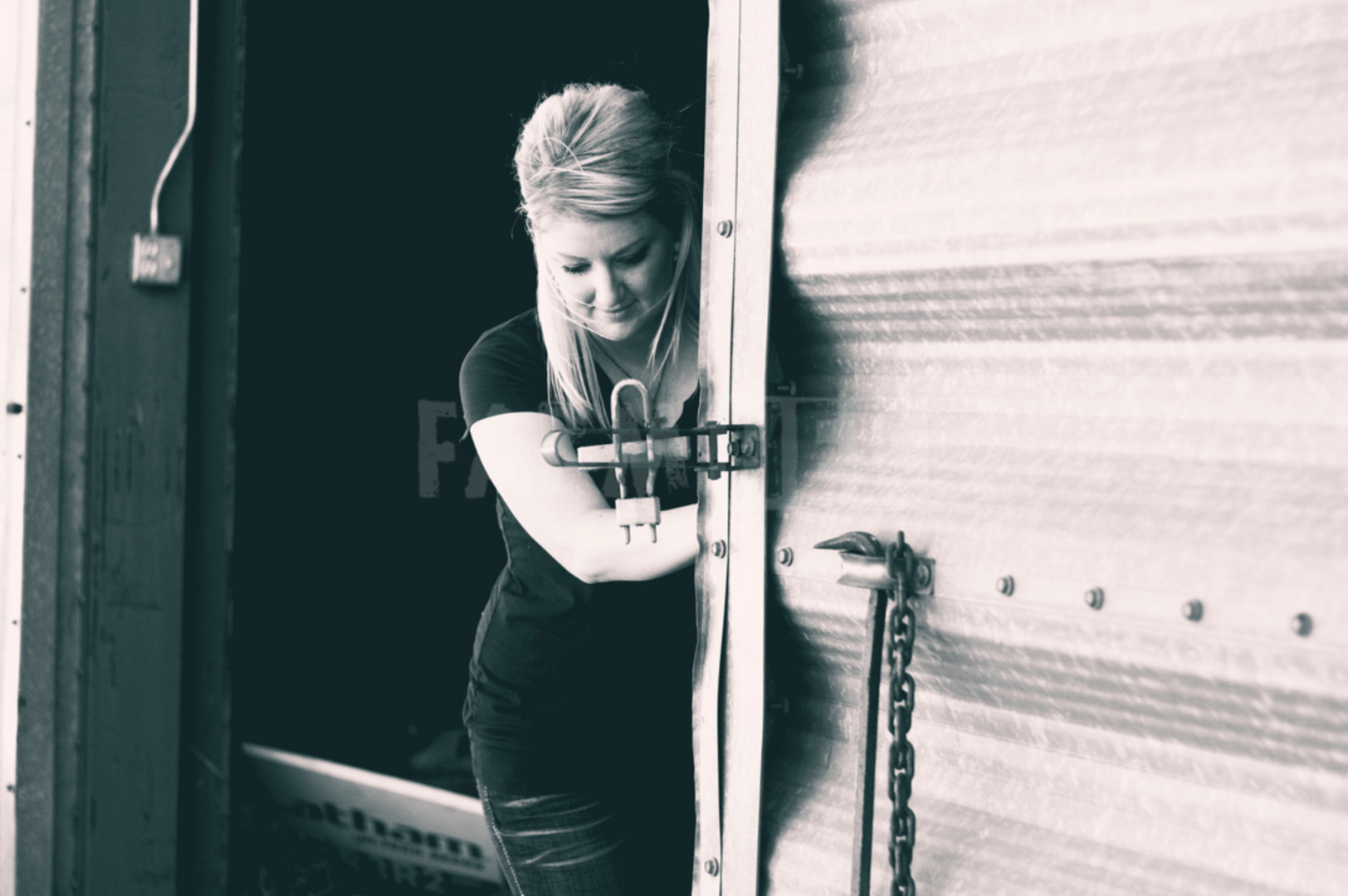
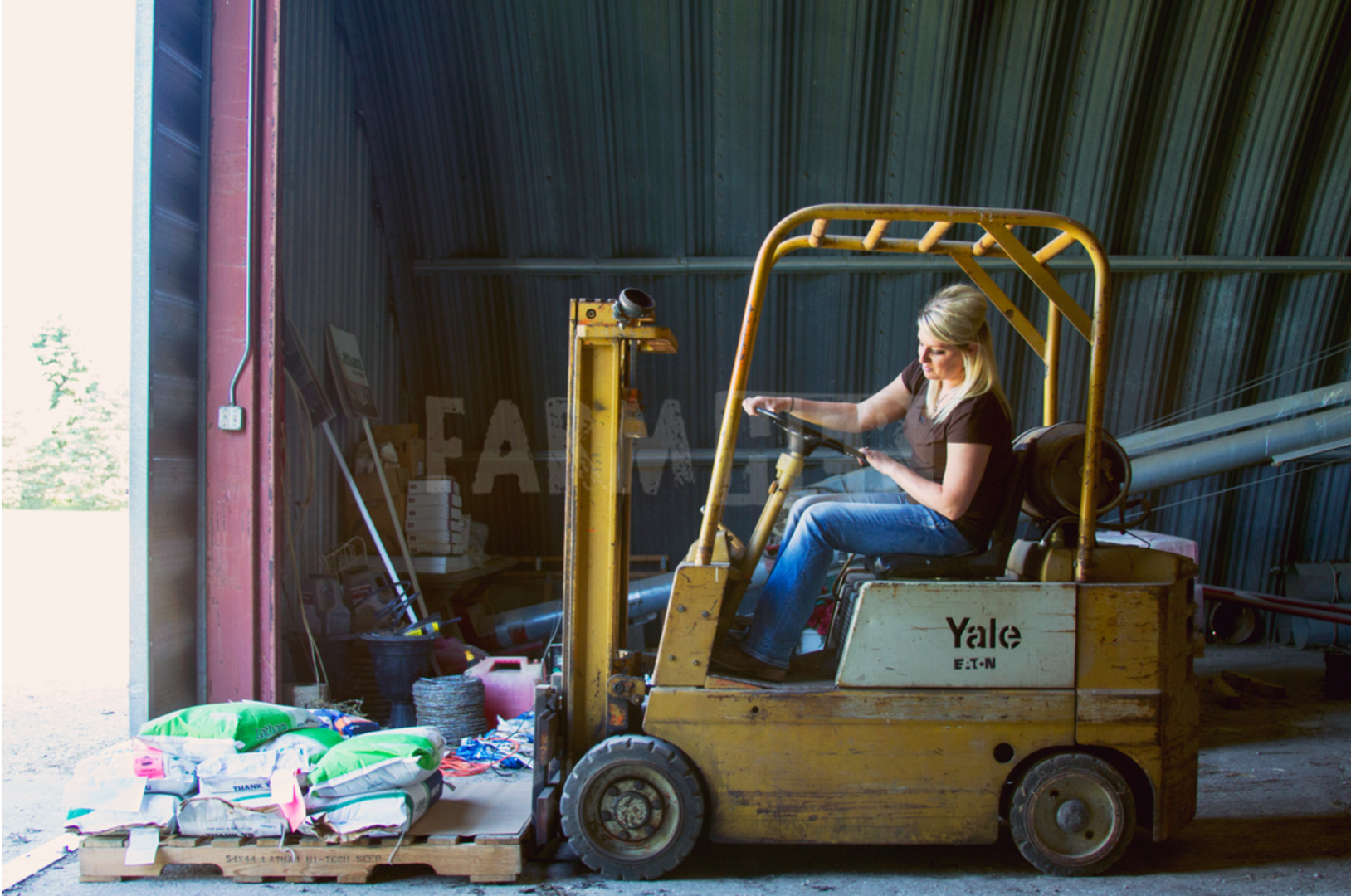
From the time she took her first combine ride in a car seat, Mandy Danner of Curlew, Iowa, has had her roots planted in agriculture.
Photo credit to FarmHer®
Mandy is a woman with drive, dedication and the desire to excel in all areas of her life. This former 4-H and FFA member is on brink of an industry change. She’s challenging the status quo and taking a stance in her role of a farmher, wife and soon-to-be mom.
Family values and common interests are what initially brought Mandy and her husband, Cole, together when they were students at Iowa State University and are the building blocks for their family. Mandy has taken her passion for agriculture and turned it into an irreplaceable role on the farm.
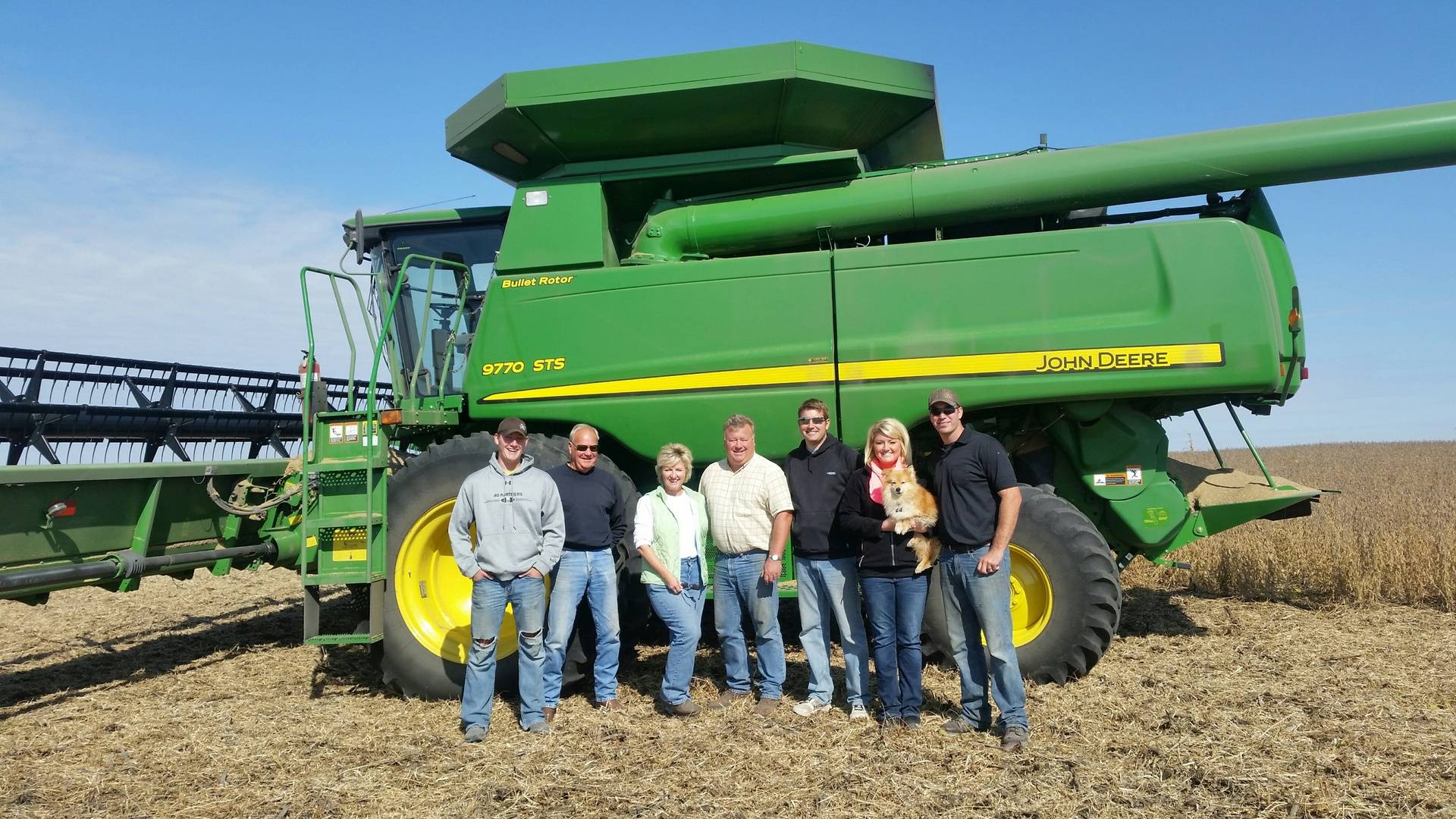
“Harvest is a busy time of year here,” says Mandy. “Not only do I feed the entire harvest crew a hot meal each and every day, but I’m also part of the crew myself.”
Mandy runs the grain cart, feeds livestock and checks pastures to alleviate some of the long days for her family. She values the opportunity to learn more each day and enjoys seeing yield results after a carefully planned and executed growing season. Mandy and Cole feel blessed to harvest alongside Mandy’s parents, brothers and her grandfather. Teamwork is key among all family. Teamwork is one of the values they want to instill in their children, and the couple is eagerly anticipating the arrive of their first child this February.
“Cole and I help each other accomplish every day chores and we do it as a team. He helps me inside with dishes and laundry, then I help him deliver baby calves, vaccinate cows and build fence.”
No two days are alike for the Danner’s as they stay busy with their crop production and cattle operation, with an emphasis on club calf production where they host Danner Show Stock Club Calf Sale every year in September.
“Cole and I find it priceless to farm with the ones you love,” says Mandy. We both believe in the future of agriculture and look forward to carrying on our farming traditions.”
Mandy shares this advice for other women who are interested in going into the agricultural industry.
“Do what you love and do it proudly! Women are just as capable of men in the agricultural industry so don’t let the status quo dull your fire.”
Without strong women to help shape and manage our company, Latham Hi‑Tech Seeds would be a very different company than it is today. We understand the key roles women play in everything from purchasing seed to marketing grain, from public relations and event planning to sales and customer service. That’s why we’re celebrating women who are doing what they love. From now through November, we’re showcasing women in agriculture by telling their #RootsinBoots stories. Follow along and be inspired by FarmHers across Iowa!
We’re looking for women, ages 18 to 108, who have a passion for agriculture and are willing to share their farm stories. Simply post photos of yourself on Instagram or Facebook using the hashtags #RootsinBoots #LathamSeeds and #FarmHer. Let your personality and work ethic show. We want to see what a “day in the life” of you is like!
Because each woman in agriculture is unique, everyone who submits a photo of herself either working in the field or working with livestock will be entered to win a $500 shopping spree at Western Edge LTD. There’s no limit to the number of entries, so increase your chances by posting across platforms via Twitter, Instagram and Facebook. Go to https://www.lathamseeds.com/rootsinboots/ or click here for more information.
This past week I had a rare moment to sit and reflect while picking up a load from a lumber yard in the small village of Kansas, Illinois. An order ahead of mine was getting loaded onto a delivery truck, so I was enjoying this “down time” and appreciating the beautiful fall weather in this very peaceful in southern Illinois town.
Breaks are rare during this time of year. Harvest is going full speed ahead across the Corn Belt, and yields look to be very good everywhere I travel. My soybeans are “in the bin,” and I was pleased with the yield from my Latham® Hi‑Tech Soybeans. The price… not so great but by pre-selling some of the crop should help me make a little profit.
Thinking about low commodity prices can be depressing. Thinking about this political season was even more depressing until I read an article by Max Lucado entitled, “My Prediction for the Presidential Election.” His article really put this election into perspective for me. I hope you’ll take a couple minutes to read it and see if you agree.
While many Americans are ready to bury their heads in the sand during this election, I encourage each person of voting age to study each candidate’s position on the issues that matter most to you. After all, American’s government “for the people by the people” becomes even more flawed when we don’t participate!
This election is not just about electing the president. We’ll be electing officials all up and down the ticket, so make sure you’re choosing the ones that most closely agree with your views. Ignore the personal mudslinging and focus on the issues that are important.
Regardless of who gets elected, we must continue on with our mission in life. My blogger friend Beth Ann Brown made this eloquent remark in a recent post about this year’s election, “…I choose to rise above and keep my head up. I choose to look for the positive and support those who live their lives in a like manner.”
Beth Ann took the time to study the issues and she voted. She’s not burying her head in the sand!
Be like Beth Ann… study and vote! And when you get a moment, reflect on your life. I know I felt better after stepping away from the fray and business to reflect just how good life is.
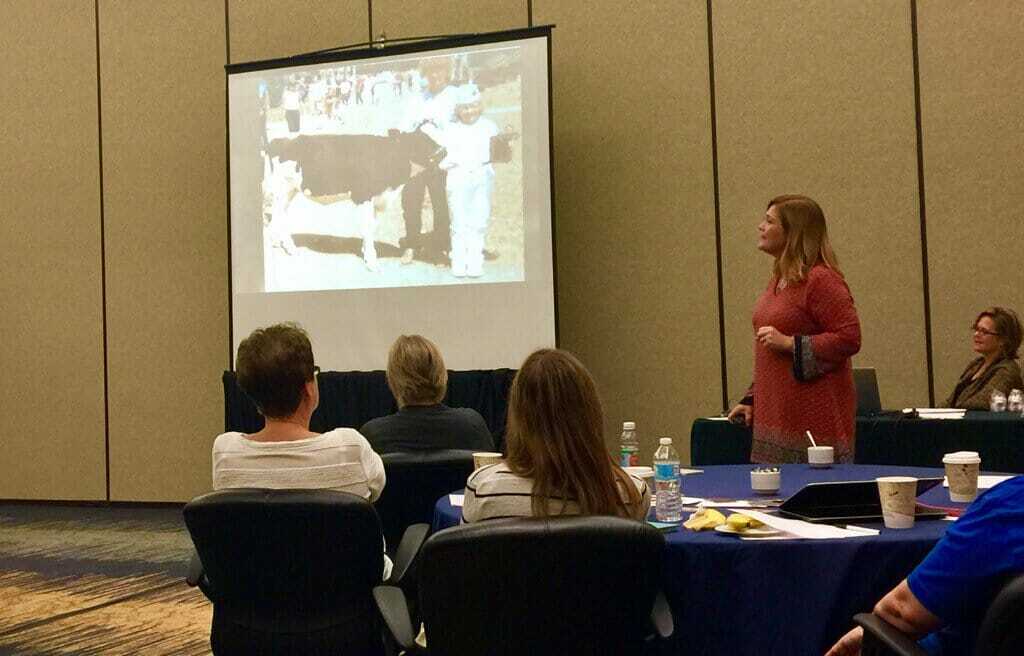
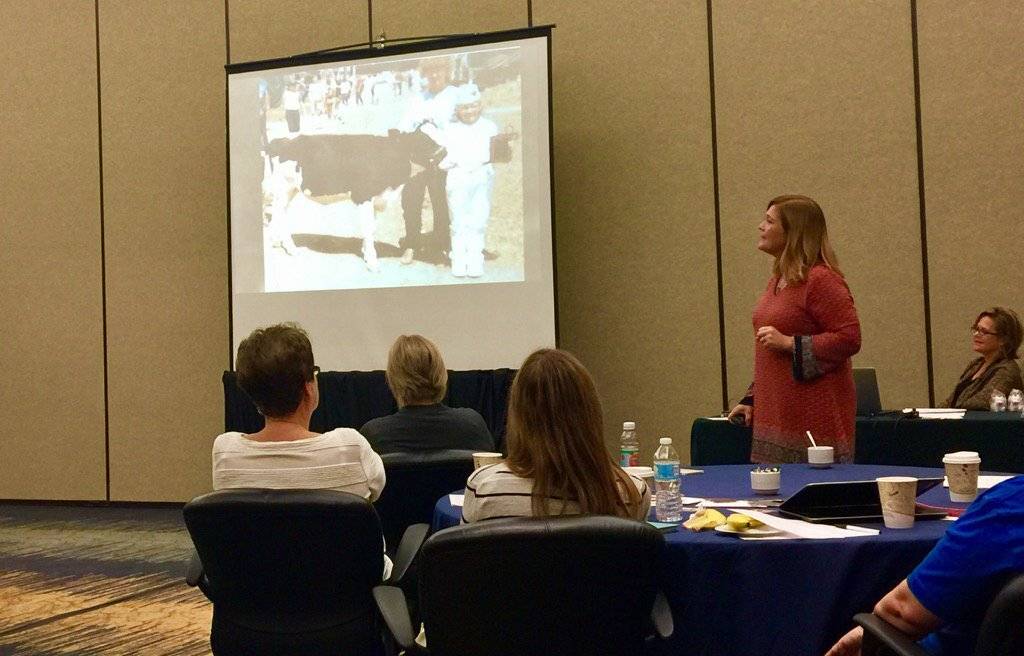
There’s nothing more inspiring than watching someone live her dream and love every minute. Laura Daniels, a Wisconsin dairy FarmHer, spoke at the 2nd Annual GROW by FarmHer conference in Ankeny, Iowa. She shared her #RootsinBoots story through a presentation entitled, “10 Life Hacks for the ‘Dirty Work’ of Being a Growing FarmHer.”
It didn’t take long for Laura to discover her passion. When she was 11 years old, she showed her first dairy heifer calf at the county fair. She loved it, and Laura knew then that she loved farming.Below are lessons shelearned along the way:
When Laura Daniels found her passion and discovered her #RootsinBoots
1.Don’t play dead. After sharing a story about an unfortunate opposum, Laura reminded us we are here for a reason. Take advantage of ALL the opportunities; don’t play dead. This is your chance to explore ideas, be vibrant and become involved in the ways that mean the most to you.
2.Your passion is your power. Every person has a different set of work ethics, morals, values and leadership experiences. Take your passion and find a way to become influential for those looking for guidance. Your passion is your power; be as powerful as you can.
3.Remember who packed your parachute. As life has it, none of got where we are on our own. Who helped you along the way, who was your role model? This may be a parent, teacher or advisor whohelped you put your best interest first. Thank these people for helping you achieve what you have so farbecause they are the ones who packed your parachute.
4.Share your magic shoes. Each one of us has special attributes to make us who we are. Use that and help others in a way that you would want to be helped. Never underestimate the value of teamwork and helping others because you can always accomplish more with help.
5.Know your true grit.What is most important to you? Figure out the qualities you want out from friends or employees and keep those qualities consistent. Knowing what you look for others will help you stay authentic to yourself.
6.Our progress will be held against us. The industry has developed and advanced substantially within the last few years. This progress can make others doubt our true integrity. Be ready to help educate and explain the positive advancements in the industry.
7.YOU are the hitch pin. Imagine the farmer as the tractor and consumers as the wagon. YOU are the hitch pin. It is your responsibility to share the story of agriculture, especially your story. No one can share your story better than you can.
8.IDK is OK. The agricultural industry is very broad, so not knowing every answer is okay. Saying “I don’t know that answer, but here is a resource that might help you find your answer” is okay! It’s impossible to know everything, so share what you can.
9.You need your sisters more than ever. Use the relationships and connections you have gained from school, activities and personal life to help you get where you’re going. Women are beginning to overcome the status quo, but there is still plenty of work to do to fully break the glass ceiling.
10.Take the bull in life by the horns. Take advantage of the life you have and experience all it has to offer. As Laura said “take life by the horns.” Have no regrets and find a learning experience in it all.
Laura left us all with some great points to think about and utilize as we continue writing our #rootsinboots story. When sharing your story and helping educate others, it might help to keep in mind this nugget of truth that Laura shared at the GROW conference in Iowa:“Things have changed, farms have changed, the heart of the farmer has not.”
Without strong women to help shape and manage our company, Latham Hi‑Tech Seeds would be a very different company than it is today. We understand the key roles women play in everything from purchasing seed to marketing grain, from public relations and event planning to sales and customer service. That’s why we’re celebrating women who are doing what they love. From now through November, we’re showcasing women in agriculture by telling their #RootsinBoots stories. Follow along and be inspired by FarmHers across Iowa!
We’re looking for women, ages 18 to 108, who have a passion for agriculture and are willing to share their farm stories. Simply post photos of yourself on Instagram or Facebook using the hashtags #RootsinBoots #LathamSeeds and #FarmHer. Let your personality and work ethic show. We want to see what a “day in the life” of you is like!
Because each woman in agriculture is unique, everyone who submits a photo of herself either working in the field or working with livestock will be entered to win a $500 shopping spree at Western Edge LTD. There’s no limit to the number of entries, so increase your chances by posting across platforms via Twitter, Instagram and Facebook. Go to https://www.lathamseeds.com/rootsinboots/ or click here for more information.
Farming Comes Full Circle for Independent Pork Producers
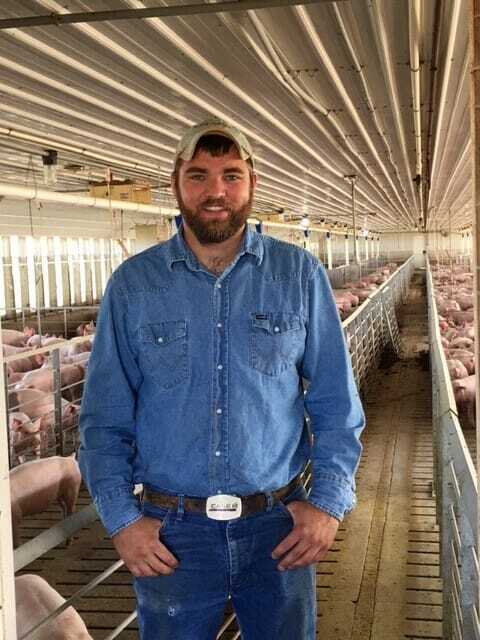
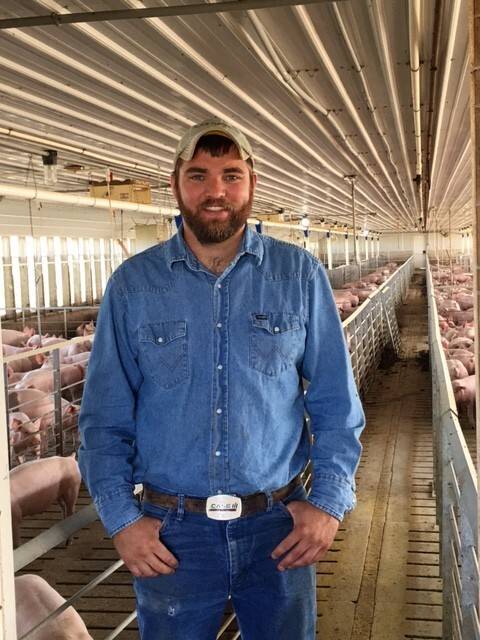
Autumn is many farmers’ favorite time of the year. That holds true for Blaine Perry, who farms with his son Andrew in Northwest Iowa. They’re busy harvesting the crop that will supply their livestock operation with feed.
“We feed 80 percent of the corn we raise, so keep corn for nine months before we haul any of it to town,” explains Blaine, who runs the combine while Andrew hauls grain from the field to the bins. They practice a 50:50 crop rotation, raising seed beans on contract.
When selecting corn hybrids, test weight is especially important. Blaine and Andrew typically spray fungicide because they want the highest quality corn going into their feed.
“We raise corn that feeds our hogs. Then we use the manure our hogs produce to fertilize our fields,” says Blaine. “When you think about it, our operation comes full circle. Hog manure is ‘organic,’ but many people just don’t realize that manure has such a high value.”
These independent pork producers have one nursery that supplies them with the pigs needed for their wean-to-finish operation. Conveniently, one mile away a neighbor built a feed mill. The Perrys haul their corn to the mill, which really helps with biosecurity. Blaine and Andrew are the only two who enter their buildings.
They credit controlling truck traffic and people inside their facilities for keeping their hogs healthier. When PEDV (Porcine Epidemic Diarrhea Virus) hit a few years ago, they tightened up security, and it worked.
Producing Pork is a Family Tradition
“Our family has practically been raising pigs since the got off the Mayflower,” says Andrew, who grew up also raising sheep, cattle and chickens. A Perry has been farming in Cherokee County for six generations. Blaine and his wife, Darlene, are the third generation to live on the home place near Aurelia.
Andrew lives Alta with his wife, Liz, and their 20-month-old daughter, Danika. Liz is a teacher at Cherokee Community School. She and Andrew started kindergarten together but didn’t start dating until college.
Farming is all Andrew says he ever wanted to do, so he studied Agribusiness at Iowa Lakes Community College for two years. Then he transferred to Northwest Missouri State where he earned a Bachelor of Technology degree in Agronomy.
When they’re not busy on the farm, this family enjoys taking tractor rides together. All three of Blaine and Darlene’s children enjoy riding together in Peterson’s Annual Trip on Old Tractors (PATOOT). Oldest son, Adam, is band teacher at Sioux Central and lives with is family in Peterson. Their daughter, Brooke, lives in Gilette, Wyoming.
In celebration of National Pork Month, today Andrew is sharing a recipe for Bacon Bourbon Apple Pie. He says Liz has this recipe down to perfection. So go ahead and enjoy the fruits of this season with a slice of life this weekend!
Kraft® recipes writes, “Crispy bacon streusel tops this fabulous apple pie laced with a hint of bourbon, making for a sweet and salty dessert.”
“Don’t expect Iowa farmers to ‘feed the world’,” reads the headline of a recent editorial in The Des Moines Register.
You can bet that headline both sickened me and spurred action. Below is a copy of the response I sent yesterday to the Register…
I’m saddened by the timing of the negative editorial because we are in the middle of World Food Prize week, a time when the world turns its eyes to Iowa to salute those who dedicate their lives to discovering innovations that feed people in need. But, I’m not surprised by the Register editorial since its editorial staff seems to be spending too much time with “scary clowns.”
Scary clowns spread fear. Fear must sell a lot of newspapers. Scary clowns aren’t just an internet phenomenon, now showing up in our communities. Fear is also a weapon, a tactic that is passed around, printed and repeated, spreading faster than palmer amaranth seeds in a fertile farm field.
The Environmental Working Group has been trying to scare us all for quite some time, and the Register editors are all too happy to spread their fearful messages without question or any attempt to gain another perspective. Iowa farmers hope common sense Iowans can unmask the hype.
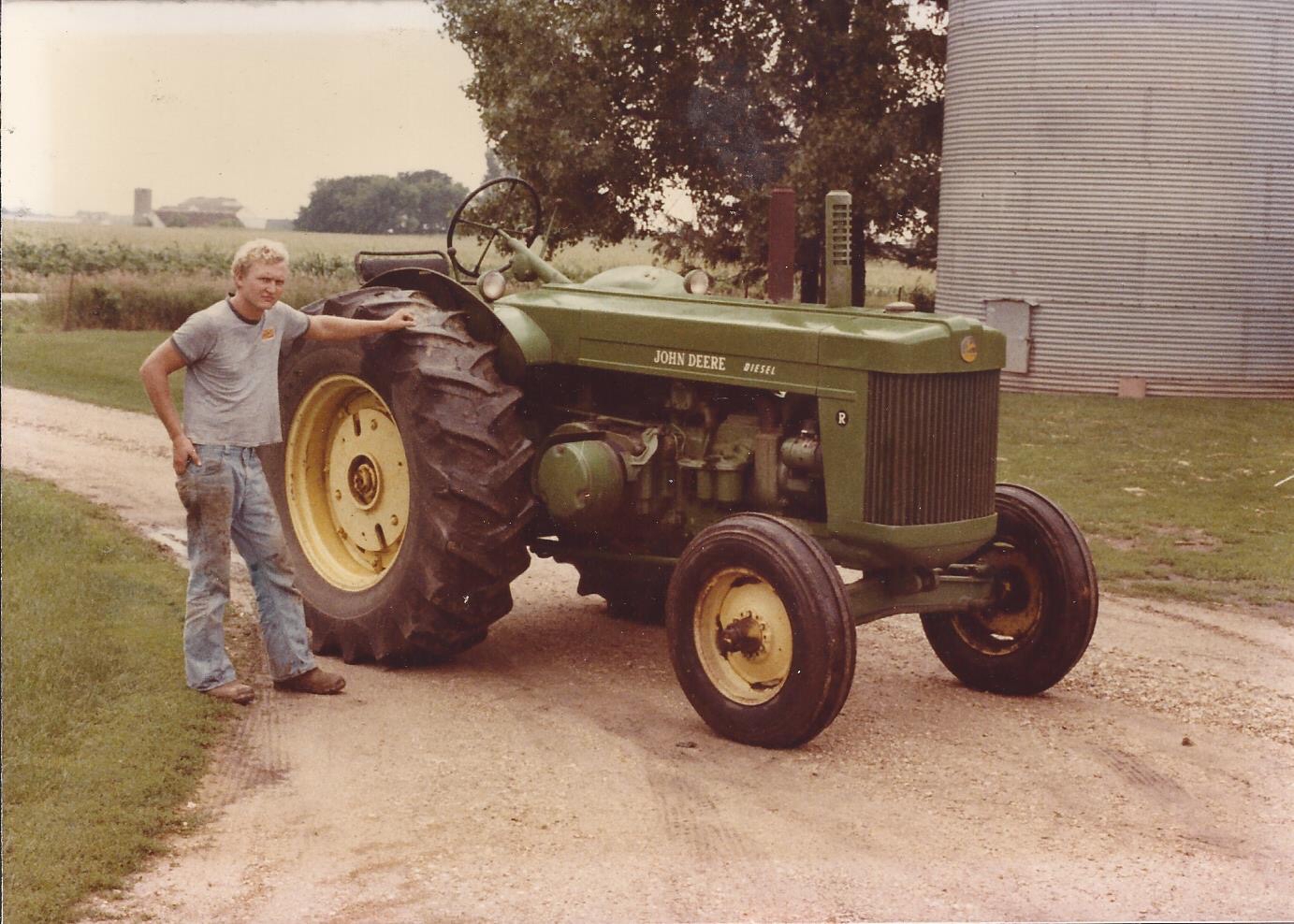
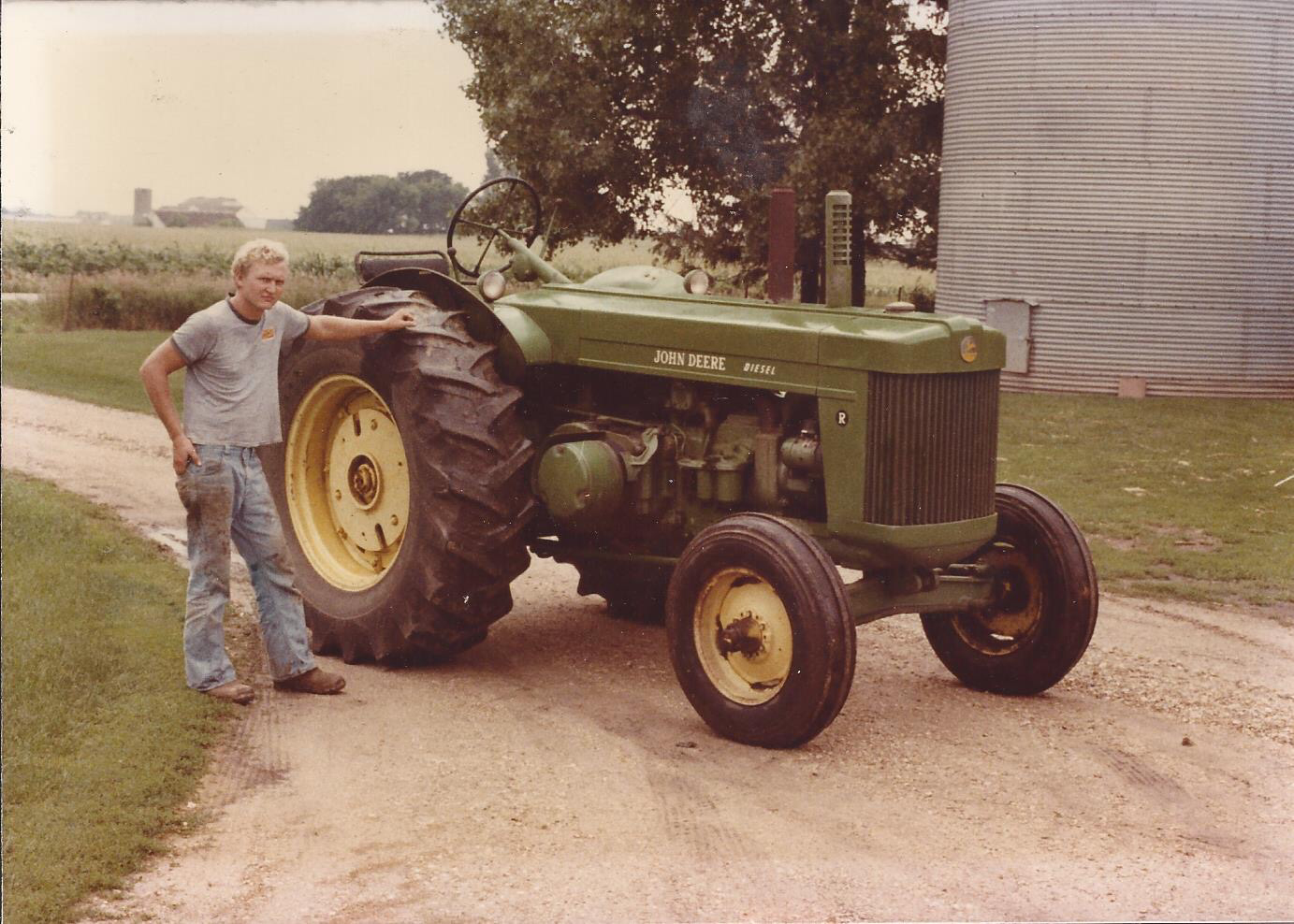
My perspective is based on experience; I’ve been farming since 1973. I know innovation in farming not only helps us grow more food, it helps us do more with less: less pesticides, less tillage and turning of the soil, less erosion, less runoff of manure. I have had farmers and visitors from around the world including China, and Japan come to my farm to learn how we do it. The Des Moines Editorial chief went to China and marveled at the technology, yet his team leads the charge against the very same innovative livestock barns being built here! Why? Perhaps he and his staff are too young to remember what it was really like “back in the day.”
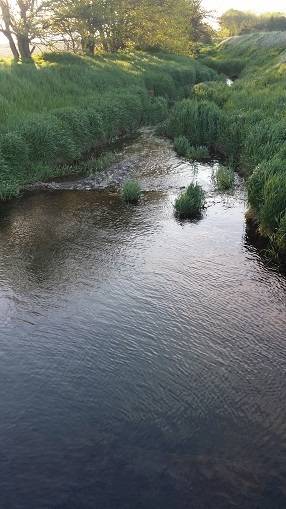
About 35 years ago, Larry Sailer planted trees and bushes along the creek that runs through his farm. #FarmersCoverIowa
Back in the 70’s, the ditches were full of black snow each winter because we had to turn the soils to kill the weeds and used a lot more chemicals to grow a crop. Back in the 70’s, more livestock was raised on feedlots than modern livestock barns, so manure washed off during a heavy rainstorm. Where did it go? It went into the watersheds, but the state wasn’t monitoring it then like it does now.
Slowly, it’s turning around. Innovation in livestock farming, seeds, equipment and knowledge learned from the Nutrient Reduction Strategy is making a difference. I see it myself; in the time I have been farming, the drainage creek that runs through my land is so clear that you can’t see the water. You only see the stream bed. The waterways and buffer strips have done a great job on my farm, but all farms are different. Cover crops and other technologies in the last five years are making a huge difference!
Are all watersheds like that stream by my farm? No, and that’s why better monitoring and lowered thresholds show new places for us all to begin. I accept the challenge of continuously trying new things to make water better for all, and I’m not alone in thinking that way.
Iowa farming is successful and that success draws the world to our farms during World Food Prize week and beyond! I happen to think we should be embracing our success, not romancing the past, or forcing us all to farm like it’s 1974 because that style of farming doesn’t suit consumer needs today. Trying to “force fit” the past on all farmers is about a scary as forcing us all to squeeze back into the bell-bottom jeans we wore in 1974 – now that’s a scary thought!
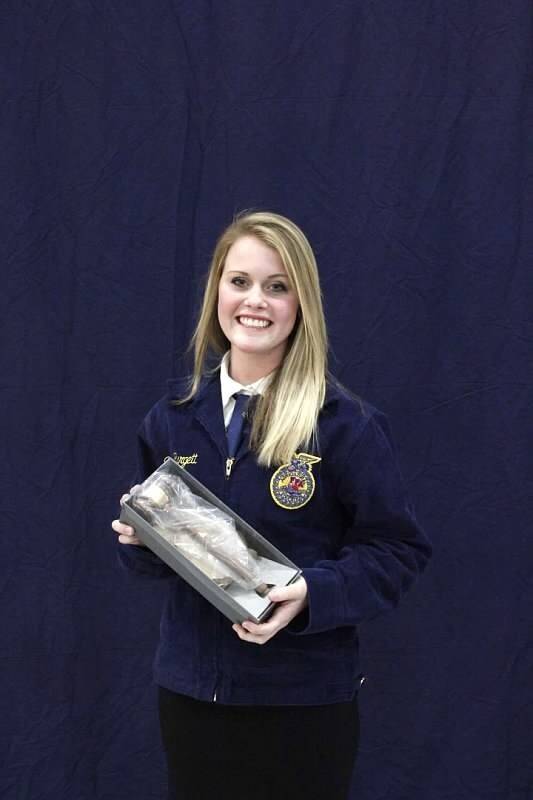
Women in Ag: Tracing Josie Burgett’s #RootsinBoots
Five years ago when Josie Burgett was a freshman in high school, she didn’t know if pursing an ag career was the right fit. She had grown up on a farm but had gotten her fill of hard work and long hours. Sometimes our lives take a turn and we end up taking another path. That’s what happened to Josie when she accepted an internship with FarmHer, which promotes the image of women in agriculture and inspires women to pursue their passion.
“The FarmHer message has been a long time coming,” said Josie. “Women have always played an important role in agriculture, but they haven’t always been showcased. FarmHer gets people in agriculture excited. They hop onboard and want to be involved!”
Positive encouragement from her FFA Advisor prompted Josie to give FFA a chance. Little did she know that she would fall in love with the opportunity to communicate and promote agriculture. After holding two officer positions and participating in several FFA Career Development Events (CDEs), Josie knew she wanted to remain involved with agriculture.
Josie’s #RootsinBoots story began in Pleasantville, Iowa, where she grew up on a small hobby farm and enjoyed raising and showing pigs each summer. Her family is involved in the swine industry, which is where she found her interest in showing. She decided to attend Iowa State University to study Agricultural Business because she knew there were great opportunities within the agricultural industry and had heard good things about the program.
Upon graduation in May 2019, Josie hopes to obtain a position within the industry that allows her to utilize her interests in communications and actively advocate for the agricultural industry. She sees the importance of understanding the “big picture” and wants to be a recognized role model within the industry.
As a sophomore in college, Josie is in the midst of creating her story in agriculture. Josie took on many substantial roles in her summer internship with FarmHer, which demonstrates her drive and determination to accomplish tasks. She corresponded sponsorship for all four of the 2016-2017 national Grow events for young women in agriculture, traveled to various events such as the Iowa State Fair, and improved her design skills by running the website and social media channels. She loves to travel and speak with those interested in FarmHer, and she loves to see the support that comes from all communities.
“One of my favorite parts of advocating is when someone walks up and says, ‘oh my brother’s girlfriend, my sister-in-law, or my daughter would love this!’ FarmHer gets large amounts of support on all levels.”
Josie is passionate about sharing her love of agriculture with others, and she shares this advice with anyone else who was in her shoes five years ago: “Be confident. Be bold. Find people with your same interests and get involved in any way that you can.”
Josie’s future is bright, and we’re looking forward to the footprints she will make along the way!
Without strong women to help shape and manage our company, Latham Hi‑Tech Seeds would be a very different company than it is today. We understand the key roles women play in everything from purchasing seed to marketing grain, from public relations and event planning to sales and customer service. That’s why we’re celebrating women who are doing what they love. From now through November, we’re showcasing women in agriculture by telling their #RootsinBoots stories. Follow along and be inspired by FarmHers across Iowa!
We’re looking for women, ages 18 to 108, who have a passion for agriculture and are willing to share their farm stories. Simply post photos of yourself on Instagram or Facebook using the hashtags #RootsinBoots #LathamSeeds and #FarmHer. Let your personality and work ethic show. We want to see what a “day in the life” of you is like!
Because each woman in agriculture is unique, everyone who submits a photo of herself either working in the field or working with livestock will be entered to win a $500 shopping spree at Western Edge LTD. There’s no limit to the number of entries, so increase your chances by posting across platforms via Twitter, Instagram and Facebook. Go to https://www.lathamseeds.com/rootsinboots/ or click here for more information.
There were many issues I thought about addressing in this week’s blog: the presidential debates, the effects of flooding, plus Midwest farmers in the heart of fall harvest. Because I tend to tackle a lot of serious topics, today I decided to blog about something lighter. October is Pork month, so let’s talk #bacon!
“Bacon” is the one farming-related topic that you can Google and receive overwhelmingly positive responses. Meat candy is universally loved! Bacon is so beloved that Americans even ignore the false information put forth by government officials, who are charged with keeping us “healthy.”
Researching a topic that I’m writing about isn’t usually fun. Researching this post, however, has been a delight! As a disclaimer, I admit that not a lot of research is needed for many of my blog posts. I mostly write about my own experiences because I want to share what I know firsthand.
Our firsthand knowledge and experiences are what form our opinions. I’m always preaching that we must listen to the thoughts and beliefs of other people. This blog allows me to share my thoughts and beliefs with others. I’ve been totally immersed in farming my whole life, going back to the “good old days” of the fifties and sixties. We’ve learned so much about soil health and water quality since then, and I like to talk about the agricultural advancements that have been made.
But some things are so good from the beginning that “vast improvements” aren’t needed. Bacon has been nearly perfect for centuries!
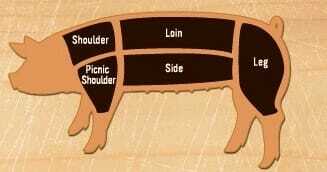
Diagram from http://www.porkbeinspired.com/
Did you know that bacon was originally known as the meat of the common man? Higher priced cuts, such as pork chops and loins, were consumed by people who had more money. The “pork belly,” where most bacon comes from, was considered less desirable.
Here’s another fun fact you may not know: Bacon was originally salted to preserve meat before there were refrigerators. Cold farming regions could preserve some food better than warm farming regions. , so climate is a reason that some foods are grown in certain areas and not others. As you think about the world as a whole, there is so much diversity in agriculture because of need. It’s not just soil types that determine a crop. (“Soil type” is a common phrase to us farmers, but perhaps it’s not universally understood. NOTE TO SELF: Write future blog about how soils and climates affect what crops can be grown in an area.)
Now back to the good stuff… The high demand for bacon today has made pork belly the highest priced cut of pork. Pork bellies used to be a drag on the price of a pig I took to market, but now it’s the price leader. And for good reason!
Bacon enhances the flavor of any food. We all think of putting bacon on our burgers or using bacon to add flavor to green bean casserole. But have you tried bacon covered in chocolate? I’m not a big fan of chocolate, but I’ll eat it on bacon!
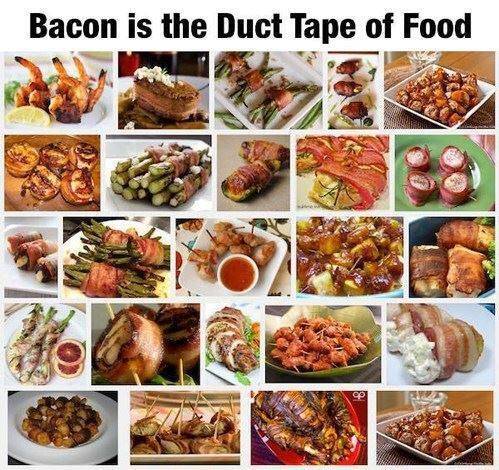
Anything wrapped in bacon is an instant appetizer… anything! A few years ago on a Franklin County Harvest Tour for bloggers, I tried mealworms. I’m not a fan, but maybe I could learn to eat mealworms wrapped in bacon. Just maybe.
While celebrating pork this month, remember all the ways to enjoy your food. And, yes, enjoying food is what we need to do! The food fear mongers have an agenda. If you follow the money of any group that is against bacon, you’ll discover their motive. Bacon is the antidote to veganism!
The agriculture industry is one of the vastest industries in the United States. Abby Bultema of Beecher, Illinois, has had lots of opportunity to explore just how diverse agriculture is throughout the world.
Abby has roots in produce and row crop agriculture. She grew up selling her family’s produce at their farmstand where she learned how to work in the fields and developed retail marketing skills. Ten years ago, the Bultema family transitioned their produce business into greenhouses. They grow corn, soybeans, pumpkins and squash in fields. Inside the greenhouses, the Bultema family grows a wide assortment of vegetables and herbs, as well as annual and perennial flowers.
With experience like this, it’s no surprise to learn that Abby is majoring in Agronomy with a minor in Horticulture at Iowa State University. Ironically, she had no idea what she wanted to study until her senior year in high school. Her high school didn’t have an FFA program, and she was never a 4-H member.
“I took growing up on a farm for granted, I never thought there was anything more I could do in agriculture outside of farming,” said Abby. Then one night her dad suggested that she consider agronomy because she enjoyed the farm and knew a lot about it. After doing some research, Abby was opened up to the diverse possibilities a career in agriculture can hold.
Whether she’s abroad or at home, Abby is up for adventure. This college senior has gone on two international study abroad trips to New Zealand and Costa Rica. In New Zealand, she studied the dairy industry and the country’s pasture management systems. She also learned about the budding New Zealand horticulture crop export market. During Spring Break 2016, Abby toured coffee production facilities, mango and banana farms, orange groves and sugarcane plantations in Costa Rica.
Abby spent the summer interning with Forage Genetics International. Every week throughout her experience with FGI, she was in a different state visiting FGI research stations, attending meetings and riding with account managers of the internal seed brands. Abby also got to help develop marketing tools for FGI’s new low-lignin line of alfalfa, HarvXtra™. (BTW, Latham Hi‑Tech Seeds sells this innovative alfalfa technology, so be sure to talk to your local Latham dealer about what HarvXtra™ can do for your alfalfa fields in 2017!)
Although she’s not yet sure which ag path she will travel once she earns her degree from ISU, Abby’s goal is to work in seed sales and eventually become a field agronomist for a seed company. Wherever she ends up, Abby knows that agriculture has plenty of avenues to go down.
“Everything in the agriculture industry kind of overlaps and plays off of each other,” said Abby. “Though I am going into crop production, there are opportunities for me to go into livestock feed or even nutrition. Every aspect of agriculture feeds into another aspect of agriculture.”
As one of the 51% of female students enrolled in the College of Agriculture and Life Sciences at Iowa State, Abby is excited for the future of agriculture and what that means for women.
“Being a woman in agriculture means we have to be twice as smart, twice as confident and work twice as hard to prove our worth in this industry,” said Abby. “When someone says ‘farmer,’ you automatically picture a man. With more women pursuing careers in agriculture, we’re beginning to break that mold. Soon people won’t even think twice about seeing a FarmHer!”
Without strong women to help shape and manage our company, Latham Hi‑Tech Seeds would be a very different company than it is today. We understand the key roles women play in everything from purchasing seed to marketing grain, from public relations and event planning to sales and customer service. That’s why we’re celebrating women who are doing what they love. From now through November, we’re showcasing women in agriculture by telling their #RootsinBoots stories. Follow along and be inspired by FarmHers across Iowa!
We’re looking for women, ages 18 to 108, who have a passion for agriculture and are willing to share their farm stories. Simply post photos of yourself on Instagram or Facebook using the hashtags #RootsinBoots #LathamSeeds and #FarmHer. Let your personality and work ethic show. We want to see what a “day in the life” of you is like!
Because each woman in agriculture is unique, everyone who submits a photo of herself either working in the field or working with livestock will be entered to win a $500 shopping spree at Western Edge LTD. There’s no limit to the number of entries, so increase your chances by posting across platforms via Twitter, Instagram and Facebook. Go to https://www.lathamseeds.com/rootsinboots/ or click here for more information.

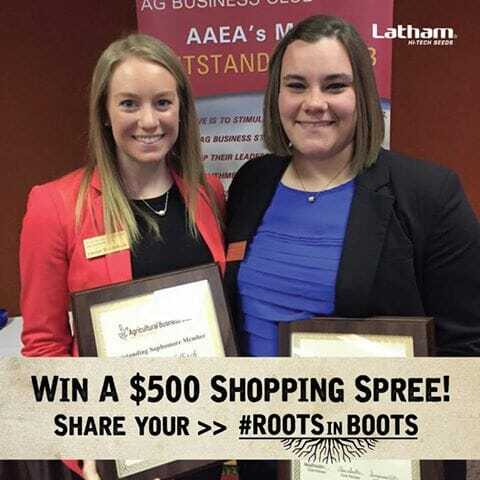
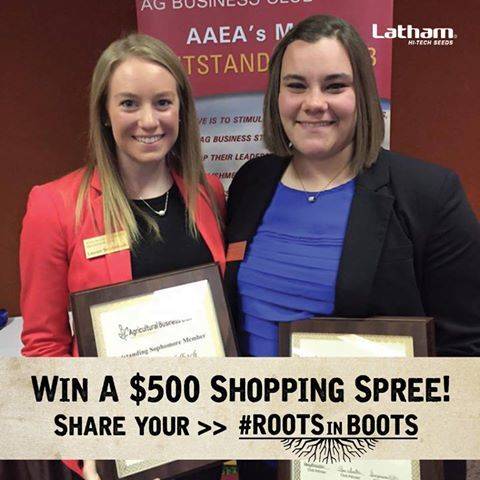



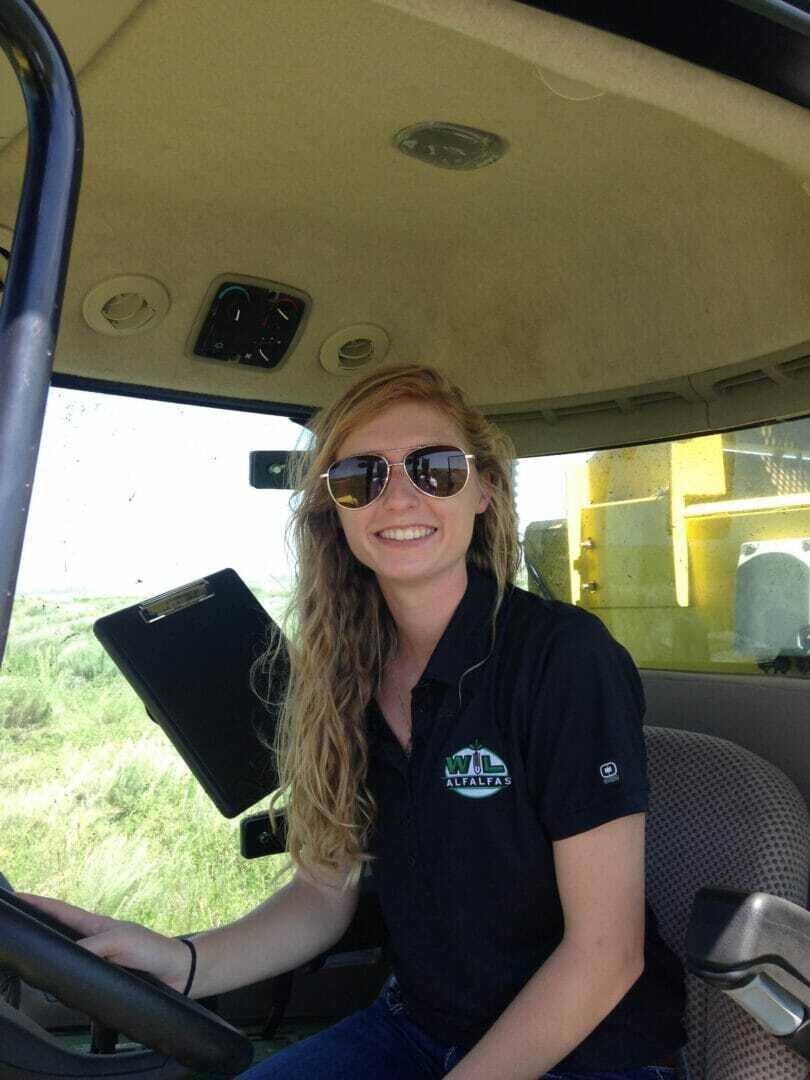
 Abby has roots in produce and row crop agriculture. She grew up selling her family’s produce at their farmstand where she learned how to work in the fields and developed retail marketing skills. Ten years ago, the Bultema family transitioned their produce business into greenhouses. They grow corn, soybeans, pumpkins and squash in fields. Inside the greenhouses, the Bultema family grows a wide assortment of vegetables and herbs, as well as annual and perennial flowers.