Latham Hi-Tech Seeds

(641) 692-3258

  • Home
  • Products
    • Corn
    • Soybeans
    • Alfalfa
    • Corn Silage
    • Seed Guide
  • Performance
  • Find a Rep
  • Media
    • Blog
    • News
    • Videos
    • Podcasts
    • TECHTalk
  • About Us
    • Company History
    • Our Mission
    • Careers
    • Become a Rep
    • Sowing Seeds of Hope
  • Contact Us
  • Latham Hi‑Tech Seeds

    Digging the History of Hampton’s Earl Ferris Nursery

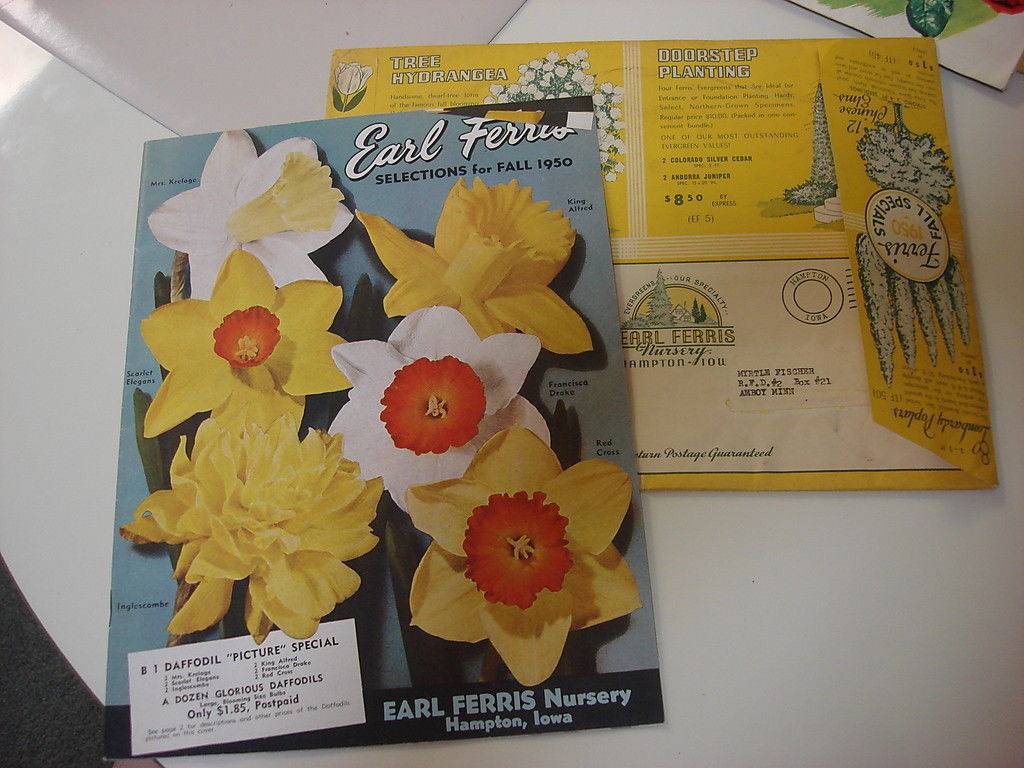
    Ferris Nursery 2 eBay 1957

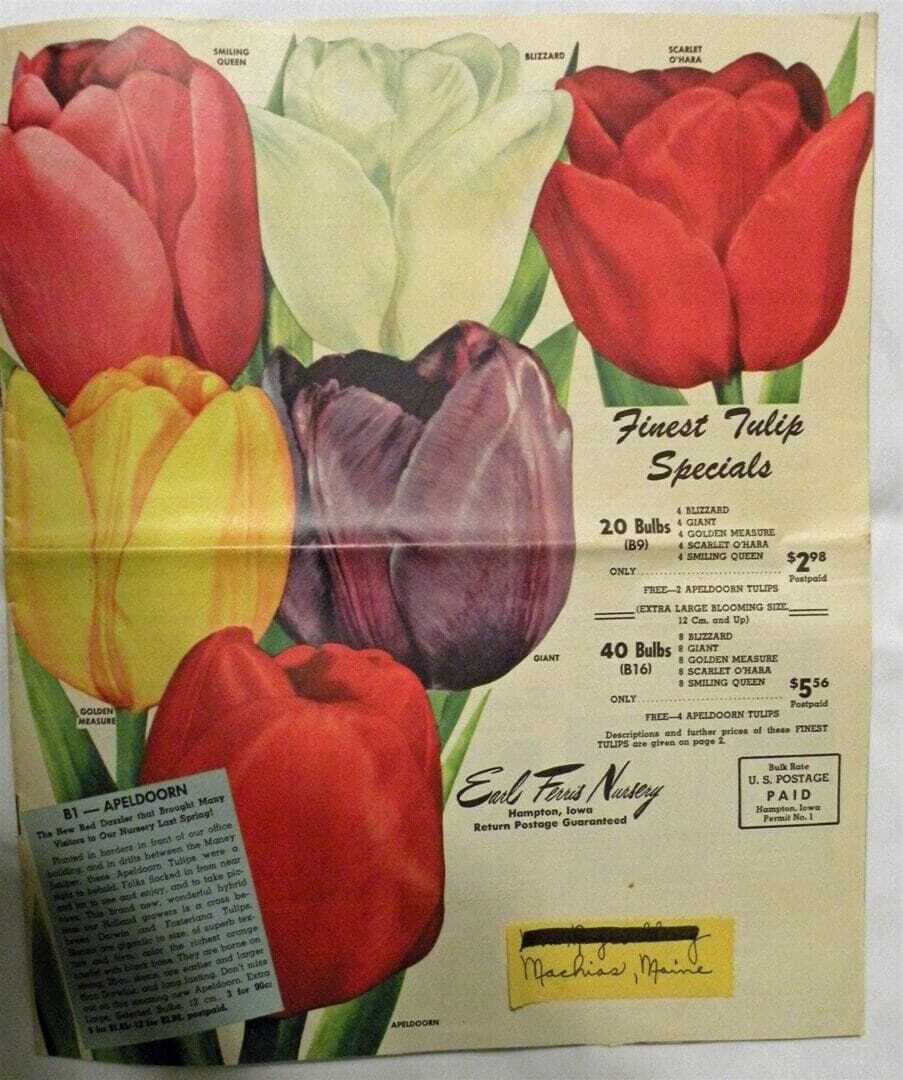
    Ferris Nursery 1 eBay 1950

    by Darcy Dougherty Maulsby

    Gardeners know all the best dirt. For generations of gardeners across Iowa and beyond, one of the most trusted sources for high-quality plants, flowers and trees was the Earl Ferris Nursery, a Hampton landmark for nearly 100 years whose legacy lives on.

    “Everywhere we go, we see Ferris trees and shrubs,” said Mickey Ferris of Hampton, who ran the Earl Ferris Nursery with her husband, Wayne, for many years. “Some windbreaks are well over 100 years old.”

    The roots of the Earl Ferris Nursery run as deep as Iowa’s pioneer heritage. Solomon “Sol” Wayne Ferris started a small nursery in West Branch, Iowa, following in the footsteps of his father, John Ferris. The family moved the nursery to the Butler County town of Bristow in 1869 and established the Bristow Nursery, consisting of about an acre of fruit trees, berry plants and a few evergreens.

    The business took off when Sol bought land in the Dakotas and raised horses there. “Traveling through Northwest Iowa to the Dakotas, Sol discovered a good market for trees, especially fruit trees,” says Mickey, an avid historian. “New settlers needed to plant orchards, and they also Ferris Nursery 2 eBay 1957needed evergreens for windbreaks to protect against prairie winds and snow.”

    Sol sold and delivered nursery stock by wagon throughout the Midwest. The Ferris nursery became known for its field-grown evergreens, Mickey noted. In the winter of 1899, the Ferris family used sleighs to move their entire nursery stock to Hampton, which offered better railway facilities.

    By 1900, Sol’s son, Earl, had graduated from Upper Iowa University and was working for his father. Earl bought a half interest in the family business. In 1902, the ambitious young man became full owner of the company and had big dreams for this small business.

    Mail order helped business flourish
    While Earl continued to sell nursery stock using agents, in 1905 he pursued a promising new marketing option—mail order. He printed his first catalog in 1907 and changed the name of his growing company in 1912 to the Earl Ferris Nursery Co. By then, the nursery consisted of 360 acres of trees, shrubs, flowers, bulbs and evergreens.

    The Earl Ferris Nursery mailed more than 400,000 Ferris Nursery 3 eBay 1957catalogs each spring and sent nearly the same amount each fall. These attractive catalogs contained a full list of the varieties offered by the nursery, complete with prices. “Orders received were prepared for shipment in the ‘pack shed’ and mailed all over the United States, including Alaska,” Mickey said. “At one time, the catalogues represented half of the business at the Hampton post office.”

    Since the customer mail-order list was invaluable to the nursery, the list was locked in a large vault in the office every night. Thieves broke into the office one night, Mickey recalled. “They tried to peel the vault door off, assuming there was money in the vault. Then they then tried to enter the vault from the floor above, again without success. The family always wondered what the burglars would have thought, had they been able to get in and found only drawers of names and addresses!”
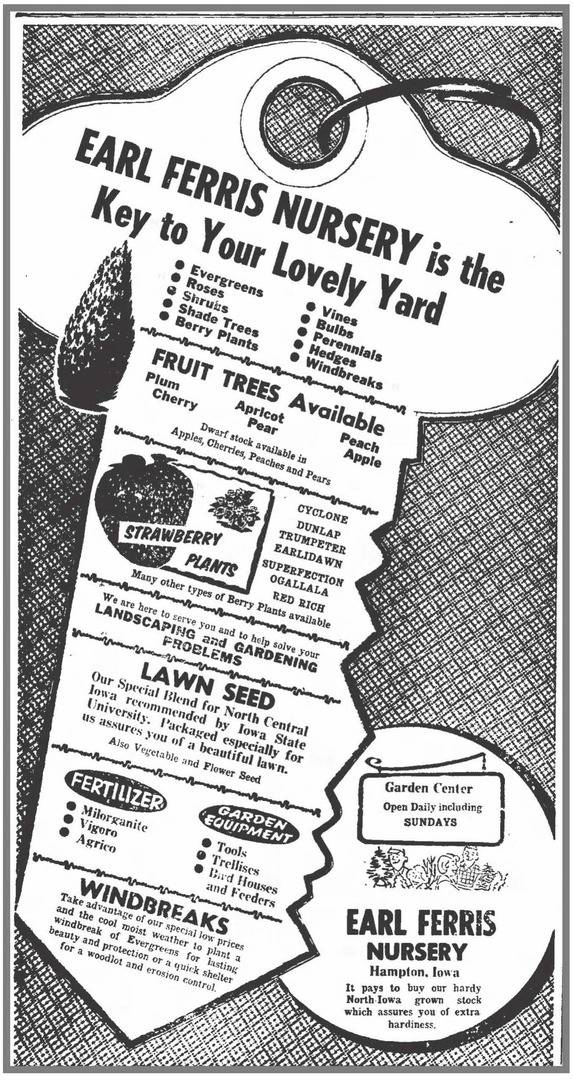
    Hampton Chronicle Ferris ad April 27 1963“Landscape by Mail” offered new options
    Innovation continued to define the Earl Ferris Nursery well into the twentieth century, thanks to S. Wayne Ferris, Sr.

    The only son of Earl Ferris, Wayne Sr. was born in Hampton in 1905 and worked in the nursery business all his life. He became president of the Earl Ferris Nursery in 1945 after his father died.

    Wayne Sr. started the “Landscape-by-Mail program,” employing a professional landscape architect to provide landscape plans for mail-order customers. “These customers would otherwise not have had access to professional landscaping,” Mickey said.

    Wayne Sr. also started a retail garden and gift shop in connection with his mail-order nursery. His two sons, Earl and Wayne Jr., came into the business, with Earl serving as office manager and Wayne Jr., in charge of propagation and fields.

    Wayne Sr. was a prominent leader in the local community, as well as at the state and national levels. He served as president of the American Association of Nurserymen and Iowa’s state association. He also served as director of the Iowa State Horticultural Society. Closer to home, he was president of the Franklin County Izaak Walton League when the group restored Beeds Lake. Wayne Sr. also served as a member of the Hampton City Council and Park Board and was chairman of the Franklin County Civil Defense program during World War II.

    Entering the last growth phaseHampton Chronicle May 12 1960
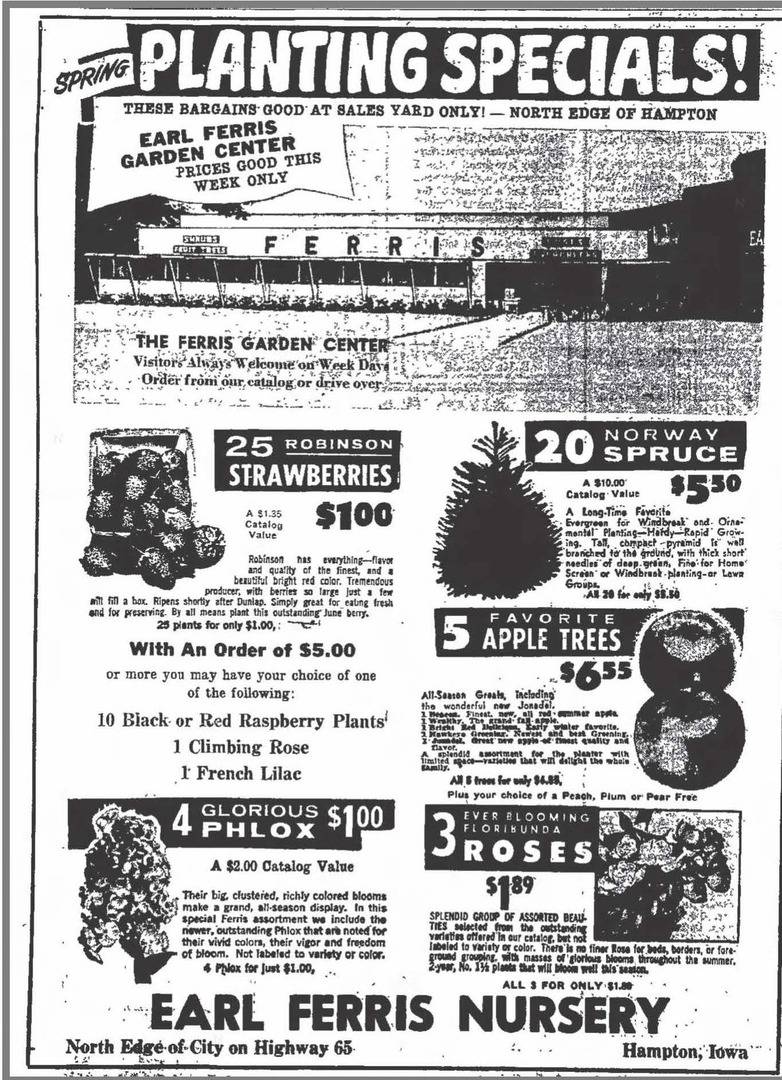
    After Wayne Sr. passed away in February 1977 and Wayne Jr.’s brother, Earl, moved to Illinois, Wayne Jr. and Mickey took over the operation of the nursery, which they renamed the Ferris Nursery.

    By this era, the once-thriving catalog business dwindled as big retailers like K-Mart and Walmart entered the market. “The stock and land were sold off, and Wayne began growing perennials and annuals in a large glass greenhouse,” said Mickey, who noted that Wayne became well known for his exceptional poinsettias, geraniums and annuals.

    Wayne purchased evergreens, trees and shrubs for the Ferris Nursery’s retail garden center. Mickey worked in the garden center and also started a flower shop. During the holidays, the Ferris Nursery also included a large Christmas shop.

    Wayne and Mickey’s sons, Jeff, Mark and David, all worked at the nursery during high school. The Ferris’s grandson Chad also worked in the greenhouse and flower shop, becoming the sixth generation to work at the nursery. When Wayne and Mickey decided to retire in 1997, no family members chose to continue the business. After 128 years in business, the nursery was closed permanently.

    Now in their 80s, Wayne and Mickey continue to call Hampton home and still enjoy growing plants for their small raised-bed gardens. “It’s a tiny thing, but we love it and
    wish we had a greenhouse,” Mickey said. “This part never leaves you.”

    For a taste of spring in Iowa, try this flavorful Daffodil Cake, which offers a colorful twist on a traditional angel food cake.
    Team Latham

    April 22, 2016
    Desserts, General, Recipes
  • Latham Hi‑Tech Seeds

    The Top 4 Reasons to Join NAMA

    IMG 3967

    by Kilah Hemesath, Latham Hi‑Tech Seeds Marketing Intern

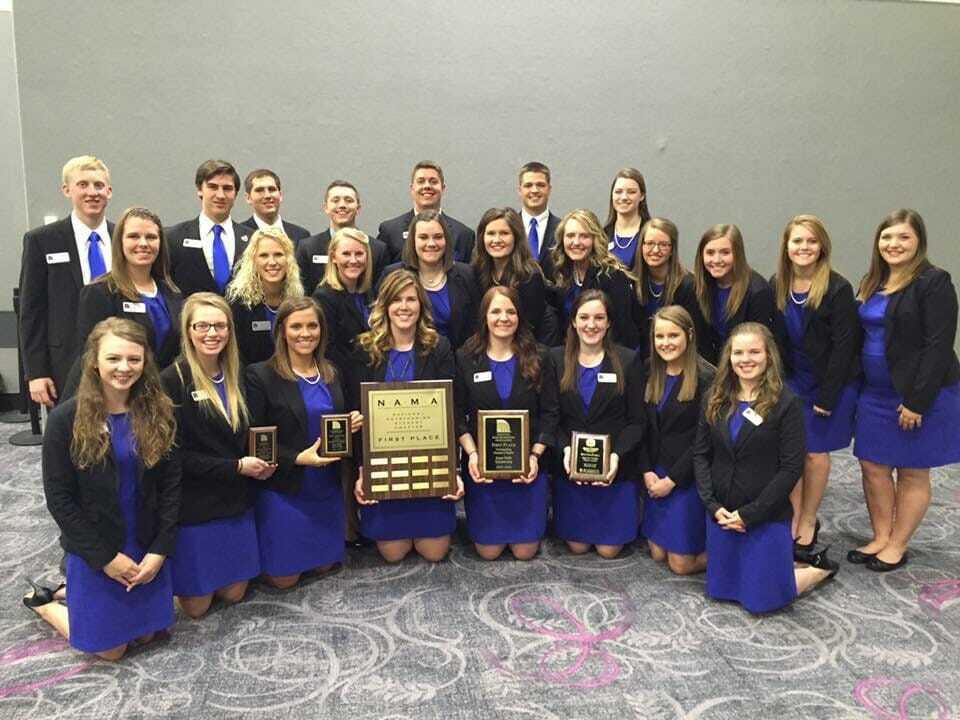
    “It’s never too late to try something new” is what my advisor told me during the second week of school last fall. My decision to become part of the ISU’s National Agri-Marketing Association (NAMA) Marketing Team was a spontaneous one that turned out to be a highlight of my college career.

    As a part of the marketing team, we developed a three-year marketing plan rollout for a new product, including marketing materials and a final presentation for competition. The 2016 competition took place in Kansas City, Missouri from April 12 – 15. I have included the top 4 reasons why any college student should become a part of the NAMA club or marketing team.

    1. You will make life-long friends.

    Being on the NAMA Marketing Team, I spent countless hours with the same group of people. While spending so much time together, the only option is to become friends! I would not have had the opportunity to meet and interact with such talented people if I would not have been involved in NAMA.

    1. Gain skills that are not taught in the classroom.

    NAMA offers real world experience that is not taught in the classroom. This isn’t due to lack of curriculum, but because of the complexity of our project. It required our team to identify a market potential and target market for our product, perform secondary and primary research, then develop a presentation and marketing materials and plan for competition, judged upon by professionals in the industry.

    1. You will become apart of something larger than yourself

    Achieving a personal goal is satisfactory, but NAMA gives you the chance do so on a larger level. While being a part of NAMA, you are constantly surrounded by people with the same passion as you, working towards the same end goal.

    1. Networking, networking, networking

    There’s not better place to network than a conference of students and professionals in the same industry! The student competition is just one portion of the conference; there are break out sessions and mingling events for professionals as well. Networking is key when building your brand in the industry.

    The ISU NAMA Marketing Team made it past the first round and into the semi-finals! Although we did not advance into the finals, the skills gained and lessons learned served all students well. Consider these pointes when contemplating on joining any extra circular activity. Just remember, it’s never too late to try something new!

    IMG_3967

    Webspec Admin

    April 21, 2016
    Agriculture, General, Industry News
  • Latham Hi‑Tech Seeds

    Food Choice Today Affects Hunger Tomorrow

    IStock 000022894424 Large

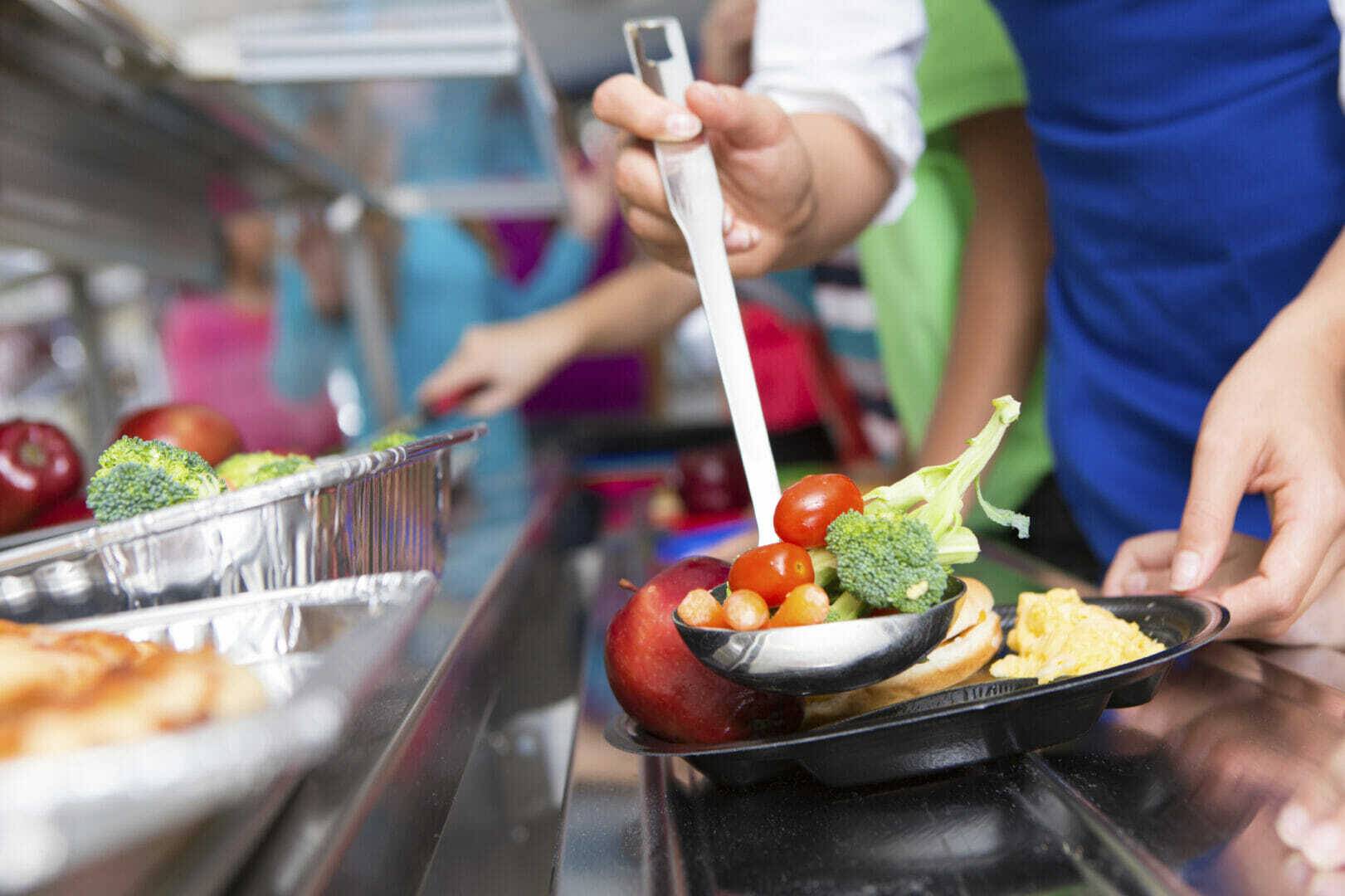
    Hunger and the 20 million kids that starve every year are on the top of my mind again this week because of so many uninformed decisions being made by people who simply do not realize what effect they can have.

    Again in the news, an African nation is letting its people starve rather than allow food aid from sources connected to genetically modified organisms (GMOs). Not one person has proven to have been harmed by this GMO technology, yet millions of adults and children are dying every year because a government decides not to accept U.S. food aid.

    The EPA seems to always be in my news feed. Now this agency is taking heat, once again, for funding anti-farm billboards that state farmers need more regulations. While this may be a little more subtle, it’s an example of how federal regulations makes food more difficult and expensive to grow. Kids starve because of this agencies policies!

    The misinformation being taught in our schools is concerning too. This week I read schools are teaching kids that grazing cattle is more environmentally friendly than feeding corn to cattle. This sways opinions and, during their formative years, children misunderstand how food is raised. This too, affects how food may be grown in the future. Honestly, the most efficient and productive way to raise cattle depends largely on geography. In Iowa, it’s more efficient to raise corn on our productive ground and then feed that corn to our cattle. There are some areas, especially out west, where crops cannot grow today. However, cattle can convert forage from 75 percent of the land that cannot grow food. Rangeland can be managed properly if the government doesn’t get in the way.

    Agriculture can lead to economic development opportunities until information gets misrepresented or politicians get overly involved. Such is the case currently in North Iowa where there is an opportunity to bring a processing plant to process pork that would potentially employ 2,000 people. Think of what these jobs could mean to local school enrollments and dollars spent in local stores!

    Half our citizens are on some type of assistance. Kids need to eat two meals in school because there aren’t getting the proper nutrition at home. Yet, many North Iowans say they don’t want “the type of jobs” that a processing facility would bring. They’re raising concerns about the smell and pollution.

    When the opportunity comes to help with these problems presents itself, they look for the downside. Why? Is the number of food insecure families here due to a lack of jobs? Or is it a lack of understanding of how food is raised? Or how nutritious food is prepared?

    How do we make it possible for all to eat? This election can make a difference! Politics get old… but we can’t ignore the fact that kids are going hungry! How can you make a difference? Get involved!

    Larry Sailer, Musings of a Pig Farmer

    April 19, 2016
    Agriculture, General, Industry News
  • Latham Hi‑Tech Seeds

    Iowa FFA is Tradition for Sturgeon Family of Belmond

    20160411 163223 resized1

    “Amplify: Boost your impact” is the theme of the 88th annual Iowa FFA Leadership Conference, which will be held April 17-19, at Hilton Coliseum in Ames. Not only does that conference theme serve as a rally cry for the more than 5,000 FFA members who will gather from across the state, but it’s the mantra of Sam Sturgeon of Dows.

    “I first decided to join FFA because I love helping on our farm,” says Sam, whose grandfather raises seed beans for Latham Hi‑Tech Seeds. Her father, Eric, is a Latham® seed dealer. The family also grows corn and runs a cow-calf operation. “FFA is becoming an important way for me to develop leadership skills. I’ve been reporter the past year. Chapter officers lead events and activities throughout the year, plus COLT (Chapter Officer Leadership) Training allowed us to meet officers from all chapters in our area.”

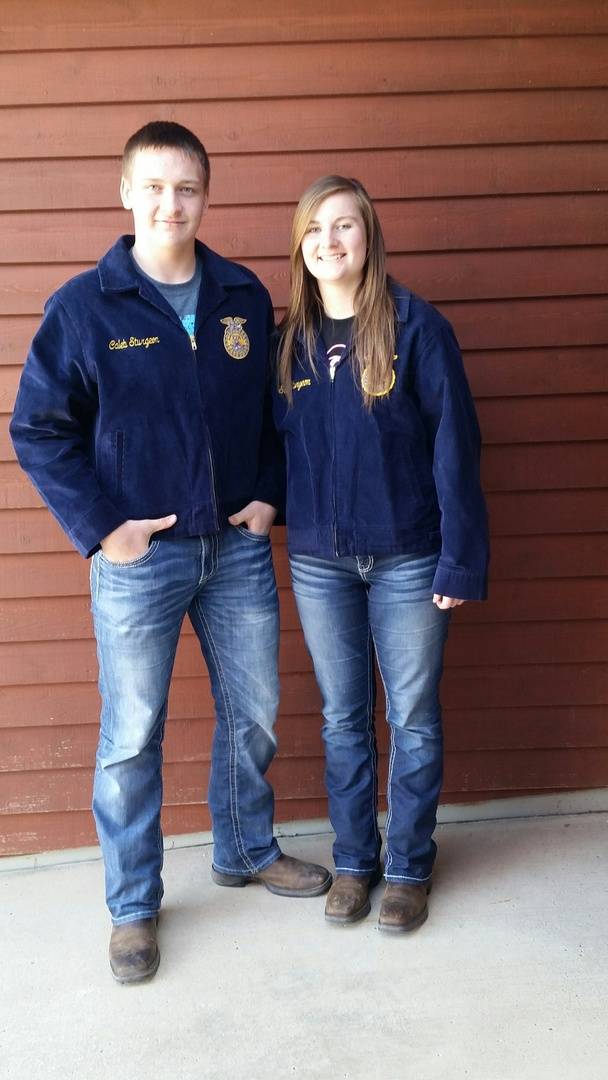
    A junior at Belmond-Klemme High School in Belmond, Sam has been active in FFA since seventh grade. Sam’s younger brother, Caleb, also joined the chapter in seventh grade. Both of them are carrying on the tradition set by their father and grandfather.

    Sturgeon Kids

    And just like her Grandpa Ron and Great Grandpa Gene Sturgeon, Sam will receive the Iowa FFA Degree. Next week when Belmond-Klemme FFA members travel to Ames for the state leadership conference, Sam will be awarded the highest rank a state association can bestow upon a member.

    Qualifications for the Iowa FFA Degree include:

    1. Recipient of the Chapter FFA Degree and having been an active FFA member for at least two years.
    2. Participation in at least 25 unduplicated hours of community service. Sam’s community service projects included: working the concession stand and cleaning up after sporting events at school, (coordinating or participating in?) a food drive for the food pantry and the Summer Backpack food program, as well as providing a calf and working at the petting zoo during Klemme Ag Days.
    3. Achieving a satisfactory scholastic record as certified by the local agricultural education instructor, the principal or superintendent.
    4. Demonstrated leadership ability:
      1. Performing 10 procedures of parliamentary law.
      2. Giving a six-minute speech on a topic related to agriculture or the FFA.
      3. Serve as an officer, committee chairperson or participating member of a chapter committee.
    5. Completion of at least two years (360 hours) of systematic school instruction in Agriculture Education of above the ninth grade level, including a Supervised Agricultural Experience (SAE) program. Through the SAE program, a student must have earned and productively invested at least $1,000 or worked at least 300 hours in addition to the class time or a combination thereof.

    For her Beef Production Placement SAE project, Sam helps her grandparents with 43 Maine Anjou-Angus cow-calf pairs. Calving begins in February and wrap up as planting season begins.

    “This year was especially exciting,” says Sam. “We did a lot of embroyo implants, so I stayed busy watching heat cycles. I enjoyed helping select semen from the bull we wanted. I was so excited to see what the calves would look like this year! I’m pretty excited about what we’ll have to work with.”

    At the 2015 Wright County Fair ,Sam and Caleb won Champion Cow-Calf Pair. They show cow-calf pairs for FFA and market beef through the Pleasant Progressors 4-H Club.

    While Caleb likes showing beef cattle, he really enjoys helping with crop production. His lifelong dream is be the fourth generation on his family’s North Central Iowa farm.  Sam prefers livestock production and plans to become a veterinarian. She volunteers nearly every Saturday, as well as on days when there isn’t school, at the Hampton Veterinary Clinic. She assists with surgeries and goes on farm calls. She helps spay and neuter pets, too.

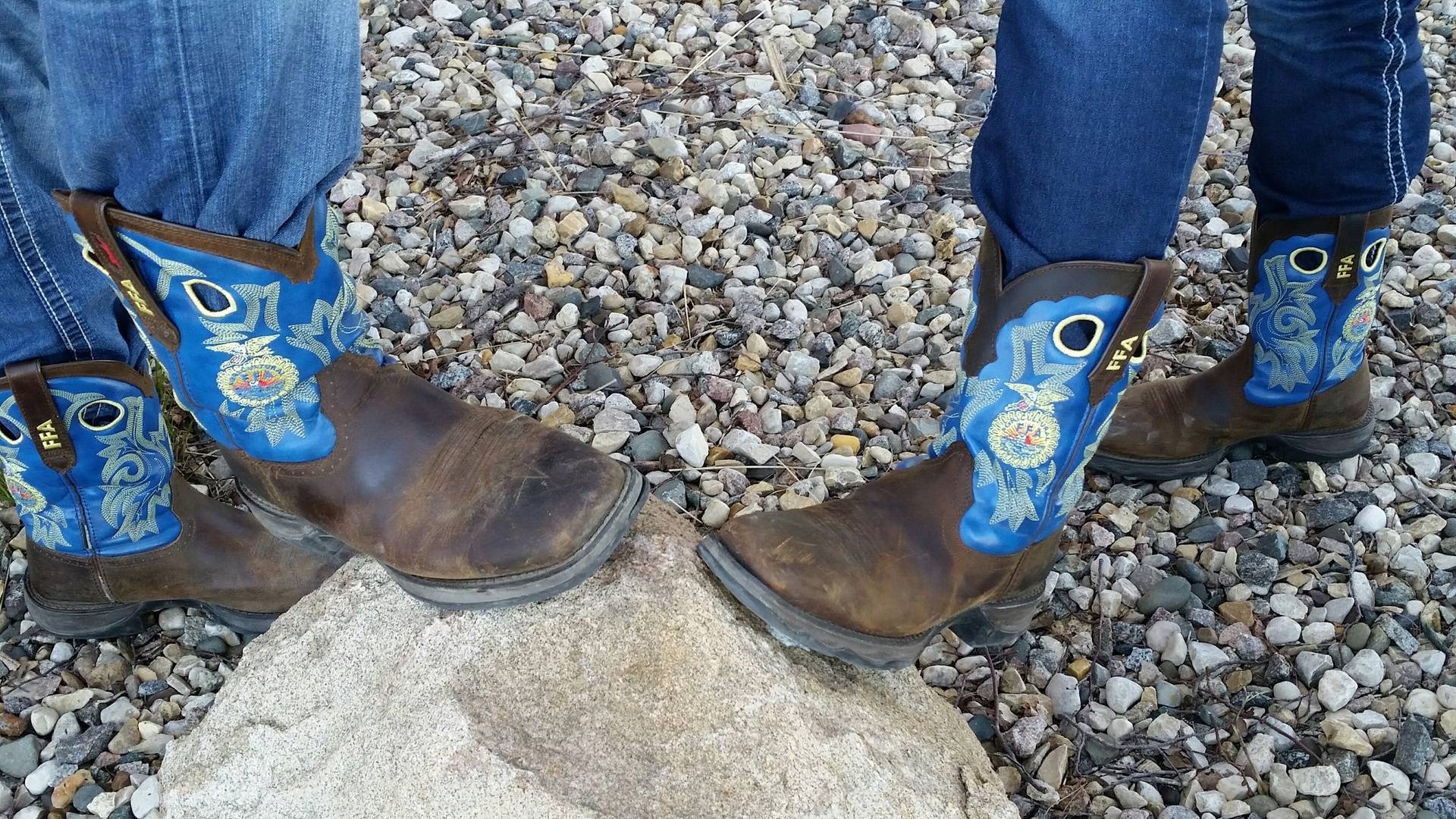
    Blame in on their FFA roots, Grandma knew they needed FFA boots!
    Blame in on their FFA roots, Grandma knew they needed FFA boots!

    The Sturgeons stay busy outside of school and farming. Sam also works part-time at Fareway. Caleb is a member of the football and basketball teams. In the off-season, he lifts weights.

    Every cattle producer knows the way to boost your energy levels and fuel your body is by eating beef! One serving of beef, provides our bodies with nearly half of its needed protein plus 10 essential nutrients including zinc, iron, protein and B vitamins.

    In anticipation of May Beef Month – and in celebration of Sam earning the Iowa FFA Degree – today the Sturgeon is sharing with us of one of their family’s favorite beef recipes.

    Team Latham

    April 15, 2016
    Beef, General, Recipes
  • Latham Hi‑Tech Seeds

    Top 5 Most Practical and Creative Graduation Gifts

    Grad gifts

    by Kilah Hemesath, Latham Hi‑Tech Seeds Marketing Interngrad gifts

    ‘Tis the season for buying cards and gifts for new grads! Consider switching up the traditional gift of wash clothes or embroidered towels by giving a gift that’s maybe unexpected but one that will certainly be appreciated.

    Now that I’m finishing up my senior year of college, I’ve been reflecting on lessons learned during the past four years. I’ve come up with a list of my top 5 most practical graduation gifts that are perfect for the high school or even college grad on your list:

    1. Laundry basket and essentials
      Once you move out of your parents’ home, it becomes obvious that laundry does not wash itself! Laundry detergent, fabric softener and dryer sheets always seem to run out faster than anticipated. Gifting a laundry basket with a few essentials such as detergent creates a practical gift that would be used on a weekly basis!
    2. Finals Week care packages
      There isn’t much that is more daunting than experiencing your first finals week. Care packages are always fun to receive in the mail, and it’s a great way to show support. Giving a student two care packages throughout the year – one in the fall and one in the spring – is the gift that keeps on giving! Plus, treats from the care packages come in handy during one of the most stressful times during the semester.
    3. Gas cards
      Although this is not the most exciting gift, it is the most practical! It’s easy to drive a fair amount of miles, especially when taking weekend trips or making trips home. Gifting a gas card can help new students get through the first semester without a job, and it can be used all year.
    4. Rain boots
      If you’re lucky enough to know the shoe size of the graduate on your list, rain boots serve as a useful gift for new college students. They may not appreciate it at first but they will quickly see the value the first time they have to walk to class in the rain! There are many patterns of rain boots available to fit everyone’s personality.
    5. Cookbook for one
      Transitioning to cooking for one person can be rough, especially when a lot of recipes are written for family-sized meals. Find a cookbook written for small dinners with simple ingredients. Gifting such a recipe book with a few spoons and spatulas can make a great cooking set!

    Hopefully, this list will help make gift shopping less stressful and a little more fun this graduation season. Have a unique gift idea you’re willing to share? If so, please comment below!

    Webspec Admin

    April 14, 2016
    Agriculture, General, Industry News
  • Latham Hi‑Tech Seeds

    We’ll Give You Tools to Celebrate National Gardening Month!

    Garden Package Giveaway

    Garden Package Giveaway

    Spring has officially arrived and National Garden Month is underway. To celebrate the new season, Latham Hi‑Tech Seeds will give away a gift pack of gardening tools!

    It’s time to get those early crops in the ground and finalize plans for the rest of the garden. I’ve seen Facebook posts from my friends, who have spent the past few weeks putting seeds in containers and starting them in greenhouses. Last weekend some friends were planting potatoes.

    I usually plant potatoes and tomatoes, as well as pick strawberries. But I have to admit, my garden produce is ripe during one of the busiest times of the year in my business. I spend two weeks every June traveling out of state to attend business meetings. Our annual Latham® dealer meeting is held the beginning of July, and our county fair is always in the middle of July.

    On top of that, I spend nights and weekends attending numerous horse shows across North Iowa with my daughter. Nearly every weekend my son plays in a basketball tournament somewhere in the Midwest, plus he plays on our school’s baseball team. I meet myself coming and going! As a result, my produce is usually ripe when I’m not home and weeds take over my garden by the summer’s end.

    This spring I decided to give myself a little grace. Rather than stressing about not having a space worthy of a Better Homes & Gardens photo spread, I’m going to plant pollinator packets instead of vegetable seeds. I can #FeedaBee, enjoy blooms all summer long, and stop feeling guilty that I’m not out weeding my garden every time I have 15 minutes in between work and kids’ activities.

    Sound good? Perhaps this blog can help inspire you the way a visit to Cynthia and Ritch Berkland’s beautiful Iowa century farm got me excited about pollinator gardens. Their gardens were stunning! Since I first planted a butterfly garden about 12 years ago in my backyard, I was interested in learning more. Two tips from Cynthia are:

    1. Use native plants from your ecoregion as they will be the hardiest. Plants native to your region also will take the least effort and be the most attractive to pollinators.
    2. Cultivars are all clones and lack the biodiversity that increases the chances of their survival. They may not have as many stunning colors or exotic flowers, but the increase in fauna of all kinds should make up for that.

    Cynthia then introduced me to the gardening book in the giveaway bag to provide more information about native plants. I gave a copy of it last year to my mom for Mother’s Day. In addition, my visit last summer to the Berkland Century Farm also motivated me to post a series of related blog posts:

    • Follow These 3 Ps for a Pollinator-Friendly Garden
    • Add Backyard Beauty with a Butterfly Garden
    • Gardening Can Be for the Birds

    In a Letter to the Editor last summer, Cynthia wrote:

    If you watch the action on your lawn, you’ll see the only place a pollinator stops to visit is the occasional dandelion or clover. Just think of the difference we could make if each of us stopped mowing and planted native grasses and wild flowers in just one corner of our yard! Native grasses and wild flowers take almost no maintenance, and once they’re established, they provide food and habitat for the native fauna of the prairie.

    Another way we can all make a difference is to stop mowing the road ditches. Bees, butterflies, dragonflies and other insects – not to mention pheasants, partridge and other animals – can’t use neatly manicured ditches. They need the flowers and grasses that used to grow wild when Iowa was covered with thousands of acres of prairie.

    Please consider doing what you can to change the situation. Do something meaningful and help provide pollinator habitat!

    Team Latham

    April 13, 2016
    Agriculture, General, Industry News
  • Latham Hi‑Tech Seeds

    Even if production doubled, people would starve!

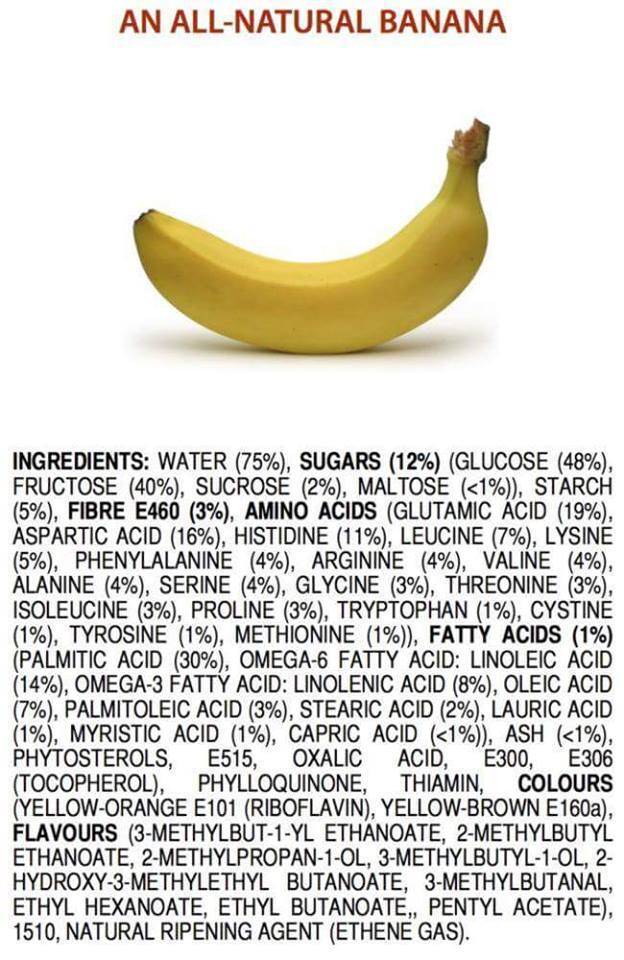
    Banana label

    As a farmer, I like to think we are great at efficiently raising food in a sustainable manner. Today one U.S. farmer feeds 155 people worldwide. We’re raising 2.5 times more food than we did in 1960, yet people are still going hungry.

    “Clean your plate. Kids are starving in Africa,” my mom would say when I was a kid. Today kids are still starving in Africa and around the world. There are many U.S. families that are food insecure. One in eight Iowans is food insecure, meaning they lack the resources to live an active and healthy lifestyle. One out of 5 Iowa children does not have enough food to eat.

    Truth is, kids would go to bed hungry even if we increased production another 2.5 times. People are not getting the minimum number of calories needed due to politics and governmental intervention. Every ill these days is getting blamed on politics, and it’s tiring. I know. However, governmental policy undoubtedly influences a society’s wellbeing. That’s why throughout history food has been used to control people and as a tool of war. Food is even used for political gain. Right now food is being used as a political pawn relating to climate change.

    Food is being blamed for our obesity problem, although we’re free to make our own food choices. Food is even being blamed for being full of chemicals. (Side bar: In a consumer survey conducted by the International Food Information Council Foundation, the number one food safety issue cited by Americans is “chemicals in food.” In 2014, only 23 percent of Americans listed this as the most important food safety issue for them. This percentage increased to 36 percent in 2015, edging out “foodborne illness from bacteria” as the number one food safety concern.”)

    How many of the folks who are worried about chemicals in their foods are coffee drinkers? After all, caffeine is a natural pesticide. I’m also curious to know how many of these folks — as well as those who want to label GMOs — regularly drink pop or soda. Did you know a chemical found in many sodas may cause cancer? That’s why it’s contradictory to buy organic produce and then drink Coke or Pepsi products. Besides, buying organic produce doesn’t guarantee it was raised without chemicals including pesticides even though 95 percent of consumers said they buy organic foods because they think their pesticide-free.

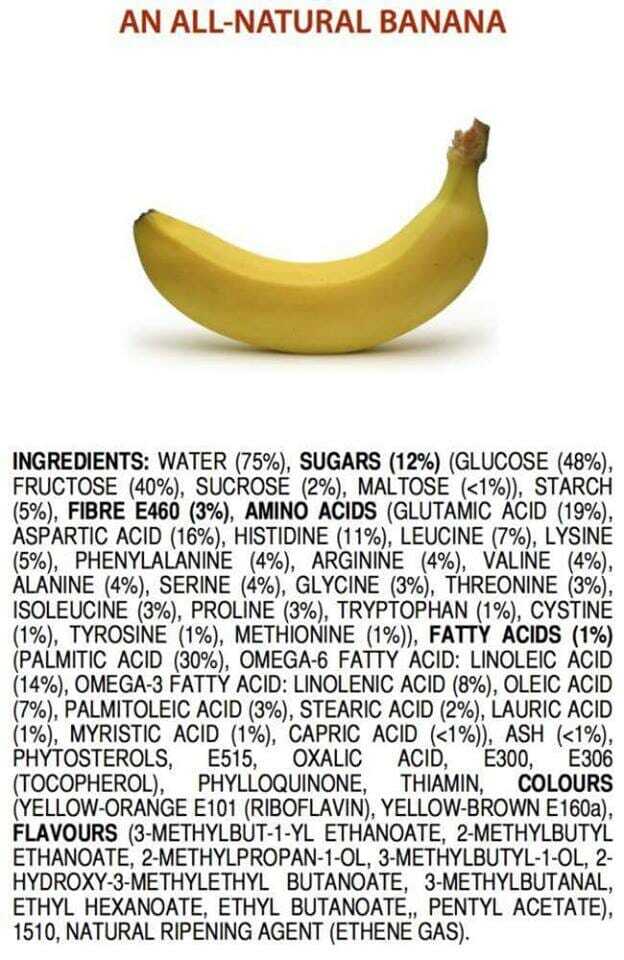
    It’s a misconception that all chemicals are bad. I recently shared a picture of a banana, listing its chemical make up. There were many big words that I can’t pronounce, yet I don’t fear a banana. Unfortunately, a few activists decided the public should fear banana research. Banana label

    Iowa State students in February protested research to develop bananas that could combat Vitamin A Deficiency. Dr. James Dale from Queensland University of Technology developed the new banana by transferring a gene from a wild banana from Fiji to the bananas consumed as daily food in Uganda and other parts of Africa. A student, who apparently has sufficient Vitamin A, dressed in a banana costume to protest bananas being developed to provide nutrition to the developing world.

    Activist block the progress of developing better foods. They also can cause a delay in foods, like Golden Rice, that could help millions of kids become healthier and live longer. “We don’t have the luxury to rule out the use of any technology that may hold promise to improve crop performance,” says Stephen P. Long, University of Illinois crop scientist, in a recent article in the Iowa Farmer Today entitled, “Scientists say the world is one crop breeding cycle from starvation.”

    The greatest strides can be made by giving all people the freedom to develop their potential of economic freedom. Even regulations made for all the right reasons can have very dire consequences. That’s why I’m so concerned about the direction our country is headed. I’m concerned about governmental overreach. I’m concerned about how legislation and regulation will impact my livelihood. I’m also concerned by the amount of FREE stuff that some U.S. presidential candidates are promising.

    As we decide on new leadership for our country, let’s take into consideration what made this country great and what will continue to maintain our leadership status. Be an informed citizen and make your vote count!


    Larry Sailer, Musings of a Pig Farmer

    April 12, 2016
    Agriculture, General, Industry News
  • Latham Hi‑Tech Seeds

    Soy Scholars Provides Unique Career-Building Opportunity for Students

    SoyScholars logo

    SoyScholars_logo

    High school students considering an ag-related career are encouraged to participate in the Soy Scholars program, which is being offered by the Iowa Soybean Association with support from Latham Hi‑Tech Seeds. Soy Scholars will launch April 18-19 at the Iowa FFA Leadership Conference in Ames, and applications are due May 3.

    Four students will be selected to participate in the three-session career emersion, field experience and job shadow program. During the sessions, students will work directly with a mentor in their field of interest to gain hands-on experience, ask questions and make connections.

    Soy Scholars will allow students to explore career paths before they graduate high school or declare a college major. That’s why Latham Seeds is proud to help showcase a wide-array of ag-related careers from agricultural production and marketing communications to seed sales and precision farming. Those students selected to participate in this program will get real-world experience. They’ll gain insights about an industry that aren’t readily available online or in a textbook. And just as importantly, these students will meet some of our state’s top agricultural leaders who farm or work in agribusiness.

    One out of every five Iowans work in an agriculture- related job, according to a 2014 study. Iowa’s agriculture industry contributes one out of every three dollars in Iowa’s economy, or 33 percent of the total state economy. This sizable contribution offers more than a few opportunities for Iowa youth.

    For more information or to apply, visit the ISA booth at the Iowa FFA Leadership Conference or go to www.iasoybeans.com/SoyScholars/.


    Team Latham

    April 11, 2016
    Agriculture, General, Industry News
  • Latham Hi‑Tech Seeds

    Get #SoyInspired… Try New Healthy Recipes this Month

    Linda Picture latest one

    Guest blog post by Linda Funk, Executive Director, The Soyfoods Council

    We all know that we should “eat healthy.” Diet is a keLinda Picture- latest oney lifestyle factor affecting the risk of developing cancer, and research shows that eating more polyunsaturated fat is key to reducing death from coronary heart disease. So why is it many Americans prefer to grab a candy bar or bag of potato chips for a quick snack and order pizza for supper?
    Convenience and simplicity are key in determining food choices. Did you know soybeans are a simple way to add protein and fiber to your diet? Soy protein is so healthy for you, too. It’s low in saturated fat and has no cholesterol.  It’s also high in polyunstaurated fat and provide essential omega-3 fatty acids.

    Here are two more good reasons why you should consider adding soyfoods to your diet:

    • Isoflavones Protect Against Ovarian Cancer Risk. It’s estimated that more than 14,000 U.S. women died of this disease last year. However, Japanese researchers have examined the association between the intake of isoflavones and ovarian cancer in seven different countries. The results shows the risk of having ovarian cancer is reduced by approximately one-third that when comparing high isoflavone intake with low intake. NOTE: Soyfoods such as tofu, soymilk, and edamame are uniquely rich sources of isoflavones.
    • Consuming More Polyunsaturated Fat is Key to Reducing Death from Coronary Heart Disease. The American Heart Association has endorsed the use of soyfoods because they are low in saturated fat and high in polyunsaturated fat.  New research from an esteemed group of investigators has found that consuming too little polyunsaturated fat was responsible for three times more deaths than consuming too much saturated fat.  This analysis included 186 countries in 21 world regions and 3.8 billion adults.

    After hearing about so many virtues of soyfoods, I hope you’ll feel inspired to add some to your diet! No need to fret over a meal plan as today I’m providing recipes for a four-course menu:

    1. Salad with Basil Lime Dressing
    2. Asparagus Soup or Grilled Asparagus
    3. Miso Marinated Chicken (see recipe below)
    4. Elizabeth’s Chocolate Pudding Pie or Key Lime Pie

    Find daily tips for using soyfoods and #SoyInspired recipes during April SoyFoods Month on Facebook. Join our Twitter chat for a chance to win a copy of Tofu Cookery. Also check out our Soyfoods Month Pinterest board!

    Team Latham

    April 8, 2016
    Food & Family, General, Poultry, Recipes
  • Latham Hi‑Tech Seeds

    Time to Fire up the Grill!

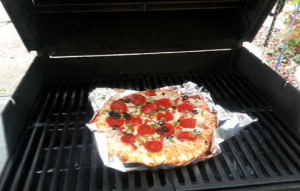
    IMG 3860

    By Kilah Hemesath, Latham Hi‑Tech Seeds Marketing Intern

    The grilling aroma has been filling the fresh spring air on days we’ve been blessed with warm weather! Hamburgers, hotdogs and brats are always popular choices but switching it up can be fun.

    Pizza and shish kabobs are some of my favorite foods Screen Shot 2016-04-07 at 8.11.29 AMto grill. When grilling pizza, my family has found it works best to put the pizza on a baking stone or tinfoil. Cooking the crust halfway in the oven before adding the toppings helps ensure an evenly cooked pizza. It also gives the pizza some structure, making it easier to transfer it to and from the grill.
    Once we transfer the pizza to the grill, we put the lid down and cook it for about 20 minutes at approximately 250º F. Today I’m sharing the pizza crust recipe we’ve successfully used on the grill.

    Pizza Crust

    1 cup warm water
    1 pkg yeast
    1 tsp sugar
    1 Tbsp olive oil
    2 1/2- 3 cup flour
    1 tsp salt
    1/2 tsp olive oil

    Mix yeast, sugar, oil and warm water together. Set till foamy. In a mixing bowl, add 1 1/2 cup flour and salt. Mix until smooth. Continue adding 1/4 cup flour at a time until reaches the consistency that you like. (I usually add about 2 cups total.) Knead about 3-5 mixtures, or until tacky. Coat the inside of the mixing bowl with 1/2 tsp olive oil. Place dough in bowl and cover for about 1 1/2 hours. Press in greased pan. Bake at 450 until slightly brown.

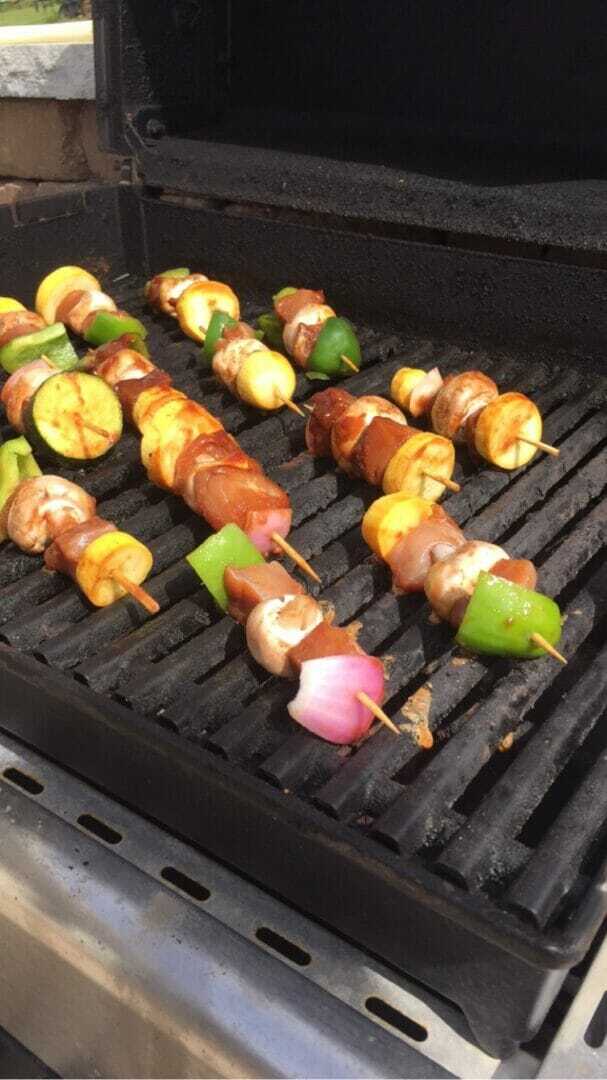
    What’s better than eating food on a stick? (Just thinking about food on aIMG_3860 stick reminds me of the state fair, and that certainly brings back a lot of memories!) My favorite summer food is shish kabobs. One of the best things about kabobs is that you can make them your own way! I love putting peppers, onions, mushrooms and squash on a stick with the chicken. We’ve found it helps the veggies stay on the stick if we begin and end with a piece of meat. We also marinate the chicken for a day before we grill it.

    Here’s our “go-to” sweet marinade for shish kabobs.

    Chicken marinade recipe

    1/2 c. ketchup
    1/2 c. sugar
    1/2 soy sauce
    1 tsp. garlic powder
    1 tsp. ginger
    1 tsp salt

    Combine these ingredients. Marinate 2 pounds of meat (chicken or beef) in this sauce overnight.

    Some suggestions for kabobs:pineapple, zucchini, mushrooms, boiling onions, green peppers. Grill 15-20 minutes.

    Grilling sweet corn has always been on my list that I need to try! There are endless flavors and styles of grilled sweet corn, which can also make a great summer dish because of the bright yellow color. Give these food items a try when you are looking to veer away from the typical grill-out food. Embrace the nice weather and everything it entails, and start grilling!

    Webspec Admin

    April 7, 2016
    Beef, General, Pork, Poultry, Recipes
Previous Page
1 … 31 32 33 34 35 … 159
Next Page

Latham Hi‑Tech Seeds

131 180th Street | Alexander, IA 50420

(641) 692-3258

SIGNUP FOR OUR NEWSLETTER
  • Contact
  • Legal
  • Dealer Center
  • Seedware Login
  • Latham Gear

© 2025 Latham Hi‑Tech Seeds. All rights reserved. | Iowa Web Design by Webspec | Privacy Policy

Latham® Hi-Tech Seeds is a trademark of M.S. Technologies, L.L.C., 103 Avenue D, West Point, IA 52656.