Spring is a time of new beginnings for farmers across the Upper Midwest. It was fitting that in April 2014 Matt Wyatt left his full-time job of 18 years as claims supervisor for Rain & Hail Agricultural Insurance to fully enjoy this new season of life.
Matt enjoys planting and harvesting crops without distractions including checking email frequently and fielding multiple phone calls related to crop insurance.
Frank Wyatt with son Matt Wyatt
“I like knowing I’ll be home every night, and I like working with my dad,” says Matt, the fourth generation of Wyatts to farm near Hudson in Northeast Iowa.
Matt and Frank raise corn and soybeans. They also have an early wean-to-finish pork operation. In addition, Frank has been a Latham® dealer since 1995. Matt joined the dealership in 2015.
Being alone with his thoughts for a good part of the day took some getting used to as Matt transitioned from his corporate job to farming full time. Now he enjoys spending time outside where the birds sing and his phone isn’t chirping incessantly. He can concentrate on doing the day’s job and planning for the future.
“Even if they don’t decide to pursue farming, I want my children to have an appreciation for the process,” adds Matt. “I want them to experience a feeling of accomplishment at the end of the day, knowing the work that was done is all a part of something bigger.”
The Wyatt Family
Matt graduated in 1996 from Iowa State University (ISU) where he earned a bachelor’s degree in Agricultural Business with a minor in Agronomy. It’s also where he met his wife, Chelsea, who stays busy with her children’s school and community activities. The couple are the proud parents of two sons and a daughter: Cael, Aiden and Ava. Cael is a senior at ISU, majoring in Communication Studies. Aiden is a sophomore at ISU, majoring in Journalism. Ava is a high school junior, who is considering ISU for her future studies.
Active in the community, Chelsea organized the community soccer program and chaired the local parent-teacher association for several years. Matt helped coach the community’s youth wrestling program and served as a coach for Ava’s youth soccer team. Matt also has been president of the Gladbrook-Reinbeck School Board and is active in his local church. In addition, Matt and his father, Frank, are active in the Masonic Lodge.
In their free time, the Wyatts enjoy cheering on the Iowa State Cyclones and the Gladbrook-Reinbeck Rebels. Matt enjoys golfing, and Chelsea enjoys taking family vacations to the beach.
In honor of the pork they produce and the tropical vacations they enjoy, the Wyatts are sharing a family favorite recipe.
“It’s rare that I make the same thing twice, but this recipe is great for tailgating and entertaining,” says Chelsea. “You can whip it up the night before, it feeds a lot of people and is always a hit!
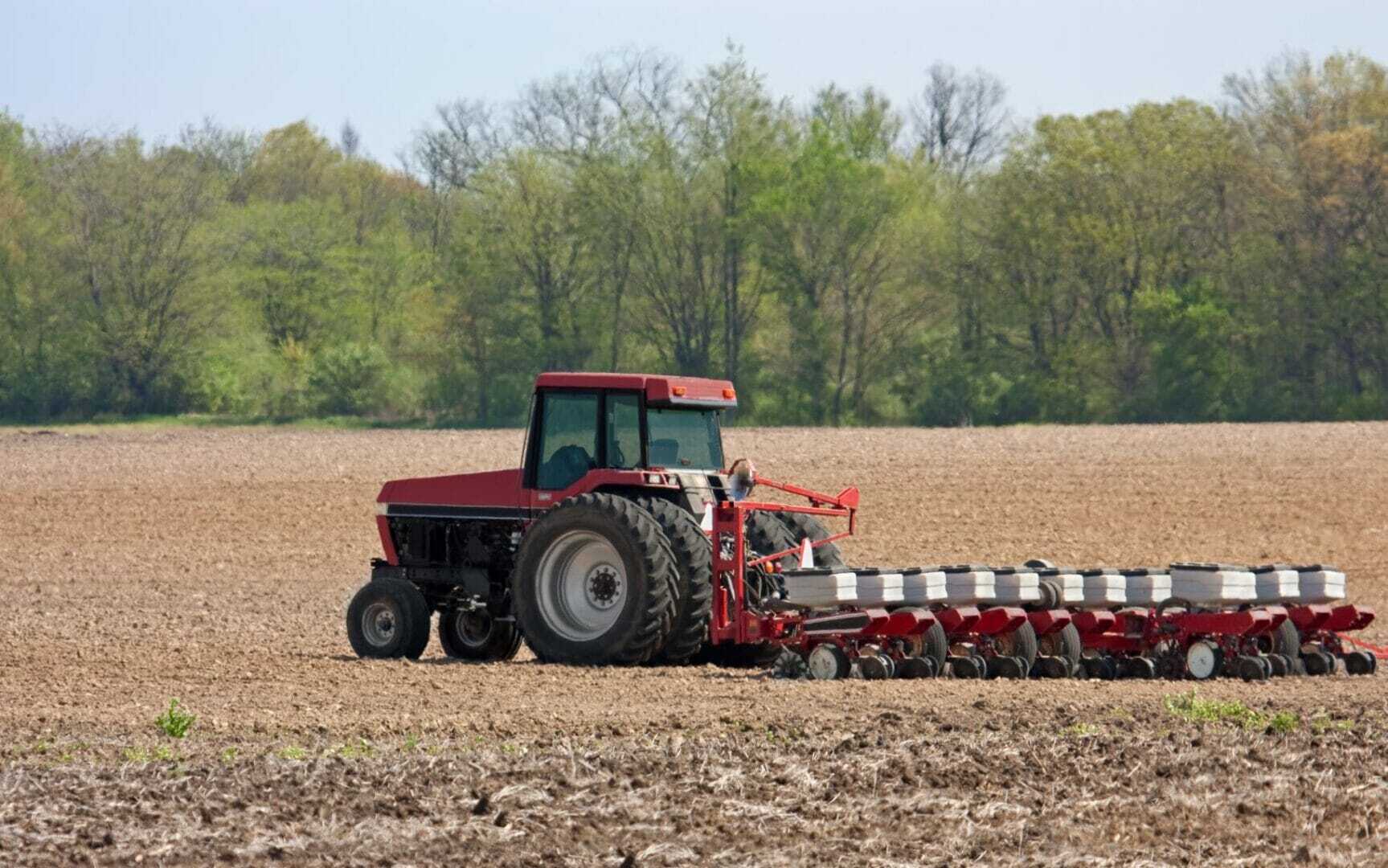
Your planter is the most important piece of equipment because it has the largest impact from emergence to final yield. Making these three upgrades will provide a return on your investment (ROI).
Closing Wheels in No-Till or Limited-Till Conditions. Closing wheels on a planter ensure the furrow is closed and there is adequate seed-to-soil contact. In a dry spring, this can be the difference as to whether the seed can pull enough water to germinate. If there are air pockets around the seed, it either won’t germinate or it will rot trying. There are many different types of closing wheels and closing wheel systems. Look at your management style and determine if you need spiked wheels to help crumble the furrow wall in tough soil conditions or if you need more aggressive closing action. Then look at the closing wheel systems or one with a walking axle on it. If you conventionally till all your fields in the spring before planting, you likely don’t need this upgrade.
Floating Row Cleaners. Rigid or pin adjust row cleaners have been the standard for many years and can perform well in certain circumstances. However, their limitation is not being able to adjust for changing terrain. Any tillage situation that leaves some residue on top of the soil can benefit from a residue cleaner. Consider switching from fixed to floating if you have been noticing uneven emergence in spots of the field as you roll across different terrain. The row cleaner could be riding high and not clearing a path, resulting in hair pinning, uneven planting depth and residue in the furrow.
Downforce Adjustment. On-the-go downforce adjustments is not the easiest upgrade, but it will likely provide the best ROI in any tillage situation. This upgrade can keep your planter units riding smoother, so more uniform depth is achieved. Depth robs more yield than spacing. Having too little downforce means the unit could be riding up and not getting the seed placed where it should. If conditions are wet, you don’t need as much weight on the unit. Wet conditions or too much weight compact the furrow walls, causing root and early season growth issues. A study done by Agco in 2017 revealed on-the-go downforce adjustments had a 20 bushel per acre (Bu/A) advantage in situations when the down pressure was too light and 6 Bu/A advantage over too much down pressure.
Remember, your operation is not the same as your neighbors’. Be sure to align these planter upgrades with your specific soils and management practices, and they will provide a return for your operation.
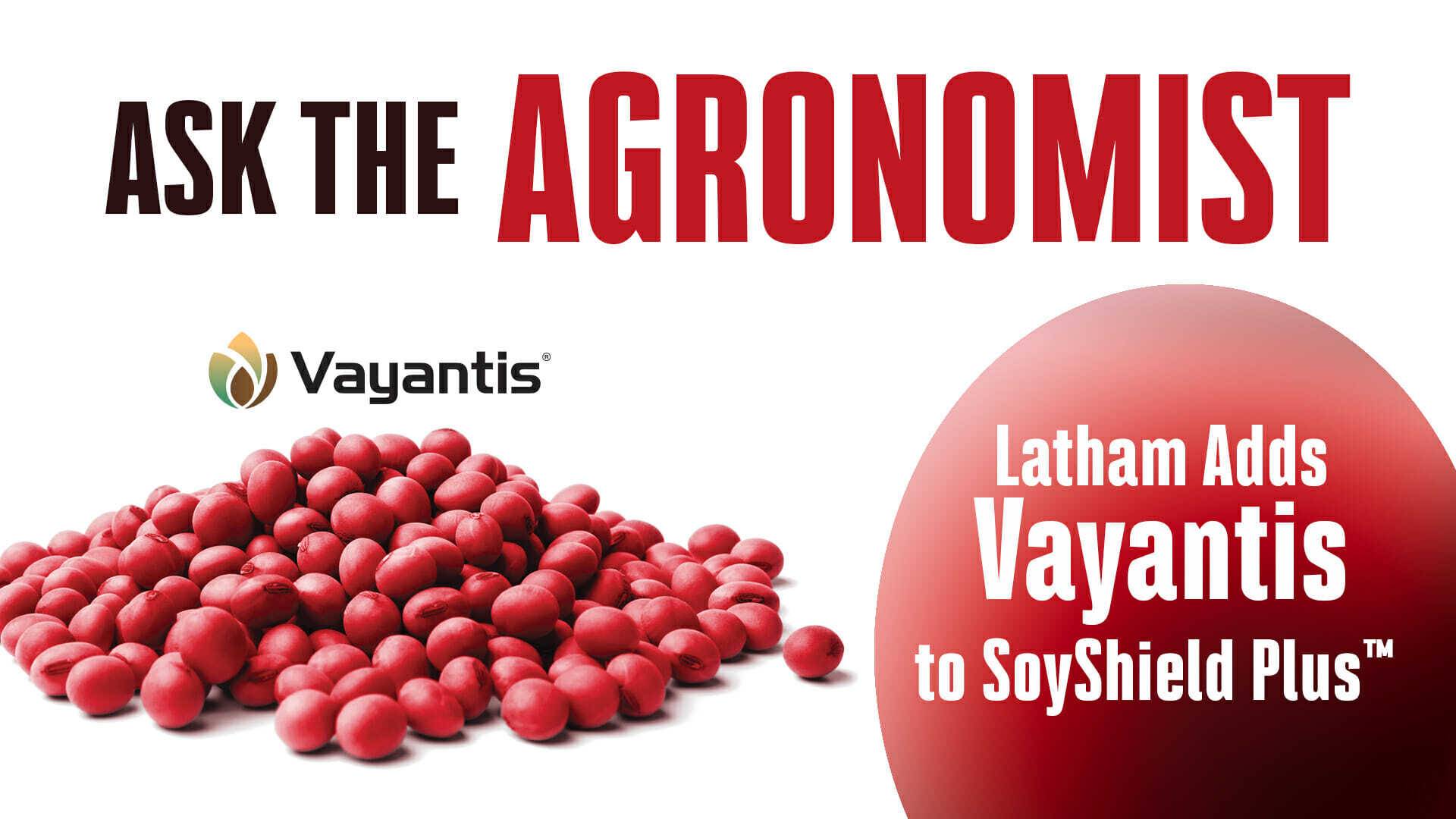
Latham Seeds adds new Vayantis® to SoyShield® Plus! On this week’s #AsktheAgronomist, Phil Long, precision agronomy advisor, and Matt Moore, soybean product manager, discuss soybean treatments and how the addition of Vayantis is really exciting going into the 2022 planting season! Learn more about Vayantis fungicide.
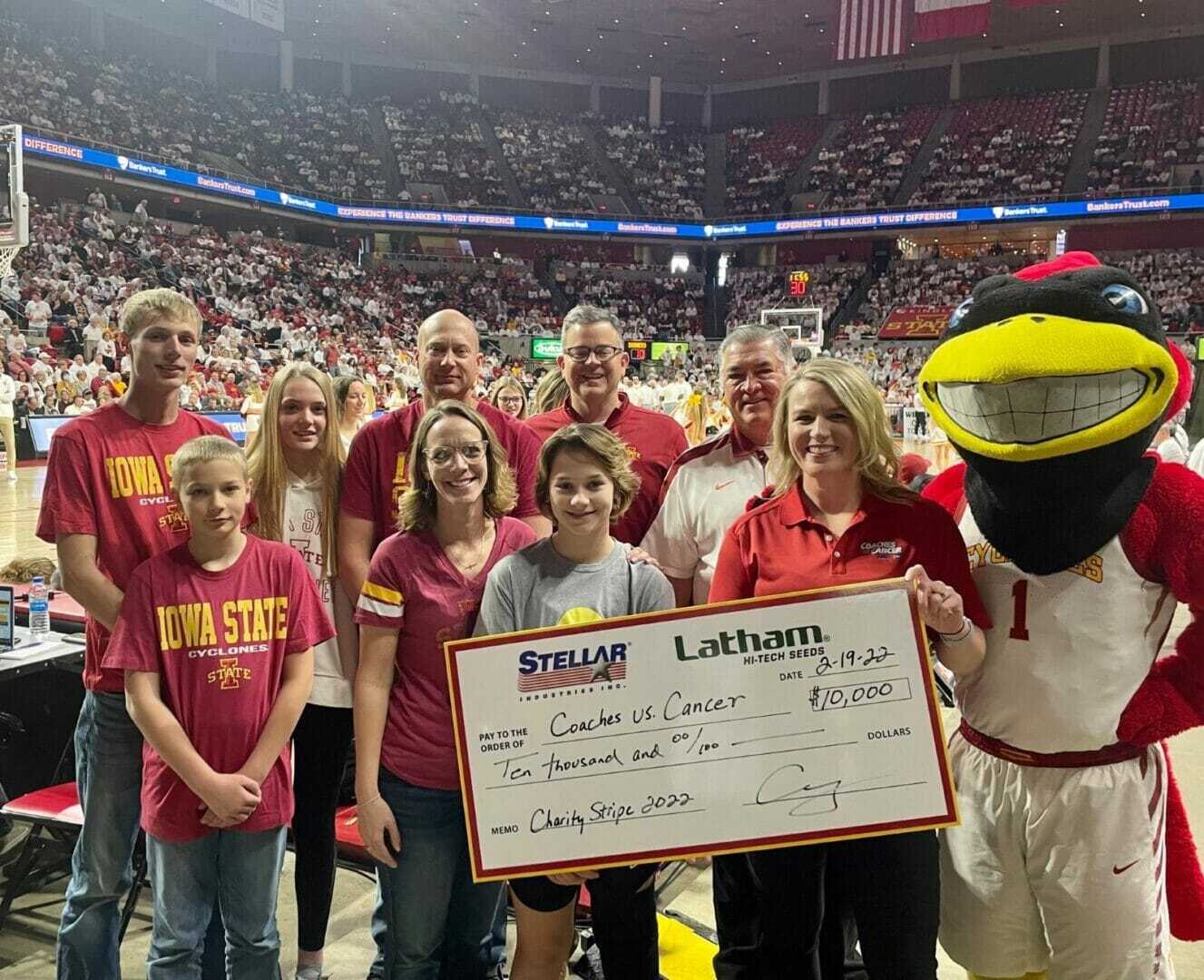
Each time a member of the men’s basketball team at the University of Iowa or Iowa State University stands at the free throw line the American Cancer Society has a shot at winning. For the 10th consecutive season, Latham Hi‑Tech Seeds has teamed up with Cyclone Sports Properties and Hawkeye Sports Properties to donate funds to the American Cancer Society through Coaches vs. Cancer. Over the course of 10 years, Latham Seeds has donated $65k.
Coaches vs. Cancer was championed by Norm Stewart, former head coach of the University of Missouri men’s basketball program. As a cancer survivor and member of the National Association of Basketball Coaches (NABC), Stewart challenged fans to pledge a dollar amount for points made by his team. The American Cancer Society and the NABC adopted that concept in 1993, transforming it into a nationwide effort to provide help and hope to people facing cancer.
“We have been committed to supporting the American Cancer Society through the Charity Stripe Promotion since 2013 because we know first-hand what a gift hope can be,” says John Latham, president of family-owned Latham Hi‑Tech Seeds in Alexander, Iowa. “On February 20, 2010, my father underwent a stem cell transplant to battle AML (Acute Myelogenous Leukemia). He and my mom moved into the Gift of Life Transplant House in Rochester after he was released from the hospital. That transplant extended Dad’s life for more than five years, and we are grateful for all of the support he received during his cancer battle. I also grateful that my mom is a two-time cancer survivor.”
Whether it’s ourselves, our parents, a neighbor or a coworker, each of us has a cancer story. More than 1.6 million people are diagnosed with cancer annually in the United States. No one fights alone.
Phil Long, precision agronomy advisor, dives into Dicamba and highlights ways it can be affective in your herbicide regime. Subscribe to our YouTube channel and stay up-to-date with agronomy news in the industry.
When you step onto the warm, white sand beach at Secrets Wild Orchid in Jamaica and overlook the beautiful waters of Montego Bay, your worries melt away. It sounds cliché, but it’s true. As you breathe in the delicious smells of chicken grilling at the Jamaican jerk shack near the pool, you crave your next meal – regardless of what time it is.
Time is savored as much as the meals and the music on this laid-back island in the Caribbean.
“Although we stayed in a beautiful four-star, all-inclusive resort with bottomless food and drinks and endless entertainment, it was really our people who made this trip so memorable,” says Amy Rohe, sales manager for Latham Hi‑Tech Seeds. “The first night literally set the stage for our group. The band was amazing, and band members invited some of us onto the stage. We weren’t just listening to their performance. We were part of it! ‘Creating amazing customer experiences’ is something we strive to do at Latham Seeds, but this was better than we even imagined.”
Many people in our group got to meet Latham® dealers from other states the first evening. During our breakfast / orientation meeting the following morning, Amy encouraged everyone to meet someone new from another state.
John Latham, president, welcoming the Latham Team.
“It was super fun to see friendships form between dealers from other states throughout the five days,” says Amy. “By the night of the talent show, Team Latham showed up in full force to cheer on one of our own dealers.”
The talent show at Secrets Wild Orchard provided amazing entertainment. It included fire dancing, which was so dangerous that it made you nervous to watch. At the same time, you didn’t want to look away because it was so intriguing. There were talent acts performed by some of the resort’s employees, as well as by resort guests.
“The resort guests, who were competing in the final round of the talent show, had the chance to win a three-night stay at the resort. The competition was close between the finalists – especially between a lady who sang an iconic Whitney Houston song and a Latham dealer,” says Amy. “We were all so excited when our dealer was named the winner!”
Jake experienced more than 15 minutes of Jamaica fame as the band invited him back to the stage during Latham Seeds’ beach party, which was held the night before our group departed.
“When Jake took the stage, our entire group got up and danced while he played. It’s moments like this that turn a great trip into an amazing one!” says Amy. “The beach setting at sunset was spectacular. We could smell the ocean and the delicious food. We were listening to really good reggae music and then… Boom! We were dancing to familiar American songs played live with one of our own dealers being featured on the drums. It really doesn’t get any better than that!”
After five days in paradise, Latham Team members packed their complimentary bottle of jerk sauce and headed home to the Midwest tundra. We’re sharing a recipe to create your own jerk sauce at home, so you can take your taste buds on a Caribbean vacation. Special thanks to the Iowa Turkey Federation for sharing this recipe with us. You might also want to check out links to these two blogs for ideas on rice side dishes:
With Fertilizer Prices Rising, Nitrogen Credits are Golden
Fertilizer prices have put a lot of pressure on farmers to find creative ways to navigate the nutritional demands for the upcoming corn crop. Depending on the alfalfa stand health, farmers could capture 100 pounds of nitrogen per acre. That’s why many are considering an early rotation of alfalfa fields in 2022.
Farmers who raise alfalfa have an opportunity to capture nitrogen credits and to also capture more yield. Research shows a 20% increase in yields for the subsequent crop planted onto those acres. A mature alfalfa tap root can grow down 20 feet, creating a channel that allows the newly developing root to easily access critical moisture.
With commodity prices increasing, the goal should be to leave no yield in the field. Focusing on high-yielding alfalfa will vastly improve the productivity of all crops. It raises the yield ceiling of corn and soybeans in the traditional corn-soybean rotation upwards of 20% while improving the soil.
Alfalfa Seeding Establishment
Reviewing stand establishment details are important for the success of your alfalfa crop:
Soil pH. Soil pH is important to quickly establish the nitrogen-fixation bacteria. For best performance, try to maintain a soil pH of 6.8 to 7.2.
Seeding Rate. Although alfalfa is typically seeded at a rate of 16 to 20 pounds per acre, I encourage farmers to experiment on their farm. Simply double seed during one or two passes. More seed equals more plants. To run a successful trial, remember to apply a bit more fertilizer where plant populations are higher. You likely will be surprised with the life of stand. Latham Seeds has partnered with some innovative farmers to conduct replicated seeding rate trials on their farms, and results have been impressive! We have seen a multi-year yield advantage for higher seeding rates. During the first seeding year, our growers have seen an advantage of one-half dry matter (DM) ton and almost one full DM ton advantage in the second year. One ton of high-quality alfalfa is the Midwest is currently valued at $300.
Seed Bed/Seed Depth: A firm seed bed is critical to properly placing alfalfa seed at ¼ inch and no deeper than ½ inch.
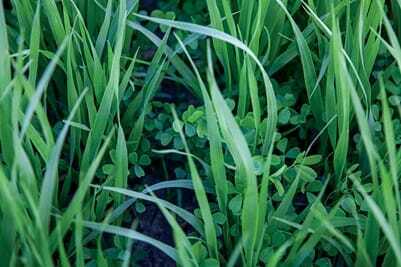
Companion Crop: Use caution when seeding alfalfa with a companion crop. The key is to not plant companion crops so thick that they actually compete for the critical soil moisture the alfalfa seedling desperately needs. I like a lower to medium rate of oats, say 1 to 1.5 bushels, depending on soil type. Oats emerge quickly, which helps shield the delicate little alfalfa seedling from the intense spring sun. The oat roots also help hold soil in place during intense spring rains. In addition, oats tend to help reduce weed pressure.
Including high-yielding Latham brand alfalfa in your crop rotation is using a new interstate to increase soil biology and help meet nutrient demands of rotational crops. Research has shown that corn planted on rotated alfalfa can help unleash more of the genetic potential yield.
Want to chat more about adding alfalfa into your rotation? Reach out to your dealer or reach out to me, Corey Catt, forage product manager, at coreyc@lathamseeds.com.
#AsktheAgronomist – Why are Chelated Fertilizers Important
On this week’s #AsktheAgronomist, Phil Long, precision agronomy advisor, unpacks chelated fertilizers and why they are important. Learn how they are absorbed and how it can benefit soils with high pH in Latham Country.
“North Dakota Legendary” is more than a tourism slogan for the State of North Dakota. It’s a way of life.
North Dakota State University’s (NDSU) football team has won 17 national championships. The Bison are a dominating force in FCS, having won nine titles in 11 seasons. Most recently, North Dakota State crushed Montana State on January 8, 2022.
The Hankey Family
“Our oldest son, Abraham, played quarterback throughout his high school football career. Our youngest son, Jackson, played full back and middle linebacker in high school. They won the Class A High School Championship in 2014, and we thought, ‘It can’t get any better than this,” says Dave Hankey, a fourth generation farmer and owner of Hankey Seed Co. in Park River, ND.
Upon graduating from Park River High, Abraham followed in his parents’ footsteps by majoring in Agricultural Economics at NDSU. Jackson planned to do the same, but he also had the goal of playing football at NDSU. Jackson never considered attending another college or playing football anywhere else. You might assume success came easily if you only read the headlines like this one, “Hankey leaving NDSU as one of its best defensive players.
Jackson Hankey with his NDSU Teammates
Jackson’s story is one of perseverance. Despite being a standout high school athlete, he began his Bison football career as a walk-on. Jackson earned academic scholarships, but it took him two years to earn a football scholarship. As quarterback of the defense, he had to learn the Bisons’ complex defensive scheme. Jackson didn’t play at all his freshman year. After his freshman red shirt year, Jackson became the backup middle linebacker in his sophomore year.
Year three on the NDSU football team was a turning point for Jackson. He became a three-year starter and two-time team captain. He was part of four national championship teams during his five years at NDSU. He holds a Top 10 spot for career tackles at NDSU.
The highlight of Jackson’s football career was 2019-2020 championship game where he won the Elite 90 award, which is given to the athlete with the highest grade point average (GPA) in each of the NCAA’s national championships. Jackson also was the leading tackler at the 2019 national championship game. For the 2021 season, Jackson was among the 50 student-athletes selected to the Football Championship Subdivision Athletics Directors Association (FCS ADA) Academic All-Star Team. He started all 14 games during the 2021-2022 season and was NDSU’s leading tackler for the third straight season.
While many people expected him to continue his football career, Jackson feels called to do something else. He graduated in 2020 from NDSU with a bachelor’s degree in Agricultural Economics. While playing football this past year, Jackson has been working toward a Master of Business Administration (MBA). He’s four classes away from earning his MBA, but Jackson is focusing his attention on theology as he plans to enter ministry. He also is engaged to marry Mikayla Koenig (pronounced co-neg), a member of the NDSU women’s cross-country team. They met through Fellowship Christian Athletes (FCA).
Continuing Education
Gaining life experiences and engaging in life-long learning is what the Hankey family does. After graduating from NDSU in 1985 with a degree in Ag Economics, Dave Hankey earned his MBA from the University of Santa Clara. He worked for a few years in San Francisco before he grew tired of the traffic.
“I couldn’t afford to live downtown, so I had to commute. I got on a train at 6:30 a.m. for an 8 a.m. job. That was a good experience to try something different, but I was always interested in keeping our farm in the family,” explains Dave, who returned to North Dakota when he was 25. “My dad and his brother farmed together for years, and my uncle didn’t have anyone to take over for him.”
“We built our seed processing facility in 1987,” adds Dave. “Our operation was very time and capital intensive at the time because we were also raising potatoes in North Dakota, Minnesota and Illinois. I was spending a lot of time overseeing production crews, but that wasn’t my passion.”
When his father fully retired in 2003, it was time to reevaluate the business. Running a multi-state potato business was taking Dave away from his wife, Jana, and their two sons. He wanted to focus on seed production, which he enjoyed. It also allowed him to be home every night. Win-win.
“We raise wheat seed, soybean seed, sugar beets and corn/canola depending on the year. We also process soybeans and wheat,” says Dave, who once again finds his family’s farming operation in a transition as his oldest son Abraham makes plans to return to the family’s agricultural business.
After graduating with a degree in Ag Economics from NDSU, Abraham earned a degree from the University of North Dakota (UND) Law School. His long-time girlfriend, Haylee Borgen, also is a UND law student. Abraham plans to return to the farm after he passes the bar exam. He has a passion for farming, especially precision farming. Abraham also likes to travel, golf and bow hunt.
“We’re looking forward to having Abraham take on more of the day-to-day responsibilities,” says Dave, who plans to spend more time traveling with Jana during the winter months. “There are just some people you work well with, and Abraham and I work well together. We speak the same language. He understands what I want done, and he is able to communicate that better than I can to our employees. He’s a better communicator than I am, so it will be interesting to see how this all works.”
Hankey Seed Co. also is transitioning away from North Star Genetics, where Dave was a shareholder and owner for more than 20 years.
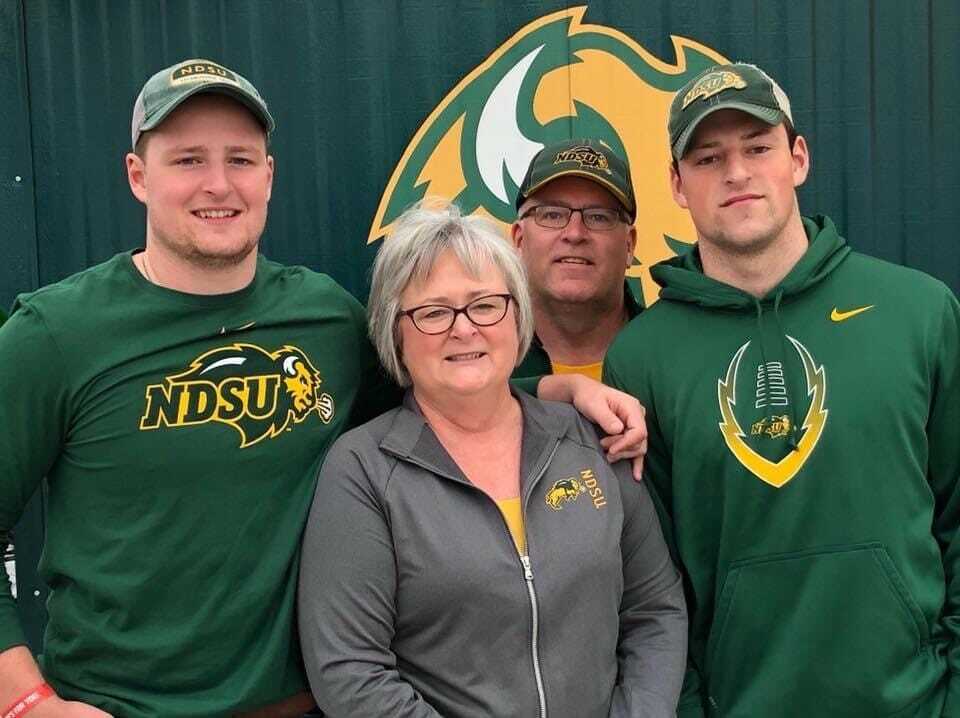
Left to Right: Abraham, Jana, Jackson and Dave Hankey
“We were looking for a seed partner that could offer us access to both Enlist and Xtend,” says Dave. “The more we researched family-owned Latham Hi‑Tech Seeds, the more we liked what we saw. We interviewed a couple other seed companies, but we chose Latham Seeds for a couple of reasons. Latham has proven performance, and we can process the seed that we grow. We appreciate that Latham Seeds is a family-owned, Midwest-based company. We’re looking forward to learning more about Latham and growing together.”
When the Hankey family isn’t in the farm field or at the football field, they enjoy sitting down to meals together. Today they’re sharing with us one of their family’s favorite recipes: Spaghetti Pie.
Advertisements and magazine headlines tout the opportunity to enhance yields through plant protection and the use of biologicals or naturals, but does it pay to use these products? Our research once again confirms that seed treatments are an investment that provides a return.
Latham Hi‑Tech Seeds expanded its 2021 research trials to include seed treatments and biologicals. We wanted to determine whether the performance of the seed products we offer could be improved by seed protection and biologicals. Soybeans treated with Latham brand SoyShield® Plus had a 2.38-bushel yield advantage over untreated seed and a 1.2-bushel advantage over other leading fungicide and insecticide (F&I) seed treatments.
Latham Seeds’ signature SoyShield Plus seed treatment is effective in protecting seedlings from early plant diseases for approximately 30 days, which is a longer window of protection than most seed treatments offered. SoyShield Plus includes an exclusive fungicide combination that provides excellent protection against seed and soil borne diseases including: Pythium, Phytophthora, Fusarium and Rhizoctonia.
The addition of Saltro to SoyShield Plus increased protection against Sudden Death Syndrome (SDS) and soybean cyst nematodes. In fact, this treatment combination produced the highest yield in research trials across seven locations in multiple states. The SoyShield Plus / Saltro treatment had a 5.25-bushel yield advantage over untreated seed and provides Best-in-Class protection across environments. Soybean cyst nematodes are one of the largest yield-robbing pests and SDS is a growing concern for more areas, so it makes sense to order the Latham SoyShield+ / Saltro combination for 2022.
Inoculants with biologicals continue to show increased yields over inoculants alone. Latham SoyShield Plus with Talc USA’s MicroSurge had a 2.83-bushel per acre advantage over untreated seed and more than one bushel per acre advantage over other premium inoculants.
Corn trials conducted at six locations in multiple states also showed significant yield increases over the base seed treatments with various applications of seed applied or planter box treatments. Talc USA’s MicroSurge dry corn inoculant is easy to apply with talc. With two strains of Azospirillum, MicroSurge produced a 4.7-bushel yield advantage over the base seed treatment.
Encompass also was tested as a planter box treatment. It contains nitrogen-fixing microbials and helps mobilize phosphorous in the soils for easier nutrient uptake into the plant. Encompass showed an 8.5-bushel increase over base treatments in our 2021 trials. Now that’s a return on investment!
Contact your local Latham rep for more information about these and other products to protect your seeds and seedlings, so you can improve yields in your fields in 2022.