Where did the corn yield come from in 2021? Our agronomist breaks it down.
-
Latham Hi‑Tech Seeds
#AsktheAgronomist – Wildfire Smoke

Have you ever thought about wildfire smoke and how it may affect your crops? Precision Agronomy Advisor Phil Long unpacks how wildfire smoke can play a role in yield potential.
-
Latham Hi‑Tech Seeds
Advent Devotional Feeds the Souls and Inspires Book

His plans are not always our plans. His timing is not always our timing. Yet, His plans and His timing are always perfect.

Because He First Fed Us Several years ago Anita McVey was asked to write an entry in a church’s annual Advent devotional. Church members shared a Christmas memory or wrote about what a particular passage meant to them, plus shared a recipe. She had no idea then a seed had been planted in her heart to write a 30-day devotional, “Because He First Fed Us: Ordinary Meals – Extraordinary Messages.” With artwork by her son Marcus, this light-hearted book highlights ordinary meals found in the Bible that reveal extraordinary messages.
“I believe food is a love language. It nourishes, heals, comforts and delights the body and soul,” says Anita, who began blogging in 2016. “When food is transformed into a meal, it becomes love in action. All the senses are engaged: sight, sound, taste, touch and smell. Memories are revived. Stories are told. Gratitude is expressed. Conversations flow and wisdom is gleaned.”
Shortly after starting her “Picnic Life Foodie” blog, Anita said she would read something or remember something in association with a Bible verse or story and think, “That would make a neat devotion.” After building a list of about 10 general topics, the idea for a book formed. She started saving more notes and phrases. Those pieces started turning into sentences and paragraphs and, eventually, devotions.
“Pairing my own memories about food and meals with Biblical truths has been a journey I never expected,” says Anita, who earned a master’s degree in Statistics from Iowa State University. “It is my hope and prayer that you will laugh and learn as you read and that your own memories of meals with family and friends will warm your heart and soul.”

Anity McVey – Picnic Life Foodie Childhood memories Anita cherishes include growing up on her family’s farm in Northwest Iowa where she said she had a steady diet of faith, family and farming.
“We had pork and chicken directly from the farm, to the butcher, back to the farm and into the oven. We ate eggs from the hens in the coop and drank milk from my uncle’s dairy cows. The garden we planted and harvested was enormous, and we didn’t waste a thing. Canning and freezing were core classes,” says Anita. “Is it any wonder I am so obsessed with food?”
While cooking and baking about 10 years ago, Anita said she would reminisce about the person who gave her a recipe or the time she spent with her mom and grandmothers making a particular meal. Blogs were a new, but intriguing, concept to her at the time. Her oldest son helped her create a website for PicnicLifeFoodie.com, and she started writing! She also posts on Facebook, Instagram and Pinterest.
“The name ‘Picnic Life Foodie’ did not come to me easily. I knew I wanted something sentimental and nostalgic. I thought of the meals we would eat as a family in the field during planting and harvesting seasons or the days when Dad would take us to the nearest lake and Mom would pack a simple lunch for all of us. Church potlucks, family reunions, school field trips … so many of my best memories centered around simple food with wonderful people. I have always loved picnics, but I realized it didn’t matter if they happened outdoors on a perfectly sunny day or indoors around a traditional table. There was a feeling, a lifestyle, that I wanted to encourage others to embrace.”
Through the writing experience, Anita says she has found that God gives us our passions, so we can tell our story from a place of enthusiasm and truth.
“I can’t talk about my history with food, without talking about my family. I can’t talk about my family without talking about faith. They are all intertwined,” she says. “God has been leading me through and giving me the courage to try something out of my comfort zone.”
Anita hopes her experience encourages others to try something new and to overcome their fears.
“I never imagined I would share my faith in a written form!” writes Anita in the “Gratitude” section of her devotional book. “I am so grateful God presented this opportunity to me. By telling my stories, my hope is that I have created a memoir of my faith for my family, friends and anyone who picks up this book to read even a single page.”
Anita’s gratitude extends to some amazing people, who have helped her find her way through this book. She writes:
- “My mom: the most selfless, humble, and faithful person I know. Thank you for starting each day of my childhood with devotions, ending each day with prayers, placing an Advent wreath at the center of our Christmas decorations, teaching me how to cook and bake with love, and for always, always reminding me to Whom I belong.
- Marty: my husband. You crack me up, rein me in, lead ‘from the back,’ and never let me down. Thank you for standing with me in the hardest of times, sharing joy in the little things, and loving the imperfect me. It is because you encouraged me to take a different path that this book exists.
- Nick: my son, my social media guru, and the reason I officially started writing. Thank you for taking me over the hurdle of creating a blog and for answering a parade of questions with patience and humor. Your creativity and drive motivate me, and your ability to find the best of every situation is a true gift.
- Marcus: my son, my artist, and the one who has taught me all about perspective. Thank you for inspiring me to look more closely at nature, art, movies and to discover the beauty in the details. I am so grateful that you agreed to illustrate this book and share your talent here. The messages of this book are more inviting and intriguing because of your work.”CHRISTMAS IN THE KITCHEN
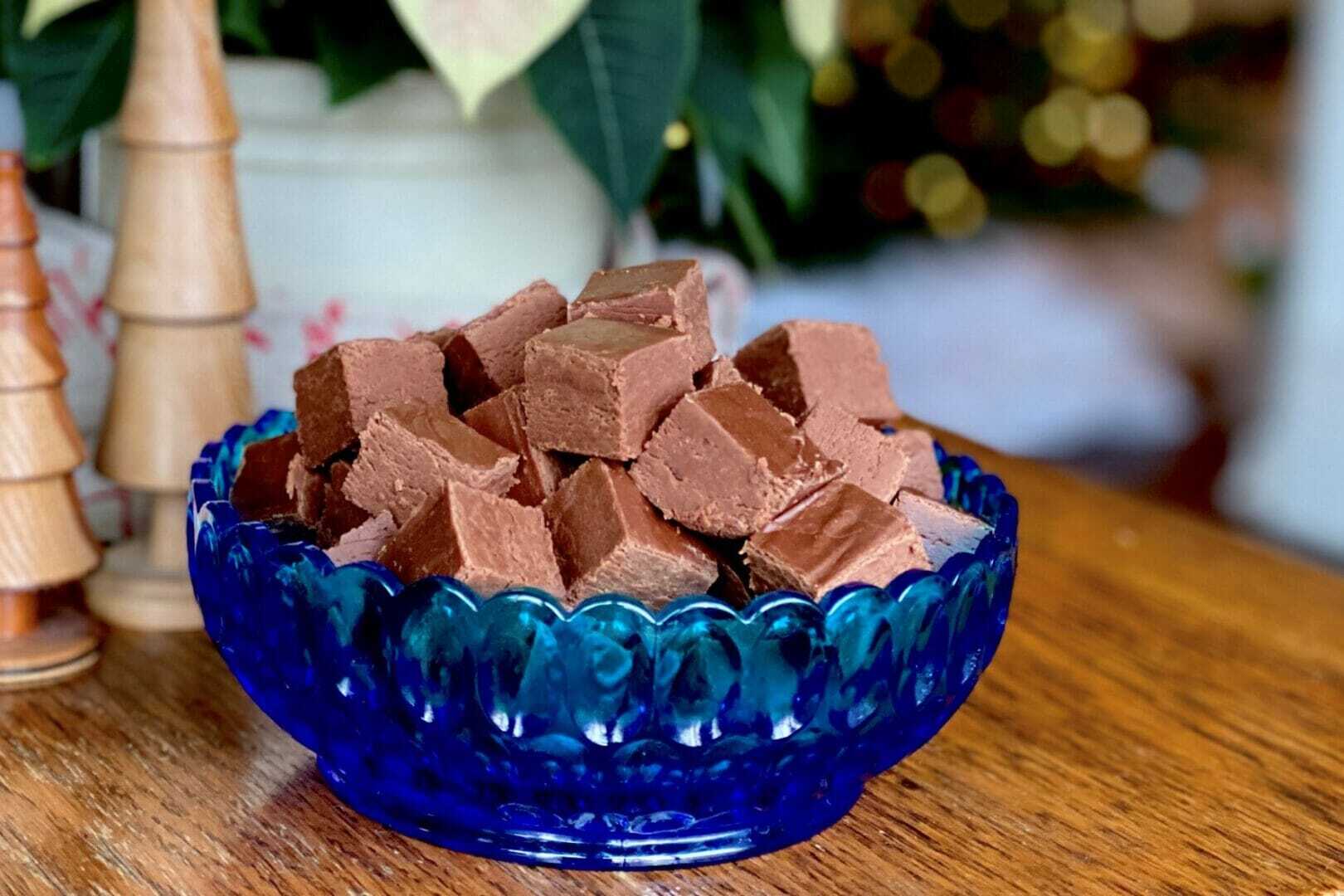
“Fudge served in a blue bowl” trigger so memories for Anita, who grew up baking batches of Christmas traditional German cookies with her mom and grandmothers. They would break out the third-generation cookie cutters to make sugar cookies. Every year her Grandma Glienke would serve fudge in a blue Depression-era glass bowl. Forty to 50 family members would cram into her grandmother’s living room on Christmas Eve, singing hymns and exchanging gifts. Today Anita is sharing her tried-and-true, family-favorite recipe for decadent, creamy, and easy-to-make fudge. May it create wonderful memories for your family, too!
-
Latham Hi‑Tech Seeds
#AsktheAgronomist Corn That Fixes it’s Own Nitrogen?

In this week’s #AskTheAgronomist, Precision Agronomy Advisor Phil Long discusses Pivot Bio’s ProveN product and how it can enhance your yield results.
For more agronomy videos, check out our Latham Seeds YouTube Channel.
-
Latham Hi‑Tech Seeds
Mark Grundmeier Plans for His Next Season… Retirement

After enjoying a career that spanned more than 25 years with Latham Hi‑Tech Seeds, Mark Grundmeier plans to box up his office on December 17, 2021, and then pack his bags for the holidays. He and his wife, Jerri, are ready to hit the road! They’re planning to see more of the United States as they travel around to visit family members and friends.

Jerri and Mark Grundmeier Mark and Jerri look forward to spending more time with their children and grandchildren. Their son, Craig, graduated from Drake University in 2003. He works as an Executive Benefits Administrator for Principal Financial Group in Des Moines. Craig and his wife, Lauren, live in Urbandale with their two children, Liam and Ava. Lauren works as a Clinical Dietitian at Unity Point Health in Des Moines.
Mark and Jerri’s oldest daughter, Krystal, graduated from Waldorf University in 2006. She works as a guidance counselor at an elementary school in the Dallas area. She and her husband, Michael, have three children: Kennedy, Kelsie and Kason. Michael is a senior consultant/program manager for the D&M Enterprise Group. The Grundmeier’s daughter Stacie graduated in 2010 from Iowa State University (ISU). She also lives in the Dallas area where she works as Business Development Director for Haggar Clothing.

The Grundmeier Family Youngest daughter, Kaitlan, started at North Iowa Area Community College (NIACC) and then transferred to ISU. She works as a loan processor for a bank in Missouri. Her husband, Paul, works as a heavy equipment operator for the City of St. Roberts.
“Our grandchildren are getting to that age where they’re getting involved in sports and other activities, so we’re looking forward to having the time to attend more of my grandchildren’s activities,” says Mark. He also plans to spend more time during the summer months, enjoying his hobbies of fishing, golfing and gardening. His hobbies and interests certainly influenced his career path.
After earning a bachelor’s degree in Fisheries and Wildlife Biology (FWB) from Iowa State University, Mark worked part time for Farm Service Co-op. He desired to work in FWB, so Mark then accepted a summer internship with the Central Platte Natural Resource District (NRD) in Grand Island, Nebraska. He met with farmers throughout the region, helping them develop and implement wildlife management plans. Mark was offered two, full-time NRD jobs at the summer’s end. However, the positions paid less than minimum wage. He was months away from getting married and needed a better job, so when his former boss at the co-op contacted him about a management trainee position, he gladly accepted.
“As God has been with me my whole life, He was also with me then,” says Mark. “The co-op manager that I had worked for earlier that year called me to say they were looking for somebody to start in the Farm Service Co-op system as a Management Trainee. The starting wage was almost twice what the NRD had offered me!”
That phone call led Mark to a 19-year career at Farm Service Co-op where he worked up through the ranks. One day he was reading his mail and saw in a newsletter that John Holmes was leaving Latham Seeds, and Mark said that was his chance at a “dream job.” Mark joined the Latham Team in October 1996.
“What I have enjoyed most about working at Latham Seeds is the opportunity to get into research and learn from Bill Latham. The family atmosphere has been one of the outstanding things about Latham Seeds,” says Mark. “I feel as though the Latham family – employees, dealers and customers – are part of my extended family. While I’m ready to retire, I’ll really miss the close association with the people I’ve come to know over the past 25+ years of being here.”
We certainly wish Mark all the best in his retirement! I know I speak on behalf of the entire Latham Team when I say we will miss Mark’s can-do, positive attitude and seeing his smiling face in our hallways. Fortunately, Mark and Jerri live near the Latham Seeds office. We certainly hope they’ll stop in from time to time, and continue to join us for annual events like our company’s annual Cy-Hawk Tailgate and Christmas potluck.
Tailgates and holidays wouldn’t be complete without loads of meat! Mark enjoys smoking a whole pork shoulder or loin. After he and Jerri enjoy the first meal, the leftovers are turned into casseroles, sandwiches or wraps. They recently discovered an Instant Pot recipe that they’re sharing with us today.
-
Latham Hi‑Tech Seeds
Yield Reports are Encouraging

As we were conducting our pre-harvest field inspections, many production growers said they’d be happy with 40-bushel yields due to the early cold spell followed by drought. I’m happy to report that most of our growers’ yields were in the mid-50s to the mid-60s, and some even saw yields of 70 bushels per acre (bu/A) or more!
It seems that a few timely rains in August made the difference between having a decent crop and having a poor one. Below are raw yield results from some soybean Latham® Showcase plots and Latham Elite trials harvested this fall:
- Near Chatfield, Minn., Latham® L 2193 E3 yielded an outstanding 107.8 bu/A, and L 2049 E3 was right there with 95.7 bu/A!
- Near Sac City, Iowa, L 2283 XF brought in 84.39 bu/A and L 2184 R2X was a close second with 82.87 bu/A.
- Near Oskaloosa, Iowa, L 3448 R2X produced 83.52 bu/A, barely nudging out L 3479 E3 at 83.26 bu/A.
- Near Lu Verne, IA, L 2049 E3 topped a plot with 81.89 bu/A and L 2379 E3 came in at 79.79 bu/A.
- Near Albert City, Iowa, L 2458 E3 yielded 91.94 bu/A and L 1648 LLGT27 came in at 81.49 bu/A.
- Near Vernon Center, Minn., L 1758 E3 scored 75.15 bu/A and L 1769 R2X came in at 73.21 bu/A.
- Near Renville, Minn., L 1758 E3 scored 75.06 bu/A while L 2049 E3 was very close with 73.11 bu/A.
- Near Clarence, Iowa, L 3192 E3 produced 120.12 bu/A and L 2894 E3 yielded 110.85!
- Mantador, ND, caught some much-needed rain late in the season. At that location, L 1094 E3 produced 79.19 bu/A and L 0739 R2X yielded 65.19 bu/A.

Keep checking lathamseeds.com for updated yield results from plots around Latham Country.
-
Latham Hi‑Tech Seeds
Can You Cut Fertility Costs Without Cutting Yield?

You could lose more than you save if you cut costs in the wrong places.
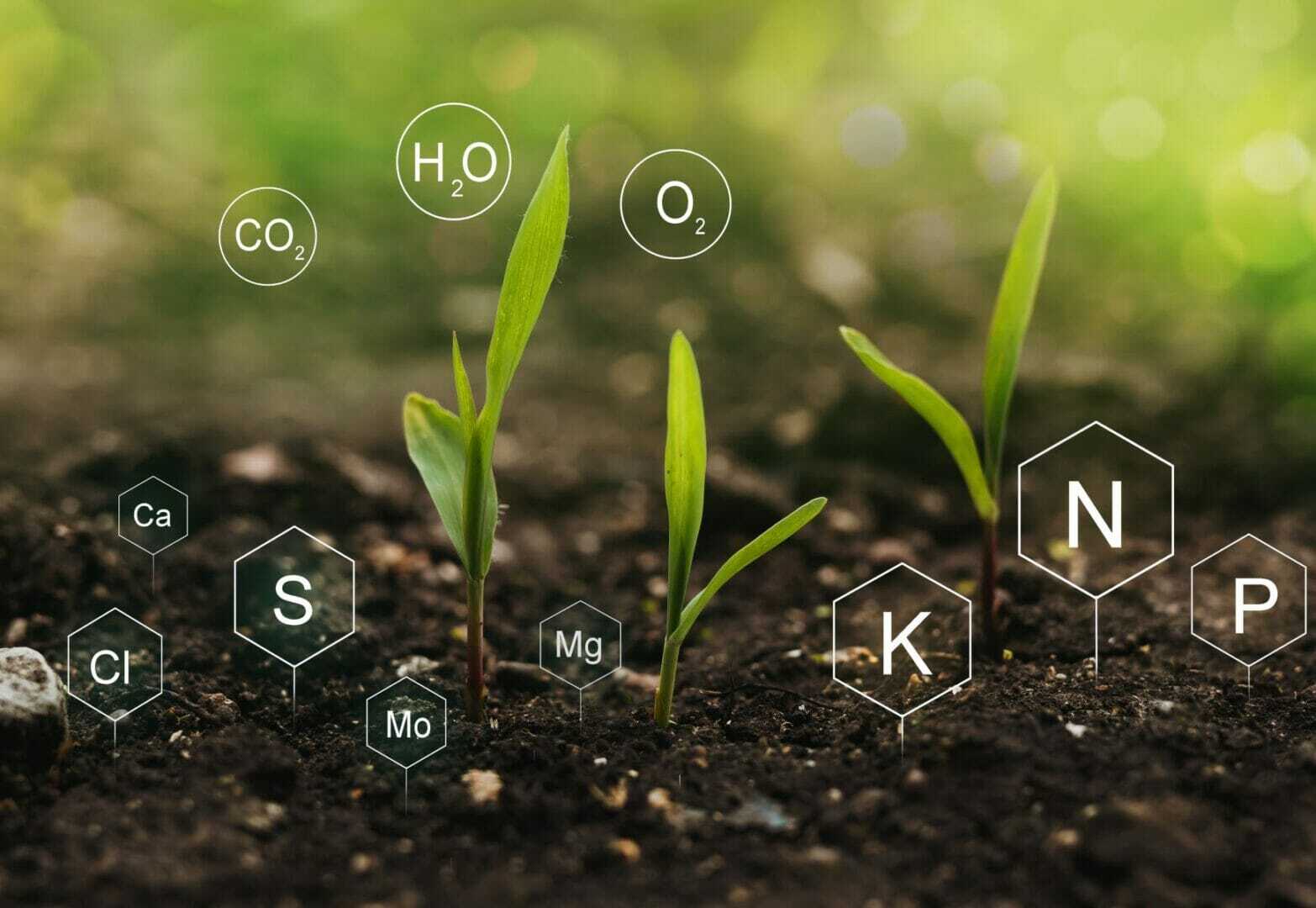
Some farmers are thinking about cutting back on their fertility program for 2022 crops because fertilizer costs are increasing and pre-order prices aren’t guaranteed into next spring. I understand that price hikes cause uncertainty. As someone who also farms, I feel the same way. What I’ve learned is that fertility is the foundation to keeping a crop healthy all season. Top-performing hybrids need food to fuel their growth.
Below are three questions to ask yourself as you plan your 2022 fertility program:

- Are you keeping potassium levels up? Potassium (K) is critical for handling drought stress and late-season stalk health. Depending on cation exchange capacity (CEC), you want to see K levels of 150 to 220 parts per million (ppm) on your soil test. North Dakota State University (NDSU) research reveals the type of clay soil (high vs. low shrink swell clay) is key to fertilization. High shrink swell clay soils must be kept at that 200-ppm threshold. When these soils dry out, they hold the K between clay layers much tighter. On soils with low shrink swell potential, the 150-ppm threshold will provide enough K throughout the season. Have you ever noticed how some soils are more forgiving after you accidently cut ruts when it’s a little wet? Note those soils because they hold K tighter, prohibiting your crop from using it.
- Thinking about cutting back on nitrogen? Nitrogen is more closely tied to yield than any other nutrient. Corn takes up approximately 150 to 300 pounds of nitrogen (N) to reach its full yield potential, but this doesn’t have to all go down as commercial fertilizer. Nitrogen needs depend on several factors including crop rotation, manure application, green manure, and residue management. Consider applying nitrogen in the spring with a nitrification inhibitor on lower CEC soils or if it’s a wet spring. The best practice in the fall is to wait until soil temps are below 50 degrees before applying nitrogen.
- How are you valuing manure? When comparing fields where manure was applied to fields that only get commercial fertilizer, you realize fertilizer is worth the additional hassle to apply. Microbes in the manure and the biology that feeds on it can build nutrient levels much faster in the soil as compared to commercial fertilizer. It’s important to have a representative manure analysis to know what you are applying.
Remember, every 100 pounds of nitrogen applied requires about 500 pounds of lime to offset the acidity created by the nitrogen conversion process. Make sure your pH is correct, so all the nutrients in your soil are available to your growing crop. Correct soil pH before you try to build your P, K or micronutrients.
Feel free to call me if you have any questions about how Data Forward can help you collect and store information that can lead to more profitable farm management decisions.
-
Latham Hi‑Tech Seeds
Improve Meat and Milk Production with Better Silage

“Repetition is effective. Repetition is effective.” – Legendary Broadcaster Paul Harvey
The massive amounts of information we process each day makes it easy for messages to get diluted or forgotten. That’s why I find it helpful to continually review the basics, especially when it comes to feeding corn silage.
What gets fed to dairy cattle, as well as to beef cattle, affects the quality and quantity of the milk and meat produced. We know there is a correlation between starch and fiber digestibility with rates of gain. Getting the most tonnage and high nutritional concentration gives you the best chance of improving milk quality and production in dairy, as well as rates of gains in beef.
Most of the silage research to date deals with feeding corn silage to dairy cattle. However, Iowa State University has updated its Beef Corn Silage Calculator that ranks the potential value of corn silage varieties used in beef rations.
You also get an index ranking for Latham® hybrids in our seed guide. Our index rating shows a hybrid trend on a multi-season, multi-environment basis. Keep in mind that management practices, weather, and fertility can dramatically impact forage quality.
Simply stated, here’s what we want from corn silage: high tonnage in the field and high quality in the bunk. Listed below are some basic corn silage terms to provide a better understanding of corn silage yield and quality:
- Dry Matter Basis (DM). Most all feed comparisons are done on a dry matter basis where all the moisture is removed. This helps provide consistency.
- Corn Silage Composition. Typical corn silage composition is 50% grain to 50 % stover on a dry matter basis.
- Grain yield. High-yielding grain hybrids tend to bring great tonnage and quality. Yield contributes to tonnage and quality.
- Nutritional value of the kernel. The value of corn silage is related to its energy content from starch, fat and amino acids. Corn silage provides energy from digestible fiber and from the starch contained in the kernel.
Starch Digestibility. Increasing starch digestibility supports rumen bacteria and increases energy supply to dairy and beef cows. It’s estimated that for every 1 percent of fecal starch that passes into the manure, milk production is reduced by 0.72 pounds per head per day. This adds up!- Fiber Digestibility. Hybrid selection, environment, and management practices impact fiber digestibility in corn silage. It’s estimated that for every 1 point of increased or improved fiber digestibility, milk output of a dairy cow can improve about one-half pound of milk per day per head.
- Non-Fiber Carbohydrate (NFC). Corn silage is about 50 percent NFC. Note: There is a correlation between this number and the grain percentage.
There is an ocean of information available from seed guides to feed reports. Ultimately, it comes down to considering the end use first. Match your end use goals with product features and proper placement for maximum ROI at the bunk.
-
Latham Hi‑Tech Seeds
Take the Test and Beat the Pest!

By robbing farmers of more than 100 million bushels annually, Soybean Cyst Nematode (SCN) is estimated to be the #1 yield-robbing soybean pest or disease in the United States. Farmers may scream over lost yield this fall, but SCN is considered a “silent yield robber” due to a lack of above-ground symptoms in most fields.Immediately after harvest is the best time to take soil samples for SCN. Several universities have programs that offer free soil samples to evaluate SCN, so check with your local Extension office to see if you qualify.
Think SCN isn’t a problem in your fields? Think again! Dry soil conditions, especially early in the growing season, can greatly increase the effects of SCN infestations. I received numerous calls in June and July about yellow, stunted soybeans. Most farmers suspected Iron Deficiency Chlorosis. Upon further inspection, SCN was almost always present and in larger numbers than previously observed. When I asked whether these farmers had taken a recent soil sample for SCN, most had not. They admit to mostly relying on SCN-resistant varieties to control or minimize the losses from this pest.
We have known for years that PI 88788 is gradually losing its efficacy against the pest, and more than 95% of SCN-resistant soybeans in America have PI 88788 as the source of gene resistance. Since 1997, a team of researchers at Iowa State University led by Dr. Greg Tylka has conducted annual in-field trials with hundreds of SCN-resistant varieties. They measure agronomic performance and SCN population densities from planting until after harvest.
Scientists have determined that to be effective, SCN-resistant varieties must maintain less than a 10% reproduction rate of SCN during the growing season. Since 2004, Dr. Tylka and his team have noticed that the average of all PI 88788 varieties in their trials have gradually exceeded that threshold. They have also noted that the average yield of those varieties has decreased as the SCN reproduction has increased. For more information on these studies, visit www.isuscntrials.info. Other land-grant university researchers have reported similar findings.
To effectively manage SCN in the future, soybean breeders are focusing on other sources of gene resistance. Your Latham Soybean Product Team is continually evaluating and searching for opportunities to bring new, better resistant varieties to our lineup. We also are evaluating several seed treatments for battling this pest. Saltro®, our seed treatment product for SDS protection, is also noted to have activity against SCN. More information from our Latham Elite trials will be available post-harvest.
“TAKE THE TEST. BEAT THE PEST.” is a slogan/campaign by The SCN Coalition™ and funded by the Soybean Checkoff and is designed specifically to promote awareness of SCN. These microscopic roundworms, which infect the roots of soybeans and other plants, can be present in a field for years before above-ground symptoms are visible. We encourage you to take the test this season, so you can plan accordingly for the future.
-
Latham Hi‑Tech Seeds
Tips for Determining Why Stalks Are Lodging

As Harvest 2021 gets underway, we will start our morning checks to see which fields should be prioritized for harvest. Hybrid maturity helps guide us to certain fields, but sometimes a field stands out for another reason like late-season stalk lodging.Hybrids have different susceptibility to stalk rots as the season progresses. Knowing the hybrid you have on every field – and how each hybrid handles stalk rot diseases – is important. Another consideration is whether the hybrid you planted is a racehorse because racehorse hybrids do whatever it takes to fill an ear even if that means cannibalizing the stalk. This can be an unfortunate reality in a year like 2021 where moisture was very limited across most of Latham Country. A fungicide can keep the lower stalk healthier later into harvest, so if you choose to spray, you likely will see better standability.
Decisions made early in the season also influence late-season stalk health. Planter singulation is key. Doubles or multiples causes corn plants to grow on top of one another, so most of the time only one of those plants will develop an ear. Shallow planting depth causes the “crown” to establish closer to the soil surface, predisposing plants to root rot during this point in the season. Uniform competition is really important for neighboring corn plants, so that’s why good singulation and even emergence are important.
Planting population can influence stalk diameter and stalk health. You can push planting populations more if you keep your fertility levels in check. If you’re having stalk lodging issues and tend to push higher populations, then test soils and investigate where you may have an issue. If you notice foliar symptoms as you’re scouting throughout the season, then there is no better time than right after harvest to take soil samples. Potassium is a key nutrient for building healthy stalks. Micro-nutrients are also important, but it requires a balance. Too much of one nutrient can prevent other nutrients from being taken up by the corn plant.
As you walk your fields prior to fall harvest, do the “pinch” or “push” test to monitor stalk health. If you’re wondering about whether your soil fertility is influencing stalk health or haven’t soil tested in a while, feel free to give me a call. I’ll be glad to talk with you about the benefits of using Latham’s Data Forward® program.