Latham Hi-Tech Seeds

(641) 692-3258

  • Home
  • Products
    • Corn
    • Soybeans
    • Alfalfa
    • Corn Silage
    • Seed Guide
  • Performance
  • Find a Rep
  • Media
    • Blog
    • News
    • Videos
    • Podcasts
    • TECHTalk
  • About Us
    • Company History
    • Our Mission
    • Careers
    • Become a Rep
    • Sowing Seeds of Hope
  • Contact Us
  • Latham Hi‑Tech Seeds

    Summer Fertilizer Increases Alfalfa Winterhardiness

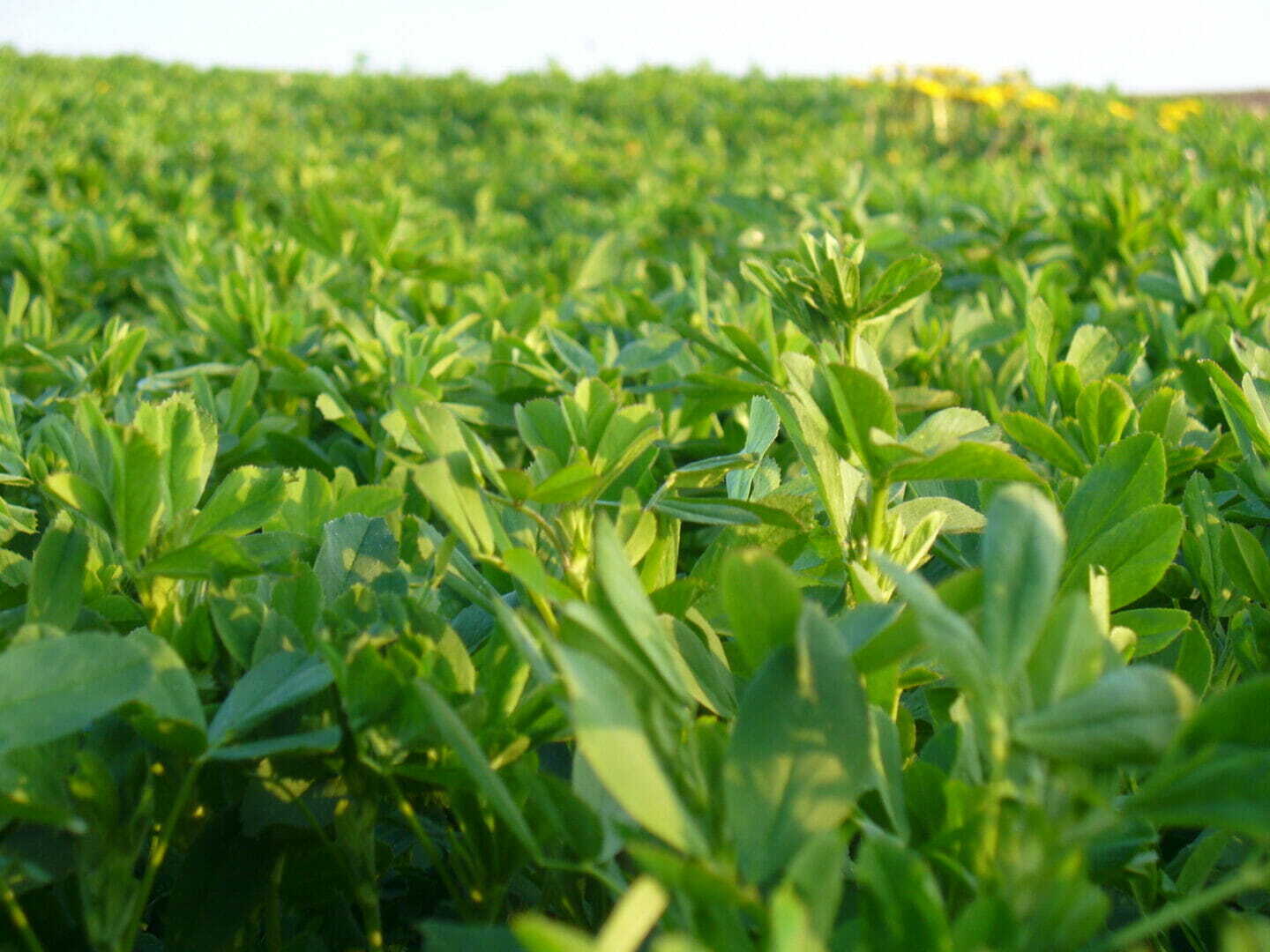
    Alfalfa3
    Corey Headshot PNG
    Core Catt, Forage Product Manager

    With everything from groceries to gas on the rise, we understand the need to question whether expenses are necessary or justifiable. Below is information to support why fertilizing alfalfa in summer and applying fungicide to silage hybrids warrants your attention.

    Fertilizing alfalfa in the summer helps fill the cellular gas tank of the plant’s crown, which helps increase its yield potential for the current growing season, as well as increases its potential for winterhardiness. All alfalfa benefits from in-season fertility, regardless of cutting schedule or strategy.

    Summer seeding is fast approaching. July 20 through August 1 are key seeding dates for Latham Hi‑Tech Seeds’ northern territory, which includes North Dakota, as well as northern Minnesota and northern Wisconsin. August 1-15 is the range of recommended alfalfa seeding dates for southern Minnesota and southern Wisconsin while most alfalfa growers in Iowa typically seed in mid-August. Look at this graph.
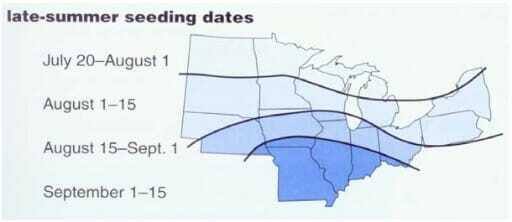
    Corey Graph
    Sourced from University of Wisconsin – Extension

    Due to our late spring, many Midwest alfalfa growers have moved seeding alfalfa to this fall. The success of fall seeding depends on moisture. It’s important that alfalfa germinates quickly, develops a crown, and builds enough crown carbohydrates to overwinter.

    Latham® AlfaShieldTM is a great seed treatment to help facilitate quick emergence. Think of AlfaShield as wrapping your alfalfa seed in a sponge. It helps protect the fragile germ of the seed. It also helps draw moisture to the seed, which is particularly important when seeding into moisture-stressed soils. Summers-seeded alfalfa is up against the time clock; approximately four to six weeks of significant growth needed to develop the crown before frost. The 2022 and 2023 Latham product guides include a dry matter (DM) ton advantage of AlfaShield compared to the old industry standard. AlfaShield has a bigger advantage in moisture-stressed soils.

    Summer Considerations for Corn Silage

    When I walk fields and test plots in the fall, I note a hybrid’s stay-green ability. I believe this observation relates to plant health. Healthy plants tend to have a lower probability of developing infection, which can create the environment for molds and mycotoxins to grow.  Fungicide application promotes plant health and can boost yield and corn silage quality. Healthy, dark green, disease-free leaves are like solar panels capturing more sunlight for more photosynthesis. Healthy leaves also build more yield, as well as reduce chances for mold and mycotoxins to develop.

    There are a variety of fungicides to select from, all of which inspire improved plant health. I have the most experience with BASF fungicide corn silage research relating to improved corn silage tonnage and forage quality. Several of the studies have resulted in two to three more tons of corn silage per acre plus the potential of reduced molds and mycotoxins is encouraging. With current commodity prices, that’s around an extra $140 to $210/acre in corn silage tonnage!

    Investing fungicide is worth consideration for livestock producers, who raise their own forages. Molds and mycotoxins can be more challenging to quantify. When fed to livestock, however, they can severely impair animal performance. In severe instances, it can lead to mortality.

    Feel free to contact your local Latham rep with any questions about summer fertilizing or fungicide application. You’re also welcome to email me at coreyc@lathamseeds.com. I’m always happy to visit with Midwest farmers who are interested in raising better meat, milk and eggs!


    Webspec Admin

    July 14, 2022
    Agronomics, Alfalfa, Crop, Disease, Fungicide, General, Seed Treatment, Tech Tuesday
  • Latham Hi‑Tech Seeds

    Latham Hi‑Tech Seeds Sponsors Iowa’s 4-H Career Pathways Academy to Inspire Youth

    Snip 4H4H Logo

    As a family-owned business, Latham Seeds has been a longtime supporter of Iowa’s 4-H mission to empower youth to reach their full potential. That’s why we are proud to sponsor a new, 12-month program for Iowa students that will not only provide pathways to higher education but careers in industries with the highest needs for skilled workers – such as agriculture.

    The program kicked off earlier this week at Iowa State University, where 8-11 grade students from around the state met with Academy leaders and business mentors to begin their year-long journey exploring career possibilities and connecting with their local communities. These young people will take part in monthly sessions highlighting industry pathways in:

    • Agriculture
    • Entrepreneurship
    • Education
    • Healthcare
    • Manufacturing
    • STEAM

    “Because agriculture is a STEM career, we have a vested interest in preparing the next generation for the growth of our industry,” says John Latham, president of Latham Seeds. “We’re especially excited that these students will participate in hands-on, research-based projects while connected with local businesses in their own communities.”

    Cayla Taylor, director of the 4-H Career Pathways Academy, says its creation is the first step in establishing a more formal academy that serves as a “hub” for positive youth development, teaching and outreach for Iowa State University.

    “Iowa has a continuing need for a skilled workforce, so it’s important to get our young people focused on college and career exploration at an early age,” she says. “This program will include valuable experiential learning opportunities such as guest speakers, job site visits, and field trips in healthcare, education, manufacturing, agriculture, entrepreneurship and skilled trades.”

    Learn more about the 4-H Career Pathways Academy at Iowa State, and stay tuned for how Latham Seeds is working with Iowa’s youth to build strong, lasting legacies in our field.

    Latham Seeds is very active in our local communities across Latham Country. Check out other programs we support in an effort to make a difference. Learn more. 

    Our own Shannon Latham remembers learning how to make omelets when she attended 4-H camp — a skill she says has served her (and others!) well over the years. Today she shares a versatile recipe from the Iowa Egg Council.

    bonnie-harris

    June 30, 2022
    Food & Family, General, Latham News
  • Latham Hi‑Tech Seeds

    Latham Hi‑Tech Seeds Welcomes Michael Theis as a Regional Sales Manager

    Family 2

    Michael Theis (pronounced “Tice”) joined the Latham Hi‑Tech Seeds team on June 13 as a regional sales manager (RSM) for Northeast Iowa.

    “I am very excited to have Michael join our team,” says Latham® Sales Manager Amy Rohe. “He brings experience working alongside independent dealers to really understand their goals and is there every step of the way to put those goals into action. Michael has a strong knack for sales and business that will also be a great asset when working with our dealers.”

    The youngest of six kids, Michael grew up on a family farm in North Central Iowa raising corn, soybeans and hogs. He knew from an early age that agriculture was his passion, and served as vice president and president of his local FFA chapter. He has fond memories of his grandfather teaching him how to repair and maintain equipment in the shop and around the family farm. To this day, Michael says his favorite time of the year is the spring planting season, and “getting the crop in the ground no matter the challenges Mother Nature presents.”

    Michael followed two of his older brothers to Iowa State University, where he joined the Alpha Gamma Rho fraternity and majored in Agriculture Studies. His first internship as a crop scout sealed his future: “I knew agronomy is what I wanted to focus on,” he says. Before joining Latham Seeds, Michael worked as a crop protection representative for Bayer CropScience in Illinois, and an agronomy sales advisor for a local co-op in Northeast Iowa.

    “I am really looking forward to finding opportunities in the area to help growers maximize their ROI, and Latham Seeds adds value to farmers,” Michael says. “We have flexibility in our product lineup, and our people help growers in very specific areas across the Midwest – which most companies don’t deliver.”

    He adds: “The family culture that Latham Seeds has instilled for employees and customers is very important to me. I am part of a company that has proven performance for 75 years, and is always looking to innovate to create solutions for growers.”

    Michael and his wife, Rachel, were married in August 2018 – a wedding “strategically timed” so it didn’t interfere with any Iowa State football games. They welcomed their first child, Jaxson, just before Thanksgiving last year. When they’re not cheering on the Cyclones, Rachel likes to golf and Michael likes “attempting to golf” with her. He also loves helping out on the family farm, and looks forward to having Jaxson in the fields with him this fall.

    Wedding 2
    Michael and his wife Rachel


    Family 2
    The Theis Family

    Today Michael is sharing a favorite recipe that was always a treat growing up – especially since his family raised turkeys for many years. He asked his mom for the recipe because he loves it so much, and promises it is simple enough for a perfectly grilled meal.

    Shannon Latham

    June 23, 2022
    Food & Family, General, Latham News, Poultry, Recipes
  • Latham Hi‑Tech Seeds

    Alfalfa Threats

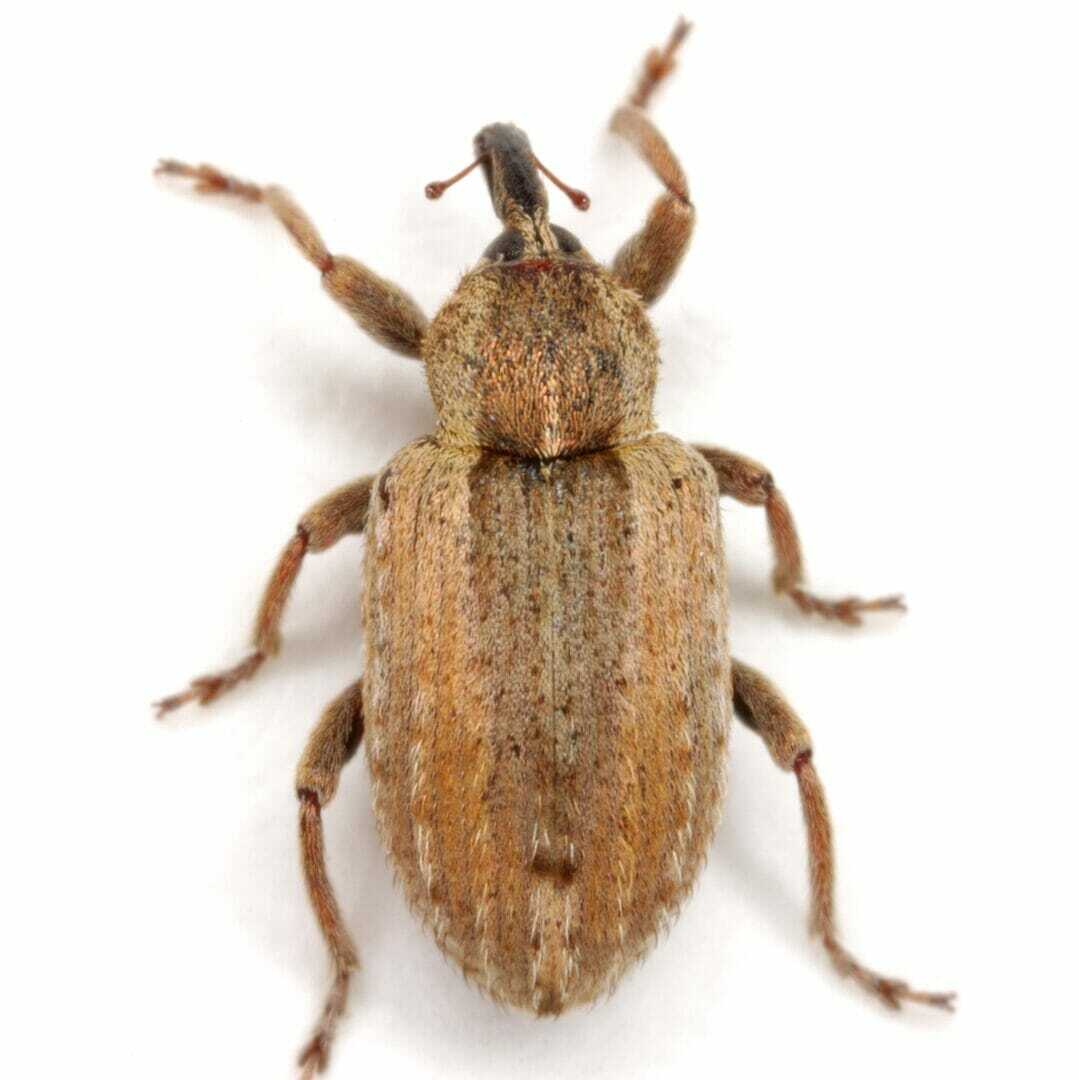
    Alfalfa weevil
    Corey Headshot PNG
    Corey Catt, Forage Product Manager

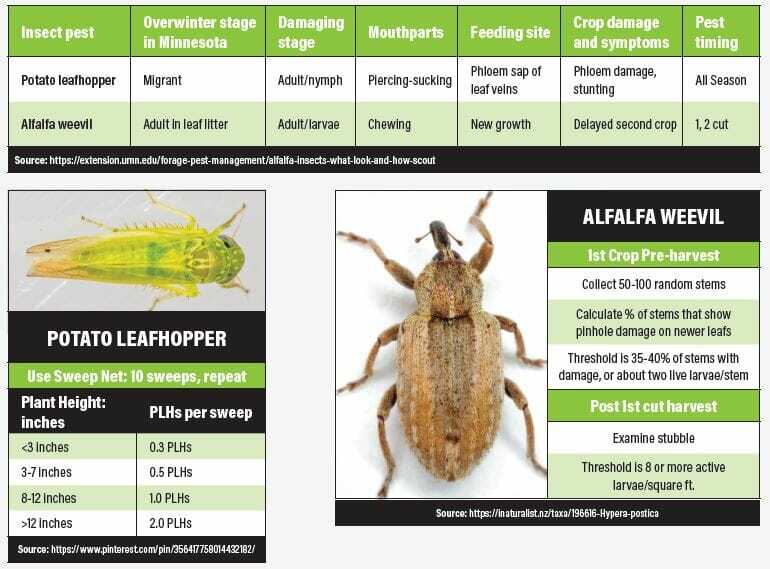
    Like other crops, high-quality alfalfa is commanding a good price. Strong market prices can change the economic thresholds, making it easier to justify investing in pest control. Below are some charts to help guide you.

    Many insects can damage alfalfa, so it’s important to build a plan that keeps alfalfa healthy. Insects can damage the plant so much that the plant can acquire a disease and die.

    Each alfalfa plant is like a factory. Crop scouting, spraying and fertilizing is like providing critical maintenance to keep the factory operating efficiently, as well as to optimize yield and quality.

    Controlling alfalfa insects generally involves two things: (1) spraying insecticide; and (2) cutting alfalfa early. Check out these two articles for more insight.

    Alfalfa insects: What to look for and how to scout

    Alfalfa Weevil

    Weevil and leafhopper


    Check out other alfalfa articles and videos from our experts.


    Webspec Admin

    June 22, 2022
    Agronomics, Alfalfa, Crop, Disease, Fungicide, General, Growth Stages, Insects, Season, Spring, Summer, Tech Tuesday
  • Latham Hi‑Tech Seeds

    The Legacy of Fatherhood

    Latham Family Owned for 65 years and counting

    Happy Father’s Day

    What did you learn from your Dad?

    Maybe it was how to fish, swim, catch a ball or fix a car. Maybe it was how to appreciate the power of a good breakfast, a good attitude or really good duct tape. All practical lessons, for sure.

    Because that’s what Dads do. They want us to have basic knowledge and useful skills, so we know how take care of ourselves . . . and someday, our own families.

    Willard Latham was the father of five sons. He started a seed business that has been nurtured and grown successfully through three Latham generations. But while Willard was an active father, all of his boys would agree that the biggest lessons he taught them centered on character: Work hard. Keep your word. Finish what you start. Stay smart. And respect your family (especially your mother).

    Willard and Latham boys
    Willard and his five sons
    Don, Tom, Bill and Willard Latham 19080s
    Don, Tom, Bill and Willard Latham in the 1980s
    Latham Family Owned for 65 years and counting
    Three generations of Lathams – John, Ian and Bill

    A natural problem-solver, Willard was always thinking ahead. He earned a degree in Dairy Husbandry from Iowa State University and, upon graduation, joined his own father at the family’s dairy operation in Alexander. But when disease began spreading to oat crops in North Central Iowa, Willard’s innovative mind immediately went to work on a solution. He retrofitted a piece of equipment that helped clean the oat crops and keep them healthy.

    Nearby farmers heard about Willard’s process and quickly realized its value. That was in 1947, and Latham Seeds was born.

    Of course, Willard knew a single invention by a young farmer wouldn’t be enough to carry a company forever. It was his work ethic – and the strong relationships he built through mutual trust – that did. It was also his emphasis on family, because Willard understood that nothing was more important than staying close to the people who love you most.

    It’s telling that all five of Willard’s sons have recalled their dad’s lessons on integrity, on doing the right thing, on remembering that “your word is your bond.” They grew up watching their father run a business in a way they’d never forget – through casual conversations with his brother and his customers around the kitchen table, by looking out for his neighbors and by always (that’s always) playing by the rules.

    The legacy of Latham Seeds began with Willard and still thrives today. His sons passed it on to their own children, and they, in turn have carried it on. It’s what keeps us focused on family. It’s what keeps us committed to helping multi-generational farmers grow their own, stronger legacies for the future. It’s what keeps us honest, forward-thinking and smart. Like Dad.

    We know he’d be proud. Happy Father’s Day!

    Shannon Latham

    June 17, 2022
    Food & Family, General
  • Latham Hi‑Tech Seeds

    Bonnie Harris Joins Latham Seeds as Communications Manager

    BonnieHarris 2022 cropped

    She took a leap of faith and landed in Iowa.

    Bonnie Harris’ path to become communications manager at Latham Hi‑Tech Seeds isn’t what you might expect. She grew up on the Gulf Coast of Florida, the youngest of four kids. This blonde-haired beach girl ran barefoot on the beaches of Florida and went fishing with her dad.

    BonnieHarris 2022 cropped
    Bonnie Harris, Communications Manager

    A desire to major in Journalism took Bonnie to the University of Maryland in College Park. She interned for Congressional Quarterly and rode in the underground cars on Capitol Hill to record all the votes during session.

    “I learned so much about politics as a young person,” says Bonnie. “But I also learned to appreciate the process, the total picture of our democracy – far more than I ever learned in a classroom.”

    After graduating with a journalism degree and a minor in public relations, Bonnie accepted her first full-time newspaper job in Spokane, Washington. Four years later she was hired by the Los Angeles Times and moved to Southern California, where she covered cops, courts and crime. She also traveled for months with both presidential candidates in 2000, earning the nickname “Sunshine” from George W. Bush.

    “As a reporter at the Los Angeles Times, I had to work with photographers to help cover my stories. I went to the Photo Desk in the newsroom and dealt with Don Tormey, a photo editor who was grumpy and literally annoying,” says Bonnie.

    Opposites attract as they say, and Bonnie and Don were married.

    “When we found out we were having twins, I quickly decided I did not want to raise them in Southern California,” says Bonnie. “I researched job opportunities for me and Don. The Des Moines Register jumped on his credentials and moved us to Iowa. Our boys were just 13 months old.”

    20181203 064613
    Jackson (left) and James (right) 6 Months Old

    Neither Bonnie nor Don had any ties to Iowa.

    “We took a leap of faith in a state that was – to us coming from Southern California – more affordable, with better schools, an easy commute and GOOD PEOPLE.  We endured many questions about our decision to transplant our family here, and that’s OK. We are honorary Iowans. Our boys, who are now almost 20 years old, have always called Iowa their home. And we do, too.”

    Bonnie
    Jackson, Bonnie, Don and James

    Bonnie and Don’s son James just completed his first year at the United States Air Force Academy in Colorado Springs. He wants to become a fighter pilot. Their son Jackson will be a sophomore this fall at Iowa State University, where he is double-majoring in Chemistry and Secondary Education. He wants to teach high school and coach varsity basketball.

    76003
    Bonnie, James and Jackson

    Now that she is an empty-nester, Bonnie decided the time was right to again make a career change. She has worked the past five years in client relations, project management and PR with advertising and design firms in Greater Des Moines.

    “I am most excited to work with the marketing and sales teams to promote the brand and share the Latham Seeds story. I know there is tremendous brand loyalty for this company and that speaks volumes about its leadership and commitment to customer service,” says Bonnie. “I am really looking forward to meeting our dealers this summer and celebrating their ongoing partnership with Latham Seeds. I’m also excited to learn how technology plays an important role in delivering the highest-quality products to Latham Seeds’ family of customers.”

    Bonnie adds: “Latham Seeds is a family-owned company with a rich history that is appealing to me. While neither my husband nor I have an ag background, some of our dearest friends do – and we’ve grown to love the cyclical, beautiful life we see in farming. I’ve been fortunate to have worked in marketing for several ag companies, including a large animal feed business, and I’m always inspired by the hard-working, down-to-earth people I meet. Working for a company that helps farmers feed the world is a blessing by itself!”

    In her spare time, Bonnie enjoys reading and cooking. She says her family enjoys traveling, golfing and playing ridiculously competitive board games. They also never miss a Cyclone tailgate. Today Bonnie is sharing with us one of her favorite recipes for Key Lime Pie.

    Shannon Latham

    June 9, 2022
    Desserts, Food & Family, General, Latham News, Recipes
  • Latham Hi‑Tech Seeds

    Crowning Moment for Franklin County Iowa’s Rebekah Craighton

    IMG 3187
    IMG 3185
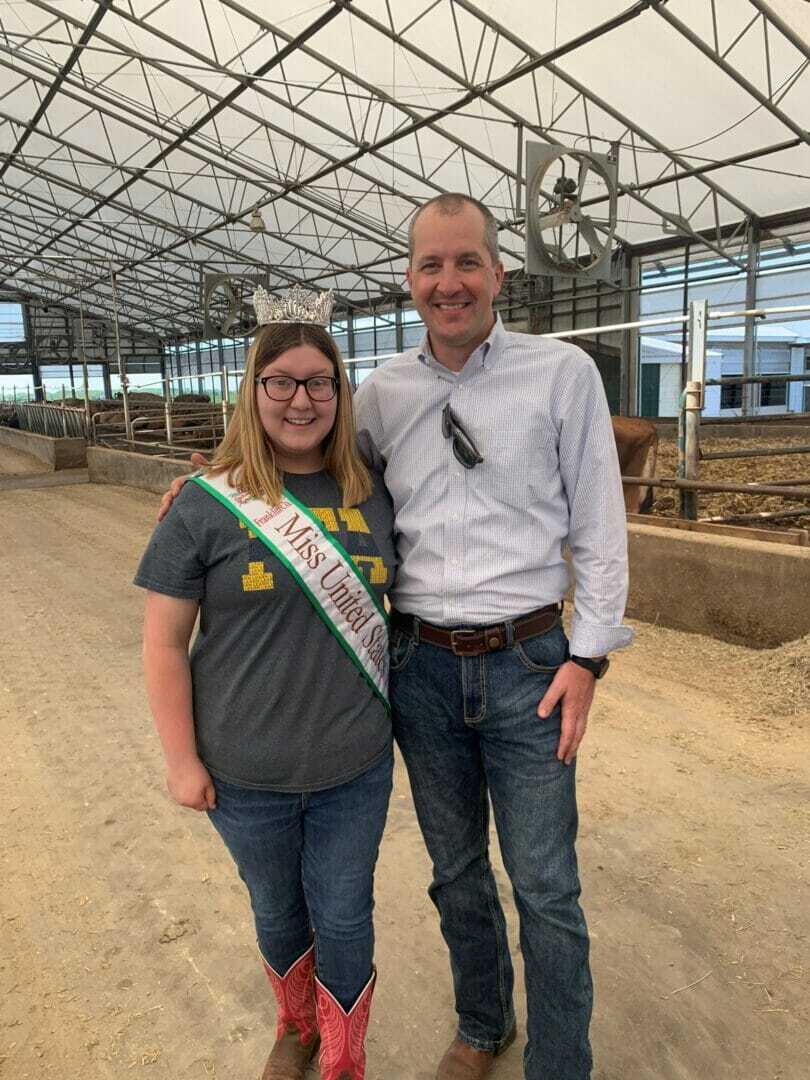
    Rebekah Craighton, Midwest Cover Miss United States Agriculture

    What would you do if you were queen for a day?

    It’s a question Rebekah Craighton, a 2021 graduate of Hampton-Dumont High School in Franklin County, Iowa, has been asking herself nearly every day for more than a year.

    Rebekah has been preparing to answer interview questions as she will compete June 24-25 against 18 other young women for the title of 2022 National Miss United States Agriculture. Her road to nationals in Orlando, Florida, began on Dec. 4, 2021, when she was crowned Midwest Cover Miss United States Agriculture and received the award for Supreme County Presence because she visited the most counties of all contestants.

    Contestants in both the regional and national competitions compete in five areas: (1) Introduction; (2) Interview; (3) Fun Fashion; (4) Formal Wear and (5) On-Stage Question. A scholarship will be awarded to the young woman who is named National Miss US Ag.

    One reason Rebekah is vying for the title is because she grew up in town and didn’t have an opportunity to learn about agriculture until she became a 4-H and FFA member.

    “I believe every child should have a basic knowledge of where their food comes from and the processes that go into food production,” says Rebekah, who just finished her first year at the University of Northern Iowa (UNI) where she is majoring in Elementary Education. “I thought serving as Miss US Ag would be an opportunity to learn about different aspects of ag, as well as provide me with a platform to share my passions for agriculture and education.”

    Running on a platform of agricultural education within the elementary classroom, Rebekah has read ag-related books in elementary classrooms. She also has taught ag-related lessons and spoken at school assemblies.

    “Elementary-age students are always exploring,” says Rebekah. “They’re trying to figure out the world, and it’s SO fun to watch them learn and grow. Another reason I love my platform so much is because I get to interact with younger kids all the time, and I love watching them figure out ag-related learning!”

    In January 2021, Rebekah began her reign as Miss United States Agriculture for Franklin County. She has worked her way through the pageant ranks by wearing her crown several places, including a Butler County dairy farm with Iowa Secretary of Agriculture Mike Naig during June Dairy Month, a Central Iowa apple orchard in September, and the Iowa Capitol during the legislative session. She has spent time visiting numerous other farms that raise horses, goats, alpaca, and ostriches, as well as produce honey and pumpkins. Her travels have led to interesting adventures. In October 2021, Rebekah was named a Top 5 Iowa Miss Agriculture Advocacy Ambassador.

    Niag 2
    Rebekah with Iowa Secretary of Agriculture Mike Naig
    Niag 2
    Representatives from Miss U.S. Agriculture visited the Iowa Capitol in March 2022. Pictured from left to right are: Rebekah Craighton, 2022 Midwest Cover Miss United States Agriculture; Jessica Simmons, 2023 Franklin County Teen Miss United States Agriculture; Rep. Shannon Latham; and Addy Moellers, 2023 Franklin County Junior Miss United States Agriculture.
    Passing on Crown
    Jeana Curtis (2020 Midwest Cover Miss) is passing the crown to Katie Folkmann (2021 Midwest Cover Miss) who is passing the crown to Rebekah Craighton (2022 Midwest Cover Miss)

    These statewide travels, as well as expenses to travel to and compete in the contests, have been funded through sponsorships and fundraisers. Rebekah wishes to thank the following sponsors.

    Gold Sponsors

    • First Bank Hampton
    • Dudley’s Corner
    • Latham Hi‑Tech Seeds
    • Chad Hanson Trucking

    Silver Sponsors

    • Greg Horn Farms
    • Travis Pralle
    • Tall Corn FFA
    • Tall Corn FFA Alumni
    • Geisinger Potography
    • Lifted Aesthetics
    • Green Acres Seed Farms

    Bronze Sponsors:

    • All-American Tactical, LLC
    • Dragonfire Dancing Horses
    • Ansgar Saddle Co.
    • Lohrbach Insurance
    • Got You Covered!

    In addition, Rebekah sold merchandise and held bake sales to raise funds for her competitions. Baking is one of Rebekah’s favorite past times. She also enjoys shooting trap, traveling, painting and volunteering.

    Today Rebekah is sharing her love of baking by sharing a seasonal recipe for rhubarb cake.

    Shannon Latham

    June 3, 2022
    Desserts, Food & Family, General, Recipes
  • Latham Hi‑Tech Seeds

    Making Pork a Business and Dining Tradition

    82552538 10156836699401398 8417649417804316672 n

    “Our family has practically been raising pigs since they got off the Mayflower,” says Andrew Perry, who farms with his father, Blaine, in Northwest Iowa. Andrew grew up also raising sheep, cattle and chickens. A Perry has been farming in Cherokee County for six generations. Blaine and his wife, Darlene, are the third generation to live on the home place near Aurelia.

    26805093 10155196001131398 9112383673521686881 n

    Not only does the Perry’s business relationship with pork go way back, but they also enjoy the fruits of their labor by making pork a mainstay on their dinner table. While nutritious, lean, high-protein pork powers the humans in their operation, the Perrys also make sure to provide their pigs with the right diet.

    “We feed 80 percent of the corn we raise, so we keep corn for nine months before we haul any of it to town,” explains Blaine, who runs the combine while Andrew hauls grain from the field to the bins. They practice a 50-50 crop rotation and raise seed beans on contract.

    When selecting corn hybrids, test weight and quality of seed is their focus. That is why Blaine and Andrew rely on Latham Hi‑Tech Seeds for their quality corn hybrids.

    “We raise corn that feeds our hogs. Then we use the manure our hogs produce to fertilize our fields,” says Blaine. “When you think about it, our operation comes full circle. Hog manure is ‘organic,’ but many people just don’t realize that manure has such a high value.”

    Until 2022, the Perrys were independent pork producers with one nursery that supplied them with the pigs needed for their wean-to-finish operation. Now they custom finish hogs.

    Conveniently, one mile away, a neighbor built a feed mill. The Perrys haul their corn to the mill, which helps with biosecurity. Blaine and Andrew are the only two who enter their buildings. They credit controlling truck traffic and people inside their facilities for keeping their hogs healthier. When PEDV (Porcine Epidemic Diarrhea Virus) hit in 2013, they tightened up security – and it worked.

    Andrew lives in Alta with his wife, Liz, and their young daughter, Danika. Liz is a teacher at Cherokee Community School. She and Andrew started kindergarten together but didn’t start dating until college.

    82552538 10156836699401398 8417649417804316672 n

    Farming is all Andrew says he ever wanted to do, so he studied Agribusiness at Iowa Lakes Community College for two years. Then he transferred to Northwest Missouri State, where he earned a Bachelor of Technology degree in Agronomy.

    When they’re not busy on the farm, this family enjoys taking tractor rides together. All three of Blaine and Darlene’s children enjoy riding together in Peterson’s Annual Trip on Old Tractors (PATOOT). Oldest son, Adam, is a band teacher at Sioux Central and lives with his family in Peterson. Their daughter, Brooke, lives in Gillette, Wyoming.

    Just as pork production can adapt to most any challenge you throw at it, pork can adapt to most any meal need, even desserts, as Liz Blaine’s Bacon Bourbon Apple Pie proves.

    Shannon Latham

    May 27, 2022
    Food & Family, General, Pork, Recipes
  • Latham Hi‑Tech Seeds

    Estimating Optimal Time to Cut Alfalfa

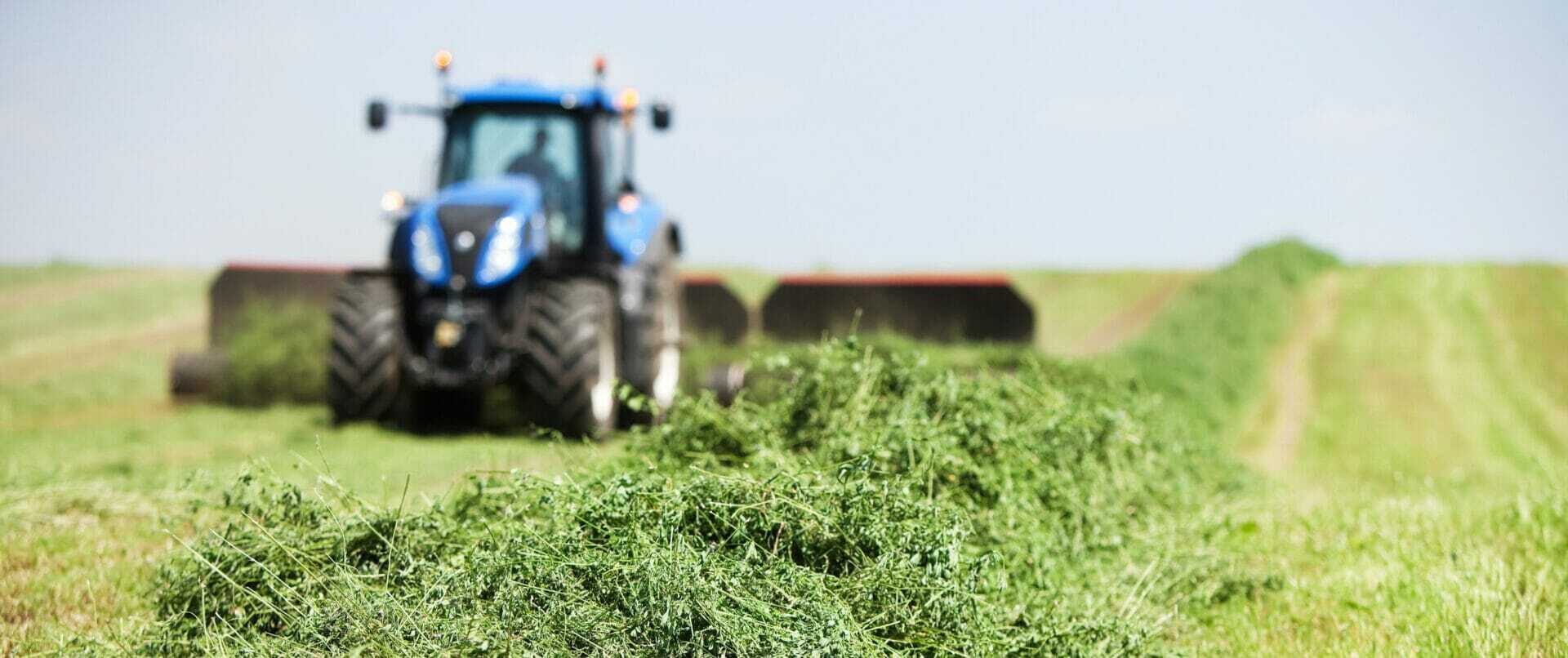
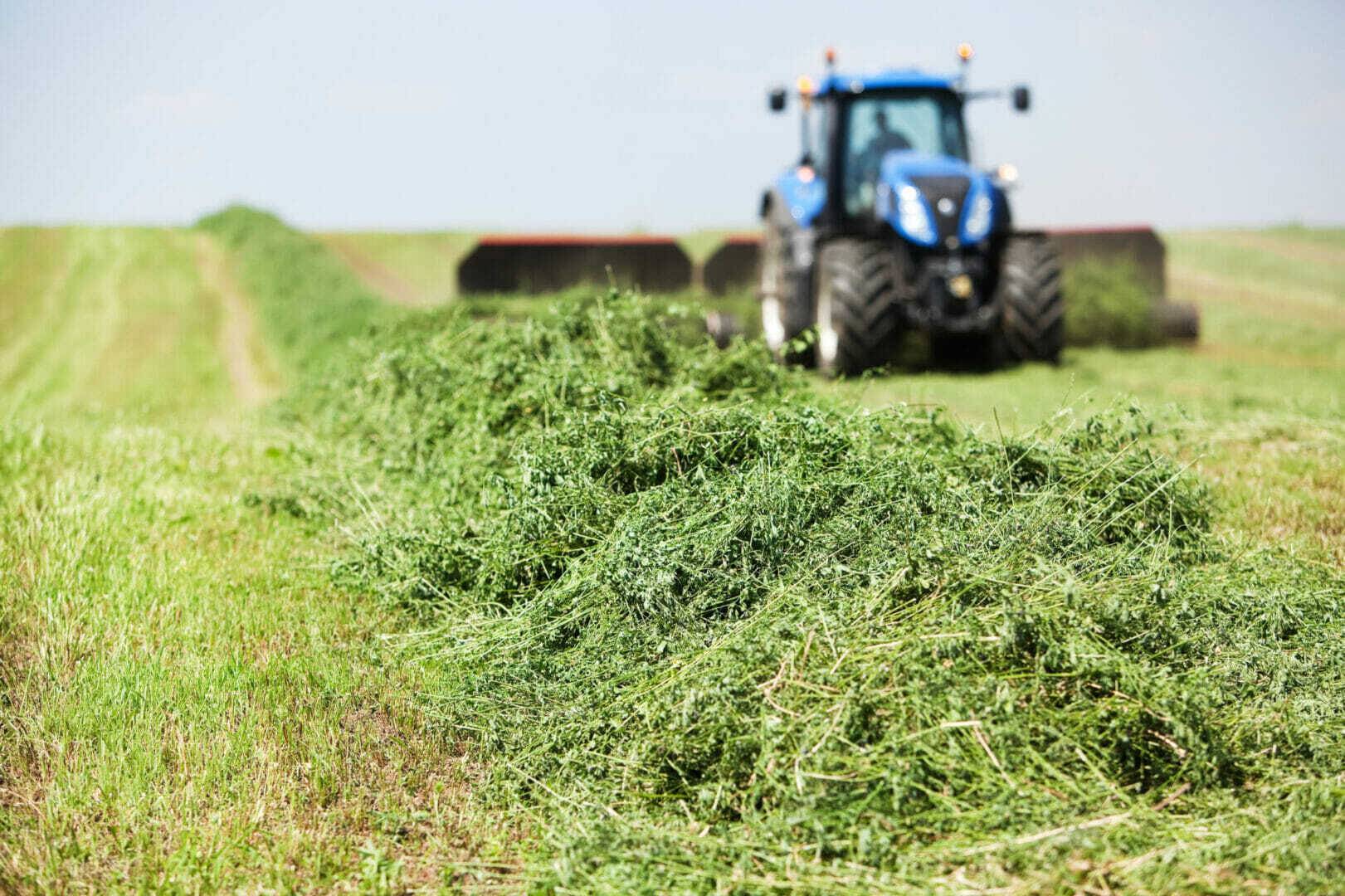
    Tractor Towing Merger on Cut Alfalfa (Hay) Field


    Every grower tends to have a different strategy of when to begin cutting alfalfa. Some cut on a certain date in May no matter what and continue the cycle every 28 days. Some growers wait until the alfalfa has reached about 10% bloom, which historically provides a good balance between the highest yield without compromising quality.

    Tractor Towing Merger on Cut Alfalfa (Hay) Field

    To measure quality for an area of the field, you could use the scissors technique. This is a good method, but it takes a couple of days to get results from the lab. During that time, the plant has changed.

    Another method used to estimate the optimal first cutting date for alfalfa is Predictive Equations for Alfalfa Quality (PEAQ) method. Developed by the University of Wisconsin, PEAQ uses the alfalfa stand height and maturity stage (vegetative, bud or open flower) to estimate the relative feed value (RFV). In general, it is recommended to harvest alfalfa at about 150 RFV for milking dairy herds and 125 RFV for heifers, stock cattle and lactating beef cattle.

    You can order an actual measuring stick or use a tape measure and follow these steps as outlined in the May 2021 issue of “Integrated Crop Management News” by Iowa State University Extension and Outreach:

    1. Choose a representative two-square-foot area in the field.
    2. Determine the stage of the most mature stem in the area by using the definitions at the top of Table 1.
    3. Measure the tallest stem in the area. The tallest stem may not be the most mature stem. Measure the stem from the soil surface to the tip of the stem, not to the tip of the leaf. Straighten the stem for an accurate height measurement. Based on stem maturity and stem height, use Table 1 to estimate the RFV of standing alfalfa crop.
    4. Repeat steps 1-3 in five representative areas across the field.
    5. To estimate harvest quality, subtract 15-25 RFV units to account for harvest losses during the haylage or hay harvest process, respectively.
    6. Determine optimum harvest time using the PEAQ estimate, livestock forage quality needs, considerations of upcoming weather forecasts favorable for harvest and drying, and the general assumption that RFV drops three to five points per day.

    Source: Integrated Crop Management News, and Iowa State University Extension and Outreach.

    Maintaining Quality

    Alfalfa value is based on quality. For quick calculation, the old standard of $1/point of RFV. (NOTE: The current market is worth more than $1 per point, but we’re going to stick with this for easy math.) If your RFV is 200, one dry matter ton of this forage is worth $200 / dry matter ton. In the Midwest, four cuttings of alfalfa can yield 5 to 7 tons.

    High commodity prices also have us reflecting on ways to extend our alfalfa stand. It’s best to keep your cutting equipment sharp. It’s generally recommended to cut a pure stand of alfalfa at two or 2.5 inches from the ground. If you have a mixed species with grass in the mix, cutting it at 2.5 to 3 inches helps maintain the grass stand life.

    Good fertility programs, insect management programs and fungicide treatments also impact the quality of alfalfa and corn silage. We will provide information about these topics as the growing season progresses.

    Check out other alfalfa articles on The Field Position. 

    Webspec Admin

    May 25, 2022
    Alfalfa, Crop, General, Spring, Summer
  • Latham Hi‑Tech Seeds

    Unique Partnership Allows FFA Members to Learn the Ropes of Beef Production

    Group 1

    Think you can’t have a beef project because you don’t live on a farm? Think again!

    Fewer than 25 percent of members of the Clear Lake FFA in Iowa have a rural background, but that’s not stopping a determined group of young women from learning the ropes.

    “People in the cattle industry don’t carry your bag around, but they’re more than willing to lend a helping hand and share advice as long as you’re coachable,” says Emma Pingel, who traded in her competitive dancing shoes for cowboy boots. “My dad showed cattle when he was growing up, but my parents moved to town when I was four years old. I’ve always wanted to show cattle, and now I have the opportunity.”

    Group Photo Snip
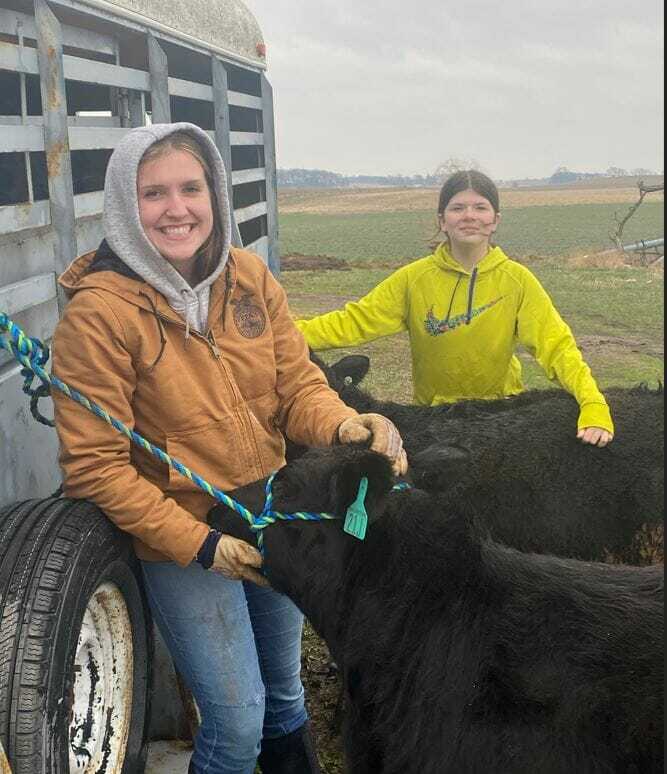
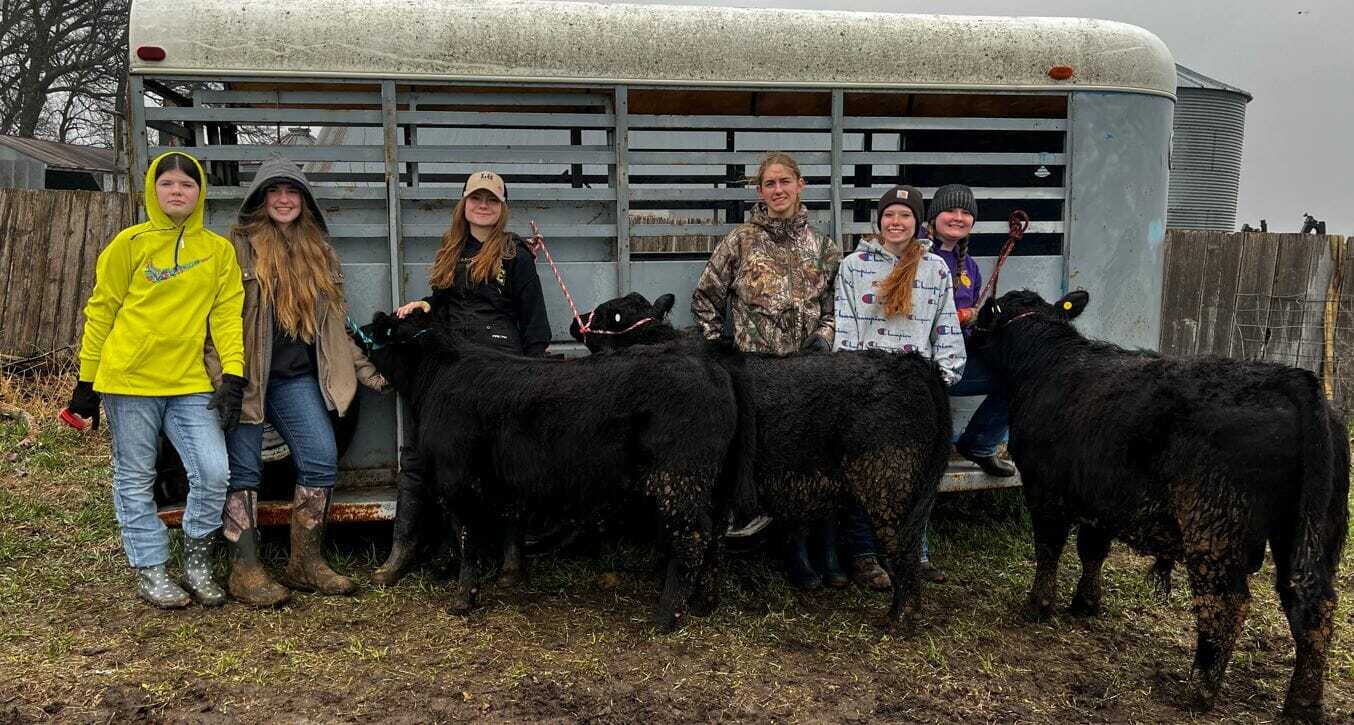
    Jocelyn Orchard, Emery Hippen, Haley Jackson, Kjersten Ouverson, Emma Behrends and Olivia Orchard

    Group 1


    Thanks to former Iowa Falls FFA advisor Doug Dodd, these seven Clear Lake FFA members are getting experience raising and showing cattle:

    1. Emma Pingel, senior, who also served as Clear Lake FFA Chapter President 2021-2022 and North Central District Vice President 2021-2022
    2. Haley Jackson, senior
    3. Olivia Orchard, junior
    4. Emma Behrends, junior
    5. Kjersten Ouverson, junior
    6. Emery Hippen, sophomore
    7. Jocelyn Orchard, sixth grade

    Dodd used to be a full-time ag teacher. Although he works for Titan Pro now, he sometimes serves as a substitute ag teacher in Clear Lake. A cattle producer, Dodd offered this opportunity for a beef SAE to anyone who was interested. Because he owns the cattle, he purchases the feed. Kjersten Ouverson’s family is providing facilities for the cattle. Clear Lake FFA and/or 4-H members provide the labor.

    The hours students spend doing cattle chores either go toward their 4-H Beef Project, FFA Supervised Agricultural Experience (SAE) or earning an FFA degree. Each student has a set time and day of the week that she is responsible for doing chores. If her schedule changes, it’s her responsibility to switch chore times with another member. Mr. Dodd, who regularly chores on Wednesday and Sunday nights, also is willing to pick up an extra shift when needed.

    After picking up their cattle in November and December, the FFA members began working to tame their stock.

    “You’re not going to get up at 5:30 a.m. to do chores before school or come out here when its freezing cold unless you love it,” says Haley.

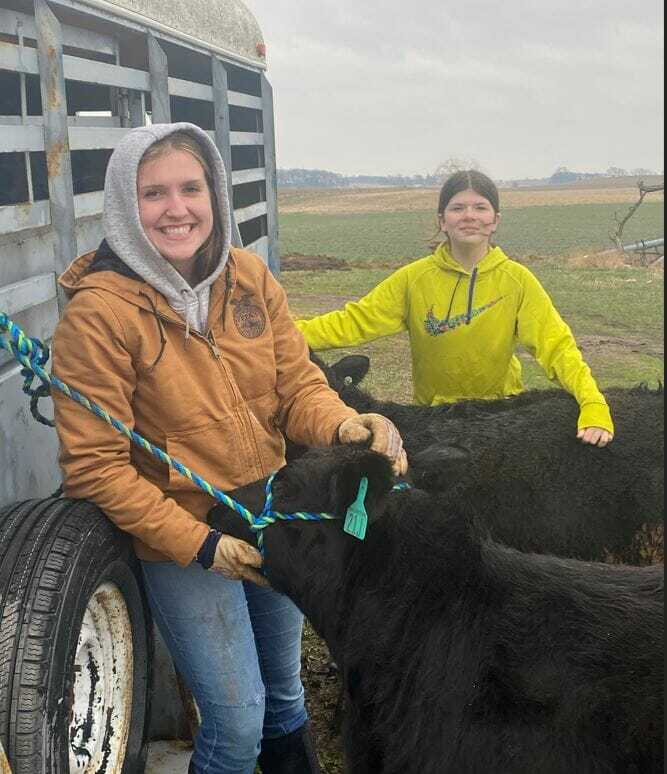
    Haley Jackson
    Haley Jackson

    These FFA members have spent a minimum of one day per week, often on Saturdays, working with their cattle and grooming them. Once the school year ends, they will work with them more often. These calves will be broke to lead by the time they enter the ring of the North Iowa Fair in August.

    “You learn a lot of patience. You can’t rush building trust,” says Jocelyn, who is in her second year of an FFA beef project. She says her second year of working with cattle is easier because she is more experienced and has gained confidence. She’s also enjoying the comradery with her fellow chapter members who are keeping their projects on the same farm.

    With experience comes bigger goals. This group of young women visited with me about changes they would like to make to the barn. They would like to create a supply room in another area of the barn, which would create more space for their cattle to come in out of the weather. They made a few minor changes this year when they cleaned out a side of the barn that had been unused for quite some time.

    Emma earned her welding certificate last spring and Haley earned hers this year, so they have worked on a few gates and welded some pins. Haley plans to major in Building Trades next fall at North Iowa Area Community College (NIACC) where she is certain to gain even more skills that will be invaluable on the farm.

    Filling a Niche with Aberdeen Breed

    Aberdeen, formerly called Lowlines, were developed from an Australian government program with Aberdeen Angus from Canada. They boast a 30 percent larger ribeye per pound of body weight. Mr. Dodd says he expects his Aberdeen steers to have an 11- to 11.5-inch ribeye at 800 to 850 pounds of live weight.

    “The Aberdeen meat is tender, high quality and lower cost due to less inputs and smaller carcasses,” explains Mr. Dodd.

    Aberdeen have become very popular with those who own small acreages and market beef directly.

    “Due to their smaller size, an Aberdeen herd requires less feed, land and equipment to produce high quality cuts,” adds Dodd. “This breed is very docile and are easy calvers. You can cross them. Half-bloods are very popular to pull down frame scores on commercial cows, and many fullblood bulls are used in purebred herds for heifers having their first calves.”

    Celebrating May Beef Month

    Not only is beef delicious, it is nutritious. One serving of beef, which is three ounces or about the size of an iPhone, provides our bodies with nearly half of its needed protein plus 10 essential nutrients including zinc, iron, protein (ZIP) and B vitamins.

    A moderate increase in dietary protein combined with physical activity can help a person manage weight by increasing heat produced in the body, which helps a person feel full longer, prolongs energy expenditure, helping maintain lean muscle mass and improves metabolism.

    In celebration of May Beef Month, today we’re sharing a recipe that is popular with teens and is versatile enough to be served at graduation receptions for tacos and loaded nachos.

    Shannon Latham

    May 19, 2022
    Beef, Food & Family, General, Recipes
Previous Page
1 … 13 14 15 16 17 … 159
Next Page

Latham Hi‑Tech Seeds

131 180th Street | Alexander, IA 50420

(641) 692-3258

SIGNUP FOR OUR NEWSLETTER
  • Contact
  • Legal
  • Dealer Center
  • Seedware Login
  • Latham Gear

© 2025 Latham Hi‑Tech Seeds. All rights reserved. | Iowa Web Design by Webspec | Privacy Policy

Latham® Hi-Tech Seeds is a trademark of M.S. Technologies, L.L.C., 103 Avenue D, West Point, IA 52656.