Latham Seeds Welcomes Kody Trampel as Regional Sales Manager
Sometimes, the best opportunities present themselves at just the right time. That was true for Kody Trampel, who joined the Latham Hi‑Tech Seeds team earlier this fall after working as an agronomist in ag retail for 12 years. Kody knew the Latham family even before he graduated from Iowa State University 10 years ago, and always kept an eye on the company’s go-to-market strategy.
“One thing Latham does really well is bringing options to customers and letting them pick the trait packages that best fit within their operation,” Kody says. “Being an independent seed company gives us the ability to do that. Most other companies can’t.”
While he didn’t grow up on a farm, Kody helped his grandpa mix feed at the Klemme (Iowa) Co-op every week. He participated in FFA and 4-H; and majored in Agricultural Studies at ISU. He met his wife, Vanessa, while working as an agronomist in one of her grandpa’s bean fields.
Kody and Vanessa Trampel with their children Pierce and Finley.
Today, Kody and Vanessa raise corn, soybeans, alfalfa, cattle and hogs. They also represent District 2 for the Iowa Farm Bureau’s Young Farmer Advisory Committee. Kody is involved with the Hancock County Extension Council and Hancock County Farm Bureau, as well. Vanessa is an Iowa Central nursing graduate.
Kody says he’s most excited for the opportunity to “focus on seed only” in his RSM role at Latham Seeds — while also using his experience in ag retail to help grow his dealer network.
“Bringing real-life experiences to the farm gate is something I’m really looking forward to,” he says.
Kody knows how committed Latham Seeds is to its customer base because of a single, short statement that company President John Latham always drives home: “We are a genetics-first company and a trait company second.”
“That comment from John truly shows that no matter where the traits are sourced from, we won’t bring them to the table unless we have a need from our customers,” Kody says. “That just proves how important they are to us.”
When he isn’t working, Kody enjoys camping with family and friends, and raising and showing livestock. He and Vanessa have two children, Pierce (3) and Finley (2). They also love their four mini Aussies: Paisley, Bentley, Sage and Mila.
Here is a delicious family recipe from the Trampels!
Latham Seeds Welcomes Noah Snedden as a District Sales Manager
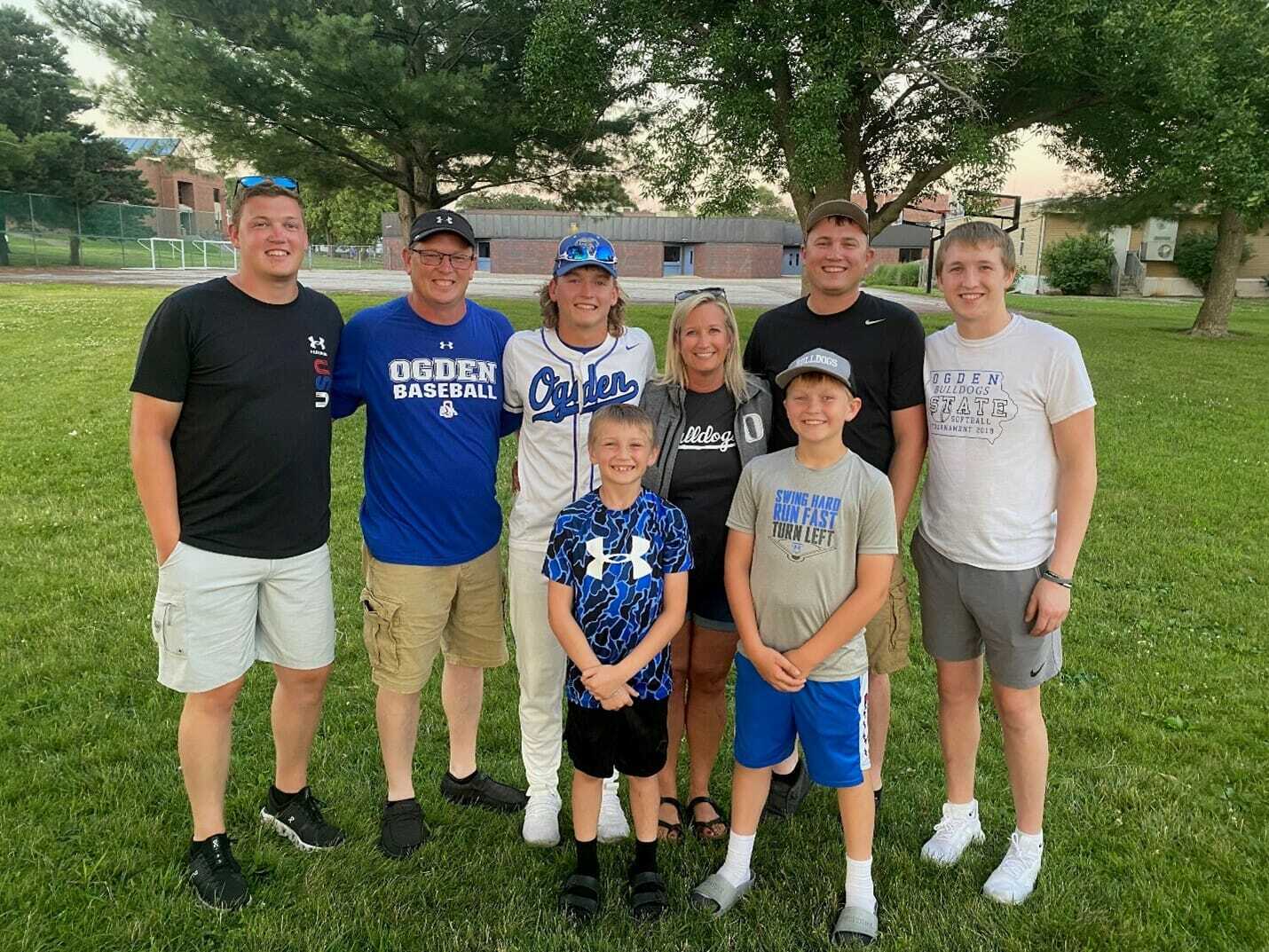
As the second oldest of six boys growing up on an Iowa Century Farm near Ogden, Noah Snedden was always heavily involved in the family’s daily operations – whether it be in the fields or working on the cattle and hogs. Even the “not-so-fun-jobs” that he and his brothers got stuck with eventually turned into fond memories, he says.
“Being able to work and learn with your family is a special thing that we often take for granted,” Noah says.
His dad, Dan, farms around the Ogden area raising crops, hogs and a few cattle. His mom works for Alliant Energy. Noah’s brothers — Bryce (24), Ethan (22), Lane (19), Ben (11) and Jake (9) — have been active in the community through sports, 4-H and FFA Noah says his family’s involvement in showing cattle helped him develop a strong work ethic.
Noah Snedden’s FamilyNoah showing his younger brother Ben how to run the grain cart.
“The responsibility and work it takes to have livestock look their best to compete at county and state fairs is often overlooked,” Noah says. “Showing cattle taught me a lot about sacrifice and hard work. I will always be grateful for 4-H and FFA giving me those opportunities.”
Noah Snedden Showing Cattle
After high school, Noah completed the Agribusiness program at Des Moines Area Community College and then transferred to Iowa State University, where he graduated in 2022 with an Ag Studies degree.
Noah was attracted to the Latham Team earlier this fall because the company “checked a lot of boxes” for him as a family-owned business. He could tell the family aspect motivated Latham’s employees to work together – and for each other – every day.
“That was a great feeling, especially for someone coming right out of college,” he says. “On top of that, I appreciated being able to interact with our president, John Latham, at dealer field days and being able to talk with Shannon Latham, an Iowa House Representative, whenever I need something. You don’t see that in most companies. It’s pretty awesome to be a part of that.”
When he’s not covering his West Central Iowa region for Latham Seeds, Noah enjoys playing golf, watching his younger brothers play sports and being in the show barn with his family. He also loves to cheer on the Iowa State Cyclones, especially on Cy-Hawk game day.
Speaking of that, here’s a favorite tailgate recipe that Noah likes to share.
A cancer-free milestone keeps this family celebrating the little things
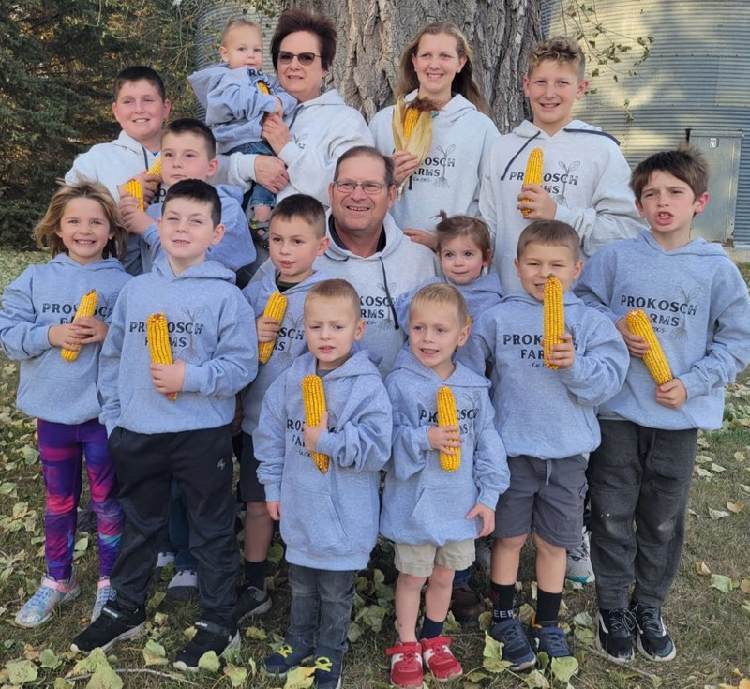
On a random day in March of 2017, mydad, Steve Prokosch, thought he had a hernia. His stomach was bloated, his belly button was red and extended. He wasn’t feeling well. With encouragement from our family, he went to the doctor for a CT scan. He was told he’d get results in 48 hours.
Within 40 minutes – before Dad even got home from his CT scan – the doctor called. The message was to turn around, come back to the hospital right awaybecausethere was something more going on than a hernia. The tumor inside his abdomen was the size of a cantaloupe. Within two weeks, it would double to the size of a basketball.
There were tests, a LOT of tests, and they kept Dad in the hospital to start chemotherapy treatments immediately. He was diagnosed with a super-rare cancer calledTriple Hit Non-Hodgkin’s Lymphoma. No one was sure how to manage it, so they threw everything they could at Dad: a 12-drug regimen every two weeks that lasted for five months. It wiped him out. It brought my family together more than ever before.
Steve Prokosch
My Dad had never been in a hospital, no broken bones or anything of the sort. Nothing his whole life. This hospital stay was his first. He only got to go home two weekends that whole time. I know it comforted him to watch us plant in the field while he rested in bed. He knew we were keeping things going.Check out the Caring Bridgeposts that my sisters did over those long months. We prayed hard and we had so many praying for us, too.
Latham Seeds is passionate about cancer research. Learn more about our Sowing Seeds of Hope campaign.
A stem cell transplant at the Mayo Clinic in Rochester finally brought us hope. A very kinddoctor there said he knew we farmed. He toldDad to go home, getthecrop out and come back to see him whenwewere done.
That was all my dad needed to hear.
To this day, Dad is five years cancer-free. He thinks about it every day and praises God every day. I want to share our family’s story to remind us all how important it is to celebrate the little things in life.Theblessings we have are never guaranteed.
Steve and Justin Prokosch
We all know someone whose life has been affected by cancer. It’s another reason why we’re taking cancer on one unit at a time. The Latham family is very passionate about cancer research and the services the American Cancer Society has to offer. Learn more about our Sowing Seeds of Hope campaign.
Life is full of full-circle moments. Often, they occur so seamlessly that we don’t even notice. Other times, these moments are so significant we are stopped in our tracks. My full-circle moment came two days before Christmas in 2021 when I was told I had breast cancer.
Christmas Season 2021 Days before Diagnosis
It’s a full-circle moment because my mom died just seven years earlier from a rare and aggressive form of breast cancer. When she was diagnosed, Mom was 74 years old, and our family was shocked. We didn’t have any history of breast cancer in our family, and perhaps naively, we didn’t think cancer would place its devastating grasp on us.
During Mom’s journey, which was just five months from the time of her Stage IV diagnosis until her death, we learned a lot about breast cancer. Her cancer was Inflammatory Breast Cancer, which is only responsible for 1-3% of all breast cancer diagnoses. Our family was told Mom’s cancer was a type that wasn’t hereditary. Years later, I learned that only 5-10% of breast cancers are heredity. As a society, we’re often lulled into playing the odds in our mind of “it won’t happen to me.” In fact, 1 in 8 women will be diagnosed with breast cancer (and men aren’t immune from a breast cancer diagnosis).
After Mom died, I had genetic testing to see if I carried any gene mutations (such as BRCA and approximately 20 other genes), which can often lead to breast cancer. The testing was negative and gave me a slight sigh of relief. However, a voice inside kept telling me that my vigilance shouldn’t stop there. I proactively shared information with my doctors during my routine check-ups that year. At times, I felt I needed to be persuasive to get the extra tests. My doctors listened to my family history and started me on a screening regimen for early detection. Once a year, I receive an MRI and, six months later, a 3D mammogram.
Biopsy, treatment and lessons learned
Fast forward to December 2021, when I lay scared on a table in a dark room getting my first breast biopsy. The doctor performing the procedure was kind and compassionate when he told me that the tumor was likely cancerous. He knew, and I knew. As tears streamed down my face, he put his hand on mine and told me that because I had so many detailed screening images dating back to 2014, they were able to detect my cancer very early. The next day, my husband and I met with a surgeon who told me I had Stage I lobular breast cancer. It was not my mom’s cancer, but cancer, nonetheless.
I had a lumpectomy in January of this year, 12 weeks of chemotherapy and 21 consecutive days of radiation. Because my breast cancer was estrogen, progesterone and HER2 positive, I also receive an anti-hormone infusion every three weeks until February 2023. I’ll also take a hormone-blocking pill for at least 5-7 years. Luckily, my cancer had not spread to my lymph nodes and my surgeon said I was technically cancer-free after my lumpectomy. The treatments were all part of a well-documented protocol to prevent cancer from returning and to kill any microscopic cancer cells. I had scans in August, and thankfully, they were clean. I also had more genetic testing – this time, more than 70 genes – and all were negative. The genetic counselor said we might never know why I got cancer.
Ann Thelen Getting Chemo
Chemo Drugs
Last day of chemo, never lost my hair
Certificate
This journey has been an impactful full-circle moment for me and one that gives me pause every time I think about it. While she is no longer with us here on Earth, my mom – the person who gave me life – also saved my life. Without her cancer diagnosis, I likely wouldn’t have been so adamant about regular screenings. I also vowed to share information about breast cancer among circles of friends, family and colleagues. Losing her was hard, but it gives me peace knowing that I can carry on her legacy and voice by educating others about my experience with breast cancer.
I’m often asked what I learned from my experience or what I can share that might help others when a family member or friend goes through cancer.
Be vigilant. I met many incredible cancer warriors while sitting in waiting rooms for radiation therapy or in the cancer center at John Stoddard. Too often, people said they had gone years between screenings. Or they were afraid to have a mammogram for fear doctors would find cancer. We are blessed to live in a world where modern medicine can detect cancer at its earliest stage, and when that happens, cure rates are often near 100%. Work to overcome the fear of screenings; you and your family will be grateful you did.
Let others help. I was lucky to have friends and family offer to bring meals or do errands. It can be hard to agree to let people help. But I was so grateful to have delicious meals dropped off – even if I wasn’t hungry – it was true “comfort food” because I knew my husband didn’t have to worry about cooking or getting something for us. Or a couple of my neighbors checked in every week of chemo. I looked so forward to those visits, even if they were brief. When others faced cancer or another illness, I would often say, “Let me know if there is anything I can do to help.” I learned that most people – including me – have too much pride to ask for help. If someone you care about goes through a challenging situation, just do whatever your heart is called to do for them. They will be so appreciative.
Understand your cancer is your cancer. Even though my cancer was caught early with an excellent prognosis, many didn’t understand why my treatment regimen seemed aggressive. Every cancer is different and requires a customized approach. I probably wouldn’t have needed chemotherapy if my cancer hadn’t been “triple positive” for the hormone receptors. However, extensive studies show that the HER2 portion of my treatment is most effective when given with a short run of chemo. Find doctors you trust, and then listen to them.
Cancer is a journey. When diagnosed, I didn’t ever want cancer to define me. However, it can shape me, and that’s OK. We’re all continuously being shaped by experiences and situations and, hopefully, learning along the way. I’ve learned that cancer will always have a space in my thoughts – managing the anxiety between scans or worrying about a new ache or pain – but I can choose how I navigate forward with strength.
While October is Breast Cancer Awareness Month, I encourage every month to be cancer awareness month. Get the screenings that are appropriate for your situation and be an advocate for your health!
Ann Foster Thelen is a public relations consultant who lives and works in Des Moines.
Latham Hi‑Tech Seeds is committed to the future of agriculture – and that includes investing in the next generation of farmers and students who care about the future, too.
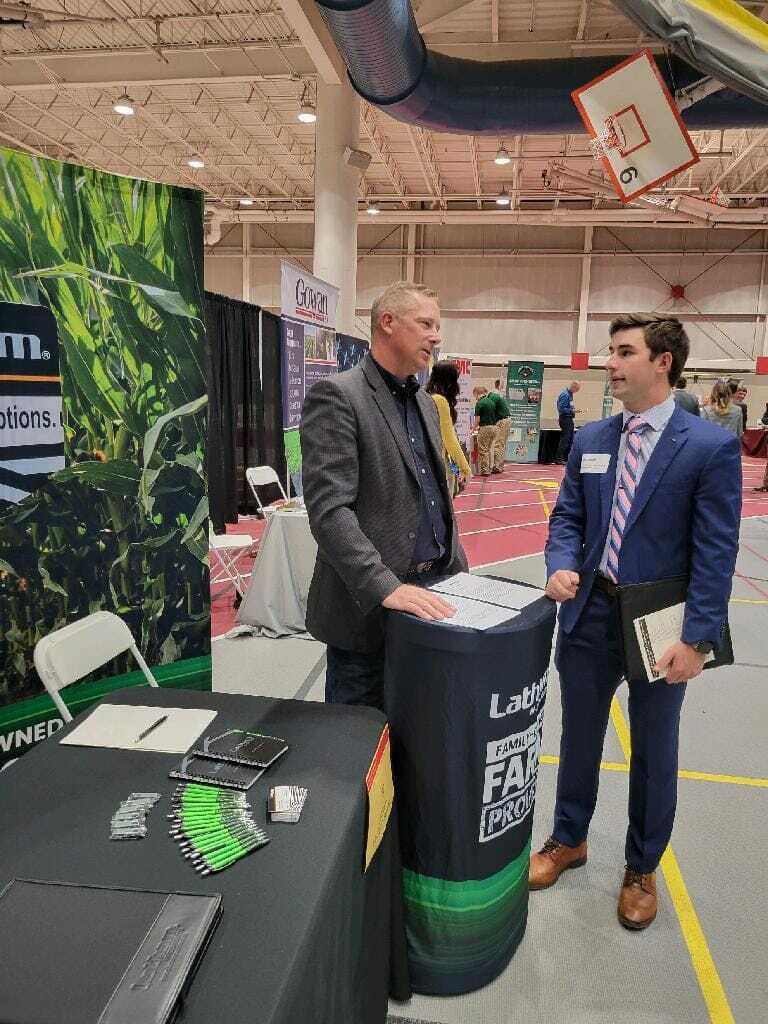
We’re proud to participate in the largest agricultural career fair in the nation, which is held annually at Iowa State University. Every year we are blown away by the caliber of students that we get to visit with from the College of Agriculture and Life Sciences (CALS). But this year, it was a whole new game: ISU’s career fair broke its own record for the largest number of businesses and organizations present! How many? 289 to be exact. We know, because we were there.
The CALS career fair boasts at least a 98% placement rate for student internships and full-time jobs. If that’s not impressive enough, consider this: students from 61 different majors at ISU were drawn to this event on a mid-October day. That’s 1,600 students passing by our booth, which means the competition is fierce – and not just for them. As a company, we must compete. And we do because we always want the best of the best on our team.
You can learn more about Iowa State’s CALS career fair here.
It’s National Pork Month! Want to know how to make the perfect pork tenderloin? Leon Sheets has all the deets. Leon lives in Northeast Iowa and is a past recipient of the National Pork Board’s “Pig Farmer of the Year” award. Check out his tips:
Fresh, never frozen tenderloin, cut to the chef’s (or home cook’s) specifications.
Handmade on site.
Tenderized at least once, hand pounded, or both.
Batter dipped at least once.
Frying time and temperature are key. The tenderloin should come out golden brown, not too dark, not too light, with uniform even coloring and texture.
Breading should be moist, not dry, not brittle and not falling off.
Condiments are optional. It all comes down to your personal preference or taste.
To help you celebrate October Pork Month celebration at home, we’re sharing a recipe for Food & Swine’s Classic Iowa Tenderloin, which is available from the Iowa Food & Family Project.
LATHAM SEEDS LAUNCHES CAMPAIGN TO RAISE $75K FOR CANCER
Wear Red in September for Blood Cancer Awareness
Latham Hi‑Tech Seeds has launched its “Sowing Seeds of Hope” campaign, a three-year effort to raise $75,000 for the American Cancer Society. How will we reach our goal? For every unit of LH 3937 VT2 PRO, LH 5245 VT2 PRO and LH 6477 VT2 PRO sold, Latham Seeds will donate $1 to the American Cancer Society. Other fundraising efforts include supporting local Relay for Life events and providing an employee donation match.
September is Blood Cancer Awareness Month and also coincides with the fall harvest day in 2009 when former company president Bill Latham was diagnosed with Acute Myelogenous Leukemia (AML).
“I can recall that day like it was yesterday,” says third-generation seedsman John Latham, president of family-owned Latham Seeds in Alexander, Iowa. “Dad was doing what he loved, harvesting research plots, when he didn’t feel well at all. We rushed him to a nearby hospital and then he was transferred to Mayo Clinic.”
Adds Chief Financial Officer Chris Latham, “We could see the look on the doctor’s face and knew it was serious. We didn’t know what AML was, but we learned very quickly.”
Thanks to medical advancements and a stem cell transplant, Bill Latham’s life was extended for nearly six years. It was invaluable time that allowed Bill to meet his youngest granddaughter and enjoy time with his five grandchildren while also passing down business advice to his sons.
“The extra years we had with our dad were a gift beyond words,” John says. “Our mom is a two-time cancer survivor. Because the American Cancer Society has provided our family with resources, support and so much hope, we’re committed to help raise cancer awareness and funds.” Watch the video below to learn more about “Sowing Seeds of Hope.”
To help increase awareness of blood cancers, Latham Seeds is inviting the public to join its team members and sales organization in wearing red clothing.
“We encourage you to share photos of you and your family members wearing red to Facebook, Twitter and Instagram using the hashtags #ThisIsBloodCancer, #BCAM2022 and #LathamSeeds,” says Shannon Latham, vice president, Latham Seeds.
“You and your family also can recognize Blood Cancer Awareness Month by enjoying healthy meals at home,” says Shannon Latham. “It just wouldn’t be a Friday on ‘The Field Position’ blog without a recipe. Today we’re sharing one from the American Cancer Society for Tomato and Basil Frittata. Frittatas are a great way to use garden-fresh produce before cooler autumn temperatures arrive. Enjoy!”
Latham Hi‑Tech Seeds continues its tradition of supporting Iowa State University (ISU) Cyclones football by hosting our annual tailgate and sponsoring the Latham Locker Room Report on Cyclone Radio Network. Be sure to tune into the Latham Locker Room Report after each game – whether it’s home or away – for exclusive interviews with ISU coaches and players!
Tomorrow the Cyclones play at home, and we will host our annual tailgate for Latham® dealers and customers. We’re looking forward to gathering with Team Latham members and fellow Cyclone fans! You can bet we will serve our signature cocktails, including CyRitas and Hail Mary’s with beef sticks in place of stir sticks.
Latham ISU Tailgate with Matt Campbell, Head Football Coach
Although we always “Tailgate Victoriously,” we have especially high hopes for winning tomorrow’s game. Iowa State (2-0, 0-0 Big 12) comes into this game on a high after claiming the Cy-Hawk Trophy over in-state rivals the Iowa Hawkeyes for the first time since September 2014.
Coach Matt Campbell’s winning percentage is the best of any Iowa State head coach since Charles Mayser won .647 percent of his games from 1915-19. In addition, Campbell was named Big 12 Conference Coach of the Year Award in 2017, 2018 and 2020.
Chris Latham, CFO, Matt Campbell, ISU Football Coach, John Latham, President
The Cyclones are breaking in a new quarterback this year, but redshirt freshman Hunter Dekkers is one to watch. The Cyclones also lost their main running back after the 2021 season to the NFL draft, but Jirehl Brock returns to the starting lineup. His performance has been solid in the first two weeks.
Another fun fact is a new playing surface was installed in Jack Trice Stadium on May 3, 2022. The sod was grown at the ISU Horticulture Research Station.
If you haven’t driven past the stadium recently, you’re in for a treat. Football fans no longer have to dodge traffic and drivers should have less stress avoiding pedestrians thanks to the completion of the $10 million East Gateway Bridge. This bridge connects the Jack Trice Stadium area to expanded parking east of the stadium, including a new donor RV parking/tailgating area.
College Game Day tailgates feature everything from trail mix and Buffalo Chicken Dip to chili and ribeye sandwiches. Click here for a link to some of our favorite tailgating fare. We’re also featuring a recipe for crowd-pleasing Fall Snack Mix. It also makes for a great snack during fall harvest. Enjoy!
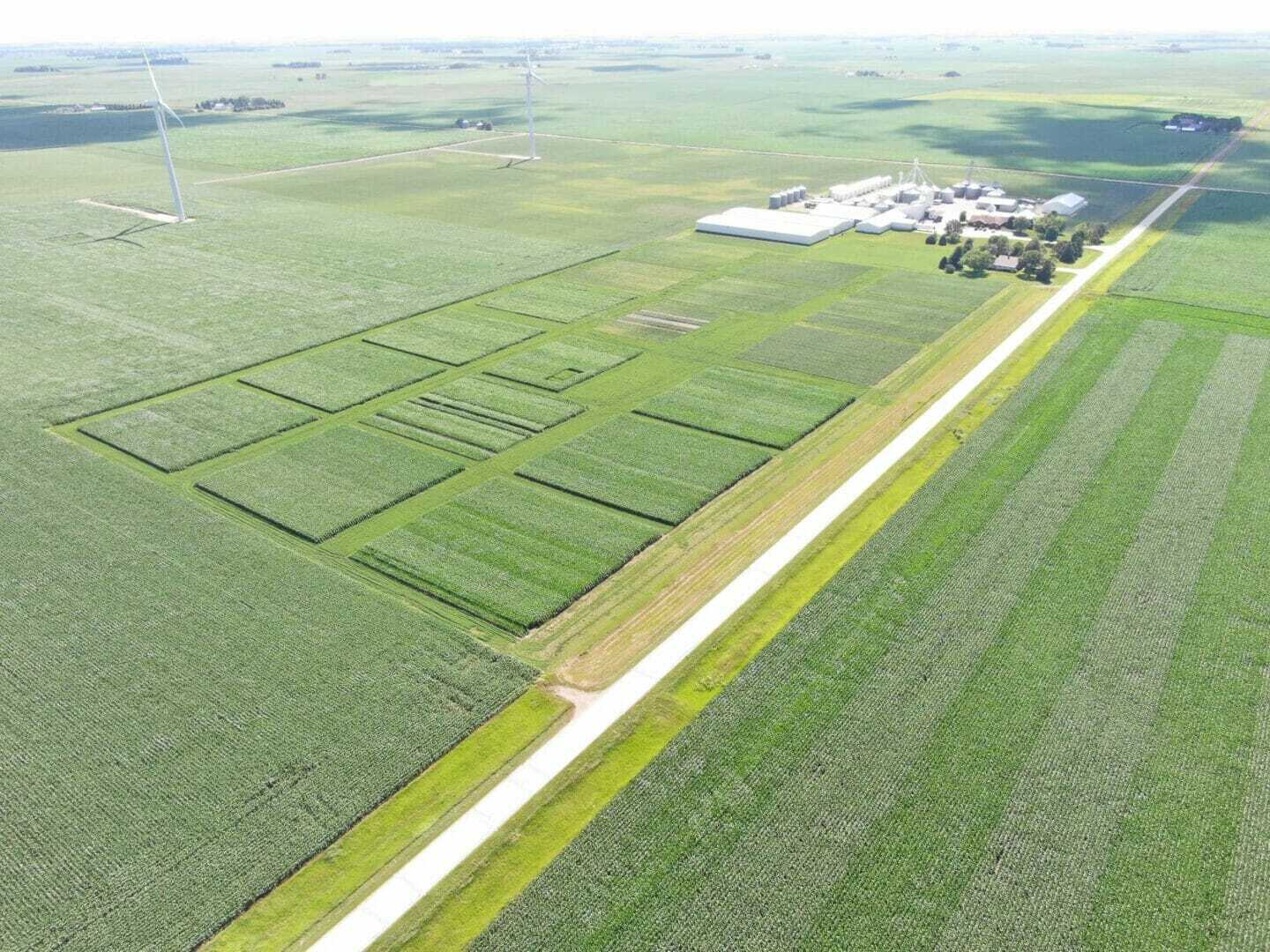
At the Latham Premier Agronomy Center, we have many demonstrations including different corn planting dates and planting depths to show how these two important factors influence yield year after year. Research shows that 50 to 75% of corn yield increases during the past 70 years came from genetic advancements, which leaves 25 to 50% of that yield increase to changes we’ve made to our farming practices.
Planting date and planting depth are cultural practices that have led to increased corn yield. Fifty years ago, farmers were talking about planting earlier than mid-May. Today we talk about planting earlier than April 15!
Our adapted hybrids produce the best yields when planted in the first week to 10 days of May. This is usually due to disease, stand loss or slow growth early in the corn life cycle. This is something we know well, and it’s why Latham Hi‑Tech Seeds includes emergence and early vigor scores in our product guide.
Matching the right hybrid to the right field and planting it at the right time can lead to outstanding yields – but only if you also plant at the proper depth. Planting corn at the proper depth allows the crown to establish approximately three-fourths of an inch below the soil surface.
Why is crown development so crucial? If the crown is pushed to the soil surface due to shallow planting, at least one set of nodal roots typically establishes above ground. We want nodal roots to develop below ground to anchor the plant and to also increase the corn plant’s drought tolerance. Corn should be planted about 2.5 inches deep, which allows it to establish the crown just below the soil surface. Shallow planting depth causes issues with germination due to dry soils.
We look forward to harvesting our demo plots at Latham’s Premier Agronomy Center and sharing results with you throughout the summer. Have a safe spring season!
Did you enjoy this article? We want to (TECH)talk with you! Sign up for our newsletter to receive agronomy articles (and delicious recipes) in your inbox! We’ll talk soon.
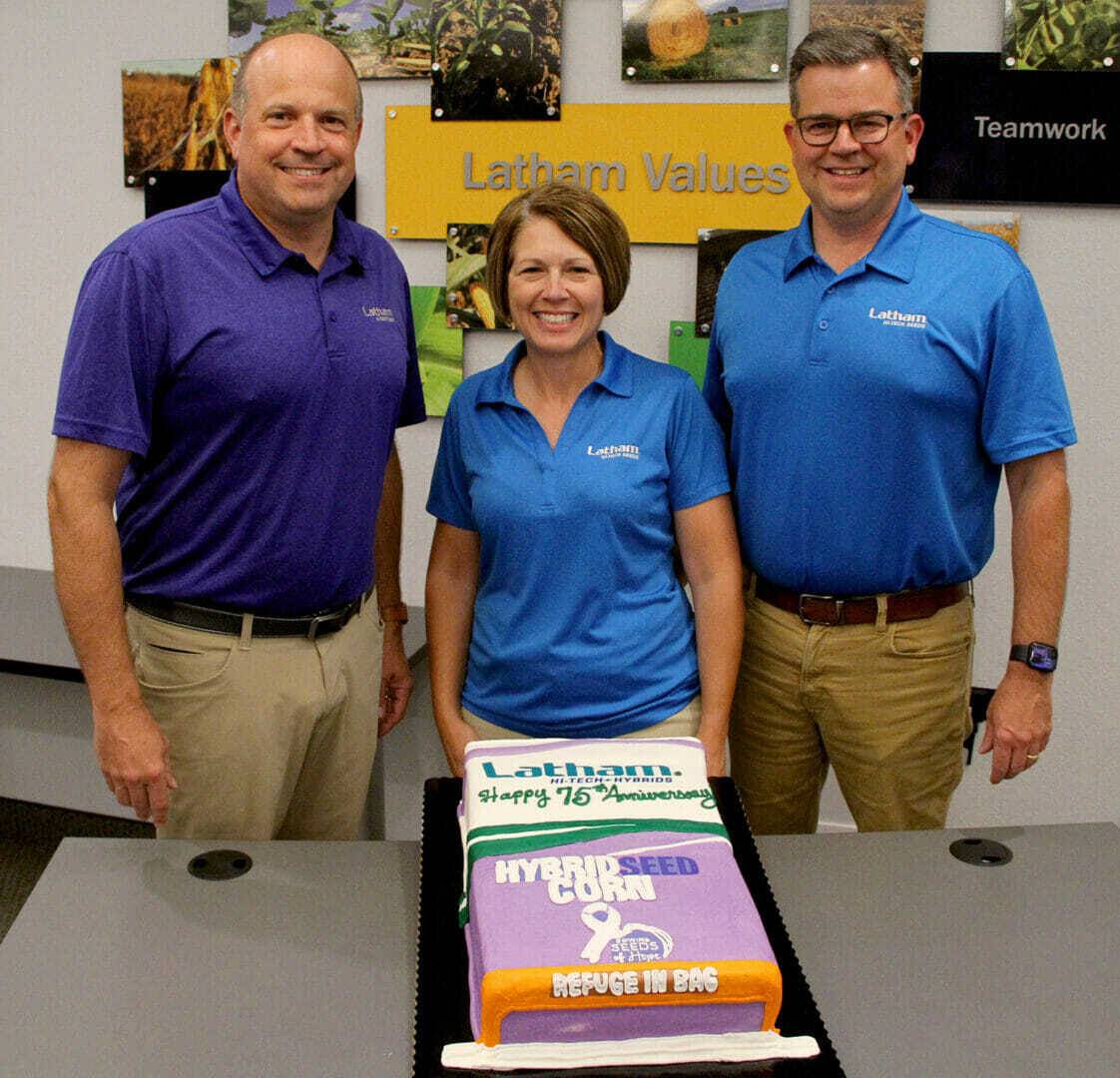
Latham Seeds Celebrates 75th Anniversary on Family’s Iowa Century Farm
From a build-your-own bouquet bar to bouncy houses and in-field demonstrations, the 75th anniversary party for Latham Hi‑Tech Seeds was packed with education and entertainment for the entire family.
“We feel blessed to be the third generation of Lathams to own and manage our family-owned seed company with headquarters on our Century Farm in North Central Iowa,” says John Latham, president, Latham Hi‑Tech Seeds. “We know that keeping a farm in the family for generations is challenging. That’s one reason we’re proud to sell through a farmer-dealer network. We appreciate working with multi-generational farmers, who plant our seed across the Upper Midwest.”
Chris Latham, Shannon Latham and John Latham (Third Generation)
Last night’s celebration allowed Latham Seeds to showcase the latest seed traits and technologies during the grand opening of the Latham Premier Agronomy Center. There are more than 20 demo plots located within the Premier Agronomy Center, and guests got to choose which four they wanted to attend.
One of the more popular presentations featured two new trait platforms that protect against corn rootworm (CRW) that many farms are experiencing this season. The first corn hybrid trait platform is SmartStax® PRO, which combines “BT” traits with RNA structure. When eaten by the pest, this package interferes with an “essential-to-life protein” in the insects RNA (thus RNAi) and leads to insect control. This non-BT-based development will help control CRW in a new way plus extend the usefulness of BT-based controls. You will see the SmartStax PRO Trait package in LH 5008 SS PRO and LH 5668 SS PRO hybrids.
The second trait platform to control CRW is Duracade Viptera™. This package combines BT traits with another BT rootworm trait that attaches uniquely to the insect’s gut when it’s eaten. It also provides above-ground protection from the Viptera trait. You will see the Agrisure Duracade Viptera trait package in LH 5209 DV hybrid. Latham® hybrids with Duracade Viptera and SmartStax PRO traits provide multiple modes of insect control for both above and below ground.
Another popular tour stop at the Premier Agronomy Center Grand Opening was the root and soil pit. While you can learn a lot from a root dig, you can learn even more when you dig deeper! Corn roots, night crawlers, compaction layers, earthworm channels and even water during a drought can be seen at the three to five-foot depth. Soil that is healthy deep down holds more water, has less run-off and supports plants during challenging weather. Healthy soil is also filled with microbes and worms.
Latham’s Agronomy Center field day went from 4 to 8 p.m. Following the field presentations, guests enjoyed Wholly Smoke BBQ, birthday cake and soft serve ice cream cones plus a live performance by Neil Hewitt.
Wholly Smoke BBQ from Dow, Iowa, had delicious smoked meats along with mac ‘n cheese. Such divine food reminded me of my favorite mac ‘n cheese recipe. Check it out below (courtesy of Cristen Clark, Food & Swine and Iowa Food and Family Project.)
If you’d like to schedule your own tour of the Premier Agronomy Center, contact your local Latham Seeds rep or call our office at 877-GO-LATHAM (877-465-2842). All growing season long, Latham Seeds provides opportunities to learn from demonstrations in the Premier Agronomy Center. Follow @LathamSeeds on Facebook, Twitter, Instagram and YouTube – and watch Latham’s weekly “Ask the Agronomist” videos.