Latham Hi-Tech Seeds

(641) 692-3258

  • Home
  • Products
    • Corn
    • Soybeans
    • Alfalfa
    • Corn Silage
    • Seed Guide
  • Performance
  • Find a Rep
  • Media
    • Blog
    • News
    • Videos
    • Podcasts
    • TECHTalk
  • About Us
    • Company History
    • Our Mission
    • Careers
    • Become a Rep
    • Sowing Seeds of Hope
  • Contact Us
  • Latham Hi‑Tech Seeds

    Latham Plans EPA-Stewarded Soybean Research Trials

    Feature Tech Tuesday 01

    Tech Tuesday Header-01

    During the past several years, Latham’s Research Team has conducted EPA-regulated and EPA-stewarded trials in Alexander.

    A regulated trial includes that contain traits that have not been fully approved in the United States. In stewarded trials, all traits have U.S. approval but may not have full global approval. In both cases, great care is taken to ensure the harvested soybeans do not enter the grain channel.

    This year we’re planning to conduct a stewarded trial with Liberty® GT 27 soybeans. Formerly called “Balance GTLL,” this technology provides soybeans tolerant to three herbicide classes: (1) glyphosate (e.g. Roundup®); (2) gluphosinate (e.g. Liberty®); and (3) isoxaflutole.

    No herbicides containing isoxaflutole have been approved by the EPA for use in soybeans during the 2018 growing season. However, the ability to spray both glyphosate and gluphosinate post-emergence has some farmers very excited.

    I’m especially looking forward to testing our current Liberty lineup against these new cultivars. Liberty GT 27 soybeans looked excellent in the 2017 breeder trials we observed. At press time, the Philippines is the only country that has not yet approved this technology.

    Enlist E3™ soybeans also have tolerance tothree herbicides: glyphosate, gluphosinate and the new 2,4-D choline. The European Union (E.U.) approved this technology last December but we’re still waiting approval from China and the Philippines. Depending on available space and restrictions, we may also have a stewarded E3 plot this year. We’re eager to see how it performs, as farmers in the South have been planting Enlist cotton since 2016 and are reporting tremendous success with both the herbicide and the yields.

    These EPA-regulated or EPA stewarded plots are only planned for Latham headquarters. Other corn, cover crops and alfalfa plots that are unique to Alexander are also planned for 2018, and you’re welcome to stop by any time during the growing season. Make “visit Alexander in North Central Iowa” part of your 2018 Summer Bucket List! If need be, we can give you ideas to see a few sights along the way.
    Webspec Admin

    March 13, 2018
    Crop, General, Industry News, Seed Technology, Soybeans
  • Latham Hi‑Tech Seeds

    Latham Quality with John Latham

    LIBSYN header 4

    LIBSYN header 2-01


    Welcome back to our #AsktheAgronomist! John Latham & Kilah Hemesath talk Latham quality this morning. Quality has been the foundation of our company and still plays a vital role in our success.

    Webspec Admin

    March 8, 2018
    #AskTheAgronomist, Crop, Soybeans
  • Latham Hi‑Tech Seeds

    Soybeans with Low SDS Tolerance Benefit Most from ILeVO®

    Feature Tech Tuesday 01

    Tech Tuesday Header-01

    Once you have it, you have it! Because sudden death syndrome (SDS) is caused by a soil-borne fungus, there’s no getting rid of it. Farmers must manage it to protect yield. Keep in mind that SDS was widespread in 2016, and many of those acres will be planted once again to soybeans in 2018.

    The most promising tactic for SDS management is ILeVO® seed treatment. Numerous university trials have shown ILeVO effectively reduces SDS severity and protects yield. In addition, Latham’s own research confirms the findings.

    With the help of many of Latham® soybean SuperStrip cooperators, our first company-wide trial using ILeVO was held in 2016. That year SDS was widespread, so many farmers across Latham Country lost significant yield to the disease. Our 26 plots showed an average yield benefit of about 3.5 bushels per acre.

    This past growing season, however, SDS was not nearly as severe. Certain counties in Central and Eastern Iowa were impacted greatly by the disease but, in general, it was a season where SDS showed up late and didn’t cause as much lost yield.

    We doubled the number of side-by-side plots from 2016 to 2017, and we added a few more varieties to the test. Results varied quite a bit by location due to disease severity and the soybean that was used in the study.

    Following are a few observations based on the data gathered in 2017:

    • The highest yield benefit was seen in a plot in Hancock County, Iowa, where L 1858 R2 was the soybean treated and came in at 8.27 bushels per acre benefit.
    • Although SDS severity was down from 2016, we saw some significant differences in response between soybean varieties. Products like L 1858 R2 and L 2558 L, which are not known for their SDS tolerance, showed the most benefit from the ILeVO.
    • In 2016, we saw a few plots where the ILeVO seed treatment showed a negative response. Statistically, this is not unusual nor unexpected. We saw this again in 2017 but not to the magnitude observed in 2016. Both L 2084 R2 and L 1787 L averaged a negative response (-0.9 and -0.6 respectively).
    • Across the 51 plots, we saw about a ½ bushel per acre yield benefit for applying ILeVO seed treatment.

    We plan to conduct another ILeVO trial in 2018. Feel free to contact me or your Latham RSM if you’re interested in being an ILeVO plot cooperator.

    Webspec Admin

    February 13, 2018
    Soybeans, Tech Tuesday
  • Latham Hi‑Tech Seeds

    Variable Rate Seeding

    LIBSYN header 4

    LIBSYN header 2-01

    Phil Long talks about the what, why and how of variable rate seeding. For the Facebook Live conversation, click here: https://www.facebook.com/LathamSeeds/videos/10156143070902138/

    Webspec Admin

    February 8, 2018
    #AskTheAgronomist, Corn, Soybeans
  • Latham Hi‑Tech Seeds

    Latham Announces Mid-Season Soybean Releases

    Feature Tech Tuesday 01

    Tech Tuesday Header-01

    One objective of Latham’s SuperStrip plot program is to help evaluate experimental seed products. Now that the 2017 harvest data has been analyzed, it’s my pleasure to introduce three soybean lines as mid-season releases for the 2017-2018 sales year.

    These new soybeans come from our research on a new herbicide trait, the HPPD inhibitors, or Herbicide Group 27 compounds. The active ingredient being targeted is isoxaflutole, which is the base chemistry in several corn herbicides like Corvus® and Balance® Flexx.

    You may have seen early announcements that the “Balance™ GT” soybean trait had cleared regulatory processes. It’s important to understand that as of press time, the EPA has NOT approved any isoxaflutole compounds to be sprayed over the top of soybeans. We are releasing these three cultivars as “GT” soybeans since they are cleared to be sprayed with glyphosate products only.

    Remember to check LathamSeeds.com for 2017 yield data on these newly released soybeans!

    L 2187 GT
    2.1 Relative Maturity
    Carries the Rps1-c gene for Phytophthora, as well as Soybean Cyst Nematode (SCN) tolerance from PI 88788.vIts ratings for Sudden Death Syndrome (SDS) and White Mold ratings are excellent, and its Iron Chlorosis score is very good. This line ranked in the top three in every trial in which it was entered during both 2015 and 2016!

    L 2458 GT
    2.4 Relative Maturity
    Produces excellent yields across Iowa and into Illinois. It carries the K-gene for Phytophthora and strong tolerance to SCN from PI 88788. The Brown Stem Rot rating is excellent. It also has very good scores for White Mold, SDS and Iron Chlorosis. It has a very attractive tawny color at harvest and is also tolerant to the STS family of herbicides.

    L 2638 GT 
    2.6 Relative Maturity
    Carries the Rps1-k gene for Phytophthora and has strong tolerance to SCN from PI 88788. It’s a fairly bushy plant type that fills wider rows easily and has shown very consistent yields across all of Latham Country in 2015 and 2016 trials. Sudden Death, Brown Stem Rot, White Mold and Iron Chlorosis ratings are all very good to excellent.

    Webspec Admin

    January 23, 2018
    Soybeans, Tech Tuesday
  • Latham Hi‑Tech Seeds

    Podcast: Seed Traits, Seed Treatments and Crop Rotation

    LIBSYN header 4


    LIBSYN header 2-01

    http://traffic.libsyn.com/fromthefield/3_out_of_3.mp3

    Phil Long wraps up our Profitability Series! Tune in as he talks about seed traits, treatments and crop rotation. Have a great day!

    For the Facebook live version, clicker here: https://www.facebook.com/LathamSeeds/videos/10156043160802138/

    Webspec Admin

    January 4, 2018
    #AskTheAgronomist, Corn, Podcast, Seed Treatment, Soybeans
  • Latham Hi‑Tech Seeds

    Green Means Go, Especially When Soybeans Show Green Stem Syndrome

    Feature Tech Tuesday 01

    Tech Tuesday Header-01

    The topic of green soybean stems at harvest was discussed at several of our post-harvest meetings. What makes this disorder especially frustrating is that the soybean pods and beans within those pods are fully mature and ready to harvest.

    Unfortunately, all plants have a built-in mechanism that makes them want to shed their seeds on the ground when they’ve reached full maturity. This process is called dehiscence [di-’hi-s  n(t)s] in soybeans and has erroneously been referred to as “shattering” by many. Regardless of what it is called, lost yield and lost income results.

    There are several theories about what causes Green Stem Syndrome (GSS) but an exact diagnosis has not been found.  Some researchers blame insects, diseases, foliar fungicides, nutrient deficiencies, low pH and even compaction. The bottom line, however, is that GSS has been proven to occur in the absence of all the above conditions. To make matters worse, the symptoms of GSS are not always the same.  There are cases where all that is left on the plant are green stems and pods, but there are other cases where even some leaves remain on the plant. One thing that has been noticed is that it usually happens within a given geographic area or “neighborhood.” Also, GSS has never been associated with just one soybean variety from a single company.

    One of the more practical explanations for this problem is something happened during the growing season, probably after flowering, to cause pods to abort or not to fill properly. This produces an abnormal build-up of carbohydrates within the plant. Once that early-season stress has gone away, the plant wants to funnel those carbohydrates to the pods for seed-fill. However, the pods are
    either not there or they can’t finish the process. Carbohydrates are then trapped within the stem of the plant for a longer-than-normal period, so the stem remains green.

    There really isn’t any clear way to manage or prevent this problem. One thing I highly recommend is NOT to wait to harvest soybeans that are showing GSS, but to slow the combine down as much as necessary and get them out of the field. Waiting until the stems are dry almost always costs you in lost bushels.

    Webspec Admin

    December 19, 2017
    Soybeans, Tech Tuesday
  • Latham Hi‑Tech Seeds

    Avoid the Temptation to Buy Only Based on Plots

    Feature Tech Tuesday 01

    Tech Tuesday Header-01

    It’s that time of the year when we reflect upon the decisions we made last year and make changes for 2018. Many farmers will base next year’s planting decisions based only off this year’s results, so please avoid making that huge mistake!

    Base your decision on facts and results but also the odds. Odds are, the 2018 growing season isn’t going to be exactly like the 2017 growing season. We can’t control Mother Nature, so spread risk by planting packages of both corn hybrids and soybean varieties.

    Resist the urge to plant that racehorse hybrid or winning soybean variety on most of your acres! The breadth of Latham’s product strength is evident from our F.I.R.S.T. Trial performance. Multiple Latham brand products placed in the Top 10 at multiple trial locations.

    At printing time, we have 34 wins in soybeans and 17 wins in corn. We also have 293 Top 10 performances in soybeans and 220 in corn so far. With such great harvest results, it’s easy to order the yield trial winners. It’s important, however, that you do NOT buy based exclusively on this year’s winning results.

    At Latham Hi‑Tech Seeds, we select products bred to perform in specific geographies. The Latham team also takes pride in making sure only the highest quality seeds go in the bag, which is evident with the yield results we saw again this year in the F.I.R.S.T. Trials seed tests!

    Take the time to review your farm, field- by- field, and place the product for every acre! Seed selection is one of the important decisions a farmer will make. It’s well documented that the ability to reach yield potential begins with the seed. At Latham Hi‑Tech Seeds, we want to work with you to reach new yield levels in 2018!


    Webspec Admin

    December 5, 2017
    Corn, Soybeans, Tech Tuesday
  • Latham Hi‑Tech Seeds

    Variability on Your Farm Affects Seed Decisions

    Feature Tech Tuesday 01

    Tech Tuesday Header-01Once the busy harvest season winds down, many of us reflect on those spots that stuck out in each field. Maybe it was a spot that yielded 80+ on soybeans or 250+ on corn, or maybe it sticks out for the opposite reason.

    Variability on your farm influences the decisions you make throughout the rest of the year. We consider two types of variability — spatial and temporal — in precision ag.

    Spatial variability refers to different patterns in an area or space. This is influenced by physical things that don’t change quickly, such as soil type, texture, structure, depth of topsoil and organic matter. These physical soil properties are directly related to the chemical properties of your soil, including water holding capacity, nutrient availability and buffer capacity. All of them impact yield potential.

    Temporal variability in a field refers to the patterns between growth stages and/or seasons. One way this variability is evident is how a hybrid or variety responds to environmental stress. We all have areas within our fields that yield poorly one year and then produce top yields the following year. This is a combination of the underlying soil properties and how the hybrids/varieties respond to environmental conditions. No two seasons are alike!

    We understand that no two fields are alike either. Latham’s hallmark FieldXField™ crop planning process helps you choose the right product for each field. As an agronomist, I think of G x E x M why picking products on a field-by-field basis is the #1 thing you can do to set yourself up for the best yield potential.

    Temporal and spatial variability are key to understanding whether the yield variability in our field is consistent or inconsistent. Once you know how to categorize those areas, then you can put a variable rate program to work on your farm.

    This year we’re piloting the Seed-2-Soil® Advanced Program, which uses several years of yield data alongside soil, imagery, your personal input, and any other available data layers to determine how to treat each of those areas. The power is in the multiple years of yield history. Even if you don’t have several years of yield data, there is still a lot of data we can use to create these areas within each field.

    If you have fields that you know would benefit from variable rate management, feel free to call me and we can discuss different options. If you’re thinking about incorporating some precision services on your farm, I would be happy to have that discussion, as well.

    Webspec Admin

    November 14, 2017
    Corn, Soybeans, Tech Tuesday
  • Latham Hi‑Tech Seeds

    From the Field Crop Report: Sept 13

    Craig 1

    Northeast Iowa & Southeast Minnesota

    Craig Haaland

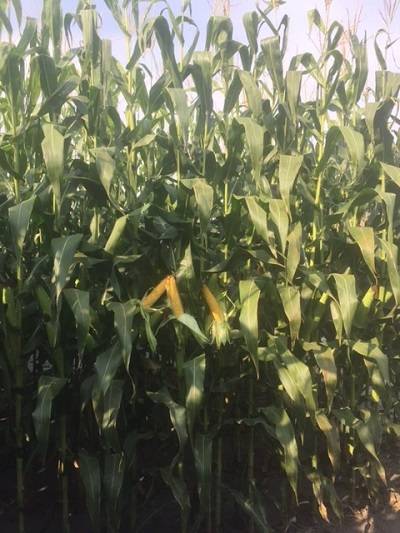
    Crops are really changing, and harvest will soon be in full swing. These photos were taken in a very nice looking field of LH 5095 VT2 PRO in Floyd County, Iowa. Ears are filled out and ear placement is consistent. North Iowa has had a long streak of no rain and temperatures are going to be warm for the next 7 to 10 days.

    Eastern Iowa

    Jerry Broders

    It’s beginning to look a lot like fall! Soybeans are turning and harvest will be here before we know it.


    North Central Iowa & South Central Minnesota

    Cory Greiman

    Signs of fall are evident in this field of Latham brand L 1787 LL, which is turning in the Garner area.

    Cory

    Central Iowa

    Bryan Rohe

    Latham’s L 2084 RR2 turned last week near Bondurant, Iowa. Harvest will likely be underway here next week.

    Bryan

    West North Central Iowa

    Bart Peterson

    Harvest is underway near Webster City, Iowa. On Sept. 8, 2.3 acres of L 1328 L was combined, yielding 64.8 bushels/acre and running 14.4% moisture. On Sept. 11, L 1328 L went 71.8 bu/A on better ground.

    Bart

    Northwest Iowa

    Darin Chapman

    We have been out walking fields looking for potential disease. These soybeans look pretty good, but in spots, it looks like cercospora leaf spot is a possibility. As the plants mature, infected leaves will turn from orange to bronze. Tillage and crop rotation effectively reduce the survival of fungi from season to season.

    Western Iowa & Eastern Nebraska

    Larry Krapfl


    Southern Wisconsin

    Greg Mair

    The weather is heating up this week in Wisconsin and choppers are hitting the fields. Moistures have been between 63-73% whole-plant moisture, which is critical to achieving the most consistent fermentation and forage quality.

    Latham LH 5495 3122 EZR is a key corn silage variety for Wisconsin.  It is always a good day when you get to tell a grower that his corn silage yield is estimated at over 34.5 ton/acre.

    Greg 1

    Eastern North Dakota

    Brian McNamee

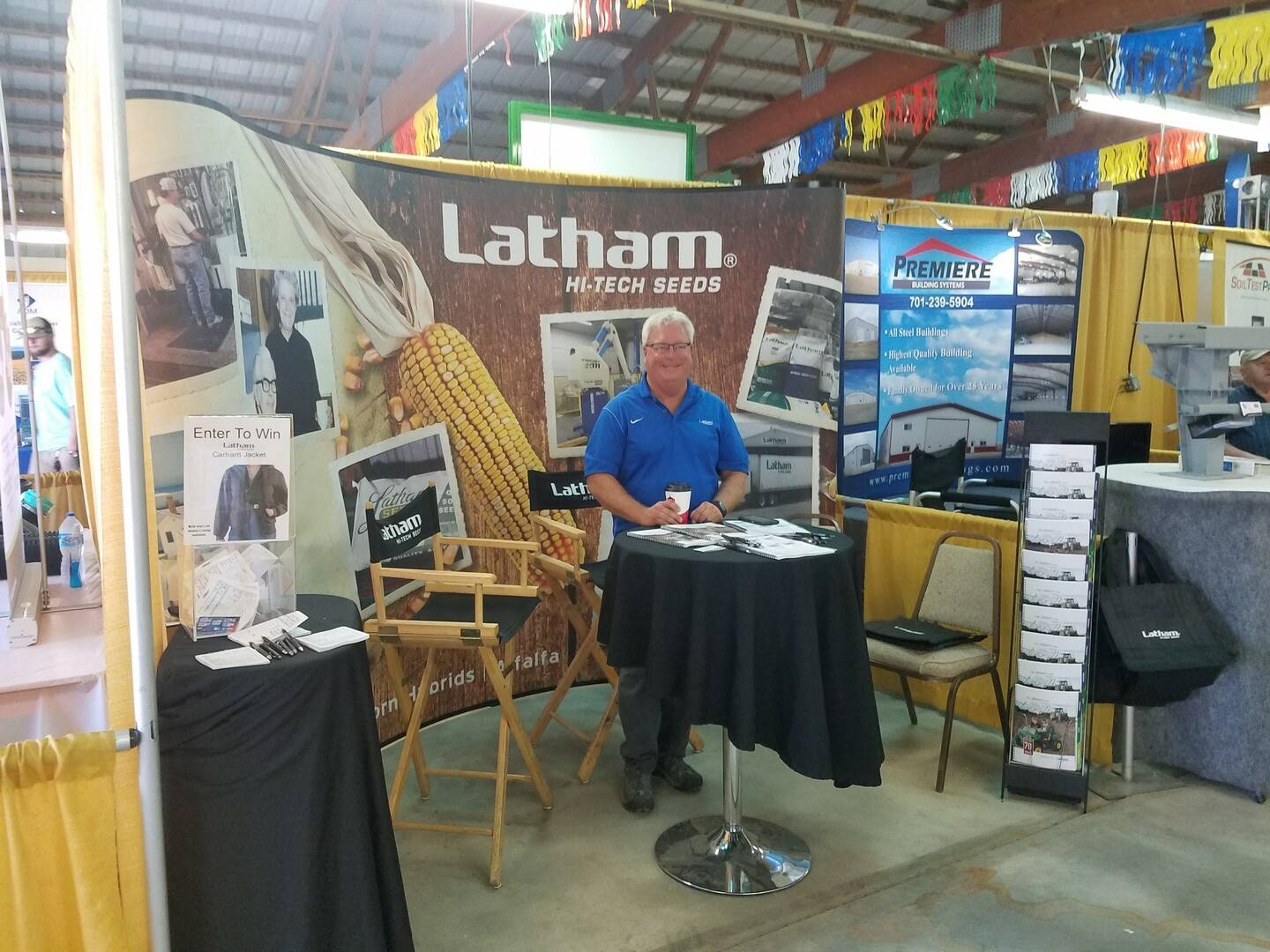
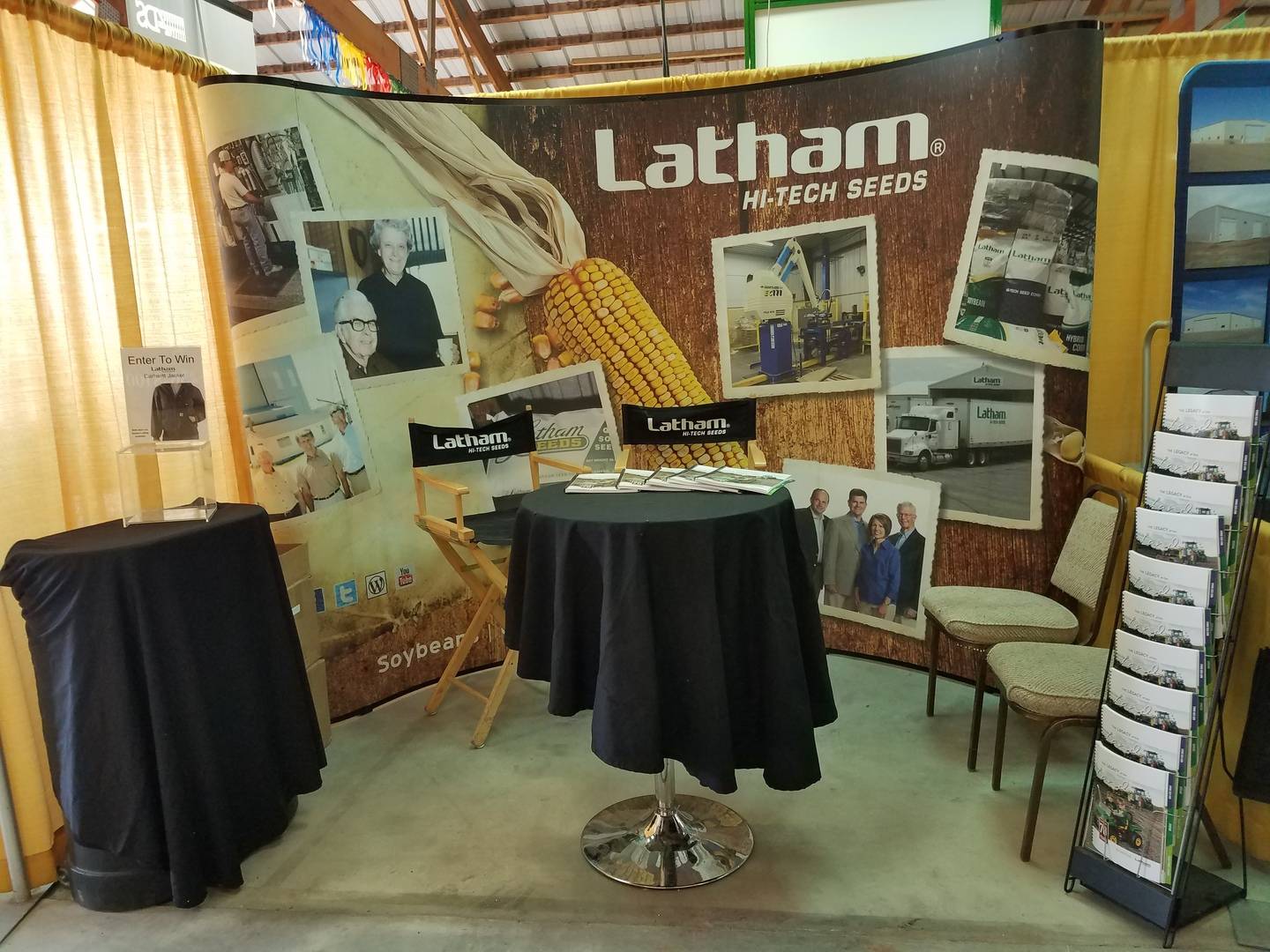
    It’s Big Iron time again in West Fargo. Stop by and see us in Booth 22 at the west end of Exhibit Hall.

    Silage chopping and early soybean harvest will be starting to roll this week. I look forward to seeing all my customers in the field for what looks to be a better than expected yields.

    Brian

    Southeast North Dakota

    Gary Geske

    Latham 5042 RR/LFY silage corn looks awesome! The chopper will make its way soon to this field east of Sheldon, ND.

    Gary 1


    Northeast South Dakota

    James Keltgen

    A fair amount of Goss’s Wilt showing up in corn. LH 3877 VT2 PRO is handling it well. Warmer temps are helping corn to reach black layer.

    Soybeans are very close to maturity. Yellow leaves are present everywhere and growers expect to be harvesting in about 2 weeks!

    Southeast South Dakota

    Ramie Coughlin

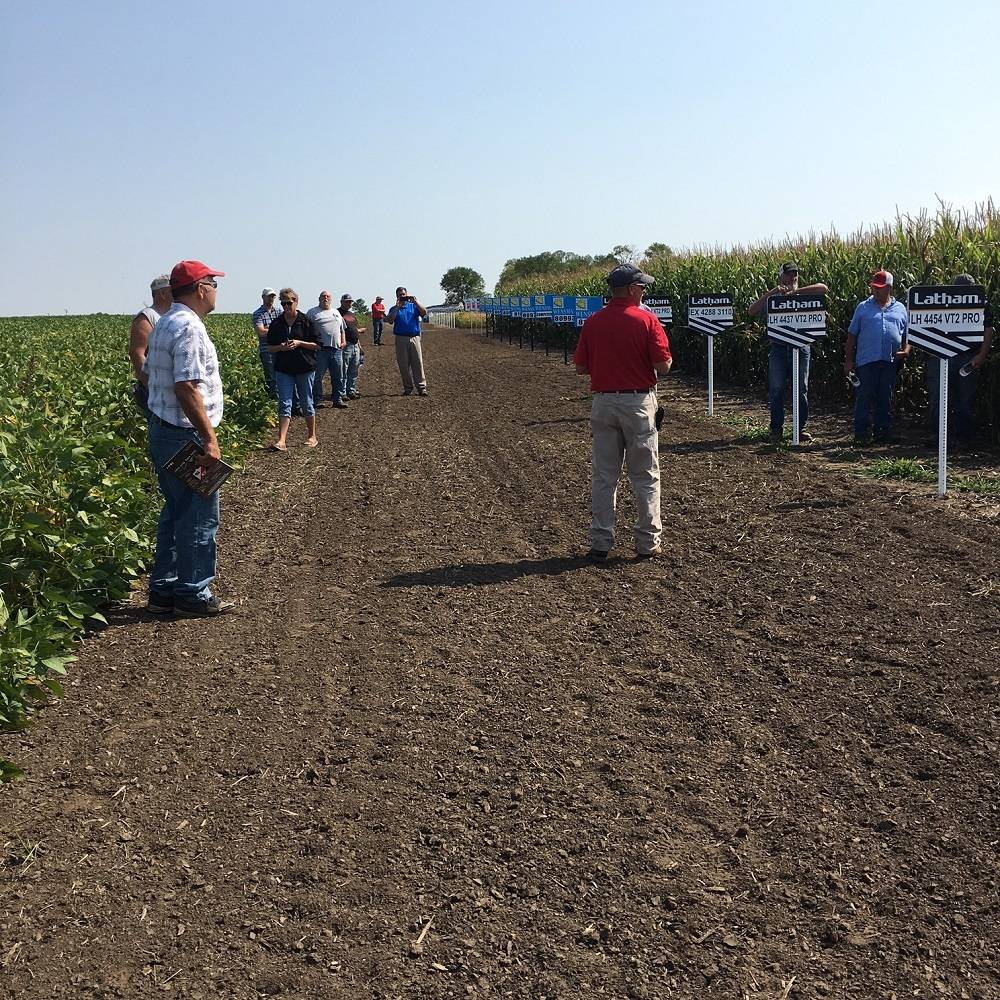
    Latham(R) dealer Estelline Co-op hosted its annual fall field day on Monday. Growers got a chance to look at multiple brands and technologies side by side. Also in South Dakota, silage chopping season is underway. Timing is everything to harvest quality silage. I expect it to be in full swing next week.

    Ramie

    Northern Minnesota

    Ken Highness

    Come see us Sept. 13-14 in Fargo at Big Iron, the largest farm show for agribusiness in the Upper Midwest. We are located in the Exhibit Hall building Booth 22.

    Ken

    Southern Minnesota

    Brandon Wendlandt

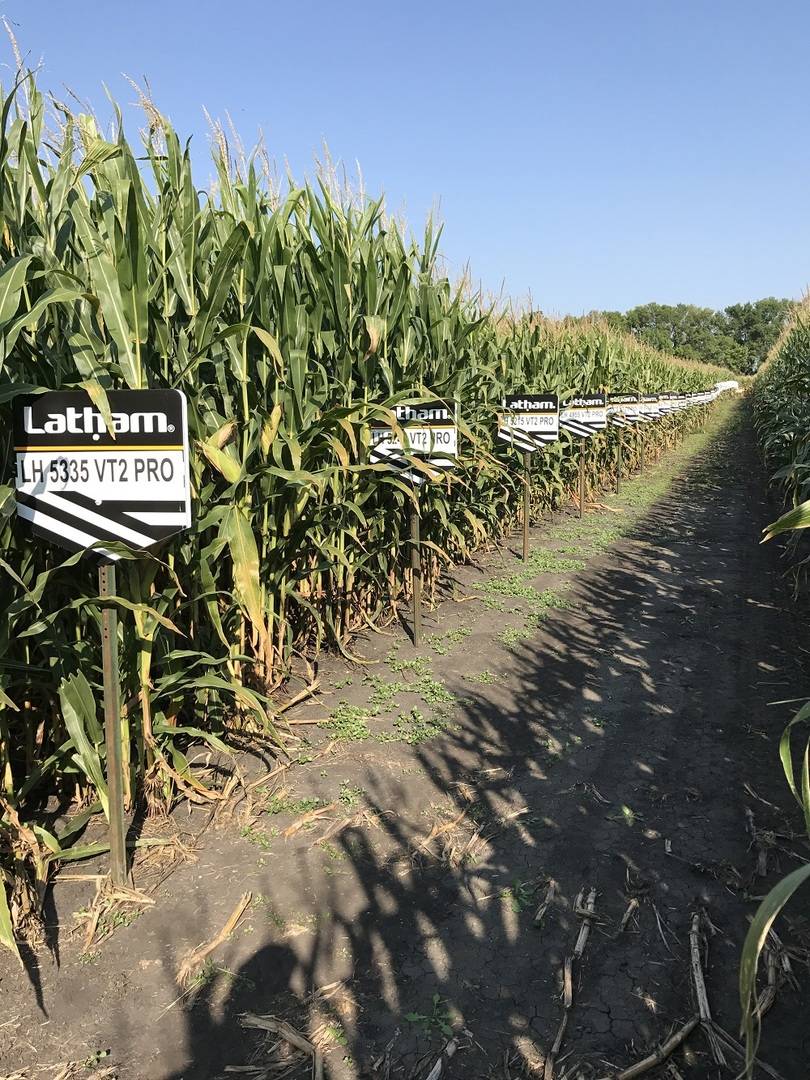
    We had a beautiful weather Monday night for a plot tour and customer appreciation event in Sanborn, Minnesota. Now is a great time walk corn and soybean plots before because soon everyone will be in the throes of harvest.

    Brandon


    Webspec Admin

    September 13, 2017
    Season, Soybeans, Summer
Previous Page
1 … 17 18 19 20 21 … 32
Next Page

Latham Hi‑Tech Seeds

131 180th Street | Alexander, IA 50420

(641) 692-3258

SIGNUP FOR OUR NEWSLETTER
  • Contact
  • Legal
  • Dealer Center
  • Seedware Login
  • Latham Gear

© 2025 Latham Hi‑Tech Seeds. All rights reserved. | Iowa Web Design by Webspec | Privacy Policy

Latham® Hi-Tech Seeds is a trademark of M.S. Technologies, L.L.C., 103 Avenue D, West Point, IA 52656.