Welcome back to our Ask the Agronomist! Today Phil talks about IDC in fields and how to plan for it next year. Tune in for some helpful hints and to learn more about IDC.


Welcome back to our Ask the Agronomist! Today Phil talks about IDC in fields and how to plan for it next year. Tune in for some helpful hints and to learn more about IDC.

Brain McNamee
An example of imbibitional chilling effect in Northern North Dakota. Due to cold, wet spring conditions, I’m seeing more cases of imbibitional chilling and soil compaction on more acres this growing season.
Gary Geske
We’re expecting a big crop near Enderlin, North Dakota! Two slabs are ready for 35,000-bushel grain bins.
James Keltgen
Strong and severe storms came through Northeast South Dakota last Wednesday morning. Winds of 20 miles per hour (mph) combined with a 20-minute hail storm, leaving 2.5-inch drifts, south of Watertown. Crops and buildings were completely destroyed. There is still a fair amount of replant being put in due to the hail and poor stands from lack of moisture.
Ken Highness
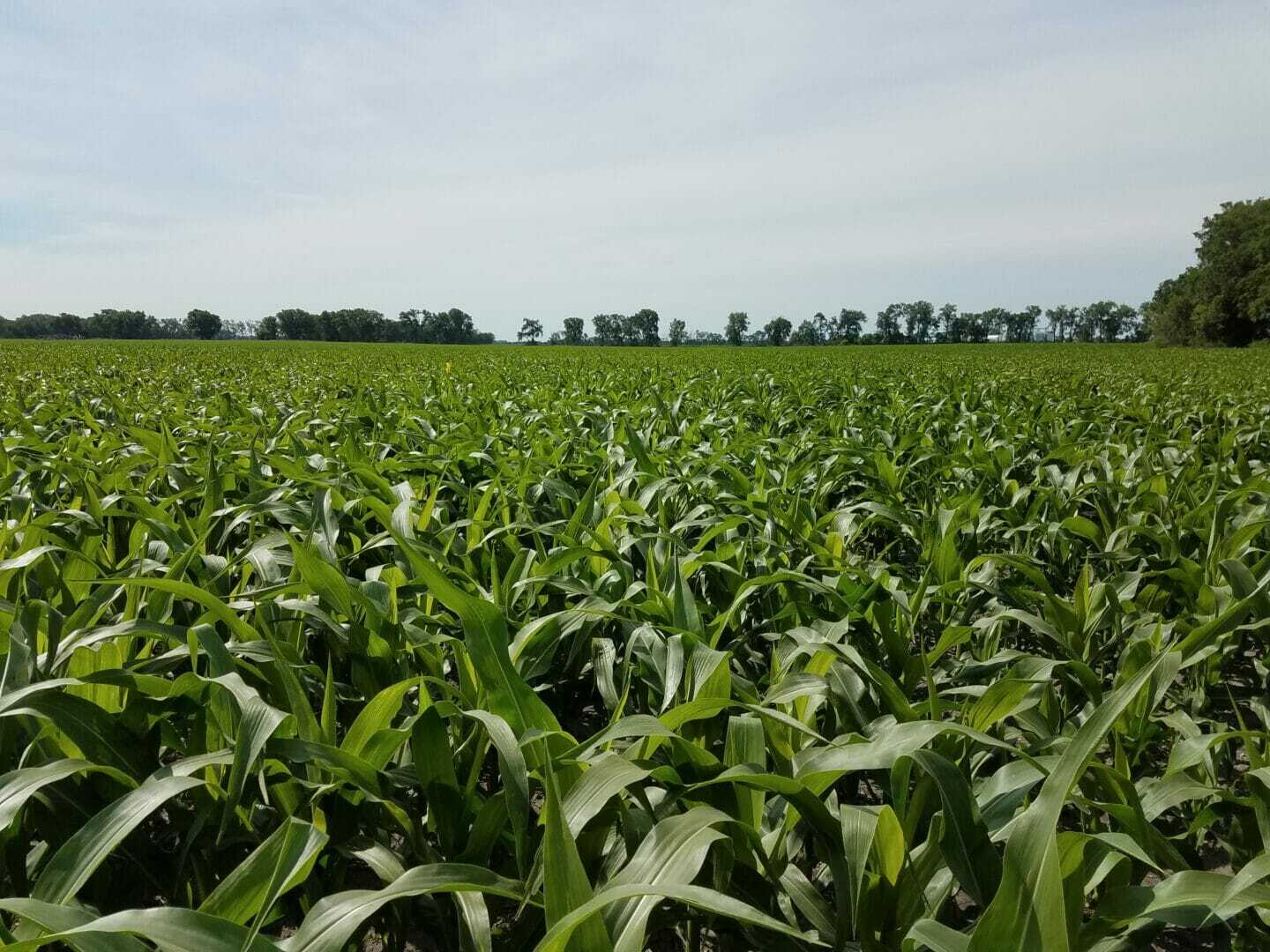
This field of Latham 4454 VT2 PRO RIB was planted April 15 near Glyndon, Minnesota. According to an old farm adage, having corn knee-high by the Fourth of July was an important bench mark for your corn crop. Growing condition have been very favorable so far, and this farmer expects to have a good crop.
Brandon Wendlandt
XtendimaxTM was sprayed June 26 on this field of Latham® Hi‑Tech Soybeans L 2184 R2X. This photo shows glyphosate-resistant waterhemp and giant ragweed, so we’re eager to take a look at this field next week!
Greg Mair
Latham® brand soybeans with the LibertyLink™ trait, pictured on the right, were planted before the rain and into good soil conditions. The Liberty soybeans on the left, however, were planted the day after the rain into wet soil conditions. Compaction is evident in the field. This portion of the field also crusted over severely affecting the emergence.

Darin Chapman
We continue to receive plenty of rainfall in Northwest Iowa along with cooler temps. Heat degree units would be beneficial!
Cory Greiman
It’s that time of year when Iron Deficiency Chlorosis (IDC) rears its ugly heads. Not all soybeans have the defensive package needed as evident in this field planted to a competitor’s soybeans. Keep in mind that Latham® IRONCLAD is Your Best Defense Against IDC.
Craig Haaland
This Latham Soybean SuperStrip plot was planted May 13 north of Blooming Prairie, Minnesota, We have received adequate rainfall so far this growing season. In fact, corn and soyean fields have really changed during the last week to 10 days. It’s been amazing to watch how quickly the replanted acres have caught up with the rest of these fields. Remember to scouting your fields. Mid-season scouting is necessary to stay ahead of weeds, insects and pests!

Bart Peterson
Lots of spraying has been taking place in West Central and North Central Iowa this week. Here’s we’re spraying Liberty beans near Woolstock, Iowa, during a beautiful sunrise.
Jerry Broders
The two photos I’m sharing this week demonstrate the resilience of corn to hail damage. One photo was taken on June 14 and the other photo was taken of the same field on June 26.
Bryan Rohe
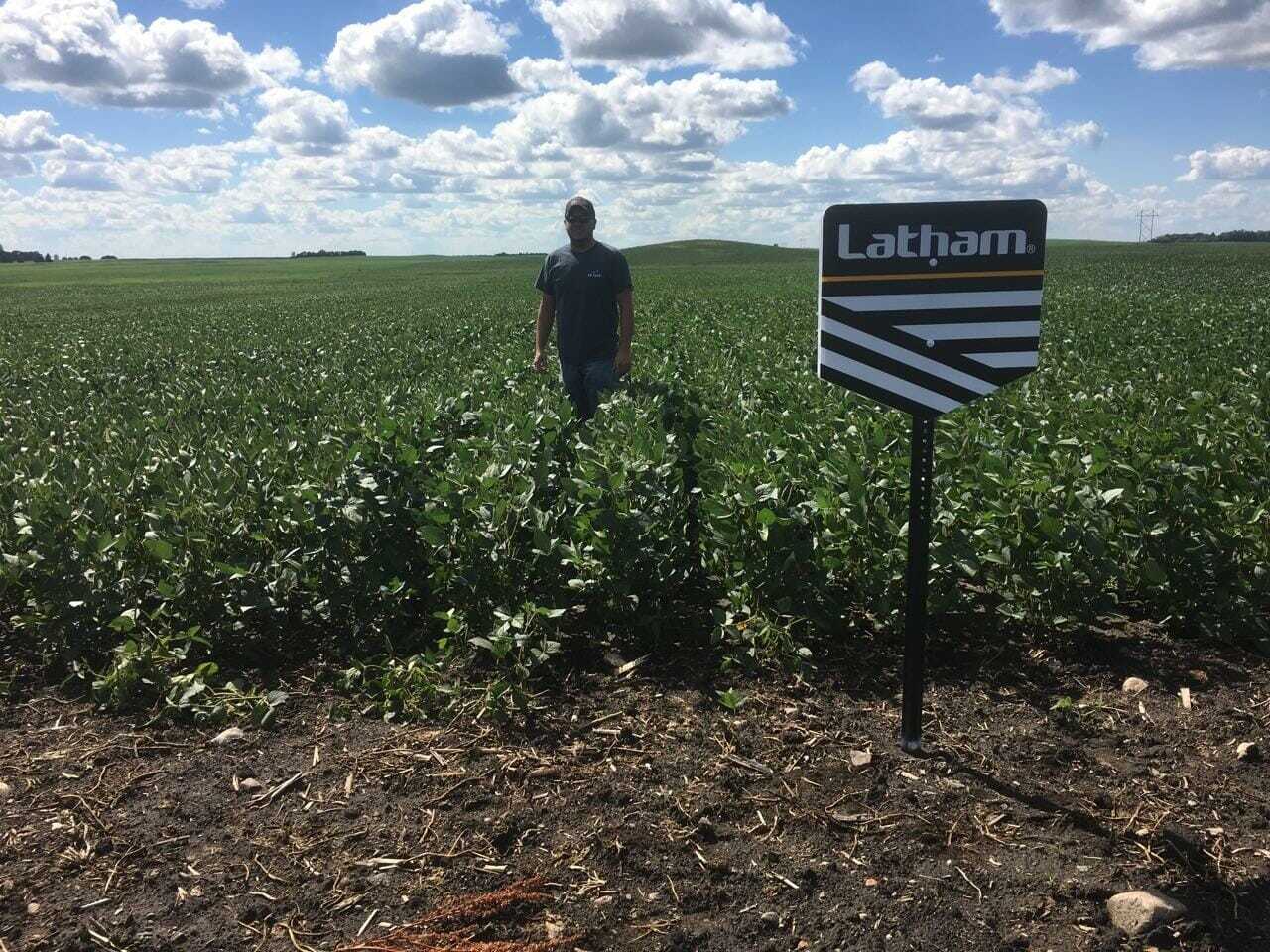
Iron Deficiency Chlorosis is showing up in some soybeans fields in the area. Remember, your best defense against IDC is planting IDC-resistant soybean brands. Latham Hi‑Tech Seeds makes that easy to do with our IRONCLAD designation. These soybean fields near Story City, Iowa, are planted to Latham® brands L 2084 R2 and L 2228 R2.
Larry Krapfl
In last week’s crop report, I began talking about the evasive weed of Palmer Amaranth. This aggressively invasive weed was found in only 5 of Iowa’s 99 counties at the beginning of 2016 but has spread to more than half the state’s counties now. Early identification is key to managing Palmer Amaranth, which is nearly identical to waterhemp.
Another noxious weed that’s drawing serious attention is Wild Parsnip, which is commonly found in Iowa road ditches. Wild Parsnip might be confused with a wild flower, but don’t cut it for a bouquet! Touching this poisonous plant could land you in the emergency room! Sap on the plant causes a reaction on skin that turns into painful blisters, boils and scarring. Experts say if you do come into contact with the plant, to wrap up the area immediately to protect it from sunlight.

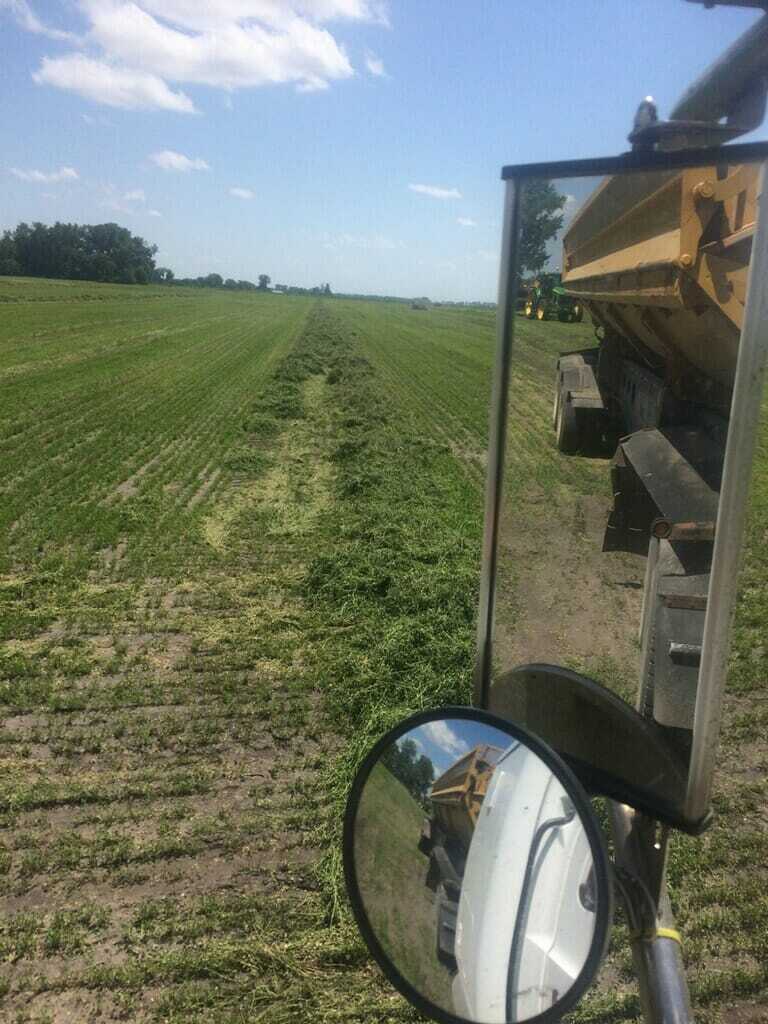
You can definitely see where pre-emergence herbicides worked and where they didn’t. There are many environmental reasons, mainly dry weather, leading to really catastrophic weed control.
Look at the Roundup Ready canola coming in this picture. You can see chemical-resistant weeds are a growing problem. This farmer will have not only a more expensive chemical bill, but his yield will be significantly less.
You’re right… this photo isn’t North Dakota. This field happens to be near Percival, Iowa. As a corn product specialist for Latham Hi‑Tech Seeds, I look at hybrids in multiple locations across eight states to take notes on stress tolerance and hybrid vigor.
After the wild week of weather we experienced last week, things have mellowed down. Winds of 90+ miles per hour accompanied last week’s storms, ripping roofs off buildings, uprooting trees and blasting young crops. There has been a fair amount of soybeans replanted, and corn was hailed out in some areas.
Doing some crop scouting LH 5095 VT2, which is nearing the v7 growth stage. Now is a great time for lots of different scouting in corn. You can scout for herbicide effectiveness, plant health, bugs, and roots. Digging roots can tell you a lot about your soil structure, tillage decisions, and planting.
Latham Hi‑Tech Seed corn and soybeans are progressing nicely in Northwest Iowa! We are looking forward to the results we see this fall. Stop by our Field Day on August 31 and see how #crop17 is coming along.
Bart Peterson
Got a kick out of this scene as I drove into the yard of a Latham dealer’s yard in West Central Iowa. Corn is in the V6 development stage and soybeans are between V1 and V3. We are not desperate for rain, but it is welcomed!
We had a hail event go through the region on June 14, causing widespread damage in Linn County.
Hail the size of golf balls and baseballs caused severe crop damage around Earlham, Iowa. Many fields in the area are a complete loss.
It is that time of year to keep a watchful eye on fields for the most feared weed in the industry… Palmer Amaranth. This is a stock photo of an image that all producers should have seared into brains.

The good news is that rain finally fell in some drought-stricken areas. Too bad last weekends weather event also delivered damaging hail as pictured in this field near Rugby, ND. This field was a total loss with less than 5% viable plants left.
Fortunately, the two showers that followed this storm delivered more rain and zero hail.
Emergence before the storm was very erratic, causing plant stand evaluations to be difficult. Because we haven’t had rain for so long, soybeans were planted into dry dirt and laid dormant for three weeks.
You know the hail damage is bad when cattail sloughs look like this!
My grandkids helping scout a field of Latham LH 3877 VT2 PRO RIB.
Mid-season crop scouting is important for two reasons: (1) different weed, insect and disease pressures become evident this time of year; and (2) summer months are a crucial time to decide which traits to implement when buying seed for the next crop year. Click here for more crop scouting tips.
It’s been an active week of weather in NESD. 3-6 inches of rain fell in the Clark and Watertown areas. Damaging winds and hail leveled fields northeast of Watertown. The good news is rain fell in the worst drought areas in central SD this week. There has been damaging storms this weekend in SD the last 3 years. Growers are baling winter wheat for feed near Gettysburg. Spring wheat may be too short to cut. Pastures are brown but corn and soybeans held on long enough to catch rains.
Look what’s cropping up in Southeast South Dakota… This week my family and I welcomed our fourth member. Daxton Ryan said hello to the world at 12:40 am on June 13, weighing in at 6 pounds, 15 ounces and stretching to 20 inches long. He is loving life on the outside, and we are loving life with him!
My grandson Casen and I are doing root digs on Latham’s experimental corn varieties in a SuperStrip plot near Felton, MN. This plot was planted May 7. At this stage, the root mass is well developed. The very white roots indicate an excellent healthy plant.
Storms came through much of southern Minnesota on Sunday and Monday and brought much needed rain. While some areas reported more, I received 2 inches of rain at my house. Some small hail was reported with the storm, but we haven’t seen crop damage from it here. Other areas did receive damaging hail and winds, so it will take a few days to assess the damage and decide a course of action.
The cold, wet spring has caused stand reductions in all crops across the Corn Belt. A final stand evaluation is a key component to yield at harvest.
Using the Hula-Hoop method for soybeans, we determined this location in Deerfield, Wisc. had an average stand of 130,000 plants per acre (ppa). We threw a 36″ hula-hoop around the field and calculated the number of plants within by the corresponding factor (6,165) to get plants per acre. Click here for more tips on assessing corn and soybean stands.
Check out the picket fence stand and great emergence from Latham’s LH 4955 VT2 PRO!
Northwest Iowa just received a couple shots of much needed rain in the last couple of days. Unfortunately, some received damaging hail with that rain.
When spring weather is wet, some farmers get overly anxious about getting seed in the ground. We understand their sense of urgency, but we also know they’ll have better results if they wait for more suitable field conditions. Here’s a case in point see the wheel track compaction in a corn field due to working it when soils were too wet?
Top 10 Reasons to Avoid Soil Compaction:
Click here for tips to avoid soil compaction.
This nice looking field of LH 5010 conventional corn was planted around May 7 in Dodge Center, Minnesota. Fortunately, we’ve finally received some much needed rain. This hot, humid weather pattern is sticking. It’s going to be important to scout your fields to stay ahead of any insect and disease pressure. Scouting fields also can help you note changes needed to your 2018 crop plan.
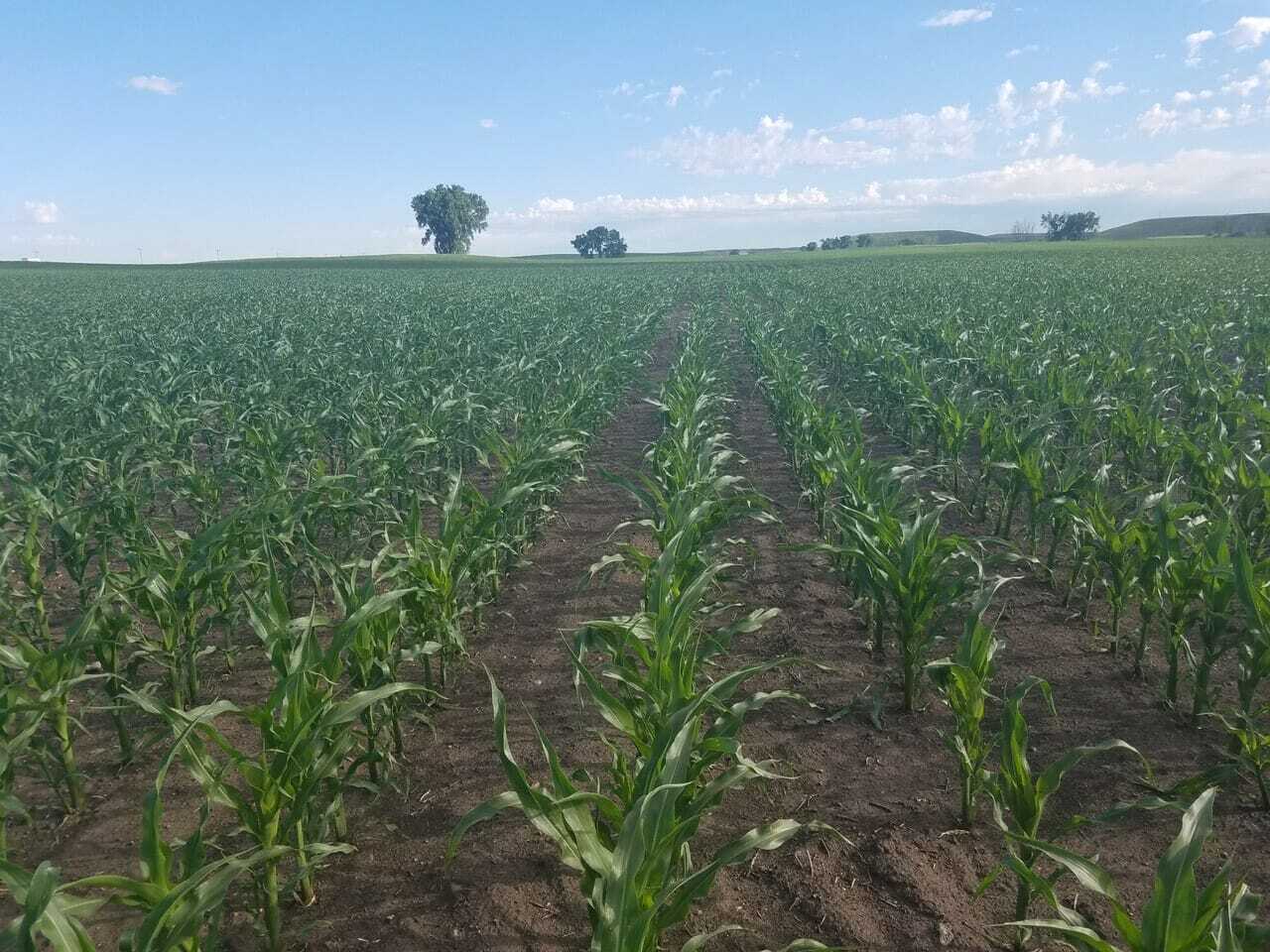
LH 5095VT2 PRO, planted April 11, near Rolfe in West Central Iowa has already canopied. Corn is at V6 to V7 stage.
Time of planting and soil conditions have played a huge role in soybean emergence this planting season.
These photos were taken last week at planting time. Dry soil needs rain to help move along these plants.
High heat and no moisture is casing corn plant in Central Iowa.
Photo 1
LH 3158 LL planted April 18 full shade on the 15-inch rows
Photo 2
This field of LH 6317 VT2 PRO DG RIB, which was planted April 12, will be knee high before the 4th of July.
Photo 3
LH 6175 VT2 PRO RIB is nearly waist high on this Latham dealers farm in western Iowa

Welcome back to our Ask the Agronomist Podcast! Phil is traveling across Latham Country this week and gives us a update form the field, with an emphasis on replant.
0:45 — From the Field update
1:30 — Is replant still on the minds of famers in Latham Country?
4:30 — Weed Pressure
5:15 — Stand counts & uniformity
7:25 — When does replant date compromise yield?
9:10 — Interplanting in your fields?
Thanks again for tuning in! Find us on Facebook, Twitter or Instagram to submit your agronomy questions. See you back next week!

One of the things I like most about spring is you get to enjoy all four seasons in just a few days. In mid-April, we had snow flurries with an overnight low of 16 on a Sunday. A warm wind brought temperatures into the 70s by mid-week, and that weekend rain fell. That’s why I always tell people to plant by the conditions, not the date on the calendar!
Soil conditions are far more important than planting date. Rather than mudding in your seed to say that it was planted early, you’ll have a better chance of achieving maximum yield by planting into properly tilled soil. Working soils that are too wet leads to yield loss and more problems during the growing season from soil compaction. Restricted root development, nutrient deficiency and reduced infiltration rate are among the top 10 reasons to avoid soil compaction.
Adapted full-season corn hybrids can compensate somewhat for later plantings. As planting is delayed, hybrids shorten the time between planting and silking. Research shows that development and final yield of these hybrids will not be largely affected unless frost occurs especially early in the fall. That’s why we recommend waiting until May 15 in North Dakota and May 25 in Iowa before switching to an earlier maturing corn hybrid or switching to soybeans.
Patience is also key when planting soybeans. Planting into a field that is too wet will reduce emergence and plant population, which most often leads to reduced yield. Another cause of reduced yield is weed pressure. Make sure the sprayer is right behind the planters. Otherwise, soybeans might poke through the ground before your pre-emerge was applied.
We get one chance every spring to create the best seedbed possible for planting, so let’s take advantage of it! This may require a different piece of tillage equipment than originally planned, but taking the time to make the equipment switch will pay big dividends by resulting in better seed-to-soil contact that enhances germination and early growth.

Welcome back to week 5 of our Ask the Agronomist Podcast! Today, Phil explains the difference between abiotic and biotic issues in the field throughout Latham Country.
0:35 – What are abiotic & biotic stresses?
1:10 – Abiotic Issues: Herbicide Damage
3:15 – Abiotic Issues: Crusted Soil & Compaction
4:10 – Abiotic Issues: Emergence
4:45 – Abiotic Issues: Yield Loss
5:45 – Biotic Issues: Seedling Diseases & Insect Pressure
6:40 – Replant Decisions
9:00 – Corn & Soybean Growth
Remember to submit your questions to us on social media! Find us on Facebook, Twitter or Instagram. Thanks for tuning in!

Cool, wet weather has slowed root development and some plants are showing a yellowing or purplish leaf color. Warm weather should enhance development of the roots. Normally, there is no yield reduction from plant discoloration at this time in the growing season unless it’s fertility driven by low nutrient levels.
We have cold saturated soils in Southeast South Dakota on the 23rd of May. Most corn fields are up and can be rowed on a drive by. Unfortunately, when you stop and look closely it, there is a bit of a yellow tint to it. These crops need sunshine and warm temps.
Things have really changed in the last week. Many areas received decent levels rainfall, which halted planting. Areas in Central South Dakota are still very dry, and areas in East Central South Dakota are very wet as more than 3″ of rain fell. Cool, cloudy weather slowed growth as you can see slight yellowing in corn. Emergence looks very good and even in corn and many soybeans are starting to crack.
Gary Geske and I planted Latham’s regional corn and soybean plot on May 23. Gary is pictured here, checking seed depth. The plot is located on the southwest corner of State HWY 10 and State HWY 9 near Glyndon, Minnesota.
This field of LH 5095 VT2 was planted April 23. Rain, clouds and low temperatures this past week hasn’t promoted much growth. Once the sun returns, just watch that corn grow!
Even with our cloudy, cool spring weather we are only running 10 GDU days behind the historic mark for may according to the University of Minnesota Outreach Center in Lamberton.
If we could get a string of sunny days, corn planting could wrap up in Wisconsin. Sunshine and warmer temperatures are also needed to push along crop development.
Latham® Hybrid LH 5099 SS was planted May 8 in Ripon, Wisconsin. This field shows uniform emergence and growth, but that’s not the case everywhere. Unfortunately, cooler temps are hampering growth across the region.
With the significant rainfall we have had, it is important that growers get out and walk fields as conditions allow.
Call your local Latham seed supplier or RSM at 1.877.GO.LATHAM if you would like a second opinion as to whether replant is needed. Additional tips are available online here.
It was a beautiful, sunny day with temps near 70 degrees in early May when Latham dealers Frank and Matt Wyatt of Hudson, Iowa, planted their corn plot. We’ve received a lot of cold, rainy days ever since. Warmer days are in the forecast, so we these crops should turn the corner with sunshine and heat.
Due to rotator cuff surgery, Latham® dealer Marvin Beneke needed a helping hand picking up empty hard boxes from his customer’s farms. I thought was quite the neat collection of antiques at one of the stops we made.
Craig Christians, Latham Territory Sales manager, rode with me to visit Latham® Dealer Chris Chriss’ farm in western Illinois. Crop scouting and plant evaluation is part of my job at Latham Hi‑Tech Seeds. This plot emerged 8 days after planting.
Busy time collecting hard boxes and pallets. Few areas talking about replanting as well. Check your fields as soon as possible.
Parked equipment is a common site since we’ve experienced 7 days of rain. Fields are too wet to enter. We’re seeing a lot of ponding. With more rain on the way, it’s likely replant will be needed. Click here for replanting tips.
Phil Long, technical agronomist manager for Latham Hi‑Tech Seeds, and Darin Chapman, Latham regional sales manager in Northwest Iowa, are performing on-farm research with a multi-hybrid planter while flying our drone. In addition to studying multi-hybrid performance throughout the field, they also studying tillage practices and planter performance using FieldView. These studies will pair well with Latham’s Seed-2-Soil® agronomic services!

Due to excessive rainfall, ponding is a common sight in fields throughout my territory. More than 16 inches of rain has fallen this season. On average, North Iowa receives about 7.7 inches of precipitation from January through May. Farmers will be busy checking fields and evaluating where replants are needed.

This is a picture of newly established field of Latham 400HVX Roundup Ready Alfalfa in western North Dakota. This field is very sandy/rocky. Overall, this field is a poor producer with a weed problem. This alfalfa was recently sprayed with Roundup, so we’ll be monitoring it to see how it controls weeds and yields.

This field of Latham Hi‑Tech Seeds’ LH 3877 VT2 PRO RIB was planted May 4. Planting depth and spacing looked good. It also emerged really well.
A nice rain fell Tuesday morning, so moisture is reaching planting depth. Warm, moist soils will lead to quick germination and emergence. It’s important to get pre-emerge herbicide applied before the crop emerges in no-till and minimum-till fields.
A lot of planting progress was made this past week. We got plots planted for Estelline Co-op Grain in Estelline and B&B Sales at Dell Rapids.
Beautiful weather prevails! Crops are being planted at a record pace in Northeast South Dakota. Corn is all but finished, and soybeans are closing in on the finish line. Warm, sunny weather has given us a great window to get crops planted and moisture is expected this week to give them a drink.
Latham® Dealer Ray Beutz and his son, Matthew, planted a Latham corn SuperStrip plot on May 12 near Albany, Minnesota.
This Latham Hybrid SuperStrip was planted Monday by Sanborn, Minnesota. While these plots are also good ways to promote local dealerships, SuperStrip plots are primarily used for in-house research. SuperStrips help us determine which products to keep, remove or add to our product lineup. Field notes are taken throughout the growing season and information is analyzed after harvest.
Almost 50% of corn acres and 15% of soybean acres are planted in Wisconsin. While we have a ways to go to finish #plant17, good weather should allow a lot of acres to be completed soon.
Latham® corn and soybean SuperStrip plots went in on all corners of the region this past week. We also planted a Latham Corn Silage plot in Barron County.
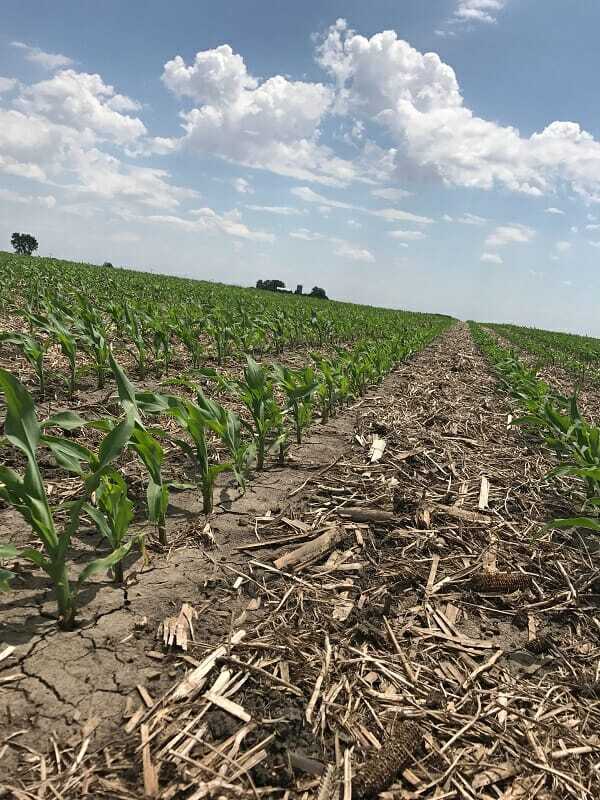
Fields that were planted between April 20-27 have finally pushed through the soil surface after poor growing conditions delayed emergence. This photo taken of LH 5885 VT2 PRO shows great emergence and early vigor when planted in a no-till situation.
Other Brothers Inc. recently joined that Latham® dealer team, and we’re excited to see them hit the ground running! Here Matt Saboe is pictured getting their Latham Hi‑Tech Hybrids SuperStrip plot ready.
We’re able to row this field of LH 5099 SS RIB. This SmartStax Refuge in the Bag hybrid has earned Latham’s designation as a Gladiator hybrid, which means it has dual modes of action for above-ground insects including: Corn Earworm, Fall Armyworm, European Corn Borer and Southwestern Corn Borer. This particular hybrid also is a boss on Goss’s Wilt.
A Latham customer near Osage, Iowa, put LH 5509 SS in the ground on Friday, May 12. The weather was absolutely beautiful. It was one of those days when you’re glad to have a reason to spend it outside.
Latham® dealer Kevin Squires is passing on the farming tradition to his son, Adam. The duo worked Monday to plant a Latham plot.
One advantage of working with family-owned, independent Latham Hi‑Tech Seeds is the variety of options we provide. Here a farmer cooperator puts in a Latham® SuperStrip plot, which showcases different traits and technologies including LibertyLink soybeans.
It’s been a crazy week of weather! Late Monday afternoon, May 15, storms moved across West Central and North Central Iowa. I was driving by the junction of Highways 3 and 17 just east of Goldfield when marble- to golf ball-sized hail began to fall. You could’ve snow plowed the hail because it was that heavy.
It’s time to check emergence and stand. From what I have seen so far, the stand looks pretty good. Be sure to check all of your fields as recent rains may have caused some ponding and flooding in areas. Click here for tips on evaluating corn replant options.
Look at all the technology going into this plot! We planted a Latham soybean plot near Friend, Nebraska, with the following:
8 Roundup Ready 2 products
4 Balance GT*
6 R2 Xtend
1 ILEVO
**Balance™ GT Soybeans are not currently for sale by Latham Hi‑Tech Seeds until Balance Bean herbicide (Isoxaflutole) receives full regulatory approval.

Last November the U.S. EPA approved the use of XtendiMax® with VaporGrip® technology on Roundup Ready 2 Xtend® soybeans. It didn’t take long for competitors and opponents of the Xtend technology to point out the limitations, but many of their talking points are now moot.
The U.S. EPA, as promised, has allowed a number of significant changes to the XtendiMax herbicide label. First and foremost, Roundup PowerMAX® and WeatherMAX® formulations have been added. In addition, 34 (and counting) other herbicides are approved for tank-mixing with XtendiMax! There are now more than 110 approved adjuvants that may be added, plus the number of approved nozzles had grown to 26 as of early April.
For farmers who intend to use XtendiMax herbicide, visit their website often to stay abreast of the latest developments.
A section under the TANK MIX tab titled “REQUIRED DRIFT REDUCING ADJUVANTS (DRA’s)” lists products that minimize particle drift if used in combination with certain herbicides and other adjuvants. Products needing DRA’s are clearly spelled out in the herbicide and adjuvant sections.
Visit the XtendiMax website for the latest developments: http://www.xtendimaxapplicationrequirements.com
Another very critical section of the website is “APPLICATION REQUIREMENTS.” Here, farmers can learn what is needed to minimize drift, volatilization and off-target applications of this important herbicide technology.
I’m excited to see so many early-adopters planning to use both Roundup Ready 2 Xtend soybeans, and the subsequent use of the XtendiMax with VaporGrip technology herbicide to help control tough-to-kill weeds in 2017. At Latham Hi‑Tech Seeds, we believe this will be just one of the many new and exciting soybean technologies that farmers will need to combat resistant weeds in the future.