Skip to content
Latham Hi-Tech Seeds

(641) 692-3258

  • Home
  • Performance
  • Products
    • Corn
    • Soybeans
    • Soybean Blends
    • Alfalfa
    • Corn Silage
    • Seed Guide
  • Find a Rep
  • Media
    • Blog
    • News
    • Videos
    • Podcasts
    • TECHTalk
  • About Us
    • Company History
    • Our Mission
    • Careers
    • Become a Rep
    • Sowing Seeds of Hope
  • Contact Us
  • Latham Hi‑Tech Seeds

    2016 Trials Results Show it Pays to Treat Soybean Seed with ILeVO®

    LLeVO comparison

    llevo-comparisonMany farmers in 2016 experienced yield loss from Sudden Death Syndrome (SDS) and Soybean Cyst Nematode (SCN). In fact, we saw SDS in areas where it’s never before been a problem! This situation left many farmers asking what can be done to protect yield in the future.

    Using new tools like lLeVO Seed Treatment, which received regulatory approval last winter, can help protect yield and add revenue for Upper Midwest soybean growers. ILeVO showed very good efficacy against SDS and also helps protect against SCN.

    Latham Hi‑Tech Seeds in 2016 sent 34 ILeVO trials to our dealers and their customers. Each trial consisted of a Latham® soybean product treated with SoyShield PLUS™ planted side-by-side with that same soybean treated with SoyShield PLUS and lLeVO. Yield data was received from 26 of the 34 trials and those results are in the table included below.

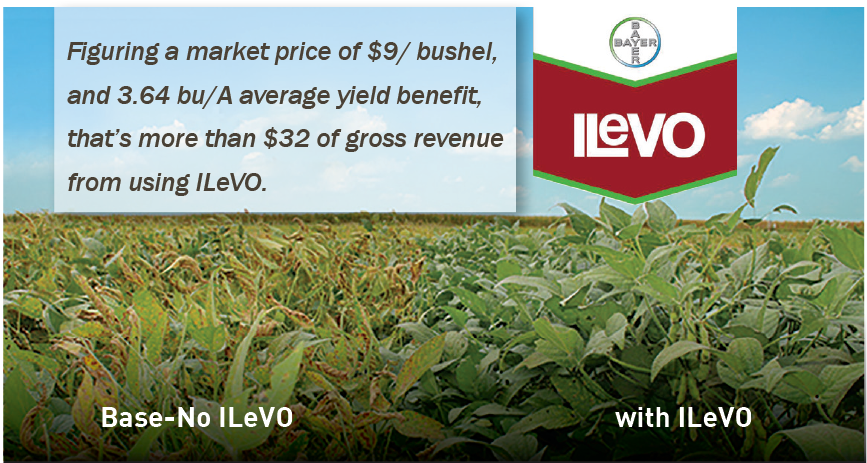
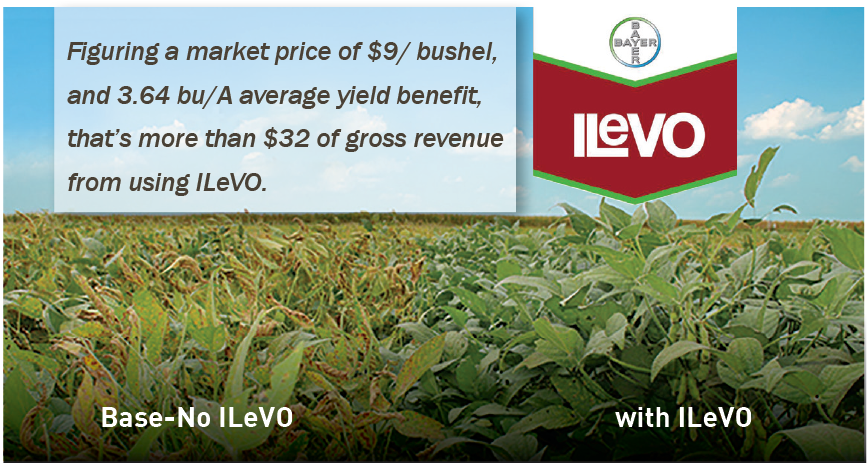
    Not every plot experienced a high degree of SDS severity, but many of these plots still showed a yield bump from using ILeVO. Plots where SDS was fairly severe showed the most yield benefit, ranging from 8 to 18 bushels per acre (bu/A).  Figuring soybeans at a market price of $9/ bushel, even at the 3.64 bu/A average yield benefit, that’s still more than $32 of gross revenue from using ILeVO. Our studies show the cost of this seed treatment easily paid for itself in 2016.

    We can’t predict the weather in 2017, however, using tools like ILeVO and other seed treatments helps protect your crops and yield. If you have questions about the results shown below or about ILeVO seed treatment, please call me at 1.877.GO.LATHAM (1.877.465.2842).

    llevo-graph

    January 11, 2017
    Crop, Soybeans
  • Latham Hi‑Tech Seeds

    Latham Releases Three New Products for 2017 Planting

    DSC0735

    Christmas often comes early for the Latham Product Team. We don’t always know what our research will reveal until we take a close look at it, but just like kids who eagerly await to unwrap their presents, we know our data is going to be good!

    Our team analyzes third party research conducted throughout Latham Country, as well as our own proprietary trials including SuperStrips. Sometimes experimental products in these trials get advanced following promising results.

    After analyzing fall 2016 yield data, we’re pleased to announce the following corn and soybean products — which weren’t listed in our 2017 product guide — are now being offered for spring 2017 planting.

    Additional product information and yield data is available at lathamseeds.com. If you have questions about these new releases, feel free to contact your Latham Regional Sales Manager or me.

    CORN:

    LH 3117 VT2 PRO

    This new 81-day hybrid was tested in our 2016 SuperStrips as EX3217. It’s a medium-short plant with excellent late-season standability and very good early vigor. It flowers moderately early and has very good tolerance to Northern Corn Leaf Blight, Eyespot and Common Rust.

    LH 5339 SS RIB

    This SmartStax® version of LH 5335 VT2 PRO has the same features as LH 5335, which is listed on page 37 in our 2017 product guide and also under the “corn” “products” tabs on lathamseeds.com. It’s a very versatile product with excellent early vigor. Because this product is a better option for continuous corn acres, it has received Latham’s Gladiator™ designation.

    SOYBEANS:

    L1958L

    This 1.9 soybean was tested in our 2016 SuperStrips and research plots as E1958L. It compares to L1787L and L2186L. This fairly tall, bushy soybean has very good tolerance to Soybean Cyst Nematode, Iron Deficiency Chlorosis and stress. It is moderately resistant to Brown Stem Rot and carries the Rps1-c gene for Phytophthora Root Rot control. It performs best in wider rows (greater than 20 inches) and in those light-to-marginal soils; it can be planted on better soils if the seeding rate is lower. I recommend planting 135,000 to 140,000 seeds per acre in 30-inch rows.


    January 4, 2017
    Corn, Crop, Soybeans
  • Latham Hi‑Tech Seeds

    “42” is a Record-Setting Number!

    FIRST Feature

    When most people hear the number 42, they think of Jackie Robinson and the fantastic baseball movie “42.” Jackie Robinson made history in 1947 by becoming the first African American Major League Baseball player. This movie tells the amazing story of his struggle to gain acceptance in the major leagues.

    The same year Robinson was making the news, Willard Latham made news of his own right here in Franklin County Iowa when he founded a seed company on his farm. Also “42” is an amazing number for Latham Hi‑Tech Seeds as it is the total number of F.I.R.S.T. Seed Tests that our corn and soybean products won this fall. Our corn program produced 17 wins and 199 total Top 10 finishes; our soybean program produced 25 wins and 185 total Top 10 finishes.

    The 42 overall 1st  place finishes in the 2016 F.I.R.S.T. trials validates Latham’s research program. It also is proof positive that accessing the best genetics and selecting products for specific geographies allows Latham to offer a deeper and broader corn and soybean line-up. View our corn and soybean F.I.R.S.T. trial results to see what products excelled in your area.

    Xtend Your Yield
    Our Roundup Ready 2 Xtend® soybeans also made their mark in the 2016 yield book. We entered Roundup Ready 2 Xtend® Soybean varieties in F.I.RS.T. trials in maturities ranging from 0.7 to 3.0. We won seven top 3 finishes in F.I.R.S.T. Trials and 28 Top 10 finishes! Look up area specific soybean data for your area here.

    Winning trials is fun, but we want to help you win on your farm. Contact your Latham representative for more information. He or she is here to help you choose the right seed for your farm, field by field.

    first-graphic

    John Latham, President

    December 28, 2016
    Crop, Soybeans
  • Latham Hi‑Tech Seeds

    Avoid the Temptation to Buy Only Based on Plots

    Screenshot 701

    It’s that time of the year when we reflect upon the decisions we made last year and make changes for 2017. Many farmers will base next year’s planting decisions based only off this year’s results, so please avoid making that huge mistake!

    Base your decisions on facts and results but also the odds. Odds are, the 2017 growing season isn’t going to be exactly like the 2016 growing season. We can’t control Mother Nature, so spread risk by planting packages of both corn hybrids and soybean varieties.

    Resist the urge to plant that racehorse hybrid or winning soybean variety on most of your acres! The breadth of Latham’s product strength is evident from our F.I.R.S.T. Trial performance. Multiple Latham brand products placed in the Top 10 at multiple trial locations.

    We have 25 wins in soybeans and 17 wins in corn. We also have 185 Top 10 performances in soybeans and 199 in corn so far. With such great harvest results, it’s easy to order the yield trial winners. It’s important, however, that you do NOT buy based exclusively on this year’s winning results.

    At Latham Hi‑Tech Seeds, we select products bred to perform in specific geographies. The Latham team also takes pride in making sure only the highest quality seeds go in the bag, which is evident with the yield results we saw again this year in the F.I.R.S.T. Trials seed tests!

    Take the time to review your farm, field- by- field, and place the product for every acre! Seed selection is one of the important decisions a farmer will make. It’s well documented that the ability to reach yield potential begins with the seed. At Latham Hi‑Tech Seeds, we want to work with you to reach new yield levels in 2017!

    screenshot-70


    December 14, 2016
    Crop, Soybeans
  • Latham Hi‑Tech Seeds

    Seed Choices for Farmers Means Options

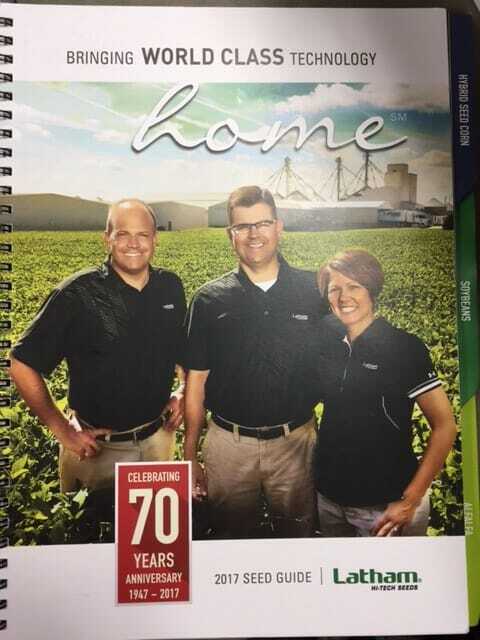
    Seed guide e1480432953335

    Yesterday one of my nephews asked a question that really made me think. This young man is two generations removed from farming and wondered how I choose what type of corn to plant.

    It probably sounds like such a simple question to those who don’t farm, but there’s a lot more to seed selection than what meets the eye. The brand and variety take a lot of thought and research, but we also rely on experience and our gut feelings.

    I know selecting seed is second nature to most farmers, but how can we explain it to people who are generations removed from farming? Until yesterday, I hadn’t given much thought to the fact that I’m the only farmer in my nephew’s family. He’s living in a metropolitan area where the anti-modern farming crowd wants “good people” to believe farmers are forced by big conglomerates to buy and plant their seed. These activists want “good people” to believe that farmers no longer have a choice as to which seed to plant, but that’s so far from the truth!

    To help dispel the myth that farmers are forced to buy seed from the same corporation year after year, Jennie Schmidt, a farmer and registered dietitian in Maryland, wrote a blog post. Here’s an excerpt:

    “So far, we have received about a dozen seed catalogs, and I don’t mean Burpee-type gardening catalogs. I mean commercial seed for farmers. Some are large seed companies, others are small regional seed companies. None of them ‘impose’ their seeds on us. We have 100% freedom of choice. My husband and brother-in-law make those choices based on our own farm’s performance records, recommendations by our seed dealers, data provided by companies who do research plots on our farm and in our region, and conversations with farmer friends. No corporation influences these choices. No pressure is applied from any company to secure our business. Absolutely no one ‘imposes’ seed on our family farm. We have hundreds of seed choices in each of our crops: corn, soybeans, wheat, barley, tomatoes, hay, and green beans. We have 100% control over what gets purchased and planted.” 

    Thanks to technology, today’s farmers have more seed choices than ever before and the future is even more exciting! That’s the short answer I wish I would’ve first given my nephew and then gone on to explain. Plant breeding is allowing farmers to grow crops today in drier areas where it was never before possible. New seed genetics allow us to put more nutrition into crops, and as a result, can save millions of children and people living in poverty from malnutrition and blindness. Check out the amazing results the 2016 World Food Prize Winners have achieved by getting more farmers in Africa, Asia and Latin America to plant drought-resistant, blight-resistant orange sweet potatoes instead of white sweet potatoes that contain no Vitamin A.

    This is so much more that goes into how a farmer chooses seed. To be continued… next week!

    Larry Sailer, Musings of a Pig Farmer

    November 29, 2016
    Corn, Crop, Soybeans
  • Latham Hi‑Tech Seeds

    Ask the Agronomist: Brown Stem Rot or SDS?

    Ask the Agronomist Feature Photo 01

    Thanks for tuning in to our weekly “Ask the Agronomist” Audiocast! Play the audio file below to listen to Mark’s response to this week’s question about how to determine whether a soybean crop is affected by Brown Stem Rot or Sudden Death Syndrome.

    https://lathamseeds.com/app/uploads/2016/08/Latham-KOEL-8_17_16.mp3


    Q: I thought my field was showing signs of Sudden Death Syndrome. Now I’m not sure if it’s really SDS or Brown Stem Rot. How can I tell the difference?

    A: Late-season crop scouting is so important because we see different symptoms, depending on the point we’ve reached in the growing season as well as environmental conditions. We’re seeing both SDS and BSR, sometimes even in the same field!

    The best way to tell to the difference is to split the soybean stem. Brown Stem Rot (BSR) infection causes vascular and pith tissues to turn brown to reddish brown. When disease is severe, discoloration is continuous from the base of the plant up. Discoloration only occurs at nodes disease when the disease is less severe, and you’ll see healthy, white tissue between the nodes.

    Q: What causes Brown Stem Rot?

    A: BSR is caused by a fungus that enters through the plant’s root system. Severe infestation occurs when soil moisture is high and air temperatures are cooler throughout the summer, which promotes the growth of the fungus in the stems. Symptoms worsen if the disease development is followed by drought stress during pod fill. BSR also increases in severity if Soybean Cyst Nematode populations are high.

    Q: How does Brown Stem Rot spread?

    A: Brown Stem Rot is a soil-borne pathogen. It survives in infected soybean residue left on the soil surface. The fungus is not carried with seed.

    Q: What can be done if you find Brown Stem Rot in your fields now?

    A: Unfortunately, just like Sudden Death Syndrome, nothing can be done for a field once it has been infected with BSR.  Scouting now for Brown Stem Rot is important for two main reasons: (1) To determine if management practices may have had an impact on the severity this season; and (2) To select soybean seed for the following season based on BSR score and Soybean Cyst Nematode tolerance.

    Q: What management practices can help control Brown Stem Rot?

    A: The most effective way to manage Brown Stem Rot, Soybean Cyst Nematode and Sudden Death Syndrome is through seed selection. Latham® brand soybean varieties with the IRONCLADTM designation offer the best control, but be sure to read disease ratings of each product. For fields with a history of severe brown stem rot problems, plant a variety with a rating of 1.5 or better. A Latham rep also can help you select the best product on a field-by-field basis.

    In addition, crop rotation can help reduce the likelihood of Brown Stem Rot. Going away from soybeans for 2 years is more effective than 1 year. Reducing soybean residue helps because then the BSR inoculum doesn’t have a place to overwinter.  Tillage can also be effective.

    August 18, 2016
    #AskTheAgronomist, Agronomics, Disease, Soybeans
  • Latham Hi‑Tech Seeds

    Ask the Agronomist: Sudden Death Syndrome

    Ask the Agronomist Feature Photo 01

    Thanks for tuning in to our weekly “Ask the Agronomist” Audiocasts! Play the audio file below to listen to Mark’s response to this week’s question about Sudden Death Syndrome.

    https://lathamseeds.com/app/uploads/2016/08/Latham-8_4.mp3


    Listen to this week’s Ask the Agronomist for everything you need to know about Sudden Death Syndrome.

    Q: We’ve received a question from a farmer this week saying “Sudden Death Syndrome is breaking bad in my soybean fields. Why does it appear to be affecting more fields this year and what can I do about it?”

    A: Sudden Death Syndrome appears after flowering in the growing season, and usually we see issues in early August. Cool, wet planting conditions, like what the Upper Midwest experienced earlier this year, can increase severity of sudden death later on in crop development.

    Q: What symptoms should we be looking for?

    A: Farmers should first be scouting for yellow blotches on leaves. These will progress into larger patches, but keep in mind that leaf veins remain green while the rest of the leaf will eventually turn brown and leaflets will fall off. However, petioles will remain on the stem. SDS can cause rotted root systems, too.

    Q: Are there certain soil types or fields more prone to SDS?

    A: There isn’t a certain type of soil that is more prone, but there are specific areas of a field that can more easily develop SDS. High moisture areas such as low spots can have higher severity, and it is also often correlated with compacted soils in margins of a field or low-lying bottoms.

    Fields with a history of SDS should be planted when soils are warmer and drier. No-till practices allow soils to remain cooler and wetter during the spring, so these fields are more at risk as well. Sometimes, tillage on a field with a history of SDS is a good practice as long as those fields aren’t worked in wet conditions.

    Q: What can farmers do if they begin to notice SDS in their fields this year?

    A: Unfortunately, there is not much that can be done to stop SDS once it begins. Prevention is the best defense against SDS. Prevention tactics include: responsible tillage practices to reduce soil compaction, waiting for soils to dry up towards the end of planting seasons, and testing for presence of soybean cyst nematodes. Soybean Cyst Nematodes (SCN) are associated with SDS.

    Q: What can be done if farmers test their soils and find a soybean cyst nematode presence?

    A: The best way to combat SCN is to plant resistant varieties, or avoid susceptible varieties. Be sure to keep Latham IRONCLAD™ soybeans in mind when mapping out which varieties will be used on different fields for 2017.

    To bear the IRONCLAD™ name, each soybean variety must be SCN resistant, phytophthora root rot resistant, and an iron deficiency chlorosis rating of 2.2 or better. Depending on the geographic location needs, IRONCLAD™ varieties must protect against either white mold or SDS with a rating of 2.2 or higher.

    Q: Wasn’t there a new seed treatment that was supposed to fight against SDS?

    A: ILeVO seed treatment from Bayer CropScience received a lot of positive press in 2015 for its effectiveness against SDS. That prompted Latham research staff to conduct 2016 studies using ILeVO treated seed side-by-side with seed that was not treated with ILeVO. Preliminary reports aren’t showing any significant visual differences, but that final determination will be made after harvest. This information will be shared at post-harvest meetings in the fall. Like it or not, this new tool will most likely not be that “silver bullet” cure farmers are hoping to find.

    Q: If there is no cure for SDS, why should farmers be scouting for it?

    A: An ounce of prevention is worth a pound of cure. Scouting for SDS is important to determine if management practices were at fault and to help select the right seed for each field next year based on SDS score and Soybean Cyst Nematode tolerance.

    Walking fields and taking notes will help farmers determine an action plan for next year. What we’re seeing now in the fields can have an impact on what we see in 2017.

    On August 19th, the Latham Freedom of Independence Ride will be taking place near Eldridge, Iowa. This one-of-a-kind, “plot tour on wheels” is a fun day that anyone can bring a motorcycle or vehicle to travel on while Latham representatives share information about what is coming down the pipeline for 2017.Freedom-Ride-2016-logo-01-328x220

    Thanks for tuning in to this week’s Ask the Agronomist. We’ll be back again next week to field all of your questions during #grow16.


    August 4, 2016
    Agronomics, Crop, Disease, General, Soybeans
  • Latham Hi‑Tech Seeds

    Ask the Agronomist: New Soybean Technology Approvals

    Ask the Agronomist Feature Photo 01

    Thanks for tuning into our weekly “Ask the Agronomist” Audiocast! Play the audio file below to listen to Mark’s response to this week’s question about the new soybean technology approvals.

    https://lathamseeds.com/app/uploads/2016/07/latham-7_26.mp3


    Q: New soybean traits and technologies have been making headlines since last Friday when it was announced that Roundup Ready 2 Xtend soybeans received EU approval. There have been rumblings that the Balance Bean also received EU approval last week. What is the status of these two new soybean technologies?

    A: It’s important to understand that none of these technologies have actually received full approval. Roundup Ready 2 Xtend® soybeans received their final approval from the European Union in the global approval process. However, the low-volatile formulation of dicamba herbicide intended for Xtend soybeans has not received approval from the U.S. Environmental Protection Agency. Use of existing dicamba herbicides over top of Xtend soybeans is not allowed at this time.

    Meanwhile, the Balance GT soybean also received EU approval last Friday but has not yet received approval from key markets such as China. The accompanying herbicide has not received approval from the EPA either.

    Q: Since seed for the Xtend products has global approval, will it be commercially available for 2017 planting?

    A: Yes, in fact, there are 13 new Xtend varieties in Latham’s 2017 lineup. Six of these products are designated as IRONCLAD™. Soybeans with the Ironclad designation have the toughest defense systems and are unique to Latham Hi‑Tech Seeds.

    Q: What are IRONCLAD Soybeans and why are they unique to Latham Seeds?

    A: Research has shown that the best defense against Soybean Cyst Nematodes and Iron Deficiency Chlorosis is diligent seed selection. In 2003, Latham Seeds was the only seed company to introduce SCN-resistant soybean brands. Because we’re headquartered where soils are more prone to IDC, our soybean lines have been bred to overcome it.

    The IRONCLAD series was introduced to help farmers distinguish which products have the best defense packages. IRONCLAD soybeans have been proven to yield the highest in difficult conditions. Many of our IRONCLAD products have taken first place over the past two years in the F.I.R.S.T. Trials!

    Q: What does it take for a soybean product to receive IRONCLAD designation?

    A: To be considered IRONCLAD, the soybean must have a Soybean Cyst Nematode and Phytophthora Root Rot deficiency gene. It must also score an Iron Deficiency Chlorosis rating of 2.2 or better. Depending on the needs of the variety geography, it can also protect against White Mold and Sudden Death Syndrome.

    Q: What about Enlist products? Will they be offered in 2017?  

    A: It’s very possible that Enlist will receive full approval in time for 2017 planting. Opposite of Xtend, Enlist has herbicide approval from the EPA but is awaiting Chinese approval.

    Depending on regulatory approval, two Enlist products could be offered. Both Enlist soybeans and E3 Enlist soybeans will be tolerant to 2,4-D choline, glyphosate, and glufosinate.

    So far, Enlist Duo is approved for use in the U.S. in 15 states on corn and soybeans. They are Illinois, Indiana, Iowa, Ohio, South Dakota, Wisconsin, Arkansas, Kansas, Louisiana, Minnesota, Missouri, Mississippi, Nebraska, Oklahoma, and North Dakota.

    We’ll be providing an update on these emerging soybean technologies, as well as new corn technologies as part of Latham’s Technology Road Show. The first tour stop will be Friday, August 19, in Eldridge, Iowa near Davenport. While the Latham Freedom of Independence Ride is traditionally a field day on two wheels, we will make groups available for people who prefer to drive cars or trucks.

    July 28, 2016
    Crop, General, Industry News, Seed Technology, Soybeans
  • Latham Hi‑Tech Seeds

    Soybean Seed: To Inoculate or Not To Inoculate?

    Soybeans

    It’s that time of year again…  Harvest is over. The holidays are upon us, and once more, it’s time to turn our attention to the next crop year!  During this crop planning time, I am frequently asked if I recommend using an inoculant on soybean seed. The answer is more complicated than a simple “yes” or “no.”

    Proper nitrogen fixation is absolutely crucial to obtain high soybean yields. For this to happen, nitrogen-fixing bacteria (specifically Bradyrhizobia japonicum) must be present in sufficient quantities in the soil.  This bacteria stimulates plant roots to produce nodules that absorb nitrogen from the air and convert it into ammonia, which is a useable form that the plant can then take up through its root system. This nitrogen is then used to make amino acids, which are the building blocks for proteins, and also chlorophyll.  Chlorophyll is the molecule that converts sunlight, an energy source, into carbohydrates through the process of photosynthesis. Researchers estimate that between 50 and 80% of the nitrogen needed to produce a normal soybean crop can be provided in this way.

    Active fixation usually starts at the V2 stage.  From there on, more nodules develop and the amount of nitrogen that is fixed continues to increase.  The highest demand for nitrogen begins when seeds begin to form in the pods and continues through full maturity.

    So when should farmers use inoculants?  That’s always a tough question to answer since each crop year is different and there are literally a 1,000 variables that can factor into the decision.  Let’s start with the “no-brainers.” I would use an inoculant when:

    • Soybeans have NEVER been grown in this field.
    • Soybeans have not been in the field for three years.
    • You are planting into soils that have a pH of 6.0 or lower.
    • You are planting into high pH soils. I would use an inoculant at a pH of 8.3 and above.
    • Your soil has a high sand content. Rhizobia bacteria do not survive as well in sandy soils as they do in soils with high organic matter content.

    Times when an inoculant might be recommended include if a field was flooded the previous year for more than a week and also in cool, wet soils like no-till fields. The downside of not using an inoculant when one is needed can be as much as a 50% loss in yield! For the cost, inoculants can be a great insurance policy.

    Feel free to call me with any questions related to this or other crop production practices.

    February 3, 2016
    Crop, General, Soybeans
  • Latham Hi‑Tech Seeds

    High Quality Soybean Seed and Record-Setting Yields in 2015

    DSC 4644

    Although I’ve spent my career in agriculture, I don’t remember a harvest season in North Central Iowa where combines rolled almost non-stop for six weeks or more without a single rain day.  The hours were long for everyone involved, but it was such a rewarding year.

    We saw some of the best yields I’ve ever seen in the 19 years that I’ve worked at Latham Hi‑Tech Seeds. An all-time record yield of 77.21 bu/A from a 105-acre production field came in October 7. Two days later, that record was broken when a 137-acre field yielded 81.13 bu/A!  Both of these fields were Latham L 2228 R2 brand soybeans.

    Latham L2228R2s yield 80+ bushels per acre

    Not only were yields this fall impressive, but the quality is equally impressive. Once our growers deliver their soybeans to Alexander, our crew places each variety in a bin and takes a composite sample. We take samples from every one of our 50+ bins to check that seed for germination, and the germination percentage of all samples were in upper 90s! Keep in mind that these samples are the raw seed taken directly from the bin, and conditioned lots can be even better since we strive to remove all of the lower quality seeds before we bag them.

    You can count on our professionals in the conditioning plant to do their very best to keep with the tradition of producing top quality, Latham® soybean seed. “Hat’s off” to plant manager Greg Jaacks and the crew in Alexander for doing another outstanding job of keeping all the soybeans that came in separated and stored in the best possible condition.  They know that quality seed in the bag leads to high yields in the field.

    We believe quality seed, combined with industry-leading genetics and geographic selection, are key to Latham Seeds’ standings in the independent F.I.R.S.T. Trials. For the second year in a row, Latham’s L 1858 R2 was the highest yielding product across Minnesota, South Dakota and North Dakota!

    Latham brand soybean products won 36 times in 2014-2015 F.I.R.S.T. Trials, and Latham corn products won 29 times!  During this time period, our products earned 289 Top 10 finishes in soybeans and 291 in corn.

    Increase the odds of winning on your farm with Latham Seeds! Apply the rule of multiplicity. Contact your local Latham® representative or call 1-877-G0-LATHAM (1.877.465.2842).

    December 30, 2015
    Crop, General, Soybeans
Previous Page
1 … 21 22 23 24 25 … 32
Next Page

Latham Hi‑Tech Seeds

131 180th Street | Alexander, IA 50420

(641) 692-3258

SIGNUP FOR OUR NEWSLETTER
  • Contact
  • Legal
  • Seedware Login
  • Latham Gear

© 2026 Latham Hi‑Tech Seeds. All rights reserved. | Privacy Policy

Latham® Hi-Tech Seeds is a trademark of M.S. Technologies, L.L.C., 103 Avenue D, West Point, IA 52656.