Skip to content
Latham Hi-Tech Seeds

(641) 692-3258

  • Home
  • Performance
  • Products
    • Corn
    • Soybeans
    • Soybean Blends
    • Alfalfa
    • Corn Silage
    • Seed Guide
  • Find a Rep
  • Media
    • Blog
    • News
    • Videos
    • Podcasts
    • TECHTalk
  • About Us
    • Company History
    • Our Mission
    • Careers
    • Become a Rep
    • Sowing Seeds of Hope
  • Contact Us
  • Latham Hi‑Tech Seeds

    Order Early as Demand for LibertyLink® Soybeans May Exceed Supply

    20150811 083953 resized

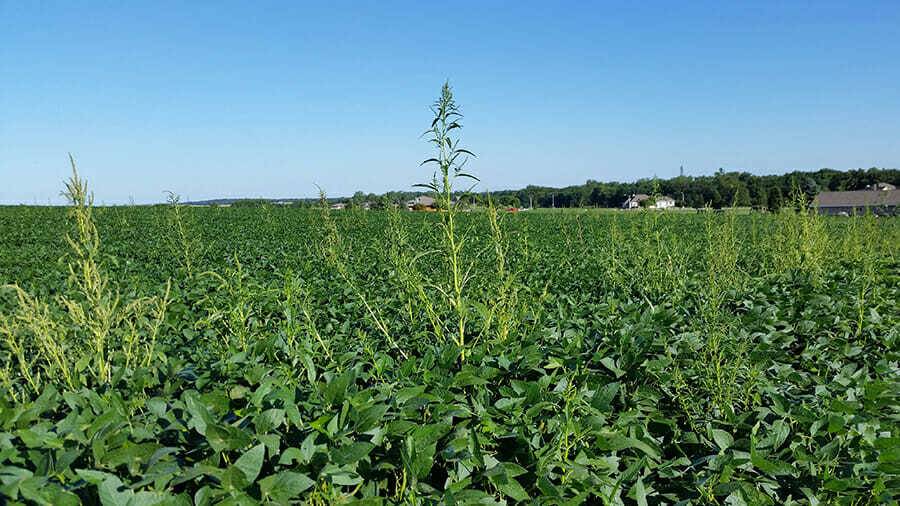
    20150702_134739_resizedThroughout the growing season, we’ve talked about how keeping good field notes helps farmers select the best seed for each of their fields. One challenge that many farmers across the Upper Midwest have encountered this season is weed pressure. Waterhemp and ragweed, in particular, are showing resistance to glyphosate. That’s why it’s so important to put a weed management strategy in place.

    Weed specialists like Dr. Mike Owen at Iowa State University say that “diversity of tactics” is key to combatting weeds. One such tactic involves using different modes of action, or switching from glyphosate to glufonsinate herbicides. LibertyLink soybeans are the only non-selective option on the market to combat glyphosate-resistant weeds and break the cycle of continuous glyphosate use.

    Liberty is effective for control of many ALS- and glyphosate-resistant weeds, including waterhemp, marestail and common and giant ragweed. Using residual herbicides can reduce weed populations, slow weed growth and provide flexibility in the post-emergence application window. Make sure you apply Liberty post-emergence at the proper time, according to weed size, and use the full recommended rate.

    Many of our customers have achieved their best soybean yields ever with Latham’s Liberty soybeans. (Side bar: Latham Hi‑Tech Seeds released its first LibertyLink soybeans in 2009, so there’s no need to worry about yield drag!) Several customers have told us all growing season long that they’re impressed by the weed control they’ve seen this season and are eager to see yield results from #harvest15.

    With so much concern about weed resistance, an industry-wide shortage of LibertyLink soybeans is expected. We have seen demand double for LibertyLink Soybeans each of the past two sales years, so we increased production of our LibertyLink soybean brands for 2016 planting.

    Another major concern this growing season has been soybean diseases. Latham® IRONCLADTM offer the industry’s strongest defensive package to combat Soybean Cyst Nematodes (SCN), Iron Deficiency Chlorosis (IDC), Phytopthora Root Rot, Brown Stem Rot (BSR), Sudden Death Syndrome (SDS) or White Mold.

    Selecting seed is one of the single most important decisions a farmer makes each year. That’s why we work with farmers to get the right seed for each particular field. As an independent, family-owned company, Latham Seeds’ top priority is helping farmers select the best possible products – regardless of whether the traits came from Monsanto, Dow or Syngenta. Contact your local Latham® representative by October 15th for the best pricing and availability.


    September 17, 2015
    Crop, General, Soybeans
  • Latham Hi‑Tech Seeds

    White Mold? Your Best Offense is a Good Defense!

    Kerr soybean plot

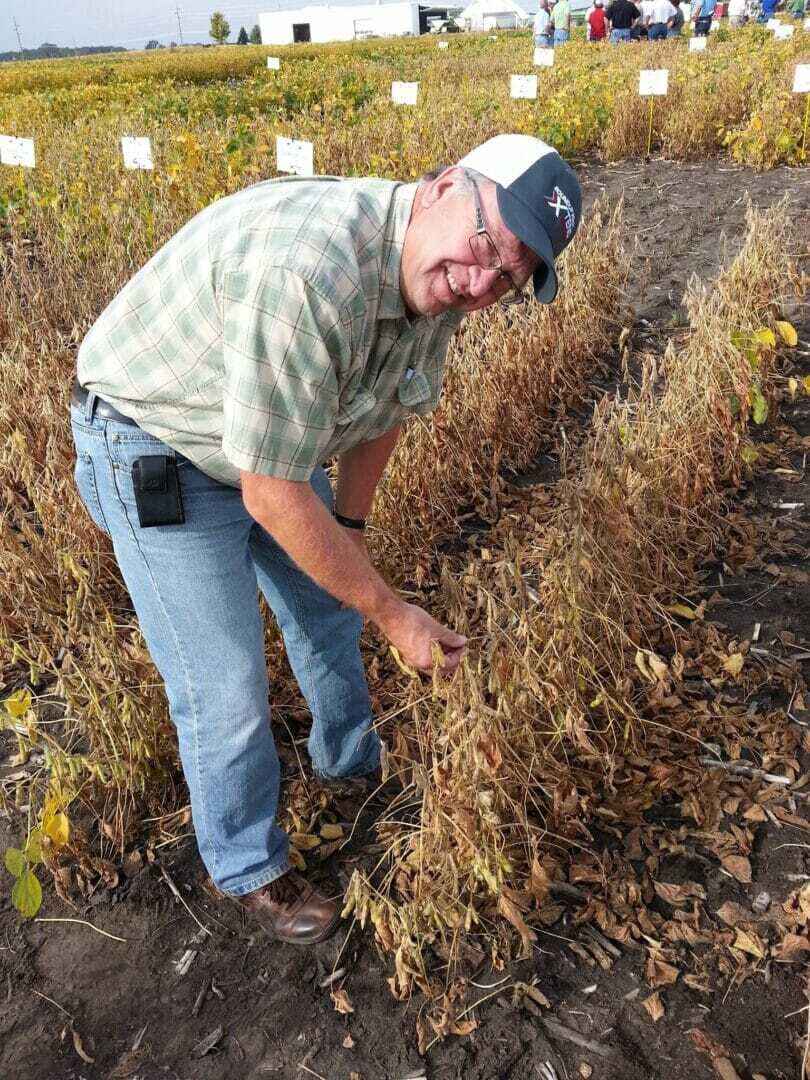
    Kerr soybean plotWeekly “From the Field” crop reports filed by Latham’s regional sales managers show that diseases from Iron Deficiency Chlorosis to Sudden Death Syndrome and White Mold are prevalent this season in soybean fields across the Upper Midwest. What can you do if your crops are suffering?


    The best thing you can do now is take good field notes. That way, if you practice a corn-soybean rotation, you’ll remember to plant more defensive soybean products on those fields in the future. Seed selection is key to reducing risk and minimizing damage.


    Be sure you note the rating given to each product in a seed catalog before you select it for a particular field. Plant tolerant varieties, or avoid very susceptible varieties, is to manage soybean disease. Also remember the seed treatments are effective insurance policies.


    Latham Hi‑Tech Seeds’ signature SoyShieldTM, a fungicide-only package, and SoyShield PlusTM with fungicide and insecticide, protect seeds from disease and insect damage for up to 30 days. This time frame is longer than many other seed treatments and is typically an adequate window of protection. SoyShield includes an exclusive fungicide combination that provides excellent protection against seed and soil borne diseases including: Pythium, Phytophthora, Fusarium and Rhizoctonia.  SoyShield Plus features that same fungicide combination with an imidacloprid insecticide that gives early season control of many seedling insects.  In addition, seed treatments can provide health benefits for more rapid and increased germination under certain conditions.


    Do what you can now to protect yield in 2016 and order Latham® IRONCLAD soybeans. To make seed selection easier, below is a list of products in our 2016 lineup with the best White Mold tolerance. Contact your local Latham dealer or the Latham Seeds’ office for help choosing the best product for each of your fields. FieldXFieldSM Yields!


    2016 Latham® Soybeans with the best White Mold tolerance:

    *rating score of 2.2 or better

    L 0256 R2

    L 0683 L

    L 0765R 2

    L 0836 L

    L 1156 R2

    L 1328 L

    L 1438 R2

    L 1548 L

    L 1673 R2

    L 1848 L
    L 1882 R2
    L 1968 R2
    L 1985 R2
    L2083L
    L2084R2
    L2128R2

    L2186L
    L2228R2

    L2358L
    L2482R2

    L2558L

    L2628L
    L2758R2

    L2787L
    L2884R2

    L2978L
    L3048R2
    L3158L

    L3384L


    September 3, 2015
    Agronomics, Crop, General, Soybeans
  • Latham Hi‑Tech Seeds

    Latham® IRONCLAD is Your Best Defense Against IDC

    Geske

    With warmer temperatures, soybean plants across the Upper Midwest are entering a rapid growth phase. It’s no wonder so many of our sales managers, in Wednesday’s #FromtheField crop updates, reported seeing signs of Iron Deficiency Chlorosis (IDC) symptoms now.

    The most common symptom, interveinal chlrosis, is a yellowing of the leaf tissue between the veins while the veins themselves remain green. The yellowed portions eventually turn brown, and the entire leaflet may drop off the plant. If severe, entire plants can be stunted or even die causing major yield loss.

    Although not completely understood by researchers, the most likely cause of IDC is a soil pH level above 7.3. Symptoms are severe in soils with pH levels of 7.8. However, soil pH alone may not be the only factor in limiting iron. Other factors are poor drainage, high soluble salt content and excess calcium carbonates.

    Research has proven planting IDC-tolerant soybean brands is really the best management practice. To help farmers better identify those soybeans that have high tolerance to IDC, Latham Hi‑Tech Seeds has designed a lineup of soybeans as IRONCLAD™.

    Only a soybean brand that is Soybean Cyst Nematode resistant with an Iron Deficiency Chlorosis rating of 2.2 or better can earn the IRONCLAD designation. Depending on your specific needs, IRONCLAD brands must also protect against either White Mold or Sudden Death Syndrome with a rating of 2.2 or higher. Furthermore, these products must have strong defensive ratings against Phytophthora Root Rot and Brown Stem Rot.

    IRONCLAD soybeans have been especially developed to withstand the high pH, high salt soils in our marketing area. Be assured these Latham brand soybeans have undergone thorough testing and are the best possible choices for fields with a history of severe Iron Chlorosis. Protect yield with Latham® soybean brands proven to have good IDC tolerance.

    P.S. Just because these products are selected for their “defensive” characteristics, however, doesn’t mean you’re sacrificing yield. Check out our 2014 F.I.R.S.T. Trial results!


    geske


    June 25, 2015
    Agronomics, Crop, Fertility, General, Soybeans
  • Latham Hi‑Tech Seeds

    Watch for Early Soybean Insects & Diseases

    Jones beans

    Guest post by Kilah Hemesath, Latham Hi‑Tech Seeds Marketing Intern

    With nearly all of the soybeans for the 2015 planting season in the ground, crop scouting becomes a necessity. Early soybean pests and diseases can create issues for newly emerged soybean seedlings. Becoming knowledgeable on what to look for in a field can make identification of these pests and diseases simpler.

    As soybeans emerge, the bean leaf beetle may make a presence in your fields. This pest is distinguished by a small black triangle located at the base of the forewings. Adult bean leaf beetles are approximately ¼-inch long. They feed on the cotyledons, stems, unifoliate leaves and emerging trifoliates. Discolored, moldy, shriveled or diseased beans may be the result of bean leaf beetles in your field.

    Even if seedlings are emerged, stay on the lookout for Pythium. Pythium can cause post-emergence damping off under wet conditions. This disease commonly occurs during wet and cool conditions, particularly in poorly drained fields with compacted soil. Properly manage soil drainage in your fields to combat this issue.

    Septoria leaf blight, more commonly known as brown spot, is a soybean disease that spreads from the soil to the soybean plant by splashing rain. The infection of the soybean plant will leave small, irregular brown spots on the lower leaves. Favorable weather for this disease is warm, wet weather. Brown spot can move up the plant, causing leaves to turn yellow and drop. It is necessary to be aware of this disease and what is going on in your fields.

    Not necessarily a disease, iron deficiency chlorosis (IDC) is described as poor condition between the soil and plant. If your fields have a history of high pH and without enough iron to grow a healthy plant, the best decision is to choose an IDC-resistant seed brand.

    At Latham Hi‑Tech Seeds, we make it easy to choose such brands by designating them as IRONCLADTM. Latham® IRONCLAD Soybeans include exceptional genetics and industry-leading protective traits, battling against yield-robbing threats from pests and diseases. To bear the IRONCLAD distinction, each soybean brand must be Soybean Cyst Nematode resistant and carry an Iron Deficiency Chlorosis rating of 2.2 or better.

    Also remember to watch for aphids, too. Latham Product Manager Mark Grundmeier stresses the importance of crop scouting regularly from within the field, not just a drive-by. To inquire about soybean pests or diseases in your area, contact your local Latham® representative by calling 1.877.GO.LATHAM (1.877.465.2842)

    Sources:

    • corn-states.com
    • aganytime.com
    • http://extension.entm.purdue.edu
    • http://extension.agron.iastate.edu
    • http://www.extension.iastate.edu
    • http://cropdisease.cropsci.illinois.edu

    bonnie-harris

    June 12, 2015
    Agronomics, Crop, Disease, General, Insects, Soybeans
  • Latham Hi‑Tech Seeds

    Battle Weed Resistance with Herbicides from Different Groups

    Weed resistance continues to be a topic of discussion during winter meetings with farmers and others in the ag industry. Many are anxiously awaiting full global approval of herbicide traits like Enlist™, Xtend™ and Balance GT,™ but remember, herbicides alone will not remedy weed resistance.

    “Diversity of tactics is key to consistent weed management and high crop yields,” said Iowa State Extension Weed Specialist Dr. Micheal Owen while presenting at Latham’s field day in September 2011. He pointed out that rotating crops, rotating traits and rotating pesticides is the best way to slow down the very natural process whereby pests develop resistance to products that mankind uses to protect crops.

    Herbicide products kill plants by binding to specific proteins and inhibiting the functions of those proteins. This is commonly referred to as the site (mode) of action. Check the numbering system, usually printed on the first page of the manufacturer’s label, to categorize each herbicide by its site of action.

    “Weeds will adapt, so you must know your herbicide action group,” Dr. Owen during a recent Crop Advantage Series jointly presented by Iowa State University and the Iowa Soybean Association.

    For example, say a farmer has been using Prowl® and FirstRate® pre-emergence on Roundup-Ready® Soybeans followed by Roundup® and FlexStar® post-emerge.  He wants to rotate chemicals for better weed management. Next year he’s planning to use Treflan® plus Raptor®, followed by Roundup and Resource®.  The problem? Prowl and Treflan are both classified as group 3 herbicides.  FlexStar and Resource are group 14, and Raptor and FirstRate are in group 2.  He might see some improved weed control simply because the herbicides have slightly different active ingredients, but his rotation will not help prevent weed resistance.

    A better plan would be to use Dual® (group 15) plus Sencor® (group 5) pre-emergence followed by Roundup plus Basagran® (group 6).  And the BEST plan would be to plant LibertyLink™ Soybeans instead of Roundup-Ready and then switch Liberty® herbicide (group 10) in that plan for the Roundup (group 9) and the Basagran!

    Using multiple products with different sites of action, however, is not enough.  Farmers must also make certain the herbicides are effective against the weeds they are trying to manage. Mechanical methods of weed control including cultivation even hand-weeding must be considered, as well as crop rotation and other cultural practices.

    More information on which herbicides belong to which site-of-action group is available at http://www.weeds.iastate.edu/HerbicideChart.pdf.  This website also gives information on many of the premix herbicide combinations and the groups to which they belong.

    January 28, 2015
    Agronomics, Corn, Crop, General, Herbicide Technology, Industry News, Soybeans, Weed Control
  • Latham Hi‑Tech Seeds

    Roundup Ready 2 Xtend™ Soybeans Get Closer to Commercialization

    One week after Latham Product Manager Mark Grundmeier posted an update on new soybean traits and technologies, the U.S. Department of Agriculture (USDA) announced the deregulatation of Roundup Ready 2 Xtend™ soybeans. Soybeans with this Dicamba-resistant trait from Monsanto will provide farmers with another option for managing tough broadleaf weeds.

    “This announcement marks an important milestone for farmers around the world,” said Robb Fraley, Ph.D., Monsanto’s chief technology officer in a news release. “Weeds represent a key pest to agriculture operations around the world and limit crops of much-needed nutrients, sunlight and access to available water resources.”

    Weeds are the most economically damaging pests that Iowa corn and soybean farmers face every year, according to Iowa State University Extension Weed Specialist Dr. Mike Owen. The best management practice for achieving weed control is still a diversity of tactics: cultural, mechanical and herbicide. Soybean growers should use products from as many herbicide groups, or families, as possible.

    Using one family of herbicides is not a sustainable choice, so weed management specialists like Dr. Owen continue to recommend multiple sites of action herbicide programs as part of Best Management Practices. Roundup Ready 2 Xtend soybeans can help preserve the effectiveness of glyphosate by providing one more important and much needed tool to fight weed resistance.

    USDA approval is a major step forward in the process toward full-scale commercialization of this technology. Now with de-regulation, this spring we’re planning to plant production fields of 12 Latham® Roundup Ready 2 Xtend soybeans. This will allow us to make Xtend soybeans available for 2016 planting should full global approval happen.

    Chinese approval will be the last step before full-scale commercialization of Roundup Ready 2 Xtend soybeans. With China’s recent approval of the Agrisure Viptera® corn trait, I’m hopeful this bodes well for future trait approvals.

    John Latham, President

    January 21, 2015
    Crop, General, Industry News, Seed Technology, Soybeans
  • Latham Hi‑Tech Seeds

    Watch for Sudden Death and Stink Bugs in 2015

    Each December researchers from across the Upper Midwest gather at Iowa State University in Ames for the Integrated Crop Management (ICM) conference where they present data and opinions on a wide variety of topics. Information, which I believe is most pertinent to the Midwest states in which we do business, is summarized below.

    SDS: Sudden Death Syndrome (SDS) was severe in many fields in 2014. Many Latham® Ironclad™ Soybeans were put to the test and did an excellent job of handling the disease! Understanding the extent of SDS infection in each field is key to effectively managing the disease. Future management tactics include: reducing soil compaction; planting fields with a history of SDS towards the end of a planting schedule when soils may be warmer and drier; and testing for the presence of Soybean Cyst Nematodes.

    However, the very nature of SDS makes it difficult to predict if and when an outbreak will occur. Dr. Daren Mueller, Iowa State University Extension Plant Pathologist, and his team shared years of extensive research on SDS including:

      • Glyphosate herbicide applications do not adversely affect or enhance the presence of SDS in soybean fields.
      • A side benefit of this study was a look at glyphosate applications versus manganese availability in plants. Fourteen field experiments were conducted in Iowa, Illinois, Indiana, Michigan, Wisconsin and Ontario, Canada. There were no interactions between glyphosate and the total manganese available in soybeans.
      • That same study did include a new treatment called ILeVO™ from Bayer CropScience. It showed significant effectiveness at reducing the severity of the disease, resulting in 2½ to 3 bushels of saved yield on average. Bayer expects full registration for this product soon.

    NEW, INVASIVE INSECT: The Brown Marmorated Stink Bug (BMSB) is a fairly new insect species that has the potential to cause serious crop injury. It is already considered a severe agricultural pest in New England and East Coast states. It was first noticed in Pennsylvania in 1998 and has rapidly spread to 41 states. It was first seen in Iowa in 2012; in 2014, BMSB was confirmed in eight Iowa counties. This particular species has the typical “shield-like” body of other stink bugs. However, BMSB also has rounded shoulders, white and dark bands along the edge of the body and along the antennae plus the marmorated (speckled) appearance on its back.

    This insect will feed on over 100 different species of plants, including many fruits, vegetables and field crops. In corn, BMSB feeds directly on developing kernels right through the husk causing aborted, shrunken and discolored seeds. Similarly, it will feed on soybeans directly through the pods and cause extensive damage to the seeds present. Control can be achieved with several insecticides but residual may not last long enough to prevent the insect from re-infesting the field.

    January 15, 2015
    Agronomics, Crop, Disease, General, Insects, Soybeans
  • Latham Hi‑Tech Seeds

    Update On New Soybean Traits & Technologies

    1274848 10151896062987138 626713682 o

    1274848_10151896062987138_626713682_oU.S. seed companies and farmers were handed an early Christmas present when China approved imports of hybrids with the Agrisure Viptera® corn trait, and many in the ag industry had hoped this one approval signaled a more consistent Chinese regulatory process. As a result, I’ve fielded a fair number of phone calls and e-mails from farmers wondering when they can expect final approval of various new soybean traits and technologies.

    Here’s a quick update on those that are reasonably close to hitting the marketplace:

    • ENLIST™ (2,4-D resistant trait from Dow AgroSciences):
      The U.S. Department of Agriculture (USDA) in January 2014 announced completion of the Draft Environmental Impact Study for the Enlist™ corn, Enlist soybean and Enlist E3™ soybean traits. Following a comment period, the USDA announced on September 17, 2014, the Enlist corn and soybean traits have been deregulated.
      On October 15, 2014, the EPA announced Enlist Duo™ herbicide is approved for use with Enlist corn and soybean traits for the 2015 cropping season. This was the final step in the U.S. regulatory process, but one fairly large hurdle remaining is overall foreign approval.
    • ROUNDUP READY 2 XTEND™ (Dicamba-resistant trait from Monsanto):  Like the Enlist soybeans, this trait went through a comment period that ended September 25, 2014, and U.S. approval is expected any day. Roundup Xtend™ is a premix of dicamba and glyphosate. Xtendimax™ will be a straight dicamba formulation that will be used for tank mixing with other herbicide products.  Both of these new herbicides will be available with VaporGrip™ technology, designed to help significantly reduce the volatility of the dicamba active ingredient.
    • BALANCE GT™ (Balance-resistant trait from Bayer CropScience):  The Balance GT soybean trait has full U.S. approval, however, full global approval is still pending. It’s possible that Balance GT soybeans will be available for testing and plots in 2015, but a full commercial launch isn’t expected before 2016. As far as the herbicide system is concerned, Bayer has applied for registration of Balance® Bean herbicide and EPA approval is expected in early 2016.

    There is uncertainty as to when these new traits will receive approval from foreign countries like China and the European Union. At Latham Hi‑Tech Seeds, we will continue to do our own testing to see which technologies and genetics will be the best fit for our market area. We’ll also keep you updated on the approvals of these exciting new technologies. And, yes, we expect to have them in our lineup as soon as they’re commercially available!

    January 8, 2015
    Crop, General, Industry News, Seed Technology, Soybeans
  • Latham Hi‑Tech Seeds

    New Latham® Releases for 2015

    14570869 l

    Product selection is an ongoing process at Latham Hi‑Tech Seeds. That’s why the following products have been added mid-season to an already outstanding lineup of Latham® brand corn and soybean products.

    To help “answer the call” for additional supply of conventional corn, we are pleased to introduce two new hybrids for 2015 planting:CornSeed_Bag

      • LH 5120 – This 101-day hybrid features high-quality grain on ears that flex well. This medium-tall plant has excellent roots and responds very well to higher populations with top-end management. An application of a foliar fungicide is highly recommended, especially in areas where Gray Leaf Spot is a concern.
      • LH 5400 – This hybrid responds best to top-end nitrogen management in medium to heavy soils. It should be kept in its maturity zone but will move south well. This medium-tall plant has very good late-season intactness. It also carries very good tolerance to Goss’s Wilt and Northern Corn Leaf Blight.

    We’re also adding one new Genuity® SmartStax® and two new VT2 PRO RIB (refuge in the bag) hybrids to our lineup:

      • LH 5465 VT2 PRO RIB – This is the Double-Pro version of our LH 5466 VT3 PRO. This medium height plant has excellent stalks and roots. It fills a need in our lineup between the LH 5215 and LH 5715 Double PROs. This new hybrid shows a noted suitability to tight, clay soils and is widely adapted east to west as it has excellent drought tolerance.
      • LH 5509 SS RIB – A high-yielding, widely adapted product has high test weight and excellent quality grain. It responds well to top-end management and higher populations. It has excellent tolerance to eyespot and Southern Leaf Blight. In the 2014 F.I.R.S.T. trials, it placed 2nd overall in the Southwest Minnesota regional summary and was 9th at the Flandreau location of the Southeast South Dakota region.
      • LH 6045 VT2 PRO RIB – Tremendous yield potential and stability under stress are two key strengths of this new 110-day hybrid. It has a very fixed ear, so higher populations and fertility are necessary for optimum performance. The SmartStax version of this hybrid placed very well in the East Central and West Central Iowa regions of the 2014 F.I.R.S.T. trials.

    We are also releasing a new 2.3 maturity soybean product:Soybean_FullBag_4i

      • L2328R2 – This new IroncladTM soybean topped many 2014 SuperStrip plots across Latham Country. This medium-tall plants carries the SCN gene from PI88788, the C-gene for Phytophthora and is resistant to Brown Stem Rot. In addition, it features very good tolerance to Iron Chlorosis, Sudden Death Syndrome and White Mold.

    For more information on the above listed products, visit www.lathamseeds.com. Click on the “Products” section and then select the product number.

    We also will have very limited amounts of two new experimental soybeans, E0836L and E3448R2. E0836L is a new 0.8 maturity LibertyLink® soybean and E3448R2 is a 3.4 maturity Genuity® Roundup Ready to Yield® Soybean (RR2Y). For more information about these two products, contact your Latham representative or call 1-877-GO-LATHAM (1.877.465.2842).

    December 4, 2014
    Agriculture, Corn, Crop, General, Industry News, Soybeans
  • Latham Hi‑Tech Seeds

    Latham Places 1st Again & Again in F.I.R.S.T. Trials

    John Soybeans

    John-SoybeansI’ve always been very confident in the corn and soybean products that we offer at Latham Hi‑Tech Seeds. After all, when your name in literally on each bag of seed, you want to do all that you can to protect your reputation! That’s why we take a team approach to selecting products.

    Our Product Team members either farm themselves or call on farmers in the areas where they live. This means they not only review data from breeders and their own research plots, but they watch these crops grow and develop. Our corn and soybean specialists walk fields and test plots, searching for the perfect products to perform in our customer’s field conditions. As a result, they have confidence in the products that go into our lineup.

    Latham® brand products are selected for their yield potential, as well as for their ability to overcome specific regional challenges. For example: Latham’s IronCladTM Soybeans receive this unique designation for their rating on Iron Chlorosis or White Mold. Our Gladiator Corn Hybrids are selected to do yield better in corn-on-corn situations. Even Latham’s alfalfa lineup was chosen to address specific needs like high-salt soils or leaf-hopper resistance.

    To showcase our lineup, this year Latham Hi‑Tech Seeds made a much larger investment in the independent F.I.R.S.T. Trials. This third-party testing service is proving how well we compare to the competition… The results this fall have been amazing!

    Latham Hi‑Tech Seeds, to date, has won 29 different F.I.R.S.T. Trial corn and soybean locations and region summaries this fall! We’ve won 18 different soybean tests, including 5 different region summaries in Iowa, Minnesota, Wisconsin, South Dakota and Illinois.

    Eleven different Latham soybean products have won F.I.R.S.T. Trial tests from Group 0 all the way to 2.7 maturity. Many of these locations contain as many as 84 different competitive products! In the state of South Dakota alone, Latham won 6 different F.I.R.S.T. Trial Tests with 6 different Latham® Hi‑Tech Soybean products.  In the state of Minnesota, Latham L1858R2 is the top yielding soybean in any test in Minnesota, Wisconsin or the Dakotas with a yield of 82.9 bushel per acre!

    Latham brand corn is performing extremely well, too.  Tests remain to be harvested, but already Latham corn has won 11 different F.I.R.S.T. Trial locations across Iowa, Minnesota and North Dakota.  Latham LH 5215 VT2 PRO has won 5 different tests across Iowa and Minnesota PLUS it won the West Central region of Minnesota.  In the north, Latham LH 4097 VT2 PRO and Latham LH 4455 VT3 PRO together have won 4 locations so far.  In Central Iowa, Latham LH 5829 SS won the Winterset, Iowa, location at 247.9 bushels.

    So what’s the secret to Latham’s stellar product performance? Unlike the national brands that choose products based on a wide area of adaptability, we focus on choosing the best products for local conditions. Latham’s strategy to choose products that perform in specific soil types and field conditions across our marketing area works. But don’t just take my word for it… Look over all the data at www.firstseedtests.com!

    John Latham, President

    November 5, 2014
    Corn, Crop, Fall, General, Season, Soybeans
Previous Page
1 … 22 23 24 25 26 … 32
Next Page

Latham Hi‑Tech Seeds

131 180th Street | Alexander, IA 50420

(641) 692-3258

SIGNUP FOR OUR NEWSLETTER
  • Contact
  • Legal
  • Seedware Login
  • Latham Gear

© 2026 Latham Hi‑Tech Seeds. All rights reserved. | Privacy Policy

Latham® Hi-Tech Seeds is a trademark of M.S. Technologies, L.L.C., 103 Avenue D, West Point, IA 52656.