Latham Hi-Tech Seeds

(641) 692-3258

  • Home
  • Products
    • Corn
    • Soybeans
    • Alfalfa
    • Corn Silage
    • Seed Guide
  • Performance
  • Find a Rep
  • Media
    • Blog
    • News
    • Videos
    • Podcasts
    • TECHTalk
  • About Us
    • Company History
    • Our Mission
    • Careers
    • Become a Rep
    • Sowing Seeds of Hope
  • Contact Us
  • Latham Hi‑Tech Seeds

    How Conservation Can Ready Soils for Planting After Tough Weather

    Webimage C2BA5E6D B844 4667 A21158F918CBE5FE

    Originally published on Agweb

    Webimage C2BA5E6D B844 4667 A21158F918CBE5FE
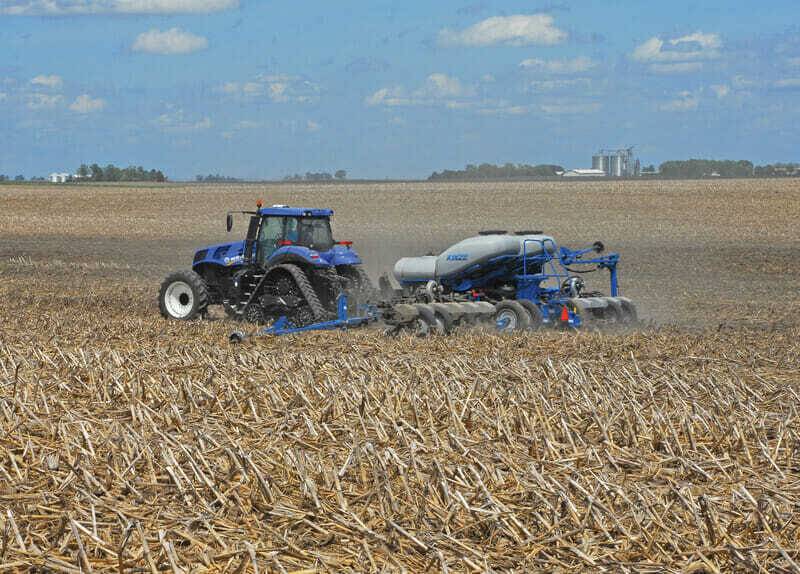
    Photo Credit: Darrel Smith

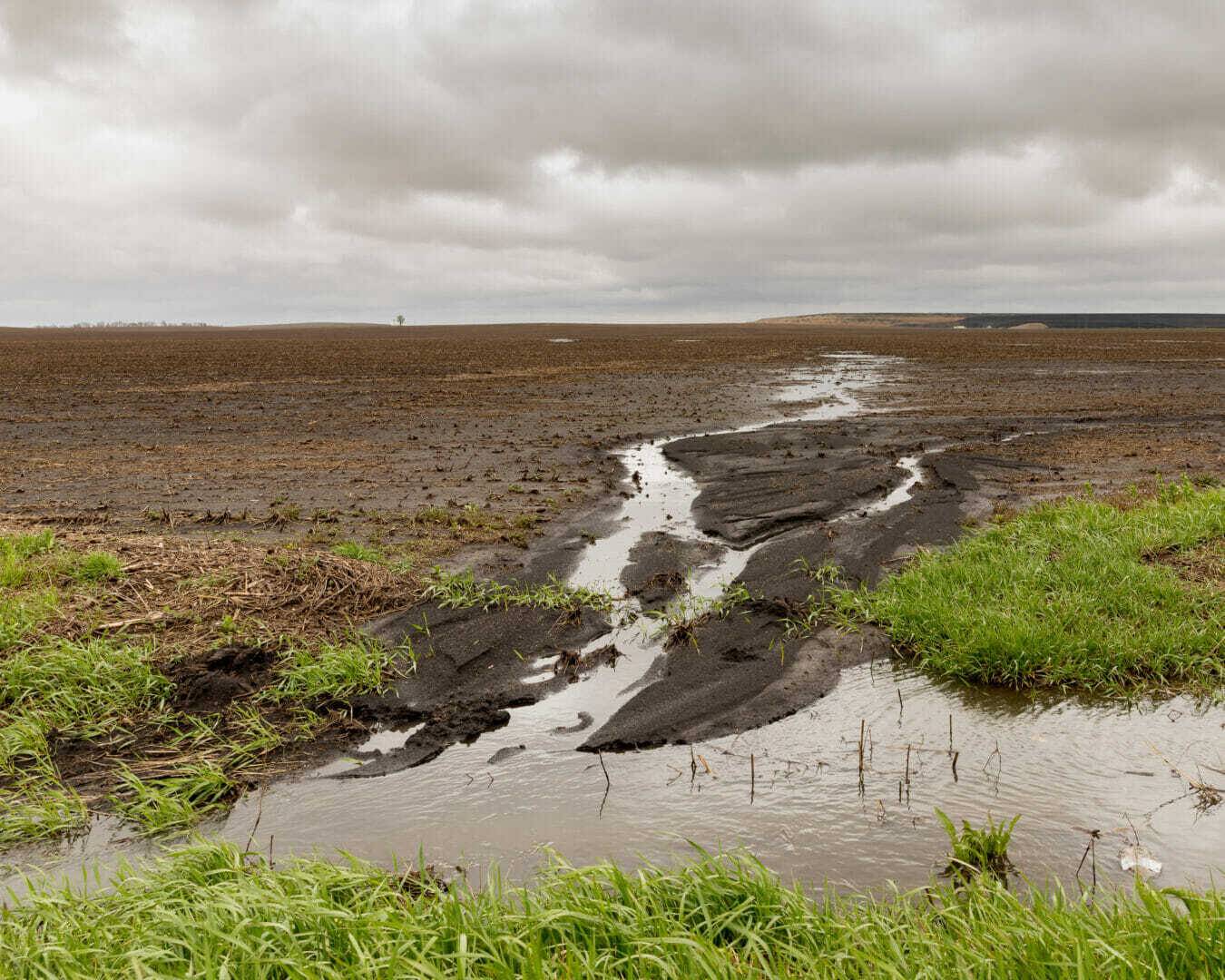
    On his Ethan, South Dakota farm, Matt Bainbridge planted just 15% of his acres in 2019—the rest were swallowed up by prevent plant. That’s the most prevent plant acres he’s ever had, and it turned all his careful pre-season planning upside down.

    For the 2019 planting season, farmers in the Midwest were no stranger to the crippling impacts of heavy rainfall, flooding and unseasonable temperatures on crop yields. May 2018 to April 2019 was the wettest 12-month period ever recorded in United States history, according to the National Oceanic and Atmospheric Administration.

    Estimates from the American Farm Bureau Federation find there were 20 million acres of prevent plant across the U.S. in that same time.

    South Dakota was at the epicenter of the record-breaking planting season, bearing the brunt of the devastating spring weather with 2.9 million corn acres and 867,000 soybean acres of prevent plant. For Bainbridge, the season brought immense challenges he worked to overcome.

    “Our production plan changed so many times during the season it was almost hard to remember the original plan,” Bainbridge said. “The chemical plan was completely changed to try managing very big weeds by the time we could spray.”

    Due east and across the Mississippi River, Dan Erickson was combatting similar issues when planting corn in Altona, Ill. Though planting was extremely late, Erickson was fortunate to not have had any prevented plant acres.

    “Our main problem was with saturated soil, and the cooler temperatures made this an issue,” Erickson said. “We had very poor stands in the early planted corn and ended up replanting about 20%.”

    While South Dakota led the nation with the most prevented plant acres, Illinois was severely reduced with 1.5 million acres lost to the unseasonable weather. For Erickson, challenges during planting season carried into harvest and even today threatens outcomes for the spring 2020 planting season.

    “Harvesting was finished so late that we didn’t really get any field work done to eliminate any compaction problems we created during the spring,” Erickson said.

    Conservation readies soil for 2020

    For both Erickson and Bainbridge, conservation practices have offered solutions for the challenges of 2019 and hope for 2020.

    “We were able to plant most of our acres to cover crops,” Bainbridge said. “We ran the air seeder every month from April to October trying to grow anything to cover the soil and use some moisture.”

    Cover crops helped him reduce weed pressure in addition to diminishing soil erosion from wind and rainfall. In addition, cover crops protect fields from fallow field syndrome, which can have damaging effects on microbe populations in the soil.

    Conservation practices – ranging from cover cropping to no-till – are offering farmers significant monetary savings.

    “With evidence we have, the no-till system can not only increase productivity and profit in a sustainable manner but is useful to repair damages caused by the past,” says Roberto Peiretti, founder of the Argentinian no-till farmers association and co-founder of Bioceres. “The ability [of this system] is beyond just sustainability.”

    A report headed by the Iowa Soybean Association found adopting no-till and strip-till creates savings of $10 to $88 per acre compared to regular tillage. Expenses attributed to pesticide inputs were also much lower for farmers using no-till. If half of Iowa’s regularly tilled acres switched to no-till or strip-till it would save farmers $265 in equipment and fuel costs.

    Bainbridge and his family have been using no-till conservation practices for 30 years. For Erickson, holding off on spring tillage has allowed his soils to drain better.

    “We have to improve the capturing efficiency of rainfall,” Peiretti says. “With no-till, water runoff is much less in no-till and infiltration is higher.”

    In a year such as 2019, better infiltration was the difference for many in planting or taking prevent plant. While you can’t beat Mother Nature, you might be able to hedge your bets in the future through sustainable practices.

    Laura Cunningham

    February 18, 2020
    Corn, Crop, Season, Soybeans, Spring, Tech Tuesday, Weather
  • Latham Hi‑Tech Seeds

    #AskTheAgronomist: Data Forward App Release

    2.13.20 cropped
    Our Data Forward app is now available! Tune in to hear three highlights on this program!
     
    0:22 — Topic Introduction
    0:50 — What is Data Forward?
    1:50 — Our Latham Led Approach
    2:50 — Program Independence
    3:40 — Program Transparency
    4:50 — What are quality insights?
    6:03 — Acre by acre management

    Laura Cunningham

    February 13, 2020
    #AskTheAgronomist, Agriculture, Agronomics, Corn, Corn Silage, Crop, Industry News, Precision Ag, Soybeans
  • Latham Hi‑Tech Seeds

    Now Available: Latham Seeds Data Forward™ App

    Splash screen no logo

    Quality is a word by which we’ve measured our work − from product selection to service − for more than 70 years.

    For us, quality data means more than just collecting and reflecting on last year’s results. It’s moving your Data Forward by understanding how technology in the cab and data layers can be put to work on your farm for maximum profit per acre. We believe your data can be the foundation to drive decision making and keep your farm sustainable.


    We are excited to expand our quality offerings at Latham Seeds with our NEW Data Forward App!


    Our Latham led personal approach helps utilize your current data to see more profit. Our advisors will conduct a data quality analysis of your current data; clean and organize each layer of data; and share results and recommendations with you.

    Benefits include:

    • Data Organization. Our advisors work to collect and update your data into our user-friendly, mobile system.
    • Yield Analysis & Insights tailored to your farm. An example of this is analyzing yield to understand optimal seeding rate for each hybrid on your fields.
    • Testing and Trials to determine what’s best for your fields. Evaluate ROI on a variety of products such as TALC and seed treatment.

    Contact your Latham Seeds Sales Representative Latham’s Precision Agronomy Advisors Phil Long or Darin Chapman at 1.877.GO.LATHAM to get started.

    Latham Seeds Precision Agronomy Advisors

    February 11, 2020
    Agriculture, Agronomics, Corn, Corn Silage, Crop, Industry News, Precision Ag, Soybeans, Tech Tuesday
  • Latham Hi‑Tech Seeds

    #AskTheAgronomist: How Plants Respond to High Populations

    1.30.20
    Tune in for the second part of our stress wheel discussion! Last week we talked about how hybrids flex, this week we are discussing how a plant responds to high population.
     
    0:41 — Topic Introduction
    1:20 — Above ground: competition for light
    4:20 — Below ground: competition for water and nutrients
    6:08 — Yield implications

    Did you miss Part 1? Check it out here: https://www.lathamseeds.com/2020/01/ask-the-agronomist-stress-wheel-research/

    Laura Cunningham

    January 30, 2020
    #AskTheAgronomist, Agronomics, Corn, Crop
  • Latham Hi‑Tech Seeds

    Ask The Agronomist: Stress Wheel Research

    1.15.19 Feature Image
    Stress Wheel Overview

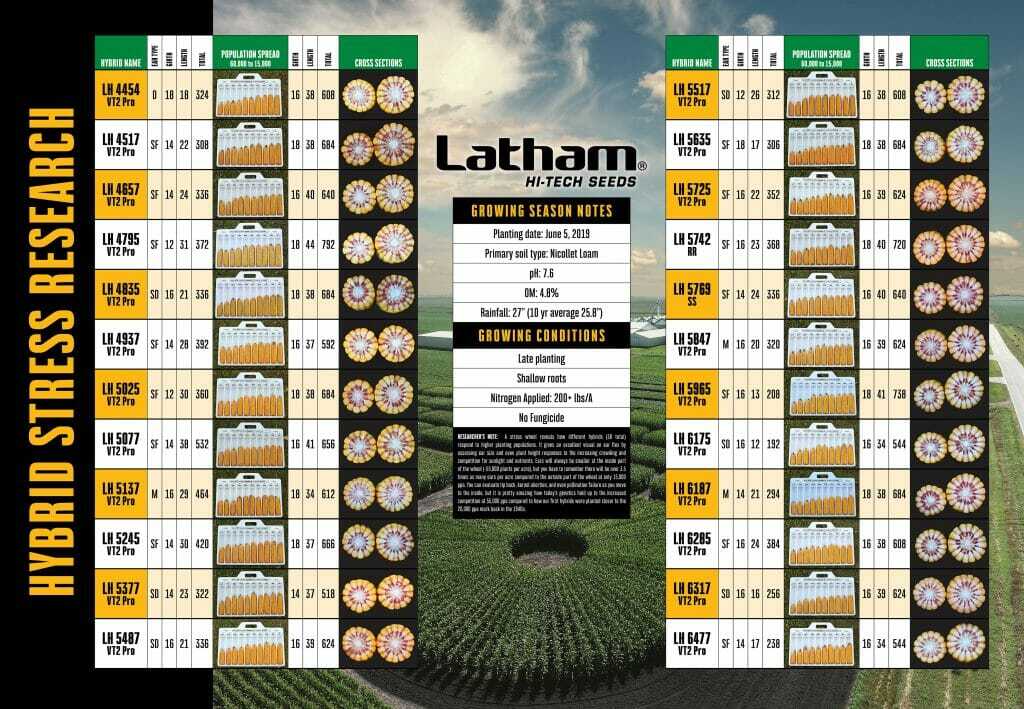
    In our Stress Wheel Plot, we study plant response and ear flex in 38 hybrids different hybrids. Resembling a pinwheel, corn is planted from the outside to the center with varying populations starting with 15,000 plants per acre (PPA) and increasing to 60,000 PPA.

    We have featured 24 hybrids and identified the following for each:

    • Ear Type
    • Population Spread from 60,000 PPA to 15,000 PPA
    • Girth
    • Length
    • Visual cross sections (kernel depth)
    Stress wheel poster 2019
    Click on the image to enlarge.

    Tune in the the video below to hear insights from Phil Long.

    0:25 — Topic Introduction

    0:45 — What is the stress wheel?

    2:55 — When do corn ears determine girth?

    3:00 — When do corn ears determine length?

    3:35 — When do corn ears determine kernel depth?

    4:05 — LH 5025 VT2 PRO RIB DG Case Study

    5:20 — Does girth or length add more yield?

    Laura Cunningham

    January 15, 2020
    #AskTheAgronomist, Corn, Crop
  • Latham Hi‑Tech Seeds

    Managing Soil Erosion

    Heavy spring rains causing flooding problems for farmers

    Soil erosion resulting from heavy rainfall events and wind leads to the loss of essential soil nutrients and soil carbon. Eroded soil and the loss of organic matter essential for supporting crop growth can damper corn and soybean production and reduce yield. Across the Corn Belt, an observed 20% increase in rainfall has led to a 40% increase in soil erosion. Record breaking flooding across the Midwest has further exacerbated erosion.

    Identify Soil Erosion

    Gully erosion is one of the most pronounced forms of erosion and its large grooves that form in the soil following heavy rainfall make it easy to identify. Less evident to the naked eye are signs of erosion that can be identified by looking for standing water in the field. Puddles of water seen after a rainstorm that are clouded with sediment suggest erosion is occurring whereas puddles of clear water are a sign of minimal erosion. Lighter colored soil seen overtime is also a sign of erosion but can be more difficult to identify.

    In Iowa, the average rate of erosion has been five tons of soil per acre every year with intense weather events worsening rates, in some cases reaching 100 tons of soil per acre per year. The loss of natural vegetation can lead to greater rates of erosion from both wind and water. Using cover crops and no-till are the most effective methods for reducing and preventing erosion, increasing soil water holding capacity and boosting moisture content.

    Take Action with Promising Solutions

    Annual cover crops such as winter rye can be planted in the fall to preserve the soil over the winter and reduce erosion. PROTECTioN™ Cereal Rye, DRILLER™ Daikon Radish and FIXatioN Balansa Clover can be planted in the late summer and early fall to enrich organic matter and reduce soil loss. Perennial cover crops including legumes and fescue have established root systems that can prevent the loss of soil nutrients to rain or weather erosion. Legumes are also nitrogen fixing and can support crop growth.

    In addition to integrating cover crops and no-till, terracing or planting grasses near waterways can prevent the formation of gullies. Buffer and filter strips can reduce the loss of soil nutrients and runoff of fertilizer and pesticides. Prairie strips can be implemented by planting perennial grasses to protect topsoil and prevent the loss of organic matter. Integrating a combination of these methods with cover cropping can combat soil erosion and offer great protection for your corn and soybean crops.

    Latham Seeds Agronomy Team

    January 14, 2020
    Corn, Cover Crops, Crop, Soybeans, Spring, Tech Tuesday, Winter
  • Latham Hi‑Tech Seeds

    #AskTheAgronomist: Phosphorus Application

    1.2.19
    When should you apply phosphorus? Tune in for discussion on planning for 2020.
     
    0:28 — Topic introduction
    1:19 — Ideal conditions for phosphorus application
    3:50 — How does phosphorus move?
    4:48 — Phosphorus application example
    6:34 — Phosphorus usability and root exploration
    8:21 — Phosphorus placement

    Laura Cunningham

    January 2, 2020
    #AskTheAgronomist, Corn, Crop, Fertility, General, Soybeans
    Fertility, phosphorus application
  • Latham Hi‑Tech Seeds

    #AsktheAgronomist: Corn on Corn

    12.12.19 Feature
    Tune in for the top three practices to remember when planting continuous corn. #AskTheAgronomist
    1:25 — Insect protection
    3:20 — Agronomist traits
    5:30 — Fertility and nitrogen rates

    Laura Cunningham

    December 12, 2019
    #AskTheAgronomist, Corn, Crop, Industry News, Seed Technology
  • Latham Hi‑Tech Seeds

    Tips to Increase Your Odds of ROI

    Corn plant ROI graphic

    Bob FoleyGuest blog by Bob Foley, Corn Breeder 

    Like you and I, each corn hybrid responds and reacts to environmental changes. For example, I’m not a bright lights and heavy traffic sort of guy. Vegas is not my happy place. I perform my best in solitude with wide, open green spaces and lots of coffee. Withdraw the coffee, and it affects my demeanor!

    Corn hybrids are similar. Think of a situation when a crop emerged perfectly. If adequate rain doesn’t fall, yield suffers. The inverse is also true. When too much rain falls and nitrogen leaches, yield also suffers. Sometimes weeds develop resistance to herbicide, and yield suffers due to competition for nutrients and water.

    Many of the practices we implement to push ROI (return on investment equates to yield) have both positive and negative impacts: planting early, pushing populations, field drying, and adopting traits. Each of these practices can swing the outcome pendulum either way:

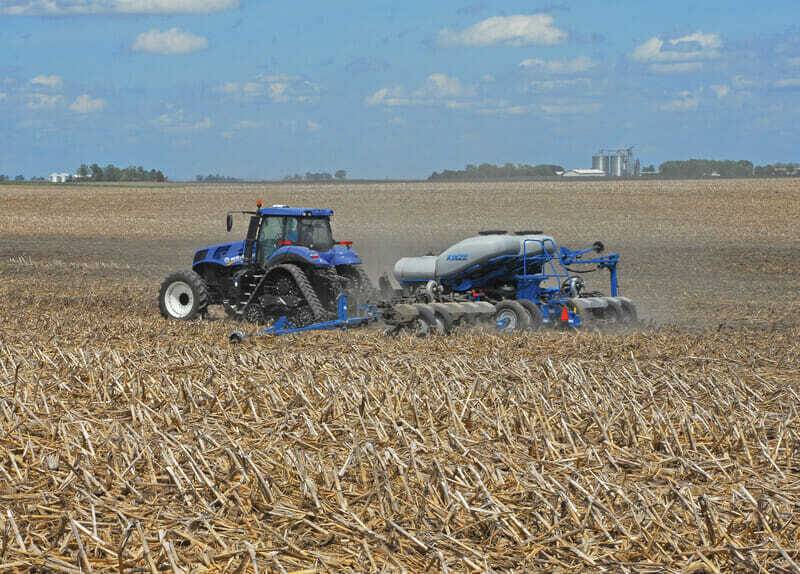
    • Planting Conditions. Planting remains the most critical first step of a great corn crop. You need fit soil conditions. Just the right mix of not too dry or not too wet, no slabbing, and no wet holes allows you to plant better and seedlings to emerge faster. Planting depth and spacing is also key, so it’s important to check periodically.

    • Planting Population. It’s critical to plant a hybrid thick enough to maximize returns, but there is also a point of diminishing returns. If the plants don’t receive enough food or water, yield suffers. Consider that every ear you make comes from its own “production plants,” and each plant needs to run at its optimum. Planting population must reflect your field’s history, food availability and soil
    type(s).

    • Field Drying. This choice combines many things, including cost to dry, availability of dryer and storage, as well as your marketing commitments. Pushing a hybrid’s relative maturity (RM) means you’ll harvest it later, which could allow you to experience in triplicate when it comes to field drying versus standability.

    • Adopting Traits. Everyone has his or her own position on farming with or without traits, and I tend to be like Switzerland in this conversation. I just want good hybrids. However, I do believe the adoption of traits has changed the way we steward our farms. We don’t walk the fields like we used to and scout for weeds, insects and disease. The concept of “I paid for traits to protect my crop” has somewhat given us permission to stop walking the fields (even more so after pollination). That’s a huge gamble! Without walking the field – or even flying the field – we usually aren’t aware of trouble spots in a field until we sit in the combine seat.

    Give a “seat at the table” to emergence, population, standability, traits, yield and genetics. Deal them in, too, because they respond to your management decisions. What can you learn from the 2019 crop that could be a game changer for 2020? Due to the unpredictable outcome of our decisions, it’s always best to play the odds by planting multiple hybrids and relying on multiple experiences. One plot, one year, one environment or one hybrid is not a covered bet. Spread the risk by relying on tried and true practices. Making minor adjustments here and there can reap huge payouts. Making drastic changes, however, is like pushing all your chips in before seeing the cards dealt.

    Like I said, I’m not a Vegas kind of guy. I’m all about increasing my odds – and yours – of winning.

    Laura Cunningham

    December 10, 2019
    Corn, Crop, Tech Tuesday
  • Latham Hi‑Tech Seeds

    #AskTheAgronomist: Product Placement 2020

    12.5.19

    It’s time to begin planning for 2020. Tune in as we discuss product placement and 3 important factors to consider! #AskTheAgronomist

    :34 — Product placement for 2020 introduction
    2:07 — Product placement can affect yield by 19 to 20%
    3:05 — Use 2019 yield data cautiously
    5:50 — Defensive hybrids vs. Offensive hybrids
    8:45 — Keep plans in place and stay the course
    11:15 — Population placement

    Laura Cunningham

    December 5, 2019
    #AskTheAgronomist, Corn, Crop
Previous Page
1 … 13 14 15 16 17 … 36
Next Page

Latham Hi‑Tech Seeds

131 180th Street | Alexander, IA 50420

(641) 692-3258

SIGNUP FOR OUR NEWSLETTER
  • Contact
  • Legal
  • Dealer Center
  • Seedware Login
  • Latham Gear

© 2025 Latham Hi‑Tech Seeds. All rights reserved. | Iowa Web Design by Webspec | Privacy Policy

Latham® Hi-Tech Seeds is a trademark of M.S. Technologies, L.L.C., 103 Avenue D, West Point, IA 52656.