August is a great time to assess potential risks of corn rootworm infestations in the following spring. By looking at the population of adult beetles found in corn fields now, farmers can identify potential problem fields for the following growing season. This can be a useful tool in overall management of corn rootworm.
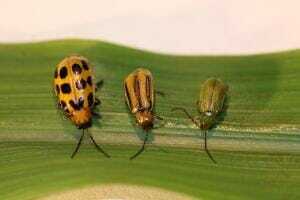
While walking fields this summer, our product team is seeing populations of corn rootworm adults. Predominantly, we see Northern Corn Rootworm in our market area. (Adult Fig. 1) This season we have seen populations of Western Corn Rootworms, (Adult Fig. 2) as well as a few Southern Corn Rootworms (Adult Fig. 3).

Assessing Corn Fields
Look in corn fields that may be planted to corn next spring, as well as in soybean fields for high beetle populations. If you did not place sticky traps to catch or monitor beetles beginning at pollination time, spend a little time in your fields looking for evidence of adult populations that are still present.
The primary/desired food source for corn rootworm beetles are the fresh silks of pollinating corn plants. If we have early flowering, as we have seen this season, we may not see an abundance of feeding at that time. Beetles, however, will feed on leaf tissue of corn plants if the source of fresh green silk is no longer available. The adult phase of the corn rootworm cycle begins at the end of June and can last all the way to the first killing frost. The egg laying period can last from late July through August.
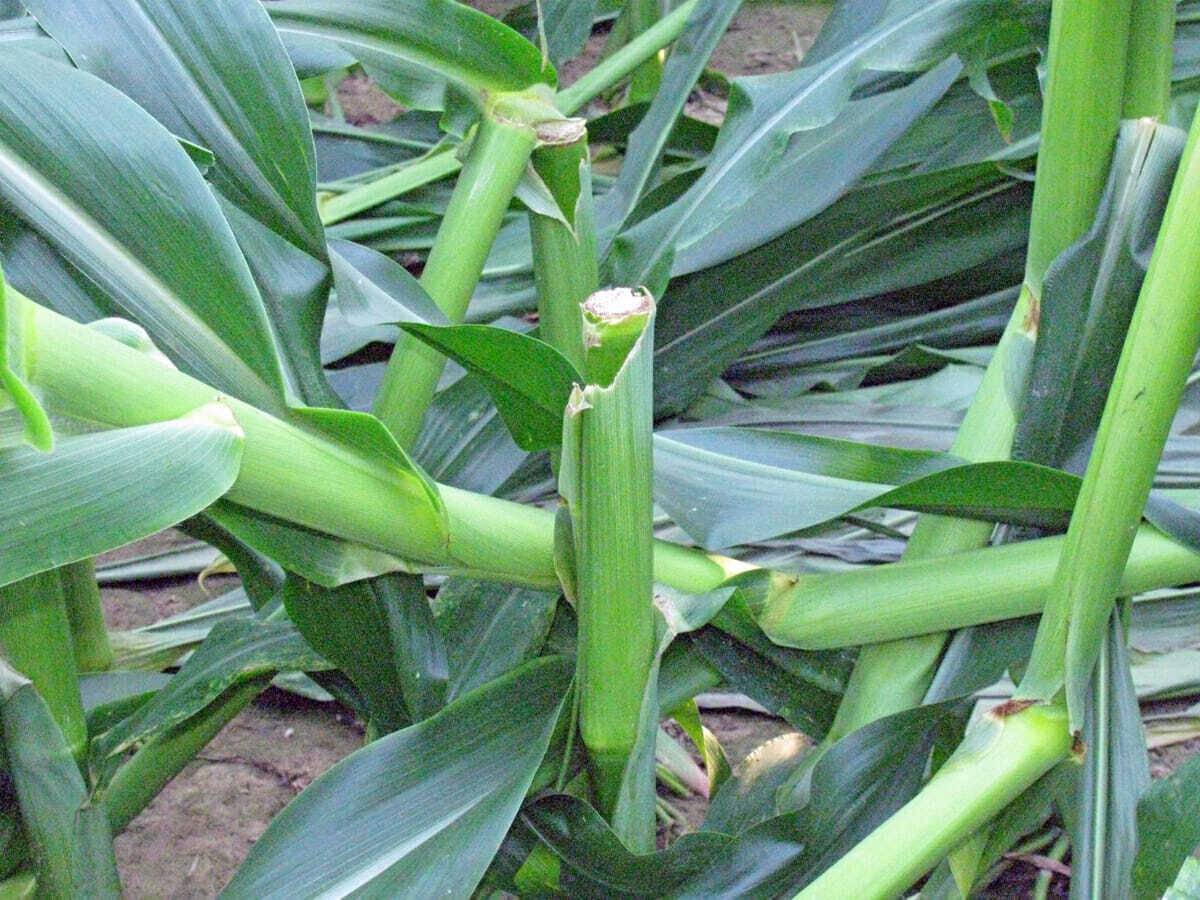
 When assessing corn fields at pollination time, focus on beetle counts found on silks of corn plants. When assessing corn fields in August and early September, focus on beetle populations that remain on any silks and look for leaf feeding. (Fig. 4) Make note of fields with high numbers of adults and significant leaf feeding. Consider rootworm management tools in those fields that will be corn next year.
Assessing Soybean Fields
Rootworm beetles feed on weedy areas: field edges, weedy areas in drowned-out spots, weed escapes etc. including soybean plants, alfalfa and prairie grass fields (CRP). Western Rootworm beetles are more likely to lay eggs in soybean fields, but Northern Rootworm beetles may do the same. Sweep net catches in soybeans or evidence of leaf feeding are best ways to assess populations.
Protocols and population threshold advice can be found on your state’s Extension Service website.
If you identify fields that may have potential rootworm problems next spring, consider using hybrids containing rootworm protection traits. Latham Hi‑Tech Seeds has an exceptional group of hybrids, ranging in relative maturing from 96 to 115, to manage corn rootworm. We introduced six hybrids with SmartStax® technology to help our customers manage this important corn pest for the 2021 planting season. Visit with your local Latham dealer or visit www.LathamSeeds.com to check out these new hybrids.