The 2019 growing season left many acres across Latham Country less than optimum for good crop growth and development. Late harvest and saturated soil conditions reduce good soil organisms that help our corn hybrids get off to the best start. Using planter box treatments like Talc USA products offered by Latham Hi‑Tech Seeds can improve your crop’s success in 2020.
All planter manufacturers recommend some type of planter box additive to aid seed flow and lubricate seed meters. Talc USA’s lineup provides the needed lubrication, plus a yield advantage:
Talc USA, planter box talc and talc/graphite combo product
· Premium 200 micron grind product
· Fortified with .7% iron and .09% manganese
MicroSurge Inoculant
· Increases atmospheric nitrogen used by your corn plants
· Adds Azospirillum organisms to the soil via the seed and enhances root function
Encompass
· Contains five microbials that fix nitrogen and mobilize phosphorus
· Helps with key functions of the corn plant through better uptake of nutrients
Inceptive
· Contains the Harpin Protein, which suppresses plant-feeding nematodes
· Shows yield response even when nematode populations fall below economic threshold
Latham’s Agronomy team in 2019 showed an increase in yield and plant health at our Alexander research farm TALC USA trial. If you’re looking for opportunities to improve the performance of your crops, find more information on TALC USA products at www.lathamseeds.com.
Focus on Achieving Even Emergence for Maximum Yield
By Darin Chapman, Precision Agronomy Advisor
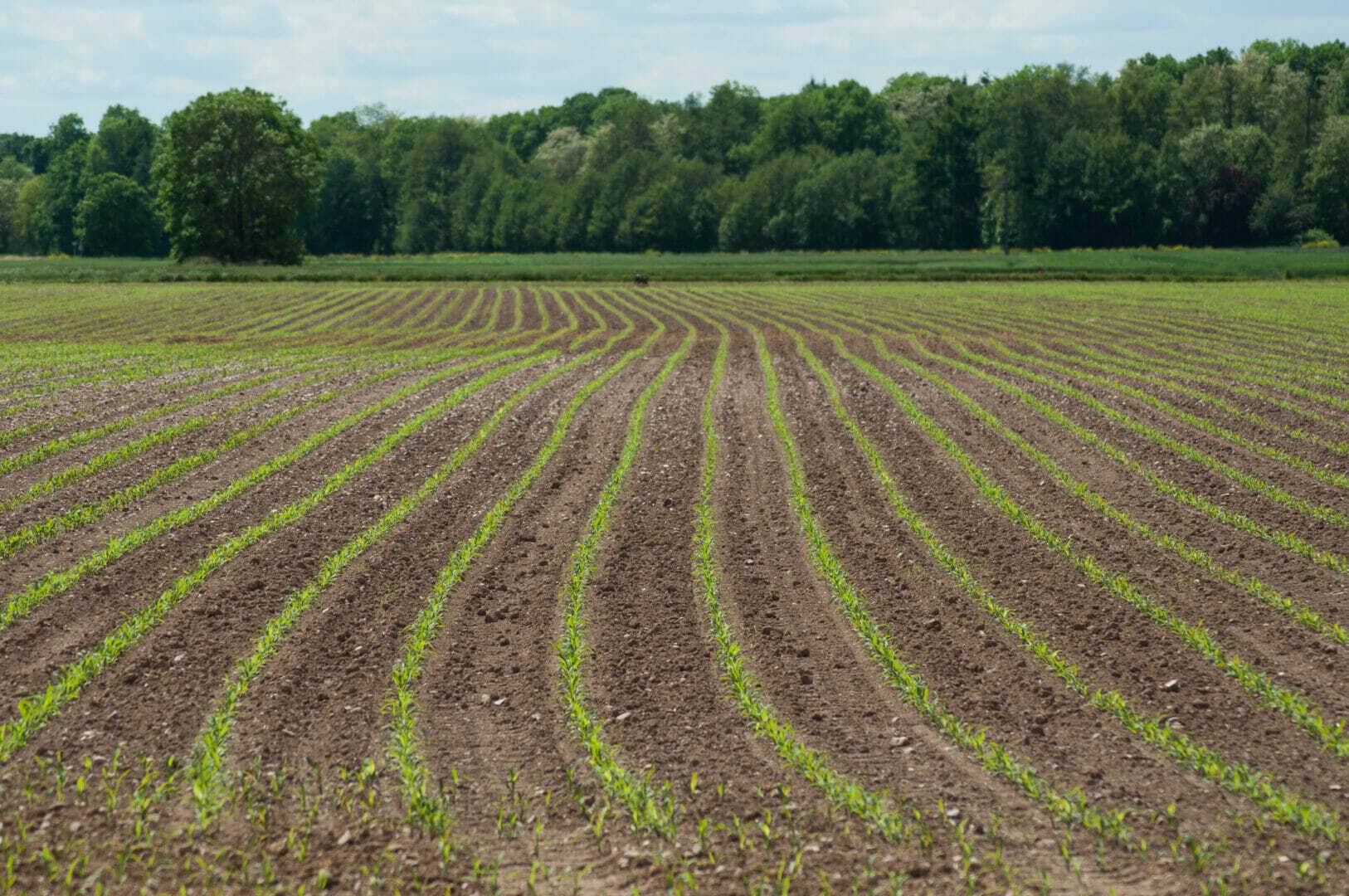
The cost of achieving uniform emergence is a complicated one as achieving uniform emergence is dependent upon receiving adequate moisture, heat units and proper seed-to-soil contact.
If you’ve struggled with achieving uniform emergence, there are three key areas on which to focus. Start at the front of the planter and work your way back:
1. Look at the row cleaners. Assure the planter is clearing trash as it moves through the field.
2. Next, check the downforce to make sure that seeds are being placed at a consistent seed depth across your field. Take the time to dig in the trench behind the planter, which is important but often overlooked.
3. Maintaining consistent seed-to-soil contact and proper closing of the seed trench is vital.
There are many options to control these aspects at varying levels of cost. Look at your own operation and balance the improvements you desire with the potential return on investment. Below are options to consider for even emergence:
· Tillage Practices– Prepare an optimal seed bed.
· Residue Management– Move residue, not topsoil.
· Planter Row Unit Maintenance– Use an annual planter checklist. (See sidebar below.)
· Planter Downforce– Look at planter upgrades for the best down and lift force option for your operation. In certain cases, lift force versus downforce is more beneficial.
· Seed Settlement– Make sure seed is reaching the bottom of trench for seed-to-soil contact.
· Closing the Trench– Confirm the closing system is doing its job to close the trench; make certain there are no air pockets.
Non-uniform stands result in lower yields because the smaller plants that emerge later cannot capture enough sunlight. Without even emergence, your work to achieve even seed spacing and singulation is in vain. The extra time spent now on planter maintenance will be worth it come spring planting.
Contact your Latham Precision Agronomy Advisor to take a deeper look at your operation now. We’re here to help you achieve better emergence.
Is talc worth it? Phil Long reviews real benefits of our Talc USA line and research from our test at Alexander. #LathamSeeds
0:40 — Topic Introduction
1:30 — The importance of talc
3:10 — Why Talc USA?
4:30 — Talc study at Latham Seeds
7:00 — How to incorporate Talc USA products on you farm
Bayer CropScience has announced a special herbicide program for 2020 to be used on RR2 Xtend soybeans. Called the “Spray Early with Confidence Program,” it is designed to help farmers planting Xtend soybeans to gain an upper hand on weed management.
There are two strategies farmers can use to qualify. A brief summary of the program is as follows:
Strategy #1 (Preferred Option):
Start Clean– Use tillage or the appropriate burndown herbicides.
Pre-emergence Application– Use a qualifying residual herbicide within two weeks before planting or prior to soybean emergence to control broadleaf weeds.
Post-emergence Application– Make a post-application when weeds are less than 4 inches tall and within 30 days after planting soybeans. Application should include: Warrant® Herbicide (3-4 pts) or Warrant Ultra Herbicide (50 fl oz) + Roundup PowerMAX® herbicide or Roundup WeatherMAX® herbicide (32 fl oz) + XtendiMax® herbicide with VaporGrip® Technology (22 fl oz) + an approved drift reduction agent at labeled rate.
Strategy #2 (Alternative Option):
Start Clean– Use tillage or the appropriate burndown herbicides.
Pre-emergence Application– Make an application that includes: XtendiMax with VaporGrip Technology (22-44 fl oz) + Warrant Herbicide (3-4 pts) + Metribuzin at planting or as soon as possible after planting but prior to soybean emergence. Include Roundup PowerMAX herbicide or Roundup WeatherMAX herbicide in minimum-till and no-till situations.
Post-emergence Application– Make a post-application when weeds are less than 4 inches tall and within 21 days after soybean emergence. Application should include Roundup PowerMAX herbicide or Roundup WeatherMAX herbicide (32 fl oz) + Warrant Ultra Herbicide2 (50 fl oz).
Before using either of these strategies, farmers will want to consult with their local ag chemical suppliers. If a farmer experiences less than commercially acceptable weed control, Bayer will provide up to $15 per acre for a second post-emerge application.
We still have a good supply of Xtend soybeans available for 2020 planting! These Latham Ironclad™ Xtend soybeans have the outstanding defensive packages along with top-end yield: L 3197 R2X, L 2887 R2X, L 2682 R2X, L 2384 R2X, L 2184 R2X, L 1948 R2X, L 1769 R2X, L 1482 R2X and L 0739 R2X.
Other top-performing Xtend products from Latham include: L 0124 R2X, L 0282 R2X, L 0553 R2X, L 0883 R2X, L 2159 R2X, L 2295 R2X, L 2549 R2X and L 3394 R2X.
Tech sheets for each product are available on LathamSeeds. com. Remember, it’s always best to plant a package. Contact your local Latham rep to select the best Xtend soybean for your fields. Selecting seed field-by-field yields!
Tips for Planning for the Best Corn Crop Possible in 2020
By Lyle Marcus
Many parts of the Latham marketing area continue to deal with the effects of the long 2019 growing season. Farmers have acres they harvested and prepared well for winter; acres they harvested with questionable tillage completed; and acres that still have crop in the field. The abundance of fall moisture combined with an early freeze and heavy snow cover have farmers in many areas wondering what this spring will bring.
The Latham Team has fielded questions from farmers wondering if they should order hybrids that are earlier than they usually plant. The short answer is to plan for usual planting dates. Order hybrids in the relative maturity that you prefer to plant, and then adjust in late spring if Mother Nature doesn’t cooperate.
Much research has been completed on effects of delayed planting to hybrid yield, maturity and profitability. Materials developed by North Dakota State University and the University of Minnesota state that farmers should wait to change from their normal maturity only when planting delays extend past May 25. An Iowa State University field agronomist in May 2019 said Iowa farmers, in general, should be able to plant full-season well-adapted corn hybrids until June 1. While that’s later than what we recommend, especially for Iowa’s northern counties, the point is that research show yields are better from full-season hybrids even if they get in the ground later than the optimal planting window.
Corn planted after May 1 requires about 6.8 fewer growing degree days per day to reach maturity, according to an ISU Extension publication. Purdue University has an online calculator that can help determine growing degree day requirements for late planted corn.
A 2007 ISU newsletter shared results from a Purdue University research project on delayed planting effects on flowering and maturity of dent corn. I found this information interesting as I have seen many times that planting delays did not necessarily translate into significant maturity delays. The Purdue project showed that hybrids planted late shortened time to flowering, had a little longer fill period, but overall they reached maturity nine days quicker on average than early plantings of those same hybrids. The research also showed the reduction in time spent in vegetative growth outweighs the increased time spent in reproductive growth.
Purdue’s research on hybrid response to late versus early planting showed time in vegetative growth was reduced by 14 days, from 75 to 61 days, for a 14-day reduction for late planted hybrids. Whereas, time in reproductive growth was increased by 5 days, from 68 to 63 days, for 5-day increase for late planted hybrids. The hybrids adjusted to the shorter growing season by reducing 9 days total (-14 + 5 = -9 days). In summary, hybrids compensate for late planting mostly by shortening the time necessary to reach silking. The old story that hybrids can adapt to the environment holds true. See references to this information below.
At Latham Hi‑Tech Seeds, we will continue to help our dealers and customers make the best decisions to create the highest yield potential with greatest return possible for every acre. Today that means a cropping plan of traditional maturities for your farm, but we will be prepared to help adjust those plans should spring of 2020 require a change in plans.
References
Integrated Crop Management extension newsletter on pages 130-131 of the IC-498 (8) April 30, 2007, issue
Summary of Agronomy Journal publication May-June 2002, “Delayed Planting Effects on Flowering and Grain Maturation of Dent Corn”
On his Ethan, South Dakota farm, Matt Bainbridge planted just 15% of his acres in 2019—the rest were swallowed up by prevent plant. That’s the most prevent plant acres he’s ever had, and it turned all his careful pre-season planning upside down.
For the 2019 planting season, farmers in the Midwest were no stranger to the crippling impacts of heavy rainfall, flooding and unseasonable temperatures on crop yields. May 2018 to April 2019 was the wettest 12-month period ever recorded in United States history, according to the National Oceanic and Atmospheric Administration.
Estimates from the American Farm Bureau Federation find there were 20 million acres of prevent plant across the U.S. in that same time.
South Dakota was at the epicenter of the record-breaking planting season, bearing the brunt of the devastating spring weather with 2.9 million corn acres and 867,000 soybean acres of prevent plant. For Bainbridge, the season brought immense challenges he worked to overcome.
“Our production plan changed so many times during the season it was almost hard to remember the original plan,” Bainbridge said. “The chemical plan was completely changed to try managing very big weeds by the time we could spray.”
Due east and across the Mississippi River, Dan Erickson was combatting similar issues when planting corn in Altona, Ill. Though planting was extremely late, Erickson was fortunate to not have had any prevented plant acres.
“Our main problem was with saturated soil, and the cooler temperatures made this an issue,” Erickson said. “We had very poor stands in the early planted corn and ended up replanting about 20%.”
While South Dakota led the nation with the most prevented plant acres, Illinois was severely reduced with 1.5 million acres lost to the unseasonable weather. For Erickson, challenges during planting season carried into harvest and even today threatens outcomes for the spring 2020 planting season.
“Harvesting was finished so late that we didn’t really get any field work done to eliminate any compaction problems we created during the spring,” Erickson said.
Conservation readies soil for 2020
For both Erickson and Bainbridge, conservation practices have offered solutions for the challenges of 2019 and hope for 2020.
“We were able to plant most of our acres to cover crops,” Bainbridge said. “We ran the air seeder every month from April to October trying to grow anything to cover the soil and use some moisture.”
Cover crops helped him reduce weed pressure in addition to diminishing soil erosion from wind and rainfall. In addition, cover crops protect fields from fallow field syndrome, which can have damaging effects on microbe populations in the soil.
Conservation practices – ranging from cover cropping to no-till – are offering farmers significant monetary savings.
“With evidence we have, the no-till system can not only increase productivity and profit in a sustainable manner but is useful to repair damages caused by the past,” says Roberto Peiretti, founder of the Argentinian no-till farmers association and co-founder of Bioceres. “The ability [of this system] is beyond just sustainability.”
A report headed by the Iowa Soybean Association found adopting no-till and strip-till creates savings of $10 to $88 per acre compared to regular tillage. Expenses attributed to pesticide inputs were also much lower for farmers using no-till. If half of Iowa’s regularly tilled acres switched to no-till or strip-till it would save farmers $265 in equipment and fuel costs.
Bainbridge and his family have been using no-till conservation practices for 30 years. For Erickson, holding off on spring tillage has allowed his soils to drain better.
“We have to improve the capturing efficiency of rainfall,” Peiretti says. “With no-till, water runoff is much less in no-till and infiltration is higher.”
In a year such as 2019, better infiltration was the difference for many in planting or taking prevent plant. While you can’t beat Mother Nature, you might be able to hedge your bets in the future through sustainable practices.
Quality is a word by which we’ve measured our work − from product selection to service − for more than 70 years.
For us, quality data means more than just collecting and reflecting on last year’s results. It’s moving your Data Forward by understanding how technology in the cab and data layers can be put to work on your farm for maximum profit per acre. We believe your data can be the foundation to drive decision making and keep your farm sustainable.
We are excited to expand our quality offerings at Latham Seeds with our NEW Data Forward App!
Our Latham led personal approach helps utilize your current data to see more profit. Our advisors will conduct a data quality analysis of your current data; clean and organize each layer of data; and share results and recommendations with you.
Benefits include:
Data Organization. Our advisors work to collect and update your data into our user-friendly, mobile system.
Yield Analysis & Insights tailored to your farm. An example of this is analyzing yield to understand optimal seeding rate for each hybrid on your fields.
Testing and Trials to determine what’s best for your fields. Evaluate ROI on a variety of products such as TALC and seed treatment.
Contact your Latham Seeds Sales Representative Latham’s Precision Agronomy Advisors Phil Long or Darin Chapman at 1.877.GO.LATHAM to get started.
#AskTheAgronomist: How Plants Respond to High Populations
Tune in for the second part of our stress wheel discussion! Last week we talked about how hybrids flex, this week we are discussing how a plant responds to high population.
0:41 — Topic Introduction
1:20 — Above ground: competition for light
4:20 — Below ground: competition for water and nutrients

 By Lyle Marcus, Corn Production Manager