Latham Hi-Tech Seeds

(641) 692-3258

  • Home
  • Performance
  • Products
    • Corn
    • Soybeans
    • Soybean Blends
    • Alfalfa
    • Corn Silage
    • Seed Guide
  • Find a Rep
  • Media
    • Blog
    • News
    • Videos
    • Podcasts
    • TECHTalk
  • About Us
    • Company History
    • Our Mission
    • Careers
    • Become a Rep
    • Sowing Seeds of Hope
  • Contact Us
  • Latham Hi‑Tech Seeds

    Tips to Increase Your Odds of ROI

    Corn plant ROI graphic

    Bob FoleyGuest blog by Bob Foley, Corn Breeder 

    Like you and I, each corn hybrid responds and reacts to environmental changes. For example, I’m not a bright lights and heavy traffic sort of guy. Vegas is not my happy place. I perform my best in solitude with wide, open green spaces and lots of coffee. Withdraw the coffee, and it affects my demeanor!

    Corn hybrids are similar. Think of a situation when a crop emerged perfectly. If adequate rain doesn’t fall, yield suffers. The inverse is also true. When too much rain falls and nitrogen leaches, yield also suffers. Sometimes weeds develop resistance to herbicide, and yield suffers due to competition for nutrients and water.

    Many of the practices we implement to push ROI (return on investment equates to yield) have both positive and negative impacts: planting early, pushing populations, field drying, and adopting traits. Each of these practices can swing the outcome pendulum either way:

    • Planting Conditions. Planting remains the most critical first step of a great corn crop. You need fit soil conditions. Just the right mix of not too dry or not too wet, no slabbing, and no wet holes allows you to plant better and seedlings to emerge faster. Planting depth and spacing is also key, so it’s important to check periodically.

    • Planting Population. It’s critical to plant a hybrid thick enough to maximize returns, but there is also a point of diminishing returns. If the plants don’t receive enough food or water, yield suffers. Consider that every ear you make comes from its own “production plants,” and each plant needs to run at its optimum. Planting population must reflect your field’s history, food availability and soil
    type(s).

    • Field Drying. This choice combines many things, including cost to dry, availability of dryer and storage, as well as your marketing commitments. Pushing a hybrid’s relative maturity (RM) means you’ll harvest it later, which could allow you to experience in triplicate when it comes to field drying versus standability.

    • Adopting Traits. Everyone has his or her own position on farming with or without traits, and I tend to be like Switzerland in this conversation. I just want good hybrids. However, I do believe the adoption of traits has changed the way we steward our farms. We don’t walk the fields like we used to and scout for weeds, insects and disease. The concept of “I paid for traits to protect my crop” has somewhat given us permission to stop walking the fields (even more so after pollination). That’s a huge gamble! Without walking the field – or even flying the field – we usually aren’t aware of trouble spots in a field until we sit in the combine seat.

    Give a “seat at the table” to emergence, population, standability, traits, yield and genetics. Deal them in, too, because they respond to your management decisions. What can you learn from the 2019 crop that could be a game changer for 2020? Due to the unpredictable outcome of our decisions, it’s always best to play the odds by planting multiple hybrids and relying on multiple experiences. One plot, one year, one environment or one hybrid is not a covered bet. Spread the risk by relying on tried and true practices. Making minor adjustments here and there can reap huge payouts. Making drastic changes, however, is like pushing all your chips in before seeing the cards dealt.

    Like I said, I’m not a Vegas kind of guy. I’m all about increasing my odds – and yours – of winning.


    Laura Cunningham

    December 10, 2019
    Corn, Crop, Tech Tuesday
  • Latham Hi‑Tech Seeds

    #AskTheAgronomist: Product Placement 2020

    12.5.19

    It’s time to begin planning for 2020. Tune in as we discuss product placement and 3 important factors to consider! #AskTheAgronomist

    :34 — Product placement for 2020 introduction
    2:07 — Product placement can affect yield by 19 to 20%
    3:05 — Use 2019 yield data cautiously
    5:50 — Defensive hybrids vs. Offensive hybrids
    8:45 — Keep plans in place and stay the course
    11:15 — Population placement

    Laura Cunningham

    December 5, 2019
    #AskTheAgronomist, Corn, Crop
  • Latham Hi‑Tech Seeds

    #AskTheAgronomist: Fall Fertilizer

    11.14.19


    Tune in for today’s #AskTheAgronomist as we discuss Fall fertilizer application.

    • 0:20 — Crop Report Update
    • 1:30 — Topic Introduction
    • 1:40 — Soil sampling and fertility
    • 4:15 — Know critical test levels
    • 5:15 — Yearly fertilizer application
    • 7:15 — Corn and soybean must-haves
    • 10:15 — Organic manure advantage
    • 12:00 — Know your pH levels

    Laura Cunningham

    November 14, 2019
    #AskTheAgronomist, Agronomics, Corn, Crop, Fertility, Soybeans
  • Latham Hi‑Tech Seeds

    #AskTheAgronomist: Population Test Analysis

    10.31 feature image

    Is 40,000 plants per acre the answer every time? Tune in for a deeper dive into our LH 5245 VT2 PRO RIB hybrid and the results from our population test. #AskTheAgronomist

    0:25 Crop Report Update
    1:28 Population test introduction
    2:30 LH 5245 VT2 PRO RIB hybrid introduction
    4:15 Low population to high population and flex
    5:20 Yield Estimates
    7:00 How does LH 5245 VT2 PRO RIB flex?
    8:13 Stalk quality
    10:43 Final thoughts

    Laura Cunningham

    October 31, 2019
    #AskTheAgronomist, Corn, Crop
  • Latham Hi‑Tech Seeds

    Tar Spot

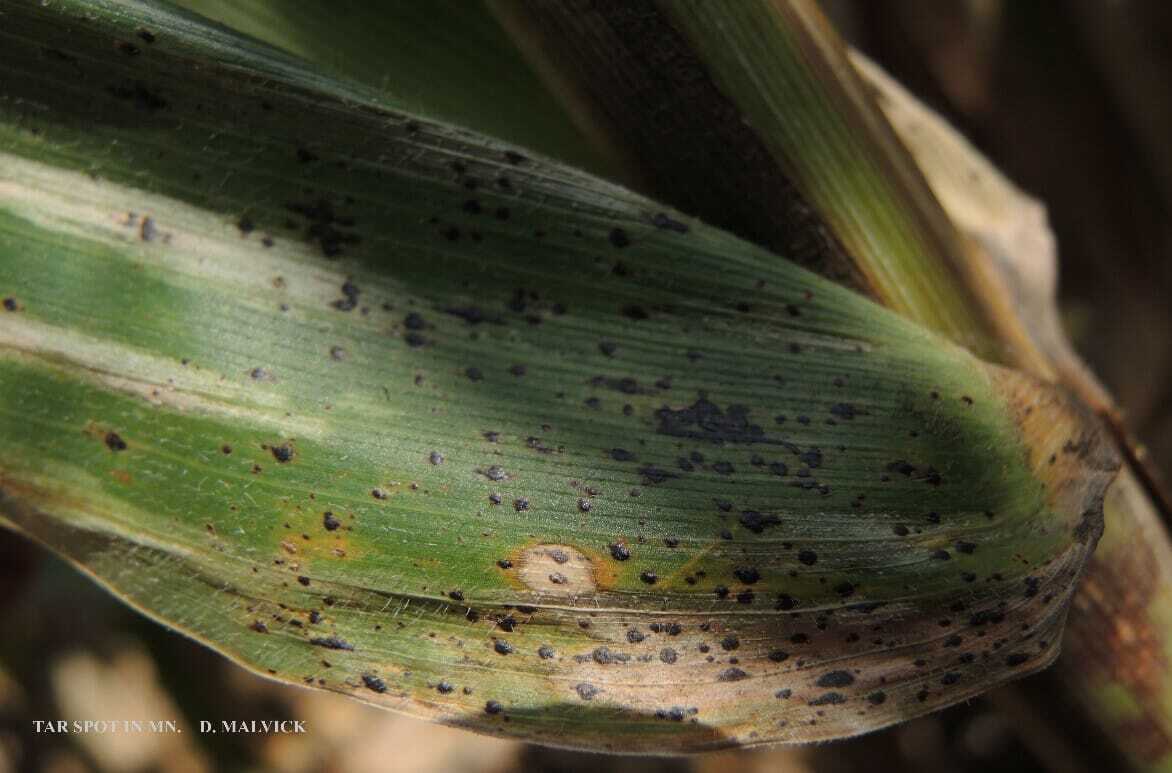
    Tar Spot Dean Malvick, Universtiy of Minnesota Extension plant pathologist

    What is Tar Spot?

    Tar Spot Dean Malvick, Universtiy of Minnesota Extension plant pathologistTar Spot is a corn fungal disease that has been infiltrating the Midwest within the last few years. Tar spot has the capability to severely impact yields up to 30%. Concern about the intensity of this fungus grows as researchers learn more about it. We urge farmers to scout their fields through harvest for tar spot since this fungus can survive over winter year to year.

    Tar Spot Identification

    Tar spot will show up as small, raised blacks spots, on the upper and lower corn leaves. The raised black spots are also known as stromata. If severe enough, it can spread to leaf sheaths and husks. Typically, it will start lower in the canopy and move upward. Tar spots are usually accompanied with a yellow halo or fish-eye effect around the black spots. Note the stromata, cannot be rubbed off unlike a common or southern rust pustule.

    The Importance of Scouting

    This corn fungus has nearly made it across Iowa and is continuing to spread in Wisconsin, Illinois, Indiana and Missouri. Tar Spot likes cool temperatures and humid conditions, with prolonged leaf wetness or heavy dew and will concentrate towards the middle of the field. It can cause lodging and hasten maturity.

    Final Thoughts

    This is one of the variables in farming we continue to learn about. Scout now and start planning for next season. Product selection is key when fighting these variables year to year and important to integrate into your plan for the next growing season.

    “Threats of Tar Spot Complex disease of maize in the United States of America and its global consequences” (Mottaleb et al. 2018).
    “Threats of Tar Spot Complex disease of maize in the United States of America and its global consequences” (Mottaleb et al. 2018).

    Team Latham

    October 29, 2019
    Agronomics, Corn, Crop, Disease, Fall, Season, Spring, Summer, Tech Tuesday
  • Latham Hi‑Tech Seeds

    #AskTheAgronomist: Scout for Tar Spot this Fall

    10.24.19
    Could Tar Spot be the next Gray Leaf Spot? Tune in for our #AskTheAgronmist discussion!!
     
    0:25 Crop report update
    1:21 Tar spot topic introduction
    2:10 Identification of tar spot
    3:25 Favorable tar spot conditions
    5:05 Where to find tar spot in your fields
    6:25 The spread of tar spot
    9:35 How does tar spot survive through winter
    10:45 Take home points on tar spot
    Pictured above is vulnerable areas in the Midwest for Tar Spot. “Threats of Tar Spot Complex disease of maize in the United States of America and its global consequences” (Mottaleb et al. 2018).
    Pictured above are vulnerable areas in the Midwest for Tar Spot. “Threats of Tar Spot Complex disease of maize in the United States of America and its global consequences” (Mottaleb et al. 2018).

    Laura Cunningham

    October 24, 2019
    #AskTheAgronomist, Agronomics, Corn, Crop, Disease, Fall, Spring, Summer
  • Latham Hi‑Tech Seeds

    #AskTheAgronomist: High Moisture Corn in October

    10.10.19 Ask The Agronomist

    How many points per day does corn dry down in October? Tune in to find out!

    :25 — Topic introduction
    :50 — Crop report update
    1:50 — High moisture corn in October – how long should you wait?
    4:30 — Example 1: LH 5965 VT2 PRO planted May 15
    6:25 — Example 2: LH 5245 VT2 PRO planted June 4
    7:33 — What happens if frost hits before black layer?
    10:08 — Final thoughts

    Loss of Grain after first frost
    Data is sourced from the University of Wisconsin.

    Laura Cunningham

    October 10, 2019
    #AskTheAgronomist, Corn, Crop, Fall, Season
  • Latham Hi‑Tech Seeds

    #AskTheAgronomist: Find the Ideal Planting Population

    10.3.19


    Use on-farm research to plan for the 2020 planting season. Tune in the hear tidbits from Phil Long!

    0:10 – Crop update
    1:40 – Assess plant population and ear size
    3:45 – Plant population example (15,000 plants per acres – 55,000 plants per acre)
    5:00 – When flex ears determine girth, length and depth
    6:25 – Tipback, aborted kernels and zippered ears
    8:00 – Stalk strength vs population
    11:15 – Take notes this harvest season

    Stalk Strength vs. Plant Pop
    Stalk strength vs plant population
    Plant Population Test
    Plant population test
    Kernel Abortion
    Kernel abortion

    Laura Cunningham

    October 3, 2019
    #AskTheAgronomist, Corn, Crop, Season, Spring
  • Latham Hi‑Tech Seeds

    Adjust Your Harvest Plan to Address Stalk Rot

    Stalk Rot

    Many Latham sales managers, dealers and customers have shared their concerns about the excessive rainfall received. Most of Latham Country in the last few weeks have been wetter than normal.

    Wet weather brings to mind diseases, and too often we see corn fields with some leaf and stalk quality issues late in the season. I’ve personally seen a lot of Common Rust, Northern Corn Leaf Blight, Gray Leaf Spot and Eyespot this year.

    Even with harvest underway, it’s important to continue checking fields and assessing stalk integrity as weather conditions can cause crop conditions to change. Ideally, farmers harvest the driest fields first so crops can dry naturally. This obviously saves time and money, but those plans must be revised if stalk rot shows up.

    There are two primary ways to check corn plants for stalk rot: (1) Pinch the stalk at the base of the plant, usually below the first and second nodes. If the stalk pinches easily between your fingers, stalk rot is likely. (2) Take the entire stalk and bend it to a 45-degree angle. If stalk rot is present, the plant usually breaks at the lower part. Do this with at least 10 plants from different areas of your field to provide a good sampling. If stalk rot is present, harvest that field as quickly as possible regardless of the moisture content. The yield that could potentially be lost during high winds or complete rot will far outweigh the extra cost of drying grain.

    Weather will, of course, dictate how corn stalks hold up to disease and normal decay. Adjust your harvest plan if needed to harvest the worst first.

    Stalk Rot

    Webspec Admin

    September 30, 2019
    Agronomics, Corn, Crop, Disease, Fall, Season, Tech Tuesday
  • Latham Hi‑Tech Seeds

    Getting to the Root of Hybrid Performance

    File5

    by Bob Foley of RFS Global

    This fall will go down in history as one of the most anticipated harvest seasons ever. Never have we experienced such widely varied circumstances. It doesn’t seem to matter if we are discussing conditions regionally, state to state, farm to farm, or as we have seen way too much of this year, plant to plant.

    Walk into almost any field in Latham Country and you’ll notice the variability in studying just one row. The huge difference in ear sizes, plant maturity, and ear-to-ear kernel maturity with a 50-foot circle of plants seems to be widening. Overall, it is apparent that the extremes of the 2019 planting season seem to be widening. There are yellowing patches that we didn’t notice in July or random bunches of plants simply folding up but surrounded by much better plants. While driving down the road and looking in through the lower canopy, suddenly we can see six rows in because the bottom canopy is disintegrating in a matter of a few days.

    We might say these things goes back to the spring weather, and for the most part, we would be correct – partially. Depending on where you farm, the conditions we’re seeing now probably stretch back to last fall before most of the harvest took place. Remember when that beautiful crop was 26 to 28% and many of us held off for drier corn before harvesting? Remember the 3+ weeks of rainfall across most of Latham Country?

    Much of what we faced this spring, as well as what is occurring in our fields now, started last fall during field activities. Compaction resulted when combines, carts, trucks, spreaders and tractors rolled across wet fields. This spring just added to it. We were beyond wet, so we invented ways to cut corners to plant when the window opened. How many of us know of a field where the headlands pollinated 3 weeks before most of the field?

    In 2019, 51% of the U.S. corn crop was planted after May 25. Much of this acreage was planted because time was simply running out. For the most part, we experienced a gentle July and August, which probably has given many of us alarm as we see parts of this crop folding up.

    File5
    Roots don’t stay shallow because there is water available.  Roots stay shallow because they’re blocked from growing deeper.

    By and large, most of this variability and early death is coming from the culmination of factors that we’ve discussed at Latham field days, meetings, and in this article. Contrary to the coffee shop discussion,roots don’t stay shallow because there is water available.  Roots stay shallow because they’re blocked from growing deeper. Roots don’t grow deep in some “hunt and search” mission. They grow down because of gravity. Furthermore, when plants pollinate well but have sub-par roots, the plant withers early, ears hang, field get spotty, and we notice the crop maturating in spots.


    The short answer to this “my field has more weak spots than I thought” boils down to a two basics: roots and compaction.  For the most part, compaction could not be avoided.  Last fall and this spring simply didn’t allow for the best stewardship practices.


    However, I would like to consider what we might have done or what we may be thinking of doing next year in the way of roots (besides a good field ripping). I have spoken often on the strength of later hybrids (relative maturity or RM) versus earlier hybrids. Without question, later is better in most agronomic factors. In general, later RM hybrids genetically have higher yield capabilities, are better in heat, are better in stress, provide more leaf area for sugar production, are typically healthier, have better standing in the fall, are easier to harvest, have higher test weights, etc.

    And this year, I would support the idea that later hybrids generally handled some of the compaction issues better. They might have improved root growth/penetration, but I think it is more practical to assume that they just start out with a better toolbox to take the pressures of a season vs the early RM hybrid. I hear the discussion about “wetter corn” and “drying cost” and I won’t argue with each man’s economies. However…

    Let’s consider the huge data set against switching to earlier hybrids in late-planting situations (later wins). The cheapest water to remove from a kernel is the 30% to 20% moisture. Here are a few things to consider:

    1. We probably need to rip more acres due to compaction. A deep frost would be on order, as well.
    2. Don’t jump to earlier RM products. The drier harvest will not outweigh the performance.
    3. It’s always about the roots. Roots are the plant’s radiator and the foundation for your next successful crop.

    File8

    Webspec Admin

    September 24, 2019
    Agronomics, Corn, Crop, Growth Stages, Tech Tuesday
Previous Page
1 … 14 15 16 17 18 … 36
Next Page

Latham Hi‑Tech Seeds

131 180th Street | Alexander, IA 50420

(641) 692-3258

SIGNUP FOR OUR NEWSLETTER
  • Contact
  • Legal
  • Dealer Center
  • Seedware Login
  • Latham Gear

© 2025 Latham Hi‑Tech Seeds. All rights reserved. | Iowa Web Design by Webspec | Privacy Policy

Latham® Hi-Tech Seeds is a trademark of M.S. Technologies, L.L.C., 103 Avenue D, West Point, IA 52656.