Skip to content
Latham Hi-Tech Seeds

(641) 692-3258

  • Home
  • Performance
  • Products
    • Corn
    • Soybeans
    • Alfalfa
    • Corn Silage
    • Seed Guide
  • Find a Rep
  • Media
    • Blog
    • News
    • Videos
    • Podcasts
    • TECHTalk
  • About Us
    • Company History
    • Our Mission
    • Careers
    • Become a Rep
    • Sowing Seeds of Hope
  • Contact Us
  • Latham Hi‑Tech Seeds

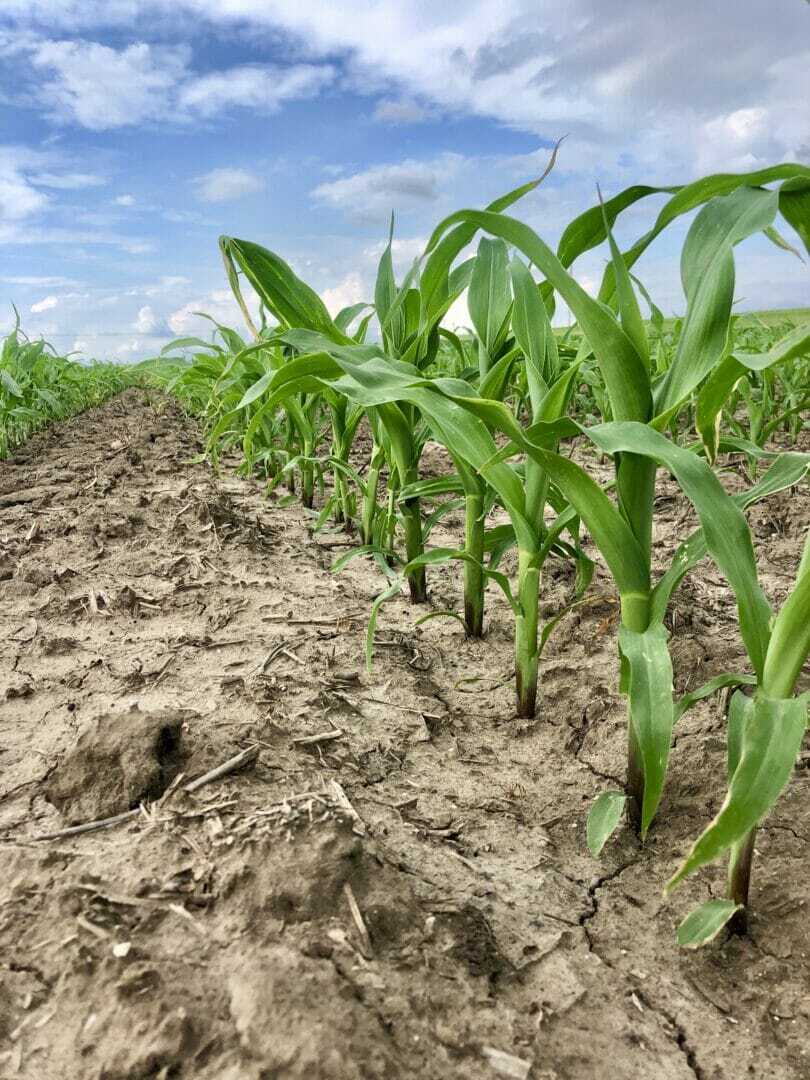
    The Cause & Effect of Greensnap

    IMG 4711

    Greensnap can occur during two of the most rapid vegetative growth stages of corn from V5 to V8 and from V12 to R1. During a corn’s rapid growth stage, internodes elongate and become susceptible to breaking off. From V12 to R1, a corn plant can grow up to 4 inches per day!

    When greensnap occurs, it happens at the primary ear node which is detrimental to corn yield in the fall. Aside from high winds, other factors can include planting conditions, farm management practices and genetics of the corn plant.

    When corn plants are in their first stage of rapid growth from V5 to V8, post-emergence herbicide is often applied. Growth-regulator herbicides can play a negative role in the integrity of the plant structure for short time after application. This combined with rapid plant growth weakens plant structure leaving it susceptible to greensnap.

    Here are three suggestions to manage for greensnap in future crop years:

    1. Choose hybrids that have strong plant characteristics. We suggest selecting hybrids with above average root strength, stalk strength and disease resistance.
    2. Take a second look at your herbicide management plan, specifically time of application or reduction of growth regulator herbicides.
    3. Set your corn crop up for success from the beginning of the season by planting into a favorable seed bed at the appropriate seed depth. Give the seed a chance to establish a strong nodal root system to help withstand harsh weather through the growing season.

    If you have questions on selecting the right hybrid for your field, let us know. We can connect you with one of our product specialists to ensure the right seed is placed on the right acre. This is the first step you can do to protect your corn crop from greensnap.

    Laura Cunningham

    July 23, 2019
    Agronomics, Corn, Crop, Growth Stages, Season, Summer, Tech Tuesday
  • Latham Hi‑Tech Seeds

    Early Season Fungicides

    Greg 1

    This year we have seen slow early growth, reduced tillage, persistent rain and heavy storms. We have also seen an increase in corn-on-corn acres and other agronomic challenges. All these problems can add up to more inoculum in the field and poor overall health leaving plants more susceptible to infection. The early season diseases we think about with corn are typically Anthracnose and seedling diseases (V2-V8); however, Gray Leaf Spot, Northern Corn Leaf Blight, Goss’s Wilt, Southern Rust and Tar Spot can all show early foliar symptoms (V8-R4). Its important to note that bacterial diseases like Goss’s can’t be controlled with a fungicide.

    There is very little economic support for early season fungicide application. Depending on the individual fungicide, you may see protection against disease for anywhere from 7 to 21 days. Be sure to check the label for specifics on how long they retain efficacy on the crop. If your focus is on Anthracnose, you may stave off the leaf blight phase of the disease, but this doesn’t mean that the stalk rot phase of the disease won’t infect the plant late season.

    It’s also important to remember that coverage is critical with fungicides. This not only means good coverage during your spray operation with correction nozzles, pressure and volume, but it also means that if you spray early in the season, your corn will grow a new leaf approximately every 3-5 days with average GDUs. That new tissue is not protected because fungicides are not very mobile in the plant.

    When to Spray? 

    The best bang for your buck is still going to be around VT to R2 time period because you will be able to suppress diseases that may be present on the leaves and protect them for a few weeks of any diseases trying to get into the plant. Corn is also done putting on new leaves at this point. Typically a 5-8 bu/A yield increase will pay for the investment depending on grain price and application costs. If you are facing heavy disease pressure, be sure to select the right fungicide for the diseases you have. Fungicides with dual modes of action in the Group 3 (Triazoles) and 11 (QoI) will provide suppression and some lasting protection. Look for the active ingredients that end in “ole” (Triozoles) and “in” (QoI).

    If you’re facing the fungicide decision to protect valuable yield in a tough year scout your fields for disease. If you don’t see any issues now, then skip an early application and focus on tassel. Take a look at the susceptibility of that hybrid to the disease you are seeing and then evaluate the weather outlook and if you’re in a corn-on-corn or reduced tillage situation. Lastly, monitor fields closely that had Tar Spot last season

    It has been an interesting year with all the weather components we have had to face. If you have any questions, don’t hesitate to call in to the Latham Office.

    Team Latham

    July 2, 2019
    Agronomics, Corn, Crop, Fungicide, Growth Stages, Season, Summer, Tech Tuesday
  • Latham Hi‑Tech Seeds

    Uneven Corn Stands

    62019

    LIBSYN header 2 01

    Uneven corn stands? Tune in to hear what to watch for next from Phil Long! #AskTheAgronomist
    0:15 — Recap of the growing season
    1:10 — #Plant19 Challenges
    2:36 — Issues with emerging corn: damping off, herbicide damage, ponding or crusting
    4:40 — Yield Repercussions
    6:30 — Managing uneven corn stands

    Laura Cunningham

    June 20, 2019
    #AskTheAgronomist, Agronomics, Corn, Crop, Emergence, Growth Stages
  • Latham Hi‑Tech Seeds

    #AskTheAgronomist: Why is my corn yellow?

    62213534 698949990537269 5317103013469356032 n

    Why is my corn yellow? Tune in to find out!

    1:02– Growing conditions: Saturated soil, cold soil, minimal tillage
    2:32 – Stage of corn recap
    3:28 – Corn root transition phase 
    5:02 – When to act – patience is key!
    6:32 – Pay attention to seeding depth
    7:22 – Mesocoytl recovery
    8:36– Nitrogen or sulfur deficiency
    10:07 – Effects of reduced tillage
    11:21 – Key takeaway

    Laura Cunningham

    June 13, 2019
    #AskTheAgronomist, Agronomics, Corn, Crop, Fertility
  • Latham Hi‑Tech Seeds

    #AskTheAgronomist: Is It Time to Switch Corn Maturities?

    60190993 473775090032290 7744821225855123456 n

    LIBSYN header 2 01

    Is it time? Tune in to hear Phil Long discuss the question of the season. Is it time to switch corn maturities? #AskTheAgronomist

    Map 2 zoomed with key

    Laura Cunningham

    May 30, 2019
    #AskTheAgronomist, Corn, Crop, Flooding, Rain, Season, Spring, Weather
  • Latham Hi‑Tech Seeds

    #AskTheAgronomist: Imbibitional Chilling or Chilling Injury?

    58719974 460225254519200 1315929768486502400 n

    LIBSYN header 2 01

    Will your planted fields be affected by imbibitional chilling? Tune in the hear symptoms of the chilling effect.

    Laura Cunningham

    May 9, 2019
    #AskTheAgronomist, Agronomics, Corn, Crop, Emergence, Frost, Season, Soybeans, Spring, Weather
  • Latham Hi‑Tech Seeds

    Key Dates for Switching Maturities

    Bart 2

    Each day we turn the calendar, I receive more calls from Latham® dealers and farmers asking whether they should change maturities.  Keep in mind, the object is to achieve maximum yield potential for this crop.  When you switch maturities, you forfeit maximum potential and have essentially decided to lower your yield expectations!

    Based on my experiences over the past 40 years – as well as research findings from many Midwest land grant institutions – I can tell you with confidence that full-season hybrids and varieties outperform early maturing hybrids and varieties.  Most people jump the gun and make the switch way too soon.  Corn planted in mid-June can make decent yields, and there’s no need to switch from corn to soybeans until after that.

    There becomes a point in time where the advantages of planting a full-season hybrid diminishes to the point where shifting to a shorter-season hybrid or variety will generally result in drier corn and higher yields come fall.  Below is a summary of factors to consider when deciding whether to switch corn or soybean maturities.

    CORN

    I’ll use northern Iowa and southern Minnesota as an example.  If your maturity range is 98- to 109-days (which is what I use for the Latham Research Farm), then you should generally not deviate from those maturities until at least May 25.  If all you have left to plant is your 98-day hybrids, then you can safely extend your planting window to about June 7-10.  On the other hand, if you only have your 109-day hybrids left to plant, you’ll probably be better off switching to 95- or 99-day products.

    That brings us to the next subject… if you must switch, how early of a hybrid is needed?  You don’t need to take it to extreme and switch from 109 RM to an 85-day hybrid or something equally silly!  Research has proven that it pays to stay closer to your “normal” maturity.  Switch to hybrids that are about 5 to 7 relative maturity units earlier than full season for the region.  Yields in this scenario will be greatly improved if northern Iowa and southern Minnesota farmers (from the example above) move toward a 92- to 95-day hybrid that is more closely adapted to the area.

    The decision to switch maturity with delayed corn planting is difficult because of so many variables including: available GDUs, first frost date and fall drying conditions.  With this in mind, here are some general guidelines for Iowa farmers:

    Location
    within Iowa
    Full Season RM Switch to
    on May 25
    Switch to
    on June 10
    South of U.S. 92 114-117 108-111 105-109
    Central 108-115 104-110 100-106
    North of U.S. 20 100-109 96-105 94-100

    For your convenience, below are few links to related articles: Adjust this information depending on where you farm, but make your decision is based on sound research and not “coffee shop facts.”  Just because your neighbor is switching doesn’t mean it’s the best decision.  Conduct a little research of your own before deciding what might be best for your operation.

    • Soybean Planting Decision Tool by Iowa State University Extension
    • Late Corn Planting Options by Iowa State University Extension
    • Corn Planting Guide by South Dakota State Extension
    • Considerations for Late Planted Corn by North Dakota State University
    • Soybean Planting Date and Maturity Considerations by University of Wisconsin-Madison Extension
    • Considerations for Late-Planted Corn in Minnesota by University of Minnesota Extension

    SOYBEANS

    There is absolutely no reason to start switching soybean maturities until at least mid-June.  I use June 20 as our cutoff here in North Central Iowa, but again, it depends on what you were planning to plant in the first place.  In this area, bean maturities range from 1.8 to 2.7.  L 2482 R2’s are still good to plant in this region until mid-June as we’ve done it before with great results.

    Soybeans have even more resiliency when it comes to maturity stretch.  Because soybeans are more “photo period” sensitive, they actually adjust based on the length of the nighttime.  A planting date of June 20 in southern Wisconsin and June 15 in northern Wisconsin, using early maturing varieties, was considered to be the latest practical date by the University of Wisconsin.  Soybeans can be planted in our area as late as the Fourth of July with decent yield results as long as we don’t go into a dry period.

    The 2019 planting season will certainly test our patience!  It’s tough to turn pages off the calendar without putting any seed in the ground, but it’s better to wait a few more days than to mud seed into the ground.  Experts warn that compaction and/or inadequate seed-to-soil contact from planting in wet conditions cause yield reductions for soybean farmers.  During a wet year, it’s even more important for soybean growers to pay close attention to machinery.  Avoiding soil compaction and obtaining good soil closure over seeds will help increase yields.  For more soybean planting tips to boost yields, click here.

    Mark Grundmeier, Product Manager

    May 6, 2019
    Corn, Crop, Rain, Season, Soybeans, Spring, Tech Tuesday, Weather
  • Latham Hi‑Tech Seeds

    Planting Tips with Snow in the Forecast

    57251394 376280106561983 3185295454933876736 n

    LIBSYN header 2 01

    Join us this morning on #AskTheAgronomist as we discuss pertinent planting tips with the recent addition of snow in the forecast. #LathamSeeds

    https://www.facebook.com/LathamSeeds/videos/376269313229729?sfns=mo

    Laura Cunningham

    April 25, 2019
    #AskTheAgronomist, Corn, Crop, Frost, Season, Soybeans, Spring, Weather
  • Latham Hi‑Tech Seeds

    Cutting Costs in Production

    IMG 2324

    Planting ROIAs prices have dropped over the last two months, farmers are second guessing planting intentions. They are looking to cut costs, and often times cost cutting starts at cutting seed costs. Keeping the hybrids with top yield and proven performance versus picking up a cheaper option is key to end-of-year profit. Cheap seed options can be older genetics, poor performing genetics or even discontinued genetics reaching the end of their life and viability.

    It doesn’t take much to make up for inferior genetics as in perceived seed savings. Cutting $50 a bag is only saving $20 an acre, or roughly seven bushels. One cost savings that may be applicable to North Dakota farmers would be changing from a VT2 PRO to a Roundup Ready 2 trait. Keep the genetic that performs on that particular field and save the difference in trait costs. However, It may require more attention to pests throughout the growing season and an additional cost of an aerial application with insecticide. Check with your Latham® dealer on availability and your agronomist about the rising potential for future pest issues in your area.

    Farmers can add fertility after the crop is established. They can also add weed control after the crop. However, there’s only once chance to place the right seed on the right acre. Seed is truly the foundation for every successful crop. Why limit net farm profitability from the onset?

    Laura Cunningham

    April 17, 2019
    Agronomics, Corn, Crop, Industry News, Season, Seed Technology, Spring, Winter
  • Latham Hi‑Tech Seeds

    Select Plant Genetics to Help You Manage Risks

    IMG 6880

    IMG 6880Webster’s Dictionary defines “risk” in many ways, including a chance that an investment will lose value or something that creates a hazard.

    No matter how one defines risk, it’s a reality of production agriculture. Each decision farmers make comes with varying degrees of risk. That’s why it’s helpful to take an annual inventory of details in your own crop production. Bottom line: Check your production-limiting factors to set yourself up for success.

    “Trust but verify,” is a famous quote by President Ronald Regan that appeals to my data-driven personality. This quote applies to crop production because now is a good time to verify that the seed corn you ordered early is the right hybrid for the majority soil type on the field in which you will plant it. Now is also a good time to ensure you have enough genetic diversity in your crop plan. On page 12 of Latham Seeds 2019 Product Guide, there is a corn placement chart to help you verify that the genetics you have selected for that soil type is the best fit.

    Margins are super tight, and we’re looking for ways to cut costs. If we cut fertility, we risk losing potential yield. Many researchers suggest that up to 60% of yield is dependent upon fertility. If we plant inferior genetics, or place the genetics on the wrong soil type, we run the risk of yield reduction. While this is a review for most, my point is that plant genetics are critical to managing risk.

    Understanding – and acknowledging – the depth of the genetics will pay dividends. I’m a very big believer in planting agronomically-stable products on a percentage of your acres. As margins thin, I look for hybrids with proven stability. I know each farmer has his or her own beliefs, but one thing we have in common is that we’re all trying to manage risk.

    Some risks are outside our control, but we can reduce risk with our input choices.
    • Disease– Select hybrids with superior disease resistance, especially to foliar leaf diseases, if you aren’t planning on investing in a foliar fungicide.
    • Drought– Plant a portfolio of seed products, including planting a percentage of your total acres to a hybrid with unapparelled drought tolerance. It’s about building a system of risk management and finding that delicate balance of hybrids to give you the best “team” possible.
    • Fertility– Some hybrids use nutrients more efficiently than others. Suggestions are shown in the Latham® product guide, and you can talk with your Regional Sales Manager (RSM).

    My hope is that you go into the spring planting season with a sense of confidence, knowing you have done the best job you could with product selection, product placement, fertility and planting conditions. Have a little fun this season and remember to take care of yourself, too!

    April 15, 2019
    Corn, Crop, Industry News, Season, Seed Technology, Spring, Tech Tuesday
Previous Page
1 … 16 17 18 19 20 … 37
Next Page

Latham Hi‑Tech Seeds

131 180th Street | Alexander, IA 50420

(641) 692-3258

SIGNUP FOR OUR NEWSLETTER
  • Contact
  • Legal
  • Seedware Login
  • Latham Gear

© 2026 Latham Hi‑Tech Seeds. All rights reserved. | Privacy Policy

Latham® Hi-Tech Seeds is a trademark of M.S. Technologies, L.L.C., 103 Avenue D, West Point, IA 52656.