Latham Hi-Tech Seeds

(641) 692-3258

  • Home
  • Products
    • Corn
    • Soybeans
    • Alfalfa
    • Corn Silage
    • Seed Guide
  • Performance
  • Find a Rep
  • Media
    • Blog
    • News
    • Videos
    • Podcasts
    • TECHTalk
  • About Us
    • Company History
    • Our Mission
    • Careers
    • Become a Rep
    • Sowing Seeds of Hope
  • Contact Us
  • Latham Hi‑Tech Seeds

    Green Stem Syndrome in Soybeans

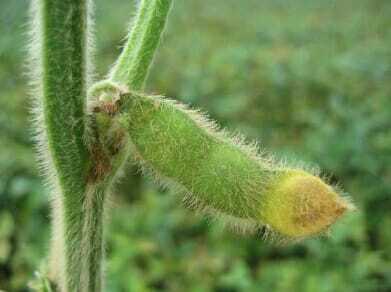
    Bean drought1
    Photo courtesy Shaun Casteel, Purdue University

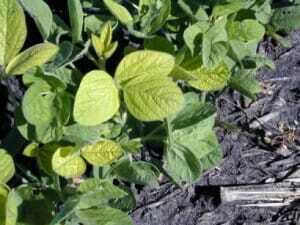
    Drought stress during the growing season contributed to the Green Stem Syndrome in Soybeans that’s apparent in certain fields this fall. In some areas, pods and/or seeds were aborted. Plants that abort pods or seeds then redistribute sugars and nutrients, thereby increasing the concentration of photosynthate in the stem and causing it to retain the green color longer.

    Harvesting soybeans with green stems can be a challenge. Green stems are difficult to cut and are known to plug up combines, so combine operators must proceed at slow speeds – and with caution. Combine must be properly adjusted, and the cutting knife must be sharp.

    Sometimes just certain areas of a field – mostly low-lying areas or areas protected by shelter belts, groves or buildings – may be affected by Green Stem Syndrome. In some cases, local soybean growers went around these areas and will come back to harvest them at a later date.

    Depending on the severity of the green stem syndrome, certain soybean fields may need a killing frost before they’re harvested. However, waiting for such a frost may lead to additional yield loss if pods shatter during harvest. Fields should be monitored and harvested according to moisture content.

    About 90% of the green stems I’ve seen in my lifetime are caused by some environmental issue. Diseases also can cause it. However, other factors like herbicide injury or nutrient deficiencies are not usually a major factor.

    Webspec Admin

    October 1, 2012
    Agronomics, Crop, Disease, General, Soybeans
  • Latham Hi‑Tech Seeds

    Dispelling Myths about Seed Treatments

    by John Toft, CCA in Nebraska and Iowa
    Latham’s Regional Sales Manager in Nebraska

    There is a common belief that seed treatments only pay when we experience colder, damper conditions at planting time. This past winter was mild with relatively little spring snowmelt. We also experienced unseasonably warm temperatures in March and April, which contributed to warmer, dryer conditions at planting time. As a result of weather and soil conditions at planting , many farmers opted not to treat their soybeans last spring.

    Today I’d like to encourage you to view seed treatments differently. Instead of viewing seed treatment as an input cost, consider seed treatment as an insurance policy.

    Why wouldn’t you want to protect a crop that’s worth more than $17 per bushel?

    Insect pressure across the nation is at an all-time high, and if we can prevent that early plant feeding, we can add multiple bushels. By design, seed treatments protect the seedling plants until they have a fairly well-established root system. Almost all seed treatment insecticides belong to the neo-nicotinoid family of products. They do a great job of controlling insects while the plant is in the seedling stage, the effect soybean treatments have on soybean aphids longer lasting. Aphids are such fragile insects that it doesn’t take much of the chemical to kill them, so we see aphid control last from 40 to 50 days after planting.

    Fungi are another factor hindering bean yields. Because producers are planting earlier each year, seed treatment provides added protection. Seed treatments also help protect against nematodes, which are becoming more prevalent. Many fully-loaded treatments may have innoculants, micronutrients or plant food.

    There are many new technologies that chemical companies are bringing forward. This offers the producer better controls, and more importantly more freedom within their operations.

    Latham Hi‑Tech Seeds has treatment packages that offer a broad spectrum of control. SoyShield is Latham’s fungicide-only package, and SoyShield Plus contains fungicide and insecticide. The best part is, it takes less than a bushel of soybeans to pay for the cost of treatment!

    Latham’s Early Order program makes seed treatment an even better value. Contact your local Latham® representative or contact the company directly at 1-877-GO-LATHAM (1.877.465.2842).

    Team Latham

    September 27, 2012
    Agronomics, General, Seed Treatment
  • Latham Hi‑Tech Seeds

    Take a Walk through Time

    Through a series of weekly video blogs, Latham Forage Products Manager, Corey Catt shows how corn has evolved through time. Last week Corey introduced us to wild teosinte, which originated in Mexico and dates back to 5,000 B.C.

    This week Corey continues his walk through time, showing how early corn varieties have been refined through many years of good breeding. Take a look – you might be surprised to hear him mention “gourd seed.”

    Related Posts:

    • Virtually Walk Through Our Genetic Garden
    • Genetic Garden Shows How Different Types of Corn React to Drought
    • Corn as High as an Elephant’s Eye
    • History is growing in Alexander

    Team Latham

    September 17, 2012
    Agriculture, Agronomics, General, Industry News
  • Latham Hi‑Tech Seeds

    Best Management Practices for Drought

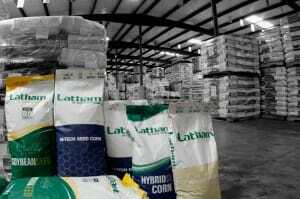
    LathamBags

    Dry growing conditions in 2012 are prompting questions this fall about soil fertility, herbicide carryover and seed product selection. Implementing best management practices this fall will help reduce stress for crops next spring.

    Conserve Soil Moisture
    When soils are dry, farmers must conserve remaining moisture. This may mean holding off on disking and cultivating, so as not to let moisture escape in the process. Keeping the harvested crop’s residue on the ground’s surface also will help conserve soil moisture.

    Test for Herbicide Carryover
    Herbicide breakdown may be slowed greatly in drought conditions. The best time to test for carryover is between late October and mid-November. By this time, soil temperatures remain below 50° F – a point at which herbicide breakdown is minimal. If you take residue samples before this time, herbicide levels could be greater than those that will be present at the time of 2013 planting.

    Select Seed Products
    Since dry conditions could increase the chances of herbicide carryover, farmers may want to select seed for 2013 with greater tolerance to the herbicide used during the 2012 drought year. Another option might be to alter your crop rotation to avoid planting a crop susceptible to the herbicide used.

    Whether you want to plant corn, soybeans or alfalfa – Genuity® Roundup Ready 2 Yield® or LiberyLink®, SmartStax® RIB Complete, Herculex® XTRA or Agrisure® GT – Latham Hi‑Tech Seeds has the products and our trait packages to fit your needs. Call your local Latham® rep or 1-877-GO-LATHAM (1-877-465-2842). The time is now to plan for the 2013 growing season!

    Webspec Admin

    August 30, 2012
    Agronomics, Drought, General, Weather
  • Latham Hi‑Tech Seeds

    Kinze Has ISOBUS Electronics Capability

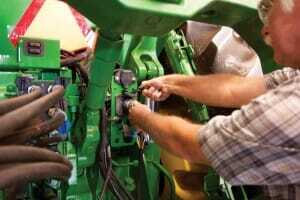
    KINZE Plugnplant closeup

    guest blog post by Rhett Schildroth, Product Manager at Kinze Manufacturing

    Kinze Has ISOBUS Electronics Capability
    Plug and play operation with ISOBUS-equipped tractors

    There is much confusion in the marketplace about the compatibility of monitor technology between tractors and planters of different brands. I’d like to offer some facts to farmers who have questions about compatibility.

    Kinze Manufacturing, Inc. now has ISOBUS compatibility. This capability allows easy “plug and play” operation with any ISO-compatible tractor, including those sold by John Deere with GreenStar™Displays. With this interconnectivity, farmers do not have to change monitors, displays, wiring harnesses, or electrical connectors with different implements.

    ISO monitor

    from different manufacturers. The vehicle and equipment electronics speak the same language, enabling simpler operation than ever before. With ISO compatibility, one monitor in the tractor cab can run both the planter and the tractor, saving room in the cab and money on a second monitor, not to mention the time it takes to install a second monitor.

    Kinze’s technology means any ISOBUS-equipped tractor can be quickly connected to our planters using the ISOBUS standard tractor/implement connectors. The user interface presented to the operator is the same, regardless of the brand of tractor or virtual terminal. Additionally, all planter settings are saved on the planter, so switching between tractors becomes a non-issue.

    This technology will make life easier for farmers. We understand the importance of enabling efficiency, and ISO-compatibility will make a difference in giving more time back to farmers.  We understand that electronics can be confusing, and ISO-compatibility will simplify vehicle and implement electronics.

    To find out more about this issue, please attend my presentation on Saturday, Aug. 25 at the Latham Country Fair.

    About the author:

    Rhett has been in the ag equipment industry for almost twenty years. A graduate of Iowa State University, he started his ag career as an engineering consultant with clientele that included CNH and John Deere. He joined John Deere fulltime in 1998 to help them grow their precision farming group. In 2006, Rhett left John Deere to join Topcon Positioning as their Director of Ag Engineering. Topcon is a provider of ag electronics to many large ag equipment manufacturers, including AGCO.

    Rhett Schildroth is currently the Product Manager at Kinze Manufacturing. In this role, he works closely with the Kinze management team to determine how Kinze products should evolve to meet the changing needs of farmers both in America and across the globe. As part of this work, he also leads the autonomous tractor project at Kinze.

    Team Latham

    August 20, 2012
    Agronomics, General, Precision Ag
  • Latham Hi‑Tech Seeds

    Genetic Garden Shows How Different Types of Corn React to Drought

    Genetic Garden Shows Drought Stress1

    by Rachel Norby, Seed-2-Soil® Summer Intern

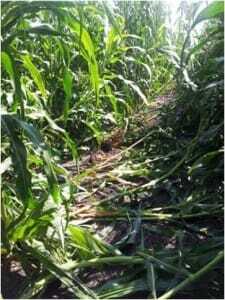
    As you drive through the countryside, it’s evident that different corn hybrids are handling the drought stress differently.  Some hybrids have stronger roots and stalks, so they’re holding up better in these dry conditions.  Other hybrids have weaker stalks and are lodging.

    Latham Hi‑Tech Seeds’ Genetic Garden shows how corn from many different eras is reacting to the drought conditions.  You can see how much better today’s hybrids can withstand the high heat and low moisture than their early ancestors.

    Genetic Garden Shows Drought Stress

    Although minimal irrigation was used to keep our “living museum of corn” alive for the Latham Country Fair on August 25, many varieties still reacted to the drought.  You’ll see lodging in many early varieties.  (NOTE:  “Early” is being used here to reference the chronological history corn of varieties, not as in the relative maturity of hybrids.)

    Open-pollinated corn varieties grown during the Dust Bowl of the 1930s didn’t pollinate then, and you’ll see the same thing happened in our Genetic Garden.  A corn variety found in the Genetic Garden from around the time of the 1988 drought is also showing signs of stress.  One of the differences in the droughts of 1988 and 2012, however, is there was less rainfall during the months of April to June in 1988 than we received in 2012.  This lack of rain during that quarter of the year meant more stress on crops during early season growth compared to this year when the majority of the stress happened around the time of pollination.

    We’d like to invite you to see the differences for yourself!  Take a walk through our “living museum of corn” on Saturday, Aug. 25, during the Latham Country Fair.  We’ll be hosting tours between 9 a.m. and 3 p.m.

    Gary Geske

    August 13, 2012
    Agronomics, Corn, Crop, Drought, General, Industry News, Seed Technology, Weather
  • Latham Hi‑Tech Seeds

    Corn as High as an Elephant’s Eye

    RachelWithCorn1

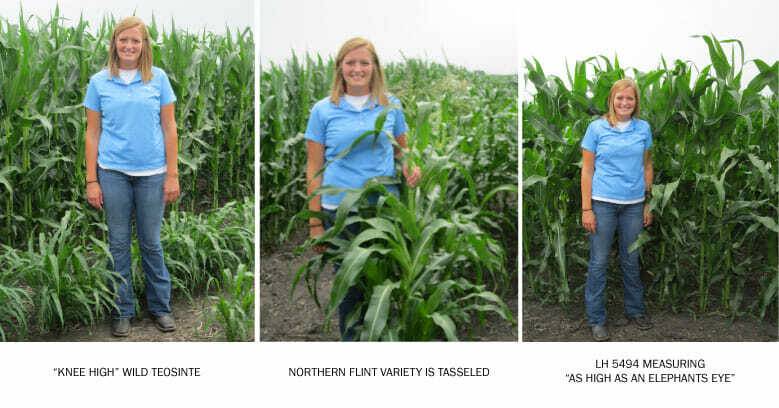
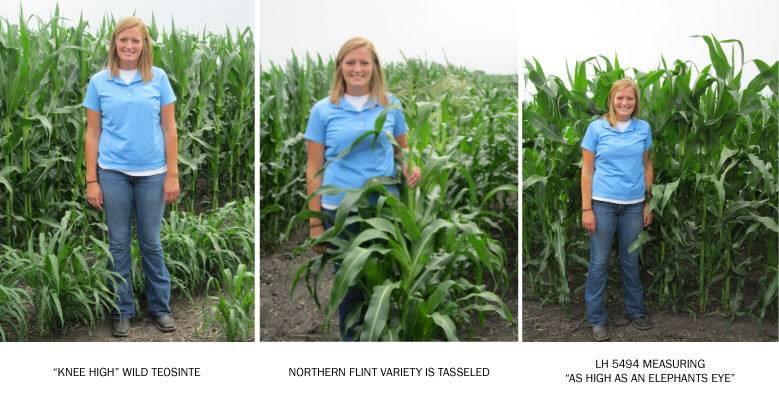
    “Knee high by the Fourth of July” was an expression used for many years by Midwest farmers, indicating their corn crop was expected to yield well if those “knee-high conditions” existed.  These days the lyrics, “The corn is as high as an elephant’s eye,” from the song Oh, What a Beautiful Morning from the 1943 musical Oklahoma! by Rodgers and Hammerstein, is more accurate.

    This year you could even describe much of the corn crop as “high as an elephant’s eye and tasseled by the Fourth of July.”  But a walk into Latham’s Genetic Garden will show you just how much corn varieties and hybrids have evolved from the 19th Century until now.

    On July 4th we saw corn plants of every size: ankle high, knee high, head high and even some that had tasseled.  Temperate teosinte, one of the first ancestors of corn, is about knee high.  Wild teosinte is measuring around knee high.  Northern flint, a red dent corn is tasseled.  Current hybrids like LH 5494 3000 GT are “as high as an elephant’s eye.”  This truly shows the evolution of hybrids at Latham Hi‑Tech Seeds.

    Many of the varieties aren’t equipped to handle the hot, humid and dry weather we have seen.  Because the weather we’ve experienced this growing season is starting to take a toll on the Genetic Garden, we’ve begun to irrigate it.

    Look to TheFieldPosition.com for continued updates on the Genetic Garden.  We’d also like to invite you to see it for yourself!  Take a walk through our “living museum of corn” on Saturday, Aug. 25, during the Latham Country Fair in Alexander, Iowa.

    Gary Geske

    July 9, 2012
    Agronomics, Corn, Crop, General
  • Latham Hi‑Tech Seeds

    Iron Chlorosis is Serious Threat to Soybeans

    Ironcholorsis

    I’ve received an unusually high number of calls this spring from people, who have noticed all the “yellow soybean fields.” These fields are exhibiting Iron Deficiency Chlorosis (IDC).

    Contrary to popular thought, IDC is not a disease as there are no pathogens, fungi or viruses that can be blamed for this condition. Rather, IDC is a function of the soil type common in the area we call the “Des Moines Lobe.” This area covers most of Central Iowa, continuing north into Minnesota and even further north and west into the Red River Valley region. These soils typically contain some areas that are poorly-drained and also have higher-than-normal pH values.

    This is one of the worst years for IDC in recent memory. Unfortunately, once IDC is noticed in a field, it’s too late to really manage it properly this season. Avoid applying chemicals on these areas that will damage the already-stunted and chlorotic plants. Then be proactive when choosing future soybean varieties for these fields.

    Iron chlorosis symptom – soybean. Photo © John E. Sawyer

    There is no such thing as complete resistance to IDC, however, some soybean brands (i.e. varieties) are better than others at handling this condition. Because Latham Hi‑Tech Seeds is headquartered right in the heart of North Central Iowa where Iron Chlorosis is a familiar challenge to us, we have always tried to choose soybean genetics that have the best possible scores against this condition.

    Latham® soybean brands like L1585R2, L1783R2, L1985R2 and L2183R2 have all demonstrated that they belong in this elite class of defensive products that are designed to give the best possible performance under some of the toughest conditions that our soybean seed customers run into. This is just one more example of our commitment to bringing the highest performing seed products with the best trait values to all of Latham Country!

    Webspec Admin

    July 2, 2012
    Agronomics, Crop, Fertility, General, Soybeans
  • Latham Hi‑Tech Seeds

    Potassium Deficiency is Growing Problem in Corn

    DeficiencySymptoms
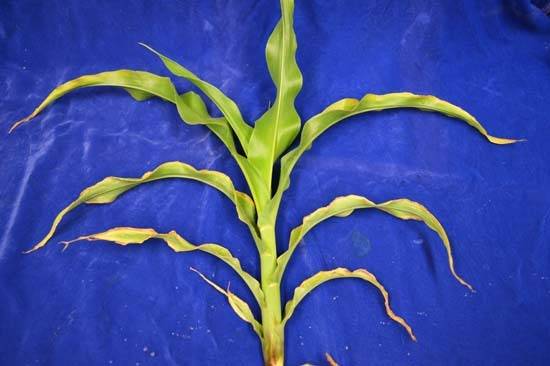
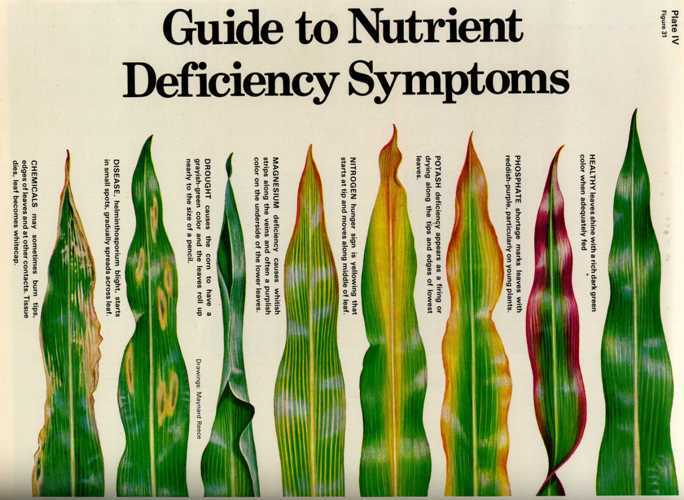
    Potassium deficiency symptoms in corn develop on the edges of older leaves, typically starting at the tip, while the new growth appears normal. (Photo courtesy of the University of Illinois Plant Clinic.)

    While walking fields recently, I’ve seen corn leaves that are yellowing around the leaf margins.  The yellowing starts at the tip of a leaf, extending along its edges to the base of the leaf.  In more severe cases, the edges are brown.

    Corn and soybeans are showing signs of potassium deficiency this growing season. Most of the potassium deficiency I’ve seen so far this season is not due to planting in too-wet soil conditions or compaction, although this certainly could be a reason in some cases.  Instead, I’m seeing more potassium deficiencies where there is an extremely dry soil surface and where root activity has been slow.  Dry conditions typically limit root growth, which explains why soils can have good levels of potassium but nutrients don’t get to the plants.  It also helps explains why, in some fields I have observed, the K deficient symptoms are occurring in the best-drained soils in the field while the more poorly drained areas look better.

    Dry surface soils express K deficiency most often.  Ridge-till, no-till situations and side wall compaction will sometimes show symptoms in dry years.  Irrigation or simply rainfall is a great way to jumpstart the root systems and help the plant develop through the K deficiency.

    It’s important to understand why if and why there is a potassium deficiency because K is an essential nutrient for plant growth that has a large impact on overall yield.  Potassium controls transpiration and respiration, as well as the uptake of certain nutrients including nitrogen and magnesium.

    Photo courtesy of www.omafra.gov.on.ca

    The type of nutrient deficiency determines soil management strategies.  Some people side-dress potash or various forms of K.  Others try foliar products.  One word of warning is that some of these products can be harmful to the plant at certain stages of growth.  A grower should select a low salt form of K and avoid anything with KCl or KSO4 for foliar applications.  A better and safer means is to address the situation by applying potassium before planting 2013.

    Walk your fields now and note where you’re seeing signs of potassium deficiency, so you can be sure to test and possible treat those areas before the 2013 crop is planted.  Another leaf tissue sample can provide helpful information, too.  You can see if there are other nutrient deficiencies in your field.  Tissue sampling is one service provided through Latham’s Seed-to-Soil program.

    Team Latham

    June 28, 2012
    Agronomics, Corn, Crop, Fertility, General
  • Latham Hi‑Tech Seeds

    Corn Rootworm in Northeast Iowa

    Corn Rootworms have arrived in Northeast Iowa nearly three weeks prior to normal years. Farmers are urged to be diligent in scouting fields and monitoring pressures in the coming weeks. For more information, tune into Nick Benson’s most recent YouTube video:

    http://youtu.be/TLNYMhaw-u4

    Team Latham

    June 24, 2012
    Agronomics, Corn, Crop, General, Insects
Previous Page
1 … 53 54 55 56 57 … 67
Next Page

Latham Hi‑Tech Seeds

131 180th Street | Alexander, IA 50420

(641) 692-3258

SIGNUP FOR OUR NEWSLETTER
  • Contact
  • Legal
  • Dealer Center
  • Seedware Login
  • Latham Gear

© 2025 Latham Hi‑Tech Seeds. All rights reserved. | Iowa Web Design by Webspec | Privacy Policy

Latham® Hi-Tech Seeds is a trademark of M.S. Technologies, L.L.C., 103 Avenue D, West Point, IA 52656.