Latham Hi-Tech Seeds

(641) 692-3258

  • Home
  • Products
    • Corn
    • Soybeans
    • Alfalfa
    • Corn Silage
    • Seed Guide
  • Performance
  • Find a Rep
  • Media
    • Blog
    • News
    • Videos
    • Podcasts
    • TECHTalk
  • About Us
    • Company History
    • Our Mission
    • Careers
    • Become a Rep
    • Sowing Seeds of Hope
  • Contact Us
  • Latham Hi‑Tech Seeds

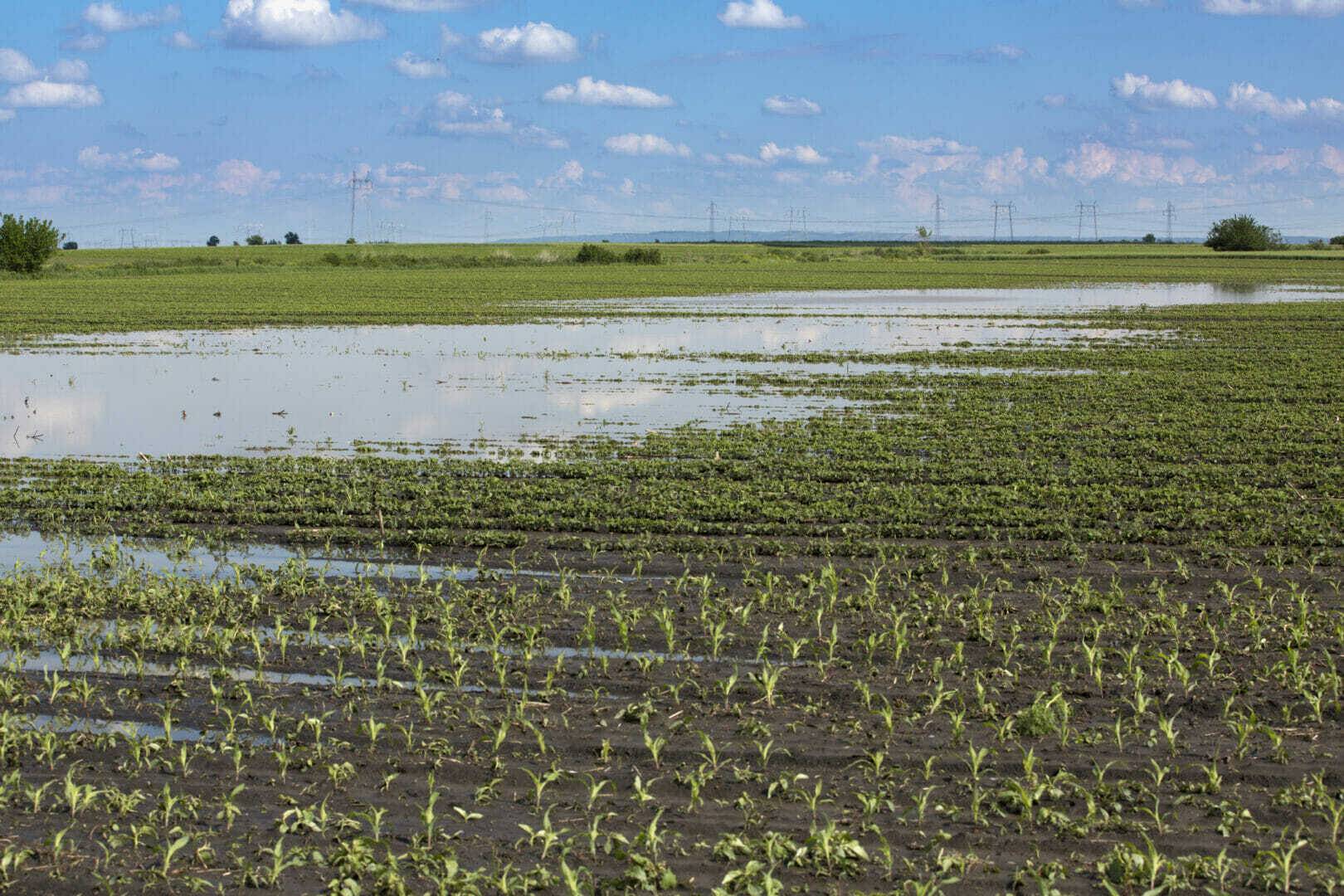
    Flooding and Saturated Soils

    Agricultural disaster, flooded corn maize crops.
    Agricultural disaster, flooded corn maize crops.
    iStock Photo

    For corn and soybean plants before and after emergence, flooding and saturated soils can jeopardize yield. Germinating seeds require oxygen to survive. After the first 48 hours following a heavy rain or flooding event, oxygen levels in the soil will become entirely depleted and prevent seeds from germinating and continuing to grow.  

    Yield loss for corn and soybeans depends on the duration of the flooding event and at what growth stage it occurs. The longer a plant is submerged or growing in saturated soil, the less likely it is to survive. Generally, smaller seedlings with lower stamina are less likely to survive following a heavy rainfall event compared to larger seedlings. 

    Warmer temperatures are associated with higher growth rates, and as a result, a higher amount of oxygen is used. When temperatures exceed the mid-70° range, survival may not exceed 24 hours following the heavy rainfall event. 

    Effects on Corn Plants 

    Before V6, the growing point is below ground and damage from flooding is more likely to impact yield or kill the plant.  After V6, corn plants fair better in saturated conditions if some of the plant is out of the water. However, the higher temperatures can speed up respiration and oxygen requirements, leading to more plant damage compared to cooler temperatures during a flood event.  

    Nitrogen loss is another way flooding impacts corn yields. Corn consumes two-thirds of its nitrogen by the start of the reproductive stage and relies on a functional root system. If a flooding event compromises plant roots, yield can be reduced significantly. Research from Iowa State University found that a 30-inch corn plant that had been flooded for 48 hours with minimal nitrogen uptake experienced a 20% reduction in yield. Flooding can also promote seed decay, crazy top that exhibits proliferated tassels, stunted ears or completely barren plants 

    Impacts on Soybeans 

    For soybean plants at stages V2 or V3, survival is possible. However, nitrogen fixation can be restricted and reduced yield is still likely. For soybeans submerged for less than 48 hours, yield loss is rarely observed. 

    Once the first bloom appears at stage R1 the number of pods per node will be greatly decreased if sitting in saturated conditions. Wilting, stunting and yellow-leaves will be expressed in damaged or dying soybean plants. Further, research has found that greater yield reduction has been observed in soybean plants grown in heavy clay soils as opposed to silt loam soils.  

    Assessing Outcomes 

    Flooding and prolonged saturated soils pose the greatest threat to young plants that have yet to emerge above ground. As water recedes, any remaining residual mud on corn and soybean plants can reduce photosynthesis. For plants that survive a flooding event, they will be more vulnerable to diseases and stresses over the course of the growing season.  

    The survival outlook for saturated seeds and germinating plants will not exceed four days. Plants that survive after water levels recede will continue to grow within three to five days.  
    Latham Seeds Agronomy Team

    April 1, 2019
    Agronomics, Corn, Crop, Flooding, Soil, Soybeans, Weather
  • Latham Hi‑Tech Seeds

    From the Field Crop Report: May 24

    James 12

    Southeast North Dakota

    Gary Geske

    Cool, wet weather has slowed root development and some plants are showing a yellowing or purplish leaf color. Warm weather should enhance development of the roots. Normally, there is no yield reduction from plant discoloration at this time in the growing season unless it’s fertility driven by low nutrient levels.

    Southeast South Dakota

    Ramie Coughlin

    We have cold saturated soils in Southeast South Dakota on the 23rd of May. Most corn fields are up and can be rowed on a drive by. Unfortunately, when you stop and look closely it, there is a bit of a yellow tint to it. These crops need sunshine and warm temps.

    Northeast South Dakota

    James Keltgen

    Things have really changed in the last week. Many areas received decent levels rainfall, which halted planting. Areas in Central South Dakota are still very dry, and areas in East Central South Dakota are very wet as more than 3″ of rain fell. Cool, cloudy weather slowed growth as you can see slight yellowing in corn. Emergence looks very good and even in corn and many soybeans are starting to crack.

    Northern Minnesota

    Ken Highness

    Ken

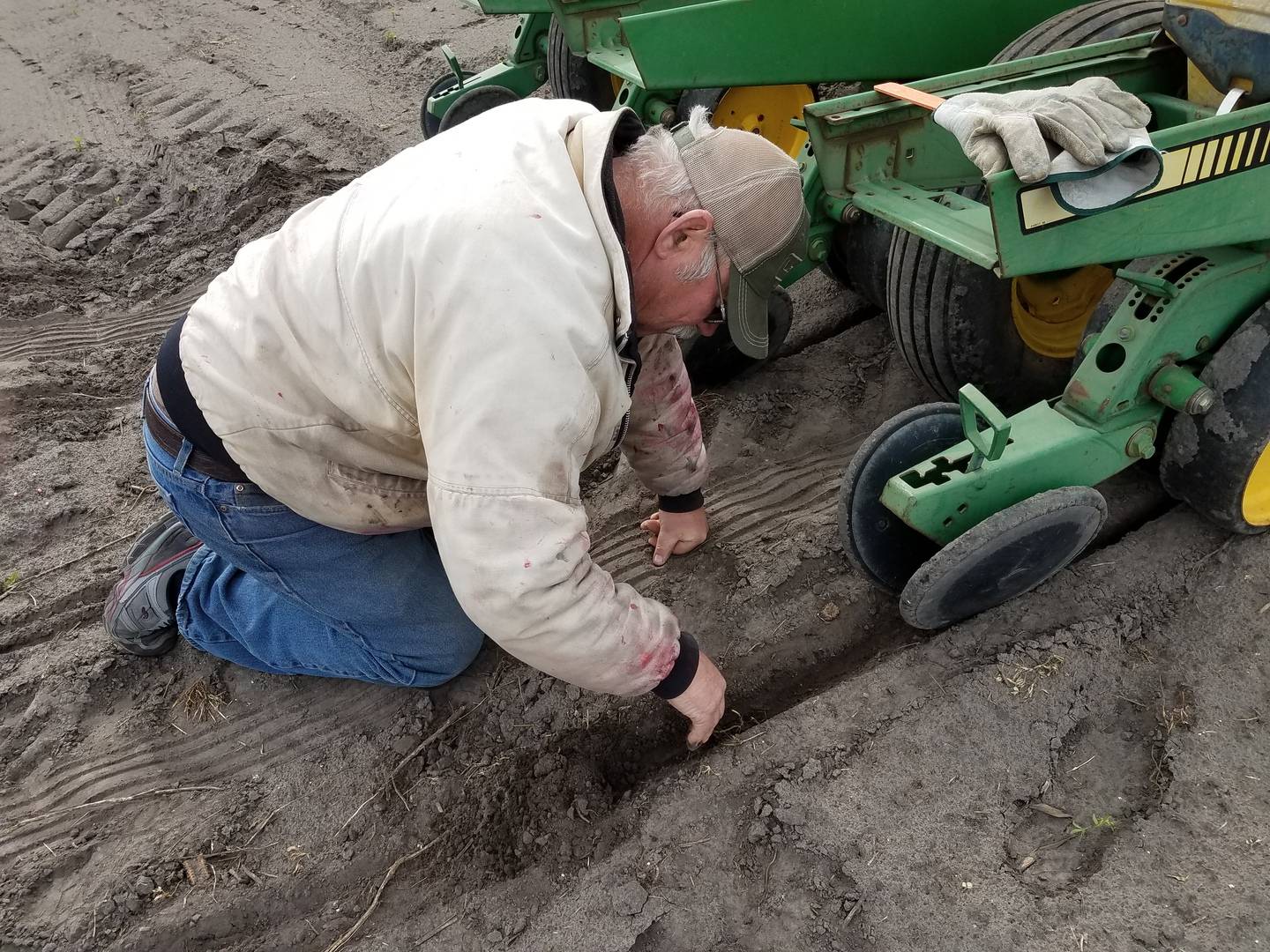
    Gary Geske and I planted Latham’s regional corn and soybean plot on May 23. Gary is pictured here, checking seed depth. The plot is located on the southwest corner of State HWY 10 and State HWY 9 near Glyndon, Minnesota.

    Southern Minnesota

    Brandon Wendlandt

    brandon

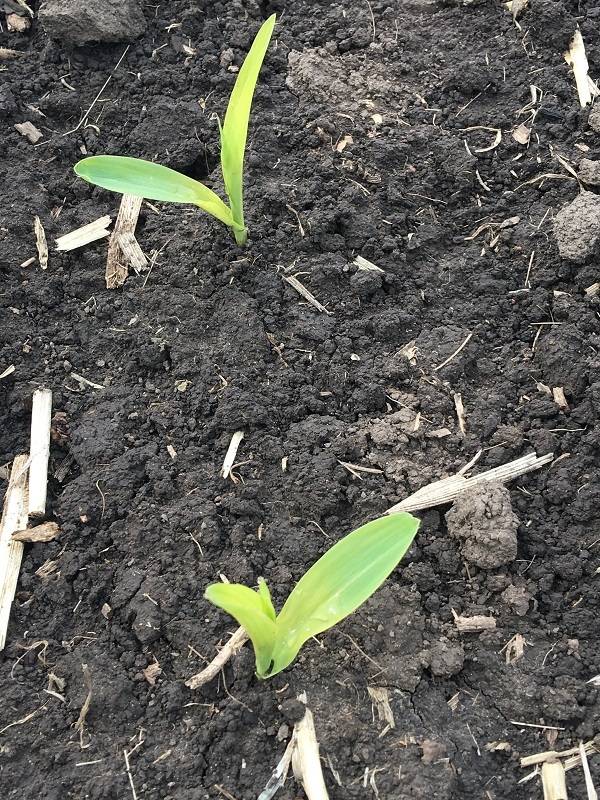
    This field of LH 5095 VT2 was planted April 23. Rain, clouds and low temperatures this past week hasn’t promoted much growth. Once the sun returns, just watch that corn grow!

    Even with our cloudy, cool spring weather we are only running 10 GDU days behind the historic mark for may according to the University of Minnesota Outreach Center in Lamberton.

    Southern Wisconsin

    Greg Mair

    Mair

    If we could get a string of sunny days, corn planting could wrap up in Wisconsin. Sunshine and warmer temperatures are also needed to push along crop development.

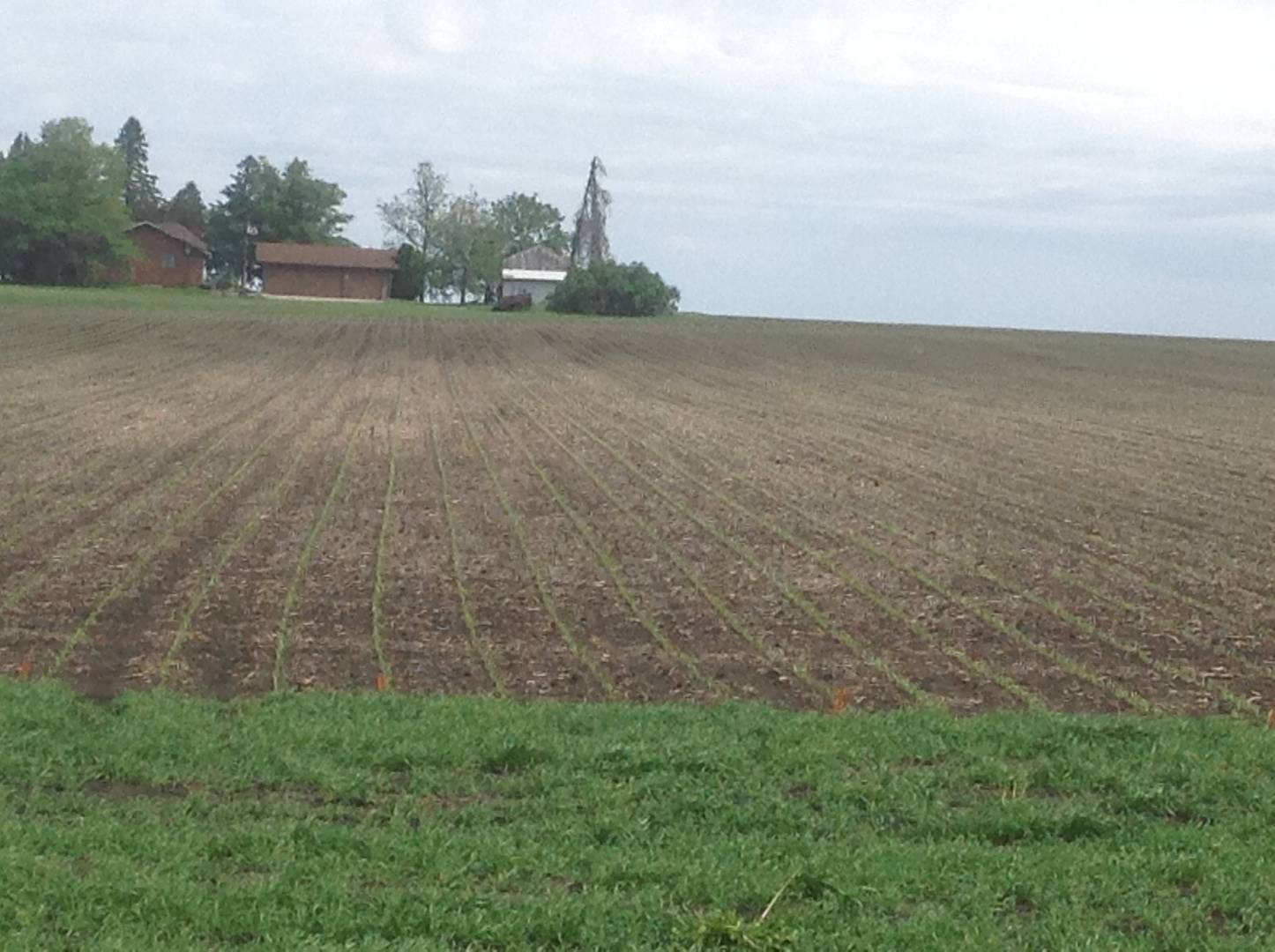
    Latham® Hybrid LH 5099 SS was planted May 8 in Ripon, Wisconsin. This field shows uniform emergence and growth, but that’s not the case everywhere. Unfortunately, cooler temps are hampering growth across the region. 

    With the significant rainfall we have had, it is important that growers get out and walk fields as conditions allow. 

    Call your local Latham seed supplier or RSM at 1.877.GO.LATHAM if you would like a second opinion as to whether replant is needed. Additional tips are available online here.

    Southeast Minnesota & Northeast Iowa

    Craig Haaland

    Craig

    It was a beautiful, sunny day with temps near 70 degrees in early May when Latham dealers Frank and Matt Wyatt of Hudson, Iowa, planted their corn plot. We’ve received a lot of cold, rainy days ever since. Warmer days are in the forecast, so we these crops should turn the corner with sunshine and heat.

    West North Central Iowa

    Bart Peterson

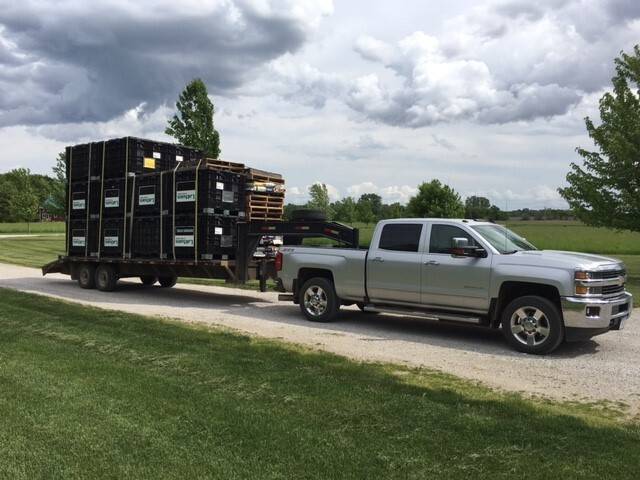
    Due to rotator cuff surgery, Latham® dealer Marvin Beneke needed a helping hand picking up empty hard boxes from his customer’s farms. I thought was quite the neat collection of antiques at one of the stops we made.

    Eastern Iowa

    Jerry Broders

    Craig Christians, Latham Territory Sales manager, rode with me to visit Latham® Dealer Chris Chriss’ farm in western Illinois. Crop scouting and plant evaluation is part of my job at Latham Hi‑Tech Seeds. This plot emerged 8 days after planting.

    Central Iowa

    Bryan Rohe

    Bryan

    Busy time collecting hard boxes and pallets. Few areas talking about replanting as well. Check your fields as soon as possible.

    Western Iowa & Eastern Nebraska

    Larry Krapfl

    Parked equipment is a common site since we’ve experienced 7 days of rain. Fields are too wet to enter. We’re seeing a lot of ponding. With more rain on the way, it’s likely replant will be needed. Click here for replanting tips.

    Northwest Iowa

    Darin Chapman

    Phil Long, technical agronomist manager for Latham Hi‑Tech Seeds, and Darin Chapman, Latham regional sales manager in Northwest Iowa, are performing on-farm research with a multi-hybrid planter while flying our drone. In addition to studying multi-hybrid performance throughout the field, they also studying tillage practices and planter performance using FieldView. These studies will pair well with Latham’s Seed-2-Soil® agronomic services!

    North Central Iowa & South Central Minnesota

    Cory Greiman

    Cory G

    Sourced by usclimatedata.com
    Sourced by usclimatedata.com

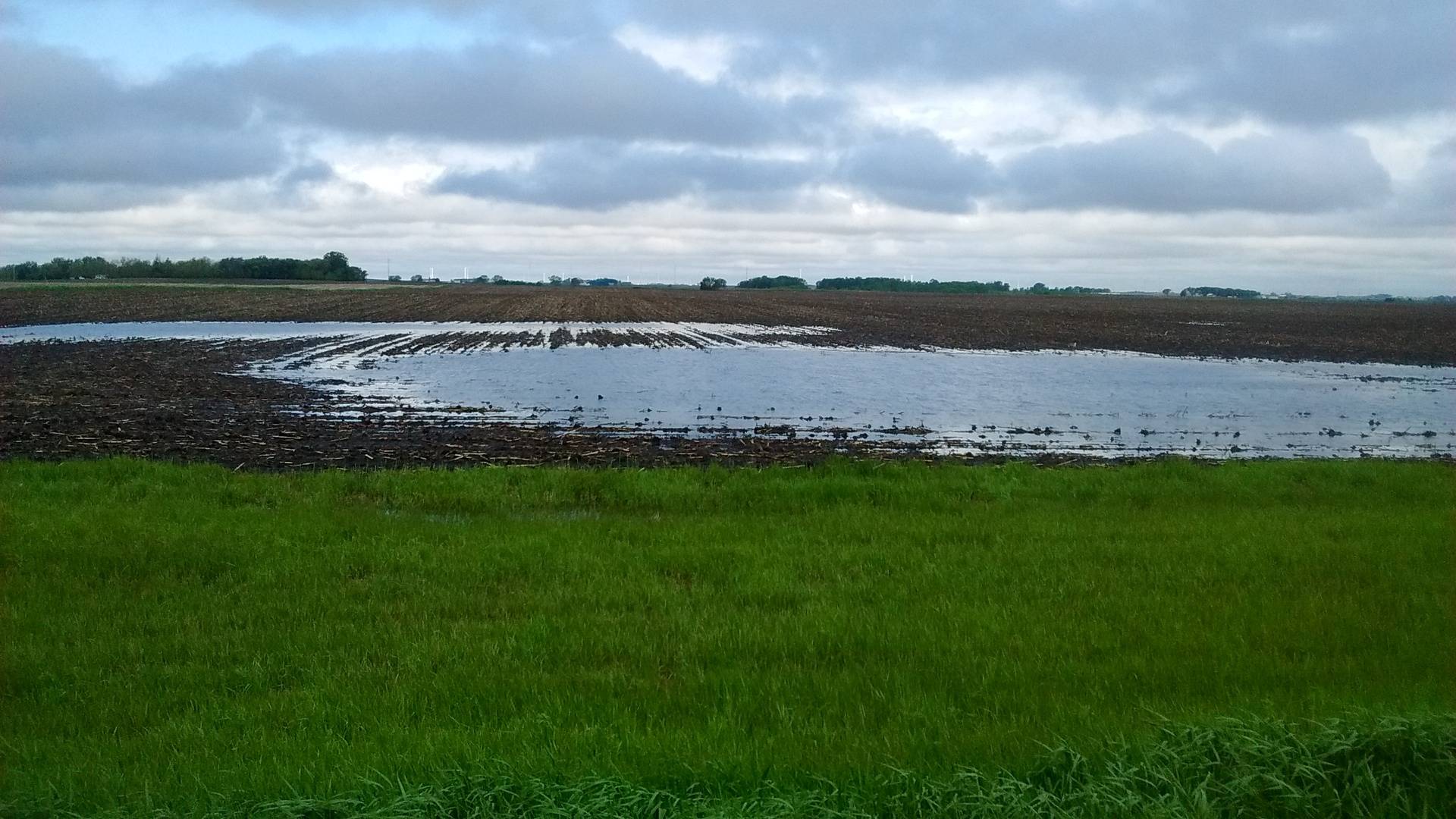
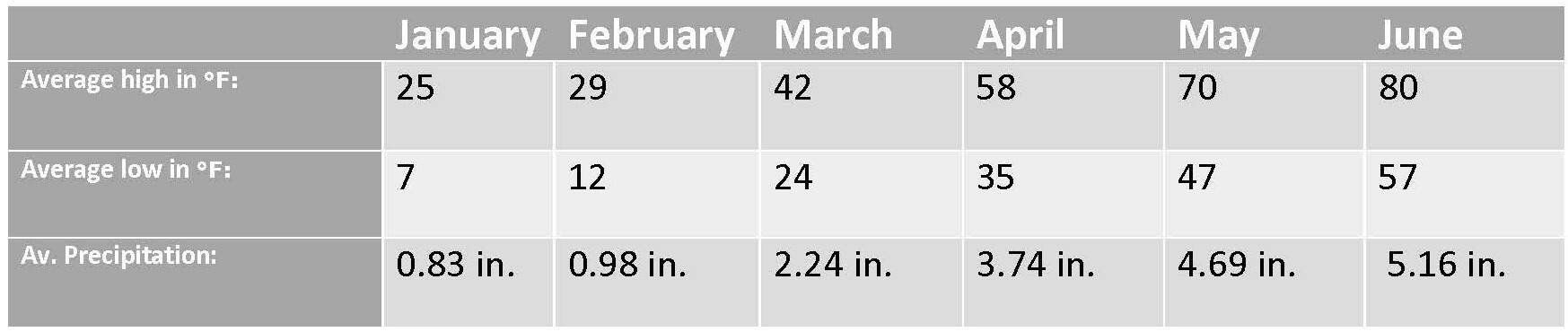
    Due to excessive rainfall, ponding is a common​ sight in fields throughout my territory. More than 16 inches of rain has fallen this season. On average, North Iowa receives about 7.7 inches of precipitation from January through May. Farmers will be busy checking fields and evaluating where replants are needed.

    Eastern North Dakota

    Brain McNamee

    alfalfa

    This is a picture of newly established field of Latham 400HVX Roundup Ready Alfalfa in western North Dakota. This field is very sandy/rocky. Overall, this field is a poor producer with a weed problem. This alfalfa was recently sprayed with Roundup, so we’ll be monitoring it to see how it controls weeds and yields. 

    Webspec Admin

    May 24, 2017
    Corn, Crop, Season, Soybeans, Spring, Weather
  • Latham Hi‑Tech Seeds

    Ask the Agronomist: Replanting After a Freeze

    Ask the Agronomist Feature Photo 01

    Q: My corn was standing about 4 inches tall when we experienced a hard freeze last weekend. Now many of those plants look black, so I’m wondering whether to replant.

    To listen to Mark’s response, click below.

    https://www.lathamseeds.com/app/uploads/2016/05/latham-5_17.mp3


    A: Your newly planted crop may or may not bounce back, depending on its size when it was hit with the hard freeze. The growing point usually is above ground around V-6 to V-7. At this point of development, the corn seedling is about 6 to 8 inches tall, but that depends on the hybrid.

    Regardless of crop size, the best thing to do if your crop was damaged is to wait 3 to 5 days after the freeze to evaluate damage. If corn plants are going to “stand back up,” you should be able to see it by this time. If they plants are still down, you’ll be able to gauge if a total replant is necessary or if you can just replant certain areas.

    You can also dig up a few individual plants from different areas in your field and split them vertically to assess visual damage at the growing point. Typically, seedlings that have more than a 1/2 inch of healthy tissue above the growing point will develop into plants with high yield potential. Seedlings that have more tissue damage will likely not recover.

    Click on the audio link to hear Latham’s senior agronomist and product manager Mark Grundmeier provide more details on the air with farm broadcaster Liz Brown of KOEL.

    If you have a question about what you’re seeing in the fields, feel free to ask! Send your questions via Twitter to @LathamSeeds, in a private message on Facebook or call our office at 1-877-GO-LATHAM (1.877.465.2842).

    Also be sure to check out TheFieldPosition.com for timely agronomic information.  New articles are posted each week day on our blog.  You can even search for “topics” by simply typing key words into the search bar on the upper right-hand corner.

    Thanks for tuning in to this week’s Ask the Agronomist. We’ll be back again next week to field all of your questions during #plant16.

    Webspec Admin

    May 19, 2016
    Agronomics, Frost, General, Season, Spring, Weather
  • Latham Hi‑Tech Seeds

    Note Effects of Frost and Plan Accordingly for Harvest

    Frost damage Soybean2

    Weather is always a concern for farmers – and rightly so. Weather accounts for 70 bushels per acre, or 27 percent, of total yield! In research conducted by Dr. Fred Below, Professor of Plant Physiology at the University of Illinois, weather ranks as the most important factor affecting corn yield.

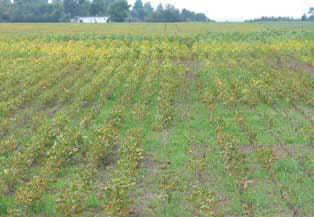
    Corn and soybean crops across Latham Country were affected by a mid-September frost. Effects of the frost appear to be highly variable based on local climate conditions, crop maturity, and topographical features.

    frost damage Soybean2If you haven’t yet already done so, now is the time to scout crops affected by frost and prioritize fields for harvest. The amount of damage to corn from a frost or killing freeze depends largely upon two factors: (1) How cold it gets and for how many hours; and (2) The plant’s stage of development.

    When grain filling is stopped by frost/freeze damage, the grain itself is often impacted. Test weights are often impacted, and kernels tend to be softer and more susceptible to mechanical and drying damage.  Misshapen and broken kernels impact air movement through dryers and storage bins, increasing the potential for losses at those stages as well.

    When accessing frost damage in soybeans, watch for these characteristics:

      • Green or elongated yellow soybeans that shrink to smaller than normal size after drying.
      • Reduced oil content and quality.
      • Higher moisture level (by 1% to 2%) than indicated by a moisture meter.
      • Slower field dry-down.

    Take note of crop damage and prioritize fields accordingly. Focus first on fields that are exhibiting lodging or are at the greatest risk of lodging. Rank and then harvest the fields where stalk lodging or stalk rot is the worst. Hybrid maturity and crop residue management should take a backseat to weak stalks.

    Stalk quality problems often are not apparent until mid- to late September in years where crop development is delayed. Monitor corn fields for compromised stalk strength or the development of severe stalk rots, and adjust your harvest schedules accordingly. Harvest these fields early in the season to avoid the consequences of severe stalk lodging.

    Prioritizing corn fields for harvest is always important. This year it may be even more so as there were so many variables affecting crop growth and development from planting through harvest. There are some areas that received enough rainfall, so the crop is growing fairly evenly across the field.

    In a wet spring like we experienced, roots – or lack thereof – can be a real issue. Stalks could be weaker and the plants may be smaller in very wet or ponded areas of fields. Wet soils are more of a significant factor with bad roots or root lodging, and that would affect harvest decisions.

    Webspec Admin

    September 25, 2014
    Fall, Frost, General, Season, Weather
  • Latham Hi‑Tech Seeds

    Light Frost Nips Immature Crops

    Image002

    After getting a later start at planting in many areas, followed by even later replants in many areas, farmers across Latham Country were hoping for a late frost. An early frost affected many regions across the Midwest, which might have an impact on some corn and soybean yields. The minimum temperature of the freeze and the growth stage of the corn influence the potential yield loss.

    To see how crops are faring across our six-state marketing footprint, click here.

    Team Latham

    September 17, 2014
    Fall, Frost, General, Season, Weather
  • Latham Hi‑Tech Seeds

    Wicked Winds and Rain Wreak Havoc

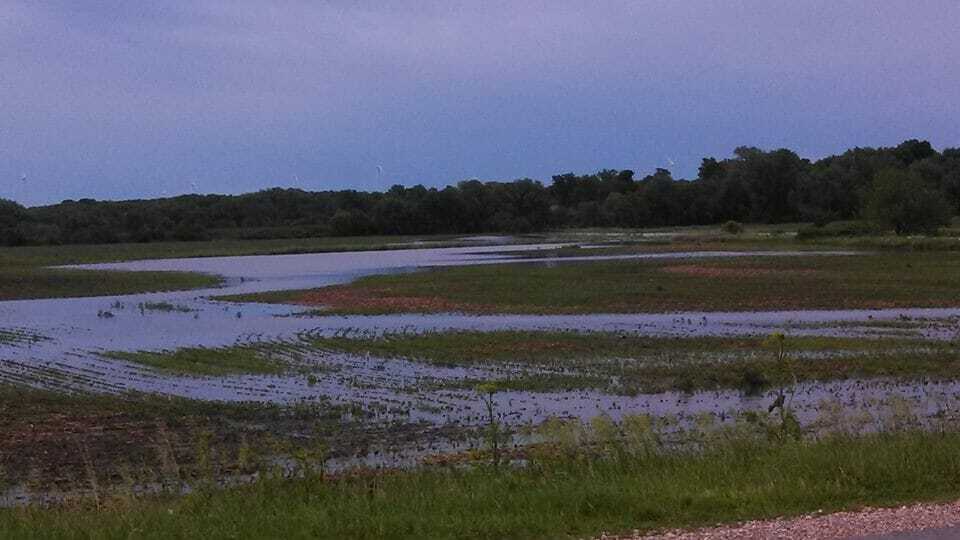
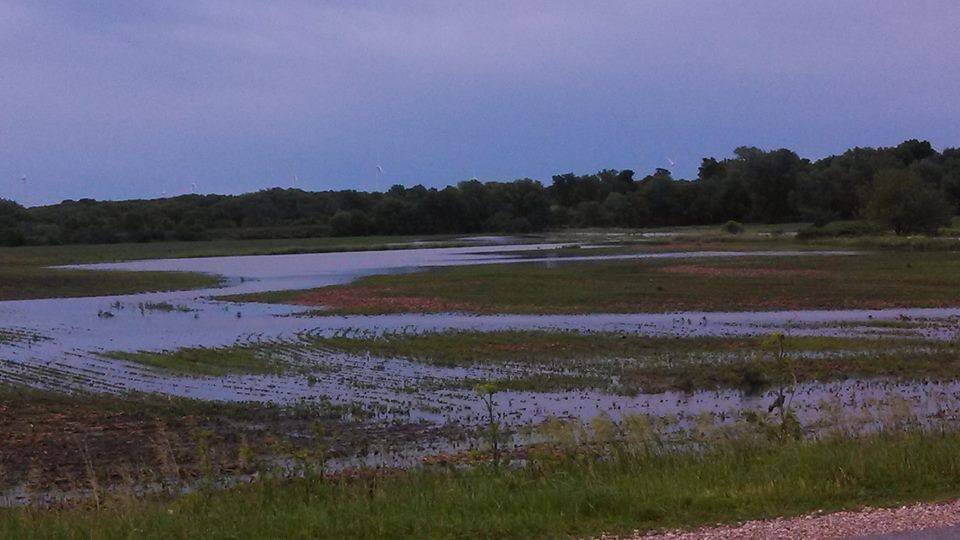
    April flood

    April floodOnce again, this week we were reminded just how cruel Mother Nature can be! Crazy late-spring thunderstorms and tornados swept across Latham Country from eastern Nebraska through eastern Iowa on Monday evening. Heavy rains fell early this week across the Dakotas and into Minnesota and Wisconsin, too.

    More than six inches of rain fell on Monday night in some areas of Franklin County, Iowa, with an additional 1.5 to 2 inches falling last night. Winds gusting at 70 miles per hour flattened crops, power lines and grain bins alike. The loss of property is disheartening, and our hearts go out to those who are trying to clean up and put the pieces together again. (Click here for tips on talking with consumers about storm damage.)

    “The farmer has to be an optimist or he wouldn’t still be a farmer,” said Will Rogers, the cowboy entertainer who was known for his wit and wisdom. So today, we’re going to talk about the silver lining. Our crops needed moisture. Although they got more than they needed this week, the tile lines are running again. Moisture is building in the soil profile. With first crop hay baled, this rain will get the second cutting of alfalfa off to a good start. The warm temperatures and high humidity we’re experiencing will cause crops to grow like weeds!

    Speaking of weeds, let’s hope the top soil dries enough soon for the corn and soybeans to get sprayed before they get too tall. Volunteer corn is prevalent in some areas this year, and volunteer corn must be treated as a weed. It not only competes with plants for moisture and nutrients, but volunteer corn is a food source for rootworm larvae. Volunteer corn that is not controlled by tasseling attracts corn rootworm beetles for egg laying.

    It’s imperative that farmers continue scouting fields at least weekly to stay ahead of weed, insect and disease pressure. For an update on what Latham’s Regional Sales Managers are seeing in their territories, click on “From the Field” and choose a region from the drop-down box on the right-hand side.

    Team Latham

    June 18, 2014
    Agronomics, Corn, Crop, General, Growth Stages, Rain, Season, Summer, Weather
  • Latham Hi‑Tech Seeds

    Looking for the Silver Lining

    Featured Rain

    Featured-RainAfter awaking once again this morning to loud, booming thunder and sharp streaks of lightning, I lay still and willed my body to return to slumber. That’s easier said than done! My mind started to drift…

    Mason City, which is about 20 miles from where we live, set a record on Sunday for the maximum daily rainfall. Nearly 2.5 inches of rain fell on Easter, breaking the previous record of 1.7 inches set in 1977.

    Then I began to think about the weekly rain totals that I researched in order to write yesterday’s crop report. For the week ending April 20, rain fall varied across the state from 0.07 inches at Rock Rapids in Northwest Iowa to 4.87 inches at Pella in Central Iowa. The statewide average precipitation was 1.52 inches or nearly double the weekly normal of 0.85 inches. This was the wettest week in 42 weeks, which brings us to late June 2013. (Like any of us really want to remember just how wet the planting season was last year!)

    Because I’m an optimist – as any farmer must be to keep planting for 40 or so seasons – I decided to look for the silver lining. Rain is needed, albeit we wouldn’t vote for rain at this particular moment. We’d like to schedule timely rains throughout the growing season, but the weather is obviously beyond our control. Hopefully, this rain will soak in where it’s needed.

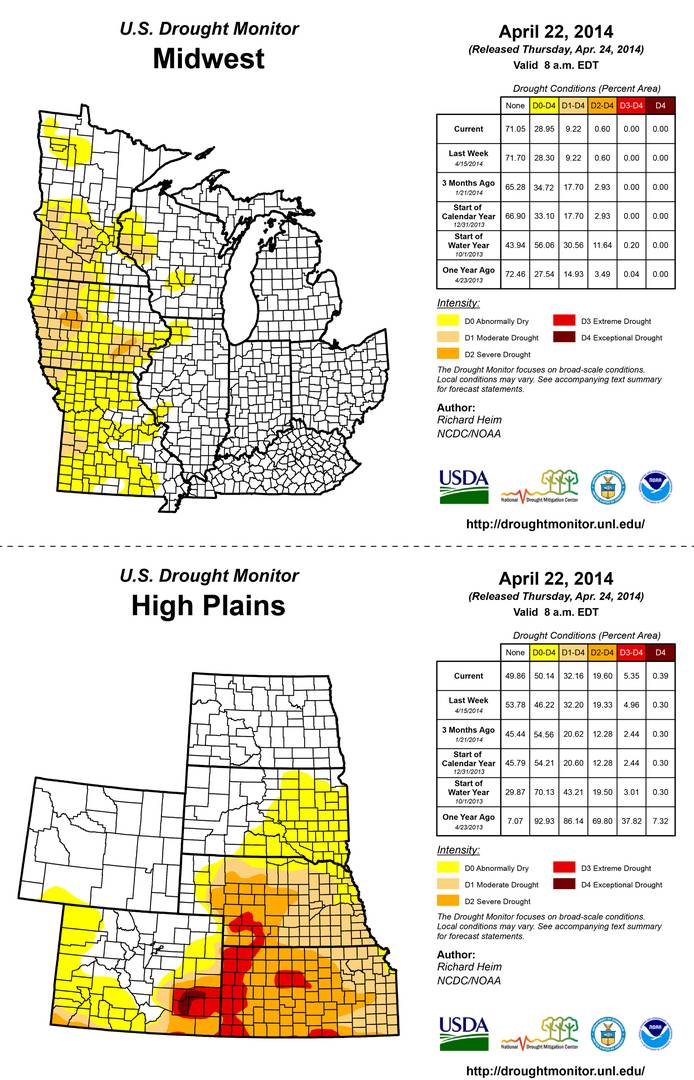
    DroughtMonitor_april14The U.S. Drought Monitor shows many areas across Minnesota, Nebraska and Iowa remain in a moderate drought. Topsoil moisture levels statewide are reported by the department of agriculture as 6% very short, 22% short, 65% adequate and 7% surplus. Subsoil moisture levels rated 16% very short, 39% short, 44% adequate and 1% surplus. Northwest Iowa is the driest with 18% of topsoil reported in very short condition.

    Planting season is a test of patience, but time has shown us that good things come to those who wait for the right seedbed conditions! Don’t push the panic button. Let soil conditions – not the calendar – dictate planting dates.  At this point, fields are not yet fit for planting and yield potential will be more negatively affected by planting in wet soils than waiting even a couple of weeks for better conditions.

    Corn planted into wet soils is prone to problems throughout the growing season such as: stunted plant growth; slow infiltration of water and/or ponding; high surface runoff under normal or light rainfall; poor root system development, or rootless corn; and even nutrient deficiency. Potassium deficiency is caused by corn roots not being able to take up potassium from compacted soils.

    Set up #crop14 for success! Work your crop plan. Remember, we’re still within the window of opportunity for maximum yields. There are literally weeks of planting dates remaining, so be patient and wait for suitable conditions.

    Team Latham

    April 24, 2014
    Agronomics, Corn, Crop, General, Rain, Season, Soybeans, Spring, Weather
  • Latham Hi‑Tech Seeds

    Seed Selection is Even More Critical in Dry Years

    The Iowa Legislature convened last week, and along with that, came talk that Iowa’s drought law may get a closer look this year.  “Water restrictions” isn’t a typical topic of conversation in the north, but it looks as though it might become commonplace across the Upper Midwest in 2013 if weather patterns don’t change.

    It’s safe to say we’ll be planting the 2013 crop in dry soils.  The 2012 drought caused most soils here to be depleted of moisture in the upper 7 to 8 feet, so it will take at least two growing seasons to recharge those soils.

    Seed selection will certainly be critical for 2013 due to the extremely dry conditions.  That’s why we’re recommending that most of our corn customers plant hybrids at least double- or triple-stack hybrids this spring.

    A hybrid’s genetics will be the biggest factor in whether a hybrid can handle drought.  Plot data shows that multiple-trait stacks, like Latham® hybrids with the Genuity® SmartStax® technology, can really help protect yield.  REMEMBER:  Traits protect yield.  Genetics make yield.  Seed products carrying the Latham brand name combine the industry’s best genetics with the latest traits and technologies.

    While corn genetics have come a long ways over the past decade and are much better at handling drought stress than ever, soybeans historically perform even better in dry weather.  Farmers will need to consider whether they can manage corn-on-corn in another extremely dry year or whether the economics favor soybeans.  Other factors to consider when finalizing your 2013 crop plans are outlined in this recent article posted on agriculture.com: Six Take-Home Lessons from the 2012 Drought.

    Regardless of whether you choose to plant corn, soybeans or alfalfa, Latham has the products you need! Our seed portfolio contains products that were bred specifically to thrive in specific areas of the Upper Midwest. Call your local Latham rep to learn more about the products best suited for your growing conditions, or feel free to call our office directly at 1.877.GO.LATHAM (1.877.465.2842).

    John Latham, President

    January 23, 2013
    Agronomics, Drought, General, Precision Ag, Season, Spring, Weather
  • Latham Hi‑Tech Seeds

    “Drought” Implications are Top of Mind This Week

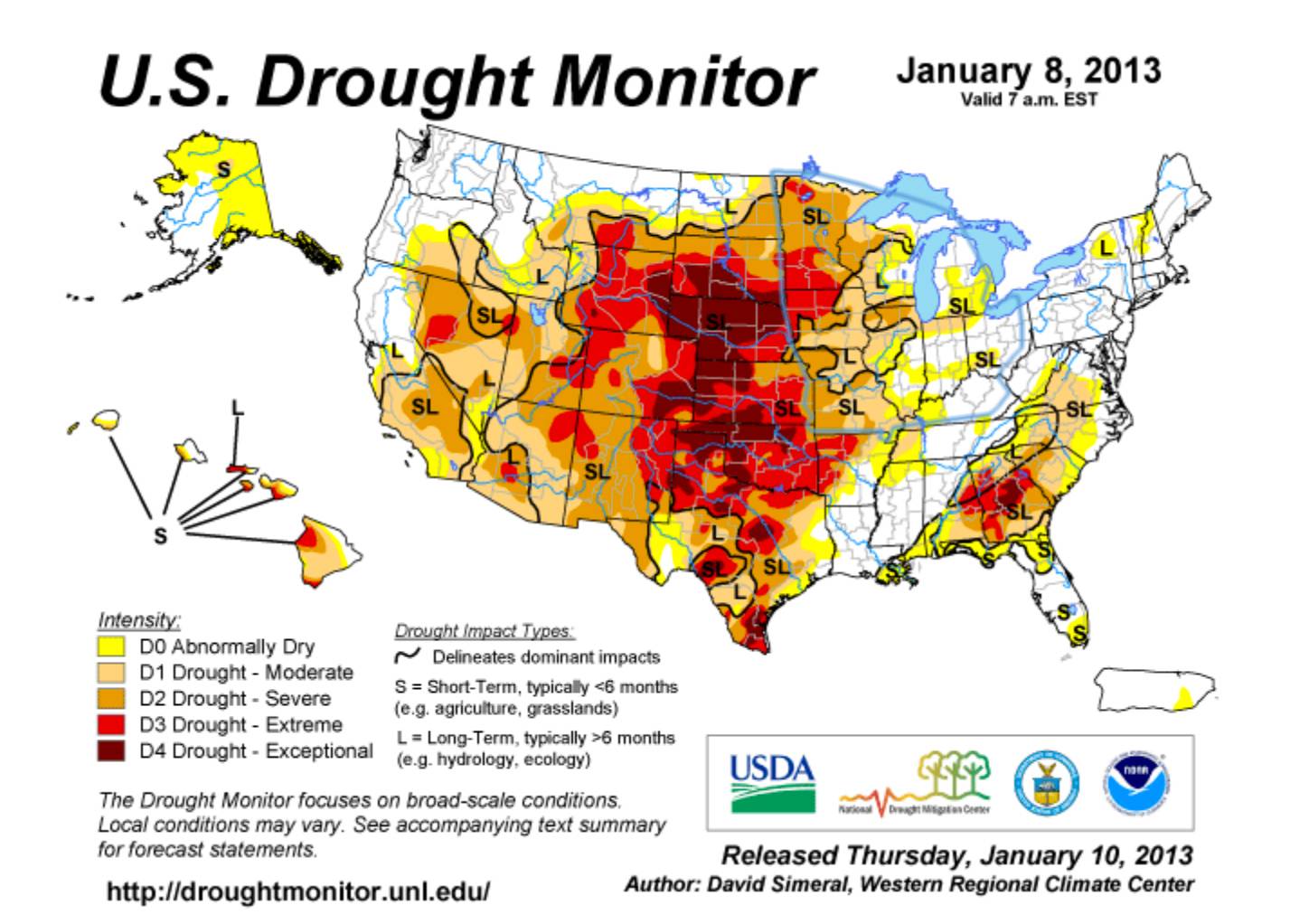
    US Drought Map1

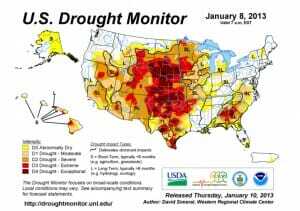
    The only snow left in North Central Iowa is in the ditches or lining dry creek beds – just one more reminder that the Midwest still suffers from drought.  Here’s an excerpt from “crop comments” posted yesterday to agweb.com:

    1/15 – Lancaster County, Nebraska: Still dry with a little moisture in the top foot from 1ft to 6ft not any moisture. We will need some terrific rain events this spring to recharge subsoil, one of those events were you get 1/4 to 1/2 inch every day for 2 weeks (like that ever happens?)

    1/15 – Palo Alto County, Iowa: First year I can recall without any ice in the drainage ditches in the area. We have had a little snow and maybe a tenth of an inch of rain a few days ago. Never gone into spring as dry as we are right now. If this is a sign of what’s to come this next growing season id be crazy to sell the remainder of the 2012 crop and even consider selling for 2013. Lots of new irrigation equipment being put up this winter even in areas where on a normal year it’s not necessary.

    1/9 – Trempealeau, Wisconsin: If the Mississippi level any is an indicator of potential yield with average moisture, certainly areas that depend on subsoil moisture to get average crop will suffer. It seems to me that we will need an inordinate amount of moisture to compensate to get yield up to average, but what is average?

    Drought-related topics also grabbed the attention of farmers attending the American Farm Bureau Federation’s annual meeting last Sunday in Nashville.  During that meeting, a representative from Monsanto talked in details about the 2013 introduction of Genuity® DroughtGard TM hybrids in western states like Kansas, Colorado and Nebraska.

    Since it will be another year or two before farmers in the Upper Midwest will be able to purchase DroughtGard hybrids, there are steps you can take to help conserve soil moisture and a few things to consider when choosing seed for 2013 planting.  Click on the articles below for additional resources:

    • How Drought Might Affect 2013 Crops
    • Corn or Beans: Which Will You Choose in 2013?

    Team Latham

    January 16, 2013
    Drought, General, Weather
  • Latham Hi‑Tech Seeds

    How Drought Might Affect 2013 Crops

    Following the 2012 growing season, researchers from across the Upper Midwest gathered to present data and opinions on a wide variety of topics pertinent to agriculture in our marketing area. Today I’m summarizing some of their findings for you to consider as you prepare to plant the 2013 crop.

    • SEEDLING DISEASES: University researchers are “dialing down” on the four main families of pathogens typically associated with soybean seedling diseases: Pythium, Fusarium, Rhizoctonia and Phytophthora. They have found more than 50 different species of Pythium that affect soybeans in our area. For many years, we believed this pathogen preferred cool, wet soils. Now we know that several of these species actually prefer warm soils! It was also discovered that some “new” species are not affected at all by fungicides currently available.
    • OTHER DISEASES & PESTS: Extremely dry weather throughout the Upper Midwest was responsible for the presence of Charcoal Rot, from as far north as southern Minnesota and as far east as the Mississippi River Basin. Damage from Soybean Cyst Nematode and Two-Spotted Spider Mite infestations were also widely reported. Be aware that many common insecticides don’t have much of an effect on Spider Mites, so carefully read the labels of any products you intend to use.
    • WEATHER: Dr. Elwynn Taylor said we’ve just finished a 19-year cycle of reasonably mild weather patterns and are now headed into a 25-year period where weather patterns are apt to be volatile. The 2012 drought caused most soils here to be depleted of moisture in the upper 7 to 8 feet. It will take a minimum of 16 –18 inches of rainfall (or equivalent in snow) to recharge those soils to their normal level. It will probably take at least two growing seasons to recharge.
    • TILLAGE: This was one of the “hottest” topics of the ICM conference. Most of the researchers were extremely surprised to see the amount of fall tillage completed because minimizing tillage helps conserve soil moisture.  Soil is our greatest natural resource, so we must protect and conserve it or our children and grandchildren will surely suffer the consequences.

    Webspec Admin

    January 9, 2013
    Drought, General, Weather
Previous Page
1 2 3 4 5 6
Next Page

Latham Hi‑Tech Seeds

131 180th Street | Alexander, IA 50420

(641) 692-3258

SIGNUP FOR OUR NEWSLETTER
  • Contact
  • Legal
  • Dealer Center
  • Seedware Login
  • Latham Gear

© 2025 Latham Hi‑Tech Seeds. All rights reserved. | Iowa Web Design by Webspec | Privacy Policy

Latham® Hi-Tech Seeds is a trademark of M.S. Technologies, L.L.C., 103 Avenue D, West Point, IA 52656.