Latham Hi-Tech Seeds

(641) 692-3258

  • Home
  • Products
    • Corn
    • Soybeans
    • Alfalfa
    • Corn Silage
    • Seed Guide
  • Performance
  • Find a Rep
  • Media
    • Blog
    • News
    • Videos
    • Podcasts
    • TECHTalk
  • About Us
    • Company History
    • Our Mission
    • Careers
    • Become a Rep
    • Sowing Seeds of Hope
  • Contact Us
  • Latham Hi‑Tech Seeds

    Seeding Rates Trump Nitrogen Rates

    5245 full ears

    Nitrogen rates can be the most powerful yield influencer when it comes to corn inputs. Other management practices including fungicide, starter fertilizer and seeding rate also can significantly impact yield.

    In a previous post, I discussed the results of our Climate FieldView (CFV) study. We compared a recommendation from Climate’s Nitrogen Advisor tool of 135 pounds per acre (lbs/A) total Nitrogen (N) to our typical yield goal (YG) approach of 170 lbs/A total N. We didn’t see significant yield differences between the two nitrogen programs. In this post, I’m going to focus on the other 10% of the
    study.

    Seeding rates don’t always influence yield as expected because many of our hybrids have outstanding ear flex and the plant compensates for the additional space. Our planting rates were around 31,500 and 37,500 seeds per acre in our study, but weather greatly affected this. Several severe storms hit during the early growing season, and winds of 70+ mile-per-hour hit during the period of rapid growth for most of our corn. Corn fields throughout our area saw quite a bit of greensnap; the corn we planted 10 days later had no greensnap. Unfortunately, timing was not on our side. I took stand counts before harvest. Our final plant stands were 25,000 and 29,000 plants per acre (ppa) for the low and high seeding rates. We had approximately a 4,000-plant difference between the two seeding rates, which made a significant yield difference.

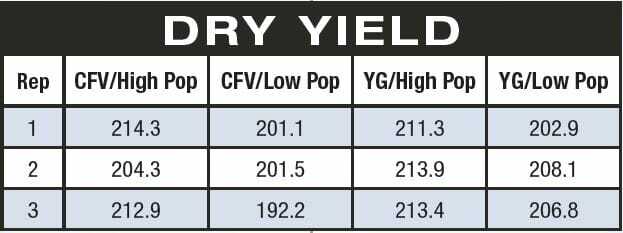
    Our CFV nitrogen test had 135 total lbs/A of N yielded 198 bushels per acre (bu/A) at the low seeding rate, and 210 bu/A at the high seeding rate. Our YG approach with 170 lbs/acres total nitrogen yielded 206 bu/A at the low seeding rate and 213 bu/A at the higher seeding rate. We saw both a 12 bu/A and 7 bu/A advantage with the higher seeding rates in the CFV and YG systems. After subtracting the cost for higher seeding rates, the additional yield resulted in additional revenues of $23.48/A (CFV) and $5.80/A (YG). We used LH 5245 VT2 PRO, which has a semi-flex ear. This means that even at the low seeding rate of 25,000 ppa, that hybrid had the late-season ability to flex enough in ear length and kernel depth (weight) to make up for lost bushels. The question is, “Does it pay to plant at higher rates?” It did for us in 2018, but there’s a good chance our results will differ in 2019.

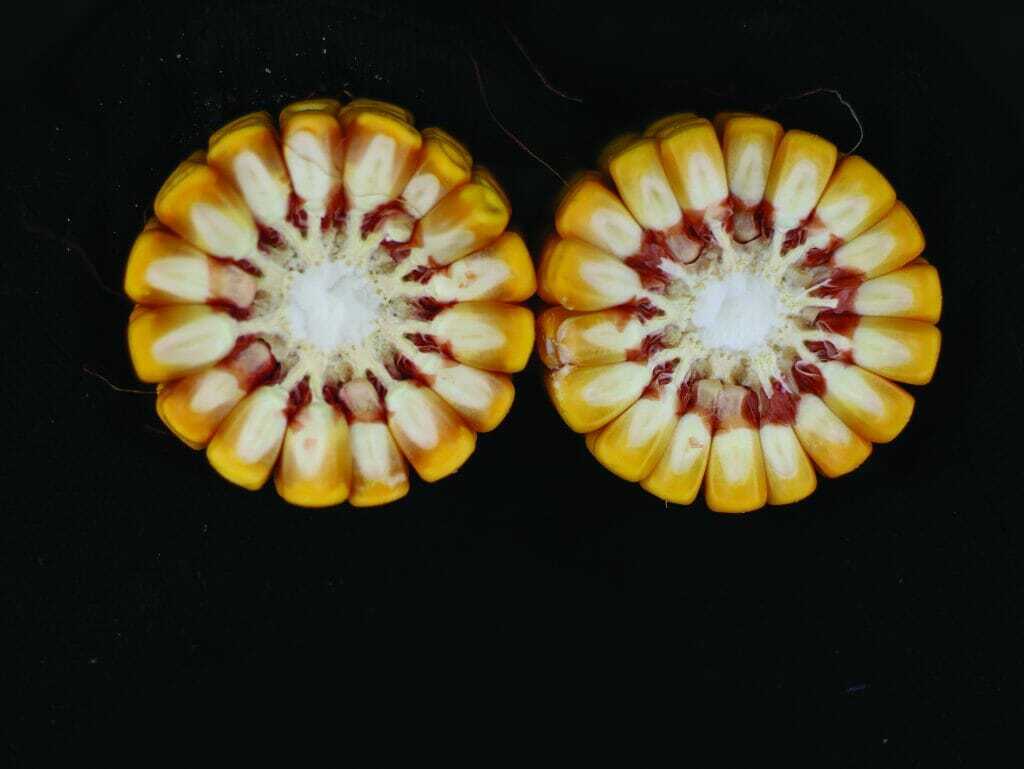
    5245 full ears
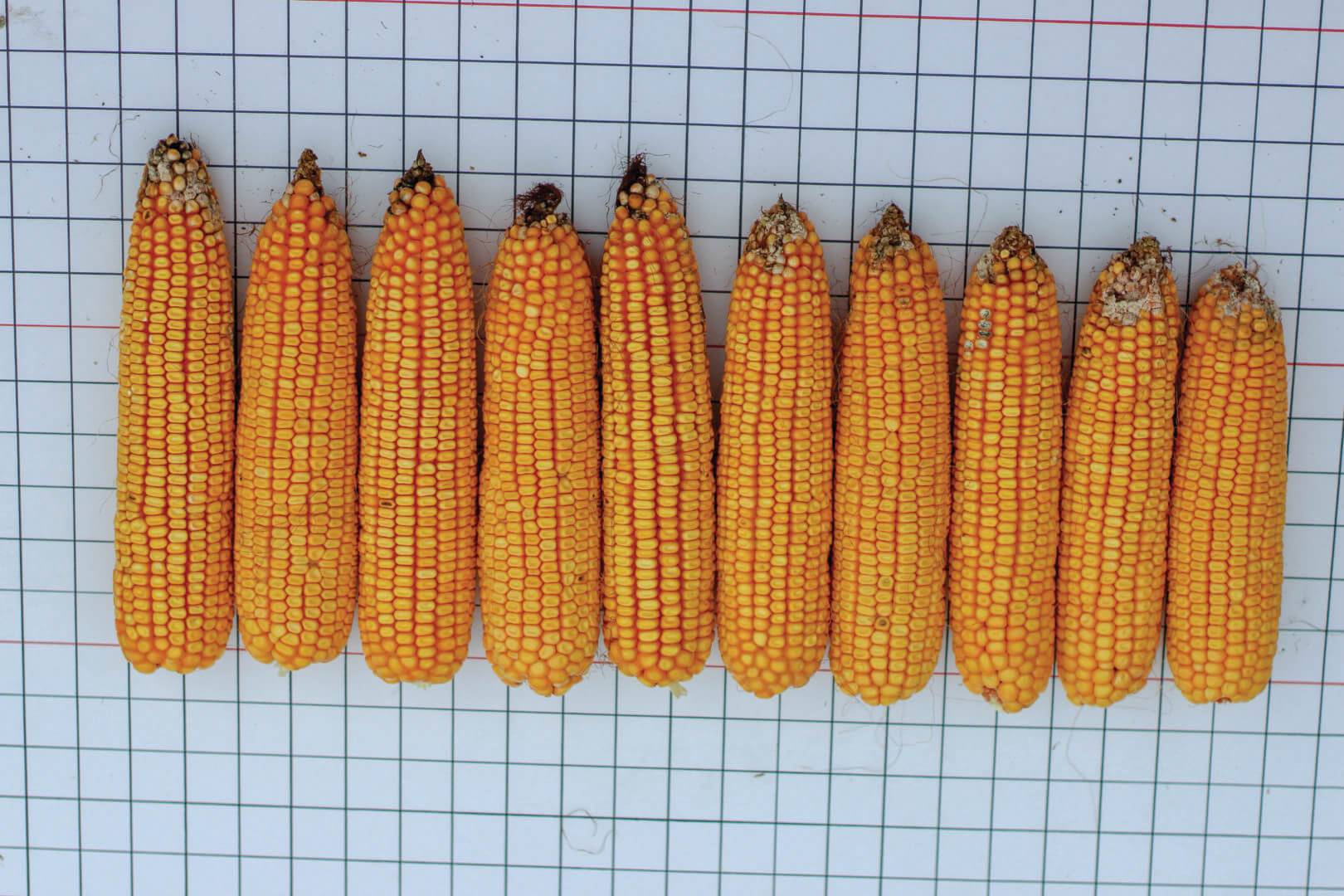
    Results for LH 5245 VT2 PRO with planting populations at 15,000 ppa on the left (resulting in girth of 16 kernels and length of 38 kernels on the left-most ear) and 58,000 ppa on the right (girth 18, length 33 on the right-most ear).
    5245 cross sections
    Cross Section split of LH 5245 VT2 PRO from Latham Hi‑Tech Seeds stress wheel research study 2018.

    Our nitrogen test didn’t show a yield difference despite the 35 additional pounds in our YG approach. Given the abnormally high amount of rainfall and above-average growing degree units (GDUs) for the season, we likely saw an increased grain-fill period and some additional loss of nitrogen through leaching. Above-average temperatures and good soil moisture means we also likely had higher mineralization rates, so the soil may have saved us because this particular soil organic matter is 5.0 percent.

    All things considered, our YG approach won out in terms of revenue this year, but will it hit the mark every year? Consistency is what we want to see when trying to manage such a variable nutrient in the soil. In the future we plan to expand our research on the CFV Nitrogen Advisor tool to bring meaningful information on seeding rates to our dealers and customers.

    Phil Long

    January 22, 2019
    Agronomics, Corn, Crop, Fertility, Tech Tuesday
  • Latham Hi‑Tech Seeds

    Take Stock of Soil Health

    Snow Covered Rye

    Our soil is the backbone of every farming operation and a lasting legacy that we will leave to the next generation said Latham’s Forage Product Manager Corey Catt during our Post-Harvest Huddle last month in Wisconsin. It’s up to us to decide if that legacy will be good or bad!

    The 2018 growing season was certainly one for the record books. Most of our dealers and customers experienced cool and wet conditions early, followed by rapid growth mid-season, with cool and very wet conditions returning and persisting throughout much of the harvest season. Wet soils after harvest prevented many farmers from doing fall tillage, seeding cover crops and applying manure or Nitrogen. Those who applied fertilizer run the risk of severe compaction and nutrient loss. Those who didn’t apply fertilizer will be “behind the eight ball,” especially if the early spring weather isn’t conducive to drying the soil before fieldwork needs to begin. It can feel like a no-win situation, yet we all know that healthy soils are critical for optimizing yield.

    I highly recommend viewing a recently released film by the Soil Health Institute titled “Living Soil.” A press release promoting the film states: “Our soils support 95% of all food production, and by 2060, they will be asked to give us as much food as we have consumed in the last 500 years. They filter our water. They are our foundation for biodiversity. They are vibrantly alive, teeming with 10,000 pounds of biological life in every acre. Yet, in the last 150 years, we’ve lost half of the basic building block that makes soil productive. The societal and environmental costs of soil loss and degradation in the U.S. alone are now estimated to be as high as $85 BILLION every single year.”

    For more information about improving soil health and protecting the future of agriculture, attend clinics and seminars. Below is a brief list of upcoming soil and nutrient management conferences that I’ve found:

    North Dakota: January 28, 2019
    Canad Inn, Grand Forks

    South Dakota: January 22-23, 2019
    SDSU campus in Brookings

    Minnesota: February 19, 2019
    Best Western Kelly Inn, St. Cloud

    Iowa: February 4-5, 2019
    Scheman Building on the ISU campus in Ames

    Wisconsin: January 15-17, 2019
    Alliant Energy Center in Madison

    Illinois: January 22-24 at three different sites –
    Princeton, Springfield & O’Fallon

    I wish you the best of luck as you prepare for the upcoming 2019 season. Happy New Year!

    Mark Grundmeier, Product Manager

    January 15, 2019
    Agronomics, Soil, Tech Tuesday
  • Latham Hi‑Tech Seeds

    Updates on Soybean Gall Midge

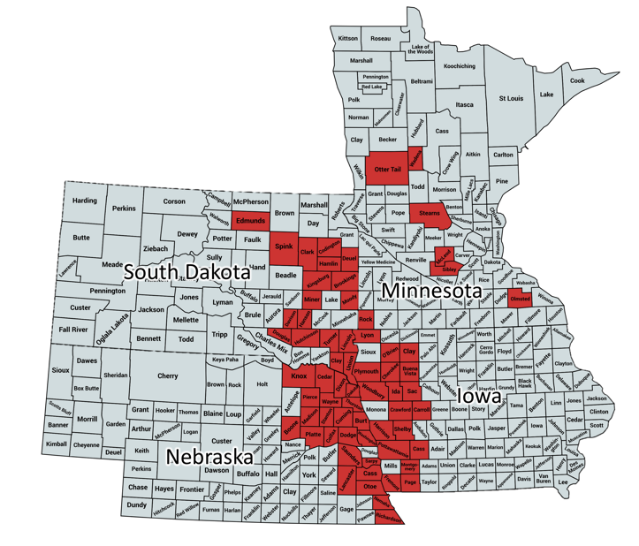
    Map for mark article

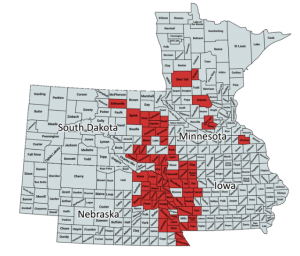
    SOYBEAN GALL MIDGE: I mentioned in a previous post that a new insect had Soybean gall midgeinfested fields in South Dakota, Nebraska and western Iowa. It also was present in a few Minnesota counties. Prior to 2018, no midge damage to soybeans had been reported.

    Map for mark article

    This year, however, it was reported this pest caused significant yield losses in 66 counties across this four-state area. (See map.) University of Nebraska researchers captured adult midges and sent them to world-renowned experts for identification. We know the Soybean Gall Midge belongs to the genus Resseliella, which includes 55 species worldwide. This midge is about one-fourth inch long. Note its orange abdomen, as well as the black and white bands on the legs.

    (The above map and photo were taken from the 11-7-18 issue of UNL CropWatch.)

    Mark Grundmeier, Product Manager

    December 17, 2018
    Agronomics, Crop, Insects, Soybeans, Tech Tuesday
  • Latham Hi‑Tech Seeds

    Latham Selects Forage Products Based on Hi‑Tech Measures

    Corey graphic Copy

    Super tight margins have a lot of growers putting every decision they make under a microscope, from defining yield-limiting factors and remodeling old traditions to using scientific tests to improve feed efficiency. The new and evolving information has almost out-paced our ability to quickly adapt, understand and transform new ideas into production.

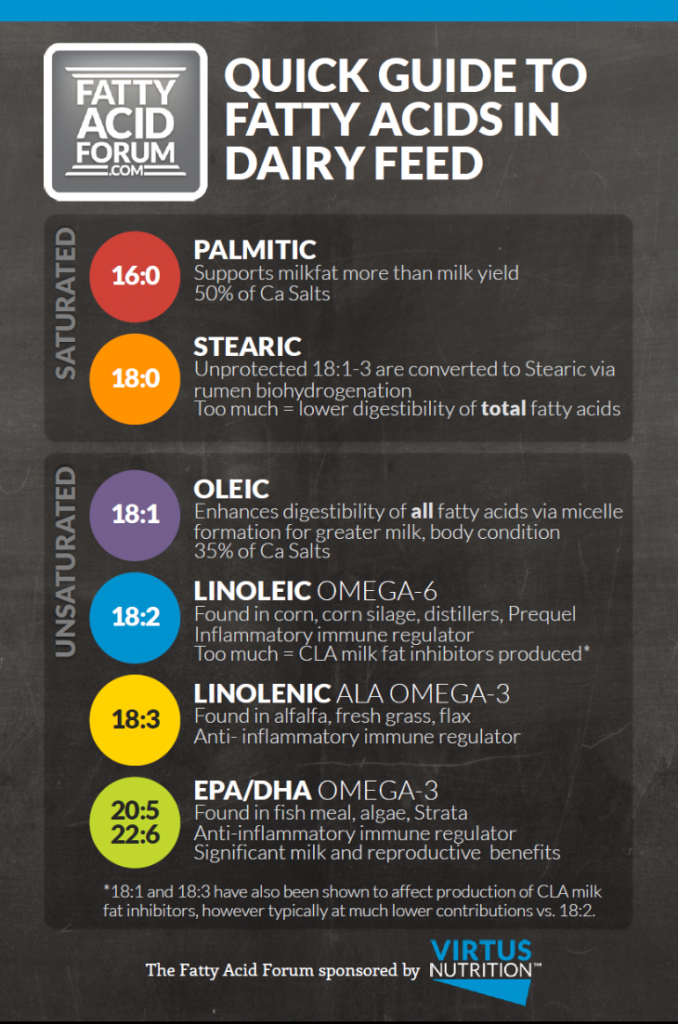
    The overall narrative about feed quality is gaining momentum. This past season, Dairyland Labs included fatty acid profiling to its corn silage forage quality reports. Fatty Acids are another tool nutrition consultants can use to build a more efficient livestock diet that can potentially improve the quality of meat, milk and eggs produced. The following graphic is a beginner’s reference of how fatty acid measures affect dairy feed rations.

    Corey graphic

    In addition to fatty acid counts, we at Latham Hi‑Tech Seeds are using a variety of measures to help select corn hybrids and corn silage hybrids for our lineup. These measures include:

    Yield. Products are selected for high yield in terms of tons of dry matter per acre.

    Fiber and Starch Digestibility. Because both fiber and starch are major sources of energy, we evaluate products for ease of digestibility for energy conversion.

    Prolamin Zein. Prolamins are proteins solely associated with starch in all cereal grains. In corn, prolamin proteins (called prolamin zein) comprise 30 to 60% of the protein in whole corn. Research shows that corn with lower levels of prolamin zein are more easily digested. Undigestible feed turns into manure instead of milk. Latham® forage products, however, have low levels of prolamin zein and are more easily digested by cows. Our products result in more floury, opaque, high-moisture corn products.

    Amino Acids. Protein, made up of amino acids such as lysine and methionine, is one of the key ingredients cows need for growth, milk component and production, overall health and immunity. An imbalance of the critical amino acids mean overall milk production and quality can suffer. Furthermore, overfeeding protein can lead to inefficiencies and high nitrogen and phosphorous levels in manure. The team at Latham Seeds selects products for our lineup based on their amino acid composition.

    Forage Quality. When developing our product lineup, we look for strong genetics that will maximize yield potential and traits that will protect that potential. Traits create a healthier plant in the field, higher quality silage product at harvest and more nutritious silage for your herd.

    Above all, product selection for livestock feed needs to be about creating a healthier plant in the field that, in turn, creates higher quality feed in the bunk. Our product lineup is heavily vetted for characteristics that produce the highest quality feed. Please contact me if I may be of assistance selecting a portfolio of products to meet your feed quality and production needs next season.

    Webspec Admin

    December 10, 2018
    Alfalfa, Corn Silage, Crop, Tech Tuesday
  • Latham Hi‑Tech Seeds

    Where Did My Nitrogen Go?

    ND

    Nitrogen is the 2nd most expensive input but the #1 yield-influencing input we apply every year to our corn crop. So how can we use it more efficiently?

    According to Oklahoma State’s Nitrogen Use Efficiency (NUE) website, side-dress or top-dress practices see about 50% NUE. That means that when you apply 200 pounds/acre of nitrogen to achieve a 200- to 250-bushel yield, the corn crop only uses around 100 pounds per acre of nitrogen. That’s not easy to digest in these economic times, but it provides motivation to determine the best nitrogen rate to keep yields up while ensuring the corn plants use it. This is where precision ag software comes into play.

    The Climate FieldView (CFV) Nitrogen Advisor (NA) is one of several nitrogen models that factors weather into the equation. During the 2018 growing season? We tested the CFV NA in a large plot at the Latham Farm in Alexander, Iowa. The test was replicated three times, using two nitrogen rates.

    Using the NA, we applied a total 135 pounds per 3 212.9 acre. Using our previous Yield Goal approach (YG), we applied a total of 170 pounds/acre. We put down 25 pounds per acre with MAP before planting then an additional 70 pounds/acre UAN with our herbicide at planting. The last application of 32% UAN was applied June 13. This study also included a high and low seeding rate of 37,500 and 31,500 seeds per acre.

    We planted LH 5245 VT2 PRO on May 18 for this study. After analyzing yield across the two different nitrogen rates and two seeding rates, there was not a significant difference in yield between the Nitrogen Advisor and our Yield Goal approach. Given that 31 inches of rain fell this growing season as compared to the 10-year average of 23.4 inches, I thought we’d see more difference between the two nitrogen rates. I flew my drone periodically throughout the growing season and noticed a few NA plots showed some yellowing. The yellowing wasn’t major and it didn’t last long.

    I also pulled ear leaf samples at R1 and compared them to our yield results. There was a significant impact of the lower nitrogen rate by the Nitrogen Advisor but only at the higher populations, which follows the trend many researchers have found. As the population increases, nitrogen decreases in the ear leaf. It is difficult to apply enough nitrogen to make up for the extra demand that all those extra plants put on the supply in the soil. Therefore, if you are VR seeding, then VR apply nitrogen to apply more in the heavier seeded areas or consider applying higher blanket rates if you can’t VR apply nitrogen.

    The biggest take away from the R1 ear leaf samples is that all were “deficient,” meaning we aren’t applying enough nitrogen overall with our YG approach to see the full potential. We must keep in mind 50% NUE and the role that the weather, especially this year’s heavy rain events, likely played on how much nitrogen was taken up and how much was lost due to leaching.

    Look for Part 2 of our research findings in next month’s article. I will discuss the surprising impact that the different seeding rates had on this study.

    Nitrogeon Study Tech Tuesday

    Phil Long

    December 4, 2018
    Agronomics, Fertility, Soil, Tech Tuesday
  • Latham Hi‑Tech Seeds

    #LiveWithLatham Broadcast

    Ask the agronomist facebook 820 x 360
    Ask the agronomist facebook 820 x 360
    More Topics. More Expertise. More Value.

    JOIN US! We will be #LIVEwithLATHAM on Dec. 13 at 10 a.m. on our Facebook page. Each guest will have 15 minutes, including a live interview, plus questions will be accepted throughout the broadcast. Special guests & topics include:

    1. John Latham, President, Latham Hi‑Tech Seeds
    2. Bob Foley, Corn Breeder
    3. Mark Grundmeier, Product Manager
    4. Phil Long, Agronomy Specialist

    Do you have questions of your own? Feel free to submit in advance via PM on social media, or submit them live on Dec. 13!

    Laura Cunningham

    November 27, 2018
    Agronomics, Alfalfa, Corn, Cover Crops, Crop, Soybeans, Tech Tuesday
  • Latham Hi‑Tech Seeds

    SDS in 2018 Not as Severe as Feared

    Rsz0907SDSFieldfoliarsymptoms
    Rsz0907SDSFieldfoliarsymptoms
    Photo credit: Iowa State University

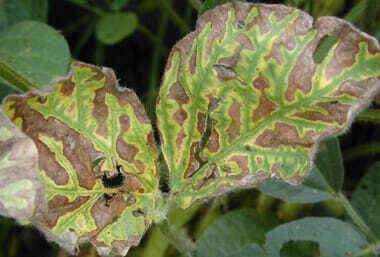
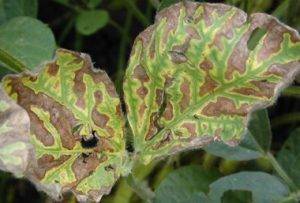
    It was feared the wet, cooler weather conditions in 2018 would be ideal for Sudden Death Syndrome (sds) infestations. This soil-borne fungus overwinters in fields. Although it does not affect corn plants, it can survive in corn residue and then attack soybean fields in subsequent years. Based on what I have seen as I’ve traveled across Latham Country, the infestations do not seem to be as severe as feared. I’m finding Brown Stem Rot (BSR) is more prevalent in fields than it has been in recent years. Foliar symptoms of SDS and BSR are almost identical. To tell the difference between the two, you must split stems and dig up roots. I make this point because I believe many reported cases of SDS should be attributed to BSR.

    Why hasn’t Sudden Death been a larger problem this year? To confirm my theories, I called Dr. Daren Mueller, an Iowa State University Extension Plant Pathologist. Dr. Mueller also has observed less evidence of severe SDS and said his colleagues from neighboring states are seeing less SDS pressure, as well. The following are some of Dr. Mueller’s thoughts on possible reasons for this:

    » DELAYED PLANTING: The Sudden Death fungus attacks soybean roots as early as the V2 stage. Wet, cool weather favors SDS infestations, but such conditions also prevent soybeans from being planted very early. It has been proven by numerous researchers that one way to combat SDS severity is to plant later. Once farmers were able to get soybeans planted this spring, the temperature had turned very warm. Warm soil temps in early May caused soybeans to emerge quickly, lessening the chance of root infestations.

    » SDS TOLERANCE: Seed companies, in general, have done a better job of developing cultivars with improved tolerance to Sudden Death. Dr. Mueller was quick to point this out as a management strategy that is working well. At Latham Hi‑Tech Seeds, we’ve been focusing on SDS as part of our IRONCLAD™ defensive package since 2013. (IRONCLAD is available exclusively from Latham Seeds.)

    » COMPACTION: Farmers are doing a much better job of reducing compaction in their fields by waiting for soils to get fit before they’re worked. Research proves the SDS fungus thrives in compacted areas of fields.

    » SOYBEAN CYST NEMATODE (SCN): Research shows higher SCN populations can cause SDS infestations to be more severe, so managing SCN is an important step.

    » SEED TREATMENTS: Products like ILeVO® are an important tool in the fight against SDS. Dr. Mueller stresses that while ILeVO is very good, it is not a “silver bullet” for preventing SDS. My experience with Latham research shows soybeans treated with ILeVO yield an average of 4 to 8 bushels per acre (bu/A), and it is effective 70-80% of the time.

    Effective management for SDS includes all the above factors plus more going forward. At Latham Seeds, we strive to be on the forefront of the battle against this disease and other yield-robbing pests that affect your yield and bottom line.

    Mark Grundmeier, Product Manager

    October 29, 2018
    Industry News, Tech Tuesday
  • Latham Hi‑Tech Seeds

    Unearth Yield-Limiting Factors

    7 Wonders

    We all desire more yield. Although plant genetics are responsible for massive amounts of yield gain since we transitioned from open pollinated corn to hybridization, it’s time we take a deeper look. It’s time we rediscover soil’s role in increasing yield and redefine plant diets.

    “We can increase real organic matter 0.1% per year on intensely managed farms, and that increases our corn yield goal 2.7 bushels,” Ken Rulon of Arcadia, Indiana, is quoted as saying in a June 2018 issue of The Furrow magazine. “When you increase organic matter the soil becomes darker, and everybody in the world knows darker soil is more productive.”

    Rulon can prove using no-till and cover crops is improving soil quality— and returning a net profit of $57.76 per acre on his family’s 6,300-acre farm. He and his family have worked extensively with Purdue University researchers, whose replicated plots show the same results. The Rulons are producing higher yields using 20 pounds less phosphorus, 30 pounds less potash and 35 pounds less nitrogen per acre than conventional practices.

    7 WondersHealthy soil has amazing water-retention capacity. The Furrow article illustrates how improved soil structure, specifically organic matter (OM), has helped reduce yield losses during dry conditions. This is important because the timing of rain events is unpredictable. Case in point: this season fields in the Upper Midwest received high volumes of rain during short amounts of time. Improving the OM in the soil helps absorb water more quickly, holding it in the root zone like a massive soil sponge. Therefore, good soil structure also helps reduce erosion.

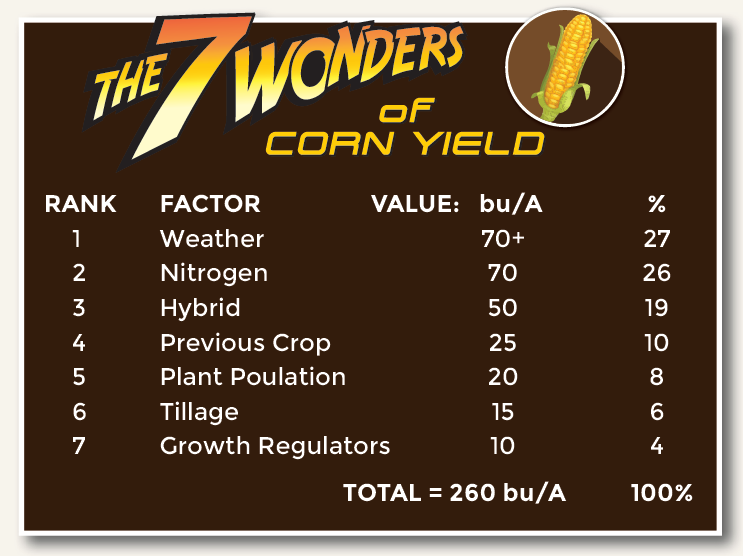
    Each soil type and growing climate is uniquely different, making It critical that you do some research on your own farm. You know which fields need more attention, so consider giving that piece of ground some TLC. Develop a plan. Consider a Solvita® soil test as a good starting point. Need more inspiration? Check out the 7 Wonders of Corn Yield by Dr. Fred Below.

    Thinking long term for that piece of ground will help cast a vision. Have improved soil health define part of your life legacy and give an amazing gift to humanity!

    Webspec Admin

    October 22, 2018
    Industry News, Tech Tuesday
  • Latham Hi‑Tech Seeds

    Climate FieldView™ Cab App features to try during harvest

    Latham Hybrid Yield Report

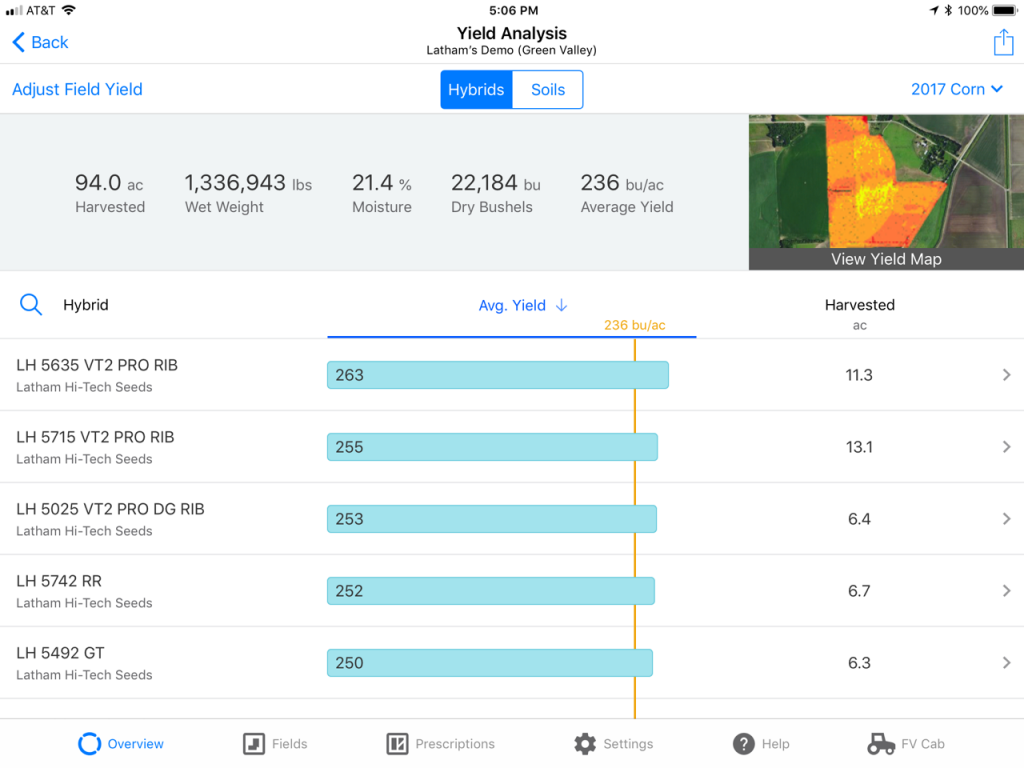
    While Climate Fieldview™ (CFV) records hybrids and varieties during spring planting, the real value is shown during harvest time.

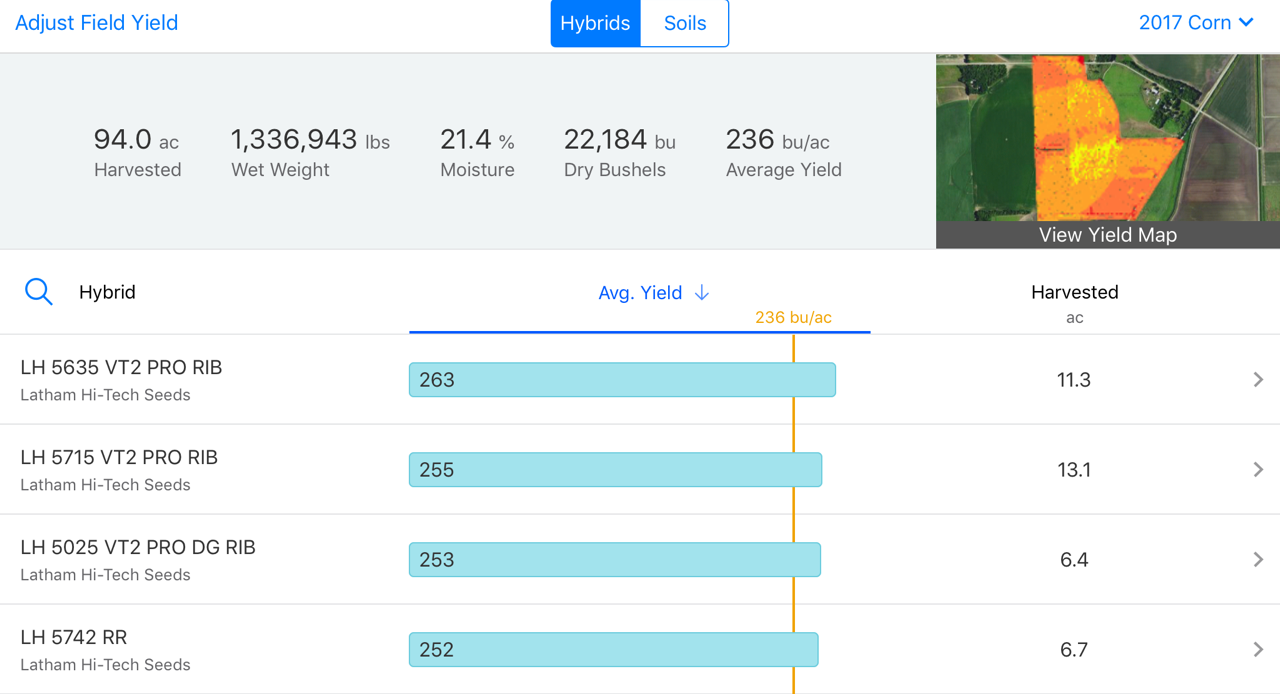
    The cab app allows you to record, map and send data all at once! If you mapped planting data, you can see “on the go” how particular hybrids and varieties are performing at harvest. You can pull up a hybrid harvest report and compare yields throughout the field. You can also send this report to your trusted advisor, landlord or family member to help with record keeping.

    Three of my favorite features are:

    1. Creating field region reports. This feature allows you to circle an area or draw any shape around an area of a field to track yield. Maybe you did a side-by-side comparison with and without fungicide or with and without a starter fertilizer treatment. You can view a particular hybrid in different soil types without including bias from wet spots.
      Latham Hybrid Yield Report
    2. Calibrating Yield Maps. Sometimes our combine calibration is slightly off, so the scale tickets don’t add up with what was captured by the equipment inside the cab. Using the app, you can easily edit the weight and moisture of the crop that was harvested. This allows for calibration after the fact that will adjust your harvest maps to more accurately represent what came off the field.
    3. Uploading data on-the-go when you’re running multiple combines in a field. You can instantly see how far another combine has harvested. This requires a data package on your iPad or using your phone as a hotspot, but that’s a small price to pay for the efficiency of coordinating equipment.

    The best part is right now farmers have an opportunity to try the CFV platform FREE for a year! (This includes a one-year subscription and hardware. Offer expires Aug. 31, 2019.) This is an excellent opportunity to experience CFV first-hand during harvest. If this is something you’re interested in, feel free to call me for more information.

    Phil Long

    October 1, 2018
    Agronomics, Precision Ag, Tech Tuesday
  • Latham Hi‑Tech Seeds

    Ways to Reduce Risk of High Nitrates in Corn Silage

    IMG 5439

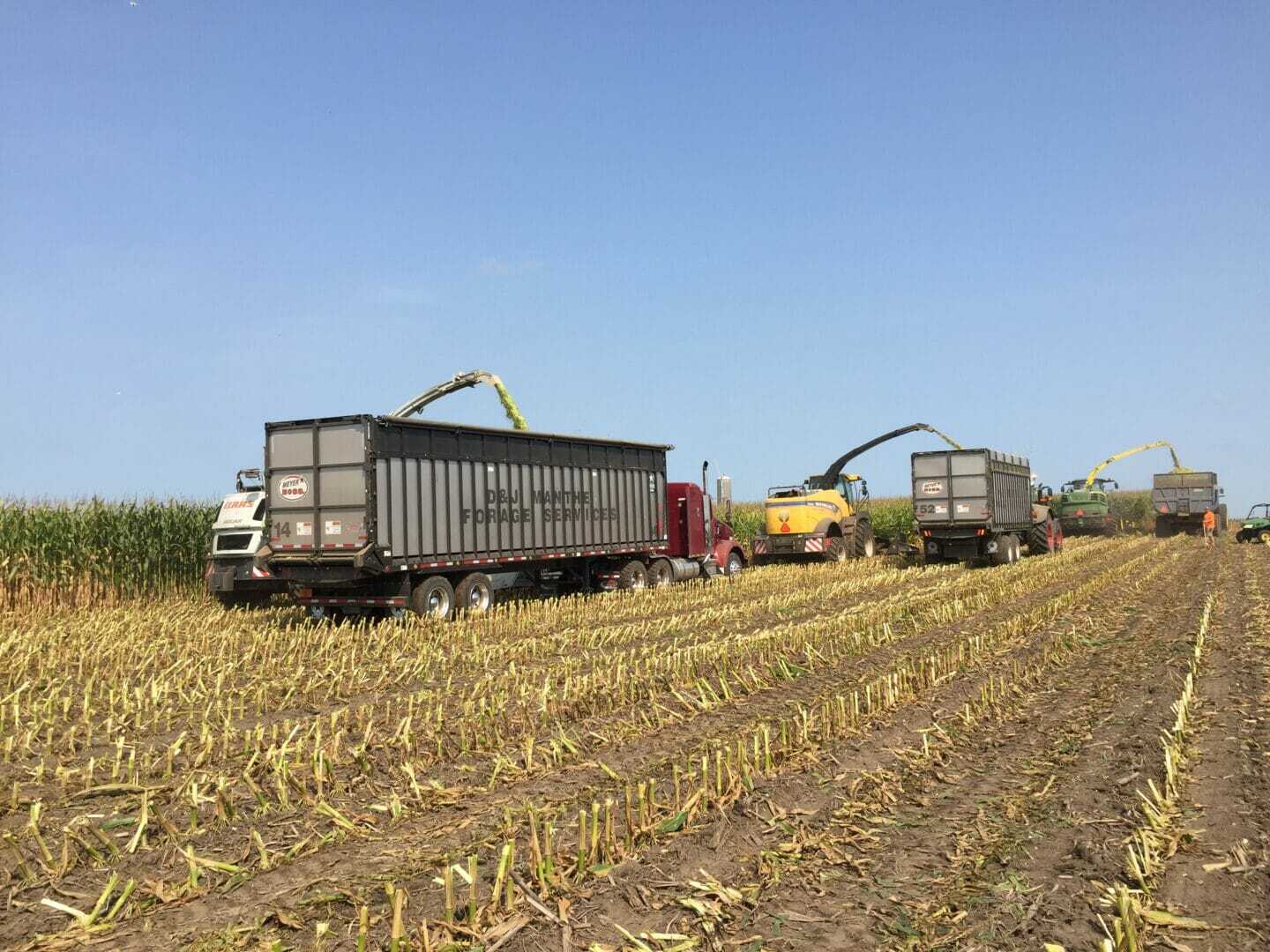
    While many fields experienced heavy rains this year, many areas experienced lower-than-normal moisture conditions, forcing an early corn silage harvest and Increasing the potential for high nitrates.

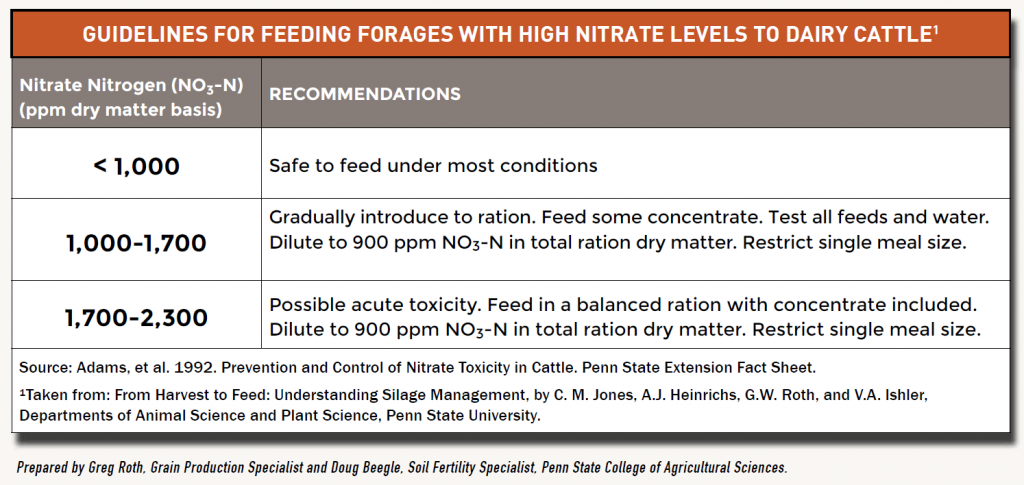
    High nitrates essentially bind with protein in an animal’s hemoglobin, which prevents the blood from carrying oxygen. As a result, cells and body tissue suffocate and die.

    Ways to reduce risk when harvesting and feeding low-moisture silage:

    • Wait 3 to 5 days after a rain before harvesting drought-stressed corn silage.
    • Increase cutting height as most nitrates form in lower portion of the stalk.
    • Allow silage to ferment at least 4 weeks as fermentation can reduce nitrate levels by 50 to 60%.
    • Always test a few samples of any suspect corn silage before you feed.
    • With matters of this sensitivity, I advise dairy producers and cattle feeders to enlist the help of a professional. Always test and consult with a nutritionist.

    NItrate chart

    Webspec Admin

    September 24, 2018
    Corn Silage, Crop, Tech Tuesday
Previous Page
1 … 8 9 10 11 12 … 15
Next Page

Latham Hi‑Tech Seeds

131 180th Street | Alexander, IA 50420

(641) 692-3258

SIGNUP FOR OUR NEWSLETTER
  • Contact
  • Legal
  • Dealer Center
  • Seedware Login
  • Latham Gear

© 2025 Latham Hi‑Tech Seeds. All rights reserved. | Iowa Web Design by Webspec | Privacy Policy

Latham® Hi-Tech Seeds is a trademark of M.S. Technologies, L.L.C., 103 Avenue D, West Point, IA 52656.