Latham Hi-Tech Seeds

(641) 692-3258

  • Home
  • Products
    • Corn
    • Soybeans
    • Alfalfa
    • Corn Silage
    • Seed Guide
  • Performance
  • Find a Rep
  • Media
    • Blog
    • News
    • Videos
    • Podcasts
    • TECHTalk
  • About Us
    • Company History
    • Our Mission
    • Careers
    • Become a Rep
    • Sowing Seeds of Hope
  • Contact Us
  • Latham Hi‑Tech Seeds

    Anthracnose Stalk Rot

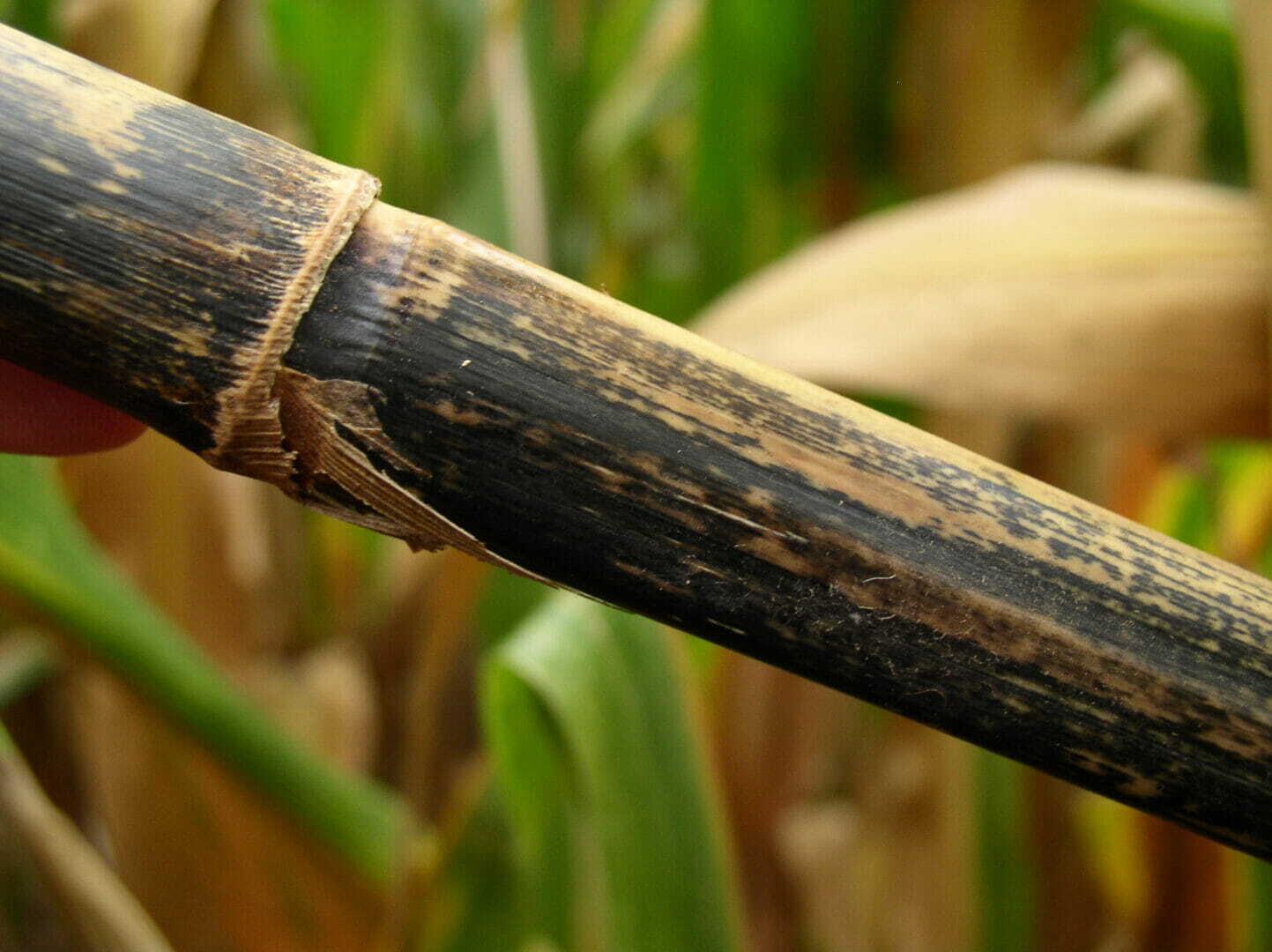
    OLYMPUS DIGITAL CAMERA
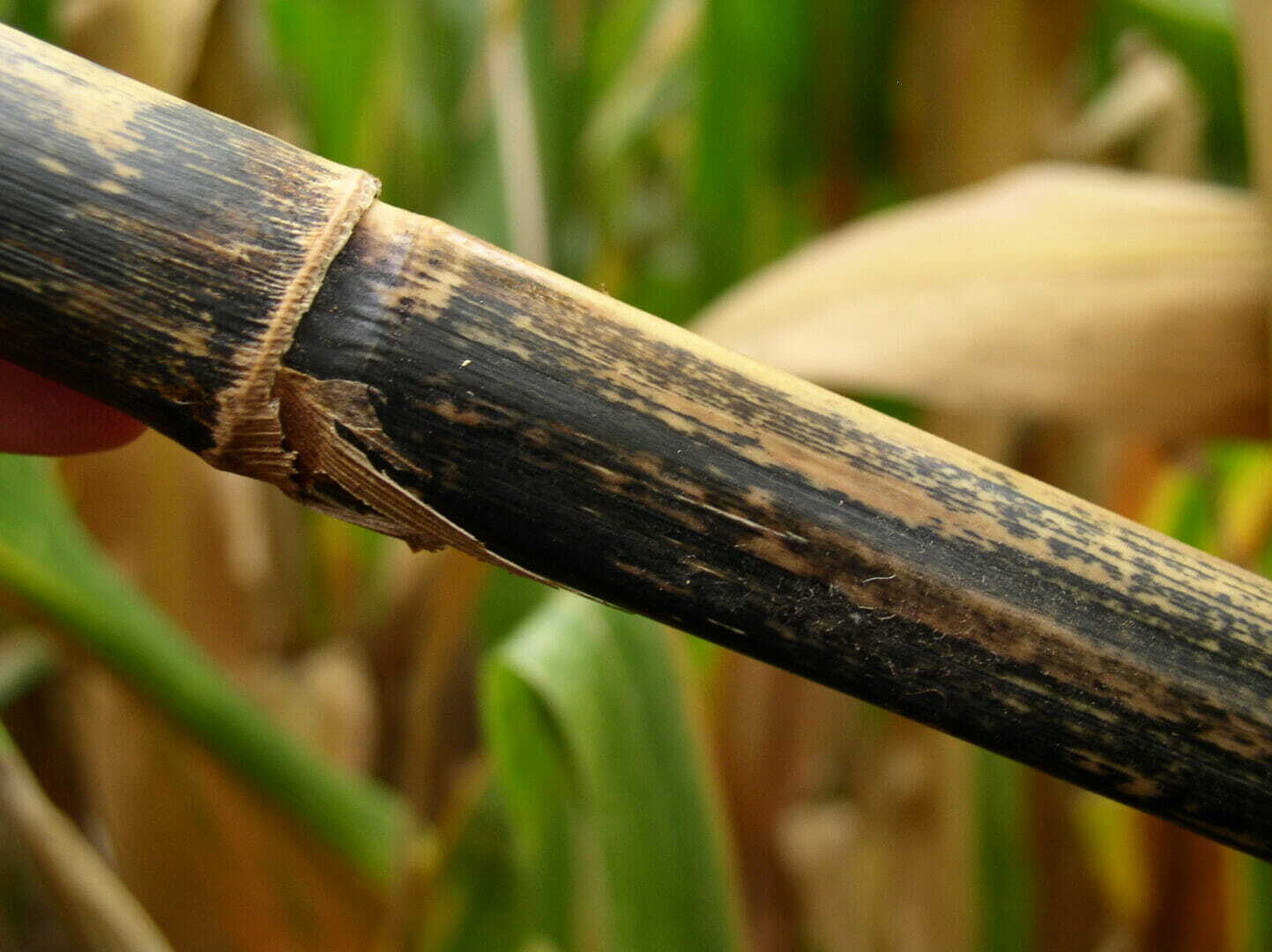
    OLYMPUS DIGITAL CAMERA
    Credit: Crop Protection Network

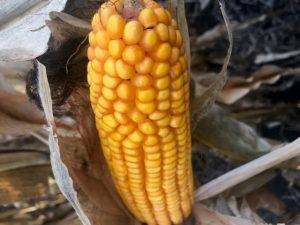
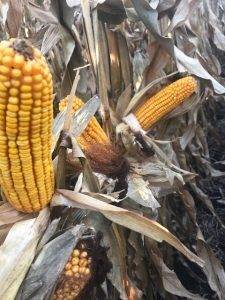
    There are a variety of stalk rots that infect corn, causing extensive damage to crops and losses in yield. Common factors make corn susceptible to stalk rot including warm and wet weather, stress after pollination, fertility issues, stalk boring insects, and the presence of other foliar diseases. There are key signs, symptoms and differences that distinguish the different types of stalk rot.

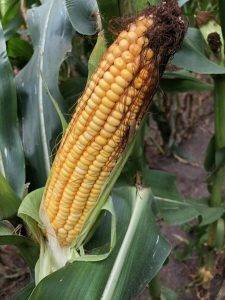
    Anthracnose stalk rot is the most common type of stalk rot and is caused by the fungus Colletotrichum graminicola. The fungus is favored by wet, warm weather and overwinters in corn residue. Signs of the disease will be observed four to six weeks following pollination.

    Scouting for Signs and Symptoms  

    The disease undergoes three phases with distinct signs and symptoms:

    • In the first phase, foliar lesions will appear in the early part of the growing season.  The leaf blight will begin on the lowest leaves, and will reach the upper leaves by late season.
    • During the second phase, top-dieback will appear in the middle part of the season after tasseling, killing the parts of the plant located above the ear.
    • In the third phase, shiny black lesions will appear on outside surface of stalks. Look for setae, or bristles that cover the surface of the stalk. A hand lens can be used to look for the bristle-like texture and black dots in the center of lesions.

    Stalks will exhibit fragility and appear to be brittle when handled. Different from other forms of stalk rot, anthracnose stalk rot will cause plants to lodge at the upper portion of the stalk. Pinching or bending at the nodes can be used to test for stalk lodging.

    Stalk rot can lead to death just before maturity and reduce yield. In addition, plants defoliated from hail damage and those that are nitrogen deficient are at an increased risk for being infected from the stalk rot.

    Management Strategies 

    Planting hybrids with resistance to stalk rots is a helpful defense against these diseases.

    Latham Seeds Agronomy Team

    April 1, 2019
    Agronomics, Corn, Crop, Disease, Fall, Season, Summer
  • Latham Hi‑Tech Seeds

    Rust Diseases in Corn

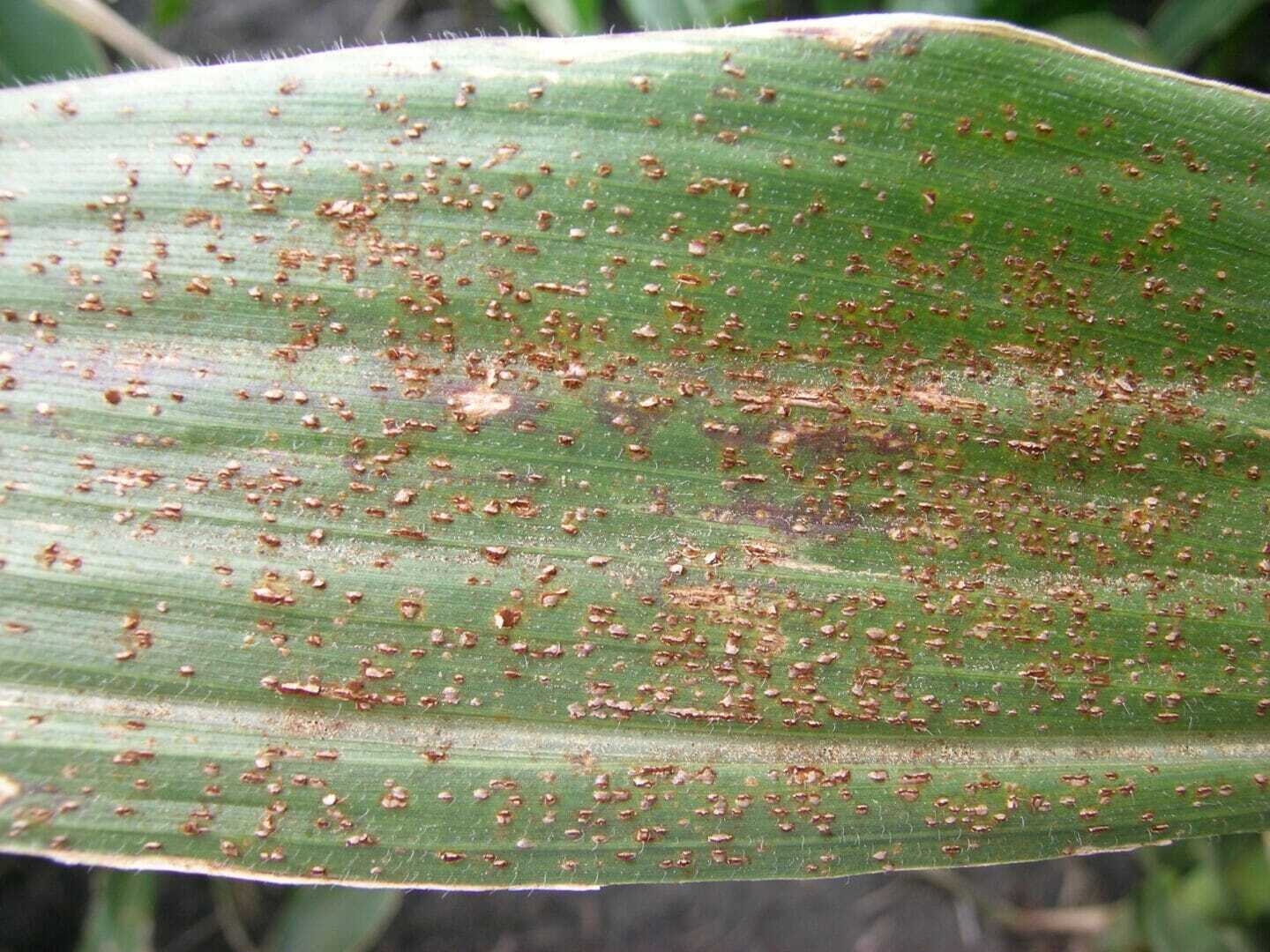
    Common Rust – Crop Protection Network
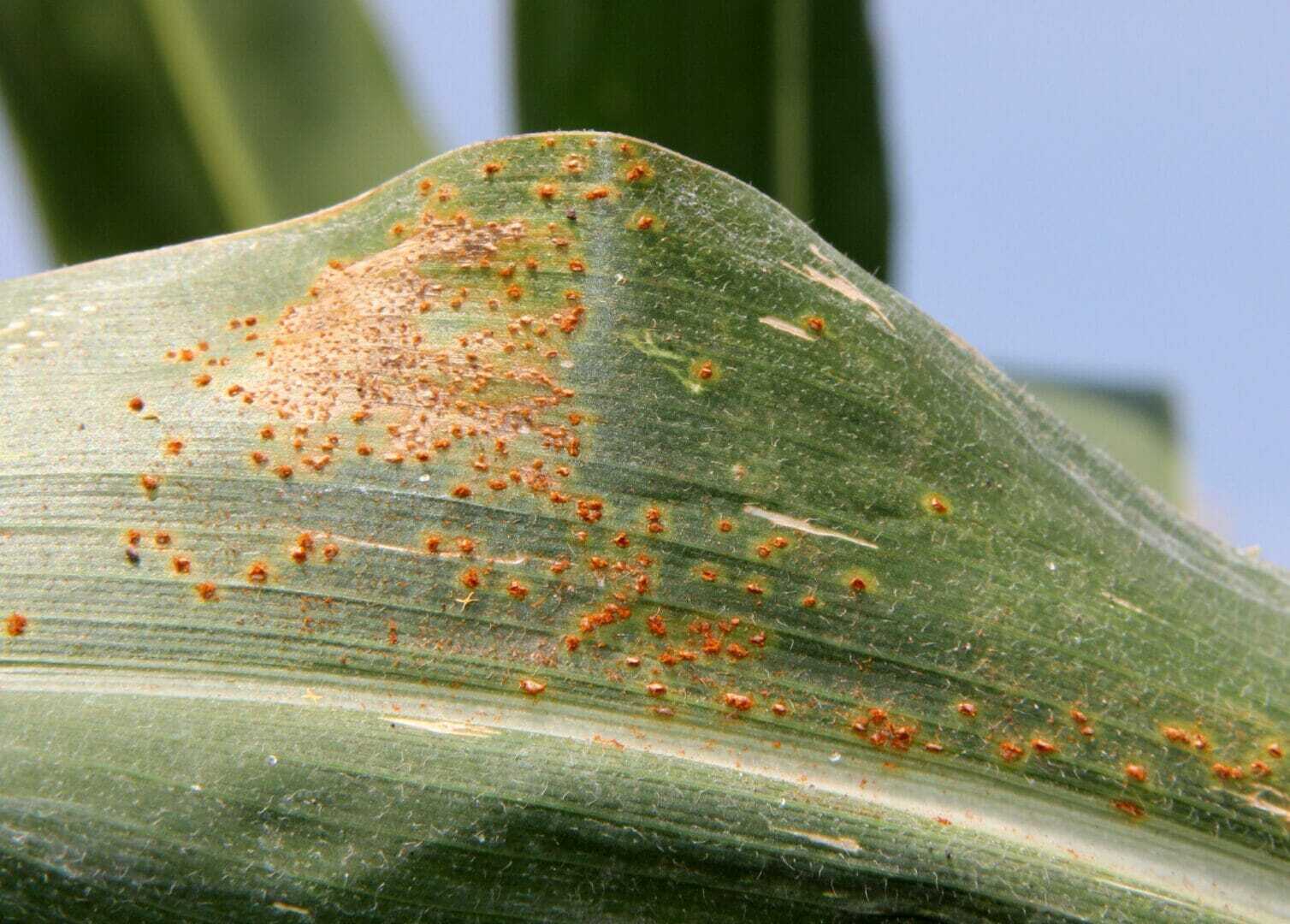
    Southern Rust – Crop Protection Network
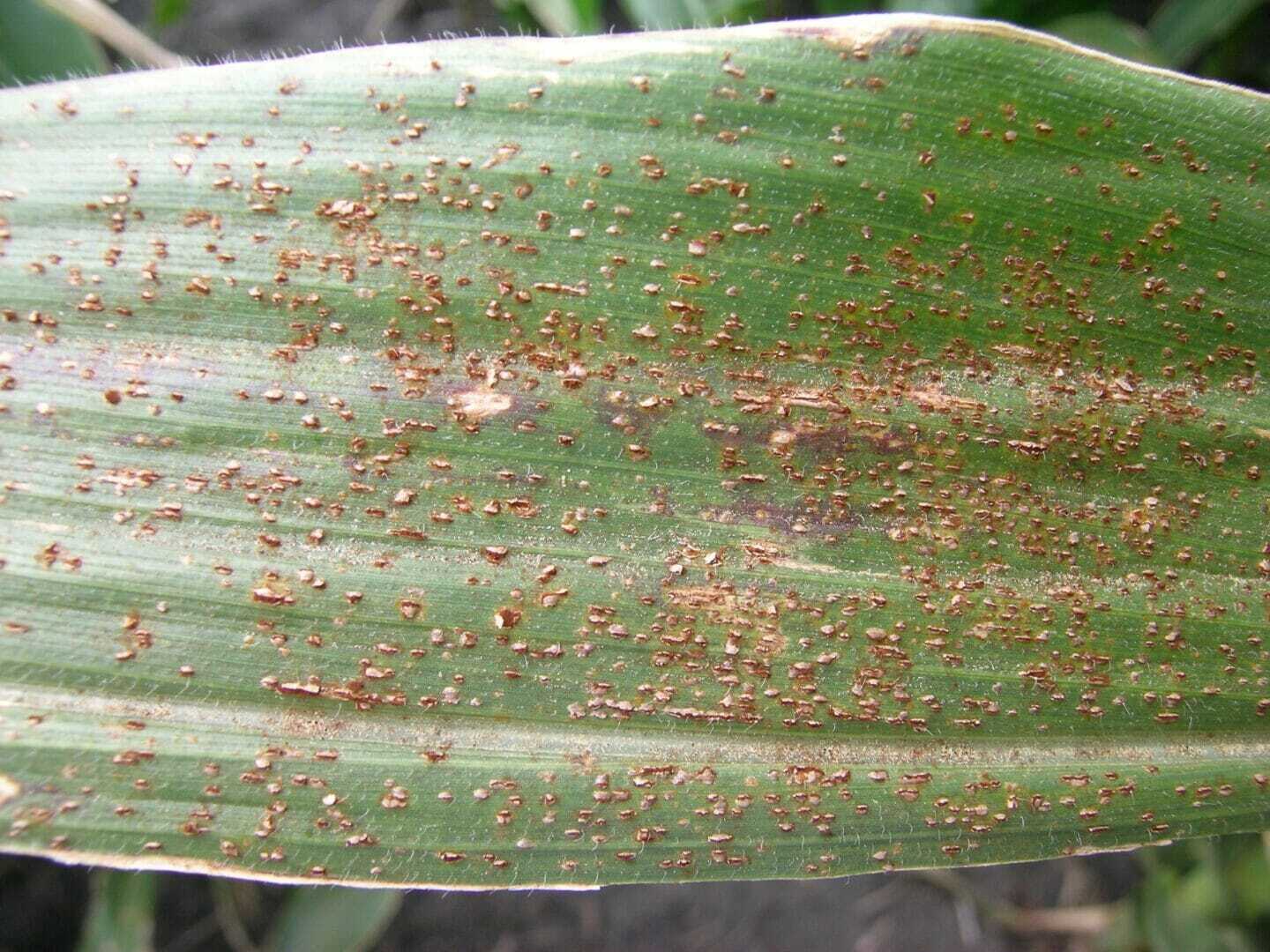
    Southern Rust. Credit: Crop Protection Network

    Common Rust and Southern Rust infect corn in the late summer. The diseases generate raised spores known as “pustules” on the surface of leaves, leading to reduced yield  and poor grain quality.

    Common rust (Puccinia sorghi) and southern rust (Puccinia polysora) fungi are unable to overwinter in the Midwest and require a host plant to remain alive. The spores created by rust diseases are transported by wind to the Midwest from Southern states.

    Temperatures ranging from 61–77° fuel the growth of rust diseases. Cool and humid temperatures, especially when exhibited overnight, can further drive the development of the fungi.

    As long as the weather conditions are right for rust diseases, the cycle of spore development will continue. The return of hot and dry weather can prevent further development of the fungus and kill off the spores.

    Implications  

    Rust can reduce yield and decrease grain quality. Foliar damage from rust diseases can interfere with water  transpirationand reduce photosynthetic leaf area.

    Nutrients designated to support plant growth are rerouted in response to the damage incurred by leaves. Damage from rust diseases deplete carbohydrate reserves in corn leaves. As a result, the plant will begin sourcing the nutrients from stalks and roots, leading to reduced yield and stalk rot.

    Common Rust – Crop Protection Network
    Common Rust. Credit: Crop Protection Network
    Scouting for Rust Diseases 

    While common rust has less of an impact on yield, southern rust has been found to reduce yield by 25 bu/acre in corn with no fungicide application. The fungi can begin to infect plants under favorable conditions in as little as six hours.

    Southern rust signs are evident  on the upper leaf surface and are round, as opposed to elongated in plants infected with common rust. The pustules will be orange compared to the darker color of common rust. Overtime, southern rust pustules will become brown or black.

    Common rust pustules are found on the upper and lower leaf surface and are oblong. Common rust pustules will be brick red in appearance and can coalesce to kill parts of leaves. In order to determine the difference between common and southern rust pustules, use a magnifying lens to inspect the leaf surface.

    Management 

    Planting early is one of the best ways to reduce corn’s vulnerability to rust diseases. Corn planted late in the season is most susceptible to experiencing yield loss and grain damage. Many hybrids are also equipped with resistance to rust diseases, though the extent to which they are protected from the fungus can vary.

    When pustules are observed on 50% of scouted plants, it is advised to begin implementing  a treatment plan. Fungicides can also be used to treat corn infected with common and southern rust. Be sure to consult with your local Latham representative to determine the best management options for rust diseases.


    Latham Seeds Agronomy Team

    April 1, 2019
    Agronomics, Corn, Crop, Disease, Fall, Season, Summer
  • Latham Hi‑Tech Seeds

    Western Bean Cutworm 

    WBC Purdue University (1)
    WBC Eggs Iowa State University (1)
    Credit: Iowa State University

    The Western Bean Cutworm can dramatically reduce end-of-season corn profit. The Western Bean Cutworm does not cut stalks but feeds on ears, posing as a threat to grain quality and corn yield. The cutworm moths are gray to brown with a wing span of 1 ½ inches. As a late summer insect, moths first emerge in early July and only one generation is produced each year. 

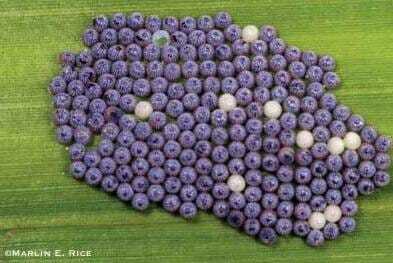
    Female moths lay eggs in whorls just ahead of the pollination stage and will lay an average of 50 eggs at a time. Eggs develop over the course of 5 to 7 days. Eggs will first be white, then become tan as they develop and will turn purple once they are close to hatching. 

    Only a small percentage of eggs typically survive, but larvae that reach full maturity can cause measurable damage to corn.  

    Scouting and Implications 

    Pheromone traps can be used to identify Western Bean Cutworm in fields. When multiple moths are caught at a high frequency, scouting for symptoms should take place. When scouting, focus on fields that are close to shedding pollen and examine 20 consecutive plants in 5 different locations.  

    WBC Purdue University (1)
    Credit: Purdue University

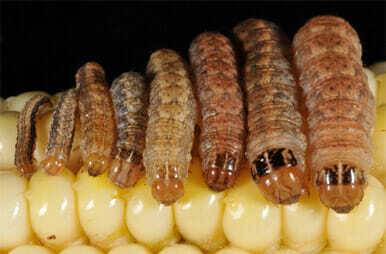
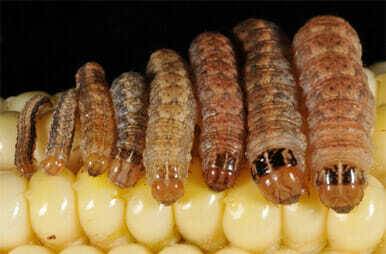
    Western Bean Cutworms feed on leaf tissue and silks as they approach the ear where most of the damage is incurred. The Western Bean Cutworm can be confused with other species of cutworm. The dark brown stripes behind their head that appear during the third instar distinguishes them from other cutworms.  

    The most mature larvae will feed on fully developed ears and can sometimes burrow into the sides of the ear. When scouting, it is important to pull back the husks to fully determine if the cutworms are present.  

    After feeding on the ears, the larvae will drop to the soil and burrow deep underground where they overwinter. It is common for many larvae to feed on one ear at once, increasing the severity of feeding damage. Ears with multiple larvae can exhibit up to 50-60% in kernel loss.  

    An average of one larva per plant has resulted in yield loss of 4 bu/acre in Iowa and Nebraska. Aside from yield loss, damaged kernels are prone to mold growth which reduces overall grain quality.  

    Managing Western Bean Cutworm   

    Managing Western Bean Cutworm should take place close to hatching, just before pollination. Once larvae hatch and move underneath tight leaves surrounding the ear, they become difficult to exterminate. Applying a foliar insecticide is recommended when 5-8% of plants have egg masses or young larvae present but not before at least 90% of plants have emerged tassels.  

    SmartStax, Viptera, and eventually we will have Duracade traited hybrids that provide aboveground protection against Western Bean Cutworm. Though Western Bean Cutworm overwinters, there is no evidence that tillage is an effective way to combat infestation. Be sure to consult with your local Latham representative to design the most effective treatment plan.

    Latham Seeds Agronomy Team

    April 1, 2019
    Agronomics, Corn, Crop, Insects, Season, Summer
  • Latham Hi‑Tech Seeds

    What is the Best Time for Nitrogen Application?

    3.28.19

    LIBSYN header 2 01

    Join us as we discuss the best nitrogen practices in regards to timeliness of application. #AskTheAgronomist


    https://www.facebook.com/LathamSeeds/videos/2672172469767767?sfns=mo


    Nitrogen Graph
    Source: Iowa State University Extension

    Laura Cunningham

    March 28, 2019
    #AskTheAgronomist, Agronomics, Fertility, Growth Stages, Season, Spring, Summer
  • Latham Hi‑Tech Seeds

    From the Field Crop Reports 9/12/18

    James 3

    EASTERN IOWA

    Jerry Broders

    Fall is in the air! Both corn and soybeans are starting to turn and combines will be rolling before we know it in Eastern Iowa. 


    Jerry


    CENTRAL IOWA

    Bryan Rohe

    Harvest has just begun in Pella, Oskaloosa, Prairie City and near State Center. Stay tuned for yield results soon! 

    Bryan 2

    Bryan 1


    NORTHEAST IOWA & SOUTHEAST MINNESOTA

    Craig Haaland

    Here is some of our LH 5505 VT2 PRO RIB in Cerro Gordo County. Temperatures will be around 80 degrees with sunshine this week, I’m sure we’ll see the corn and soybean crops really change by the weekend. Combines will start rolling by next week in certain areas. 

    Craig H


    WEST NORTH CENTRAL IOWA

    Bart Peterson

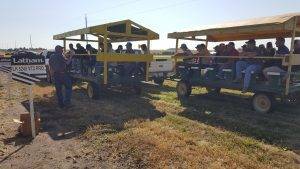
    This photo was taken on Sept. 11 at a plot day hosted by North Central Cooperative of Clarion and Kanawha. It was a good day talking about all of the great Latham® products in our current lineup and what products are coming down the pipeline.


    Bart 1

    NORTH CENTRAL IOWA & SOUTH CENTRAL MINNESOTA

    Cory Greiman

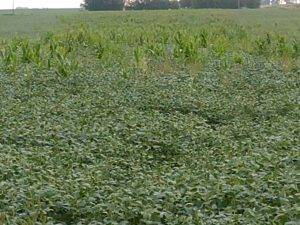
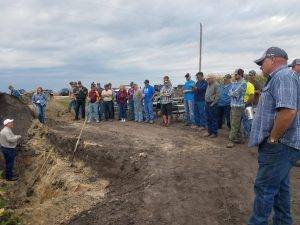
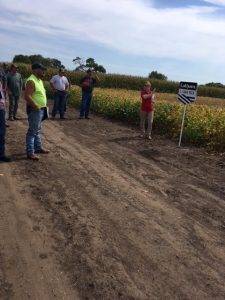
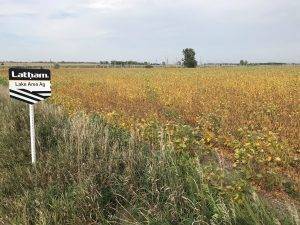
    These photos taken near Klemme, Iowa, show how a cereal rye cover crop helps suppress volunteer corn and weeds following hail-damaged corn.  The area with the volunteer corn in the soybeans is where they ran out of cereal rye seed and they left test strips.  

    Cory


    NORTHWEST IOWA

    Darin Chapman

    We’re two to three weeks from starting harvest in Northwest Iowa. Yields will be variable due to all the weather events we have experienced this year. The LH 5245 VT2 PRO RIB in the photo was planted on May 7 at 36,000 population. By the appearance, we should be happy with this one!

    Darin 2

    Darin 1

    WESTERN IOWA & EASTERN NEBRASKA

    Larry Krapfl

    Larry 1

    Larry 2

    Larry 3

    Larry 4

    Larry 5

    Larry 6


    SOUTHERN WISCONSIN

    Greg Mair

    Latham Hi‑Tech Seeds’ NEW SmartStax hybrid LH 5819 SS RIB is holding its own with significant tar spot infestations in the area.  This Latham® SuperStrip should give us excellent data regarding performance and disease resistance for 2019 planning. 

    The first Latham field will be harvested for grain on Friday afternoon. Moisture was tested Sept. 11 at 21% and 25%. 

    Stay safe and happy harvesting!

    Greg M

    NORTHERN WISCONSIN

    Joey Salter

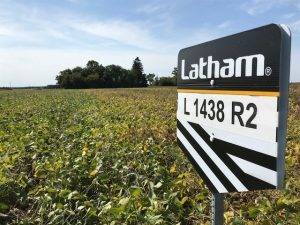
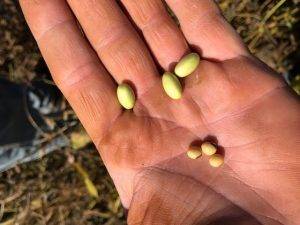
    Soybeans are turning and leaves dropping, indicating that harvest is quickly approaching. These photos below show white mold has taken its toll, but L 1438 R2 did not give in. Also pictured is L 1438 R2 to compare the soybean size to an experimental that did not withstand the white mold pressure. The last photo is white mold spores In the same field.

    NOTE: Paying close attention to white mold scores will be key to preserving yield here in the future. The best offense will be planting a defensive IRONCLAD brand, available exclusively from Latham Hi‑Tech Seeds.

    Joe 1

    Joe 2

    Joe 3

    NORTHERN MINNESOTA

    Ken Highness

    Root dig on corn health in Beltrami, Minnesota.

    Ken H

    SOUTHEAST SOUTH DAKOTA

    Ramie Coughlin

    This week Estelline Co-op Grain hosted its annual plot day to showcase the best of Latham® seeds. What a great turn out!

    We are experiencing temps in the upper 80’s with 15-mph winds, so crop conditions are changing quickly. Most farmers here will be harvesting in two weeks or less.

    Ramie

    NORTHEAST SOUTH DAKOTA

    James Keltgen

    Latham® L 0982 R2’s are turning quickly near Watertown. Harvest could begin next week here.

    James 1

    L 0982 R2’s are being harvested near Frankfort, SD. This particular field was planted on a bio-strip cover crop, and our customer will be a strong contender in the South Dakota Soybean Association yield contest with this variety!


    James 2

    LH 4657 VT2 PRO RIB looks to yield well in a drought-stressed field southeast of Huron.

    James 3


    SOUTHEAST NORTH DAKOTA

    Gary Geske

    This week we’re conducting our second round of field inspections for seed production. Latham soybeans are looking outstanding!

    Gary G Gary G

    EASTERN NORTH DAKOTA

    Brian McNamee 

    Soybean harvest is underway across the area. Edibles are average to slightly above average. With a good contract price, it will equal a good return on investment for the farmer. I wish we could say the same thing for the rest of the soybean crop! Early maturing or drought-stressed soybeans are being harvested, primarily in the central part of my region. Yield reports are anywhere from 14 to 45 bushels per acre, but 25 bushels per acre and under is far too common.

    Brian 1

    Brian 2

    Laura Cunningham

    September 12, 2018
    #FromTheField Crop Reports, Season, Summer
  • Latham Hi‑Tech Seeds

    From the Field Crop Reports 9/5/18

    James 1

    EASTERN IOWA

    Jerry Broders

    Eastern Iowa has received a lot of wind and rain during the past week. The crop continues to mature, and we’re holding plot tours around the region. Remember Latham’s Field Day will be Sept. 14 at the home farm in Alexander. You’re invited to road trip to North Central Iowa!

    At Latham Hi‑Tech Seeds, we’re all about options for farmers. Pictured here is a soybean field by Muscatine, Iowa. It is hard to tell if this is soybean or waterhemp field! We have trait options to take care of this issue, so talk to your local Latham® representative for the best choices for your operation. 

     Jerry 1

    Jerry 3

    Jerry 2


    CENTRAL IOWA

    Bryan Rohe

    Curious as to how much rain has fallen? Climate FieldView is a very helpful – and free – tool that allows you to check rainfall even when you’re away from your home. Plus, you never have to remember to dump the gauge. 

    Weather is one of the factors we can’t control. However, this data allows us to track how different hybrids respond to rainfall amounts. It’s one more way we can help select the best seed for each field.

     Bryan 1


    NORTHEAST IOWA & SOUTHEAST MINNESOTA

    Craig Haaland

    Here is a field of Latham® LH 5099 SS RIB in Mitchell County, Iowa, that was planted corn-on-corn.

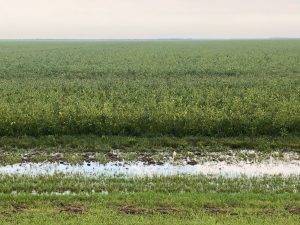
    Rain, rain and more rain! That’s what Mother Nature has been giving us during the past couple of weeks.

    Some areas have received 7 inches in just a few days. We hope fields dry quickly because harvest is inching closer.

    Craig 1

    WEST NORTH CENTRAL IOWA

    Bart Peterson

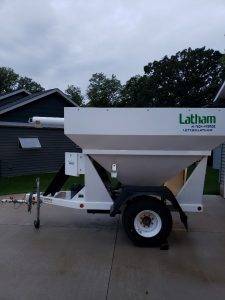
    Last week I got the weigh wagon tuned up and the oil changed. We’re ready for Latham® SuperStrip Plots, co-op plots and side-by-side checks!

    Bart 2

    NORTH CENTRAL IOWA & SOUTH CENTRAL MINNESOTA

    Cory Greiman

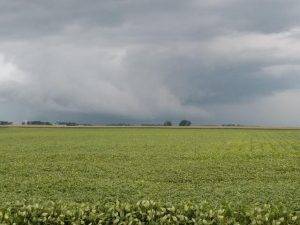
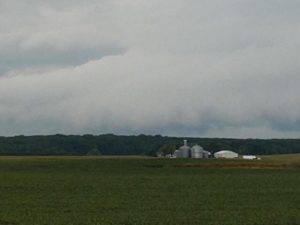
    We’ve experienced one storm after another. Pictured here are warning clouds and heavy rain near Algona, Iowa.

    Cory 1
    Cory 2


    NORTHWEST IOWA

    Darin Chapman

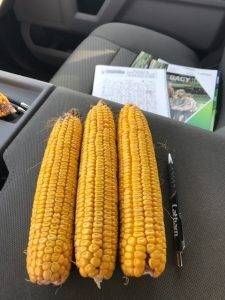
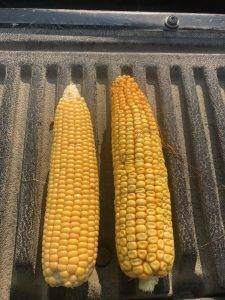
    By the looks of the bright orange kernels on these ears, we should be very pleased with the test weight on this Latham LH 5215 VT2 PRO!

    It has been raining steadily in Northwest Iowa for the past couple of days, and it’s supposed to continue raining the rest of this week. Hopefully, it stops soon. We don’t need a wet fall to match our wet spring!

    Darin 1

    Darin 2

    WESTERN IOWA & EASTERN NEBRASKA

    Larry Krapfl

    Harvest is just around the corner on these LH 2682 R2X.

    Larry 1

    SOUTHERN WISCONSIN

    Greg Mair

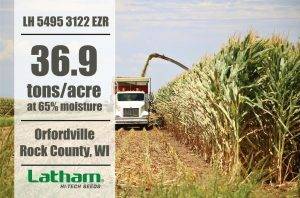
    Corn silage acres are drying fast.  Across southern Wisconsin, we’re seeing about 50% milk line in grain is consistently 63-65% whole plant moisture.  We’re also seeing some really great tonnage.

    Widespread rain across southern Wisconsin has kept choppers out of the fields this week.  Moisture at harvest is key to proper storage and feed quality.  Call me if you are interested in a “no strings attached” corn silage moisture test.  

    While some corn acres are maturing, there are a lot of acres that are showing signs of a new disease in Southern Wisconsin.  Tar Spot has been at the forefront of growers’ minds.  We are still learning about this disease, but we know that timely harvest will allow you to capture the most yield.  Stalk quality may deteriorate very quickly in severely affected acres.  


    Greg 1

    Greg 2

    NORTHERN WISCONSIN

    Joey Salter

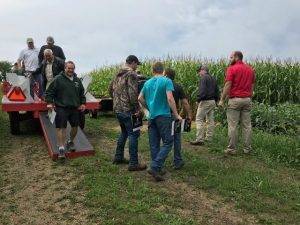
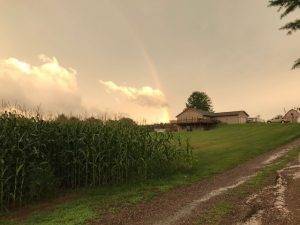
    Rain events and storms have been the story for the past week.  I didn’t think I would say this, but it can stop raining anytime now. Photos 1 and 2 were taken at Corey Catt’s  plot day. Corey did a fantastic job talking about Latham products, and we appreciate all of the farmers who showed up on a rainy day. The last picture was at my house in Fall Creek where I managed to catch some after shots of the storm. 

    Joey 1

    Joey 2

    Joey 3

    Joey 4


    NORTHERN MINNESOTA

    Ken Highness

    Do you know Americans eat about 8 pounds of beans per person each year? North Dakota ranks first in the nation of all dry edible bean production. Harvest of edible soybeans is underway from the Canadian border to Morris, Minnesota. This is a field of kidney beans near Morris. Crops were stressed throughout this region from too little summer rain. Stalk integrity will be a challenge, so farmers are making harvest management a priority. Be sure to also monitor stalk quality in your corn fields and harvest the worst first.

    Ken 2

    Ken 1


    SOUTHEAST SOUTH DAKOTA

    Ramie Coughlin

    This photo shows Latham® Liberty soybeans at their finest.

    When deciding which trait to use, look at the yield potential for your maturity zone and the trait YOU need to control weeds in YOUR fields. Many people ask me about yield potential on “old” traits verses “new” traits. Each trait group has some excellent products. Newer traits typically are stacked on the newer genetics, but many growers contend there are older soybeans that keep winning the farm year after year. I’ll be glad to meet with you about which products are best for you, field by field.

    Ramie 1

    NORTHEAST SOUTH DAKOTA

    James Keltgen

    LH 3937 VT2 PRO is nearly to black layer with kernel counts of 20X30 at 32,000.

    James 1

    LH 5175 VT2 PRO DroughGard® at 18,000 is putting on two to three ears at Hermosa, South Dakota.


    James 2

    SOUTHEAST NORTH DAKOTA

    Gary Geske

    As this year’s crop of soybeans reaches maturity, look at the different varieties you have planted. Some very healthy varieties may stay greener than you thought, so you may need to change your harvest rotation. Keep inspecting corn fields for stalk issues, which may require an earlier harvest.


    Gary g

    EASTERN NORTH DAKOTA

    Brian McNamee 

    It’s that time of year when silage testing is in full swing. Initial testing confirms that tonnage per acre will be down across the state, especially in drought-stricken areas. Ear sizes are down considerably due to little to no rain at optimal times. However, we are seeing positive results despite the adverse conditions and moisture limitations as pictures show. As always, Latham’s Leafy hybrids are on the leading edge.

    Brian

    Brian 2

    Laura Cunningham

    September 5, 2018
    #FromTheField Crop Reports, Season, Summer
  • Latham Hi‑Tech Seeds

    From the FIeld Crop Report Update 8/29/2018

    Darin

    EASTERN IOWA

    Jerry Broders

    Crops are starting to turn in Eastern Iowa. It has the makings of an early harvest this year.

    Jerry 2

    Jerry 1

    CENTRAL IOWA

    Bryan Rohe

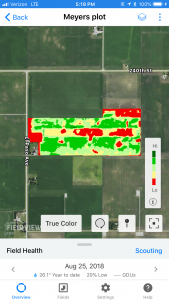
    Now’s the right time to plan for the 2018-2019 crop year! With technology like Climate FieldView, you can see where nitrogen or other inputs are needed to help you add bushels per acre. We can work with you to select seed products based on your maps, too. The best time to look at field imagery is during the growing season. If your interested in gleaning more information from your field maps, please call me. 

    Bryan

    NORTHEAST IOWA & SOUTHEAST MINNESOTA

    Craig Haaland

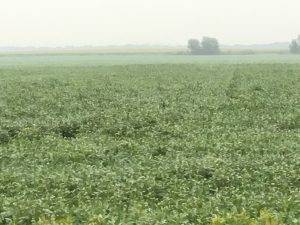
    Here’s a field of Latham’s Liberty soybean product L 1448 L in Mower County Minnesota. With the August rains that fell, these soybeans are finishing to the top of the plants. There’s potential for really good soybean yields. Corn fields seam to be coming along pretty good, too.

    Craig H

    WEST NORTH CENTRAL IOWA

    Bart Peterson

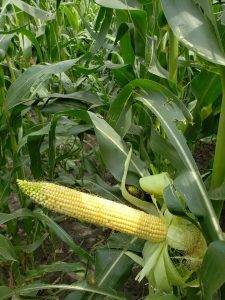
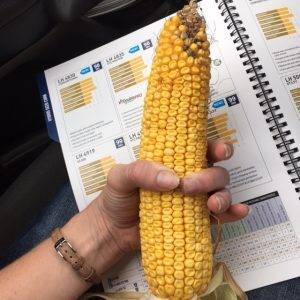
    Pictured is a randomly pulled one ear of a Latham SmartStax in Humboldt County. Just look at the size of that ear!

    Bart

    NORTH CENTRAL IOWA & SOUTH CENTRAL MINNESOTA

    Cory Greiman

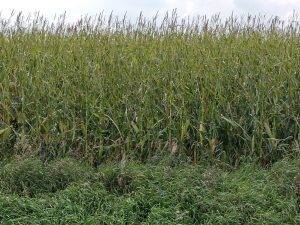
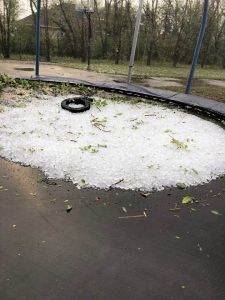
    It was another weekend of wild weather in my area. This photo shows recent hail damage along the Iowa- Minnesota boarder near Bricelyn, Minn.

    Cory G

    NORTHWEST IOWA

    Darin Chapman

    This week I was scouting fields with a Latham® dealer, and we’re both impressed with L 2186 LL soybeans!

    Darin

    WESTERN IOWA & EASTERN NEBRASKA

    Larry Krapfl

    Latham’s L 3158 LL looks to be a bin buster again in 2018! I’m eager for yield reports.

    Larry 1

    Larry 2

    SOUTHERN WISCONSIN

    Greg Mair

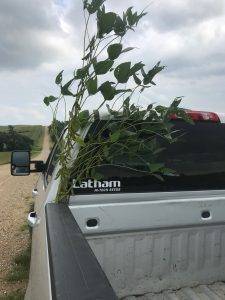
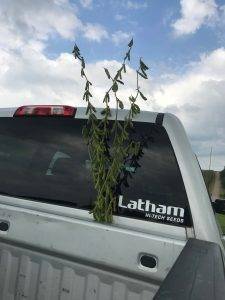
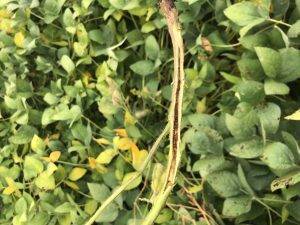
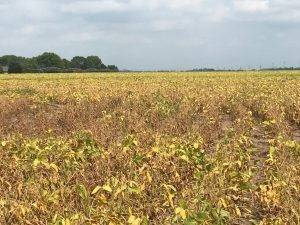
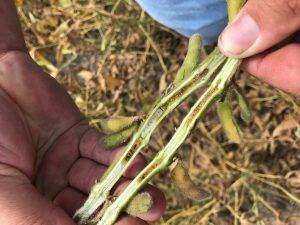
    Brown Stem Rot (BSR) is showing up in Southern Wisconsin more than we have seen it in recent years.  Since the symptoms are similar to that of Sudden Death Syndrome, the best way to diagnose BSR is to split the stalk of an infected plant.  Internal browning of the vascular tissue and pith with help determine BSR from the symptoms of SDS.  Since fungicides and seed treatments are ineffective against BSR, the best way to mitigate risk is to plant a variety with known resistance to BSR.

    Greg M 1

    Greg M 2

    NORTHERN WISCONSIN

    Joey Salter

    While Latham® IRONCLADTM soybeans aren’t covered with steel, they do have to meet stringent requirements.  Our high standards ensure IRONCLAD products can battle the toughest in-field challenges, including Soybean Cyst Nematode (SCN), Iron Deficiency Chlorosis (IDC), White Mold, Sudden Death Syndrome (SDS), Phytophthora Root Rot or Brown Stem Rot (BSR). 

    I drove past a field this week and just had to stop to take a close look.  Some fields of soybeans are turning from lack of rain, but this field was turning brown from BSR.  Since this field isn’t a current customer’s field, it provided an opportunity for me to talk to this farmer about Latham’s soybean lineup – and more specifically our exclusive IRONCLAD soybeans.

    Joey 1

    Joey 2

    NORTHERN MINNESOTA

    Ken Highness

    Severe weather last Saturday caused extensive damage to crops and residential properties. These pictures were taken near Hickson, North Dakota. In other areas of my territory, there are pockets of corn under stress from lack of rain. Watch your fields closely and monitor the stalks for integrity.

    Highness 1

    Highness 2

    Highness 3


    SOUTHEAST SOUTH DAKOTA

    Ramie Coughlin

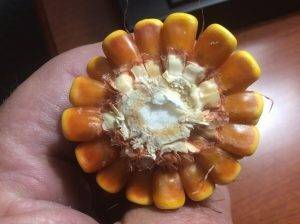
    This Latham® show plot is looking really good at  Montrose, South Dakota. This particular ear of LH 4835 VT3 PRO has 20 rows of kernels. 

    Silage choppers are starting to roll throughout my territory. The ideal plant moisture stage for silage is around 60 to 70 percent, which is approximately 50 percent milk line. Many fields have a week or better before they will be ready, but some of the earlier planted fields are ready to go. With the amount of moisture we have had this year, those chopped fields should easily support a late fall cover crop seeding. Growers are seeing lots of varying benefits to cover crops such as serving a nutrient source, controlling weeds and better planting conditions in the following spring.

     Ramie C

    NORTHEAST SOUTH DAKOTA

    James Keltgen

    We experienced cooler weather this past week but no frost is expected. Corn is still maturing ahead of pace. Northern Corn Leaf Blight is showing up in varieties that are susceptible to it. Soybeans are adding bushels thanks to the continued rains in some areas while other parts of the state would welcome moisture as drought is still present.

    James 1

    James 2

    SOUTHEAST NORTH DAKOTA

    Gary Geske

    With the extra heat units we received through this summer, corn may be more mature than anticipated. Here is an ear of LH 3397 VT PRO RIB that is already within a week of black layer. When crops mature this rapidly, we need to monitor fields for stalk rots or weakness. Do a pinch test often to identify fields that may need to be harvested early.

    Gary 1


    EASTERN NORTH DAKOTA

    Brian McNamee

    I can only assume that farmers here would agree with me… this drought map doesn’t do justice to the true condition of the crop. Soybeans are all but dead in certain geographies, and the corn is barely hanging in there. Choppers continue to roll on surrendered grain acres.

    After 4 or 5 weeks without measurable amounts, last Sunday rain fell across the most severely affected regions of North Dakota. I’ll bet soybeans will show a positive response and grain fill will benefit substantially. These past two days of rain are a life saver for many!

    Brian M

    Shannon Latham

    August 29, 2018
    #FromTheField Crop Reports, Season, Summer
  • Latham Hi‑Tech Seeds

    From the Field Crop Report Update 8/22/18

    Darin 1

    EASTERN IOWA

    Jerry Broders

    We received some welcome rain in Eastern Iowa during the past few days. Crops are moving along at a rapid pace. Pictured here are three awesome full season hybrids that everyone should here should consider planting in 2019: LH 6285 VT2 PRO, EX 6397 VT2 PRO, and LH 6425 VT2 PRO. 

    Jerry 1

    Jerry 3

    Jerry 2

    CENTRAL IOWA

    Bryan Rohe

    It’s a very busy time of the year as farmers are getting silage harvested; getting their combines ready to roll, updating precision equipment, and attending field days to make crop decisions for 2019 while they can take advantage of the highest cash discounts. 

    Bryan 1

    Bryan 2

    Bryan 3

    NORTHEAST IOWA & SOUTHEAST MINNESOTA

    Craig Haaland

    Here is a nice looking Latham® corn plot in Black Hawk County. Combines will be likely roll here in another three weeks. Northern Iowa has received plenty of rain, so the top of these soybean plants have really filled out this past week. Some farmers have been spraying for aphids, and we’re starting to see some Sudden Death Syndrome (SDS). Remember to note areas with SDS, so you can choose IRONCLADTM soybean products the next time those fields are planted to soybeans.

    Craig H

    WEST NORTH CENTRAL IOWA

    Bart Peterson

    The Fort Dodge, Iowa, received six inches of rain on Monday, Aug. 20. Another four inches fell there on Aug. 21. Ten inches of rain in a short amount of time is causing flooding.

    Bart

    NORTH CENTRAL IOWA & SOUTH CENTRAL MINNESOTA

    Cory Greiman

    Latham’s LH 4454 VT2 PRO RIB is looking good! This particular field was planted during the first week of June near Emmetsburg, Iowa.  The average size of the six ears I picked from one row is 16×36 at final stand of 36,000 plants per acre.

    Cory G

    NORTHWEST IOWA

    Darin Chapman

    It’s been great seeing all of the late new growth on the soybeans from the late August rains. Latham LH 4835 VT2PRO RIB looks like it’s coming along nice, as well!

    Darin 2

    Darin 1

    WESTERN IOWA & EASTERN NEBRASKA

    Larry Krapfl

    Sudden Death Syndrome is showing up in susceptible soybeans. Remember, the best way to combat SCN is to plant resistant varieties or avoid susceptible varieties. Be sure to keep Latham IRONCLAD™ soybeans in mind when mapping out which varieties will be used on different fields in the future.

    Larry

    SOUTHERN WISCONSIN

    Greg Mair

    Crops are moving along very quickly in Southern Wisconsin and development is 5 to 7 days ahead of the average.  Corn Silage Harvest is just around the corner. Latham’s  LH 5215 VT2 PRO looks fantastic in Platteville, Wisc.  While grain yields are good with this product, the milk per ton makes this an excellent dual-purpose corn hybrid.

    Greg

    NORTHERN WISCONSIN

    Joey Salter

    Although dry weather seems to be the norm, crops in Northern Wisconsin still look good. I walked several fields this week and noticed some denting in a few fields but the majority of corn is still in milk stage. 

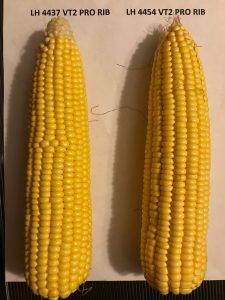
    Pictured below are two impressive hybrids in one of my plots that was planted May 16 at a plant population of 32,000. LH 4437 VT2 PRO RIB is a girthy hybrid with a semi-flex ear. I pulled a random ear that had 18 rows and 38 kernels per row. Latham’s Super Star LH 4454 VT2 PRO RIB is a very good looking hybrid with a determinate ear and excellent stay green. I counted an ear with 16 rows and 40+ kernels per row. These two hybrids are in a plot with later day maturity hybrids yet are holding their own.  I look forward to watching the yield monitor on this plot!

    Joey


    NORTHERN MINNESOTA

    Ken Highness

    Wheat harvest is wrapping up in my region. Spring wheat yield and protein vary, depending on rainfall and variety. Overall, the wheat crop is average to above-average in my region. We are finding aphids in fields this week, so farmers are spraying. These pictures were taken in a great looking field of L 0858 R2X south of Barnesville, Minn.

    Ken 1

    Ken 3

    SOUTHEAST SOUTH DAKOTA

    Ramie Coughlin

    Pictured here is a field of LH 4450 CNV at its finest. The corn is at 50% milk. As usual, I found plants standing less than 6′ tall with ears of 18 rows around and 32+ kernels long. This is such a rock star hybrid, but you have to actually walk in the field to see it. Most areas across the state picked up some much needed rain this past week. Soybeans are trying to fill pods but needed a drink to finish filling nicely. While the crops continue to put on bushels this week, we’re getting to visit with growers at Dakota Fest in Mitchell.

    Ramie

    NORTHEAST SOUTH DAKOTA

    James Keltgen

    Saving rains, ranging from 1 to 5 inches, fell across many areas during the last week. Many areas in the east that were showing drought stress should be in better position to finish off the crop after a 2-inch rain. Corn is packing in dry starch now. Soybean pods are filling, as well as adding pod clusters on lateral branches and tops. Central South Dakota missed the rains again, so areas west of Highway 281 are especially dry.

    James

    SOUTHEAST NORTH DAKOTA

    Gary Geske

    This field of Latham L 0842LL  soybeans look extremely healthy. I can’t wait for harvest results!

    Gary

    EASTERN NORTH DAKOTA

    Brian McNamee

    Crops in the southern part of North Dakota caught a two-inch rain last weekend. It literally turned the crop around in 12 hours. Grass turned green again in the ditches and yards. Now our Latham® dealers and customers in the north and western part of the state are praying for the same. These photos were taken of fields that have received barely a ¼ inch of rain in the last 30 days and about 8 inches during the entire growing season. Surprisingly, the quality of the corn crop is still above average. Farmers, who spent more money per acre on balanced fertility and soil health, are see a difference in their crops as we head down the final stretch under such adverse growing conditions.

    Brian 2

    Brian 1

    Laura Cunningham

    August 22, 2018
    #FromTheField Crop Reports, Season, Summer
  • Latham Hi‑Tech Seeds

    From the Field Crop Report Update 8/15/2018

    Cory G

    EASTERN IOWA

    Jerry Broders

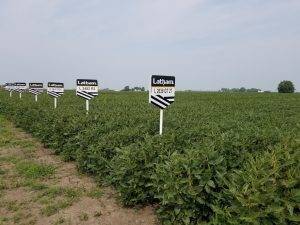
    Soybeans are looking great in Eldridge, Iowa. This soybean SuperStrip™ plot also includes the newly approved trait package LLGT27® soybeans. Many of these plants have 4-bean pods. All we need is some August rain to fill the pods!

    Jerry B

    CENTRAL IOWA

    Bryan Rohe

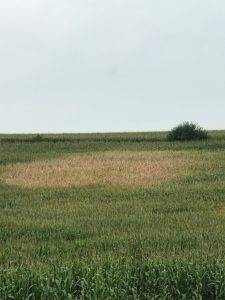
    The picture below shows the stark difference of soil type within the field. You can see the top of the hill is severely affected from drought like conditions where the soil has higher clay content. These areas are turning brown and prematurely dying off.
    Bryan

    NORTHEAST IOWA & SOUTHEAST MINNESOTA

    Craig Haaland

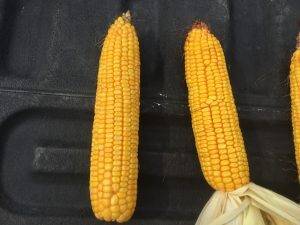
    Here is a picture of our popular LH 5245 VT2 PRO RIB in Butler County. Corn is coming along really well. Most of the corn is dented in that area. In another month, harvest could be underway. Rain fall last week ranged from 1 to 4 inches, so that will help fill the pods in soybean fields.
    Craig H

    WEST NORTH CENTRAL IOWA

    Bart Peterson

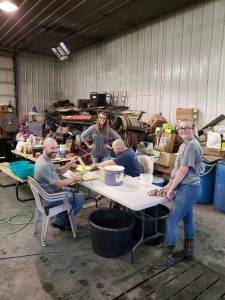
    We are cooking and freezing sweet corn today at the Sandven Farms! Picture includes Latham® dealers Tyler & Michelle Sandven, daughter Sydnie Sandven and brother Craig Sandven. Those who also helped but are not pictured: Rylie Sandven, Cindy Sandven, Braydon Sandven, Doug Sandven and summer help Jake Heslop. They used Grandma Joann Sandven’s recipe. 

    Bart Peterson

    NORTH CENTRAL IOWA & SOUTH CENTRAL MINNESOTA

    Cory Greiman

    We saw tremendous ear size when we were out scouting this week. All three were planted on May 10th in the Garner, Iowa region.

    Top hybrid pictured is LH 4454 VT2 PRO RIB 16 kernels wide and 40 long at 35,000 final stand.

    Middle hybrids is LH 5099 SS RIB 16 kernels wide and 38 long at 36,000 final stand.

    The bottom hybrid is LH 5245 VT2 PRO RIB at 18 kernels wide and 42 long at 36,000 final stand.

    Cory G

    NORTHWEST IOWA

    Darin Chapman

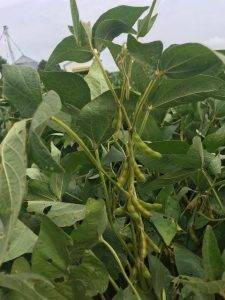
    We had a successful day scouting fields this week! We were happy to see the clusters and 4-bean pods all the way to the top of the plant on Latham L 2184 R2X soybeans. Look forward to seeing the results this fall.
    Darin

    WESTERN IOWA & EASTERN NEBRASKA

    Larry Krapfl

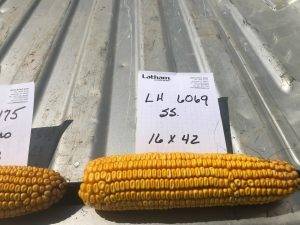
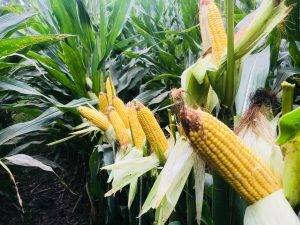
    Latham LH 6069 SS RIB is out performing the competition in Mapleton, IA. This hybrid has an average of 16 kernels wide and 36 kernels long. There are approximately 32,250 ears per acre. We are looking forward to harvesting this hybrids in the fall! 
    Larry

    SOUTHERN WISCONSIN

    Greg Mair

    Early signs of Sudden Death Syndrome in soybeans are starting to show up in areas of Southern Wisconsin.  Selecting a soybean variety tolerant to SDS and also using ILeVo® seed treatments are two of your best options to combat SDS and leave yield unaffected. Call me for an in-field evaluation to determine if ILeVo seed treatment should be on your soybeans in 2019.

    Greg

    NORTHERN WISCONSIN

    Joey Salter

    We are now starting to see white mold pressure in areas with heavy rains this season. Keep in mind that if white mold has been an issue, your best future defense is selecting seed with good white mold ratings. Only Latham Hi‑Tech Seeds offers IRONCLAD® soybean brands. We can work with farmers to choose the right soybean products on a field-by-field basis. It will be fun to watch the tolerance of some of our defensive varieties over the next few weeks in plots.

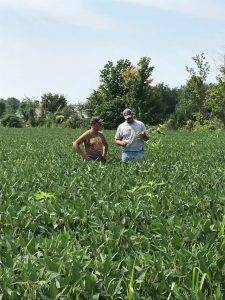
    In photos below, a new Latham Dealer and I were scouting for aphids.  Aphid numbers were very high but not to threshold. They will monitor the aphid population over the next few days to see if spray is warranted.
    Joey S 1

    Joey S 2

    NORTHERN MINNESOTA

    Ken Highness

    Another good year for American Crystal Sugar Company of the Red River Valley. Opening of fields was Tuesday, August 14, 2018! They started earlier than usual and above normal temperatures have given the growers a very good crop this year! This picture was taken Tuesday on the farm of Riverton seed in Glyndon, MN.

    Ken

    SOUTHEAST SOUTH DAKOTA

    Ramie Coughlin

    We spotted have denting corn in Southeast South Dakota! While many fields I have been in this week are still in the milk stage, a few are beginning to dent. Early planted, early maturities, and the moisture (drought) stressed fields are moving right along. Some areas have reached moisture stress levels. I’ve also seen a few soybean fields that could really use a drink of water to fill those pods.

    As a cold front moves in, watch aphid numbers. Temperatures of 75 to 83 degrees Fahrenheit are prime for aphid reproduction and they reproduce very quickly! A few areas have hit threshold levels (250/plant). Most soybean fields have a couple of weeks before they hit that R6 stage where aphids are no longer a concern or threat. Scout, scout, scout! Do NOT spray until insect pressure has hit threshold levels in YOUR field. Economic threshold for aphids is 250/plant.
    Ramie C

    NORTHEAST SOUTH DAKOTA

    James Keltgen

    Dry weather has been the theme  for the past few weeks in Northeast North Dakota. Very little rain has fallen and above-normal temps are taking their toll on the crops. Soybeans are wilting and corn is firing on lighter soils. We hope the expected cooler weather with a chance of rain makes it’s way here!

    Yields look to be best on the Eastern and Southern parts of my territory. Corn is now in the milk stage and soybeans are beginning to fill seeds in the pods.

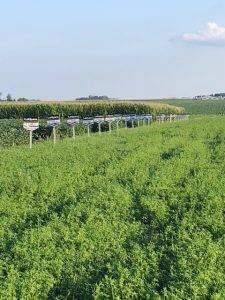
    Pictured below is Latham’s Branch Root Alfalfa. It has customers impressed! This is third-year alfalfa.
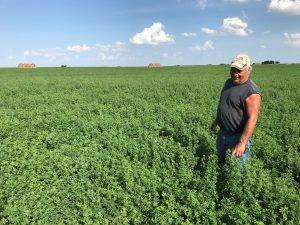

    James K

    SOUTHEAST NORTH DAKOTA

    Gary Geske

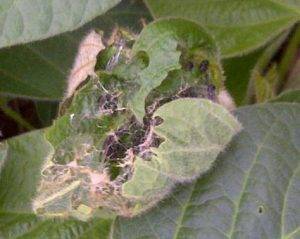
    While inspecting soybean fields for aphids, also look for this pest. Thistle caterpillar can cause significant damage with leaf feeding. More extensive damage can be seen where upper leaves are rolled together with a web-like fiber. According to Iowa State University, economic thresholds are seldom reached. If you  find an insect on approximately every other plant or see about 20-25% leaf feeding, consider insecticide applications.
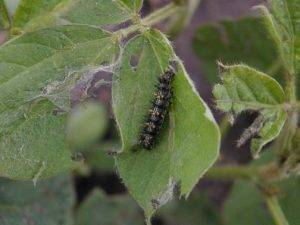
    Gary G

    Gary G 2

    EASTERN NORTH DAKOTA

    Brian McNamee

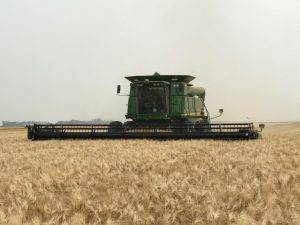
    Small grains harvest across the state is in full swing. There are quality issues in wheat this year with high (rejectable) amounts of ergot found in some areas. Yields are all over the board as moisture accumulations across a widespread area of the state has fallen to a four-week lull. Later season crops, especially the soybeans, are digressing by the day. Whole fields of both soybeans and corn are dying.

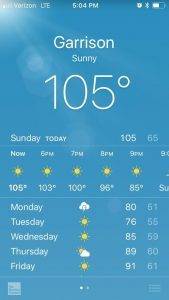
    We hit a 10-day stretch of extreme heat with highs in the triple digits 4 four of those days, topping out at a miserable 105. Cattle in the western part of the state died of heat stroke. We are seriously in need of rain for the second year in a row. Grain corn is starting to be chopped for silage. If we miss out for the next week or so, a lot more acres will be added to the pile.
    Brian M 1

    Brian M 2

    Laura Cunningham

    August 15, 2018
    #FromTheField Crop Reports, Season, Summer
  • Latham Hi‑Tech Seeds

    8/8/18 Crop Report Update

    Joey 1

    EASTERN IOWA

    Jerry Broders

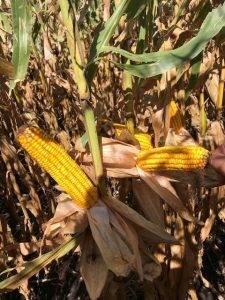
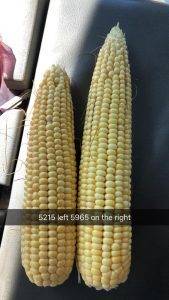
    Pollination has gone well in my area. These ears were grabbed from a field near Aurora in Eastern Iowa. Latham’s LH 5215 VT2 PRO RIB is 18 rows around and LH 5965 VT2 PRO is 16 rows around.


    Jerry

    CENTRAL IOWA

    Bryan Rohe

    Are you using precision for planting and harvest? Do you have a tough time understanding the maps and drawing conclusions? 

    Latham customers see value in working with us to use maps to select products and other inputs on a field-by-field basis. We’re here to help farmers understand their data or show them ways do get this data with no cost. Contact Phil Long at the Latham Seeds office at 877-GO-LATHAM to get started!


    Bryan

    NORTHEAST IOWA & SOUTHEAST MINNESOTA

    Craig Haaland

    WEST NORTH CENTRAL IOWA

    Bart Peterson


    NORTH CENTRAL IOWA & SOUTH CENTRAL MINNESOTA

    Cory Greiman

    NORTHWEST IOWA

    Darin Chapman

    We have been working hard in Northwest Iowa to get ready for plot tours! Darin 3

    Darin 2

    Darin 1

    WESTERN IOWA & EASTERN NEBRASKA

    Larry Krapfl

    This new seeding LH 455TQ RR was seeded April 10. First cutting was made July 2, and it was ready to cut again on August 1. The regrowth on this product is amazing! We will definitely get three, if not four, cuttings this season. I’m keeping my fingers crossed!

    Larry 3

    Larry 2

    Larry 2


    SOUTHERN WISCONSIN

    Greg Mair

    It’s hard for growers in Wisconsin not to show off their fields of LH 5245 VT2 PRO RIB. This field was planted early into cold soils. Quick emergence with a good early vigor score has helped this get off to a strong start. Excellent growing conditions have helped it develop nicely. It should be fun to see monitors when harvest rolls around.

    Greg M

    NORTHERN WISCONSIN

    Joey Salter

    Crops in Northern Wisconsin are hanging in there.  I checked some fields with a dealer and his customer, who is very satisfied with our products. LH 4241 RR, a strong silage hybrid with excellent starch digestibility and very good fiber digestibility. We also looked at LH 3547 VT2 PRO RIB and LH 3877 VT2 PRO RIB, which looked very good as well. 
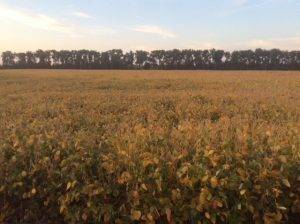
    Joey 1

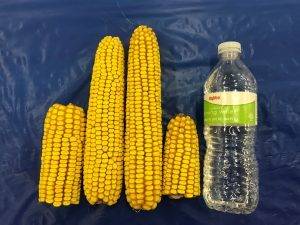
    Below you can see L 1184 R2X on the left and E 1159 R2 on the right. They are both looking very strong and showing consistent stand height.

    Joey 2

    The last photo shows the consistent height of L 0982 R2. Its standability was put to the test! This field was hit with heavy wind and rains. Now I’m seeing some white mold. Remember to note areas with white mold and plant IRONCLAD brands, exclusively from Latham, on those affected fields. The best offense against white mold is a great defensive product.


    Joey 3

    NORTHERN MINNESOTA

    Ken Highness

    Pictured here is a field of Latham L 0982 R2 that I was scouting for aphids. The corn picture was taken in a 160-acre field where LH 3877 VT2 PRO is looking very fine. My grandson Casen was helping me that day and was rewarded play time at the local playground!
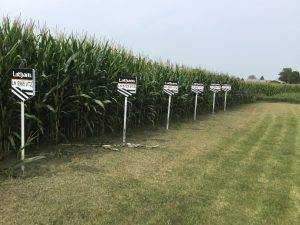
     

    Ken 1


    Ken 2


    Ken 3


    Ken 4

    SOUTHEAST SOUTH DAKOTA

    Ramie Coughlin

    Temps were below normal in perfect timing for the corn to flower in July. With most of the pollination done, temps have soared back to the 90s. These hotter temps should help keep the aphid populations in control and help put up some heat units that were lost in July. Now that August is here, harvest is just around the corner.
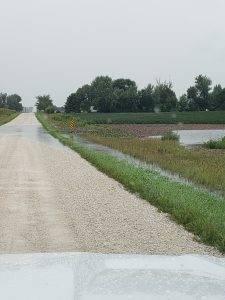

    Ramie

    NORTHEAST SOUTH DAKOTA

    James Keltgen

    SOUTHEAST NORTH DAKOTA

    Gary Geske

    As small grains and pulse crops ripen and harvest begins, keep scouting soybean and corn fields for insects. Insects migrate across to crops that still have green foliage as crops ripen and green tissue dries. If caught soon enough, we can often spray the borders of a field rather than applying insecticide to every acre.


    Gary G

    EASTERN NORTH DAKOTA

    Brian McNamee

    Laura Cunningham

    August 8, 2018
    #FromTheField Crop Reports, Season, Summer
Previous Page
1 … 8 9 10 11 12 … 17
Next Page

Latham Hi‑Tech Seeds

131 180th Street | Alexander, IA 50420

(641) 692-3258

SIGNUP FOR OUR NEWSLETTER
  • Contact
  • Legal
  • Dealer Center
  • Seedware Login
  • Latham Gear

© 2025 Latham Hi‑Tech Seeds. All rights reserved. | Iowa Web Design by Webspec | Privacy Policy

Latham® Hi-Tech Seeds is a trademark of M.S. Technologies, L.L.C., 103 Avenue D, West Point, IA 52656.