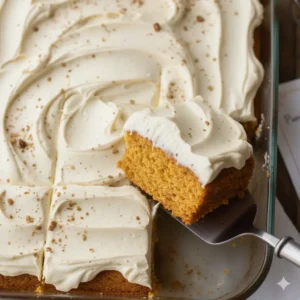
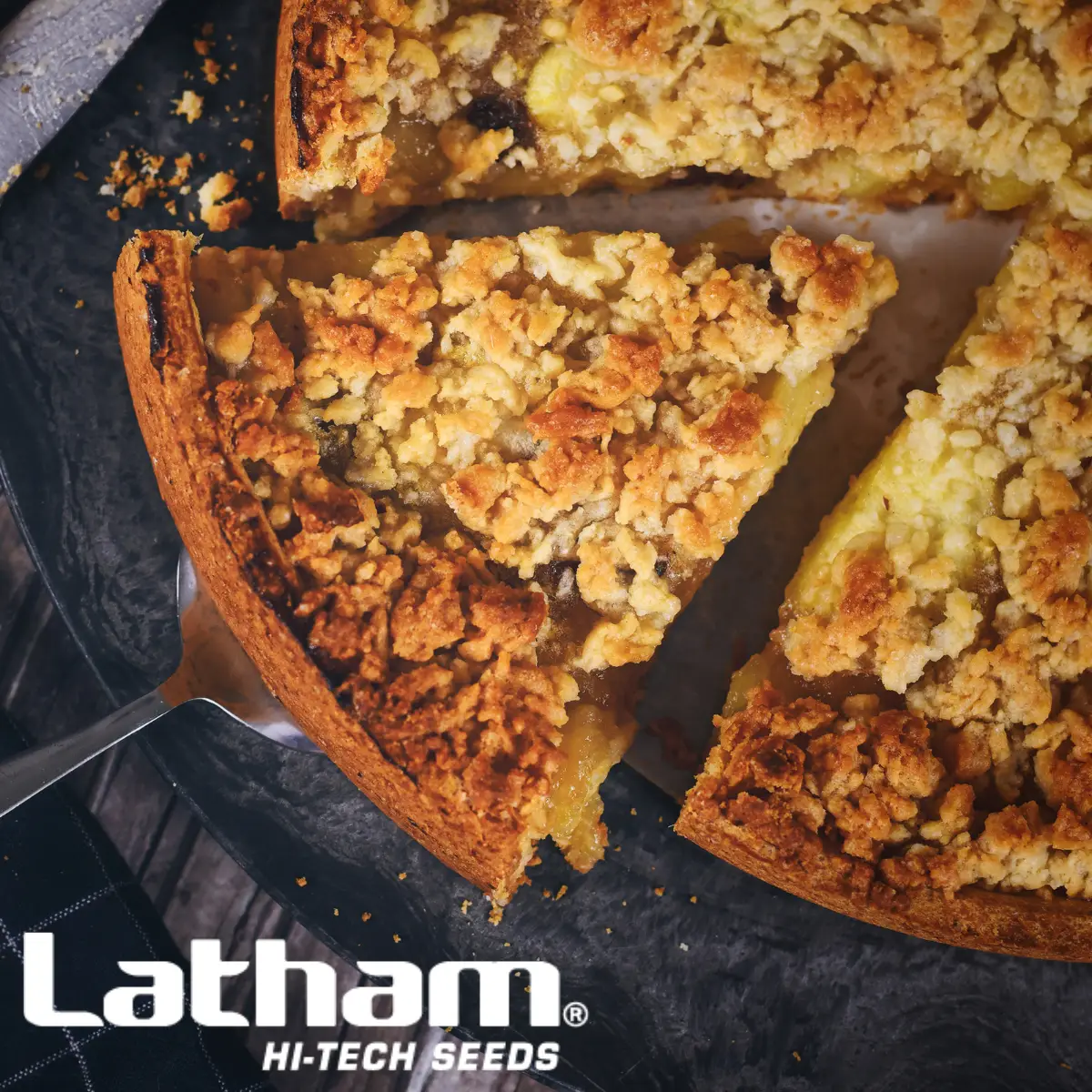
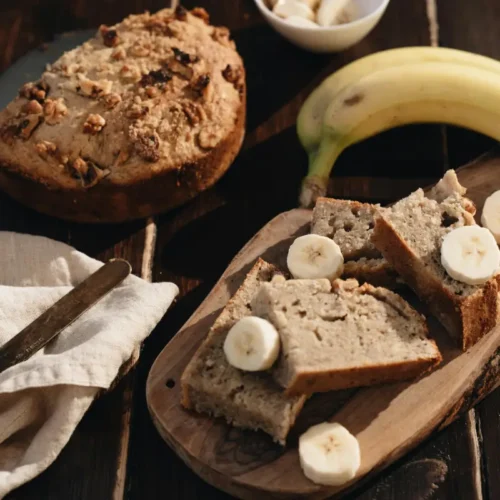
For National Peach Month, here is a Latham Family favorite recipe for peach pie. It’s unlike most peach pies because it has a sour cream filling. Besides being creamy and delicious, we Iove this recipe because we can “cheat” on the pie crust. This pie never disappoints!
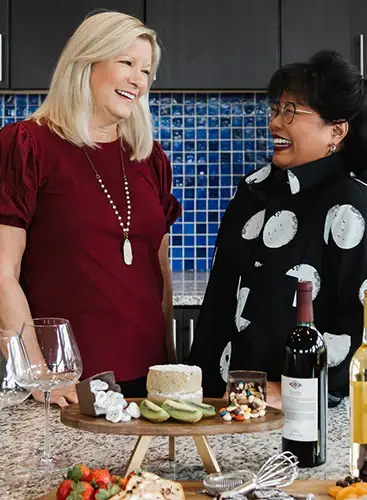
Baking just got a delicious upgrade thanks to The Dessert Mixologist, a women-owned company founded by long-time friends Rae Guillermo and Lorrie Popik. Their innovative, patent-pending dessert mix is plant based, customizable and fun. Add your favorite beverage — alcoholic or non-alcoholic — and you have an indulgent, dessert that’s ready in minutes. (Yes, minutes.)
This one-of-a-kind treat caught our attention! Latham Seeds has invited The Dessert Mixologist to join our 2025 Dealer Kickoff event in Mankato. But as we discovered, their story goes beyond sweet flavors. It’s also one of friendship, innovation and heartfelt giving.
Meet the Mixologists
Rae and Lorrie met at the University of Northern Iowa and have been inseparable ever since. Rae spent 25 years in product development and R&D at Cargill, while Lorrie brought decades of retail and marketing experience from Macy’s and Verizon. After retiring from their corporate careers, the two combined their strengths — and their shared love of dessert — into a new venture that makes baking easy, fun and social.
With just three ingredients (your favorite drink, water and oil) and a microwave, anyone can whip up an eight-serving dessert in no time. It’s as simple as: Measure. Mix. Microwave. Whether you’re planning a girls’ night, a holiday party or a Wednesday, it’s a treat that never fails to impress.
Mixing in a Meaningful Mission
What really sets this company apart is its purpose. A portion of profits from every Dessert Mixologist purchase goes to the Leukemia & Lymphoma Society. The cause is deeply personal to both founders, who lost two sorority sisters — and Rae’s sister — to blood cancers. Supporting research and raising awareness is baked into everything they do.
At Latham Seeds, this mission aligns closely with our own Seeds of Hope initiative, where proceeds from select hybrids support the American Cancer Society. That’s why we are so proud to share The Dessert Mixologist with our Dealers — and now, with you.
If you’re looking for a gift, a conversation starter or just a really good reason to say, “cheers,” visit dessertmixologist.com and grab a mix (or two). You’ll satisfy your sweet tooth and support a worthy cause with every bite.
Here is just one of their favorite boozy recipes for you to try.
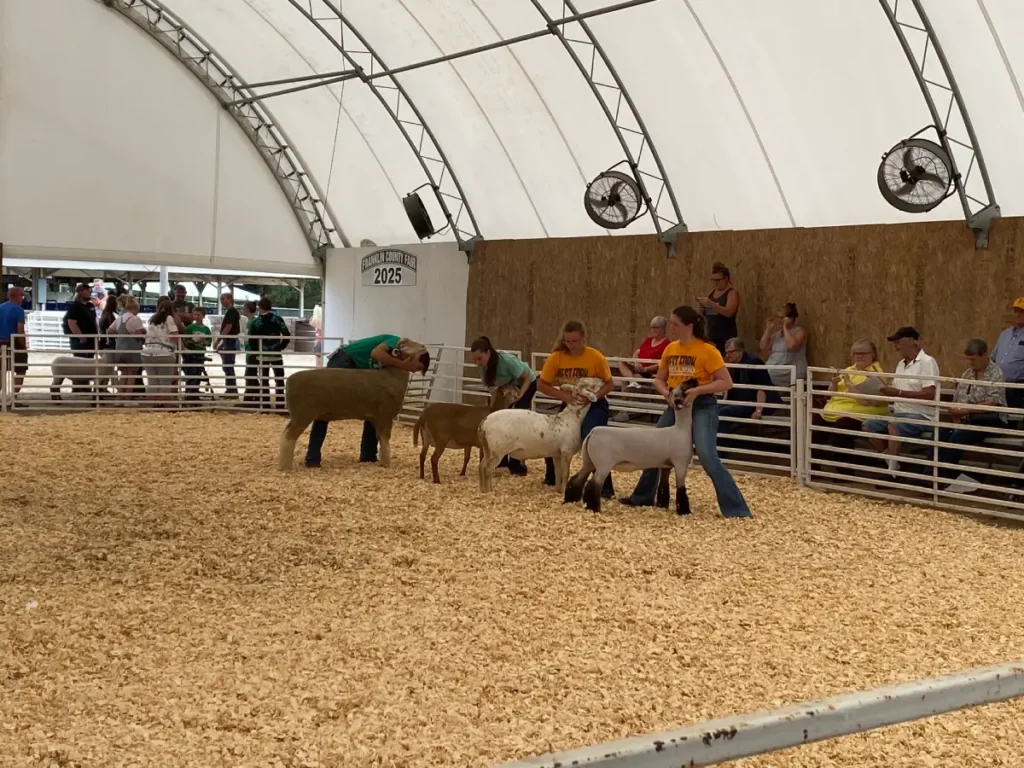
When you grow up in a competitive family, working hard isn’t optional — it’s expected. That’s especially true for Jadyn Dirksen, a 2024 high school graduate who’s making her mark both at Latham Seeds and in the livestock show ring.
Jadyn started working at Latham Seeds as a summer box washer, but her strong work ethic quickly caught the attention of her supervisors.
“She was always one of the first to show up and never afraid to get her hands dirty,” says one team member.
Jadyn returned in the fall to help with painting projects, and soon after, she was offered a full-time position in the plant.
“I like that there’s something different to do every season,” Jadyn says. “And I love working outside. I don’t want to be stuck behind a desk.”
She’s also looking forward to the remodel of Latham’s scale house, which will bring the lunchroom, team meeting space and seed lab under one roof.
“It’s going to be so nice to have everything in one place,” she adds.
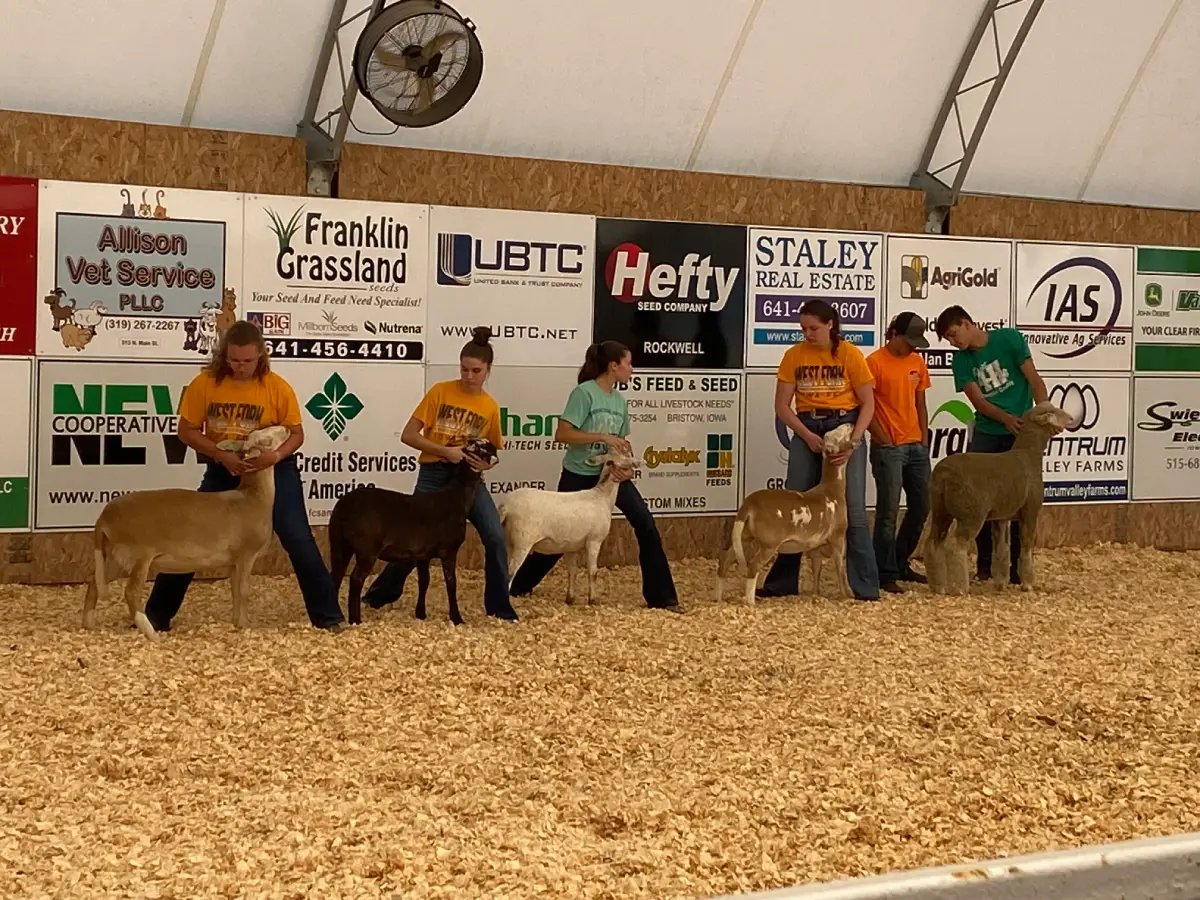
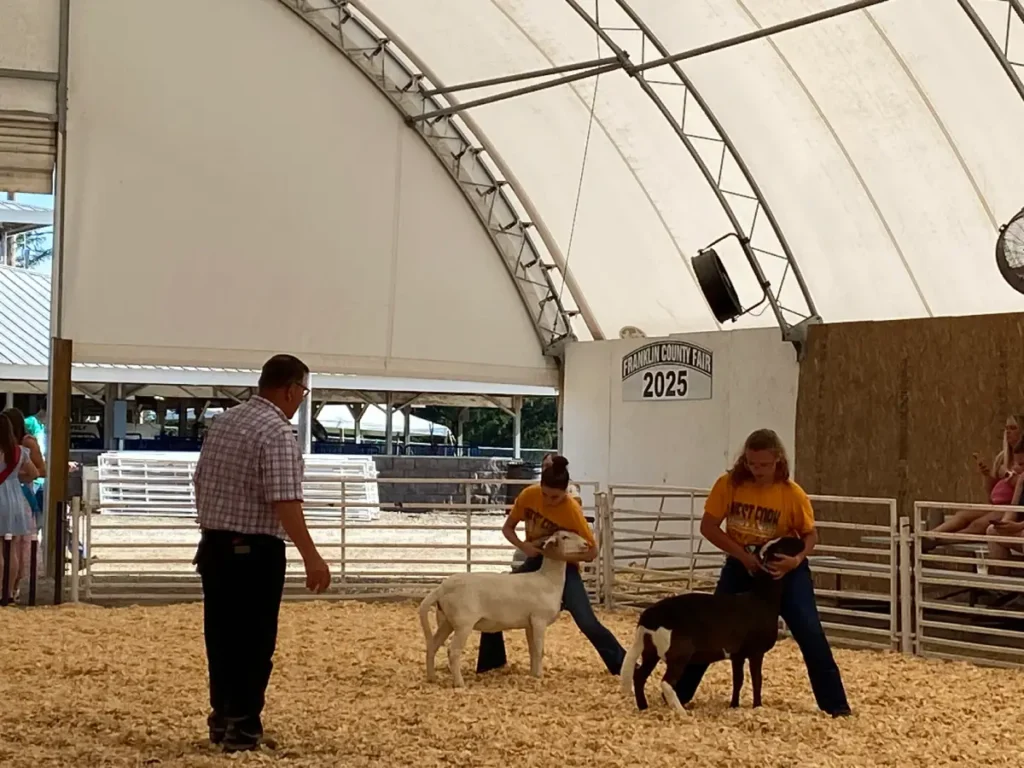
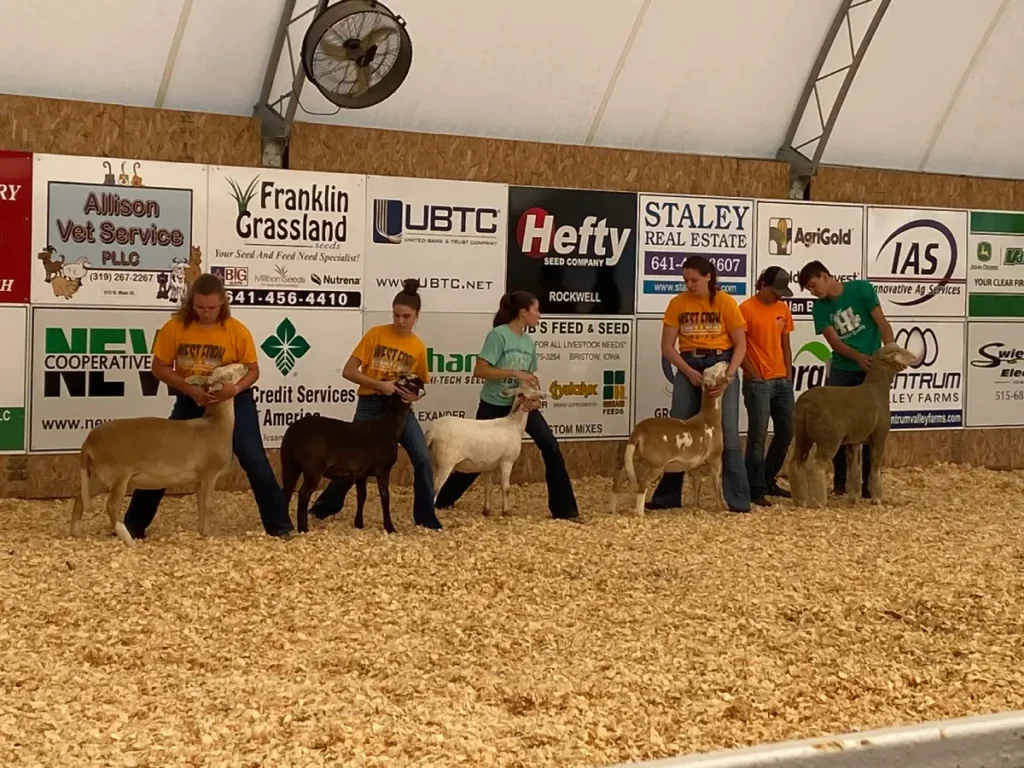
That flexibility and variety are a perfect fit for someone with a full summer schedule. Jadyn shows sheep through FFA after aging out of her 4-H club, West Fork Winners, where she was a member for nine years. Her interest in showing started early, helping her older sister, Macy, before stepping into the ring herself.
“I figured if I was going to work that hard, I might as well show my own sheep,” she says with a smile.
Today, Jadyn favors Katahdins, a hair sheep breed that’s easier to manage and doesn’t require shearing. She works with her lambs every day and showed two ewes and one ram at this year’s fair.
“Showing teaches responsibility and commitment,” she says. “Once you start, you have to finish.”
When she’s not working or preparing for the next fair, Jadyn enjoys spending time outdoors. Her first big purchase after starting full-time at Latham was a Chevy Silverado 1500, which recently endured a muddy fair week and a very long pre-wash.
Her next goal?
“I want to buy a Razor and go trail riding in Wisconsin and South Dakota,” she says.
Whether she’s learning the ins and outs of seed production or mastering the show ring, one thing’s for sure: Jadyn brings determination and grit to everything she does. And those are qualities we’re proud to have on our team.
Greg Jaacks was literally the boy next door. He and his three siblings – Jeff, Kim and Steve – grew up in the little house beside Willard and Evelyn Latham, who employed Greg’s dad, Marvin Jaacks, at Latham Seeds.
Marvin had moved his family to a larger house a few miles away and rented his own ground to farm. To accommodate the growing Jaacks (pronounced “Jakes”) family, Willard offered to add on two bedrooms to the small house next to his own. That was just the incentive Marvin needed to return to Latham Seeds.
The connections run deep between the Jaacks and Latham families.
“Willard gave me my first haircut as a little boy in their basement,” Greg recalls. Willard and Evelyn’s oldest son, Bill, held baby Greg during the haircut.
Greg helped at Latham Seeds as needed while he was in high school. Upon graduating in May 1975, Greg took a full-time job with a local farmer. He loved everything about the job, from tilling soil and baling hay to shelling corn and feeding cattle. One thing he didn’t like was the pay. Greg worked 10 hours a day, six days a week for $75 flat. He wanted his own place but needed to make more money first.
“I asked my dad if I could get on his crew at the (Latham) plant,” Greg says. “He told me I’d have to find out for myself. He said I’d better go talk to Willard.”
Greg mustered up the nerve to knock on Willard’s front door. Evelyn answered and welcomed him inside. Willard told Greg he could start work the following Monday if he got a haircut and shaved his beard — which he promptly did.
“As long as you gave Willard what he was expecting, as long as you kept your promise and did your job, he was good to you,” Greg says.
Greg is grateful he got to work beside his dad, Marvin, for nearly 22 years at Latham Seeds.
“He really was my best friend,” Greg says of his dad. “It’s been a good, solid job here at Latham. When I started here, that’s what my grandpa said: Latham’s a good solid place to work.” Greg’s grandpa was a local farmer, who also worked on Marvin’s crew during the winter months.
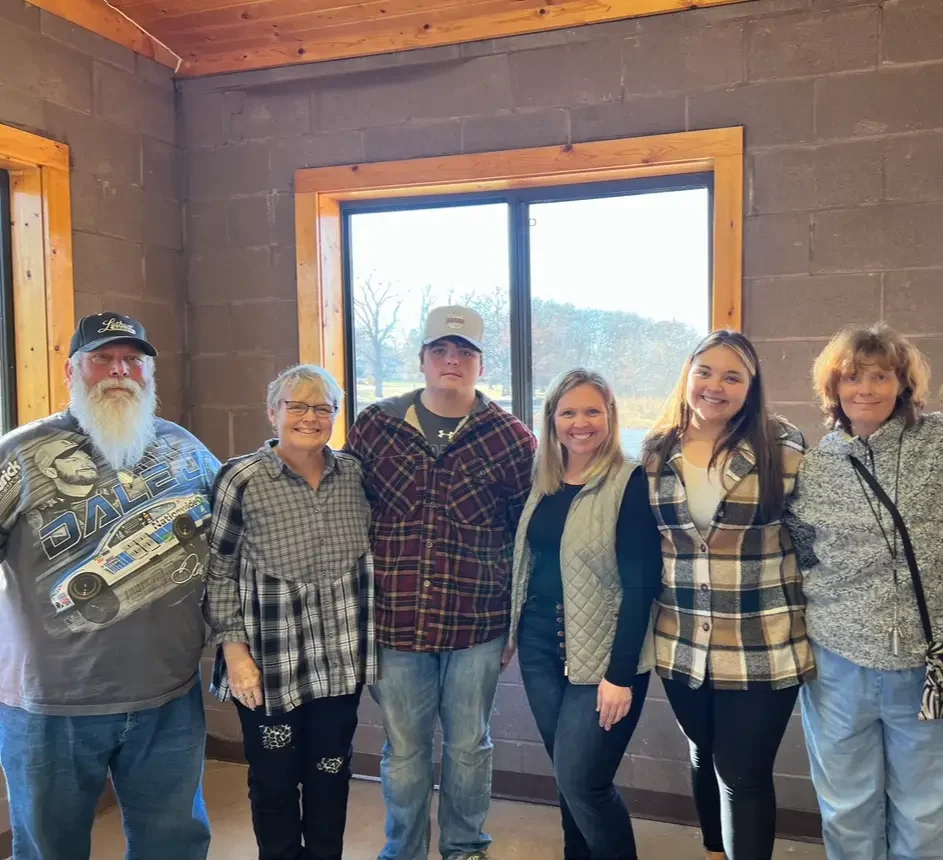
Greg and his wife, Donna, have two daughters, Trisha and Sandy. In retirement, Greg and Donna are looking forward to attending more of their grandchildren’s activities and watching them play sports. Greg is also planning to fish, ride his Harley and watch a lot NASCAR.
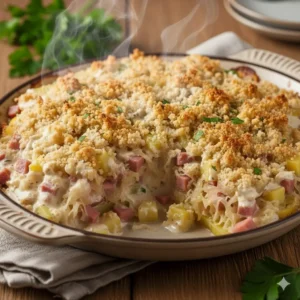
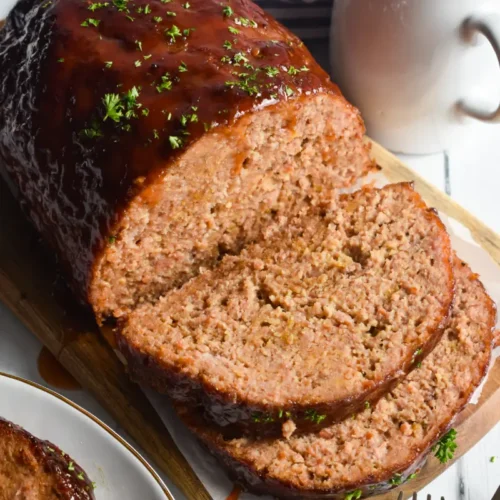
As he says goodbye to Latham, Greg is sharing a cherished recipe of his mom’s — Ham Loaf — which reminds him of his childhood on the farm.
Line baking sheet with parchment paper or grease a loaf pan
Pour sauce over meat and bake for one hour, or until the inside of loaf reaches 160 degrees.
Rest for 5 to 7 minutes before slicing.
COOK’S TIP:
To freeze leftovers, slice into individual portions and tightly wrap with plastic. Place in an airtight container or Ziploc. freezer bag. Leftovers can easily be made into “do-over” sandwiches..
Fueled by Family, Freight and Farming: Meet Kevin Nagel
Kevin Nagel of Grinnell, Iowa, is a man who wears many hats — and sometimes a trucker cap, too.
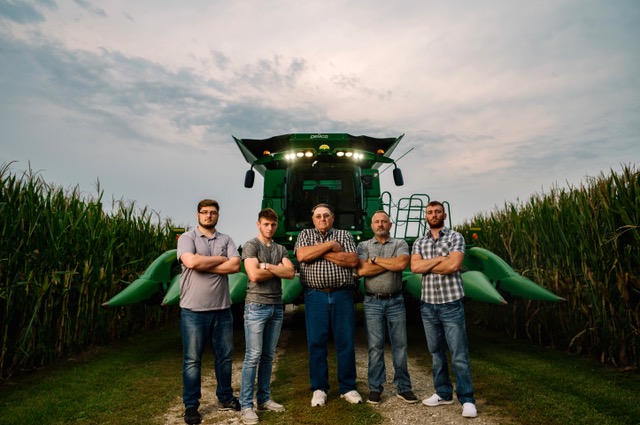
A row crop farmer, trucking company owner and now a Latham® Seed Dealer, Kevin has built a life around hard work, family values and an entrepreneurial spirit. With deep roots in Iowa agriculture and a passion for building something lasting for his sons, Kevin is turning the next page in his operation by joining the Latham team.
“I decided to become a seed dealer to give our operation another profit center for the boys to work at,” Kevin says. “And I chose Latham because it’s a locally-owned company with great products and forward-thinking leadership.”
Kevin’s journey started on his family’s cow/calf and crop farm. After studying engineering at Iowa State, he took a full-time role with Garst Seed Company, opening a corn breeding research facility in South Dakota before returning home to farm with family. In 2000, he launched his own trucking company, Nagel Farms Inc., growing from a single truck to a 13-truck fleet. Today, his team primarily hauls seed, non-hazmat chemical and specialty corn — along with Kevin’s own grain.
Farming continues to be a full-family affair. Kevin’s sons, Beau and Rhett, are actively involved in the operation, splitting planting responsibilities and learning every part of the business. Tyler Fenner, their trusted hired hand, rounds out the field team. Together, they’re busy year-round — planting, harvesting, hauling and now delivering top-performing Latham products to neighbors, friends and customers.
The seed dealership is the latest evolution of a diversified operation that keeps growing stronger with every season. At the National Corn Growers Association contest last year, Kevin entered Latham’s LH6306, which placed in the top 20 out of roughly 120 entries. He plans to enter two more hybrids at this year’s contest.
He says he couldn’t be happier with the support he’s received from Latham Seeds so far. “I enjoy all the people there. They’re helpful, caring and they make sure to answer any questions — whether agronomic or operational.”
And while time is tight on a working farm, Kevin still finds joy in family vacations with his wife, Megan, and looks forward to the day when his sons take the reins on fun traditions like sled-pulling diesel trucks and riding Harleys. For now, he’s content helping customers grow strong crops — and treating them to a little home-cooked comfort when the opportunity arises.
Kevin is sharing one of his family’s favorite recipes: Surprise Packages. This grilled pork and veggie dish is a showstopper for guests and a satisfying treat after a long day in the field.
Ken Highness joined Latham Seeds in 2014 as a Regional Sales Manager in Northwest Minnesota and parts of Southeast North Dakota. Shortly after, he began covering new ground for Latham — working to narrow the gap between the company’s existing southern Minnesota territory and its North Dakota territory.
Now Ken is moving on to retirement, with a focus on one of his favorite things: family.
“I’ve enjoyed working with Latham Seeds because it’s a family-owned company,” Ken says. “Employees and dealers can go straight to the top for answers. The Latham team impressed me before I even joined it. If they didn’t have an immediate answer to my question, they researched it and got back to me in a timely fashion.”
Meeting people and helping farmers choose the best seed products for their acres is what Ken has enjoyed most about his job. He’s especially loved working with seed dealers because he operated his own seed dealership for 10 years. When the seed company Ken was representing was purchased by a multinational conglomeration, he started looking at alternative brands and discovered family-owned Latham Hi-Tech Seeds. He began as a Latham dealer before becoming a regional sales manager in 2014.
“One of my favorite parts of this job was helping a dealer reach his goals,” Ken says. “A seed dealership can help provide the extra income needed to bring the next generation into the family’s farming operation. It might allow someone to remodel their house or set aside money for their children’s education.”
You could always find Ken spending time with his family or enjoying the great outdoors. He has enjoyed upland bird hunting for many years, and, as an avid hunter, he raised Brittany Spaniels. Ken and his wife, Jeannie, were given a Brittany Spaniel with bloodlines from England as a wedding gift from her uncle.
In his retirement, Ken plans to spend even more time with family. He and Jeannie look forward to attending their grandchildren’s activities, as well as making memories with them in the field or in the kitchen. It isn’t unusual to find one of the grandkids riding along with Ken as he checks the crops. Each Thanksgiving weekend they continue their family’s holiday baking tradition.
And, about once a month, everyone gathers in their home for spaghetti dinner. Why? Because Ken and Jeannie were raised in Dilworth, Minn., which has a strong Italian influence. Ken says he grew up eating some of the best homemade pasta and sauces in his friends’ home and was lucky enough to learn from some of the best home cooks. He has combined about five different recipes to create one that he and his Norwegian family enjoy eating about once a week.
Celebrate the return of seasonal spring temperatures by firing up the grill! May is Beef Month, and Memorial Day weekend is the perfect time to enjoy an All-American juicy hamburger or a thick, delicious, mouth-watering steak.
Whatever you’re grilling, don’t underestimate the power of the sides!
Here are few of our favorites, shared by none other than our own Latham® Dealers.
A Lifetime of Raising Cattle Comes Full Circle For This Beef Producer
Raising cattle has always been a big part of Nick Peterson’s life, beginning when he was a young boy helping on his grandparents’ farm near Charles City, Iowa. Later, when he was in his 20’s, Nick worked full-time on the family farm, which had 400 acres of crop ground some hogs, too. But it was the 1,000 head of cattle that took most of Nick’s time. It was also the start of what would eventually evolve into his own beef operation today.
“My background has always been raising fat cattle,” says Nick, who is also a Latham® dealer. “My grandparents farmed my entire life, but they never sold any grain. We just needed to get feed for our cattle and that was it. So, me becoming a seed dealer is an interesting thing, I guess!”
After 14 years on the family farm, Nick decided to venture out on his own. He and his wife, Lisa, moved to her family farm in Nashua, Iowa, rebuilt the house and buildings, and put a feed lot there. As fate would have it, Nick knew the McGregor family down the road because he’d worked for them when he was fresh out of high school. The connection resulted in a partnership of sorts, as Nick started “owning my own stuff” and buying more cows.
Between them, the Petersons and McGregors now have about 120 steers, along with western ones, and they’re “all mixed in together,” he says with a laugh.
“It made it way easier for me to start out on my own,” Nick says of the business arrangement. “It can be hard for a young guy to do that. Bankers don’t really want to let you build a feed yard and then give you $2 million in a line of credit to go buy some cattle.”
Today, Nick’s shop and seed dealership are located on the farm. He and Lisa have two girls, Jenna and Ava. Lisa is the branch manager at First Waverly Bank in Plainfield. Nick has served on the Chickasaw Cattlemen’s board for years, following Scott McGregor’s longtime example of advocating for beef producers on the local and national levels.
The Early Riser Advantage: How Corn Emergence Impacts Final Yield
Every farmer I know is interested in extra yield. I am, too!
While there are thousands of variables that affect corn yield, we can conduct on-farm tests to see what matters most. That’s why I’ll conduct flag tests this spring to track corn emergence dates and see how it affects yield this fall.
Here are the steps I’ll take to conduct this test:
Measure off 1/1,000th of an acre that is representative of the field.
Place a colored flag beside the first set of corn seedlings as they spike.
Return to the field 24 hours later and mark the next group of emerged plants, using a different colored flag.
Return every 24 hours to mark the subsequent waves of emerging corn plants until the test row has fully emerged.
Harvest the plants according to the day of emergence. Record test weight and yield differences to see if it was affected by the emergence date.
We’d like to see every corn plant emerge within 24 hours of each other. Many studies show that plants emerging on Day 2 of emergence can have a 10% yield loss compared to the first plants that emerged. The yield decrease can be close to 40% for plants that emerge on Day 3, and those plants that emerge on Day 4 can have a yield loss of more than 80%.
The reason behind some yield loss is because the bigger corn plants take water and nutrients away from the smaller “brother plants.” Plants that emerge first get established sooner, and they do not leave much to feed the runts.
Planting Conditions Are Crucial
We all want to see picket-fence corn stands, so we must do all that we can to help corn seedlings emerge consistently. As part of Latham’s Premier Agronomy Center this season, we will plant learning blocks using TuneUp + Corn with ether to see how it helps seedlings emerge more uniformly.
Trying to cut corners to save time during the planting season can affect your harvest.
To avoid paying the price at harvest, keep these best practices in mind:
Prepare your planter before you hit the field. Make sure the disc openers and scrapers are in optimal condition.
Look at the closing system on your plant to ensure it’s closing the seed trench well.
Add some sort of starter to help those plants get out of the ground easier.
Make sure the field conditions are fit for planting because the stand is greatly affected by field conditions at planting.
Don’t push soil moisture and temperature.
Consider the forecast as weather events also can affect emergence.
Take time to check planter depth and seed spacing with your handy, dandy Latham® seed depth indicator.
These are just a few things I try to be mindful of in the spring because I know it impacts fall yield. Let’s help our crops get off to a good start, so we can fill our bins with as many bushels as possible this fall.
Make it a great spring and be safe!
Here is a Prokosch family favorite recipe that keeps their whole crew warm.
Saluting 27 Years of The Freedom Rock With Ray “Bubba” Sorensen
Inspired by the movie “Saving Private Ryan,” Ray (Bubba) Sorensen II first honored veterans in 1999 by painting a patriotic mural on a 12-foot-high, 60-ton granite boulder located 10 miles north of Greenfield, Iowa. Memorial Day 2025 marks the 27th anniversary of The Freedom Rock®. Sorensen will likely spend that day as he always does – with his family, visiting travelers to The Rock and learning about veterans or their family members.
A group of veterans, who stopped at The Freedom Rock as it was being painted in 2006, asked Sorensen if they could sprinkle some ashes of their fellow Vietnam veterans at the base of The Freedom Rock. Rather than have the ashes blow away, the artist offered to sprinkle the ashes into paint. He then painted those ashes on a Huey helicopter.
Although Sorensen paints a new tribute every year, he does not paint over the section of the rock that contains the veterans’ ashes. Repainting The (original) Freedom Rock annually is one way the Sorensen family pays respect to those who have served, encourages tourism across the state and instills patriotism in their children. Sorensen donates his time; supplies are either paid for out of his pocket or through The Freedom Rock store.
Each Freedom Rock tells a story of veterans from that area. Sorensen has painted a Freedom Rock in every Iowa county. The 100th Freedom Rock – and the final one for Iowa – was installed in June 2022 in Altoona.
Sorensen continues to secure bookings for the 50 State Freedom Rock Tour. To date, Freedom Rocks have been installed in 10 states: Iowa (of course!), Illinois, Minnesota, Missouri, Nebraska, North Dakota, Oklahoma, Texas Wisconsin and Washington. He has also booked a Freedom Rock for the state of Ohio.
Art is a family affair. Bubba’s talented wife, Maria, is a photographer in addition to helping him with The Freedom Rock Tours. The couple also has three children: Independence (Indie); Michael (Mikey) named after Sorensen’s dad and great grandpa; and Liberty (a.k.a. Liberty Bell or Libby).