Latham Hi-Tech Seeds

(641) 692-3258

  • Home
  • Products
    • Corn
    • Soybeans
    • Soybean Blends
    • Alfalfa
    • Corn Silage
    • Seed Guide
  • Performance
  • Find a Rep
  • Media
    • Blog
    • News
    • Videos
    • Podcasts
    • TECHTalk
  • About Us
    • Company History
    • Our Mission
    • Careers
    • Become a Rep
    • Sowing Seeds of Hope
  • Contact Us
  • Latham Hi‑Tech Seeds

    Feeder Cattle Connect Generations on This Iowa Farm

    IMG 4576
    IMG_4576
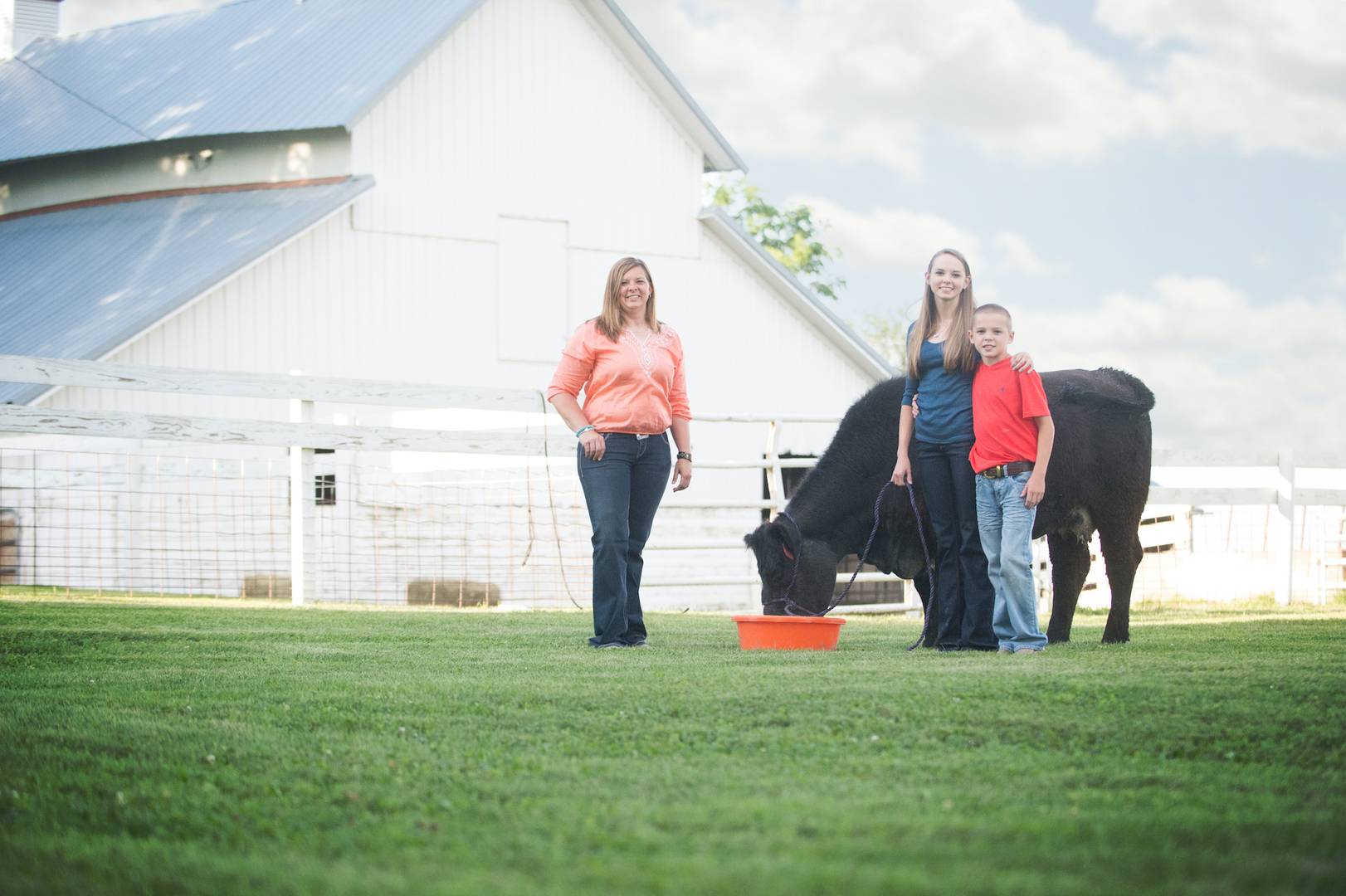
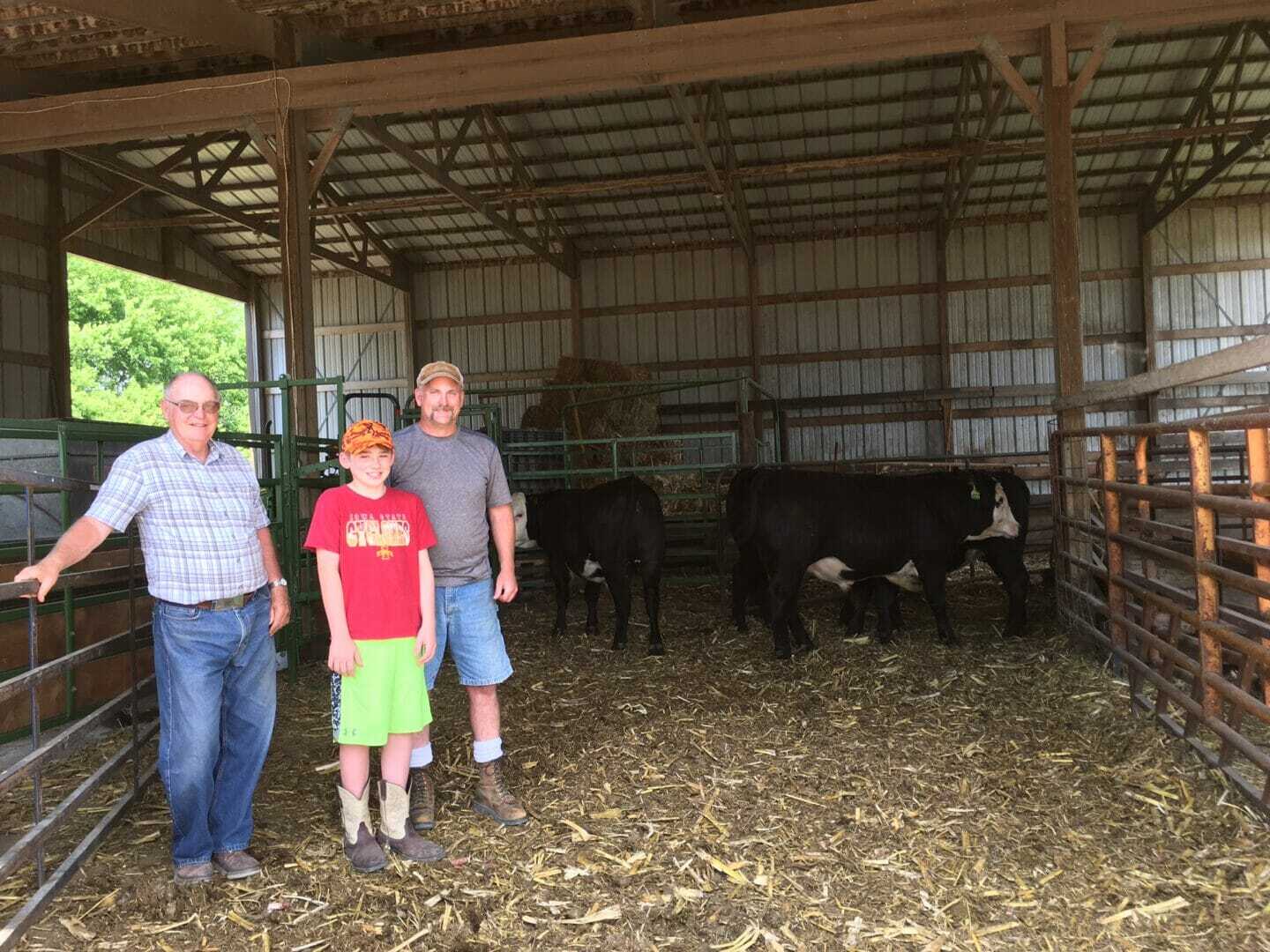
    3 Generations of Cattle Producers at the Hawthorne Family Farm

    The first Friday of June was the kind of day many of us take for granted. I watched as four generations of the Hawthorne family spent time on their family farm near Lohrville, Iowa, and thought “days like this get etched in our hearts and on our minds.”

    Beautiful flowers were in bloom around a tidy vegetable garden, and cattle were grazing on pasture with a meandering creek. Skies were blue, and clouds were fluffy and white. Although the sun was shining brightly and the forecast was calling for a high near 90 degrees Fahrenheit, a cool breeze was blowing.

    Latham® dealer, Mark Hawthorne, walked with me into a picturesque field of LH 9700 alfalfa that was seeded in mid-March 2016.

    “Latham’s 9700 lives up to the description in your advertising,” said Mark with a smile. “It has a great disease package. It also has fine stems and is very leafy. It offers fast regrowth, too. We like that it’s tall because that makes more feedstuffs. We tub grind our alfalfa and mix with grass hay, grain and supplements. We find there’s a lot less waste when we tub grind rather than let the cattle have free choice from a round bale feeder.”

    Mark’s father, Merrill, was busy cutting hay while the sun shined. Mark’s wife, Susan, and their 14-month-old granddaughter enjoyed watching the farming activity under a shade tree with Mark’s mom, Rita. Mark and Susan’s 12-year-old son, Max, was busy watering his pen of feeder cattle that he will exhibit in about 30 days at the Calhoun County Fair.

    While he didn’t exactly tell me so, I gathered that what Max enjoys most about his 4-H beef project is the chance to spend time with his dad and grandpa. It makes him feel connected to carry on the tradition of raising cattle like those before him. He’s also learning lessons about business and life.

    Here’s what I learned: These cattle will be placed in a pen on the fairgrounds. Max will make a poster that includes vital information like beginning weight in January and weight at the fair. A team of three judges will ask 4-H members questions like “What ration did you feed?” I learned that Max is feeding his cattle 40 percent protein with cracked corn. It takes approximately 30 pounds of feed per day per animal, and cattle will gain about four pounds per day.

    The cattle business has been good to this third-year member of The Union 4-H Club. Last year Max sold his feeder cattle and cleared enough to buy this year’s pen plus put some money in the bank. He’s saving up for breeding heifers. And like many pre-teens, he has his sights set on owning his own pickup.

    Big dreams often start as 4-H and FFA projects.

    “I had always planned to farm if there was an opportunity to do so,” says Mark. “I worked for a farmer by Story City the four years that I attended Iowa State and for eight years after graduation. Then an opportunity came open for me in corn breeding at the Syngenta plant in Glidden. This was a good move because I was closer to home, so I could help my dad on the farm.”

    Mark says he’d probably still be working in Glidden today if Syngenta hadn’t closed the plant. He didn’t want to uproot his family to Seward, Nebraska, so he put his Ag Business major and Agronomy minor to work for himself by taking on a Latham® dealership and taking over more of the day-to-day responsibilities on the farm.

    The Hawthorne family backgrounds cattle. They buy 400-pound steers in January and sell them around 800 to 900 pounds sometime between Labor Day and Thanksgiving.

    “Our farm has changed as times have changed,” explains Mark. “We used to finish cattle, but it got to the point where packers wanted to buy large numbers of cattle. Since we aren’t loading out semi-trailers at a time, we started selling them sooner. We used to raise hogs in open-front building but got out of the business instead of reinvesting in new facilities. It works out well because we get to take a break from doing chores for a few months each year.”

    Late fall and early winter months provide time for the family to get enjoy a ski vacation or to visit family members and friends. Mark and Susan’s 25-year old daughter, Jessi, lives nearby. Their 22-year-old son, Kodi, lives in Barret, Minnesota.

    “Our goal is to leave our farm in a position that allows our kids to come home if they so desire,” says Mark. “We’re getting the next generation ready now, so they can take over some day.”

    One sure fire way to get all the kids to gather is to put brisket on the smoker, adds Susan. “They come running home when they hear Mark’s Midnight Brisket is in the smoker.” Today Mark is sharing his family’s favorite beef recipe with us. Beef. It’s what’s for dinner.
    Team Latham

    June 9, 2017
    Beef, Food & Family, Recipes
  • Latham Hi‑Tech Seeds

    Faidley Family Caters to Consumers with Beef Business

    2017 State Fair tie outs
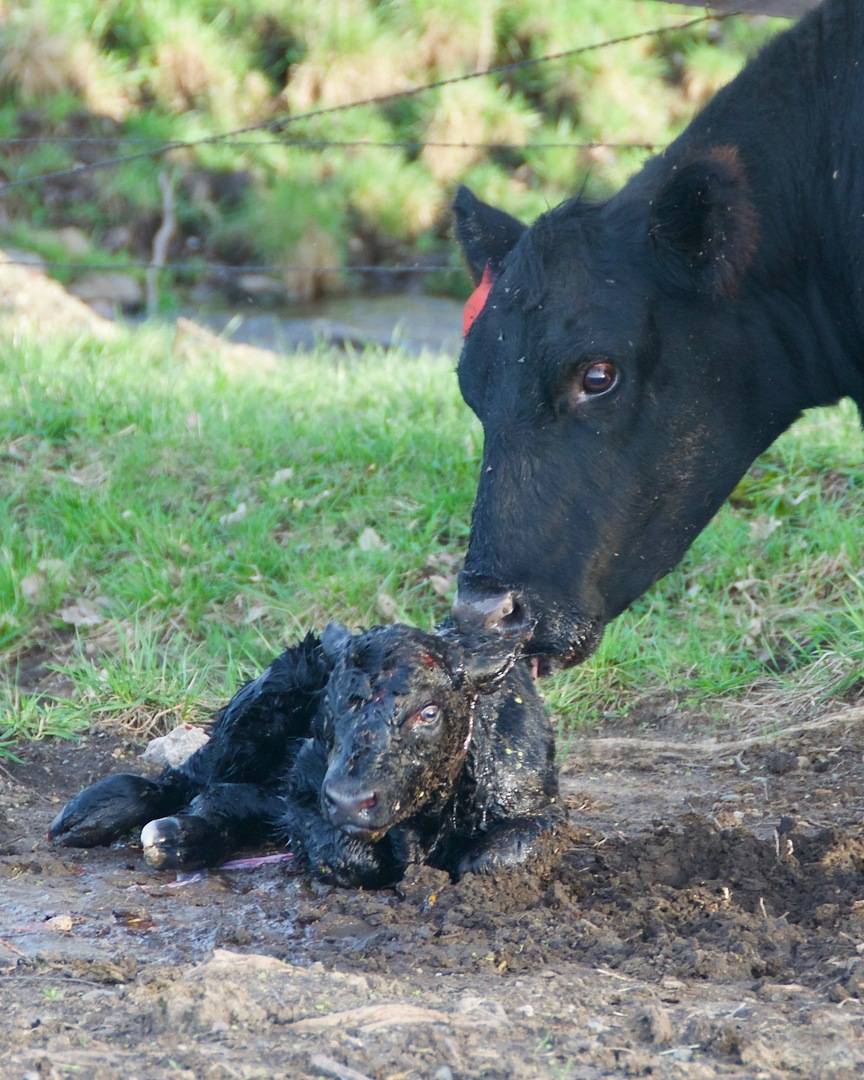
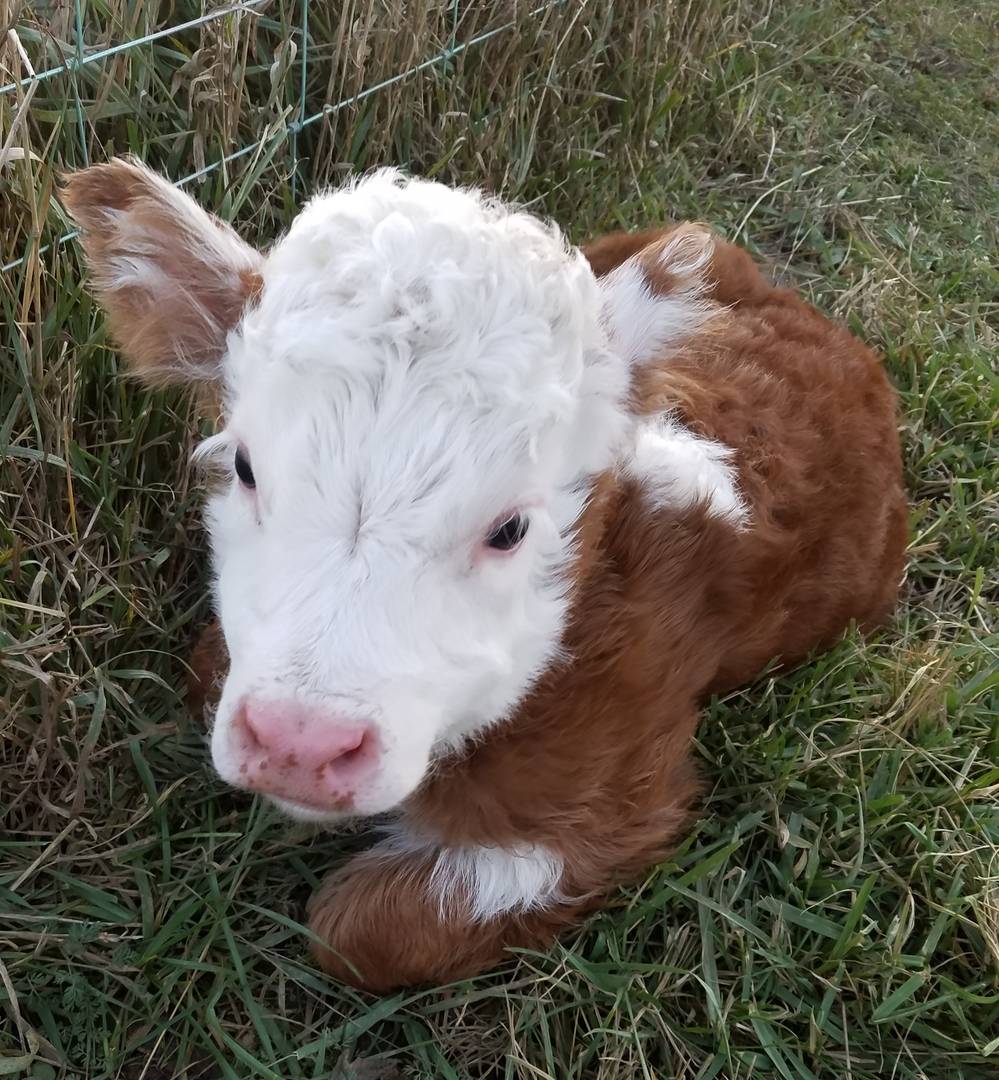
    One sure sign of spring across the Midwest is seeing cow-calf pairs on pasture. Daniel Faidley of Bear Grove Beef says seeing a healthy calf’s head peeking out of the grass sparks feelings of relief, pride and hope.
    One sure sign of spring across the Midwest is seeing cow-calf pairs on pasture. Daniel Faidley of Bear Grove Beef says seeing a healthy calf’s head peeking out of the grass sparks feelings of relief, pride and hope.

    The characteristics that Daniel Faidley of Colfax, Iowa, looks for when he selects seedstock today is almost completely opposite of what he and his siblings selected when they were showing tall, large-framed Limousin cattle as 4-H and FFA members in the late 1980s and early 1990s. In fact, his herd is more reminiscent of the cattle his dad raised and showed in the 1950s and 60s.

    “I go to a lot of business dinners and see a lot of steaks that don’t get finished because they’re just too big. That’s just wasteful, so I decided to raise smaller cattle that would produce beef that created an amazing eating experience for people,” explains Daniel, who works full-time as sales director for WinField United. “I researched several options and discussed them with my brother, Dwayne. His advice was, ‘If you want to look at your cows in the pasture and really like what you see, go with Mini Herefords. They’re quality cattle that produce incredible beef’.”

    That decision started Bear Grove Beef and Bear Grove Family Farms, which were named after the one-room schoolhouse near the farm where Dwayne and Daniel grew up. These two core businesses complement one another: Bear Grove Beef focuses on producing better seedstock every year with the ultimate goal of raising cattle that can win in the show ring but also are productive in the pasture. Bear Grove Family Farms focuses on delighting consumers with extremely high quality beef for their dining pleasure.

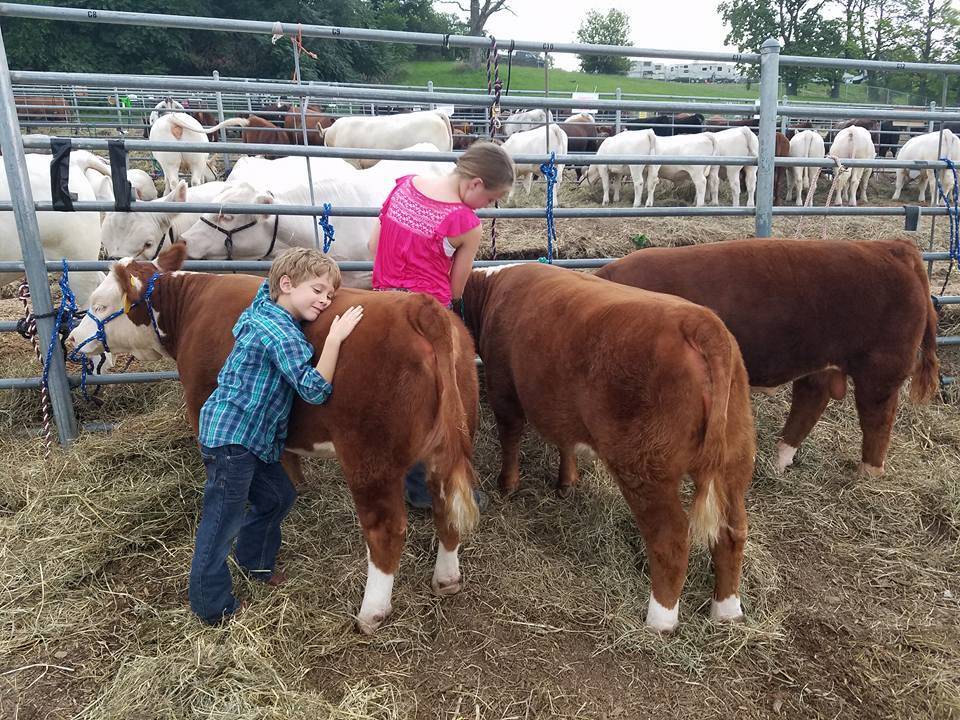
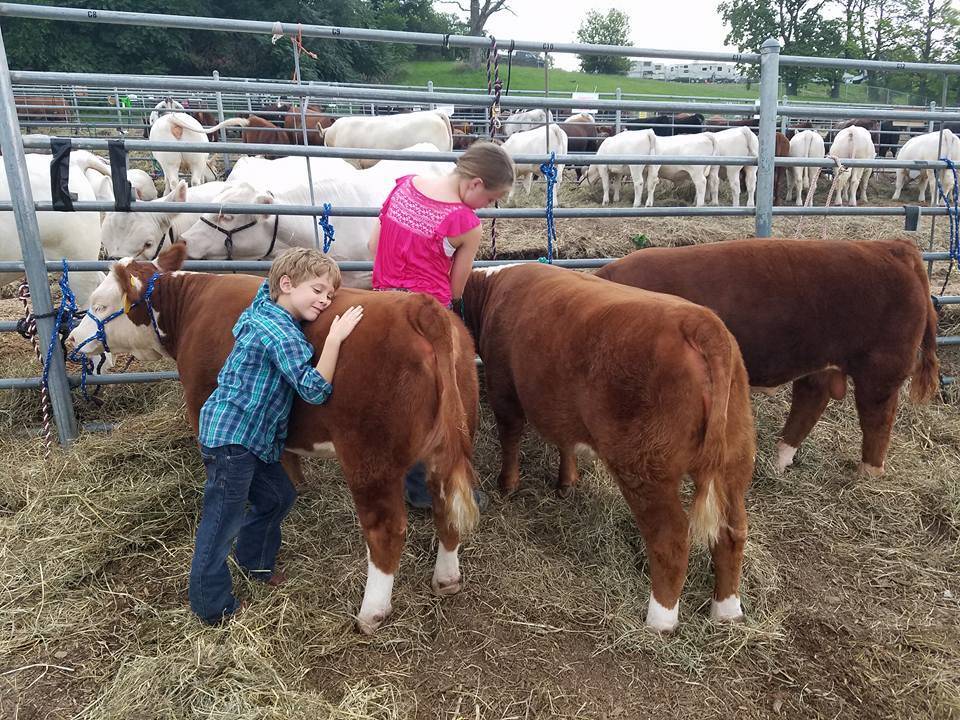
    Mary and Ryan Faidley showing some love to their heifers at the tie-outs at the Iowa State Fair
    Mary and Ryan Faidley showing some love to their heifers at the tie-outs at the Iowa State Fair

    “I wish more consumers understood just how safe and nutritious beef is in this country. I wish they didn’t get bombarded with misinformation that creates fear and doubt,” says Daniel. “Our approach to marketing Bear Grove Family Farms beef is to never say anything negative about other beef or the way it was produced, with the important exception of not condoning anything that’s egregious abuse of animals or the law. We’d rather tell our story and give people the choice of how they’re going to feed their families. We’ve had people call and ask for free range, grass fed, organic… whatever. We explain what we do and how we do it. Sometimes, they say, ‘Okay, that makes sense. I’d like to buy some.’ Sometimes, they say, ‘Sorry, but it has to meet XYZ criteria and your beef doesn’t do that.’ That’s fine with us. We are going to be 100 percent truthful about what we do.”
    The Faidleys feel so strongly about honesty that it’s is a written policy. A pamphlet given to Bear Grove Family Farms’ customers states:

    We will answer any question you have, honestly.

    Less than 3% of the U.S. population has any direct connection to a farm. That leads to questions about what happens on the farm and creates confusion about what farming practices are good and what are bad. We have nothing to hide about where the food we produce comes from and how it was raised. You may have some strong preferences about food and need to know specifics about the food we produce to decide if you want to buy food from us. Just ask. If our answers mean you choose to go elsewhere for your food, we are ok with that. We hope knowing the facts about our food helps people make confident choices about the food they put on their own dinner tables.

    Mary showing at the Iowa State Fair
    Mary showing at the Iowa State Fair

    When cows are grazing the lush pastures of a new spring, no one is more grateful for their health and gets more joy from watching them with their calves than the farmer. And, when that first-time mama cow needs help to have her first calf, it is the farmer who rushes to the scene to do everything possible to save mama and baby. Farming isn’t easy. But, farmers are people with hearts that love the farm, the livestock, the land. And, they are people with minds to make decisions that protect their hearts by doing what’s best for the livestock and the land.
    Farms and farmers aren’t perfect. Like great parents with their kids, farmers must make decisions based on what they believe is best. Sometimes they learn they could have done it differently or better and work to apply those learnings in the future – just like parents. Farmers pursue better ways to care for the livestock and the land and produce food for people to enjoy.

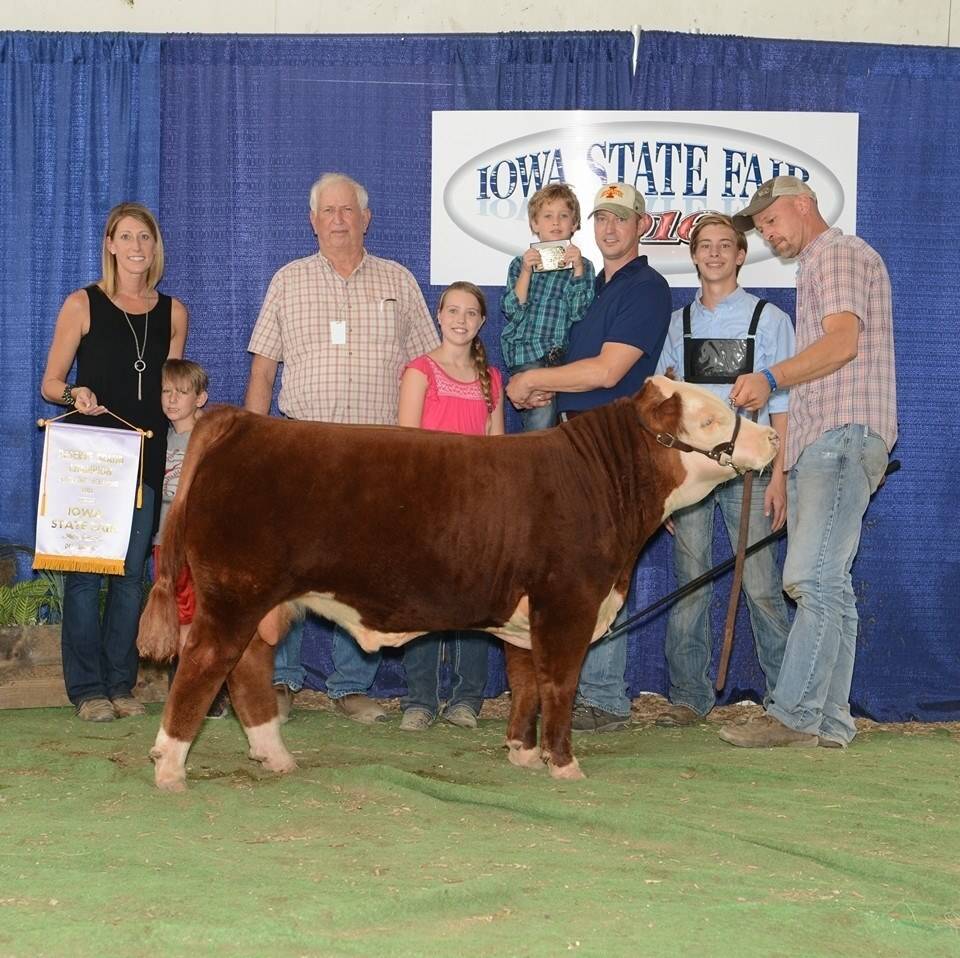
    Bear Grove Beef’s Cannonball was the 2016 Iowa State Fair Reserve Champion Bull
    Bear Grove Beef’s Cannonball was the 2016 Iowa State Fair Reserve Champion Bull

    Bear Grove Family Farms is truly a family operation. Daniel handles the logistics of scheduling beef to be ready for customers and shares marketing it with his wife, Robin. Their kids get involved, too. In fact, Mary, qualified for the regional technology fair by creating a website and YouTube videos focused on educating people about farms by debunking common misconceptions about farms and cattle.

    For the Bear Grove Beef business, Dwayne manages the cattle production. Their father, Don, is involved with helping make good production decisions. The kids work with the cattle, too.

    “The only surefire way to get all the Faidleys together is to meet at a cattle show,” says Daniel. “Getting together with family is one of the main reasons I choose to show cattle now. Our sister, Diana, and our mother, Dorothy, often help make sure Bear Grove Beef is represented professionally. I enjoy the competition, but I remind myself and our kids that it’s a very subjective situation. One person decides 100 percent of the outcome of the show. Getting too wound up about winning is a recipe for disappointment.”

    Whether they’re prepping cattle to make a great impression in the show ring or preparing to deliver beef to customers, the Faidleys understand the importance of presentation.

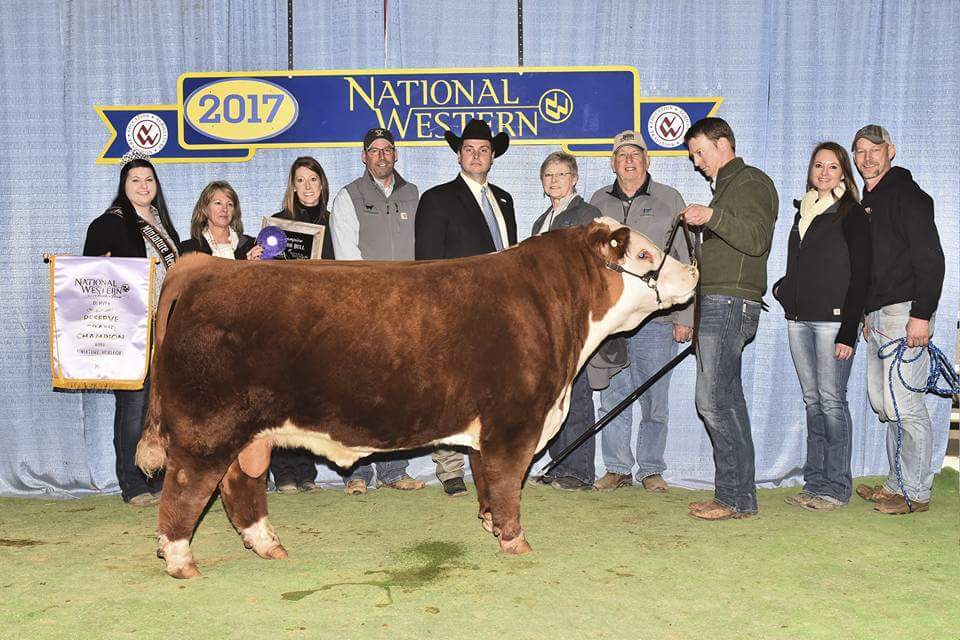
    Bear Grove Beef’s Ben Dover was named 2017 National Western Stock Show Reserve Champion Bull
    Bear Grove Beef’s Ben Dover was named 2017 National Western Stock Show Reserve Champion Bull

    “Robin is amazing at thinking about beef products from a mother’s perspective. She bridges the understanding of how the animals are raised for the typical consumer, who hears a lot of noise about food production but who doesn’t know what’s real and what’s rhetoric,” says Daniel. “Robin also makes things look pretty. When we sell beef, we like to present it in a way a consumer would find appealing. Robin has a green thumb, which allows us to deliver beef with some extras in the presentation like some flowers or herbs she grew. We’re a small farming operation and we put our hearts into every steak we sell. Robin’s touch really demonstrates that.”

    To help promote the delicious beef they produce, today Daniel is sharing one of his family’s favorite recipes for marinated flank steak. Flank steak is a quick-cooking, flavorful cut of meat. When sliced correctly on the diagonal, the pieces of steak are tender and attractive.

    COOK’S TIP: Like many great farm cooks, Daniel and Robin Faidley cook from scratch. Daniel’s philosophy on cooking beef is “don’t use a recipe and don’t overcook the meat.” He shared with me the steps he takes to prepare grilled steak.  I find Daniel’s “honesty” refreshingly funny. I’ve been known to thaw meat in the microwave because I didn’t plan far enough ahead. I have no doubt that you could sit down at his table and be treated to the most delicious steak dinner, and I’m just as confident that I couldn’t pull it off without being given exact measurements. 🙂 I’m analytical enough that one of my favorite gifts is a set measuring spoons I received that are labeled “dash, smidgen and pinch.”

    Click here for more tips on how to score and grill flank steak.

    Also be sure to check out the many delicious recipes available online from the Iowa Beef Council, including:

    • Garden Grill Tri-Tip
    • Braised-Brisket Street-Style Tacos
    • Beef Steaks with Sweet Soy Drizzle

    Team Latham

    May 26, 2017
    Beef, Food & Family
  • Latham Hi‑Tech Seeds

    Knowing Family Lineage is Second Nature to these Producers

    Scan0001
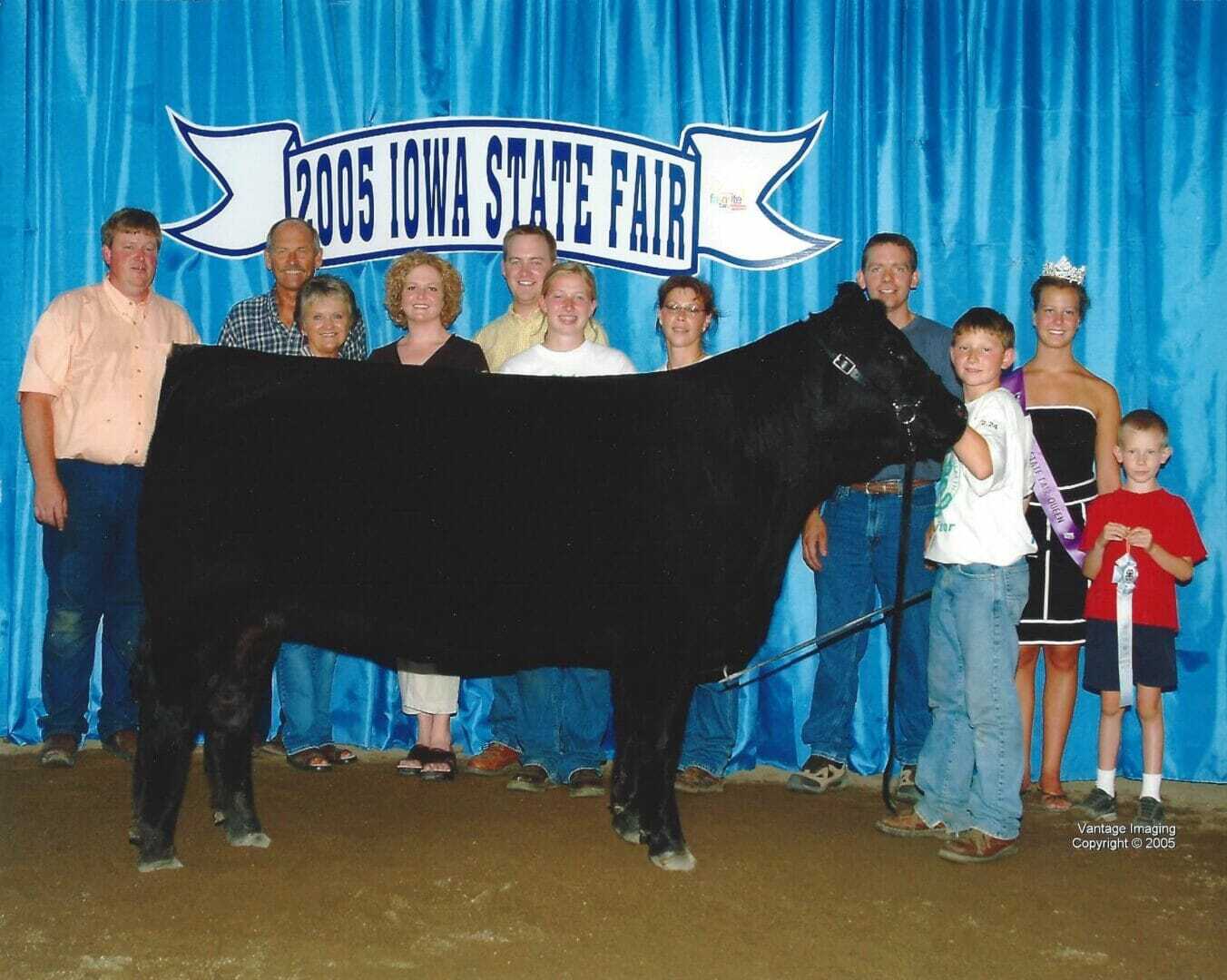
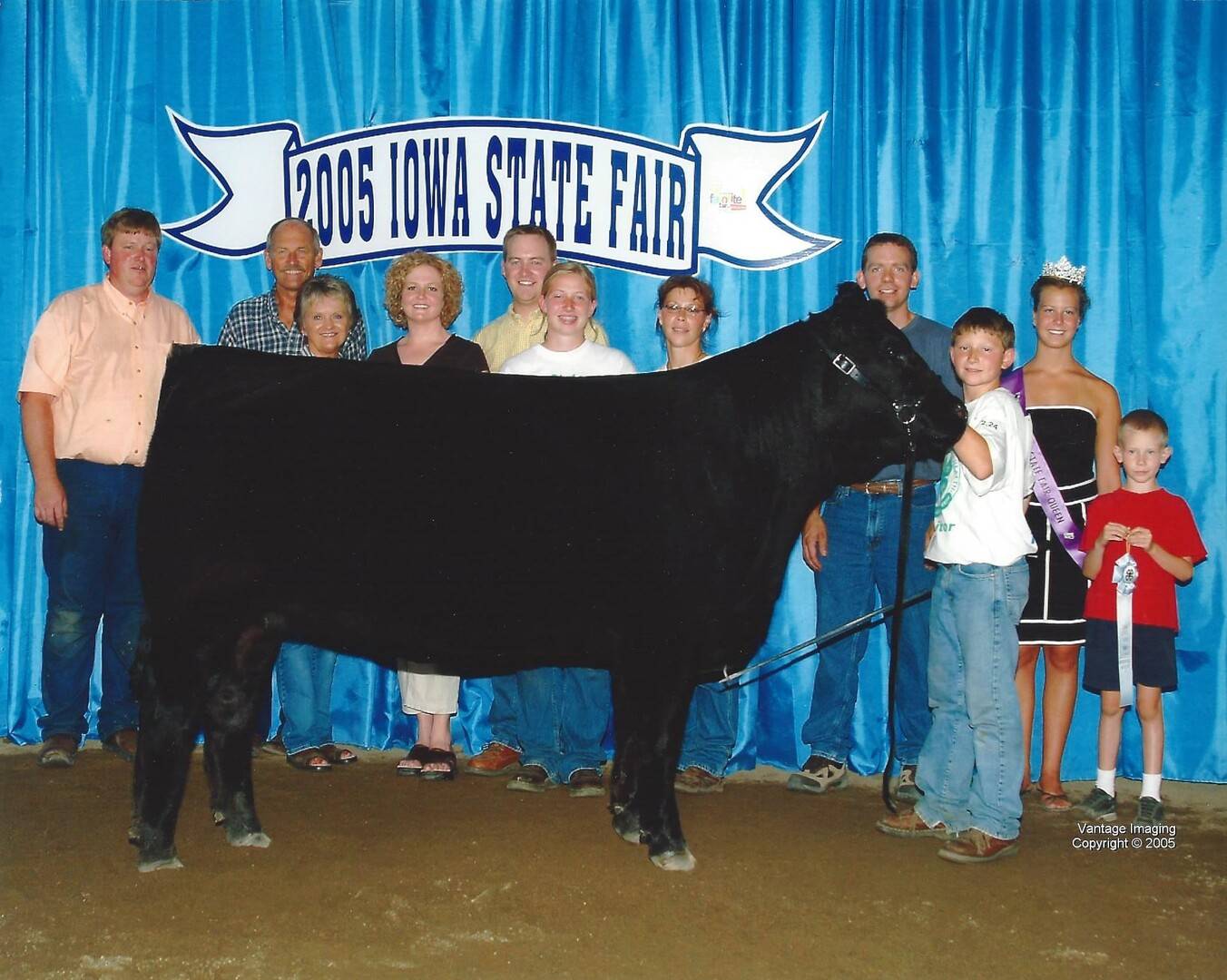
    Zach Greiman is pictured here with his Limousin heifer that was champion in both the Open and 4-H shows at the 2005 Iowa State Fair and was also 3rd overall breeds in the 4-H show
    Zach Greiman is pictured here with his Limousin heifer that was champion in both the Open and 4-H shows at the 2005 Iowa State Fair and was also 3rd overall breeds in the 4-H show

    Just as some people are interested in learning about each branch of their family tree, cattle producers who sell breeding stock know the lineage of each animal they’re either selling or buying. Zachary Greiman, who farms in North Central Iowa, says his family can trace the beginnings of their Angus beef cattle to the late 1800s.

    “My great great grandpa Fred Greiman emigrated from Germany and eventually settled in Garner,” says Zach. “He sent cattle by rail to markets in cities like Chicago. While accompanying a load of Shorthorn steers to market one day in 1893, he saw a display of Angus bulls.”

    The opening bid for an Angus yearling bull went for more than Fred’s whole rail car full of cattle brought! He didn’t purchase one that day, but he was determined to own an Angus bull. Three years later Fred was in the co-op elevator when he saw a poster advertising a South Dakota farmer was interested in trading a Percheron stallion for an Angus bull.

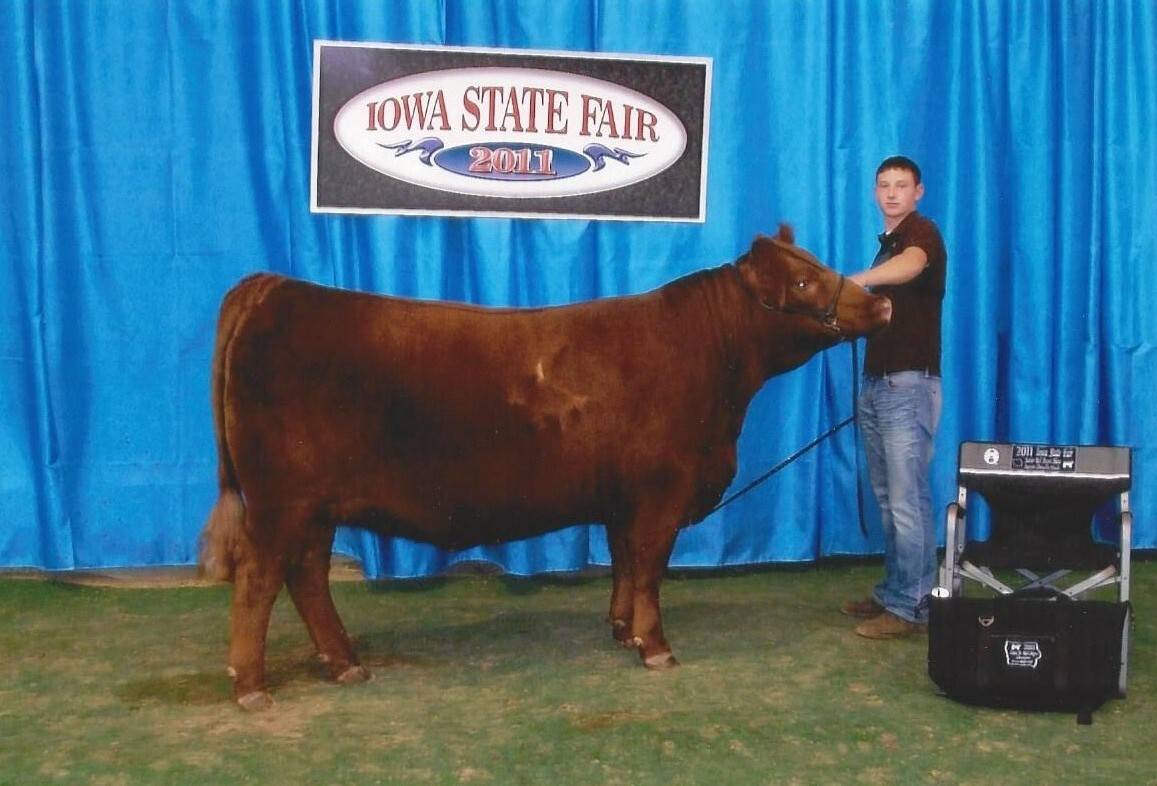
    Red Angus heifer at the Jr Open Red Angus Show at the IA State Fair
    Red Angus heifer at the Jr Open Red Angus Show at the IA State Fair

    The two farmers corresponded by mail. After some months, they agreed to exchange animals. Fred placed his prize-winning Percheron stud on a railcar and eagerly awaited the arrival of his Angus bull. When the bull finally arrived, it wasn’t what Fred had expected. He had traded an 1800-pound stallion for a 400-pound Angus bull!

    “The neighbors laughed at the trade until Fred’s Angus cross calves started topping the Chicago market,” says Zach. “We still have the crate that bull was shipped in, and it’s a great reminder that perseverance pays.”

    Who would have guessed that bull would become the foundation for one of Iowa’s oldest and longest continuing Black Angus herds? Upon Fred’s retirement, his son Addis took over the herd. Then Addis’ sons, Cliff and Don, formed Greiman Angus Farms. Greiman Angus Farms was then purchased by Cliff’s son, Cory, and Don’s son, Ted.

    Ted remained strictly Angus while Cory diversified. He kept the registered Angus base but crossed those cows with other breeds to increase his customer base. That’s a philosophy that his son, Zach, shares.

    “I really don’t care about color or breed.  I just like a good one,” says Zach, who raises cattle in partnership with his dad. “We focus on breeding females. The majority of our herd is Angus and Simmentals. We also have Chianina, Maintainers, Red Angus, Lim-Flex, Simmental, Foundation Simmis. Most of our cattle are registered, but we have a handful of crossbred cows.”

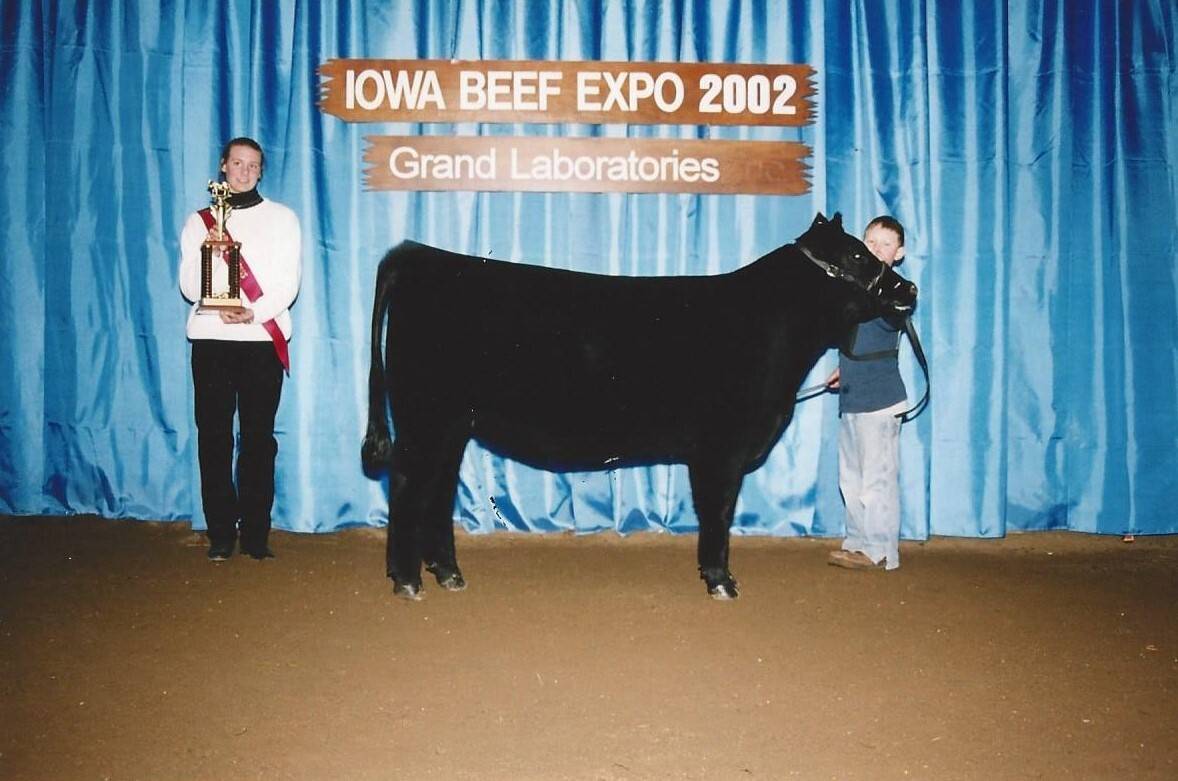
    Reserve Champion Angus heifer at the IA Beef Expo
    Reserve Champion Angus heifer at the IA Beef Expo

    Although they sell more breed cattle than club calves, Zach says he really enjoys the club calf side of the business. His dad started raising club calves in high

    school, so Cory had developed a pretty good market by the time he attended college. When Cory and Sis got married upon graduating from Iowa State, selling cattle was their main source of income. They held an annual club calf sale for years on their farm.

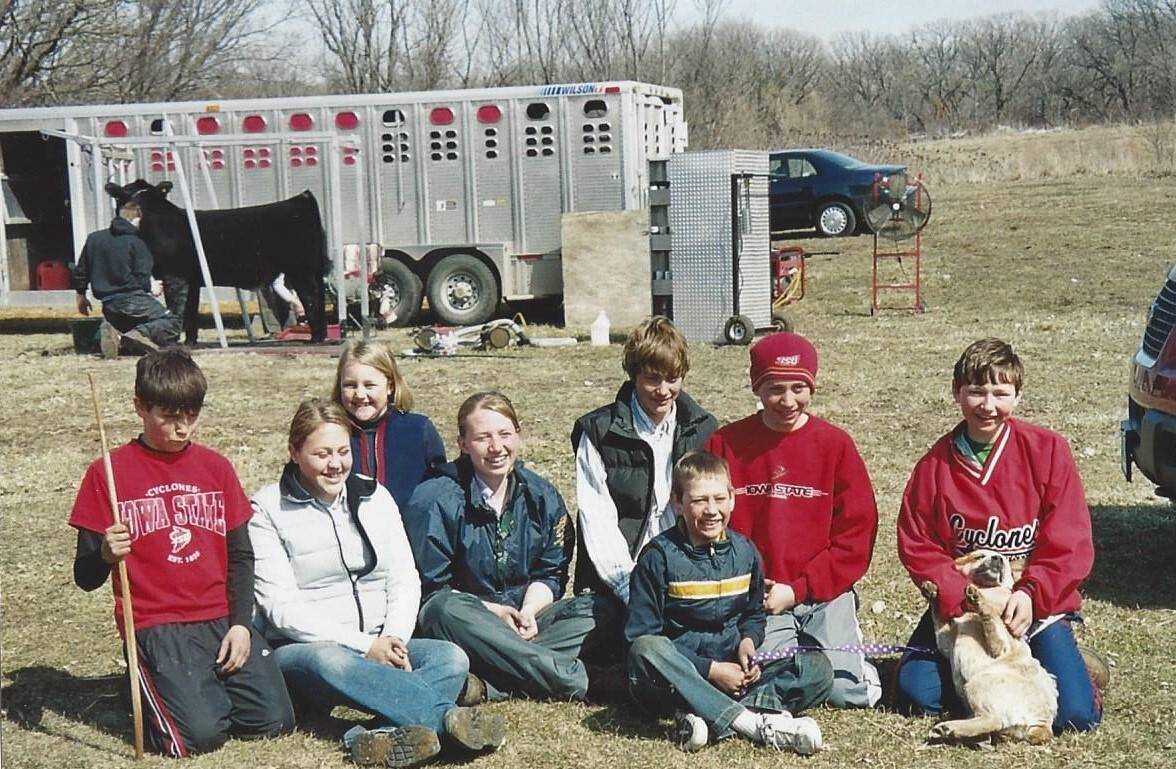
    “My sister and I both started showing cattle when we were five.  We got the tamest feeder calves or a very quiet cow calf pair,” says Zach, who explains that as they got older, he

    and Morgan entered other livestock projects at the Iowa State Fair through 4-H and FFA. “My sister showed a horse at the state fair. We both showed pigs and cattle. Our family members, including Uncle Don and Aunt Yvonne, would always be in the stands watching us.  I hope I make him proud continuing the family tradition of showing and raising cattle.”

    Some people would feel like they had big shoes to fill. Jealously would tear other families and friends apart, but it’s obvious that Zach has a great deal of respect for his family members, as well as for the families with whom he’s shown cattle for years.

    The Family Tree Branches Out

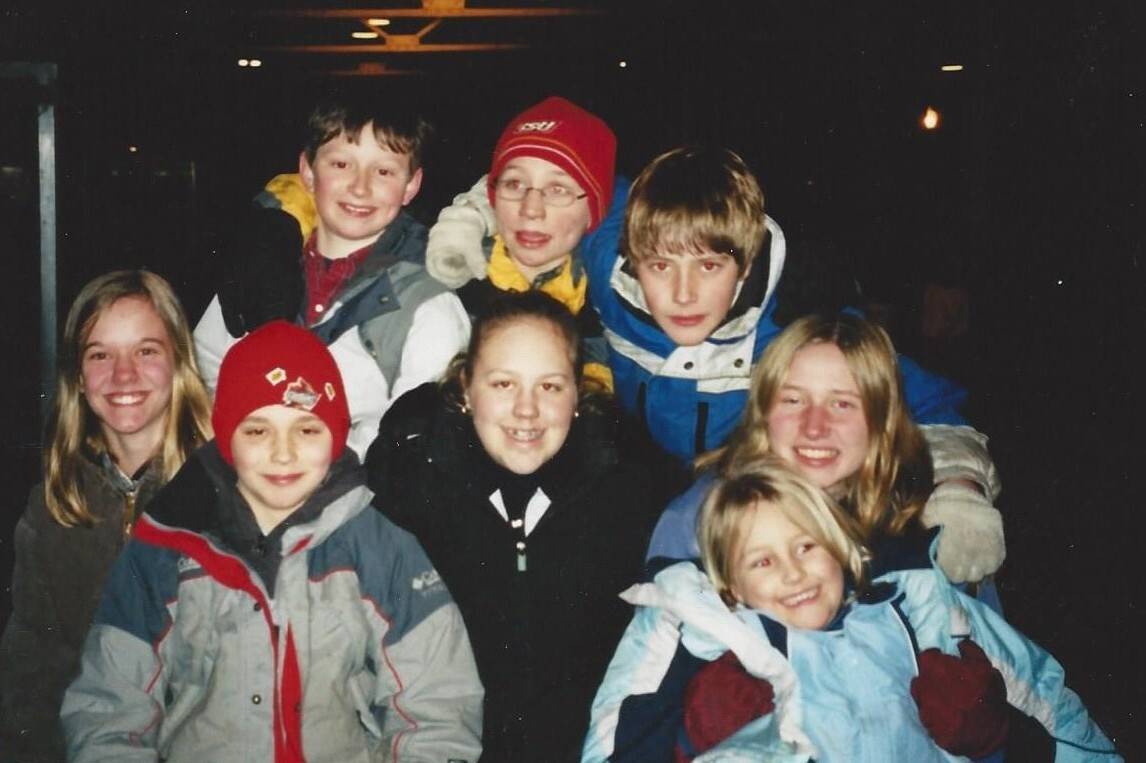
    Neighborhood cousins at the Winter Beef Expo in Des Moines, IA
    Neighborhood cousins at the Winter Beef Expo in Des Moines, IA

    “Great Great Grandpa Fred and Great Great Grandma Deana had 14 kids.  When they got married he gave them each a quarter section of ground with the opportunity to buy an additional 80 acres. Most of them stayed in the area and live around me,” says Zach. “People are surprised to learn just how well our extended family gets along. Some of my best friends are my cousins. Kyle and Cole Greiman are my first cousins, and for the longest time, many people thought we were brothers. The four of us have spent a majority of our time together as we live only one mile apart, share the same interests and are very close in age.”

    Traveling to cattle shows was so much fun, adds Zach. The Jass families (Courtney, Kerstin, Chase, and Trey), the Weavers (Brittany, Kelly, Rachelle), the Andersons (Derick, Mara, Kylee, Jalynn), and the Greimans (Zach, Morgan, Kyle, Cole, Grace, Shelby, Jacob) were all cousins. Although the Tushas and Nedveds are also from Garner and showed with this group in the later years, they aren’t related.

    “We all stalled together, stayed at the same motels, helped each other out, had fun and showed together,” says Zach. “For the most part, we all showed a different breed of heifers or steers.  Usually one of us won something, which gave us all reason to celebrate.  At one winter Beef Expo Junior Show, the kids from Garner had six of the breed champions in the final lineup.”

    “We also did a lot of 4-H and FFA livestock judging,” adds Zach. “Morgan, Brittany, Kyle, and Courtney were the senior team. Cole, Chase, me, sometimes Trey or another friend, Josh Christians, were the junior team.  We won lots of contests. The senior team won trips to Indianapolis, Kansas City and Denver. To this day, we still hang out and help each other.”

    Neighborhood cousins at a cattle show in Fort Dodge, IA
    Neighborhood cousins at a cattle show in Fort Dodge, IA

    Like many kids interested in livestock projects, Zach was a Clover Bud until he was old enough to join 4-H. Then he joined FFA in high school. Zach also belonged to the Angus, Limousin, Maine, Chianina, Red Angus, and Simmental Associations. He belonged to the Iowa Junior Beef Breeds Association, too. He served as an officer in several of these organizations, met many good friends, competed in an array of contests, and traveled nationwide to attend meetings and shows.

    Networking by meeting new people, providing oral reasons at a livestock show and attending meetings is second nature. “It’s what I‘ve done all my life so it doesn’t seem like going work,” says Zach, who continues to spend his summers traveling the show circuit. He fits cattle for others, plus he judges a fair amount of cattle shows. In addition, Zach sells Latham® brand seed like father and grandfather before him.

    “Both businesses complement each other,” says Zach. “Last weekend, for example, I was judging a cattle show. In my bio, they announced that I was a Latham® Seed dealer. People came up to me after the show to talk about seed. Latham has great products, and the alfalfa line up is fabulous. When cattle friends ask about what we feed and what would work for them, I’m happy to recommend Latham products.”

    Raising and selling cattle is certainly Zach’s passion. He says he also enjoys eating, so while he was attending Iowa State University where he graduated last May, Zach honed his cooking skills. Of course, he prefers meals made with beef. Today he’s sharing with us two of his family favorite recipes.

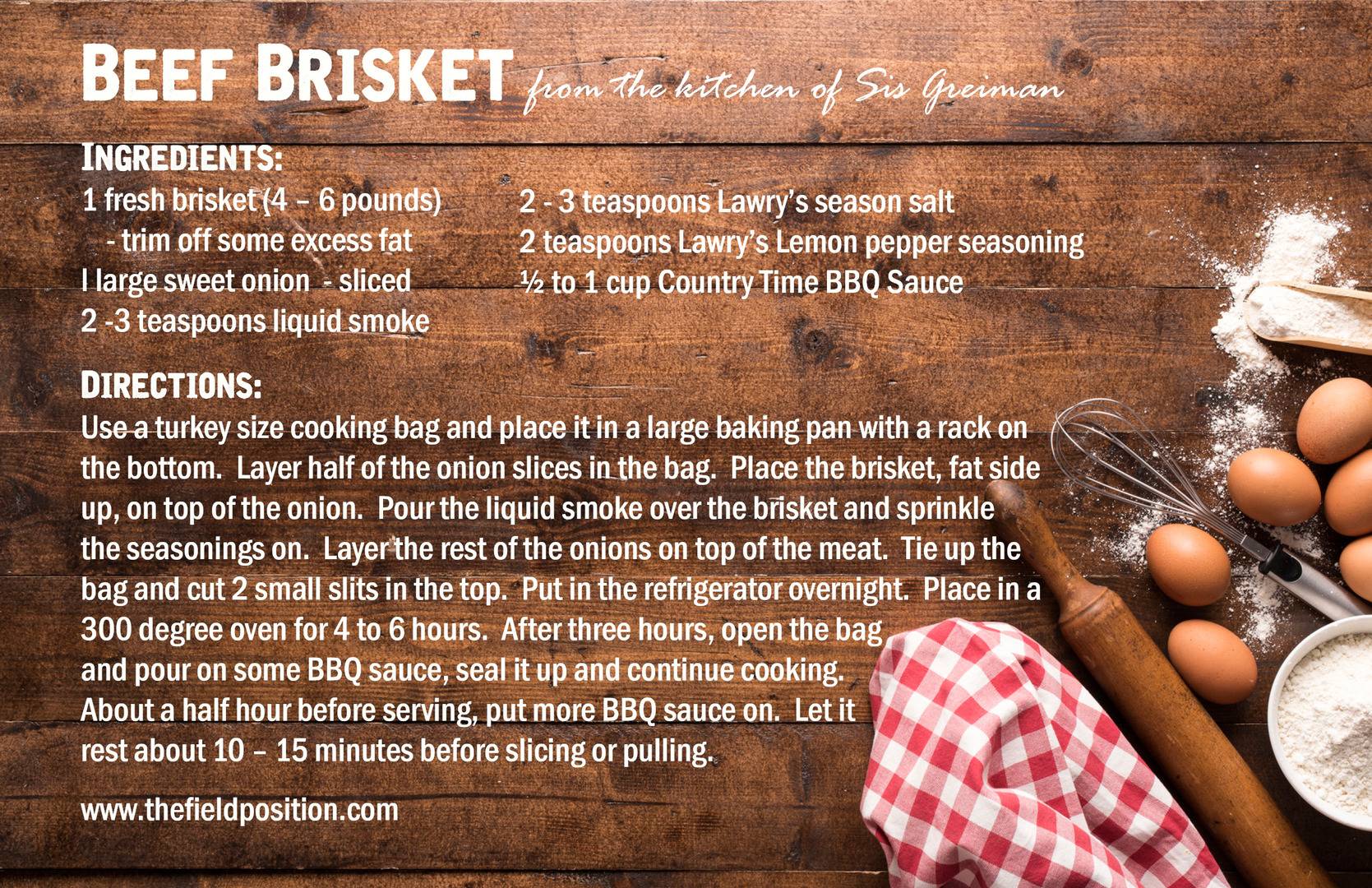
    Beef Brisket

    Team Latham

    May 19, 2017
    Beef, Food & Family
  • Latham Hi‑Tech Seeds

    Evolving to Meet Demand is Key to this FarmHer’s Success

    Friday 3

    Friday 5Her smile couldn’t be more genuine. Her eyes truly light up when she’s talking about Violet… or  Squeak… or Idgie.  She’s doing what she loves and loving what she does.

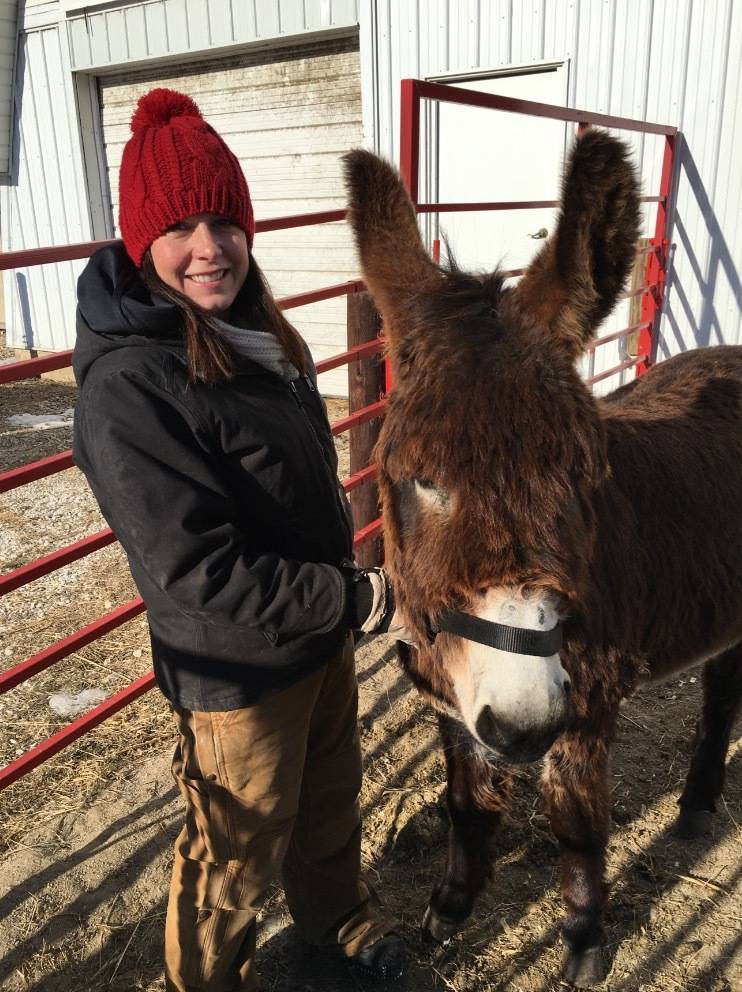
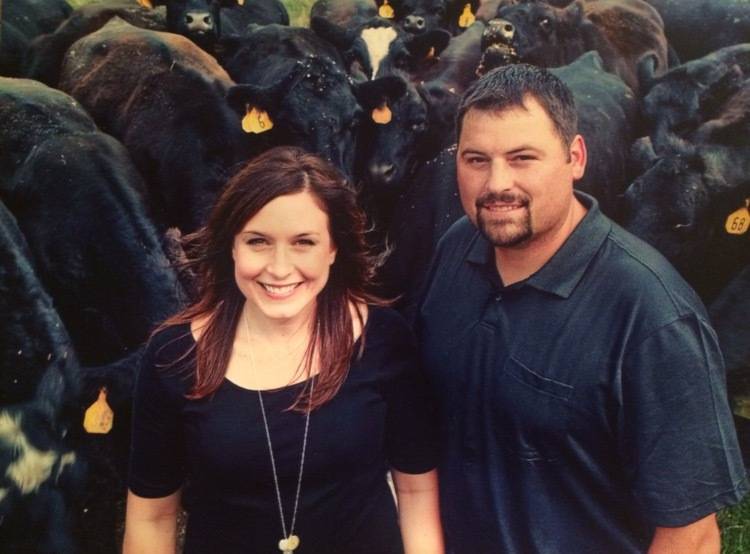
    Meet FarmHer Amber Kohlhaas, who spends her 40-hour (or more) work week as Communications manager for Hagie Manufacturing and her “time off” with the animals she loves. She and her husband, Jason, live on his family’s Century Farm near Lu Verne, Iowa, where they raise a variety of cattle, as well as other furry and feathered creatures.

    “Regardless of whether you are exhibiting 4-H beef, swine, sheep or any other livestock project, the same challenges apply and the same life lessons can be learned,” says Amber Kohlhaas, who grew up on a grain and livestock farm in neighboring Hancock County. “As long as you are passionate and committed to working hard, there are endless opportunities to grow your passions and unleash your full potential.”

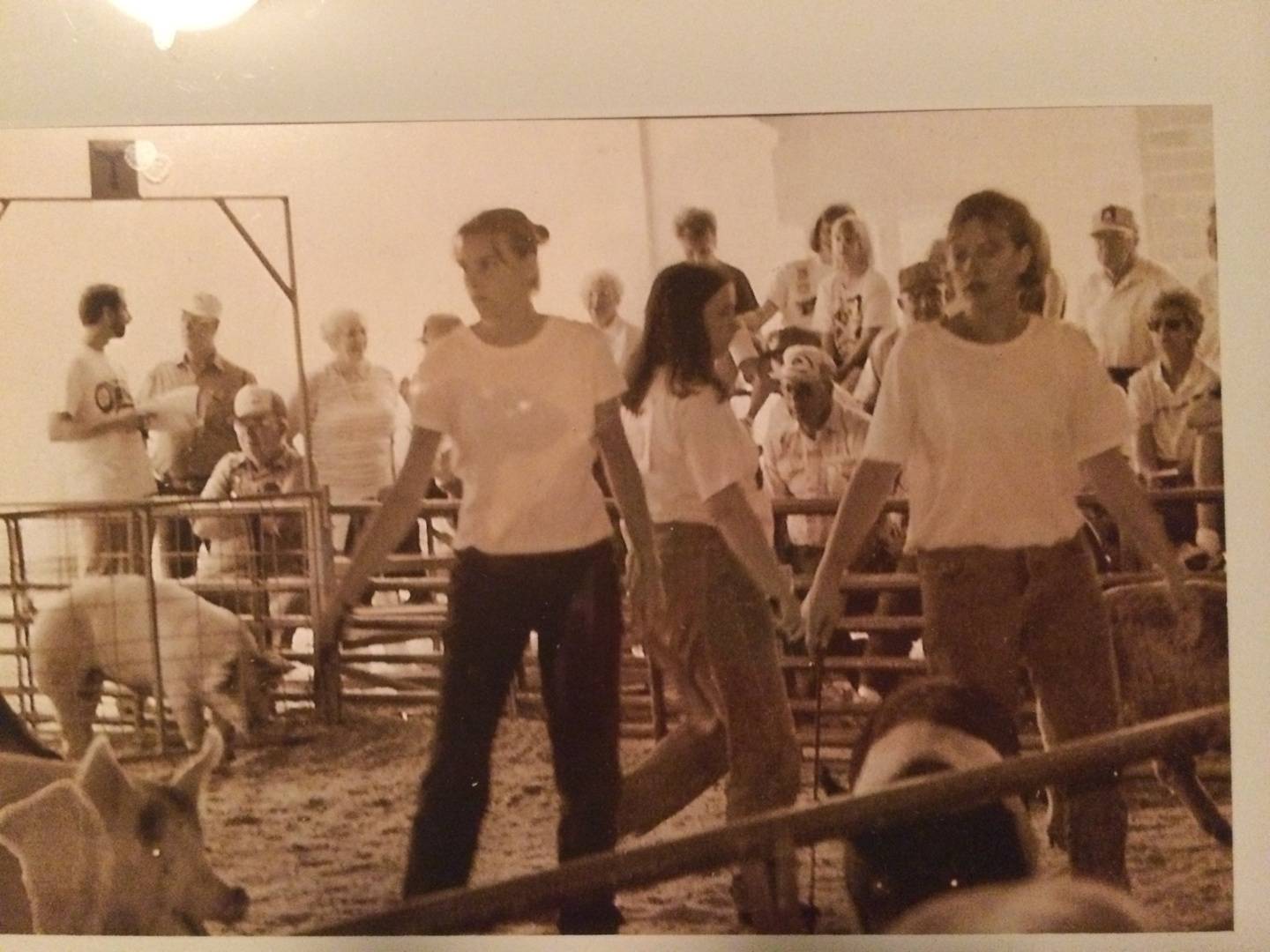
    Amber was actively involved with the day-to-day aspects of her family’s farm. She showed pigs and sheep for 10 years in 4-H.

    Friday 2“My 4-H involvement taught me many valuable life lessons that are still applicable today. I learned early on what it means to be responsible and dedicated to a project from start to finish,” says Amber. “Equally as valuable was the learning experiences that 4-H taught me about being resilient to loss. Just as the commodity markets directly impact the return on investment for the farms today, there will be challenging times where all your hard work may not pay off like you were hoping. In those times, you learn to pick yourself back up and push forward. 4-H taught me that success doesn’t come easy. Something that has to be earned to be appreciated.”

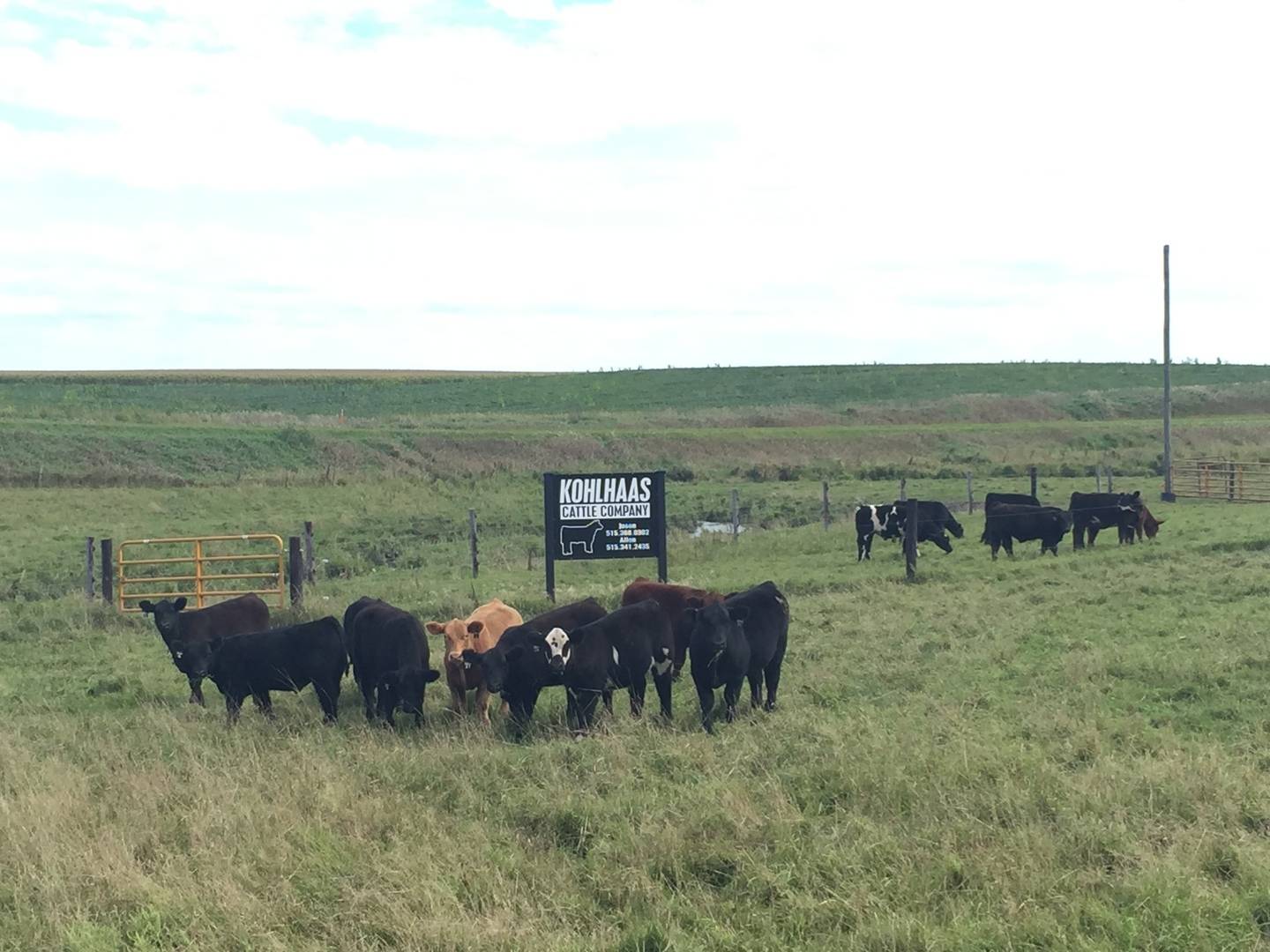
    Friday 4Amber channels that same work ethic, passion and energy into helping build Kohlhaas Cattle Company, which she and her husband co-own with his parents.

    “As breeders, our business goal is to produce and provide quality cattle to the market. We work to place our market heifers, steers and breeding heifers with families that are committed to being competitive in the show ring, as well as providing replacement cattle offerings for producers’ unique operational needs,” explains Amber, who earned a degree in Agricultural Business from Iowa State University.

    “The market demands are always evolving,” she adds. “Therefore, we have geared our herd to offer our customers with options, including Friday 3purebred Angus, purebred Simmental, purebred Charolais, purebred Maine, and purebred Shorthorn, in addition to offering lower percentage cattle for breed divisions. Our goal as a diversified breeder is to provide quality cattle to meet the evolving demands that market needs.”

    It may sound cut and dried, but these transactions are more than business deals. Buyers and sellers develop trust and form relationships that go beyond the sale ring.

    “I really enjoy the opportunity to build relationships with families who are eager to learn and grow. It’s a very rewarding experience to see loyal customers take so much pride in the level of care they provide for the cattle that we produce,” says Amber.

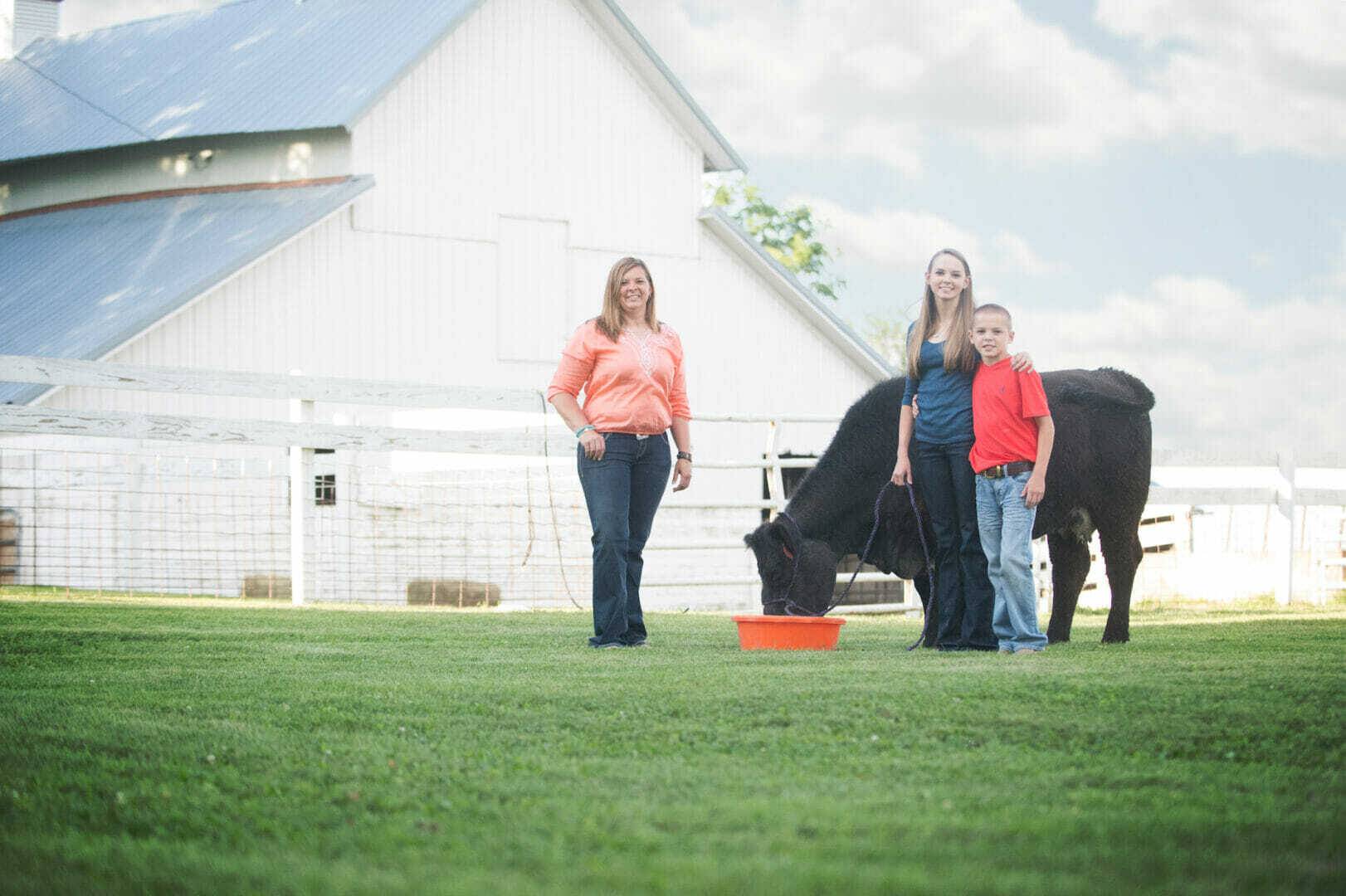
    Friday 1Because Amber and Jason both were competitive youth showmen, they enjoy providing quality cattle that enable their customers to be successful and achieve their goals. One example of a family with whom they’ve formed a valuable relationship is the Tusha family of Garner, Iowa. Successful Farming’s Showbound Series followed the Tusha’s youngest daughter, Grace, as she finished her final year of showing cattle in 2015.

    Amber and Jason sell cattle directly from their farm and are also a part of the Pro Tour Club Calf Sale. This elite group of 15 reputable club calf breeders in North Central and western Iowa. This group offers 500 head of high quality calves annually on sales in September.

    As leaders in agriculture, Amber and Jason are members of the Iowa Cattlemen’s Association. Amber also serves on the Kossuth County Farm Bureau Board, Iowa Women in Agriculture Board, and the Responsible Nutrient Management Foundation Board.

    “Someone once told me, ‘It’s not what you know, it’s who you know.’ And I have found that to be valuable advice. Agriculture is a small community. It’s all about connections. By putting collective interests and energies to work, it’s amazing what you can accomplish together to make a difference.”

    Team Latham

    May 12, 2017
    Beef, Food & Family, Recipes
  • Latham Hi‑Tech Seeds

    This FarmHer Lives Her Legacy through Carrico Angus

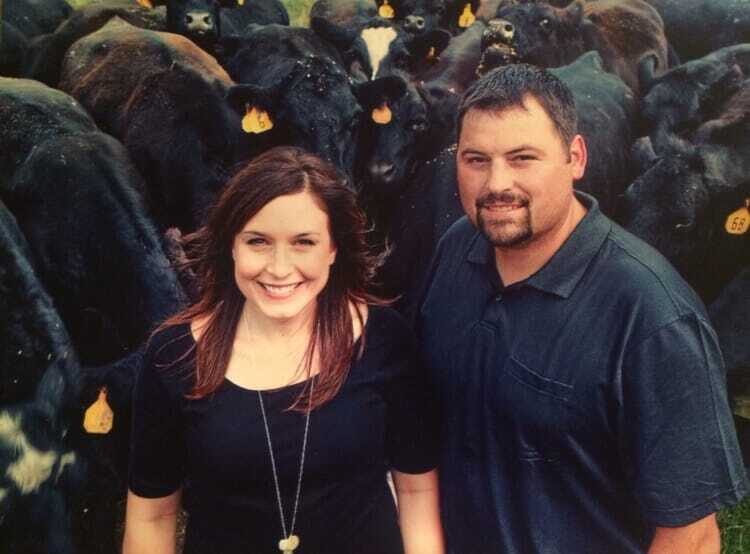
    CarricoFamily


    Legacy 2-01

    From an early age, the barn was Jennifer Carrico’s second home. It was home to her show cattle. It’s where calves were born. It’s where she searched for kittens. She says many life lessons were learned from work done in that barn. It’s a legacy she’s proud to leave her children.
    From an early age, the barn was Jennifer Carrico’s second home. It was home to her show cattle. It’s where calves were born. It’s where she searched for kittens. She says many life lessons were learned from work done in that barn. It’s a legacy she’s proud to leave her children.

    From $425 “faux muddy jeans” to trendy vintage FFA jackets, it seems that everyone from hipsters to fashionistas want to live the legacy left by the farmers and ranchers before them.

    Every morning Jennifer Carrico is reminded of her agricultural roots as she enters the stately wooden barn on her family’s Century Farm in central Iowa to do cattle chores before heading into the office or hitting the road for her job as field editor for the High Plains Journal.

    “Miranda Lambert sings ‘The House that Built Me.’ I love that song about how she wants to go in the house she grew up in to find her roots again. I am lucky enough to be able to go into the barn that built me every day,” says Jennifer, who’s raising the sixth generation on her family farm in Dallas County. “I want my children to understand how important agriculture is to our family and how farmers and ranchers provide so much for so many other people.”

    Today Jennifer, her 16-year-old daughter and her 11-year old son, enjoy raising cattle and showing them across the country. Most of their family vacations involve attending cattle shows. While it’s a lot of work, she says it’s also a lot of fun.

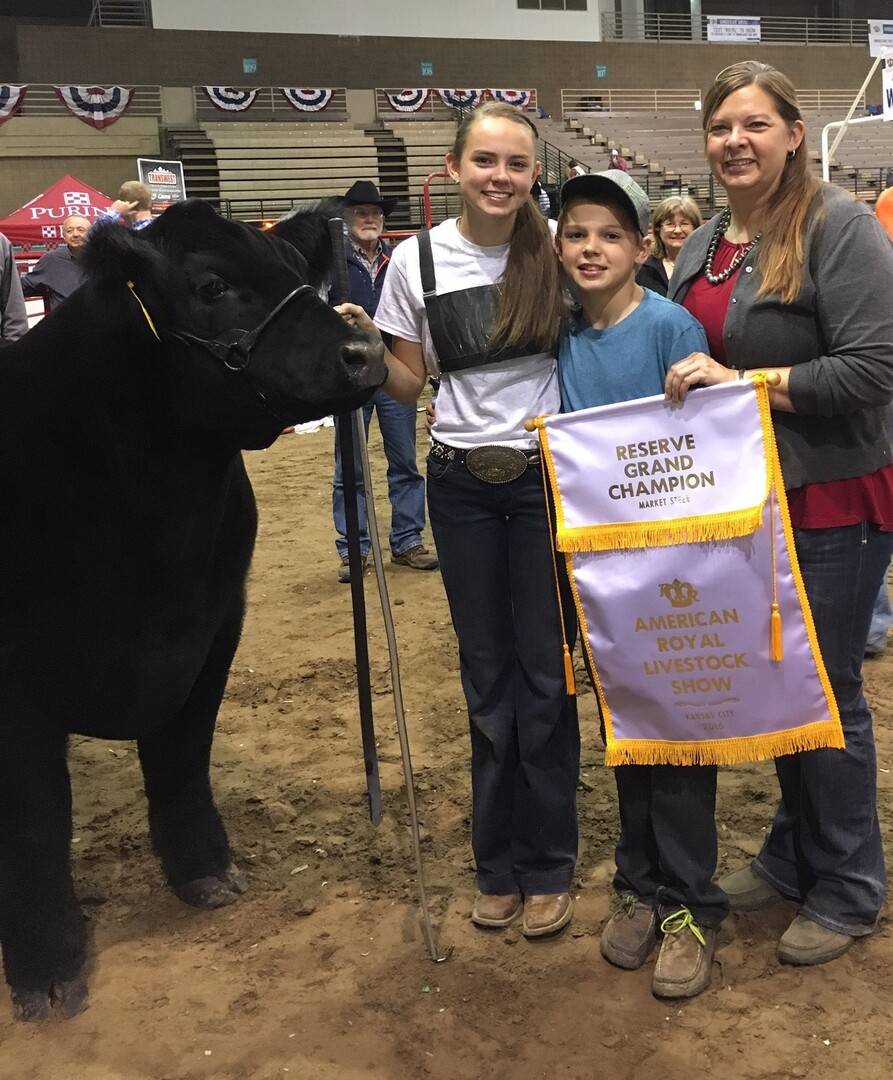
    October 2016, Kassidy showed the Reserve Grand Champion market steer at the American Royal in Kansas City. She says it was an awesome experience and such an honor.
    October 2016, Kassidy showed the Reserve Grand Champion market steer at the American Royal in Kansas City. She says it was an awesome experience and such an honor.

    “I grew up being part of Carrico Angus, a purebred Angus operation my dad started when he was in 4-H,” says Jennifer. “My dad dispersed his herd in 2006, and I was able to purchase some of the genetics in that sale to continue my herd. Since returning to the farm in 2007, I have had the opportunity to build a small herd of purebred Angus cows with a few crossbred cows.”

    “Growing up on a farm teaches a work ethic that can’t be taught by a book,” adds Jennifer. “Both Kassidy and Klayton help work

    cattle, pull calves and have their own show cattle to care for. They learn about the importance of teamwork. They also learn about life cycles and develop compassion for all of God’s creations.”

    In addition to their farm chores, Jennifer’s children are involved in school sports and youth organizations. Kassidy is in both 4-H and FFA. Klayton is in 4-H. These two organizations, along with junior beef breed associations, provide them with opportunities to expand their leadership and communication skills. They also get the chance to make friends locally and nationally with others who share the same interests.

    Similar childhood experiences are what led Jennifer to pursue a career in agriculture. She enrolled at Iowa State University with the intent of becoming a veterinarian. Two years after working toward her animal science degree, Jennifer realized she wanted to tell the stories of farmers and ranchers. She wanted to help others understand why agriculture is so important, so she added a minor in journalism.

    CarricoNewbornJennifer has been involved with ag communications for the past 25 years. Without a doubt, she says the favorite part of her job is telling the story of the farmer and rancher. She has the pleasure of meeting many great farmers and ranchers from across the country and has the opportunity of traveling through some of the most beautiful areas.

    Also active in professional organizations, Jennifer serves as secretary of the Livestock Publications Council board of directors. She serves on committees for the American Agriculture Editor’s Association, as well. She has been involved with the steering committee for Agricultural Media Summit and chaired the event in 2014. Jennifer also a member of the Alumni FFA and is serving as education chair for the 2017 National Junior Angus Show in Des Moines.

    In support of the industry she’s so passionate about, today Jennifer is sharing with us one of her family’s favorite recipes for beef brisket.

    Team Latham

    May 5, 2017
    Beef, Food & Family
  • Latham Hi‑Tech Seeds

    Let’s Grow Together: Try Your Hand at Gardening

    DSC 7617 2 1

    DSC_7617-2 (1)guest blog post by
    Lindsey Foss, Coordinator of Iowa Food and Family Project

    Gardeners and farmers have a lot in common! You get to grow stuff. You get dirt under your fingernails. You learn what it takes to make things survive in the heat, rain and cold. And you learn about the bugs and other things that can take a liking to what you’re growing; a process that can both test your patience and spark your ingenuity.

    But that’s not all. Farmers and gardeners also share an intense appreciation and satisfaction in hard work yielding a bountiful crop – and doing so as a family!

    April marks National Gardening Month: a time to celebrate and appreciate where our food really comes from. (Hint: it’s not the refrigerator or pantry!) Iowans are becoming increasingly interested in all things food and farming; in fact, nearly 50 percent of Iowa Food & Family Project (Iowa FFP) fans have a backyard or patio garden. To celebrate, Iowa FFP and Earl May Nursery & Garden Center are teaming up for “Let’s Grow Together,” encouraging more conversation about the topics we care about – and having fun along the way!

    LDSC01616et’s Grow Together will inspire Iowans to take try their hand at food and flower gardening, while also learning first-hand the many similarities gardening has with farming! Throughout the yearlong journey, fans will gain unique tips and insights from experts at Earl May, including preparing soil, planting and harvesting produce, nurturing fruit trees and establishing pollinator habitats.

    Similarly, we’ll follow along as farmer Mark Jackson shares what it takes to grow grain and raise livestock on his Mahaska County farm. His top priorities include taking conservation efforts for the soil and water, managing pests, preventing disease and laying the groundwork for future generations to farm, should they so choose.

    Let’s Grow Together will also offer an opportunity for food-minded Iowans to add their voice through online conversations, activities and contests with plenty of prizes to help fans discover their green thumbs by starting or sprucing up a gardening project.

    As you enjoy the fresh smells and signs of new life this season brings, try this colorful Easy Pasta Bake that can be made with leftover ham from Easter celebrations and shelled edamame — a protein-packed veggie that pays homage to National Soyfoods Month, too!

    Team Latham

    April 14, 2017
    Beef, Food & Family, Recipes
  • Latham Hi‑Tech Seeds

    Osage FFA Advisor Leads by Example

    Farmher

    resizedWhen Melissa (Bisbee) Moretz was 5 years old, she went into business with her brother and sister. Their father purchased a few ewes for them to raise. They were in charge of feeding and lambing them. As they grew older, they accepted more responsibility including the finances.

    “This is where my farming background began. It was an effort made by my parents to help my siblings and I save money for college, but it developed into much more. As we grew older and became 4-H members, we decided to sell the sheep and get into cattle and swine,” says Melissa, who channels her passion for agriculture and education into her job as ag instructor and FFA advisor in Osage, Iowa. “I showed breeding beef at the county fair along with market swine at the county and state fair. I farrowed swine for my Supervised Agricultural Experience (SAE) program in FFA. During my four years in FFA at St. Ansgar High School, I participated in many career development events, met many people, served as a chapter officer for two years, and learned what hard work really was.”

    With so many life lessons learned, it’s no wonder that Melissa and her husband Nate desire to raise their family on a farm. She says she loves coming home from work and taking their 18-month-old son, Kole, to the barn. Every night, this family of three feeds their calves together.

    Nate and Melissa also farm with Nate’s parents, calving about 120 cows/heifers per year. As young farmers easing their way into the operation, Nate and Melissa began purchase market steers and heifers to finish out. Melissa says they care for each animal in the best way possible with two goals in mind: (1) Keep our animals safe and healthy; and (2) produce quality offspring.

    “A special bond forms between people who are working together to accomplish a common goal,” says Melissa, who also operates a Latham® Hi‑Tech Seeds dealership with her husband. “Both Nate and I were raised on farms and want to teach Kole the life lessons that, in my opinion, are learned best on the farm. Responsibility, hard work, life/death, and teamwork are a few of the valuable lessons I have learned on the farm and want to share with our family.”

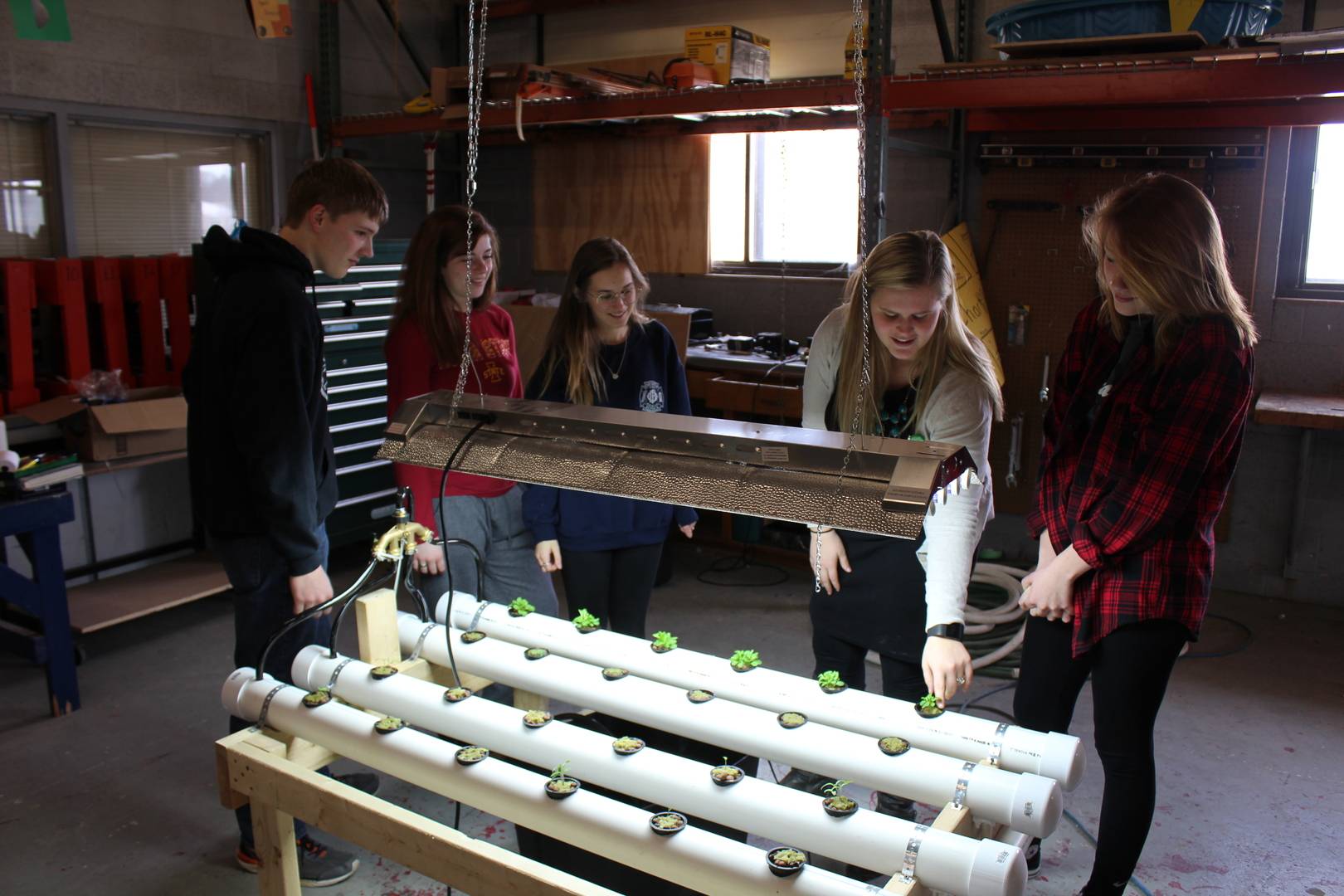
    Under the grow light, horticulture students are looking into one of our hydroponics systems. A student designed this system and built it. Here he planted lettuce, tomatoes, and pepper plants.
    Under the grow light, horticulture students are looking into one of our hydroponics systems. A student designed this system and built it. Here he planted lettuce, tomatoes, and pepper plants.

    Osage FFA
    Helping youth learn life skills through agriculture is also what makes Melissa passionate about teaching agriculture and serving as an FFA advisor. Her students are actively engaged in advocating for agriculture. One group of students is working on a presentation about the antibiotic use in animals. Students in Mrs. Moretz’s sophomore class are required to research a controversial topic in the ag industry, ranging from GMOs to animal welfare, and lead a 15-minute group discussion on their topic.

    Last summer the Osage FFA chapter received a grant from the American Farm Bureau Federation to pilot a new curriculum. The middle school exploratory class had an opportunity to design and build its own aquaponics system. In this system students’ have a goal to grow fish and plants for human consumption.

    “The focus of this curriculum is to get students to understand how serious the matter of feeding the world is, and more importantly how we can do it in an efficient way,” explains Melissa. “Horticulture students are also building their own hydroponics systems, which grow plants in water. This spring members of the horticulture class implement their landscape designs on the county fairgrounds. Our chapter has also received a few grants to build a greenhouse to use in collaboration with the science department.

    My goal for the members of the Osage FFA chapter are to send these members out into the workforce, trade programs, or four-year universities ready to be successful. I hope to prepare members for various fields in agriculture by developing skills that will last them a lifetime such as communication skills, research ability, along with a general knowledge of agriculture. Some specific ways I plan to achieve these goals are to encourage members to participate in the Career Development Events that the FFA offers, along with teaching students basic interview skills, resume writing, and instilling in them the same love for agriculture that my mentors did in me.

    I want to be an example for women who dream of being in agriculture. I’m not here to tell everyone that it is a breeze or a piece of cake. I have had struggles and been asked some interesting questions, but at the end of the day, I remind myself that I am paving a way for others to follow and that to inspire people is best done when leading by example.”

    Today we are sharing one of Melissa’s favorite recipes from Betty Crocker. It makes for a quick, easy and delicious supper!

    Team Latham

    April 7, 2017
    Beef, Food & Family, Recipes
  • Latham Hi‑Tech Seeds

    Farm Mom Teaches Ag Lessons in and out of the Classroom

    Feature1

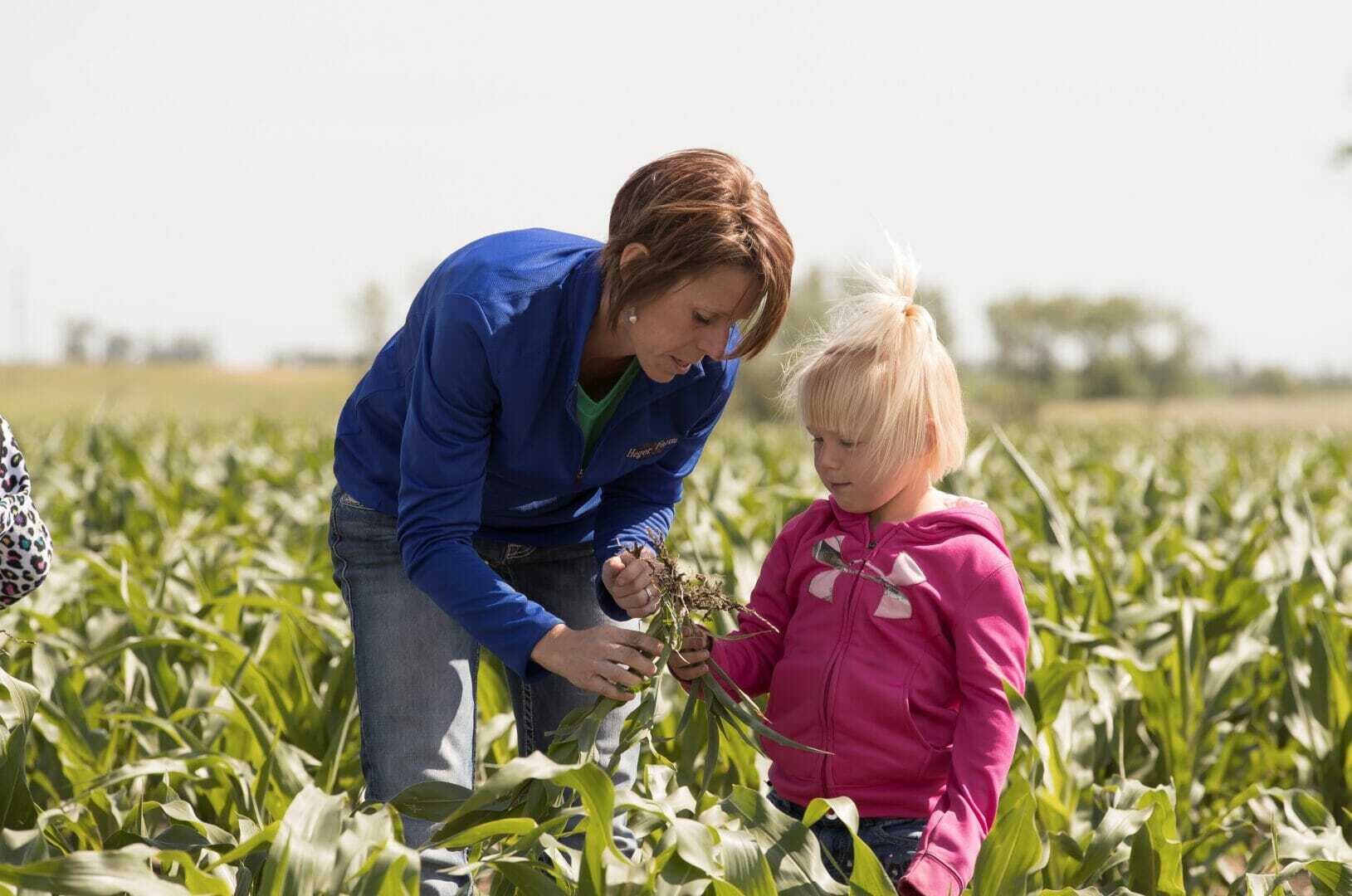
    SchoolAs a little girl growing up in Minneapolis, Katie Heger spent hours playing school. Her aunt was an elementary teacher, so Katie used her own school papers and assignments to teach make-believe students. This natural-born teacher received a bachelor’s degree in education from Concordia College in Moorhead, Minn., and a master’s degree in administration.

    In 2000, Katie got married and became part of Heger Family Farms in Underwood, North Dakota.

    “There are no two days that are alike on the farm. There are no two days alike in the classroom,” says Katie, who enjoys teaching all students, but finds middle and high school her best fit. She also has served as elementary school principal. “I’ve learned to think outside the box to teach students skill sets and life lessons at the same time. Relating new information to real life is vital to our upcoming generations.”

    Katie applies this same philosophy to raising her family and advocating. She and her husband, Steven, are raising five children on their family farm, which will celebrate its centennial in 2019. This third generation farm family also has the distinction of being the first North Dakota residents to move back onto mined land after the coal was removed and land reclaimed.

    Grow it forwardThe Heger children learn business skills and the importance of philanthropy by raising sweet corn and selling it at a roadside stand. A sign on their stand reads, “Grow It Forward,” which explains what they do. Half of the proceeds get donated each year to a community group. Katie presents three organizations for her children’s consideration, and they decide where to donate the money. Recipients have included a crisis care center for battered women, a non-profit daycare, and their local food pantry.

    Another way Katie gives back to her community is through the annual Harvest Hike. This August will mark the third 5K race that she’s organized to teach people about agriculture while raising money for a local charity. People have come from 60 miles to participate. Their $15 donation gets them a swag bag filled with North Dakota foods including beef and honey sticks, pasta, pancake mix, ag magazines and recipes.

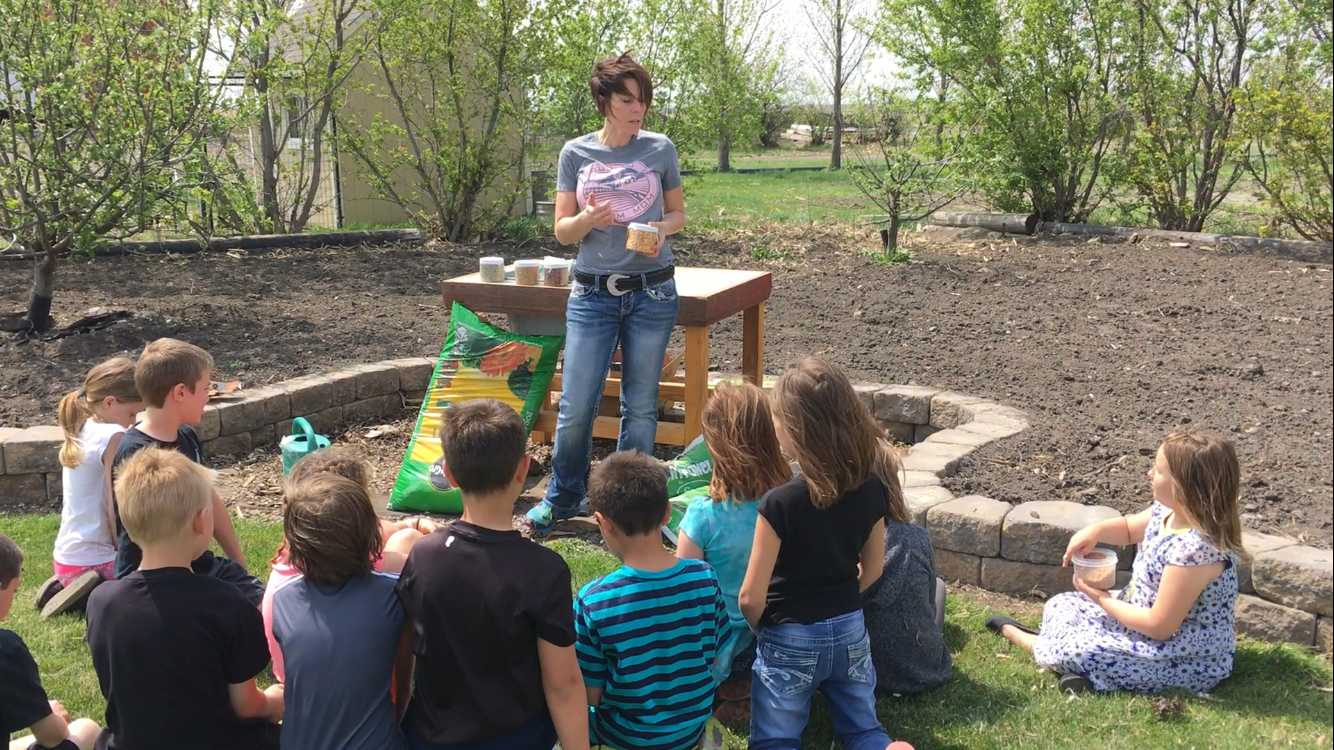
    Katie also speaks to civic and agricultural groups alike. She volunteers at the local food pantry. She supports the local library and has led farm-related activities as part of story time. She also hosts second graders on farm tours. During last spring’s farm tour, Katie read a story entitled “First Peas to the Table.”

    This American Farm Bureau Federation “Book of the Year 2016” tells the story of a school contest to see which student can grow the first peas of the season as they study Thomas Jefferson and his contributions to agriculture. After reading the story, Katie helped students plant peas. She also gave each student his/her own copy of the book.

    family“Advocating came naturally,” explains Katie, a member of North Dakota CommonGround. CommonGround volunteers foster conversations about how food is grown. These FarmHers share their personal stories to bridge the communication gap between producers and consumers. “Everything was exciting to me when I moved to the farm, and I believed my family and my friends back home would be excited to learn more about agriculture, too. I started sharing our story. Then I realized I could do more. I decided to go into classrooms and get more involved in our local community to help correct misperceptions about farming. Now I use social media to help connect with consumers.”

    With her passion for advocacy, her commitment to local organizations and her involvement with their family farm, it’s no wonder Katie was selected as 2016 Northwest Region Farm Mom of the Year.

    “What I enjoy most about being involved with our family farm is that we’re all in it together. Our family is a team. Our kids are learning true life skills from doing everything from changing tires to building fence. They’ve learned the animals must be fed before they feed themselves. They’re developing empathy,” says Katie. “Whether they come back to our farm or not, these are the soft skills that you can’t necessarily learn from a text book or in a classroom. The farm fosters creativity and nurtures kids’ curiosity. Some of my kids are engineers. We have the items around to foster the mechanics and the builders. They can entertain themselves for hours with electrical tape, duct tape and random pieces of wood.”

    Just as the farm nurtures each child, Katie believes 4-H helps her kids further explore their interests and develop life skills. Four of her five children are old enough to be members of 4-H, and Katie serves as their 4-H club leader. They have goat and bottle calf projects. They also choose other 4-H projects including woodworking, agronomy, horticulture, welding, food and nutrition, as well as sewing. The Heger’s oldest daughter also participates in the Hippology competition.

    “Honoring the past, working today and preparing for the future” is Heger Farms motto. It’s clear Steven and Katie are living that motto as they raise their five children: Ben, 15; Libby, 13; Chris, 9; Nellie, 7; and Piper, 4.

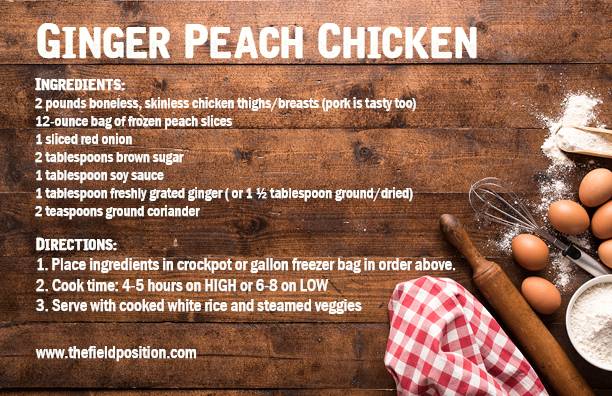
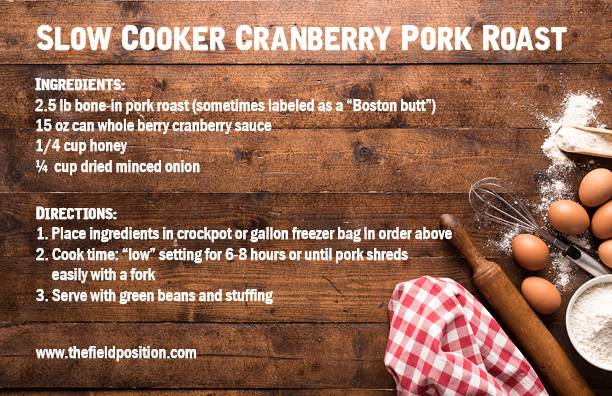
    Not only does each child have his/her own farm chores, but they participate in extracurricular school activities. Between volleyball, football, basketball, track, volunteering, livestock and planting, fall and spring are especially busy seasons. Katie often relies on freezer meals, which she prepares during slower seasons, or quick crockpot meals to keep her family fed and fueled when the days are especially busy. Today she’s sharing a few of her family’s favorite meals to help you get through this busy season, too!

    SL Ginger Peach Chicken

    SL Slow Cooker Cranberry


    Shannon Latham

    March 24, 2017
    Beef, Food & Family, Poultry
  • Latham Hi‑Tech Seeds

    Sample a Taste of Savannah with an Iowa-Irish Twist

    Darcy

    guest blog post by Darcy Maulsby

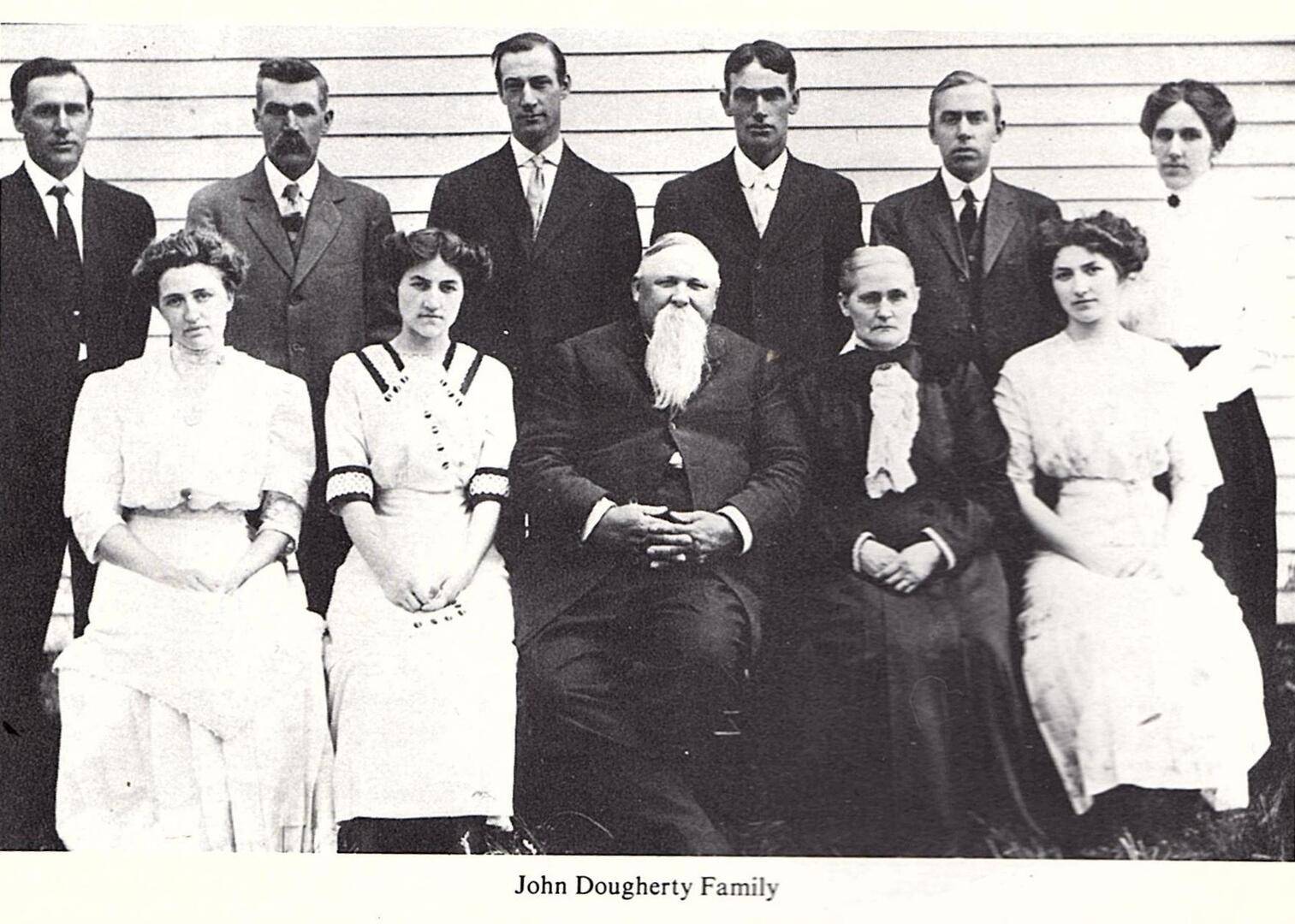
    John Dougherty familyNo one does St. Patrick’s Day like Savannah, Georgia—a pleasant discovery for an Iowa farm girl like me with proud Irish heritage and an insatiable appetite for America’s rich culinary heritage.

    Maybe I inherited my love of good food from my great-great-grandfather, John Dougherty (the man with the impressive white mustache in the Dougherty family photo in this blog). An American success story, John was born in County Cork, Ireland, in 1848, came to America with his parents at age 10, grew up in New Jersey, worked in the rolling mills of Chicago and farmed in Illinois for 20 years. After he moved to Calhoun County, Iowa, in 1889, he purchased 200 acres and “placed the land under a high state of cultivation,” a legacy my family carries on today with our Century Farm.

    With my Irish heritage, I felt right at home during a recent Iowa Farm Bureau trip to Savannah, which boasts the third largest St. Patrick’s Day Parade in the world. Oh sure, the city’s open container law that allows alcoholic beverage consumption on the street in the historic district also distinguishes the Hostess City, but Savannah’s diverse food scene is even more intriguing.

    During the 3-hour First Squares Food Tour with Savannah Taste Experience Food Tours, our group tasted our way from restaurants on the riverfront (where the cobblestones in the streets once served as ship ballast) to pubs and bakeries near Savannah’s historic town squares. Along the way, we discovered the city’s surprising, savory culinary identity, which includes:

    • Hearty Scottish food. Scottish cuisine? While Savannah has Irish pubs, one of the best meals I ate on my culinary tour included shepherd’s pie from Molly MacPherson’s Scottish Pub at 311 W. Congress Street. After James Oglethorpe of England established Savannah as the first permanent settlement in Georgia in 1733, he recruited Scots (who were among the finest soldiers in the world) to provide a buffer between the English colony and the Spanish in Florida. Georgia might have been a Spanish colony had it not been for these Scottish Highlanders, who sailed from the Old World to Savannah in 1735.
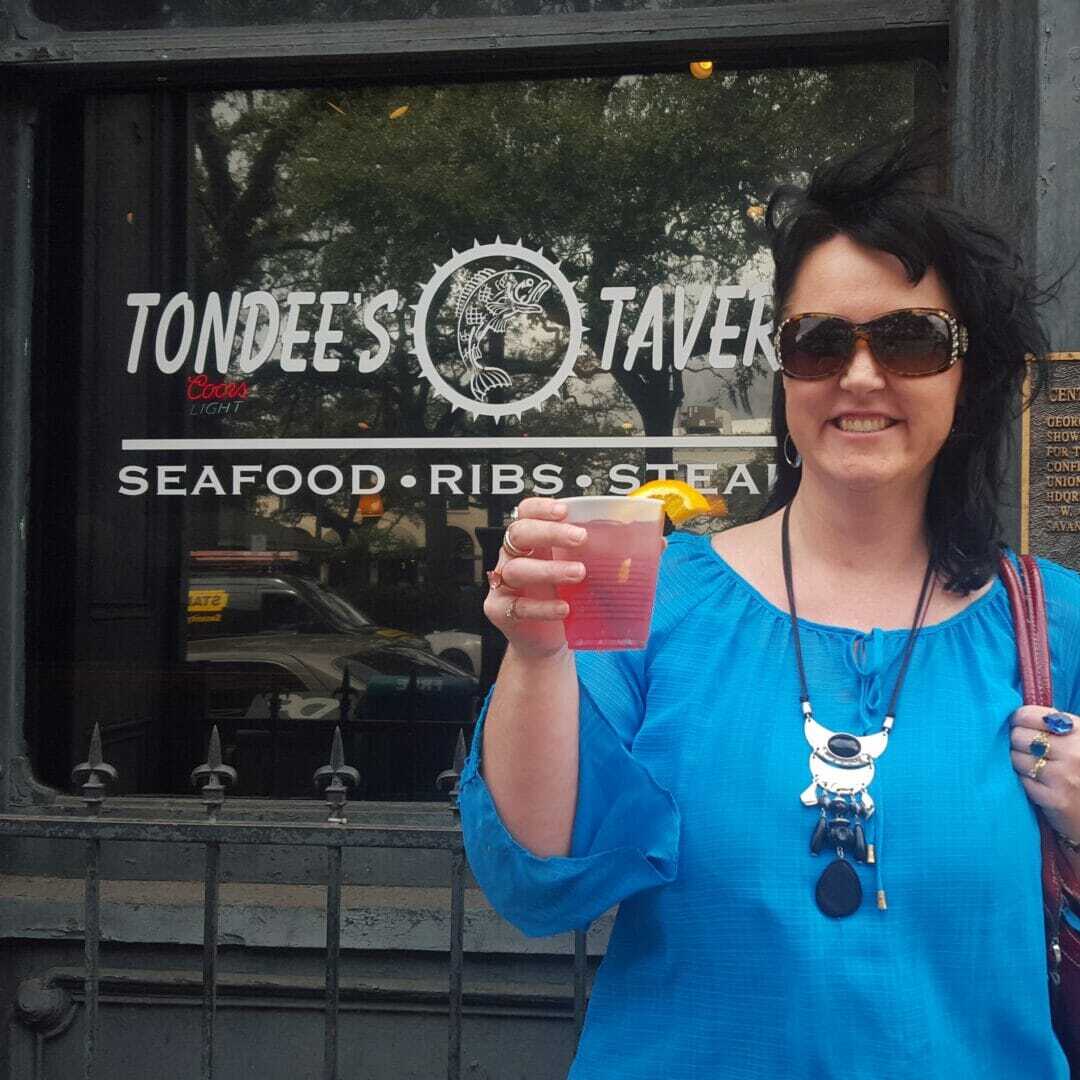
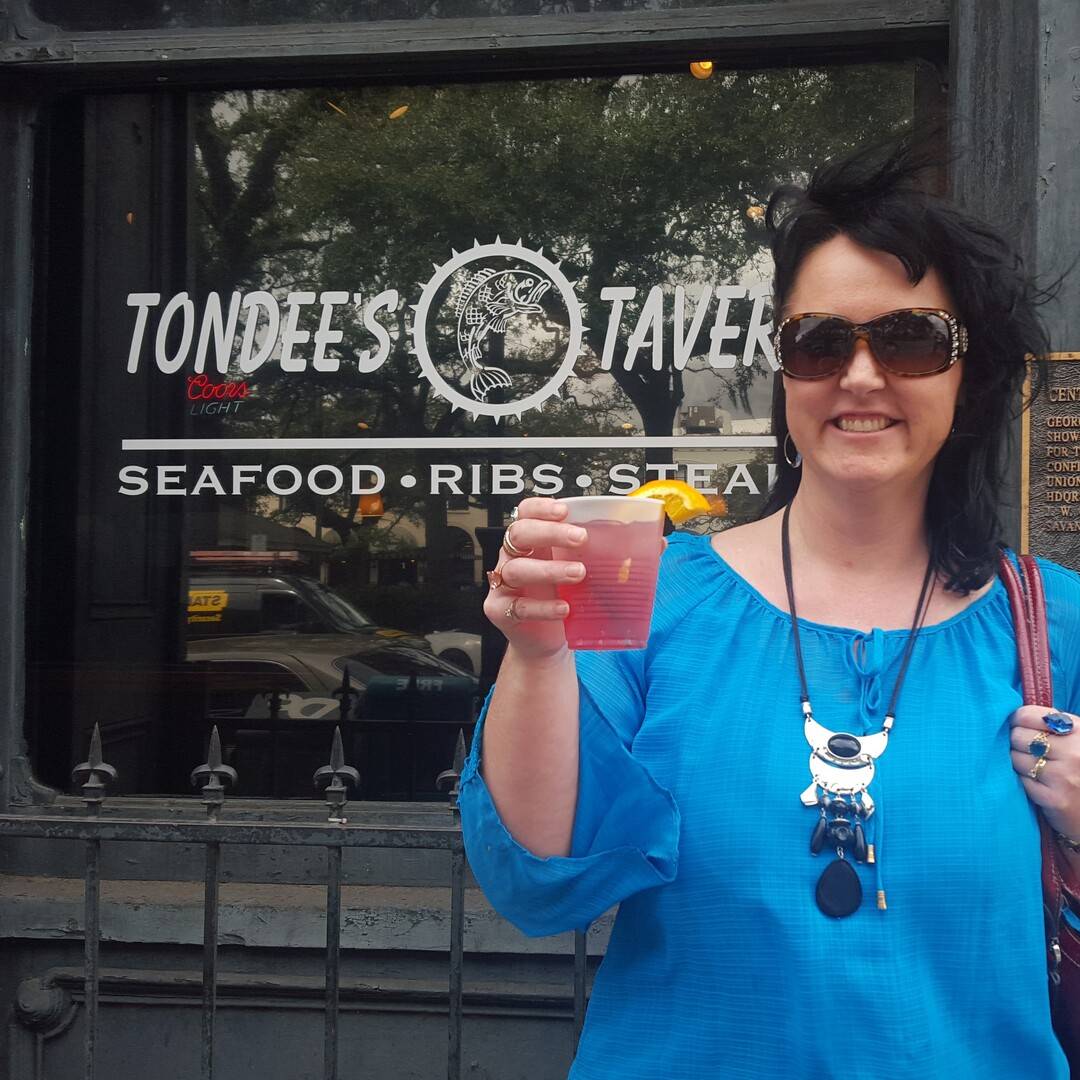
    • She-crab soup to shrimp and grits. No trip to Savannah would be complete without a taste of the Lowcountry, which stretches from the Savannah River to the coastal area of South Carolina. As we sampled seafood chowder at Rocks on the River at 102 W. Bay Street, we learned about Savannah’s unique geography. The area’s rich estuary system provides an abundance of shrimp, fish, crabs and oysters that were not available to non-coastal regions of the South prior to refrigeration. Try the delicious she-crab soup in Savannah. Also, sample the shrimp and grits—a coastal classic—at historic Tondee’s Tavern at 7 East Bay Street.
    • DarcyChatham Artillery Punch. Speaking of Tondee’s Tavern, order a Chatham Artillery while you’re there. The brave patriots of the Chatham Artillery who fought in the Revolutionary War impressed George Washington so much that he presented the Chatham Artillery with cannons, including one captured at the Battle of Yorktown in 1781. These “Washington Guns” were fired to salute President James Monroe when he visited Savannah in May 1819. Occasions like this were undoubtedly celebrated with Chatham Artillery Punch. No one is sure how this heady concoction originated, but local lore says Savannah ladies made the first beverage. Then, one by one officers of the Artillery sneaked in and added rum, bourbon and more, creating Savannah’s most noted drink in two centuries.

    I might just mix up my own version of Chatham Artillery Punch while the green beer flows on St. Patrick’s Day. I’ll also be thinking of Savannah as I prepare my recipe for Beer-Braised Irish Stew and leave you with this Irish blessing: As you slide down the banisters of life, may the splinters never point the wrong way!

    Darcy is a fifth-generation Calhoun County, Iowa, farmer, business owner, ag journalist, speaker, photographer and author of three books, including “A Culinary History of Iowa,” which is available at www.darcymaulsby.com.

    Team Latham

    March 17, 2017
    Beef, Food & Family
  • Latham Hi‑Tech Seeds

    Fried Chicken and Pizza Among this Year’s Hottest Food Trends

    IMG 2613 e1484317818600

    Prep your palate for ice cream roll ups, faux meat, grilled chicken hearts—and then some.

    I’ll admit this line from Condé Nast Traveler hooked me, and I read the entire article about the hottest food trends for 2017. Quinoa and kale are cooling off, but pizza and chicken remain hot.

    How ironic that Americans number one New Year’s resolution is “eat healthy,” yet pizza and fried chicken are top food trends for 2017!

    “It is rather ironic that pizza and fried chicken are two of the food trends for 2017 despite the popular New Year’s resolutions for eating healthy and/or losing weight,” says Anne Hytrek, MSEd, RD, LD, CDE, Ankeny Prairie Trail Hy-Vee Dietitian and Certified Diabetes Educator. “However, pizza actually can be a healthy entree’ choice depending on the type of crust and toppings used.”

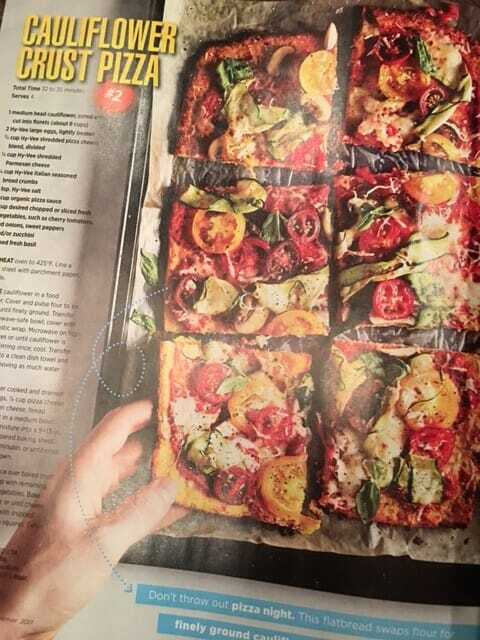
    The Tuscano cracker crust or thin crusts are healthier, says Hytrek, especially if they’re made with whole wheat or whole grain flour. Another great alternative is a cauliflower crust that you can make at home. (We’re sharing the recipe below.) Additional healthier crust options, especially for individual pizzas, include Brownsberry Pita Pockets or Sandwich Thins, Flat Out, or Thomas High Fiber English Muffins.

    “Bring pizza to life and feel full at the same time without a lot of calories by topping your pizza with lots of colorful vegetables,” says Hytrek. “Think outside of the box and try toppings like pickled peppers, roasted kale, asparagus or brussel sprouts, sliced cherry tomatoes, zucchini ribbons, fresh basil, artichoke hearts, and olives. Canadian bacon, chicken or shrimp, chicken Italian sausage, feta cheese are additional protein options to change up your typical toppings.  Really, just be creative and try some different flavor combinations that you typically enjoy!”

    Although a noted food trend for 2017 is “organic, antibiotic-free and hormone-free food,” Hytrek says dieticians at her Hy-Vee location do not get a lot of questions regarding these types of foods. Perhaps living in the Midwest helps Iowa customers feel more comfortable with where their food is coming from versus other areas in the United States why.

    Hytrek’s comment mirror findings included in the Iowa Food & Family Project’s annual consumer pulse survey conducted earlier this winter. 

    According to the survey of nearly 400 people, Iowans are less likely to seek out such options as “cage-free,” “organic” and “natural” compared to consumers queried in national surveys. However, food labeled “local” continues to rise in popularity among food-minded Iowans, with 81 percent of those surveyed admitting they are “somewhat” or “very” likely to purchase such food.  

    When it comes to defining “local,” the results were less than concrete with responses ranging from “across the street” or “within a couple of miles of where it’s sold” to “grown or raised somewhere in the United States.”

    Aaron Putze, APR, serves as communications director for Iowa Soybean Association and helps coordinate the work of the Iowa Food & Family Project. He says findings included in the group’s annual consumer pulse survey reveal strong and broad support for Iowa farmers and today’s agriculture. It also underscores the time and attention many consumers give to making food purchases.

    Eighty-seven percent of Iowans have a positive perception of agriculture in the state, Putze says, while 68 percent of Iowans think about how food is grown and raised. The combination underscores the value and merits of the Iowa Food & Family Project.

    “People want to feel empowered about the food purchasing decisions they make,” Putze says. “By having frequent conversations about food and introducing Iowans to agriculture, we can enhance confidence and trust among both consumers and the farm families who make so many safe and healthy food options available.”

    Hy-Vee and Latham Hi‑Tech Seeds join more than 30 partners who support the Iowa Food & Family Project. Learn more and get involved at www.iowafoodandfamily.com.

    Team Latham

    January 13, 2017
    Beef, Food & Family, Pork, Recipes
Previous Page
1 … 7 8 9 10 11 … 16
Next Page

Latham Hi‑Tech Seeds

131 180th Street | Alexander, IA 50420

(641) 692-3258

SIGNUP FOR OUR NEWSLETTER
  • Contact
  • Legal
  • Dealer Center
  • Seedware Login
  • Latham Gear

© 2025 Latham Hi‑Tech Seeds. All rights reserved. | Iowa Web Design by Webspec | Privacy Policy

Latham® Hi-Tech Seeds is a trademark of M.S. Technologies, L.L.C., 103 Avenue D, West Point, IA 52656.