Latham Hi-Tech Seeds

(641) 692-3258

  • Home
  • Products
    • Corn
    • Soybeans
    • Alfalfa
    • Corn Silage
    • Seed Guide
  • Performance
  • Find a Rep
  • Media
    • Blog
    • News
    • Videos
    • Podcasts
    • TECHTalk
  • About Us
    • Company History
    • Our Mission
    • Careers
    • Become a Rep
    • Sowing Seeds of Hope
  • Contact Us
  • Latham Hi‑Tech Seeds

    Wishing for Peace & Goodwill in 2013

    Peace and good health

    New Year’s Eve seems like the appropriate time to reflect upon the past year.  Much has happened.  While it hasn’t all been good, I’m going to focus on the bright spots.

    One New Year’s Resolution I kept in 2012 was starting to write a weekly blog, “Musings of a Pig Farmer.”  This blog is something I would never have dreamed of doing even just a couple of years ago.  I thank Latham Hi‑Tech Seeds for giving me a place to share what I do on the farm (and elsewhere) with people, who are not quite so connected with farming but want to know more about where their food comes from and how it’s raised.

    Do we raise food in the “right way”?  Is the way we operate acceptable in your eyes?  While I’d like to believe we have all the right answers, the truth is that everyone has a different opinion of what’s right.  What seems right to me may not be right to someone living in New York City.

    Unless we talk and listen to one another – really engage in a two-way conversation – we don’t even know what the other person is thinking.  The person in New York City just might like what I do when she finds out why I do it. Or just maybe, she will show me why it’s not right to do something the way it’s been done on my farm.  I can learn, and that’s why I always say we must listen.

    Soil and water conservation is a very big issue right now.  Honestly, I had no idea quite how contentious of an issue it was until my “letter to the editor” on this topic was published in The Des Moines Register.  To my disbelief, I received hate mail telling me in very nasty words why I am a horrible person and how I am polluting the water and causing all the trouble down in the Gulf of Mexico.

    There was no return address on that letter, and I really would’ve liked to have had a conversation with this “anonymous” person.  If he could see how I take care of the soil and water through no-till practices and buffer strips, he would understand that we share the goal of conserving soil and preserving water quality.  But, he did not communicate with me.  Instead he hid behind his pen, and this really bothers me!  I would really like the chance to share with him all of the good things being done in hope of taking away some of his hate.

    That one nasty letter did motivate me to keep trying to have conversations with people who lack an understanding of agriculture.  With more consumers curious about where their food comes from and how it’s raised, there is a greater need for more farmers to share their stories. If you’re a fellow farmer, I encourage you to share your story!  Consumers understand when you explain.

    Let’s all resolve to do what we can to understand one another in 2013.  Here’s to peace and goodwill…  Happy New Year!


    Larry Sailer, Musings of a Pig Farmer

    December 31, 2012
    Agriculture, General, Industry News
  • Latham Hi‑Tech Seeds

    Protect Your Farm from a Winter Fire

    Farmfire

    FS4JK-logoSubmitted by Tracy Schlater
    Marketing Director, 
    Farm Safety For Just Kids

    Believe it or not, winter fires are common due to additional heat sources. Today I’d like to share with you a few precautions you can take to protect your family and your farm.

    Courtesy Jupiterimages/ BananaStock/Thinkstock Barn fires spread quickly and are extremely hot.
    Courtesy Jupiterimages/
    BananaStock/Thinkstock
    Barn fires spread quickly and are extremely hot.

    10 Ways to Help Avoid Farm Fires

    1. Install smoke detectors on every level of your home. Be sure to place one outside each bedroom.
    2. Test smoke detectors monthly. Replace batteries twice a year, regardless of whether you think it’s necessary. One easy trick for remembering to do this is to change batteries each time you change the clocks for daylight savings.
    3. Replace smoke detectors that are 10 years or older.
    4. Place fire extinguishers in strategic locations, making sure they are accessible in your kitchen, barn, farm buildings, and machinery including tractors and combines.
    5. Plan your escape routes. Practice fire drills at home once a year. Show your children all of the safe ways to escape a fire from every room of the house and every building on the farm. Designate an outdoor meeting place and make it part of the drill.
    6. Keep matches away from children.
    7. Never enter a confined livestock area or housing structure if it’s on fire.
    8. Install lightning rods.
    9. Store gasoline and other flammable fuels in proper containers in cool places.
    10. Turn off engines when refueling machines.

    Gary Geske

    December 27, 2012
    Agriculture, General, Industry News
  • Latham Hi‑Tech Seeds

    More men shopping, better breakfasts headline 2013 food trends

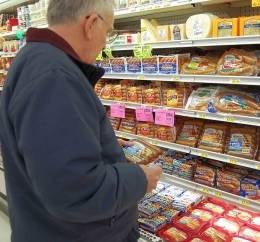
    Manshopping1
    Aaron Putze

    Guest-blogged by Aaron Putze, Iowa Food and Family Project

    Supermarket Guru Phil Lempert makes his annual predictions for the world of food.

    A renewed emphasis on breakfast, men doing more grocery shopping and food prep and reductions in food waste are just a few of the trends that will define 2013, according to Supermarket Guru Phil Lempert.

    The food retailing expert says the most dramatic changes are not what, but how, consumers are eating and who’s doing the shopping.

    “Not only will there be an increase in male and Millennial grocery shoppers, but there will be a dramatic shift in the sizes of meals and an emphasis on frozen food,” says Lempert. “Consumers are looking for food to prepare quickly and conveniently while offering fresh, high-quality ingredients and homemade taste.”

    Lempert’s top-10 food trends for 2013:

    1. Less food waste. More people are becoming aware of the estimate that 40 percent of food goes uneaten each month in the United States. Lempert says food waste can be reduced by planning meals ahead of time and checking expiration dates at the store.
    2. More snacking and mini-meals. Snacking, says Lempert, has gotten a bad rap and that’s about to change. Replacing a few, large meals with more frequent nibbling may be associated with a more nutrient dense diet.
    3. The story behind our food. “2013 will be a transitional year as on-package claims proliferate and confuse,” Lempert says. Supermarkets will take on the role of gatekeeper and demand proof and transparency of claims before they will permit products to be sold on their shelves. The role of retail dietitians will also increase.
    4. A “silver tsunami.” Nearly 70 million Baby Boomers (1946-1964) are nearing retirement so nutrition and healthy eating habits will be top meal-planning priorities for them. Lempert says to expect more heart-healthy antioxidant-rich foods including oily fish such as salmon, as well as green tea, sweet potatoes and dark leafy greens.
    5. Impact of Millennials (those born between 1982 and 2001): Supermarkets and food companies will cater more toward Millennial consumers with affordable foods that are flavorful and ethnically diverse, says Lempert.
    6. The economy and new proteins: With predicted price increases in beef and chicken, Lempert anticipates more sales of eggs, nut butters, tofu, beans and legumes.
    7. More men in the supermarket and kitchen. Lempert says men and dads are getting more comfortable and powerful in the kitchen and predicts supermarkets will increase their focus on men in 2013.
    8. Frozen food heating up. With a continued decline in the percentage of meals prepared from scratch, more consumers are reaching for frozen foods. That’s OK, says Lempert, as the Food & Drug Administration agrees that there’s virtually no nutritional difference between fresh and frozen fruits and vegetables.
    9. Smart technology. Smart phones and technology are prevalent in the food industry, but the newest wave of technology includes smart phones that network with kitchen appliances and allow consumers to do everything from checking how much milk they have left in the refrigerator to turning the oven on from another room. Lempert says more mobile apps are on their way.
    10. Breakfast first. Lempert says people will continue to pay more attention to what foods are best to eat for breakfast. He suggests balanced breakfast options like egg white omelets, whole grain bread and Greek yogurt with fresh fruit.

    For the complete details, check out Lempert’s Food Trends 2013 summary .

    Team Latham

    December 26, 2012
    Agriculture, General, Industry News
  • Latham Hi‑Tech Seeds

    Homemade for the Holidays

    Salt dough ornament1

    Each year many of us begin our holiday shopping with a trip to the stores on Black Friday in search of a great deal on a perfect gift.  The weeks seem to have flown by since then!  It’s down to crunch time to come up with something for those hard-to-by-for people.  Often times the perfect answer is a handmade gift.

    Here are 10 great gift ideas to help get you started.  I’ve included instructions on some of my own ideas.  Crafters in the blogosphere also provide great ideas, and I’ve listed my favorite finds below.  The great thing is, most of these gifts can be put together for under $20 and could also be adopted for other holiday gifting occasions.

    Try a few of these and put some warmth and creativity into your gift giving this year!

    1. Window Pane Photo Frames
      The first idea uses some creative repurposing to transform an old window into a photo frame.  To make this particular version, I first cleaned the window to remove any dirt from the sills and clean up the panes.  (Gentle dish soap finished with some window cleaner works great for this.)  The décor I chose happened to be in my “extra decorations” box, and included a garland and tin star adhered using small finish nails and hot glue.  The sky is the limit as to what you use to decorate the window.  Some other options might be green rope garland, deco mesh, ribbon, ornaments or wooden letters.  The next step is to print out photos sized to fit the panes on your window.  I used tiny pieces of double stick tape to adhere them to the window panes.  Voila!  One creative photo gift that’s ready to wrap up and nestle under the tree.
    2. Photo Block Ornament
      This idea is courtesy of Wendy host of “Craft Goodies” blog  and can apply to any recipient from a new Mom, to your best friend or even a Grandparent.  I made one this year for a friend who just had a baby and was able to find the wooden blocks at Hobby Lobby for $0.99 each.  Perhaps you make it a tradition to build one of these ornaments to help remember all the milestones you shared together this past year as a family.
    3. Fleece Tied Blanket
      Find a step-by-step tutorial for this idea from Christian on her “Confessions of a Home Schooler” blog.
    4. Lawn Jenga
      Have any camping lovers or college kids that love to tailgate with friends?  Lawn Jenga is an easy DIY that is sure to provide hours of stackable fun.  This blog by The Kid Connection explains that each game is made out of simple 2X4’s cut in pieces 10.5” long.  One set equals 54 pieces.
    5. Cookies in a Can
      Don’t forget the mailman or teacher on your list!  This is a great way to package some homemade goodies.  Just wrap a Pringles can and place the cookies inside.
    6. Modge Podge Photo Coasters
      A great home décor idea, this step-by-step from FrugalGirls.com explains how to modge podge photos onto ceramic tiles to make personalized coasters.
    7. Canvas Art
      Have a decorator on your list?  This idea from Stacie Edwards’s “Inspired by Life” blog shows an easy way to make your own canvas art from wooden letters, canvas and spray paint.
    8. Salt Dough Ornaments
      Get the kids involved in the DIY gifting with Salt Dough Ornaments from Heart 2 Home.  The recipe is simple: mix 1/2 cup salt, 1/2 cup flour, 1/2 cup water.  Knead until the dough forms.  Make a shape (for this example they rolled out the dough, made a handprint and then trimmed around it).  Make sure to poke a hole in the top for hanging!  Bake at 200° for 3 hours.  Then decorate, seal and wrap up for great keepsake.
    9. Fence Post Santa
      One DIY project that was gifted around my family a few years back is a fence post Santa.  Everyone loved receiving one of their very own and mine makes an appearance each year helping spruce up the house for the holidays.  For this project a little free-hand drawing of a Santa face is a great step to help guide painting.  Using red, peach and black create the face of Santa.  Then using some snow paint (I use Aleene’s brand), fill in his facial hair features and hat brim.  I recommend a top coat sealer to prevent paint chipping and fading.  The spray can form works great and dries quickly.
    10. Wooden Photo Art
      The possibilities are endless for gifting photo keepsakes.  This idea comes from WinthropChronicles.com.  She explains how to modge podge photos to a wood base and add ribbon to put an interesting spin on a photo wall hanging.

    Gary Geske

    December 20, 2012
    Agriculture, General, Industry News
  • Latham Hi‑Tech Seeds

    Give to Local Pet Shelters, Not HSUS

    LarryTucker1

    Musings of a Pig Farmer by Larry Sailer

    Who can resist a playful puppy or a cuddly kitten, right?  We’ve even received some Christmas cards featuring dogs dressed in a Santa hat or kittens peeking out from Christmas stockings.

    While pets are cute, they undoubtedly require time and attention.  Not everyone enjoys being a pet owner, thus we hear too many stories about animals being mistreated or neglected.  This past fall I actually witnessed a puppy being dropped off along the highway as I was driving my tractor with two, full wagons of corn.  By the time I crossed the highway with my tractor and wagons, this little dog was standing in the middle of the road.  I jumped out of my cab and shouted for the little dog to come.  Luckily, he ran toward me!  Then I took him home where I placed him into a kennel with some food and water before I went back to finish my farming.

    Larry Sailer and his dog, Tucker

    It wasn’t long before I discovered this little dog wasn’t too fond of cats.  Since we have lots of farm cats, Janice and I contacted our local pet shelter but it didn’t have room for another dog.  Our daughter, Sara, checked with the animal shelter in Iowa City where she volunteers but didn’t have any luck there.  We kept trying to find a home for him without avail.

    After about two months of trying to find the little guy a home, Janice decided to google “animal shelters.”  (NOTE:  I shy away from the term, Humane Society, and I’ll explain why later.)  Janice found the Humane Society of North Iowa.  The staff at the Humane Society of North Iowa was very friendly and said they would put this little dog on their waiting list.  About one week later, someone from HSNI called and said they had a spot for the little dog.  Although I was getting attached to the little critter by now, Janice and I decided to check out the place.

    Phoenix

    We made the 45-minute trip to Mason City with the dog.  The whole time I was driving I was thinking, “If it’s not a nice place, we’re not leaving the dog!”  Even though we were being critical, HSNI impressed us with its new facility.  There are lots of wide, open spaces and a big exercise area.  The animal areas are very clean, and there are many people caring for these pets.  Young ladies were swooning all over the little dog from the minute we brought through the doors, and we were convinced it would be a good place to leave him.  The staff asked us many questions about the dog and then used that information to create a profile for him on the website.  Perhaps you might even know someone who would like to adopt Phoenix. (Remember, his name may be changed by the family who adopts him.  I didn’t even give him a name since we weren’t planning to keep him.)

    Another reason we felt comfortable leaving “Phoenix” with HSNI is because the organization doesn’t receive funds from the Humane Society of the United States (HSUS), a non-profit organization claiming to care for animals.  This organization shows pictures of scared little kitties and abused dogs on late-night TV, then asks you to donate $19/month.  The truth is, HSUS uses emotion to raise money for their retirement funds and to hire lobbyists.  Only one half of one percent of the funds raised goes toward animal care!  Most of your local pet shelters, even if they have similar names, have no affiliation with HSUS.

    Most local pet shelters, even if they have similar names, have no affiliation with HSUS.  Local shelters will even tell you that HSUS confuses the public and ends up diverting funds meant to take care of unwanted pets.  It ticks me off that HSUS runs misleading ads about its support for animals and doesn’t even help support local shelters.

    Please don’t give money to HSUS.  If you want to help animals, donate directly to your local pet shelter!  Janice and I were extremely impressed with the Humane Shelter of North Iowa.  There are many more local shelters across the U.S. doing a great job of caring for animals, so I hope you’ll help support their noble efforts.  As a farmer with livestock, animal care is very important to me.

    Larry Sailer, Musings of a Pig Farmer

    December 18, 2012
    Agriculture, General, Industry News
  • Latham Hi‑Tech Seeds

    Women Are Changing the Ag Landscape, Part II

    Ruthapril
    Franklin County Iowa farmer April Hemmes with her daughter Ruth

    As farms become larger, the need becomes greater for production agriculture to be managed like a business.  Technical expertise becomes as critical – if not more so – so than physical strength when it comes to running an agricultural enterprise.

    “What separates top farms is timing,” says Danny Klinefelter, Texas A&M economist and director of The Executive Program for Agricultural Producers (TEPAP).  “Those most successful farm businesses are those with the best timing: when they entered the business, when and how they expanded, if and when to scale back, where to reallocate resources and how much grain to sell and when.”

    The business side of agriculture requires ongoing attention, and that’s why Klinefelter says more women are managing farms today than ever before.  He’s seeing more couples, especially young couples, view their farming operations as a partnership.

    Today’s husband-wife or father-daughter farming partnerships look different than they did just one or two generations ago as women’s roles in agriculture have evolved.  Based on observations through TEPAP, Klinefelter says women today are likely to fill these key roles within the family’s farming operation:

    1. Data analysis – Farmers currently have more data available than they can manage, which is creating opportunities and even income streams for those who can analyze where their money is best spent.  For example, one farmer’s daughter went to college for statistics.  She returned to the farm upon graduation and is now analyzing input costs.  She’s been so successful in helping determine plant population and fertilizer rates for her family’s operations that friends and neighbors are tapping into her expertise.  A local “peer group” formed as she works with a group of six or so farmers and shares findings with them.
    2. Site-specific farming – Not all farm ground is created equal.  Different soil types within the same field have different needs for nutrients and seed.  The ability to shift application rates on-the-go is better for the environment and for profitability.  It’s a win-win.
    3. Regulatory compliance – Today’s political environment means we must look beyond the Department of Agriculture and note how other agencies are impacting agriculture.  There are at least six other agencies that will play as much of a role in the success of agriculture as the Farm Bill: Department of Energy (DOE), Environmental Protection Agency (EPA), Food and Drug Administration (FDA), Department of Transportation (DOT), Department of Labor (DOL) and Homeland Security.
    4. Commodity marketing – Although there is a perception that women manage by emotion, Klinefelter says he seems quite the opposite when it comes to commodity marketing.  Men tend to think of crops or the farm as “their babies” while women aren’t as visceral about the commodities.  Women often take the time to do the homework.  They lock in prices at a profit, without worrying so much about locking in at the all-time high.
    5. Public relations and social marketing – “There’s a huge communication gap” between farmers and the food-eating public,” as USDA Chief Tom Vilsack said during the 2012 Farm Journal Forum.  Consumers are demanding transparency in food production.  With fewer people engaged in food production, the onus falls on farmers to explain their practices.

    Team Latham

    December 17, 2012
    Agriculture, Industry News
  • Latham Hi‑Tech Seeds

    Wave a Flag, Sing Ag’s Praises

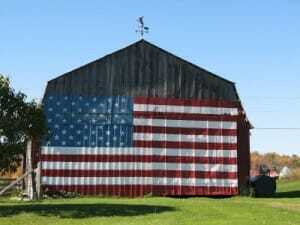
    Barn flag

    U.S. Secretary of Agriculture Tom Vilsack, while addressing attendees recently at the 2012 Farm Journal Forum, asked: “How are you going to encourage young people to want to be involved in rural America or farming if you don’t have a proactive message?”

    Touché!  Here are three proactive messages to communicate:

    • Rural America has never been more relevant.
    • Educated people of all ages are moving to rural areas.
    • Farmers are bridging the communications gap.

    Rural America is Relevant

    Thanks to highly productive farmers and a strong market for agricultural products, Farm Belt states haven’t been hit as hard by our nation’s financial woes.  The export of agricultural products is truly one of the brightest spots in the overall trade picture for our nation.

    Although rural America doesn’t have as many representatives as it once did in Congress, that alone doesn’t reflect its relevance to the world today.  You might even make the case that agriculture is more important than ever.  After all, the world population is growing and somehow – somewhere – more food must be grown.

    The decreasing number of farm acres due to urban sprawl and development means that farm productivity must increase; some experts say yields of major crops must even double to meet world food demand in 2050.

    Young People Are Returning to Rural America

    The ag landscape is changing. People who want jobs move to areas where there is opportunity, and today there is virtually limitless opportunity in agriculture.

    “Agriculture is a far different industry than it was 50, 30, or even 10 years ago…” writes Allen S. Levine, Dean of the College of Food, Agricultural and Natural Resource Sciences at the University of Minnesota, in a rebuttal printed Jan. 20, 2012, by the Huffington Post.  “To make assumptions based on outdated stereotypes about agriculture unfairly misleads young people.”

    There are many more majors under the umbrella of “agriculture” today including microbiology, horticulture, culinary science and global resource systems.  Indeed, agriculture is one of the most useful college majors.  Recruiting Trends show that no other sector appears stronger than agriculture/food processing with an increase in hires.

    That trend is evident on campus at Iowa State University where the College of Agriculture and Life Sciences (ISU CALS) has the highest placement rate of over 98%.  ISU CALS hosts the country’s largest career fair.  The 2012 Ag Career Day, held Oct. 16, was the largest on record with 200 companies exhibiting.

    There is unprecedented demand for college grads, and they’re commanding top starting salaries.  Corporate America is not alone in recognizing the value of a degree in agriculture.  As more farmers understand how business management relates to production management, more farm men – and women – are earning business degrees and even MBAs before returning to their family farms.

    Known as the Rural Brain Gain, highly skilled and highly educated people are returning to their roots.  They bring with them high skill sets and have a career path with outside connections.  One in four of these newcomers own a small business, and those who own businesses are heavily invested in their communities.

    Farmers are Bridging the Communications Gap

    Farmers are heavily invested in their communities, as well.  Farmers often hold leadership positions, from county supervisor and city mayor to school board president and church council.  While most of them are too modest to speak of their own actions, they’re getting more comfortable about telling others about their businesses.

    Farmers site a lack of public understanding about how food is produced as one of their greatest concerns, so they’re making “consumer awareness” a top priority.  Here are a few shining examples of how farmers are working to bridge the communications gap with consumers: 

    • Iowa Food and Family Project – Its mission is to “inspire positive relationships between farmers and consumers through personal engagement and advocacy to the benefit of human vitality, environmental quality and economic prosperity.”
    • Operation Main Street – Provides a means for pork producers to connect with consumers, so they know farmers are committed to producing good, safe food, and to caring for their animals and our environment.
    • AgChat Foundation – Its mission is to “empower farmers and ranchers to connect communities through social media platforms.”

    These groups have their work cut out for them!  According to a U.S. Farmers and Ranchers Alliance survey, 72% of consumers reported knowing nothing or very little about farming or ranching.

    Ag literacy and public perception are ag’s top challenges.  How could the USDA work with U.S. farmers and consumers together to promote a better understanding of agriculture today?

    “We need well-informed, practical decision-makers,” stated Larkin Martin of Martin Farm, during a panel discussion as part of Top Producers Executive Women in Agriculture event in Chicago.

    Ag literacy among American politicians is a grave concern.  In an article published March 2012 by the Council of State Governments, Dean Levine says, “Government invests in health care research because they know about illness, but few in America’s politics know about hunger.  If you were hungry, you would invest in food and understand the importance of agriculture.”

    Team Latham

    December 13, 2012
    Agriculture, General, Industry News
  • Latham Hi‑Tech Seeds

    10 Gift Ideas for Farmers for under $40

    Multimedia Editor for Agriculture.com at Meredith Corporation
    excerpted with permission from “Get Shopping for your Farmer” by Jeff Caldwell, Multimedia Editor for Agriculture.com and “Successful Farming” magazine
    © Meredith Corporation 2012

    The running joke by men in our family is, “I wonder how many black socks or jackknives I’ll unwrap this year.”  It can be a struggle to find something for the farmer on your Christmas list, especially when so many items they want or need come at a hefty price.

    Thanks to the editors at Agriculture.com and Successful Farming magazine, however, this year I have 10 affordable ideas for every male family member on my list.  Both of my nephews are new home owners, so several of the items listed below will be handy for them.  I’ll bet my brother could use the Stor-a-Hitch.  There are even a few items I’m going to add to my Wish List, like the Jab Saw, which would come in handy at my Enchanted Acres Pumpkin Patch.

    Regardless of whether you’re looking for something to give or receive, below is a list of this year’s hot gift ideas.  Even better, every item is priced between $4 and $40!

    1. Hyde Metal Can Pour & Roll

    Pour spout attaches to one-gallon paint can to avoid spills when pouring paint. Also acts as a brush wipe. Plastic grid attaches to rim for painting with a 4-inch roller right from the can. Grid has two positions for use with full and partially used cans. Price is $4.

    2. Painter’s Halo

    This economical product easily presses into the can rim and completely fills the recess, keeping it free of paint. It’s re-usable, long-lasting under normal use, and cleans with water or solvent. Available in quart ($4.99) and gallon ($8.99) sizes.

    3. Reference Guides

    The Weed, Disease and Bug and the Shop Reference Guides are the perfect size for the glove box and offer a wealth of information you can keep at your fingertips. Each book sells for $9.95.

    4. Mixing Mate by Rockler

    The Mixing Mate clamps onto a standard quart- or gallon-sized canister and a lid gasket provides a leak proof seal. The pouring spout has been spring-loaded to self-close and seal. The mixing paddle is designed in a shape similar to an auger so when you spin the handle it lifts the pigments that have settled to the bottom of the can. Price starts at $14.99.

    5. Stor-A-Hitch

    Store your two-inch trailer hitch ball mount when it’s not in use. It’s light-weight and can be hung up in the shop or attached to the bed of your pick up. Priced at $19.95, this device can hold most 3, 4, and 5 hitch ball mounts with varying shank lengths. And the inventor is already working on one for Class 1 and 2 hitches.

    6. Extendable Flash Light

    The EMF2 Extendable light is a telescoping, flex-necked light with three LED lights. It’s 6½ inches long in the tuck position and 21 inches long when extended. Also features a magnetic base and a pivoting mirror. Price is around $20.

    7. Savage Folding Jab Saw

    The Savage folding jab saw and utility knife combines a saw with a utility knife for added versatility. Works with any reciprocating saw blade. Blade locks in two cutting positions and folds for safe storage. Lock back utility knife locks when in the out position and must be released before closing. Comes with three blades and a belt case. Priced at $25.

    8. Radiator Genie

    The Radiator Genie is a 23-inch wand that can help you keep your radiator clear of debris. Fan head design allows it to fit into the engine’s cowl and between the fan blades. For $34.95 you get two wands – One hooks up to an air compressor hose; the other to a garden hose. Handle has adjustable pressure.

    9. WD-40 Specialist Line

    The WD-40 brand is extending its product line for the first time ever with a specialist line. The five products included in the line are Rust Release Penetrant spray ($7.69), Water resistant silicone lubricant ($7.69), Protective white lithium grease ($7.69), long-term corrosion inhibitor ($16.29) and Rust remover soak ($37.89).

    10. Bolt Locks

    Keep your tools and truck secure with Bolt Locks, which come in a variety of styles to lock trailers, equipment and more – all with your car or truck key. The 2-inch padlock is priced at $27.49. The 5/8-inch receiver lock priced at $38.99. The toolbox latch retrofit kit priced at $40.95.

    • Click here for great gift ideas from $50 to $200.
      an excerpt from “18 Christmas gifts for farmers,” by Lori Bedord on Agriculture.com 
    • Click here for: 16 Unique Gifts for Farm Families by Lisa Prater

    Team Latham

    December 12, 2012
    Agriculture, General, Industry News
  • Latham Hi‑Tech Seeds

    10 Ideas to Relieve Stress, Now and Always

    Larry catlett1
    Matt Rush, Dr. Lowell Catlett and Larry Sailer meet up at the Iowa Farm Bureau Convention on Dec. 5, 2012, in Des Moines

    Relieving stress may seem like a strange topic for this Iowa pig farmer to address since I’m not a psychologist, motivational speaker or a college professor.  Fortunately, I had the opportunity to listen to – and learn from – many esteemed experts last week at the Iowa Farm Bureau Federation’s (IFBF) convention in Des Moines.  Today I’d like to share some of my highlights with you.

    One person who spoke at the IFBF convention is Dr. Temple Grandin, who is such an inspiration to many people for many reasons.  Temple grew up in Boston, MA, and was diagnosed at age 4 with autism. She has taken what most people would consider a handicap and used it to transform the way livestock is handled.  Because she sees everything in pictures, Dr. Grandin says it’s easy for her to understand how animals think and react.  That’s why most cattle slaughtering plants have sought her help to either design or redesign their operations.

    Eugene Sukup of Sukup Manufacturing in Sheffield, Iowa, was awarded the Iowa Farm Bureau Distinguished Service to Agriculture Award

    Dr. Grandin has a very direct way of speaking, refusing to be politically correct.  For example, she’s not going to call a packing plant a harvest facility.  She says consumer need to know that they’re slaughter plants and see what happens inside.  On YouTube, she has posted video made while touring a slaughter plant.  I can’t say I agree with all her views, but she does share and educate!

    Another presenter was Jolene Brown, who farms with her husband near West Branch, Iowa.  Jolene is a very high energy act!  She often talks about how farm families can blend generations and pass on the operation but that wasn’t the case last week.  During the IFBF convention, Jolene was on a mission to tell busy farmers to find balance in their lives and shared 10 ideas how we all can relieve stress:

    1. Take mini breaks – Find small ways to relieve stress every day.
    2. Schedule and commit to vacations – It doesn’t have to be lavish or expensive but your mind, body and soul needs a break!
    3. Engage in worthy work – Donate time to a good cause.
    4. Demonstrate appreciation –.Thank people; let them know how much you appreciate them.
    5. Clarify necessary documents – Get important papers in order so you don’t worry about them.
    6. Grow your confidence – Set goals and seek feedback to reinforce your actions.
    7. Take two tests – Decide what is urgent and what is ethical.
    8. Build support – Build a group of people to sit on your “board” and advise you.
    9. Keep learning – Always strive to know more.
    10. Celebrate! –Look for humor around you. Laugh at yourself. Associate with positive people. Live with an attitude of gratitude. Always be grateful!

    One more speaker I’d like to highlight today is Dr. Lowell Catlett, Regent’s Professor in Agricultural Economics and Agricultural Business and Extension Economics and the Dean of the College of Agricultural, Consumer and Environmental Sciences at New Mexico State University… And he lived up to his long title!

    Iowa’s own Simon Estes sang during the Iowa Farm Bureau Federation’s Annual Meeting.

    Dr. Catlett’s presentation was “Food for a Smart Planet.”  While many believe the Golden Age of Ag was in the early 20th Century, Dr. Catlett’s says that’s wrong.  The Golden Age of Ag is now!  He then explained how this is the first time in the history of the world that Ag can produce enough food to feed everyone on earth a 3,000-calorie diet. In theory, no one should go hungry today.  The big hurdle is getting that food distributed to everyone who needs it.  However, we still need to double our ag output by 2050 to produce enough to feed 9 billion people.

    The annual Farm Bureau meeting provided me with so much valuable information and an opportunity to catch up with old friends.  I also had a great chat with Matt Rush, Executive Vice President of the New Mexico Farm and Livestock Bureau.  Matt and I have been friends on Facebook for years, so it was great to finally meet in person.

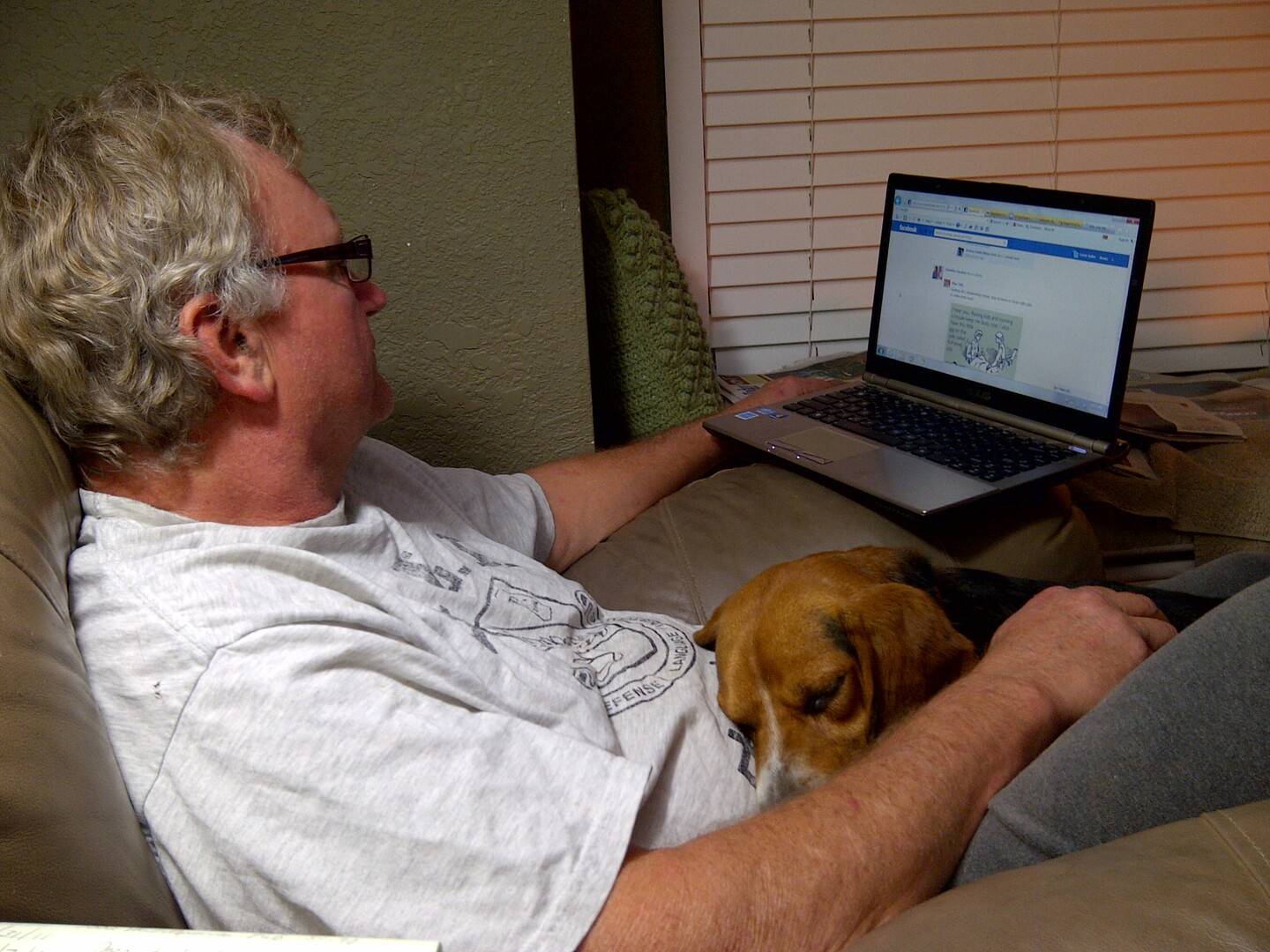
    Sharing thoughts and ideas with friends on Facebook is one way I continue to learn.  Facebook also is a way for me to build a support group, and to some extent, it serves as a “mini break” throughout the day.  Many of my Facebook friends are quick to celebrate agriculture, and several of them share jokes.

    The more I think about it, the more I realize social media can be a stress reliever for me – although there are plenty of days when it been a source of stress!  Nonetheless, please excuse me while I go update my status…

    Larry Sailer, Musings of a Pig Farmer

    December 11, 2012
    Agriculture, General, Industry News
  • Latham Hi‑Tech Seeds

    Women Are Changing the Ag Landscape

    ExecWomenInAg1

    Recently I had the opportunity to spend two, action-packed days attending Top Producer’s Executive Women in Agriculture (EWA) event in Chicago. It was a great opportunity for farm women to connect with others who have similar interests and to also attend many professional development seminars. Hats off to Top Producer magazine and Farm Journal companies for acknowledging – and celebrating – the fact that agriculture is a career path for women!

    The definition of “woman’s work” has evolved over the years as women became more involved in the decision-making process. “The percentage of farms now influenced by women is significant,” says Danny Klinefelter, Texas A&M economist and director of The Executive Program for Agricultural Producers (TEPAP). In an article posted by Top Producer editors on agweb.com, Klinefelter said more women than ever are graduating from TEPAP. They’re becoming key decision makers and often the point person for purchasing decisions.

    This trend is also apparent at Iowa State University where 47% of the students enrolled within the College of Agriculture are female. Majors most popular among the female students include: Animal Science, Dairy Science and Pre-Vet. Agronomy has risen in popularity and Ag Business remains strong. There also is a high percentage of women enrolled in Ag Education with the communications option. Food Science, Nutritional Science and Dietetics attract a high percentage of female students, as well.

    “It’s refreshing to see headway made on dissolving the stereotype that agriculture is a male-dominated industry,” says Mike Gaul, Director of Career Services for the ISU College of Ag. “Subsequent progress is being made to lower the ‘glass ceiling’.”

    Corporate America is not alone in recognizing the value of females in agriculture. As more farmers understand how business management relates to production management, Klinefelter says more women are earning business degrees and even MBAs before returning to their family farms.

    Women’s roles in agriculture have evolved. During the opening session of EWA, Klinefelter said women involved in farming operations today often have the following responsibilities:

    • CEO
    • General manager
    • Public relations
    • Marketing
    • Purchasing
    • Human resources
    • Risk management
    • Information technology
    • Sales
    • Landlord relations manager
    • Data analysis

    Team Latham

    December 10, 2012
    Agriculture, General, Industry News
Previous Page
1 … 59 60 61 62 63 … 95
Next Page

Latham Hi‑Tech Seeds

131 180th Street | Alexander, IA 50420

(641) 692-3258

SIGNUP FOR OUR NEWSLETTER
  • Contact
  • Legal
  • Dealer Center
  • Seedware Login
  • Latham Gear

© 2025 Latham Hi‑Tech Seeds. All rights reserved. | Iowa Web Design by Webspec | Privacy Policy

Latham® Hi-Tech Seeds is a trademark of M.S. Technologies, L.L.C., 103 Avenue D, West Point, IA 52656.