These industry tours gave student an opportunity to go “behind the scenes” and meet with owners about what it’s like to start a business and how to strike a balance between work and family life. Students also asked us to share some best practices for aspiring entrepreneurs.
If only I would’ve known that Harry Stine’s “7 Insights for Entrepreneurs” was going to be published March 28 by Forbes, I could have saved myself some prep time! Many of the insights that Stine shared in this article are similar to my beliefs:
Entrepreneurs don’t work traditional hours. Business hours may be posted as 8 AM to 5 PM, but you’re never really “off the clock.”
Any industry is constantly changing. You either need to adapt and change or get out of the way.
Always be mentally and emotionally prepared to walk away from any deal. Desperation leads to bad decisions.
Whether you’re engaged in a farming operation or operating a retail outlet, chances are you exhibit these characteristics. You’re doing what you love. You’re a planner. You’re using technology to your advantage. You’re accessible. You’re getting involved. You’re part of a team. You’re making a difference. You’re persistent, and you’re also an eternal optimist.
Sometimes entrepreneurs, including farmers, find themselves working another job in order to support their hopes for the future. If you dream of farming full-time but don’t have the opportunity to do so right now because your resources are limited or the timing isn’t yet right, the team at Latham Hi‑Tech Seeds might be able to help you plant seeds for the future!
By operating your own Latham® seeds dealership, you could earn the equivalent of full-time employment. Some benefits of a Latham dealership include:
Accessing new seed traits and technology before they’re widely available.
Gaining first-hand knowledge of the industry’s broadest, deepest product lineup through product training and Hi‑Tech crop planning / management tools.
Belonging to a group of people who share your passion for farming and value honesty, integrity and family.
To learn more about farmer-dealer opportunities available with Latham Hi‑Tech Seeds, talk with your local Latham representative or call 1-877-GO-LATHAM (1.877.465.2842).
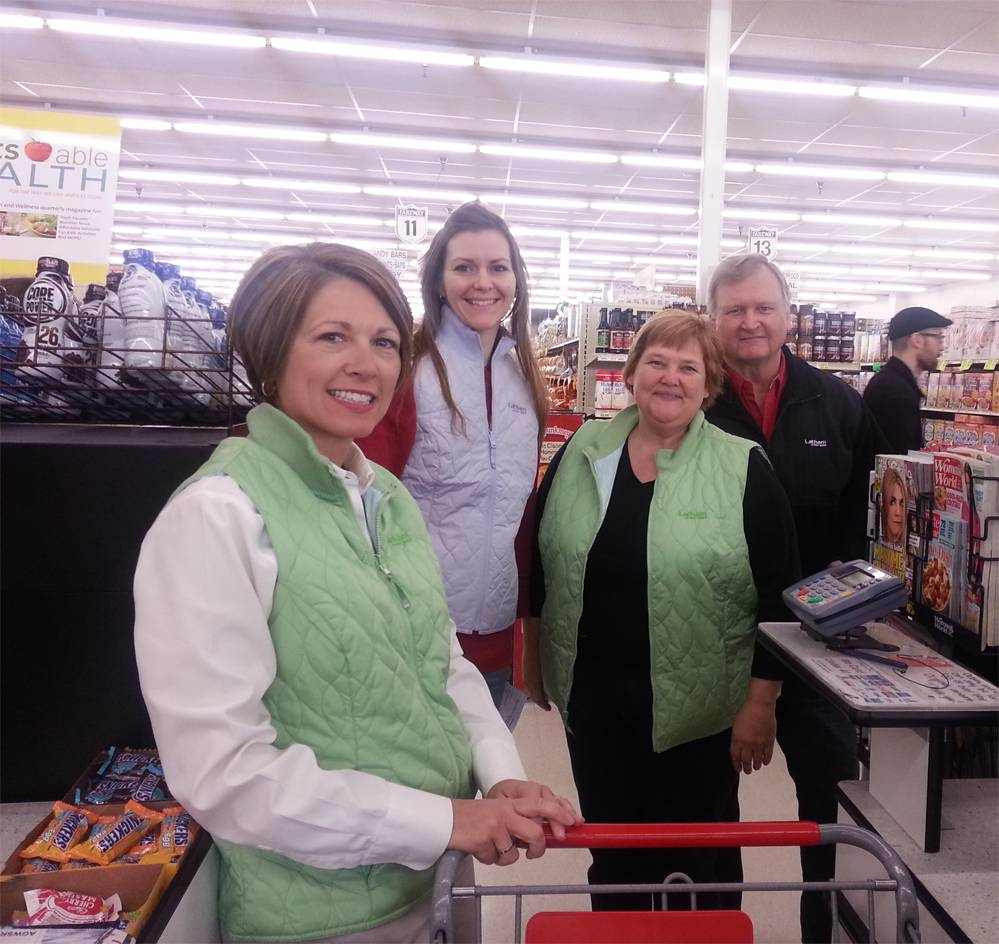
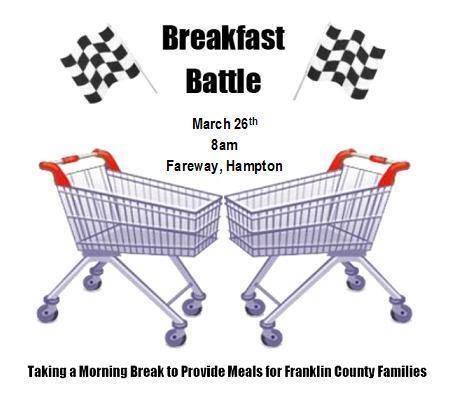
Special thanks to our dealers and customers, who represented Team Latham in the 3rd Annual Breakfast Battle sponsored by the Franklin County Farm Bureau. From left to right are Shannon Latham, April Hemmes, Kari Subbert and Larry Sailer.
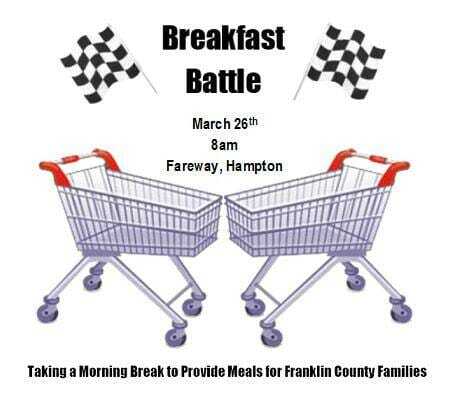
In a race against the clock, nine local businesses and civic organizations “fought over food” on Wednesday morning during the 3rd annual Breakfast Battle sponsored by the Franklin County Farm Bureau.
“This event helped raise understanding of finding solutions to eating healthy on a stretched budget plus raised awareness of food insecurity in Franklin County,” says Val Plagge, public relations chairman for Franklin County Farm Bureau.
Food insecurity isn’t unique to Franklin County. One in eight Iowans – approximately 400,000 – is food insecure, meaning they lack the resources to live an active and healthy lifestyle. One out of 5 Iowa children does not know where his next meal will come from. Many of these individuals have been faced with a job loss or unforeseen expense that has brought on the burden of wondering how they will put food on their tables.
Ten local families will have food on the table for at least three meals, thanks to groceries gathered during Wednesday’s event. These bags of groceries included perishable items like butter, milk, meat and vegetables, so families could make three well-balanced meals. Each family also was given the Healthy Homemade Cookbook published by Iowa State University Extension.
During National Ag Week – and every day of the year – Latham Hi‑Tech Seeds is proud to help farmers throughout the Midwest feed and fuel the world!
Trying to buy enough groceries for three meals in less than 3 minutes is an experience to be sure! Breakfast Battle team members raced around the grocery store – in an organized frenzy – to feed breakfast, dinner and supper for a family of four between $45 and $50. Teams were timed from the moment they left the cart area until they reached the checkout lane.
Time penalties were given for every dollar over or under the $45 to $50 cart total range. Coming in $18 over budget, Team Latham incurred some stiff penalties! We bought entire bags of onions and potatoes even though our shopping list only listed 1 onion or 2 potatoes. We also bought a full gallon of milk and 18 eggs plus a bag of dinner rolls.
Although Team Latham didn’t win a plaque for winning the competition, we can feel good knowing that one family will receive additional perishable items. Following the race, grocery items were delivered to the Franklin County Food Pantry in Hampton and the Immanuel UCC Food Pantry in Latimer.
“The Breakfast Battle is for a great cause, providing for those in need here in Franklin County and also reminding folks that our groceries came from a farm,” said Jackie Dohlman, Franklin County Extension Youth Coordinator, who was a member of the winning Breakfast Battle team. “In one way or another, the products we all buy at the grocery store came from a farm. It’s important to remember that only 2% of our nation’s population is feeding U.S. consumers and also helping feed people all over the world.”
In honor of this week’s Breakfast Battle – and the winning team – today we’re sharing a recipe from the Healthy Homemade Cookbook.
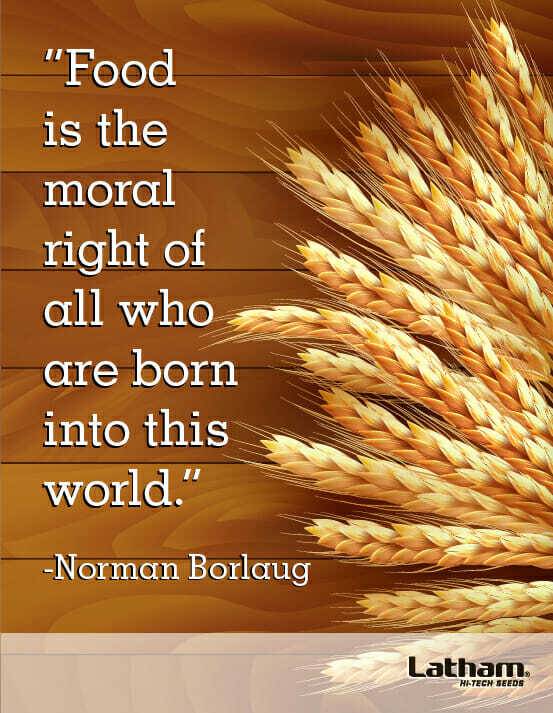
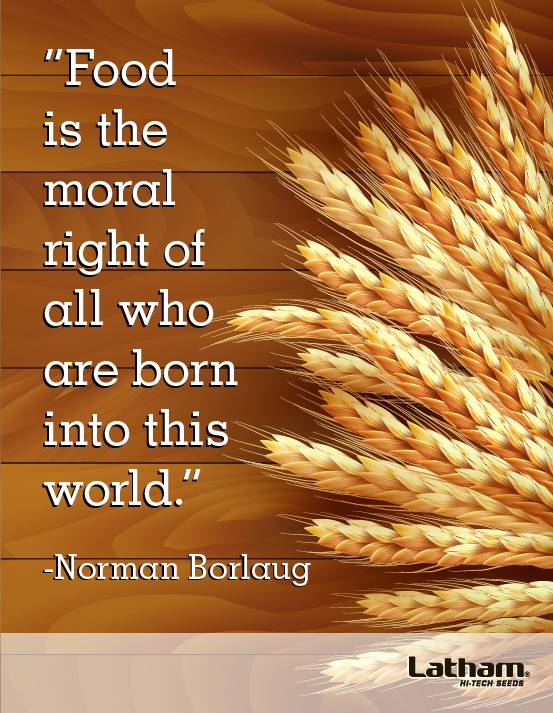
Today is the 100th birthday of Norman Borlaug, an Iowa farm boy who went on to father the Green Revolution. How fitting that this momentous occasion coincides with National Ag Day on March 25!
“Feeding the world” is Dr. Norman Borlaug’s legacy as he is known as the man that saved a billion people worldwide from starvation. He spent his life’s work developing grain varieties that would help farmers in mostly lesser developed countries like India and Mexico produce more food.
“My grandfather focused on talking to, training, and investing in the young scientists, researchers and farmers,” says Julie Borlaug, associate director of external relations at the Borlaug Institute. “His guiding philosophy was ‘take it to the farmer’ and he truly believed everything started by going to the field.”
Dr. Borlaug realized the importance of encouraging other researchers and scientists to share their findings with farmers, who could benefit from it. That’s why the Borlaug International Scholars Fund, international field internships, and the World Food Prize Global Youth Institute help inspire and finance the next generation of people who will make great contributions to feed the world’s people.
Ken Quinn, president of the World Food Prize Foundation, is helping carry on Dr. Borlaug’s legacy by increasing awareness of The World Food Prize. Headquartered in Des Moines, each fall the World Food Prize Foundation recognizes people for making huge contributions in the fight against hunger. Last October, I had the pleasure of meeting with the 2013 World Food Prize Laureate Dr. Robb Fraley of Monsanto. Often referred to as the Father of Biotechnology, Dr. Fraley has literally changed the world of agriculture. Yet, he and others in the industry are constantly being asked to defend what they do.
When asked what her grandfather would think about all the “food fights” today, Julie Borlaug acknowledges that GMO PR falls short. She is quoted in a March 21 Des Moines Register article as saying, “He would be angry … (about) this anti-GMO, anti-big ag, anti-technology (movement). And how there seems to be so much ignorance and so much of a backslide of where people think we should be going.”
Isn’t it ironic that well-fed people try to dictate how food is raised across the globe? People with full bellies are trying to tell farmers and ranchers how to grow food. Scare tactics and fear mongering –powerful emotions – limit biotechnology and the very technology that Dr. Borlaug proves can help save lives.
Isn’t ironic that well-fed people in developed nations want to “say ‘no’ to starving people” who could benefit from increased yields and large foods supplies provided by seeds with built-in resistance to insects, disease, weeds and even drought? But don’t just take my word for it. Take it from a Zambia native who says, “Protesting GMOs condemns millions to poverty.”
Growing food around the world can vary drastically. What grows on my farm, with my technology, may not grow sustainably in a neighboring state. It’s hard to understand what seed technology works on the far side of the world, but Dr. Borlaug understood this. He developed wheat that could withstand pests to feed hungry people.
Believe it or not, many people and companies still have this goal in mind! Yes, a profit needs to be made but profit is not the root of evil. After all, no practice is sustainable if you can’t afford to keep doing it! Profit can be a huge motivator, just like eliminating hunger motivated Dr. Borlaug.
Please join me this National Ag Week by putting behind us the silly arguments that prevent safe and proven technology from feeding the world. Buy what you think are the best products for your family, but allow the same right to all other families!
Journalist and author Nathanael Johnson was skeptical of genetically-modified organisms (GMOs) when he began a six-month investigative series about their use in food production. He opposed what they stood for, not necessarily that they were unsafe.
Twenty-six stories later, the food writer for Grist – an online environmental magazine based in Seattle, Grist.org – has a different view.
“What’s the fuss all about?” Johnson now says with conviction, throwing up his hands.
“In the end I ended up figuring out that GMOs aren’t necessarily going to save the world but they aren’t a problem,” Johnson said. “It’s a useful tool.”
Grist editors tasked Johnson with thoroughly exploring all aspects of GMOs, which continue to be a polarizing topic worldwide and in Iowa. Most of the soybeans and corn raised in the state and fed to livestock are genetically altered to kill or resist pests, withstand herbicides, better tolerate drought and for other reasons.
Boisterous factions exist on both sides of the GMO issue. Detractors believe they are unsafe, hurt the environment and only benefit large agricultural corporations. Johnson, who was raised in California in a household that held natural, organic and local food in high regard, once opposed the technology because it was “part of an industrial complex that we dislike.”
GMO advocates and many researchers, on the other hand, say extensive testing proves the technology is safe. It will help farmers grow more food in an environmentally friendly, sustainable way.
About 150 people — farmers, foodies, students, agribusiness officials, etc. — attended the event, which featured Johnson talking about GMOs and his conclusions, a panel discussion with local farmers and a question and answer period.
Iowa Food & Family Project Executive Director Aaron Putze, also director of communications and external relations for the Iowa Soybean Association, said providing Johnson an opportunity to share his expertise fulfills the organization’s mission of nurturing dialogue about timely food topics and enhancing confidence in agriculture. Johnson also toured Iowa farms and visited with producers for other projects.
“Food purchasers are keenly interested in the subject of food and how food is grown, including improved plant genetics. Nathanael’s series of columns focusing on the subject of genetic modification provided a unique perspective from a respected author,” Putze said.
That’s why Tara Ely of Grimes attended the 1 1/2–hour event. With Johnson’s book, “All Natural: A Skeptic’s Quest to Discover If the Natural Approach to Diet, Childbirth, Healing, and the Environment Really Keeps Us Healthier and Happier,” in hand for him to sign, Ely also wanted to get his views on GMOs.
Like Johnson, Ely said she was leery of genetically modified food. But after listening to Johnson and local farmers, she doesn’t have a problem eating them. She especially found Greg Rinehart’s views on growing GMO sweetcorn interesting. The Boone farmer said he uses less insecticide to keep pests, like worms, from ears he sells at the Downtown Farmers’ Market in Des Moines.
“I wanted to come because I have a passion for natural food and learning all I can about what I’m putting in my body,” Ely said.
A cautious and questioning person by nature, Johnson said at some point society has to move on and trust science. He explored health, environmental, social, scientific, agronomic and numerous other aspects of GMOs.
Exhaustive research, countless interviews with scientists and government officials and talking with people on both sides of the issue all led to the same conclusion.
“If I want to be on the side of science, I had to accept (GMOs) are as safe as science can suggest. I don’t know if it’s worth the passion that gets poured into it,” Johnson said.
Ultimately, he said a lot of fact-finding didn’t matter because much of the skepticism and fear of GMOs comes from the great disconnect between “eaters,” as Johnson likes to call consumers, and production agriculture. The vast majority of Americans, including people in the Heartland, are several generations removed from the farm.
“(People) are fundamentally alienated from their food supply. They want their food dollar to make the world a better place, and they are not convinced (GMOs) will,” Johnson said.
Farmers and commodity organizations need to continue to tell the story of agriculture and relay how food is grown, said ISA Board member Cliff Mulder. The soybean and corn grower from Pella said it’s a slow process, but a critical one.
Mulder said he was impressed with Johnson. He had limited knowledge of agriculture, but was willing to take the time to understand the topic.
“He came into it thinking GMOs were bad but was open minded enough to be convinced by science that they were not,” Mulder said. “I would hope we, as a board and producers, will continue to work to convince others that the food we grow is safe.”
Amanda Rinehart, a communications specialist with DuPont Pioneer in Johnston, said Johnson provided insight into “real” questions consumers have about their food and how and who produces it.
“It’s refreshing to hear from a consumer who truly wants to better understand the food and ag system and take others along on his journey,” Rinehart said. “I hope everyone in attendance walked away with motivation to tell their own food and ag story.”
Ely said she will.
“I will go back and talk to co-workers,” she said. “(Nathanael) provided a lot of things to think about.”
It can be challenge feeding a family of four, three square meals, on a budget between $45-50. Now trying buying all those groceries in less than 1 minutes and 30 seconds!
Every second counts when you’re one of 10 teams participating in the Annual Breakfast Battle. It’s definitely a fast-paced shopping mission. That’s why Latham Hi‑Tech Seeds hopes to take 10 seconds off the clock by receiving the most number of votes in a Facebook poll being sponsored by Franklin County Farm Bureau.
Other teams are faster shoppers. Franklin County Extension rocks the ag trivia portion of this contest. For the past three years, I have vowed to train our team like we’re preparing for the 4-H Quiz Bowl. In reality, I’m still assembling our team about 24 hours prior to the event!
Regardless of how we place next Wednesday, we’re happy to be a part of the Farm Bureau’s National Ag Week activities. The 3rd Annual Breakfast Battle is sure to be a few hours well spent! The Breakfast Battle helps fill local pantries as all food purchased by the teams will be donated to the Franklin County Food Pantry and Immanuel UCC Food Pantry.
Spring Break Isn’t the Time to Put Your Head in the Sand
Time and again I hear people make comments like, “It doesn’t matter who’s in office.” or “Why bother voting because one vote can’t make a difference.” If I had a dollar for every time I’ve heard such apathy, I wouldn’t have to be engaged in the political process either because I could buy my own private island! But the reality is this…
World affairs are getting very dicey. Major problems in the Middle East have taken a back seat to problems in Ukraine, where a head-to-head power struggle has surfaced between the U.S. and Russia – and U.S. farmers are in the crosshairs. China has shown it will cut off exports from the U.S. to buy from Ukraine. Russia has been rejecting U.S. products for unfair political reasons. Japan is trying to put tariffs on U.S. produce to protect Japanese farmers.
Agriculture has been the one bright spot in our economy over the last five years. Our trade balance has been greatly helped by ag exports. Iowa has fared better than other states during the last economic downturn because of our strong agriculture base. While we are still far from having a healthy economy, my fear is that it’s going to get worse due to shifting export markets.
This brings me back to politics. We must change how our country operates by getting involved in elections! At the very least, cast an informed vote. Better yet, get involved in the political process. Grassroots efforts lead to better representation.
This year I was a delegate to the County, District, and State conventions. I have been elected to the County Central Committee and the District Organizational Committee. This admittedly takes a great deal of time and effort, but our country is self-governed! If we don’t make time to govern ourselves, who will? There’s a reason President John F. Kennedy said, “”My fellow Americans, ask not what your country can do for you, ask what you can do for your country.”
Being part of the political process has been an eye opener for me! Common people, just like you and me, decide how our elections operate and the order our conventions run. While serving on the Organizational Committee last Saturday, I helped decide who got to speak and for how long. We decided seating arrangements, what time the convention would start, who would sing the National Anthem, and the list goes on.
Why would I chose to spend my Saturday on politics? I’m not someone seeking great political power. I don’t even like politics! I’m just someone, a farmer, who believes we need to make some positive changes in this country!
It is both our right and our responsibility to become involved in the political process. Exercise your freedoms or lose them! In the Gettysburg Address, President Abraham Lincoln said, “… and that government of the people, by the people, for the people, shall not perish from the earth.”
America is at a turning point. We can’t afford to think that everyone in this world thinks the same way we do. Many in this world do NOT think we should all be equal and all live happily ever after! Remember, the airplanes that flew into the Twin Towers on 9.11? That’s just one recent example of how people around the world would like to cripple the U.S. and grab some of our power.
It’s important that we elect leaders who have learned from history. We need leaders who understand how others in the world think. We need a leader committed to protecting America and American interests because our future depends upon it. I know the future of my kids, my grandkids and our family farm depends on moves the U.S. government makes. Your future – and your family’s future – does, too.
Become part of decision-making process. Elections start in your neighborhood with people you live beside. They may or may not share the same opinions as you do. If they join the process and you don’t, however, whose opinions gets counted? Whose candidates get elected? Our government is a representative, which means your interests may not be represented unless you’re involved!
Farm women are changing the ag landscape. As farming becomes more technologically advanced, farm women are becoming increasing involved in data analysis, site-specific farming, regulatory compliance, commodity marketing, public relations and social marketing. Today’s farm woman works every aspect of the farm, keeps everyone on task, and even advocates for the industry she loves.
That’s why Monsanto Company recognizes farm moms for the important roles they play within their families, their farming operations and their communities. Anyone can nominate his or her favorite farm mom – whether it’s their own mom, sister, aunt, daughter, friend or community member – for a chance to win up to $10,000!
Nominations for the Farm Mom of the Year contest are open through March 31, 2014. To nominate a favorite farm mom, visit AmericasFarmers.com and submit a brief essay online or by mail that explains how the nominated farm mom contributes to her family, farm, community and agriculture. Each nomination will be judged based on published criteria by a panel of judges from American Agri-Women.
Monsanto will select five regional winners based on the judges’ decisions. Each regional winner will receive a $5,000 cash prize. Profiles of the regional winners will then be posted to AmericasFarmers.com, where the public can vote for one national farm mom winner. Announced just prior to Mother’s Day, the national winner will receive an additional $5,000 cash prize above and beyond her regional prize.
Farm Moms are truly inspiring women like Iowa farmer April Hemmes, who lives in our home county, and Kansas rancher Debbie Lyons-Blythe, whose family was featured in a Super Bowl ad. April traveled to Uganda to help women farmers get their grain to market and also helped raise money for much needed equipment and infrastructure including bicycles and wells. Debbie is a great advocate for agriculture and works tirelessly to help bridge the gap between producers and consumers. Check out her blog, Life on a Kansas Cattle Ranch, where she writes about the Flint Hills and shares delicious ranch recipes. (I’ve certainly downloaded my fair share of her recipes!)
Chances are, you know of some equally amazing farm woman. Be sure to submit a nomination on her behalf for Farm Mom of the Year by March 31!
Learning is a life-long process. Last week, I certainly learned a lesson the hard way last Thursday while presenting – or at least trying to present – during a webinar hosted by Iowa State University Extension on Genetically Modified Organisms (GMOs).
#EpicFail is probably how my grandkids would’ve describe this event. Why? Because I didn’t understand the folks were involved in this webinar! I have always said farmers need to listen to understand. Learn where an audience stands, and then talk in a way that leads to greater understanding. Sounds simple, right?
What I learned through this experience is that there’s more to listening than it sounds! I should have investigated how the webinar would be run. I should’ve asked to see, in advance, the outline that would be followed. If I had done due diligence, I would have been much better prepared.
Don’t misunderstand me… I went into last week’s webinar armed with facts and prepared with science, including a few emotion-laced nuggets about the fear of food. I had an hour’s worth of information, which I trimmed down from what I thought would probably have taken a month to present. I also knew from a blog entitled “OMG GMO”, which was posted on the ISUE website, that there would probably be a participant or two that was anti-GMO.
What I hadn’t expected, however, was the vast amount of information that I should’ve studied in advance like the rules of engagement. Slide 1 of the ISUE deck outlined these rules, and I started getting a little nervous! It’s been years since I’ve sat in a classroom, but I still felt like the student who showed up without his homework done. The next slide (more like lecture) was on being nice! More rules were given about talking and listening. All in all, it took about 15 minutes of the webinar just to set the ground rules.
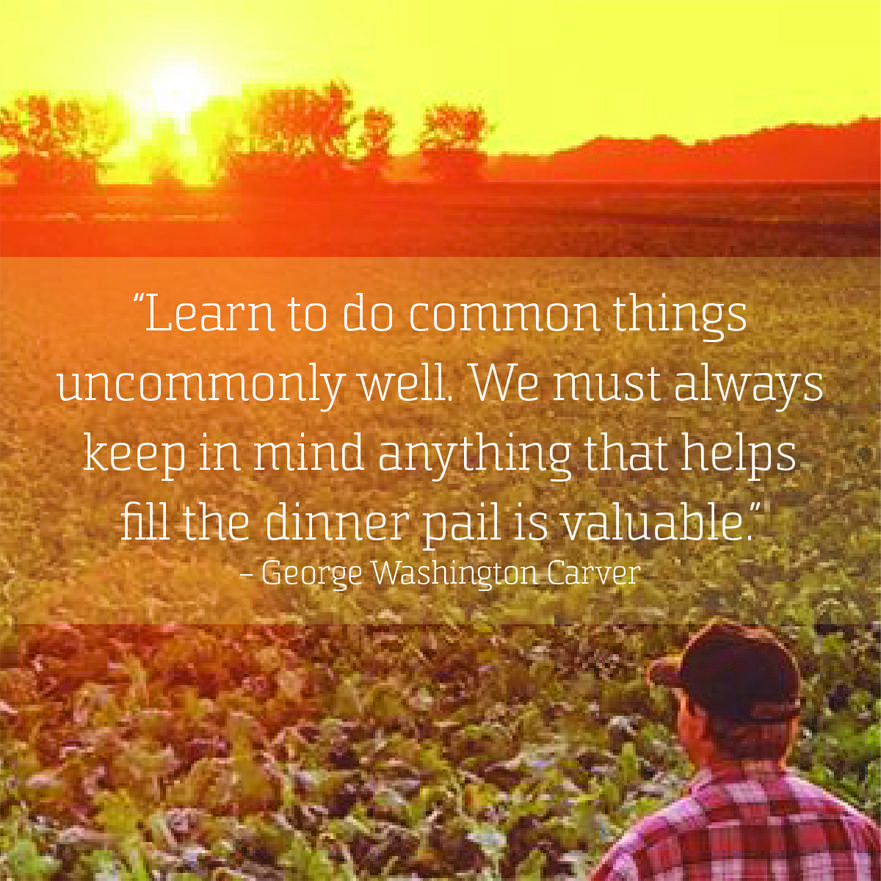
Knowing there was little more than an hour left for the webinar, I expected there would be little time left at the end for questions. I started going through my scientific-themed information. Now I know, emotion trumps science every time but facts are needed to set the stage. About 10 minutes into my presentation, the moderator told me to wrap up. I was only on my fifth slide, expelling what GMOs are and my time was nearly up! Trying to think quickly, I jumped ahead to explain how GE plants use fewer inputs. I then finished with this very short quote from George Washington Carver, “Learn to do common things uncommonly well. We must always keep in mind anything that helps fill the dinner pail is valuable.”
With that said, I was done. From here, we went into a structured question and answer session. Every question asked by participants was based on emotion, and the questions “asked” were really more stated opinions than true questions. Honestly, I didn’t know at this point what my role was so I waited for others in the group to chime in. Finally, I started giving a few answers but the discussion stayed very anti-GMO.
After the webinar, ISU Extension sent me information that was provided the participants. I have been very surprised at the good information they were provided. One site was “protecting and promoting your health” by the U.S. Food and Drug Administration. It explains what GMOs are and the process a new trait must go through before being approved. It also explains that USDA is not the only government agency that examines a new trait; it must also go through the EPA and APHIS.
Because the information on this site is so factual, I’m guessing few participants read it before the webinar. It didn’t support their fears or help confirm their beliefs. Somehow we must learn how to use science-based information with emotion!
Take Root: 10 Steps to Begin Your Legacy Planning Journey
“Before you take root, you must plant a seed,” said Nathan Katzer, business development manager for the Iowa Farm Bureau Federation, as he addressed a crowd of family farmers including my husband and me. What an appropriate send-off to wrap up the series of three Take Root seminars, designed to help families start the conversation to transition their farms to the next generation!
History shows us that only 10% of family farm businesses successfully transition to the third generation. In addition to transferring financial wealth, farm families strive to pass on their emotional wealth: values, life lessons, talents and experiences. Nearly every young person, who grew up on a farm, knows the values of hard work, helping neighbors and striving to care for the land we farm. So why do farms still fail to transition to the next generation for so many families
Lack of communication and not knowing where to begin are the two most common reasons a farm transition fails to transition. No wonder session one of Take Root was titled, “Strengthen Your Family Farm Legacy.” This presentation challenged each of us to really define what it was we were passing on. It provided strategies to help work through emotional obstacles together as a family and ideas on how to answer the tough questions like how to value sweat equity, determine fair versus equal among heirs and transition management early to allow for proper training.
In session two, the focus was the importance of taking time to work “on” the business instead of just “in” the business. We dove deeper into how to transfer responsibilities and build a farm business plan that includes business successors. We discussed ways to build, grow, diversify and specialize our operations all while preparing the operation for the next step.
The final session of the Take Root series featured a panel of experts prepared to answer the tough questions. This panel was made up of professionals in business planning, ag lenders, lawyers and estate planners. We had the opportunity to get some of our own questions answered while discussing financial planning and analysis and employee compensation.
While no succession plan will be identical to another, after going through this workshop series, the process as a whole can be summarized in 10 main steps:
Set goals, identify common succession objectives with all active family members.
Prioritize these goals and agree on a timeline for completing your succession plan.
Collect qualitative and quantitative information including: family relationships, business structure, financial information and estate planning documents.
Complete a cash flow and financial analysis for each family member.
Compile all information into a preliminary plan.
Seek outside advisors to evaluate the collected information and provide recommendations on ownership transition, leadership development, estate planning and financial security.
Seek input from all active family members concerning the preliminary plan and outside recommendations.
Revise the preliminary plan to include agreed upon recommendations and supporting explanations for each section.
Implement your plan by creating the necessary legal support documents, adopting the financial tools and accounting processes needed to accomplish your goals, and beginning the necessary leadership development for the succeeding generation.
Review this plan with all active family members on a yearly basis.
Involvement in the Take Root series was a great first step to helping my family progress through the legacy planning process. One common theme I did take away from the workshop is that families can never start planning soon enough, but they can start too late.
Communication is key. Have you started the conversation with your farm family? Your future farm legacy depends on it!
The journalist in me appreciated this clever headline. The agriculturist in me, however, saw a red flag and decided to read the opening paragraph of this blog by Kristi Cooper, Family Life Specialist with Iowa State University Extension and Outreach:
Oh My Goodness! I am amazed at the flurry of GMO conversation in social and news media. If you are blissfully unaware of what I am talking about, GMO stands for Genetically Modified Organisms. GMO, my definition, is the code word for everything that is bad in the food chain right now.
“GMO, my definition, is the code word for everything that is bad in the food chain right now.” Fortunately, I didn’t take offense at this statement and chose instead to read further into the article where Cooper writes:
I don’t want to be afraid of my food. I don’t want to be afraid of my social media ‘friends’. I don’t want to be afraid of asking questions about GMO for fear someone will ‘peg’ me in one ‘camp’ or the other. Food is critical to our survival so anything that seems threatens the safety, quality or supply triggers strong emotion in people.
When our young daughter had problems sleeping during thunderstorms, we were told by experts that she needed to “face her fears.” We sat at the kitchen table and watched lightning outside the window. We talked about rain provides much needed drinks for crops, flowers and trees. We explained how rain replenishes water supplies for humans, livestock and animals. We watched YouTube videos of storms. We practiced emergency drills and talked about the safest places to be inside our home should a storm occur.
After years (yes, years) of us “educating” and arming our daughter with the facts, she no longer bites her nails down to the quick during a thunderstorm. She no longer comes running into our bedroom during the middle of the night. Why? Because she has the confidence to deal with her fears.
At the end of the day, confidence is what we all need. Nothing is more important than making the choice we believe is best for our bodies – and our families (sometimes these two are one in the same). Greater understanding happens when consumers understand the facts of food production. That’s why I advocate for food dialogues that allow producers and consumers to truly engage in healthy conversation, leading to greater understanding.
Here’s hoping that tonight’s Eco Family Virtual Conference on Food and Genetic Engineering provides a healthy food dialogue! Larry Sailer, who blogs every Tuesday on TheFieldPosition.com, will be one of the presenters. Click here to register as a guest.
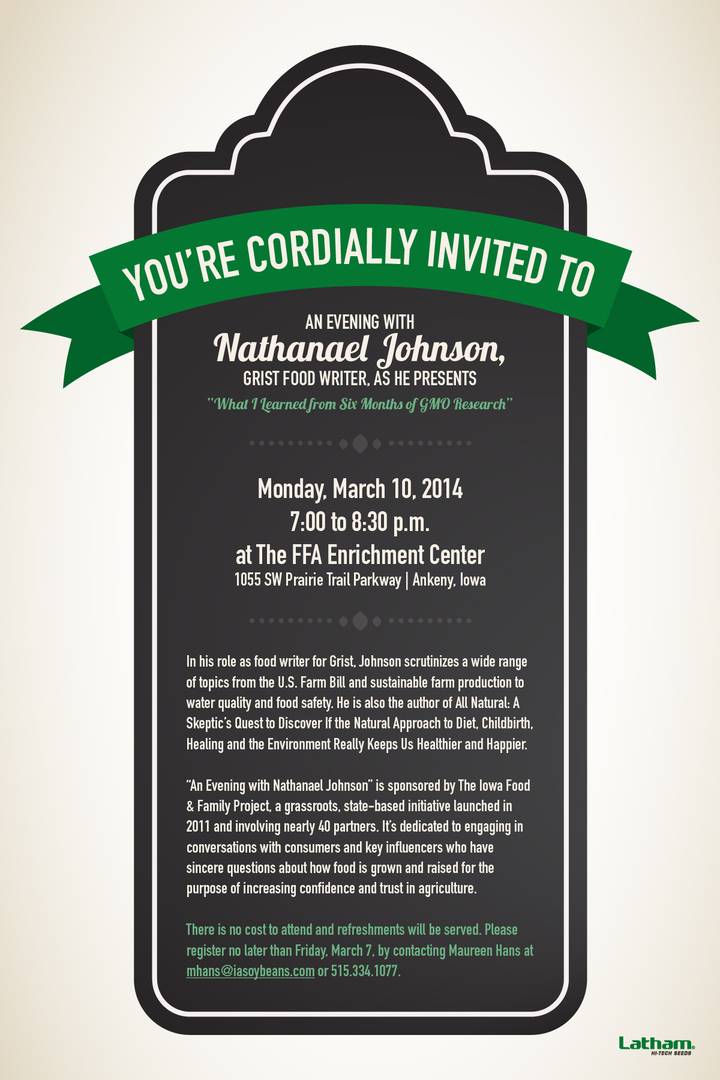
Another opportunity to engage in a conversation about GMOs will be Monday when the Iowa Food & Family Project, presents an evening with Nathanael Johnson, Grist food writer. There is no cost but pre-registration is required by Friday, March 7. Contact Maureen Hans at mhans@iasoybeans.com or 515.334.1077.

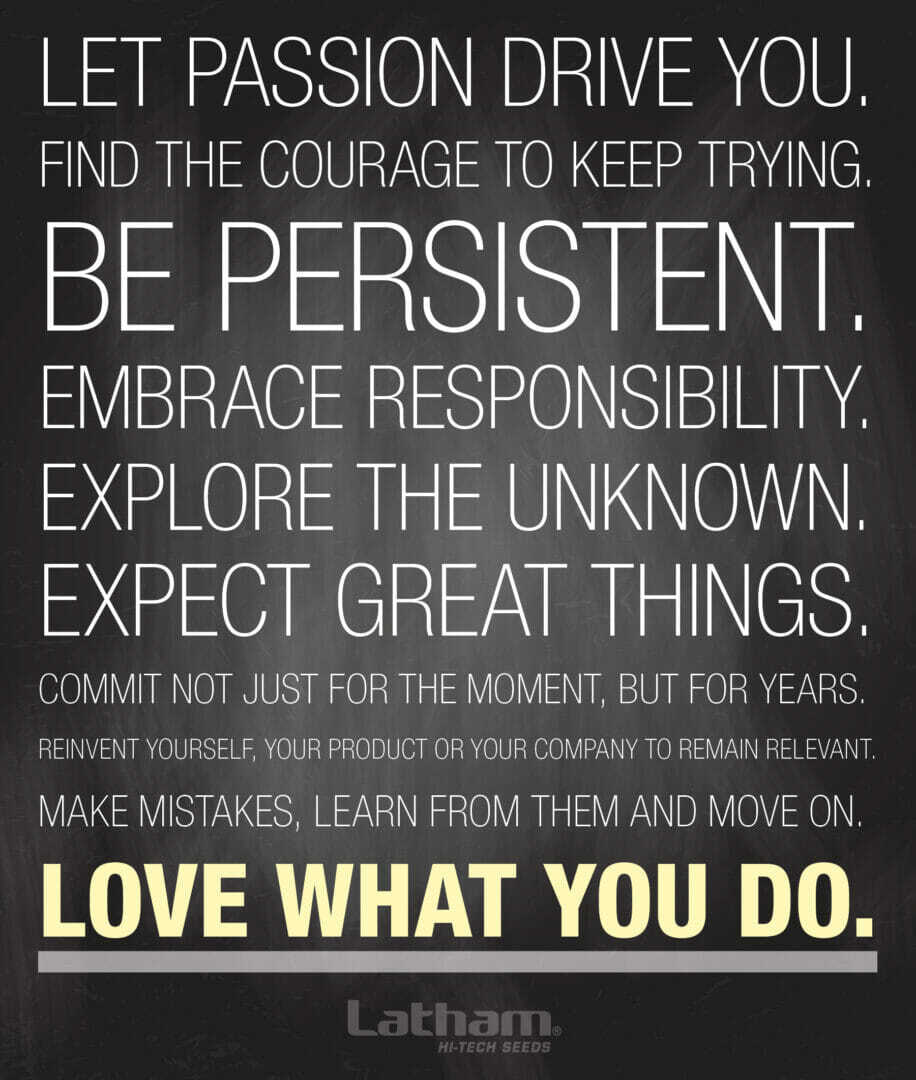
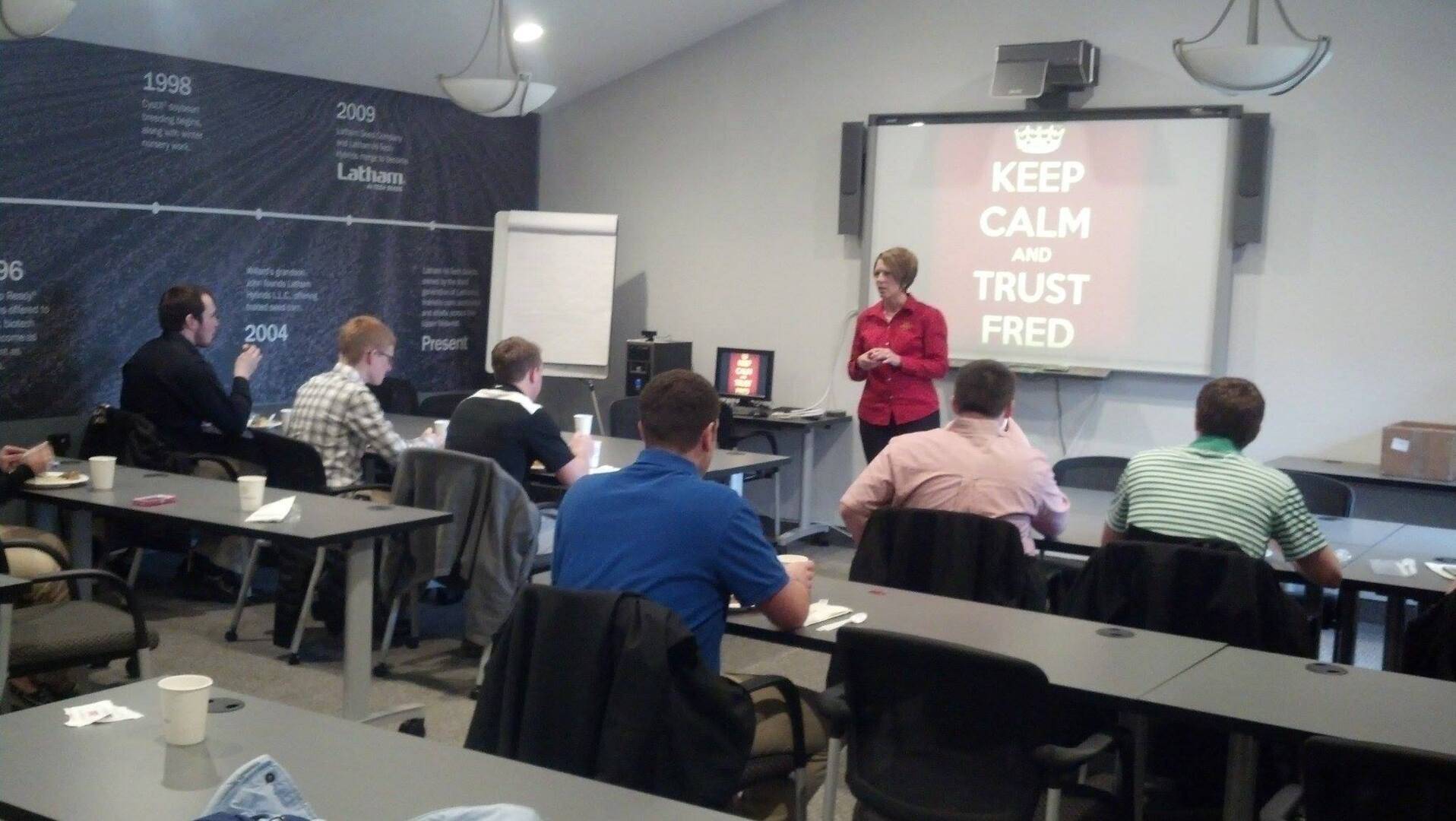 Last Friday a group of Iowa State Ag Entrepreneurship Initiative spent the day visiting three family-owned companies in North Central Iowa: Sukup Manufacturing, Hagie Manufacturing and Latham Hi‑Tech Seeds.
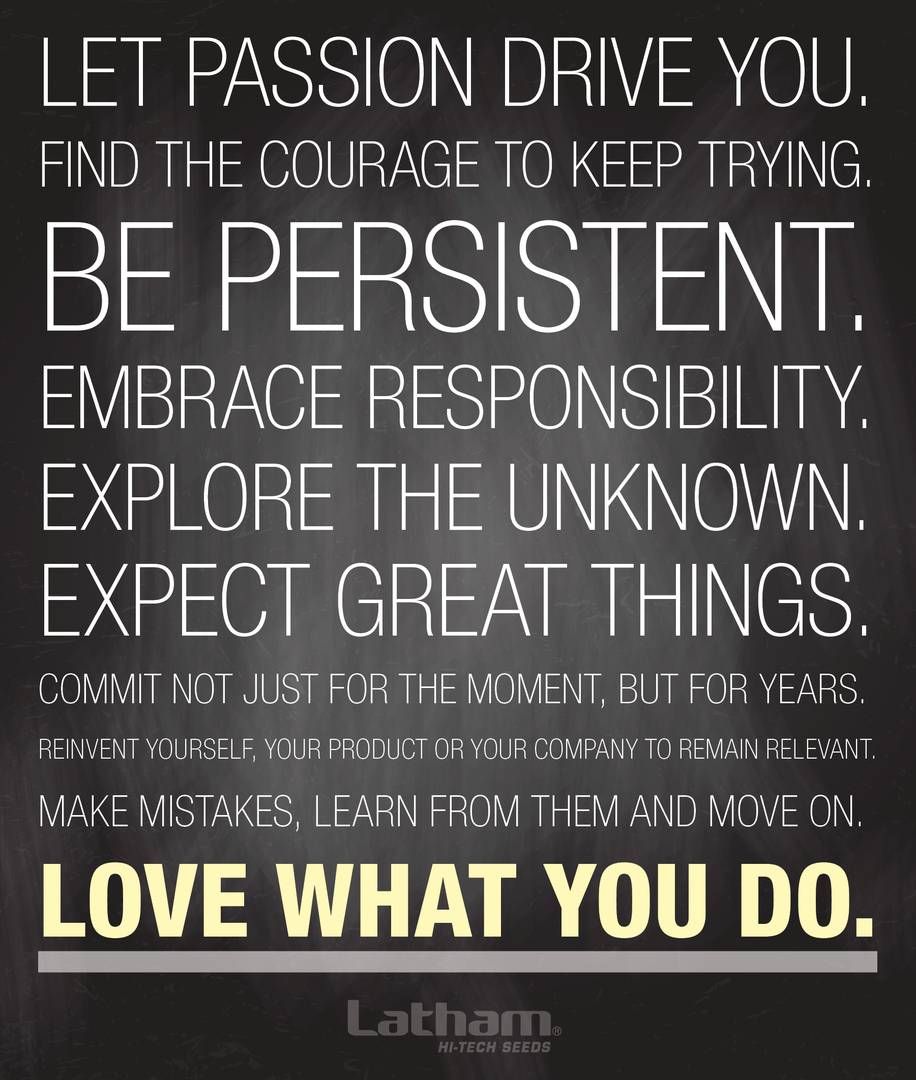 Whether you’re engaged in a farming operation or operating a retail outlet, chances are you exhibit these characteristics. You’re doing what you love. You’re a planner. You’re using technology to your advantage. You’re accessible. You’re getting involved. You’re part of a team. You’re making a difference. You’re persistent, and you’re also an eternal optimist.