Latham Hi-Tech Seeds

(641) 692-3258

  • Home
  • Products
    • Corn
    • Soybeans
    • Alfalfa
    • Corn Silage
    • Seed Guide
  • Performance
  • Find a Rep
  • Media
    • Blog
    • News
    • Videos
    • Podcasts
    • TECHTalk
  • About Us
    • Company History
    • Our Mission
    • Careers
    • Become a Rep
    • Sowing Seeds of Hope
  • Contact Us
  • Latham Hi‑Tech Seeds

    Top 5 Most Practical and Creative Graduation Gifts

    Grad gifts

    by Kilah Hemesath, Latham Hi‑Tech Seeds Marketing Interngrad gifts

    ‘Tis the season for buying cards and gifts for new grads! Consider switching up the traditional gift of wash clothes or embroidered towels by giving a gift that’s maybe unexpected but one that will certainly be appreciated.

    Now that I’m finishing up my senior year of college, I’ve been reflecting on lessons learned during the past four years. I’ve come up with a list of my top 5 most practical graduation gifts that are perfect for the high school or even college grad on your list:

    1. Laundry basket and essentials
      Once you move out of your parents’ home, it becomes obvious that laundry does not wash itself! Laundry detergent, fabric softener and dryer sheets always seem to run out faster than anticipated. Gifting a laundry basket with a few essentials such as detergent creates a practical gift that would be used on a weekly basis!
    2. Finals Week care packages
      There isn’t much that is more daunting than experiencing your first finals week. Care packages are always fun to receive in the mail, and it’s a great way to show support. Giving a student two care packages throughout the year – one in the fall and one in the spring – is the gift that keeps on giving! Plus, treats from the care packages come in handy during one of the most stressful times during the semester.
    3. Gas cards
      Although this is not the most exciting gift, it is the most practical! It’s easy to drive a fair amount of miles, especially when taking weekend trips or making trips home. Gifting a gas card can help new students get through the first semester without a job, and it can be used all year.
    4. Rain boots
      If you’re lucky enough to know the shoe size of the graduate on your list, rain boots serve as a useful gift for new college students. They may not appreciate it at first but they will quickly see the value the first time they have to walk to class in the rain! There are many patterns of rain boots available to fit everyone’s personality.
    5. Cookbook for one
      Transitioning to cooking for one person can be rough, especially when a lot of recipes are written for family-sized meals. Find a cookbook written for small dinners with simple ingredients. Gifting such a recipe book with a few spoons and spatulas can make a great cooking set!

    Hopefully, this list will help make gift shopping less stressful and a little more fun this graduation season. Have a unique gift idea you’re willing to share? If so, please comment below!


    Webspec Admin

    April 14, 2016
    Agriculture, General, Industry News
  • Latham Hi‑Tech Seeds

    We’ll Give You Tools to Celebrate National Gardening Month!

    Garden Package Giveaway

    Garden Package Giveaway

    Spring has officially arrived and National Garden Month is underway. To celebrate the new season, Latham Hi‑Tech Seeds will give away a gift pack of gardening tools!

    It’s time to get those early crops in the ground and finalize plans for the rest of the garden. I’ve seen Facebook posts from my friends, who have spent the past few weeks putting seeds in containers and starting them in greenhouses. Last weekend some friends were planting potatoes.

    I usually plant potatoes and tomatoes, as well as pick strawberries. But I have to admit, my garden produce is ripe during one of the busiest times of the year in my business. I spend two weeks every June traveling out of state to attend business meetings. Our annual Latham® dealer meeting is held the beginning of July, and our county fair is always in the middle of July.

    On top of that, I spend nights and weekends attending numerous horse shows across North Iowa with my daughter. Nearly every weekend my son plays in a basketball tournament somewhere in the Midwest, plus he plays on our school’s baseball team. I meet myself coming and going! As a result, my produce is usually ripe when I’m not home and weeds take over my garden by the summer’s end.

    This spring I decided to give myself a little grace. Rather than stressing about not having a space worthy of a Better Homes & Gardens photo spread, I’m going to plant pollinator packets instead of vegetable seeds. I can #FeedaBee, enjoy blooms all summer long, and stop feeling guilty that I’m not out weeding my garden every time I have 15 minutes in between work and kids’ activities.

    Sound good? Perhaps this blog can help inspire you the way a visit to Cynthia and Ritch Berkland’s beautiful Iowa century farm got me excited about pollinator gardens. Their gardens were stunning! Since I first planted a butterfly garden about 12 years ago in my backyard, I was interested in learning more. Two tips from Cynthia are:

    1. Use native plants from your ecoregion as they will be the hardiest. Plants native to your region also will take the least effort and be the most attractive to pollinators.
    2. Cultivars are all clones and lack the biodiversity that increases the chances of their survival. They may not have as many stunning colors or exotic flowers, but the increase in fauna of all kinds should make up for that.

    Cynthia then introduced me to the gardening book in the giveaway bag to provide more information about native plants. I gave a copy of it last year to my mom for Mother’s Day. In addition, my visit last summer to the Berkland Century Farm also motivated me to post a series of related blog posts:

    • Follow These 3 Ps for a Pollinator-Friendly Garden
    • Add Backyard Beauty with a Butterfly Garden
    • Gardening Can Be for the Birds

    In a Letter to the Editor last summer, Cynthia wrote:

    If you watch the action on your lawn, you’ll see the only place a pollinator stops to visit is the occasional dandelion or clover. Just think of the difference we could make if each of us stopped mowing and planted native grasses and wild flowers in just one corner of our yard! Native grasses and wild flowers take almost no maintenance, and once they’re established, they provide food and habitat for the native fauna of the prairie.

    Another way we can all make a difference is to stop mowing the road ditches. Bees, butterflies, dragonflies and other insects – not to mention pheasants, partridge and other animals – can’t use neatly manicured ditches. They need the flowers and grasses that used to grow wild when Iowa was covered with thousands of acres of prairie.

    Please consider doing what you can to change the situation. Do something meaningful and help provide pollinator habitat!

    Team Latham

    April 13, 2016
    Agriculture, General, Industry News
  • Latham Hi‑Tech Seeds

    Even if production doubled, people would starve!

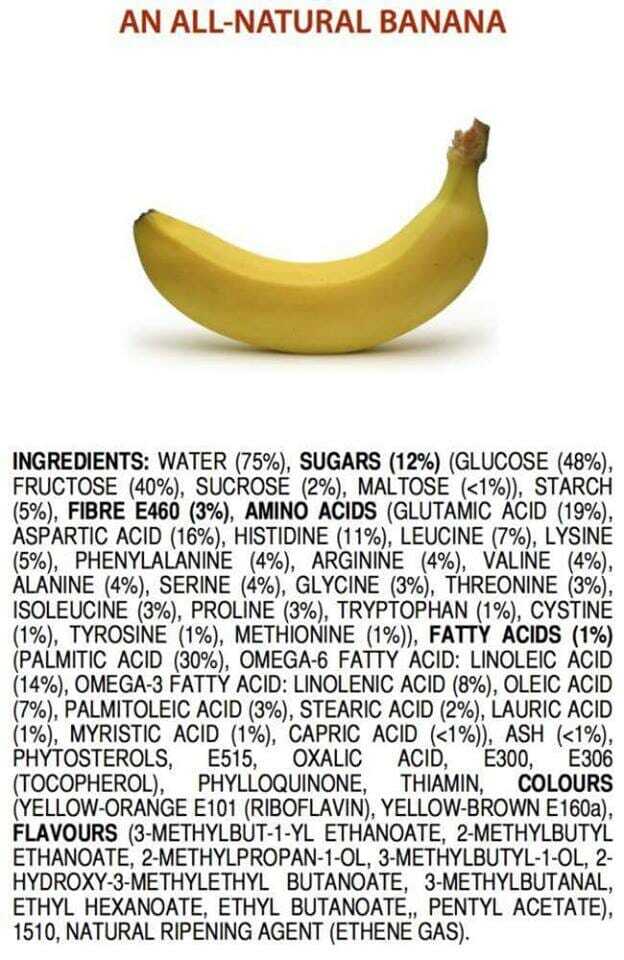
    Banana label

    As a farmer, I like to think we are great at efficiently raising food in a sustainable manner. Today one U.S. farmer feeds 155 people worldwide. We’re raising 2.5 times more food than we did in 1960, yet people are still going hungry.

    “Clean your plate. Kids are starving in Africa,” my mom would say when I was a kid. Today kids are still starving in Africa and around the world. There are many U.S. families that are food insecure. One in eight Iowans is food insecure, meaning they lack the resources to live an active and healthy lifestyle. One out of 5 Iowa children does not have enough food to eat.

    Truth is, kids would go to bed hungry even if we increased production another 2.5 times. People are not getting the minimum number of calories needed due to politics and governmental intervention. Every ill these days is getting blamed on politics, and it’s tiring. I know. However, governmental policy undoubtedly influences a society’s wellbeing. That’s why throughout history food has been used to control people and as a tool of war. Food is even used for political gain. Right now food is being used as a political pawn relating to climate change.

    Food is being blamed for our obesity problem, although we’re free to make our own food choices. Food is even being blamed for being full of chemicals. (Side bar: In a consumer survey conducted by the International Food Information Council Foundation, the number one food safety issue cited by Americans is “chemicals in food.” In 2014, only 23 percent of Americans listed this as the most important food safety issue for them. This percentage increased to 36 percent in 2015, edging out “foodborne illness from bacteria” as the number one food safety concern.”)

    How many of the folks who are worried about chemicals in their foods are coffee drinkers? After all, caffeine is a natural pesticide. I’m also curious to know how many of these folks — as well as those who want to label GMOs — regularly drink pop or soda. Did you know a chemical found in many sodas may cause cancer? That’s why it’s contradictory to buy organic produce and then drink Coke or Pepsi products. Besides, buying organic produce doesn’t guarantee it was raised without chemicals including pesticides even though 95 percent of consumers said they buy organic foods because they think their pesticide-free.

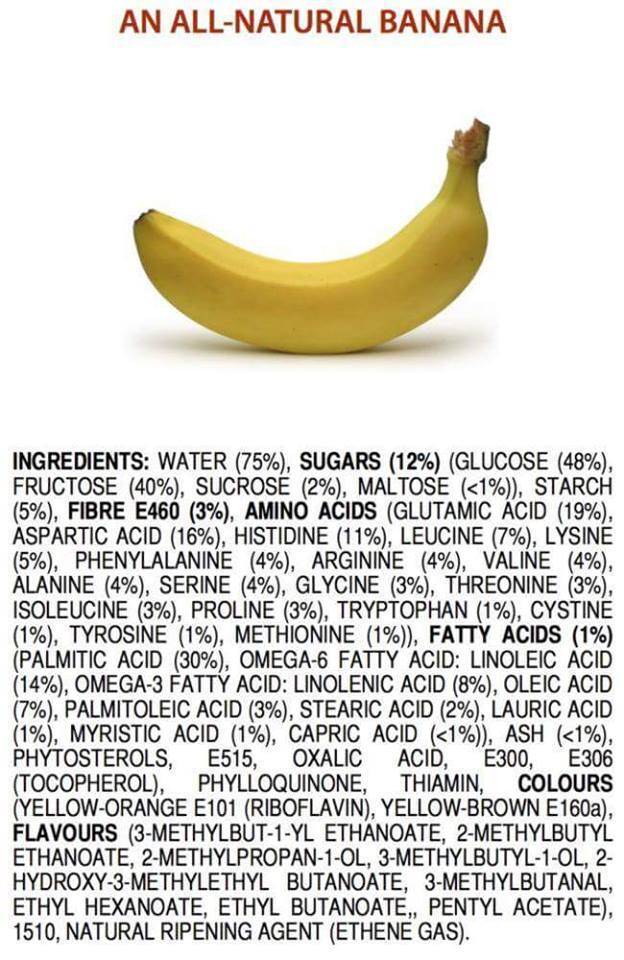
    It’s a misconception that all chemicals are bad. I recently shared a picture of a banana, listing its chemical make up. There were many big words that I can’t pronounce, yet I don’t fear a banana. Unfortunately, a few activists decided the public should fear banana research. Banana label

    Iowa State students in February protested research to develop bananas that could combat Vitamin A Deficiency. Dr. James Dale from Queensland University of Technology developed the new banana by transferring a gene from a wild banana from Fiji to the bananas consumed as daily food in Uganda and other parts of Africa. A student, who apparently has sufficient Vitamin A, dressed in a banana costume to protest bananas being developed to provide nutrition to the developing world.

    Activist block the progress of developing better foods. They also can cause a delay in foods, like Golden Rice, that could help millions of kids become healthier and live longer. “We don’t have the luxury to rule out the use of any technology that may hold promise to improve crop performance,” says Stephen P. Long, University of Illinois crop scientist, in a recent article in the Iowa Farmer Today entitled, “Scientists say the world is one crop breeding cycle from starvation.”

    The greatest strides can be made by giving all people the freedom to develop their potential of economic freedom. Even regulations made for all the right reasons can have very dire consequences. That’s why I’m so concerned about the direction our country is headed. I’m concerned about governmental overreach. I’m concerned about how legislation and regulation will impact my livelihood. I’m also concerned by the amount of FREE stuff that some U.S. presidential candidates are promising.

    As we decide on new leadership for our country, let’s take into consideration what made this country great and what will continue to maintain our leadership status. Be an informed citizen and make your vote count!


    Larry Sailer, Musings of a Pig Farmer

    April 12, 2016
    Agriculture, General, Industry News
  • Latham Hi‑Tech Seeds

    Soy Scholars Provides Unique Career-Building Opportunity for Students

    SoyScholars logo

    SoyScholars_logo

    High school students considering an ag-related career are encouraged to participate in the Soy Scholars program, which is being offered by the Iowa Soybean Association with support from Latham Hi‑Tech Seeds. Soy Scholars will launch April 18-19 at the Iowa FFA Leadership Conference in Ames, and applications are due May 3.

    Four students will be selected to participate in the three-session career emersion, field experience and job shadow program. During the sessions, students will work directly with a mentor in their field of interest to gain hands-on experience, ask questions and make connections.

    Soy Scholars will allow students to explore career paths before they graduate high school or declare a college major. That’s why Latham Seeds is proud to help showcase a wide-array of ag-related careers from agricultural production and marketing communications to seed sales and precision farming. Those students selected to participate in this program will get real-world experience. They’ll gain insights about an industry that aren’t readily available online or in a textbook. And just as importantly, these students will meet some of our state’s top agricultural leaders who farm or work in agribusiness.

    One out of every five Iowans work in an agriculture- related job, according to a 2014 study. Iowa’s agriculture industry contributes one out of every three dollars in Iowa’s economy, or 33 percent of the total state economy. This sizable contribution offers more than a few opportunities for Iowa youth.

    For more information or to apply, visit the ISA booth at the Iowa FFA Leadership Conference or go to www.iasoybeans.com/SoyScholars/.


    Team Latham

    April 11, 2016
    Agriculture, General, Industry News
  • Latham Hi‑Tech Seeds

    Spring is a Time for Rebirth and New Ideas

    AmazingGraceBaby
    Photo from Farm Girl with Curls at https://farmgirlwithcurls.com/
    Photo from Farm Girl with Curls at https://farmgirlwithcurls.com/

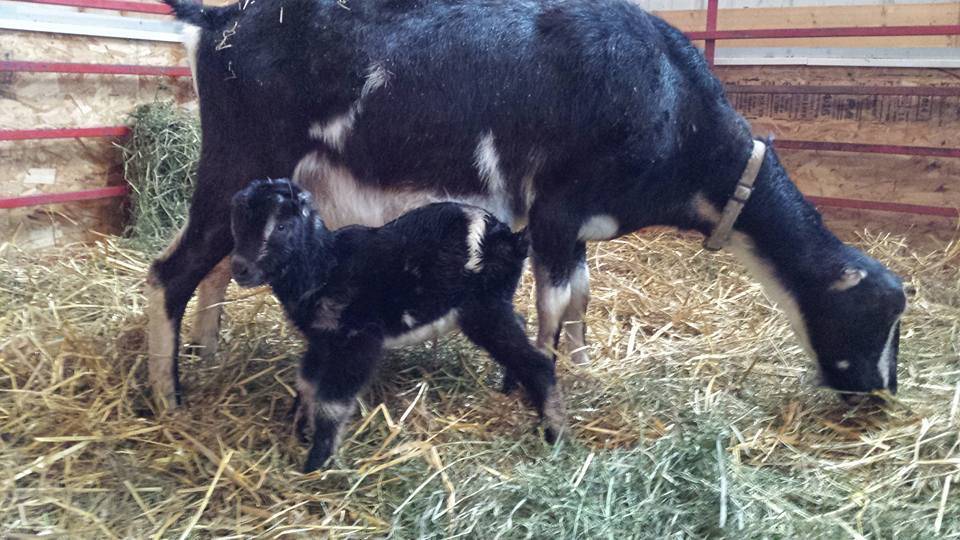
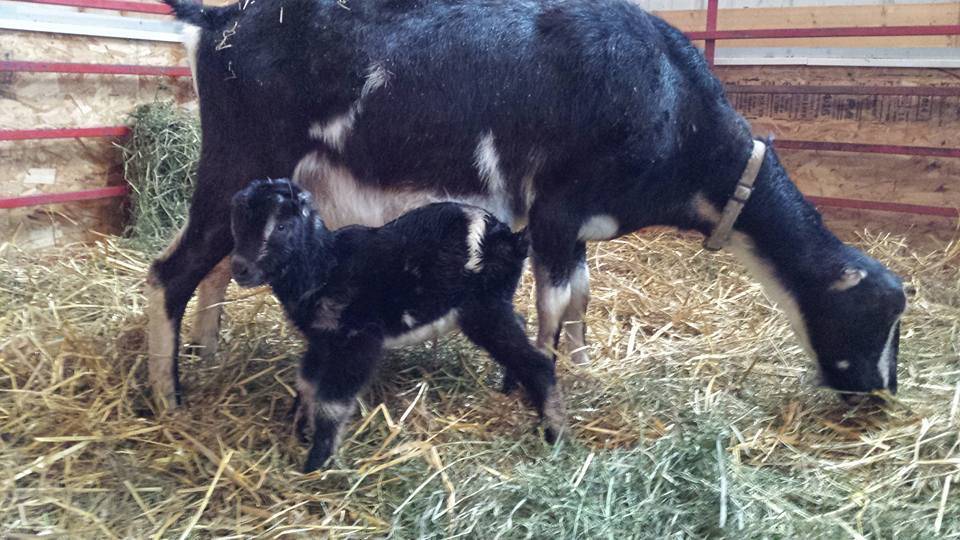
    I love this time of year when everything comes back to life! The grass is greening up, and planting season is underway. My Facebook feed has been filled with photos of new life on farms and ranches across the country. I enjoy seeing newborn calves, lambs and kittens, as well as newly hatched chicks that become “spring chickens.”

    While spring is typically the season when new animals are born, new technology allows pigs to be born any time of the year. This wasn’t possible when I was a kid and we raised hogs outside. Then we could only get two litters from our sows. If we were really lucky, we could wean 12 pigs annually from each sow. Today we can get 30 pigs per sow per year due to better genetics, better feed and care, less stress, and different types of hog barns.

    Photo from Life on SkyView Farms at http://www.lifeonskyview.com
    Photo from Life on SkyView Farms at http://www.lifeonskyview.com

    We need to raise more pigs – and all types of food – if we’re going to feed the growing world population. I’m all for long-term goals of raising enough food with all the technology that fits the needs of hungry people, and this shared goal is how I started to become involved with the Farm Journal Foundation’s Farm Team to help combat world hunger.

    While researching the Farm Team initiative, I came across its logo with an apple that looks like a globe. Underneath it are the words, “Farmers Feeding the World.” Feeding the world is a noble mission! While we might not all agree on how to do that, I believe we can find ways to work together and help the almost one billion people who are food insecure.

    Not everyone can be a farmer and grow food, but everyone needs a way to earn enough income to buy a decent diet. This will not be done by eliminating technology and going GMO-free. This will not be done by only raising organic produce or cage-free eggs.

    Photo from Amazing Grace Milk Shoppe at https://www.facebook.com/Amazing-Grace-Milk-Shoppe
    Photo from Amazing Grace Milk Shoppe at https://www.facebook.com/Amazing-Grace-Milk-Shoppe

    Feeding the world will be done if we take an “all hands on approach” that makes use of every food system available! We must join together to provide a means to the end. My farm is different than my neighbor’s, and our farms here in North Central Iowa are much different than farms in California or even southern Illinois where I have been spending most of my time lately.

    People must understand that it’s going to take all types of farms to feed this world. That’s why it’s so important for you to speak out and share your ideas. It takes many solutions to feed the world – and to make it possible for all people to afford their food!

    Larry Sailer, Musings of a Pig Farmer

    April 5, 2016
    Agriculture, General, Industry News
  • Latham Hi‑Tech Seeds

    Different Pathways Can Lead to Ag Career

    Students1

    By Kilah Hemesath, Latham Hi‑Tech Seeds Marketing Intern

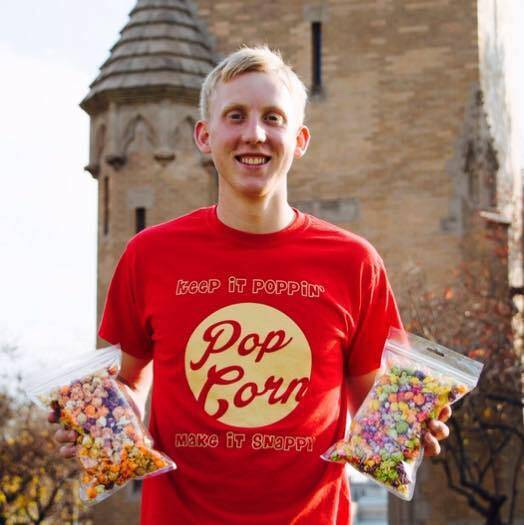
    Garrett Ley with two of his favorite flavored popcorn products.
    Garrett Ley with two of his favorite flavored popcorn products.

    We’re constantly presented with choices, but I didn’t understand the magnitude of my choices until I came to Iowa State University (ISU). There are numerous facets in the agricultural industry and it can be challenging to choose a college major. I chose Agricultural Business because this major offers ample opportunities to tailor it with electives. I really enjoyed choosing electives, but it was the experience I gained through multiple internships that led me down a career path in agricultural marketing.

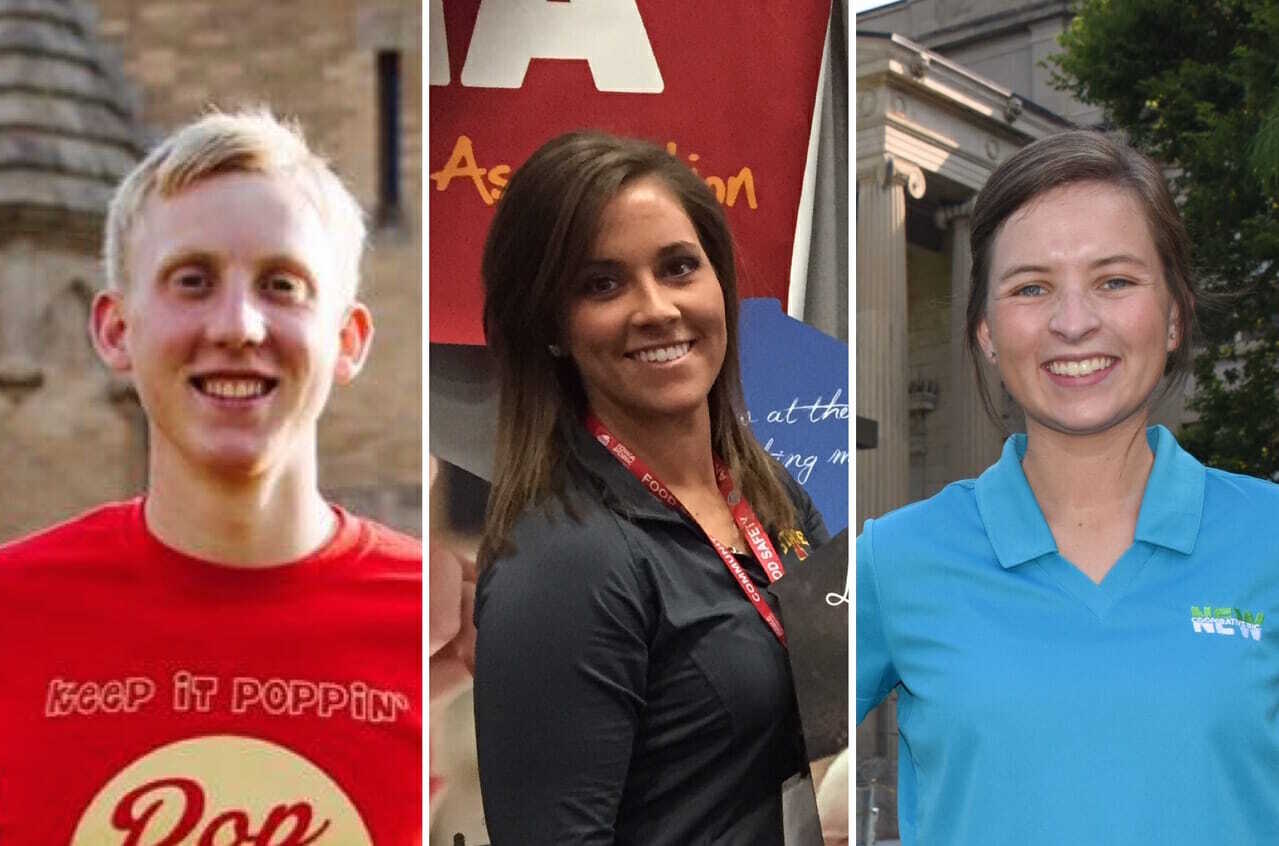
    Many of my peers also have chosen their career paths through involvement in on-campus organizations or internship experiences. Today I’m sharing personal experiences of five ISU students, who will be involved in agriculture but in very different ways.

    Many people view popcorn as snack but Garrett Ley of Alleman, Iowa, is passionate about producing it. Upon graduating in May with a bachelor’s degree in Agricultural Business, he plans to amplify his G-Pop’s popcorn business. G-Pop’s was founded in May, 2014 when he discovered his new passion of entrepreneurship and value-added products for the consumer. Garrett is active on all levels of agriculture, from field to food.

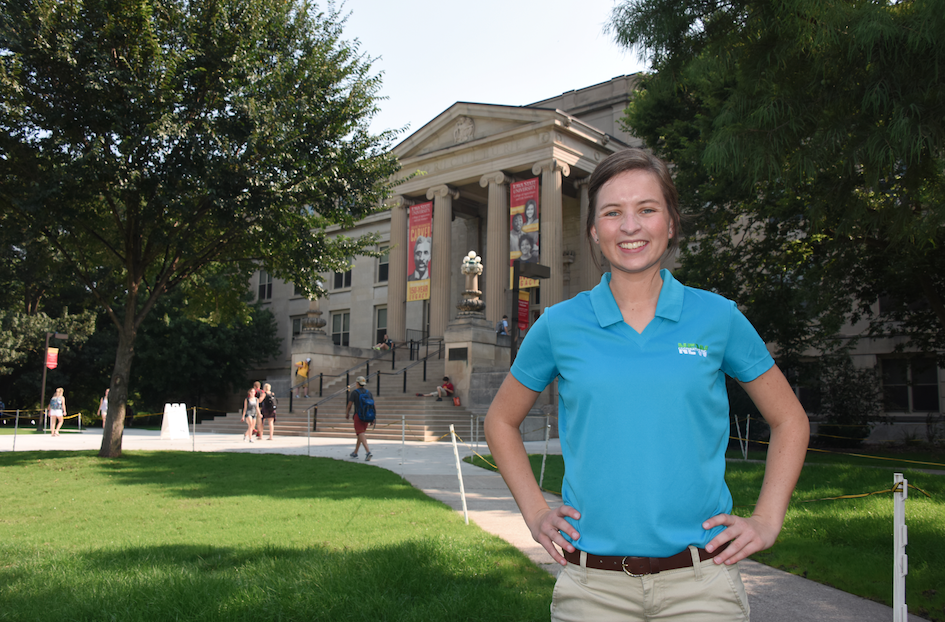
    Kayla Degner
    Kayla Degner, Marketing and Communication Assistant for New Cooperative Inc.

    After May 31, you could find Adelai Swanson in Washington, D.C., working for Dow AgroSciences in Government Affairs and Sales. Adelai has always had a passion for agriculture policy. Her degrees in Agricultural Business and Public Relations will help make that dream become reality.

    Coming from a farm in West Central Iowa, Kayla Degner knew she wanted to be involved in agriculture. Kayla graduated from Iowa State University in May 2015 with a bachelor’s degree in in Agricultural Communications and is working at NEW Cooperative Inc. as a Marketing and Communication Assistant. Kayla couldn’t imagine herself doing anything different.

    Returning to his family’s farm upon graduating in May is what Brett Roquet describes as living his dream. He explains that he couldn’t see himself doing anything else. Brett and his younger brother raise show pigs. He also raises corn and soybeans with his dad and grandpa.

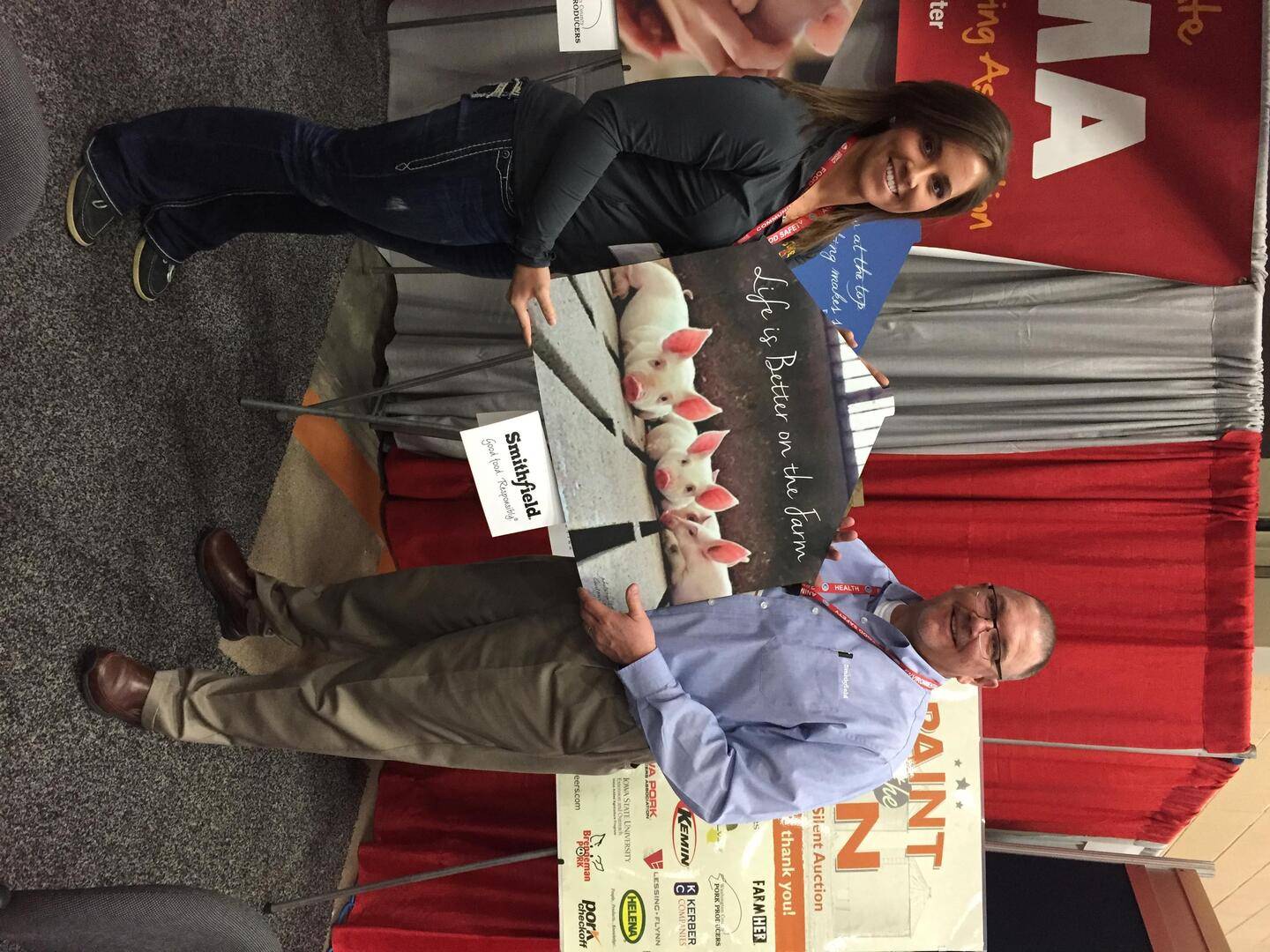
    Jennifer Elliott, soon to be Sales and
    Jennifer Elliott, soon to be a Sales and Business Trainee for Smithfield.

    Because some of her best memories happened when she was growing up on her family’s farm in Monmouth, IL, Jennifer Elliott was active in the College of Agriculture and Life Sciences. She will graduate in May 2016 with a degree in Agricultural Communications. She’s looking forward to when she’ll move to the East Coast and become a Sales and Business Trainee for Smithfield. Jennifer couldn’t be happier than to explore the different career paths offered through Smithfield through her trainee program.

    These five stories showcase the various directions students can take in agriculture. From entering the food industry to becoming involved in government affairs, there’s a career suited for all interests!

    Webspec Admin

    March 31, 2016
    Agriculture, General, Industry News
  • Latham Hi‑Tech Seeds

    Make Your Voice Heard on Capitol Hill

    Dome

    Even though there is a lot going on with the election cycle and the huge push to find the final capitol
    candidates to run for the Presidency, we must stay vigilant to what is going on currently in our state legislatures.

    The legislative process is a fascinating process, yet at one time, I couldn’t get far enough away from it! I was under the impression that I couldn’t make a difference – but I was wrong! In fact, I’ve been told that sometimes an experience shared by one constituent can affect a vote.

    Elected officials need our input to know how we’ll be affected if certain bills are or are not signed into law. You can write e-mails to them. You can go to town hall meetings. You can even call them on the phone when they are in session. However, I have found that going to the Capitol and meeting with elected officials in person during the legislative session is the most effective way to express my ideas. Attending committee meetings allows one to see how elected officials operate and negotiate. I’ve been able to watch the action from the gallery, and I’ve been invited to sit on the floor right in the midst of all the action! Nothing can replace person contact.

    Tomorrow is one of the days that there will be many Farm Bureau members at the statehouse. Actually, any Iowan can visit the statehouse to meet with elected officials on any day that the Legislature is in session. All you have to do is walk to the chamber door to either the House of Representatives or the Senate. You simply fill out a slip to request to talk with a specific official, and then hand that slip of paper to the doorkeeper, who will find out whether the representative or senator is available. If he or she is available, he or she will come to the door and talk with you.

    There are many issues discussed daily: taxes, education and other topics that may affect you directly. It’s important that you make your voice heard. I can assure you, someone will be “twisting arms” on any given issue and he or she (or a particular special interest group) may not share your opinion!

    Voting for a person who’s running for office is just the beginning of the political process. It’s important that you remain engaged! You might feel comfortable calling on elected officials by yourself, or perhaps you’d be more comfortable joining a group effort through an organization that shares your interests. Either way, grassroots efforts can lead to better representation. The time spent contacting legislators and regulators is an investment – and you just may enjoy the experience!

    Larry Sailer, Musings of a Pig Farmer

    March 29, 2016
    Agriculture, General, Industry News
  • Latham Hi‑Tech Seeds

    5 Things High School Students Should Consider When Choosing a College

    Campus copy 2

    By Kilah Hemesath, Latham Hi‑Tech Seeds Marketing Intern

    Laundry, home cooked meals and roommates will all have different meanings after you move into the dorm of your new college town. I won’t forget the day I moved into Maple Hall at Iowa State University. A helpful move-in crew greeted my family and me, and then I was left with a new roommate in a tiny room that resembled the feeling of living in a box. Although the college experience was intimidating at times, it all contributed to finding my adventure at ISU.

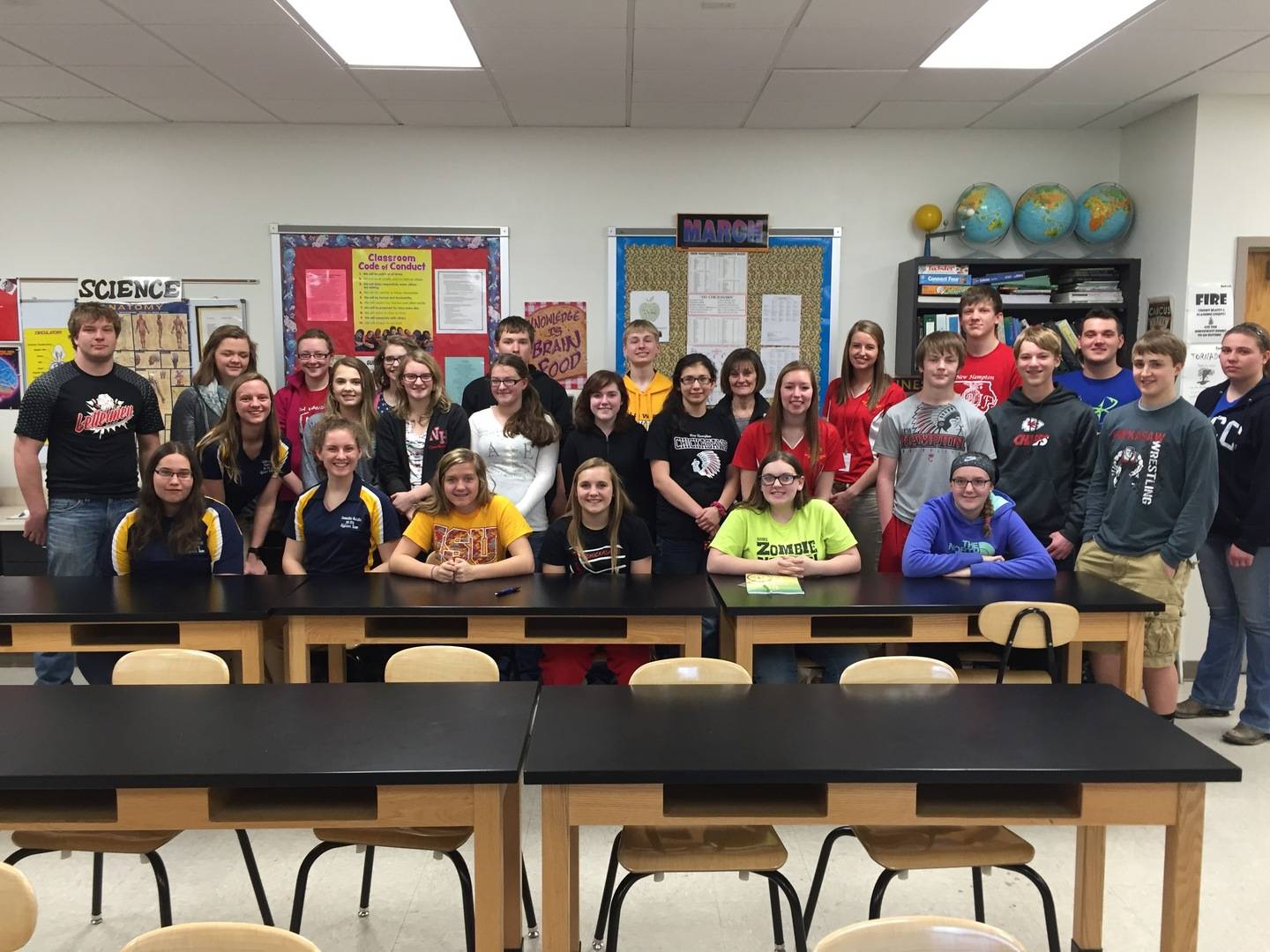
    Pictured above is 1 of 3 groups I had the opportunity to speak to about college and FFA.
    Pictured above is 1 of 3 groups I had the opportunity to speak to about college and FFA.

    Last week, I had an opportunity through the ISU College of Agriculture and Life Sciences to talk to middle school and high school students about everything from FFA to college and what to expect during transition times. From those conservations, I found a few items high school students should consider when choosing a college.

    In addition to using your gut reaction, I highlighted five checkpoints to deliberate before clicking Accept Attendance:

    1. What is the price you are willing to pay for your education?

    There’s no doubt college is expensive. College tuition can range from $4,000/year to $40,000/year. In addition to paying tuition, you will need to pay living expenses whether you live in a dorm or an apartment. Secondly, you will need to buy food, either a meal bundle through campus dining services or groceries. In most cases, clubs require a small yearly fee to join and participate in the club trips offered.

    1. What are your interests?

    Recognizing your interests can assist tremendously when choosing a college. For example, if you have an interest in agriculture, then Iowa State University, Purdue, Kansas State and Oklahoma State have noteworthy agricultural programs. Even if you are uncertain on which major to choose, starting at a college that fits your interests will provide you with a solid foundation.

    1. How many years will you be in college?

    Your years in school will depend on the type of degree and major you plan on attaining. It’s important to know this before choosing a college, as the length of schooling can vary by each college. Laying out a few short-term and long-term goals can help outline your future, factoring in the number of years you will be in school for.

    1. How much are you willing to travel?

      Iowa State's campanile on a nice fall day.
      Iowa State’s campanile on a nice fall day.

    It is important to consider the location of different colleges when making your decision. You should note how often you would like to go home and how feasible it is to travel the distance! In some cases, students may want to branch out and travel further away from home.

    1. Does it feel like home?

    The college you choose will become your second home for the next few years. You should feel comfortable and confident in the school, campus and the environment. I was greeted with smiling faces from the faculty and tour guides at Iowa State, and I knew it was the place for me!

    Choose your college based upon your career goals and aspirations. The opportunity to further your education is irreplaceable, so take advantage of it!

    Webspec Admin

    March 24, 2016
    Agriculture, General, Industry News
  • Latham Hi‑Tech Seeds

    3 Keys to Conducting Your Own On-Farm Trials

    Meade corn plot

    Spring is here and Midwest farmers are eagerly awaiting another planting season. I’m sure you’ve done a great job of selecting seed and planning where to plant each Latham® hybrid. Remember, pre-planning is also required for your own on-farm research trials.

    Farmers are always interested in continual improvement, so it’s only natural that many are interested inMeade corn plot seeing how new releases or experimental products will yield on their own farms. As a farmer myself, I plant some newer genetics alongside some of my tried and true favorite hybrids to help determine which products I’ll plant next season. As a member of Latham’s Corn Product Team, I also understand how important it is to properly place products in these tests.

    Here are a few suggestions for conducting a fair test in your own on farm trials:

    1. Compare similar hybrids. Make sure you’re comparing hybrids with the same trait package and relative maturity. Harvest moistures must be fairly close, so the samples are fairly consistent. You may have an average moisture but there could be some long-term storage issues if you put grain in a bin that is too wet.Also make sure you’re comparing hybrids of similar height, or at least plant enough rows of each one so you don’t have a shading effect that can reduce the yield dramatically on a shorter hybrid. Try and plant a row sequence that fits the width or number of rows for your combine header. Combines run more efficiently and the yield monitor is more accurate if the harvest width is consistent across the trials.
    2. Plant a large enough trial to get a fair test. While many research plots use shorter rows to test several varieties in a manageable amount of space, seed companies like Latham Hi‑Tech Seeds also use testing equipment that is very specialized for data recovery. Make sure you plant enough of the new hybrid to fit your combine header in a large enough area to get a good readout from your yield monitor. Accuracy is important because you will be making next year’s purchasing decisions based on your findings.
    3. Keep the trial on even ground. Unless you split the planter and cover the entire field, there is no better way to compare hybrids than side-by-side on a piece of flat ground to take soil variability out of the equation.

    Speaking of new product testing, I’m very excited about the production plan our Latham Product Team has assembled for the 2017 selling season! As an industry-leading independent seed company, we’re able to focus on traits from all sources including GT, VT2 Pro, Artesian, SmartStax and Powercore – pending approval. Information gained from Latham SuperStrip Trials plus our own research plots across our sales footprint enables us to strengthen our already strong corn lineup.

    I’m looking forward to another exciting year of plot analysis! How about you? The Latham Product Team is here to provide additional background information and insights, so feel free to call upon us!

    Webspec Admin

    March 23, 2016
    Agriculture, General, Industry News
  • Latham Hi‑Tech Seeds

    Pig Farmers Have Animal Welfare in Mind

    IMG 0229 2

    There are so many subjects that I’d like to talk about today but I must go back to my favorite topic… pigs!

    Admittedly, action by the Humane Society of the United States (HSUS)IMG_0229 (2) is forcing me to advocate today! This organization has purchased a full page insert scheduled to run tomorrow in USA Today, which is our nation’s largest newspaper by circulation. The objectives of the HSUS ad buy are:

    • To cause concern about the care of animals raised for food.
    • To question animal confinement by describing it as a shift from family farms to industrial agribusiness.
    • To insinuate that “factory farms” jeopardize the welfare of animals, damage public health and harm the environment.

    HSUS is paying to spread lies about what I do, and I take that personally! The term “factory farms” is being used because of its negative connotation, and it’s certainly a term I dislike very much. Sure, the average farm size has increased over time due to economies of scale. Economies of scale is defined as the cost advantage that occurs when output is increased and variable costs are reduced from operational efficiencies and synergies.

    Increased volume (or output) is simply a business concept exercised by a lot of other businesses and industries. Retail stores use size to be more efficient. Stores use technology to be better! Why is it so bad when farmers use proven business techniques?

    As I have shared many times, I have raised pigs many different ways during the past 50 years. I have been a part of this fantastic transition! In the old days, I watched sows tear each other apart when they returned to a pen after nursing their pigs. I fought blizzards to feed and water my pigs, struggling to keep them from freezing to death. I have farrowed sows in that beautiful looking pasture only to find that the sow had her pigs in a mud hole, and baby pigs don’t have good odds of surviving in water and mud! Modern production practices have allowed us to remove many variables that led to injury and illness.

    Recently I returned to a full-time job in the construction side of raising pigs. My job is to improve the buildings in which pigs are housed. Getting pigs raised inside has been a huge improvement, but we don’t stop there. One thing I’ve noticed by visiting hog barns across the Midwest is that the pigs’ welfare is always top of mind. There is zero tolerance for abuse, and signs are hung telling readers to call a listed number if they see ANY animal abuse. We have even gone to having our certification meetings for Pork Quality Assurance (PQA Plus Certification®) program every year instead of every three years!

    There is a lot of research going on all the time to make these momma sows more comfortable and stress free. Animals grow better and have more babies when they are comfortable and less stressed! And, yes, more live pigs per liter can lead to increased profits for farmers. This is a win, win. That’s why it’s just unbelievable to me that we get attacked for doing what’s right!

    Now keep in mind that HSUS is not actually thinking about animal welfare. After all, how do you think they can afford to run such ads? HSUS is very good at raising money. In fact, HSUS raises than $100 million annually but less than one half of one percent is spent to improve the life of animals. Most of the money raised goes toward the comfort and wealth of HSUS employees!

    If you happen to see the big expensive HSUS ad, please remember that my fellow pig farmers and I are the ones with the welfare of our pigs in mind!

    Larry Sailer, Musings of a Pig Farmer

    March 22, 2016
    Agriculture, General, Industry News
Previous Page
1 … 18 19 20 21 22 … 85
Next Page

Latham Hi‑Tech Seeds

131 180th Street | Alexander, IA 50420

(641) 692-3258

SIGNUP FOR OUR NEWSLETTER
  • Contact
  • Legal
  • Dealer Center
  • Seedware Login
  • Latham Gear

© 2025 Latham Hi‑Tech Seeds. All rights reserved. | Iowa Web Design by Webspec | Privacy Policy

Latham® Hi-Tech Seeds is a trademark of M.S. Technologies, L.L.C., 103 Avenue D, West Point, IA 52656.