Latham Hi-Tech Seeds

(641) 692-3258

  • Home
  • Products
    • Corn
    • Soybeans
    • Alfalfa
    • Corn Silage
    • Seed Guide
  • Performance
  • Find a Rep
  • Media
    • Blog
    • News
    • Videos
    • Podcasts
    • TECHTalk
  • About Us
    • Company History
    • Our Mission
    • Careers
    • Become a Rep
    • Sowing Seeds of Hope
  • Contact Us
  • Latham Hi‑Tech Seeds

    Comment by Dec. 1 on Impacts of “Child Labor” (Part I)

    Today and tomorrow I’ll be in Kansas City, meeting with farm broadcasters at their annual convention.   I plan to visit with them about the unintended consequences some proposed rule changes could have on the agricultural community in general and on the seed industry in particular.

    One topic of discussion will be probable impacts of tightened rules regarding Child Labor.  The U.S. Department of Labor in September proposed changes that could prohibit children from working on a farm or ranch that is not directly owned by their parents.  Under the proposed rules, farm workers under the age of 16 would be prohibited from working in cultivation and harvesting crops. They also would be prohibited from working at country grain elevators, feedlots and other agribusinesses.

    Ironically, the same “family farmers” that regulators are trying to exempt from the proposed rule changes will likely be impacted the most.  Ownership arrangements of farming operations have changed over time as farms and ranches pass from one generation to the next.  It’s common for siblings to jointly own and operate farms.  It’s also common for extended families and neighbors to form legal partnerships.  The proposed new child labor rules, however, could fundamentally alter these dynamics.

    Regulators must closely examine how production agriculture operates today.  They need to gain a better understanding of how business is conducted in rural America before these changes are implemented.  But, they can’t do it without your help!

    More than ever, the agricultural community needs to unite and be heard.  Submit your comments before December 1, 2011 to the Department of Labor.  To submit written comments, reference RIN 1235-AA06 in your letter and mail it to:

    The Wage and Hour Division
    U.S. Department of Labor, Room S-3502
    200 Constitution Ave., N.W.
    Washington, D.C. 20210

    Click below for additional background information and how proposed rule changes will impact agriculture.

    • Opinion: Changes in the Child Labor Laws Affecting Farm Kids
    • Proposed labor laws could limit youth farm work
    • Proposed Child Labor Regulations in Beef Today

    John Latham, President

    November 10, 2011
    Agriculture, General, Industry News
  • Latham Hi‑Tech Seeds

    Management Options for Previously Flooded Soils

    Farmers generally put away their harvesting equipment and complete fall tillage, and then turn their attention to planning for the next growing season.  Late fall is typically when most farmers plan what they’ll plant and where.  However, extra consideration needs to be given to farmland was flooded in 2011 before the spring 2012 planting season begins.

    Iowa State University’s Mahdi Al-Kaisi, in the November 7th issue of Integrated Crop Management News, offers management considerations for farmers whose soils were affected by the Floods of 2011.

    “Farmland in western Iowa and eastern Nebraska affected by flooding early this year and not planted to any crop has potential economic and soil environmental consequences if the soils are left unattended,” writes Dr. Al-Kaisi.  “Long-term damage to soil in areas of significant flooding need to be considered when planning for next season’s crop.”

    Al-Kaisi says these aspects should particularly be managed for previously flooded soil:

    • Land Leveling and Sand Cleaning
    • Soil Testing
    • Cover Crop

    For more information about each of these management aspects, click here to download Al-Kaisi’s entire article on “Management Considerations for Post Flooding Soils.”

    Team Latham

    November 8, 2011
    Flooding, General, Weather
  • Latham Hi‑Tech Seeds

    Grassroots Advocacy at Its Best, from the Cab of a Combine

    (Photo courtesy of Mike Haley, haley-farms.com/blog)

    Farmers have a history of organizing movements, and this fall they rallied behind a social media movement known as #occupycombine on Twitter.com.

    “This movement is built on the ideals of ethics, family, hard work and transparency in how food is raised,” wrote Ohio farmer Mike Haley on his blog, Haley Farms. “This is a peaceful movement.  There are no demands, only prayers for good weather to help get the crops harvested in a quick and safe manner.”

    The #occupycombine string was started by North Dakota farmer Mark Rohrich, according to Harvest Public Media.   Susan Crowell, editor at Ohio’s weekly Farm and Dairy, soon began using the #occupycombine hashtag on her Twitter feed.  Then she blogged on The Social Silo that #occupycombine was really about the rise in social media that connects folks in farm country.

    “The OccupyCombine movement has nothing to do with our national economic discontent, but everything to do with the growing social media camaraderie and community that is building connections within agriculture online — a community that is also extending its voice to the nonfarm community in powerful ways,” wrote Crowell.

    What’s not to love about a movement that has everything to do with connecting with “similar” people online – people who share a passion for helping provide a safe and abundant food supply for the growing world population?  Of course, I joined in the fun! Below is a sample of tweets from @LathamSeeds on Twitter.com:

    • 20 Oct: Operation #OccupyCombine underway in NE #Iowa 2day! En route to Fayette County, one of the prettiest (& most productive) places statewide.
    • 25 Oct: Rode a few rounds & could see line where fungicide was applied. Yields increased 20-40 bushels. Whole field average 200 bu/A. #occupycombine
    • 25 Oct: On prowl 4 a combine in Wright County, IA! With so much barren ground, it should be easy 2 spot. #Harvest11 nears completion. #OccupyCombine (If only I would’ve remembered the hash tag!)

    For a virtual snapshot of my combine rides this fall across Latham Country, Click Here.

    Team Latham

    November 7, 2011
    Agriculture, General, Industry News
  • Latham Hi‑Tech Seeds

    Considerations for NH3 Application

    Kurt Metzger, West Area Seed Solutions Specialist, MaxYield CooperativeGuest blog by Kurt Metzger,
    West Area Seed Solutions Specialist, MaxYield Cooperative

    Unusually dry weather this fall has corn growers asking questions about whether or not they should wait to apply Anhydrous Ammonia (NH3).

    Applying NH3 in dry soils is actually the best situation if a producer can get it to seal. The NH3 bar must be deep enough to get adequate soil separation between the point of ammonia injection and the depth where corn seed will be planted next spring, as stated by John Sawyer, Department of Agronomy, in his recent Integrated Crop Management News article entitled, “Anhydrous Ammonia Application and Dry Soils.”

    At MaxYield Cooperative, we began applying NH3 nearly two weeks ago.  It was exceptionally dry then, so we made sure the NH3 bar was in the ground 6 to 7” (4-6” is typical).  We’re recommending that producers apply nitrogen deeper to help prevent damaging seed next spring.  This same point is made in Sawyer’s newsletter article.  He writes, “Shallower injection, greater movement upward from the injection point, wider knife spacing, or higher rates can lead to ammonia being in the seeding area at rates high enough to cause damage” next spring.

    Fortunately, the newer NH3 bars have much better disk closers and will be more aggressive to move the soil in order to seal the in the soil.

    Another point is with the dryer soils, the zone that the ammonia in the soil becomes a larger radius to attach to the clay.  This means it takes more moisture next spring in order for leaching to occur.  Remember the nitrogen moves with the soil water profile and only will move with the excess moisture.  Use of N-Serve is still very much recommended.

    With that said, however, overnight rainfall will help mellow the soil and provide for better sealing upon NH3 application.  Soils are so dry that it will take many more inches of rain before it’s too much moisture is a concern.  The best analogy is that our glass is only ¼ full now, so we have a lot of room before rain fills our glass and runs it over next spring.

    Larry Sailer, Musings of a Pig Farmer

    November 3, 2011
    Agronomics, Fertility, General
  • Latham Hi‑Tech Seeds

    “Refuge Made Simple” by Latham

    For years, the word “refuge” could bring on an unwelcome headache to corn growers. Determining how many units of a refuge hybrid were needed and in which configuration to plant them was confusing.  Now Latham’s Refuge in a Bag (RIB) is making the complex world of refuge simple.

    The RIB concept involves mixing refuge seed with both the corn borer and rootworm insect protected corn seed, so growers have everything they need to be refuge compliant in just one bag.  Growers are no longer required to weigh adjacent versus in-field configurations; they can simply open the bag and pour.

    At Latham Hi‑Tech Seeds, growers will be able to purchase the first single-bag RIB solution for the 2012 season: Genuity® SmartStax® RIB Complete™ Corn, a blend of 95% traited seed and 5% refuge seed.  When growers begin looking to plant RIB products, it’s important to remember that yield comes first.  Growers shouldn’t have to plant a product that may have yield drag in order to receive all of the other great benefits that come with RIB.  We’ve found 5% products provide the simplicity wanted without sacrificing yield.  Be aware, however, not all RIB products are created equal.

    Whether you’re making decisions on traits and genetics or weighing RIB products, the focus should remain on what will always be most important.  Genetics make yield; traits protect yield.
    At the end of the day, the product needs to be the right fit for a grower’s farm.

    For more tips on selecting the right seed for your situation, visit www.thefieldposition.com.

    John Latham, President

    November 1, 2011
    General, Industry News, Seed Technology
  • Latham Hi‑Tech Seeds

    Chinese officials learn more about U.S. seed industry

    In cooperation with the American Seed Trade Association (ASTA), Latham Hi‑Tech Seeds President John Latham recently hosted tours for a Chinese delegation consisting of 17 seed company managers and government officials plus their interpretator.

    “The purpose was for Chinese leaders to see there is not a ‘one-size-fits-all’ approach to the U.S. seed industry.  The U.S. model is a great example of how family-owned businesses and multinational companies all play an important role in the seed industry,” says Lisa Nichols, ASTA’s director of international programs.  “China is currently in the process of revising its seed law.  It’s our hope that the information gained from their U.S. visit will help change China’s policies, practices, and regulations to best support a modern seed industry.”

    This U.S. visit is just one example of how the ASTA has been working over the past five years with China’s key seed industry and government stakeholders.  Last summer Bernice Slutsky, ASTA’s vice president of science and international affairs, traveled to Beijing where she met with individuals and agencies involved in the seed industry.

    “Our goal is to be an advocate for policies that will enable our members to successfully conduct business in major markets, including China,” said Slutsky.  “Policies surrounding intellectual property rights, variety registration and technology transfer are of utmost importance.  In the longer term, we would like to see China update its system from the 1978 International Union for the Protection of New Varieties of Plants (UPOV) standards to comply with the UPOV revisions of 1991, which is a more robust system.”

    Working together and forming agreements is about making sure companies are protected and about facilitating the movement of seed on a global level, added Slutsky. “It was an honor to host such a distinguished group of seedsmen from China,” says John Latham.  “The U.S. and China are very dependent on each other in this world economy. We need to continue to find better ways to work together to feed a growing world population. This visit was a step in that process.”

    Team Latham

    October 27, 2011
    Agriculture, General, Industry News
  • Latham Hi‑Tech Seeds

    Selecting the Right Seed for Your Situation

    The number of hybrid and soybean technologies has never been greater.  With an increased number of choices, however, comes a growing challenge to identify which traits will provide maximum performance and yield given a grower’s specific field conditions.

    Planting corn is very similar to planning your financial portfolio: you want to plan for balance, managing risk and securing performance against a number of unforeseen challenges, including insect and disease pressure and weather.  Look for a balance in maturity levels, genetics, and traits.

    As you finalize your 2012 seed selections, here are a few tips to keep in mind:

    • Understanding Genetics Versus Traits – Genetics provide the performance advantage.  It doesn’t matter how good a trait is if it’s not supported by solid genetics.  “Genetics make yield but traits protect yield.” Also remember the role of genetics in corn-on-corn situations.  In corn-on-corn situations, plant high vigor genetics that can tolerate the increased disease pressure.
    • Identifying Product Trends – Making seed selections based on one’s most recent experience could risk performance the following year due to the drastic changes in growing conditions because no two years will ever be the same.  In 2010, we received excessive rainfall.  During the 2011 growing season, we experienced three weeks of 100 plus degree heat.
    • Putting Field Data to Work – In the past, we relied almost solely on the knowledge of the seed advisor and the valuable experience of the grower to identify the correct seed for a particular field.  Today we have Seed-2-Soil®.  Seed advisors can work with data collected from precision ag instruments to provide recommendations that tell growers exactly what seed to place at what population, with more precise guidance on fertilizer and nutrient management.

    John Latham, President

    October 25, 2011
    Corn, General, Industry News, Seed Technology, Soybeans
  • Latham Hi‑Tech Seeds

    “Harvest Fatigue” May Become A Thing of the Past

    Watching tractors and grain carts move through the field alongside combines is a common sight during harvest time in the Midwest, but a new project from Kinze Mfg. could make the grain cart operator “optional” once tractors are programmed to run themselves.

    The Kinze Autonomy Project uses autonomous agricultural equipment to complete many tasks on the farm with minimal direct human input.

    “It’s our goal to help reduce grower fatigue and help them make the most of their harvest,” says Susanne Kinzenbaw Veatch, vice president and chief marketing officer at Kinze, in a company news release.

    Kinze has also designed an autonomous planter that doesn’t require an operator in the tractor cab.  A field map, including field boundaries and any predesigned non-field areas like waterways, is loaded into the global positioning system.  Once the farmer takes the tractor to that field, the system generates the most efficient planting method.

    “As growers ourselves, we know how crucial it is to be productive during the short planting and harvest windows,” adds Kinzenbaw Veatch.  “With this technology, producers can set the equipment to run all night if necessary.”

    Team Latham

    October 24, 2011
    Agriculture, General, Industry News
  • Latham Hi‑Tech Seeds

    Celebrating National Pumpkin Cheesecake Day, Oct. 21

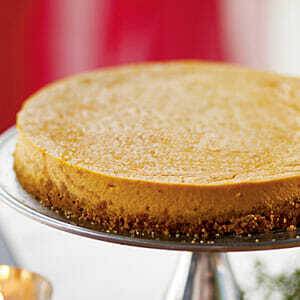
    Pumpkin cheesecake CookingLight

    It’s funny how nostalgic something as simple as a pumpkin can be as people are reminded of Halloween and various other childhood memories. The smell of Pumpkin Pie Spice causes me to reminisce of Thanksgivings and Christmases from yesteryear.

    I love pumpkin anything – except pumpkin pie.  (I know, call me crazy!)  This Double Layer Pumpkin Cheesecake recipe is a great alternative to pie, especially for those cheesecake fans out there. Add a dollop of whipped cream to the top and you’re all set for a delicious treat.

    PS.  Since they’ve created a national holiday to celebrate National Pumpkin Cheesecake Day, it has to be worth a try!

    _______________________________________________________________________

    If you’d rather watch your calories this season, Meg Benson of Clermont, Iowa, shares this Cooking Light recipe with only 256 calories per serving and less than 10 grams of fat.  She says this cheesecake is also good with a graham cracker crust and recommends going heavy on the spices!

    COOK’S TIP: Meg says it took almost 2 hours for the cheesecake to bake in her oven.  She also notes that she bakes cheesecakes in a water bath and then lets them sit in the oven for an hour or so after turning off the oven off.

    Light Ginger Pumpkin Cheesecake

    Photo Source: MyRecipes.compumpkin-cheesecake-CookingLight
    Yield: 12 slices

    Ingredients

    Crust:

    • 56 reduced-fat vanilla wafers (about 8 ounces)
    • 1 tablespoon butter or stick margarine, melted
    • Cooking spray

    Filling:

    • 3 (8-ounce) blocks fat-free cream cheese, softened
    • 2 (8-ounce) blocks 1/3-less-fat cream cheese, softened
    • 1/2 cup granulated sugar
    • 1/2 cup packed brown sugar
    • 3 tablespoons all-purpose flour
    • 1 teaspoon ground cinnamon
    • 1/2 teaspoon ground nutmeg
    • 1/2 teaspoon ground ginger
    • 1/4 teaspoon salt
    • Dash of allspice
    • 2 teaspoons vanilla extract
    • 4 large eggs
    • 1 (15-ounce) can pumpkin

    Preparation

    1. Preheat oven to 400°.
    2. To prepare crust, place wafers in a food processor; pulse 2 to 3 times or until finely ground. Add butter; pulse 10 times or until mixture resembles coarse meal. Firmly press mixture into bottom of a 9-inch springform pan coated with cooking spray. Bake at 400° for 8 minutes; cool on a wire rack.
    3. Reduce oven temperature to 325°.
    4. To prepare filling, beat cheeses with a mixer at medium speed until smooth. Add the granulated sugar and next 8 ingredients (granulated sugar through vanilla), beating well. Add eggs, 1 at a time, beating well after each addition. Add pumpkin; beat well.
    5. Pour cheese mixture into prepared crust; bake at 325° for 1 1/2 hours or until almost set. (Cheesecake is done when the center barely moves when pan is touched.) Remove cheesecake from oven; run a knife around outside edge. Cool to room temperature; cover and chill at least 8 hours.

    Larry Sailer, Musings of a Pig Farmer

    October 21, 2011
    Desserts, General, Recipes
  • Latham Hi‑Tech Seeds

    WHY DROPPED EARS ARE WIDESPREAD IN 2011

    It’s been said that a 1,000 variables affect a crop from the time seed is planted in the spring until grain is harvested that fall.  The 2011 growing season certainly put that theory to the test!

    Many Midwest growers planted their crops much later than they would’ve liked because heavy spring rainfalls prevented them from getting in the fields any sooner.  Just when plants started to look really good across much of the country, several thousand crop acres were hit by straight-line winds in July and August.  Then, adding insult to injury, many of these same areas suffered from excessive heat and lack of moisture during a key period of crop development in late summer.  In addition to these challenging growing season conditions, this fall many fields suffered from an early frost plus were subject to rapid dry down from above-normal fall temperatures.

    Environmental conditions in 2011 certainly weakened corn stalks and predisposed ears to drop at the shank.  It’s no wonder that Wallaces Farmer reports corn lodging is a greater problem than normal, with 21% of Iowa’s corn crop experiencing moderate to heavy lodging compared to 10% on average.  And 10% of Iowa’s corn crop is experiencing moderate to heavy ear droppage compared to 5% normally.

    Although stalk rot is the cause of lodging in most cases, they are not the only cause.  Below are other reasons for early ear droppage:

    • Damage to conventional hybrids by European Corn Borer. Ears that have dropped and still have husks on them are typically caused by European corn borer.
    • Nutrient imbalances and/or deficiencies predispose corn plants to stalk rot and stalk lodging. Potassium deficiency has been shown to reduce stalk quality and strength, and stalk rot resistance.
    • When fast dry down occurs, the ear shank may not develop properly.  Sometimes a shank gets pinched if there are a lot of aborted kernels near the butt of the ear, thus leading to poor attachment and wind causes ears to drop.

    Several environmental factors contributed to the higher amount of ear droppage this fall.  While we can’t control Mother Nature, we can help minimize its effects through hybrid selection.  When making purchasing decisions for the 2012 growing season, remember that not all hybrids offer the same degree of stalk strength and some are more susceptible than others to stalk rot.  Search for the strongest genetic package that delivers the traits needed to fit your particular growing situation.

    At Latham Hi‑Tech Seeds, we partner with our farmer-customers to identify the traits necessary for their growing conditions, above- and/or below-ground pests and weed control options.  A new option for corn growers in 2012 is Refuge in a Bag (RIB), which makes the complex world of refuge simple.  The RIB concept involves mixing the refuge seed with both the corn borer and rootworm insect protected corn seed, so growers have everything they need to be refuge compliant in just one bag. Growers no longer need to weigh adjacent versus in-field configurations; they can simply open the bag and pour. Growers will be able to purchase the first single-bag RIB solution for the 2012 season from Latham Hi‑Tech Seeds.  Genuity® SmartStax® RIB Complete™ Corn, a blend of 95% traited seed and 5% refuge seed.  With only 5% refuge seed, you’ll be able to protect more of your acres from corn borer in the year ahead.

    Webspec Admin

    October 18, 2011
    Agronomics, Corn, Crop, General
Previous Page
1 … 119 120 121 122 123 … 159
Next Page

Latham Hi‑Tech Seeds

131 180th Street | Alexander, IA 50420

(641) 692-3258

SIGNUP FOR OUR NEWSLETTER
  • Contact
  • Legal
  • Dealer Center
  • Seedware Login
  • Latham Gear

© 2025 Latham Hi‑Tech Seeds. All rights reserved. | Iowa Web Design by Webspec | Privacy Policy

Latham® Hi-Tech Seeds is a trademark of M.S. Technologies, L.L.C., 103 Avenue D, West Point, IA 52656.