Skip to content
Latham Hi-Tech Seeds

(641) 692-3258

  • Home
  • Performance
  • Products
    • Corn
    • Soybeans
    • Soybean Blends
    • Alfalfa
    • Corn Silage
    • Seed Guide
    • Seed Treatments
  • Find a Rep
  • Media
    • Blog
    • News
    • Videos
    • Podcasts
    • TECHTalk
  • About Us
    • Company History
    • Our Mission
    • Careers
    • Become a Rep
    • Sowing Seeds of Hope
  • Contact Us
  • Latham Hi‑Tech Seeds

    Prepare for Winter Travel with Free Phone App

    Motorists have one more “tool” for their winter survival kit, thanks to a new smartphone application. It’s available – free – for both Android and iOS systems.

    “The app will help you find your current location, call 911, notify your friends and family, calculate how long you can run your engine to keep warm and stay safe from carbon monoxide poisoning,” says Iowa State University Extension Safety Specialist Charles Schwab in a recent Wallaces Farmer article. “You can use the Winter Survival Kit app to store important phone and policy numbers for insurance or roadside assistance. You can also designate emergency contacts you want to alert when you become stranded.”

    The Winter Survival Kit app can be used to determine geographic location.  It’s gas calculator estimates how long the car engine will run on the remaining fuel plus every 30 minutes it will remind motorists to turn off the vehicle’s engine and check the exhaust pipe for snow buildup to avoid deadly carbon monoxide poisoning.  In addition, the Winter Survival Kit app provides information on preparing one’s vehicle for winter driving and on staying safe when stranded in a storm or stuck in snow. Click here to read the entire Wallaces Farmer article, “Phone App Is Winter Preparedness Tool for Motorists.”

    Click here to download for iPhones.
    Click here to download for Android Phones. 

    Team Latham

    December 29, 2011
    Agriculture, General, Industry News
  • Latham Hi‑Tech Seeds

    Resolve to Fight Weed Resistance in 2012

    Seed-2-Soil powered by Sci Max Team Leader

    Much time will be spent this week reflecting on 2011 and resolving to make changes in 2012. One change farmers can make in 2012 is resolving to better manage weeds.

    Weed resistance is a growing problem (literally) in our area. One weed that continues to cause problems is waterhemp. As you make plans for your 2012 soybean weed control programs, please ask yourself the following questions:

    1. Am I seeing waterhemp escapes in my soybean fields?
    2. Am I using multiple modes of action and residual herbicides with post-emergence in my soybean herbicide program to help prevent resistance from taking place in my fields?
    3. Am I allowing weeds to compete with my crop early in the season that may be impacting yield?

    If you answered “yes” to any of these questions, the best step to take is to address the issue by using FULL rates of pre-emergence herbicides in your soybean fields. Kevin Bradley, a weed scientist from the University of Missouri, conducted trials with waterhemp in soybeans. According to Bradley’s research, a pre-emergence herbicide applied before soybean planting reduced late-season waterhemp density by 97 percent.

    Results like that – 97% reduction in waterhemp density – is worth trying! After all, resolving to change your weed management program is a lot easier than resolving to walk or run on one’s treadmill every day.

    December 28, 2011
    Agronomics, General, Weed Control
  • Latham Hi‑Tech Seeds

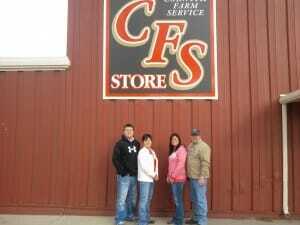
    Corwith Farm Service Gives New Meaning to “Full Service”

    CorwithFarmServices

    Latham® dealers Pete and Bonnie Wilhite of Corwith, Iowa, give “full service” new meaning.  When customers stop by Corwith Farm Service on Main Street, they can pick up everything from alfalfa pellets (yes, rabbit food) to fresh ground hamburger.  Patrons can also enjoy a cup of fresh-brewed coffee, play a game of cards and place their seed orders for the year.

    The Wilhites bought the town’s grocery store, formerly known as Ron’s Food Center, in April 2010.  The previous owners, Ron and Mary Cronin, had operated the store since August 1975 and were looking to sell once Ron was diagnosed with cancer.  The sale of the business to someone locally – and to a friend no less – helped bring some peace of mind to the Cronins and community members alike since an independent grocery store is the heart of a small town.

    After purchasing the grocery store, the Wilhites made a few changes.  They added a coffee corner and began selling deli sandwiches for people in need of “grab and go” lunches.  They also added more fresh fruits and vegetables to their product offering.

    There was a learning curve, admits Bonnie.  It’s hard to gauge what will be a good seller, so sometimes the family’s meals are based on what needs to move from the grocery store shelves.  Corwith Farm Services cuts its own meat, so Pete had to learn how to operate the saws and grinders.  Fortunately, the same person who had been working at Ron’s Food Center for the past 10 years continued working when the store changed hands.  The Wilhites also added an additional employee to the payroll.

    Pete works at the store each week day from 7 a.m. until 5:30 p.m.  He carries out groceries, and if need be, he’ll make deliveries.  Bonnie spends Fridays at the store, after working 40 hours from Monday through Thursday as the operating room and emergency room supervisor for Hancock County Memorial Hospital in Britt.

    “Corwith Farm Services isn’t a job to me,” says Bonnie with her ever-present smile.  “All week I’m helping with surgeries and dealing with emergencies, so the grocery store is really an outlet for me.  On Fridays I get to catch up with friends and with bookwork.”

    In addition to their “day jobs,” Pete and Bonnie farm.  They raise corn and soybeans plus have cows and calves on pasture from spring to fall.  Both of their children were active in 4-H and showed cattle at the county fair.

    “We love living in the country and are glad we were able to raise our kids on the farm,” says Bonnie.  “There is always something to do.  When our kids were younger, I didn’t have to worry about where they were because they couldn’t go anywhere without us driving them!”

    The Wilhites’ kids are on the go now.  Their 21-year-old daughter, Chelcee, is in her final semester at Mount Mercy College in Cedar Rapids.  She is working at the medical clinic in Britt before returning to the classroom in February.  In May, she will complete her Bachelor’s of Science in Nursing (BSN).  Lucas, age 20, is a sophomore at Iowa State University in Ames where he’s majoring in business.  (Lucas is also seeking a summer internship, so you know whom to call if you’re looking to hire!)

    While their college kids are home on break, Bonnie is sure to mix up a few of their favorite foods including homemade pizza and Mexican Corn Dip.  This dip, along with Cyclone-colored tortilla chips, is on the menu for Dec. 30 when Iowa State takes on Rutgers during the New Era Pinstripe Bowl in Yankee Stadium.

    Easy Homemade Pizza

    Ingredients:

    • 1 package yeast
    • 1- 1/4 c. warm water
    • 1 tsp salt
    • 3 to 4 c. flour

    Directions:

    1. Mix and knead.  (The more you knead, the lighter the dough is.)
    2. Let the dough rest for 10 minutes.
    3. Put in pizza pans and top with your favorite toppings.
    4. Bake 375° until it appears done.

    Team Latham

    December 23, 2011
    Beef, General, Pork, Recipes
  • Latham Hi‑Tech Seeds

    Play it Safe this Winter

    Wool mittens1

    Submitted by Tracy SchlaterFS4JK-logo
    Marketing Director, 
    Farm Safety For Just Kids


    wool-mittensMany farm-related activities, such as feeding the cattle and plowing the farm yard, must be done no matter what the thermometer reads. That’s why it’s important for farmers to take special precautions, so the cold temperatures don’t take their toll.

    To prevent injuries caused by cold weather:

    • Wear warm, loose-fitting, layered clothing, preferably wool. Also wear water-repellent outer garments.
    • Wear mittens instead of gloves. Mittens allow your fingers to remain in contact with each other, enabling your hands to stay warmer.
    • Cover your head and ears. The head, neck and ears lose heat faster than any other part of the body.
    • Stay dry.
    • Do not drink alcoholic beverages. Alcohol actually causes the body to lose heat more rapidly.

    Watch for frostbite and other signs of hypothermia like numbness or disorientation.  If you suspect frostbite or hypothermia, it’s important to:

    • Seek immediate shelter in a warm place.
    • Handle any frostbitten area gently. Don’t rub them!
    • Replace cold, wet and clothing with dry items.
    • Warm the body gradually, not by a stove or fire.
    • Contact your local emergency medical services for help with frostbite or hypothermia.

    Farm children are at risk whether they are helping out with the chores or just enjoying the many adventures that might exist on a sunny, but bitterly cold day. Snowmobiling, sledding or just having a snowball fight with Grandpa may be dangerous.

    Children may not be able to identify the signals of danger, so help them stay safe by monitoring their actions frequently. Winter can be a beautiful and fun time of the year to enjoy the farm if precautions are taken to prevent the cold from endangering those who are experiencing its glory.  For more information on farm safety, visit www.fs4jk.org

    bonnie-harris

    December 22, 2011
    Agriculture, General, Industry News
  • Latham Hi‑Tech Seeds

    Soybean Selection: It’s an Internal Battle!

    It’s not often that a company shares its “internal battles,” but today we’re airing one!  Just as many football teams across the nation are preparing for bowl games this holiday season, the product team at Latham Hi‑Tech Seeds is trying to determine the value of both offense and defense.

    “Defense is the best offense there is!” says Latham Product Manager Mark Grundmeier.  He stands by the defensive power of L2183R2. This Genuity® Roundup Ready 2 Yield® soybean has the best defensive package in the industry. It has the industry’s best store (1.5 on a scale of 1 to 5, with 1 being the best) for Iron Chlorosis.  Place it on medium to heavy soils and Marks says it’s tough to beat.

    President John Latham, on the other hand, insists that Latham® Hi‑Tech Soybeans L2182R2 is the way to go. “Offense, offense, offense,” chants John.  He wants to raise 80-bushel beans and insists that L2182R2 is the way to do it.  While L2182R2 is a great offensive product, John says it also has a solid defense package.

    Which matters more, offense or defense?  Our Seed-2-Soil® specialist says that one of the best predictors of a soybean product’s performance is its field position.  “Just as it is on the gridiron, a good field position makes it easier for the offense to score,” says Peter Bixel, team lead for Latham’s Seed-2-Soil program.  “Teams with poor defenses provide poor field position, which allows their offense to gain more yards but probably results in fewer points scored.  Placement can help soybean products maximize yield potential.”

    Can soybean growers – and championship football teams alike – benefit from having both a strong offense and a strong defense?  Watch the video link below to see Mark and John go “head to head” on this issue.

    [youtube]http://www.youtube.com/watch?v=TtQoUEhaQjU&feature=related[/youtube]

    Team Latham

    December 21, 2011
    Agronomics, Corn, Crop, General, Soybeans
  • Latham Hi‑Tech Seeds

    Bring the Money Home!

    guest blog post submitted by Deb Brown of debworks

    Deb Brown is the CMO, chief foot soldier, answering machine and traveler at Debworks.  Debworks is a marketing organization, traditional and new media, dedicated to getting the word out about your business.  www.debworks.com | deb@debworks.com 641-580-0103


    What if you made the decision to purchase one product locally?  You might be surprised at the huge impact just one purchase could have on a small town.

    Let’s just consider what would happen if every resident of Greater Franklin County decided to buy their toilet paper locally.  There are 15,000 people in Greater Franklin County and the average person uses 105 rolls of toilet paper a year.  Do the math – just this item would keep almost $2 million dollars in sales in our county.  Two million!  It would also generate $140,000 in sales taxes.

    Last year it was estimated that the amount actually spent on toilet paper in Greater Franklin County was $335,800 – that’s lost revenue of $1,631,244!  We haven’t even covered the fact that revenue spent in local businesses tends to stay in the county.  They pay their employees and local taxes, shop for products locally themselves, contribute to non-profit organizations locally and generally support the local community.

    Debworks has a commitment to shopping local.  The first thing that comes to mind is shopping at the retail stores.  And we do that.  But we’ve expanded our commitment to say – we support local too.  I live and work in Franklin County and think it’s important that we learn to work together not only to improve quality of life, but also to strengthen our businesses.

    What does that mean?  Easy enough – shop local! (See www.debworks.com/5-things-consider)  But it’s more than just shopping local.  It’s also working together.  John F. Kennedy said “a rising tide lifts all boats” (he took it from a New England Chamber of Commerce).  That means if we all work together, we all get better together.

    We’re doing a few things in Franklin County that are making a difference:

    1.     Thinking about advertising and promotion in an artistic kind of way.

    Our Franklin County Arts Council puts on two big productions a year.  At the winter event, it’s a live radio play done on a stage set in the 1940’s.  There are 6-8 commercials between the acts.  These commercials are from local companies!  So not only is your commercial seen live at both showings, it is recorded and played on the radio (and you get the spot for your use) and it is also filmed and you receive that as well.  We like the idea “write once, use many times” – and this works well!  You are supporting the arts, and getting your name out there too. Win-win.

    2.     Last year Debworks, Latham Hi Tech Seeds, Franklin County Farm Bureau and Franklin County Tourism teamed up to host a bloggers tour.

    We invited 10 bloggers and their families into our community.  We fed them, housed them and entertained them for a weekend.  In turn, they wrote about their adventure in Franklin County.  The short tail on this is – we got immediate blog coverage from Midwest bloggers.  The long tail is – we are still getting noticed and talked about.  CNN found Franklin County and asked some of our residents to come to Des Moines and talk about the caucus with them.  We’ve been featured in newspapers around the state for this tour.  Uptake author Jody Halsted is still posting there about Franklin County.  It continues to be a productive venture.

    3.     Debworks and Latham Hi‑Tech Seeds are putting together a Partnership Seminar to be held at the end of the month at TownsEnd Winery. 

    We’ve invited a few local businesses to attend and brainstorm on different ways to partner this year.  We’re looking at the calendar for the year’s events (thanks to the Chamber for keeping a great community calendar!) and figuring out how we can be involved and partner up with other businesses.  For example, Shannon’s Pumpkin Patch might partner up with Country Heritage Bed and Breakfast.  For visitors traveling out of town to visit the Harriman Nielsen Historic Farm over their Festival weekend, they could stay at the B and B and take home a great pumpkin from Shannon’s Pumpkin Patch and attend the Festival.  Just imagine what the winery, the Soybean Association and the downtown retailers could dream up!

    So why not take a good, hard look at what is available in your community.  What is the Historical Society doing?  How about County Conservation?  Don’t forget the Farm Bureau and Soybean Association.  Now – how can you as a business owner create some fun things that bring people to you?  As a consumer – where can you shop local and help support your community?

    Team Latham

    December 20, 2011
    Agriculture, General, Industry News
  • Latham Hi‑Tech Seeds

    Fall rainfall varies from 8.79” to 1.0”

    US Drought Monitor

    With only six days until Christmas, many men I know are just starting their shopping while others are helping put the finishing touches on the holiday feast.  It’s not likely that many people will pay much thought to last week’s rainfall now, but weather will likely be a topic of major conversation at some point when farm families gather together.  (At least it is at our house!)  That’s why today on The Field Position we’re providing you with a little extra “food for thought.”

    Most of the Midwest is suffering drought conditions, as Latham Product Manager Mark Grundmeier posted last Thursday.  We need moisture.  Interestingly enough, not all areas of the state are in such dire straits.

    Precipitation totals have been extremely variable this fall, says State Climatologist Harry Hillaker with the Iowa Department of Agriculture & Land Stewardship (IDALS).  Soil moisture levels vary from near field capacity in extreme southeast Iowa (where Keokuk has seen 8.79 inches of rain since Nov. 1) to far below the typical early winter levels in the northwest (where total precipitation since Sept. 1 has been only about an inch in some areas centered around Cherokee County).

    “The rain event of December 13-14 brought a statewide average of 0.76 inches of precipitation,” says Hillaker.  “As expected, the greatest rains fell in the southeast and the least in the northwest.”  Only 0.2 to 0.4 inches of rain fell the northwest quarter of Iowa while the Keosauqua and Mount Pleasant areas received 2 to 2.5 inches last week.  Fortunately, there is not much frozen soil across Iowa allowing most of this rain to soak into the ground.

    So just how dry is your area?  You can click view the latest Drought Map by region or by state.  You can also find estimated soil moisture levels by clicking here.

    Can we make up for a lack of fall rain with snow?  Hillaker says snowfall generally does not provide much benefit to soil moisture levels in Iowa for two main reason.  First, snowfall on average accounts for less than 10% of our annual precipitation.  Second, much of the moisture falls on frozen ground and doesn’t easily make its way into the soil as it melts.   Nevertheless, snow cover helps eliminate wind erosion as wet top soil is not easily blown away.

    Team Latham

    December 19, 2011
    General, Season, Winter
  • Latham Hi‑Tech Seeds

    HAPPY 95TH BIRTHDAY!

    Today we pay tribute to the 1962 Master Homemaker
    and Matriarch of the Latham family 

    How would you begin telling a story about someone for whom you have the utmost respect and who has lived a very full 95 years?  That’s a lot of time to cover in a short amount of space!

    After much thought, I’ve decided to begin with an excerpt from memories that Evelyn Latham penned a few years ago for her family.  “My story is one of love and hard work, interspersed with joys, tragedies, achievements, and a lot of family pride.  I was born on December 17, 1916, to John A. and Nora Ladegaard Johansen at our farm home near Latimer, Iowa.”

    Yes, Evelyn Latham – grandmother of John and Chris – turns 95 years young tomorrow!  We’re blessed that she still lives in Franklin County, and there’s nothing she enjoys more than visits from family members and friends.  Each time we visit, she is sure to ask about our seed business.  And, it’s no wonder!  She’s been a very integral part of the Latham family business since it began nearly 65 years ago.

    “In 1947 Willard bought a large seed cleaner,” Evelyn writes in her memoir.  “He built a trailer to transport it, and that was the beginning of our seed business.  He made a home-made seed treated, and he and John Hill went from farm to farm to clean oats that were full of weeds and infected with smut fungus disease.  They almost froze to death, so the next year Willard had farmers bring their oats to a shed on our farm where they could be cleaned and treated. 

    We soon outgrew that, so Willard remodeled our corn crib (granary).  I’ll never forget how hard he worked putting in an elevator and machinery!  He had a man helping him.  When they started the equipment, they discovered the elevator wasn’t high enough.  He was just sick about it.  He came into the house and said, “Eve, come, we have to go for a ride”.  So we went for a little ride.  Then, of course, he had to rebuild it.” 

    (Click here for Evelyn’s video)

    Evelyn helped support Willard and their business in numerous ways.  The family’s kitchen table served as the company’s office, so she made numerous trips daily from the house to the outbuildings whenever Willard was needed to a phone call.  Known for her cooking skills and hospitality, it wasn’t unusual for Evelyn to feed a room full of hired men and customers.

    In addition to serving as secretary and caterer in 1947, Evelyn was busy caring for four boys ranging in age from 6 to 1.  (The Latham’s fifth son was born in July 1948.)

    It’s no wonder Wallaces Farmer magazine recognized Evelyn as Iowa Master Farm Homemaker of the Year!  An excerpt from the December 15, 1962, issue of Wallaces Farmer states, “Mrs. Willard Latham, Franklin County, shares her interest in music with her husband and sons…  she loves music and likes to read when she has time.”

    No matter how busy and full her life might be, Evelyn has been known for making time to share coffee and fellowship with family and friends.  She’s one of those rare people who puts you at ease from the first meeting.  When John first introduced me to her, Evelyn pulled me into a hug.  Her smile reached her eyes as she told me how glad she was to meet me.  In the next breath, she said, “Let’s go into the kitchen for some coffee and cookies.  You’ll have some, won’t you?  Sure you will.”

    Anyone who has ever met Evelyn knows there is no choice but to make time for coffee and cookies.  Fast forward 16 years, and the greeting is still the same.  Evelyn’s eyes still light up when she has company and she’s always more than ready to share a cup of coffee with family and friends.  The coffee is sure to be flowing as Evelyn celebrates her 95th birthday with friends and family.

    In honor of this milestone, today we’re sharing two recipes straight from Evelyn’s recipe box.  The first one is for popcorn balls because they were also such a hit with her 12 grandchildren during the holidays.  In fact, Evelyn was still making her notorious popcorn balls even after great grandchildren arrived.  The second recipe is for a classic ice cream dessert because no birthday celebration would be the same without ice cream.  You’ll see Evelyn has even included a note about how you can make this ice cream dessert fitting for the holidays.  We hope you’ll enjoy these family recipes as much as we do!

    Ice Cream Dessert

    from the kitchen of Evelyn Latham

    Ingredients:

    • ½ gallon vanilla ice cream (softened)
    • 2 c. Rice Krispies
    • 1 c. coconut
    • ½ c. nuts
    • 2/3 c. brown sugar
    • 1/3 cup butter, melted

    Directions:

    1. Crush Rice Krispies with rolling pin and then mix them with coconut, nuts, brown sugar and butter.
    2. Put 2/3 of this mixture in the bottom of a 9×13 cake pan.
    3. Next place the ice cream put the rest of the Rice Krispies mixture on top.
    4. Place in freezer.

    COOK’S TIP:  Use peppermint ice cream for Christmas.

    Team Latham

    December 16, 2011
    Agriculture, General, Industry News
  • Latham Hi‑Tech Seeds

    Moisture is needed, regardless of form

    I’ve been known to whistle as I work, and I’ve been known to whistle as I walk the halls at Latham Hi‑Tech Seeds.  But this week, I’m singing a new tune:

    Let it rain, let it rain, let it rain!

    Some may question my sanity, especially since it’s December in Iowa.  But as Paul Harvey would say, “Now for the rest of the story.”

    The story is that Iowa – and much of the Upper Midwest – is suffering from a drought.  Our great state just completed its driest July-November period since 1976, according to a recent article in The Des Moines Register.  About three-quarters of the state officially classified as being in a drought.

    With no autumn rainfall, we need moisture over the winter or in early spring.  Snowfall may or may not be of benefit, depends on when it comes and how it melts.  Snowfall on frozen ground that eventually melts is not of great benefit because it usually just runs off the frozen ground into the streams and rivers without filtering down into the soil profile.

    Precipitation, like we’ve experienced here this week, is of great importance.  The ground isn’t completely frozen yet, so this rain and rain/snow can sink into the parched soil.

    Sufficient moisture is critical in the spring for seeds to germinate and for seedlings to grow.  While fall precipitation can play a role, we can still make up for moisture deficiencies with snowmelt and spring rains.

    And on that note, I’ll change my tune to something a little more appropriate to the season and to our climate:

    Let it snow, let it snow, let it snow!

    Listen to: Let It Snow

    December 15, 2011
    General, Season, Winter
  • Latham Hi‑Tech Seeds

    LinkUp with Latham Hi‑Tech Seeds

    Weed resistance is a growing problem for farmers in the Upper Midwest.  From Giant Ragweed and Waterhemp, to Giant Marestail and Johnsongrass, we all need to do our part to help keep resistant weeds in check.

    Many growers are getting ahead of the game by integrating a herbicide rotation into their long-term crop plans.  To provide growers with an alternative, Latham Hi‑Tech Seeds offers several soybean products with the LibertyLink® trait:

    • L1773L – New LibertyLink® soybean with exceptional yield and very good defensive traits.
    • L2058L – Solid SCN line with a good defensive package.
    • L2383L – Tall plant with very good stress tolerance.  Plant it on those tougher soils.
    • L2686L – Medium, bush-type plant with excellent tolerance to White Mold and Sudden Death Syndrome (SDS).
    • L2987L –Fairly tall, bushier soybean line with excellent SDS and stress tolerance.
    • L3287L – Very tall plant with good tolerance to White Mold and SDS.

    Here’s a video feature on our LibertyLink lineup from Latham Product Manager Mark Grundmeier.

    [youtube]http://www.youtube.com/watch?v=jKWVJSR85aA[/youtube]

    It really does pay to “link up” with LibertyLink® soybeans from Latham Hi‑Tech Seeds.  Growers who order a minimum of 250 acres worth of LibertyLink® soybeans from Latham Hi‑Tech Seeds are eligible to receive a $2/acre* rebate from Bayer Crop Science.  NOTE:  Seed must be ordered before February 1, 2012. (*Based on seeding rates of 1 acre/unit of soybean seed.)

    Contact your Latham representative for more information on this offer and LibertyLink® soybean options from Latham Hi‑Tech Seeds.

    Team Latham

    December 14, 2011
    General, Industry News, Seed Technology
Previous Page
1 … 118 119 120 121 122 … 161
Next Page

Latham Hi‑Tech Seeds

131 180th Street | Alexander, IA 50420

(641) 692-3258

SIGNUP FOR OUR NEWSLETTER
  • Contact
  • Legal
  • Seedware Login
  • Latham Gear

© 2026 Latham Hi‑Tech Seeds. All rights reserved. | Privacy Policy

Latham® Hi-Tech Seeds is a trademark of M.S. Technologies, L.L.C., 103 Avenue D, West Point, IA 52656.