

Precision Agronomy Advisor Phil Long weighs in on where the soybean yield came from in 2021 and what to look for in 2022.
-
Latham Hi‑Tech Seeds
Does it Pay to Foliar Feed Soybeans?

In this week’s #AskTheAgronomist, Precision Agronomy Advisor Phil Long addresses common questions related to foliar feeding soybeans and what he learned from this past growing season.
:30 – Topic Introduction2:40 – Results from this year7:25 – Takeaways -
Latham Hi‑Tech Seeds
Changes to Soybean Research Program a Resounding Success!
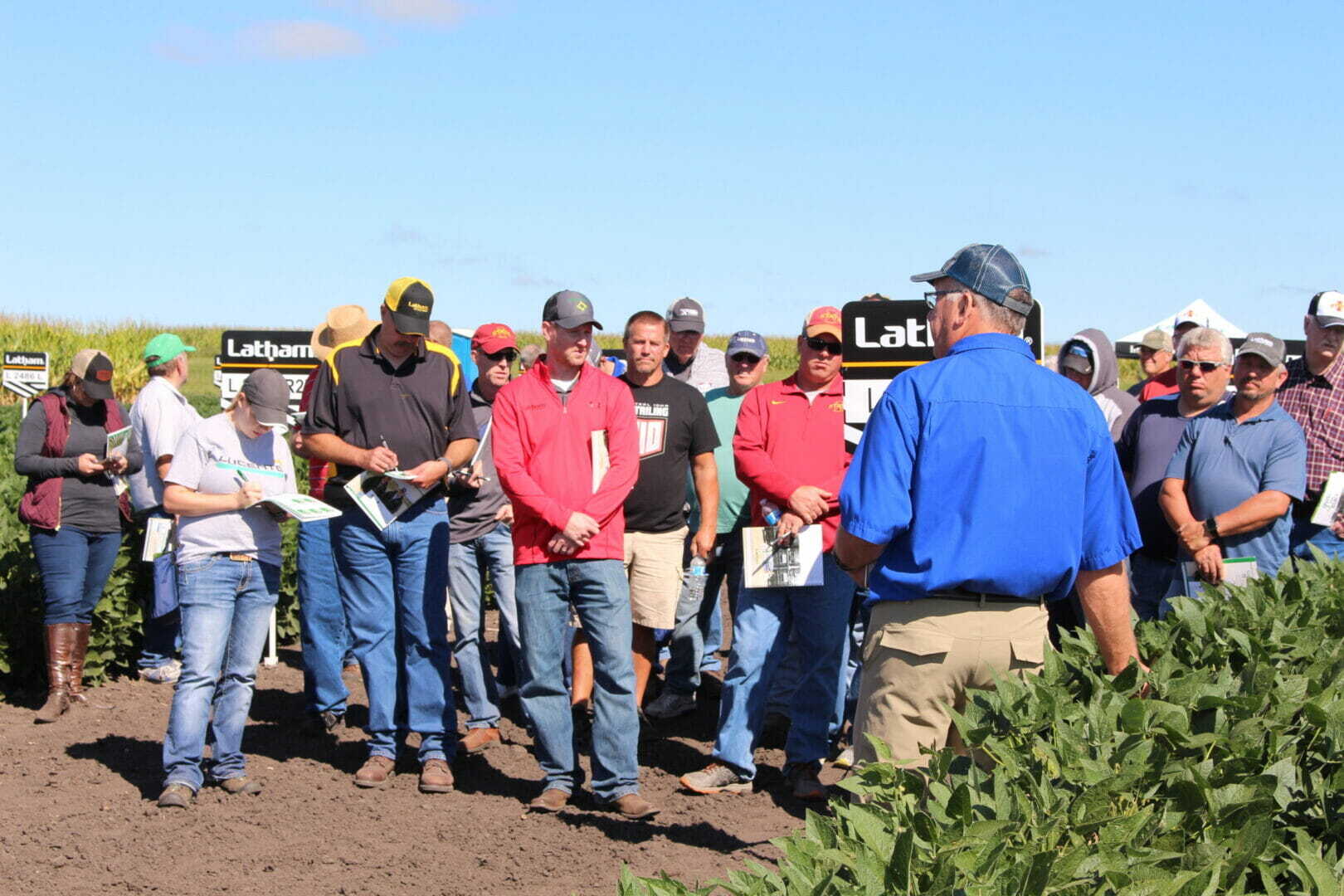

Latham Soybean Research Plot I’m pleased to inform you that the changes we made to our soybean research program were a resounding success! The decision to hire other companies to plant and harvest our Latham Elite trials allowed our Product Team members to observe and take notes at a greater number of locations and across a wider geographic area. In previous years, our own crew could only plant and harvest 11 or 12 locations in Iowa and southern Minnesota. We would then hire another company to do the same at about five or six locations in northern Minnesota and North Dakota. This year we were able to plant and harvest 33 locations in Iowa, Minnesota, Nebraska, Wisconsin, North Dakota and South Dakota!
Latham Seeds’ Product Team will evaluate the yield data and correlate notes taken to see which products are a good fit for Latham Country. During that same time, Latham’s Regional Sales Managers (RSMs) and Dealers will be surveyed to determine what products are needed based on input they receive from our customers. Then, and only then, will new products be added to our 2023 lineup.
Once we identify products from the Elite Trials that meet Latham Hi‑Tech Seeds’ standards and fulfill our customers’ needs, we release them for sale. We also place these new products in our Latham Showcase plots, as well as in the independent F.I.R.S.T. Trials program, to again showcase the performance of these new products and to provide opportunities for our customers to gain confidence in their performance.

Mark Grundmeier, Product Manager It has been my great honor and pleasure working for the Latham family for more than 25 years – first, as an agronomist, then as Soybean Product Manager and, for a dozen or so years as overall Product Manager. When Bill and Don Latham hired me in 1996, I had high hopes this would eventually lead to this being my dream job. I was looking for an opportunity to work in Research and Product Development. It certainly was everything I had hoped it would be. I can honestly say that I’ve never regretted the decision – not even once!
Along the way, I’ve met farmers, dealers, sales personnel, fellow employees and colleagues from numerous areas. I am proud to call many of you my friends. I’d like to thank the Latham family for placing their trust in me. I especially want to thank John, Shannon and Chris for allowing me to “spread my wings,” so I could be more involved in all of the products we handle. As for the future, I know that I’m leaving the company in the best of hands.
This is the final article I will write for TECHtalk as I am retiring at the end of 2021. I’m looking forward to spending more time with my family, traveling and pursuing some hobbies that I’ve put on hold for a few years. I wish you all the best as you continue to work in this great business of agriculture. May God richly bless you always!
-
Latham Hi‑Tech Seeds
Yield Reports are Encouraging
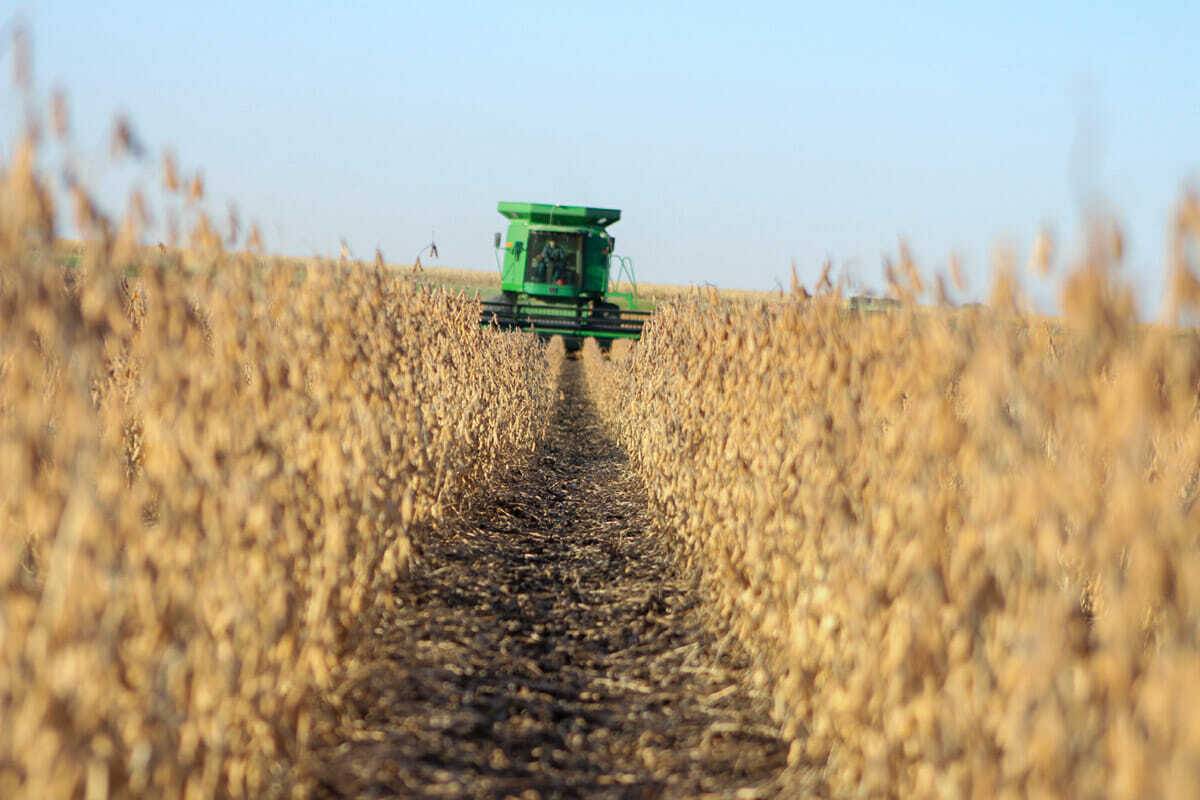
As we were conducting our pre-harvest field inspections, many production growers said they’d be happy with 40-bushel yields due to the early cold spell followed by drought. I’m happy to report that most of our growers’ yields were in the mid-50s to the mid-60s, and some even saw yields of 70 bushels per acre (bu/A) or more!
It seems that a few timely rains in August made the difference between having a decent crop and having a poor one. Below are raw yield results from some soybean Latham® Showcase plots and Latham Elite trials harvested this fall:
- Near Chatfield, Minn., Latham® L 2193 E3 yielded an outstanding 107.8 bu/A, and L 2049 E3 was right there with 95.7 bu/A!
- Near Sac City, Iowa, L 2283 XF brought in 84.39 bu/A and L 2184 R2X was a close second with 82.87 bu/A.
- Near Oskaloosa, Iowa, L 3448 R2X produced 83.52 bu/A, barely nudging out L 3479 E3 at 83.26 bu/A.
- Near Lu Verne, IA, L 2049 E3 topped a plot with 81.89 bu/A and L 2379 E3 came in at 79.79 bu/A.
- Near Albert City, Iowa, L 2458 E3 yielded 91.94 bu/A and L 1648 LLGT27 came in at 81.49 bu/A.
- Near Vernon Center, Minn., L 1758 E3 scored 75.15 bu/A and L 1769 R2X came in at 73.21 bu/A.
- Near Renville, Minn., L 1758 E3 scored 75.06 bu/A while L 2049 E3 was very close with 73.11 bu/A.
- Near Clarence, Iowa, L 3192 E3 produced 120.12 bu/A and L 2894 E3 yielded 110.85!
- Mantador, ND, caught some much-needed rain late in the season. At that location, L 1094 E3 produced 79.19 bu/A and L 0739 R2X yielded 65.19 bu/A.

Keep checking lathamseeds.com for updated yield results from plots around Latham Country.
-
Latham Hi‑Tech Seeds
#AskTheAgronomist: Selecting Soybeans to Address Disease Challenges

Soybean diseases such as soybean sudden death syndrome, white mold and soybean cyst nematode (SCN) negatively impacted yields in parts of Latham Country in 2021. In this week’s #AskTheAgronomist, Precision Agronomy Advisor Phil Long discusses how to identify and select soybean varieties that will address disease pressure in your fields.
-
Latham Hi‑Tech Seeds
3 Ways to Maximize Soil Tests
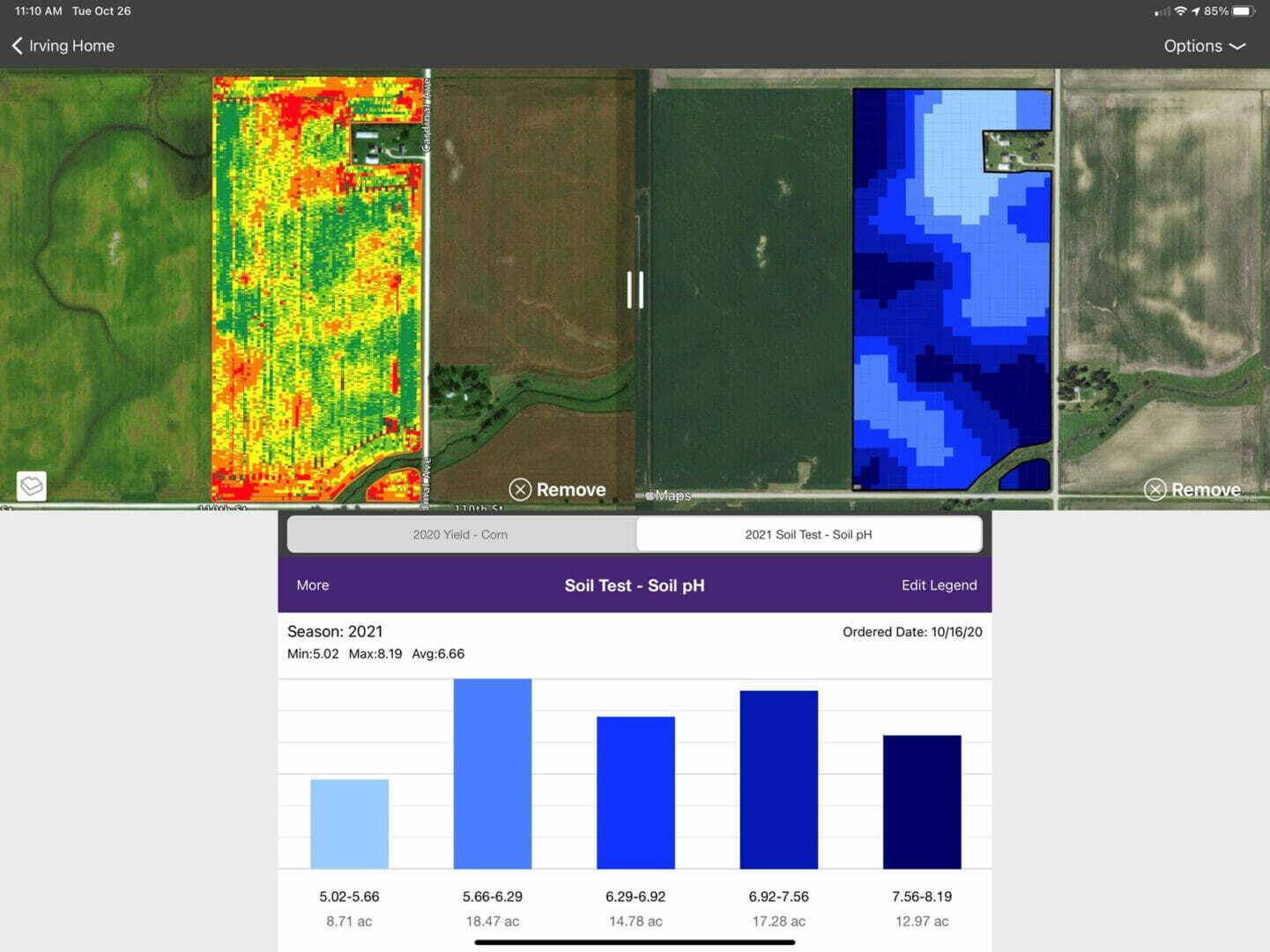
To save the most money on inputs, we must plan earlier and earlier every year. A current soil test is the best way to evaluate your fertility and ultimately your yield potential. Besides the normal evaluation of the main nutrients, a soil test pays for itself.
Let’s look at three ways to use your soil test to its full potential:
- Soil pH matters in more ways than lime. We typically look at pH maps to understand nutrient availability, but let’s think in terms of input planning. Take soybeans and a pH map, for example. By looking at this one map you will better understand the areas of high pH, so you can select a Latham® IRONCLADTM variety to stand up to challenges from Iron Deficiency Chlorosis (IDC). Another great use for this map is herbicide applications. Herbicide carryover in high pH spots can impact soybean yields. This map potentially can help make the decision to change a crop rotation or herbicide program to save yield losses.
- Organic Matter is king. Do you have organic matter (OM) readings higher than 5% and below 2% in the same field? Couple this with yield and this is a great start to help apply nitrogen more accurately. Another great combination is OM beside soil type map. Look at Latham Seeds’ product guide while you’re looking at these maps to quickly determine what percent of each field would benefit more from defensive traits or offensive traits. Really high OM soils typically hold more water and have challenges like flooding and higher disease potential. Also notice how much higher your potassium (P) and phosphorus (K) levels are in these spots.
- When phosphorus levels are high, other nutrients are lacking. Many farmers use animal manure as a source of fertilizer. This is great because it provides most of the essential nutrients our crops need, however, manure can have higher levels of some nutrients including phosphorus. If your soil potassium levels are climbing, move manure applications to another field. Also pay attention to other nutrients that suffer when potassium increase. If you notice your P levels are high, then Sulfur (S) and Zinc (Zn) could be at a disadvantage. Both S and Zn can be less available to the plant as P levels climb. This may not be visually noticeable at first, but it will show up in growth and yield if you do a side by side with S and Zn fertilizer.
 These comparisons and maps can be done in Latham’s Data ForwardTM app with a simple soil sample taken and yield map to start seeing value out of the information that you capture every year. If you’d like to learn how to start putting these things to work on your farm give me a call!
 -
Latham Hi‑Tech Seeds
Take the Test and Beat the Pest!
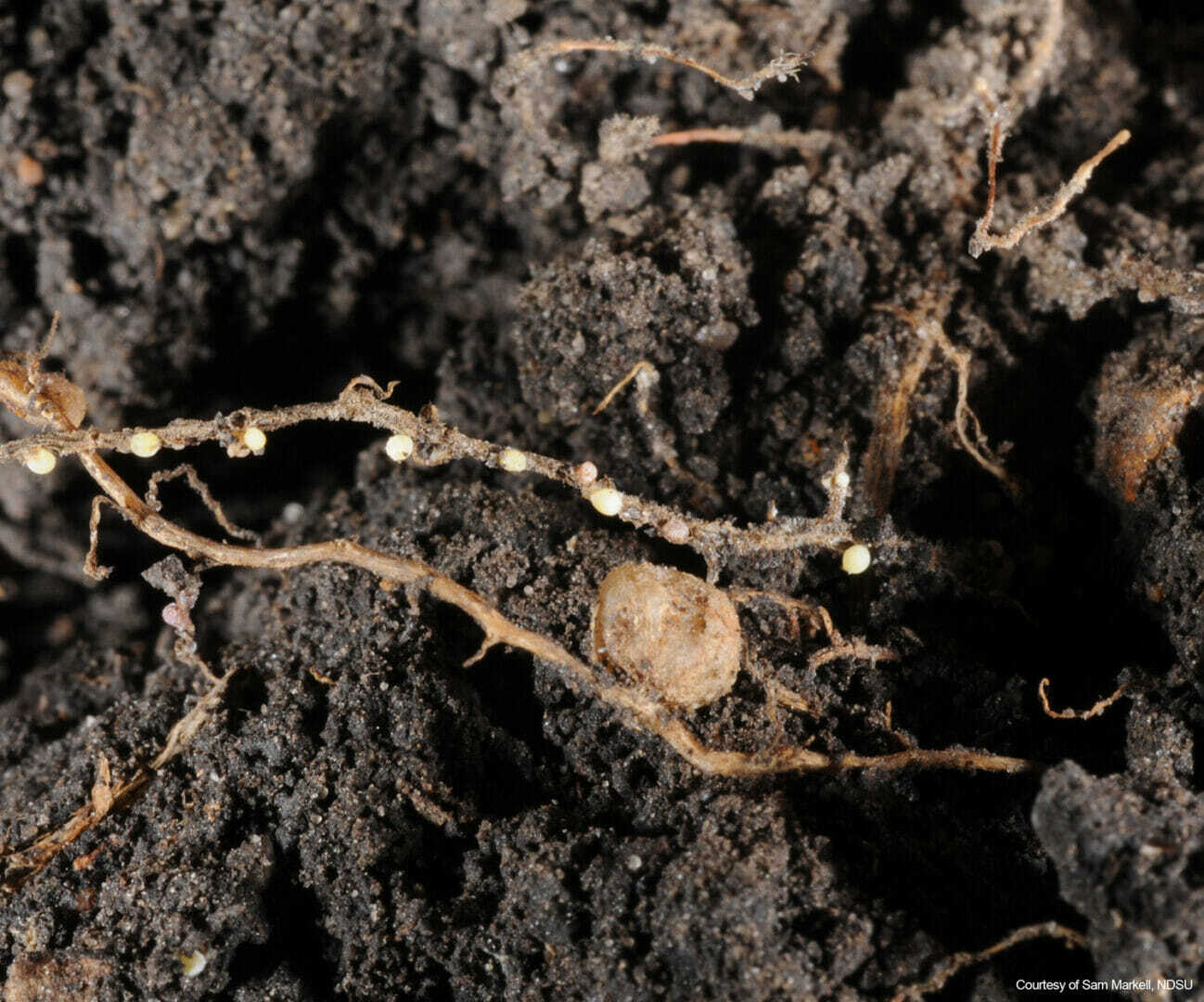
 By robbing farmers of more than 100 million bushels annually, Soybean Cyst Nematode (SCN) is estimated to be the #1 yield-robbing soybean pest or disease in the United States. Farmers may scream over lost yield this fall, but SCN is considered a “silent yield robber” due to a lack of above-ground symptoms in most fields.
Immediately after harvest is the best time to take soil samples for SCN. Several universities have programs that offer free soil samples to evaluate SCN, so check with your local Extension office to see if you qualify.
Think SCN isn’t a problem in your fields? Think again! Dry soil conditions, especially early in the growing season, can greatly increase the effects of SCN infestations. I received numerous calls in June and July about yellow, stunted soybeans. Most farmers suspected Iron Deficiency Chlorosis. Upon further inspection, SCN was almost always present and in larger numbers than previously observed. When I asked whether these farmers had taken a recent soil sample for SCN, most had not. They admit to mostly relying on SCN-resistant varieties to control or minimize the losses from this pest.
We have known for years that PI 88788 is gradually losing its efficacy against the pest, and more than 95% of SCN-resistant soybeans in America have PI 88788 as the source of gene resistance. Since 1997, a team of researchers at Iowa State University led by Dr. Greg Tylka has conducted annual in-field trials with hundreds of SCN-resistant varieties. They measure agronomic performance and SCN population densities from planting until after harvest.
Scientists have determined that to be effective, SCN-resistant varieties must maintain less than a 10% reproduction rate of SCN during the growing season. Since 2004, Dr. Tylka and his team have noticed that the average of all PI 88788 varieties in their trials have gradually exceeded that threshold. They have also noted that the average yield of those varieties has decreased as the SCN reproduction has increased. For more information on these studies, visit www.isuscntrials.info. Other land-grant university researchers have reported similar findings.
To effectively manage SCN in the future, soybean breeders are focusing on other sources of gene resistance. Your Latham Soybean Product Team is continually evaluating and searching for opportunities to bring new, better resistant varieties to our lineup. We also are evaluating several seed treatments for battling this pest. Saltro®, our seed treatment product for SDS protection, is also noted to have activity against SCN. More information from our Latham Elite trials will be available post-harvest.
“TAKE THE TEST. BEAT THE PEST.” is a slogan/campaign by The SCN Coalition™ and funded by the Soybean Checkoff and is designed specifically to promote awareness of SCN. These microscopic roundworms, which infect the roots of soybeans and other plants, can be present in a field for years before above-ground symptoms are visible. We encourage you to take the test this season, so you can plan accordingly for the future.
-
Latham Hi‑Tech Seeds
Notes from the Field – PreHarvest 2021
 I’m very hopeful that – even with the dry weather – our production fields can achieve an overall average year for production with sufficient seed for soybean sales in 2022.
Most soybean farmers’ biggest concern across Latham Country has been lack of moisture. Many have noticed aborted flowers, dropped pods, and restricted pod fill. Thankfully, our production fields in South Central Minnesota received a nice two-inch rain during the first week of August. Most of the growers in our area around Alexander, Iowa, got a nice one- or two-inch rain on August 20-21. That rain will help those fields fill out pretty well. Some of our fields in northern Minnesota also got a nice inch or more that weekend.
Rainfall has been extremely variable throughout the summer. On August 20, the Des Moines airport reported no rain but most cities throughout the metro got about 1.5 inches! “Spotty” rains have been the norm rather than the exception this season.
Besides the drought, infestations of two-spotted spider mites are popping up almost everywhere across Latham Country. This is common in periods of dry weather. Most growers seem to be willing to apply pesticides for control, especially when the market price for soybeans is high. Farmers in a few areas have reported Bean Leaf Beetles and Soybean Aphids at very low levels, so insecticide applications have not been necessary. Grasshoppers also flourish in dry conditions, and I have heard of farmers spraying to control this pest.
On the disease side, I’ve seen and heard of Sudden Death Syndrome (SDS) and White Mold this season. Dry weather usually hinders huge outbreaks of diseases, but it’s not unexpected that some areas will see things like this. Remember, SDS CANNOT be controlled with a foliar application of fungicide but there are some that can help on White Mold. I’ve also seen some Frogeye Leaf Spot (FLS) in a few fields but not enough to warrant a fungicide except in Southeast Iowa. I’m hearing about and seeing FLS in regions further north than usual, which is evidence this disease is moving farther north every year.
Call the Latham Team if you need help to diagnose situations or to recommend solutions. Be sure to keep field notes from these problem areas because that will be useful when you select seed in the future.
-
Latham Hi‑Tech Seeds
#AskTheAgronomist: How to Sample for Soybean Cyst Nematode

This season’s high-stress growing conditions gave light to areas across Latham Country facing high pressure from Soybean Cyst Nematode (SCN). A silent yield-robber, SCN can largely impact final yield and many universities are providing compensation for samples to help get a handle on egg counts across the Midwest. In today’s episode, Precision Agronomist Phil Long explains how to take a representative sample and evaluate pressure in your fields.
-
Latham Hi‑Tech Seeds
#AskTheAgronomist: Late-Season Scout Now to Create Success Next Season

Recent heavy rains combined with high temperatures can create isolated cases of soybean disease. In this episode of #AskTheAgronomist, Precision Agronomist Phil Long addresses the basics of the big six and the benefits of late-season scouting to create success for next season.


