Latham Hi-Tech Seeds

(641) 692-3258

  • Home
  • Products
    • Corn
    • Soybeans
    • Alfalfa
    • Corn Silage
    • Seed Guide
  • Performance
  • Find a Rep
  • Media
    • Blog
    • News
    • Videos
    • Podcasts
    • TECHTalk
  • About Us
    • Company History
    • Our Mission
    • Careers
    • Become a Rep
    • Sowing Seeds of Hope
  • Contact Us
  • Latham Hi‑Tech Seeds

    Key Dates for Switching Maturities

    Bart 2

    Each day we turn the calendar, I receive more calls from Latham® dealers and farmers asking whether they should change maturities.  Keep in mind, the object is to achieve maximum yield potential for this crop.  When you switch maturities, you forfeit maximum potential and have essentially decided to lower your yield expectations!

    Based on my experiences over the past 40 years – as well as research findings from many Midwest land grant institutions – I can tell you with confidence that full-season hybrids and varieties outperform early maturing hybrids and varieties.  Most people jump the gun and make the switch way too soon.  Corn planted in mid-June can make decent yields, and there’s no need to switch from corn to soybeans until after that.

    There becomes a point in time where the advantages of planting a full-season hybrid diminishes to the point where shifting to a shorter-season hybrid or variety will generally result in drier corn and higher yields come fall.  Below is a summary of factors to consider when deciding whether to switch corn or soybean maturities.

    CORN

    I’ll use northern Iowa and southern Minnesota as an example.  If your maturity range is 98- to 109-days (which is what I use for the Latham Research Farm), then you should generally not deviate from those maturities until at least May 25.  If all you have left to plant is your 98-day hybrids, then you can safely extend your planting window to about June 7-10.  On the other hand, if you only have your 109-day hybrids left to plant, you’ll probably be better off switching to 95- or 99-day products.

    That brings us to the next subject… if you must switch, how early of a hybrid is needed?  You don’t need to take it to extreme and switch from 109 RM to an 85-day hybrid or something equally silly!  Research has proven that it pays to stay closer to your “normal” maturity.  Switch to hybrids that are about 5 to 7 relative maturity units earlier than full season for the region.  Yields in this scenario will be greatly improved if northern Iowa and southern Minnesota farmers (from the example above) move toward a 92- to 95-day hybrid that is more closely adapted to the area.

    The decision to switch maturity with delayed corn planting is difficult because of so many variables including: available GDUs, first frost date and fall drying conditions.  With this in mind, here are some general guidelines for Iowa farmers:

    Location
    within Iowa
    Full Season RM Switch to
    on May 25
    Switch to
    on June 10
    South of U.S. 92 114-117 108-111 105-109
    Central 108-115 104-110 100-106
    North of U.S. 20 100-109 96-105 94-100

    For your convenience, below are few links to related articles: Adjust this information depending on where you farm, but make your decision is based on sound research and not “coffee shop facts.”  Just because your neighbor is switching doesn’t mean it’s the best decision.  Conduct a little research of your own before deciding what might be best for your operation.

    • Soybean Planting Decision Tool by Iowa State University Extension
    • Late Corn Planting Options by Iowa State University Extension
    • Corn Planting Guide by South Dakota State Extension
    • Considerations for Late Planted Corn by North Dakota State University
    • Soybean Planting Date and Maturity Considerations by University of Wisconsin-Madison Extension
    • Considerations for Late-Planted Corn in Minnesota by University of Minnesota Extension

    SOYBEANS

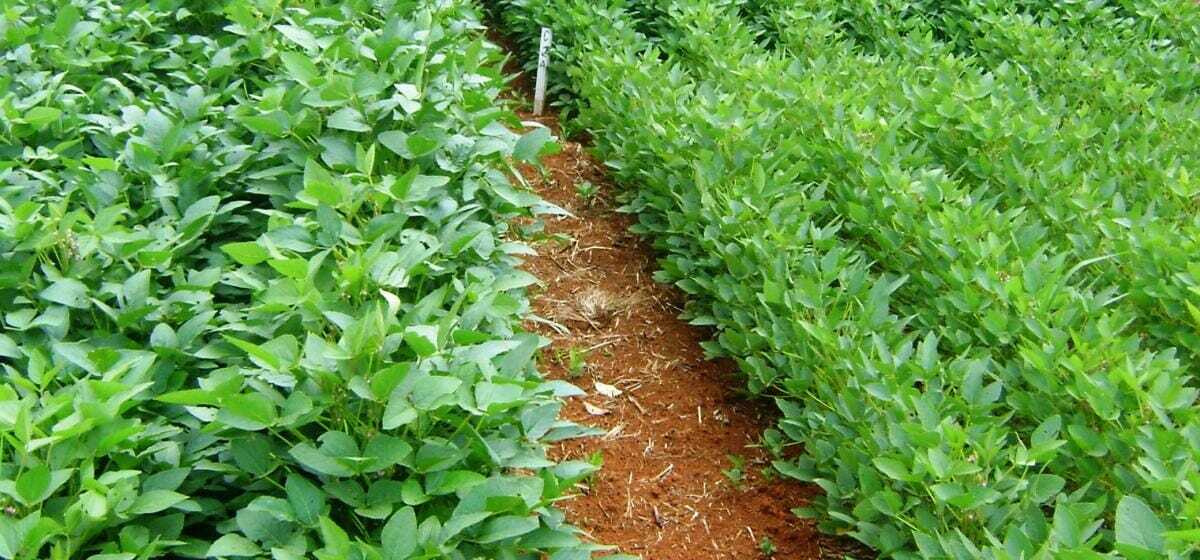
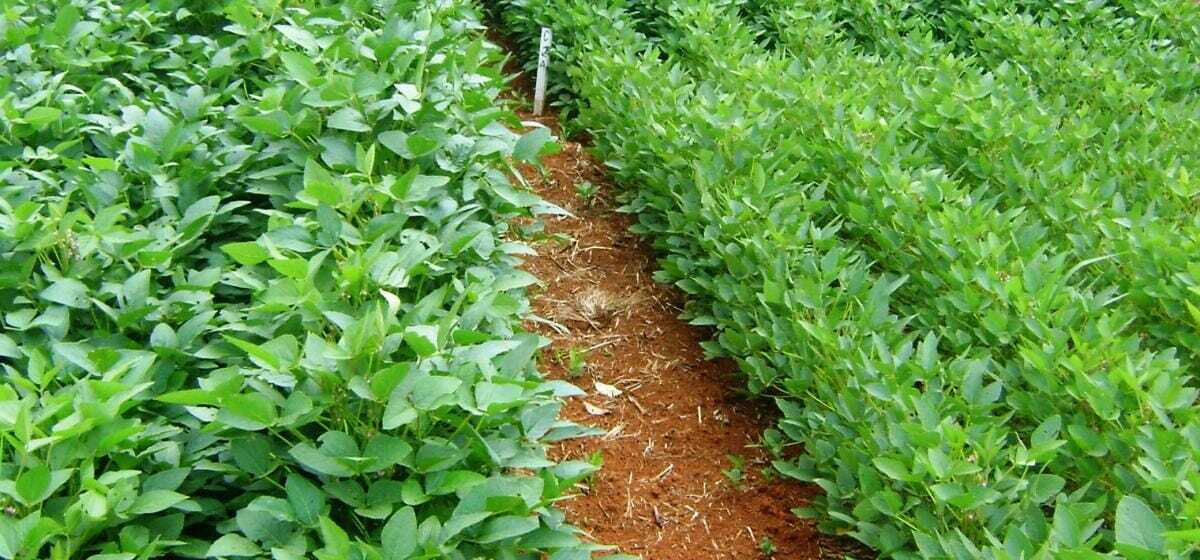
    There is absolutely no reason to start switching soybean maturities until at least mid-June.  I use June 20 as our cutoff here in North Central Iowa, but again, it depends on what you were planning to plant in the first place.  In this area, bean maturities range from 1.8 to 2.7.  L 2482 R2’s are still good to plant in this region until mid-June as we’ve done it before with great results.

    Soybeans have even more resiliency when it comes to maturity stretch.  Because soybeans are more “photo period” sensitive, they actually adjust based on the length of the nighttime.  A planting date of June 20 in southern Wisconsin and June 15 in northern Wisconsin, using early maturing varieties, was considered to be the latest practical date by the University of Wisconsin.  Soybeans can be planted in our area as late as the Fourth of July with decent yield results as long as we don’t go into a dry period.
    The 2019 planting season will certainly test our patience!  It’s tough to turn pages off the calendar without putting any seed in the ground, but it’s better to wait a few more days than to mud seed into the ground.  Experts warn that compaction and/or inadequate seed-to-soil contact from planting in wet conditions cause yield reductions for soybean farmers.  During a wet year, it’s even more important for soybean growers to pay close attention to machinery.  Avoiding soil compaction and obtaining good soil closure over seeds will help increase yields.  For more soybean planting tips to boost yields, click here.
    Mark Grundmeier, Product Manager

    May 6, 2019
    Corn, Crop, Rain, Season, Soybeans, Spring, Tech Tuesday, Weather
  • Latham Hi‑Tech Seeds

    Follow the Rules to Keep the Dicamba Tool

    STS14 2014 004

    In 2018, the EPA extended the registration for over-the-top use of select dicamba products to control weeds in soybean and cotton fields that are genetically engineered to resist dicamba. This registration included label updates which add certain measures to further minimize the potential of off-target damage. This registration will automatically expire on December 20, 2020, unless the EPA extends it further. Listed below are some of the FEDERAL updates now in effect:

    • Only certified applicators may apply dicamba over-the-top; applicators working under the direct supervision of certified persons are no longer qualified.
    • Post-emerge applications to soybeans are prohibited 45 days after planting or later.
    • Applications are allowed only from 1 hour after sunrise to 2 hours before sunset.
    • In counties where endangered species exist the downwind buffer will remain at 110 feet and there is a new 57-foot buffer around the other sides of the field.
    • Training periods for 2019 and beyond will be clarified, ensuring more consistency across all three registered products: XtendiMax®, Engenia® and FeXapan®.
    • Tank clean-out instructions will be
      further enhanced.
    • Enhanced labels to improve the awareness of the impact of low pH’s on volatility.
    • Label clean up and consistency to improve compliance and enforceability.
    In addition to these updates, some state Departments of Agriculture have additional restrictions. Here are a few standouts from states in Latham Country:

    Minnesota: Must not apply dicamba herbicides after June 20th. There will be no temperature restriction for 2019.

    North Dakota: Must not apply dicamba after June 30th. Keeping records of dicamba applications is required and will be strictly enforced.

    South Dakota: Must not apply dicamba after June 30th, 45 days after planting or the R1 (beginning bloom) stage of soybeans, whichever comes first. Applicators must also pass a short exam after training is completed.

    Illinois: Must not apply dicamba after June 30th. Do not apply when the wind is blowing toward adjacent residential areas. Before spraying, the applicator must consult the FieldWatch sensitive crop registry. Further restrictions apply when spraying near the downfield edge of any Illinois Nature Preserves Commission Site.

    These are just some of the new requirements for the application of dicamba over-the-top of soybeans in 2019. There may be additional restrictions from the states not mentioned above or from local authorities. If you will be applying any of the dicamba products in 2019, make certain you attend the required ANNUAL training and conform to what the label requires. Please make these restrictions a high priority so we can continue to use this valuable tool in the fight against weed resistance!

    Mark Grundmeier, Product Manager

    April 30, 2019
    Agronomics, Crop, Herbicide Technology, Industry News, Season, Soybeans, Spring, Summer, Tech Tuesday, Weed Control
  • Latham Hi‑Tech Seeds

    Planting Tips with Snow in the Forecast

    57251394 376280106561983 3185295454933876736 n

    LIBSYN header 2 01

    Join us this morning on #AskTheAgronomist as we discuss pertinent planting tips with the recent addition of snow in the forecast. #LathamSeeds

    https://www.facebook.com/LathamSeeds/videos/376269313229729?sfns=mo

    Laura Cunningham

    April 25, 2019
    #AskTheAgronomist, Corn, Crop, Frost, Season, Soybeans, Spring, Weather
  • Latham Hi‑Tech Seeds

    Phytophthora Root and Stem Rot – “Damping Off”

    Post Emergence Damping Off

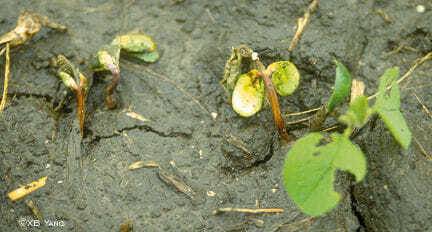
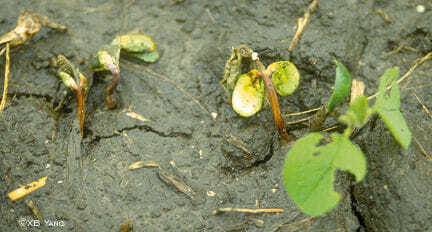
    Seeds Damping Off Rotting of soybean stem and root tissue, or “damping off,” can jeopardize stand quality and reduce yield. The Phytophthora fungi can impact seedlings both before and after emergence. Even if seedlings successfully emerge above the soil, they will have poor vigor and slow early growth.

    Poor stand is one of the primary consequences of damping off, though replanting may be possible. North Dakota State University research cites that Phytophthora-related yield loss has reached up to 30% in states throughout the Midwest.

    Cool weather is a major cause of damping off as it slows germination and stifles growth. Phytophthora thrives in soil temperatures between 70 and 77°F but can also survive in extremely cold temperatures. Warm temperatures, poor drainage and/or clay soils create a susceptible environment for damping off.

    Scouting for Phytophthora

    Post Emergence Damping OffBefore seedlings emerge, the fungi can cause seeds to rot. Rotten seeds will appear to be caked in soil with discolored roots. Roots may not be fully developed or even exist.

    Wilting can occur in emerged seedlings as the cotyledons will appear brown and saturated. Plants that developed leaves before showing signs of damping off will begin to turn a grayish color before turning brown.

    Treatment

    Damping off can sometimes be confused with herbicide injury. Whereas fields impacted by herbicide injury will have uniform damage, damping off will create inconsistent patches of impacted crops.

    With the overwintering nature of the Phytophthora fungi, controlling the amount of field residue can make the environment less conducive for fungal growth. Also, when planting early or in fields with poor drainage consider using fungicide seed treatments to protect seedlings.

    Varieties equipped with genes resistant to Phytophthora will protect plants after they emerge and later in the season as well. Contact your local Latham® representative to determine which varieties will work best for your needs.

    Latham Seeds Agronomy Team

    April 2, 2019
    Agronomics, Crop, Disease, Fungicide, Soybeans
  • Latham Hi‑Tech Seeds

    Sclerotinia Stem Rot or “White Mold” in Soybeans 

    White Mold University of Wisconsin
    White Mold Field University of Wisconsin
    Credit: University of Wisconsin

    Sclerotinia stem rot – also known as White Mold –can lead to significant yield loss in soybeans. Yield loss from white mold is attributed to the damage it causes to leaves, pods and stems. Research from the University of Wisconsin estimates the disease has costed growers in the U.S. and Canada 101 million bushels of soybeans – equal to $1.2 billion.

    White mold is caused by the fungus Sclerotinia sclerotiorum and overwinters in the soil for a number of years. After the fungus emerges from the soil, mushroom shaped structures known as apothecia will form on the soil surface. The apothecia, ranging between ¼ and ½ an inch wide, will first infect through soybean flowers before it reaches the stem.

    While the fungus primarily spreads through the air via spores, moisture is required for infection to take place. As a result, cool and wet weather along with high humidity are the main causes of white mold.

    White Mold University of Wisconsin
    Credit: University of Wisconsin
    Scouting for White Mold 

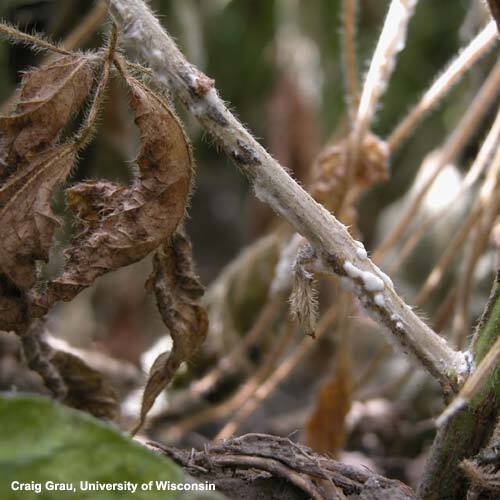
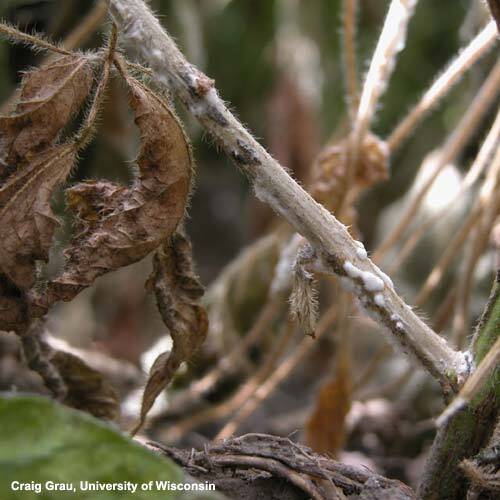
    While Sclerotinia sclerotiorum is often confused with other fungal pathogens, the sclerotia distinguishes white  mold  from other look-alike diseases. Symptoms of white mold will be most prevalent between R3 and R6. Infected plants will exhibit white fuzzy growth on the lower stem.

    Soybean blossoms are the first area of the plant to exhibit signs of infection and neighboring stems and pods may appear water-saturated. After infecting blossoms and pods, white mold may eventually spread through the entire stem causing it to turn tan or bleached of color. As the mold growth becomes thicker, black spots will begin to surface throughout the fuzzy white surface.

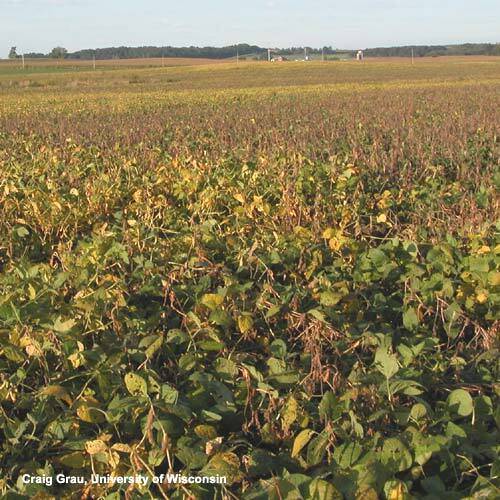
    White mold also creates foliar symptoms, causing leaves to completely die while still attached to the stem. In infected soybeans, the tissue area between the leaf veins will turn gray and cause leaves to become wilted and curled.

    Treatment Options 

    Due to the overwintering nature of the sclerotia, a two to three-year rotation away from soybeans is advised. When it comes to genetics, some soybean varieties are more resistant to white mold than others. Varieties with resistance to the fungus may recover better than others. It is also important to consider planting practices that cause white mold growth. Shade created from high plant density and growing canopies can lead to the fungal disease. Increasing  row width and reducing planting populations are the best methods to  improve airflow through the canopy and reduce infection from white mold.

    In addition, broadleaf weeds are notorious for hosting white mold and herbicides should  be used to control weeds. Fungicides are a viable method for treating white mold and can reduce the negative impacts incurred by soybeans. However, they are most effective when applied just before infection takes place. Be sure to consult with your local Latham representative to determine the best treatment plan for white mold.

    Latham Seeds Agronomy Team

    April 1, 2019
    Agronomics, Crop, Disease, Fall, Season, Soybeans, Summer
  • Latham Hi‑Tech Seeds

    Japanese Beetle in Corn and Soybeans

    Japanese Beetle Purdue (1)
    Japanese Beetle Purdue (1)
    Credit: Purdue University

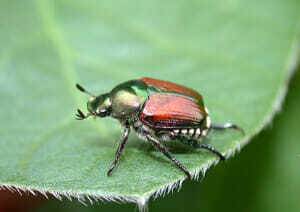
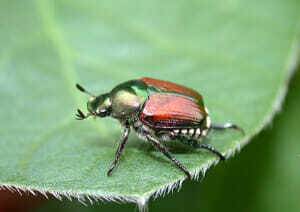
    Japanese beetles cause damage to corn by interfering with pollination and lead to defoliation in soybeans. Their distinct metallic-green heads and bronze wings make them distinguishable from other look-alike beetles. The insect undergoes one life cycle per year with adults reaching 5/16 inches in length.  

    Eggs are laid during July and August and overwinter until temperatures rise in the spring. For both corn and soybeans, adults migrate from grass and begin feeding in late May or early June. The peak emergence for Japanese beetles occurs 4 to 5 weeks after feeding begins.  

    Japanese beetles tend to feed in concentrated areas and in groups. After the female burrows into the soil, she will lay 1 to 4 eggs at a time for several weeks. Adult grubs feed on turf grass in late summer and early spring before emerging to feed on crops.

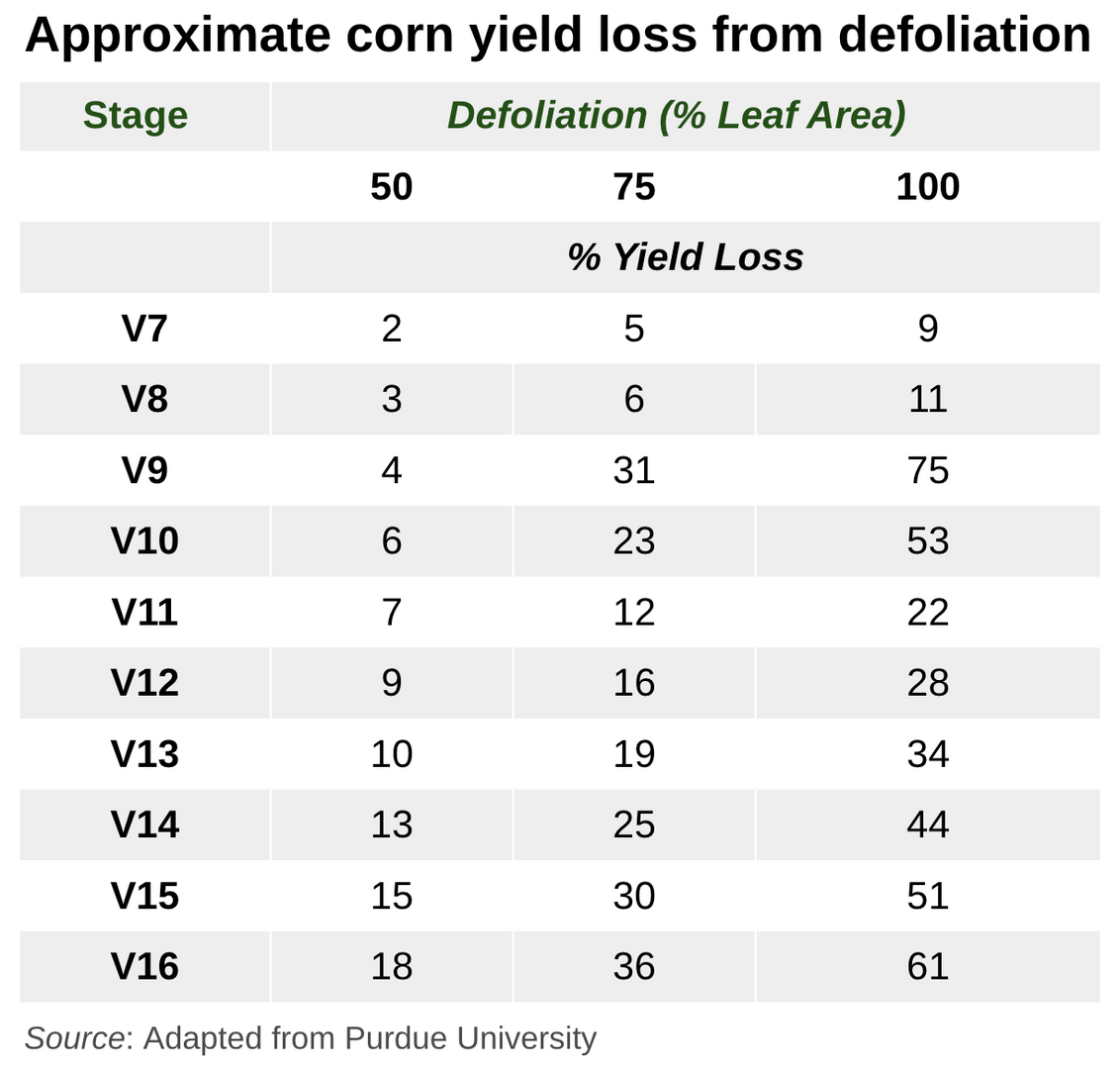
    Corn Defoliation and Yield Loss (1)Corn  

    In corn, Japanese beetles can feed on silks and interfere with pollination. Though leaf feeding in corn is possible, a majority of the economic impacts are attributed to silk feeding. Plants should be treated if there are three or more beetles per ear. 

    Research from the University of Tennessee found that repeated clipping of silks did not always lead to yield loss. More importantly, the environment has a stronger influence on the damage Japanese beetles can cause. Higher yield loss in infested corn plants that were under drought stress as opposed to plants that were not.  

    Soybeans  

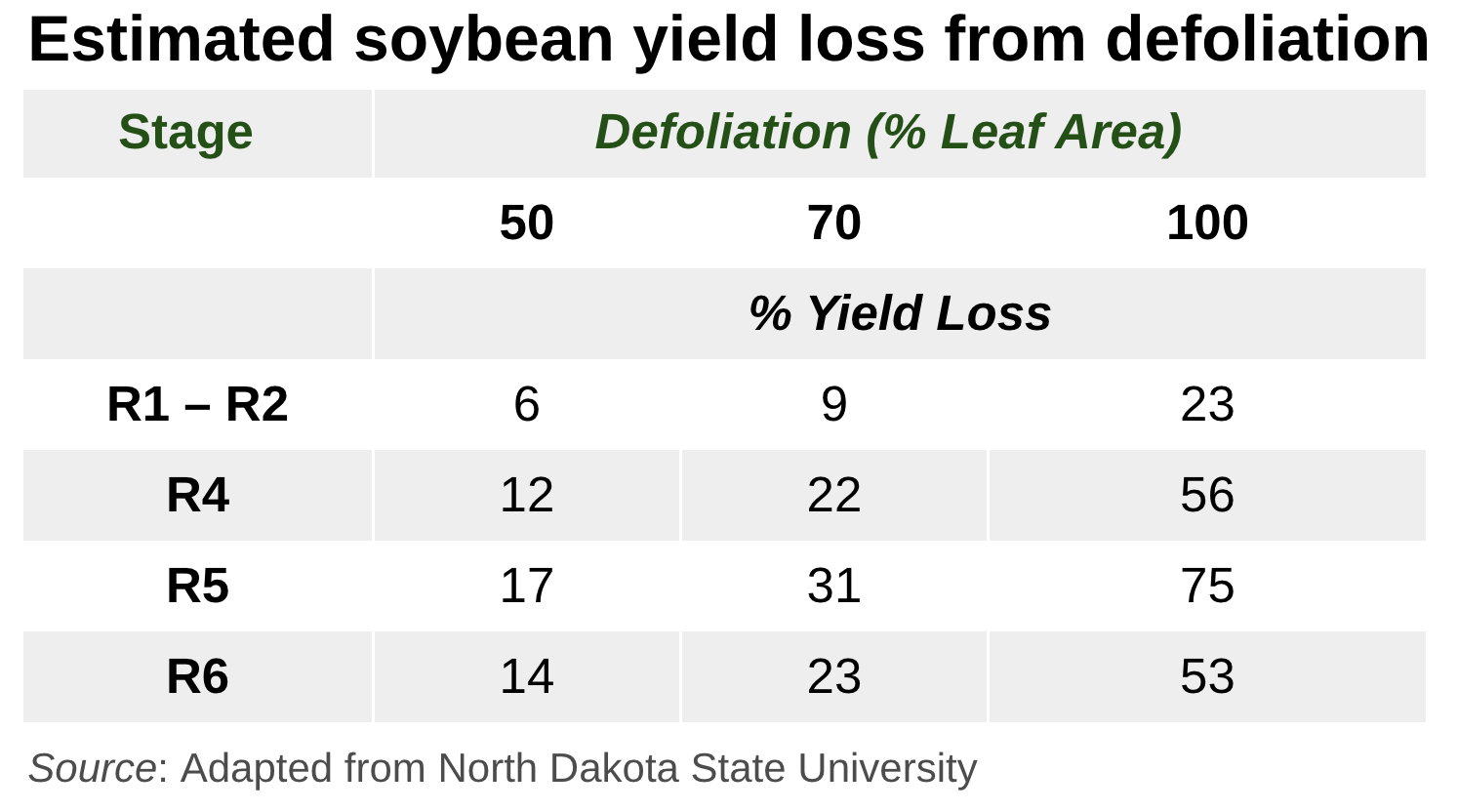
    Soybean Defoliation and Yield Loss (1)In soybeans, the beetle strictly feeds on the soft tissue bordering leaf veins, leaving them skeletonized. Soybeans growing in sandy soils are even more susceptible to defoliation from Japanese beetles. Though yield loss from Japanese beetles has not been quantified, figures from North Dakota State University (see table) point to the general yield impacts from defoliation. 

    Research from the University of Nebraska advises treatment when damage reaches 30% defoliation before bloom or 20% defoliation during flowering. As long as beetles appear to be actively feeding, insecticide application is advised.   

    Other Considerations  

    Japanese beetles are easily confused with other species of beetles, including masked chafers and May or June beetles. Be sure to consult with your local Latham representative to confirm suspected Japanese beetle infestations and determine the right treatment plan.  

    __________ 

    Photo Credit: Purdue University 


    Latham Seeds Agronomy Team

    April 1, 2019
    Agronomics, Corn, Crop, Insects, Season, Soybeans, Summer
  • Latham Hi‑Tech Seeds

    Frogeye Leaf Spot

    Frogeye University of Nebraska
    Frogeye University of Nebraska
    Credit: University of Nebraska

    Frogeye leaf spot is a foliar disease caused by the fungus Cerospora sojina. The fungus primarily spreads from infected plants through air and water droplets. During particularly wet years, frogeye leaf spot can lead to yield loss as high as 30%.  

    Warm, humid weather and heavy rainfall are key drivers of frogeye leaf spot. Areas with standing water and high moisture are notorious for hosting the fungus and fuel the damaging disease. Soybeans grown year after year in the same field are also more susceptible to frogeye.  

    Scouting for Frogeye 

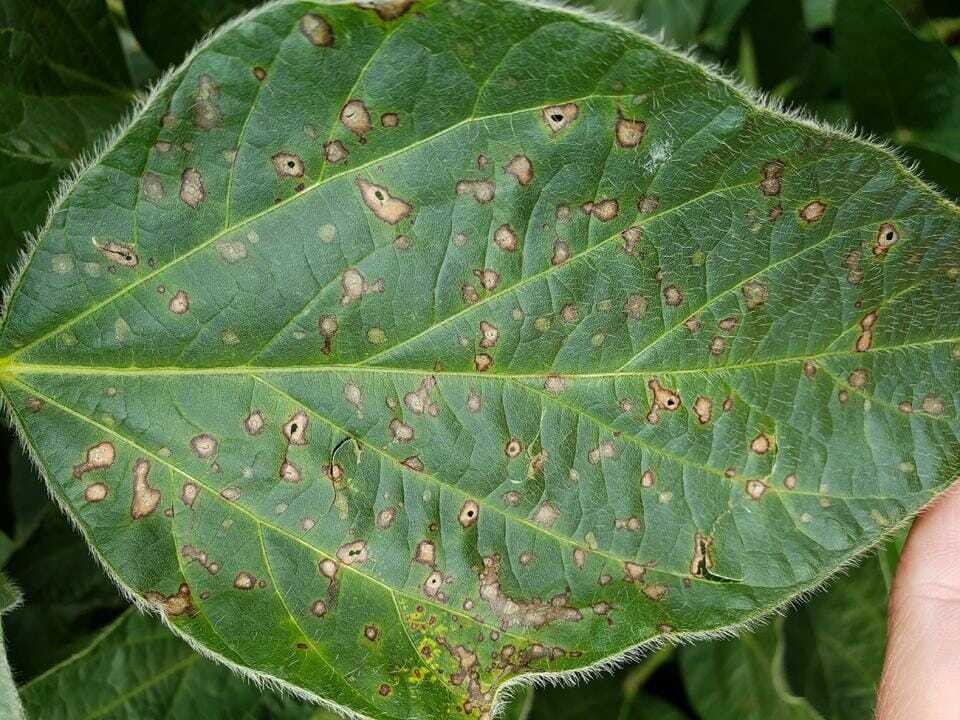
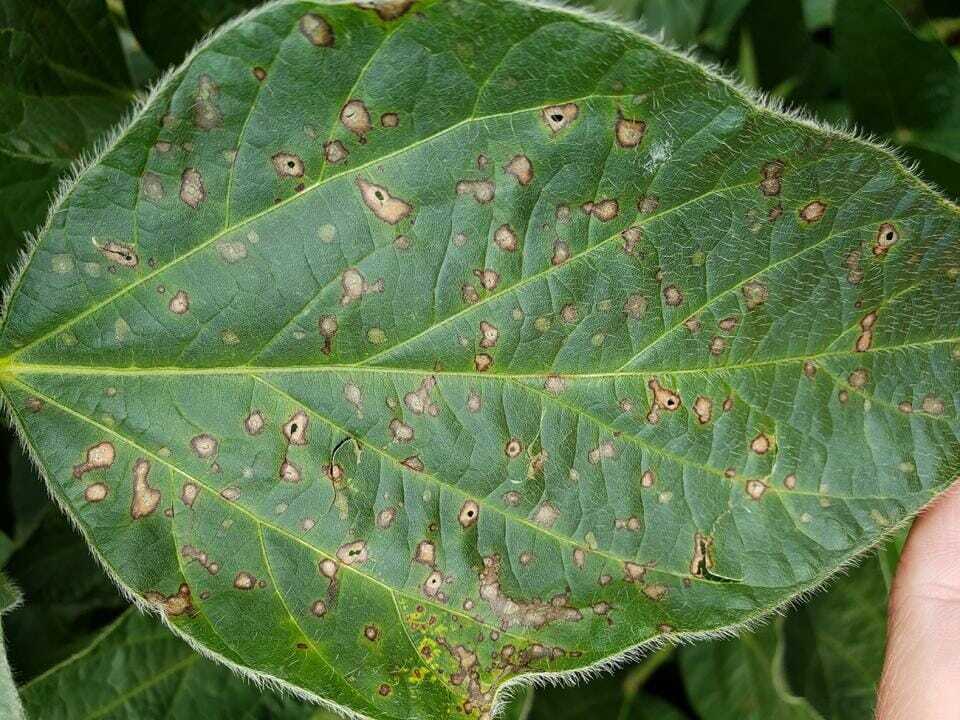
    Frogeye leaf spot most often infects plants after flowering, and signs are most evident in the upper canopy of plants. Dark spots with a gray center and a red-purple border will form on infected eaves. The smaller spots can join to create larger lesions, leading to defoliation that can reduce photosynthetic leaf area.  

    In addition to causing defoliation, frogeye leaf spot often leads to premature leaf drop. The disease can also infect stems and pods. Later in the growing season, reddish-brown lesions will form on stems and turn the centers of the stems gray. Gray or brown cracked seeds can also form as a result of the disease and pods will be discolored with long lesions.  

    Treatment Options  

    Selecting varieties with resistance to frogeye leaf spot is the best way to prevent the disease. As the fungus Cerospora sojina is able to overwinter, tillage practices that reduce weeds    and  bury residue will decrease the likelihood of future infection.

    Fungicide application for treating frogeye leaf spot is most effective between the R2 and R5 growth stages. Be sure to consult with your local Latham representative to determine the best strategy for managing frogeye leaf spot.  

    Latham Seeds Agronomy Team

    April 1, 2019
    Agronomics, Crop, Disease, Season, Soybeans, Summer
  • Latham Hi‑Tech Seeds

    Herbicide Applications Update for Xtend® Soybeans in 2020

    Sprayer

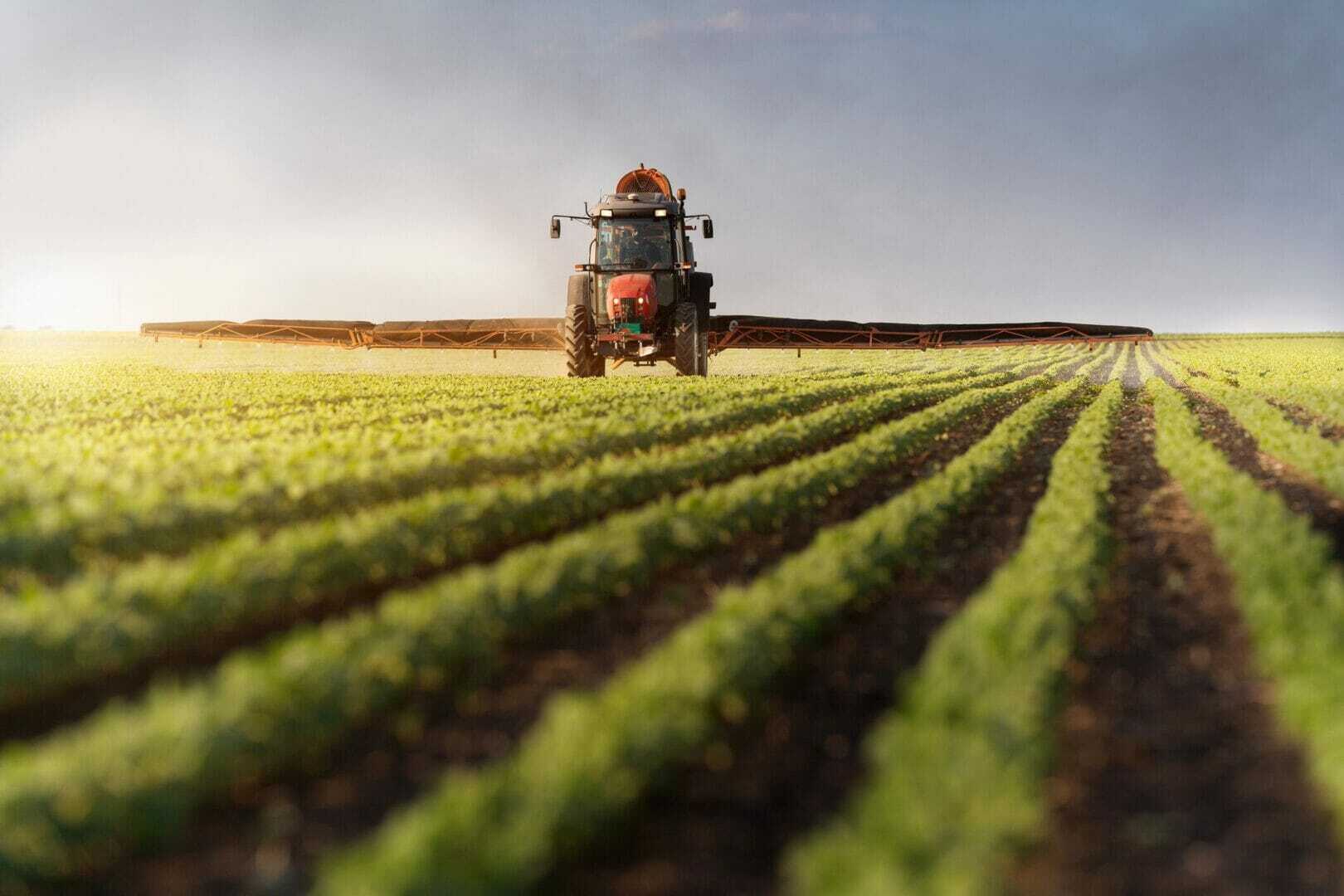
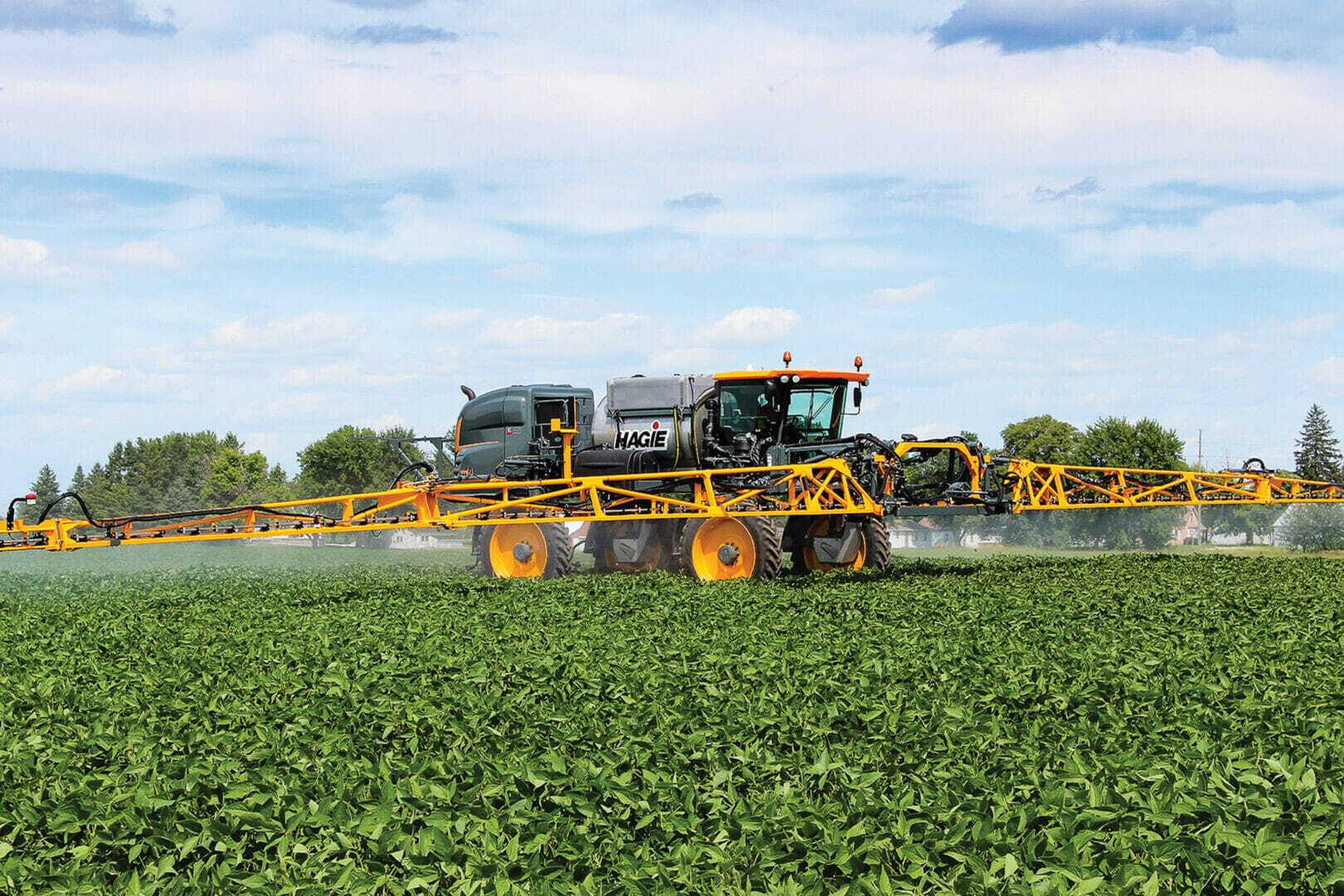
    SprayerBefore you spray Xtend soybeans this spring with a dicamba-based herbicide, remember that federal law requires that all applications be made by a properly trained certified applicator. Both custom or private applicators must attend annual training, so they’re up-to-date on all new rules and regulations. 

    Most of the live training sessions have been cancelled due to the coronavirus pandemic. However, there’s still  time to complete online training. Listed below are websites, by state, where you can get information about online training courses. I’ve also added some comments from state Departments of Ag about possible 2020 changes to the herbicide labels.

    Iowa, North Dakota, South Dakota, and Wisconsin: No known changes to the state label in any of these states. The individual state DOA’s direct applicators to the various company websites listed below for their annual training.

    Minnesota online: Applications needing dicamba training should visit https://mcpr-cca.org/dicamba-information-trainings/. Some farmers were hoping the MDA would loosen its restriction on how late dicamba applications may be made. The MDA is holding fast to June 20 or the R1 stage of the crop, whichever comes first. No changes have been made from 2019 requirements.

    Nebraska: The Nebraska DOA is directing applicators to this UNL Extension website for dicamba training https://pested.unl.edu/dicamba. No listed changes to the 2019 guidelines for application.

    Illinois: The IDOA has further restricted applications of dicamba herbicide over the top of Xtend soybeans to no later than June 20 or the R1 stage of the crop, whichever comes first. NOTE: This is a change from 2019 when the last date of application was June 30. For training, the IDOA directs applicators to this website, sponsored by the Illinois Fertilizer and Chemical Association: https://ifca.com/IllinoisDicambaTraining.

    There are four dicamba herbicide formulations approved for use over the top of Xtend soybeans. They are XtendiMax® with VaporGrip® Technology from Bayer CropScience, Engenia® from BASF, FeXapan® with VaporGrip® from Corteva and Tavium® with VaporGrip® from Syngenta. 

    All four companies provide online dicamba application training for applicators. NOTE: You’re only required to attend one online session, regardless of which herbicide you eventually apply. Here’s the list of the various company sponsored training websites:

    • BASF:  https://bit.ly/2xTlJV9

    • Bayer CropScience:  https://bit.ly/2RjHt3e

    • Corteva:  https://bit.ly/2UTSpH7

    • Syngenta:  https://bit.ly/2V7OuFv

    May God keep you and your family safe as we work together to provide the world with much-needed food and supplies during this difficult time. You are a blessing to all!

    Mark Grundmeier, Product Manager

    April 1, 2019
    Agronomics, Crop, Herbicide Technology, Season, Soybeans, Spring, Weed Control
  • Latham Hi‑Tech Seeds

    Potassium Deficiency

    K Deficiency NDSU
    K Deficiency NDSU
    Credit: North Dakota State University

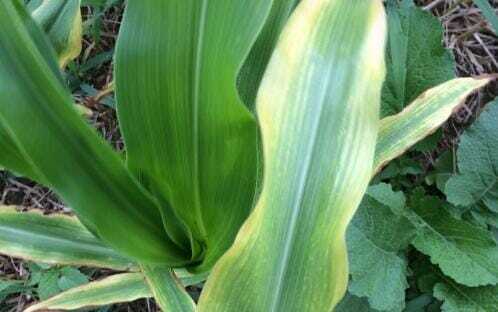
    Corn and soybeans can exhibit similar signs of potassium deficiency. Potassium deficient corn plants will begin yellowing along the outside edges of their leaves. Overtime, the lowest leaves of the plant may turn brown.  

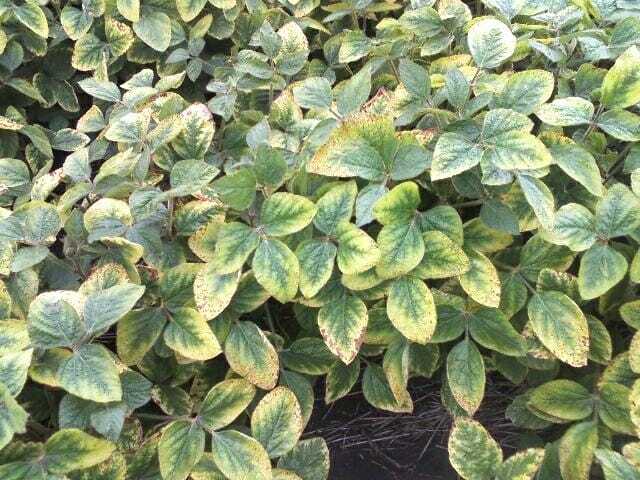
    Similar to corn, potassium deficient soybeans begin yellowing along the edges of the newest leaves. This yellowing will start on the outer edge of the leaves and work inward. 

    Deficiency Causes  

    Compacted, dry soil can prevent proper potassium uptake and stifle root development, even if soil has adequate levels of potassium. Cool soils can also slow root development, resulting in slow nutrient uptake. 

    Potassium is an essential nutrient responsible for controlling the stomata. The stomata allow the plant to absorb water, carbon dioxide and oxygen. As a result, inadequate potassium absorption can reduce overall yield or lead to stunted growth in corn and soybeans. The majority of potassium uptake occurs four to six weeks after planting, so the effects of potassium deficiency may not be exhibited right away.  

    K Deficiency University of Maryland
    Credit: University of Maryland
    Treatment Options and What to Look For 

    Proper rainfall is the main solution for correcting potassium deficiency in-season. Minimum tillage would help break up compacted soil, leading to proper root development. 

    Applying potassium after planting will not always be effective if the soil is dry since water is still required for proper absorption. However, some positive effects from applying potassium may be seen in the following year’s crop.  

    Potash fertilizer should be applied before planting season in corn and soybeans where results have been the most effective. Sandy soils are associated with the lowest absorption rate of potassium and struggle to retain the nutrient after it is applied.  

    If signs and symptoms do not diminish following rainfall, this may be a sign of potassium-deficient soil. It is advised to apply potassium before planting in order to combat any future signs of deficiency.  

    Latham Seeds Agronomy Team

    April 1, 2019
    Agronomics, Crop, Season, Soybeans, Spring
  • Latham Hi‑Tech Seeds

    Phosphorus Deficiency in Soybeans 

    P Deficiency Comparison UNL
    P Deficiency Comparison UNL
    Credit: University of Nebraska

    Phosphorus is responsible for transporting energy created during photosynthesis throughout soybean plants. This essential nutrient is critical in promoting growth, increasing water use efficiency and supporting high yields.  

    It can be a challenge to identify symptoms of phosphorus deficiency. Agronomists at Iowa State University confirm that phosphorus deficiency is less common in soybeans, but it can still present negative results at the end of the growing season without revealing foliar symptoms. 

    Scouting for Deficiency

    Signs of discoloration are the best way to identify phosphorus deficiency. A dark green, blue-green, or purple-green color can be exhibited in phosphorus-deficient soybeans. Discoloration will begin on the oldest leaves and move to younger leaves.  

    Leaf cupping and lesions on soybean leaves are additional signs of phosphorus deficiency. The phosphorus level in the soil can also a key indicator of future phosphorus deficiency in plants.  

    When soils have adequate moisture, signs of deficiency may be more apparent as nutrient uptake is stimulated by moisture. Stunted growth is the most common result of phosphorus deficiency in soybeans.   

    Treatment Options

    As phosphorus deficiency can appear to be asymptomatic, it is important to collect soil samples to capture soil nutrient levels. Once captured, you can decide if additional nutrient application is necessary.   

    If a deficiency appears in season, the best practice is to pull tissue samples to determine the exact cause. Take twenty leaf samples from the newest mature leaf. The leaf is usually 2nd or 3rd from the top. If plants are in early vegetative stages, send in the whole above-ground portion of the plant. Remember, always pull two samples: one from the problem area and one from a healthy area. Correcting phosphorus deficiency in–season is not typically cost effective. Once you determine phosphorus deficiency is the problem, it is best to apply phosphorus in the fall or spring before planting in dry granular form. Contact your Latham or Data Forward™ Advisor to fine tune your fertility in each field.  

    Latham Seeds Agronomy Team

    April 1, 2019
    Agronomics, Crop, Season, Soybeans, Spring
Previous Page
1 … 13 14 15 16 17 … 32
Next Page

Latham Hi‑Tech Seeds

131 180th Street | Alexander, IA 50420

(641) 692-3258

SIGNUP FOR OUR NEWSLETTER
  • Contact
  • Legal
  • Dealer Center
  • Seedware Login
  • Latham Gear

© 2025 Latham Hi‑Tech Seeds. All rights reserved. | Iowa Web Design by Webspec | Privacy Policy

Latham® Hi-Tech Seeds is a trademark of M.S. Technologies, L.L.C., 103 Avenue D, West Point, IA 52656.