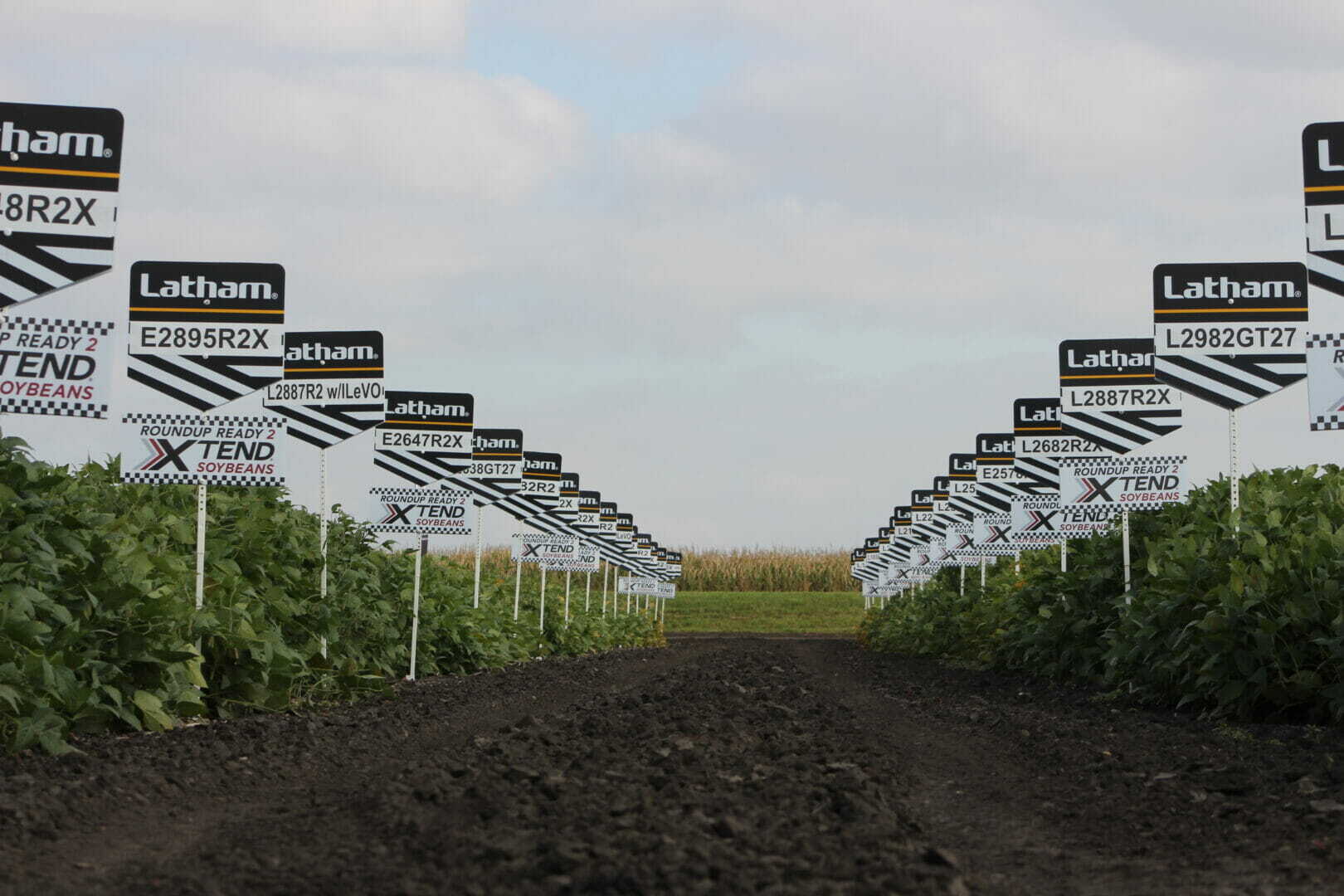
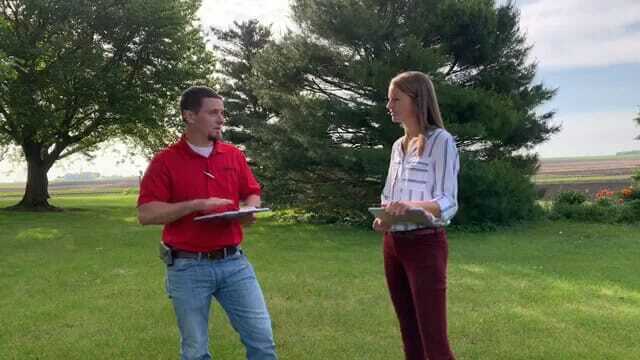
Latham product team members have been busy traveling to our SuperStrip™ and other research plot locations across the Upper Midwest.
It’s our job to take notes to help our company offer the best possible product lineup, as well as to assist our customers in choosing the best products for their given situations.
We also encourage you to take notes on your own fields to help identify your seed needs for next year. We recommend keeping an eye out for the following:
Physoderma in corn: While this isn’t a new disease, it’s been getting more publicity recently because some fields have suffered economic damage. Physoderma is a soil-borne fungus that seems to surface when there are warm early season temperatures followed by rainy periods, causing water to sit in the whorls during the v5 to v9 stage. Sporangia release huge amounts of zoospores that can literally swim their way to attack plant cells. Leaf symptoms include yellow-to-brown spots on the leaves and dark purple oval spots along the midrib. The real damage happens on the lower nodes of the plant that become weak and thus susceptible to breakage. Look for a brown to black ring of decay around the node. I’ve heard reports of fields in Illinois where 75% of the plants have broken. While physoderma seems to be more of a problem on the eastern side of our area, it has been identified in Nebraska.
Soybean Gall Midge: This insect pest is so new that entomologists aren’t entirely certain what species it is. It was reported in Nebraska in 2011 and South Dakota in 2015. Just last fall SGM was recorded in 69 counties of Nebraska, Iowa, Minnesota and South Dakota.
Sudden Death Syndrome and White Mold: Scout your fields all the way to maturity, So you don’t have any big surprises come harvest. Also remember to plant Latham® IRONCLAD™ products in these affected areas in the future. I’ve heard of some areas In southern Iowa and northern Illinois that are showing signs of Frogeye Leaf Spot, but I haven’t seen any of those myself – yet!
Weed resistance continues to be a growing issue. Last year I noticed serious problem fields in Wisconsin. Previously, Wisconsin farmers controlled weeds with glyphosate and some tank mix combinations. It’s becoming very obvious that weed resistance in Wisconsin is catching up quickly with the rest of the Upper Midwest. Exercise your weed control options in 2019 with Independent Latham Hi-tech Seeds.
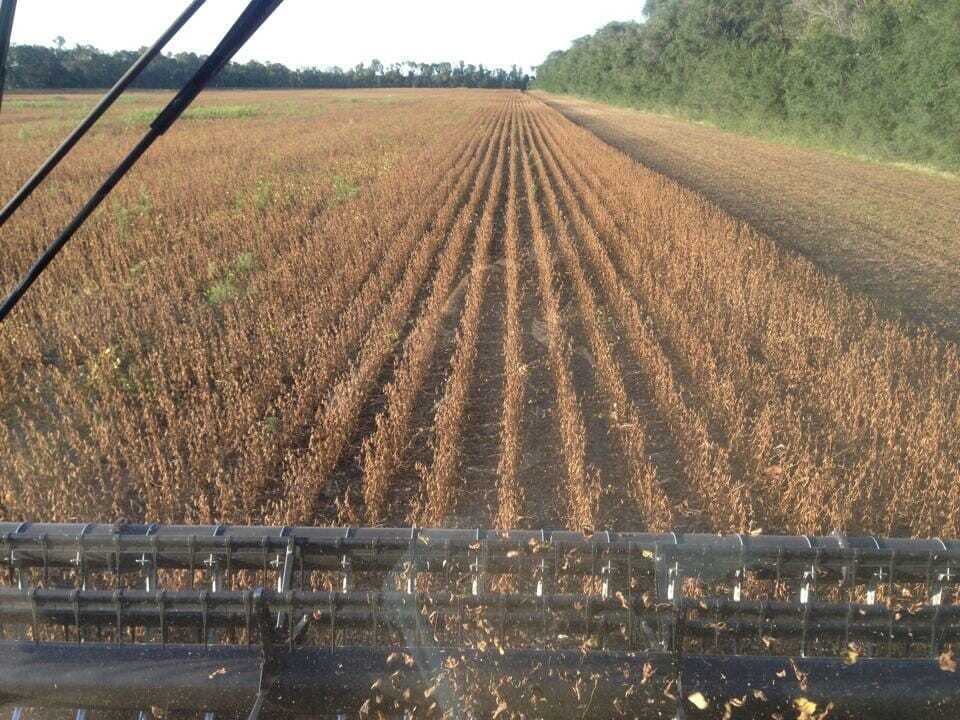
Half of corn harvest loss and a whopping 80% of soybean harvest loss can occur at the header. It’s easy to overlook adjustments to the header because there aren’t any sensors to tell us what’s wrong. That’s why a relatively quick inspection is well worth your time.
A combine performs five key operations during harvest: cuts the crop; threshes the crop (first part of the rotor); separates the grain from the chaff (back part of the rotor); cleans the grain with fans and the cleaning shoe; and handles the crop to move it through the combine and into the grain cart or wagon. We all do our best to adjust our combines for each of these five areas.
Harvest loss can add up in a hurry as 1 bushel/acre of harvest loss is only 2 kernels of corn or just 4 soybeans per square foot.
Be sure to check the following two areas, which are often overlooked when making adjustments at harvest time:
Reel speed is typically set automatically based on tire speed in modern combines. However, you can adjust reel speed on-the-go and stop loss due to changing field conditions. The reel should be hitting soybeans about one-half to 3/4 of the way up the plant and at a speed that lays them back onto the platform. If your reel speed is too fast, it will cause premature shatter losses.
Corn harvest loss typically comes from whole ear loss or “butt-shelling” at the deck plates. Whole ear loss can be minimized by installing different things like ear savers for over the throat and at the front of the gathering chains. Upgrades that extend the height of each end of the header help when corn is down. “Butt-shelling” should be adjusted for by adjusting deck plates to stalk size and by making sure there is not extra wear where the ears continually snap.
Adjusting monitors in your combine cab is another area that can have a significant impact on your data collection. Following are a few noteworthy areas for your consideration:
Don’t lag behind. Inaccurate Flow Delay is the most common issue with yield mapping. Are you noticing red streaks or a gap at the beginning and ending of each pass? This means the flow delay is not set appropriately. The delay is typically between 10 and 20 seconds. If you see lots of red as you start a pass, increase that time. If you see a gap of data points between the end of a pass and the headlands, you need to decrease the delay.
Calibrate. Yield monitors can be off as much as 100%. Even if you diligently calibrated your monitor in corn last year, you must calibrate it again this year in corn. Make sure the moisture sensor is accurate because that calibration also impacts yield calibration. Electronic sensors are especially prone to needing adjustments.
Do you run Auto Steer? If you don’t run auto-steer on your combine, you’ll need to adjust the swath width for soybeans if you’re running at an angle or harvesting drilled beans. For example, if you’re leaving about a two-foot gap on a 35-foot header, your swath width should be changed to 33 feet.
Focus on making the adjustments that can have a significant impact on the quality of your data, but don’t sweat the small stuff. For example, if you must stop on a dime for a tile blowout that would swallow your combine or if you skirt around a waterway, that data can be cleaned up later. Feel free to call me if you have any questions or need assistance.
Are you ready for the next new soybean technology? XtendFlex® from Bayer is expected to attain full global approval by mid-spring of 2020.
These soybeans will be the next triple-stack option for farmers, who continue to battle weed resistance. XtendFlex soybeans will be tolerant to glyphosate (Roundup), dicamba (XtendiMax, Engenia, etc.) and gluphosinate (Liberty®) herbicides.
The last hurdle for Bayer to clear is the European Union (EU). All other major soybean importing countries, including China and the Philippines, have granted their approval for this technology. Bayer has recently received a positive opinion from the European Food Safety Authority (EFSA), which is a key milestone in preparation for full commercialization in all markets.
Bayer has XtendFlex Ground Breaker Field Trials in place this growing season. In fact, Latham Seeds has an EPA-stewarded trial at our research farm near Alexander, Iowa.
Join us to learn about all the exciting new traits and genetics that Latham offers in corn, soybeans and alfalfa! If you can’t make it to Alexander on September 6, contact your Latham® representative to set up a personal tour. You’re welcome to bring other farmers with you either to our field day or to a personalized tour. Load up the truck and head our way! We look forward to seeing you soon.
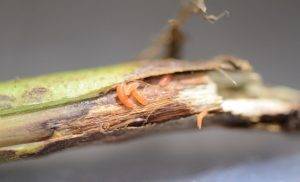
Gall midge larvae and damage under the soybean stem epidermis. Photo by Dr. Bruce Potter, University of Minnesota
Soybean Gall Midge (SGM) caused extensive damage in 2018. It already has been reported in Iowa, Minnesota, Nebraska and South Dakota this season.
Scout around the edges of your soybean fields, especially those areas that are closest to fields where SGM was spotted last year. The adult stage of this pest is a fly from the genus Resseliella. The adult insects are so small that they go unnoticed in everyday scouting activities. Other midge flies are the Hessian Fly and the Wheat Blossom Midge.
The SGM may be spotted in the larval stages as they feed on a variety of items like decaying organic matter, fungi and, of course, galls on the stems of plants. Affected plants will appear wilted and eventually die.
Wilting also is symptom of Phytophthora Root Rot and Fusarium Wilt, so you’ll need to split the base of the soybean stem to know if the problem is an insect or disease. Once you split the stem, look for orange or white larvae.
You can see in this photo by Dr. Bruce Potter from the University of Minnesota that the larvae look like maggots. If find larvae, contact your local Extension Service immediately! While SGM larvae are almost impossible to control once they have colonized plants, Extension personnel want to learn more about this pest’s lifecycle. Any information you can give on how your field may have been infested will help all of us combat this pest in future years.
Because so many soybeans across Latham Country were planted later this spring than in 2018, the concern is SGM might be even more problematic this year. Last fall SGM was recorded in 69 counties of Nebraska, Iowa, Minnesota and South Dakota.
Very little is known about the biology of the Soybean Gall Midge and even less is known about methods to control it. With your help, we can begin to know and understand more about this potential threat to soybean production.
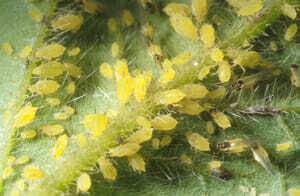
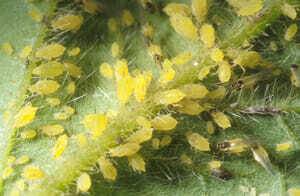
Soybean aphids can reduce yield by 10 to 15%. The insect is found in soybeans between May and August and are less than 1/16 inches long. Aphids have yellow bodies with a translucent appearance and may be winged or wingless.
Unlike other soybean insects, female aphids can produce clones and can multiply the insect population during the summer months. With the rapid reproduction abilities of female aphids, it is possible for populations to double in as little as two to three days. Males typically do not appear for mating until the late summer.
Apart from reproduction, environmental conditions that fuel infestation can also lead to a rapid increase in aphid populations. Temperatures between 72 and 77° and humidity below 78% drive the development of aphids. Drought conditions also make soybeans more susceptible to infestation.
Implications for Yield
Yield loss from aphids is attributed to the damage caused from feeding on leaves. Their destructive leaf feeding can reduce plant vigor and overall stand along with pod and seed populations.
Aside from feeding damage, waste produced from aphid feeding can leave a soot-like mold on the surface of leaves and reduce photosynthetic leaf area.
Scouting for Aphids
Aphids are most often found on the backside of the newest leaves, especially during the earliest part of the summer when the insect first emerges. Sampling for aphids should begin once the first signs of the insect are spotted. It is recommended to sample 20 to 30 plants across many areas of the field.
As the insect population increases, aphids can begin to inhabit the entire leaf canopy. If aphids are spotted on stems, this is a sign that aphid populations are above 400 insects per plant – an amount considered to be excessive. Be sure to scout for symptoms at least every 7-10 days until R6.
Management
Treatment of soybean aphids is advised if more than 80% of plants are infested and counts are in excess of 250 aphids per plant. Also, if it is evident that the population of the insect is increasing, this is also grounds for beginning treatment.
Foliar insecticides are the best method for combatting aphid populations in soybeans. In addition, biological control plays a role in staving off high aphid populations including pirate bugs and Asian ladybird beetles. When assessing the best treatment options for soybean aphids, be sure to consult with your local Latham representative.
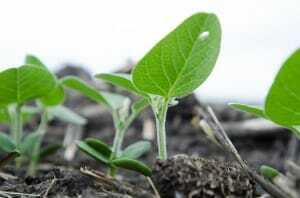
If you’re fortunate to be done with planting your crops, it’s time to get back out there and check your stands. This year I’m especially concerned with soybean stands for three main reasons:
Cold soils. Many fields were planted when soil temperatures were below the recommended 60° Fahrenheit. (This link goes into more detail about the importance of soil temperatures: https://bit.ly/2JuHTkO) Cool, wet conditions can lead to severe disease infestation and reduced stands. Seed treatments protect the seedlings before and just after emergence. Historical data shows that not using a seed treatment can cause yield loss of 2½ to 3 bushels per acre if damping off occurs, but many farmers cut back on seed treatments this season to lower their input costs.
Wet soils. Farmers felt like they were racing against the calendar during an especially wet spring, so some seed was planted into unfit soils. Planting into wet soils can lead to both sidewall and overall field compaction. Delayed emergence may cause uneven stands and reduce yield. Nutrient deficiency, reduced crop productivity and restricted root development are three of the top 10 reasons to avoid compaction. (Click here for the rest of the story: https://bit.ly/2VS06zo)
Soybean Gall Midge. This new insect pest was especially damaging last season in Northeast Nebraska, Northwest Iowa, Southeast South Dakota and Southwest Minnesota. Ask your local Extension Agronomist if any of these pests have been reported in your area. (You can learn more about Soybean Gall Midge in this blog post: https://bit.ly/2JSLetw)
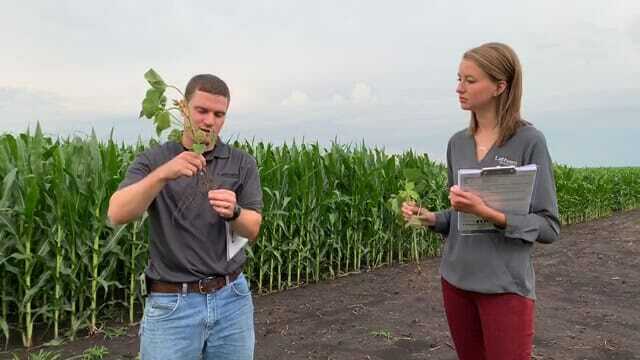
Walking fields right after emergence gives you the most time to make corrections or to replant. Stand reductions rarely occur evenly across a field. That’s why I recommend taking 10 stand counts in the area where the problem is the worst, as well as taking 10 counts in an area that was not affected or is slightly affected. Most university researchers recommend keeping a final stand of at least 100,000 plants per acre.
University trials also indicate that planting soybeans on or before June 1 in northern Iowa and southern Minnesota gives 95% of expected yield. It is usually June 15 before soybean yields drop below 85% of what is expected. Over the years, we have seen decent soybean yields when soybeans were planted around the 4th of July.
Scouting early and often is the best advice I can give, so you can remedy the situation as soon as possible. Different insects, diseases and pests may be present due to weather conditions and stage of crop development. Scout diligently all growing season long!