Latham Hi-Tech Seeds

(641) 692-3258

  • Home
  • Products
    • Corn
    • Soybeans
    • Alfalfa
    • Corn Silage
    • Seed Guide
  • Performance
  • Find a Rep
  • Media
    • Blog
    • News
    • Videos
    • Podcasts
    • TECHTalk
  • About Us
    • Company History
    • Our Mission
    • Careers
    • Become a Rep
    • Sowing Seeds of Hope
  • Contact Us
  • Latham Hi‑Tech Seeds

    Reduce Risk in 2013 with Rotation

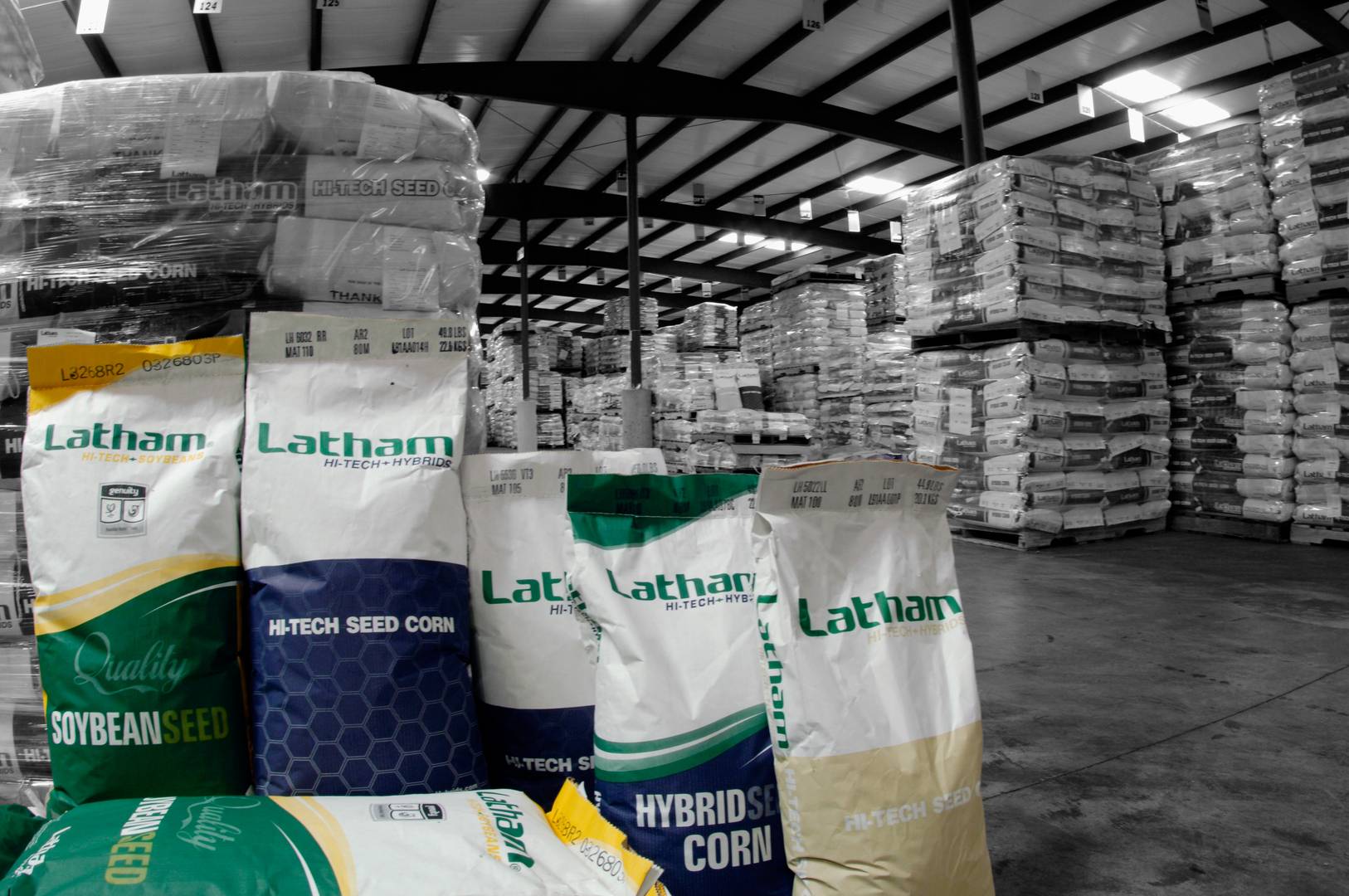
    LathamBags

    Recently, I’ve received calls from concerned farmers on a wide range of topics from volunteer corn to weed resistance and corn rootworms. There is no simple solution to these problems, but rotation is one common management practice that can certainly help.

    Consider how rotation can help with these issues:

    1. Herbicide-Resistant Weeds. Resistance to glyphosate-based herbicides (e.g. Roundup®) is due to using herbicides as the only source of weed management. Weed resistance can be significantly slowed down or even averted altogether with careful crop and herbicide use plans. Bring LibertyLink® or conventional soybeans into your rotation. Likewise, when it comes time to plant corn, use conventional or straight LibertyLink hybrids. Using herbicides that have different modes of action is critical.
    2. Volunteer Corn. With careful crop planning and herbicide usage, volunteer corn can be controlled in both corn and soybeans. Several herbicides (e.g. Select, Fusion, Poast Plus, etc.) will take care of volunteer corn in soybean fields, but persistence is key as more than one application may be needed.Volunteer corn in continuous corn situations can be managed by understanding the herbicide tolerances of the traits involved. For example, most Monsanto-traited hybrids contain only the glyphosate-resistant trait for herbicide use. If you plant corn following one of those hybrids, choose a hybrid that incorporates the LibertyLink trait. If you plan to have many years of continuous corn, stay away from hybrids that contain both the LibertyLink and the glyphosate gene for herbicide resistance. Rotating to soybeans or alfalfa also can help break that cycle.
    3. Corn Rootworm. Continued use of the same rootworm resistant (Bt) trait in corn hybrids, coupled with the lack of required refuge acres, has caused rootworm resistance to become an issue. Rotation is key. Rotate traits between Monsanto, Agrisure and Dow products. They may also need to rotate to other crops (like soybean or alfalfa) if rootworms cannot be managed by rotating traits. Additionally, the use of hybrids with more than one rootworm trait (e.g. SmartStax) may need to be used. Refuge acres must be planted, and Refuge-In-the-Bag (RIB) hybrids make compliance simple. Respect the refuge® and it will greatly increase our likelihood of keeping rootworm traits viable for years to come.

    * Respect the refuge is a registered trademark of the National Corn Growers Association

    Webspec Admin

    November 8, 2012
    Agronomics, Corn, Crop, Disease, General, Soybeans, Weed Control
  • Latham Hi‑Tech Seeds

    O + D = W

    2012homecominglogo

    It’s that time of year when communities show their hometown pride by turning ot for Friday night football games.  Saturday I’ll be heading to Ames, Iowa, where I’ll be celebrating Iowa State’s 100th Homecoming – and hopefully a Cyclone victory.  Whether or not ISU gets the “W” will depend on how well they play as a team – on both sides of the fields.

    Regardless of how good a particular football team is, I’m sure you’ll agree that it can’t win on the gridiron by having only a strong offense or a strong defense. It takes both!

    The same is true whether you’re planting in a corn field or a soybean field.  Remember to plant a minimum or four different seed numbers, with a mixture of offensive and defensive traits.  You also want to make you have a mix of maturities to further reduce your risk.

    As you finalize your seed purchases for 2013, remember:

    1. Diversify your crop plan.
    2. Protect 2013 Yields with Traits.  NOTE:  Not all traited products are created equal.
    3. Respect the refuge.
    4. Plant the right trait for your situation.

    John Latham, President

    October 25, 2012
    Agronomics, Corn, Crop, Soybeans
  • Latham Hi‑Tech Seeds

    Status of 2013 Seed Supply

    LathamBags

    An early fall harvest means many farmers have finished (or are nearly finished) with fall tillage and ready to confirm their 2013 seed selections.  That’s why I’d like to take this opportunity to assure you that Latham Hi‑Tech Seeds has adequate supplies to meet your needs for 2013.

    As an independent seed company, Latham Hi‑Tech Seeds is able to source genetics and traits form multiple providers.  We were fortunate to have corn production acres in eight states, which allowed us to spread the risk of crop failure in one particular region.  Most of the soils in these production areas are heavy, and the lighter soils were irrigated.  We further mitigated our risk by crop planning for three times more than our estimated sales.

    Latham is more than able to meet demand for Hi‑Tech Hybrids even though 2012 yields overall were lower than we had originally estimated.  While a few hybrids are still in short supply, we’re planning to produce additional quantities of these hybrids in South American this winter.

    We’re also pleased to share with you that soybean harvest went better than we had expected, given the extremely hot and dry conditions we faced in North Central Iowa this past growing season.  Supplies will be tight on certain brands, but overall, our production growers harvested more bushels than we had expected.  Dry years often result in small seed size and lower germinations from cracked seed coats.  While it’s too early to tell about seed quality for 2013 planting, we take great pride in our hands-on soybean production strategy.

    Latham’s production process has allowed us to produce the highest quality soybean seed over the past couple of years.  Our plant is built to be as gentle as possible on the soybeans, so we are hoping this can help overcome the dry conditions.  (Some of our handling equipment is the same as that used by a maker of corn flakes.  You know it’s gentle if it keeps a corn flake intact!)

    Last season farmers who planted Latham® Hi‑Tech Soybeans noticed a drastic difference when our soybeans had 10% higher germination than our competitors.  We heard more than one customer tell us he was surprised when the actual germination was higher than the number we had placed on the tag.  The reverse situation occurred on the competitor’s soybeans, and the tag on the bag actually showed the germination to be 4% better than the true germ.

    Every bag of Latham® soybeans is stamped with the word “quality.”  It’s a word by which we measure our work – from product selection to service.  Dedication to quality is at our foundation.  And after 65 years of service, it’ become our mantra.  Thank you for partnering with Latham.  Here’s to 2013!

    John Latham, President

    October 15, 2012
    Crop, General, Soybeans
  • Latham Hi‑Tech Seeds

    Charcoal Rot in Soybeans

    As if yield losses to dry weather stress weren’t enough, the drought of 2012 has brought another problem to the forefront of soybean producers in the Upper Midwest – Charcoal Rot. Also known as dry weather wilt, this is a soil-borne root and stem disease that usually develops in mid-to-late summer when plants are under severe heat and drought stress. Not since 2003 has there been an outbreak of this disease that had a major impact on yields and the effect on this year’s crop could be the worst in recent memory.

    Spores overwinter in plant tissue and can survive for several years in dry soil. Infected plants often appear yellow, wilted and stunted. These symptoms are very similar to other yield-robbing problems that farmers experience in our growing region, so they may go unnoticed or could be attributed to other pests like Soybean Cyst Nematode (SCN), Brown Stem Rot, Sudden Death Syndrome or even Iron Chlorosis. One fairly easy method of identification is to dig up soybean roots and take a knife to gently scrape off the epidermis (outer layer) of the root. Gray-colored lines or striations present throughout the root tissue are an indication of Charcoal Rot.

    There are no viable methods to manage this disease other than to do your best to insure ample moisture for your crop throughout the growing season. Anything that reduces soil moisture, including unnecessary tillage passes or excessive tillage, will add to the impact of the disease. There is no known varietal resistance available on the market today, however, there are some soybean cultivars that show tolerance to Charcoal Rot. Contact me or your local Latham® representative for more information.

    Webspec Admin

    October 8, 2012
    Agronomics, Crop, Disease, Fungicide, General, Soybeans
  • Latham Hi‑Tech Seeds

    Green Stem Syndrome in Soybeans

    Bean drought1
    Photo courtesy Shaun Casteel, Purdue University

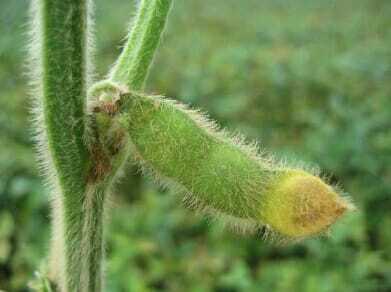
    Drought stress during the growing season contributed to the Green Stem Syndrome in Soybeans that’s apparent in certain fields this fall. In some areas, pods and/or seeds were aborted. Plants that abort pods or seeds then redistribute sugars and nutrients, thereby increasing the concentration of photosynthate in the stem and causing it to retain the green color longer.

    Harvesting soybeans with green stems can be a challenge. Green stems are difficult to cut and are known to plug up combines, so combine operators must proceed at slow speeds – and with caution. Combine must be properly adjusted, and the cutting knife must be sharp.

    Sometimes just certain areas of a field – mostly low-lying areas or areas protected by shelter belts, groves or buildings – may be affected by Green Stem Syndrome. In some cases, local soybean growers went around these areas and will come back to harvest them at a later date.

    Depending on the severity of the green stem syndrome, certain soybean fields may need a killing frost before they’re harvested. However, waiting for such a frost may lead to additional yield loss if pods shatter during harvest. Fields should be monitored and harvested according to moisture content.

    About 90% of the green stems I’ve seen in my lifetime are caused by some environmental issue. Diseases also can cause it. However, other factors like herbicide injury or nutrient deficiencies are not usually a major factor.

    Webspec Admin

    October 1, 2012
    Agronomics, Crop, Disease, General, Soybeans
  • Latham Hi‑Tech Seeds

    Corn Breeding: A Colorful Journey

    Through a series of weekly video blogs, Latham Forage Products Manager Corey Catt shows how corn has evolved through time. This week Corey shares how crossing dent and flint varieties has increased plant health over time. He shows how corn with purple husks and stalks is used as a marker in breeding plots, too.

    http://youtu.be/6C9cOIY3jOE

    Team Latham

    September 24, 2012
    Agriculture, Corn, Crop, General, Industry News
  • Latham Hi‑Tech Seeds

    Genetic Garden Shows How Different Types of Corn React to Drought

    Genetic Garden Shows Drought Stress1

    by Rachel Norby, Seed-2-Soil® Summer Intern

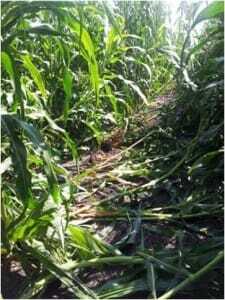
    As you drive through the countryside, it’s evident that different corn hybrids are handling the drought stress differently.  Some hybrids have stronger roots and stalks, so they’re holding up better in these dry conditions.  Other hybrids have weaker stalks and are lodging.

    Latham Hi‑Tech Seeds’ Genetic Garden shows how corn from many different eras is reacting to the drought conditions.  You can see how much better today’s hybrids can withstand the high heat and low moisture than their early ancestors.

    Genetic Garden Shows Drought Stress

    Although minimal irrigation was used to keep our “living museum of corn” alive for the Latham Country Fair on August 25, many varieties still reacted to the drought.  You’ll see lodging in many early varieties.  (NOTE:  “Early” is being used here to reference the chronological history corn of varieties, not as in the relative maturity of hybrids.)

    Open-pollinated corn varieties grown during the Dust Bowl of the 1930s didn’t pollinate then, and you’ll see the same thing happened in our Genetic Garden.  A corn variety found in the Genetic Garden from around the time of the 1988 drought is also showing signs of stress.  One of the differences in the droughts of 1988 and 2012, however, is there was less rainfall during the months of April to June in 1988 than we received in 2012.  This lack of rain during that quarter of the year meant more stress on crops during early season growth compared to this year when the majority of the stress happened around the time of pollination.

    We’d like to invite you to see the differences for yourself!  Take a walk through our “living museum of corn” on Saturday, Aug. 25, during the Latham Country Fair.  We’ll be hosting tours between 9 a.m. and 3 p.m.

    Gary Geske

    August 13, 2012
    Agronomics, Corn, Crop, Drought, General, Industry News, Seed Technology, Weather
  • Latham Hi‑Tech Seeds

    Corn as High as an Elephant’s Eye

    RachelWithCorn1

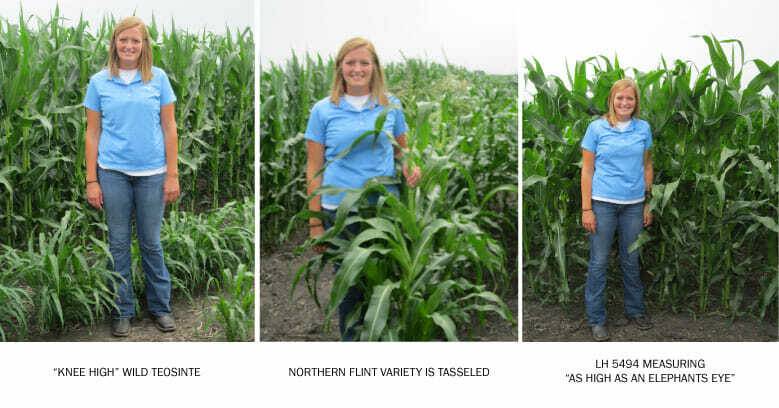
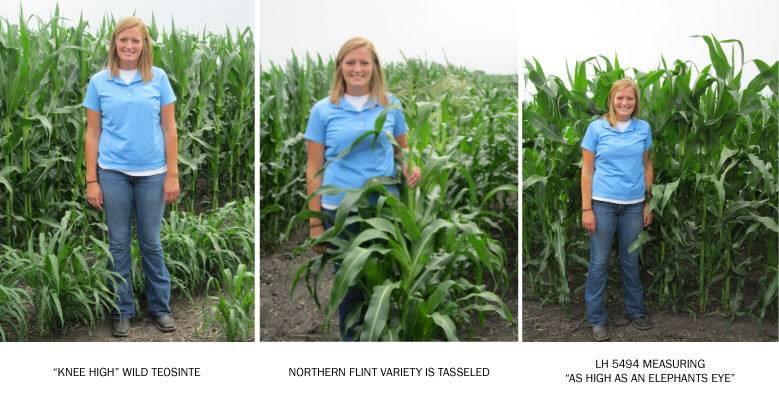
    “Knee high by the Fourth of July” was an expression used for many years by Midwest farmers, indicating their corn crop was expected to yield well if those “knee-high conditions” existed.  These days the lyrics, “The corn is as high as an elephant’s eye,” from the song Oh, What a Beautiful Morning from the 1943 musical Oklahoma! by Rodgers and Hammerstein, is more accurate.

    This year you could even describe much of the corn crop as “high as an elephant’s eye and tasseled by the Fourth of July.”  But a walk into Latham’s Genetic Garden will show you just how much corn varieties and hybrids have evolved from the 19th Century until now.

    On July 4th we saw corn plants of every size: ankle high, knee high, head high and even some that had tasseled.  Temperate teosinte, one of the first ancestors of corn, is about knee high.  Wild teosinte is measuring around knee high.  Northern flint, a red dent corn is tasseled.  Current hybrids like LH 5494 3000 GT are “as high as an elephant’s eye.”  This truly shows the evolution of hybrids at Latham Hi‑Tech Seeds.

    Many of the varieties aren’t equipped to handle the hot, humid and dry weather we have seen.  Because the weather we’ve experienced this growing season is starting to take a toll on the Genetic Garden, we’ve begun to irrigate it.

    Look to TheFieldPosition.com for continued updates on the Genetic Garden.  We’d also like to invite you to see it for yourself!  Take a walk through our “living museum of corn” on Saturday, Aug. 25, during the Latham Country Fair in Alexander, Iowa.

    Gary Geske

    July 9, 2012
    Agronomics, Corn, Crop, General
  • Latham Hi‑Tech Seeds

    Iron Chlorosis is Serious Threat to Soybeans

    Ironcholorsis

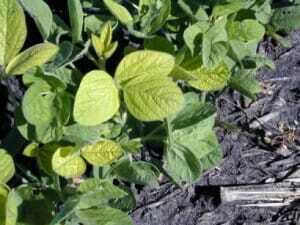
    I’ve received an unusually high number of calls this spring from people, who have noticed all the “yellow soybean fields.” These fields are exhibiting Iron Deficiency Chlorosis (IDC).

    Contrary to popular thought, IDC is not a disease as there are no pathogens, fungi or viruses that can be blamed for this condition. Rather, IDC is a function of the soil type common in the area we call the “Des Moines Lobe.” This area covers most of Central Iowa, continuing north into Minnesota and even further north and west into the Red River Valley region. These soils typically contain some areas that are poorly-drained and also have higher-than-normal pH values.

    This is one of the worst years for IDC in recent memory. Unfortunately, once IDC is noticed in a field, it’s too late to really manage it properly this season. Avoid applying chemicals on these areas that will damage the already-stunted and chlorotic plants. Then be proactive when choosing future soybean varieties for these fields.

    Iron chlorosis symptom – soybean. Photo © John E. Sawyer

    There is no such thing as complete resistance to IDC, however, some soybean brands (i.e. varieties) are better than others at handling this condition. Because Latham Hi‑Tech Seeds is headquartered right in the heart of North Central Iowa where Iron Chlorosis is a familiar challenge to us, we have always tried to choose soybean genetics that have the best possible scores against this condition.

    Latham® soybean brands like L1585R2, L1783R2, L1985R2 and L2183R2 have all demonstrated that they belong in this elite class of defensive products that are designed to give the best possible performance under some of the toughest conditions that our soybean seed customers run into. This is just one more example of our commitment to bringing the highest performing seed products with the best trait values to all of Latham Country!

    Webspec Admin

    July 2, 2012
    Agronomics, Crop, Fertility, General, Soybeans
  • Latham Hi‑Tech Seeds

    Potassium Deficiency is Growing Problem in Corn

    DeficiencySymptoms
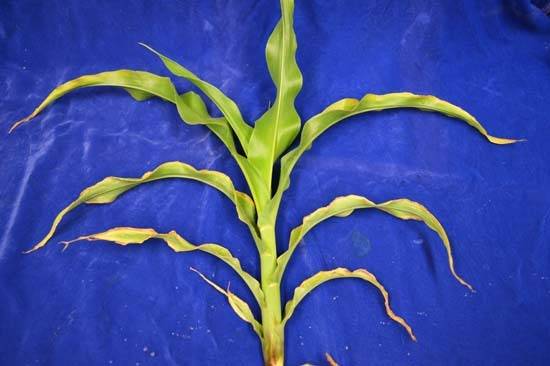
    Potassium deficiency symptoms in corn develop on the edges of older leaves, typically starting at the tip, while the new growth appears normal. (Photo courtesy of the University of Illinois Plant Clinic.)

    While walking fields recently, I’ve seen corn leaves that are yellowing around the leaf margins.  The yellowing starts at the tip of a leaf, extending along its edges to the base of the leaf.  In more severe cases, the edges are brown.

    Corn and soybeans are showing signs of potassium deficiency this growing season. Most of the potassium deficiency I’ve seen so far this season is not due to planting in too-wet soil conditions or compaction, although this certainly could be a reason in some cases.  Instead, I’m seeing more potassium deficiencies where there is an extremely dry soil surface and where root activity has been slow.  Dry conditions typically limit root growth, which explains why soils can have good levels of potassium but nutrients don’t get to the plants.  It also helps explains why, in some fields I have observed, the K deficient symptoms are occurring in the best-drained soils in the field while the more poorly drained areas look better.

    Dry surface soils express K deficiency most often.  Ridge-till, no-till situations and side wall compaction will sometimes show symptoms in dry years.  Irrigation or simply rainfall is a great way to jumpstart the root systems and help the plant develop through the K deficiency.

    It’s important to understand why if and why there is a potassium deficiency because K is an essential nutrient for plant growth that has a large impact on overall yield.  Potassium controls transpiration and respiration, as well as the uptake of certain nutrients including nitrogen and magnesium.

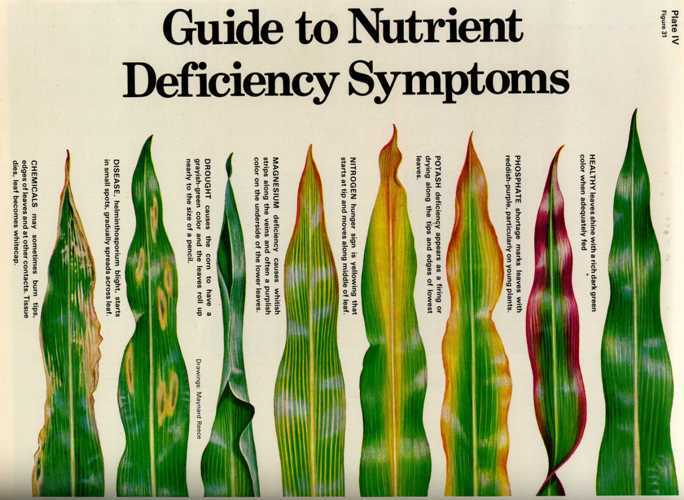
    Photo courtesy of www.omafra.gov.on.ca

    The type of nutrient deficiency determines soil management strategies.  Some people side-dress potash or various forms of K.  Others try foliar products.  One word of warning is that some of these products can be harmful to the plant at certain stages of growth.  A grower should select a low salt form of K and avoid anything with KCl or KSO4 for foliar applications.  A better and safer means is to address the situation by applying potassium before planting 2013.

    Walk your fields now and note where you’re seeing signs of potassium deficiency, so you can be sure to test and possible treat those areas before the 2013 crop is planted.  Another leaf tissue sample can provide helpful information, too.  You can see if there are other nutrient deficiencies in your field.  Tissue sampling is one service provided through Latham’s Seed-to-Soil program.

    Team Latham

    June 28, 2012
    Agronomics, Corn, Crop, Fertility, General
Previous Page
1 … 51 52 53 54 55 … 62
Next Page

Latham Hi‑Tech Seeds

131 180th Street | Alexander, IA 50420

(641) 692-3258

SIGNUP FOR OUR NEWSLETTER
  • Contact
  • Legal
  • Dealer Center
  • Seedware Login
  • Latham Gear

© 2025 Latham Hi‑Tech Seeds. All rights reserved. | Iowa Web Design by Webspec | Privacy Policy

Latham® Hi-Tech Seeds is a trademark of M.S. Technologies, L.L.C., 103 Avenue D, West Point, IA 52656.