Latham Hi-Tech Seeds

(641) 692-3258

  • Home
  • Products
    • Corn
    • Soybeans
    • Alfalfa
    • Corn Silage
    • Seed Guide
  • Performance
  • Find a Rep
  • Media
    • Blog
    • News
    • Videos
    • Podcasts
    • TECHTalk
  • About Us
    • Company History
    • Our Mission
    • Careers
    • Become a Rep
    • Sowing Seeds of Hope
  • Contact Us
  • Latham Hi‑Tech Seeds

    Flooding and Saturated Soils

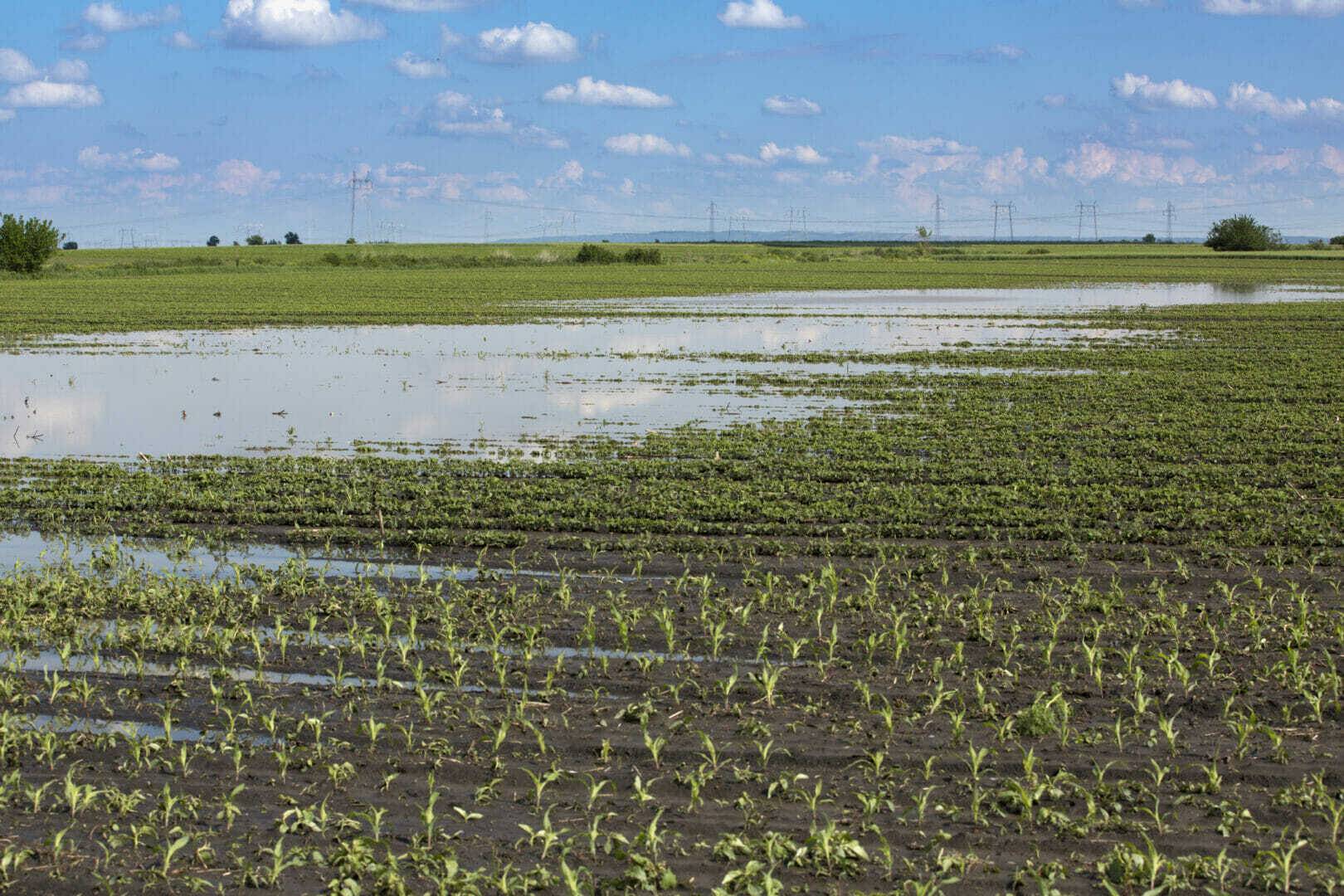
    Agricultural disaster, flooded corn maize crops.
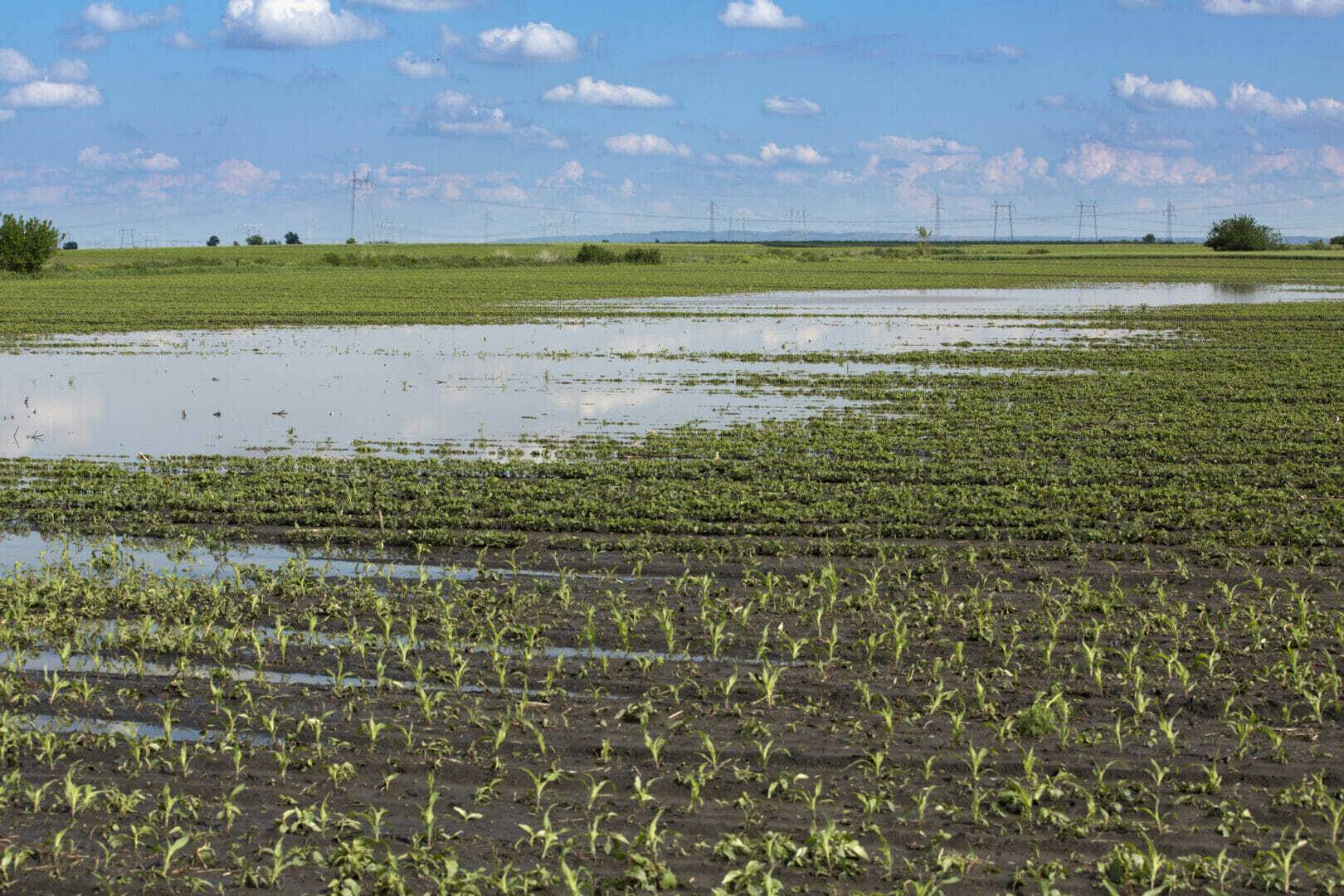
    Agricultural disaster, flooded corn maize crops.
    iStock Photo

    For corn and soybean plants before and after emergence, flooding and saturated soils can jeopardize yield. Germinating seeds require oxygen to survive. After the first 48 hours following a heavy rain or flooding event, oxygen levels in the soil will become entirely depleted and prevent seeds from germinating and continuing to grow.  

    Yield loss for corn and soybeans depends on the duration of the flooding event and at what growth stage it occurs. The longer a plant is submerged or growing in saturated soil, the less likely it is to survive. Generally, smaller seedlings with lower stamina are less likely to survive following a heavy rainfall event compared to larger seedlings. 

    Warmer temperatures are associated with higher growth rates, and as a result, a higher amount of oxygen is used. When temperatures exceed the mid-70° range, survival may not exceed 24 hours following the heavy rainfall event. 

    Effects on Corn Plants 

    Before V6, the growing point is below ground and damage from flooding is more likely to impact yield or kill the plant.  After V6, corn plants fair better in saturated conditions if some of the plant is out of the water. However, the higher temperatures can speed up respiration and oxygen requirements, leading to more plant damage compared to cooler temperatures during a flood event.  

    Nitrogen loss is another way flooding impacts corn yields. Corn consumes two-thirds of its nitrogen by the start of the reproductive stage and relies on a functional root system. If a flooding event compromises plant roots, yield can be reduced significantly. Research from Iowa State University found that a 30-inch corn plant that had been flooded for 48 hours with minimal nitrogen uptake experienced a 20% reduction in yield. Flooding can also promote seed decay, crazy top that exhibits proliferated tassels, stunted ears or completely barren plants 

    Impacts on Soybeans 

    For soybean plants at stages V2 or V3, survival is possible. However, nitrogen fixation can be restricted and reduced yield is still likely. For soybeans submerged for less than 48 hours, yield loss is rarely observed. 

    Once the first bloom appears at stage R1 the number of pods per node will be greatly decreased if sitting in saturated conditions. Wilting, stunting and yellow-leaves will be expressed in damaged or dying soybean plants. Further, research has found that greater yield reduction has been observed in soybean plants grown in heavy clay soils as opposed to silt loam soils.  

    Assessing Outcomes 

    Flooding and prolonged saturated soils pose the greatest threat to young plants that have yet to emerge above ground. As water recedes, any remaining residual mud on corn and soybean plants can reduce photosynthesis. For plants that survive a flooding event, they will be more vulnerable to diseases and stresses over the course of the growing season.  

    The survival outlook for saturated seeds and germinating plants will not exceed four days. Plants that survive after water levels recede will continue to grow within three to five days.  

    Latham Seeds Agronomy Team

    April 1, 2019
    Agronomics, Corn, Crop, Flooding, Soil, Soybeans, Weather
  • Latham Hi‑Tech Seeds

    #AskTheAgronomist: The Love List

    2.14.19

    LIBSYN header 2 01

    On this Valentine’s Day, we are reviewing 7 things we LOVE about the Latham product lineup!

    https://www.facebook.com/LathamSeeds/videos/924337164624015?sfns=mo

    Laura Cunningham

    February 14, 2019
    #AskTheAgronomist, Alfalfa, Corn, Corn Silage, Cover Crops, Crop, Soybeans
  • Latham Hi‑Tech Seeds

    On-Farm Research Helps Find Palatable Solutions

    Corey article

    Everyone is vitally aware of how brittle the farm economy has been, yet it seems like every agriculture periodical that I read discusses all the challenges. This movie quote illustrates the current state of our industry,

    “I’m drowning and you are describing the water.”

    We don’t need ag magazines and experts to “describe the water.” We need someone to toss us a life vest, or a plausible solution! That’s why I’m concentrating on solutions to help create stability.

    Granted, these solutions don’t come easy. You must be being willing to do something that you may not have done in the past. Another quote comes to mind,

    “For things to change, you need to change. For things to get better, you need to get better.”

    This quote has some personal and professional reflective value. Th e world agriculture market is becoming more competitive and aggressive. We must get more efficient domestically, and we must find ways to differentiate our products on a global scale. We must look beyond quantity of the crop produced to qualitative components, such as amino acids, fatty acids, omega 3, 6, 9 composition and more. This resonates deeply with the consumer. Not only does increasing the quality of our corn add value, it also helps us build “marketing muscle.”

    For years, research has looked for corn silage products that are stable on the acre. Then researchers looked into delivering the very best nutritional matrix. The delicate balance is so important that early adopters are designing on-farm experiments to test their management systems. I’m excited that Phil Long is merging technology with a vision of the future with Latham’s Seed-2-Soil precision agriculture program services. Little details like better starch and fiber digestibility in grain also make big differences.

    The image below illustrates the value of feeding hybrids with softer starch. We continually provide good data to help you make better seed product selections and transform research into useful on-farm results.

    Corey article

    2018 corn silage data is available on Latham’s website. Feel free to contact me if you have any questions about setting up an on-farm research trial for forage products. In 2019, be open to exciting possibilities – and to trying something new on your farm!

    Latham Silage Hybrid Results


    Webspec Admin

    January 29, 2019
    Alfalfa, Corn, Corn Silage, Cover Crops, Crop, Soybeans, Tech Tuesday
  • Latham Hi‑Tech Seeds

    #AskTheAgronomist: Achieve Top Yield

    1.24.19

    LIBSYN header 2 01

    Join us this morning as we discuss top populations for top yields! #AsktheAgronomist

    https://www.facebook.com/LathamSeeds/videos/316328942324823/

    Laura Cunningham

    January 24, 2019
    #AskTheAgronomist, Agronomics, Corn, Crop, Precision Ag
  • Latham Hi‑Tech Seeds

    Seeding Rates Trump Nitrogen Rates

    5245 full ears

    Nitrogen rates can be the most powerful yield influencer when it comes to corn inputs. Other management practices including fungicide, starter fertilizer and seeding rate also can significantly impact yield.

    In a previous post, I discussed the results of our Climate FieldView (CFV) study. We compared a recommendation from Climate’s Nitrogen Advisor tool of 135 pounds per acre (lbs/A) total Nitrogen (N) to our typical yield goal (YG) approach of 170 lbs/A total N. We didn’t see significant yield differences between the two nitrogen programs. In this post, I’m going to focus on the other 10% of the
    study.

    Seeding rates don’t always influence yield as expected because many of our hybrids have outstanding ear flex and the plant compensates for the additional space. Our planting rates were around 31,500 and 37,500 seeds per acre in our study, but weather greatly affected this. Several severe storms hit during the early growing season, and winds of 70+ mile-per-hour hit during the period of rapid growth for most of our corn. Corn fields throughout our area saw quite a bit of greensnap; the corn we planted 10 days later had no greensnap. Unfortunately, timing was not on our side. I took stand counts before harvest. Our final plant stands were 25,000 and 29,000 plants per acre (ppa) for the low and high seeding rates. We had approximately a 4,000-plant difference between the two seeding rates, which made a significant yield difference.

    Our CFV nitrogen test had 135 total lbs/A of N yielded 198 bushels per acre (bu/A) at the low seeding rate, and 210 bu/A at the high seeding rate. Our YG approach with 170 lbs/acres total nitrogen yielded 206 bu/A at the low seeding rate and 213 bu/A at the higher seeding rate. We saw both a 12 bu/A and 7 bu/A advantage with the higher seeding rates in the CFV and YG systems. After subtracting the cost for higher seeding rates, the additional yield resulted in additional revenues of $23.48/A (CFV) and $5.80/A (YG). We used LH 5245 VT2 PRO, which has a semi-flex ear. This means that even at the low seeding rate of 25,000 ppa, that hybrid had the late-season ability to flex enough in ear length and kernel depth (weight) to make up for lost bushels. The question is, “Does it pay to plant at higher rates?” It did for us in 2018, but there’s a good chance our results will differ in 2019.

    5245 full ears
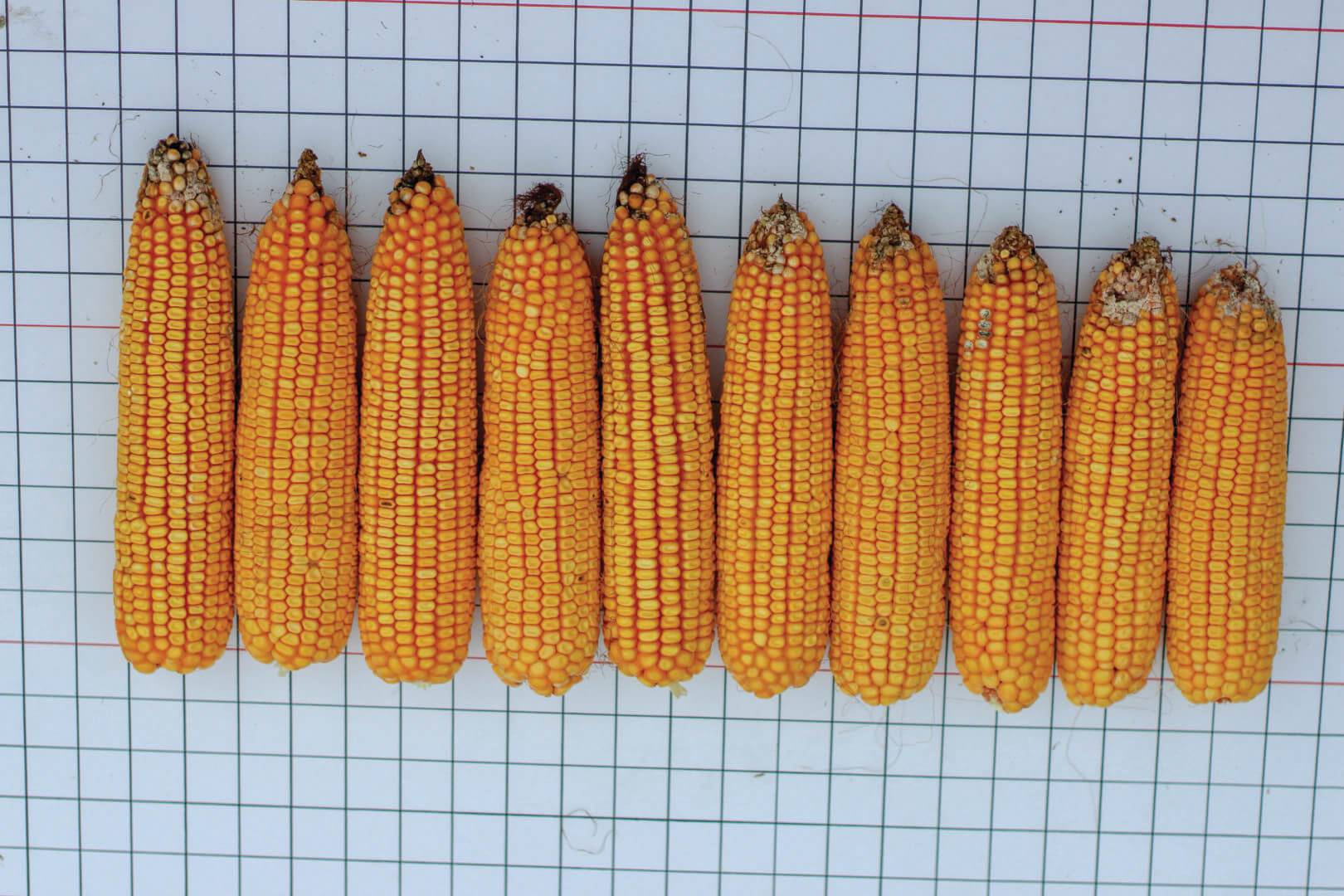
    Results for LH 5245 VT2 PRO with planting populations at 15,000 ppa on the left (resulting in girth of 16 kernels and length of 38 kernels on the left-most ear) and 58,000 ppa on the right (girth 18, length 33 on the right-most ear).
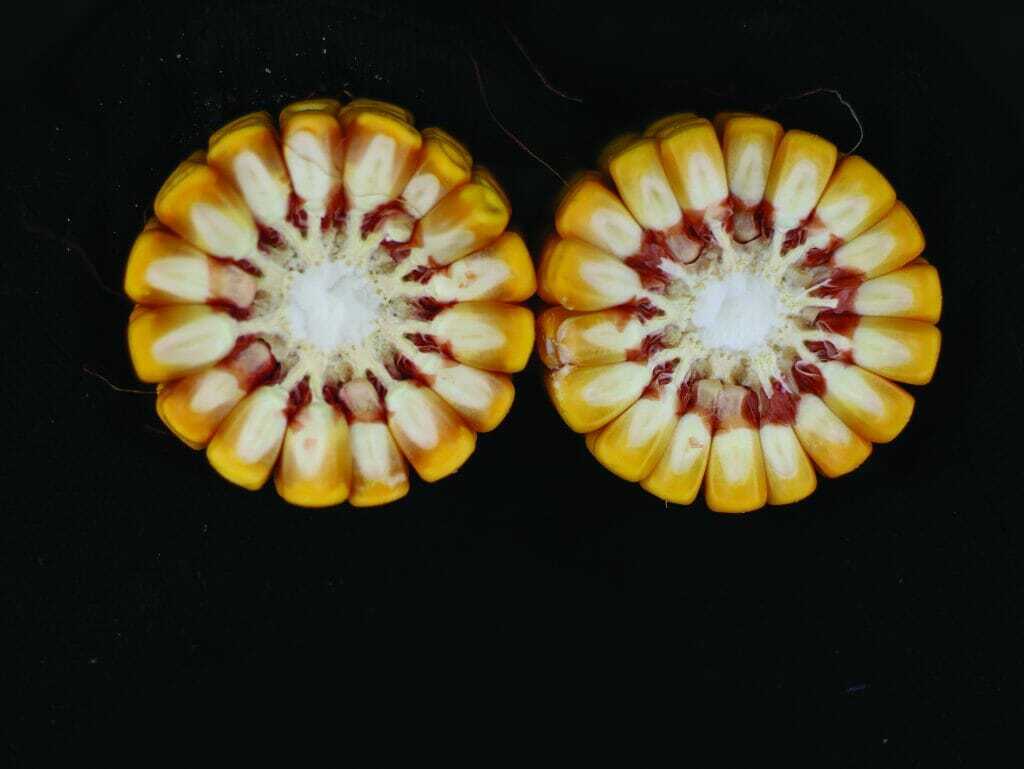
    5245 cross sections
    Cross Section split of LH 5245 VT2 PRO from Latham Hi‑Tech Seeds stress wheel research study 2018.

    Our nitrogen test didn’t show a yield difference despite the 35 additional pounds in our YG approach. Given the abnormally high amount of rainfall and above-average growing degree units (GDUs) for the season, we likely saw an increased grain-fill period and some additional loss of nitrogen through leaching. Above-average temperatures and good soil moisture means we also likely had higher mineralization rates, so the soil may have saved us because this particular soil organic matter is 5.0 percent.

    All things considered, our YG approach won out in terms of revenue this year, but will it hit the mark every year? Consistency is what we want to see when trying to manage such a variable nutrient in the soil. In the future we plan to expand our research on the CFV Nitrogen Advisor tool to bring meaningful information on seeding rates to our dealers and customers.

    Phil Long

    January 22, 2019
    Agronomics, Corn, Crop, Fertility, Tech Tuesday
  • Latham Hi‑Tech Seeds

    #AskTheAgronomist: Undersatnding Yield Variability

    Facebook Live Cover Image

    LIBSYN header 2 01Join us this morning on understanding your yield variability. Phil Long helps us identify the types of variability and importance of knowing the difference. #AskTheAgronomist

    https://www.facebook.com/67053282137/posts/10157002779167138/

    Laura Cunningham

    January 10, 2019
    #AskTheAgronomist, Agronomics, Corn, Crop, Precision Ag, Soybeans
  • Latham Hi‑Tech Seeds

    F.I.R.S.T. Trials Winner by State with John Latham

    49029778 266712933995762 8538707975894728704 n

    LIBSYN header 2 01


    Join us as John Latham goes through our F.I.R.S.T. Trials winners by state!

    Video breakdown is below:
    0:32 — Minnesota Wins
    3:20 — South Dakota Wins
    5:01 — Iowa Wins
    6:32 — Wisconsin Wins
    7:01 — Nebraska Wins

    https://www.facebook.com/67053282137/posts/10156950437887138/

    Find all of our F.I.R.S.T. Trials results on our website: https://www.lathamseeds.com/products/f-i-r-s-t-trial-results/


    Laura Cunningham

    December 20, 2018
    #AskTheAgronomist, Corn, Crop, Soybeans
  • Latham Hi‑Tech Seeds

    #AskTheAgronomist Special Edition

    Shannon & Mark


    LIBSYN header 2 01

    More Topics. More Expertise. More Value.

    Below we have shared our 5-segment #LiveWithLatham Broadcast! We had our Agronomy & Product Teams with us to talk about the 2018 growing season, Latham® hybrids and varieties, an industry update, on-farm research and our Latham quality standards. Tune in to the segments below.

    https://www.facebook.com/LathamSeeds/videos/206956050211982/

    https://www.facebook.com/LathamSeeds/videos/387560941788121/

    https://www.facebook.com/LathamSeeds/videos/2371959466165669/

    https://www.facebook.com/LathamSeeds/videos/713236272403231/

    https://www.facebook.com/LathamSeeds/videos/643567089391080/


    Laura Cunningham

    December 14, 2018
    #AskTheAgronomist, Agriculture, Corn, Cover Crops, Crop, Industry News, Soybeans
  • Latham Hi‑Tech Seeds

    #LiveWithLatham Broadcast

    Ask the agronomist facebook 820 x 360
    Ask the agronomist facebook 820 x 360
    More Topics. More Expertise. More Value.

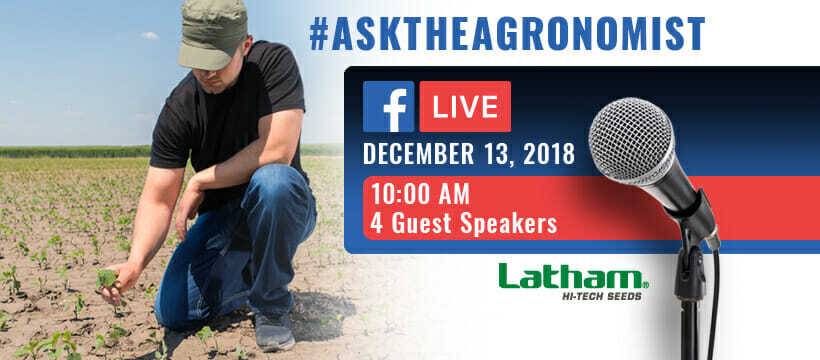
    JOIN US! We will be #LIVEwithLATHAM on Dec. 13 at 10 a.m. on our Facebook page. Each guest will have 15 minutes, including a live interview, plus questions will be accepted throughout the broadcast. Special guests & topics include:

    1. John Latham, President, Latham Hi‑Tech Seeds
    2. Bob Foley, Corn Breeder
    3. Mark Grundmeier, Product Manager
    4. Phil Long, Agronomy Specialist

    Do you have questions of your own? Feel free to submit in advance via PM on social media, or submit them live on Dec. 13!

    Laura Cunningham

    November 27, 2018
    Agronomics, Alfalfa, Corn, Cover Crops, Crop, Soybeans, Tech Tuesday
  • Latham Hi‑Tech Seeds

    F.I.R.S.T. Trial Results with John Latham

    Screenshot (74)

    LIBSYN header 2 01

    Join us this morning with John Latham as he gives a highlight on how our Latham corn and soybeans are doing in the F.I.R.S.T. Trials!

    https://www.facebook.com/LathamSeeds/videos/248852759141493/

    Laura Cunningham

    November 1, 2018
    #AskTheAgronomist, Corn, Crop, Fall, Season, Soybeans
Previous Page
1 … 18 19 20 21 22 … 36
Next Page

Latham Hi‑Tech Seeds

131 180th Street | Alexander, IA 50420

(641) 692-3258

SIGNUP FOR OUR NEWSLETTER
  • Contact
  • Legal
  • Dealer Center
  • Seedware Login
  • Latham Gear

© 2025 Latham Hi‑Tech Seeds. All rights reserved. | Iowa Web Design by Webspec | Privacy Policy

Latham® Hi-Tech Seeds is a trademark of M.S. Technologies, L.L.C., 103 Avenue D, West Point, IA 52656.