Latham Hi-Tech Seeds

(641) 692-3258

  • Home
  • Products
    • Corn
    • Soybeans
    • Alfalfa
    • Corn Silage
    • Seed Guide
  • Performance
  • Find a Rep
  • Media
    • Blog
    • News
    • Videos
    • Podcasts
    • TECHTalk
  • About Us
    • Company History
    • Our Mission
    • Careers
    • Become a Rep
    • Sowing Seeds of Hope
  • Contact Us
  • Latham Hi‑Tech Seeds

    Mid-Season Crop Scouting is Especially Important

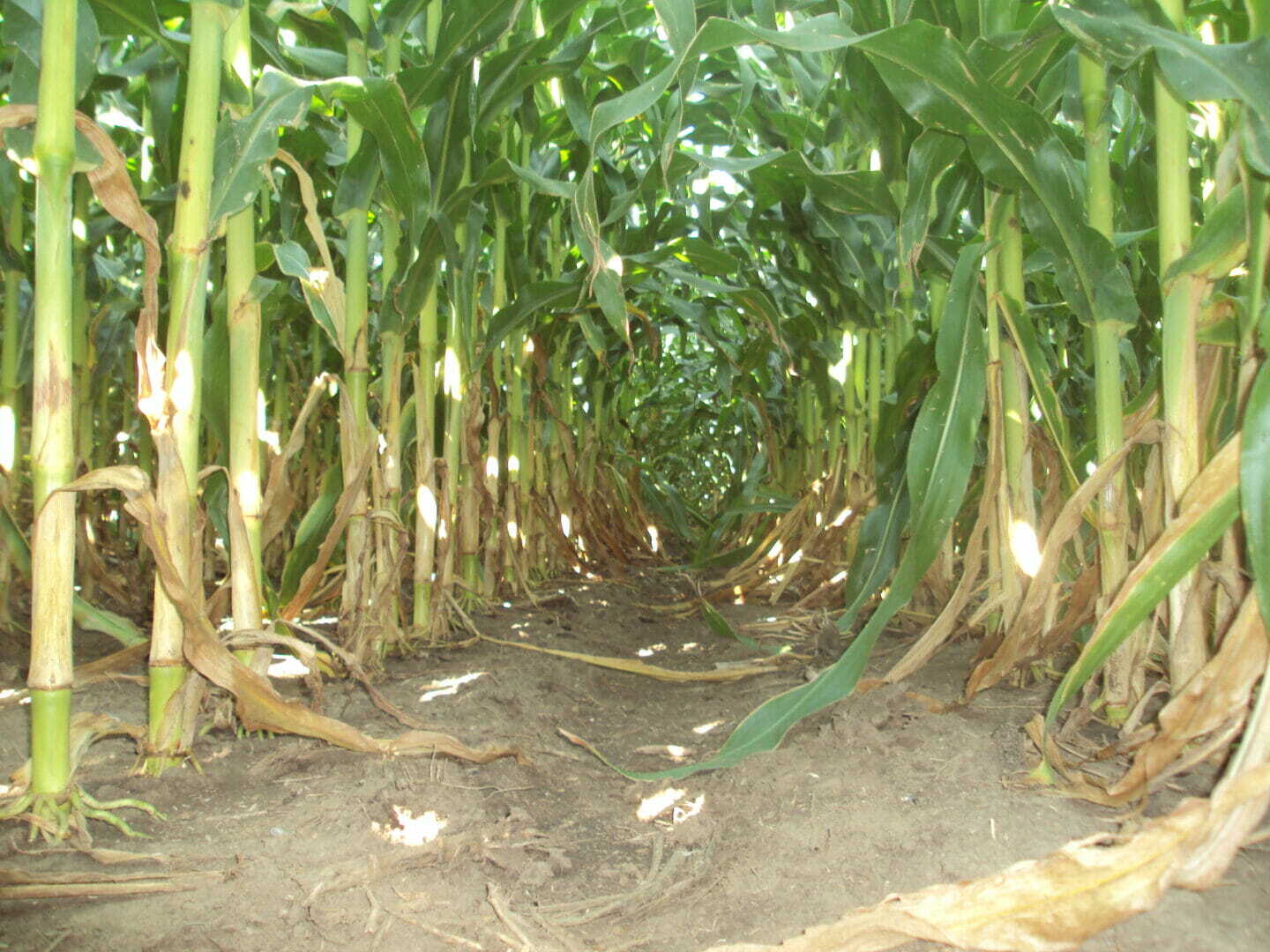
    A rabbits view1

    Mid-season crop scouting is especially important because different insect and disease pressures become evident at this time of year. Any type of stress greatly enhances the likelihood of opportunistic insects such as corn leaf aphids, European corn borer and armyworm to feed upon plants.  In soybeans, we might see soybean aphids, two-spotted spider mites and Japanese Beetles.

    There hasn’t been a great deal of insect or disease pressure yet this season, but that doesn’t mean we can rest on our laurels. High humidity and heavy dew creates ideal conditions for diseases like Northern Corn Leaf Blight (NCLB). Fungal diseases like Sudden Death Syndrome are more evident in late July and early August, too.

    Taking field notes now can help farmers develop a fall harvest plan. They’ll want to keep a close eye on stalks that have been damaged because those will be prone to stalk lodging, ear dropping and repeat infestations. Field notes also will help these farmers choose seed for 2016 planting.

    One reason stalks may be damaged is from corn borer feeding. At this point in the season, corn borers have burrowed into the stalk and foliar applications are no longer effective.

    Black cutworm could be a larger problem this year as they’re known to cause more damage in fields where corn is planted later.  Fields of higher risk also include those that are poorly drained and low lying; those next to areas of natural vegetation; and those that are weedy or have reduced tillage.

    Also due to the wide variance in planting dates, rootworm beetles may move between fields in search of the best “buffet.”  A late maturing corn field may attract a large numbers of beetles if neighboring corn stopped producing pollen, for example.  Rootworm beetles may also move into corn and/or soybean fields that have an abundance of pollen-producing weeds, including volunteer corn, ragweed or foxtails.

    Controlling weeds will help control corn rootworm populations, as well as other insects like Two-spotted Spider Mites and aphids. Mites and aphids begin feeding along field edges, especially in weedy areas, before eventually developing into a field-wide infestation. Many common insecticides aren’t overly effective on Spider Mites, so carefully read the labels of any products.
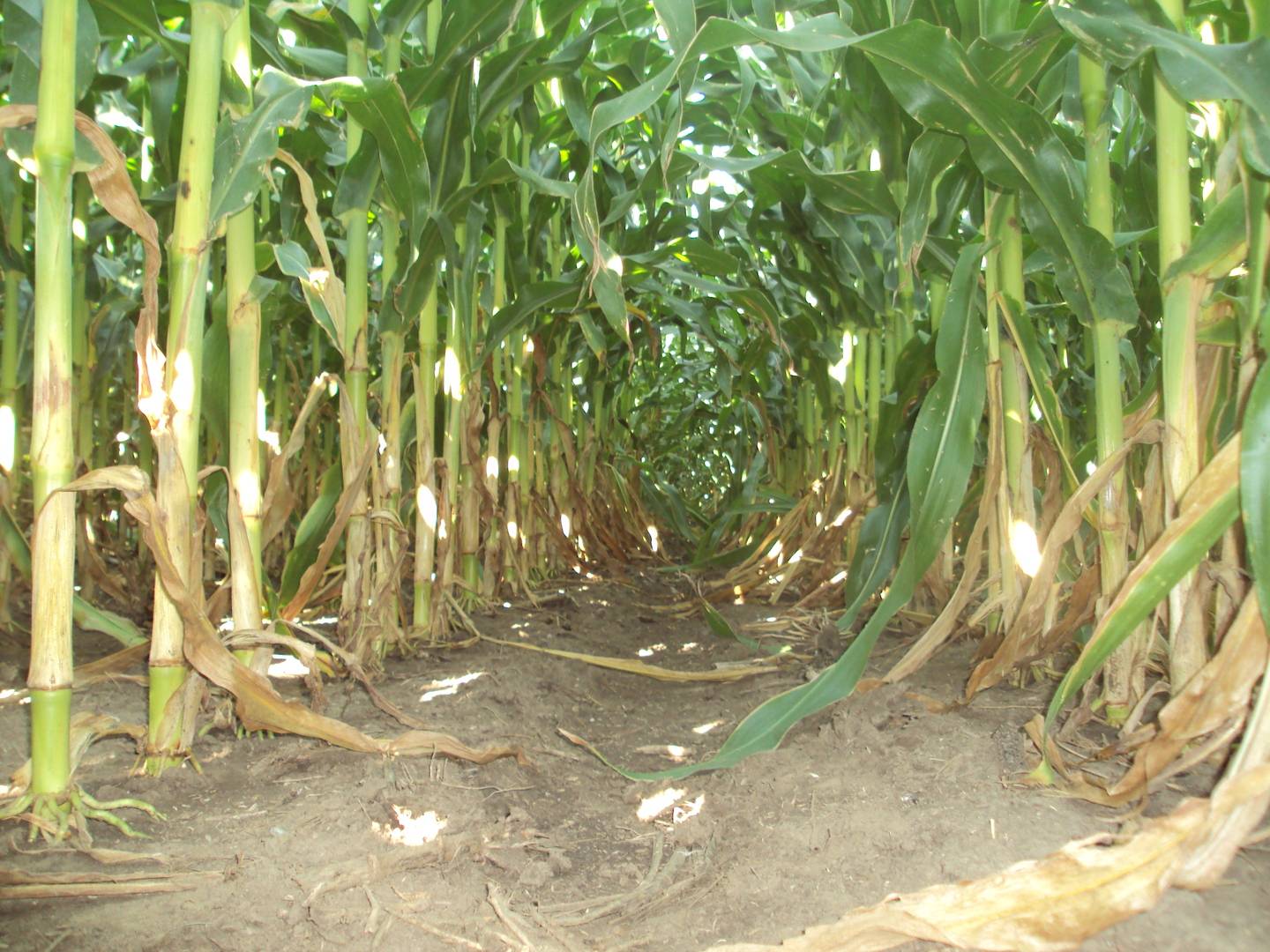
    A rabbits view of corn plants

    Another insect to watch for in both corn and soybean fields is Japanese Beetles. These beetles will literally eat anything that’s green! They seem to prefer the leaf tissue between the veins of soybean leaves and the soft silks of corn plants.  Both activities can result in significant yield loss, so that’s why it’s especially important to scout for Japanese Beetles.

    If you’re seeing Japanese beetles now, make note and watch from them again in early spring. Adult Japanese beetles emerge around early to mid-June and begin feeding on low-lying plants. They eventually move to trees and field crop foliage where they feed and mate. Mated females move back to grass in August and September to lay small egg masses in soil cavities. The eggs hatch into small grubs that feed on roots underground until late September when the temperature cools. The almost fully-grown grubs burrow down in the soil and remain inactive all winter. In the early spring, grubs become active again and feed until turning into resting pupae. The pupae hatch into adults and emerge from the soil – and the cycle begins again!

    Walking fields and noting where there is both weed and insect pressure will help farmers determine an action plan now, as well as in the future. Field notes in 2015 will help farmers determine whether they need to change modes of action when making their 2016 seed decisions.

    Remember, family-owned Latham Hi‑Tech Seeds offers the industry’s broadest product portfolio of corn, soybean and alfalfa products specifically designed to thrive in our geography. For more information, contact your local Latham® representative or call 1-877-GO-LATHAM (1.877.465.2842).
    Webspec Admin

    July 23, 2015
    Agronomics, Disease, General, Insects, Weed Control
  • Latham Hi‑Tech Seeds

    There’s No Time like the Present: Scout Fields Now

    Arm worm 2

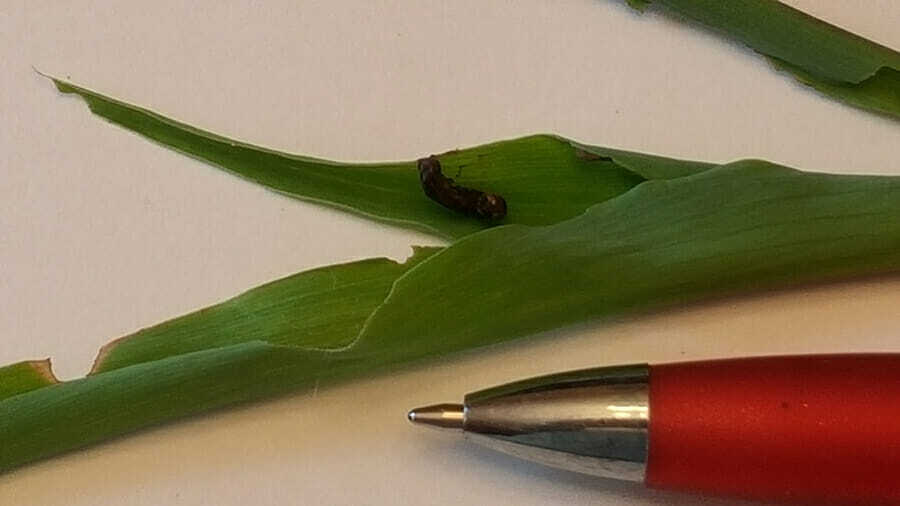
    Black cutworm moths have made their appearance across Latham Territory. Now is the time to scout your fields to determine if an insecticide application is the best economical decision for your particular circumstance.

    Black cutworm moths gravitate towards green vegetation for egg laying, so they will first appear in weedy fields and ones that are next to natural vegetation. Poorly drained, low laying fields also have a higher risk of black cutworm damage. Black cutworm moths travel in from southern states, laying eggs in the field, then producing black cutworm larvae.

    Damage from these insects usually begins above soil service. Newly hatched black cutworm larvae will leave small, irregular holes in the leaves. When walking fields, scout for feedings off the corn plant, which will become more substantial as the worms mature. Black cutworms can cut off young corn plants and reduce crop stands. It is advised to watch for signs of cutworm damage beginning when the corn emerges.

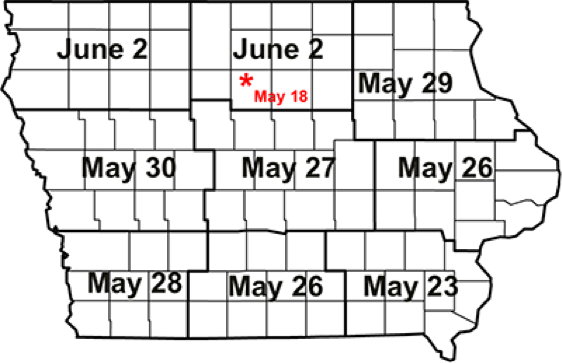
    The map below shows the predicted black cutworm cutting dates, provided by the Iowa State University Extension, based upon research performed throughout the state.

    IowaThis year, the pattern of the black cutworm moths has been irregular. This makes scouting even more essential.

    “With the recent cooler temperatures, emergence of both cutworms and army worms has been delayed,” said Jerry Broders, Latham® Regional Sales Manager for Eastern Iowa.

    The cutworm and armyworm are comparable in appearance with similar economic thresholds. The variance in eating patterns is where these insects differ. Black cutworms chew off more mature corn plants, whereas armyworms feed on the leaves.

    “My advice is to spray fields as soon you see these insects,” Broders said. “ I have seen cutworms take out a field overnight. They can do severe damage when seedlings are emerging.”

    Trait selection is no substitute for scouting, Broders said. He advises that farmers continually scout for insects, because it is going to be a dense year. Download the spreadsheet here to help with black cutworm management decision.

    Broders advises all farmers to continue scouting their fields and apply insecticide if necessary. Contact your Latham® Dealer or Regional Sales Manager to discuss the management decisions for your fields.

    Webspec Admin

    June 8, 2015
    Agronomics, Disease, General, Insects, Weed Control
  • Latham Hi‑Tech Seeds

    Time to Begin Early Spring Crop Scouting

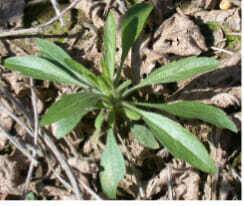
    Water hemp

    Most soil-borne pathogens strike as soon as the seed begins to take on water; others strike seedlings. Because seeds can germinate and emerge within 3 to 5 days, post-planting is an ideal time to begin scouting crops.

     Start taking field notes now on how well each particular hybrid number is emerging. Observe the uniformity of the stand across the field. There may be certain areas that show poor emergence, while the rest of the field will have a good stand.

    You may notice a difference in emergence and stands in early planted fields compared to later planted fields. Soils were warmer in early April than they were during the third week of the month. The magic temperature for corn to germinate is 50 degrees Fahrenheit. The ideal soil temperature for soybean germination is 77 degrees, but it’s usually late May or early June before soils reach those temperatures here. Instead we recommend that farmers wait until soil temperatures are about 60 degrees before planting soybeans.

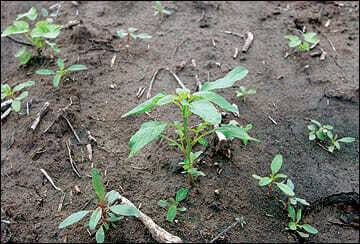
    The combination of warm temperatures with gentle rains that we have received in North Central Iowa this week are just what the seeds in the ground need. Of course, this also makes ideal growing conditions for weeds! 

    water hempShortly after emergence is a good time to start looking for weeds. Monitor fields weekly through the growing season for the most effective weed management. Dr. Mike Owen, Associate Chair of Iowa State University’s Agronomy Department and Extension Weed Specialist, recommends using a soil-applied residual herbicide on all acres. He advises farmers to know what herbicides they’re using, what those herbicides control – and do not control – plus the potential for crop injury.

    Diversity of tactics is key, says Dr. Owen. Rotating crops, rotating traits and rotating pesticides is the best way to slow down the very natural process whereby pests develop resistance to products that mankind uses to protect crops.

    Today’s seed technologies, such as Genuity® SmartStax®, allow you to rotate modes of action on corn ground. Latham soybean customers this spring planted a record number of LibertyLink soybeans. In fact, farmers like Mike Albertsen produced their best yields ever in 2014 using Latham soybeans with LibertyLink technology.

    Your 2016 crop plan begins with notes taken throughout the growing season. Then talk with your local Latham representative about designing a crop plan that controls weeds and addresses other challenges you see throughout the growing season like insects and disease. For more information, feel free to contact the Latham office at 1-877-GO-LATHAM (1-877-465-2842).


    Webspec Admin

    May 7, 2015
    Agronomics, General, Insects, Weed Control
  • Latham Hi‑Tech Seeds

    Battle Weed Resistance with Herbicides from Different Groups

    Weed resistance continues to be a topic of discussion during winter meetings with farmers and others in the ag industry. Many are anxiously awaiting full global approval of herbicide traits like Enlist™, Xtend™ and Balance GT,™ but remember, herbicides alone will not remedy weed resistance.

    “Diversity of tactics is key to consistent weed management and high crop yields,” said Iowa State Extension Weed Specialist Dr. Micheal Owen while presenting at Latham’s field day in September 2011. He pointed out that rotating crops, rotating traits and rotating pesticides is the best way to slow down the very natural process whereby pests develop resistance to products that mankind uses to protect crops.

    Herbicide products kill plants by binding to specific proteins and inhibiting the functions of those proteins. This is commonly referred to as the site (mode) of action. Check the numbering system, usually printed on the first page of the manufacturer’s label, to categorize each herbicide by its site of action.

    “Weeds will adapt, so you must know your herbicide action group,” Dr. Owen during a recent Crop Advantage Series jointly presented by Iowa State University and the Iowa Soybean Association.

    For example, say a farmer has been using Prowl® and FirstRate® pre-emergence on Roundup-Ready® Soybeans followed by Roundup® and FlexStar® post-emerge.  He wants to rotate chemicals for better weed management. Next year he’s planning to use Treflan® plus Raptor®, followed by Roundup and Resource®.  The problem? Prowl and Treflan are both classified as group 3 herbicides.  FlexStar and Resource are group 14, and Raptor and FirstRate are in group 2.  He might see some improved weed control simply because the herbicides have slightly different active ingredients, but his rotation will not help prevent weed resistance.

    A better plan would be to use Dual® (group 15) plus Sencor® (group 5) pre-emergence followed by Roundup plus Basagran® (group 6).  And the BEST plan would be to plant LibertyLink™ Soybeans instead of Roundup-Ready and then switch Liberty® herbicide (group 10) in that plan for the Roundup (group 9) and the Basagran!

    Using multiple products with different sites of action, however, is not enough.  Farmers must also make certain the herbicides are effective against the weeds they are trying to manage. Mechanical methods of weed control including cultivation even hand-weeding must be considered, as well as crop rotation and other cultural practices.

    More information on which herbicides belong to which site-of-action group is available at http://www.weeds.iastate.edu/HerbicideChart.pdf.  This website also gives information on many of the premix herbicide combinations and the groups to which they belong.

    Webspec Admin

    January 28, 2015
    Agronomics, Corn, Crop, General, Herbicide Technology, Industry News, Soybeans, Weed Control
  • Latham Hi‑Tech Seeds

    Late-Season Scouting Leads to Better Seed Decisions

    RootwormPressure
    RootwormPressure
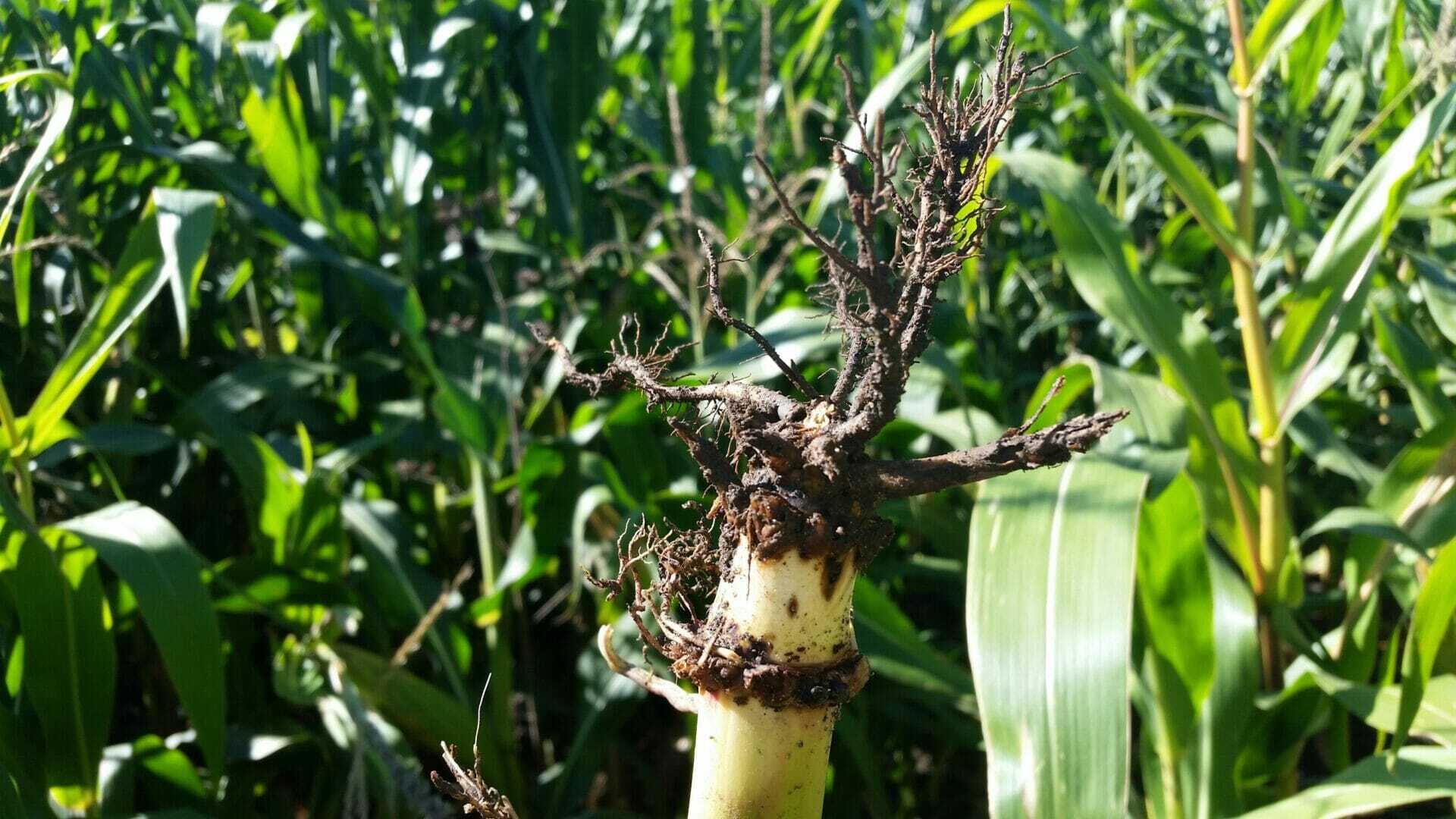
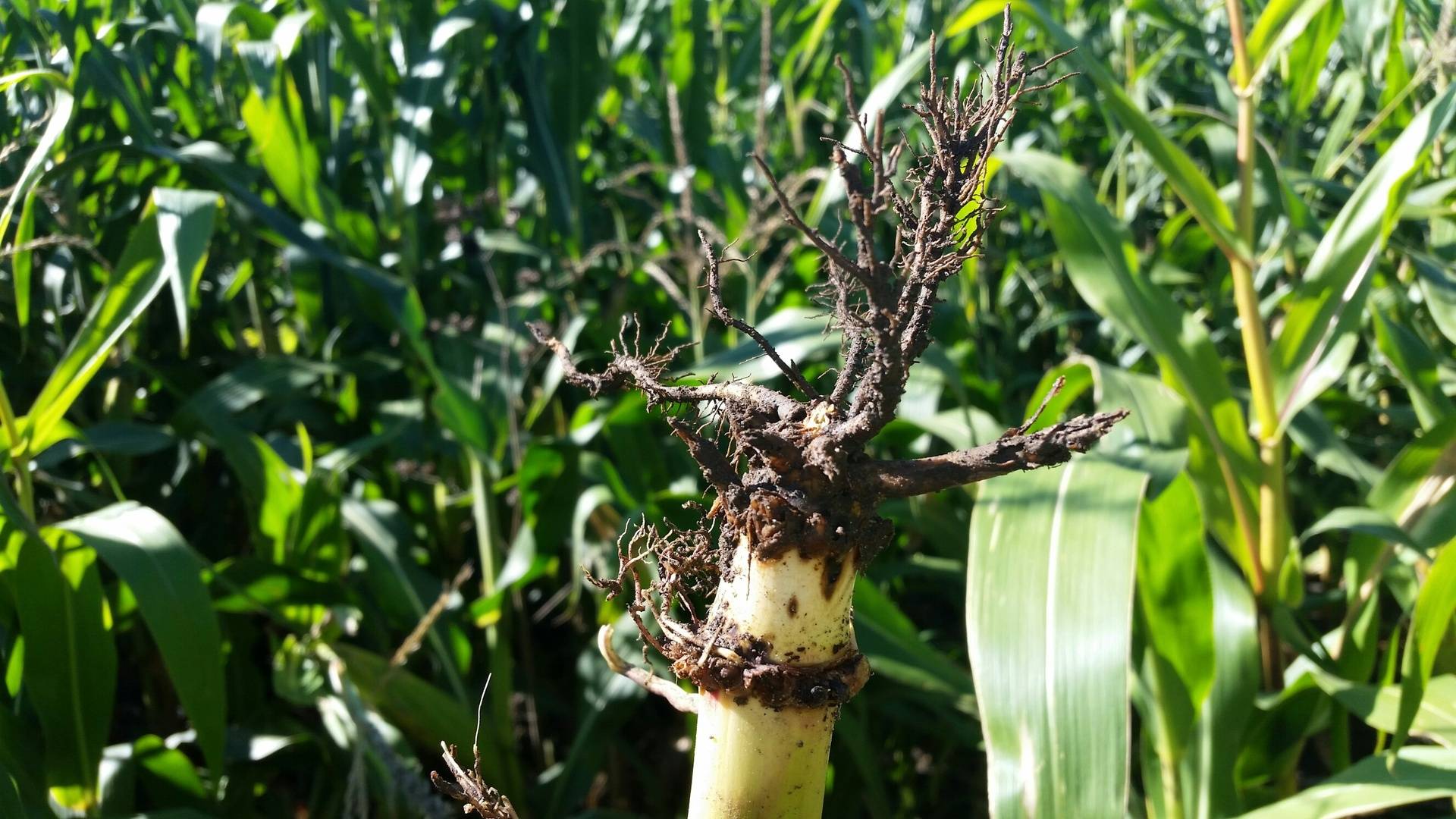
    Rootworm pressure may be low, but it’s present. Latham Corn Specialist Nick Benson (@LathamCornGuy) saw evident this week in a continuous corn field.

    The effects of our wet, cold planting season continue to surface. As one drives the back roads now, you’ll see where Sudden Death Syndrome (SDS) is affecting many soybean fields. You also may notice soybean fields turning yellow, which is a common symptom of Iron Deficiency Chlorosis (IDC).  IDC is a function of the soil type, so it’s most common in poorly-drained soils with higher-than-normal pH values.

    Plants under stress get taken advantage of by pests like Soybean Cyst Nematode (SCN). Doing a “drive by” or even walking through the fields may not be enough to detect SCN. Visual symptoms, such as above-ground stunting and/or yellowing, may not be evident for years. That’s why it’s best to check fields for the presence of SCN during the growing season by digging roots. You can also sample this fall for SCN by gently removing soil from the roots. Look for the egg-filled, round, white SCN females on the roots.

    While your shovel is at the ready, also be sure to conduct a few root digs in your corn fields. Latham Corn Product Specialist Nick Benson dug roots Sept. 2 in Fayette County Iowa, where he found evidence of rootworm feeding. In addition to looking for corn rootworm damage, note signs of sidewall compaction and hard pans. Also look at leaves and ears for signs of disease.

    It’s important to identify late-season corn and soybean diseases, as well as insect damage, so you can better manage them in the future. One way to control corn rootworms, for example, is to rotate rootworm-resistance traits developed by Monsanto, Syngenta and Dow.

    As an independent seed company, Latham Hi‑Tech Seeds has access to traits and technologies from all the major providers. We can work with you to develop a diverse crop plan that include Latham’s GladiatorTM Hybrids, which combine the best genetics and traits available to help maximize yields from corn-on-corn acres.

    To help simplify your soybean seed selection process, our website lists Latham® IRONCLAD™ Soybeans that include exceptional genetics and industry-leading protective traits to battle against yield-robbing threats from pests and diseases. Each IRONCLAD soybean brand must be Soybean Cyst Nematode resistant and carry an Iron Deficiency Chlorosis rating of 2.2 or better.  IRONCLAD brands must protect against either White Mold or Sudden Death Syndrome with a rating of 2.2 or higher.

    White Mold and SDS have both been an issue this season in different parts of our territory, so farmers will want to plant IRONCLAD soybeans on affected acres in the future. Plus, IRONCLAD products have strong defensive ratings against Phytophthora Root Rot and Brown Stem Rot.

    For more information about selecting the right seed for your situation, visit with your local Latham® representative. Also feel free to contact me at 1-877-GO-LATHAM (1.877.465.2842).
    Webspec Admin

    September 4, 2014
    Agronomics, Corn, Crop, Disease, General, Insects, Soybeans, Weed Control
  • Latham Hi‑Tech Seeds

    Attention Turns to Controlling Weeds & Insects

    Beforehail hit.jpg

    Corn and soybean crops are making excellent progress for the most part now that temperatures have warmed and ample rain has fallen. For a look at local planting progress and crop conditions around our six state territory, click here and select a region from the drop down menu.

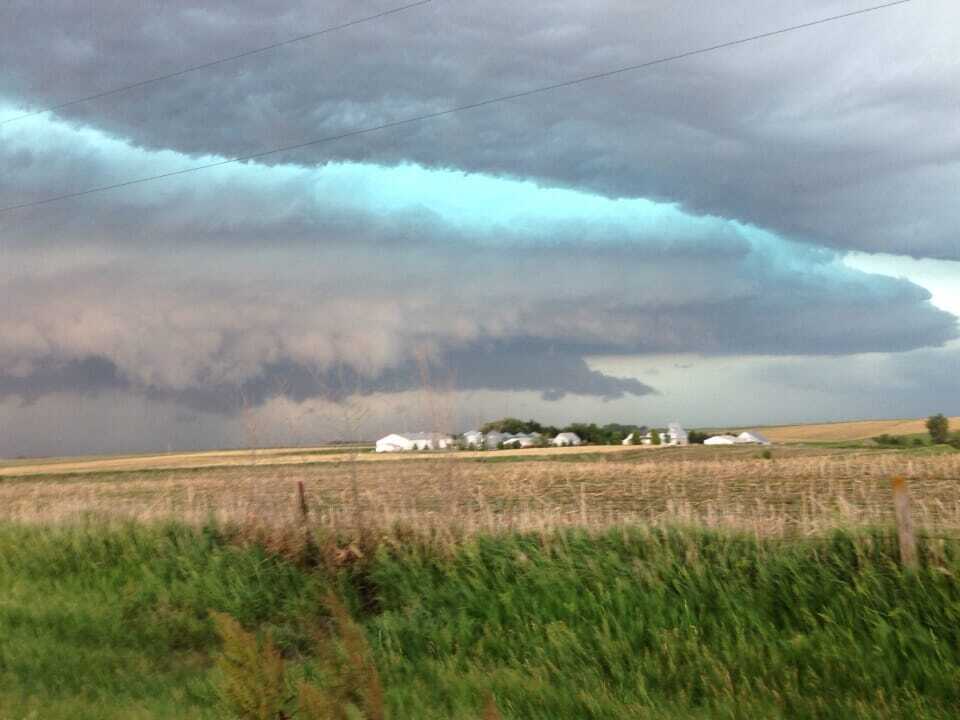
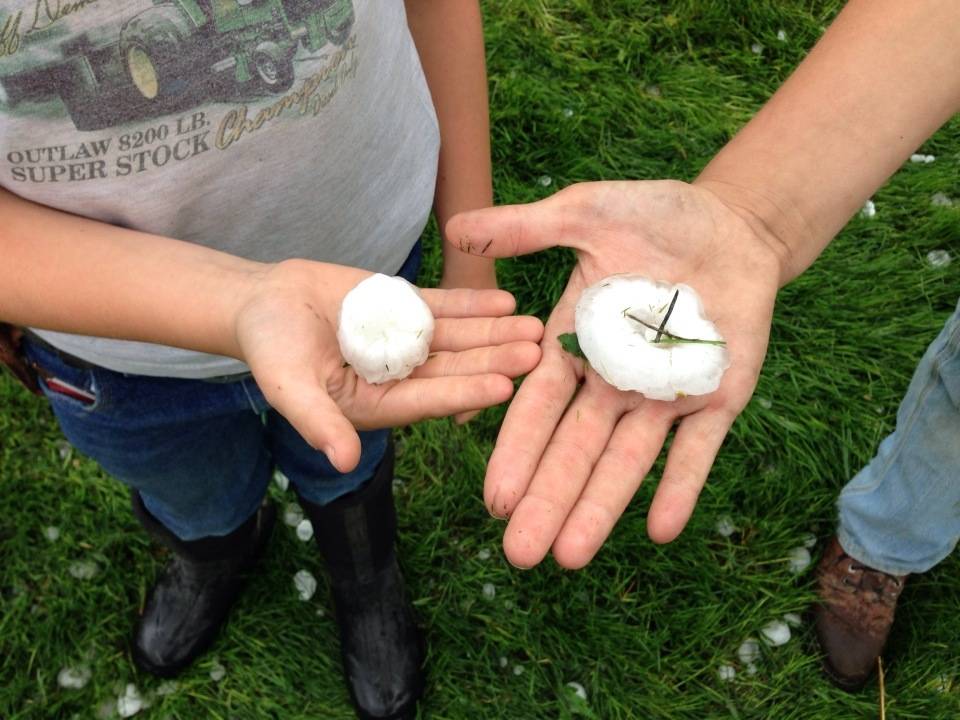
    Iowa’s corn emergence rating of 98% is slightly ahead of the five-year average. Soybean emergence is rated 87 percent, which is just over a week ahead of normal. The exception to this week’s positive crop report is southwest Iowa and eastern Nebraska, which was pounded by hail on June 3.

    hail.jpgHailed fields must be watched closely for weed flushes, although weed pressure is a challenge on all acres this spring. Recent rainfalls is making it difficult for the timely application of post-emergence herbicides in some territories across Latham Country. Crops are developing quickly, and many post-herbicides are limited by growth stage and/or crop height. Be sure to check crop development before entering a field, and carefully read all product labels. Also check weed speed and direction to avoid herbicide drift.

    Team Latham

    June 11, 2014
    Agronomics, General, Insects, Weed Control
  • Latham Hi‑Tech Seeds

    Weeds Grew Above Canopy in 70% of Iowa Soybean Fields

    DrOwenQuote

    Last week I had the opportunity to attend the 25th Annual Integrated Crop Management Conference on campus at Iowa State University in Ames.  This conference provides the latest information on crop production technology, and I always look forward to hearing research findings that can help farmers increase yields.

    It comes as no surprise that the first session of the first day would be a Weed Management Update from Dr. Mike Owen.  What was a surprise is just how severe the growing weed resistance problem has become!  A survey completed this fall shows that 70% of all soybean fields in Iowa had weeds showing above the canopy at harvest.

    Although the most current emphasis has been on glyphosate-resistant weeds, it’s important to understand that all herbicides used on a stand-alone basis will eventually fail.  The best management practice for achieving weed control is still a diversity of tactics: cultural, mechanical and herbicide.

    DrOwenQuoteSoybean growers should choose programs that will use products from as many herbicide groups, or families, as possible. There are no new herbicide mechanisms of action for the coming year, but there will be some new mixtures and new formulations using older class chemistries as base components.  Rotating between various herbicide traits is important from the standpoint of reducing weed resistance is also key to achieving higher soybean yields.

    Correct management of weeds will make you more money every year than managing any other pest complex, writes Dr. Owen in a blog post.  Herbicide-resistant weed populations are increasing at an increasing rate in Iowa; these weed shifts are the result of the management decisions you make.  No single tactic will protect the potential crop yield nor deter the evolution of herbicide-resistant weed populations. Be proactive and make plans to manage herbicide resistance in 2014.

    Webspec Admin

    December 9, 2013
    Agronomics, General, Weed Control
  • Latham Hi‑Tech Seeds

    Tips for Late-Season Scouting

    Detecting late season corn diseases ASAP will help you prioritize fields for harvest.  Hybrid maturity and crop residue management should take a backseat to weak stalks.  Start by harvesting fields with the weakest stalk to help preserve the quality and quantity of grain that goes into your hopper.

    At this time of year, the biggest concerns are stalk rots or fusarium.  Warm, moist weather with extended periods of overcast skies and high humidity makes conditions ideal for stalk rot.  Later in the season, you might see stalks break or bend below the ear.

    Walk fields now and note what you believe is the cause of stalk rot or lodging: fertility, hail, high wind, amount of rainfall, or the genetic predisposition of a hybrid.  The cause of stalk rot could affect the seed you purchase or your management practices in 2014.  There’s no better time than the present to plan your next crop!  Get your seed ordered while the availabilities of all products are at their highest.

    Webspec Admin

    September 12, 2013
    Agronomics, Corn, Crop, Disease, Fungicide, General, Insects, Soybeans, Weed Control
  • Latham Hi‑Tech Seeds

    Stop Weeds from Going to Seed

    Marestail1
    Marestail

    Bare ground is an invitation for weed development. From the looks of it, Waterhemp and Marestail are having quite a party in the fields! Large-seeded broadleaf weeds like giant ragweed, sunflower and cocklebur are showing up, too.

    Existing weed vegetation should be controlled with tillage, herbicides, or a combination of tactics. Weed management on prevent plant acres is challenging for a couple reasons.  First of all, many of those fields have weeds growing on them that are now two to three feet tall. The taller the weeds, the harder it is to manage them.

    Some weeds are simply too large to effectively spray at this point, and those weeds that survive a herbicide application can start developing resistance. Manage herbicide resistance before it becomes a major problem. Some farmers are trying to control weeds with tillage, but this method may require more than one pass.

    You don’t want this season’s weeds to rob next year’s corn or soybean crop of yield.  Crops have a better chance of reaching optimal yield when they’re not competing with weeds for sunlight, water and nutrients.

    It’s important to take care of the weeds before they go to seed. As weeds reach maturity, any seeds they leave behind will increase the difficulty of keeping next year’s crop clean.  Dead weeds don’t make seeds!

    Team Latham

    July 18, 2013
    Agronomics, General, Weed Control
  • Latham Hi‑Tech Seeds

    Be a Vigilant Scout

    Walking fields and noting where there is weed and insect pressure will help you determine what you select seed products in the future.

    “Be prepared” is the Boy Scout motto.  Like a good Scout, farmers across the Midwest should be prepared for the unexpected this season as pests aren’t following their typical developmental patterns.  Corn and soybean plant development is later than normal, so they could be more susceptible to insect and disease pressure as pests prey on weaker plants.

    We haven’t seen much insect pressure yet this year, and that could be for a couple of different reasons.  First of all, the wet spring delayed planting and spraying.  Many farmers have gone straight from planting and tillage to spraying and haying.  Not many people have had the time to walk their fields and really take a close look for signs of insect and disease pressure.  Secondly, just as crop development is delayed, so is insect development.  We know the corn rootworm hatch was delayed.  We also know Japanese Beetles have been delayed.

    Just because the weather slowed them down, don’t count them out!  The Japanese Beetle is becoming a more common pest for both corn and soybean crops.  These voracious eaters literally eat anything that’s green.  They seem to prefer the leaf tissue between the veins of soybean leaves and the soft silks of corn plants.  Both activities can result in significant yield loss, so it’s important to scout for Japanese Beetles.

    Also watch for Bean Leaf Beetles, which have adapted to winter by protecting themselves in leaf litter.  Although overwintering beetles rarely cause economic damage, their presence may be an indicator of building first and second generations later in the season.  While feeding on young soybean seedlings, these beetles have been known to infest them with disease that leads to Bean Pod Mottle Virus.

    Another insect that could do some damage this season are corn rootworm.  Because of the wide variance in planting dates in 2013, rootworm beetles may move between fields in search of the best “buffet.”  A late maturing corn field may attract a large numbers of beetles if neighboring corn stopped producing pollen, for example.  Rootworm beetles may also move into corn and/or soybean fields that have an abundance of pollen-producing weeds, including volunteer corn, ragweed or foxtails.  Controlling weeds will also help control corn rootworm populations.

    In addition to corn rootworm, black cutworm could a larger problem this year as they’re known to cause more damage in fields where corn is planted later.  Fields of higher risk also include those that are poorly drained and low lying; those next to areas of natural vegetation; and those that are weedy or have reduced tillage.

    Walking fields and noting where there is both weed and insect pressure will help farmers determine an action plan for the future, too.  It will help you determine if you need to change modes of action in future years.  Remember, family-owned Latham Hi‑Tech Seeds offers the industry’s broadest product portfolio.  New for 2014 planting are Latham® Hi‑Tech Hybrids featuring Artesian and DroughtGard technologies.  We also will offer a complete portfolio of Refuge Made Simple products including corn hybrids with Genuity® SmartStax, VT2 and VT3, plus Agrisure 3122 E-Z Refuge.  For more details, contact your local Latham® representative or call the Latham office at 1-877-GO-LATHAM.

    Webspec Admin

    July 11, 2013
    Agronomics, Corn, Crop, Disease, Fungicide, General, Soybeans, Weed Control
Previous Page
1 … 3 4 5 6 7
Next Page

Latham Hi‑Tech Seeds

131 180th Street | Alexander, IA 50420

(641) 692-3258

SIGNUP FOR OUR NEWSLETTER
  • Contact
  • Legal
  • Dealer Center
  • Seedware Login
  • Latham Gear

© 2025 Latham Hi‑Tech Seeds. All rights reserved. | Iowa Web Design by Webspec | Privacy Policy

Latham® Hi-Tech Seeds is a trademark of M.S. Technologies, L.L.C., 103 Avenue D, West Point, IA 52656.