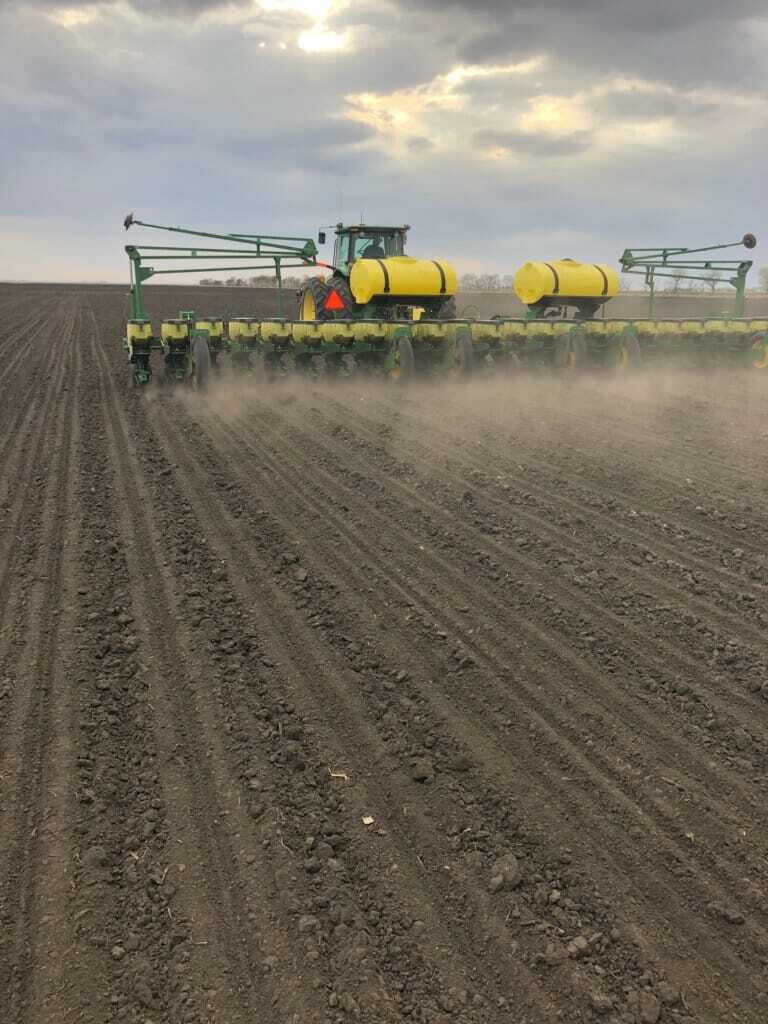
While some Midwest farmers will get the opportunity to reenter their fields this week, there won’t be much rest for the weary. With some seed already in the ground, it’s important to start scouting those fields now.
Post-planting is an ideal time to begin scouting one’s crops. Many soilborne pathogens strike as soon as the seed begins to take on water; others strike young seedlings. Because seeds can germinate quickly and emerge in 3 – 5 days, it’s not too soon to start walking your fields.
Check plant populations, evaluate stands and be on the lookout for early summer diseases. Is there a germination problem? Do you see effects of chilling or crusting?
Assessing your situation ASAP will allow you to formulate a plan while there’s still plenty of time to implement it. You could replant in parts or in all of a field now, so you can attain the yields and returns you want this fall. Information on corn replanting decisions is available from www.agronext.iastate.edu/corn. Click on the “Planting” topic, then click on the “Replant Decision Aid Calculator” tab and use that tool and related information to help make a replant decision. For a resource on soybean replanting decisions, go to www.extension.iastate.edu/publications/pm1851.pdf.
Another benefit of evaluating current stands is to help you determine what adjustments should be made before planting next year’s crop: Do you need to adjust your planter settings or your planting speed?
Once you get past the mechanical issues, look at the disease pressure. If soybeans are damping off, perhaps next season you should opt for seed-applied fungicides? Do you need to pay closer attention to a particular soybean brand or corn hybrid’s disease rating?
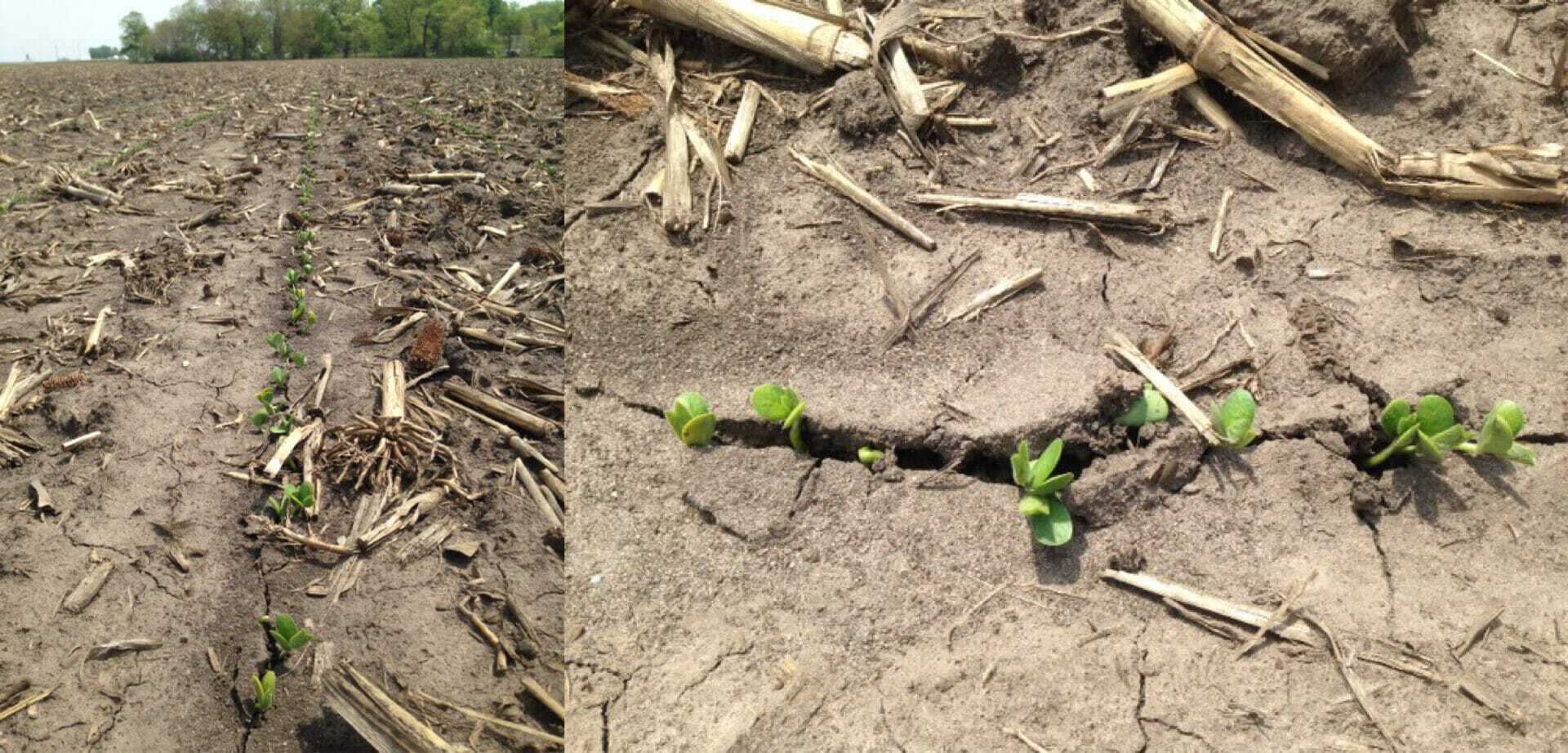
Sunshine and warm temperatures like we’ve experienced for the past week are needed to push along emergence of recently planted seed. However, we’re starting to see some instances where seedlings are struggling to break through the crusted soil surface as a result of either conditions at planting time or heavy rainfalls afterwards.
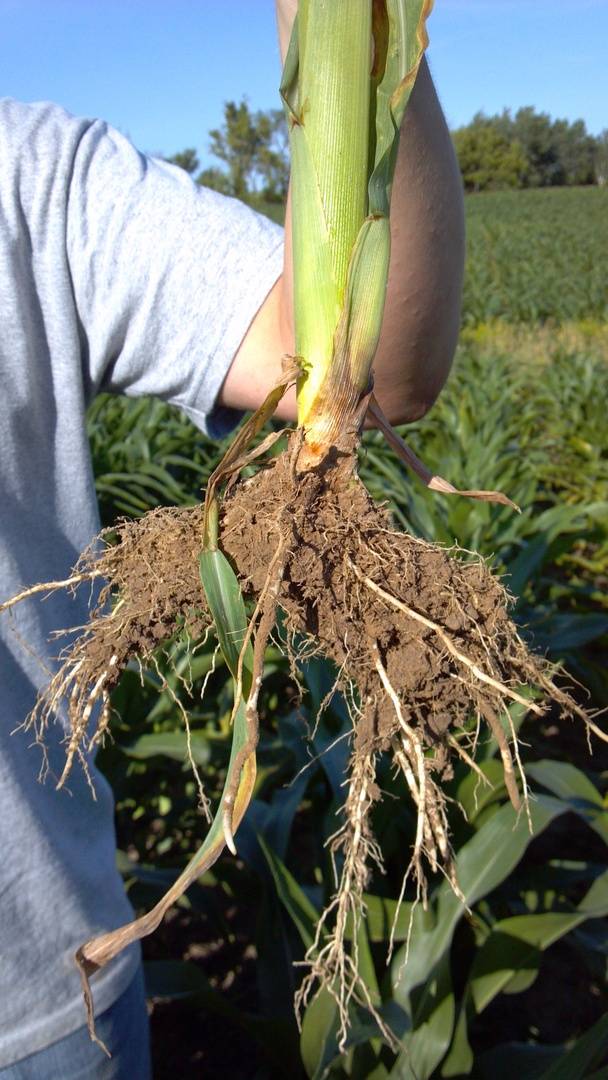
Wet planting conditions, fine soil textures, intensive tillage, or heavy rains after planting can result in delayed or uniform emergence. Some seedlings may not even emerge at all, which lowers stand counts and may reduce overall yield. Another problem that can result from crusted soils is rootless corn. Roots will take the path of least resistance, which means they might grow out the bottom of the seed furrow.
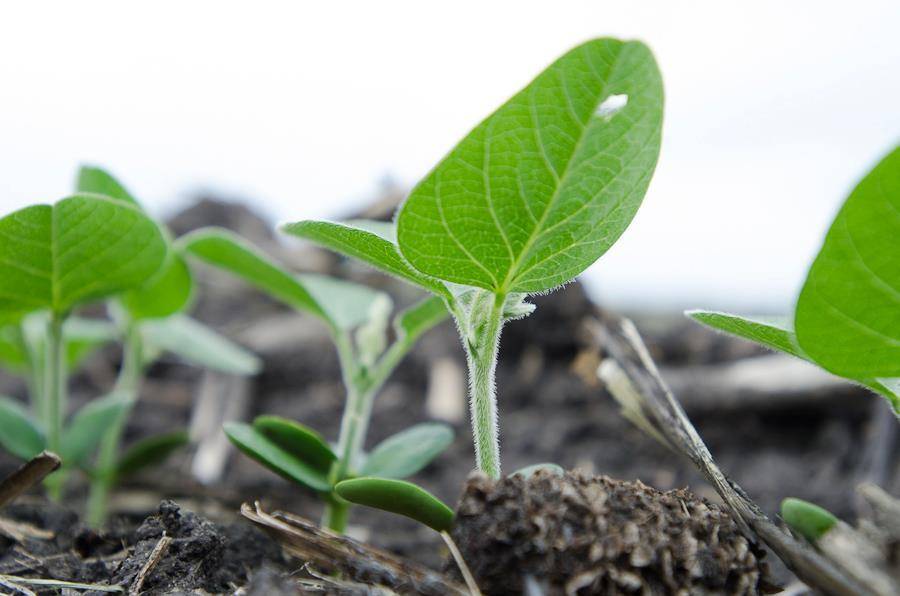
To help break up the crust and improve seedling emergence, consider using a rotary hoe. Get off the tractor and check for stand loss when starting a field. If loss seems greater than 3 to 5 percent, you may want to slow your travel speed to be less aggressive with the tool. Take care so soybean cotyledons aren’t broken off by the hoe. Expect a minor stand loss from hoeing, but this should be insignificant if your crop is truly having difficulty breaking through a crust.
Be sure to wait until soils have dried before using a hoe, so you don’t exacerbate the situation with soil compaction. Use a quick field test to check soil moisture. Simply mold a length of soil between your index finger and thumb, or roll it into a ball in your hand. Observe whether the soil breaks apart as you work it. If you toss the ball of soil into the air and it shatters or cracks upon falling to the ground, then conditions are likely suitable for tillage.
Better planting equipment, improved soybean genetics and technology advancements such as seed treatments and weed control systems have moved soybean planting dates earlier in recent years. Last year 34% of Iowa’s soybean crop was planted by early May; this year only 1% of Iowa’s soybean acres are planted as of May 13.
Although there is a correlation to higher yield potential with earlier planting dates, it’s important to remember that soybeans respond favorably to early-planting datesif soil conditions are ideal for planting. Conditions weren’t fit for planting soybeans in late April or early May.
One silver lining in the delayed soybean planting is that soil temperatures have warmed. We recommend planting soybeans when soil temperatures are about 60 degrees, and soil temperatures were averaging only in the low 60s around May 15.
Planting into a field that is too wet or too cold early in the season will reduce emergence and plant population, which most often leads to reduced yield. Remember, planting soybeans in warm but wet soils can also have a detrimental impact on yield. Patience will continue to be key this planting season!
To help provide “picket fence stands,” corn growers must make proper planter adjustments. It’s also important to match the planter speed to field conditions and to avoid planting seeds in extremely poor soil conditions.
Planting in soils that are too wet can lead to sidewall compaction. The under-developed root systems resulting from the compaction are often confined in a flat plane within the furrow trench. Planting in too wet of soil, especially with coulters, allows sticky soil to build up on gauge wheels resulting in planting depth differences.
Shallow planting places seed in differing soil moisture levels and can result in differing emergence dates. Shallow planting also can lead to a shallow secondary root system. “Rootless corn” may result, or plant development may be greatly delayed compared to neighboring plants.
Failure to close the furrow is usually caused by poor soil conditions, improper closing wheels for field conditions, incorrect down pressure, or planting in sod. Worn or improperly adjusted planter parts can cause or aggravate all the previously mentioned problems.
Make sure your planter does all its jobs properly: open the seed furrow without sidewall compaction; place seeds at a uniform depth; and close the seed slot without compaction. Stop the planter frequently and physically check to ensure you’re getting uniform seed depth and good seed-to-soil contact. Although it will take a few extra minutes in the spring, you’ll be glad you did when it’s time to harvest those extra bushels come fall!
Among the thousand variables crops are subject to each growing season, planting is the most crucial. Corn Product Specialist, Nick Benson offers these tips for proper depth and spacing as planters hit the ground rolling this spring.
Seeing is Believing: See Why It’s So Important to Avoid Wet Soils!
After being cooped up for the better part of the past month, I’m as eager as any farmer is for the spring planting season to begin. Cold and wet weather in April has delayed planting, but we must remember that all of this moisture helped recharge the soil – and farmland across the Midwest desperately needed that!
The hardest part is going to be waiting to enter fields once the skies clear. Clear skies and sunshine don’t necessary mean that conditions are fit for planting. That’s why today I want to take a few minutes to remind you that it’s “worth the wait” to let fields dry before doing any work.
You’ll cause yourself headaches – and your crop problems – throughout the growing season if you try to plant in unfit conditions. The top 10 reasons to avoid soil compaction include, but are not limited to,: stunted plant growth; slow infiltration of water and/or ponding; high surface runoff and soil erosion under normal or light rainfall; poor root system establishment; and nutrient deficiency.
Compacted fields may experience yield losses of 10% to 20%, according to Iowa State University researchers.
It literally pays to understand and manage soil compaction. The #1 way to avoid soil compaction now is to wait for the fields to dry. In a video I made this week, you’ll see how to use a quick field test to check the soil moisture. You just mold a length of soil between your index finger and thumb, or roll it into a ball in your hand. Observe whether the soil breaks apart as you work it. If you toss the ball of soil into the air and it shatters or cracks upon falling to the ground, then conditions are likely suitable for tillage or planting.
For additional tips on how and why to avoid soil compaction, take a few minutes to read these related posts:
Even though spring planting has been delayed by unseasonably wet and cold weather, there’s no need for corn farmers within the Upper Midwest to push the “panic” button. We’re still within the ideal planting window, so work your crop plan.
Research shows that hybrids adjust to planting dates.Adapted full season corn hybrids can compensate somewhat for later plantings. As planting is delayed, hybrids shorten the time between planting and silking. Full-season hybrids almost always outperform short season hybrids, so farmers really don’t need to consider switching maturities until May 25.
Let soil temperatures and soil conditions – not the calendar – dictate planting dates. At this point, fields are not yet fit for planting. Your yield potential will be more negatively affected by planting in wet soils than waiting even a couple of weeks for better conditions. On average, farmers will lose about half of a bushel/acre per day due to delayed planting. Research shows farmers will lose more yield if crop is planted into less than ideal conditions, so we encourage you to wait for soils to warm up and dry out.
Corn planted into wet soils will be prone to problems throughout the growing season such as: stunted plant growth; slow infiltration of water and/or ponding; high surface runoff under normal or light rainfall; poor root system development, or rootless corn; and even nutrient deficiency. Potassium deficiency is caused by corn roots not being able to take up potassium from compacted soils.
REMEMBER: The majority of yield is determined during planting. “Patience” is key right now. Good things come to those who wait for the right seedbed conditions!
tech·nol·o·gy noun tek-?nä-l?-j? 1a:> the practical application of knowledge especially in a particular area b: a capability given by the practical application of knowledge 2: a manner of accomplishing a task especially using technical processes, methods, or knowledge <new technologies for information storage> 3: the specialized aspects of a particular field of endeavor
Despite what Webster says, every person at Latham Hi‑Tech Seeds most likely would define “technology” as it relates to his/her job. Mention “technology” to company president John Latham and he’s apt to engage you in a conversation about Agrisure Durcade, which should receive approval soon, to fight corn rootworm. Product Manager Mark Grundmeier might have XtendTM soybeans on his mind since new stacked brands are in the pipeline, featuring Genuity® Roundup Ready 2 Yield® technology with Dicamba resistance.
Kathy Rogotzke, math instructor at North Iowa Area Community College, visits with Dani Young, a sophomore at CWL, during the Women in Science, Technology, Engineering and Math (STEM) Conference Friday at NIACC. PHOTO COURTESY OF MARY PIEPER/The Globe Gazette
I hadn’t really stopped to think about how technology advancements – many that we’ve made within the last four years – have changed the way we do business until I sat down to write a speech. I looked at our business in a different light after Dr. Kathy Rogotzke, math instructor at North Iowa Area Community College (NIACC), contacted me to be a speaker for NIACC’s WOMEN in STEM (Science, technology, engineering and math) careers event.
My charge was to inspire high school students to consider careers in technology and to help open their eyes to career opportunities. Instead of talking only about how new media technology has changed Latham Seeds’ approach to marketing and public relations, I decided to give high school students an idea of just how broad the technology field is and how many jobs are affected by it.
Today I’d like to share with you, our readers, a brief overview of how technology impacts every facet of our business:
Smartphones for up-to-the-minute markets and real-time weather
Bottom line: Even if a person wasn’t raised on a farm, chances are he or she could find a fulfilling career in a technology field that’s somehow affiliated with agriculture. With a job placement rate of 98% for Iowa State University’s College of Agriculture graduates, it’s certainly worth considering!
Not only are placement rates great, but starting salaries are among the highest for new grads since careers in agriculture encompass science, technology, engineering and math. People who want jobs move to areas where there is opportunity, and today there is virtually limitless opportunity in agriculture. There’s never been a better time for young people to enter the industry!
Continued use of the same rootworm-resistant trait in corn hybrids, an increase of corn-on-corn areas, plus a lack of refuge acres, has caused rootworm resistance to become an issue in some areas. Best management practices, including rotation, are key to effectively controlling corn rootworm populations.
Northern Corn Rootworm
However, rotation isn’t as simple as it used to be. Farmers can no longer merely rotate between corn and soybeans asthe only effective management strategy. Both the Northern Corn Rootworm and the Western Corn Rootworm have developed methods to counteract the effects of rotation on their life cycles. The Northern species uses a tactic called Extended Diapause that allows its eggs to lay dormant during the time fields are in soybeans. The eggs will then hatch after the field is planted to corn, and the young worms will feed on the corn roots. Adult females of the Western species have actually learned to lay their eggs in soybean fields, thereby allowing them to hatch the following spring when the field is planted to corn. With these changes in what used to be considered the “normal” life cycles of rootworms, managing CRW today requires increased diligence.
Western Corn Rootworm Beetle
Rotating rootworm-resistance traits developed by Monsanto, Syngenta and Dow will help CRW resistance from developing if farmers actually rotate modes of action. One advantage of working with family-owned and independent Latham Hi‑Tech Seeds is that we can help you select the trait packages needed to change up your modes of action. Latham offers the industry’s broadest, deepest seed lineup – which makes it more convenient for farmers to get all their seed needs met.
Using hybrids with more than one rootworm trait like Genuity® SmartStax® may offer another line of defense against CRW. The recent approval of Agrisure Duracade from Syngenta provides another trait in the arsenal to fight CRW; hybrids with Agrisure Duracade are expected to be commercially available in 2014.
Additionally, refuge acres must be planted. Refuge-In-the-Bag (RIB) hybrids available from Latham Hi‑Tech Seeds make compliance simple. Respect the refuge® and it will greatly increase our likelihood of keeping rootworm traits viable for years to come. Rotation helps reduce the risk of resistance. However, planting refuge alone is not enough.
Corn rootworm management is a complex issue and the solution is more than just traits. There are many factors and management options that must be considered:
While perusing some ag chat sites this week, we came across the following questions posted by a Midwest farmer. Today Latham Product Manager Mark Grundmeier answers questions that are top-of-mind with farmers.
Q: Is treating seed corn with VOTiVO® enough to protect the crop from nematodes throughout the growing season? Extremely high numbers of nematodes have been confirmed on one of our farms. We have ordered our corn seed for 2013 treated with VOTiVO. What else should we do to eliminate nematodes, if possible? This is by far the biggest yield robbing problem I have ever seen. I thought Gray Leaf Spot was a big yield robber, but it’s nothing compared to the damage done last year by nematodes. It was deceiving because symptoms all showed signs of drought, even under full irrigation and compaction.
A: One reasonnematodes are difficult to control is because stunted, yellowing, wilting corn is often mistaken for something else, such as drought in this case. Therefore, nematodes often go undetected and the yield-robbing situation multiples – literally.
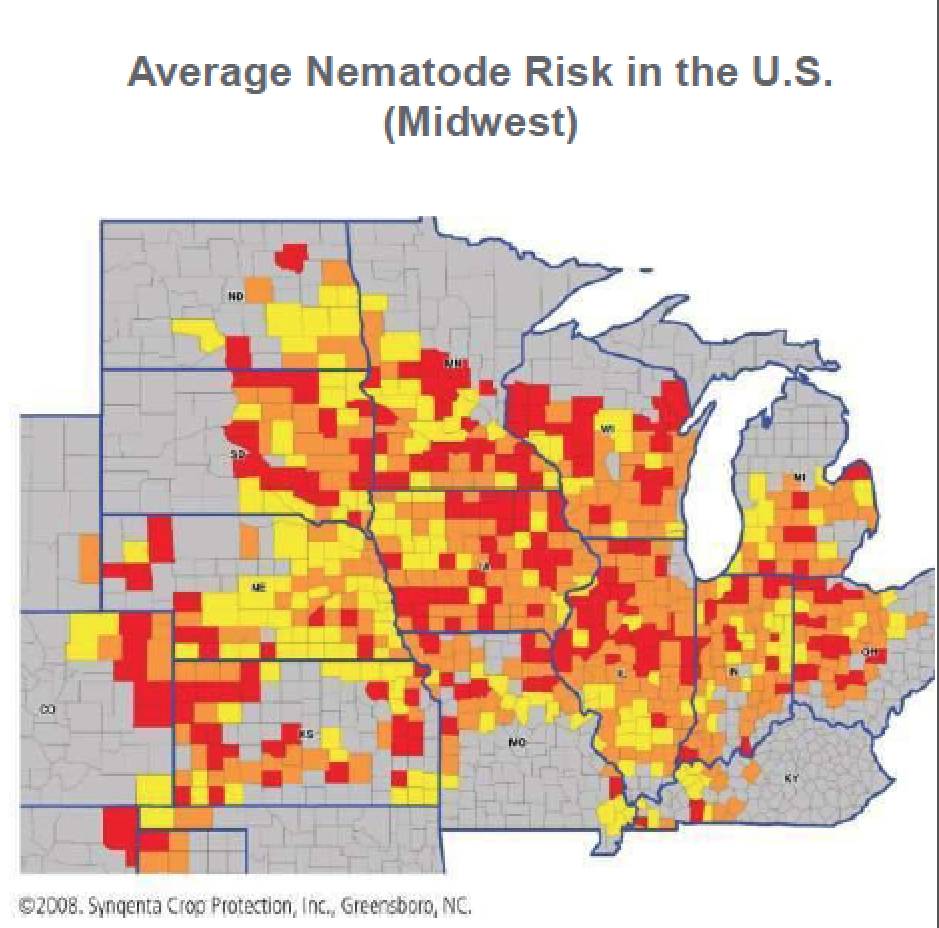
Nematodes are a growing problem across the Midwest, most likely due to trends of no-till farming. Nematodes are sensitive to soil disturbance, so they tend to thrive in no-till situations. Crop rotation isn’t an effective form of management as corn nematodes also feed on soybeans and grasses. So what is an effective way to manage corn nematodes?
A new management option is using a seed treatment that moves onto the roots to provide early season protection against nematode feeding, says Dr. Greg Tylka from Iowa State University. Poncho®/VOTiVO® seed treatment protects young plants from pests during critical early development stages, leading to healthier root development and stronger stands.
VOTiVO seed treatments act like a barrier, preventing nematodes from attaching to corn roots. Applied directly to the seed, it helps prevent damage to early-season seedlings and roots before pests can strike. Nematicides on the other hand, actually kill the nematodes on contact. Avicta® from Syngenta Seedcare is a nematicide seed treatment that moves on the surface of the root.
Immediate Protection – Systemic agent protects valuable seed from the moment it’s planted
Pest Control – Biological agent creates a living barrier of protection against a wide range of nematodes, including Soybean Cyst, Root Knot and Reniform nematodes
Yield Potential – Promotes healthier root systems and a more vigorous and uniform crop, positively impacting yield
Benefits of Avicta® Brand Seed Treatments:
Avicta Complete Corn is a combination of Avicta nematicide and CruiserMaxx® Corn 250 (Cruiser® 5FS insecticide & Maxim® Quattro fungicide). It is also available with a higher rate of thiamethoxam for enhanced insect protection (0.5 mg ai/seed and 1.25 mg ai/seed respectively).
Provide instant protection against a wide variety of damaging nematode species
Consistently protect against a broad range of early-season insects and disease pathogens
Proven to help increase plant stand, vigor and yield potential
Much of the corn plant’s yield potential is determined in the early growth stages. Avicta Complete Corn provides immediate protection from day one.
The higher the population of nematodes, the greater the chances are that nematodes will break the barrier created by VOTivO. So when extremely high populations of various species of corn nematodes are present, it may be beneficial to use both a seed treatment and a planter-applied nematicide.
Studies by Iowa State University show nematode management products may have a more pronounced beneficial effect in fields with very damaging nematode species and in fields with much greater plant-parasitic nematode population densities.