Latham Hi-Tech Seeds

(641) 692-3258

  • Home
  • Products
    • Corn
    • Soybeans
    • Alfalfa
    • Corn Silage
    • Seed Guide
  • Performance
  • Find a Rep
  • Media
    • Blog
    • News
    • Videos
    • Podcasts
    • TECHTalk
  • About Us
    • Company History
    • Our Mission
    • Careers
    • Become a Rep
    • Sowing Seeds of Hope
  • Contact Us
  • Latham Hi‑Tech Seeds

    Ask the Agronomist: Brown Stem Rot or SDS?

    Ask the Agronomist Feature Photo 01

    Thanks for tuning in to our weekly “Ask the Agronomist” Audiocast! Play the audio file below to listen to Mark’s response to this week’s question about how to determine whether a soybean crop is affected by Brown Stem Rot or Sudden Death Syndrome.

    https://www.lathamseeds.com/app/uploads/2016/08/Latham-KOEL-8_17_16.mp3


    Q: I thought my field was showing signs of Sudden Death Syndrome. Now I’m not sure if it’s really SDS or Brown Stem Rot. How can I tell the difference?

    A: Late-season crop scouting is so important because we see different symptoms, depending on the point we’ve reached in the growing season as well as environmental conditions. We’re seeing both SDS and BSR, sometimes even in the same field!

    The best way to tell to the difference is to split the soybean stem. Brown Stem Rot (BSR) infection causes vascular and pith tissues to turn brown to reddish brown. When disease is severe, discoloration is continuous from the base of the plant up. Discoloration only occurs at nodes disease when the disease is less severe, and you’ll see healthy, white tissue between the nodes.

    Q: What causes Brown Stem Rot?

    A: BSR is caused by a fungus that enters through the plant’s root system. Severe infestation occurs when soil moisture is high and air temperatures are cooler throughout the summer, which promotes the growth of the fungus in the stems. Symptoms worsen if the disease development is followed by drought stress during pod fill. BSR also increases in severity if Soybean Cyst Nematode populations are high.

    Q: How does Brown Stem Rot spread?

    A: Brown Stem Rot is a soil-borne pathogen. It survives in infected soybean residue left on the soil surface. The fungus is not carried with seed.

    Q: What can be done if you find Brown Stem Rot in your fields now?

    A: Unfortunately, just like Sudden Death Syndrome, nothing can be done for a field once it has been infected with BSR.  Scouting now for Brown Stem Rot is important for two main reasons: (1) To determine if management practices may have had an impact on the severity this season; and (2) To select soybean seed for the following season based on BSR score and Soybean Cyst Nematode tolerance.

    Q: What management practices can help control Brown Stem Rot?

    A: The most effective way to manage Brown Stem Rot, Soybean Cyst Nematode and Sudden Death Syndrome is through seed selection. Latham® brand soybean varieties with the IRONCLADTM designation offer the best control, but be sure to read disease ratings of each product. For fields with a history of severe brown stem rot problems, plant a variety with a rating of 1.5 or better. A Latham rep also can help you select the best product on a field-by-field basis.

    In addition, crop rotation can help reduce the likelihood of Brown Stem Rot. Going away from soybeans for 2 years is more effective than 1 year. Reducing soybean residue helps because then the BSR inoculum doesn’t have a place to overwinter.  Tillage can also be effective.
    Webspec Admin

    August 18, 2016
    #AskTheAgronomist, Agronomics, Disease, Soybeans
  • Latham Hi‑Tech Seeds

    Building Soil Health for Generations Ahead

    Fredricks 7
    Fredricks 2Building soil health is a key component on Wayne Frederick’s farm as he plans for the future. However he’s not just building up his soil. He’s also building a network and connection of people who are looking to accomplish the same goal.Fredericks is an encouraging leader, as he leads by both example and passion. He’s serving as president of the Iowa Soybean Association and is in the midst of his second year on the American Soybean Board.

    After graduating from Iowa State University in 1973, Fredericks returned to farm in Osage, Iowa. While farming in Osage, Wayne met his wife Ruth and they were married in 1975 and have lived on their current home site since 1979. Their daughter, Angela, stayed in the agricultural industry, too, now working for the National Pork Board.

    The Fredericks grow corn and soybeans, with an emphasis on leaving the land better than they found it. Their passion is clear.

    Fredricks 3“Soil health and quality can and do improve, depending on your farming practices,” said Fredericks. “Implementing practices of no-till and strip-till helps us raise better crops while improving the soil health. We are trying to raise the bar even further with the adoption of cover crops and pollinator habitat to further enhance water quality, soil health and the environment.”

    The Fredericks will host a group of consumers on August 26, for Expedition Farm Country, which is part of the Iowa Food and Family Project, sponsored by the Iowa Soybean Association and supported by Latham Hi‑Tech Seeds.

    If you’re interested in attending this tour, email lfoss@iasoybeans.com and state why you’d like to embark on the farm tour!
    Fredericks is looking forward to hosting this group and is excited to answer questions and have a conversation about agriculture.Fredricks 7“They’re going to see the excitement of what we having going on in North Iowa. They’re going to see the cutting edge practices of conservation, and we are hoping this excitement will rub off on others,” Fredericks said.Watch for more blog posts about Expedition Farm Country! In the meantime, try this recipe from the Iowa Food and Family Project, sponsored by the Iowa Soybean Association. Cool down with these State Fair Peppermint Ice Cream Bars!

    Webspec Admin

    August 12, 2016
    Agronomics, General, Soil
  • Latham Hi‑Tech Seeds

    Ask the Agronomist: Goss’s Wilt

    Ask the Agronomist Feature Photo 01

    Thanks for tuning in to our weekly “Ask the Agronomist” Audiocasts! Play the audio file below to listen to Jerry’s response to this week’s question about Goss’s Wilt.

    https://www.lathamseeds.com/app/uploads/2016/08/Latham-8_10.mp3


    Listen to this week’s Ask the Agronomist for everything you need to know about Goss’s Wilt.

    Q: More cases of Sudden Death Syndrome are evident across the country this week, and I’m starting to see Goss’s Wilt in fields where I haven’t seen it before. What can be done to combat these diseases?

    A: Sudden Death Syndrome, commonly referred to as SDS, is a cold-borne organism that attaches to the plant. The disease starts in the spring after planting, but symptoms won’t show up until late July to early August. Goss’s Wilt is usually caused by previous damage to the plant, such as hail, and this damage provides passage into the plant for the bacteria.

    The best mode of action against these diseases is seed selection. That may sound self-serving coming from a seed salesman, but it is a proven fact that diligent seed selection is key to managing future outbreaks.

    Q: Last week we talked extensively about managing SDS in the future. What are some best management practices for Goss’s Wilt?

    A: There are other management practices that can be implemented to reduce risk for SDS and Goss’s Wilt. Rotation of corn production for one year allows residue to break down and reduce bacteria populations. Tillage and other practices that encourage residue decomposition will also reduce the amount of bacteria present to infect future corn crops. Good weed management practices can also help control weeds that serve as a source of these diseases.

    Q: Goss’s Wilt is something we typically think of as a “western disease.” Why is it becoming more of an issue in the East now?

    A: Goss’s Wilt is a disease like any other that will progress and move beyond its initial borders. It is now being seen as far East as Indiana. In 2008, it was reported that Goss’s bacterial wilt and leaf blight caused yield losses of up to 60 bushels per acre in northwestern Indiana. Goss’s Wilt is a growing problem, so to combat this issue, Latham Hi‑Tech Seeds has identified 23 hybrids that handle Goss like a Boss.

    Q: How can farmers learn more about Goss’s Wilt and Sudden Death Syndrome?

    A: We’ll be talking more about weed management strategies and new seed technologies during Latham’s Technology Road Show. The first stop on this tour is Friday, August 19, in eastern Iowa for the 2016 Latham Freedom of Independence Ride.

    Q: What is the Freedom of Independence Ride?

    A: The Freedom of Independence Ride is Latham’s field day on two wheels! We encourage farmers – even if they’re not Latham® customers – to join this ride. We’ll be covering broad topics that include:

    • Precision Agriculture
    • Cover Crops
    • Next-Generation Weed Management Systems such as Xtend, Balance GT and Enlist

    We’ll also make two fun stops. One of those stops has 90 restored antique tractors and another stop will be at Antique Archeology in Le Claire. We’ll also see a demonstration by service dogs in training with Retrieving Freedom Inc. In fact, this ride will help raise funds to train RFI service dogs.

    To register for the Freedom Ride and more information on this fun event, visit www.lathamseeds.com.

    Thanks for tuning in to this week’s Ask the Agronomist. We’ll be back again next week to field all of your questions during #grow16.

    Webspec Admin

    August 11, 2016
    Agronomics, Corn, Crop, Disease, General
  • Latham Hi‑Tech Seeds

    Ask the Agronomist: Sudden Death Syndrome

    Ask the Agronomist Feature Photo 01

    Thanks for tuning in to our weekly “Ask the Agronomist” Audiocasts! Play the audio file below to listen to Mark’s response to this week’s question about Sudden Death Syndrome.

    https://www.lathamseeds.com/app/uploads/2016/08/Latham-8_4.mp3


    Listen to this week’s Ask the Agronomist for everything you need to know about Sudden Death Syndrome.

    Q: We’ve received a question from a farmer this week saying “Sudden Death Syndrome is breaking bad in my soybean fields. Why does it appear to be affecting more fields this year and what can I do about it?”

    A: Sudden Death Syndrome appears after flowering in the growing season, and usually we see issues in early August. Cool, wet planting conditions, like what the Upper Midwest experienced earlier this year, can increase severity of sudden death later on in crop development.

    Q: What symptoms should we be looking for?

    A: Farmers should first be scouting for yellow blotches on leaves. These will progress into larger patches, but keep in mind that leaf veins remain green while the rest of the leaf will eventually turn brown and leaflets will fall off. However, petioles will remain on the stem. SDS can cause rotted root systems, too.

    Q: Are there certain soil types or fields more prone to SDS?

    A: There isn’t a certain type of soil that is more prone, but there are specific areas of a field that can more easily develop SDS. High moisture areas such as low spots can have higher severity, and it is also often correlated with compacted soils in margins of a field or low-lying bottoms.

    Fields with a history of SDS should be planted when soils are warmer and drier. No-till practices allow soils to remain cooler and wetter during the spring, so these fields are more at risk as well. Sometimes, tillage on a field with a history of SDS is a good practice as long as those fields aren’t worked in wet conditions.

    Q: What can farmers do if they begin to notice SDS in their fields this year?

    A: Unfortunately, there is not much that can be done to stop SDS once it begins. Prevention is the best defense against SDS. Prevention tactics include: responsible tillage practices to reduce soil compaction, waiting for soils to dry up towards the end of planting seasons, and testing for presence of soybean cyst nematodes. Soybean Cyst Nematodes (SCN) are associated with SDS.

    Q: What can be done if farmers test their soils and find a soybean cyst nematode presence?

    A: The best way to combat SCN is to plant resistant varieties, or avoid susceptible varieties. Be sure to keep Latham IRONCLAD™ soybeans in mind when mapping out which varieties will be used on different fields for 2017.

    To bear the IRONCLAD™ name, each soybean variety must be SCN resistant, phytophthora root rot resistant, and an iron deficiency chlorosis rating of 2.2 or better. Depending on the geographic location needs, IRONCLAD™ varieties must protect against either white mold or SDS with a rating of 2.2 or higher.

    Q: Wasn’t there a new seed treatment that was supposed to fight against SDS?

    A: ILeVO seed treatment from Bayer CropScience received a lot of positive press in 2015 for its effectiveness against SDS. That prompted Latham research staff to conduct 2016 studies using ILeVO treated seed side-by-side with seed that was not treated with ILeVO. Preliminary reports aren’t showing any significant visual differences, but that final determination will be made after harvest. This information will be shared at post-harvest meetings in the fall. Like it or not, this new tool will most likely not be that “silver bullet” cure farmers are hoping to find.

    Q: If there is no cure for SDS, why should farmers be scouting for it?

    A: An ounce of prevention is worth a pound of cure. Scouting for SDS is important to determine if management practices were at fault and to help select the right seed for each field next year based on SDS score and Soybean Cyst Nematode tolerance.

    Walking fields and taking notes will help farmers determine an action plan for next year. What we’re seeing now in the fields can have an impact on what we see in 2017.

    On August 19th, the Latham Freedom of Independence Ride will be taking place near Eldridge, Iowa. This one-of-a-kind, “plot tour on wheels” is a fun day that anyone can bring a motorcycle or vehicle to travel on while Latham representatives share information about what is coming down the pipeline for 2017.Freedom-Ride-2016-logo-01-328x220

    Thanks for tuning in to this week’s Ask the Agronomist. We’ll be back again next week to field all of your questions during #grow16.


    Webspec Admin

    August 4, 2016
    Agronomics, Crop, Disease, General, Soybeans
  • Latham Hi‑Tech Seeds

    Ask the Agronomist: Corn Rootworm

    Ask the Agronomist Feature Photo 01

    Thanks for tuning into Week 12 of our “Ask the Agronomist” Audiocasts. Guest Agronomist and Latham Hi‑Tech Seeds Regional Sales Manager for Eastern Iowa, Jerry Broders, is filling in for Latham’s Senior Agronomist, Mark Grundmeier. To listen to Jerry’s response to this week’s question about Corn Rootworm, play the audio file below.

    https://www.lathamseeds.com/app/uploads/2016/07/Latham7_18.mp3


    Listen to this week’s Ask the Agronomist to learn about effective strategies for fighting Corn Rootworm.

    Q: We’ve gotten some damage from Northern Corn Rootworm. What else are you seeing out in the fields across your territory?

    A: Western and Northern Corn Rootworm are common insects that are well versed in overcoming control practices. That’s why we recommend farmers scout all fields for corn rootworm. Northern Corn Rootworm feeds on corn silks, but Western Corn Rootworm can feed on leaves, too.

    The wide range in planting dates this spring creates a perfect opportunity for rootworm beetles to move between fields. A late-maturing corn field may attract a large number of beetles if neighboring corn has stopped producing pollen.  Beetles may also move into corn and/or soybean fields that have an abundance of pollen-producing weeds, including volunteer corn, ragweed or foxtails.

    Q: What type of damage should farmers look for?

    A: Corn rootworm larvae feed on roots. Check fields for lodged plants, especially now that storms might be affecting stands. However, don’t assume lodging is a result of corn rootworm as compaction from planting into wet soils can cause poor stands.

    Preventative maintenance needs to be done to reduce risk for next year’s crop. Especially in corn-on-corn fields, spray insecticide to rid the field of any larvae that may have been laid. Also make sure that fields with corn rootworm problems this year get traited corn next year that protects against corn rootworm. Latham Hi‑Tech Seeds has hybrids referred to as Gladiator™ hybrids that have undergone rigorous testing to ensure they perform well under intense corn rootworm pressure.

    Q: With a name like Gladiator, it sounds like we’re declaring war on insects! What “weapons” make these hybrids effective against insects?

    A: Latham has a full lineup of products ranging from 92 day to 114 day maturities.  We use Genuity® SmartStax® products, as well as Syngenta’s Agrisure 3122 since these contain two modes of action for below-ground insects.  In addition, we are eagerly waiting for full approval of Syngenta’s new Duracade double rootworm trait that looks very promising.

    If you have a question about what you’re seeing in the fields, feel free to ask! Send your questions via Twitter to @LathamSeeds, in a private message on Facebook or call our office at 1-877-GO-LATHAM (1.877.465.2842).

    Also be sure to check out TheFieldPosition.com for timely agronomic information. Crop reports from specific areas across Latham’s six-state marketing area are published every Wednesday during the growing season by Latham’s regional sales managers in each of those locations. New articles are posted each week day on our blog. You can even search for “topics” by simply typing key words into the search bar on the upper right-hand corner.

    Thanks for tuning in to this week’s Ask the Agronomist. We’ll be back again next week to field all of your questions during #grow16.

    Webspec Admin

    July 21, 2016
    Agronomics, Corn, Crop, General, Insects
  • Latham Hi‑Tech Seeds

    ASK THE AGRONOMIST: Foliar Diseases

    Ask the Agronomist Feature Photo 01

    Ask the Agronomist: Foliar Diseases

    Read this week’s Ask the Agronomist to learn about which foliar diseases you should be looking for in your fields at this point in the growing season.

    Q: Should I be thinking about spraying foliar insecticides yet?

    A: We’re about midway through the growing season, and it’s the time of year when leaf diseases and insect pressure prevails.  Watch for these three situations in your corn fields:

    • Northern Corn Leaf Blight
    • Western Corn Rootworm
    • Eye Spot

    Also check your soybean fields for Soybean Aphids, and all fields for redheaded flea beetles.

    Q: What can you tell us about Soybean Aphids?

    A: In last Wednesday’s weekly crop reports, none of our regional sales managers reported soybean aphids at threshold levels but aphid populations can double every two to three days! With the varying stages of soybean development due to an extended planting season and many late replants, continue scouting past your first insecticide application and all the way through pod development.

    Q: Soybean Cyst Nematodes are the #1 yield robber of soybeans; are we seeing signs of SCN damage yet?

    A: It’s a bit early for Soybean Cyst Nematodes to appear, especially for those late-planted fields and replants. However, farmers can dig roots to check for SCN presence before symptoms can be seen. Digging roots is the best way to monitor fields for SCN, and female SCN will be on soybean roots through early August.

    Q: If symptoms aren’t present, why do you recommend checking for Soybean Cyst Nematode females on the roots?

    A: Farmers should evaluate effectiveness of their seed treatments all throughout the growing season. The most effective way to manage SCN and many other diseases is by selecting quality soybean seed. At Latham, we urge our growers to consider selecting our unique IronClad™ Soybeans. To bear this brand, every variety must be SCN resistant and have an Iron Deficiency Chlorosis rating of 2.2 or better. It must also contain a Phytophthora-resistant gene as well as a 2.2 or better rating against Brown Stem Rot and either White Mold or Sudden Death Syndrome.

    Q: On the corn side, what leaf diseases should farmers be scouting for, especially considering the high-moisture spring and humid summer we have had?

    A: Plentiful moisture is ideal for fungal corn diseases. Check your fields weekly for these common diseases:

    • Gray Leaf Spot
    • Southern and Common Rust
    • Northern and Southern Leaf Blight
    • Eyespot

    There are confirmed cases of Northern Corn Leaf Blight (NCLB). Now is a critical time to scout fields, especially for fields planted with NCLB-susceptible hybrids. If the disease is present on 50 percent of the field (one or more lesions per plant) at tasseling, a fungicide application may be warranted to protect yield.

    Q: In the future, how can farmers lessen their chances of NCBL presence in their fields?

    A: To prevent NCLB from becoming a larger problem in the future, rotate to a non-host crop. A two year rotation away from corn may be necessary in no-till and reduced tillage fields with a history of NCBL. Hybrid selection is also key for reducing future threats of NCLB

    If you have a question about what you’re seeing in the fields, feel free to ask! Send your questions via Twitter to@LathamSeeds, in a private message on Facebook or call our office at 1-877-GO-LATHAM (1.877.465.2842).

    Also be sure to check out TheFieldPosition.com for timely agronomic information. Crop reports From the Field® across Latham’s six-state marketing area are published every Wednesday during the growing season by Latham’s regional sales managers in each of those locations. New articles are posted each week day on our blog. You can even search for “topics” by simply typing key words into the search bar on the upper right-hand corner.

    Thanks for tuning in to this week’s Ask the Agronomist. We’ll be back again next week to field all of your questions during #grow16.

    Gary Geske

    July 7, 2016
    Agronomics, Corn, Crop, Disease, General
  • Latham Hi‑Tech Seeds

    Ask the Agronomist: Rapid Growth Syndrome

    Ask the Agronomist Feature Photo 01

    Thanks for tuning into Week Nine of our “Ask the Agronomist” Audiocasts. Guest Agronomist and Latham Hi‑Tech Seeds Regional Sales Manager for Eastern Iowa, Jerry Broders will be filling in for Latham’s Senior Agronomist, Mark Grundmeier. To listen to Jerry’s response to this week’s question about rapid growth syndrome, play the audio file below. (more…)

    Webspec Admin

    June 30, 2016
    Agronomics, General, Growth Stages
  • Latham Hi‑Tech Seeds

    Foliar Fungicides: Are they worth it?

    Ask the Agronomist Feature Photo 01

    Foliar Fungicides: Are They Worth It?

    With the hot, humid weather that has made its way into Latham Country this week, conditions are prime for foliar diseases. Scout fields prior to tassel to determine disease pressure. Fields considered to be high risk are continuous corn fields, fields with conservation tillage and susceptible hybrids.

    Watch for Gray Leaf Spot, Southern Rust, Common Rust, Northern and Southern Leaf Blight and Eyespot. Northern Leaf Blight has already been confirmed in southern Wisconsin, and nearly a month earlier than last year.

    Q:  How do I know when it is most beneficial to apply a foliar fungicide?

    A: Prior to tasseling. Some research shows that application prior to the V8 stage is beneficial, but to do that, disease pressure and identification is key to timing of application. In soybeans, the best time to apply is between R1 (flowering) and R3.

    If you are concerned about foliar disease after heavy rainfall or hail, fungicide should be applied depending on the upcoming weather forecast and the weather prior to damage. Most labels suggest applying within 72 hours after the weather event to get the best efficacy out of the fungicide. It is crucial to read and follow the label as each fungicide has its own personality.

    Q: Are there benefits of fungicide outside of crop protection?

    A: Fungicide that is applied at the proper time can produce positive results in the form of saved yield for corn and soybeans. While some studies have shown an increase in performance that can’t be attributed to saving yield due to decreased diseases, these results have been inconsistent and more work needs to be done in this area.  U.S. agriculture is going through a period where commodity prices are low and return on investment is minimal.  We would encourage farmers in Latham Country to at least consider conducting their own trials to see the benefits of foliar fungicides in their operations.

    When it comes to weighing the costs and benefits of fungicide, there are many factors to consider. Price of corn, product, application and drying costs can all seem like daunting costs that would scare away any farmer from going the extra mile. However, investing in fungicide could be a small tradeoff when it comes to protecting your yield.

    If you have a question about what you’re seeing in the fields, feel free to ask! Send your questions via Twitter to @LathamSeeds, in a private message on Facebook or call our office at 1-877-GO-LATHAM (1.877.465.2842).

    Webspec Admin

    June 23, 2016
    Agronomics, Fungicide, General
  • Latham Hi‑Tech Seeds

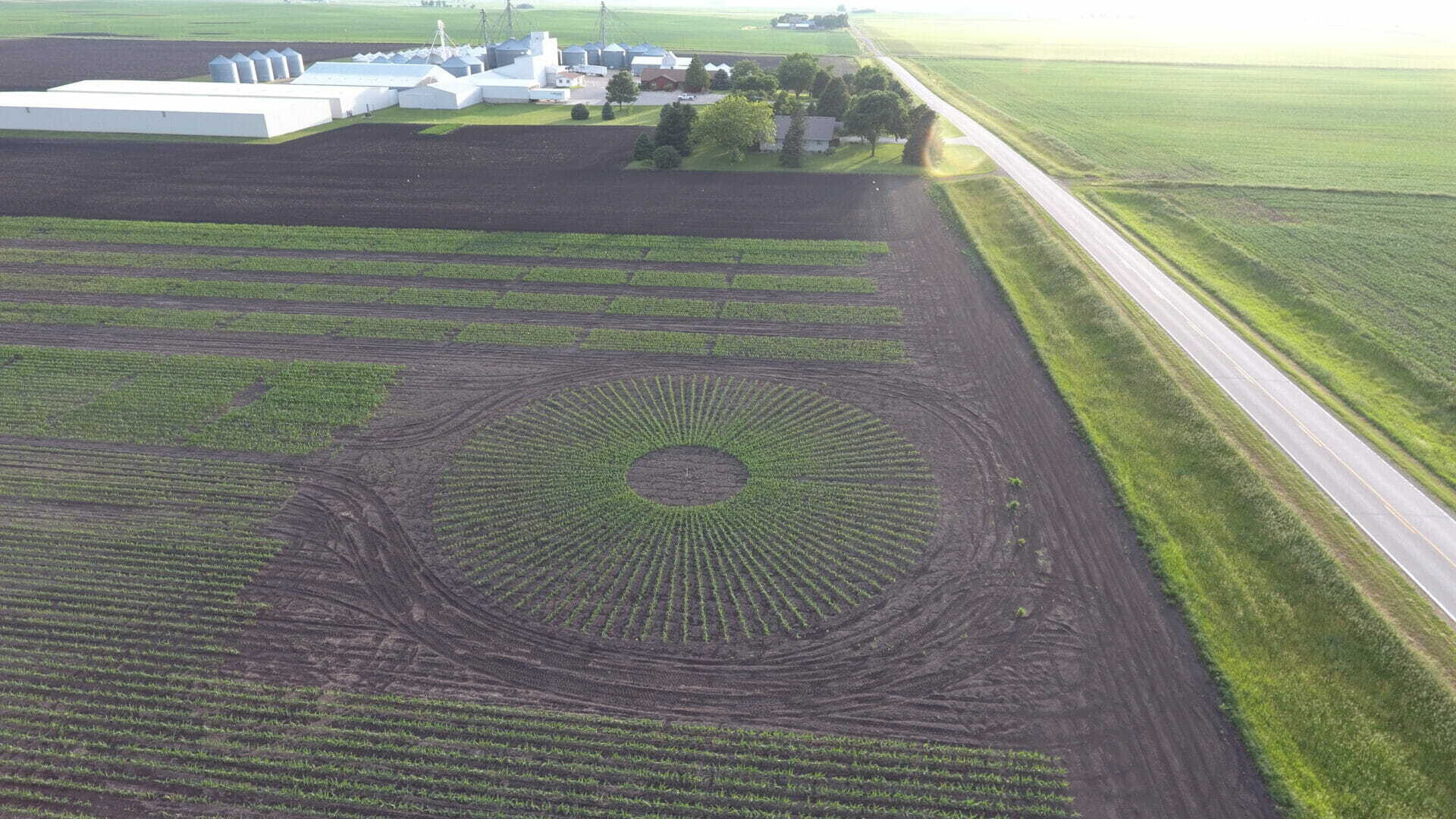
    Stress Wheels Show Hybrid Response to Population

    DCIM100MEDIADJI 0113.JPG

    We are officially in #grow16! Many farmers and the Latham Research Team are breathing a sigh of relief now that we’re seeing the crops take off. We’re especially seeing rapid growth in the stress wheel that was planted by the Latham Hi‑Tech Seeds Sales interns.

    (more…)

    Gary Geske

    June 20, 2016
    Agronomics, Corn, Crop, General
  • Latham Hi‑Tech Seeds

    Ask the Agronomist: Latham’s Seed-2-Soil Program

    Ask the Agronomist Feature Photo 01

    Thanks for tuning into Week Seven of our “Ask the Agronomist” Audiocasts. To listen to Mark’s response to questions about Latham’s Seed-2-Soil program, play the audio file below.

    https://www.lathamseeds.com/app/uploads/2016/06/Latham-6_15.mp3


    Q: What are we seeing out in the fields this week, especially with the wet conditions we’ve had this season?

    A: We’re starting to see a lot of yellow corn show up and most corn is at the point where it’s starting the rapid growth phase where deficiencies are beginning to appear in the plants. Soils remained wet for an extended period of time and corn that’s yellow is stunted. It’s hard to tell what the cause is of some issues that are appearing. These issues could be caused by water stress or roots not being able to reach the Nitrogen. I believe a lot of it is due to the excess water and compaction issues, but some could be from lack of Nitrogen supply.

    Q: Is there anything we can do to remedy the situation?

    A: Light cultivation can help aerate the root zones that are having compacted soil problems from the rain. Side dressing with Nitrogen can help as well. With most corn entering into the rapid growth phase, now is the time to get the plant growing. Controlled release Nitrogen applications and in-season fungicide applications can be combined to create an overall fertility plan. We’re not suggesting that this is a good substitute for a soil-applied fertility program, but if you’re facing a Nitrogen-deficiency situation and you’re applying a fungicide it makes sense to combine them both. This is where the Latham Seed-2-Soil° program comes into play.

    Q: What is the Latham Seed-2-Soil° program?

    A: Seed-2-Soil is Latham’s trademark system of agronomic tools designed to help simplify crop planning and seed selection. Growers choose their desired level of involvement, and we help them maximize a particular field’s yield potential by helping them focus on four key areas offered through Seed-2-Soil:

    • Crop Planning
    • Nutrient Management
    • Seed Treatments
    • Agronomic Support

    Best of all, farmers own all data that is generated by the Seed-2-Soil program. Anything that’s given to them is theirs and theirs alone.

    Q: Can you break down those four components, one-by-one?

    A: Crop Planning. There is more to picking out seed than maturity and trait packages. This is why Latham works with farmers to understand each individual’s management style, equipment capability and practices. We pair that information with our genetic and yield research for each product that we have. The result is a tailored crop plan with accurate product placement to decrease risk, increase profits and save time.

    Q: How do you provide farmers with that agronomic information through the Seed-2-Soil program?

    A: The best way is The Field Position blog that is updated every week day. Each Wednesday it is updated with region-specific crop reports from across our six-state territory. Thursday’s we provide agronomic tips and information like how to take stand-counts or scout for pests. On our website farmers can find companion product recommendations, yield data and technology updates for every product in the Latham Line-Up.

    Q: Seed treatment is another component, and in recent years it’s become a hot topic in the industry. Why is that?

    A: Some farmers have been hesitant about spending extra money on seed treatments, especially this spring when we were expecting a dry spring. When it turned out to be wet and cool, the farmers who did invest in seed treatments were very glad their crops had extra protection. Research shows that seed treatment is the best defense against disease. Choose a treatment like Latham’s SoyShield fungicide or SoyShield Plus that is a fungicide-insecticide combination to help protect early-planted seed against the unexpected.

    Q: Nutrient Management is another topic in the Seed-2-Soil program. Can you discuss that with us?

    A: Nutrient Management has been getting a lot of attention lately, and with good reason. Research shows that fertility programs influence plant performance and yield by as much as 60%. Most farmers are already on a good pathway to production, but with a little fine-tuning we can help them continue to refine the process. Think of nutrient management as a car tire. A car can run on a low tire, but it doesn’t run as efficiently as it could.

    If you have a question about what you’re seeing in the fields, feel free to ask! Send your questions via Twitter to @LathamSeeds, in a private message on Facebook or call our office at 1-877-GO-LATHAM (1.877.465.2842).

    Also be sure to check out TheFieldPosition.com for timely agronomic information.  New articles are posted each week day on our blog.  You can even search for “topics” by simply typing key words into the search bar on the upper right-hand corner.

    Thanks for tuning in to this week’s Ask the Agronomist. We’ll be back again next week to field all of your questions during the 2016 growing season.

    Webspec Admin

    June 16, 2016
    Agronomics, General, Precision Ag
Previous Page
1 … 43 44 45 46 47 … 67
Next Page

Latham Hi‑Tech Seeds

131 180th Street | Alexander, IA 50420

(641) 692-3258

SIGNUP FOR OUR NEWSLETTER
  • Contact
  • Legal
  • Dealer Center
  • Seedware Login
  • Latham Gear

© 2025 Latham Hi‑Tech Seeds. All rights reserved. | Iowa Web Design by Webspec | Privacy Policy

Latham® Hi-Tech Seeds is a trademark of M.S. Technologies, L.L.C., 103 Avenue D, West Point, IA 52656.