Latham Hi-Tech Seeds

(641) 692-3258

  • Home
  • Products
    • Corn
    • Soybeans
    • Alfalfa
    • Corn Silage
    • Seed Guide
  • Performance
  • Find a Rep
  • Media
    • Blog
    • News
    • Videos
    • Podcasts
    • TECHTalk
  • About Us
    • Company History
    • Our Mission
    • Careers
    • Become a Rep
    • Sowing Seeds of Hope
  • Contact Us
  • Latham Hi‑Tech Seeds

    4 Factors to Improve Efficiency in 2021

    Pic 2

    It was a beautiful, extended fall season, giving us ample time to finish tillage, fertilizer applications, tilling and other field work. Our machinery was strategically tucked away in the shed before the snow fell. Speaking of strategic placement…

    Is your planter all the way in the back of the shed because you aren’t planning to touch it until March? Now is actually a good time to start thinking about your planter. New technology allows us to make our existing planter as good as – if not better than – the brand new planter on the lot at the implement dealership. One perk of working with us at Latham Hi‑Tech Seeds is using our Data ForwardSM services to help you make some unbiased decisions. Perhaps you weren’t happy with the way your corn was spaced in 2020 or maybe you noticed uneven emergence last spring. We can help you determine why this happened and fix these issues before going into 2021 planting season.

    If you attended a plot tour last summer or listened online to our Corn Product Manager Lyle Marcus, you know he emphasized the importance of planting depth. It can be difficult to stay consistent across the field; controlling planter speed is one of the simplest ways to achieve optimum seed placement. We can review planter speed. We also can explore technology options for your planter, so you can monitor and control variabilities throughout a field.
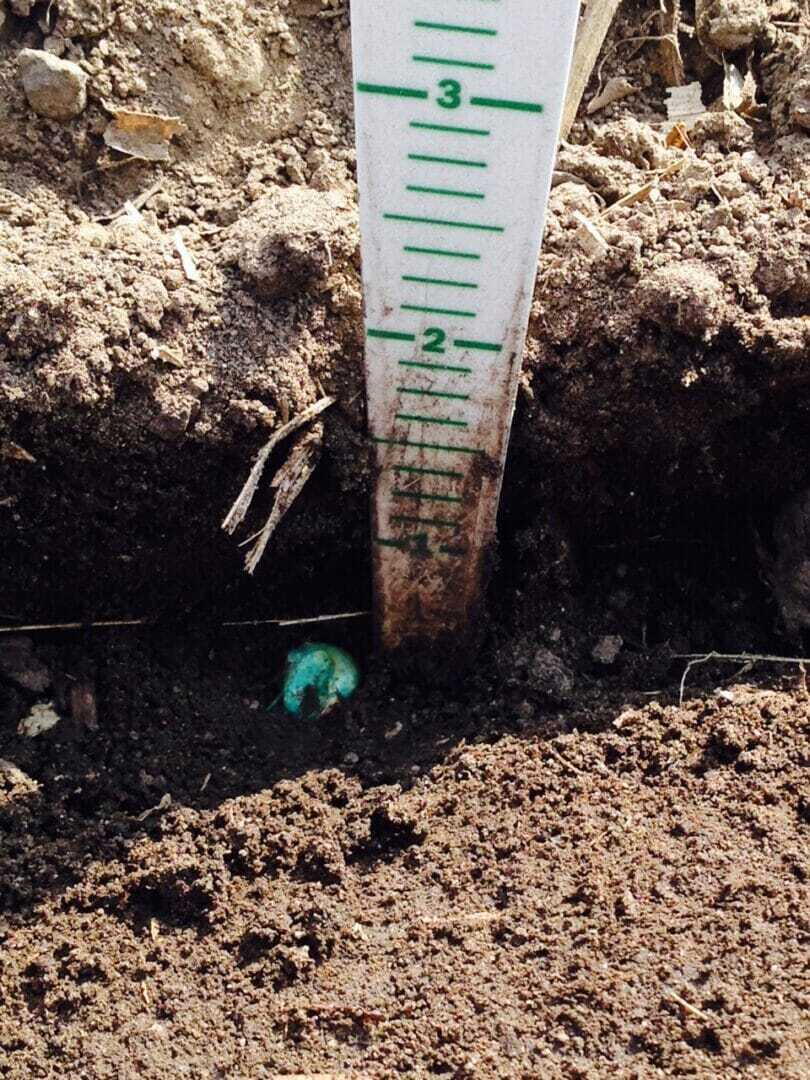
    Another factor to consider is planting depth. Oftentimes, we say 2.75 inches is a safe planting depth to allow adequate moisture and growing degree units (GDUs) to attain even emergence.

    There is a lot of talk around two-inch planting depths. This could be optimal if there is adequate moisture. Planting at 2 inches with adequate moisture can get you better emergence due to having faster GDU adaptation. This also means that it could come out of the ground better in crusting conditions, but keep in mind that the key to shallower planting is moisture. It’s risky to rely on moisture being available at that shallower depth.

    We spend a lot of time helping our Data Forward clients improve efficiency. While this can encompass many things, we focus on your planter, seed and equipment. We believe one of the most important assets to a farmer’s operation is the planter. If the planter is not equipped to place that seed where it is going to thrive, then other investments throughout the year are not going to be as valuable either.

    One of our biggest challenges is helping clients achieve uniform, speedy emergence. If one plant emerges 24 to 48 hours after its neighbor, that plant will compete for the sunlight that its neighbor is already harvesting. The plant starving for sunlight will be a runt for the rest of the growing season.
    Keep these four things in mind when trying to keep even heat and moisture to achieve even emergence:

    1. Manage residue.
    2. Maintain planting depth.
    3. Achieve good seed-to-soil contact (no air pockets).
    4. Eliminate compaction.

    If you want to improve efficiency, planter performance, and data management for 2021, it’s time to plan. Call your Latham Precision Agronomy Advisors now for unbiased recommendations to get your 2021 crop off to a better start!
    Latham Seeds Precision Agronomy Advisors

    January 11, 2021
    Agronomics, Corn, Crop, Emergence, Precision Ag, Soil, Soybeans
  • Latham Hi‑Tech Seeds

    Ask The Agronomist: Choose Planting Populations by Hybrid

    5245 full ears

    Tune in for discussion on choosing planting population by hybrid. Take time this winter to make a game plan for spring! #AsktheAgronomist

    Ask the Agronomist: Managing Stress & Ear Flex: https://www.lathamseeds.com/2020/10/ask-the-agronomist-managing-stress-ear-flex/

    Laura Cunningham

    December 31, 2020
    Agronomics, Corn, Crop
  • Latham Hi‑Tech Seeds

    Give Alfalfa a Second Look

    Alfalfa can offer one of the highest returns on a farmers’ investment, but it often gets the least amount of consideration. Growers often purchase alfalfa from the first salesperson who asks for the order, but it really pays to compare alfalfa products. You usually get what you pay for, and quality pays for itself.

    Latham Hi‑Tech Seeds offers very competitive, highly productive, Olympic-style alfalfa products. Unfortunately, we tend to undersell the advantages our alfalfa line carries.

    Here are three reasons why alfalfa from Latham is superior:

    1. Best genetics offer higher yield potential.
    2. Top seed quality leads to higher germination rates.
    3. Best seed treatment fosters emergence success.

    Because most farmers only get approximately 40 chances in their careers to get a crop right, make each one count! One key to top yields is fast emergence. When you merge the best genetics with the best seed treatments, farmers can have confidence they have done all they can to manage environmental risks.
    Latham’s AlfaShield seed treatment surrounds the alfalfa seed, helping it absorb soil moisture quickly to begin the germination process. AlfaShield also contains key micronutrients, as well as a growth promoter called Optimize Gold, that accelerate emergence.

    Seed Treatment Chart

    New seeding mortality rates were very high, from 50 to 75% in the first year, with old seed treatments. New treatments like Stamina, however, reduce pathogen problems and manage risk. As a result, seedling mortality is lower and higher yields are possible.

    Our goal is MORE LIVE PLANTS per bag, which allows you to capture more yield. Seed selection and fertility are key, so help set your crop up for success by choosing alfalfa products from Latham Seeds.

    Latham Seeds Agronomy Team

    December 29, 2020
    Agronomics, Alfalfa, Crop, Seed Treatment
  • Latham Hi‑Tech Seeds

    #AsktheAgronomist: Protect Your Investment with Seed Treatment

    Industry Leading Quality

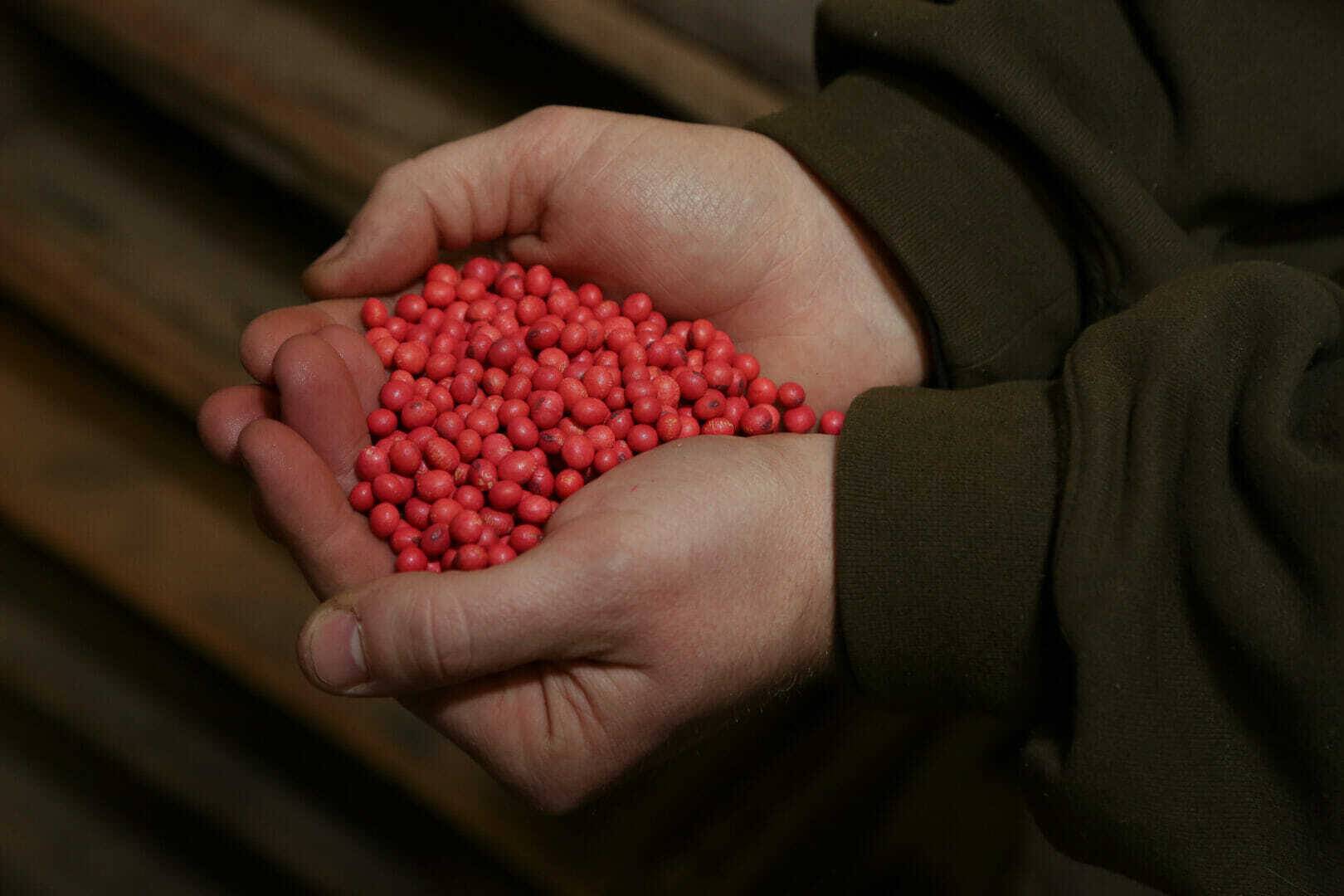
    Join us as we discuss the importance of protecting your investment every year. How does Latham Seeds seed treatment differentiate? Tune in and find out!

    Laura Cunningham

    December 24, 2020
    Agronomics, Crop, Disease, Soybeans
  • Latham Hi‑Tech Seeds

    Seed Treatment Fundamentals

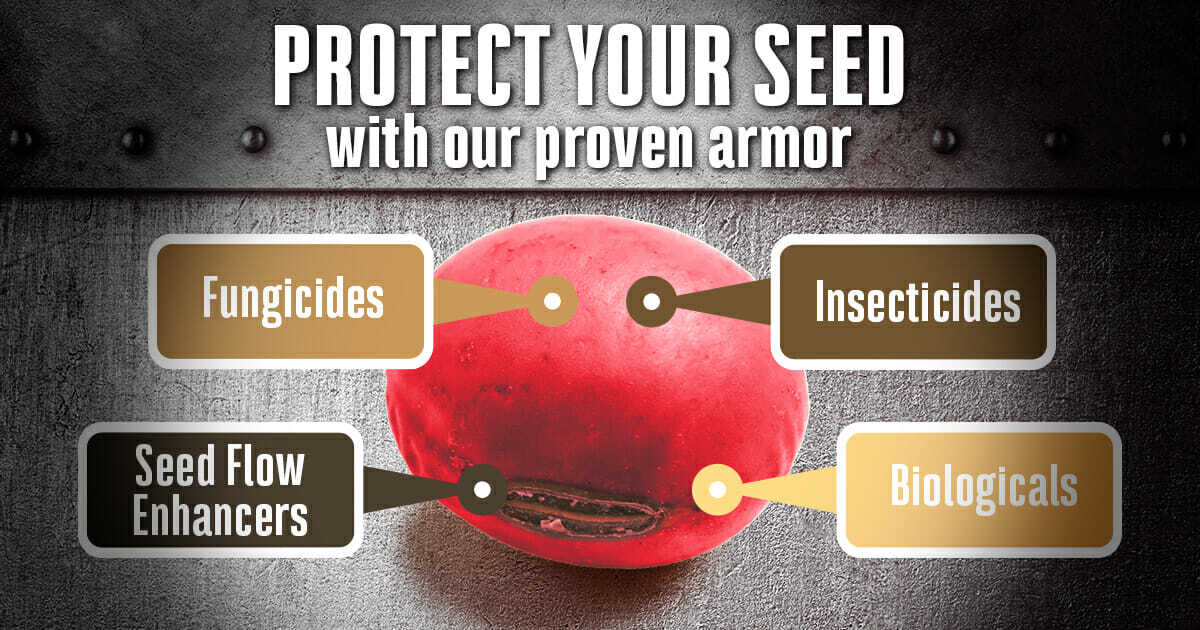
    Seed treatment infographic

    Did you know up to 90% of seedling diseases are caused by 4 major fungi? These fungi kill soybean seedlings before emergence or damage the seed enough to reduce yield.

    4 Major Fungi:

    1. Pythium
    2. Phytophthora
    3. Rhizoctonia
    4. Fusarium

    Research shows that during the emergence stage alone 2.5 bushels of soybean yield are at risk due to seed rot and seedling blight. Latham SoyShield® brand seed treatments are best-in-class formulations designed to battle the toughest pathogens like Fusarium and Phytophthora.

    Seed treatment infographic

    Instead of viewing seed treatment as an input cost, consider it an investment – an insurance policy if you will. After all, it takes less than a bushel of soybeans to pay for the cost of treatment!

    Wet, poorly drained soils favor the development of fungal pathogens that cause seedling diseases, which slow germination and plant growth. Seed treatments protect seedlings until they have a fairly well-established root system.

    To help the seeds go through the planter better, Latham Hi‑Tech Seeds adds a proprietary blend of polymer and seed coating. Our customers say they waste less seed and see more even stands, resulting in better yield potential and ultimately an increased return on investment.

    Latham Hi‑Tech Seeds’ signature SoyShieldTM, a fungicide-only package, and SoyShield PlusTM with fungicide and insecticide, protect seeds from disease and insect damage for up to 30 days. This time frame is longer than many other seed treatments and is typically an adequate window of protection.

    SoyShield Plus includes an exclusive fungicide combination that provides excellent protection against seed and soil borne diseases including: Pythium, Phytophthora, Fusarium and Rhizoctonia. In addition, seed treatments can provide health benefits for more rapid and increased germination under certain conditions.

    SoyShield Seed treatment infographic

    Some seed treatments also help protect against nematodes, which are becoming more prevalent. Many fully-loaded treatments may have innoculants, micronutrients or plant food. Interested in learning more? Talk to your local Latham® representative or leave your comments below. You’re also welcome to call us at 1-877-GO-LATHAM (1-877-465-2842).


    Webspec Admin

    December 22, 2020
    Agronomics, Crop, Disease, Seed Treatment, Soybeans
  • Latham Hi‑Tech Seeds

    Ask the Agronomist: How to Use Data Forward to Improve Seed Placement

    Img CropPlan@2x

    Join us as we walk through the importance of seed placement and how our Data Forward program and experts can help guide these decisions. #LathamSeeds

    Laura Cunningham

    December 17, 2020
    Agronomics, Soil
  • Latham Hi‑Tech Seeds

    How to Use Multi-Year Yield Data Effectively

    Img FieldPosition

    Single-year data from corn test plots or even whole-field results can cause a farmer to question what hybrids to plant next spring. Because yields were especially variable across the Upper Midwest in 2020, I want to remind you how important it is to look at more than one year’s worth and more than one location’s worth of data.

    Here are two ways you can use multi-year yield data effectively:

    1. Select individual hybrids that are consistently top performers.
    2. Look for groups of hybrids that, when planted together, provide top yield averages over time. In my experience, planting top-performing packages provides farmers with more uniform success. Planting packages of hybrids with top performance lessens variability.

    Our 2020 plot data from F.I.R.S.T. Trials, on-farm SuperStrips with cooperating Latham® dealers, as well as our replicated MiniStrips proves again that Latham brand hybrids are top-yielding hybrids. Our wide area of testing shows very strong performance of Latham hybrids across various environments, soil types and management practices.

    As I was preparing multi-year data to share during last month’s Post-Harvest Huddle meetings with Latham dealers, these top performers captured my attention. Be sure to take a closer look at these Latham brand hybrids as you finalize your 2021 crop plans:

    • LH 3937 VT2 PRO RIB: This 89-day hybrid has quickly become a favorite of our early-season customers in North Dakota, Minnesota and Wisconsin. It is the anchor in packages in the 85- to 92-day group. This hybrid earned four Top 5 finishes in 2020 F.I.R.S.T. Trials and won in the 2019 F.I.R.S.T. Trials. It also earned 1st place in 2020 Latham SuperStrips plus finished 1st and 2nd in 2019 SuperStrips. Our customers have made consistent yields over time by packaging this hybrid with LH 3695 VT2 PRO RIB, LH 4097 VT2 PRO RIB and LH 4242 VT2 PRO RIB.
    • LH 4937 VT2 PRO RIB: This top yielding, 99-day hybrid performs across a wide area for adaptability. We have seen great yields across Latham Country. Its accolades include 1st place and Top 5 finishes in the 2018, 2019 and 2020 F.I.R.S.T. Trials. It also topped SuperStrip plots from 2018 to 2020. Package this hybrid with LH 4454 VT2 PRO RIB, LH 4657 VT2 PRO RIB and LH 5047 VT2 PRO RIB for an outstanding group of hybrids to fit 94- to 100-day maturity.
    • LH 5245 VT2 PRO RIB: Latham customers are raving about the yields they saw this year from LH 5245 VT2 PRO RIB. This hybrid’s performance during the past three seasons has made it one of the top 102-day performers across Latham Country against competitors. Package this hybrid with LH 4937 VT2 PRO RIB and LH 5047 VT2 PRO RIB for a 99- to 102-day package. In fuller season areas, pair it with LH 5377 VT2 PRO RIB and LH 5487 VT2 PRO RIB.
    • LH 5725 VT2 PRO RIB: This 107-day product has the ability to move north as a full-season product. It performed well across the Southern Minnesota F.I.R.S.T. Trials locations. It has several multi-year F.I.R.S.T. Trial wins and top finishes from Nebraska, Iowa and Wisconsin. Plant this hybrid with LH 5245 VT2 PRO RIB, LH 5487 VT2 PRO RIB, LH 5635 VT2 PRO RIB, LH 5847 VT2 PRO RIB and LH 6285 VT2 PRO RIB for outstanding yield averages in different maturities.

    Click here to find more yield data. 

    Latham Seeds Agronomy Team

    December 10, 2020
    Agronomics, Corn, Crop
  • Latham Hi‑Tech Seeds

    #AsktheAgronomist: Weed Control post 2020

    Weed Resistance
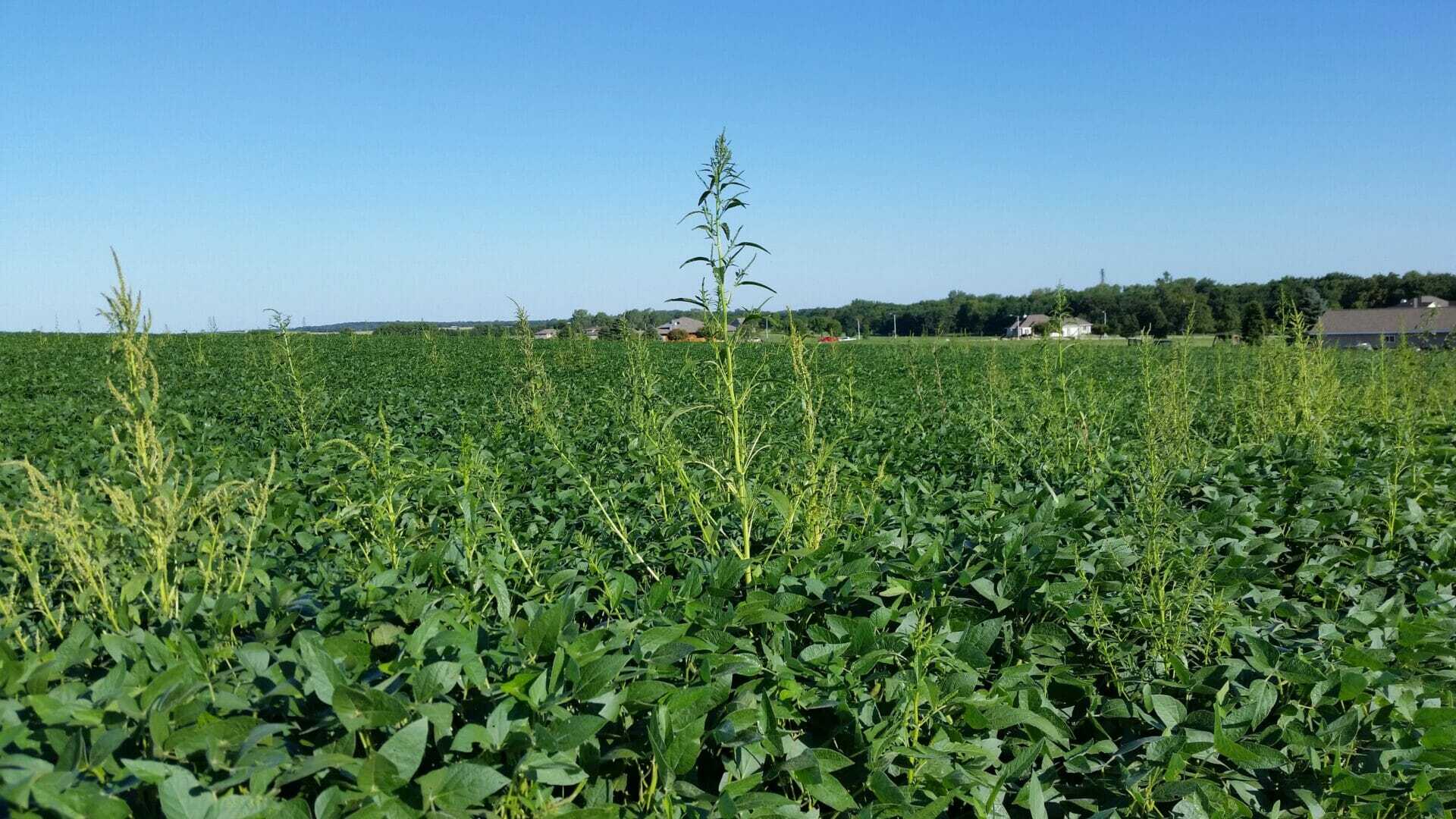
    Phil Long discusses the implications of heavy weed pressure from 2020. Learn proper weed control practices regardless of seed technology. #AsktheAgronomist

    Laura Cunningham

    December 10, 2020
    Agronomics, Weed Control
  • Latham Hi‑Tech Seeds

    Look at Multi-Year Soybean Yield Data

    NW IA Latham Seeds Soybeans 8 13 19

    Yield variability in 2020 reminds us how important it is to review data from multiple years – and even multiple locations – when accessing a given seed product’s performance. Multi-year data helps “smooth out” the peaks and valleys associated with single-year data and provides a more reliable picture of overall product performance.

    Following are nine Latham® soybean products, in order of maturity, that grabbed my attention as I was preparing for 2020 Post-Harvest Huddles with our dealers:

    L 0852 LLGT27: New for 2021, this powerhouse yielder carries the Rps3-a gene for Phytophthora and has very good tolerance to iron deficiency chlorosis (IDC). This variety earned six Top 10 finishes in the 2020 F.I.R.S.T. trials; took first in 2019 Latham Test 909 Summary; placed first in our 2020 Test 960 trial at Glyndon, MN; and was 2nd overall in the 2020 Summary of Test 960!

    L 1238 L: This top-yielding Ironclad™ soybean features excellent scores for both White Mold and Sudden Death Syndrome (SDS). It took 1st place in our 2018 Test 961 Summary and had four other 1st place finishes in Latham Trials from 2018 to 2020. It moves south very well out of zone.

    L 1429 LLGT27: Here’s a great yielding line with a good defensive package! It has strong Soybean Cyst Nematode (SCN) tolerance and is excellent against IDC and Brown Stem Rot (BSR). In 2019 and 2020, it earned five Top 10 finishes in the F.I.R.S.T. trials along with four wins in Latham SuperStrip plots. It also placed 1st six times in our research trials, including two summaries!

    L 1858 R2: This is one of the very highest performing lines in our Latham soybean portfolio. Every year since 2018 it has topped a F.I.R.S.T. Trials SUMMARY somewhere in the state of Minnesota! Enough said.

    L 1883 L: This Ironclad line has excellent tolerance to White Mold and SDS with great tolerance to Charcoal Rot. It has six 1st place finishes under its belt from 2018 to 2020 SuperStrip trials. It consistently performs at the top of its class.

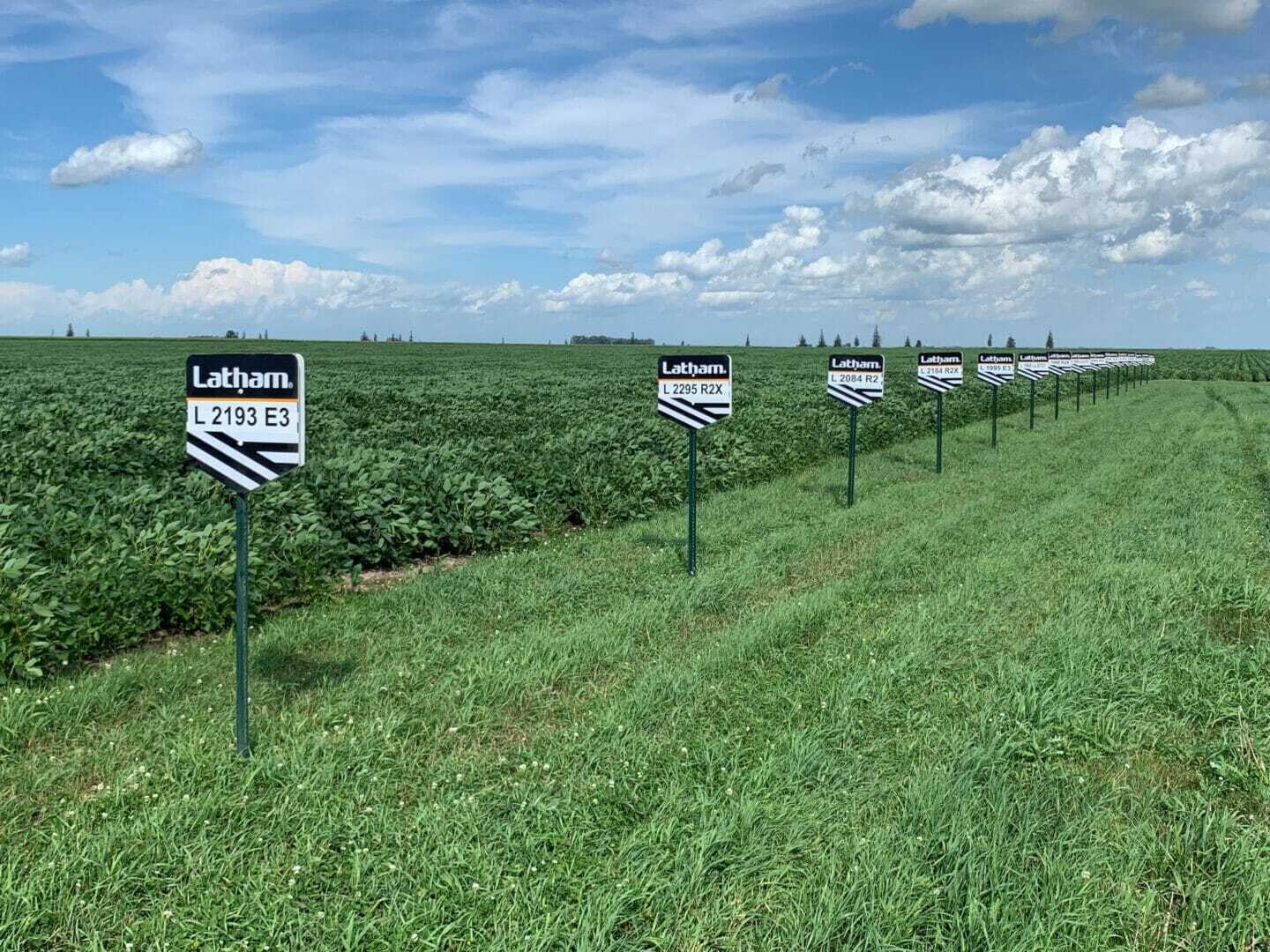
    L 2193 E3: Our top-selling soybean for the past two years looks to be headed there again in 2021! With only two years of SuperStrip data, this Ironclad variety has claimed: eight 1st places, eight 2nd places and six 3rd place finishes. That’s a gold-worthy Win-Place-Show combo!

    L 2295 R2X: With a very strong defensive package, this soybean variety is a proven performer! It has 22 Top 10 finishes in the F.I.R.S.T. Trials and 37 Top Four finishes in Latham SuperStrips – including 13 wins – during the past three years.

    L 2549 R2X: If you think L 2295 is impressive, get a load of this offensive powerhouse! In the 2018 to 2020 F.I.R.S.T. Trials, 2549 captured 41 Top 10 placements with six of those being for 1st place and nine for 2nd place! It has also won five SuperStrip plots. It has L 2084 R2 and L 2440 R2 in its pedigree with a strong defensive package.

    L 2894 E3: In its first year of F.I.R.S.T. Trials, this popular Enlist E3 line took 1st place twice and earned seven more Top 10 finishes. In 2019 to 2020, it took 1st in six SuperStrip plots and topped our Latham Research Trials in both Alexander and Olin, Iowa.

    For more multi-year yield data, visit our performance page!

    Mark Grundmeier, Product Manager

    December 9, 2020
    Agronomics, Crop, Soybeans
  • Latham Hi‑Tech Seeds

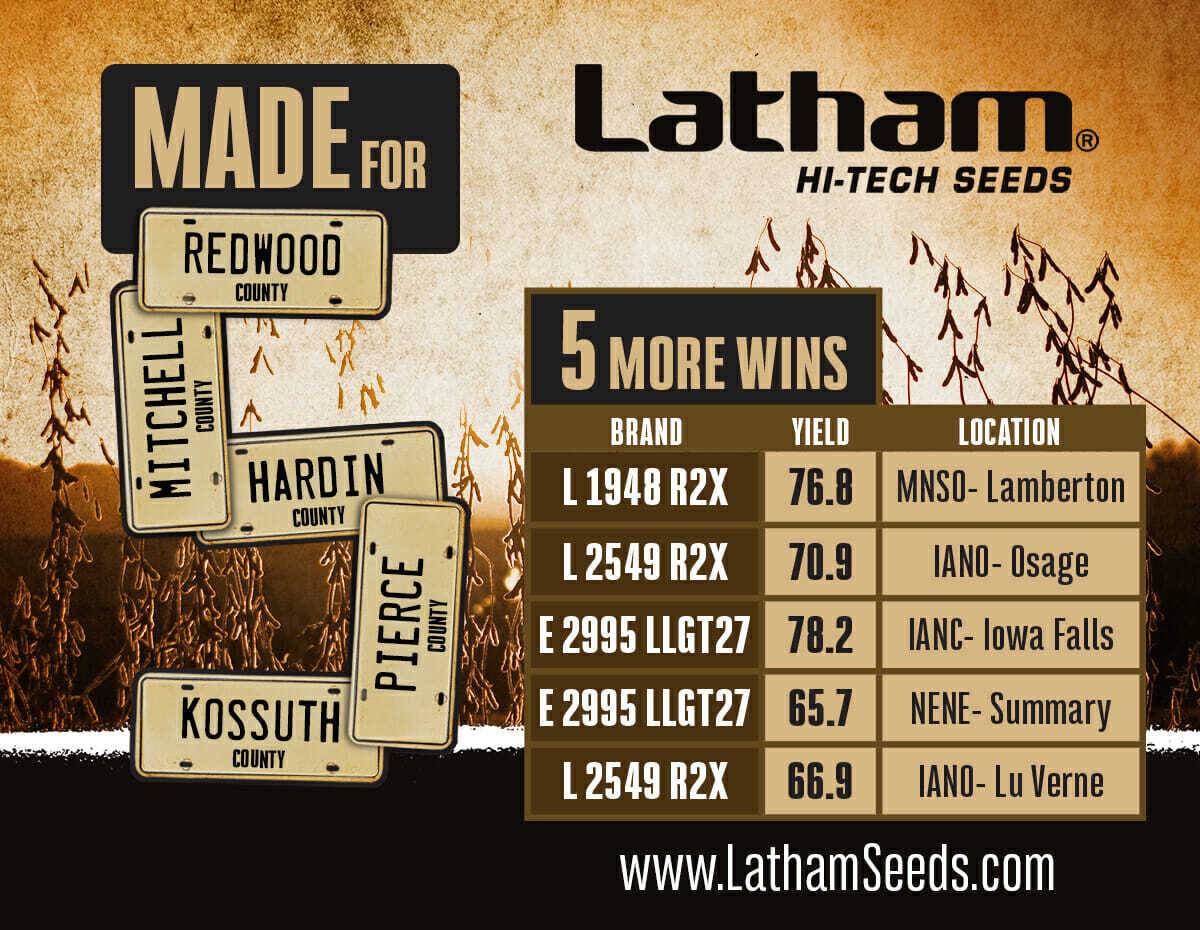
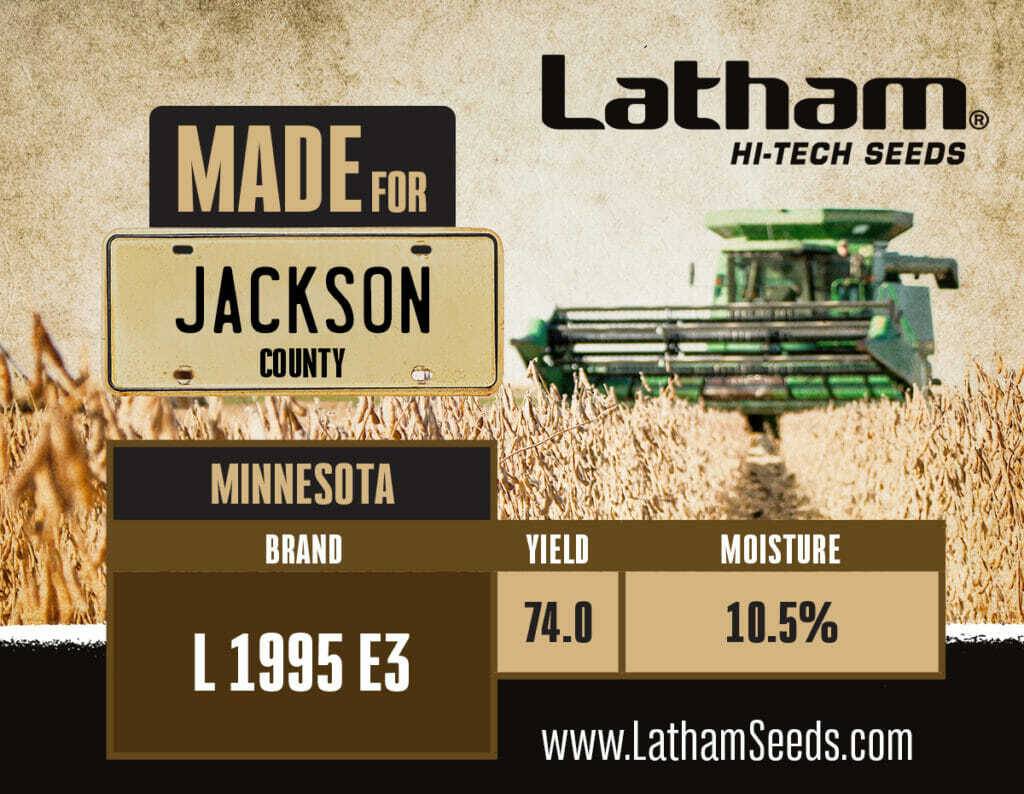
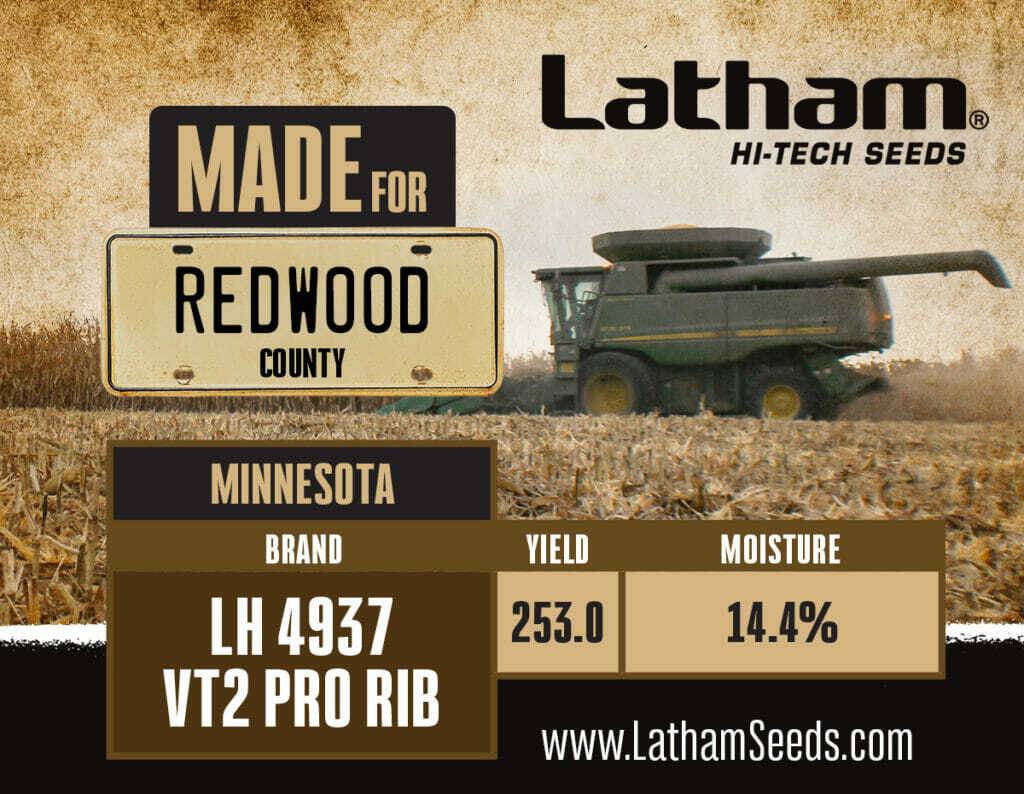
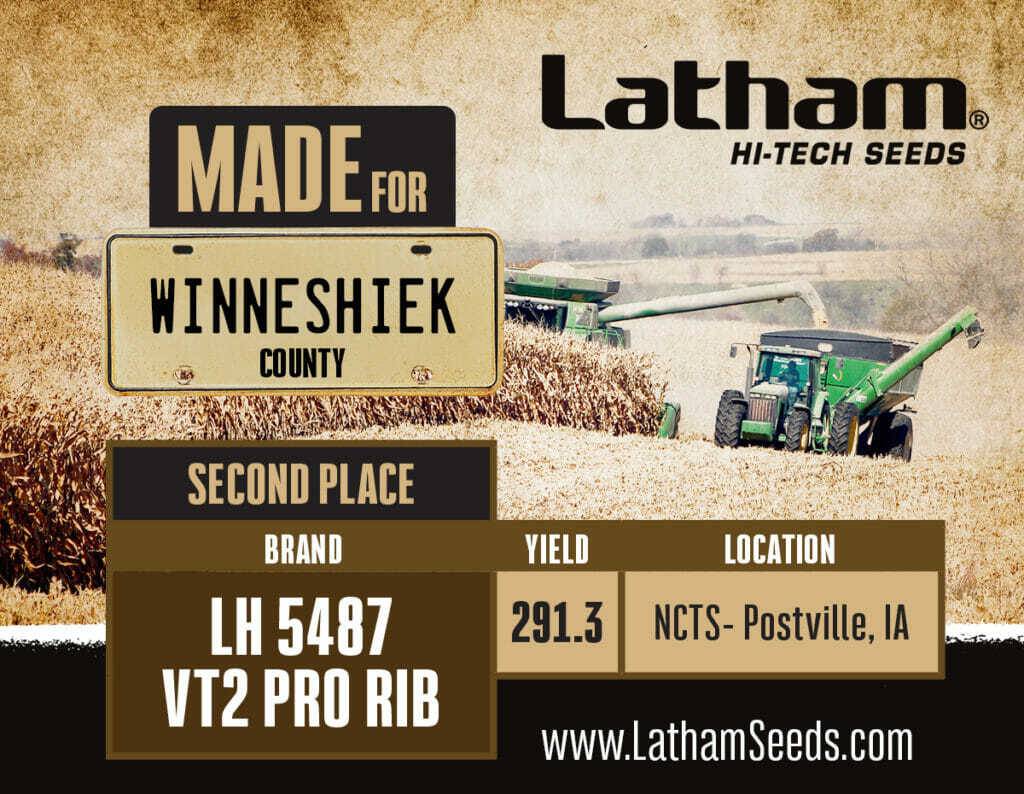
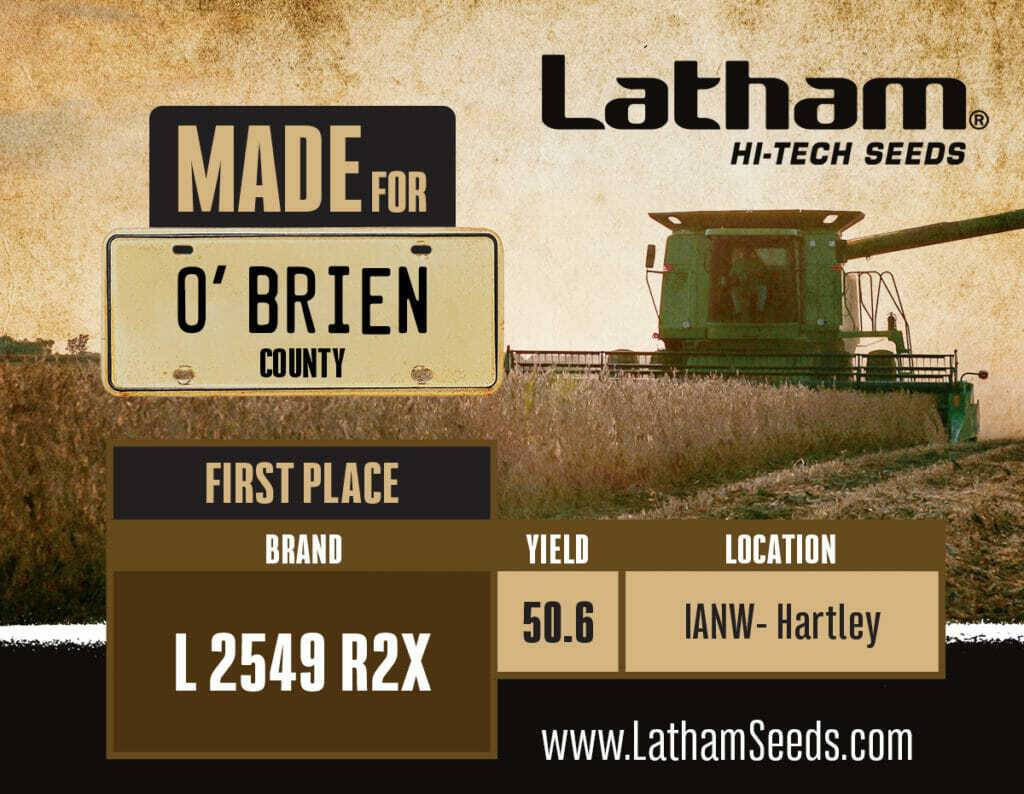
    2020 Yield Highlights

    Soybean 5 winner graphic

    Soybean 5 winner graphic

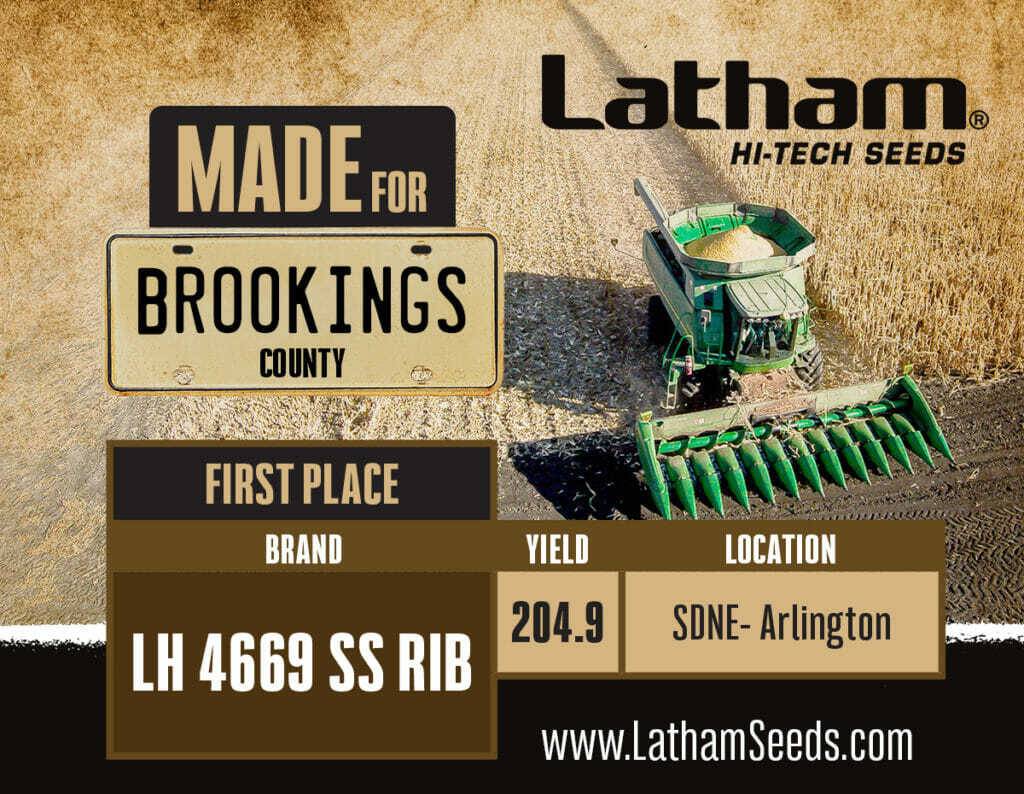
    South Dakota 4669 brookings graphic

    4937 codington graphic

    5635 yankton graphic2894 SD summary graphic


    North Dakota

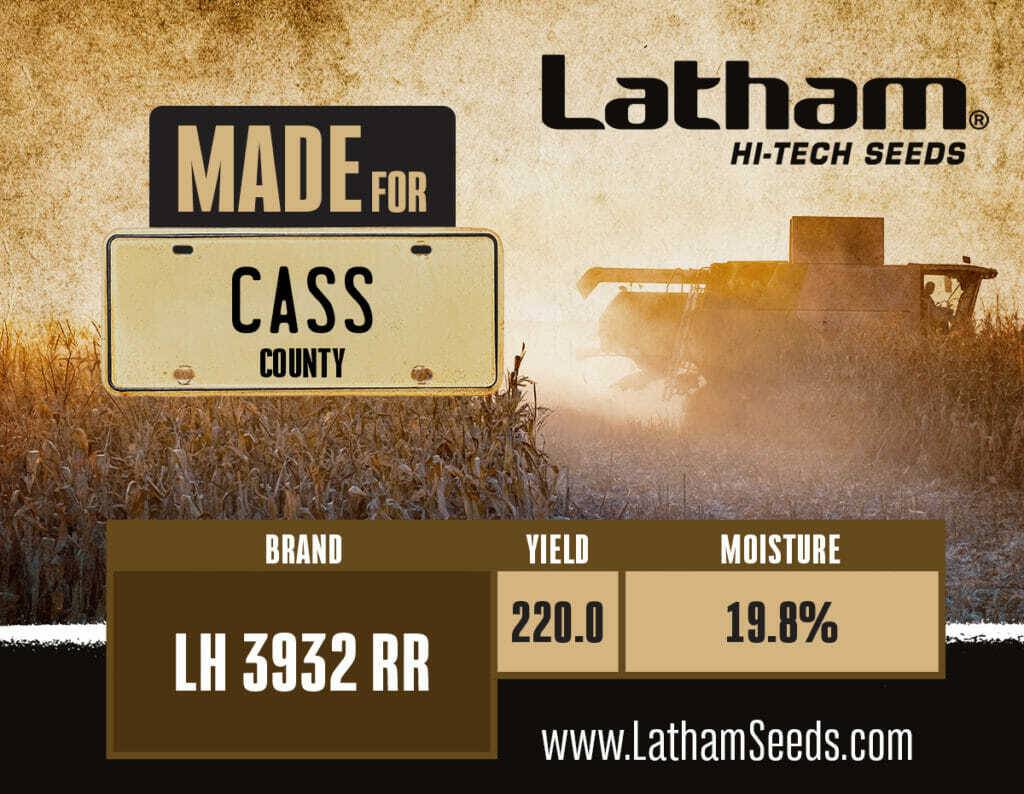
    3932 cass graphic


    Minnesota

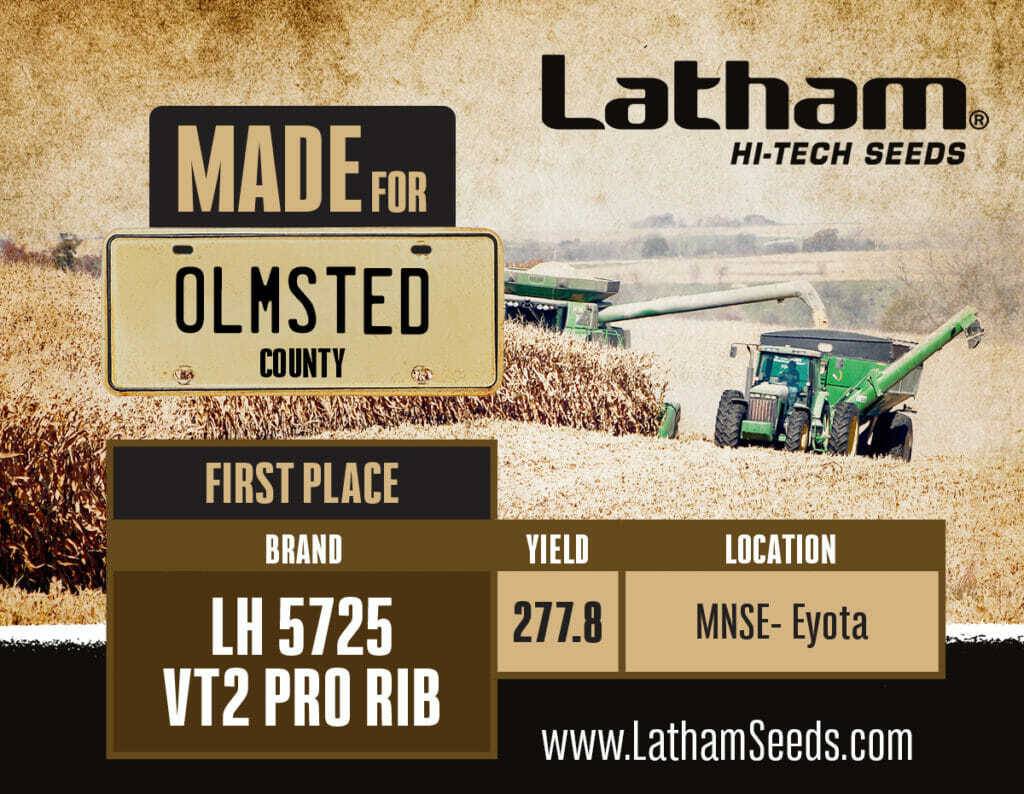
    5725 olmsted graphic

    Made to win MN graphic

    5725 dodge graphic

    2193 mower graphic

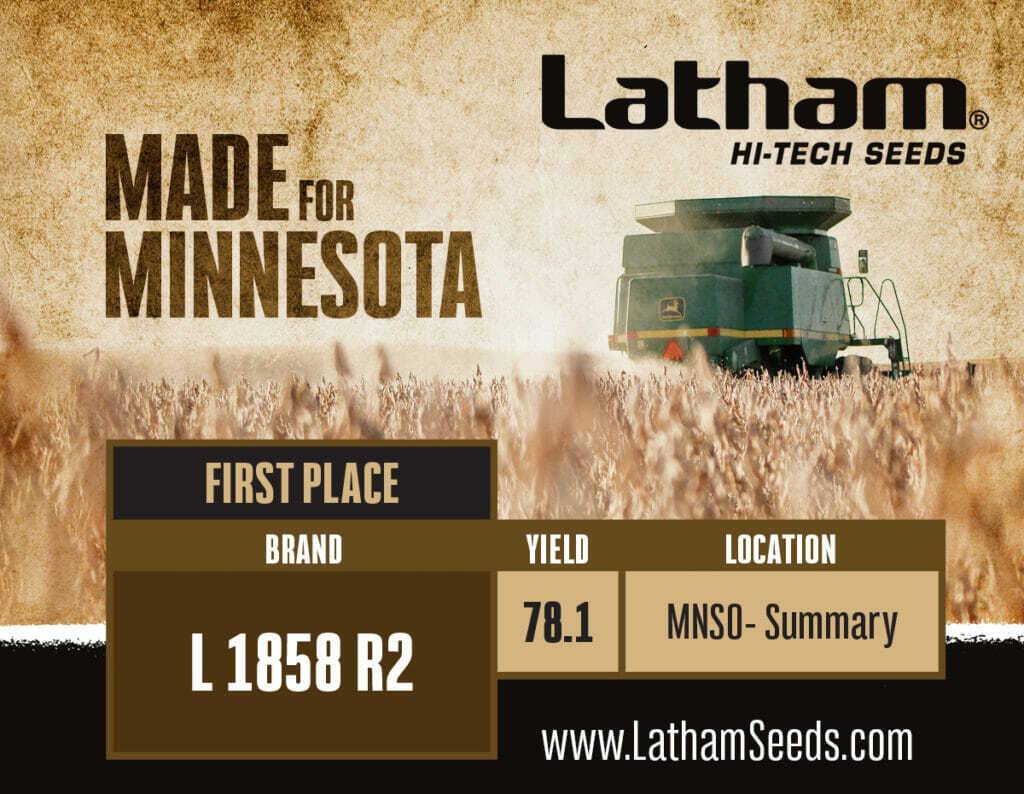
    1858 MN summary graphic

    1995 jackson graphic

    2193 jackson graphic4937 redwood graphic


    Wisconsin4375 dodge graphic


    Red River Valley

    3827 richland graphic


    Iowa

    5487 winneshiek graphic

    2549 o brien graphic

    2638 pocahontas graphic

    5487 2nd place graphic

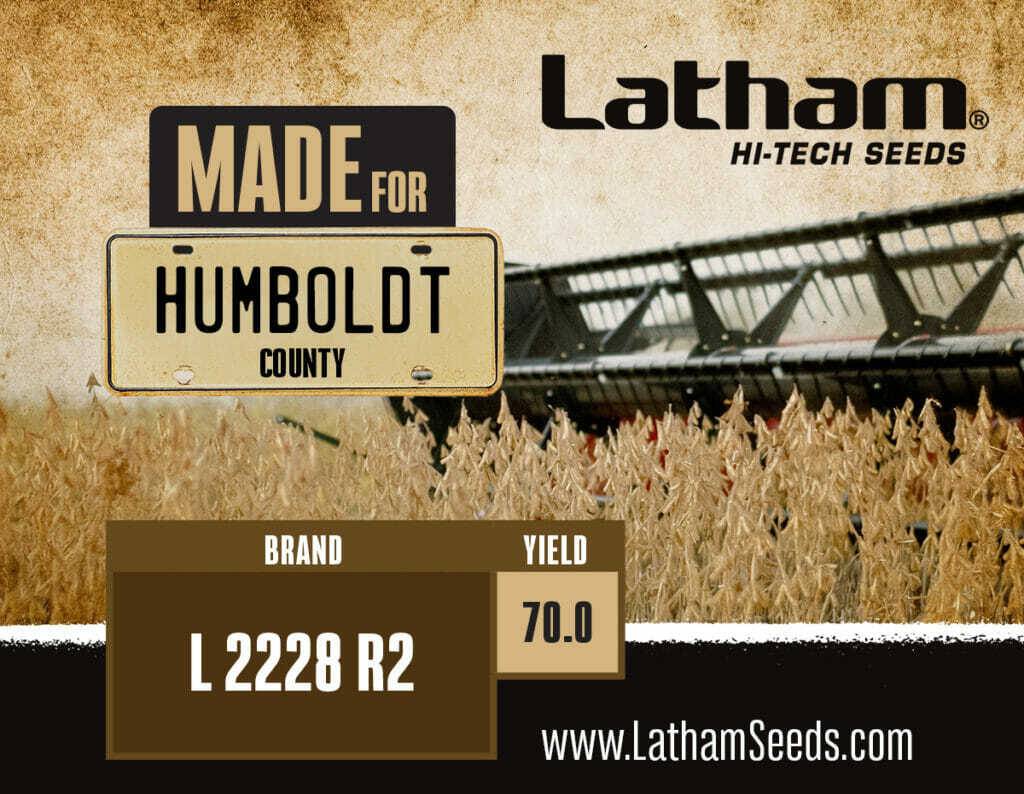
    2228 humboldt graphic

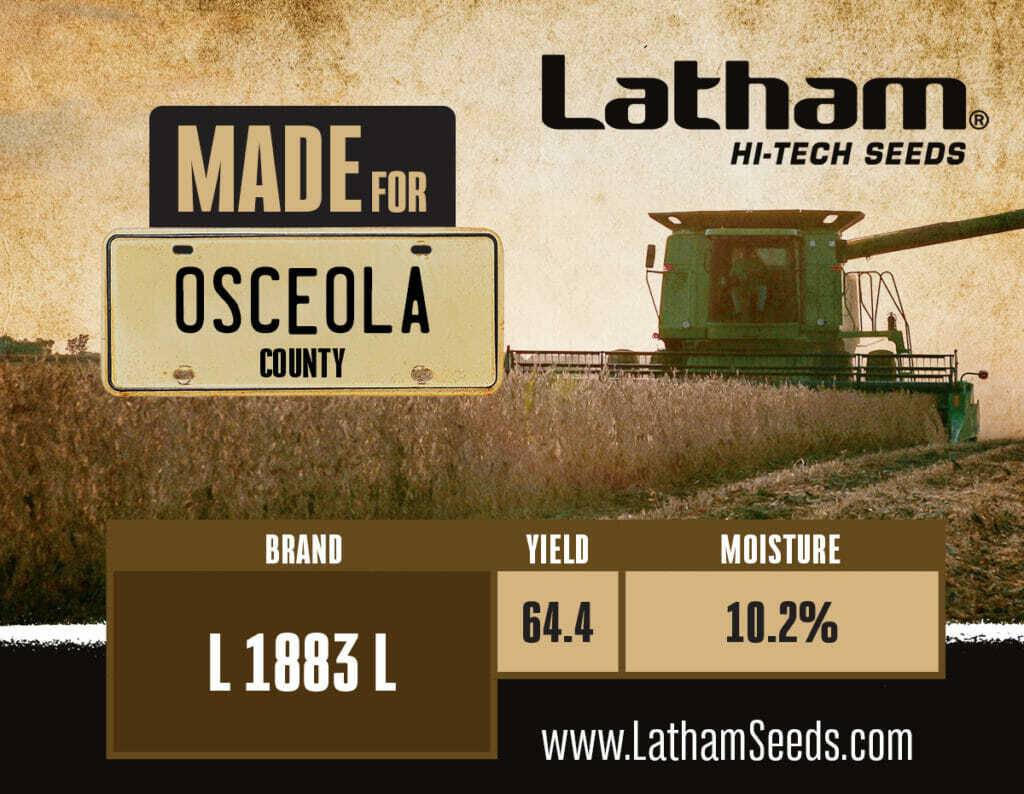
    1883 osceola graphic

    2682 marion graphic2193 cerro gordo graphic

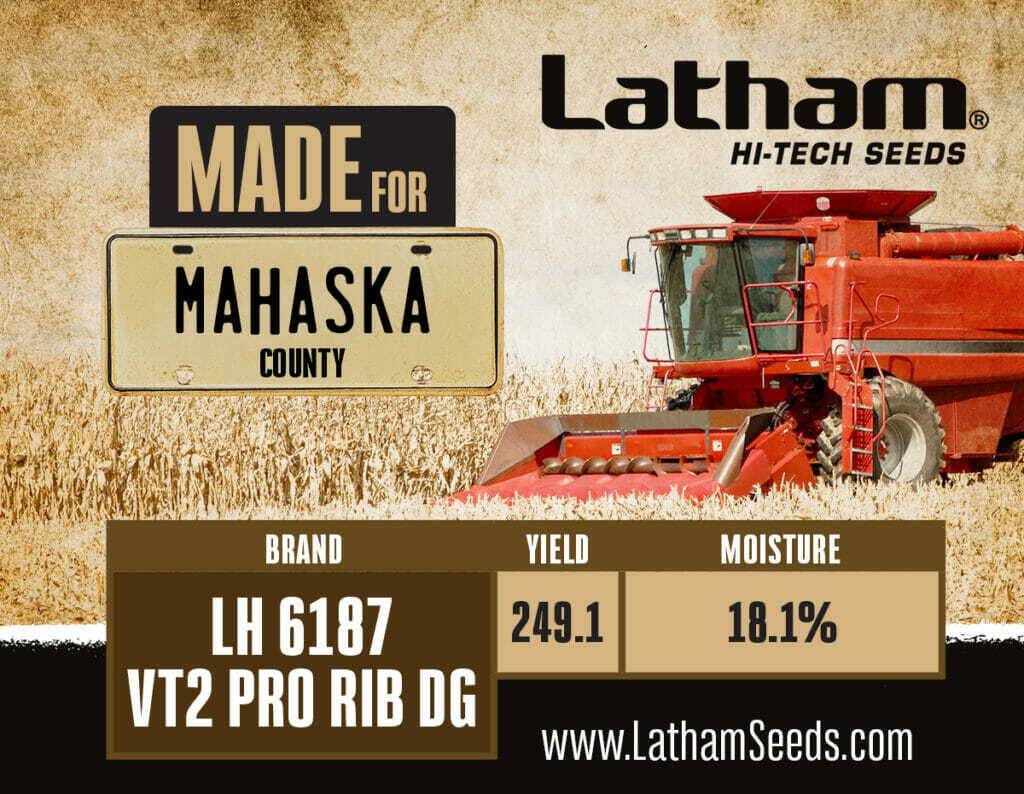
    6187 mahaska graphic

    5249 clinton graphic

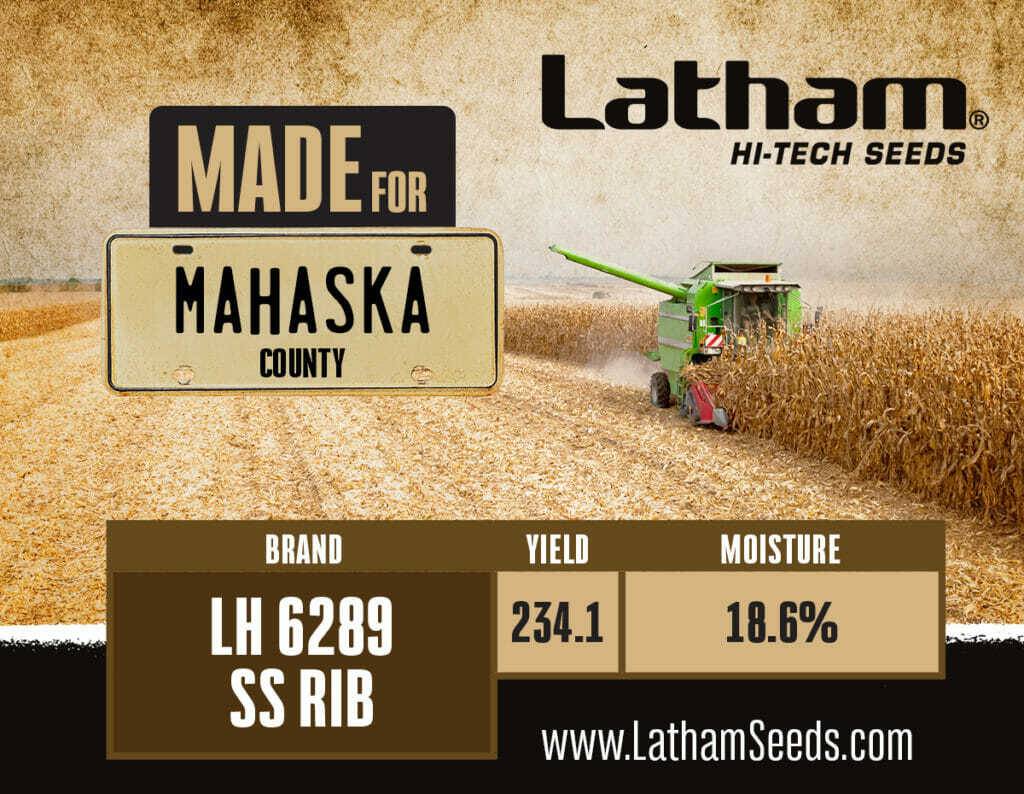
    6289 mahaska graphic


    Nebraska

    2995 pierce graphic

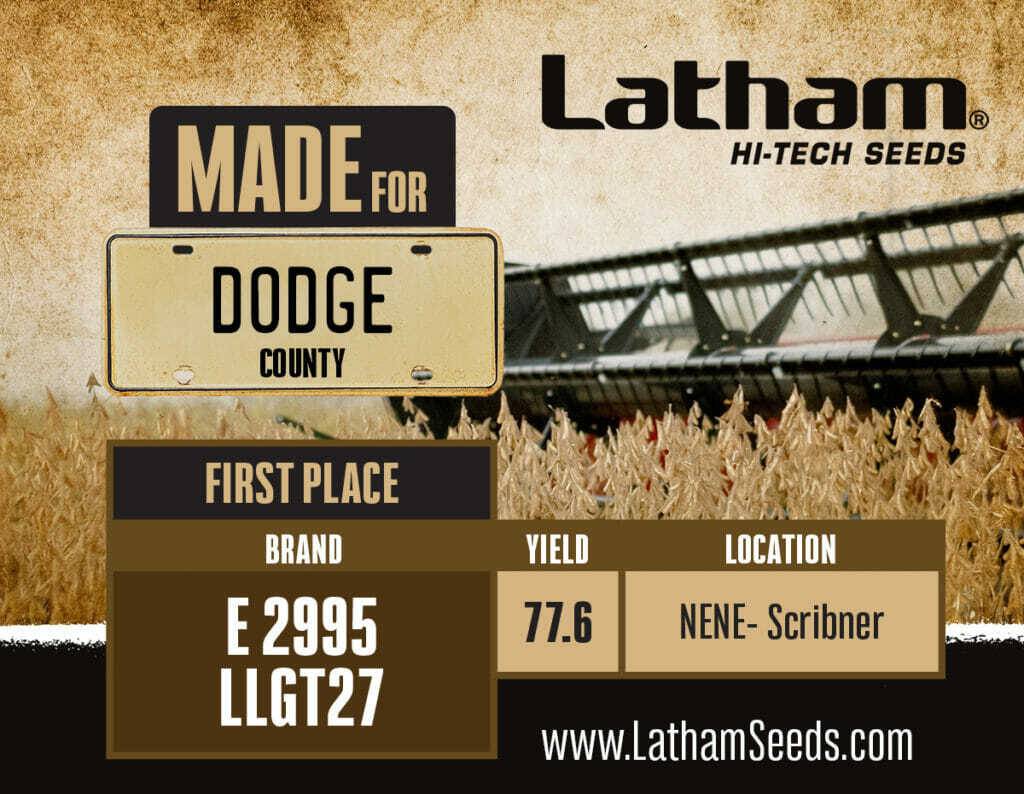
    2995 dodge graphic

    Webspec Admin

    December 8, 2020
    Agronomics, Corn, Crop, Fall, Season, Soybeans
Previous Page
1 … 16 17 18 19 20 … 67
Next Page

Latham Hi‑Tech Seeds

131 180th Street | Alexander, IA 50420

(641) 692-3258

SIGNUP FOR OUR NEWSLETTER
  • Contact
  • Legal
  • Dealer Center
  • Seedware Login
  • Latham Gear

© 2025 Latham Hi‑Tech Seeds. All rights reserved. | Iowa Web Design by Webspec | Privacy Policy

Latham® Hi-Tech Seeds is a trademark of M.S. Technologies, L.L.C., 103 Avenue D, West Point, IA 52656.