Latham Hi-Tech Seeds

(641) 692-3258

  • Home
  • Products
    • Corn
    • Soybeans
    • Alfalfa
    • Corn Silage
    • Seed Guide
  • Performance
  • Find a Rep
  • Media
    • Blog
    • News
    • Videos
    • Podcasts
    • TECHTalk
  • About Us
    • Company History
    • Our Mission
    • Careers
    • Become a Rep
    • Sowing Seeds of Hope
  • Contact Us
  • Latham Hi‑Tech Seeds

    Western Bean Cutworm 

    WBC Purdue University (1)
    WBC Eggs Iowa State University (1)
    Credit: Iowa State University

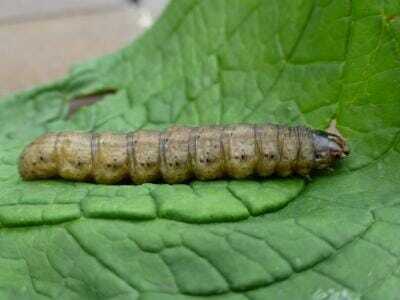
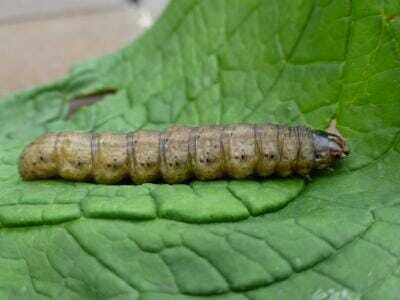
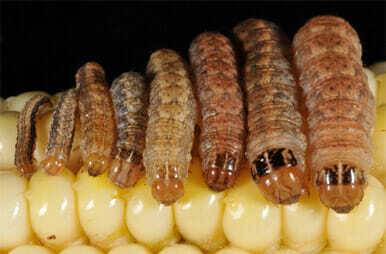
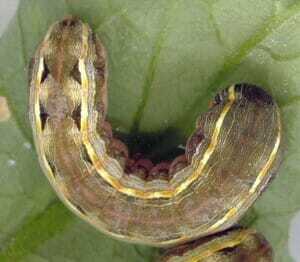
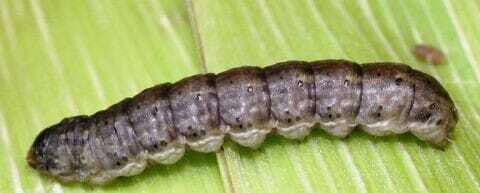
    The Western Bean Cutworm can dramatically reduce end-of-season corn profit. The Western Bean Cutworm does not cut stalks but feeds on ears, posing as a threat to grain quality and corn yield. The cutworm moths are gray to brown with a wing span of 1 ½ inches. As a late summer insect, moths first emerge in early July and only one generation is produced each year. 

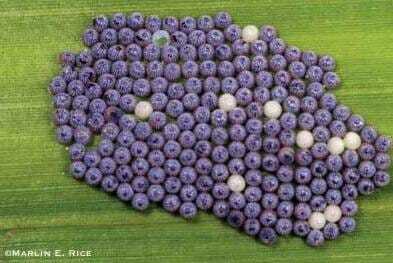
    Female moths lay eggs in whorls just ahead of the pollination stage and will lay an average of 50 eggs at a time. Eggs develop over the course of 5 to 7 days. Eggs will first be white, then become tan as they develop and will turn purple once they are close to hatching. 

    Only a small percentage of eggs typically survive, but larvae that reach full maturity can cause measurable damage to corn.  

    Scouting and Implications 

    Pheromone traps can be used to identify Western Bean Cutworm in fields. When multiple moths are caught at a high frequency, scouting for symptoms should take place. When scouting, focus on fields that are close to shedding pollen and examine 20 consecutive plants in 5 different locations.  
    WBC Purdue University (1)
    Credit: Purdue University

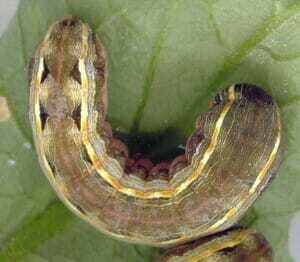
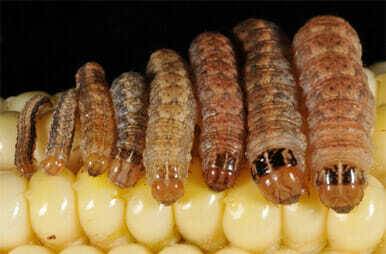
    Western Bean Cutworms feed on leaf tissue and silks as they approach the ear where most of the damage is incurred. The Western Bean Cutworm can be confused with other species of cutworm. The dark brown stripes behind their head that appear during the third instar distinguishes them from other cutworms.  

    The most mature larvae will feed on fully developed ears and can sometimes burrow into the sides of the ear. When scouting, it is important to pull back the husks to fully determine if the cutworms are present.  

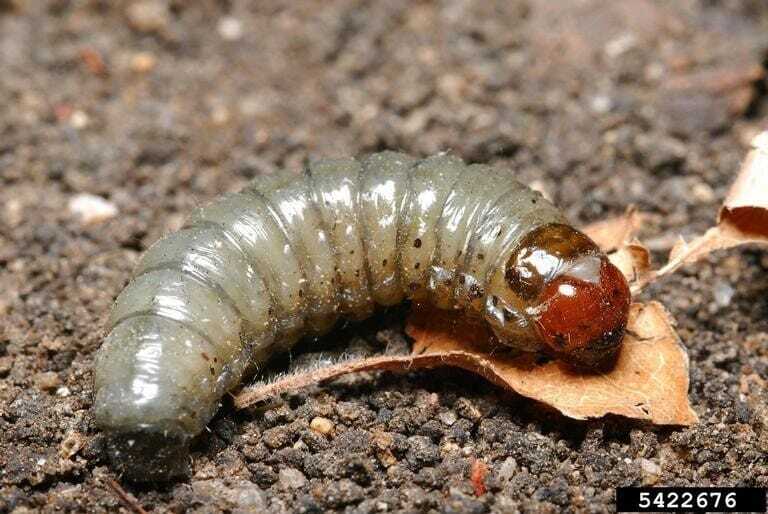
    After feeding on the ears, the larvae will drop to the soil and burrow deep underground where they overwinter. It is common for many larvae to feed on one ear at once, increasing the severity of feeding damage. Ears with multiple larvae can exhibit up to 50-60% in kernel loss.  

    An average of one larva per plant has resulted in yield loss of 4 bu/acre in Iowa and Nebraska. Aside from yield loss, damaged kernels are prone to mold growth which reduces overall grain quality.  

    Managing Western Bean Cutworm   

    Managing Western Bean Cutworm should take place close to hatching, just before pollination. Once larvae hatch and move underneath tight leaves surrounding the ear, they become difficult to exterminate. Applying a foliar insecticide is recommended when 5-8% of plants have egg masses or young larvae present but not before at least 90% of plants have emerged tassels.  

    SmartStax, Viptera, and eventually we will have Duracade traited hybrids that provide aboveground protection against Western Bean Cutworm. Though Western Bean Cutworm overwinters, there is no evidence that tillage is an effective way to combat infestation. Be sure to consult with your local Latham representative to design the most effective treatment plan.
    Latham Seeds Agronomy Team

    April 1, 2019
    Agronomics, Corn, Crop, Insects, Season, Summer
  • Latham Hi‑Tech Seeds

    Armyworms and Cutworms in Soybeans

    Yellowstriped Armyworm OK State

    Armyworms and cutworms are known to reduce soybean stand and yield by feeding and cutting. Armyworms damage leaf tissue while cutworms clip young plants just above the soil. These worms are differentiated by their appearance.  

    Black Cutworm Iowa State Edited
    Black Cutworm (Credit: Iowa State University)
    Cutworm

    Soybean cutworm species include dingy cutworm, variegated cutworm and black cutworm. Cutworms begin feeding on winter weeds before moving to soybean plants. Cutworms will burrow in the soil surrounding injured plants. Smaller larvae will feed on leaves and larger larvae will cut the plants.  

    Scouting and Treatment
    Dingy Cutworm Purdue U
    Dingy Cutworm (Credit: Purdue University)

    Begin scouting for cutworms at emergence. The most common signs of cutworm infestation are cut plants, discoloration or wilting leaves. Reduced tillage, no-till and corn on corn rotations can make cutworm infestation more likely. Legume cover crops can also attract cutworms. This protective vegetation should be removed from the soil at least two weeks before planting.  

    Mature soybeans are the most resilient to yield loss from cutworms. As advised by researchers from Iowa State University, insecticide treatment should also be applied if more than 20% of feeding damage is observed and larvae are smaller than ¾ inch in length. 

    Yellowstriped Armyworm OK State
    Yellowstriped Armyworm (Oklahoma State)
    Fall Armyworm University of Tennessee
    Fall Armyworm (University of Tennessee)
    Armyworm

    The yellow-striped armyworm and fall armyworm are two popular armyworm species. Armyworms grow to be two inches long and feed on both soybean leaves and pods.  

    Scouting and Treatment

    Typically, only one generation of armyworms can be produced in the Midwest due to their inability to overwinter in the cold. Armyworms like to seek shelter in winter annual weeds and grasses. Poorly drained fields can also be an attractive environment for armyworms to dwell.  

    Applying insecticide is recommended when armyworms are less than one inch. Once armyworms mature and exceed 1 ¼ inches in size, they will stop feeding so it is unnecessary to apply insecticide. Contact your local Latham Representative to assess the best options for treating armyworm and cutworm infestation in your soybeans.  

    Latham Seeds Agronomy Team

    April 1, 2019
    Agronomics, Crop, Insects, Season, Soybeans, Spring
  • Latham Hi‑Tech Seeds

    Corn Rootworm

    ISU Southern Western Northern Rootworm L to R
    ISU Southern Western Northern Rootworm L to R
    Left to Right: Southern, Western and Northern Rootworm. (Credit: Iowa State University).

    Corn rootworm causes negative impacts for farmers every year. On average, corn rootworm costs farmers $1 billion annually, with costs equating to $800 million in lost yield and $200 million in treatment expenses.  

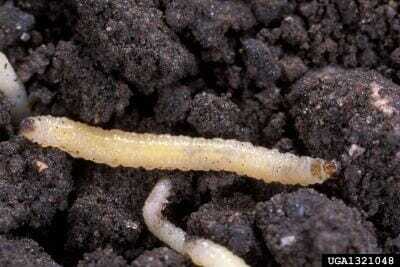
    The Western, Northern and Southern corn rootworms are three variations of this insect. They grow to be ¼ of an inch long when fully mature. The larvae appear white in color with a dark brown head. After mating in the late summer months, rootworm eggs overwinter and eventually hatch in May or June of the following year.  

    Rootworm Causes 

    Rootworms develop across four stages – egg, larvae, pupa and adult. The larvae feed on roots which leads to lodging and overall poor plant stand. Adult rootworms feed primarily on corn silks which can interfere with pollination, leading to lost yield.  

    ISU Corn Rootworm Larvae
    Rootworm Larvae (Credit: Iowa State University)

    The greatest impacts on yield and quality of stand are larvae feeding on the nodal roots. Mature rootworms tunnel throughout the root system and cause significant damage or death to corn plants. Root feeding and tunneling alone can lead to a loss in yield of up to 50 percent. 

    While rootworms primarily feed on corn, weeds are also a food source for larvae and mature beetles. Moist soil conditions with high organic matter content create favorable conditions for females to lay their eggs.  

    Scouting and Treatment Options  

    When scouting in the spring and early summer, dig up corn plants and check for damage on the root system.  Look for signs of tunneling or larvae actively feeding on roots. Placing the roots of a corn plant along with attached soil in water and waiting for larvae to float to the surface is another strategy to use. In the later stages of summer, watch for beetles feeding on corn ears and silks.  

    North Dakota State University found that complete loss or severe damage to a single root node can lead to a yield loss of 15 to 18 percent. Crop rotation is considered the best method for combatting continued infestation.  

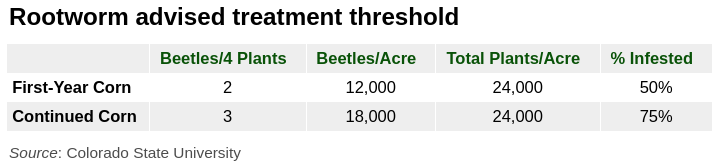
    Below is a chart to help guide your insecticide application decision. 

    Rootworm Treatment Threshold


    We have Latham® hybrids equipped with resistance to rootworm have been deemed an effective method for staving off infestation. Contact your local Latham® representative to determine which hybrids will work best for combatting corn rootworm. 

    Latham Seeds Agronomy Team

    April 1, 2019
    Agronomics, Corn, Crop, Insects
  • Latham Hi‑Tech Seeds

    Armyworm 

    Latham Armyworm

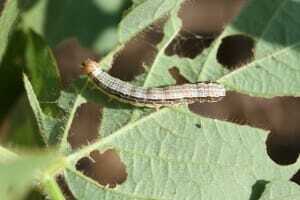
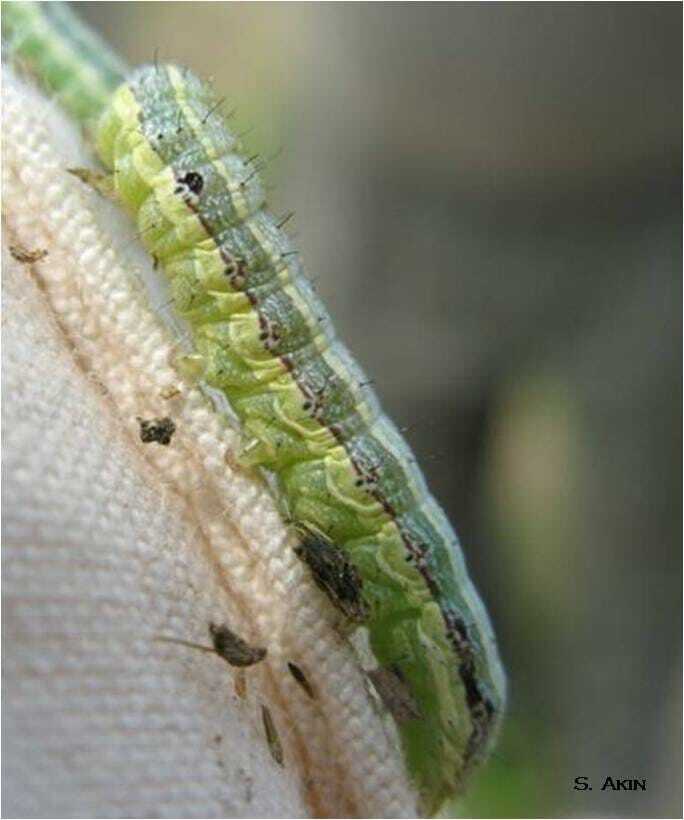
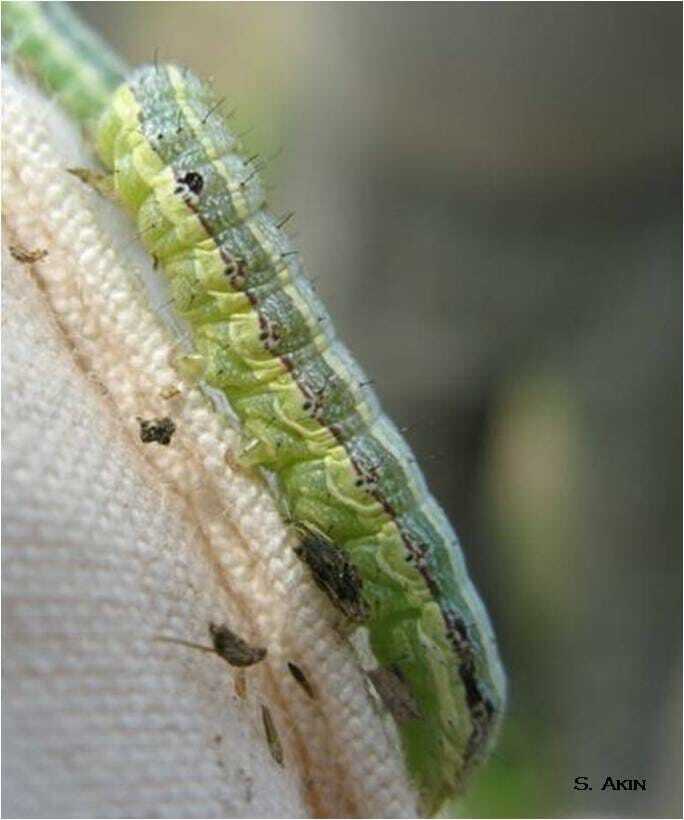
    Latham ArmywormThe true armyworm – not to be confused with the fall armyworm – can pose a threat to corn stands and overall yield as an early season pest. Armyworm larvae are characterized by alternating light and dark bands.  

    The larvae feed primarily on seedling leaves and are associated with causing defoliation. When feeding, armyworms start at the base of the corn plant and work their way up, primarily feeding on softer leaves and during the nighttime. During the day, armyworms will migrate to the whorl of the corn plant as well as inside of soil cracks.  

    Cool and wet weather in the springtime supports the development of armyworms and fields with a heavy presence of weeds and grasses are conducive for allowing them to thrive. Armyworm moths migrate up from the south and look for the grassy fields or areas with lush vegetation. Therefore, winter rye cover crops have been associated with a higher prevalence of armyworm infestation. That is why it is important to terminate cover crops at least two weeks prior to corn planting.  

    Treatment and Mitigation  

    Death in corn plants from armyworm is not common, but if the armyworm feeds on a budding corn plant, this can lead to poor stands and significant loss in yield. When armyworm infestation causes defoliation in more than 25% of corn plants, it is advised to begin using an insecticide. Additionally, when armyworms are still developing and larvae is only ¼ to ¾ inches in length, treatment is considered economical and is advised.  

    Controlling excess grass growth will prevent moths from laying eggs and will offer protection from future infestation. If herbicides are applied, the loss of a weed habitat can drive armyworms to feed predominately on corn plants.  

    Treating an armyworm infestation with small corn plants requires quick decision making because large populations of armyworms can spread quickly across a field. Keep an eye on those fields that have a cover crop or are close to armyworm habitat. Be prepared to act if conditions warrant treatment!   

    Latham Seeds Agronomy Team

    April 1, 2019
    Agronomics, Corn, Crop, Insects
  • Latham Hi‑Tech Seeds

    Identifying and Controlling Cutworms

    Iowa State Black Cutworm

    Cutworms are insects that show up during the earliest growing stages of the season. The presence of cutworms can pose a threat to the well-being of corn plants, but their severity is highly variable and depends on the species. Delayed planting and corn plants shorter than 18 inches are most susceptible to undergoing severe damage from cutworms.  

    Iowa State Black Cutworm
    Black Cutworm
    Black Cutworm 

    Black cutworms are the most common species found in corn throughout the Midwest. The larvae of black cutworms can be up to 1¾ inches long with their appearance characterized by a dark-gray segmented body. Black cutworms are most likely to be seen between stages VE – when the shoot first emerges from the soil and V5 – when the first five leaves exhibit visible collars. The sets of paired spots unequal in size that run along the length of the black cutworm make it distinct in appearance. Black cutworms cause damage by chewing holes in leaves and larvae will cut the lower portions of the corn plant just above the soil line. The youngest larvae will feed on leaves whereas older cutworms will feed exclusively below ground level. The first generation of black cutworm will cause the most damage, though three to four generations can be produced in a year.  

     The black cutworm thrives best in wet and weedy fields with poor drainage. Cover cropping can make conditions conducive for the growth of laid eggs, especially if weeds are prevalent. Insecticide is advised if cutting is evident across 2-3% of corn plants and larvae do not exceed ¾ inch in length.  

    Purdue Dingy Cutworm
    Dingy Cutworm
    Dingy Cutworm 

    Similar to the black cutworm, dingy cutworms can form larvae up to 1¾ inches long and often emerge in fields with heavy crop residue. However, unlike black cutworms, the pairs of black dots running along the segmented back appear to be equal in size. When fully grown, dingy cutworms reach a size of one inch in length. Dingy cutworms typically only feed on leaves and do not cut plants.  

    Glassy, Bronzed and Sandhill Cutworms  
    UMN Glassy Cutworm
    Glassy Cutworm

    These three classes of cutworms are characterized predominately by the color of their larvae. Glassy cutworms have a white, translucent segmented body with a solid orange head and cause damage primarily to seedlings.

    Bronzed cutworms are colored with light orange, bronze and brown stripes running the length of their body. 

    Like glassy cutworms, sandhill cutworms have a translucent, light brown body that is uniform in color, including the head. Glassy cutworms are known to cause cutting damage in addition to chewing and feeding damage exhibited by other cutworms. 

    ISU Sandhill Cutworm Entomology Dept
    Sandhill Cutworm
    ISU Bronzed Cutworm Entomology Dept
    Bronzed Cutworm


    What to Look for When Scouting  

    Corn plants succeeding soybeans or legumes are most susceptible to hosting cutworms. With shorter corn plants having the greatest vulnerability to cutworm damage, scouting should begin once seedlings first emerge and continue until plants achieve a height of 18 inches tall. Look for signs of cutting, wilting and irregular holes on leaves. Uneven stand or inconsistencies in cutting across rows are also signs of cutworm damage.  

    Cutworms gravitate toward moist soil for burrowing. When looking for signs of infestation, dig around the base of plants to look for burrows ranging in size from three to four inches. When soil is dry, dig deeper to three inches below ground to identify burrows. 

    Treatment 

    As cutworms are associated with reduced stand resulting from cutting or wilting, yield can subsequently be decreased. However, replanting is not usually necessary and is only advised if the presence of cutworms is not under control and stand has been severely impacted. 

    Controlling weeds can reduce overwintering and can remove an environment favorable for hosting cutworms. Tilling practices that reduce weeds and field residue will deter moths looking to lay eggs in the fall. Reduced tillage or no-till, delayed planting and overwintering cover crops are all management practices that increase chances of cutworm damage. If you see cutworm damage on 2-3% of plants and they are smaller than ¾ inch, it’s time to spray. When pre-applying insecticides to dry or crusted soils, it is advised to work the treatment into the soil so it is able to reach cutworms and burrows housed below ground.  

    Photo Credits 

    Black Cutworm: Iowa State University Extension and Outreach 

    Dingy Cutworm: Purdue University 

    Glassy Cutworm: University of Minnesota Extension  

    Sandhill Cutworm: Iowa State University Department of Entomology 

    Bronzed Cutworm: Iowa State University Department of Entomology 

    Latham Seeds Agronomy Team

    April 1, 2019
    Agronomics, Corn, Crop, General, Insects
  • Latham Hi‑Tech Seeds

    Updates on Soybean Gall Midge

    Map for mark article

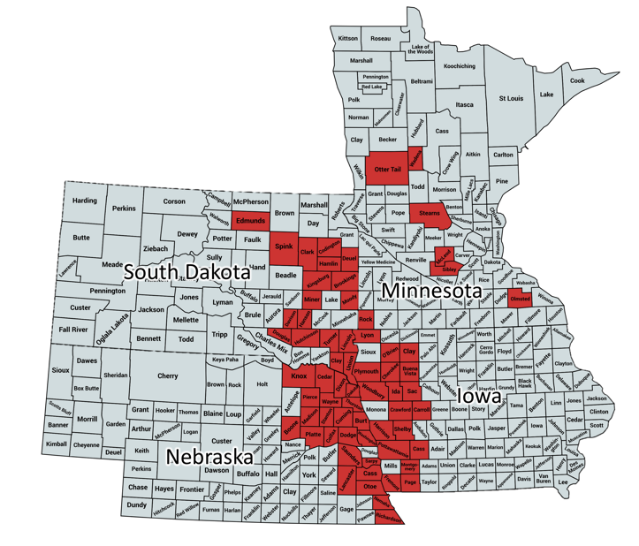
    SOYBEAN GALL MIDGE: I mentioned in a previous post that a new insect had Soybean gall midgeinfested fields in South Dakota, Nebraska and western Iowa. It also was present in a few Minnesota counties. Prior to 2018, no midge damage to soybeans had been reported.

    Map for mark article

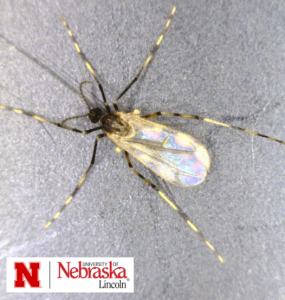
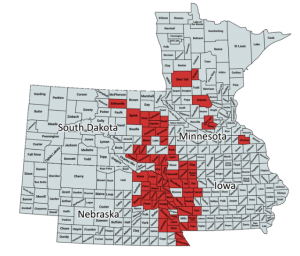
    This year, however, it was reported this pest caused significant yield losses in 66 counties across this four-state area. (See map.) University of Nebraska researchers captured adult midges and sent them to world-renowned experts for identification. We know the Soybean Gall Midge belongs to the genus Resseliella, which includes 55 species worldwide. This midge is about one-fourth inch long. Note its orange abdomen, as well as the black and white bands on the legs.

    (The above map and photo were taken from the 11-7-18 issue of UNL CropWatch.)

    Mark Grundmeier, Product Manager

    December 17, 2018
    Agronomics, Crop, Insects, Soybeans, Tech Tuesday
  • Latham Hi‑Tech Seeds

    FB Live: Gall Midge & Late Season Scouting

    HR feature image


    LIBSYN header 2 01

    Tune in for discussion on a new insect hitting soybean fields in the Midwest. We will also be covering tips on late-season scouting.

    https://www.facebook.com/LathamSeeds/videos/1134728796694114/

    Laura Cunningham

    August 23, 2018
    #AskTheAgronomist, Agronomics, Crop, Insects, Soybeans
  • Latham Hi‑Tech Seeds

    FB Live: Is It Time to Spray Aphids?

    Facebook Live 8.2

    LIBSYN header 2 01

    Is it time to spray for aphids? Phil Long discusses plant damage and identifiable thresholds when making the decision.

    https://www.facebook.com/LathamSeeds/videos/10156604967342138/


    Laura Cunningham

    August 2, 2018
    #AskTheAgronomist, Agronomics, Crop, Insects, Soybeans
  • Latham Hi‑Tech Seeds

    FB Live: Japanese Beetles Population Rise

    LIBSYN header 4 1024x576

    LIBSYN header 2 01

    Japanese beetles populations are settling in across the Midwest. Tune in to learn more about insect control!

    https://www.facebook.com/LathamSeeds/videos/10156551348677138/

    Laura Cunningham

    July 12, 2018
    #AskTheAgronomist, Agronomics, Crop, General, Insects
  • Latham Hi‑Tech Seeds

    Quick Steps to Slow Spread of Soybean Aphid Resistance

    Feature Tech Tuesday 01

    Tech Tuesday Header-01

    The number one soybean insect pest is growing across the Upper Midwest. Recent reports indicate some aphid populations are developing resistance to insecticides, especially pyrethroid products.

    While we may not be able to stop the spread of this resistance, we can certainly slow it down by using these best management practices:

    » Avoid spraying any insecticide if the economic threshold has not been reached. The accepted economic threshold is 250 aphids per plant in 80% of the field as long as the aphid population is increasing. This should not be confused with the injury threshold, which ranges from 600 to 700 aphids per plant. The economic threshold is designed to give farmers time to apply insecticide before the field reaches the injury threshold.

    » Use insecticides with different modes of action just like we use herbicides with different modes of action to help control resistant weeds. Some common examples of pyrethroid products include Warrior®, Mustang®, Asana®, Baythroid® and Pounce®, as well as a host of generic products. Lorsban® is an example of an organophosphate insecticide that may be used for aphid control.

    » Avoid adding insecticide to herbicide application just as “insurance” or to save a trip across the field, as this can easily lead to resistance problems.

    » When applying insecticides, good coverage is essential. Higher spray volumes and pressure help to move the product down into the soybean canopy.

    » As with many potential threats, scouting early and often is crucial to overall success! Soybean aphids can greatly increase in numbers if the weather is cooler than normal and if natural predators are not present.

    First identified in Wisconsin during the summer of 2000, soybean aphids are found in 21 states and three Canadian provinces. Besides the damage they do by sucking sap from plants, aphids also are vectors of several viruses that attack soybeans.

    Scouting for aphids is key for maintaining the health of your soybean crop now… and in the future. Do what you can now to keep numbers down and to avoid insecticide resistance from building.

    Webspec Admin

    April 10, 2018
    Agronomics, General, Insects
Previous Page
1 … 3 4 5 6 7 … 12
Next Page

Latham Hi‑Tech Seeds

131 180th Street | Alexander, IA 50420

(641) 692-3258

SIGNUP FOR OUR NEWSLETTER
  • Contact
  • Legal
  • Dealer Center
  • Seedware Login
  • Latham Gear

© 2025 Latham Hi‑Tech Seeds. All rights reserved. | Iowa Web Design by Webspec | Privacy Policy

Latham® Hi-Tech Seeds is a trademark of M.S. Technologies, L.L.C., 103 Avenue D, West Point, IA 52656.