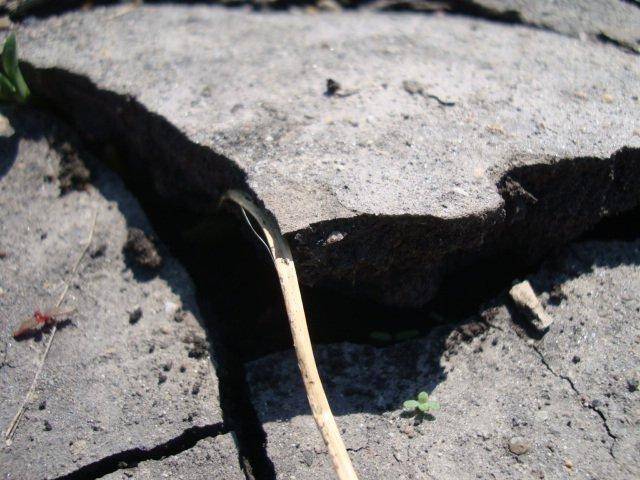
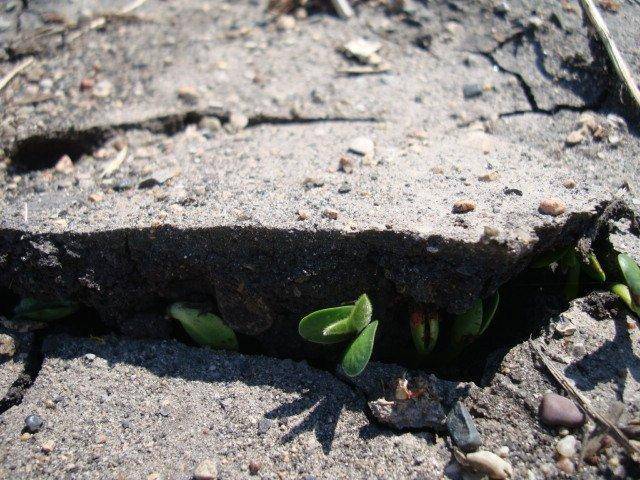
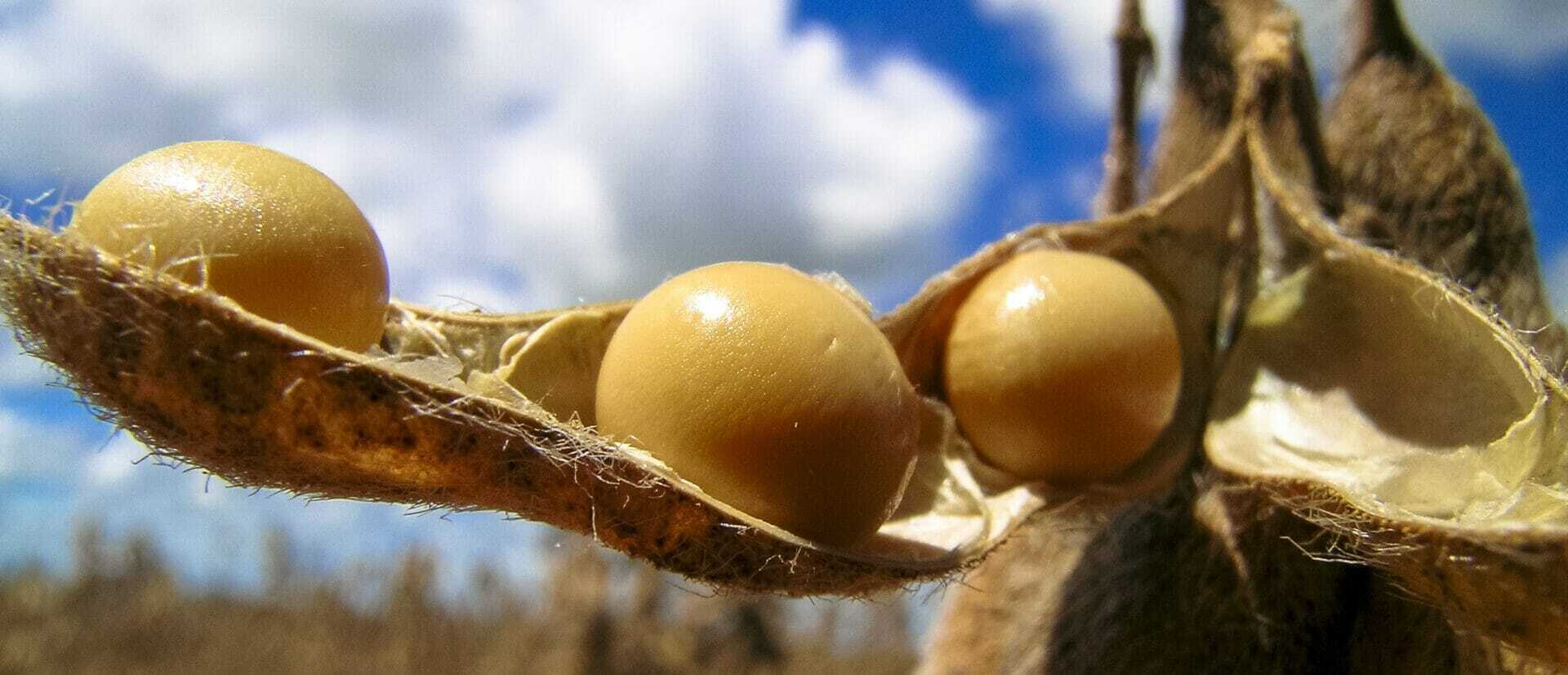
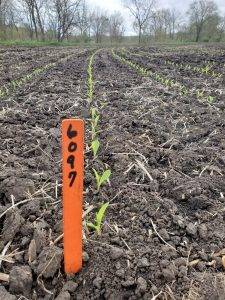
L1884R2 had such strong emergence that it actually lifted a 6″ square of dirt that is about 1″ thick. This is a sister line to our number one selling soybean L2084R2. Look for more updates on this family of varieties as the season progresses.

 Submitted by John Toft
CCA, Tekamah, Nebraska
Yesterday, I blogged about the importance of determining the causes behind uneven corn stands in the field. Things to consider included: planting conditions at the start of the season, possible excessive planter speed over rough soil or residue, planting in unfit soils, shallow or excessive planting depth, failure to close the furrow or worn planter parts. I also provided a link to help make planter adjustments that promote those “picket fence” stands in your field.
But what if everything I mentioned in yesterday’s post was done properly and you still end up with uneven corn? Dig up those poorly performing plants! Nearly all unevenness results from a problem under the soil surface. Some potential culprits to check for include:
Plants at V2 that have lost or diminished primary root systems and underdeveloped secondary root systems will become smaller, poorer doing plants when compared to the increasing growth of their unimpaired neighbors. As time goes on, the healthy, rapidly growing plants accentuate the unevenness as they “grow away” from the poor performing plants. Fields emerging the same day but exhibiting unevenness prior to V2 usually contain plants with rotted kernels or have lost their primary root systems.
A large number of uneven corn stand cases are always tied back to unfit soils at planting time and resulting soil compaction. Having mentioned that, I’ll leave you with a link and the Top Ten Reasons to Avoid Soil Compaction as provided in a recent issue of Corn and Soybean Digest.
Top 10 Reasons to Avoid Soil Compaction
Submitted by John Toft
CCA, Tekamah, Nebraska
It’s important to examine the cause of uneven corn to avoid the situation in the future, if possible. Some common reasons for uneven corn may be a result of: the planting trip; varying planting depths due to excessive planter speed over rough soil or residue; planting in soils that are too wet; shallow planting depth; excessive planting depth; failure to close the furrow; or worn planter parts.
To help provide “picket fence stands,” make planting and planter adjustments. It’s important to match the planter speed to field conditions and to avoid planting seeds in extremely poor soil conditions.

Planting in soils that are too wet can lead to sidewall compaction. This spring I saw where two sidewalls compacted, causing the plant to come out of the ground in two halves. The under-developed root systems resulting from the compaction are often confined in a flat plane within the furrow trench. Planting in too wet of soil, especially with coulters, allows sticky soil to build up on gauge wheels resulting in planting depth differences.
Shallow planting places seed in differing soil moisture levels and can potentially delay emergence dates. Shallow planting also can lead to a shallow secondary root system. “Rootless corn” may result, or plant development may be greatly delayed compared to neighboring plants. Excessive planting depth, especially in challenging environment seasons, can result in uneven emergence, too. However, I have far greater problems over the years with planting too shallow than I have with planting too deep.
Failure to close the furrow is usually caused by poor soil conditions, improper closing wheels for field conditions, incorrect down pressure, or planting in sod. Worn or improperly adjusted planter parts can cause or aggravate all the previously mentioned problems.
Although the 2011 planting season may be over and done, it’s important to monitor crop progress throughout the growing season and take notes. Avoiding these same mistakes during next year’s planting season can help improve plant stands and lead to healthier, higher yielding plants.
Many Midwest farmers will wrap up the 2011 planting season this week, but there won’t be much rest for the weary. As soon as seed is in the ground, it’s a good idea to start scouting fields.
Post-planting is an ideal time to begin scouting one’s crops. Many soilborne pathogens strike as soon as the seed begins to take on water; others strike young seedlings. Because seeds can germinate quickly and emerge in 3 – 5 days, it’s not too soon to start walking your fields.
Check plant populations, evaluate stands and be on the lookout for early summer diseases. Is there a germination problem? Do you see effects of chilling or crusting?
Assessing your situation ASAP will allow you to formulate a plan while there’s still plenty of time to implement it. You could replant in parts or in all of a field now, so you can attain the yields and returns you want this fall. Information on corn replanting decisions is available from www.agronext.iastate.edu/corn. Click on the “Planting” topic, then click on the “Replant Decision Aid Calculator” tab and use that tool and related information to help make a replant decision. For a resource on soybean replanting decisions, go to www.extension.iastate.edu/publications/pm1851.pdf.
Another benefit of evaluating current stands is to help you determine what adjustments should be made before planting next year’s crop: Do you need to adjust your planter settings or your planting speed?
Once you get past the mechanical issues, look at the disease pressure. If soybeans are damping off, perhaps next season you should opt for seed-applied fungicides? Do you need to pay closer attention to a particular soybean brand or corn hybrid’s disease rating? Seed selection is one of the most important decisions affecting yield. Click here for tips on selecting soybean brands and selecting corn hybrids.
Farmers are continually working to increase their soybean yields. The statewide average in Iowa is now more than 50 bushels per acre, but last year several farmers broke the 80-bushel yield barrier with Latham soybean genetics and the Genuity® Roundup® Ready 2 technology.
Raising record-breaking soybeans begins before the seed even hits the soil. Mark Grundmeier, Latham’s product manager, recently contributed to a Wallaces Farmer article with tips on how to establish a good soybean stand.
In the article, Mark says the first step to establishing a good soybean stand starts with treated seed. The benefit from seed treatments far outweigh the costs. He adds that fungicide-treated seed is a must to prevent damping off from Pythium, Rhizoctonia, Phytopthora and Fusarium. It’s no secret soybean plants are subject to thousands of variables throughout the growing season.
Proper planting conditions are crucial, and Mark says it’s important to remember that it’s much better to plant correctly than to plant quickly. Soil temperature sets the stage for healthy growth, and he recommends a temperature of 50 degrees or more at planting. It’s also important to wait for soils to dry. Wet soils cause trouble from the beginning, and compaction resulting from wet soil can kill root growth.
For Mark’s full list of tips to establish a good soybean stand, click here to read the article in Wallaces Farmer.
In this week’s crop report Nick Benson, Latham’s regional sales manager in northeast Iowa, reported a 20-25% stand reduction in his area due to imbibitional chilling damage. The damage resulted in what he called some very confused seedlings that were either emerging incorrectly or not emerging at all. We wanted to provide a little bit more information on just what imbibitional chilling is and how it affects seedlings.
Imbibitional chilling damage is the chilling effect seeds may experience when they imbibe, or absorb, water when soil  temperatures are less than 55° F for an extended period of time. The seedlings may “corkscrew” or not emerge when exposed to these coil soil temperatures (see photo). This may happen also when there are rapid swings in air temperatures, of nearly 30° F.
Nick said he has seen results of imbibitional chilling in corn that had been planted April 28-30. Those growers who saw the 20-25% stand reduction decided not to replant simply due to the lateness of the season – another reminder that farmers are at the liberty of the elements.
If you have any questions about imbititional chilling damage, feel free to comment in the field below.
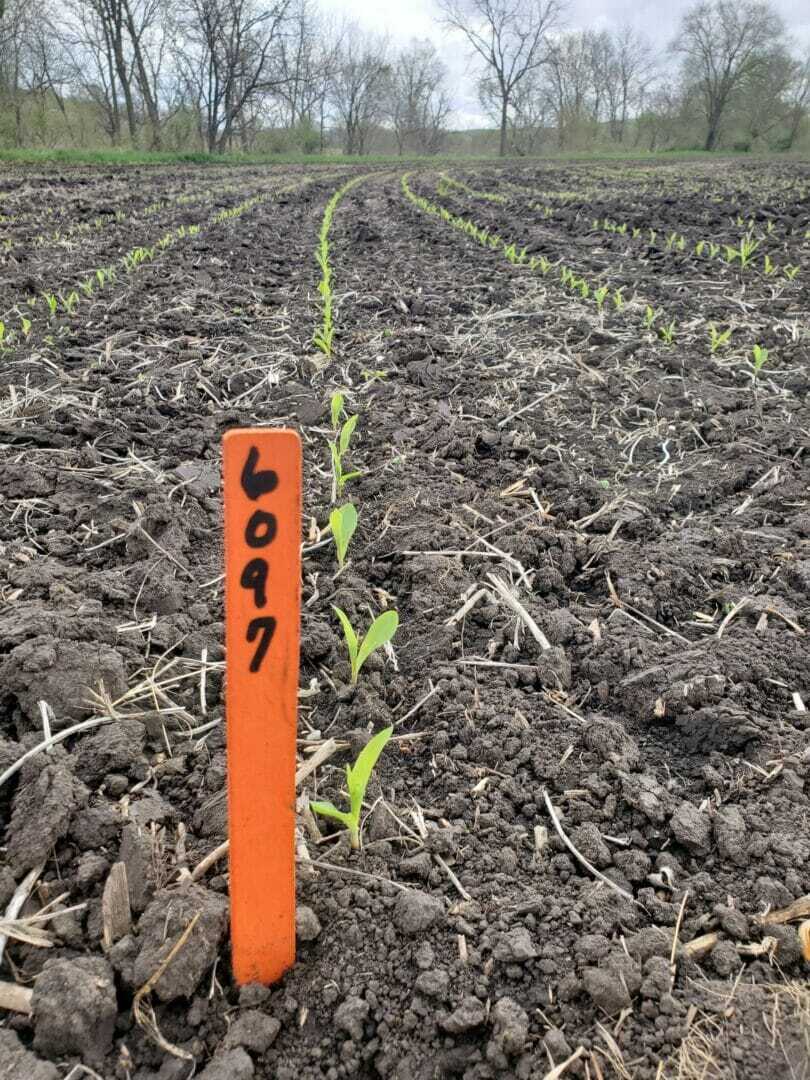
 Corn planting occurred at an all-time record this spring. In Iowa in particular, we’ve experienced one of the best planting seasons in history. Recent cool temperatures throughout the Corn Belt, however, are requiring extra close attention be paid to corn fields as those cool temperatures may have caused seedling growth problems.
We recommend farmers pay particularly close attention to corn fields planted recently, as they would be the most likely to exhibit seedling rot or poorer emergence. For those in low-lying areas, frost may have been an issue, causing leaf necrsosis and delayed growth of sprouted seeds.
Listed below are seedling growth problems to scout for:
Any of the situations listed above could call for a need to replant, but be sure to assess stands before making this decision.
Contact your Latham representative with any questions or click here to read more.
Evaluating corn and soybean stands early is key to identifying problems – or potential problems – while there is still time to remedy them. Three methods are commonly used to determine stand counts:
(Click on any of the below charts to view the text in a larger font size).
The 1/1,000th Method involves counting the number of plants in a length of row equal to 1/1,000th of an acre based on row width (See Table 1). Multiply the number of plants by 1,000 to calculate the number of plants per acre. Repeat the process in several locations in the field.
The Wheel Method entails counting 150 plants and measuring the distance from start to finish with a measuring wheel. To determine plant population, divide the number of feet traveled into the appropriate factor (See Table 2).
For the Hoop Method, toss a hoop in a field and count the number of plants inside it. Repeat this in at least five locations throughout the field. Multiply the average number of plants by the appropriate factor listed in Table 3 to calculate the number of plants per acre. NOTE: Having a hoop with a diameter of 28 ¼” allows you to simply multiply by 10,000 to determine the number of plants per acre. You can make a hoop this size by cutting anhydrous tubing to 88 ¾ inches and joining it to form a circle.
Source: Monsanto’s Agronomic Spotlight, 4/26/10, Illinois Agronomy Handbook. 23rd Edition. Pg. 31. Purdue Corn & Soybean Field Guide. 2007.
“Avoid the temptation,” cautions the soil experts. Entering fields at less-than-ideal soil conditions can actually do more harm than good.
Mahdi Al-Kaisi, Iowa State Univeristy associate professor in agronomy with research and Extension responsibilities in soil management and soil science, offers the following reasons to avoid rushing into your fields this spring.
Top 10 Reasons to Avoid Soil Compaction:
Check the moisture profile before rushing into a field, says Al-Kaisi. Maximum soil compaction results when soil moisture is at or near field capacity because the moisture acts like a lubricant between soil particles that are under pressure from heavy field equipment.
For management tips on how to minimize soil compaction, check out Al-Kaisi’s article, “How and Why to Avoid Soil Compaction.”
As you head into the fields this spring, take a moment to remember what it took to get your crop out last fall. Extremely wet weather led to combines rolling through muddy conditions, and the wet extremes were followed by unusually heavy snowfall. This activity should alert you that compaction will undoubtedly be a challenge this spring.
Dealing with soil compaction
Many farmers will be tempted to try some extra tillage this spring to see if that will help break up the soil, but that is exactly what you should NOT do. Only time and the natural freezing/thawing cycle will break up compaction that is deep in the soil. Because of the heavy snow cover this past winter, most soils did not get that real hard freeze necessary to break up that deep compaction layer. In a recent article posted in the Extension News, ISU Extension Agronomist John Holmes summed it all up when he said, “Put simply, the more wheels and machinery that move over wet soil, the more compaction will take place.”
Therefore, be patient this spring. Wait until soil conditions are fit before doing tillage or fieldwork of any kind because it will pay you dividends next harvest! For fields that will be planted to soybeans, you may want to consider using a fungicide seed treatment. Cool, wet soils are noted to harbor diseases that can cause damping off. You should also choose soybean varieties and corn hybrids that have excellent disease ratings for your fields.
Your Latham® seed specialist can help you select seed products that are right for you. For more information on locating a Latham® dealer near you, call 1.877.GO.LATHAM (465.2842).

