Latham Hi-Tech Seeds

(641) 692-3258

  • Home
  • Products
    • Corn
    • Soybeans
    • Alfalfa
    • Corn Silage
    • Seed Guide
  • Performance
  • Find a Rep
  • Media
    • Blog
    • News
    • Videos
    • Podcasts
    • TECHTalk
  • About Us
    • Company History
    • Our Mission
    • Careers
    • Become a Rep
    • Sowing Seeds of Hope
  • Contact Us
  • Latham Hi‑Tech Seeds

    Soil Crusting and Leafing Out Underground

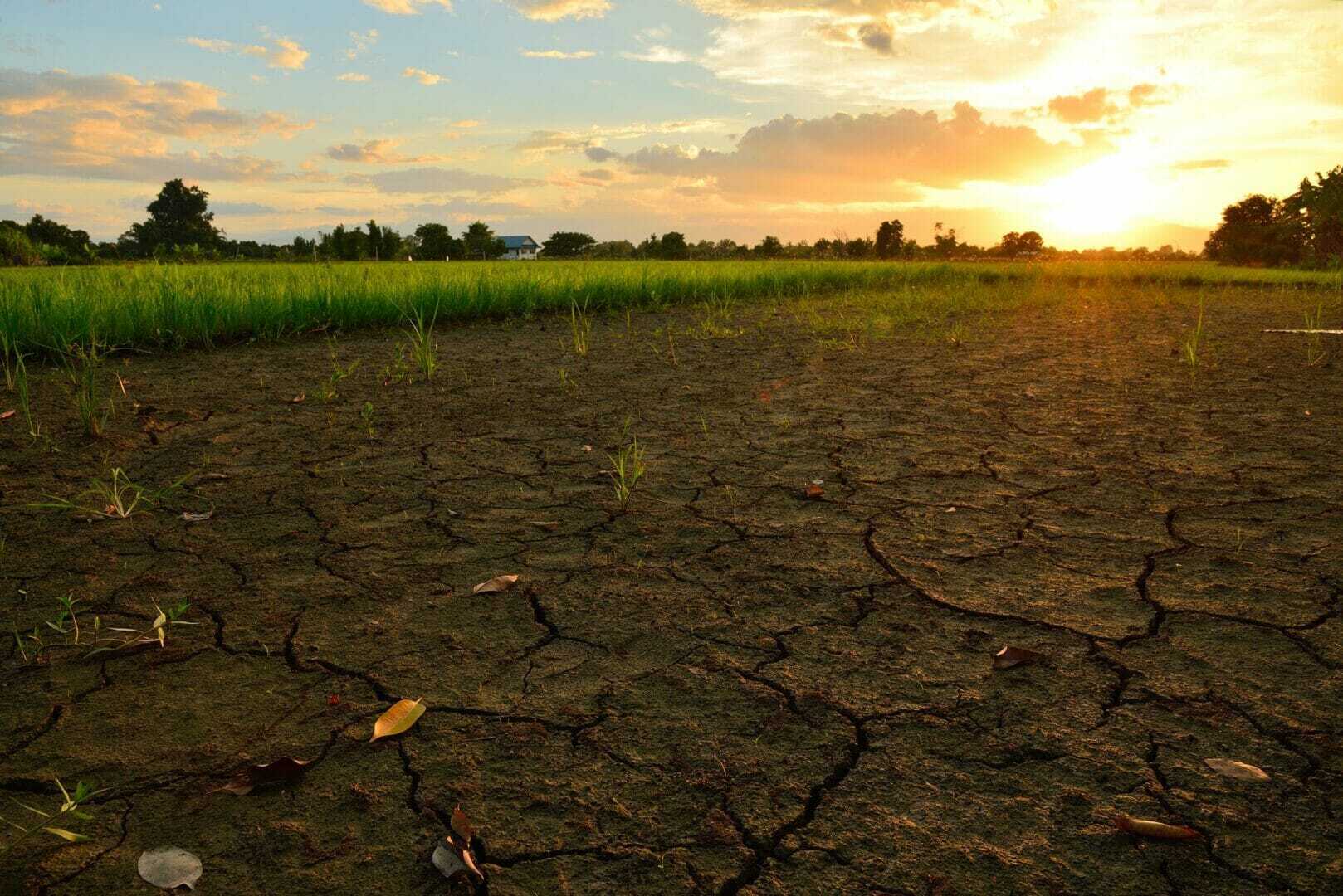
    Crack and dry ground at rice field with sunlight.
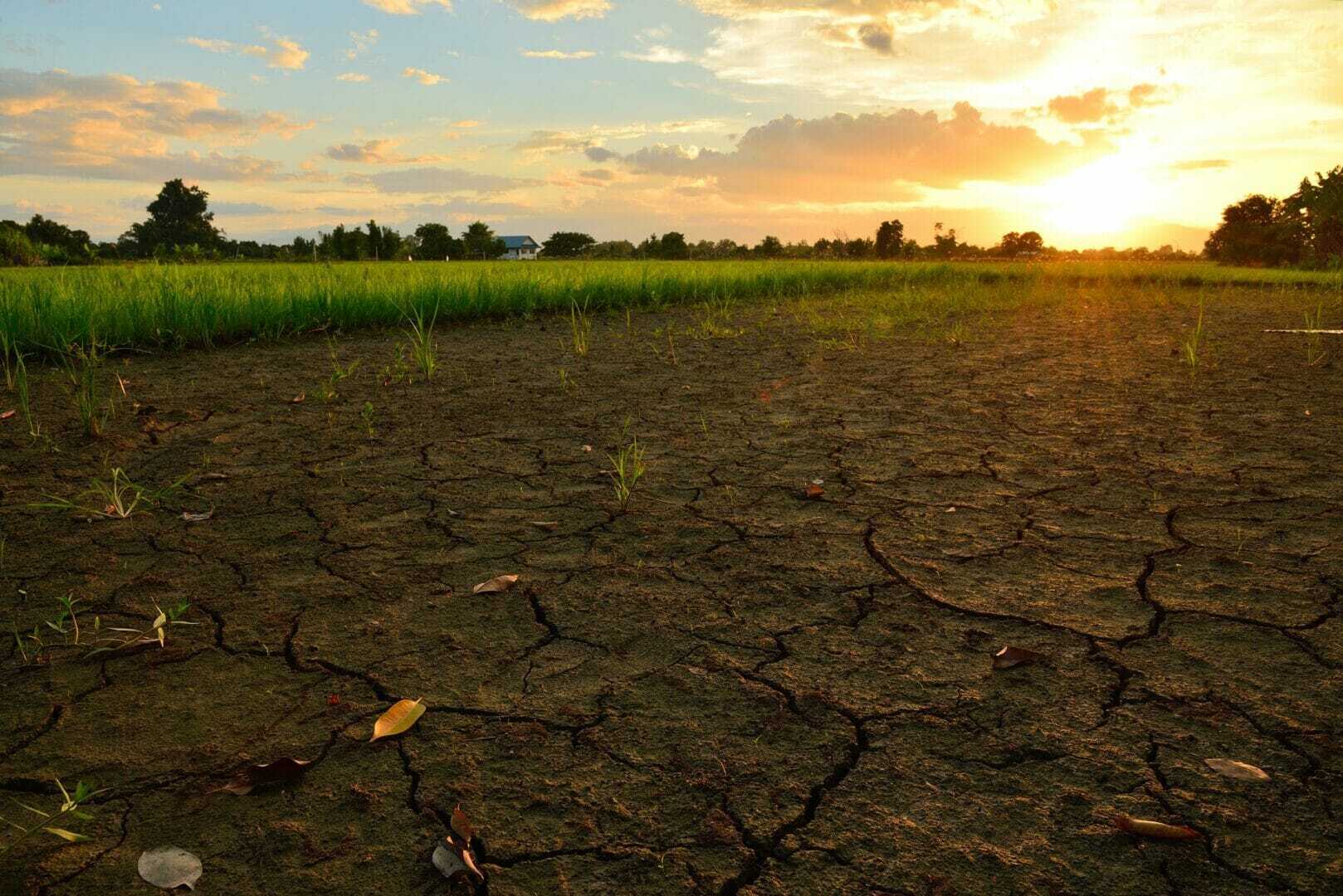
    Crack and dry ground at rice field with sunlight.
    iStock Photo


    Most often the result of heavy rainfall, soil crusting presents itself in the form of hardened soil with a smooth and compacted appearance. Heavy rains following planting along with high heat and winds can cause finely tilled soils with limited residue cover to form a very dense crust. In addition, planting in wet soils and the use of heavy tilling are primary causes of soil crusting. Fine soils and soils with little organic matter are also more susceptible to the condition.  

    Soil Crusting Implications  

    Hardened soil presents implications for water infiltration while also interfering with crop emergence. The coleoptile of a corn plant acts to protect leaves from emerging before the shoot penetrates the soil. When soil crusting occurs, this can cause leaves to emerge prematurely through the coleoptile below the soil instead of above ground – also known as “leafing out”. When the coleoptile ruptures before penetrating the soil, it becomes much more difficult for leafing out to occur above ground.  

    The hypocotyl of the soybean plant may enlarge as it pushes against the crust and can eventually snap and kill the plant. If you notice a swollen hypocotyl, that soybean plant is trying harder than normal to break through the soil.  

    A study from Iowa State University found that when 17% of corn plants on a plot exhibited delayed emergence, overall yield was decreased by 4-8%. For soybeans, research from North Carolina State University concludes that delayed emergence reduced overall yield by an average of 14 bushels per acre.   

    Leafing Out Identification 

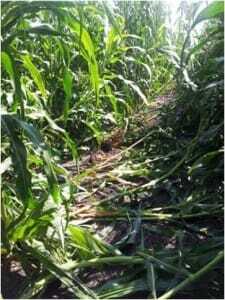
    Leafing out is often seen in the form of a “shepherd’s crook” when the coleoptile ruptures prematurely and prevents leafing out above ground. The decreased vigor resulting in premature leafing out can lead to uneven emergence and ultimately reduce yield.  

    Adapting Solutions 

    No-till or minimum-till can reduce the amount of soil movement in times of heavy rainfall, preventing the onset of crusting. In addition, improving surface soil structure can be done by adding organic matter using cover crops or manure. 

    Using a rotary hoe at the depth of the crust can break up the soil, allowing seedlings to emerge. This practice can also act as a means for weed control prior to their emergence. By using a combination of approaches, soil crusting can be eliminated to avoid leafing out below ground. 

    Latham Seeds Agronomy Team

    June 2, 2020
    Agronomics, Corn, Crop, Drought, Flooding, Soil, Soybeans
  • Latham Hi‑Tech Seeds

    #AskTheAgronomist: Crusting Soils

    59532994 2268247053397539 3457397893881659392 n

    LIBSYN header 2 01

    How does crusting and rolling soybeans go hand in hand this season? Phil Long talks about these two topics in reference to this year’s growing season.

    Laura Cunningham

    May 16, 2019
    #AskTheAgronomist, Agronomics, Drought, Emergence, Rain, Season, Soil, Spring, Weather
  • Latham Hi‑Tech Seeds

    Rootless Corn Syndrome

    Rootless Corn Syndrome Photo Credit ISU
    Rootless Corn Syndrome Photo Credit ISU
    Credit: Iowa State University

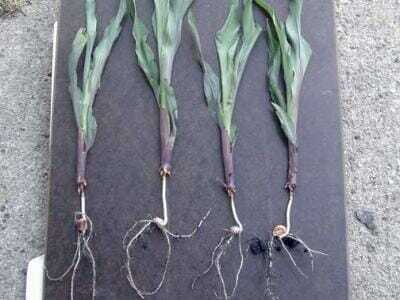
    Rootless corn syndrome is a disorder, often a result of hot and dry soil surfaces and planting into dry soil. With rootless corn syndrome, the nodal roots will fail to attach to the soil. Nodal roots are essential conduits for transporting water and nutrients to corn plants. Their absence is highly consequential for the quality of stand and overall yield outcomes.  

    Dry soils warm more rapidly than moist soils, and combined with conventional tilling, corn plants can become susceptible to failed nodal root development. Heavy rainfall and planting when the soil is too wet can compact the soil, preventing nodal roots from extending downward.  

    The erosive effects of rainfall and wind combined with shallow planting depth are the primary drivers of rootless corn syndrome. In addition to weather-related causes, when corn is planted at a depth less than 1 inch below the surface, nodal root development can take place at a depth shallower than what is needed for having access to moist soil. Nodal roots should form between 1 to 1.5 inches below the surface.  

    What to Look for 

    Nodal roots first appear around the V1 and V2 stage. Rootless corn occurs in plants with poorly developed root systems and is usually observed in plants from about V3 to V8. When rootless corn syndrome is suspected, look for signs of lodged and collapsed corn plants. Corn plants may still be standing but later on they will lose vigor and fall over. Test plants in the area of concern by tugging on them to determine whether nodal roots are established and growing down.  

    Preventative Action 

    Rootless corn can largely be prevented by ensuring that seeds are planted at least 1.5 to 2 inches below the soil surface. For corn plants whose nodal roots fail to grow, the prospects for survival are bleak. Corn nutrient and water uptake hinges on having a developed nodal root system. For plants that do survive, poor stands and low vigor will be exhibited.  

    Moving soil to cover roots may allow them to recover – but if an operation is following a no-till plan, this may not be viable. Further, row cultivation for bringing soil around nodal roots will be ineffective if the soil below the surface lacks moisture for supporting recovery. Adequate rainfall and the absence of drought conditions will support optimal nodal root development and prevent rootless corn syndrome.   

    Latham Seeds Agronomy Team

    April 1, 2019
    Agronomics, Corn, Crop, Disease, Drought, Emergence
  • Latham Hi‑Tech Seeds

    Seed Selection is Even More Critical in Dry Years

    The Iowa Legislature convened last week, and along with that, came talk that Iowa’s drought law may get a closer look this year.  “Water restrictions” isn’t a typical topic of conversation in the north, but it looks as though it might become commonplace across the Upper Midwest in 2013 if weather patterns don’t change.

    It’s safe to say we’ll be planting the 2013 crop in dry soils.  The 2012 drought caused most soils here to be depleted of moisture in the upper 7 to 8 feet, so it will take at least two growing seasons to recharge those soils.

    Seed selection will certainly be critical for 2013 due to the extremely dry conditions.  That’s why we’re recommending that most of our corn customers plant hybrids at least double- or triple-stack hybrids this spring.

    A hybrid’s genetics will be the biggest factor in whether a hybrid can handle drought.  Plot data shows that multiple-trait stacks, like Latham® hybrids with the Genuity® SmartStax® technology, can really help protect yield.  REMEMBER:  Traits protect yield.  Genetics make yield.  Seed products carrying the Latham brand name combine the industry’s best genetics with the latest traits and technologies.

    While corn genetics have come a long ways over the past decade and are much better at handling drought stress than ever, soybeans historically perform even better in dry weather.  Farmers will need to consider whether they can manage corn-on-corn in another extremely dry year or whether the economics favor soybeans.  Other factors to consider when finalizing your 2013 crop plans are outlined in this recent article posted on agriculture.com: Six Take-Home Lessons from the 2012 Drought.

    Regardless of whether you choose to plant corn, soybeans or alfalfa, Latham has the products you need! Our seed portfolio contains products that were bred specifically to thrive in specific areas of the Upper Midwest. Call your local Latham rep to learn more about the products best suited for your growing conditions, or feel free to call our office directly at 1.877.GO.LATHAM (1.877.465.2842).

    John Latham, President

    January 23, 2013
    Agronomics, Drought, General, Precision Ag, Season, Spring, Weather
  • Latham Hi‑Tech Seeds

    “Drought” Implications are Top of Mind This Week

    US Drought Map1

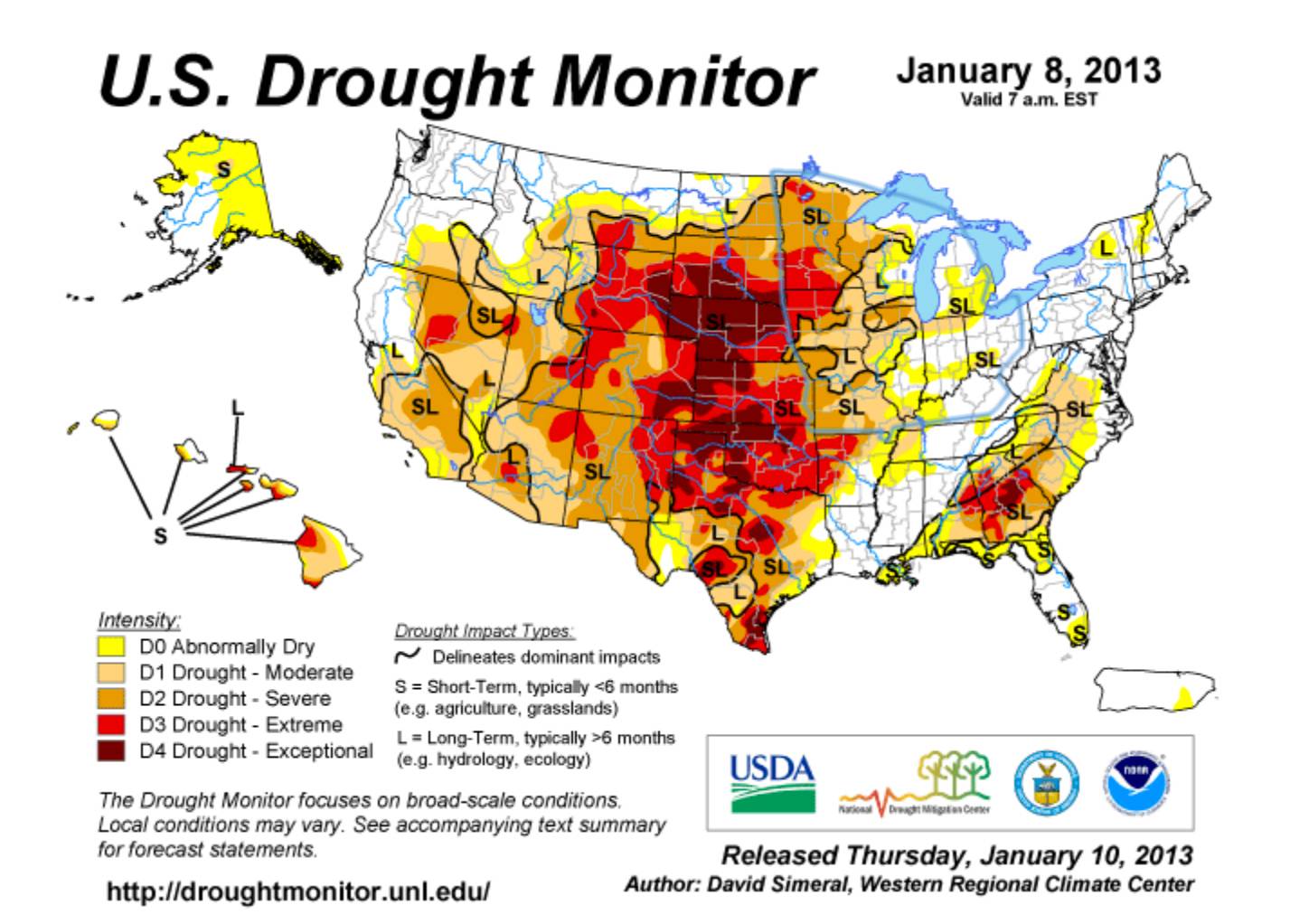
    The only snow left in North Central Iowa is in the ditches or lining dry creek beds – just one more reminder that the Midwest still suffers from drought.  Here’s an excerpt from “crop comments” posted yesterday to agweb.com:

    1/15 – Lancaster County, Nebraska: Still dry with a little moisture in the top foot from 1ft to 6ft not any moisture. We will need some terrific rain events this spring to recharge subsoil, one of those events were you get 1/4 to 1/2 inch every day for 2 weeks (like that ever happens?)

    1/15 – Palo Alto County, Iowa: First year I can recall without any ice in the drainage ditches in the area. We have had a little snow and maybe a tenth of an inch of rain a few days ago. Never gone into spring as dry as we are right now. If this is a sign of what’s to come this next growing season id be crazy to sell the remainder of the 2012 crop and even consider selling for 2013. Lots of new irrigation equipment being put up this winter even in areas where on a normal year it’s not necessary.

    1/9 – Trempealeau, Wisconsin: If the Mississippi level any is an indicator of potential yield with average moisture, certainly areas that depend on subsoil moisture to get average crop will suffer. It seems to me that we will need an inordinate amount of moisture to compensate to get yield up to average, but what is average?

    Drought-related topics also grabbed the attention of farmers attending the American Farm Bureau Federation’s annual meeting last Sunday in Nashville.  During that meeting, a representative from Monsanto talked in details about the 2013 introduction of Genuity® DroughtGard TM hybrids in western states like Kansas, Colorado and Nebraska.

    Since it will be another year or two before farmers in the Upper Midwest will be able to purchase DroughtGard hybrids, there are steps you can take to help conserve soil moisture and a few things to consider when choosing seed for 2013 planting.  Click on the articles below for additional resources:

    • How Drought Might Affect 2013 Crops
    • Corn or Beans: Which Will You Choose in 2013?

    Team Latham

    January 16, 2013
    Drought, General, Weather
  • Latham Hi‑Tech Seeds

    How Drought Might Affect 2013 Crops

    Following the 2012 growing season, researchers from across the Upper Midwest gathered to present data and opinions on a wide variety of topics pertinent to agriculture in our marketing area. Today I’m summarizing some of their findings for you to consider as you prepare to plant the 2013 crop.

    • SEEDLING DISEASES: University researchers are “dialing down” on the four main families of pathogens typically associated with soybean seedling diseases: Pythium, Fusarium, Rhizoctonia and Phytophthora. They have found more than 50 different species of Pythium that affect soybeans in our area. For many years, we believed this pathogen preferred cool, wet soils. Now we know that several of these species actually prefer warm soils! It was also discovered that some “new” species are not affected at all by fungicides currently available.
    • OTHER DISEASES & PESTS: Extremely dry weather throughout the Upper Midwest was responsible for the presence of Charcoal Rot, from as far north as southern Minnesota and as far east as the Mississippi River Basin. Damage from Soybean Cyst Nematode and Two-Spotted Spider Mite infestations were also widely reported. Be aware that many common insecticides don’t have much of an effect on Spider Mites, so carefully read the labels of any products you intend to use.
    • WEATHER: Dr. Elwynn Taylor said we’ve just finished a 19-year cycle of reasonably mild weather patterns and are now headed into a 25-year period where weather patterns are apt to be volatile. The 2012 drought caused most soils here to be depleted of moisture in the upper 7 to 8 feet. It will take a minimum of 16 –18 inches of rainfall (or equivalent in snow) to recharge those soils to their normal level. It will probably take at least two growing seasons to recharge.
    • TILLAGE: This was one of the “hottest” topics of the ICM conference. Most of the researchers were extremely surprised to see the amount of fall tillage completed because minimizing tillage helps conserve soil moisture.  Soil is our greatest natural resource, so we must protect and conserve it or our children and grandchildren will surely suffer the consequences.

    Webspec Admin

    January 9, 2013
    Drought, General, Weather
  • Latham Hi‑Tech Seeds

    Till Less for More Water in 2013

    Graph1

    guest blog post by Mark Licht, ISU Extension and Outreach

    Current weather pattern trends are causing some concern that moisture reserves will be depleted for the 2013 crop.  While we can’t control the weather, we can help manage soil moisture reserves by reducing tillage.

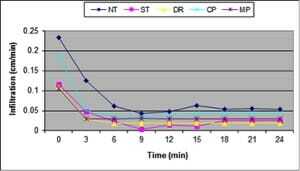
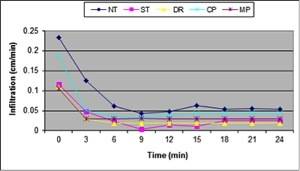
    Reducing fall tillage will help conserve soil moisture as each tillage pass can lead to ¾ of an inch of plant available water.  Tillage reduces water infiltration by breaking large pores, and the small pores are clogged by the dislocation of soil particles.  Raindrops break the soil aggregates, which clog soil pores leading to slow water infiltration and increases surface runoff.  Additionally, subsequent rains result in more runoff because of potential soil crusting.  Research has shown a significant decrease in water infiltration rate as the intensity of tillage increased as shown in the figure below.

    Figure 1. Water infiltration with five different tillage systems. NT=No-till, ST=Strip-tillage, DR=Deep Rip, CP=Chisel Plow and MP=Moldboard Plow. (Al-Kaisi, 2011). Note that strip-tillage infiltration rates were taken in the tilled zone.

    Three reasons why farmers should consider avoiding fall tillage this year include:

    1. Crop residue moderates soil temperature, leading to less soil moisture evaporation.
    2. Residue helps reduce the amount of wind at the soil surface, which helps further reduce soil moisture evaporation.
    3. Soil compaction due to equipment traffic was minimal due to dry conditions from planting through harvest 2012.

    There is no reason to allocate time and fuel for deep tillage; the normal freeze/thaw cycles should alleviate any mild compaction that resulted.

    Another benefit of leaving standing corn residue is that it can help catch snow that would otherwise blow across the surface and pile up somewhere else.  Eight to 16 inch corn stalks hold more snow than bare soil.  Additionally, corn stalks will help reduce runoff and increase infiltration of snow melt in the spring.  This could mean another 1 or 2 inches of soil moisture next spring.

    A final reason to forego tillage this fall is because Goss’s Wilt was not a large concern in 2012.  Goss’s Wilt survives the winter on corn residue, but because there was minimal presence this year, there is no need for tillage this fall to further reduce risk in 2013.

    Team Latham

    October 4, 2012
    Agronomics, Drought, General, Soil, Weather
  • Latham Hi‑Tech Seeds

    Best Management Practices for Drought

    LathamBags

    Dry growing conditions in 2012 are prompting questions this fall about soil fertility, herbicide carryover and seed product selection. Implementing best management practices this fall will help reduce stress for crops next spring.

    Conserve Soil Moisture
    When soils are dry, farmers must conserve remaining moisture. This may mean holding off on disking and cultivating, so as not to let moisture escape in the process. Keeping the harvested crop’s residue on the ground’s surface also will help conserve soil moisture.

    Test for Herbicide Carryover
    Herbicide breakdown may be slowed greatly in drought conditions. The best time to test for carryover is between late October and mid-November. By this time, soil temperatures remain below 50° F – a point at which herbicide breakdown is minimal. If you take residue samples before this time, herbicide levels could be greater than those that will be present at the time of 2013 planting.

    Select Seed Products
    Since dry conditions could increase the chances of herbicide carryover, farmers may want to select seed for 2013 with greater tolerance to the herbicide used during the 2012 drought year. Another option might be to alter your crop rotation to avoid planting a crop susceptible to the herbicide used.

    Whether you want to plant corn, soybeans or alfalfa – Genuity® Roundup Ready 2 Yield® or LiberyLink®, SmartStax® RIB Complete, Herculex® XTRA or Agrisure® GT – Latham Hi‑Tech Seeds has the products and our trait packages to fit your needs. Call your local Latham® rep or 1-877-GO-LATHAM (1-877-465-2842). The time is now to plan for the 2013 growing season!

    Webspec Admin

    August 30, 2012
    Agronomics, Drought, General, Weather
  • Latham Hi‑Tech Seeds

    Adjust Combines for Drought Conditions

    It’s going to be an early harvest – perhaps three to four weeks earlier than “normal.” As we posted in our Aug. 15 crop report, crop conditions are well ahead of the 5-year average with 94% of the corn crop already at the milk stage and 80% at dough stage. Third crop alfalfa is one month ahead of schedule.

    That means the time is now to prepare for harvest! Harvest, for both and soybeans, typically begins in the Midwest between Sept. 17-27. Soybean harvest is usually finished by Halloween. Corn harvest is most active Oct. 5 through Nov. 10 and usually ends before Thanksgiving.

    It’s certainly not going to be “harvest as usual” this fall. Harvest will begin sooner and most likely progress slower. With weak and/or lodged stalks and stems, slower combine travel speeds will help ensure the crop feeds into the combine as easily as possible. Finding the correct travel speed to balance machine field with crop quality requires checking both losses behind the combine and grain quality in the tank, says Iowa State University’s Mark Hanna with the Department of Agricultural and Biosystems Engineering.

    Be sure to adjust combine settings for drought conditions. The gap between snapping plates above the stalk rolls on a corn head should be adjusted this year. In normal years, a gap of 1.25 inches is used. Given the situation this year, however, that gap most likely should be narrowed to just over an inch to avoid butt shelling of smaller diameter ears. The use of a reel, cones or divider modifications on the corn head may also help pick up more of the lodged corn.

    To help reduce the amount of lodged corn at harvest time, assess crop progress now and identify potential problem areas. Focus first on harvesting fields that show signs of Stalk Rot or exhibit weakened stalks that could subsequently lead to Stalk Lodging. Secondary concerns include hybrid maturity, crop residue management and logistics.

    Prepare now for a safe and fruitful harvest!

    Webspec Admin

    August 16, 2012
    Drought, Fall, General, Season, Weather
  • Latham Hi‑Tech Seeds

    Genetic Garden Shows How Different Types of Corn React to Drought

    Genetic Garden Shows Drought Stress1

    by Rachel Norby, Seed-2-Soil® Summer Intern

    As you drive through the countryside, it’s evident that different corn hybrids are handling the drought stress differently.  Some hybrids have stronger roots and stalks, so they’re holding up better in these dry conditions.  Other hybrids have weaker stalks and are lodging.

    Latham Hi‑Tech Seeds’ Genetic Garden shows how corn from many different eras is reacting to the drought conditions.  You can see how much better today’s hybrids can withstand the high heat and low moisture than their early ancestors.

    Genetic Garden Shows Drought Stress

    Although minimal irrigation was used to keep our “living museum of corn” alive for the Latham Country Fair on August 25, many varieties still reacted to the drought.  You’ll see lodging in many early varieties.  (NOTE:  “Early” is being used here to reference the chronological history corn of varieties, not as in the relative maturity of hybrids.)

    Open-pollinated corn varieties grown during the Dust Bowl of the 1930s didn’t pollinate then, and you’ll see the same thing happened in our Genetic Garden.  A corn variety found in the Genetic Garden from around the time of the 1988 drought is also showing signs of stress.  One of the differences in the droughts of 1988 and 2012, however, is there was less rainfall during the months of April to June in 1988 than we received in 2012.  This lack of rain during that quarter of the year meant more stress on crops during early season growth compared to this year when the majority of the stress happened around the time of pollination.

    We’d like to invite you to see the differences for yourself!  Take a walk through our “living museum of corn” on Saturday, Aug. 25, during the Latham Country Fair.  We’ll be hosting tours between 9 a.m. and 3 p.m.

    Gary Geske

    August 13, 2012
    Agronomics, Corn, Crop, Drought, General, Industry News, Seed Technology, Weather
Previous Page
1 2 3
Next Page

Latham Hi‑Tech Seeds

131 180th Street | Alexander, IA 50420

(641) 692-3258

SIGNUP FOR OUR NEWSLETTER
  • Contact
  • Legal
  • Dealer Center
  • Seedware Login
  • Latham Gear

© 2025 Latham Hi‑Tech Seeds. All rights reserved. | Iowa Web Design by Webspec | Privacy Policy

Latham® Hi-Tech Seeds is a trademark of M.S. Technologies, L.L.C., 103 Avenue D, West Point, IA 52656.