Latham Hi-Tech Seeds

(641) 692-3258

  • Home
  • Products
    • Corn
    • Soybeans
    • Alfalfa
    • Corn Silage
    • Seed Guide
  • Performance
  • Find a Rep
  • Media
    • Blog
    • News
    • Videos
    • Podcasts
    • TECHTalk
  • About Us
    • Company History
    • Our Mission
    • Careers
    • Become a Rep
    • Sowing Seeds of Hope
  • Contact Us
  • Latham Hi‑Tech Seeds

    Rain at Last!

    Photo 4

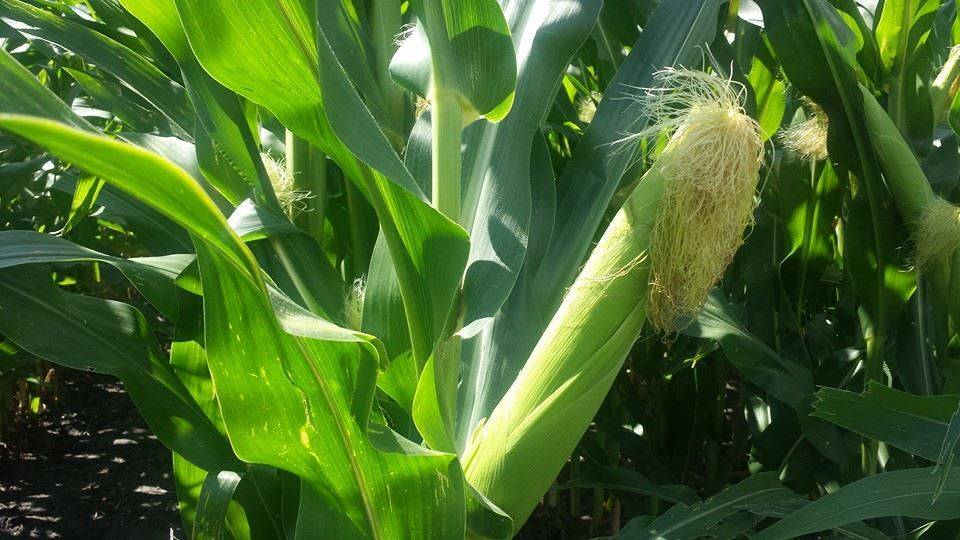
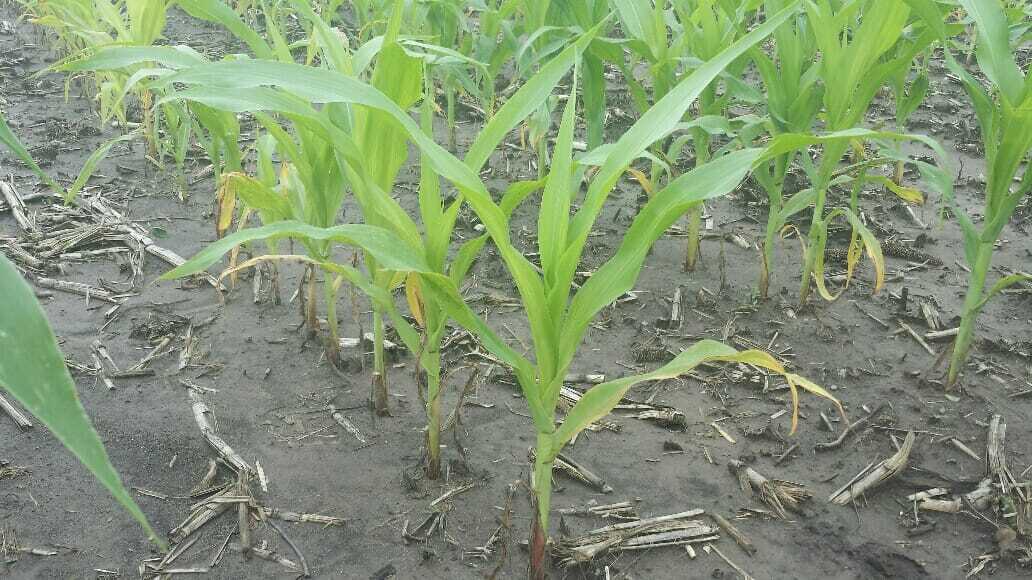
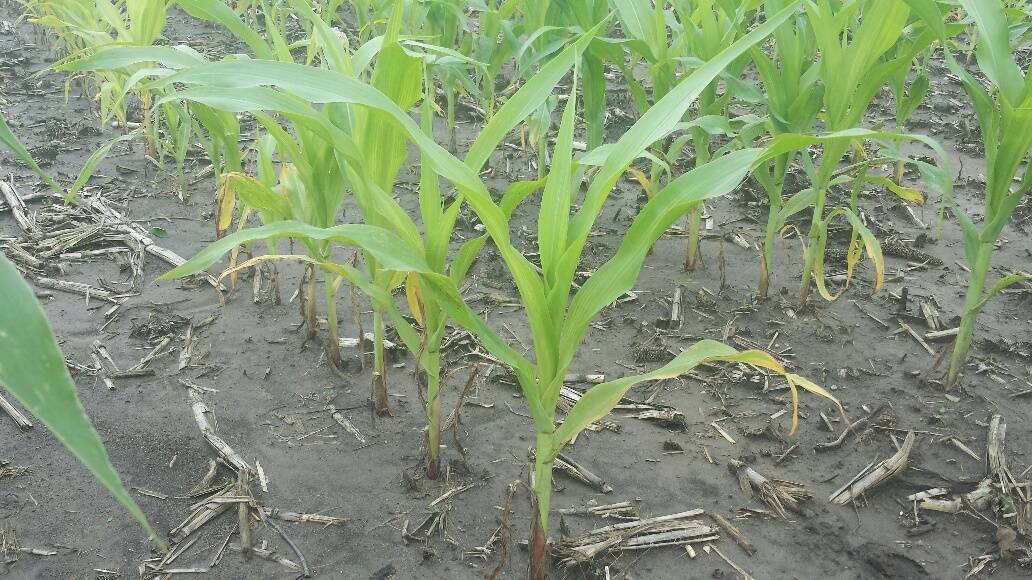
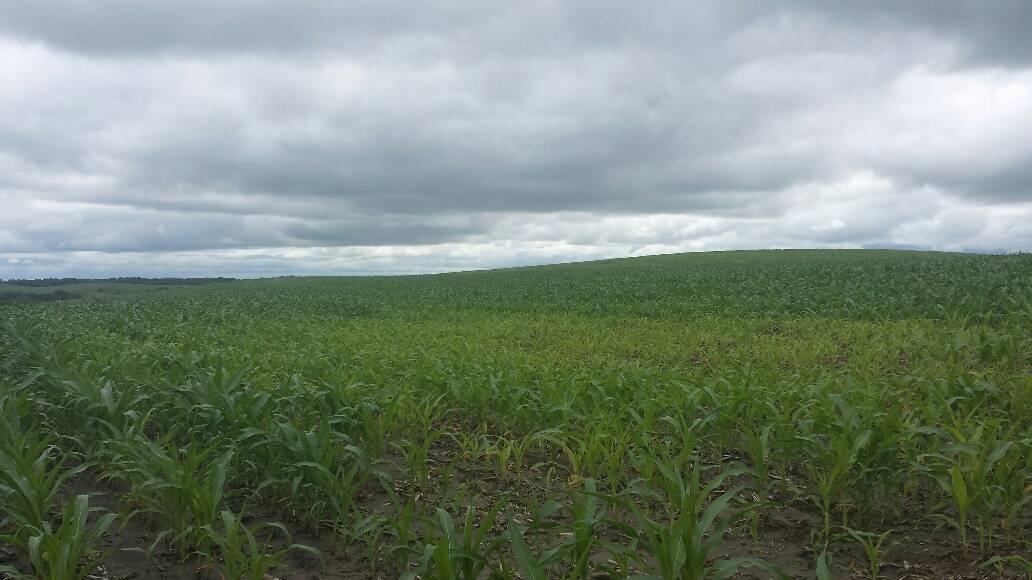
    It’s been a dry summer across Latham Country. After weeks of reporting “cool, dry conditions persist,” it’s good to hear that many areas received heat units and rainfall during the past 7 days. Above-normal temperatures during the week aided crop development.

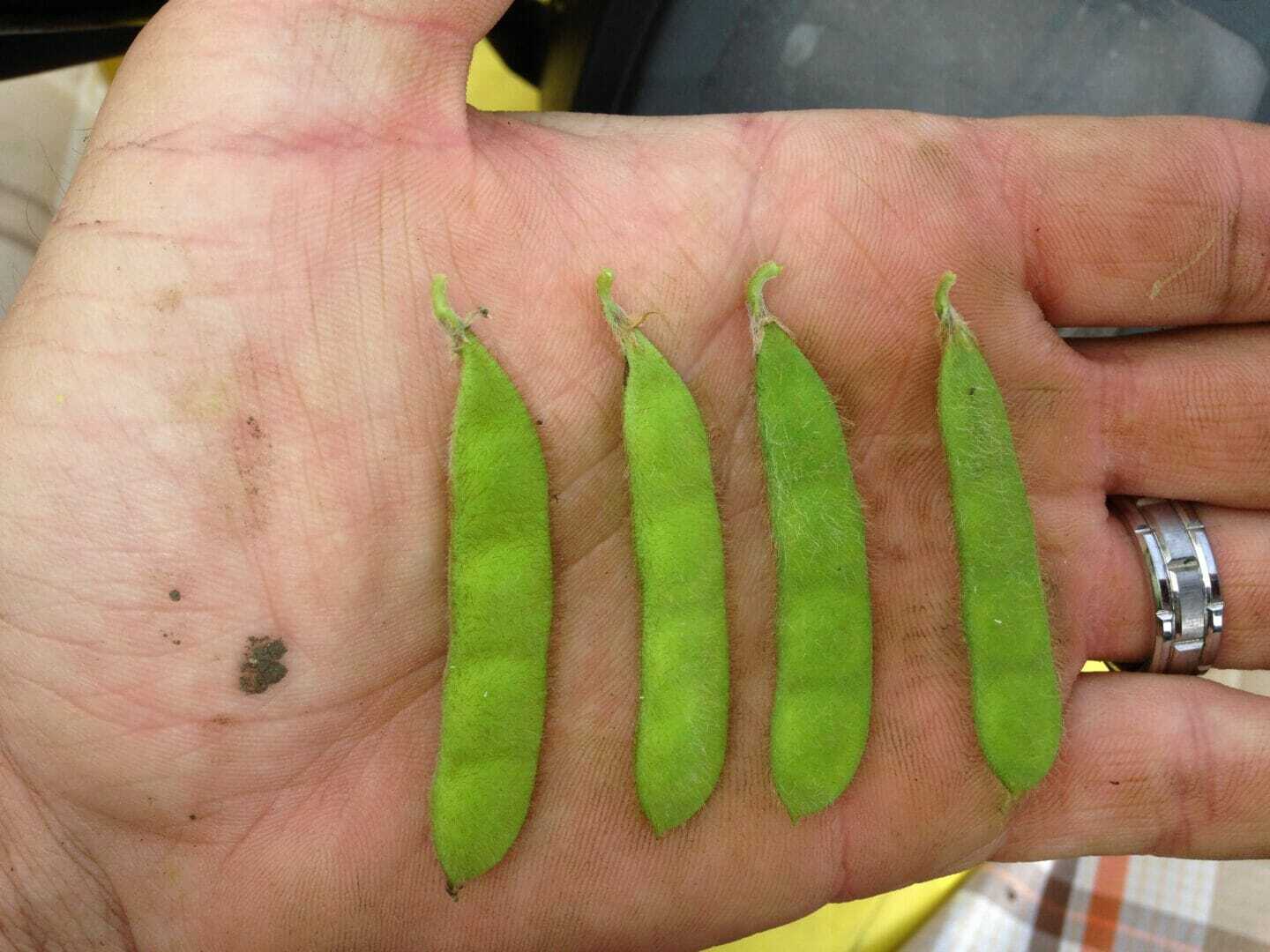
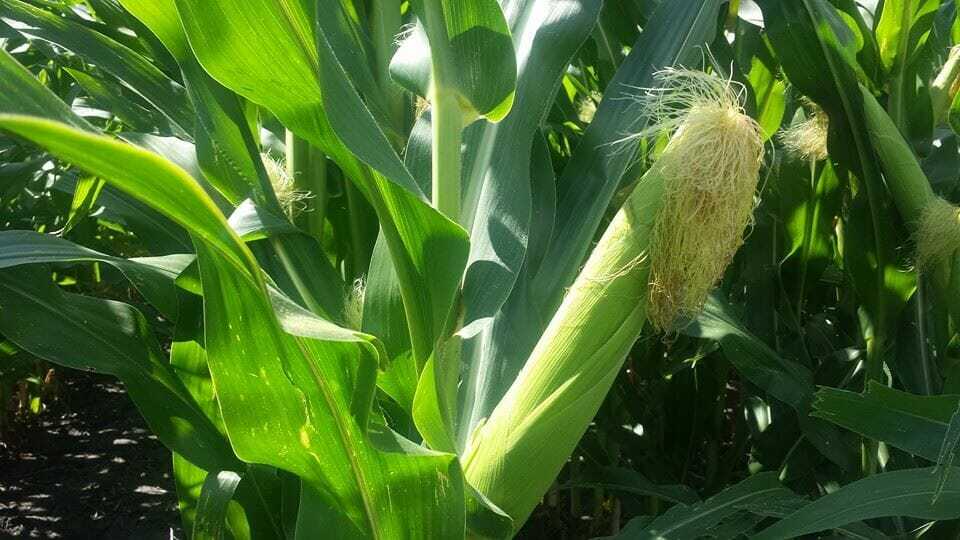
    Eighty-eight percent of Iowa’s corn crop is in the dough stage or beyond, which is 17 days ahead of last year and 8 days ahead of the five-year average. Three-quarters of the corn is rated in good to excellent condition. Ninety-four percent of the soybean crop is setting pods or beyond, which is 13 percentage points above last year and 1 point above average. Nearly ¾ of the soybean acreage is in good to excellent condition.

    The week ending Aug. 25 was Iowa’s wettest in seven weeks. Topsoil moisture levels improved. Subsoil moisture levels rated 4 percent very short, 21 percent short, 73 percent adequate, and 2 percent surplus. Click here for regional updates in the territories we cover.

    Team Latham

    August 27, 2014
    General, Season, Summer
  • Latham Hi‑Tech Seeds

    Wishing for Rainfall

    Erger corn plot1

    Erger Corn Plot

    The weather continues to be very good for crop development across Iowa with 77 percent of corn and 74 percent of soybeans in good to excellent condition. “Much of the state could use a shower,” said Iowa Secretary of Agriculture Bill Northey, “especially to help the soybeans as they set and fill pods during August.” Several areas throughout Latham Country, especially in the north, report crops are showing signs of moisture stress.

    July makes corn and August makes soybeans, as the saying goes, blogs Mark Licht with ISU Extension and Outreach. Regional and state yield estimates will soon be released based of ground surveys. Click on this link for soybean yield and corn yield estimation considerations.

    To see how crops are faring in a particular region across Latham’s six-state marketing area, check out TheFieldPosition.com where you’ll find regional “From the Field” reports:  http://bit.ly/1mXS9RY

    Team Latham

    August 6, 2014
    General, Season, Summer
  • Latham Hi‑Tech Seeds

    Seasonal Extremes Continue

    Earoncorn
    Photo Credit to Darcy Maulsby
    Photo Credit to Darcy Maulsby

    The season of extremes continues. About 7 to 10 days ago, we experienced temperatures about 20° cooler than the normal as a Polar Vortex that moved into the Midwest. Earlier this week we experienced heat indices of more than 100 degrees. While corn can handle high daytime temperatures quite well, as long as moisture is adequate, high nighttime temps can have adverse effects. About six consecutive nights with temperatures in the 70s and 80s can lead to dark respiration, lower dry matter and result in lower yields.

    Thankfully, the 5-day forecast for North Central Iowa calls for daytime highs near 85° and nighttime lows around 58° to 60°. That’s perfect crop growing weather! There’s even a chance of rain on Friday, which would be welcome since we haven’t received significant rainfall in about 10 days. To see how crops are faring across our six-state marketing territory, visit “From the Field” on TheFieldPosition.com and click on the drop-down menu.

    Team Latham

    July 23, 2014
    Agronomics, General, Season, Summer
  • Latham Hi‑Tech Seeds

    Potential Impact of Saturated Soils on #Crop14

    NickB July2 1

    NickB-July2-1Heavy rain has caused localized ponding and flooding across much of Latham Country. Now farmers are wondering how long corn will survive in saturated soils, what impact of prolonged flooding or ponding will have, and what options they have if crops drowned out.

    Injury level is determined by several factors including: (1) plant stage of development, (2) duration of ponding and (3) air/soil temperatures. Prior to the 6-leaf collar stage or when the growing point is at or below the soil surface, corn can usually survive only 2 to 4 days of flooded conditions. Soybeans can generally handle flooded conditions for 6 to 8 days, research shows.

    NickB-July2-2Temperatures greater than 77° lessen the amount of time that plants can survive ponds and floods as oxygen levels are depleted more quickly. When oxygen is depleted, roots stop growing and plants stop taking up water.

    To predict a plant’s ability to survive, check the color of the growing point. The growing point should be white to cream colored; a darkening and/or softening of the growing point usually precedes plant death. Also check the plants about 3 to 5 days after the water drains for new leaf growth.

    When ponding or flooding happens early in the growing season – say before June 10 – farmers have the option of replanting corn. Later in the season, farmers still have the option of replanting soybeans. Key soybean replanting dates are:

    Southern Iowa July 10-12
    Central Iowa July 8-10
    Northern Iowa July 6-8
    Southern MN July 3-4

    After the first part of July, options are pretty much limited to planting cover crops. Cover crops help prevent essential nutrients like water and nitrogen from running off into rivers and lakes.  Cover crops also help control weeds and overcome erosion, which can result when fields are left fallow. Click here for tips on how to determine whether cover crops are right for our situation.

    RELATED POSTS:

    • Impact of Mid-Season Flooding on Ear Fill
    • Signs of Crazy Top Corn
    • Protect Your Crop from In-Season Nitrate Loss

    Webspec Admin

    July 3, 2014
    General, Season, Summer
  • Latham Hi‑Tech Seeds

    Wicked Winds and Rain Wreak Havoc

    April flood

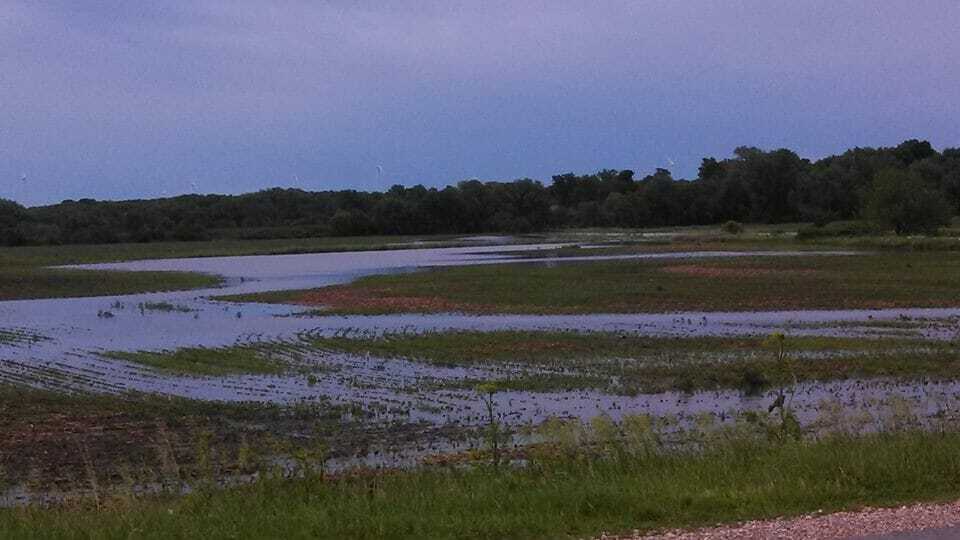
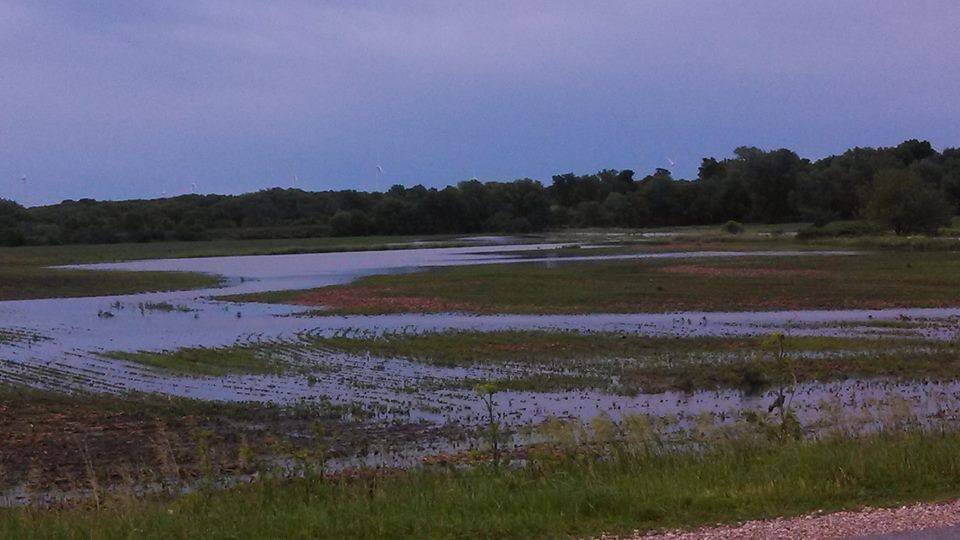
    April floodOnce again, this week we were reminded just how cruel Mother Nature can be! Crazy late-spring thunderstorms and tornados swept across Latham Country from eastern Nebraska through eastern Iowa on Monday evening. Heavy rains fell early this week across the Dakotas and into Minnesota and Wisconsin, too.

    More than six inches of rain fell on Monday night in some areas of Franklin County, Iowa, with an additional 1.5 to 2 inches falling last night. Winds gusting at 70 miles per hour flattened crops, power lines and grain bins alike. The loss of property is disheartening, and our hearts go out to those who are trying to clean up and put the pieces together again. (Click here for tips on talking with consumers about storm damage.)

    “The farmer has to be an optimist or he wouldn’t still be a farmer,” said Will Rogers, the cowboy entertainer who was known for his wit and wisdom. So today, we’re going to talk about the silver lining. Our crops needed moisture. Although they got more than they needed this week, the tile lines are running again. Moisture is building in the soil profile. With first crop hay baled, this rain will get the second cutting of alfalfa off to a good start. The warm temperatures and high humidity we’re experiencing will cause crops to grow like weeds!

    Speaking of weeds, let’s hope the top soil dries enough soon for the corn and soybeans to get sprayed before they get too tall. Volunteer corn is prevalent in some areas this year, and volunteer corn must be treated as a weed. It not only competes with plants for moisture and nutrients, but volunteer corn is a food source for rootworm larvae. Volunteer corn that is not controlled by tasseling attracts corn rootworm beetles for egg laying.

    It’s imperative that farmers continue scouting fields at least weekly to stay ahead of weed, insect and disease pressure. For an update on what Latham’s Regional Sales Managers are seeing in their territories, click on “From the Field” and choose a region from the drop-down box on the right-hand side.

    Team Latham

    June 18, 2014
    Agronomics, Corn, Crop, General, Growth Stages, Rain, Season, Summer, Weather
  • Latham Hi‑Tech Seeds

    Fields Not Yet Fit for Planting

    Weather update
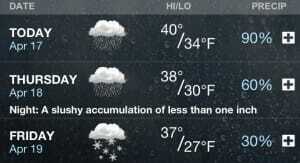
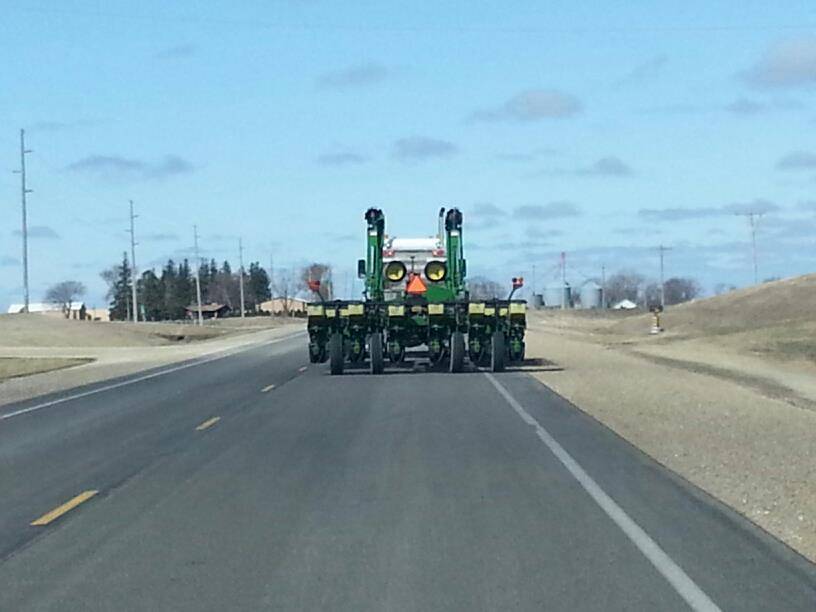
    With temperatures hovering around freezing and more snow flurries in the forecast, the only place planters are “rolling” now is down the road.

    Daytime highs during the month of April haven’t been much warmer than the average lows for this time of year.  As a result, soil temperatures haven’t warmed much during the last week.  Plus, many fields are too wet to work after nearly a weeks’ worth of rains.

    As eager as everyone is to get corn planted early, we need to let soil temperatures and soil conditions – not the calendar – dictate planting dates.  Early planting dates lead to higher yield only when conditions are fit for planting.

    Optimal planting conditions include warm, moist soils.  Right now our soils are cold and wet.  We recommend soil temperatures of 50 to 55 degrees at corn planting time.  But current 4-inch soil temperatures in Northwest Iowa are only averaging 39 degrees; they’re averaging 42 degrees in North Central Iowa.

    Soil temperature isn’t the only factor delaying the planting this spring.  Iowa experienced its wettest week since July 2010 with a statewide average of 2.90 inches of rain, according to the April 15th crop report by the Iowa Department of Agriculture and Land Stewardship.  We need soils to dry before fieldwork can begin, but more rain is in the forecast.  The forecast for the area surrounding Latham headquarters calls for a 100 percent chance of thunderstorms today with total rainfall of one inch.  There’s a 60 percent chance for another quarter to a half inch of rain tomorrow with snow in the forecast for Friday.

    From the sounds of it, field work isn’t likely to begin anytime soon.  Be sure to wait for “fit conditions” before getting your planter out of the shed.  To avoid working soils that aren’t fit, there are 3 things for Midwest farmers to consider:

    1. Be sure soil temperatures are at least 50 degrees before planting corn.
    2. Check the moderately long-range and long range weather forecast to ensure ambient air temperatures won’t freeze seedlings.
    3. Reduce or minimize soil compaction by:
      1. Avoiding wet soils,
      2. Reducing tillage, and
      3. Using the right implements.

    Working soils that are too wet leads to yield loss and more problems during the growing season from soil compaction.  Restricted root development, nutrient deficiency and reduced infiltration rate are among the top 10 reasons to avoid soil compaction.  For ways to reduce soil compaction, click here.

    Select a territory in the drop-down menu below to view your region’s most recent crop updates.

    Choose your region:Iowa- Central and Eastern: Kevin MeyerIowa- North Central: Latham HeadquartersIowa- Northeast: Nick BensonIowa- Northwest: Glenn FullerIowa- Central: Nick ColemanIowa- Western: Bart PetersonIowa- Southwest: Larry KrapflMinnesota- Southeast and Iowa Northeast: Craig HaalandMinnesota- Southwest: Greg BrandtNorth Dakota- Southeast: Gary GeskeSouth Dakota- Notheast: Scott StadheimSouth Dakota- Southeast: Bill EichackerWisconsin- Southwest: Steve Bailie

    Webspec Admin

    April 17, 2013
    General, Season, Summer
  • Latham Hi‑Tech Seeds

    Too hot for corn?

    Peter Bixel, Seed-2-Soil powered by Sci Max Team Leader

    The effects of this past’s week heat wave on this fall’s corn yields is a main topic of conversation in the countryside. Farmers are wondering if consecutive days of excessive heat will cut yield.  It’s true that stress during pollination and silking may result in shorter ears, increased tip back and fewer kernels per ear – all of which contribute to less yield potential. Sometimes.

    Fortunately, the availability of pollen is usually not a problem with modern hybrids for a couple of reasons:

    1. At its peak, a plant produces 500,000 pollen grains per day! There is usually more than enough pollen to go around.
    2. Most pollen shed occurs during the morning when temperatures are cooler and moisture stress less evident.

    Breeding efforts have significantly improved the stress-tolerance of today’s hybrids. The time between pollination and silking – also known as the anthesis-silk interval (ASI) – is very short with modern hybrids.  This shorter ASI results in few barren plants. In older hybrids, however, silking always followed initial pollen shed by at least several days.

    The good news is current soil moisture conditions are excellent throughout much of our territory.  Likewise, the crop moisture index shows that all of Iowa sits at the midpoint, “Slightly dry/ Favorably moist.” A good share of our soils have high water holding capacity. As the heat spell continues, the differences in mid-afternoon corn leaf rolling between soils with better moisture holding capacities than others will be evident.

    High temperature impacts on corn

    This heat wave may have a double impact on the crop.  The first is the increase in rolling of corn leaves in response to moisture deficiency. By rule-of-thumb, the yield is diminished by 1 percent for every 12 hours of leaf rolling – except during the week of silking when the yield is cut 1 percent per 4 hours of leaf rolling. Unfortunately, most of our crop will be silking next week. The second impact is less obvious initially.

    When soil moisture is sufficient, as it is for the most part this July, the crop doesn’t have a measurable yield response to one day of temperatures between 93 F to 98 F. The fourth consecutive day with a maximum temperature of 93 degrees or above, however, results in a 1 percent yield loss in addition to that computed from the leaf rolling. The fifth day there is an additional 2 percent loss; the sixth day an additional 4 percent loss.  Data are not sufficient to make generalizations for a heat wave of more than six days, however, firing of leaves becomes likely and very large yield losses are incurred. Generally a six-day heat wave at silking time is sufficient to assure a yield not to exceed trend (Iowa trend yield is near 174 bushels per acre).

    Hopefully, this hot-weather trend will end soon!  Everything – plants, people and pets – could use a break.

    Webspec Admin

    July 21, 2011
    Corn, Crop, General, Season, Summer
  • Latham Hi‑Tech Seeds

    Rain Makes Corn, but Wind Makes a Mess!

    It’s no wonder that farmers always have one eye on the radar and both ears tuned to the next weather report.  Weather is the number one factor in determining yield, said Dr. Fred Below, professor of Plant Physiology for the University of Illinois. 

    During a July 15th presentation to a group of farmers enrolled in Latham’s Seed-2-Soil® program, Dr. Below said that rain in July and cool night-time temperatures in August make grain.  His data shows that about 70 bushels of yield can be attributed to weather. 

     Unfortunately, the weather last Monday was out of control!  Straight-line winds of 75 to 100 mph struck many corn fields in Latham Country, including our WHO Crop Tour Stop on Johnny Wilson’s farm near Laurel in Central Iowa.  These photos by John Latham show damage in the area, including a new bin that collapsed, and downed corn.  

    Yield loss to the maturing corn crop may be large, reports Rod Swoboda in a recent Wallaces Farmer article entitled “Severe Storms High Winds Flatten Iowa Corn.”
    This bin located north of Johnny's field didn't fare quite as well.

    Despite the damage that occurred July 11, ISU Extension Corn Specialist Roger Elmore says we can be thankful the damage wasn’t more extensive.  Wet soils caused more root lodging from the derecho winds, explains Dr. Elmore in a blog posted July 15 by Iowa Farmer Today.  Drier soils would have cause more greensnap, and thus higher yield losses.  Read Elmore’s blog post for more information about yield loss from root lodging, greensnap and pinching. 


    Corn in Johnny Wilson's field near Laurel, Iowa after 80-100 mph straight-line winds passed through.
    Derecho winds on Monday, July 11, damaged fields in Marshall County, Iowa. This competitor hybrid was located in a field just to the North of Johnny's LH 5376.

    Team Latham

    July 18, 2011
    Agronomics, General, Season, Summer
  • Latham Hi‑Tech Seeds

    Tune into WHO News Radio Today for Round 2 of Crop Tour Update

    We’re preparing to go on air shortly for the second round of the “From the Field” Crop Tour Series with News Radio 1040 WHO, and wanted to provide you with an update from each of the four producers’ fields being featured in the crop tour series. Tune into News Radio 1040 WHO today between 11:30 a.m. and 1:00 p.m., when we’ll provide live on-air updates including plant growth stages and growing conditions.

    Meet each of the featured producers below and receive updates on their growing season progress.

    Scott Jencks’ field in Hawkeye, Iowa

    The Jencks’ field of Latham® hybrid LH 5877 VT3PRO was scouted on June 6, and the crop is looking great.  Ninety-five percent of the corn plants are at the V4 stage.  Plant population is ranging from 32,000 to 38,000 – and that’s right where we want it to be in this variable rate field.  Recent warm, dry weather has helped give crops here a boost, but it’s getting to the point where a little moisture is needed.  The soil here is dry enough that it’s starting to crack.

    [youtube]http://www.youtube.com/watch?v=iGfZUX1BU_Q[/youtube]

    Scott Mandernach’s field near Odebolt

    As of June 6, Latham® hybrid LH 6167 VT3PRO that Scott Mandernach planted May 4 is at V5 stage with great stand and great root structure. The corn is about 18 inches tall throughout the field. The field has been pretty dry for the last week and a half, but that dry spell was needed to force the roots to dig down a little deeper after a wet spring. There is no disease or insect pressure at the moment.

    Johnny Wilson’s field near Laurel, Iowa

    Scouted on June 9, Latham® hybrid LH 5877 VT3PRO is looking good right now. Recent dry weather let the roots establish themselves, but yesterday’s rain was welcome. There seems to be a good hold on stand. The field was planted on May 3 at a population of 36,000 plants/acre. There is no sign of disease or insects in the field at this time.

    Mike Aldinger’s soybean field near Iowa Falls, Iowa

    This soybean field was scouted June 9.  The soil has been dry for the past 10 days but it started to rain as we were scouting.  This crop looks good for the most part. Plants are at the V1 stage, working on V2. Population looks good, and the plants have developed a good root system. There are a few bean leaf beetle marks on the leaves, but insect pressure is minimal throughout the field.



    Team Latham

    June 10, 2011
    General, Season, Summer
  • Latham Hi‑Tech Seeds

    What stage is your crop in?

    All too often, agronomists provide crop recommendations according to stages of crop growth. For corn and soybeans, this is referred to as the “V” stage.  While a plant’s progression through these stages can’t be determined by days on the calendar (due to varying hybrid types, environments, planting dates and location,) they are standardized by visual plant development.

    Corn Plant at Stage "V3"

    The V stage of the corn plant is determined by the number of collars present on the plant.  The leaf collar is the light-colored collar-like “band” located at the base where every leaf blade connects to the stem of the plant.  Leaves within the whorl, (those not fully expanded to allow for a visible leaf collar) are not included.  For example, the photo at left has three collars so it’s considered a “V3 plant”, even though there are 6 leaves present.  If this example were to be converted to a whole-field recommendation, the field would be considered at stage “V3” when 50% of the plants are determined to show three fully developed collars.

    The soybean version of this identification system divides plant development into vegetative (V) and reproductive (R) stages. With the exception of the first two stages, the (V) stages are designated numerically as V1, V2, V3, through V(n), where (n) represents the total number of nodes that develop (fluctuates by variety and environmental influence).  The V stages following VC are numbered according to the uppermost fully developed leaf node. To determine the correct stage, start with the unifoliolate leaf node. A leaf node is fully developed when the leaf above it has fully unrolled, meaning the leaflet edges are no longer touching.   The eight R stages are simply designated numerically and describe the stages of flowering, pod production, pod fill and maturity.

    Click the photo below for an expanded and printable visual of all growth stages in both corn and soybeans. We’d love to hear how the crop is progressing on your farm.  What stage are your crops currently in?

    Gary Geske

    June 7, 2011
    General, Season, Summer
Previous Page
1 … 12 13 14 15 16 17
Next Page

Latham Hi‑Tech Seeds

131 180th Street | Alexander, IA 50420

(641) 692-3258

SIGNUP FOR OUR NEWSLETTER
  • Contact
  • Legal
  • Dealer Center
  • Seedware Login
  • Latham Gear

© 2025 Latham Hi‑Tech Seeds. All rights reserved. | Iowa Web Design by Webspec | Privacy Policy

Latham® Hi-Tech Seeds is a trademark of M.S. Technologies, L.L.C., 103 Avenue D, West Point, IA 52656.