
When faced with high fertilizer prices, what considerations should factor into next season’s investment? Precision Agronomy Advisor Phil Long addresses each macronutrient’s effect on yield and performance plus the pros and cons of investing versus scaling back for next season.
-
Latham Hi‑Tech Seeds
#AskTheAgronomist: Evaluating Fall Fertilizer Decisions
-
Latham Hi‑Tech Seeds
Take the Test and Beat the Pest!
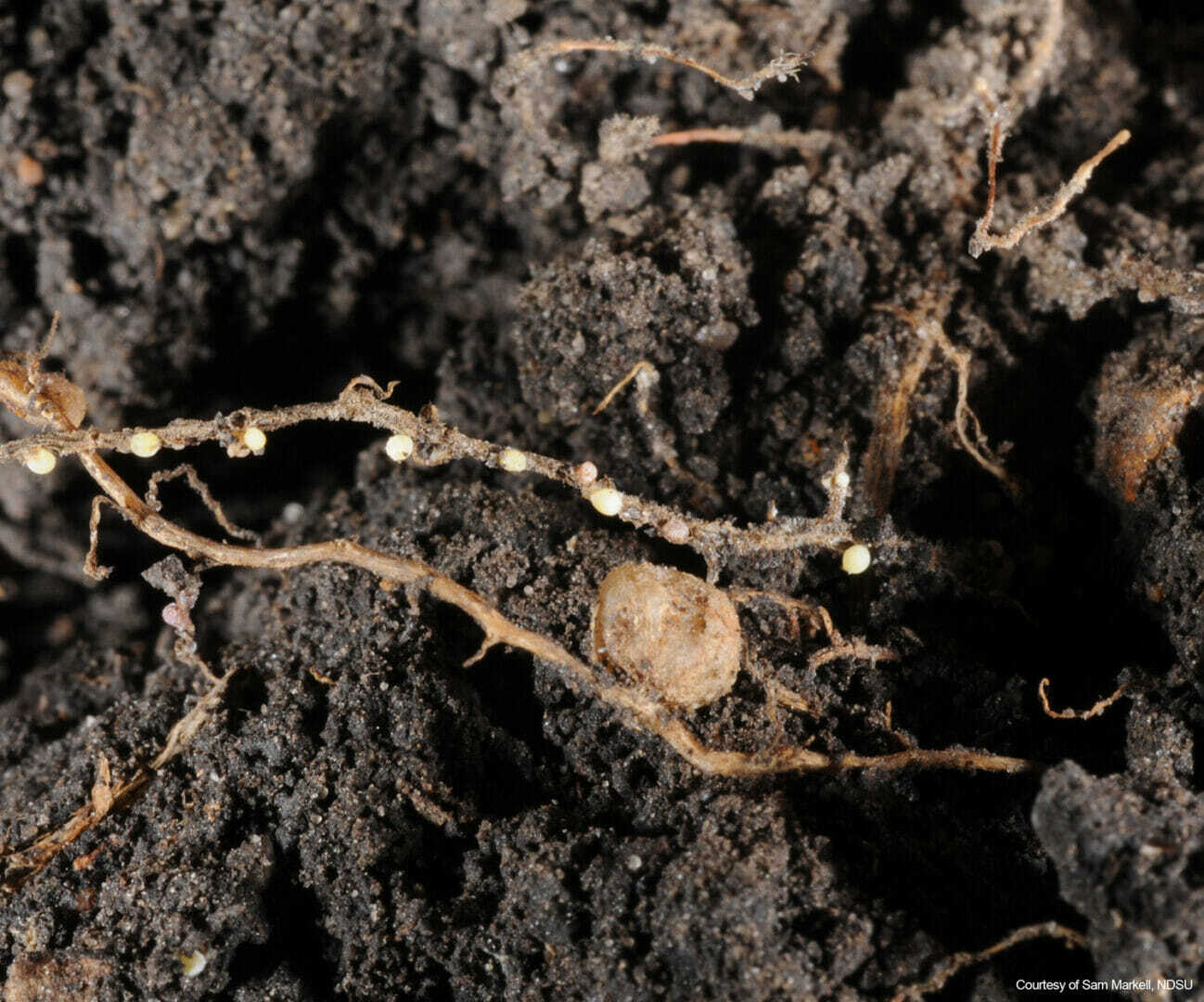
 By robbing farmers of more than 100 million bushels annually, Soybean Cyst Nematode (SCN) is estimated to be the #1 yield-robbing soybean pest or disease in the United States. Farmers may scream over lost yield this fall, but SCN is considered a “silent yield robber” due to a lack of above-ground symptoms in most fields.
Immediately after harvest is the best time to take soil samples for SCN. Several universities have programs that offer free soil samples to evaluate SCN, so check with your local Extension office to see if you qualify.
Think SCN isn’t a problem in your fields? Think again! Dry soil conditions, especially early in the growing season, can greatly increase the effects of SCN infestations. I received numerous calls in June and July about yellow, stunted soybeans. Most farmers suspected Iron Deficiency Chlorosis. Upon further inspection, SCN was almost always present and in larger numbers than previously observed. When I asked whether these farmers had taken a recent soil sample for SCN, most had not. They admit to mostly relying on SCN-resistant varieties to control or minimize the losses from this pest.
We have known for years that PI 88788 is gradually losing its efficacy against the pest, and more than 95% of SCN-resistant soybeans in America have PI 88788 as the source of gene resistance. Since 1997, a team of researchers at Iowa State University led by Dr. Greg Tylka has conducted annual in-field trials with hundreds of SCN-resistant varieties. They measure agronomic performance and SCN population densities from planting until after harvest.
Scientists have determined that to be effective, SCN-resistant varieties must maintain less than a 10% reproduction rate of SCN during the growing season. Since 2004, Dr. Tylka and his team have noticed that the average of all PI 88788 varieties in their trials have gradually exceeded that threshold. They have also noted that the average yield of those varieties has decreased as the SCN reproduction has increased. For more information on these studies, visit www.isuscntrials.info. Other land-grant university researchers have reported similar findings.
To effectively manage SCN in the future, soybean breeders are focusing on other sources of gene resistance. Your Latham Soybean Product Team is continually evaluating and searching for opportunities to bring new, better resistant varieties to our lineup. We also are evaluating several seed treatments for battling this pest. Saltro®, our seed treatment product for SDS protection, is also noted to have activity against SCN. More information from our Latham Elite trials will be available post-harvest.
“TAKE THE TEST. BEAT THE PEST.” is a slogan/campaign by The SCN Coalition™ and funded by the Soybean Checkoff and is designed specifically to promote awareness of SCN. These microscopic roundworms, which infect the roots of soybeans and other plants, can be present in a field for years before above-ground symptoms are visible. We encourage you to take the test this season, so you can plan accordingly for the future.
-
Latham Hi‑Tech Seeds
#AskTheAgronomist: Why is My Combine Black?

Precision Agronomy Advisor Phil Long addresses an interesting question surfacing this fall, “Why does my combine seem like it’s covered in soot?” Tune in to uncover what’s happening in the field as we harvest, plus some cautionary tips for livestock farmers if you are feeding cornstalks this season.
-
Latham Hi‑Tech Seeds
Each Prunty Contributes His Own Ingredient for Farming Success
Today’s technology makes it possible for farmers in different states to conduct secondary research online in the off-season and put it into practice during the growing season.
“We had a hole in our bean lineup, so I went online and started looking for seed,” says Aaron Prunty, who farms with his dad, John, and his brother, Paul, on the South Dakota-Minnesota border near Pipestone, Minn. “I really liked what I read about Latham Hi‑Tech Seeds in the F.I.R.S.T. Trials and decided to give it a try. In our first year, we planted a plot that included Latham’s 1858 and 1538, which ended up winning. All three of the Latham numbers we planted performed well, and the 1858 out-yielded the competition in every side-by-side we put it in. We decided to plant exclusively Latham® soybeans the next year.”
Aaron is responsible for making the seed decisions for the family’s farming operation. His brother has a real knack for fixing equipment, and their father has been primarily responsible for taking care of their independent farrow-to-finish pork operation.
The Prunty family raises all crossbreds. They save their sows and buy boars: Hamp, Duroc, Large Whites and Yorks. As a result of keeping a fairly closed herd and mixing their own feed on site, they avoided PEDV. They also were one of the first producers to start vaccinating for PRRs.
“We’ve always been farrow-to-finish. We farrow year-round, every week,” says John. “I love farming and that makes all the difference in the world. Fortunately, my wife has been a partner with me through the years.”
John’s wife, Elizabeth, mainly took care of the farrowing barn but now Paul is doing more of that. In fact, each family member is making the most of his natural abilities and interest. Aaron graduated in 2007 from South Dakota State University in Agronomy. Paul earned a degree in Animal Science in 2013 from SDSU.
“I’ve always enjoyed working with Dad. He has a lot of respect for us and our abilities,” says Aaron. “Dad very much leads by example. He doesn’t leave the dirty work just for us; he pitches in. He’s a really good mentor and he’s always been on the cutting edge of technology.”
John says, “It’s really fun farming with the boys. They’re full of shenanigans! I’m transitioning to retirement, but I’m having too much fun to quit.”
While each family member has his or her main responsibility, they all help where needed. John runs the combine, while Aaron and Paul trade off running the grain cart and semis for soybeans. Elizabeth runs the grain cart for the corn harvest. They’ve also divided up the spring field work. Paul does the strip tilling and plants the corn; Aaron plants the soybeans.
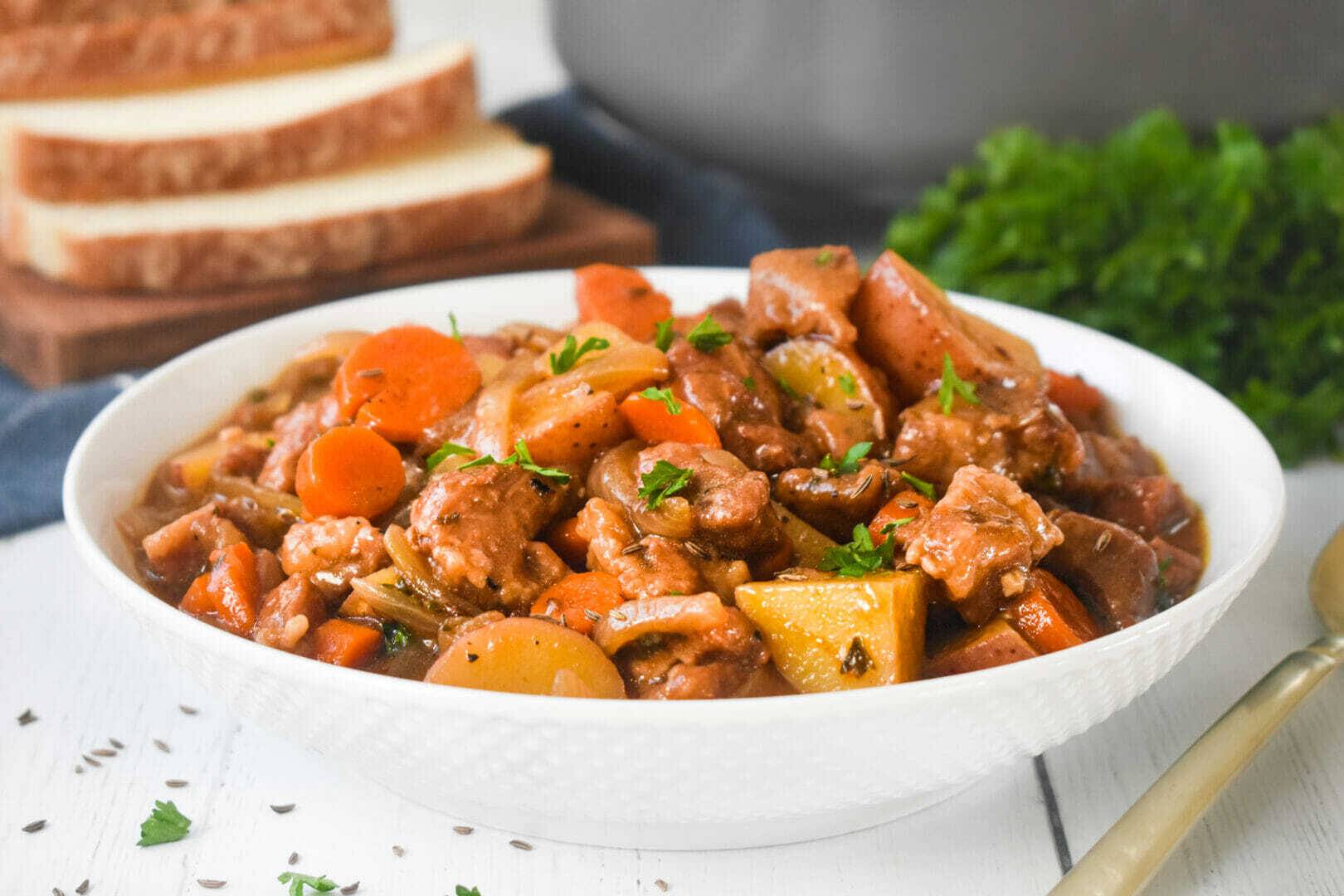
You could say that farming is in the Prunty’s blood. They’ve traced their ancestors back to the 1600s and learned they were farmers in Northern Ireland. In honor of the Prunty’s Irish heritage and their love of farming, we’re sharing a recipe for Irish Pork Stew.
-
Latham Hi‑Tech Seeds
Focus on Precise Measurements for Best Results
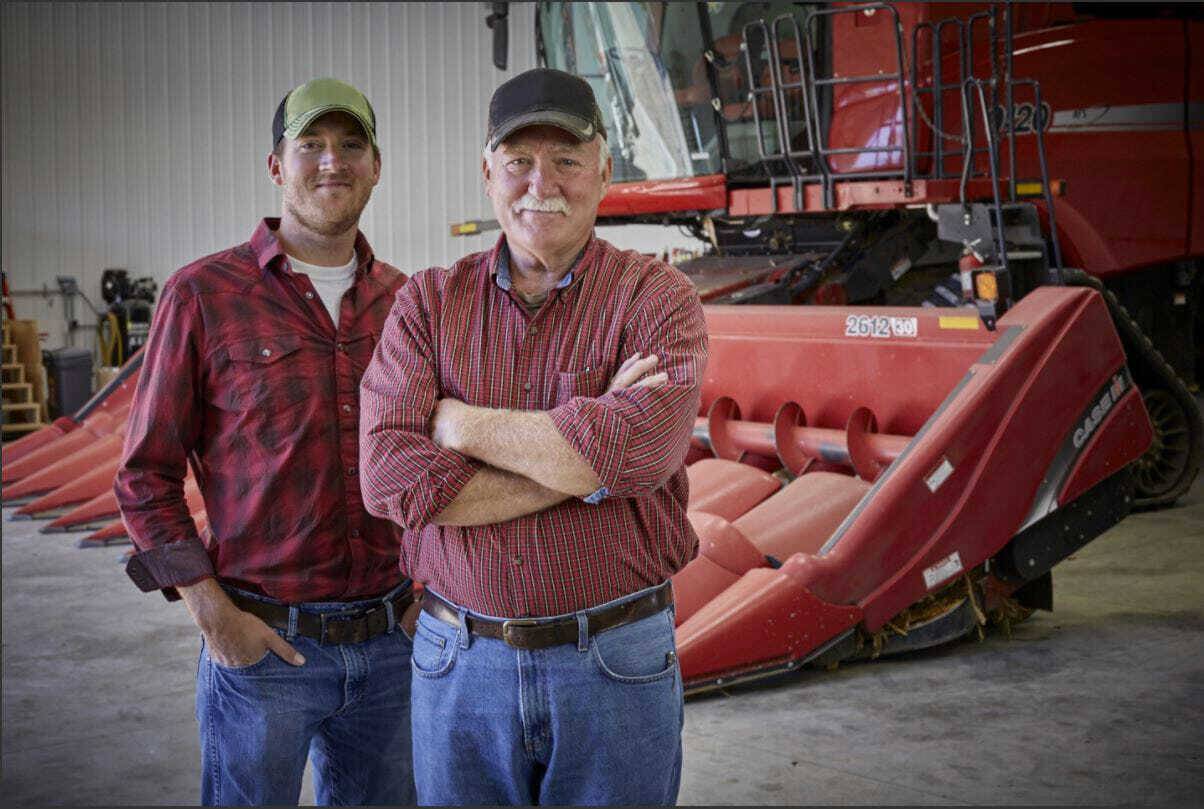
Like many boys who grow up on a farm, Landon Aldinger was fascinated with equipment.
Years later he would combine his fascination with equipment and farming with skills in technology and engineering to help others get more results using fewer inputs.
Landon (left) and Mike Aldinger own Precision Farm Management. It has evolved from a focus on acquiring and using the latest products to using technology to implement more precision agricultural services. Watching big machines on the family farm led to Landon getting a bachelor’s degree in Ag Engineering from Iowa State University. He then worked nearly seven years, as a Senior Design Engineer, for the Toro Company in Minneapolis before his story finally came full circle. “I really enjoyed my time and my career in the cities,” says Landon. “But when I turned 30, my priorities started to shift. I was ready to head home and become more involved in the farming operation.”
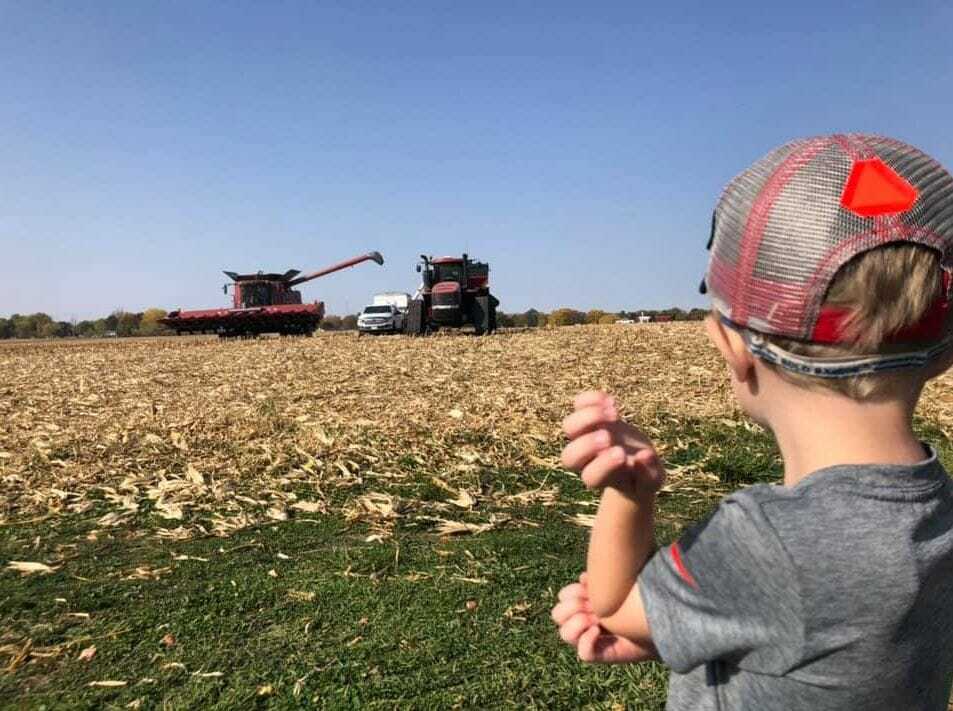
Grady Aldinger loves being involved on the farm. Here he is during the fall 2020 harvest. Landon had been assisting his father, Mike Aldinger, since 2008 with their seed, chemical and consulting business. Mike started the business as Ag Fertilizer and Chemical in 1977 with his father (and Landon’s grandfather), Merle. After Merle retired, the business became Precision Farm Management, Inc.
Like farming itself, Precision Farm Management has evolved from a focus on acquiring and using the latest products to using technology to implement more precision agricultural services like variable rate seeding and variable rate fertilizer, including variable rate nitrogen.
We’re proponents of all things VR (variable rate) whether it’s nitrogen, fertilizer or seed,” says Landon. “Placing the correct amount of inputs in the appropriate areas just makes sense and offers opportunities for enhanced return on investment. We offer these services to our customers and find a plan that fits their capabilities and operations.”

McCoy Aldinger (pictured at 6 months) was born March 2021. Once all their crops are harvested and the next year’s crop has been planned and the seed orders have been written, Landon works on projects related to his Aldinger Engineering LLC consulting business. He also spends time “carpet farming” and helping his oldest son, Grady, fix his equipment in their living room. Landon sees signs of a second generation engineer/farmer in his son.
“Grady continues to love all things agriculture and equipment,” says his proud dad. “It is not uncommon for him to head out to the field for a few hours to ride along and ‘help’ any way he can. I love watching his excitement. He was beyond excited for fall 2021. We’ve been counting down the days to harvest!”
There will soon be competition for the buddy seat as Landon and his wife, Kinsey, welcomed their second son in March 2021. “McCoy has been such a blessing to our family,” says Landon. “He is such a happy baby. We can’t wait for him to experience all things farm-related and to see what the future holds for him.”
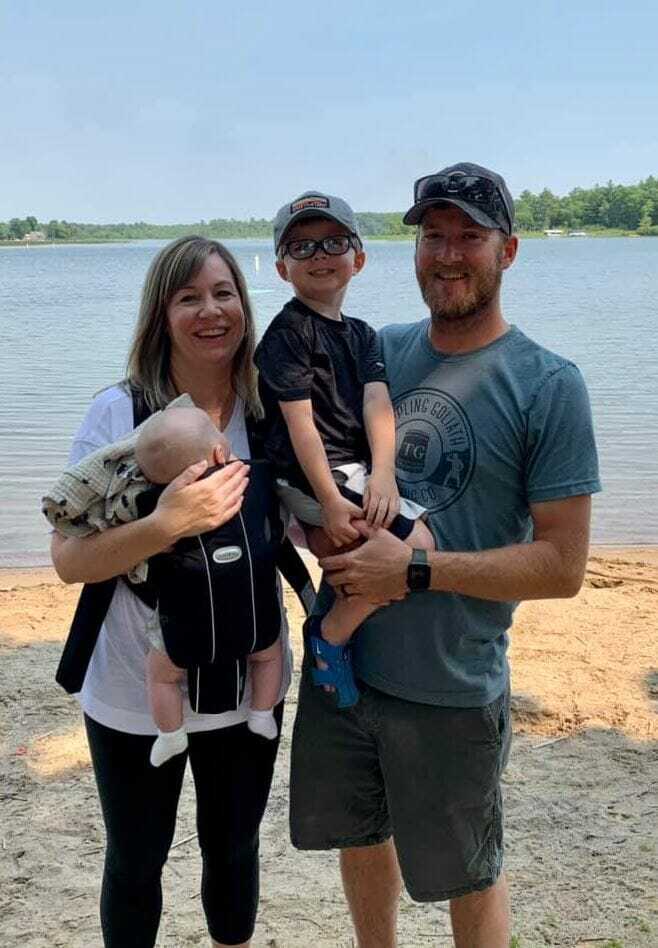
The Aldingers vacation with their extended family each summer in Brainerd, Minnesota. They enjoy fishing, playing miniature golf, boating and eating ice cream. 
The Aldingers vacation with their extended family each summer in Brainerd, Minnesota. They enjoy fishing, playing miniature golf, boating and eating ice cream. In addition to raising kids and crops, the Aldingers also raise cattle and pork. About four years ago, they built a new wean-to-finish hog building.
“The hog barns are a great source for fall fertilizer and offers us an alternative to using commercial fertilizer on some of our farms while improving our soils’ organic matter,” says Landon. “My parents built one hog barn about 15 years ago with the intent of building another one since the property was zoned as a two-barn site,” says Landon. “It made sense for me and Kinsey to build the second hog barn to diversity our farm income. Producing cattle and pork, the seed dealership, chemical sales, plus consulting helps us diversify.”
In celebration of October Pork Month, today Landon and Kinsey are sharing one of their favorite pork recipes for Sausage & Squash Soup
-
Latham Hi‑Tech Seeds
#AskTheAgronomist: Stalk Integrity at Harvest
Harvest is in full swing across Latham Country with reports of corn coming in at 16% moisture already in early October. Precision Agronomist Phil Long discusses how and why to evaluate stalk integrity as you decide which fields to harvest next.
-
Latham Hi‑Tech Seeds
Tips for Determining Why Stalks Are Lodging
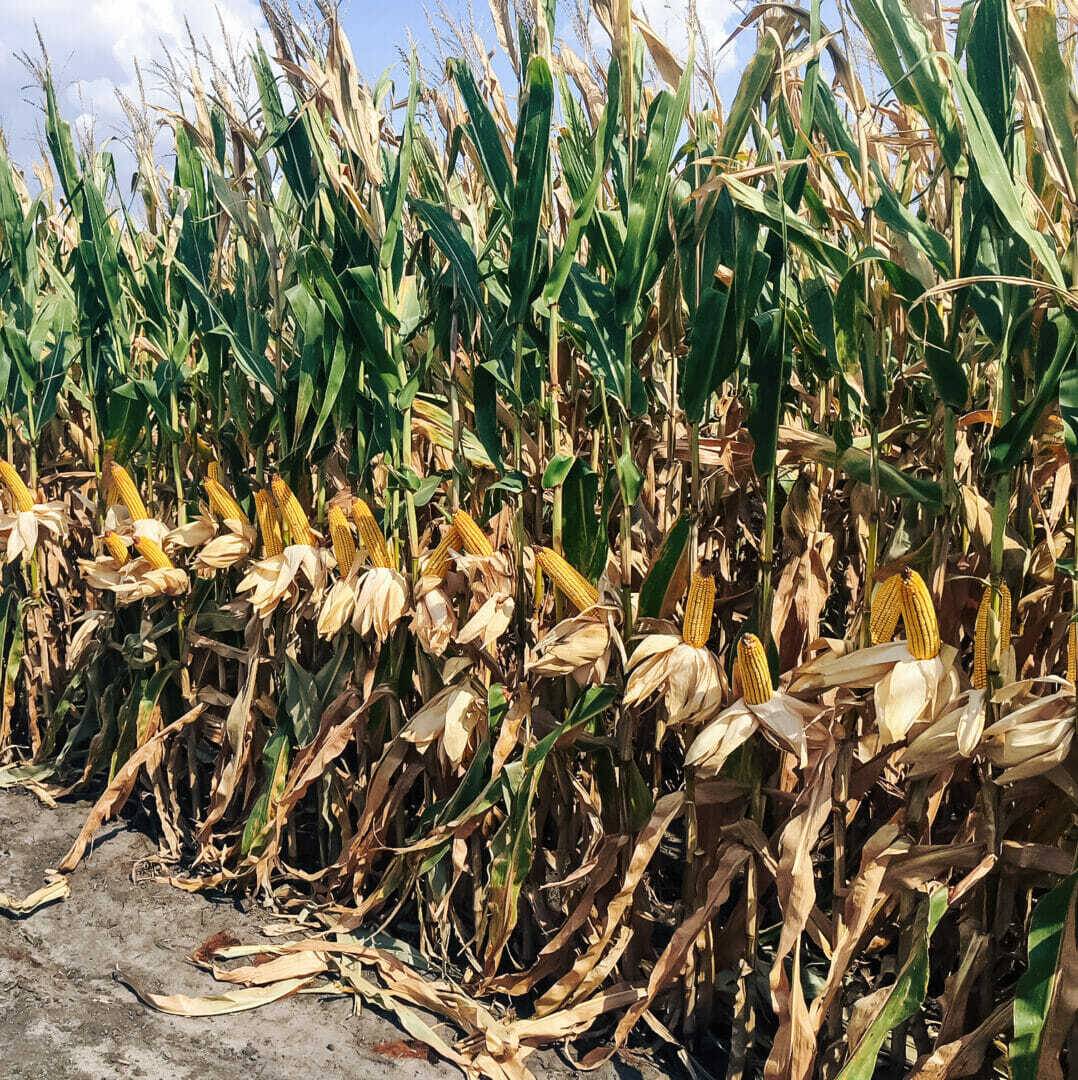
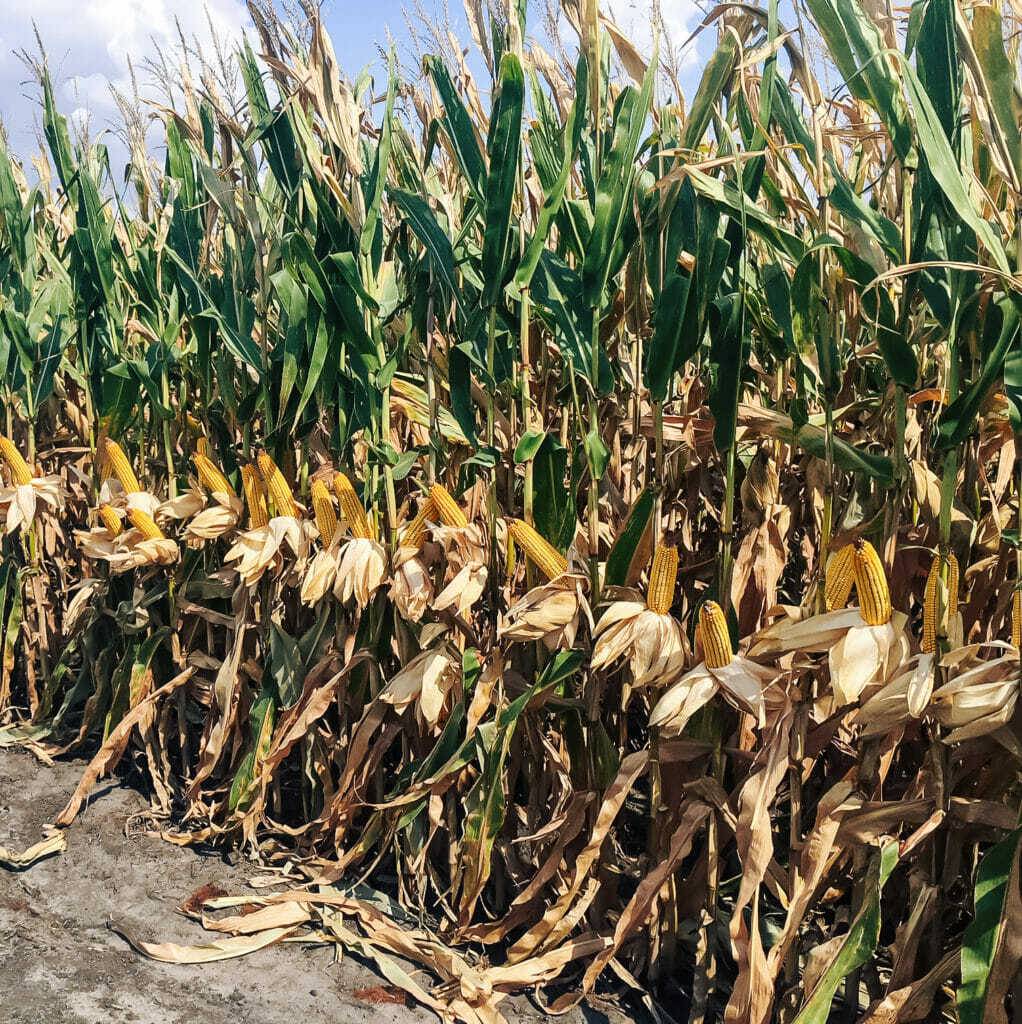 As Harvest 2021 gets underway, we will start our morning checks to see which fields should be prioritized for harvest. Hybrid maturity helps guide us to certain fields, but sometimes a field stands out for another reason like late-season stalk lodging.
Hybrids have different susceptibility to stalk rots as the season progresses. Knowing the hybrid you have on every field – and how each hybrid handles stalk rot diseases – is important. Another consideration is whether the hybrid you planted is a racehorse because racehorse hybrids do whatever it takes to fill an ear even if that means cannibalizing the stalk. This can be an unfortunate reality in a year like 2021 where moisture was very limited across most of Latham Country. A fungicide can keep the lower stalk healthier later into harvest, so if you choose to spray, you likely will see better standability.
Decisions made early in the season also influence late-season stalk health. Planter singulation is key. Doubles or multiples causes corn plants to grow on top of one another, so most of the time only one of those plants will develop an ear. Shallow planting depth causes the “crown” to establish closer to the soil surface, predisposing plants to root rot during this point in the season. Uniform competition is really important for neighboring corn plants, so that’s why good singulation and even emergence are important.
Planting population can influence stalk diameter and stalk health. You can push planting populations more if you keep your fertility levels in check. If you’re having stalk lodging issues and tend to push higher populations, then test soils and investigate where you may have an issue. If you notice foliar symptoms as you’re scouting throughout the season, then there is no better time than right after harvest to take soil samples. Potassium is a key nutrient for building healthy stalks. Micro-nutrients are also important, but it requires a balance. Too much of one nutrient can prevent other nutrients from being taken up by the corn plant.
As you walk your fields prior to fall harvest, do the “pinch” or “push” test to monitor stalk health. If you’re wondering about whether your soil fertility is influencing stalk health or haven’t soil tested in a while, feel free to give me a call. I’ll be glad to talk with you about the benefits of using Latham’s Data Forward® program.
-
Latham Hi‑Tech Seeds
Lansinks Celebrate 30 Years in Latham Seed Business
Some folks say December is the most wonderful time of the year. But if you ask these Iowa farmers, they’ll tell you they prefer the harvest season complete with a splendor of autumn colors.
“Our favorite time of the year is fall because we work all year for the harvest,” says Tammy Lansink, who has farmed with her husband, Dennis, for 42 years. They’re the third generation to farm the home place.
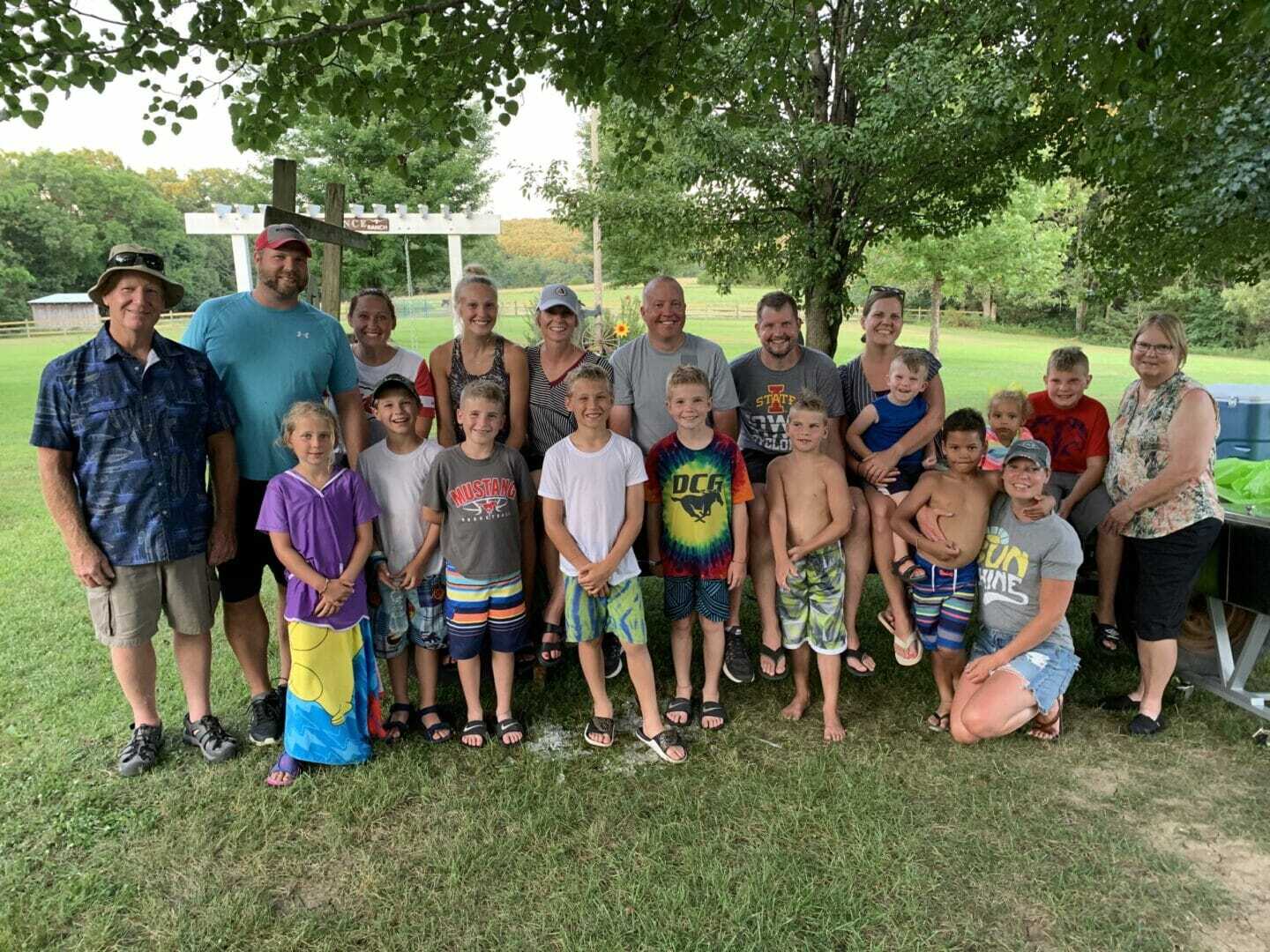
The Lansink Family Growing up on a farm in western Iowa, Dennis Lansink knew he wanted to be a farmer by the time he was in high school. He started his own cattle project when he was in 4-H. He was active in FFA while he was in high school and began raising hogs a few years later. Upon graduating from high school in 1977, Dennis began farming with his father. They raised corn, soybeans, and alfalfa together until 1994. When his dad semi-retired, Dennis’ brother, Doug, joined the farming operation.
Dennis continues to raise cattle. He has switched from a cow-calf operation to backgrounding cattle. He purchases the calves when they’re between 400 and 500 pounds and feeds them until they’re about 900 to 1,000 pounds.
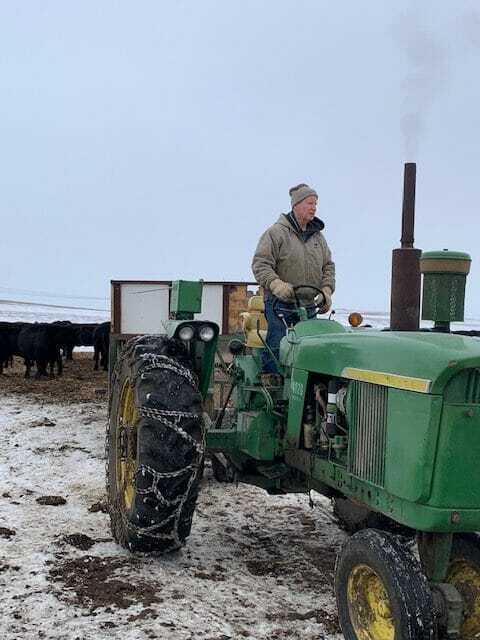
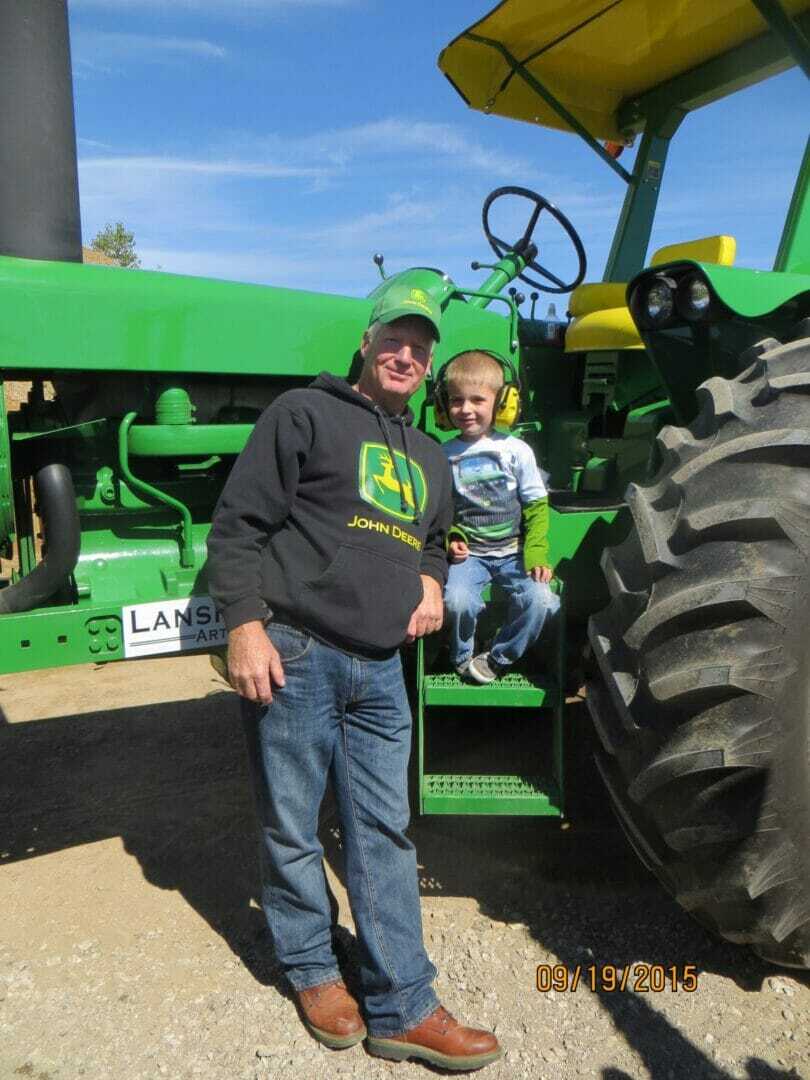
The JD 4020 being used to feed cattle is the first John Deere tractor that Dennis’ father purchased in 1970 and it’s still used today. This year marks the 30th anniversary of Dennis becoming a Latham® seeds dealer. He became a dealer in 1991 to stay abreast of new products and to also purchase his own seed at a discounted price. What he has since learned is that it’s more than that.
“After years of planting Latham brand soybeans and watching their performance in my fields, as well as growing Latham seed beans, I knew Latham quality was consistent and high performing,” says Dennis. “With encouragement from one of my friends who was a Latham dealer in a nearby town, I decided to become a seed dealer. Being a family owned and operated business, Latham Seeds appealed to me. It has been a good fit for our farming operation. I also like that Latham purchases different seed traits from other companies, which provides my customers and myself with more choices.”
The Lansinks spend as much time as possible with their family. Dennis and Tammy are the proud parents of four adult children: Christopher, Callie, Courtney and Cara. During this season of life, they’re especially enjoying watching their 11 grandchildren participate in sports and other activities. They also enjoy the regular euchre and marble games they play with Dennis’ 89-year-old mother, Leila.
When he can find the time, Dennis enjoys riding his motorcycle and golfing. He also enjoys participating in tractor rides. Dennis’ favorite tractor is a John Deere 4320, which he restored a few years ago and enjoys taking on rides. Another special tractor is the JD 4020, which was the first John Deere tractor that Dennis’ dad purchased in 1970. The family still uses it today to feed cattle.

Dennis’ favorite tractor is the JD 4320. He had it restored years ago and enjoys taking it on tractor rides. Speaking of feeding… Tammy is responsible for feeding a hungry crew. Because she’s also a full-time grain cart operator during harvest, she likes hearty meals that are easy to prep ahead of time. Today she is sharing with us one of her family’s favorite recipes for Cheeseburger Soup.
-
Latham Hi‑Tech Seeds
Notes from the Field – PreHarvest 2021
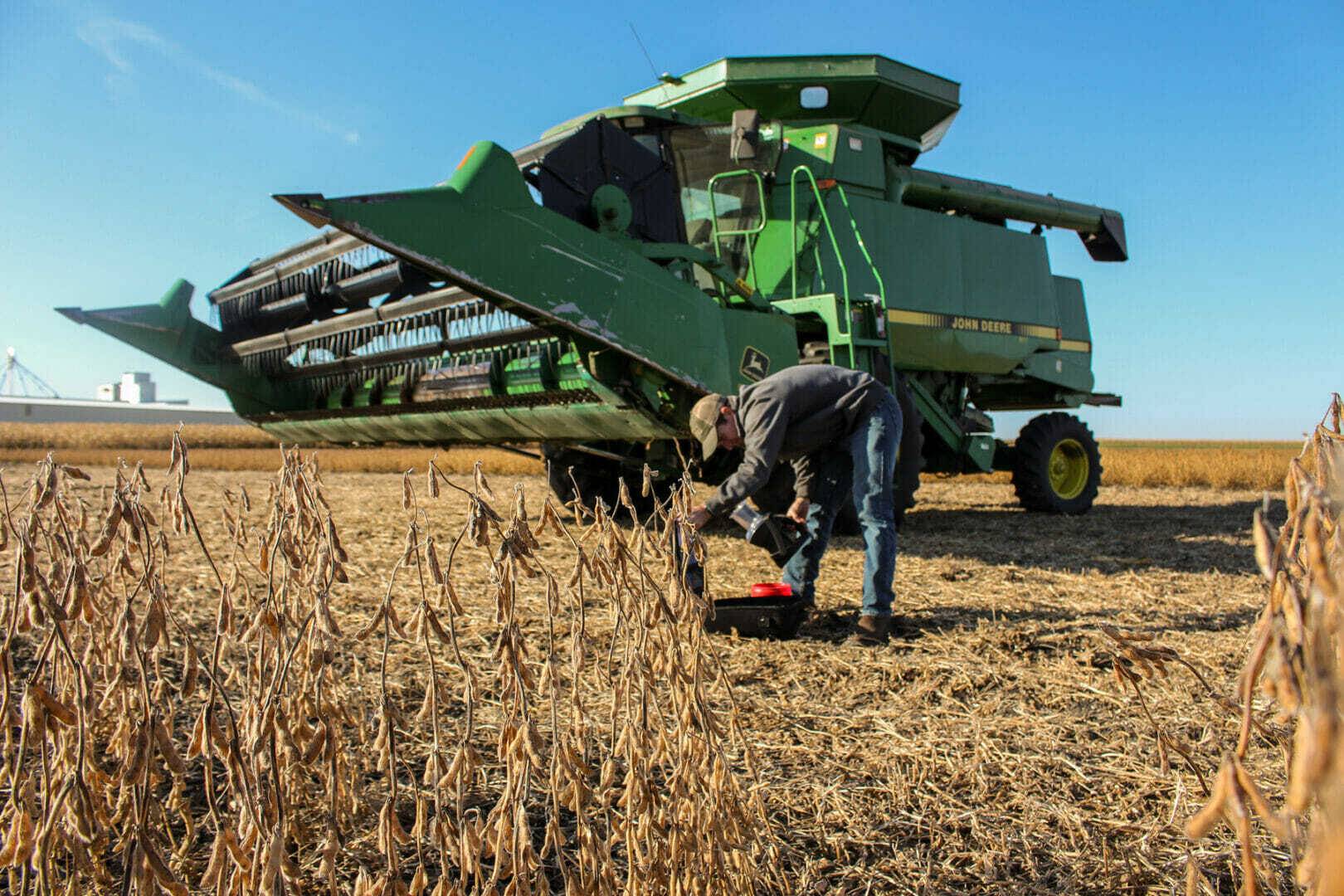
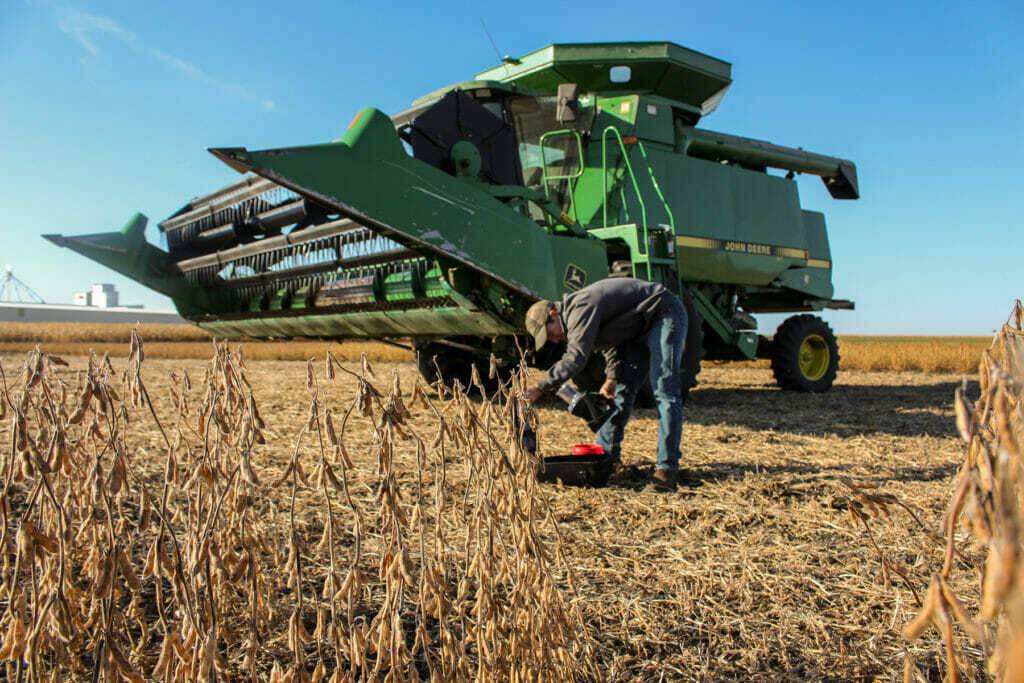 I’m very hopeful that – even with the dry weather – our production fields can achieve an overall average year for production with sufficient seed for soybean sales in 2022.
Most soybean farmers’ biggest concern across Latham Country has been lack of moisture. Many have noticed aborted flowers, dropped pods, and restricted pod fill. Thankfully, our production fields in South Central Minnesota received a nice two-inch rain during the first week of August. Most of the growers in our area around Alexander, Iowa, got a nice one- or two-inch rain on August 20-21. That rain will help those fields fill out pretty well. Some of our fields in northern Minnesota also got a nice inch or more that weekend.
Rainfall has been extremely variable throughout the summer. On August 20, the Des Moines airport reported no rain but most cities throughout the metro got about 1.5 inches! “Spotty” rains have been the norm rather than the exception this season.
Besides the drought, infestations of two-spotted spider mites are popping up almost everywhere across Latham Country. This is common in periods of dry weather. Most growers seem to be willing to apply pesticides for control, especially when the market price for soybeans is high. Farmers in a few areas have reported Bean Leaf Beetles and Soybean Aphids at very low levels, so insecticide applications have not been necessary. Grasshoppers also flourish in dry conditions, and I have heard of farmers spraying to control this pest.
On the disease side, I’ve seen and heard of Sudden Death Syndrome (SDS) and White Mold this season. Dry weather usually hinders huge outbreaks of diseases, but it’s not unexpected that some areas will see things like this. Remember, SDS CANNOT be controlled with a foliar application of fungicide but there are some that can help on White Mold. I’ve also seen some Frogeye Leaf Spot (FLS) in a few fields but not enough to warrant a fungicide except in Southeast Iowa. I’m hearing about and seeing FLS in regions further north than usual, which is evidence this disease is moving farther north every year.
Call the Latham Team if you need help to diagnose situations or to recommend solutions. Be sure to keep field notes from these problem areas because that will be useful when you select seed in the future.
-
Latham Hi‑Tech Seeds
Coming Back from Childhood Cancer, One Step at a Time
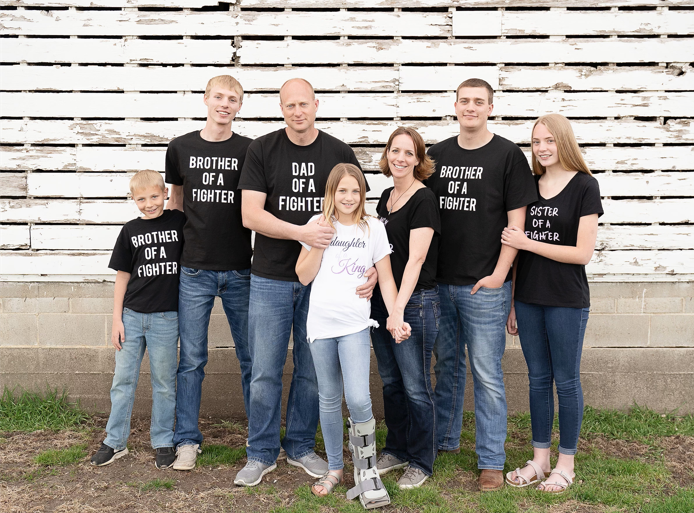
Watching their daughter win grand champion bucket calf at the 2021 O’Brien County Fair brought tears of joy to Jerry and Sara Hofman’s face. They had their eye on the prize, but their joy didn’t stem from ribbons or trophies. Not only did Gaupo the steer have to learn how to lead in the show ring, but their 11-year-old daughter had to learn how to walk again after battling cancer for the past two and half years, including nearly nine months of cancer treatments and hospitalization.
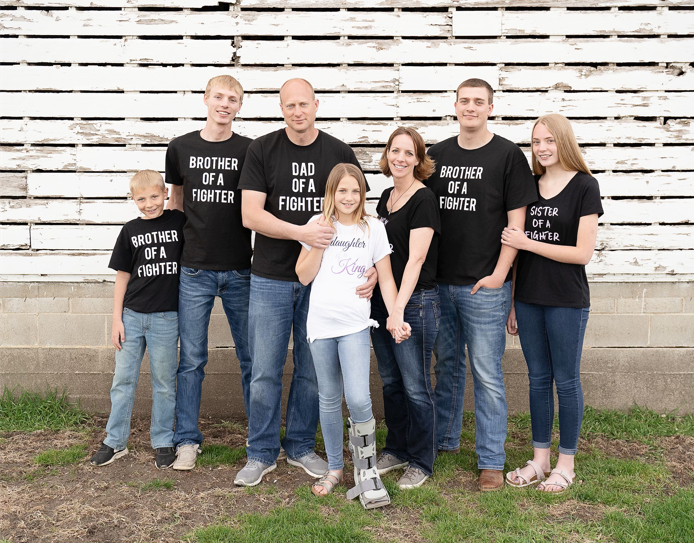
The Hofman Family Jewel Hofman was diagnosed with osteosarcoma, the most common cancer that starts in the bones, in April 2020. Her left leg was amputated below the knee on July 31, 2020. After the surgery, Jewel came home for a few weeks before she underwent months of chemotherapy at the University of Iowa Hospitals in Iowa City.
“It was so amazing to see Jewel lead that calf into the ring with a smile on her face because she hadn’t walked for such a long time,” explains Sara Hofman. “She was in bed basically every day from the time she started chemo in April 2020 until chemo ended in January 2021. She didn’t have the energy to even try walking on her prosthetic leg until March of this year.”
While many people across the world felt stressed by navigating daily life during the outbreak of the Covid-19 pandemic, the Hofman family was trying to figure out how to care for cattle in their feedlot, pigs in their nursery, crops, and all five of their children during a health crisis.
“Jewel received treatments for three out of four weeks in Iowa City. We live five hours away, so Jewel had to stay in Iowa City,” said Jerry. “Because of Covid, only one parent was allowed in the hospital room at a time. Sarah and I would take turns staying with Jewel. Sara would stay for one week, and I would stay home. Then we would switch.”
Sara adds, “We would meet outside the door of the hospital and hug each other tight as we make the switch. Then I would drive back home alone. It was so tough being apart. Jewel’s siblings couldn’t visit her in the hospital due Covid restrictions. It was tough on the younger two because Jewel and Lily were inseparable before her treatment, and Dirk is close to Jewel because he’s just one year younger.”
The Hofman’s oldest son, Titan, took over the day-to-day operations of the farm in 2020. At that time, he was a 20-year-old, full-time student, studying Agribusiness at Iowa Lakes Community College. He made time to plant and harvest the family’s corn and soybean crops that year. Their middle son, Colt, joined the Army when he was 18. He was in basic training in July 2020 when Jewel had her amputation.
The Hofman family is in a different place now. Titan and Nicole were married on May 21, 2021. They live nearby, and Titan is driving semi plus farming some of his own ground, as well as farming with Jerry and Sara. Colt has returned home and is working for an electrician. Lily has started her junior year of high school, and Dirk is in the fourth grade. Jewel is making strides in fifth grade.
Although she is back in school and her hair is growing back, Jewel’s journey with cancer will continue for the rest of her life. Families of childhood cancer patients will tell you they learn to appreciate the mountains because you never know when you’ll experience another valley. Every three months the Hofmans will travel to Iowa City for scans and tests to ensure Jewel has no active cancer. Rather than be filled with the fear of the unknown, they choose to live life filled with hope and joy.
A CaringBridge Site was created for Jewel. It‘s a caring social network to help people stay connected with family and friends during a health event. Follow along with her journey at teamjeweljade on CaringBridge.
Blessings Abound
“Many people go through tough times without the comfort of knowing their Lord and Savior or having support from their family and their community,” says Jerry. “We can’t thank everyone enough for their help and support. We have been tremendously blessed.”
One answered prayer was finding a physical therapist within driving distance who could help Jewel gain strength and learn to walk on her prosthetic leg.
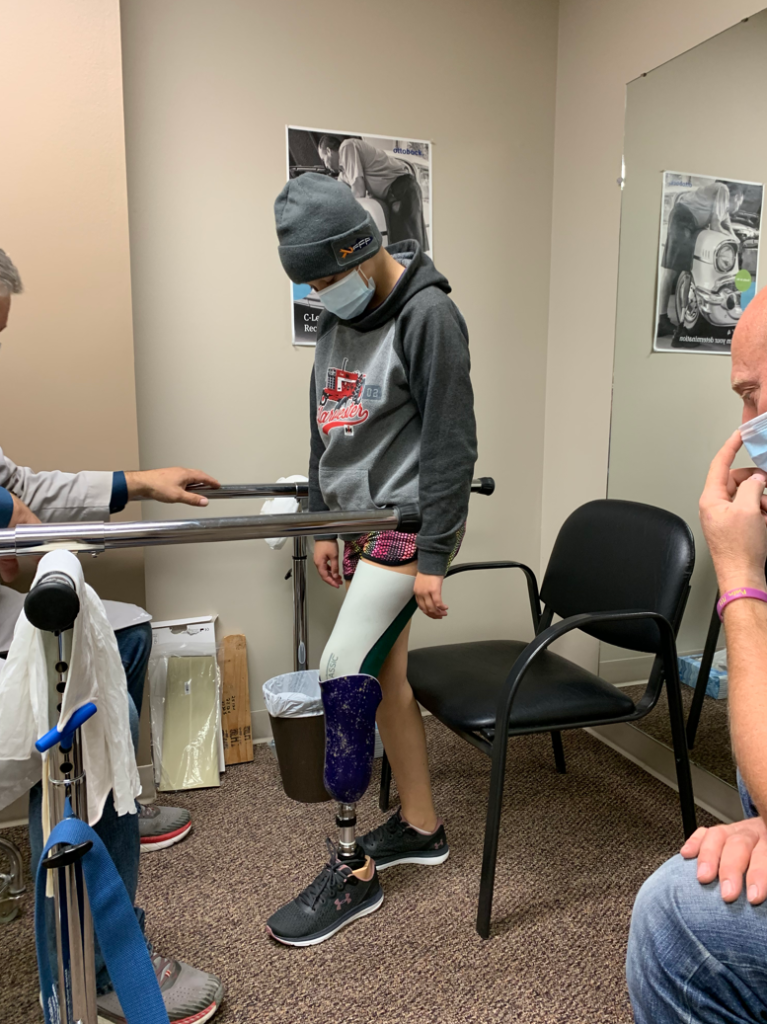
“I was really nervous when I called the local hospital because we live in rural Northwest Iowa. What are the odds that the type of physical therapist Jewel needed would work there?” says Sara. “I was told, ‘We have exactly what Jewel needs.’ Samantha, whose husband is a bilateral amputee, made an immediate connection with Jewel. She knew exactly what Jewel needed, and Jewel worked hard to make Samantha proud.”
Some might say it was coincidence that a physical therapist married to a bilateral amputee worked just 20 miles away from the Hofmans, but they believe it was meant to be. Another Godwink occurred when twin calves were born, making a perfect candidate for a bucket calf project.
Jerry’s parents raise about 40 cow-calf pairs. When their first cow to calve had twins in March 2021, the bull calf was pulled off and bottled. Once Jewel returned home from the hospital, she visited Guapo every day and began bottle-feeding him. (Guapo, which means “handsome” in Spanish, is the main character in the movie “Ferdinand.” The family also owns a bull named Ferdinand.) Jewel’s brother Dirk helped her break Guapo to lead and give him baths.
“Gaupo has been the friend Jewel needed. She talks to him and he listens without giving her advice. He also gave her a reason to learn how to walk on her prosthetic leg because she was determined to show him at the county fair,” Jerry said. “Jewel plans to show Gaupo again next summer as a market steer, and Dirk plans to show a bucket calf at the county fair.”
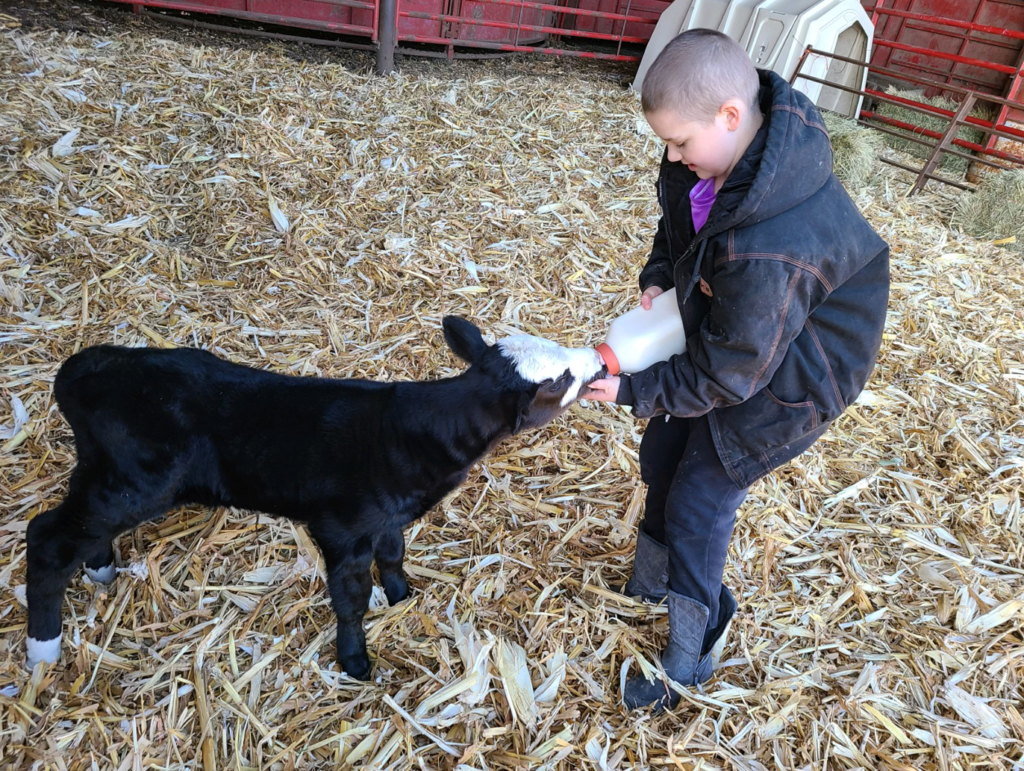
Jewel bottle-feeding Guapo. 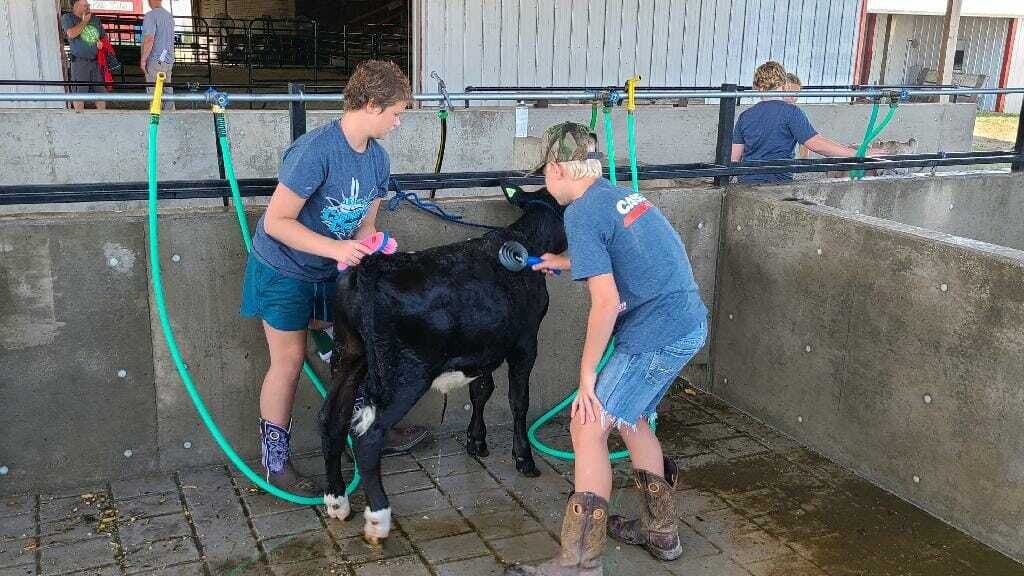
Life Marches On
Life at the Hofman house is returning to its seasonal fall rhythm as the kids have returned to school and the crops are maturing. Jerry is caring for the feeder cattle daily. Sara has returned to the day-to-day management of a nursery that was built just two years ago.
From the outside, it looks like the Hofman family has returned to life as normal.
“When a cancer patient’s hair grows and he or she looks healthy on the outside, people think this person is all better,” says Sara. “Different cancers require different treatments. Jewell got the worst of the worst because her cancer is so rare and so serious. The side effects of chemo are brutal. Jewel still struggles.”
During Pediatric Cancer Awareness Month in September, you can help the Hofman family educate others about childhood cancer by sharing facts and stats on social media. Another way to help is by following Latham® dealer Kyle Schminke and his daughter Sarah on Sunday, October 10, as they run in the Chicago Marathon to raise funds for the University of Iowa Dance Marathon (UIDM).
The UIDM has pledged $5 million to the 11th floor of the University of Iowa Stead Family Children’s Hospital that was named the University of Iowa Dance Marathon Pediatric Cancer Center. (The 11th floor is the one that gets “the wave” during University of Iowa home football games.) This student-run organization also has pledged $2 million to establish the University of Iowa Dance Marathon Chair in Pediatric Oncology, Clinical and translational Research.
The Schminkes will be running with a list of 26 names of children on their arms. Jewel’s name will be one of their “mile motivators.” Sarah knows that looking down at the names on her arm will be the motivation she needs to keep running and to finish strong. #Jewelstrong.
“We can’t thank Dance Marathon enough,” says Jerry. “While Jewel was in the hospital, a guy ran for 24 hours straight. He spelled out the names of kids as he ran, and Jewel was one of the names he spelled. We appreciated that so much. We also had wristbands made with Jewel’s name. One lady wore that wristband when she traveled to D.C. to advocate for childhood cancer. Their support means so much.”
In honor of September as Pediatric Cancer Awareness Month, today we’re sharing one of the Hofman family’s favorite recipes.