Latham Hi-Tech Seeds

(641) 692-3258

  • Home
  • Products
    • Corn
    • Soybeans
    • Alfalfa
    • Corn Silage
    • Seed Guide
  • Performance
  • Find a Rep
  • Media
    • Blog
    • News
    • Videos
    • Podcasts
    • TECHTalk
  • About Us
    • Company History
    • Our Mission
    • Careers
    • Become a Rep
    • Sowing Seeds of Hope
  • Contact Us
  • Latham Hi‑Tech Seeds

    Evaluating Corn Replanting Options

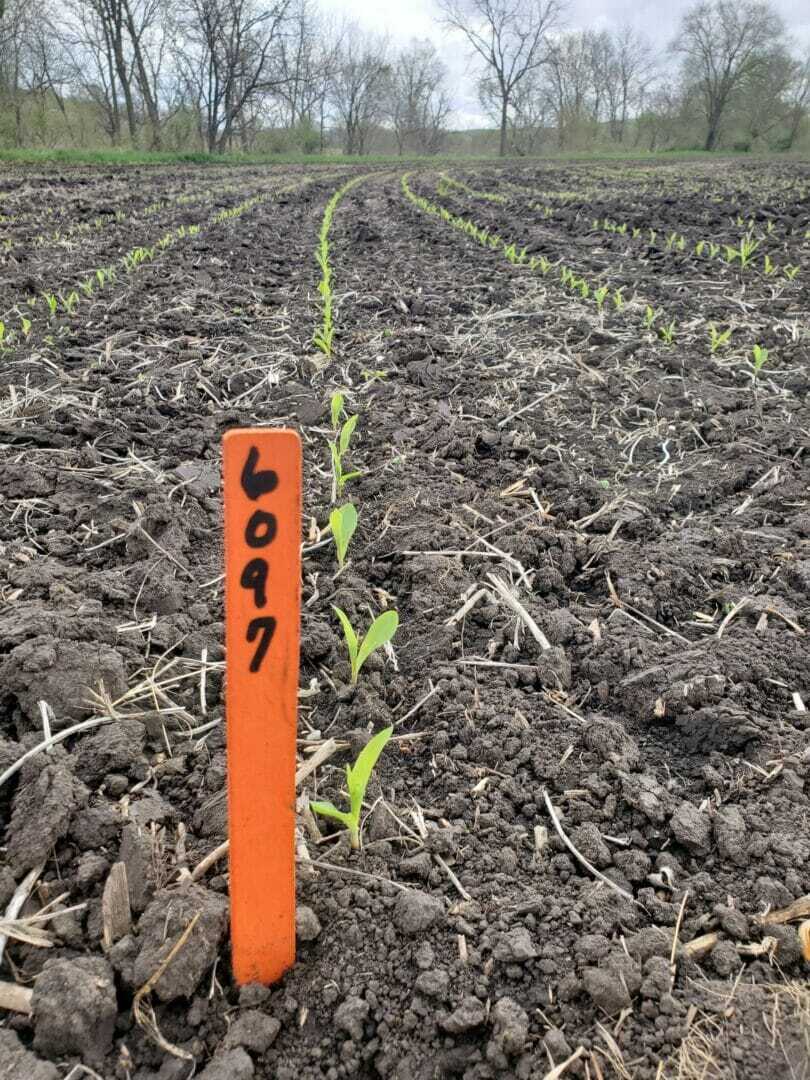
    Cool temperatures and wet conditions have put stress on corn germination and emerging seedlings.  Before deciding to replant, some important steps should be taken:

    1. Evaluate the stand for population and uniformity.
    2. Compare yield potential of the existing stand with yield potential of the replant (consider insurance or government program restrictions).
    3. If the decision is made to replant, consider various management practices discussed below to optimize yield potential.

    Evaluating Existing Stands

    When evaluating corn stands, only count plants that have a good chance of survival. Observe the uniformity of the stand across the field to determine whether the entire field will need replanting or if you can replant portions of the field.

    There are a couple of options you can use when evaluating corn stands. (Please note the second option is a more accurate method).

    1. Count the number of plants in a length of row equal to 1/1000th of an acre based on row width (Table 1). Multiply the number of plants by 1,000 to get the plants per acre. Repeat the process in several field locations.
    2. Count 150 plants and measure the distance from start to finish with a measuring wheel. Divide the number of feet traveled into the appropriate factor in Table 2 to determine plant population. For example, if you walked 94 feet while counting 150 plants in 30-inch rows, the population is 2,613,600÷94=27,804. Because a longer row length is counted, the samples are more representative and fewer locations are required.

    Should I Replant?

    After taking stand counts, consider yield potential of the current stand and planting date, compared to the yield potential of the target replanting stand and date, and the costs associated with replanting.


    If you decide to replant …

    The first step in deciding to replant is removing the existing stand. Tillage is an option in most cases, however, depending on the growth stage of the original stand, two passes may be necessary.

    Second, determine which relative maturity (RM) to use when replanting. As planting occurs after May 1, corn requires approximately 1.6 fewer growing degree days (GDDs) per day of delayed planting to reach flowering.

    Third, decide on a management practice to protect against corn rootworm and other soil insects, including European Corn Borer (ECB).

    Finally, corn planted later in the season has a greater chance of exposure to heat and drought stress during pollination. Manage this risk by selecting a hybrid with heat and drought tolerance and early flowering.

    If you have any questions about whether or not you should consider replanting, please don’t hesitate to let us know by commenting on this post, or by contacting us at 1-877-GO-LATHAM.

    Source: Monsanto’s Agronomic Alert

    Team Latham

    May 25, 2010
    Corn, Crop, General, Season, Spring
  • Latham Hi‑Tech Seeds

    Crop Conditions Across Latham Country

    South Central Iowa

    Travis Slusher reports that corn is 100% planted.  Soybean planting is nearly finished in the northern half of his region and about 50% done in the southern half.  South Central Iowa received 2½ to 3 inches of rain last week along with some cool temperatures.  There was isolated frost injury for corn in the northern region, but with warmer temps and more sun, it should grow out of it.  However, Headline® fungicide may need to be applied to those corn acres.  Corn that was planted April 12 is at the V2 stage, and a few of soybeans are at the VE to VC stages.

    Northwest Iowa

    Bruce Anderson reports that corn planting is done and soybeans are anywhere from 50-75% done.  Weather forecasts show no rain this week, so all soybean acres should be planted by the end of this week or early next week.  Last week’s rain and this week’s sunshine have created ideal conditions.  The sunshine should help some corn green up again.  So far, Bruce hasn’t yet seen any soybean emergence.

    North Central Iowa

    Tom Larson reports a delay in planting and emergence due to last week’s frost followed by cool, wet weather that slowed down any damage done by the frost.  Some of the earliest planted soybeans were replanted.  Corn stands were reduced, primarily in areas where temperatures dropped below 32 degrees.  With the growing point still below ground, the biggest concern now is whether new growth will be able to push through the dead tissue.  There may also be problems with new tissue that is unable to emerge and becomes bound up inside the dead tissue.  This week will tell the story as to the severity of the tissue.

    Central Iowa

    Bart Peterson reports that corn is 100% planted and at the VE to V2 stages.  Soybeans are at the VE stage.  North Central Iowa got hit by frost last week; now is good time to check whether your fields are recovering.  About three to five days after a frost event, dig plants and split their stems to make an assessment. Healthy plant stems will have cream to yellow colored tissue above the growing point. Brown discoloration in the tissue about the growing point signifies pathogen invasion and impending plant death.  Be sure to consider all factors carefully before replanting. For more information, check out www.extension.iastate.edu/cropnews.

    South Dakota

    Bill Eichacker reports that Southwest Minnesota is nearly done with planting both corn and soybeans.  Corn is at VE stage in Southwest Minnesota.  In his South Dakota area, 75% of the corn acres and 20% of soybeans have been planted.  His area received up to four inches of rain over the last two weeks, but warmer and drier weather this week should drastically change crop progress.

    East Central Iowa

    Brad Beatty reports last week’s weather was cold and wet, with his area receiving up to 3¾ inches of rain.  Corn in his region is 92-94% planted and the soybeans are 65% planted.  Corn is anywhere from VE to V2 stages; very few beans having started to emerge yet.  Now warm weather and heat units are needed to boost plant growth.  This week soybeans are being planted heavy and some farmers are spraying.  The first cutting of hay is taking place.

    Southeast Iowa

    Wayde McNeil reports that nearly 100% of all corn and soybean acres have been planted.  Corn is at the V1 stage and soybeans are not quite emerging yet.  After last week’s cool, wet conditions, things should green up and emerge this week.  While scouting fields late last week and early this week, he’s seen 30% frost damage to the corn north of Highway 30 and only 5-10% in the acres south of Highway 30.  He’s seeing some indication of wireworms (see right- hand image) in the region. The good news is that although he’s seen wireworms, he has not seen any damage.  The Poncho 250 seed treatment is doing its job!

    Wayde reports replanting may need to be done, especially because soybeans are trying to emerge through hard crusted soils.

    Replanting will be needed in areas of his corn and soybean fields where water is standing.

    Central Iowa

    Bob Collins reports it is wet. His area received 3 inches of rain in 24 hours, last Tuesday to Wednesday. Most of the beans are in and all the corn is planted.  Emergence has been good.

    Kevin Meyer’s area is also wet. He reports 90% of beans are in and all the corn has been planted. None of the beans have emerged, but the corn emergence looks good. Last week’s frost killed very little corn. Some corn is turning yellow.

    Northeastern Iowa

    Nick Benson reports that last week’s cold weather prohibited crop growth.  His area didn’t receive as much rain as the rest of the state, but they did receive 2.5 inches Wednesday night. Eighty-five percent of the corn is planted and some got nipped by the frost. About 30-40% of the beans are in the ground. Nick did not have any crusting issues. He’ll give an update on emergence this week since the weather is warmer.

    Northern Missouri

    Rick Foster reports that his area is extremely wet.  Everything came to a stop in his area, as well. About 93% of the corn is planted.  The wet, cold weather created problems will results in some replanting. A few beans have been planted.  Those that have emerged are looking good.

    Minnesota

    Jason Obermeyer reports everything came to a halt for a week due to rain. Beans are over 80% planted. Emerged beans have severe damage due to the wide spread frost. All the corn is in and the stands looked good, although some of it suffered frost damage.

    Wisconsin

    Steve Bailie reports the southern part of the state got 3-4 inches of rain last week. The frost killed very few fields. About 85% of the corn is planted with great emergence, but the there is a lot of yellow corn. Nearly 60% of beans are planted in the state. Some farmers who have had their beans in the ground for 2 weeks are worried about seed rot. Alfalfa looks beautiful in his area. They had great soil conditions for planting and now they just need Mother Nature to play its role.

    Central Nebraska

    Steve Edwards reports that 100% of the corn has been planted in his area.  Eighty percent of the beans have been planted in the eastern part of his area and about 40% are in on the western part of his area.  Southeast Nebraska farmers have 100% of their soybeans in the ground. They haven’t had any problems with frost, but they did have some crusting issues.

    Team Latham

    May 20, 2010
    General, Season, Spring
  • Latham Hi‑Tech Seeds

    Temperature Fluctuations May Inhibit Corn Emergence

    5 Larry 1

    5 Larry 1Corn planting occurred at an all-time record this spring. In Iowa in particular, we’ve experienced one of the best planting seasons in history. Recent cool temperatures throughout the Corn Belt, however, are requiring extra close attention be paid to corn fields as those cool temperatures may have caused seedling growth problems.

    We recommend farmers pay particularly close attention to corn fields planted recently, as they would be the most likely to exhibit seedling rot or poorer emergence. For those in low-lying areas, frost may have been an issue, causing leaf necrsosis and delayed growth of sprouted seeds.

    Listed below are seedling growth problems to scout for:

    1. Imbibitional chilling damage — the chilling effect seeds may experience when they imbibe, or absorb, water when soil temperatures are less than 55° F for an extended time. Seedlings may “corkscrew” or not emerge when exposed to cool soil temperatures. This may happen also when temperatures swing rapidly by 30° F.
    2. Soil crusting — wet soil at planting or heavy rain following planting can lead to reduced plant stands. Significant stand reductions lower yield potential.
    3. “Leafing out” underground — occurring most often in crusted soils (also appears with imbibitional chilling, above).
    4. Variable plant emergence and reduced plant population. Variable emergence and growth will reduce yield.

    Any of the situations listed above could call for a need to replant, but be sure to assess stands before making this decision.

    Contact your Latham representative with any questions or click here to read more.

    Team Latham

    May 18, 2010
    Agronomics, Disease, Emergence, General, Season, Spring
  • Latham Hi‑Tech Seeds

    Go Wild … Go Hunting for Asparagus and Mushrooms

    As a kid, I couldn’t wait for the warm spring weather to produce wild asparagus and mushrooms.  I loved trekking through the woods, in search of morels, with my dad.  I also loved traipsing through the road ditches in search of tender, young asparagus.  Most of all, I looked forward to eating my fill of both!

    My favorite way to eat morels is dipping them in eggs, rolling them in crushed saltine crackers and frying them in real butter.  If you’re lucky enough to find some yet this spring, a slew of recipe ideas is available at http://thegreatmorel.com/recipes.html.

    While this year’s mushroom season is coming to an end, there is still asparagus to be harvested. One of my favorite uses for asparagus is in a casserole with ham and noodles.  This easy-to-make recipe is perfect for a formal Sunday brunch or a casual weeknight supper.  Give it a try and let me know what you think.  Also feel free to share your favorite asparagus recipes with me.  I’d love to try some new ways to fix asparagus – maybe I’ll even find one my kids will eat!

    Asparagus and Ham Casserole

    Ingredients

    1 slice white bread (or ½ c. bread crumbs)

    3 3/4 c. uncooked extra broad egg noodles

    2 ½ c. sliced asparagus (1 ½”)

    ¼ c. all purpose flour

    ½ tsp. dried thyme

    ¼ tsp. salt

    1/8 tsp. black pepper

    1 c. whole milk

    1 c. chicken broth (fat free, less sodium)

    1 T. butter

    ¾ c. onion, finely chopped

    1 T. fresh lemon juice

    1 ½ c. cubed ham (1/2” square – about 8 oz)

    ¼ c. chopped fresh flat-leaf parsley

    2 T. grated fresh Parmesan cheese

    Instructions

    Preheat oven to 450 degrees.

    Place bread into food processor, pulse 10 times or until coarse crumbs form to measure ½ cup.

    Cook pasta in boiling water 7 minutes, omitting salt and fat in water. Add asparagus, cook 1 minute. Drain.

    Lightly spoon flour into a dry measuring cup and level with a knife. Place flour, thyme, salt and pepper into medium bowl. Gradually add milk and broth, stirring with a whisk until well blended.

    Melt butter in a medium saucepan over medium-high heat. Add the onion, sauté 4 minutes. Add milk mixture, cook until thick (about 4 minutes), stirring constantly. Remove from heat and stir in lemon juice. Combine pasta mixture, milk mixture, ham and parsley in a large bowl, spoon into a 2-quart casserole dish. Sprinkle with bread crumbs and cheese.

    Bake at 450 degrees for 10 minutes or until filling is bubbly and topping is golden.

    Team Latham

    May 14, 2010
    General, Season, Spring
  • Latham Hi‑Tech Seeds

    Soybeans at Risk for BPMV

    Soybean farmers in 16 Iowa counties may have fields at risk this summer from a soybean virus called bean pod mottle virus (BPMV), according to a model developed at Iowa State University (ISU).

    Counties identified by the ISU Pre-Plant BPMV Prediction Model to be at moderate risk are: Cedar, Clinton, Des Moines, Henry, Jefferson, Johnson, Keokuk, Lee, Linn, Louisa, Marion, Muscatine, Osceola, Scott, Wapello and Wayne. All counties but Osceola are located toward the southeast part of the state.

    “Soybean growers in those counties are cautioned to use recommended best management practices for bean leaf beetle control to minimize the impact of the disease,” says ISU Plant Pathologist Forrest Nutter.

    In counties identified as being at risk, soybean growers should conscientiously scout to detect areas where bean leaf beetle populations may be high enough to warrant mid-season foliar insecticide control measures, noting that early planted soybean fields have higher risk of BPMV incidence.

    Those growers in low-risk counties should still scout their fields routinely for bean leaf beetles, as there may have been pockets where the depth and duration of snow cover was sufficient to provide insulation for bean leaf beetles to survive.

    Click here for the full release from the Iowa Soybean Association.

    Team Latham

    May 11, 2010
    Agronomics, Disease, General, Season, Spring
  • Latham Hi‑Tech Seeds

    Now is optimal soybean planting time

    “Early planting” has taken on a new definition for many farmers this spring as unusually warm, dry weather allowed them to finish planting corn in record time. It’s also causing some farmers to question how early to plant soybeans.

    Benefits of early planted soybeans, defined as late April or early May planting, have shown to outweigh potential risks in some university studies. Research by Iowa State University shows the optimal planting dates for soybeans – if soil conditions are suitable – in the southern 2/3 of the state is the last week of April and the first week of May for the northern 1/3 of Iowa. Seventy-nine percent of the time planting in late April or early May resulted in higher yields than soybeans planted around May 20.

    When determining how early to plant, the potential benefit of yield gain must be weighed against the potential risks. Planting seeds in cool soils can delay emergence and predispose soybean plants to seedling diseases. The ideal soil temperatures for soybeans is 77 degrees Fahrenheit; germination may be delayed by three weeks if the soil temperature at two inches is about 50 degrees. Cool soil temperatures may also slow root development and make seedlings more susceptible to root rotting pathogens that can cause “damping off”.

    Early planting may also predispose soybean plants to infection by Sudden Death Syndrome (SDS). To reduce the risk of SDS infection, choose soybean varieties with good tolerance to that disease. Also be aware of whether the field in which the soybeans will be planted has a history of SDS.

    Webspec Admin

    April 27, 2010
    General, Season, Spring
  • Latham Hi‑Tech Seeds

    How early is too early?

    Recent conversation on Farmers for the Future centered around a very good question: just how early is too early to plant corn?

    Since the 1970s, the time for planting corn in the spring has moved up 10 to 14 days. The ability to plant earlier is mainly attributed to advances in plant breeding and seed treatments, and perhaps, changes in climate.

    A recent article in “Top Crop Manager” states that planting dates vary from April 15-24 across the Corn Belt, depending on soil conditions. Although breeding and seed treatments have allowed for earlier planting, it’s still a good idea to watch the weather. Seed is most vulnerable during its first few days in the soil, so you certainly don’t want to put it in unfavorable conditions early on.

    One tip included in this article involves grabbing a clump of soil and watching how easily it crumbles. If the soil stays in a ball, conditions are not right for planting. If it crumbles easily, the soil is fit for planting.

    It’s also very important to look at farm insurance policies as they relate to planting dates. Make sure you have looked at the specifications for the “do not plant before” dates — if you plant outside those dates, your insurance coverage could be jeopardized.

    In the end, when you plant is truly is a judgment call based on weather and soil conditions. You know your fields better than anyone. And as the article states, it’s very rare that judgment leads a farmer too far beyond the limits.

    To read more of the “Top Crop Manager” article, click here. For a helpful table provided by the University of Nebraska Extension on planting dates, click here.

    Webspec Admin

    April 23, 2010
    General, Season, Spring
  • Latham Hi‑Tech Seeds

    Month-Long Window for 95% Yield Potential

    Despite the trend of farmers planting earlier and earlier, research results recently released by Iowa State University Extension agronomists show that farmers have nearly a month-long window to plant their crops and still realize 95 percent of the crop’s yield potential. The optimal start dates to begin planting corn, according to this study, range from April 11 in southern Iowa to April 15 in northwest Iowa.

    ISU agronomists conducted research on seven sites for three years – 2006, 2007 and 2008 – for a total of 21 site-years. Based on yield data obtained, recommendations have been developed to achieve maximum yield possible in relation to planting date for each of three regions across the state. Each region had a different window of time that optimized the yield, on average. A summary of these windows, as published in Integrated Crop News, follows:

    Northeast region (red):
    This region has the narrowest planting window due to the need to maximize the length of the available growing season. Grain yields begin to drop off more significantly here than the rest of the state if plantings are too late. We recommend planting between April 12 and May 2 (95-100 percent yield window) or between April 12 and 30 (98-100 percent yield window). The dataset is limited for plantings before April 12 in this region, hindering our ability to make recommendations prior to this date.

    Northwest and central region (yellow):
    This region has a flatter yield response to planting date than the other regions. In other words, planting date does not appear as important of a management practice here as in other parts of the state. We recommend planting between April 15 and May 18 (95-100 percent yield window) or between April 15 and May 9 (98-100 percent yield window). Again, information for this dataset is limited for plantings before April 15 in this region, diminishing our ability to make recommendations prior to this date.

    Southern region (blue):
    The yield response in this part of the state is presumably related more closely to rainfall patterns and soil moisture than the length of the growing season since this typically is not a limitation as it is in the northern part of the state. We recommend planting between April 11 and May 13 (95-100 percent yield window) or between April 17 and May 8 (98-100 percent yield window).

    An expanded article, with more detail specifically on the methods behind this project and the development of recommendations can be found on the ISU Corn Production website.

    Webspec Admin

    April 20, 2010
    General, Season, Spring
  • Latham Hi‑Tech Seeds

    Just how fast is too fast?

    A big thank you to all of the Farmers for the Future members who responded to our recent question, “Just how fast is too fast?” in regards to planting.

    Corn and soybean plants are subject to more than 1,000 variables each growing season. Proper planting is the most crucial variable and can have the most impact on performance. Below is a chart that shows the differences of seed placement when traveling 5.5 mph and 6.5 mph.


    Many of the members who responded to the question answered that they think it’s best to take your time when planting, as the benefits for a slower speed will be present at harvest. They couldn’t be more right.

    If you have any questions we can help answer regarding planting, please let us know. Also, if you’re looking for tips and information on spring planting, please take a moment to read our recent blog posts on planting preparation:

    Planter Preparation

    Top 5 Tips to Maximize yield

    Tips to Deal with Soil Compaction

    Top 10 Reasons to Avoid Soil Compaction

    Team Latham

    April 7, 2010
    General, Season, Spring
  • Latham Hi‑Tech Seeds

    Compaction after a wet fall

    As you head into the fields this spring, take a moment to remember what it took to get your crop out last fall. Extremely wet weather led to combines rolling through muddy conditions, and the wet extremes were followed by unusually heavy snowfall. This activity should alert you that compaction will undoubtedly be a challenge this spring.

    Dealing with soil compaction

    Many farmers will be tempted to try some extra tillage this spring to see if that will help break up the soil, but that is exactly what you should NOT do. Only time and the natural freezing/thawing cycle will break up compaction that is deep in the soil. Because of the heavy snow cover this past winter, most soils did not get that real hard freeze necessary to break up that deep compaction layer. In a recent article posted in the Extension News, ISU Extension Agronomist John Holmes summed it all up when he said, “Put simply, the more wheels and machinery that move over wet soil, the more compaction will take place.”

    Therefore, be patient this spring. Wait until soil conditions are fit before doing tillage or fieldwork of any kind because it will pay you dividends next harvest! For fields that will be planted to soybeans, you may want to consider using a fungicide seed treatment. Cool, wet soils are noted to harbor diseases that can cause damping off. You should also choose soybean varieties and corn hybrids that have excellent disease ratings for your fields.

    Your Latham® seed specialist can help you select seed products that are right for you.  For more information on locating a Latham® dealer near you, call 1.877.GO.LATHAM (465.2842).

    Mark Grundmeier, Product Manager

    April 5, 2010
    Agronomics, Emergence, Fall, General, Season
Previous Page
1 … 40 41 42 43 44 … 46
Next Page

Latham Hi‑Tech Seeds

131 180th Street | Alexander, IA 50420

(641) 692-3258

SIGNUP FOR OUR NEWSLETTER
  • Contact
  • Legal
  • Dealer Center
  • Seedware Login
  • Latham Gear

© 2025 Latham Hi‑Tech Seeds. All rights reserved. | Iowa Web Design by Webspec | Privacy Policy

Latham® Hi-Tech Seeds is a trademark of M.S. Technologies, L.L.C., 103 Avenue D, West Point, IA 52656.