Take a look across Latham Country! We’re coming to you every week.
Did you enjoy these videos? We want to (TECH)talk with you! Sign up for our newsletter to receive agronomy videos (and delicious recipes) in your inbox! We’ll TALK soon.

Take a look across Latham Country! We’re coming to you every week.
Did you enjoy these videos? We want to (TECH)talk with you! Sign up for our newsletter to receive agronomy videos (and delicious recipes) in your inbox! We’ll TALK soon.

This week, Ken talks about what’s happening in the Red River Valley — and changes he’s seen in the industry that are relevant today.
Enjoyed listening? Check out other podcasts on Latham’s YouTube Channel.
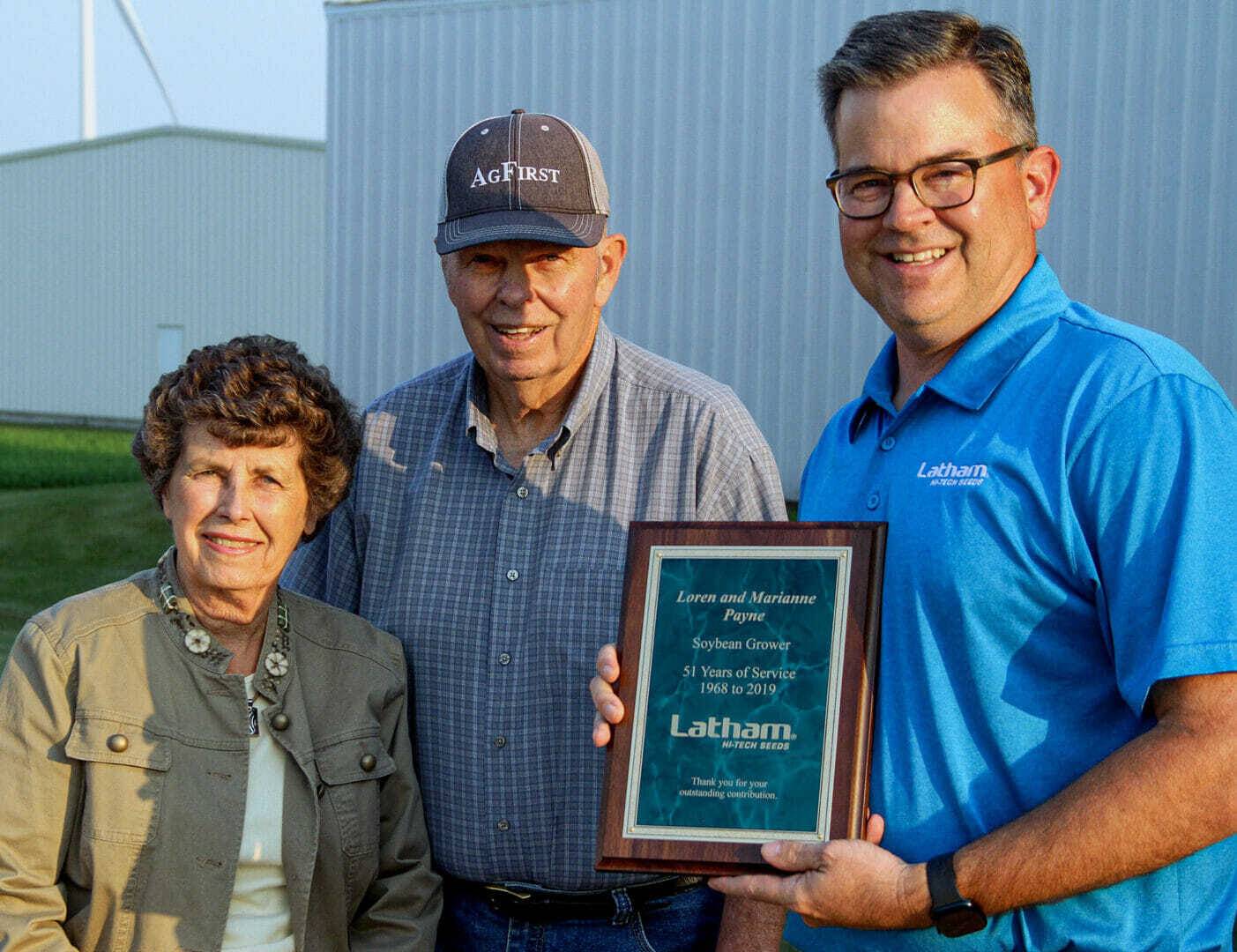
It’s not often that couples celebrate golden anniversaries, especially with their seed companies. Loren and Marianne Payne of Belmond, Iowa, were Latham® seed growers for more than 50 years — and they clearly remember the day Willard Latham came by to ask if they’d be willing to raise some soybeans for him. They Paynes had been taking their oats to get cleaned at Willard’s company, and they knew each other well.
“We told him we would try that,” says Marianne, who farmed with her husband from 1962 until 2019. “Pretty soon every field was planted to Latham seed beans.”
Marianne says raising seed beans worked out well for them. They were able to combine the crop and deliver it directly to the Latham plant, with Marianne herself driving the tractor and wagons. Not having to worry about storage allowed the Paynes to save on seed costs — and their landlords also agreed to raise seed beans.
“We would plant different varieties, so our fields would mature at different times,” she says. “It went well for us.”
Now that they’ve retired and moved to town, Marianne says she misses running the tractors. Not only did she haul their grain, she ran their tillage equipment too. For many years, the Paynes raised cattle and hogs, and had a few sheep early on. Marianne was raised on a farm between Thornton and Alexander; Loran was on a farm three miles away. They went to different country schools and met through friends.
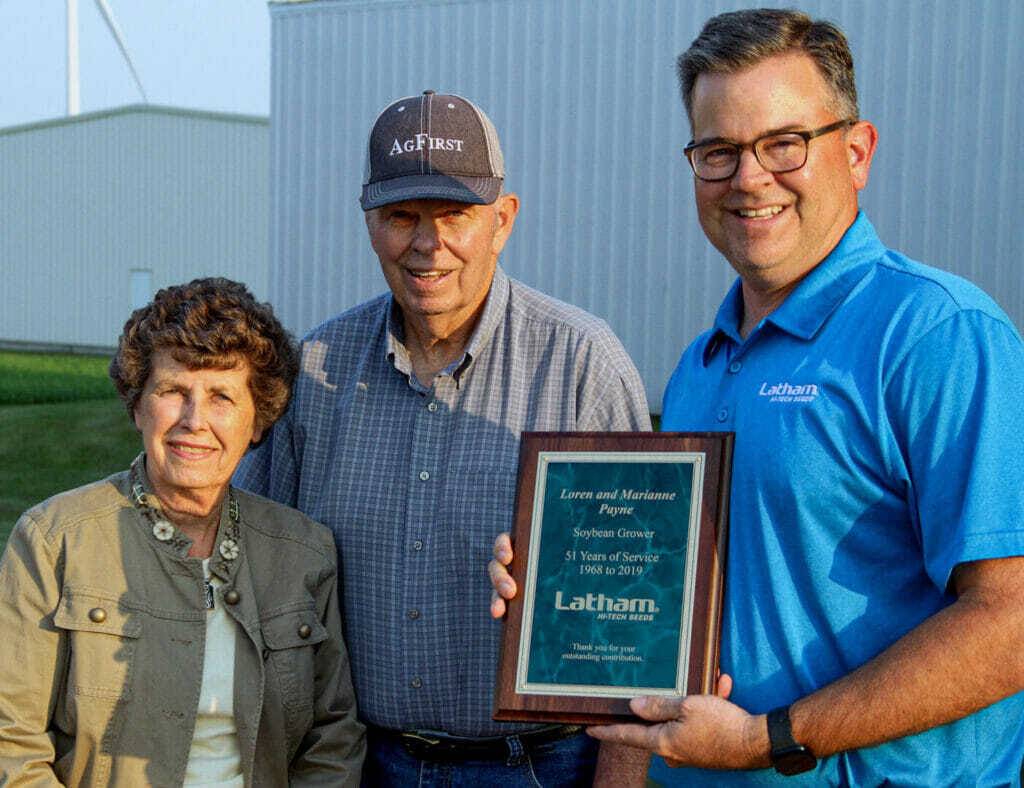
Loren and Marianne Payne, who have five grown children, were honored in 2019 for having served as Latham® seed growers for 51 years. It’s a milestone memory that they, and we, hold fondly.
“Latham Seeds has always been easy to work with,” Marianne says. “I really enjoyed working with each generation. We never worried because we knew we could trust them.”

Take a look across Latham Country! We’re coming to you every week.
Did you enjoy these videos? We want to (TECH)talk with you! Sign up for our newsletter to receive agronomy videos (and delicious recipes) in your inbox! We’ll TALK soon.
Take a look across Latham Country! We’re coming to you every week.
Did you enjoy these videos? We want to (TECH)talk with you! Sign up for our newsletter to receive agronomy videos (and delicious recipes) in your inbox! We’ll TALK soon.

Take a look across Latham Country! We’re coming to you every week.
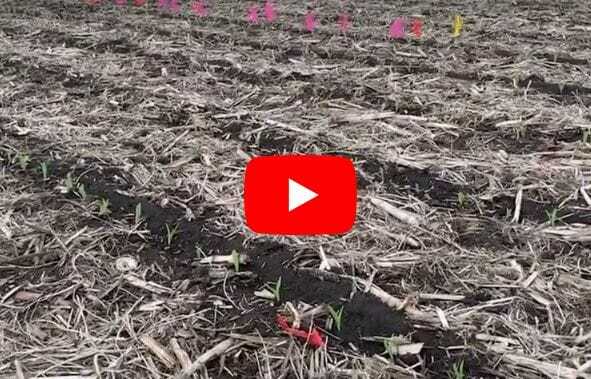
Latham Hi‑Tech Seed’s Corn Plot going in Northern Iowa!
Optimism and grit are two qualities every farmer I’ve ever met has in common.
Family, farming, food and faith are the four themes that kept emerging as Iowa author Darcy Maulsby wrote the book, Iowa Agriculture: A History of Farming, Family and Food.
“For generations, American farmers have lived by an unwritten code centered around hard work, courage, perseverance, teamwork, personal responsibility and concern for the community,” Maulsby says.
This unwritten code is also the Latham way. You’ll find the words “teamwork” and “community” hanging on the wall of our company’s conference room, which is in the former home of Latham Seeds’ founders Willard and Evelyn Latham. We’re proud that our company headquarters is located on the Latham family’s Iowa Century Farm in Franklin County. Our office is surrounded by crops, which are our products.
My husband John, my brother-in-law Chris, and I are proud to be the third generation to own and operate our family-owned seed business. Each year we enter the spring planting season filled with hope and optimism. Each spring John says – and truly means it – that he is more excited than ever to watch our products emerge from the ground and see the crop develop throughout the growing season.
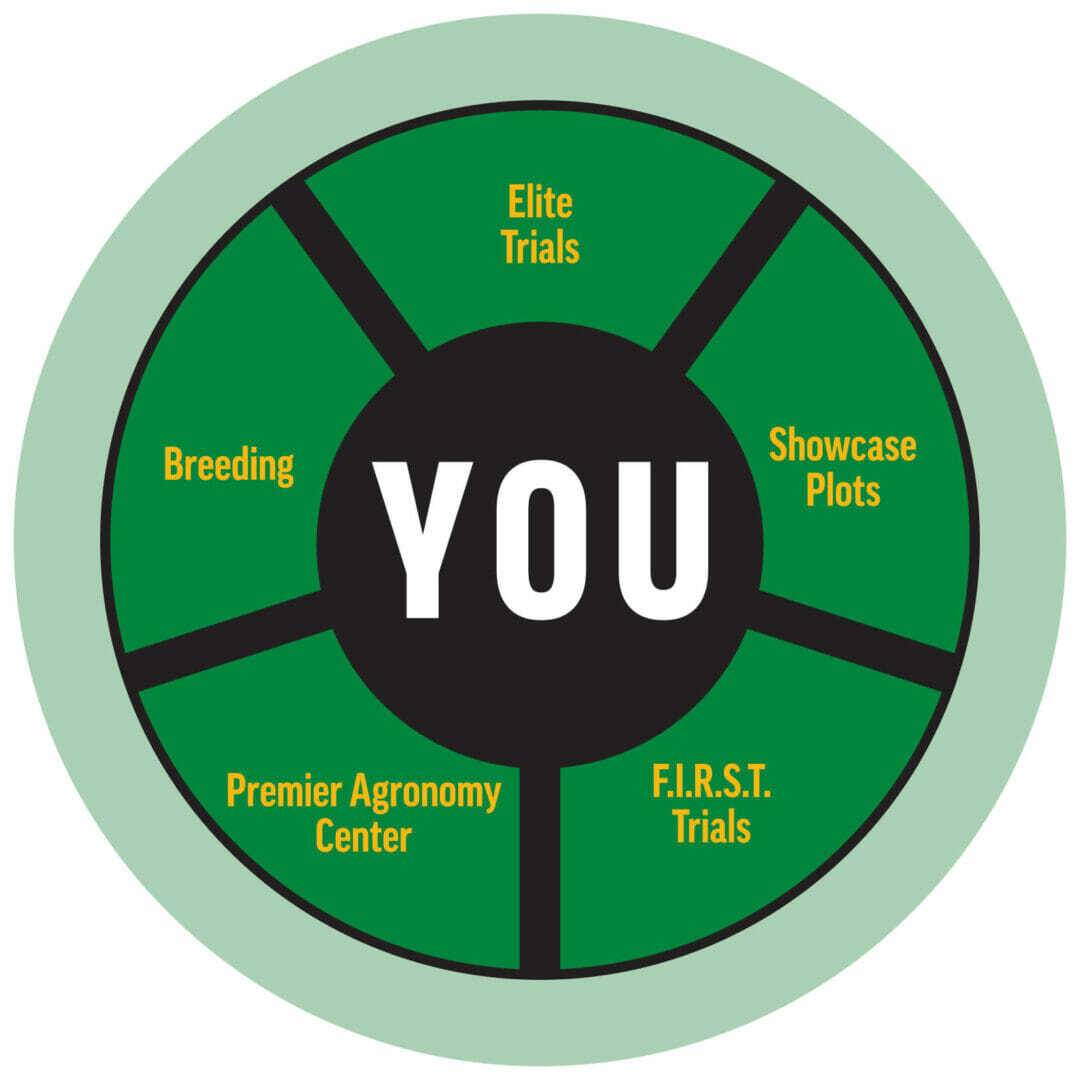
Keep in mind that a seed company grows its products one year in advance. This year we announced our 2024 product lineup to our local Latham® dealers earlier than ever because we’re so excited! All growing season long, our dealers will help us take product notes and evaluate performance. Latham Product Manager Steve Sick will be traveling across the Upper Midwest, meeting with our dealers and taking more notes on our products throughout the growing season. Our product selection begins with YOU, the American farmer.
From our family to yours, we wish you a safe planting season. To help you power through the long hours ahead, we’re sharing links to a few recipes that are easy to eat in the field or in the cab:
I’m also including a bonus recipe featuring pecans because today is National Pecan Day. Did you know a snack of one pecan serving (about 19 halves) provides loads of antioxidants, vitamins, and minerals?
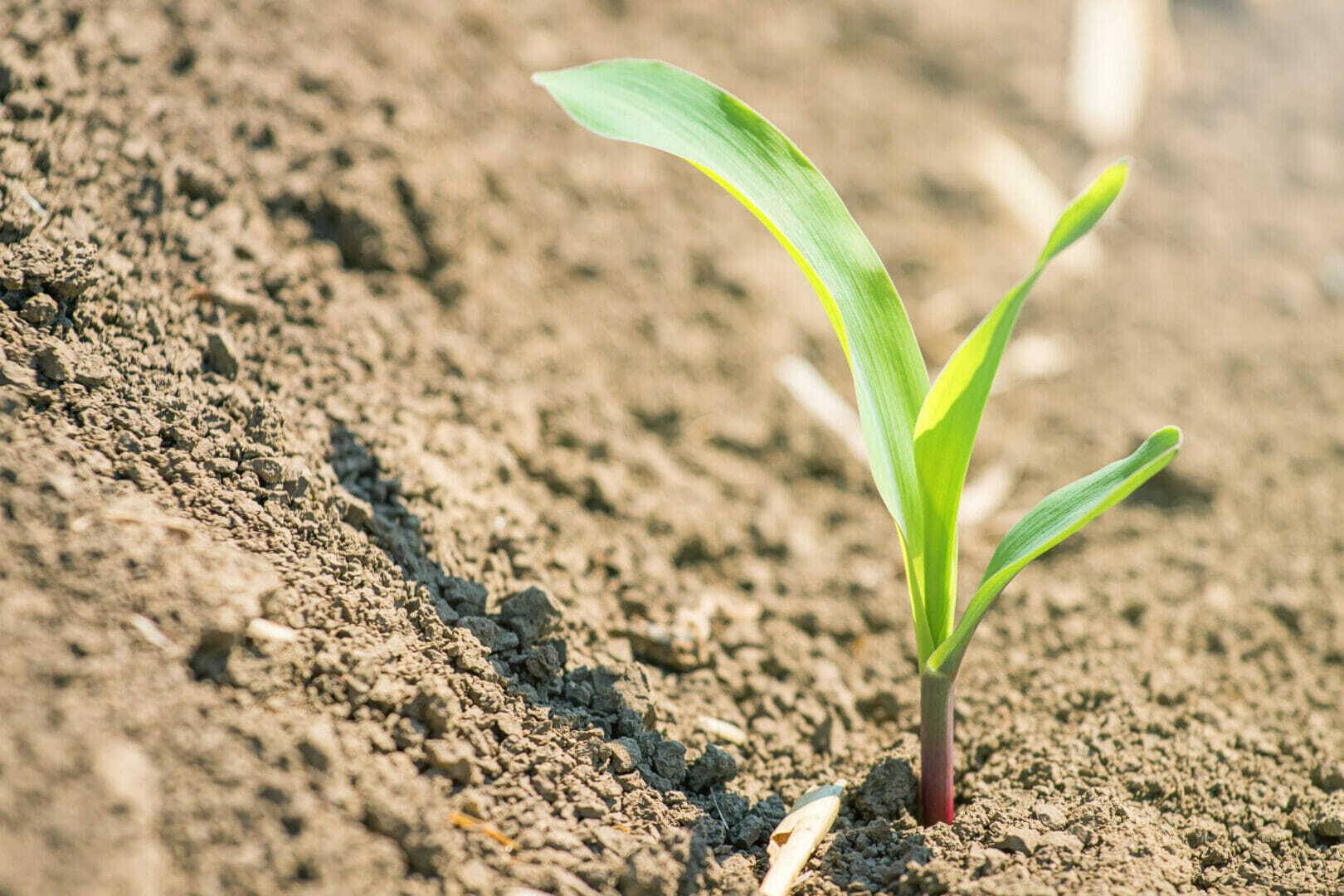
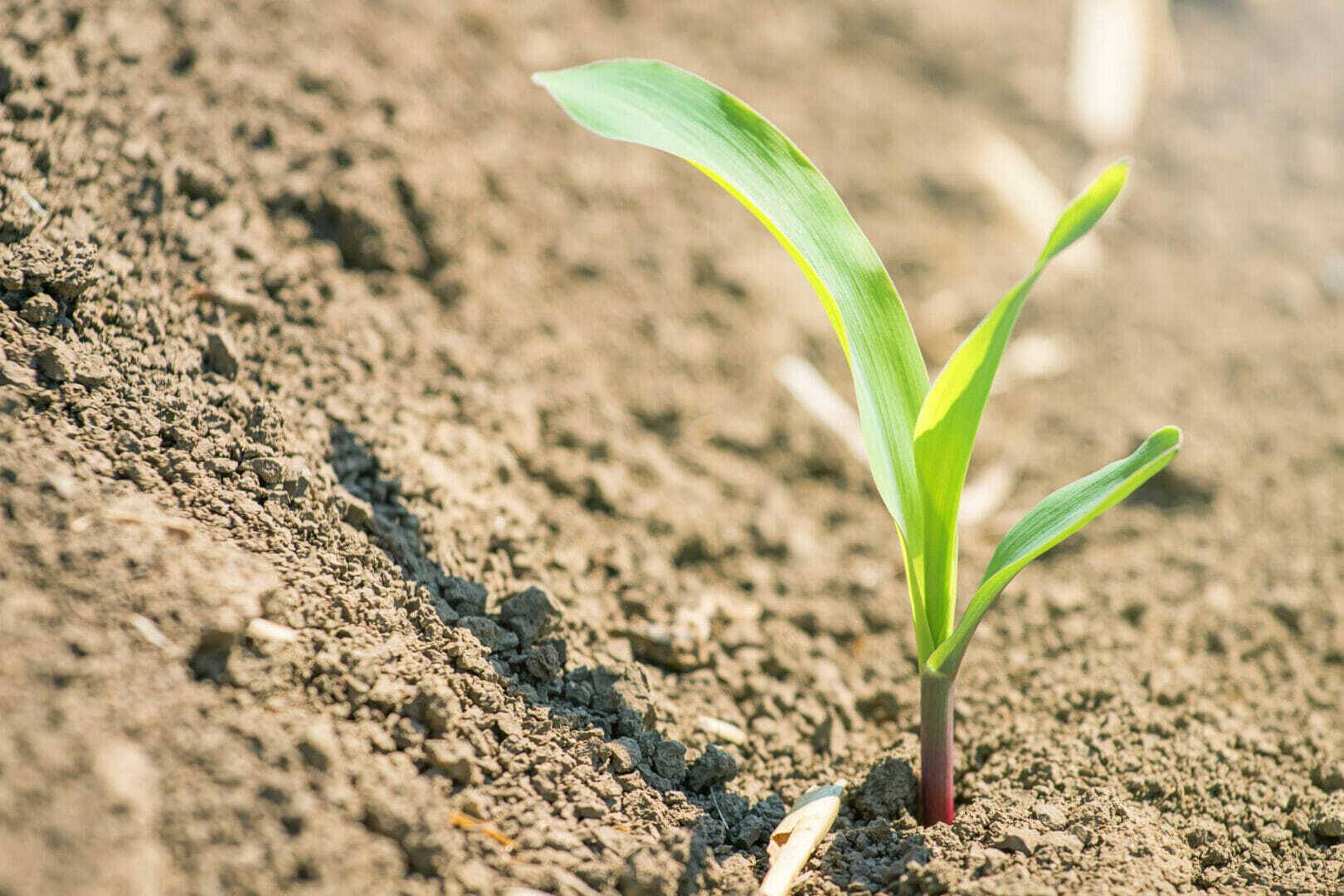 Weather concerns are top of mind as farmers across Latham Country look ahead to spring 2023 planting. Customers frequently ask us how to mitigate risk from the 2022 wet planting season.
While we want to maximize the yield potential of early planting, 2022 data shows us that delayed planting can result in very good yields — and better yields than planting when conditions are unfit.
Consider these factors to successfully mitigate potential risks of delayed planting:
We suggest staying with a hybrid selection plan that does not vary significantly from previous years. A couple management changes at planting time to get your crop off to a great start will result in more success than totally changing your hybrid selection.
Remember, most corn yield is created in July and August. Get your plants off to the best start, so they can take advantage of that part of the growing season. Don’t get discouraged if you encounter a bit of a delay. Stick to the hybrids in your original plan through the end of May.
Did you enjoy this article? We want to (TECH)talk with you! Sign up for our newsletter to receive agronomy articles (and delicious recipes) in your inbox! We’ll talk soon.

Sometimes, the best opportunities present themselves at just the right time. That was true for Kody Trampel, who joined the Latham Hi‑Tech Seeds team earlier this fall after working as an agronomist in ag retail for 12 years. Kody knew the Latham family even before he graduated from Iowa State University 10 years ago, and always kept an eye on the company’s go-to-market strategy.
“One thing Latham does really well is bringing options to customers and letting them pick the trait packages that best fit within their operation,” Kody says. “Being an independent seed company gives us the ability to do that. Most other companies can’t.”
While he didn’t grow up on a farm, Kody helped his grandpa mix feed at the Klemme (Iowa) Co-op every week. He participated in FFA and 4-H; and majored in Agricultural Studies at ISU. He met his wife, Vanessa, while working as an agronomist in one of her grandpa’s bean fields.

Today, Kody and Vanessa raise corn, soybeans, alfalfa, cattle and hogs. They also represent District 2 for the Iowa Farm Bureau’s Young Farmer Advisory Committee. Kody is involved with the Hancock County Extension Council and Hancock County Farm Bureau, as well. Vanessa is an Iowa Central nursing graduate.
Kody says he’s most excited for the opportunity to “focus on seed only” in his RSM role at Latham Seeds — while also using his experience in ag retail to help grow his dealer network.
“Bringing real-life experiences to the farm gate is something I’m really looking forward to,” he says.
Kody knows how committed Latham Seeds is to its customer base because of a single, short statement that company President John Latham always drives home: “We are a genetics-first company and a trait company second.”
“That comment from John truly shows that no matter where the traits are sourced from, we won’t bring them to the table unless we have a need from our customers,” Kody says. “That just proves how important they are to us.”
When he isn’t working, Kody enjoys camping with family and friends, and raising and showing livestock. He and Vanessa have two children, Pierce (3) and Finley (2). They also love their four mini Aussies: Paisley, Bentley, Sage and Mila.
Here is a delicious family recipe from the Trampels!
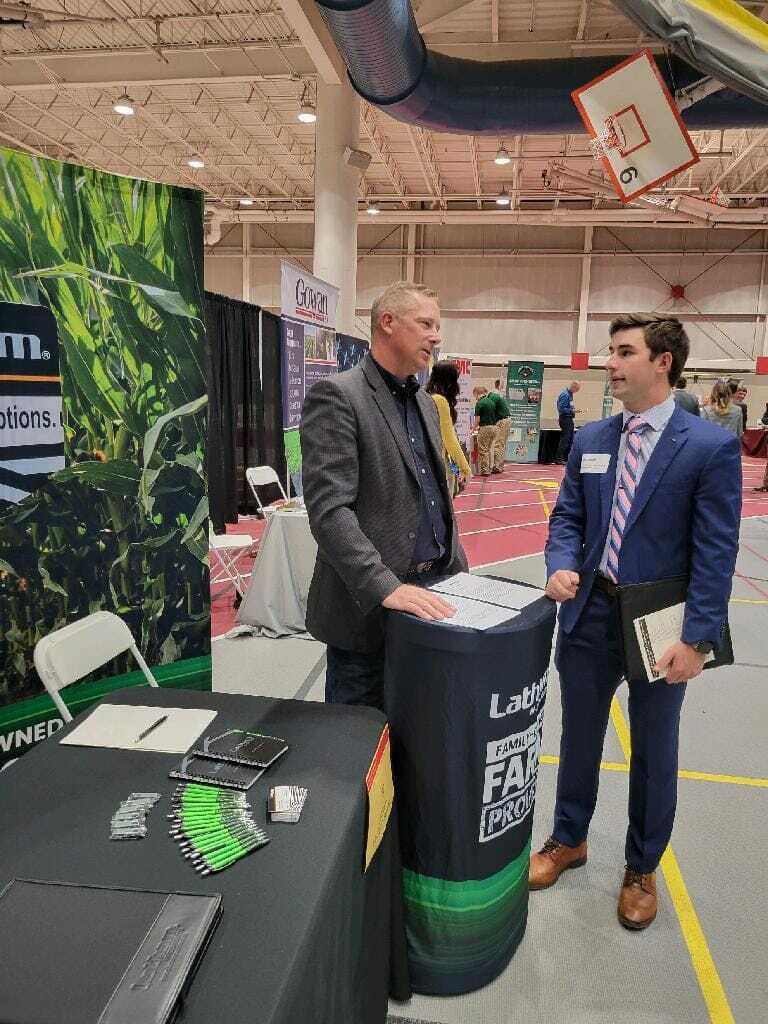
Latham Hi‑Tech Seeds is committed to the future of agriculture – and that includes investing in the next generation of farmers and students who care about the future, too.
We’re proud to participate in the largest agricultural career fair in the nation, which is held annually at Iowa State University. Every year we are blown away by the caliber of students that we get to visit with from the College of Agriculture and Life Sciences (CALS). But this year, it was a whole new game: ISU’s career fair broke its own record for the largest number of businesses and organizations present! How many? 289 to be exact. We know, because we were there.
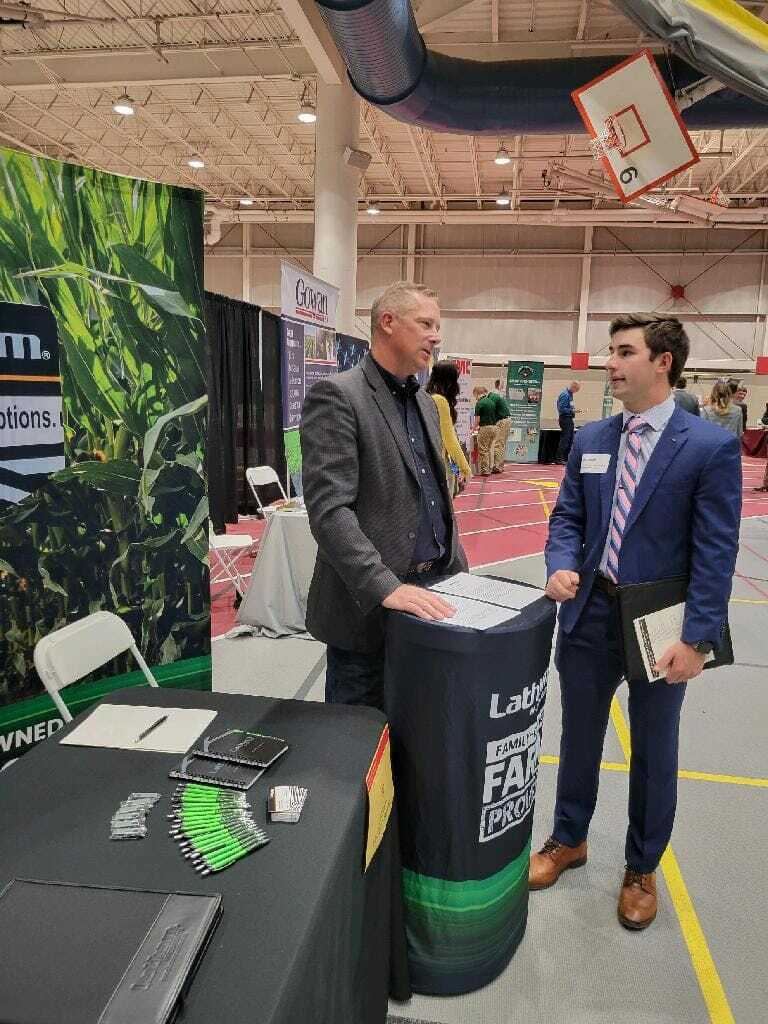
The CALS career fair boasts at least a 98% placement rate for student internships and full-time jobs. If that’s not impressive enough, consider this: students from 61 different majors at ISU were drawn to this event on a mid-October day. That’s 1,600 students passing by our booth, which means the competition is fierce – and not just for them. As a company, we must compete. And we do because we always want the best of the best on our team.
You can learn more about Iowa State’s CALS career fair here.