As a young child, I always looked forward to the annual showing of animated classics like “Santa Claus is Comin’ to Town,” “Rudolph the Red-Nosed Reindeer, and “A Charlie Brown Christmas” by Charles M. Schulz. My mom would read “TV Guide” and note when each special would air since “movies on demand” didn’t exist at the time. No wonder these specials were so special!
The Peanuts gang made its debut 55 years ago on Dec. 9, 1965. Schulz had to work hard to convince network executives at CBS, the special’s original network, that they should use actual children to voice the young characters. He believed the audience would respond to the special’s message about the true meaning of Christmas, and although they were concerned, CBS executives finally agreed and aired it as the creator wanted it.
The response to that network debut was even better than anticipated, and through the years, “A Charlie Brown Christmas” has received both Emmy and a Peabody Awards. To commemorate its 50th anniversary in 2020, the network aired the movie only for one night. Click here to learn How to Watch and Stream ‘A Charlie Brown Christmas’ This Holiday Season with your family yet this season.
I love “A Charlie Brown Christmas” so much that I even purchased a Charlie Brown Christmas tree for my son to use as a night light when he was a child. Although she is now a young adult, my daughter still looks forward to decorating her own tree for the holiday season and sleeping as it glows throughout the night. I got the idea for the Christmas tree night lights by reading the “ADVENTure of CHRISTmas” by Lisa Welchel. (Some of you may remember her as Blair on “The Facts of Life.” Oh, how I loved watching that sit com when I was growing up!) This book is filled with many great ideas on how to celebrate true meaning throughout the season.
In honor of the Peanuts Gang’s 55th anniversary, and in celebration of National Brownie Day on December 8, I’m sharing a recipe for Charlie’s Brownie Cupcakes that I got years ago from a lady in my church circle. How fun are personal-sized brownies?
Winter break sounds like the perfect time to bake a batch or two of brownies. Just think of them topped with a small scoop of Blue Bunny® Peppermint Stick Ice Cream and homemade hot fudge sauce…
Ask children under the age of 10 what they want to be when they grow up and they will likely give you one of these answers: professional athlete, doctor, veterinarian, firefighter, police officer or teacher. It’s no surprise a kid’s answer is heavily influenced by the adults in his or her life.
Dan Miller of Mapleton, Minnesota, says he has wanted to be a seed seller from the time he was old enough to accompany his father, Ron, to plot days and on sales calls. In addition to operating a seed dealership, Ron has raised corn, soybeans and hogs since 1979. He and his wife, Cheryl, also have raised four children. Their oldest son, Lance, is a production agronomist. Their daughter, Amy, is a financial planner. Their son Alan farms with Ron and raises hogs. Alan also recently became a Latham® Seeds dealer. Dan, the youngest, also is following in his father’s footsteps.
“I’ve always wanted to work in agriculture, and seed is the area I enjoy most,” says Dan, who enjoys helping on the family farm. He graduated with a degree in Ag Business from the University of Wisconsin at River Falls. His first job after college was working for a cooperative in southeast Minnesota for five years. During that time, he earned his Certified Crop Advisor. Following that he worked another three years for a cooperative in South Central Minnesota. He also interned for a crop consultant for two years.
While living in southeast Minnesota, Dan met his wife, Clarissa, in Rochester where she was working as a registered nurse in the medical cardiac progressive care unit at St. Mary’s Hospital. They realized they had much in common. She also has three siblings and they both grew up with farming families in rural communities in Mapleton, Minnesota, and Odebolt, Iowa. Their parents were both married within a few weeks of one another, so they celebrated their families when he and Clarissa were married on November 30, 2019. Now Clarissa is a cardiac device nurse at Mayo Clinic Health System in Mankato.
Both Dan’s and Clarissa’s families enjoy spending time at the lake. In fact, Dan proposed to Clarissa while cruising on a pontoon. When Dan was growing up, his family vacationed for a week every summer at the lake. They still enjoy fishing up north. In addition, Dan and Clarissa have started a tradition of spending a week at Lake Okoboji in Northwest Iowa with her family.
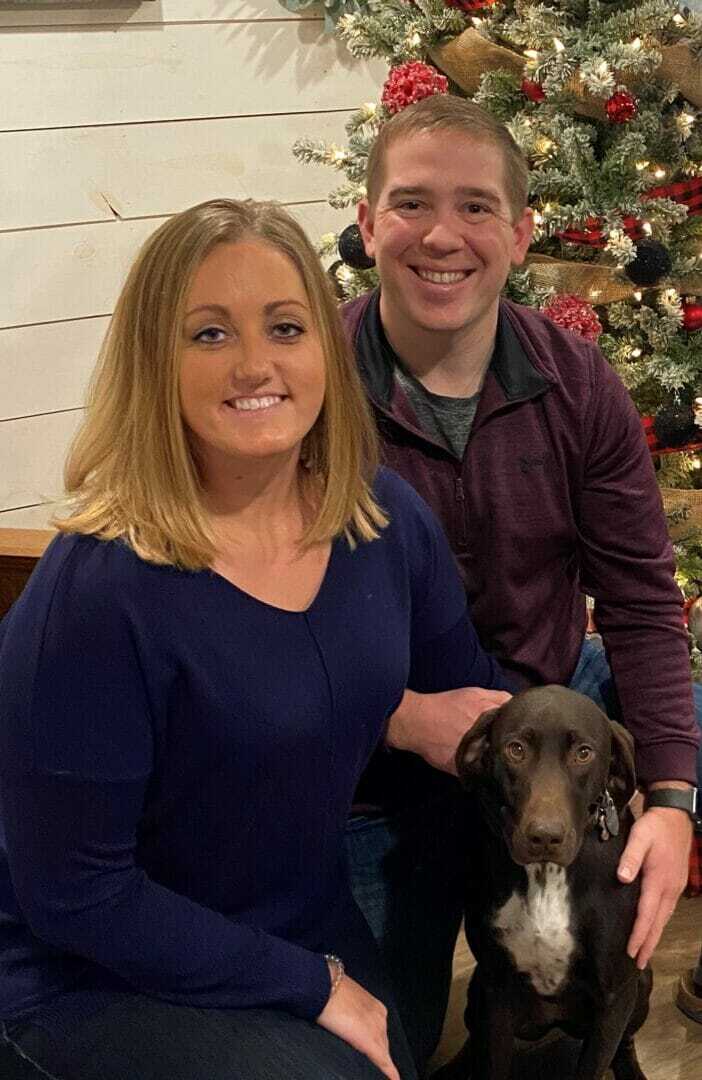
Dan and Clarissa enjoy spending time in the great outdoors, whether its golfing or walking their dog. The couple welcomed a German Shorthair Pointer in January 2020. Dan is training her to hunt pheasants.
As another new year approaches, Dan has welcomed another change. He joined the Latham Team on December 1, 2020, as a District Sales Manager. He serves the Minnesota counties of Blue Earth, Nicollet, Le Sueur, Waseca, Watonwan, Martin, Faribault and Freeborn.
“What drew me to Latham Hi‑Tech Seeds is its family atmosphere. Some of my customers have had planted Latham® products, and I’ve seen the great performance. I see opportunities here for Latham, and it excites me to be a part of it. I look forward to just focusing on selling one brand of seed. I enjoy using technology to place hybrids. That’s how I differentiated myself from the competition in the retail setting, and I’m looking forward to putting my background and experience to work for Latham.”
With a focus on family, Dan is looking forward to enjoying holiday traditions. One of his family’s traditions is to enjoy soup and snacks on Christmas Eve. Today he is sharing a recipe for Chicken Wild Rice Soup.
Education and the Environment are Renner’s Passion Projects
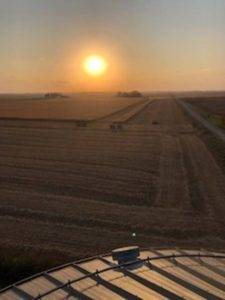
The early morning glow on a beautiful fall day.
As a new year begins, so does a new session of the Iowa Legislature. It’s important for those who understand farming practices and how proposed bills would impact their lives and the health of states like Iowa where agriculture is the backbone of our economy.
Helping people understand how critically important farmers and farming are to their daily lives is one reason Brent Renner followed his dad’s example by becoming involved in farming organizations.
“My father was very involved in Farm Bureau when I was growing up,” says Renner, a fourth-generation Iowa farmer from Klemme. “I could see Dad benefited from his involvement while making sure our government and elected officials heard a unified voice from farmers about the things that matter to us most. We have several great commodity organizations that do a great service to our farming community, and I believe it’s important to stay involved in them.”
“This was spring of 2019 with my first experience strip tilling in tall standing ryegrass. It was nerve-racking but it turned out very well,” Renner says.
Renner’s roots run deep in agriculture. His great grandfather and grandfather moved to North Iowa from southern Nebraska during the Dust Bowl era. They railed their cattle to south of Clear Lake in search of crops to feed their stock. After working as hired men for other established farmers in the area, they were able to sustain their own operations.
Like many farmers who experienced the Dust Bowl, the Renner family developed a great appreciation for how important soil is to sustaining farms and livelihoods. They have implemented strip till and no till into their operation. They also have implemented filter strips, waterways and wetlands where they can have the greatest environmental impact.
“As stewards of the land, it is our responsibility to leave our environment better than we found it,” says Renner. “I believe we are on the cusp of learning so many new things about soil health and how it relates to farming practices and water quality. It’s an exciting time to be in agriculture.”
Renners have implemented buffer strips and stream bank management to stop erosion on their farms.
Because farmland is often handed down from one generation to the next, farmers want to protect their legacies by caring for the environment.
“I’m been extremely proud of the work and research the Iowa Soybean Association has done on behalf of Iowa’s soybean farmers regarding the environment and water quality,” says Renner. “Bioreactors are just one example of many that we have provided research and funding for. Recently, we developed an ‘outcomes fund’ that provides farmers with the resources necessary to partner with municipalities and industry leaders and make positive changes in our water quality.”
“I really enjoy overcoming some of the challenges that this occupation can throw at you,” adds Renner. “It’s fulfilling to raise a good crop and still protect the environment. Mother Nature can throw a lot of curveballs at you any given season.”
He has always enjoyed farming, but Renner wasn’t certain he wanted to farm full-time until he came home from college in 1999. He and Nikki were married in 2000. They got involved with the state Young Farmer Committee through the Iowa Farm Bureau, and Brent chaired that committee the last year they served for District 2. He then worked through the leadership positions at the county level and served for three years as president for Hancock County Farm Bureau.
After fulfilling his term on the county Farm Bureau board, Brent became involved with the Iowa Soybean Association. He started by serving on the District Advisory Council before he ran for the board. He won an at-large position and was re-elected in 2019. He is serving in his second year of his second term. Active on several ISA committees during the past five years, Brent’s passion has is education and environment. He also serves on the North Iowa Ag in the Classroom board.
Now that their family is growing, time together is treasured even more. Brent and Nikki’s oldest son, Caleb, is a freshman at North Iowa Area Community College (NIACC) where he looks forward to running track this spring with the Trojans. Their son Braden is a junior at Garner Hayfield Ventura High School where he plays basketball and golfs. Their youngest, Madison, is an eighth grader in the same district. She loves dance and music. She also serves as manager of several sports teams.
The Renner family enjoys camping and fishing when they have a chance. Their favorite getaway is Decorah in Northeast Iowa where there are lots of trout streams. Not only does spring bring trout fishing season, it also is asparagus season. The Renner family freezes asparagus to enjoy year-round and especially during holidays. Today they are sharing with us one of their favorite recipes for roasted asparagus.
Now that the big Thanksgiving feast is over, what do you do with the leftover turkey and dressing? It’s time to try a delicious, northeast Iowa classic that’s been dubbed everything from “iconic” to “starch-a-pa-looza.”
We’re talking about and dressing sandwiches—a flavorful mixture of turkey, gravy and stuffing mixed together and served in a bun. Yes, these are starch on starch with plenty of turkey mixed in for good measure. No, they aren’t hot turkey sandwiches, where gravy is poured over a sandwich stuffed with sliced turkey. These are a food all their own, and they are a cult classic around Dubuque, Iowa.
“These sandwiches are a staple around here,” says JoAnne Gregorich, whose family farms near La Motte in eastern Iowa, south of Dubuque.
Turkey dressing sandwiches don’t just turn after Thanksgiving. If you attend enough graduation parties, bridal showers or wedding receptions in parts of Eastern Iowa, there’s a good chance that turkey dressing sandwiches will be on the menu.
You can either make your own, or if you’re anywhere near Dubuque, stop by Cremer’s Grocery. For more than 70 years, Dubuque’s last family-owned grocery has helped make meals special, thanks to their Famous Turkey ‘N’ Dressing sandwiches.
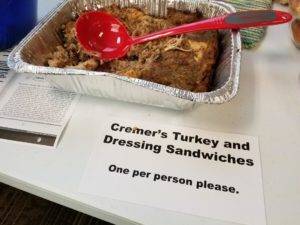
Just a sidenote: When I shared my Culinary History of Iowa program at the Carnegie-Stout Library in Dubuque in September 2017, the library also hosted a potluck featuring Dubuque foods. The mere fact that the librarians felt the need to post the sign “Cremer’s Turkey and Dressing Sandwiches: One per person please” says a lot about how popular these sandwiches are.
There often are no specific recipes for turkey dressing sandwiches, and every family takes their own twist on this local classic. The Gregorich family prefers to go heavy on the turkey. “I’d say I use about 95 percent turkey, along with a little stuffing and gravy,” says JoAnne, who adds that leftover cranberry sauce on the side is a good option.
What if you pour gravy on top of a turkey dressing sandwich, similar to a hot beef sandwich? “That’s something different than a turkey dressing sandwich,” JoAnne confirms.
Farming, food and family go hand in hand
Turkey and dressing sandwiches reflect the resourcefulness of generations of Iowa farm cooks who know how to maximize leftovers and give them a creative, new spin. The hearty sandwiches also fit with the region’s strong agricultural heritage, which the Gregorich family is proud to maintain.
Both JoAnne and her husband, David, grew up in Jackson County. They remain close to their rural roots on their Jackson County farm, where they raise corn, hay and beef cattle. JoAnne is glad the couple had the chance to raise their two daughters, Cassie and Kellie, on the farm.
“Growing up on a farm teaches you responsibility and instills a work ethic in you,” JoAnne says. “I also appreciated the times we were all able to work together as a family.”
While the girls are grown and are pursuing their own careers in agriculture, they always enjoy coming home and spending time with their family on the farm. There’s a good chance that turkey and dressing sandwiches will be served at many of these gatherings. “They are a very good sandwich,” JoAnne says.
“Gotta love the spunk she has!” says Patty of the time her 91-year-old mother spent in the field during 2020 beet harvest. “I’m so glad she got to enjoy it with her David!”
They had never planted Latham® Hi‑Tech Seeds but that didn’t prevent Mike and Patty Bergquist of Foxhome, Minnesota, from become a seed dealer when asked.
“We were looking for a way to bring our son, David, home and this ‘solution’ seemed to present itself,” said Mike as he recalled that particular day in 2015. “You might say opportunity knocked when Latham’s regional sales manager came to our door and talked with us about Latham Seeds.”
They weren’t able to get the soybean brand they were accustomed to planting, so the Bergquists decided to try Latham Hi‑Tech Soybeans. They also put Latham brand corn to the test, and it topped their on-farm yield test. They were sold on the Latham’s on-farm performance!
No one else in their area had a Latham Seeds dealership, but national companies had several dealers in the area. Mike liked the idea of working with a family-owned company that shares his values of commitment to family and community.
Mike Berquist
Mike served for three years in the U.S. Navy. He returned home to farm with his step-grandfather, Harold. To supplement his income, Mike started working campaigns in 1975 at the local sugar beet processing plant. He worked at the plant whenever Harold didn’t need him in the field.
Mike and his wife, Patty, were married in 1977. Harold offered to let the newlyweds move a trailer house onto the farm. They appreciated living on the farm. Four years later their first child was born, and Mike had to choose between accepting a promotion at the beet plant or farming full time with Harold. He chose farming.
Harold passed away in 1985. The 1980s Farm Crisis made it challenging for a young couple to support a growing family, so in 1988, this father of five went back to working campaigns at the beet plant. Mike accepted a full-time position there in 1989. He worked his way to plant supervisor and retired from Minn-Dak Farmers Cooperative on June 3, 2019.
Because Mike only got weekends off once every four years, it helped to have David involved with the farming operation. David, the Bergquist’s youngest child and only son, completed the John Deere program at North Dakota State College of Science (NDSCS) in Wahpeton. He worked full-time for four years at RDO Equipment as a John Deere technician while also helping his father farm. David was able to double his farming operation and started farming full-time in 2018. David married his high school sweetheart, Chloe. They’re the proud parents of two sons, Briar and Bowen. Chloe also works as a dental hygienist.
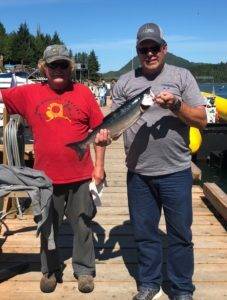
Mike with salmon
The Berquist’s oldest daughter, Kari, and her husband, Tim Marquardt, live nearby in Rothsay with their three children: Hunter, 14; Hadley, 12; and Hudson, 9. Kari is a stay-at-home mom, and Tim works for Wilkens County. Mike and Patty’s second oldest, Heidi, works for Red River Human Services in Breckinridge where she lives with her three fur babies.
Third in birth order is Katie. She is a daycare provider for her brother’s children. Her husband, Derrick, is an engineer for Willrich. They have three sons: Dawson, 9; Carsten, 6; and Grayson, 4 months.
Their youngest daughter, Holly, was a nanny until her twins arrived. Her husband, Travis, is a John Deere technician in Wheaton and also farms. They are the parents of five boys: Michael, 10; Bennett, 6; Henry, 2; and 5-month old twins, Kamden and Cooper.
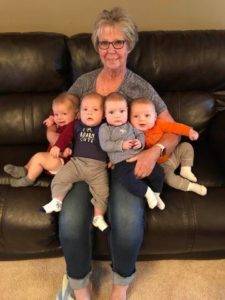
This photo was taken Sept. 29, 2020 From left to right: Bowen, 6 months; Grayson, 2 months; and 4-month old twins, Cooper and Kamden
“I love having our grandkids come to the farm,” says Patty, a proud grandmother of 12 grandsons and 1 granddaughter. “We hang out in the shop, go for Ranger rides, rock babies and read books. It’s so much fun to hear the laughter and to see smiles on the kids’ faces. We let them stay as often as they want now. We know that in a blink of an eye they will be too old. We hope they have good memories of staying with us.”
The older grandkids are active in sports, so the Berquists enjoy attending their basketball, football and baseball games. In summer months, the Bergquist family enjoys camping together.
“There is a lot of love when we all get together, and that’s the way we like it!” says Patty. “We’re making memories and more memories!”
Today Patty is sharing with us one of her family’s favorite recipes for Buttermilk Blueberry Breakfast Casserole.
Guest blog post by Darcy Maulsby, author of the rural Iowa history book “Calhoun County,” “A Culinary History of Iowa,” and “Dallas County.” New in 2020: “Iowa Agriculture: A History of Farming, Food and Family” from The History Press and “Iowa’s Lost History on the Titanic.”
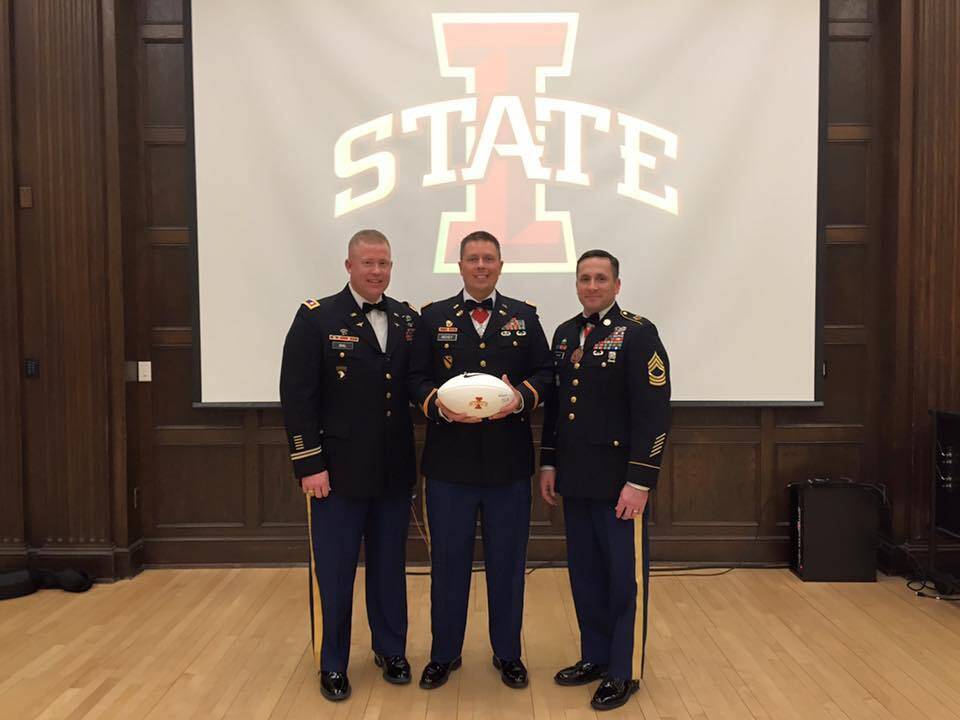
There were few things Ethan Dial cared about more than high school sports in the early 1990s. He also appreciated the patriotism around the Super Bowl and the American flag’s place of honor at other sporting events. It’s no wonder this Lake City, Iowa, farm kid committed to playing baseball for the United States Military Academy in West Point, New York. He completed his West Point training in 1999.
Although he retired after 20 years from full-time military service, Dial enjoys sharing the practical wisdom he gained through his military service, especially with new lieutenants during their commissioning ceremony.
Dial’s 15 strategies for success can apply to any occupation:
Participate in your own survival. Life is a contact sport. To succeed, you can’t sit on the sidelines. “You must roll up your sleeves, get your hands dirty and make it happen,” Dial said. “Be proactive, not reactive. Create the conditions for success in your position.”
Embrace “more hands make light work.” You can’t shoulder the entire load all of the time. Help others, and ask others for help. “The Army is a team activity,” Dial said. “When you get every soldier in your platoon or section working in synch, the collective power of the team is amazing.” Also, don’t be afraid to dig in and get your hands dirty, no matter your role. “Soldiers will respect you when they see that nothing you ask them to do is beneath you, since you’re willing to get in there and work alongside them,” Dial said. “You’ll learn a ton doing it, too.”
Remember “Horse – Saddle – Rider.” Be prepared. In the military, whether you’re returning from the range or a month-long field training exercise, your first priority should be the vehicle or aircraft you traveled in. Refuel it, clean it and prep it for the next mission—which might only be minutes away. Also, clean up your gear, refill your aid bags and top off your canteens. “Again, you’ll never know when you only have seconds to grab your gear, and you’ll be thankful your kit is ready to go,” Dial said. Take care of yourself last. Get cleaned up, fed, hydrated, lay out your clothes for the next day, then rest. Many of these same principals of preparation also apply if you’re running a business or a household. “The next mission will come sooner than you expect,” he added.
Show up early. If you’re not 10 minutes early, you’re already 15 minutes late. Don’t forget the corollary that “being early is free, being late will cost you.” “Make being early a habit,” Dial said. Give yourself time to collect your thoughts, check and re-check important things and put out any last-minute fires. “If you’re at the right place, at the right time, in the right uniform, with the right attitude,” you’re definitely 99% on the road to success,” Dial said.
Four generations of the Dial Family
Surround yourself with positive people. Seek people who challenge you to always improve. “You’ll be amazed by how much the people you chose to surround yourself with impact your physical, mental, spiritual, and social well-being,” Dial said. “Your attitude changes, your outlook improves, but most importantly, your outcomes start to match your expectations.” Positivity and an attitude of gratitude are contagious, he added.
Adapt and overcome. As a leader, you’re going to be asked to make decisions and provide guidance. Don’t panic. “If no-one is bleeding and no bullets are firing, it probably isn’t a catastrophe,” Dial said. Take in all available information, evaluate possible tactics and think through potential responses to these tactics. Then make a decision and stick with it. “Be consistent, calm and confident,” Dial said. “Be the problem-solving, adaptable leader your team and your followers need you to be.”
Develop your natural curiosity. Never accept the first report. Do your research. Ask questions to draw out the facts and separate out the drama. “Always be learning, always be inquisitive, strive to learn more and live a more thorough life,” Dial said.
In the absence of orders – attack. Always be moving forward. Sometimes you’ll have to decide whether you’ll need to be an “ask for permission” leader or “beg for forgiveness” leader. “Once you make a decision, you own it, good or bad, right or wrong,” Dial said. Throughout your career, you’ll get better at decision making, he added. Read about other’s decision-making style. Study intuition and gut feelings. Practice your decision-making skills. “Don’t sit back and wait for a handout, email or text telling you what to do,” Dial said. “Listen early for intent and guidance, but in the absence of orders – attack!”
Do you GAS (give a sh**)? Pay attention to the details, and most everything else will fall into place. Take the extra 5 minutes to straighten something, fix something and make it look professional. “If it looks good, it probably is,” Dial said.
Ethan Dial & son
Show your loyalty. “What’s the best unit you’ve ever been in? The one you’re in at that moment,” Dial said. Demonstrate your loyalty to your organization. Wear your company’s logoed apparel, and attention the “optional” and “highly encouraged” functions. “It’s visible, it makes a difference, and it’s part of the small things that do not go unnoticed,” Dial said.
Know it’s ok to say you don’t know. Even if you don’t know the answer, say so, but add, “I will find out.” Then follow up as soon as possible.
Pick three to five things to focus on daily. You can’t do it all. Prioritizing tasks is the key, Dial said. “Imagine what you can accomplish by only worrying about getting three to five things done a day.”
Only worry about those things YOU can control. Whatever happened is in the past. “None of us has a time machine to go back and fix something,” Dial said. “It is what it is—now what?” Asses what changed, decide who needs to know and determine what the next steps should be. “Focus on going forward, improving, changing and learning from mistakes,” Dial said.
Don’t whine. Complaining without offering a potential solution is whining. No one likes whiners, so be part of the solution. “It’s ok to identify problems,” Dial said. “While it’s harder to identify solutions, that separates great leaders from the rest.”
Focus on continuous improvement. Do you know as much about your profession as you expect your doctor to know about his/her profession? “Be a lifelong learner, never be satisfied, get better every day,” Dial said.
Grandma Dial’s Famous Lemon Pie
While Dial sometimes took for granted the peace and serenity of farm life when he was growing up, he’s gained a new appreciation for small-town Iowa’s advantages. “Being back in Iowa has enabled my family to help my dad, Dwight, on the farm when we can,” Dial said. “He also comes to Ames to enjoy family time and attend Iowa State football, basketball and wrestling events with us.”
When the Dial family gets together, they enjoy preparing some of the recipes that have been part of their family for generations. Nothing says comfort food more than this lemon pie, the signature dessert of Ethan Dial’s grandma, the late Alice Ann Dial of rural Lake City.
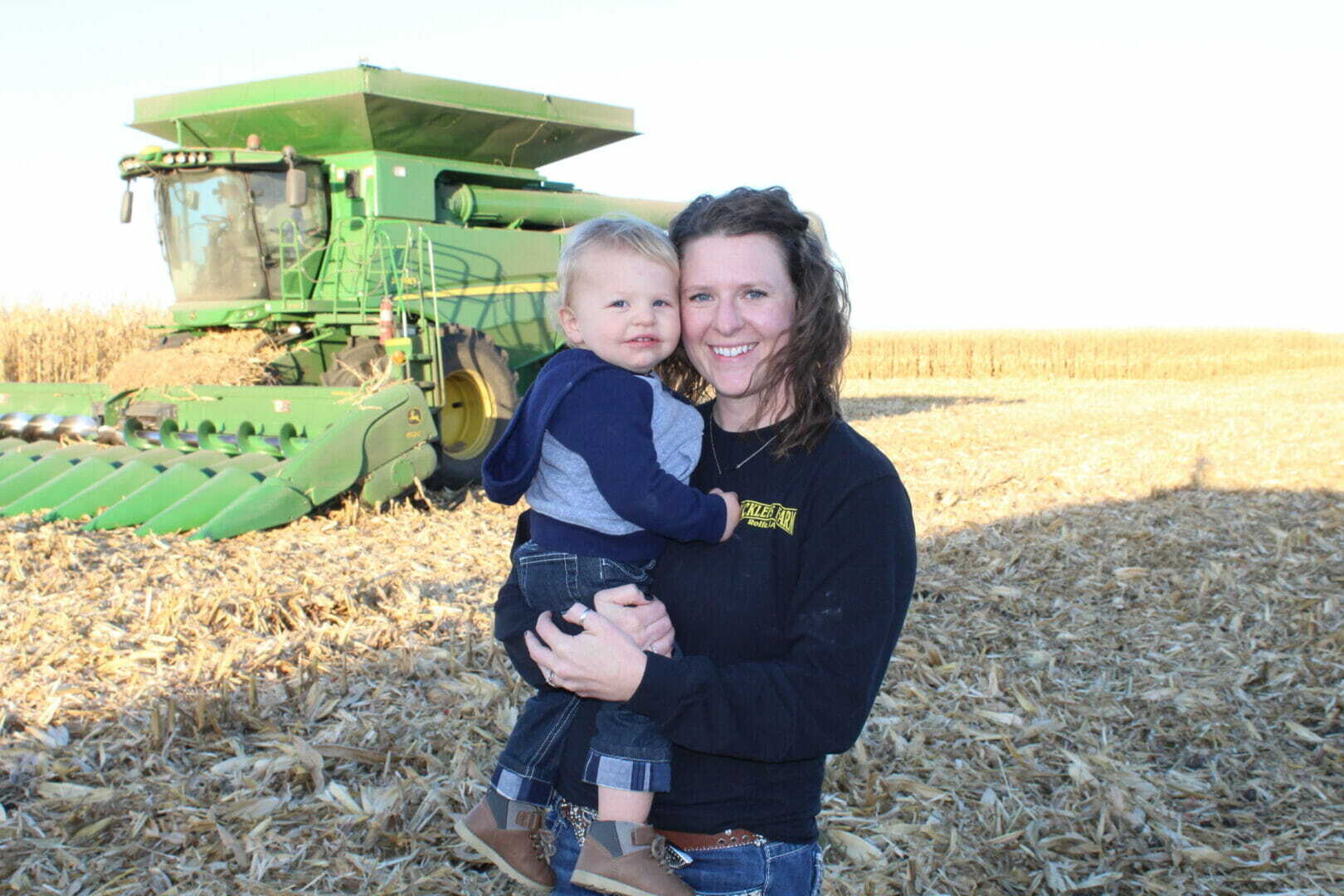
While many people focus on the challenges faced throughout 2020, this year has provided Jenna (Braun) Ricklefs of Rolfe, Iowa, with many reasons to celebrate. This year marks the fifth anniversary of Jenna starting her own successful Latham® and Ag Spectrum dealerships. She and her husband, Jon, will celebrate their fourth wedding anniversary in November. Their son, Levi, celebrated his first birthday on June 21.
What is this 30-year-old’s secret to getting it all done?
“Being organized is key,” says Jenna, who just wrapped up the 2020 harvest season. “Before harvest started, I bought a lot of groceries. I made meals and put them in the freezer.”
“It is very true when people say raising a child takes an army. I called on people for help during harvest. I hated having to ask for help, but I couldn’t have done it without any of my friends and family!” says Jenna. “My mom was a saint, helping with Levi. On the days that Jon and I would need to take Levi with us to the field, we packed lots of snacks and toys. We took turns having him ride either in the grain cart or combine. He took an afternoon nap in the combine. Then someone would take over for me at night, so I could take Levi home for supper and enjoy some time playing with him before tucking him in. He kept his bath time and bedtime routine.”
Jenna and Jon work as a team, helping one another around the farm and with their respective businesses. Jon helps Jenna put in seed plots and sign fields when he can. In addition to farming, Jon also has a painting and autobody business.
“I love getting to work with my husband and having a seed dealership provides me with great flexibility,” says Jenna, who graduated in 2013 with a degree in Agronomy from South Dakota State University. She worked two years as a field sales agronomist a local co-op before starting her own business.
The Ag Spectrum and Latham dealerships really complement each other, says Jenna. She helps her customers by providing farmers provide a whole production environment for growing a healthy crop. She takes soil samples and writes crop plans. She also conducts on-farm test plots.
Jenna’s career combines all her interests, and being her own boss provides her with more flexibility.
“I like that I can work but be around the farm when someone needs me,” says Jenna. “I can provide a service for my customers, make an income, yet help my family when they need it.”
Some days are long, but Jenna would not trade these days for anything.
“Now Levi notices trucks and tractors. I just love to watch him and wonder what he’s thinking when he’s looking at a book or destroying my kitchen by pulling everything out of the drawers!” she says. “Levi isn’t afraid of anyone or anything. He’s so friendly. Even though he isn’t speaking words yet, he will have a very detailed conversation with anyone! He’s my best little man and is always here to keep my company and cheer me up.”
Jenna encourages young women in agriculture to work hard for what they want.
“Don’t let the status quo intimidate you,” she says. “If it’s something you are passionate about, don’t get scared or doubt yourself. Take a leap of faith and go for it!”
With harvest complete, Jenna is turning her attention to finalizing crop plans and writing her customers’ seed orders. She looks forward to slowing down a bit and enjoy more family meals together. Today she is sharing with us a recipe for one of her favorite comfort meals.
This is an image of Gus and his mentor from IHPA, Doyle Kincy, after they had installed the package of bees into his first hive.
In addition to harvesting their row crops, many Midwest farmers clear off their vegetable gardens and prepare flower beds for the winter. I’m one of those gardeners who leaves ornamental grasses to provide cover for birds throughout the winter. While I was picking up garden hoses and doing some other yardwork before an October snowfall, I started thinking about what happens to pollinators in the winter.
While most bees and wasps hibernate, honey bees stay active throughout the winter. So how do honey bees stay alive during a long, cold Midwestern winter when perennial plants are dormant and our fields are barren? I remembered a fellow member of the Communications Committee for the American Seed Trade Association (ASTA) has a son who keeps bees, so I reached out to Pat Arthur and his son Gus to help me learn more about beekeeping.
“Beekeeping is not scary, nor intense, nor is it a romantic process,” says Gus, 17, who has been keeping bees for four years. “Beekeeping is instead a thoroughly calming, mentally stimulating, and all-around pleasant experience with the reward of the knowledge that you have ensured the continued survival of your hive, plus you get honey from it (naturally).”
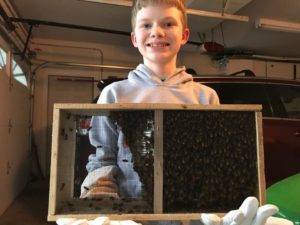
Here Gus is holding a package of bees which contains about 10,000 workers and a queen. This is what Gus used to start his first hive
Gus got interested in keeping bees after he and his family watched a presentation at the 2016 Iowa State Fair by Andy Joseph, state apiarist for the Iowa Department of Agriculture and Land Stewardship (IDALS). During that presentation, the Arthur family learned about a youth scholarship from the Iowa Honey Producers Association (IHPA).
“I thought keeping bees sounded like fun, so I applied for the scholarship,” says Gus. “The scholarship included a hive of bees, the necessary equipment to keep them, an introductory class on beekeeping, as well as a mentor to show me the ropes of beekeeping. The package was a tremendous gift to get me started on my beekeeping journey. My mentor, Doyle Kincy, continues to share his knowledge and guidance to this day.”
“Beekeeping is a fascinating process of observing the hives, identifying and diagnosing any potential problems, and coming up with a potential solution over and over again, leaving the entire task greatly thought provoking,” adds Gus. “The most fascinating part of it is that no two beekeepers seem to do this in the exact same way, and so beekeeping is able to become different for all who keep bees.”
Hive inspections are an important part of beekeeping to ensure the colony is doing well. This image is me watching Gus doing an inspection of during his first year as a beekeeper.
Honey is collected once per year, generally prior to the State Fair. Gus and his dad process their own honey. It starts with coaxing the bees out of the supers, which are the top hive boxes that contain the harvestable honey. A box with an almond-scented aroma is placed on the top super, and the scent drives the bees lower into the hive enabling the removal of the top super. Supers are removed this way one at a time. If it has been a good year, a super could contain about 30 pounds of honey.
Each super contains nine to 10 frames of honeycomb that the bees have capped with a thin layer of wax. The wax cappings are carefully cut from the frames of comb with a long, serrated knife. The frames of comb are then spun in a centrifuge to extract the honey, which is run through a filter to remove impurities such as wax.
Winterizing Hives
The winterization process for the hives begins with a Varroa mite parasite check and treatment, which, occurs immediately after the honey is removed from the hive.
“In early to mid-fall as the weather starts to cool, the size of the hives’ entrances are reduced to protect them from potential robbery from other hives when nectar becomes scarce,” explains Gus. “Additionally, a metal mouse guard, black insulative wrap, winter feed, and insulation material to absorb condensation are placed on the hive. In November or December, an additional treatment for parasites may be applied to the hives.”
This is an image taken 10/26/20 after an early snowfall. The image shows the black wrap Gus describes and you can also see the mouse guard we install in front of the entrance to keep mice from taking up residence in the hive during the winter months when the bees may not be able to defend the hive as well.
“We wrap the hives in a black insulative wrap to help keep the heat inside the hive and warm it a little due to black-body radiation,” says Gus. “For the most part, the bees do a good job of keeping the hive warm by vibrating their flight muscles. They ball up around the queen and slowly move about the hive over the course of the winter, consuming their honey stores.”
In case the honey stores are depleted, Gus makes boxes of clumped sugar and leaves them inside the hive. The honey and sugar provide food sources until spring. Generally, sometime in March as the weather starts to warm, the hives are readied for spring. The measures that were in place for winterization are removed. Gus also makes a 1:1 mixture of sugar and water in a container within the hive. This division board feeder nourishes the bees until spring flowers bloom.
Many annual flowers, like lantana and salvia, attract pollinators like bees and hummingbirds. Here’s a link to Proven Winners® recommendations for annuals that attract pollinators. Perennials like coneflowers and bee balm also attract pollinators to your yard. Click on the links below for additional tips for attracting pollinators.
When we feed honey bees, they treat us! Today Gus is sharing with us one of his family’s favorite ways to enjoy the honey they produce. Making baklava has become an annual harvest tradition for the Arthurs after they process their honey.
“We enjoy trying recipes that use a lot of honey because we think honey makes everything taste better,” says Gus. “Making baklava is a little tedious, but it is oh so worth the effort!”
Leora’s Letters: The Story of Love and Loss for an Iowa Farm Family
The day the second atomic bomb was dropped, Clabe and Leora Wilson’s postman brought a telegram to their acreage near Perry, Iowa.
One son was already in the U.S. Navy before Pearl Harbor had been attacked. Four more sons worked as tenant farmers with their father near Minburn until, one by one, they were serving their country in the military. All five of Leora’s sons enlisted in World War II. Only two came home.
After praying that her grandmother’s losses would never be forgotten, Joy Neal Kidney felt compelled to tell their story by writing a book. She published “Leora’s Letters” in 2019. This book came out right after the Dallas County Freedom Rock, which features the five Wilson brothers, was dedicated.
“God certainly had to be behind the timing of everything. I’ve been amazed and humbled by responses to the story of a woman who lost four family members – three sons and her husband – in three short years. Grandma reframed her original yearnings of having a home of her own and family nearby to live fully for four more decades,” says Joy, the oldest granddaughter of the book’s heroine.
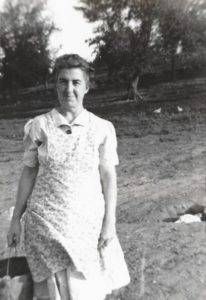
Leora’s boys asked that she mail them a photo of her with her chickens, so in June 1943 she granted their wish.
As the family optimist, Leora made time to write hundreds of letters in addition to doing all her regular chores. She kept her five sons informed of the news. She also kept up the morale of the whole family, which included two daughters who were married and raising their families in Iowa.
Leora literally wrote volumes of letters that had been saved by her children for decades. Joy says condensing the volume of letters into a readable story was a challenge.
“First, I transcribed the dozens and dozens of family letters for those who survived,” explains Joy. “Then I researched to learn what had happened to the three brothers who were lost. I began submitting essays to newspapers and magazines, and my stories were published regularly. I eventually decided the story needed to be shared more widely and in book form.”
“Leora’s Letters” is available on Amazon in paperback, ebook, and audiobook narrated by Paul Berge. Autographed copies may be purchased at the Gold Star Museum at Camp Dodge, Beaverdale Books, the Machine Shed Restaurant in Urbandale, and Adel Quilting and Dry Goods.
Writing this book has been a labor of love for Joy, who had such health challenges that she could not write for nearly two decades. As her symptoms began to lift, Joy began writing again. She attended the Cedar Falls Christian Writers Workshop and joined a community online through Write That Book.
“No matter your age, if God has given you a story to share, just begin it and don’t quit,” advises Joy. “Journal every day, find kindred spirits even if only online, ask for feedback, have an open heart for learning. Learn and enjoy sharing on social media.”
Joy plans to write a second book to share Leora’s stories during the Depression Era. She also has mapped out the story for her grandmother’s growing up years.
Legacy of Service
With Veteran’s Day approaching, it seems especially fitting to shine a light on the legacy of service to this country by Joy’s family. Veterans Day is the day set aside to thank and honor all who have served, living or deceased, so we’re paying tribute to all of the Wilson and Neal family members who have proudly fought to defend the freedoms we enjoy.
Joy’s husband: Guy Kidney grew up on a Carroll County farm. He served in Vietnam, Air Force, air traffic control.
Joy’s father: Warren D. Neal, a farmer who became a pilot, retained as an instructor of advanced pilots. He was named as Commander of a B-29 at the end of the war, with a date set for Saipan and combat, when the war ended. He returned to the farm. NOTE: Joy’s mother, Doris, had dated Warren off and on throughout high school. When Doris started talking about joining the WAVES (Women Accepted for Volunteer Emergency Service), Warren was afraid they would never get together. He asked her to get married right in the middle of war. Click here for an 8-minute story on how an Iowa waitress became an officer’s wife.
Joy’s father’s brother: Willis K. Neal was a farmer who became a pilot. Combat: C-47 pilot “over the Hump.”
Joy’s mother’s brothers:
Delbert G. Wilson, Navy. Served 1934-1937, reenlisted during WWII. Combat: Served on a tanker on the East Coast and across to North Africa.
Donald W. Wilson, Navy. A plank-owner on two aircraft carriers (member of the crew upon commissioning). One was THE Yorktown, which was sunk in the Battle of Midway. Awarded a Naval Commendation Medal.
Dale, Danny, and Junior Wilson, all left the farm to become pilots. Dale was the copilot on a B-25 Mitchell in New Guinea. Danny was a P-38 pilot in Europe. Junior became a P-40 pilot, not yet sent into combat.
Joy’s cousin Bob Scar: Grew up on a Madison County farm and served as Marine pilot in Vietnam.
Made with Love
Many of the letters Leora received from her sons referenced how much they missed her homecooked meals. Like many farm families of that era, they enjoyed roast beef, real mashed potatoes and gravy with sides of broccoli and cottage cheese. Leora was famous for her Caramel-Pecan Cloverleaf Rolls.
Today Joy is sharing with us one of her favorite fall recipes for red cabbage recipe.
“I enjoy the lovely color and it’s delicious,” says Joy. It’s also a recipe those with gluten allergies may enjoy.
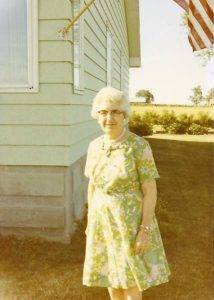
“This photo is the way I remember my grandma,” says Joy. “She is under her beloved American flag, with the little Capri bell charm that her son Danny had bought in Italy. She wore it from her watch the rest of her life.”
CELEBRATE OCTOBER PUMPKIN MONTH WITH ENCHANTED ACRES
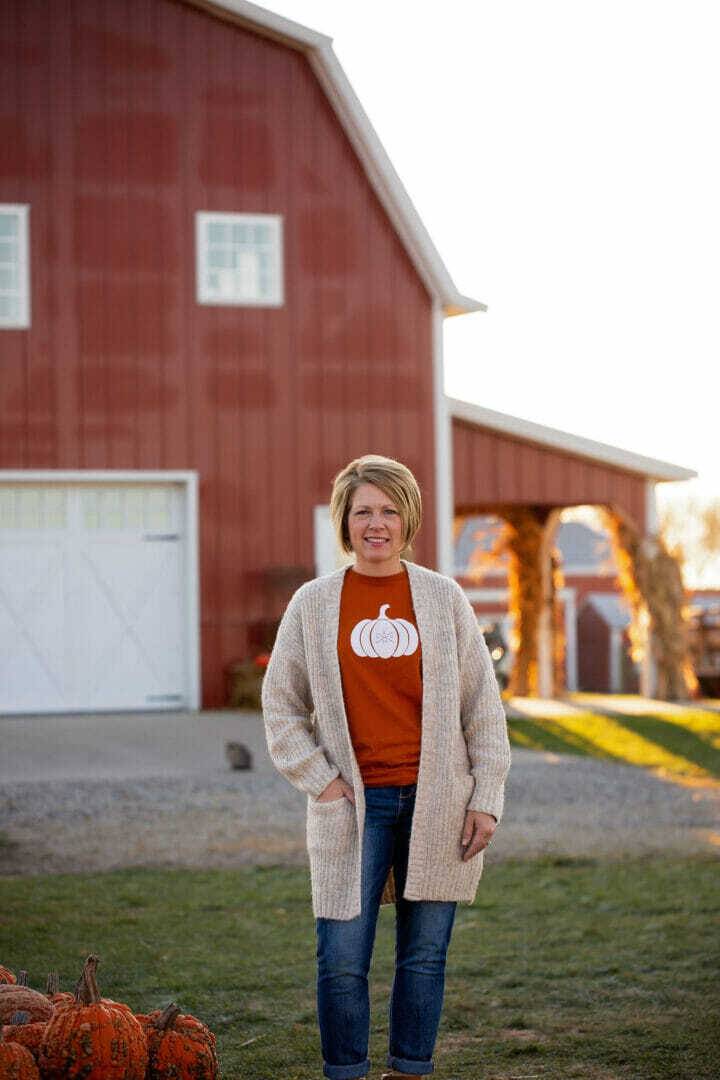
The gates to our magical pumpkin patch, Enchanted Acres, will be open every weekend from Sept. 25 through Oct. 25. Our hours are 9 AM to 5 PM every Friday and Saturday and 11 AM to 5 PM every Sunday.
Our humble beginnings started in 2012 with a rented tent where we hosted pumpkin painting workshops. Due to the worldwide COVID-19 pandemic, we are once again focusing on pumpkin decorating workshops and other simple pleasures, like Books in the Barn story time, for families and small groups. Each weekend we host unique experiences for people of all ages.
Stay up to date with workshops being offered on our Enchanted Acres’ Facebook page. Facebook is also where we share photos and videos of our adorable goats, including our mascot Nibbles and her young twins.
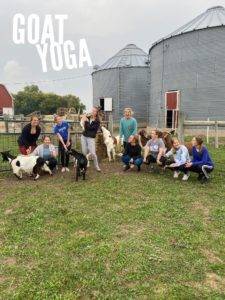
Our opening weekend was event-filled from goat yoga to chainsaw art carving demonstrations by Logs 4 Heroes to a visit from the cookie dough food truck. We also hosted a succulent planting workshop, and Sarah Morton Fitness of Hampton taught a fun goat yoga class in our pasture.
The Marketplace Café is open on Saturdays and Sundays, serving up popular Apple Orchard Panini and Pumpkin Patch Panini. Every weekend we also serve up homemade lunch specials, ranging from Hot Beef Sundaes to Chicken Tacos made from the chickens we raise.
Check out our Schedule of Events, and make plans to join us throughout the season. NOTE: Special workshops, including the 1 PM crafting sessions on Saturdays, require advanced registration. It’s our hope that a visit (or two or three!) to Enchanted Acres becomes an annual tradition.
We often post event updates throughout the season on Facebook, so be sure to “give us a like.” You can follow along with the fun all year long through Facebook and Instagram. In addition, we provide a complimentary quarterly newsletter to which you can subscribe by clicking here.
We look forward to seeing you see you soon at Enchanted Acres in Sheffield, Iowa, where memories grow! In the meantime, we’re helping you celebrate October as Pumpkin Month by sharing with you a few of our favorite recipes:


 The response to that network debut was even better than anticipated, and through the years, “A Charlie Brown Christmas” has received both Emmy and a Peabody Awards. To commemorate its 50th anniversary in 2020, the network aired the movie only for one night. Click here to learn How to Watch and Stream ‘A Charlie Brown Christmas’ This Holiday Season with your family yet this season.