Latham Hi-Tech Seeds

(641) 692-3258

  • Home
  • Products
    • Corn
    • Soybeans
    • Alfalfa
    • Corn Silage
    • Seed Guide
  • Performance
  • Find a Rep
  • Media
    • Blog
    • News
    • Videos
    • Podcasts
    • TECHTalk
  • About Us
    • Company History
    • Our Mission
    • Careers
    • Become a Rep
    • Sowing Seeds of Hope
  • Contact Us
  • Latham Hi‑Tech Seeds

    Fourth Generation ND Farmer Has Grown His Legacy with Innovation

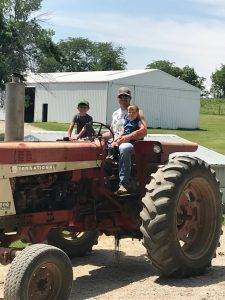
    Latham Seeds Hagart Farm

    It’s another milestone year for Jared Hagert and his family as his great grandfather homesteaded their farm in 1909. The family hosted a party in 2009 for the community, complete with a live band and picnic, to celebrate their Century Farm.

    Their family legacy dates to 1890 when 16-year-old Gust (Gus) E. Hagert immigrated from Sweden to the United States. He moved in 1905 to Section 10 in Pleasant View Township, Emerado, ND. Gus worked on his uncle Oscar Hagert’s farm with a “rent to own” arrangement.  After farming for 40 years, Gus passed the family farm down to his son Curtis.

    “Curtis Senior, my grandfather, was committed to improving yield.  I have a Durum Wheat sample he submitted to the 1937 International Hay and Grain Expo in Chicago that took 5th place in the World,” says Jared Hagert, who feels blessed to be the fourth generation to live on the original farmstead. “I took that germ sample more than once to Show and Tell. In fact, it’s still on display in my home office.”

    Jared’s father, Curtis Junior, started farming in the mid-60s. His brother, David, came home in the mid-1970s. The two brothers farmed together for about 25 years, and then David decided to focus on growing his Agri Data business.

    Using new technology to continually improve their farm is a common philosophy and interest of the Hagert family. Jared’s parents, Curtis Junior and Roberta, started a seed conditioning business in 1993.

    “Dad converted a three-stanchion milk parlor, granary and cattle shed into our first seed conditioning facility. Dad raised it eight feet and installed conditioning equipment. Wheat scab struck in 1993, and Hagert Seed was one of the only entities with a gravity table that took out the scab. It paid for farmers to condition their wheat, so they could sell it at a higher price.

    Innovation continued to build the business. After farming for more than 40 years and conditioning seed for more than 12 years, Curtis Junior sold Hagert Farms and Hagert Seed to Jared and his wife, Brandie. Jared, who graduated from North Dakota State University (NDSU) with a degree in Ag Systems Management also known as Ag Mech, had a vision to build Hagert Seed. With help from Curtis Junior and others, Integrated Ag Services took shape with a new warehouse, seed plant, navy bean receiving station and office.

    Latham Seeds Hagart Farm

    “Our mission is to be ‘more than your local seed supplier.’ I wanted our business to provide seed with quality genetics, proven performance, and dependable service,” says Jared.

    Integrated Ag Services’ conditioning facility was fully operational in January 2016. Integrated Ag began conditioning and distributing seed throughout the Midwest. This new facility is equipped with a full line of precision conditioning equipment and handles both bulk and package seed.

    Although the operation has grown, it is still very much family operated. Jared’s cousin Leslie and her husband, Jon, moved home in 2013. Leslie serves as office manager for Integrated Ag. Jared and Jon farm together. They raise spring wheat, white wheat, edible beans, soybeans and corn.

    Hagart Latham Hi‑Tech Corn Plot

    “A few years ago we started planting more cover crops. Cover crops especially help reduce erosion on edible beans acres since many of those plants are out of the soil and run the whole plant through a specialty combine. We’re doing more no-till, and that has been working well.”

    Seed technology has allowed them to farm acres that before couldn’t produce a crop.

    “We have some dryland acres that have an especially dry, sandy profile. Normally I’d be getting a max of 40 to 50 bushels per acre on corn. With drought-tolerant hybrids, we’re getting 90 bushels per acre. New herbicide technologies also are helping increase yields. We’re looking forward to Enlist E3 soybeans.”

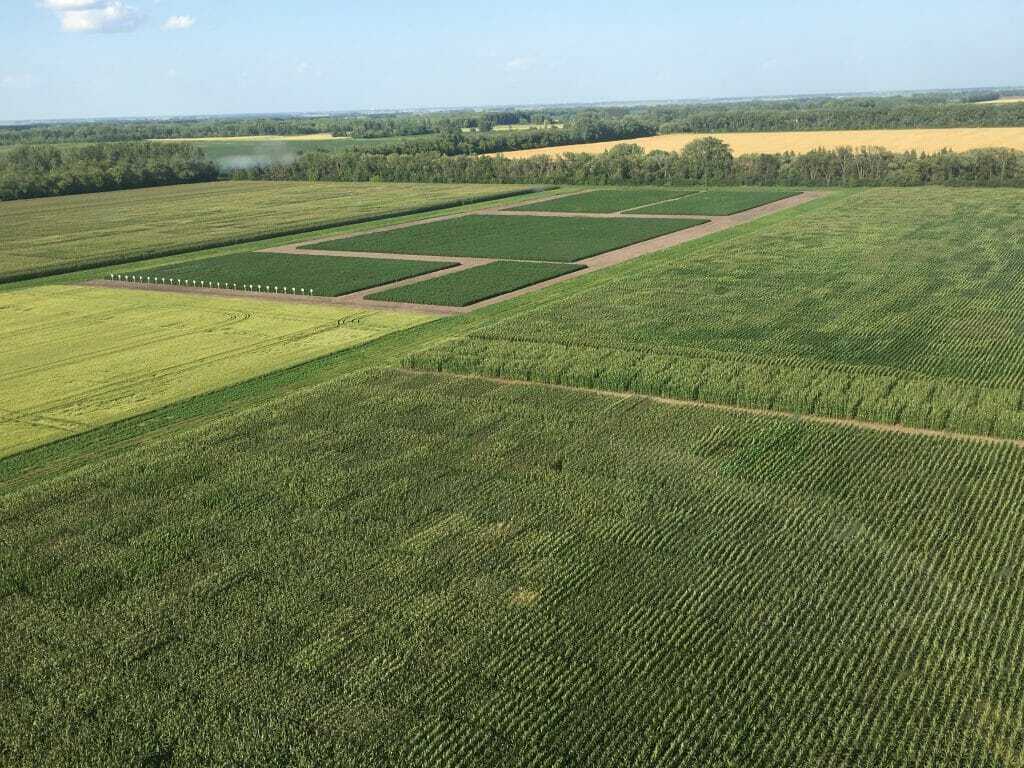
    Hagart Research Plot Latham Seeds

    Jon and Leslie are instrumental in keeping the operation running when Jared travels on behalf of the United Soybean Board or attends other industry meetings. Jared served as USB chair during its 25th anniversary year and remains on the board.

    “When I first got appointed to the United Soybean Board, I was filling a seat vacated by Doug Goering who resigned to become ag commissioner,” says Jared. “I stepped into big shoes and had an accelerated learning curve. But I’m grateful for the opportunity because it really allowed me to step up.”

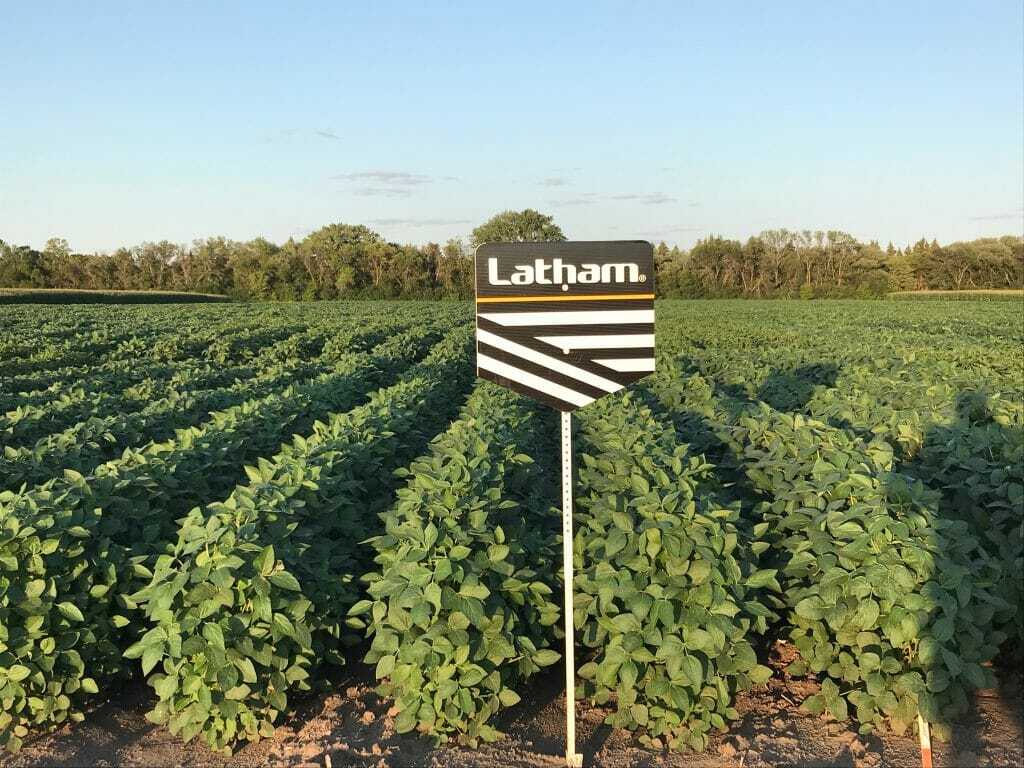
    Hagart Latham Hi‑Tech Soybean Plot

    Jared served as the vice chair of the World Initiative for Soy and Human Health through the American Soybean Association. He also has been involved with North Dakota Soybean Council and North Dakota Soybean Growers Association. He has served the ND Soybeans Growers for one term as vice president and two terms as president.

    “My dad had was a founding member of North Dakota Soybean Growers Association and was active on soybean council. Watching him serve for the greater good left an indelible impression,” says Jared.

    Keeping with tradition, Jared and Brandie started making lefse like his mother and grandmother have done for years. Today the Hagert family is sharing this treasured recipe with us.

    Laura Cunningham

    August 9, 2019
    Desserts, Food & Family, Recipes
  • Latham Hi‑Tech Seeds

    Farming is Iowa’s Masterpiece!

    Pic 2

    By Kelly Visser, Iowa Soybean Association consumer engagement manager

    Pic 1From blue-ribbon-winning livestock to a perfectly sculpted Butter Cow to one-of-a-kind new fair foods, there’s no shortage of creativity at the Iowa State Fair! The iconic 11-day event attracts more than a million people from around the globe and is a salute to the intersection of food, farming and family in Iowa.

    The 2019 Iowa Food & Family Project (Iowa FFP) display at the Iowa State Fair will showcase the artwork in agriculture and celebrate the collaboration, color and creativity of farming! More than 250,000 fairgoers are expected to visit the booth and gain perspective on modern agriculture in Iowa.

    Located in the Southeast Atrium of the William C. Knapp Varied Industries Building from 9 a.m. to 9 p.m. daily, the Iowa FFP display features an interactive paint-by-numbers mural that will be brought into full color using soy-based paint.

    In addition to painting the mural (there are 23,000 paint-by-number spaces!), fairgoers of all ages will have the opportunity to put a frame around farming courtesy of a farm-and food-themed photo booth and take-home coloring sheets. Visitors can also enter to win five pieces of agriculture-inspired artwork from a local photographer and artists.

    As with all Iowa FFP activities, the annual Iowa State Fair display centers around giving consumers the opportunity to engage with farmers and learn about the state’s leadership in agriculture. Each touchpoint will help grow the Iowa FFP network of fans for long-term, two-way conversations on food and farming.

    “More than ever before, consumers want to know where their food comes from and we as farmers love nothing more than to share our story,” says Aimee Bissell, a Bedford soybean and corn farmer. “Opportunities like the Iowa Food & Family Project exhibit allow for mutual education and information, which is essential to our farming operation and making informed food choices.”

    The display will be managed by more than 400 farmer and consumer volunteers. The enthusiastic volunteer base is a testament to the vibrant network of fans engaged with Iowa FFP activities.

    Each month, Iowa FFP interacts with more than 120,000 food and health-minded through social media, Fresh Pickings eNewsletter, Fresh Pickings magazine, community events and farm tours. Each consumer connection centers around building confidence in modern agriculture in a welcoming, relevant format.

    Shannon Latham

    August 2, 2019
    Desserts, Food & Family, Recipes
  • Latham Hi‑Tech Seeds

    Let’s Celebrate Our Independence!

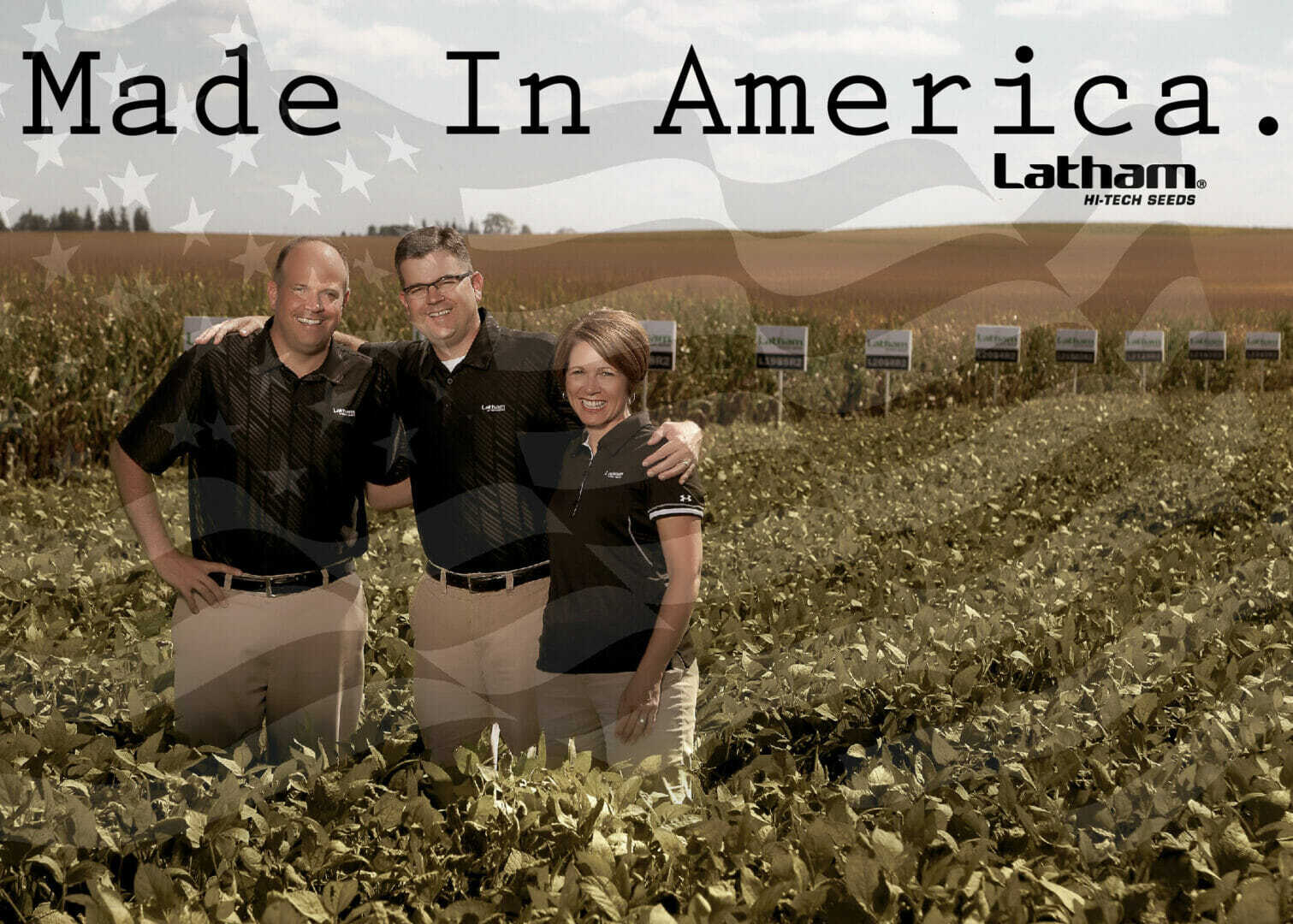
    Made In America 03

    When I was a child, it annoyed me that my birthday cakes were often decorated with fireworks. Today, however, I’d be honored to celebrate with the red, white and blue. I understand what an honor and a privilege it is to live in a free country where we take for granted so many rights that people in other nations only dream about having.

    The tradition of celebrating Independence Day dates back to the 18th Century. The Continental Congress voted in favor of independence two days before delegates from the 13 colonies adopted the Declaration of Independence on July 4, 1776.

    Americans continue to celebrate the Fourth of July with festivities, ranging from fireworks and parades to family gatherings and backyard barbecues. Isn’t it amazing how the birth of our nation’s independence 243 years ago still unites us? I was overcome by a great sense of patriotism yesterday as I was walking down Main Street in Clear Lake, Iowa, waving an American flag.

    Waving the flag demonstrates support for our great nation. It made me think about the symbolism between waving our country’s flag and that of our favorite sports teams or organizations. I started thinking about what I can do to wave our company’s flag.

    At Latham Hi‑Tech Seeds, we’re proud to be family-owned and independent. Our independence means we don’t have to answer to shareholders or Wall Street. We don’t have a parent company to lean on during the tough times. We can only succeed when our farmer-customer succeeds. That means we take great pride in researching seed products and selected those that are bred to perform best in specific geographic areas.

    The Latham Team is as committed to helping farmers today as it was when Willard Latham founded our family’s seed business in 1947. We’re proud to be living our family’s legacy right here on the Latham family’s Iowa Century Farm.

    We’d like to show you our research farm and walk the plots that showcase the newest seed traits and technologies. Mark your calendars for our annual Latham® Technology Tour on September 6 in Alexander, Iowa. More details will be coming soon.

    In the meantime, let’s celebrate our independence and National Ice Cream month with a flashback to Evelyn Latham’s kitchen. Evelyn was known for her cooking skills and hospitality. It wasn’t unusual for her to feed a room full of family, hired men or customers as serving others was an act of love.

    Evelyn was such an inspiration to me, so today I’m sharing her recipe for ice cream cake. You’ll also find several links to celebrate our independence.

    NOTE: If you’d like a thick slice of the best homemade chocolate cake, click here . Click on the following links for other patriotic dessert ideas: Kid-Friendly Fourth of July Treats, Patriotic Pinwheels, Rice Krispy Star Treats and Red, White & Blue Rice Krispy Bars. Of course, you could always make the “tried and true” original Rice Krispy Treats recipe using the Red, White and Blue limited edition cereal.

    Shannon Latham

    July 5, 2019
    Desserts, Food & Family, Recipes
  • Latham Hi‑Tech Seeds

    Pozarski Finds His Niche in Niche Markets

    4.19 1

    4.19 4

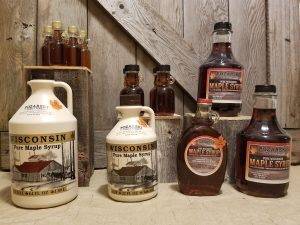
    4.19 1When you think of maple syrup production, chances are you think of New England. You wouldn’t be wrong. However, Wisconsin is the fourth top maple-producing state. Maple syrup is uniquely a North American product due to our climate. Freezing nights and warmer days are required for the sap to flow properly from the trees.

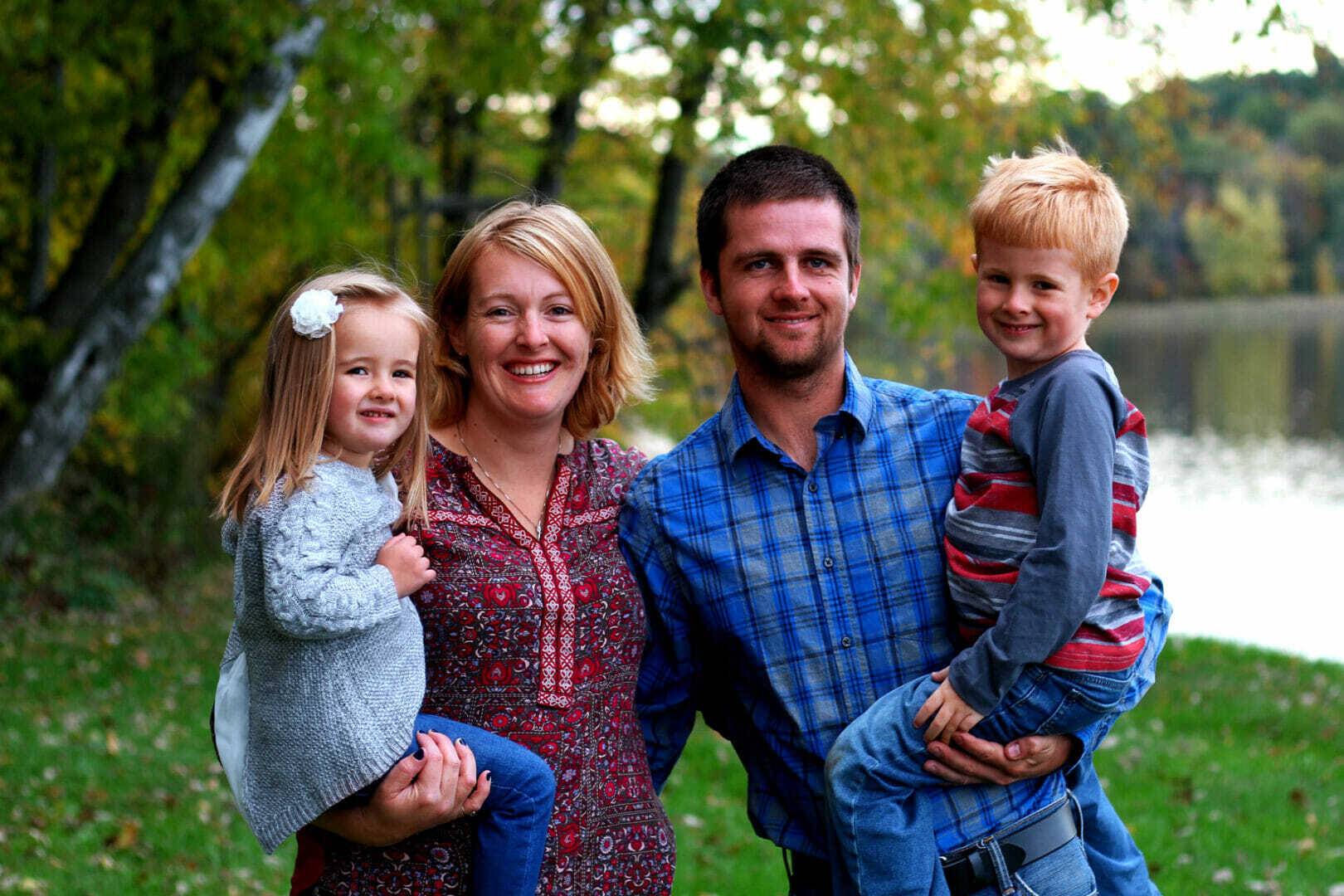
    “Syrup is a type of farming. We’re farming trees,” says Latham® dealer Blake Pozarski of Pozarski Family Farms in Boyd, Wisconsin. He grew up on a dairy farm and says there are many similarities between dairying and producing syrup. “I joke with my kids, ‘I’m milking trees today’. When you grow up farming, it’s in your blood.”

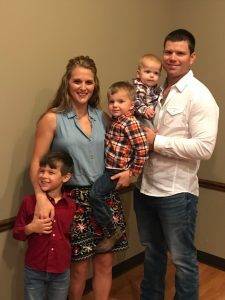
    Blake grew up on a dairy farm just a mile from where he and his wife, Jessica, are raising their two children. Their son, Wyatt, is six and their daughter, Finley, is four.

    “We involve our kids in everything that we possibly can,” says Blake. “My wife and I want our kids to grow up knowing there’s life beyond video games and smartphones. We’re outside as much as possible. Our family time revolves around collecting sap, shed hunting, checking trail cameras and working on food plots.”

    Blake’s true passion is managing land for wildlife. He became a dealer for Eagle forage soybeans and Latham® seed corn for food plots; Blake and his dad plant several acres of food plots on their land. The hundreds of acres of woods around his and his parents’ farms offer great cover for wildlife and provide fertile hunting ground for deer and turkey. Those trees also fueled another passion for producing maple syrup.

    “My dad and I had talked about tapping trees for years,” says Blake. Then one day my neighbor was helping me do some carpentry work. We got to talking about maple syrup, and I learned that he had tapped trees. Right then and there we decided to do it. That first year we tapped trees the old-fashioned way with brace and bit.”

    4.19 3Today the Pozarski’s production process is anything but old-fashioned. Blake explains, “We have tubing run from tree to tree instead of hanging a bag or bucket on the tap.  We use old Surge vacuum pumps along with releasers to bring the sap from the woods into old bulk tanks.  We’re repurposing the old milking pumps and bulk tanks that have been retired from small family farms.  It’s crazy how much of this equipment can be used for both milk and maple syrup.”

    “Collecting sap and producing syrup went from a hobby to a business in a short amount of time,” adds Blake. “Maple syrup is like any other business. Once you’re set up, you should maximize the systems in place. Every time you add another system, you must consider the added expense. In our case, we have to consider the cost of equipment and materials before we tap a new section of the woods.”

    Like many types of farming, additional regulations go into effect when you reach a certain size. Processors who produce pure maple syrup and concentrated sap are required to have a food processing plant license once their gross receipts are $5,000 per year. This rule prompted the Pozarski family to build for future growth.

    Their sugar shack and store was built in 2017.  That same year they also bought a new evaporator, or cooker, which takes the raw sap and boils the water out to make syrup. On average, it takes 40 gallons of sap to produce 1 gallon of pure maple syrup.

    “We’ve been fortunate this year as the sugar content is higher, so we’re getting more syrup per tap,” says Blake.

    Typically, it’s a four-week season with sap flowing from mid-March to mid-April. This year Blake started tapping on March 18, and he collected sap through April 16.

    “When the trees start to bud leaves, the sap quality decreases,” explains Blake. “Many peoples’ yards have soft maples, which produce red flower buds before the leaf bud. We stop collecting sap when the leaf buds turn green because the syrup takes on a different flavor and it isn’t as good. Some larger companies will continue to harvest sap at this point, but it isn’t high quality. This is likely the cheap syrup that you’ll see offered in the supermarket.”

    There’s no sure-fire way to predict the quality of a maple syrup season, but Blake believes ample moisture and hotter temperatures last summer are contributing to higher sugar content this spring. Daytime highs and nighttime lows in March and April also contribute to the current syrup production. In addition, research suggests a potential link between the production of maple seed helicopters and the next season’s sap flow.

    Seed helicopters, also referred to as whirligigs, tell the story about a tree’s health. An abundance or a scarcity of seedpods reflects what the tree has encountered the previous growing season. Fewer seed helicopters produced in the fall of 2018 would indicate a better maple syrup season in the spring of 2019.

    An over-abundance of seed helicopters indicates the tree went through some stress the previous year and is overcompensating through excessive seed production to carry on the species. One stress might be a late frost prevents or rainy weather that makes it difficult for the flying insects to pollinate the maple blooms. On the other hand, an exceptionally good pollinating season the prior year also can make the maple tree take a year hiatus.

    In his eight years of producing syrup, Blake has experienced both highs and lows. He says 2012, which was his first season, was the worst ever recorded. That year it warmed up too quickly and too early in the spring. He only had 180 buckets, but that didn’t stop him from tapping trees again the following spring.

    “2013 was an insanely good year!” says Blake. “Sap ran like crazy every day for six weeks. The sugar content was great. We averaged 10 gallons a tap and collected 13,000 gallons of sap that year.”

    4.19 2After collecting that much sap by hand, Blake decided he wanted to modernize and expand his operation. In 2015, he and his wife decided to focus on producing their own maple syrup line. Most recently, they’ve focused on grooming their woods to increase production.

    “I’m just shy of 2,000 taps this spring. Within the next two to three years, I’m hoping to have 3,000 taps. I’d like to see us be able to direct-sell all of the syrup we produce. Right now, we sell barrels to high-end food companies and gallons to an upscale bakery in Chicago. We have a woman who sells our syrup at four farmers markets by Janesville. My wife also sells our syrup at farmers markets in Chippewa Falls and Eau Claire.”

    If you’re interested in trying a jar of the Pozarski’s high quality, pure maple syrup, you can purchase online from their website, Facebook page or Etsy store.

    “Sometimes we just need to sit back and appreciate what we have. It’s as simple as that,” says Blake. “In today’s fast-paced society, we sometimes forget just how good we all have it. I think about how much tougher it was for my parents and grandparents. My dad tells a story about getting a loan for $350 to buy a chainsaw and a woodstove, so he could afford to heat the house when he and my mom were first married in 1983. Dad cleaned the dairy barn by hand until he could afford machinery. When you think about how far we’ve all come – whether or not you grew up on a farm – we should be more appreciative of what we have today.”

    Take the time to sit down and taste the syrup this weekend!  The Pozarski family is sharing with us one of their favorite recipes for Soft Maple Sugar Cookies.

    Below are links to a few of my personal favorite recipes that call for maple syrup. Remember, the most delicious meals happen when you source the best ingredients!

    • Blueberry French Toast
    • Maple Bacon Beer Burgers
    • Apple salad with maple syrup whipped cream

    Shannon Latham

    April 19, 2019
    Desserts, Food & Family, Recipes
    Family Farm, family feature, maple syrup, niche markets, Pozarski, wisconsin family
  • Latham Hi‑Tech Seeds

    April is National Donate Life Month

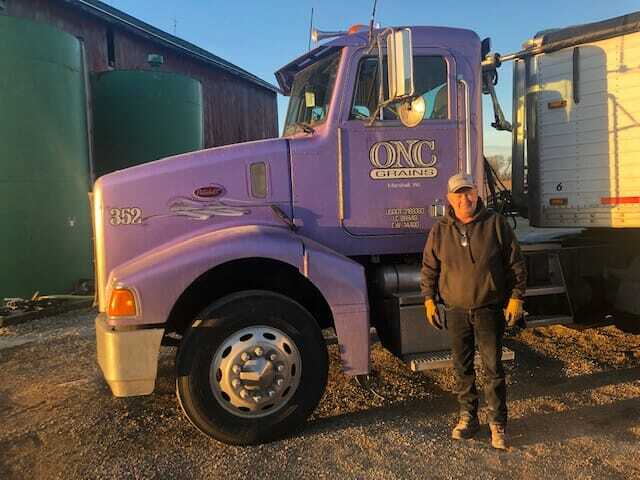
    Owen Storlie with Semi

    Owen & Caroline StorlieFarmers have an uncanny ability to recall the dates of weather and other life-changing events for every year of their farming careers. Owen Storlie will tell you the past three springs have been the most challenging of his life – and it’s not due to the record low temps in May 2016 nor the foot of snow that fell across the Midwest in April 2018.

    Owen operated K & S Kustom Service, Inc. and ran his family’s 125-year-old farm located in Deerfield, Wisconsin. After 25 years in agribusiness, he sold his fertilizer, chemical and seed dealerships. Not one to idle, Owen retained ownership of his grain trucking fleet. He continued to operate 400 acres of cropland and was looking forward to semi-retirement.

    Owen and his wife, Caroline planned to enjoy the winter months in Mississippi.  They enjoyed life to the fullest for three months and then their R & R came to an abrupt end.

    The snowbirds were winding down their trip and packing up the RV in March of 2017 when Owen’s health went downhill fast. He gained about three inches on his waist line and his energy level decreased immensely. He visited the local clinic where a paracentesis, or an abdominal tap for fluids, was performed and 6 liters of fluid were removed. Doctors advised him to make immediate plans to see his family physician upon returning home, but they never once mentioned this was the start of a serious issue.

    Upon returning home, Owen met with doctors at the UW-Madison Hospitals. He was diagnosed with NASH (Non-alcoholic Steatohepatisis), an advanced form of fatty liver disease.  Every week he traveled to Madison to have the paracentesis performed as he continued to retain fluids in his abdomen.

    Owen Storlie with SemiAfter extensive testing, Owen’s daughter was cleared to be a partial liver donor. He was admitted on November 2, 2017, for the procedure. However, his health declined immediately to the point where it was no longer an option to receive a partial liver and a full liver was needed. He was placed on the transplant list. Then he contracted a bacterial blood infection and pneumonia, and he was removed from the transplant list.

    Owen’s health continued to decline. His blood pressure (BP) plummeted to the point where he needed a machine to keep his pressure viable. During this time, the doctors and staff notified Owen’s family that his organs were “shutting down” and gave him 12 to 36 hours to live.

    “That was on Wednesday evening. By the grace of God and Owen’s determination that it was not his time yet, his BP rose through the night and into the morning to the point where he no longer needed the help of the machine,” says Owen’s wife, Caroline. “All the numbers were just enough to put him back on the transplant list late in the day on Thursday, but the doctors weren’t real optimistic of a good outcome. Then in the early morning hours of Friday, the call came that a liver was available. This was truly a miracle as Owen was on the list less than 10 hours.”

    On December 22, 2017, the Storlie family received the best Christmas gift ever as Owen underwent a grueling 14-hour procedure. Shortly after the liver transplant, his kidneys weren’t functioning to their potential and Owen was placed on dialysis while he was in the hospital.

    That February, Owen was transferred to the UW Rehabilitation Hospital.  He had to learn how to walk and how to eat again. Because he had been in bed for so long with so many tubes, he lost muscle along with weight. Owen weighed 229 pounds when he entered the hospital in November 2, 2017, and he weighed 124 pounds when he was released on February 14, 2018.

    The spring of 2018 was very challenging, but thanks to some great friends, the farm ground was worked up. “I wanted to plant so the guys would load the planter for me,” says Owen. “Then I’d call when I needed someone to fill the planter again. They would help me get up into the tractor and we got it all done.”

    The 2019 crop will be Owen’s 42nd crop year, and he’s looking forward to getting back in the cab. Friends will help him as his strength isn’t where it should be, but he says it’s more manageable now with an exercise routine.

    It’s not uncommon for a liver transplant recipient to need a kidney transplant within five years. His kidneys haven’t made a complete comeback, but the numbers are staying steady. A transplant isn’t on the immediate calendar, but Owens finds comfort knowing that his daughter, Jessica, is a viable donor.

    Due to the liver transplant and the likelihood of a kidney transplant, Owen has had to change his diet. Higher levels of potassium in dairy and other foods has forced him to decrease his consumption of some of his favorite foods. He also has had to increase proteins like fish and chicken plus he eats more fresh vegetables.

    He’s made other lifestyle changes, as well.

    “Now I take the time for family and friends, and that’s probably the biggest change,” says Owen.  “I’ll push when I have to, but I’ll also take off now for our grandkids activities. We really enjoy making it to their basketball and football games along with the wrestling matches.”

    Owen and Caroline also enjoy hitting the road with their fifth wheel RV. They spent the first three months of 2019 in Alabama where they celebrated life! Now that they’re back home in Wisconsin, Owen and Caroline are looking forward to the start of the spring planting season. Whether they’re taking a break from work or marking a special occasion, the Storlie family enjoys celebrating with Butterfinger Angel Food Torte. Today they’re sharing this special recipe on “The Field Position.”

    Shannon Latham

    April 5, 2019
    Desserts, Food & Family, Recipes
  • Latham Hi‑Tech Seeds

    Sharing Our Ag Story with Cupcakes and Smiles

    Goat visiting 1

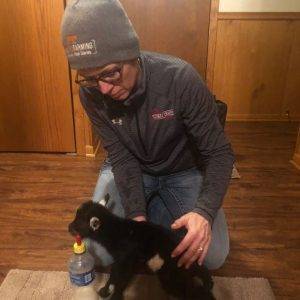
    March came in like a lion, and its going out like a goat! Yes, a goat.Shannon & Romeo

    The first of the month brought rain that turned into snow showers. More snow fell and we endured cold temperatures during the middle of the month. Then we were blessed with about a week of sunshine and mild temperatures. Today the skies are cloudy and gray. That’s spring in the Midwest, isn’t it? Our weather can be unpredictable.

    Life can be unpredictable…

    Our kidding season came to a surprising start on Thursday, February 28, when the dwarf-fainting cross goat my daughter was given for Christmas went into labor. To make a long story short, that first-time mother didn’t want to claim her baby. Her newborn baby was barely bigger than a 20-ounce Pepsi bottle, and he was weak from making a traumatic entry into this world. We did what many farmers do when their livestock needs some tender loving care, and we brought the kid inside until he regained his strength.

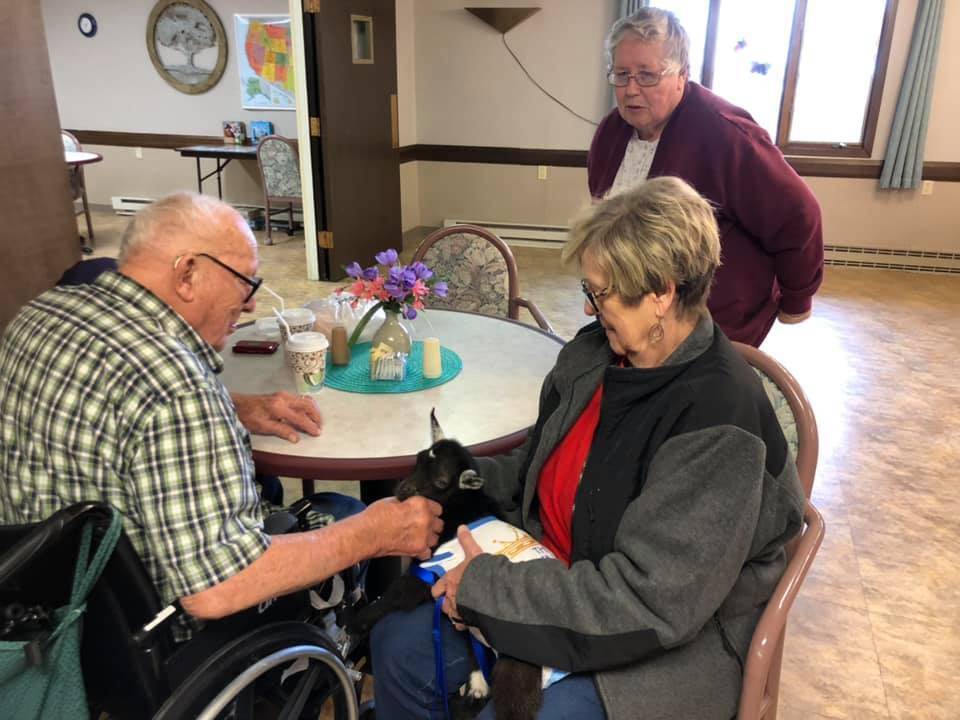
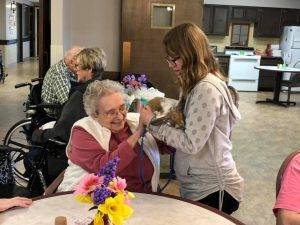
    Goat visiting 2We named him Lil’ Romeo. As he got stronger, Lil’ Romeo developed the sweetest personality. He also developed a following! People enjoyed the “baby goat cam” videos that we posted on Facebook, and it wasn’t long before staff at our local care center asked if our baby goat could come for a visit.

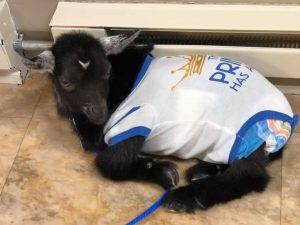
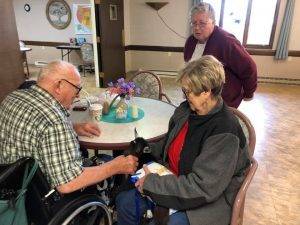
    Lil’ Romeo turned four weeks old yesterday, and today he made his first public appearance. To mark this special occasion, my mom bought him a little outfit that reads, “The prince has arrived.” We also attempted to fit Lil’ Romeo into a toddler brief, and the residents at the care center loved it. I really enjoyed overhearing a group of ladies at a table talk about our little goat.

    “Did you see his little outfit?” asked one. “I did,” replied her friend. “It’s cute.”

    Goat“He was even wearing a diaper,” said another lady. “That’s because he’s a baby,” replied another lady. “Babies wear diapers, you know.”

    The smiles on the residents’ faces were priceless. One lady told me how good it was to see livestock again. She told me that she and her husband were dairy farmers. Another gentleman told me that he raised horses. It was clear that our animals brought back great memories for them, and that warmed my heart.

    What a great reminder that we can lift our spirits by making another person’s day. Perhaps you even want to “bake someone happy” this weekend.

    Goat visiting 1Brighten up the greyest of spring days by making your own rainbows. Kids will love dying the batter into rainbow colors and watching their creations “puff up” in the oven.

    This rainbow cupcake recipe is courtesy of Laura Cunningham, Latham Seeds’ marketing manager. You can follow her on Facebook and Twitter (@SkyViewFarms) to learn how she raises cattle on her North Iowa farm.

    Shannon Latham

    March 29, 2019
    Desserts, Food & Family, Recipes
  • Latham Hi‑Tech Seeds

    You’ve Hit the “Big Time” if You Live in Your Zone of Genius

    1A1A35F8 FF9F 4124 A2DB C8565D10EA62
    DSC05382
    Photo credit to Mr. Eric Burt with West Fork High School

    As a 17-year-old student in Colby, Kansas, Chad Bourquin discovered his passion for music while attending a high school assembly featuring a live band. That experience changed the entire trajectory of his life. Eventually, it led him to live in his “zone of genius.”

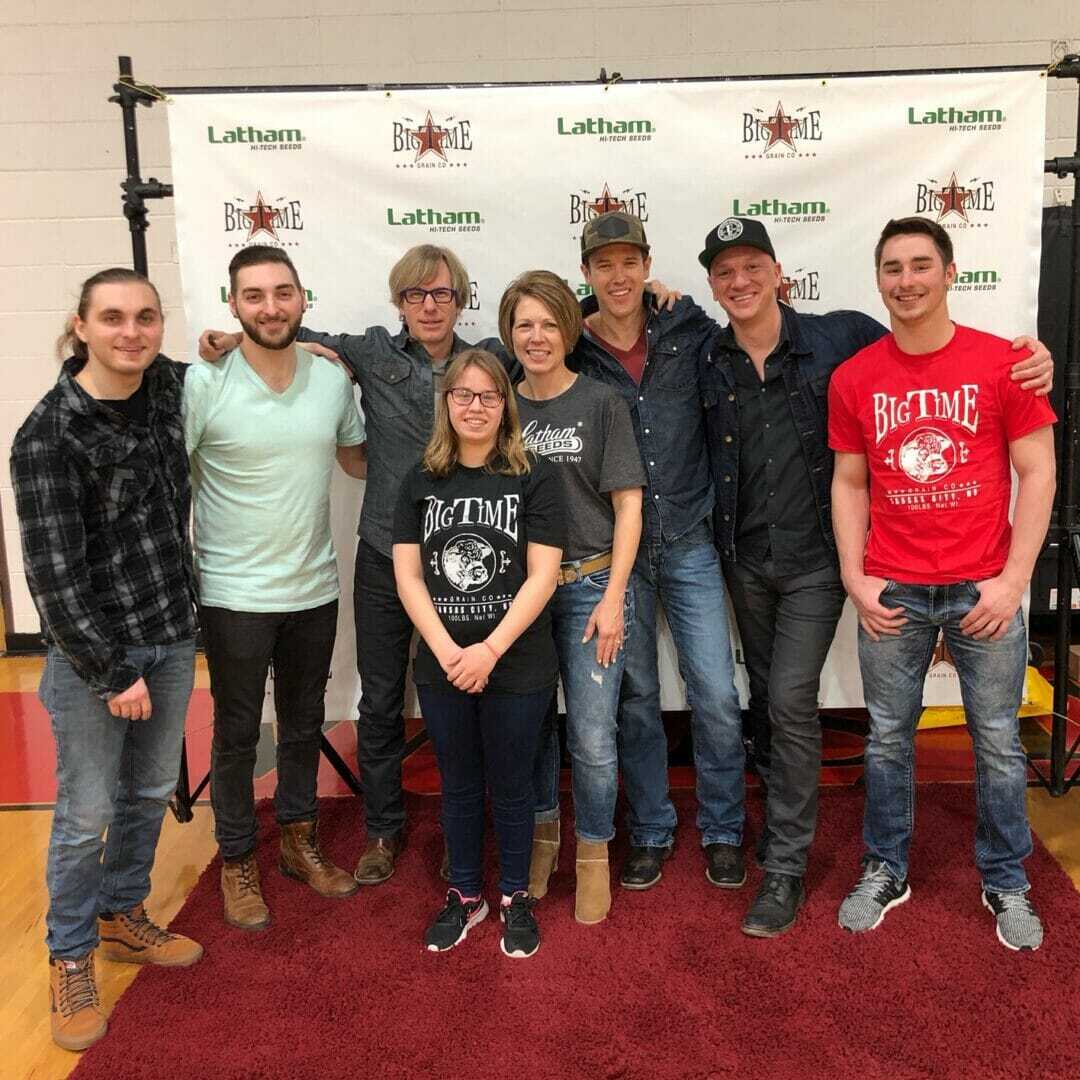
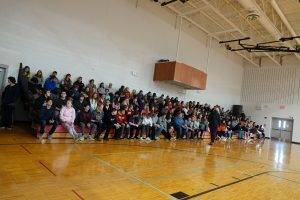
    Today Chad and his brother, Bret, use music to bring a message of hope and inspiration to high school students across the country through their Dream Big Concert Series.  This week Latham Hi‑Tech Seeds  sponsored their band, Big Time Grain Company, to perform a series of three concerts across North Iowa for high school and middle school students who attend West Fork at Sheffield, North Butler in Greene and Hampton-Dumont-CAL in Hampton.

    “Everyone has those defining moments that change their life or least alter their direction,” said Chad to gymnasiums filled with teenagers during this week’s school assemblies. “Mine came when my first band replaced me without even telling me about it! That motivated me to get better, so I started practicing five to seven hours each night.”

    DSC05289
    Photo credit to Mr. Eric Burt with West Fork High School

    While Chad was playing his guitar and dreaming about making the big time, his father was more focused on what he thought was a more realistic future. He wasn’t sure majoring in music at college would provide the kind of stability that he wanted for his oldest son.

    After attending community college and Kansas State University (KSU), Chad got picked up by a band and hit the road. They traveled all over the Midwest and into Canada. For almost six years, they performed 250 dates per year. That came to an abrupt stop when the singer left the band without giving any notice. Chad could hear his father’s voice, “Get a backup plan,” ringing in his head. His backup plan was put into action. Chad spent the next five years as a booking agent; then five more years selling vitamins; and another five years selling ads.

    “One day I admitted to myself that I wasn’t making very good money working a job that wasn’t my passion,” said Chad. “That’s when I decided to tackle this mountain called the music industry and make a living at it or at least enjoy giving it a try. With help and guidance, I learned to enjoy each part of the process.”

    Photo credit to Mr. Burt with West Fork High School
    Photo credit to Mr. Eric Burt with West Fork High School

    Parts of the Process

    The message Chad delivers during the Dream Big Series provides students with a series of steps to “find their genius.” The first step is to admit your incompetence. Sometimes we must admit our weaknesses, so we can overcome them. Other times, we just need to admit it’s time to partner with people who possess those skills.

    Three equally important steps for turning dreams into reality include:

    • Zone of Competence.This is an area where we’re pretty good but have room for improvement. As you hone your skills, you may need a support plan. Note that Chad doesn’t use the term “backup plan.”“Our frame of reference can make all the difference,” says Chad. “The ‘Dream Big’ message helps us mentally work through the difference between a backup plan and a support plan. My dad wanted me to have a backup plan in case music didn’t pay the bills. I had Plan B, C and D: booking agent, selling vitamins, and selling advertising. Then I discovered that becoming a booking agent was a support plan, not a backup plan. A support plan is a better option. Not only did it provide steady income, but I gained skills and formed relationships that helped open more doors.”
    • Zone of Excellence.This can be the “danger zone,” cautions Chad. You can get too comfortable here. You might be making enough money that you get scared to make a change. The more money you make, the riskier you perceive it is to make a change.
    • Zone of Genius.The zone is genius is where you lose track of time because you’re enjoying it so much.
    DSC05437
    Photo credit to Mr. Eric Burt with West Fork High School

    “I started as lead singer of this band, but that’s not my zone of genius,” said Chad, who plays guitar and sings backup vocals. His brother, Bret, is lead singer. “When I have free time, I pick up my guitar and start playing. The next thing I know, three or four hours have passed. Even when I was the lead singer, I didn’t spend my free time working on vocals. One day it hit me that playing guitar is my zone of genius and singing is my brother’s.”

    Discovering your talents and perfecting your gift is key to success. Find someone who’s better at your talent and learn for them. We’re never too old to learn. Much can be accomplished when we work with a team of people toward a common goal. How can we attract people who can help us reach our goals?

    “You can’t turn a wheel without moving forward. You must start moving to be guided in a new direction,” says Chad. “Bret and I were so fortunate to grow up on a farm with parents who taught us the importance of a solid work ethic. We learned to care of what needed to be taken care of.  More than that, our inventor dad modeled how creativity can lead to bigger, better ways.”

    “We hope some of the homegrown wisdom we share during our ‘Dream Big’ series will inspire others to move forward and pursue their passions,” says Chad.

    More words of wisdom are shared in these original videos and songs by Big Time Grain Co. Click below for a look and a listen:

    • Little Redemption
    • 401K

    KLMJ in Hampton, Iowa, is playing “Little Redemption” on the radio, so our North Iowa tour included a stop in studio for an interview. Click here to listen to that interview. You’ll learn more about Big Time Grain Co. and some of the bands for which they’ve opened. You’ll also hear why Latham Seeds sponsored this week’s concert series.

    It was an honor to have the Bourquin brothers share their story with us on “The Field Position” blog. They’re also sharing with us one of their favorite recipes. The grandpa and dad raised wheat, so their grandma and mom would make amazing whole wheat cinnamon rolls. There’s nothing that quite compares to smell – or taste –  of homemade cinnamon rolls!

    1A1A35F8 FF9F 4124 A2DB C8565D10EA62
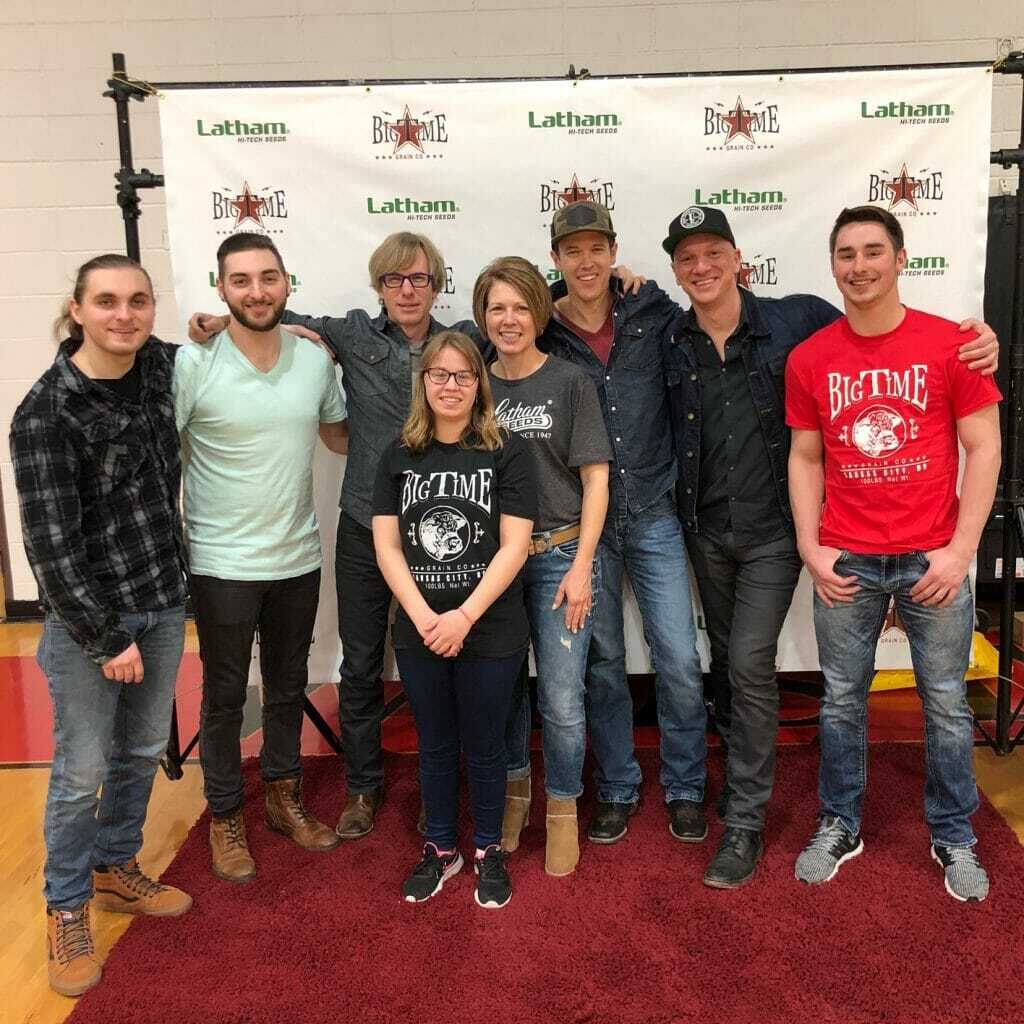
    Band members from left to right: NICK PENICHET: Drums and Percussion; MAX PENICHET III: Electric Bass, Upright Bass and Backing Vocals; CHAD BOURQUIN: Lead guitar; Elle and Shannon Latham; BRET BOURQUIN: Lead singer; COLIN RIDGE: Electric Guitar, Acoustic Guitar, Mandolin, Cigar Box Guitar and Backing Vocals; and Ian Latham.

    Shannon Latham

    March 22, 2019
    Desserts, Food & Family, Recipes
  • Latham Hi‑Tech Seeds

    Celebrating “Food for Life” with Iowa Deputy Secretary of Agriculture

    Option 3

    Option 4American agriculture isn’t just about producing more. It’s about producing everything better.

    The entire agriculture industry – from genetics and seed companies to farmers and food manufacturers – are vital links in a chain that brings food and fiber to U.S. citizens and millions of people worldwide. Because our industry has gotten so efficient, it’s easy for Americans to take agriculture for granted.

    National Agriculture Week, March 10-16, helps bring awareness to the importance of our industry. With the theme of “Food for Life,” Ag Week 2019 is helping showcase how important agriculture is to our nation’s health, wealth and wellbeing.

    “National Ag Week is an opportunity to celebrate the people who make agriculture so successful. It’s an opportunity to meet with young people and show them the career options that are available in ag,” says Julie Kenney, who in 2018 was appointed Iowa Deputy of Secretary of Agriculture.

    Ag Week promotions started late last week when Julie was a guest on WHO Radio’s “The Big Show” with Cristen Clark, who celebrated International Women’s Day by featuring influential women in ag. (Click here to download that podcast.)

    Photo option
    Photo Courtesy of Iowa Corn

    Iowa’s Deputy Secretary started this week by giving a keynote speech at the National CommonGround conference in Kansas City. On Tuesday morning, Julie was part of a panel discussion for the Nuffield International Scholars. Tuesday evening she attended the Ag Leaders Dinner where Iowa Secretary of Agriculture Mike Naig recognized organizations for leadership in innovation, community, education and advocacy. This week Julie also has spoken at an FFA banquet and conducted media interviews. We’re especially grateful that she made time for this feature on “The Field Position.”

    All of these Ag Week activities are in addition to Julie’s full-time duties. As Deputy Secretary, Julie is responsible for the operations of Iowa Department of Agriculture and Land Stewardship (IDALS). She is specifically responsible for overseeing policy, budget and personnel.

    “I have always been interested in politics and government. So much of what we do in the ag industry is dependent on our freedom to operate. It’s so important for us to build relationships, speak up and engage with our elected officials so they can advocate on our behalf,” says Julie.

    Option 3
    Photo Courtesy of Iowa Corn

    Julie says she appreciates the opportunity to work with Secretary Naig and to help represent the industry that has meant so much to her family. She gets to help make an impact by working to build markets, promoting soil conservation and water quality, and addressing workforce challenges facing our industry and our state.

    “It’s an honor to serve farmers and all Iowans,” says Julie. “Secretary Naig and I are focused on building markets for Iowa products by promoting trade, animal agriculture and renewable fuels. We are also laser-focused on soil conservation and water quality. Farmers and landowners statewide are implementing conservation practices. We are working to build capacity and get more conservation practices on the ground, including cover crops, wetlands, saturated buffers and bioreactors. Finally, we are working to encourage the next generation to pursue careers in agriculture – right here in Iowa.”

    Before joining IDALS, Julie worked for 15 years in the agribusiness industry. She believes every job she’d held has helped prepare her for her current position.

    “I walked beans, worked at the Lake City movie theater and waitressed at The Red Top,” says Julie, who grew up on a farm outside of Lohrville in West Central Iowa where her family raised corn, soybeans and pigs. “The jobs I had in high school and college taught me how to balance my time between school, activities and work. They taught me how to dig in and work hard to get things done – even when it’s not always fun.”

    After college, Julie worked in Public Affairs and Marketing at a large ag company for 10 years.

    “I’ve had so many great mentors, who taught me how to bring people together to solve problems,” adds Julie. “I also had a consulting business for five years where I got to work with a wide range of ag associations, checkoffs and businesses. Our farm also brings a much-needed perspective to my work at the Department.”

    Julie and her husband, Mark, have two children and farm in Story County. As the parents of a 10-year-old daughter and a 7-year-old son, they’re busy running kids to practice or cheering for them from the bleachers. When she has the time, Julie enjoys experimenting with new recipes.

    Today Julie is sharing with us one of her family’s favorite recipes for Banana Chocolate Chip Mini Muffins. Click here to download her recipe for Harvest Pulled Pork, which appears in an Iowa Food & Family Project cookbook. Harvest Pulled Pork has become one of my go-to crockpot recipes on busy days, any time of the year. It’s so flavorful, moist and delicious!

    Shannon Latham

    March 15, 2019
    Desserts, Food & Family, Recipes
  • Latham Hi‑Tech Seeds

    Farming and Football are Mauch Family Traditions

    CARD 1

    “North Dakota State wins seventh FCS title in eight years” is a headline treasured by fans of the NDSU Bison, but it’s personal for the Mauch family of Barney, North Dakota.

    2019 01 05 14.23.28Cody Mauch is a sophomore at NDSU, majoring in Agricultural Engineering with a minor in Crop and Weed Science. He also plays offensive tackle for the NDSU Bison football team, which beat Eastern Washington 38-24 on Jan. 5, 2019, in the FCS national championship game. NDSU is the only college football program to ever win five consecutive NCAA national championships and the only football program to win seven FCS titles.

    “We had an absolute blast at the national championship game,” says Joe Mauch. “It was our first time in Frisco, Texas. We couldn’t believe how the whole town catered to NDSU Fans. It was a really good experience for us. Cody is part of an amazing football program. Winning that many championships in the last eight years says a lot for the program, its coaches and the players.”

    Cody Mauch at NDSU Championship in Frisco

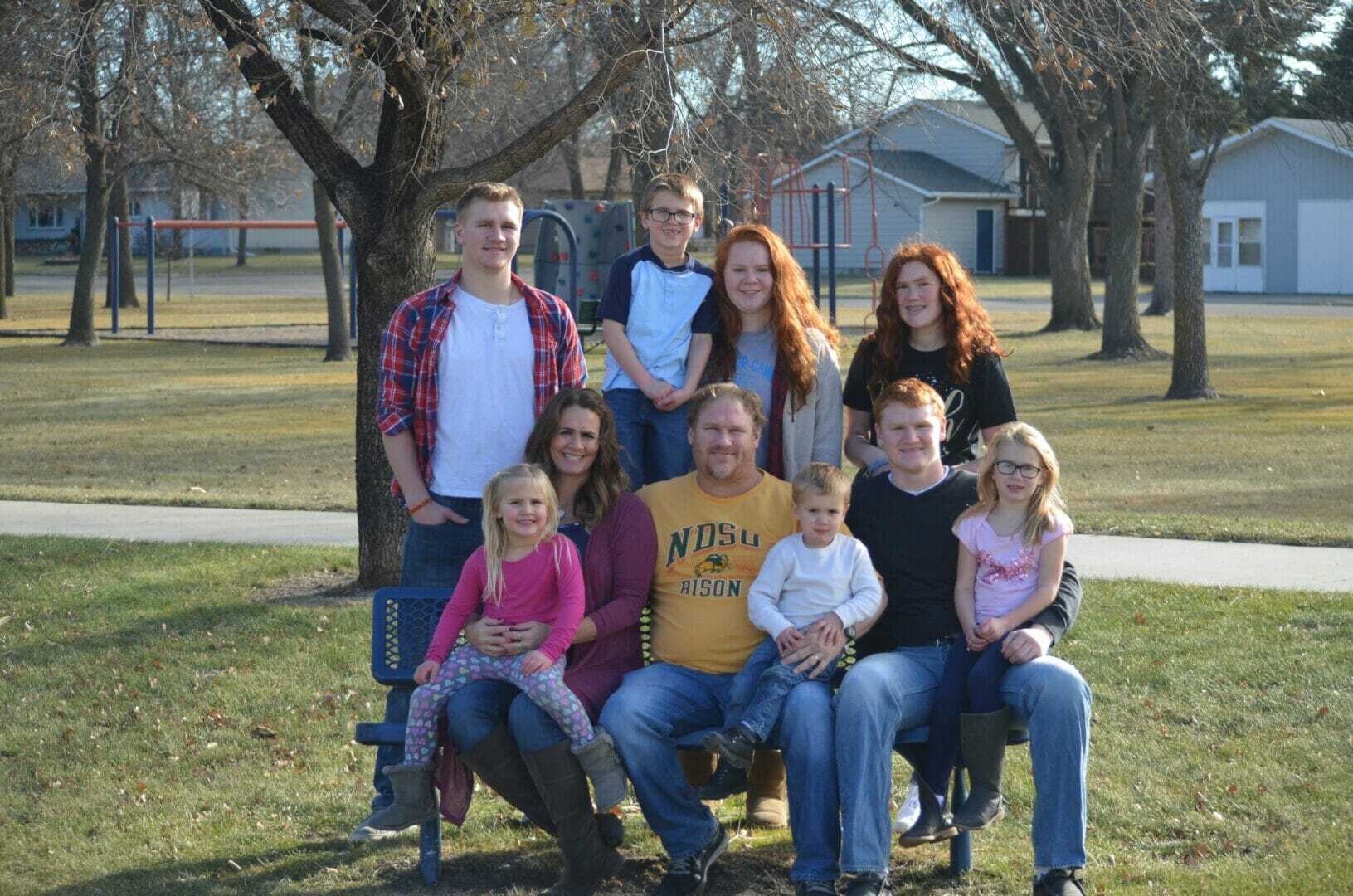
    Joe and his wife, Stacey, are the proud parents of four sons and four daughters. Their oldest son, Carter, graduated in December 2018 from NDSU with a degree in Crop and Weed Science. Cody is 19. Their other children are ages 17, 15, 8-year-old twins, 5 and 3.

    “I’m glad Carter is able to join our family’s farming operation and seed business. He will help us in so many ways, but especially in the scouting process. Carter had crop scouting internships during the past two summers, and he learned so much. He also studied precision agriculture, so he understands how all the new technologies work together,” says Joe, who started farming in 1996 with his father.

    Joe’s father was ready to retire about the time Joe’s youngest brother, Andrew, was ready to start farming. They raise corn, soybeans, sugar beets and navy beans. They also custom bale wheat straw.

    Joe and Stacy Mauch family

    “Our operation may be a little unique that we all farm our own fields,” says Joe. “We own different equipment but share equipment and labor. It works for us. We’re fortunate that we have really good help, too.”

    Recently the Mauchs took on a Latham® dealership to diversify their operation and to provide their seed customers with more options. Joe says he and Andrew were studying F.I.R.S.T. Trials and saw that Latham Hi‑Tech Seeds has performed really well over the years. Latham brand seeds average 34 wins each year, which shows the consistency of Latham Seeds’ products and the strength of its lineup.

    “Our philosophy is simple,” says John Latham, president of Latham Seeds. “We produce the highest quality seed products possible that are bred for local conditions.”

    Working with farmers to place seed products where they fit best is something Joe enjoys most about the seed business. Andrew says he really likes calling on friends and neighbors as part of their business. He also enjoys the opportunity to try new products as a seed dealer.

    “We plant Roundup Ready and Liberty traits, as well as conventional crops, and I believe that’s one of the reasons we’re seeing less weed pressure,” says Andrew. “I believe Enlist E3 soybeans will be exciting, and I can’t wait for them to receive full approval.”

    Andrew and his wife, Bethany, are the fourth generation to live on the home place.

    Andrew and Bethany Mauch and family

    “I like that our kids will grow up involved with farming. They understand that we’re helping feed and fuel the world. They can ride in the tractor and learn just like I did,” says Andrew, who’s the proud father of two sons and two daughters. His oldest son, Mason, is 10; his oldest daughter, Adlee, is 7. Twins, Axel and Lyla, are 5 years old. Mason plays hockey. The girls take figure skating lessons and gymnastics. Everyone enjoys snow skiing in the winter and spending as much time as possible at the lake in the summer.

    In addition to working full-time, Bethany finds time to bake. Her banana bars are a hit with those who help during harvest, so today they’re sharing this recipe with us.

    Shannon Latham

    February 8, 2019
    Desserts, Food & Family, Recipes
  • Latham Hi‑Tech Seeds

    Surprise… We’re Celebrating YOU!

    IMG 6372

    IMG 6346When you work for a family-owned company like Latham Hi‑Tech Seeds, there are many time-honored traditions. One of my favorites is the way we honor Evelyn Latham by celebrating special occasions with good food and the gift of presence. IMG 6336When I was the bride-to-be, Shannon Latham hosted a surprise bridal shower for me in her home.  Last July we threw a surprise bridal shower for Rachael Bruns. Today we pulled off a surprise party to honor Kilah Hemesath (soon-to-be Watson). As one of our resident event planners, this was no small feat! We made it happen by getting on Kilah’s schedule – literally.

    Kilah is getting married in about 30 days. She has a monthly calendar, a weekly to-do list and a daily planner to make sure she “crosses all the proverbial t’s and dots all the I’s” while planning her wedding and coordinating other work-related events like our annual Dealer Kickoff meetings. Because Kilah is one of the hardest working and most thoughtful people you’ll ever meet, we wanted to make sure she didn’t lift a finger in planning her own party. We also wanted to keep the atmosphere casual and allow all team members to have a chance to unwind and enjoy one another’s company.

    Surprise parties have become a fun way for us to celebrate our coworkers. We keep it simple but make it personal. Here’s how:IMG 6337

    1. Save the date. We literally invite the person to “do lunch” or plan a meeting that entails a working lunch. Then we send a private e-vite to others in the office.
    2. Choose a theme. Rachael was planning a late-summer wedding, so we chose a summer picnic theme and decorated with sunflowers because those also were her wedding flowers. Today’s theme was “Italian” as Kilah often talks about how much she enjoyed her college ag travel course to Italy. In a blog entitled, 10 Takeaways from My Italian Ag Adventure, Kilah wrote: “Americans tend to rush meal time while Italians make meal time an event. I found it interesting to see how much time, effort and pride was taken in each course of every meal. As a food lover myself, I enjoyed that meals were not rushed. I learned to appreciate my food and the preparation that went into making it.” Today we made lunch a leisurely event!IMG 6343
    3. Plan the menu. We created a signature mocktail with cute drinking cups and straws for Rachael’s party and served Summer Chicken Salad on croissants. We know how much Kilah loves Italian food. In her blog post about Italy Kilah wrote, “Pasta holds a larger spot in my heart than I thought. The largest personal takeaway from the trip is all things pasta. My mom taught me how to make pasta when I was little, so it holds a special place in my heart. On this trip, we were lucky enough to learn how to make ravioli from Italian women! I also came away with a new favorite type of food, gnocchi, which I think of as potato pasta. Gnocchi may be purchased in the grocery store. It tastes great in pesto sauce, cheesy pasta or soup.”

    Because we believe in planning parties that are tailored for the person who’s being celebrated, today’s menu had to have gnocchi. January also happens to be Soup Month, so it was perfectly fitting that one of my favorite recipes is Chicken Gnocchi Soup. To complement the soup, I made Pennsylvania hoagies by filling Italian rolls with Italian meats, Provolone cheese, lettuce, onion, tomato, with oregano-vinegar dressing drizzled over the top. Those sandwiches are a favorite of my husband and his family because they’re Pennsylvania natives. My husband, Aaron, loves them so much that he agreed to help me shop for groceries in exchange for his own hoagie lunch. No party is complete without dessert. Since January in Iowa is a little cold for gelato, I decided to make a lemon cheesecake.

    Escape the Midwest winter for an hour or two this weekend with your own Italian luncheon adventure. Today I’m sharing with you my recipes for Chicken Gnocchi Soup and Lemon Cheesecake. Buon appetito!

    IMG 6342Lemon No-Bake Cheesecake

    1 envelope sugar-free lemon Jell-O
    1 c. boiling water
    1 tbsp. lemon juice
    1/2 c. sugar
    2 pkg. 8oz. cream cheese softened
    1 ready-to-use graham cracker crust

    Mix gelatin and sugar in a small bowl. Add boiling water and stir for five minutes until the gelatine and sugar have dissolved. Beat cream cheese and lemon juice in a large bowl until creamy. Gradually add the lemon gelatine mixture, beating well until well-blended after each addition. Cool in the refrigerator 30 minutes (stirring once after 15 minutes has passed). This step will help make sure your pie crust doesn’t take on too much moisture when the filling is added. If you’re in a rush, it will turn out even if you skip this step. Pour into pie crust and refrigerate.

    Laura Cunningham

    January 11, 2019
    Desserts, Food & Family, Poultry, Recipes
Previous Page
1 … 4 5 6 7 8 … 20
Next Page

Latham Hi‑Tech Seeds

131 180th Street | Alexander, IA 50420

(641) 692-3258

SIGNUP FOR OUR NEWSLETTER
  • Contact
  • Legal
  • Dealer Center
  • Seedware Login
  • Latham Gear

© 2025 Latham Hi‑Tech Seeds. All rights reserved. | Iowa Web Design by Webspec | Privacy Policy

Latham® Hi-Tech Seeds is a trademark of M.S. Technologies, L.L.C., 103 Avenue D, West Point, IA 52656.