Seeds of Kindness Grew while Farmer’s Last Crop was Harvested
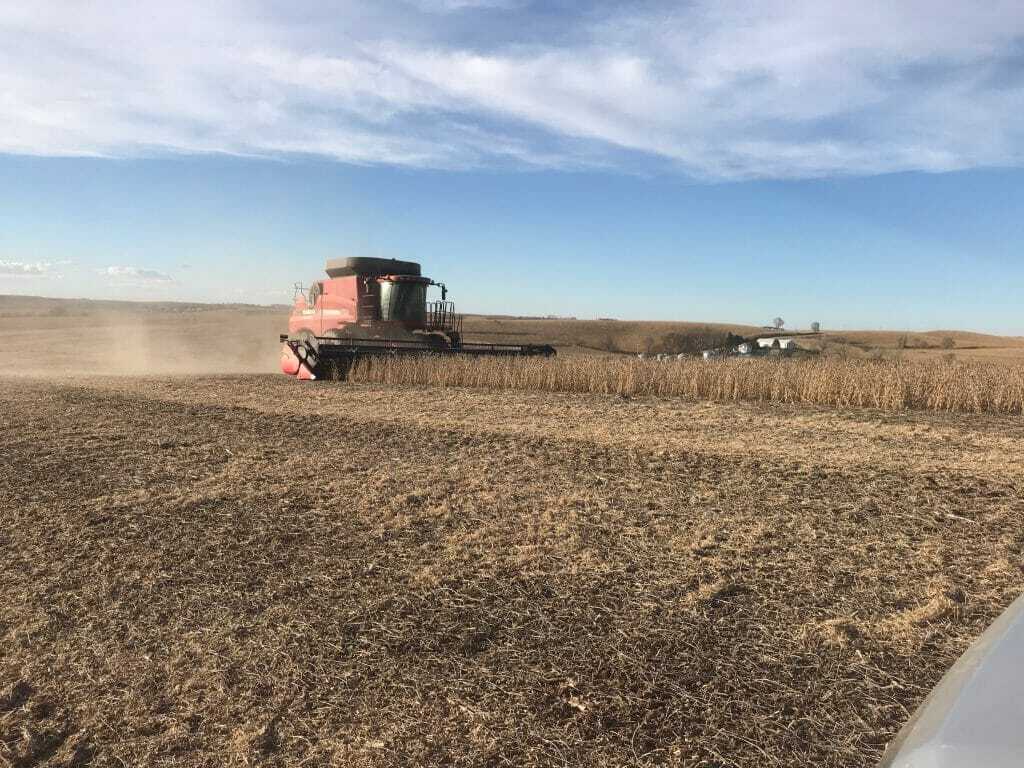
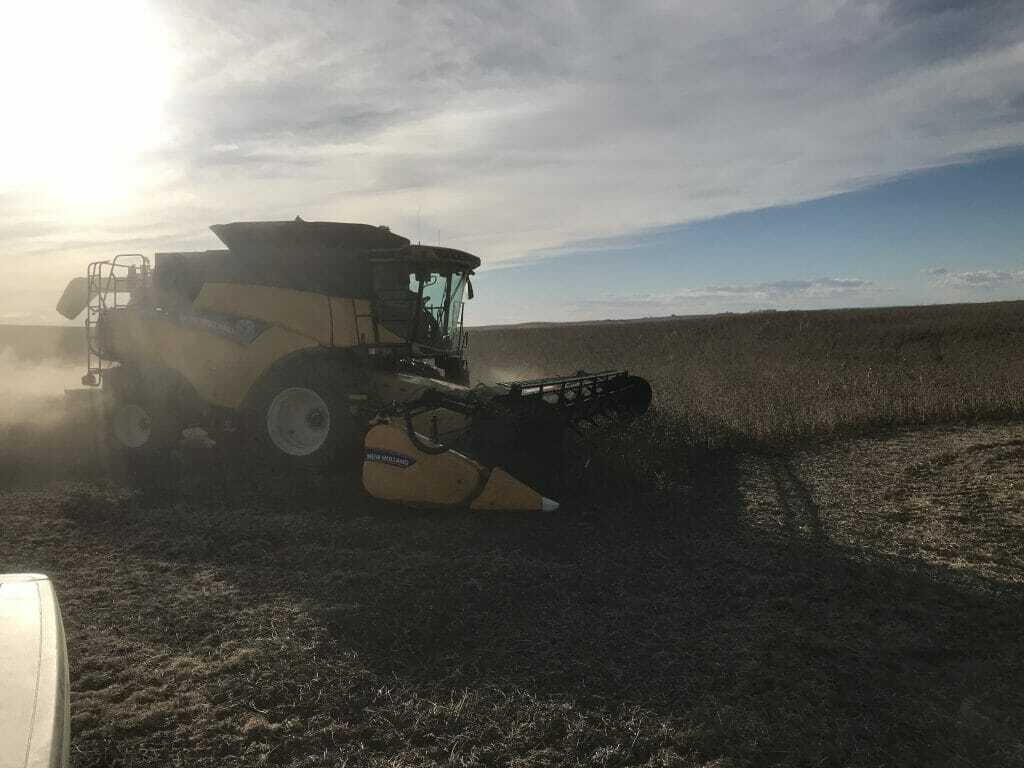
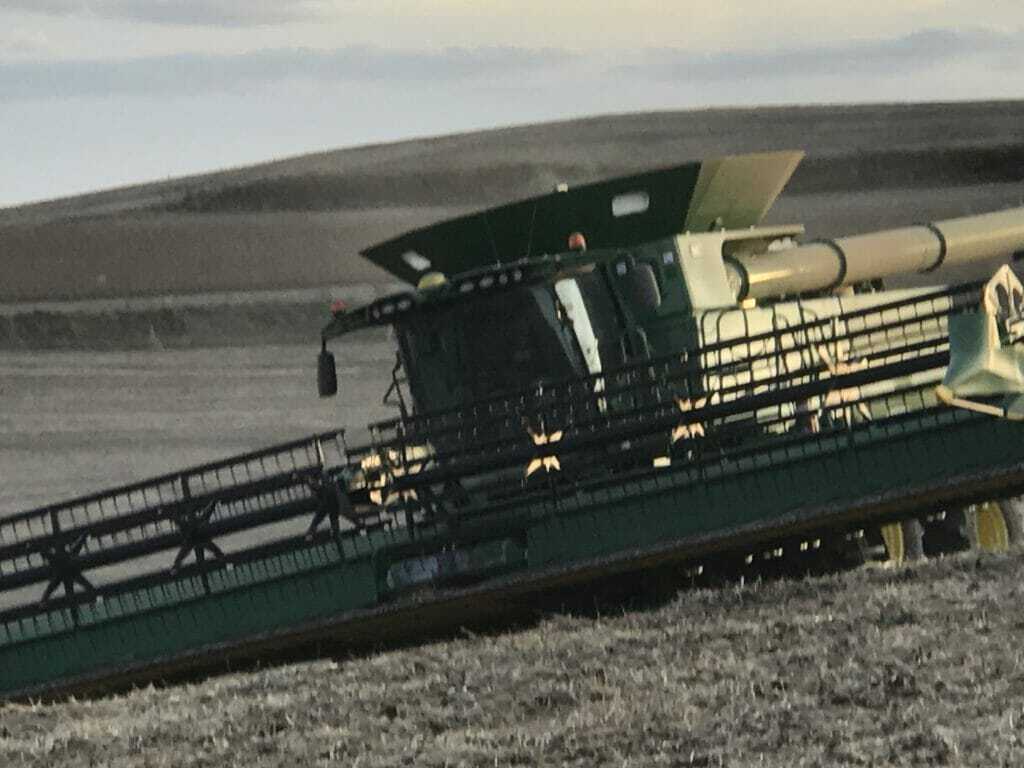
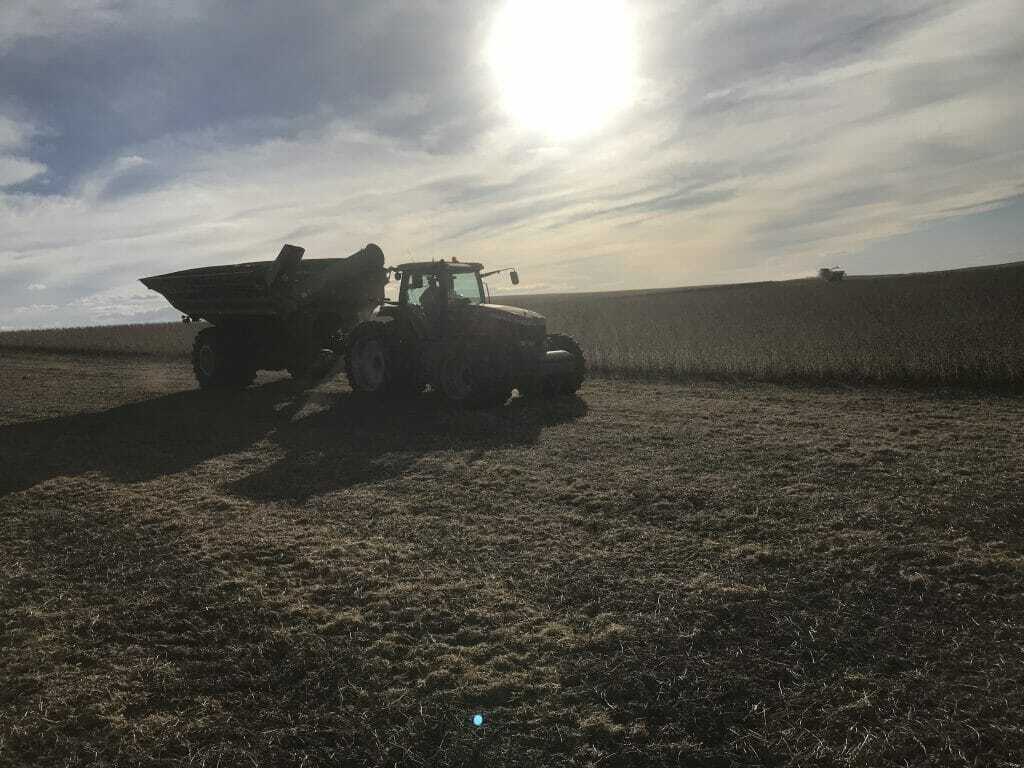
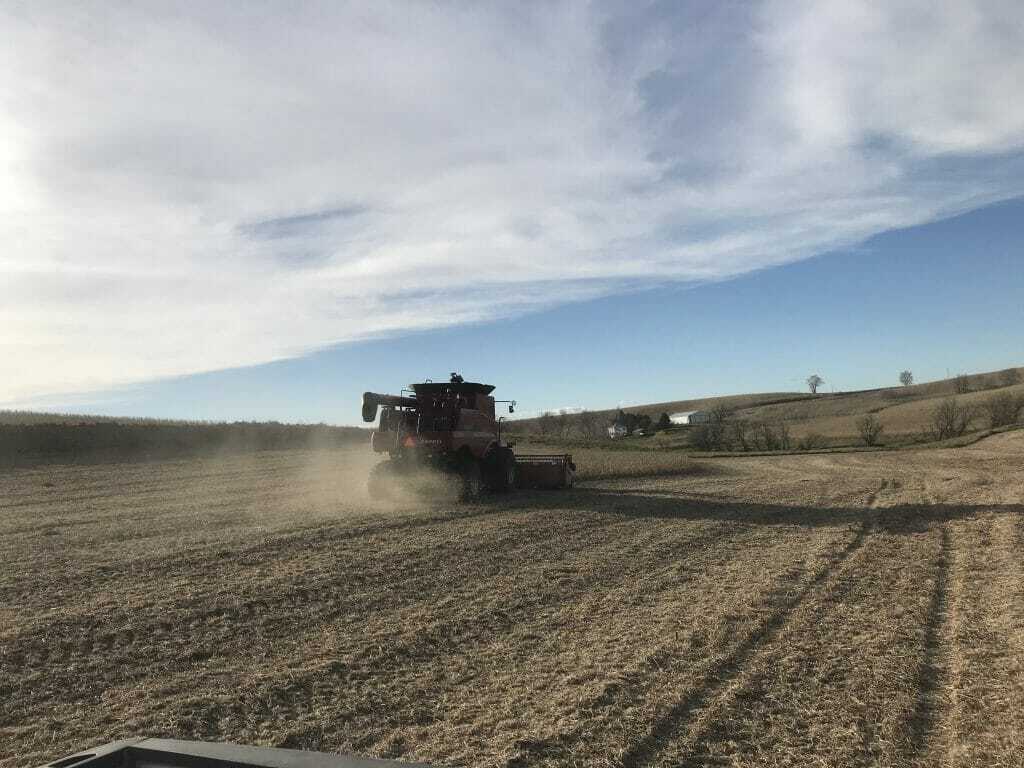
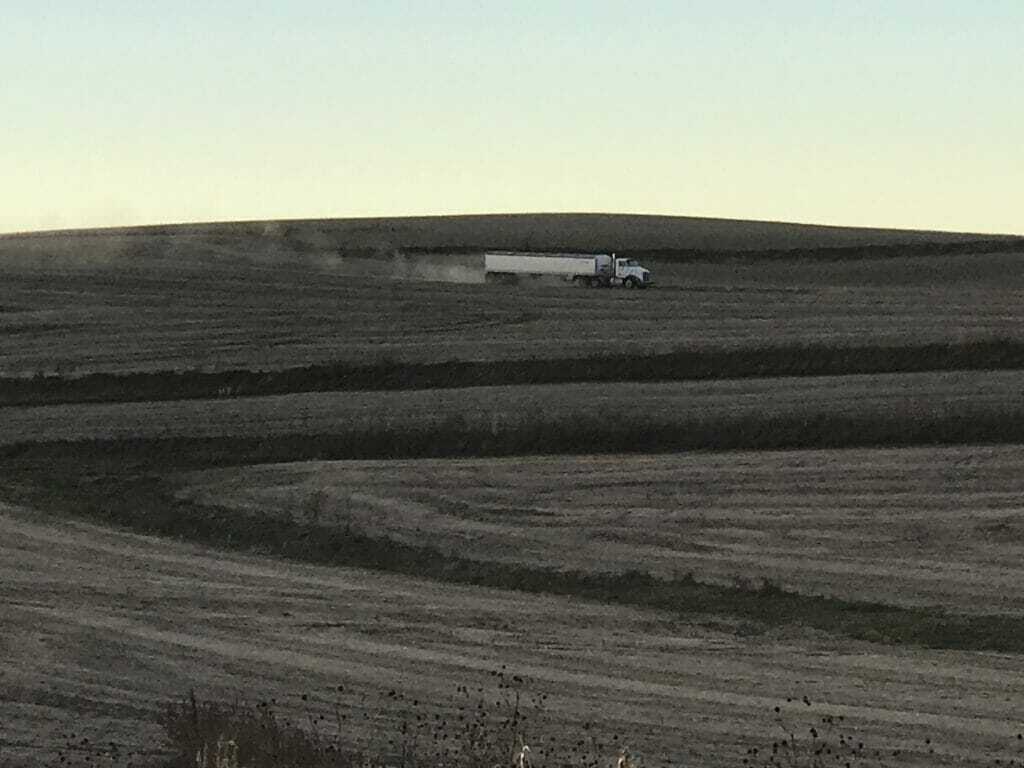
It was an emotional morning at the Rasmussen farm Wednesday, Oct. 31. Family and friends, combines and auger wagons, poured in to help bring in a loved one’s last crop. Just five months ago, this same group of dedicated family and friends helped make sure this crop was planted.
Virgil Rasmussen, who had served for years as Latham® dealer in Emerson, Nebraska, endured a hard-fought fight against Leukemia for the past year. The height of his treatments occurred during the busy spring planting months, and the Emerson community responded in a big way. Five tractors with planters, a seed tender, transport team and a meal prep crew came together to make it happen. With the crop safely in the ground, Virgil was able to focus on getting better. In mid-October, he received the all-clear from his doctor team. He had won the battle against Leukemia!
It was a surprise to everyone when late last week they received news of Virgil’s illness and sudden passing. Loved ones, with heavy but determined hearts, once again answered the call for help. A harvest bee made up of friends and neighbors arrived to show their love and support to Virgil’s wife, Irene, and their family, as they put Virgil’s last crop safely in the bins.
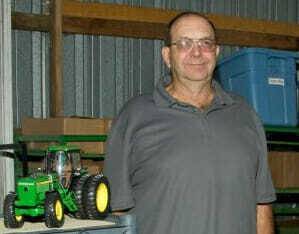
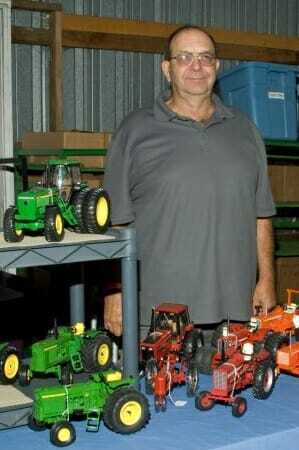
Virgil enjoyed his life’s work in agriculture. He planted and harvested 42 crops on his home farm east of Emerson. Whether it was full-scale out in the fields or a 1/16th size toy replica, Virgil will be remembered for his love of tractors and for his unique ability to customize toy tractors of various models. Virgil was a proud grandparent. He also loved fishing and providing great service to his seed customers. We at Latham Seeds are grateful for the opportunity to have known Virgil, and we extend our thoughts and prayers to the entire Rasmussen family.
When a farming family is in need or facing crisis, friends and neighbors pull together to take care of every detail right down to the field meal. In honor of all the helping hands that worked to bring home Virgil’s crop, we share this favorite field meal for Swedish Meatballs.
Hopes Remain High on Cerro Gordo County’s Only Dairy Farm
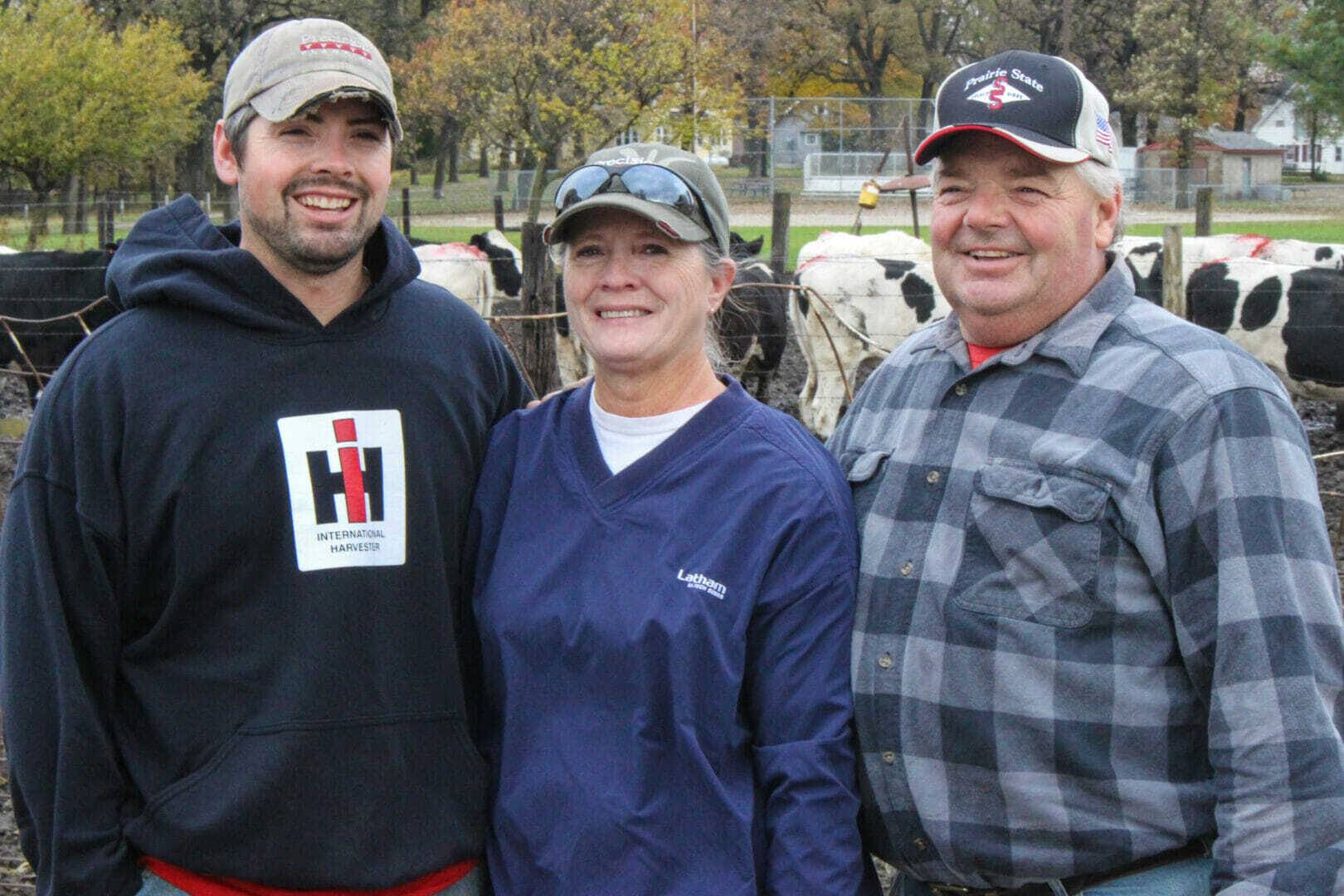
From the left: Eric, Margaret & Joel Dirksen
When Joel and Margaret Dirksen got married, there wasn’t enough farmland to support three families. Joel’s grandpa and his uncle were farming together, and the newlyweds wanted to farm nearby. Fortunately, an opportunity arose just a half-mile away from the home farm where their neighbor was looking for someone to help on his dairy.
“Joel has always loved animals, and he grew up knowing he wanted to farm,” says Margaret. “He loves cows and his passion for dairying grew with each year.”
That passion has become Joel’s legacy.
Three of the Dirksen’s four adult children have been involved with the family’s dairy farm. Their youngest daughter, Amy, teaches and is a counselor at a Lutheran high school. Although she left the family farm, she didn’t stray far from her roots as she and her husband live in America’s Dairyland. The Dirksen’s oldest son, Daniel, lives just down the road. He’s a full-time Operations Specialist at Post Consumer Brands in St. Ansgar. He’s a regular Friday milker and helps out whenever he can. Their oldest daughter, Christa Ryg, had been their lead heardsman and one of their A.I. technicians for 22 years. She left the family dairy at the end of September as rising healthcare costs prompted her to take a full-time job with benefits since her husband is a grain farmer. Their youngest son, Eric, has shadowed his father from the time he was old enough to walk. After graduating in 2004 from Luther Preparitory School Watertown in Watertown, Wisconsin. Eric earned a degree in Dairy Science from Northeast Iowa Community College in Calmar. Then in 2015 he became a partner with his parents in the dairy operation.
The Dirksens usually milk 120 cows, but there are just 105 in the milk line now. There are about 250 Holsteins on the farm, including young calves and young stock. It’s a closed operation, so they raise all their replacement heifers. They’ll sell bull calves or dairy beef, depending on the market.
“Babies need lots of attention,” explains Margaret, who is responsible for calf care. She gives them milk and water, keeps their bedding dry and keeps a close eye on them for signs of lethargy or unusual behavior that might indicate a calf isn’t feeling well. “You really have to pay attention to the details,” she adds.
The Dirksens keep calves in three different groups: young calves, weaned calves, and replacement heifers. These groups ensure the animals receive the proper feed rations needed for that stage of growth. From newborn to two months, all calves are in the calf barn. Weaned calves are moved to a free stall facility for three months. Once they have a vet check and are vaccinated, they transition to another pen where they start the silage program for about six to 10 months. Once the heifers are a year old, they move into the breeding group.
The heifers are usually artificially inseminated around 13 months of age. A cow’s gestation period is approximately nine months, and a cow must give birth before she’s able to produce milk. The cycle of insemination, pregnancy, parturition (birth), and lactation is followed by a “dry” period. About two months before a cow is due to calve, she will be separated from the milk cows and housed with other dry cows.
Raw milk is sold to Foremost Farms, a dairy cooperative based and headquartered in Baraboo, Wisconsin. Foremost Farms is an award-winning supplier of cheese, dairy products and ingredients. It takes high quality raw milk to produce high quality dairy products. Milk production is tracked per cow, at Dirksen Dairy. In addition to milk volume, butterfat is a key measurement. Ankle tags help indicate when the cows can be bred, and now the A.I. work is Eric’s responsibility. He also has taken over Christa’s milking responsibilities, and are always looking for reliable help.
The morning milk shift starts at 2:30 a.m. Feed is mixed, and the actual milking begins at 3:30 a.m. It takes about 2.5 hours to milk in their double six herringbone parlor. Once the milking is done, it’s time to finish the chores: Livestock is fed. Stalls are cleaned. Depending on the season, field work is done. While Joel primarily does the crop farming, Eric and Margaret help when needed. Then the afternoon milking begins at 3 p.m.
“It’s easy for people to walk into a grocery store without thinking about all the time, attention to detail and care that goes into producing quality products,” says Margaret. “We try to help people understand the amount of time dairy farmers puts into producing a product, so we give farm tours. We show guests what we feed our cows and let them see the milk in the bulk tank.”
Eric says he would like people to understand that milk is tested for quality several times before it hits the grocery store shelves. Weather greatly impacts production, so they do all they can to keep their cows comfortable. Heat and humidity decrease milk production, so they use fans and sprinklers to keep cows cool during the summer months. The sides of their buildings were removed this summer due to excessive heat, and will put them back on this fall to keep the cows warmer during the winter months.
Farming requires a lot of hard work, and markets fluctuate, but the Dirksens say there isn’t anything they’d rather do. Eric is proud to be a fourth-generation grain farmer and second-generation dairyman. This proud husband and father of three will share his love of land and livestock with his nine-year-old step-son, one-year-old daughter and two-month-old son.
Today the Dirksen family is sharing with us one of their favorite recipes, featuring the quality dairy products they enjoy helping produce.
Cowboys Gather in Eastern Iowa for Annual Memorial Day Roundup
“BYOH” isn’t what one expects to see on an invitation to an annual Memorial Day weekend party, but then again, this isn’t your typical party.
Cowboys from miles around will load horses into trailers and travel to Robb and Jennifer Ewoldt’s farm in the picturesque hills of Scott County near Davenport, Iowa, for the 20th annual branding weekend. The group varies from year to year, but Jennifer says there are about 20 friends and family members who show up year after year, plus a few new hands join in the fun. This year a businessman from Germany, as well as a Wyoming native who’s now working in the Davenport area, have expressed an interest in participating.
“We prefer to ride horses to work our cattle because it causes less stress on the cattle,” explains Robb, whose parents in 1970 bought 70 acres of a former Boy Scout camp and built a farmstead. Robb’s dad, Gary, worked off farm full-time, so Robb and his mom, Sally, were primarily responsible for tending to the crops and livestock. He grew up riding horses out to the cow pastures.
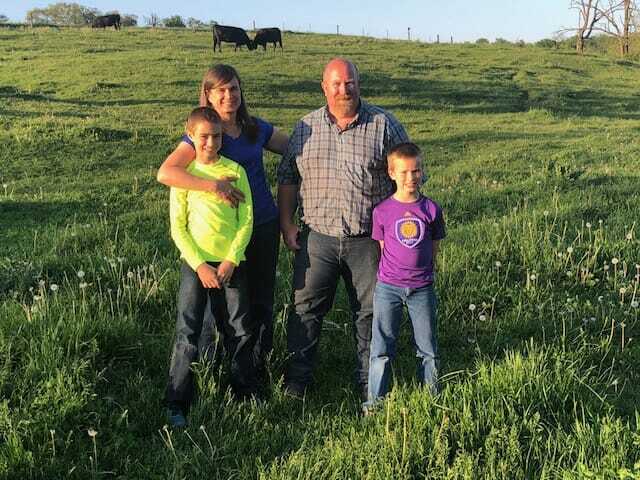
Now Robb, Jennifer and their two sons enjoy riding their own horses across the rolling countryside. They moved onto the farm last November when Robb’s parents moved to town. It’s a family effort to take care of the 125 cow-calf pairs. Eleven-year-old Alex and 9-year-old Isaac enjoy riding out to the pasture to check on cattle and throw out salt blocks. Alex is a second-year member of the Bluegrass Junior Farmers 4-H Club and is looking forward to showing his first Bucket Calf this summer at the Mississippi Valley Fair.
In addition to raising cattle, Robb’s family has a 2,400 wean-to-finish hog enterprise. Robb no-tills about 1,000 acres of corn and soybeans plus custom harvests another 1,000 acres. Jennifer works full-time off the farm as a veterinarian at Scott County Animal Hospital. Plus, every two weeks she makes time to write a column in the Quad City Times. She gives readers a “behind-the-scenes” look at what’s happening year-round on their Iowa farm.
“One night at the supper table I was expressing my frustration to Robb about another negative article I had read about farming. I told him there are so many good stories about farming that never get told. He responded by asking me why I wasn’t telling them,” says Jennifer, who was honored as an Iowa Master Farm Homemaker in 2014. “I thought Robb made a good point, so I drafted a few sample stories and sent them to the City Editor. To my surprise, the newspaper editor was very open to my ideas. I’ve been a regular column for since 2009.”
One reason Jennifer’s columns are so relatable to consumers is mostly likely due to the fact she didn’t grow up on a farm. A native of Prince Edward Island in Canada, she learned to ride at the stables and that’s also where she developed an interest in becoming a large animal vet. Jennifer graduated from veterinary school at the University of Prince Edward Island in Canada. She then did a one-year internship at Iowa State University, where she met Robb, and went on to complete a three-year surgical residency in veterinary surgery at The Ohio State University.
Jennifer and Robb are a team in the farming operation. She drives equipment when needed and serves as the farm’s veterinarian. She tags and treats the cattle, does pregnancy checks and gives vaccinations. During each roundup she’s responsible for giving calves the shots they need and does the castrations.
In fact, all the wranglers have the process down. It’s a like a team roping event you might watch at the county fair where one cowboy ropes the head and another the heels. Then the crew jumps into action. One person holds the head and a front leg; another person controls the back legs. Injections are given, and an ear is tagged. Males are castrated, and each animal gets branded with the Rafter E.
“We use freeze branding, so the iron brand is placed in liquid nitrogen. The cold changes the color pigment of the hair from black to white, so the cold brand is more visible on a black calf than a hot brand would be,” explains Robb.
Why go through the work of branding? “It’s so much fun,” answer Robb and Jennifer in unison with smiles on their faces. As the old saying goes, many hands make short work. Once the work is done, the Ewoldts and their hands will enjoy kicking back around the campfire and telling tales while enjoying some delicious homegrown beef.
Robb says his favorite meal is a grilled ribeye with a side of grilled onions. Robb likes to cook the onions low and slow for about an hour, so he puts those on the grill first. Simply quarter two Vidalia onions; place minced garlic and a ½ pound of butter in the center. Wrap them in foil. While the onions are grilling, Robb seasons the ¾-inch thick steaks with McCormick’s meat tenderizer and garlic salt to taste. He works them over with a hand-held meat tenderizer and then seasons the other side.
Click here for grilling tips from the Iowa Beef Industry Council.
To celebrate the 25th anniversary of this highly effective marketing tagline, the beef brand is being refreshed. National and state beef councils are taking this opportunity to educate a new generation of consumers about the many benefits beef. They’re also featuring a new generation of cattle farmers, who take great pride in producing quality beef.
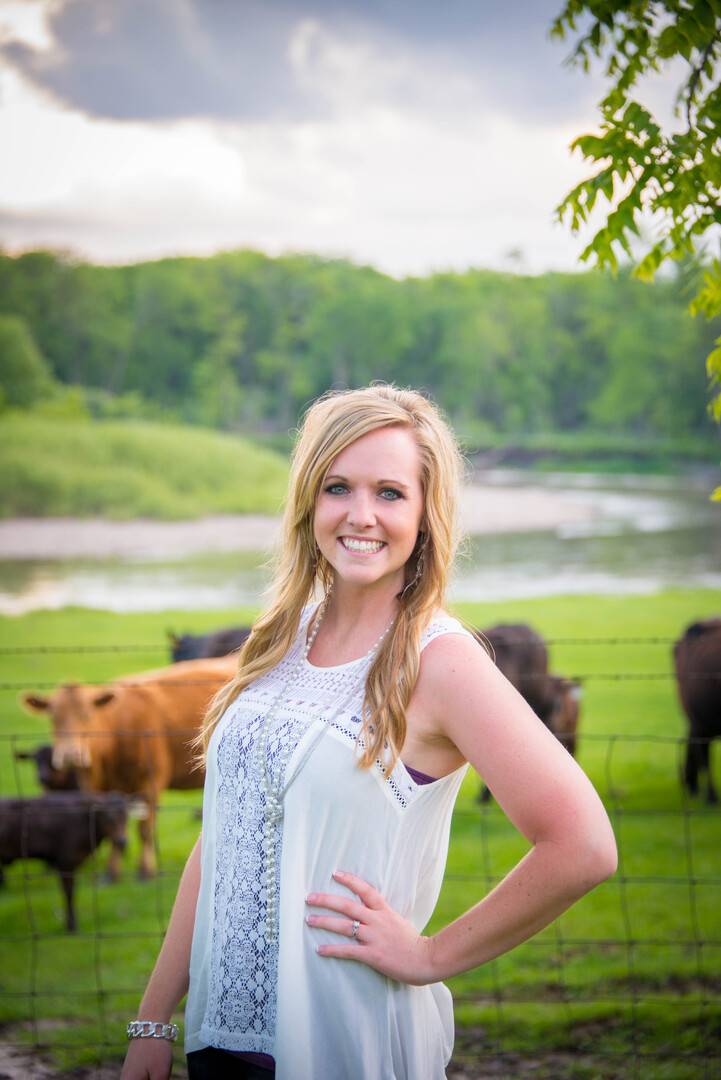
In honor of May Beef Month, I chose to feature one of the most passionate beef enthusiasts I know. Andee Hammen is a young cattle farmer, who helps bring beef to family’s tables across America.
Andee and her family raise beef on their farm in Jolley, Iowa. Their operation includes her dad, Gary; her mom, Linda, and her sister, Brittany. In addition to 150-head commercial cow-calf herd, the Hammen family raises corn and soybeans.
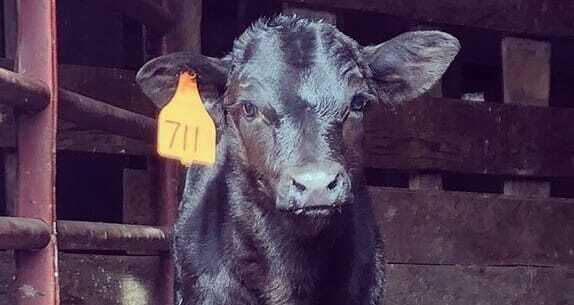
“My dad definitely sparked my interest in beef production,” says Andee, who first got involved in her family’s beef operation by raising bottle calves as a kid. “Helping bottle feed calves on our farm is one of my fondest memories. I’ve always been an animal lover, and I think it stems from raising bottle calves when I was young.”
The older Andee got, the more involved she became in 4-H and FFA beef projects. That experience also led her down an ag career path. She chose to major in Agricultural Communications at Iowa State University and took many beef production courses as electives.
Andee graduated from ISU in May of 2017. She works as a content manager at Corner Post Marketing Communications in Fort Dodge. She enjoys living and working near her hometown because it allows her to remain active in her family’s farming operation.
“Dad’s passion and dedication day in and day out makes me truly appreciate this industry,” says Andee. “He encouraged my sister and me to pursue other interests, but we’ve both came back to the farm because we knew it’s where we belong.”
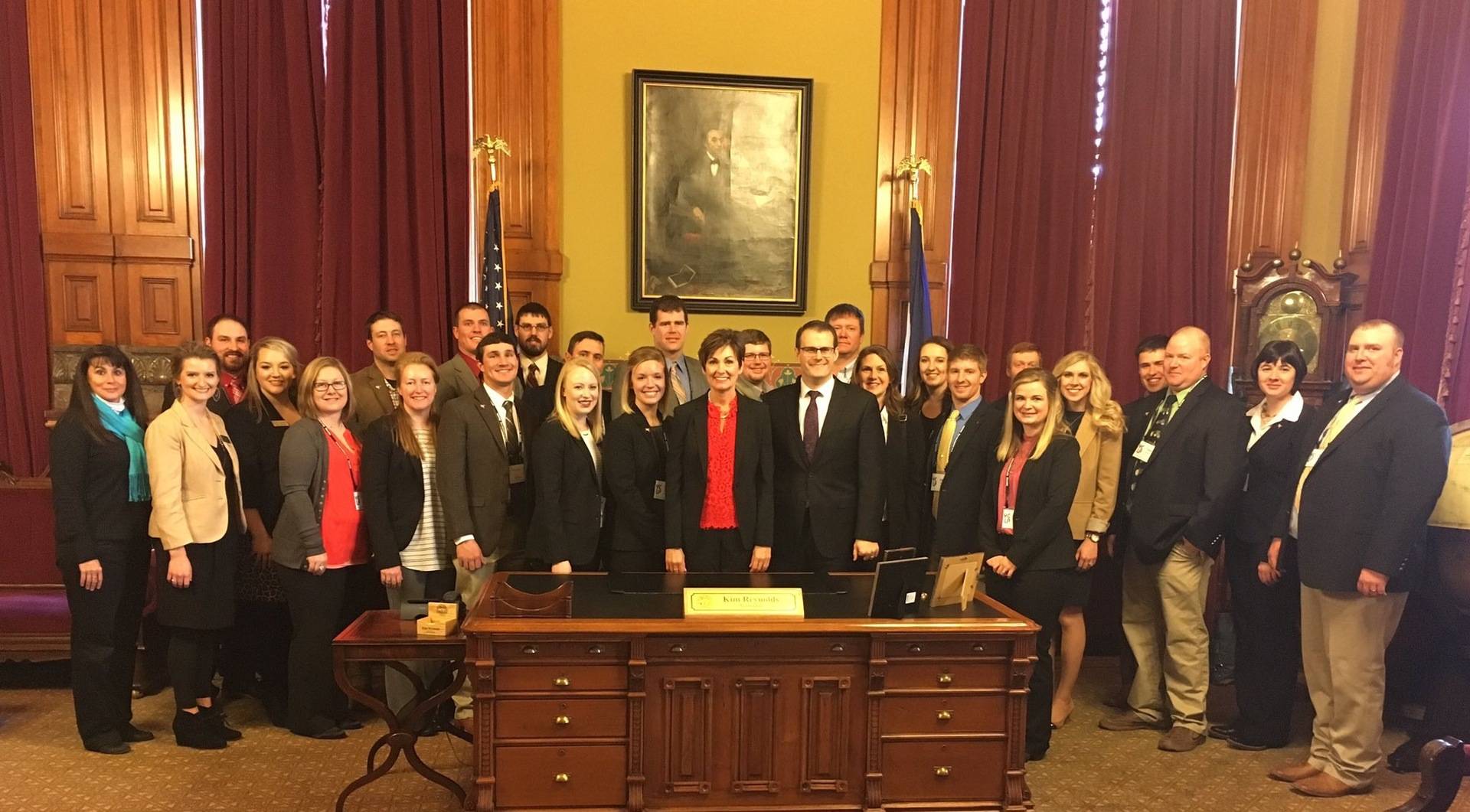
After graduating from college, Andee wanted to get more involved in the beef industry and applied for the Iowa Cattlemen’s Association Young Cattlemen’s Leadership Program (YCLP).
“I knew that taking part in this program would open my eyes up to what other possibilities and opportunities are out there for young cattlemen,” says Andee. “So far it has exceeded my expectations!”
The YCLP is a series of educational sessions designed to develop leadership qualities in young cattle farmers. Sessions touch on key beef cattle industry topics as well as activities to enhance leadership skills. Andee has also enjoyed the opportunity to meet other cattle farmers from all over the state.
Another interest of Andee’s is capturing every-day moments on their farm with her camera. She became interested in photography during her freshmen year of college.
“Being away from the farm made me homesick,” explains Andee. “Photography was a great way to bring a little piece of home and the farm with me to college. I have really taken interest in photography, and now I rarely go anywhere without my camera.”
Andee’s favorite subjects to photograph are cattle, corn, soybeans, sunsets and nature. She enjoys photos that represent life in rural Iowa, which you can see from the photos that accompany this story. You also can follow her on Instagram.
Photography is a way for Andee to preserve a lifetime of memories and to help the Hammen legacy live on.
“What I love most about raising cattle is the fact that the industry is allowing my family to create a legacy,” says Andee. “You put so much blood, sweat and tears into the operation that it just becomes part of you. We’re continually making improvements for the future generations.”
Because honoring family traditions is so important to Andee, today she is sharing with us a family favorite recipe for Teryaki Steak Kabobs.
Tietz’s Legacy is Four Generations Strong and Growing
Photo Credit: Daiton Tietz
Eighty years ago a pristine white house sat atop a hill next to an iconic red barn on a farm southeast of Decorah in Northeast Iowa. The setting was straight from the pages of Country Living magazine.
Walter and Elsie Tietz dreamed about raising their family here, but they were wrestling with whether or not to buy it. Taking a leap of faith, they bought the farmstead plus a small herd of Hereford and Shorthorn cattle.
This land and their cattle herd became their legacy. Years later their son, Leonard, took over the operation. He decided to raise Shorthorns, as well as crops.
In the early 1980s, Leonard’s son, Galen, started farming with him. Galen added Black Angus and Simmental cattle to the Shorthorn herd. Galen also acquired land to grow soybeans, corn and alfalfa.
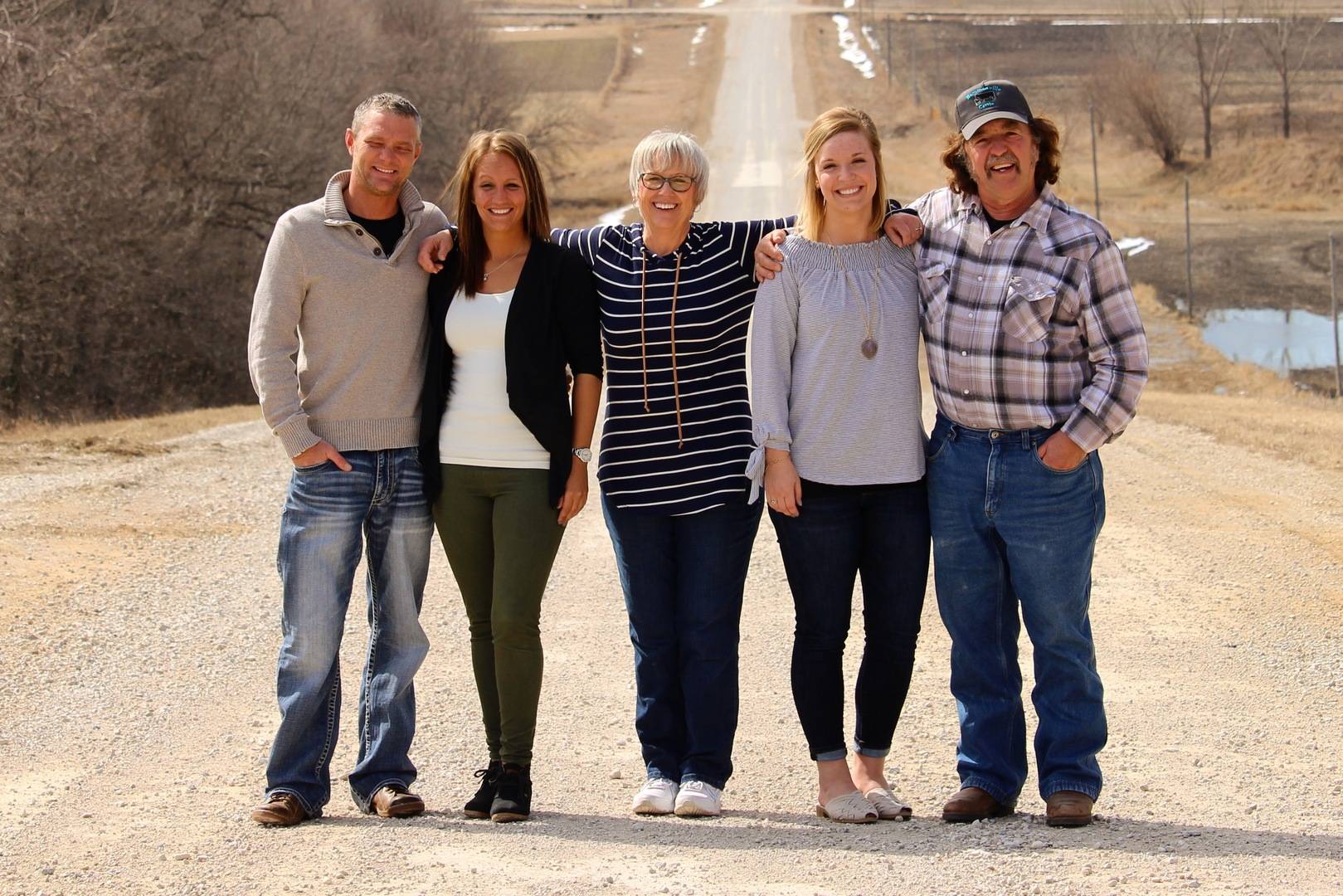
Pictured left to right: Melanie, Daiton, Jordan, Galen
Galen and his wife, Melanie, have been farming together since 1992. They raised their two children, 24-year-old Jordan and 21-year-old Daiton, on the Teitz family farm.
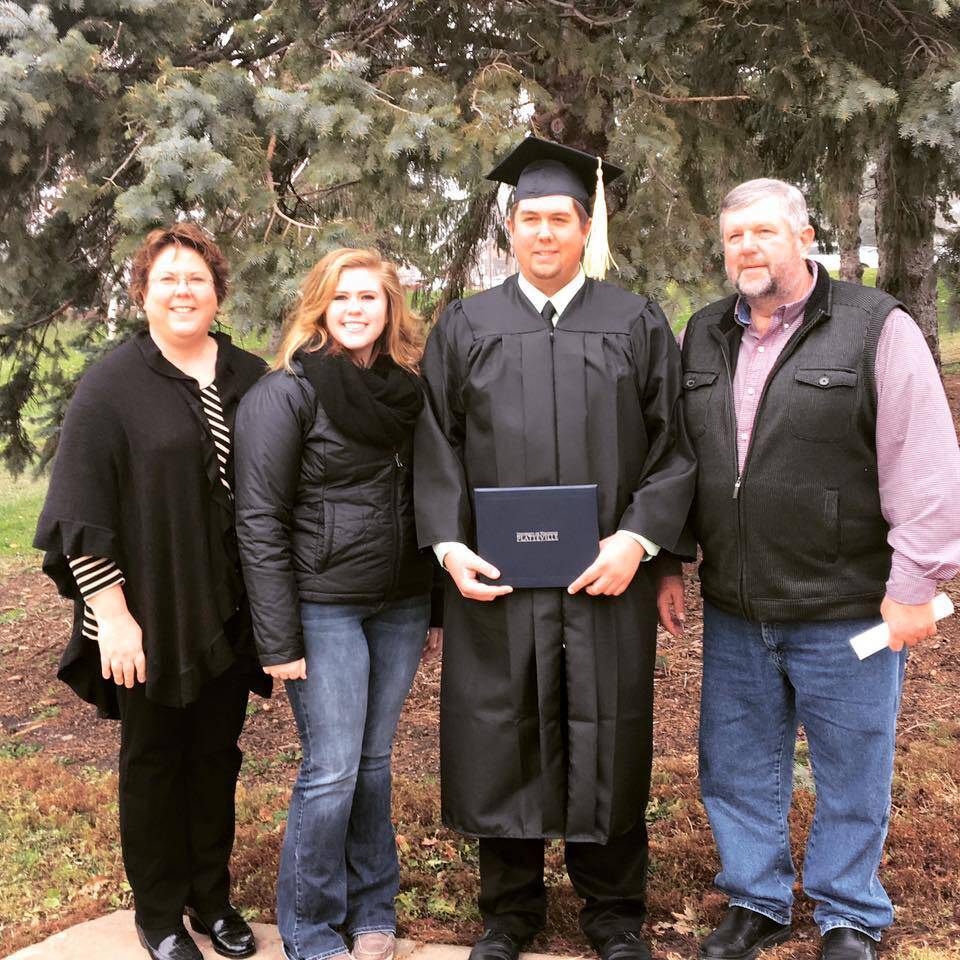
Each member of the Tietz family inherited Walter and Elsie’s love of agriculture. Jordan attended the University of Wisconsin—Platteville. He graduated in 2015 with a major in Agricultural Business and a minor in Industrial Engineering Technology. He says the hands-on experience he gained at Platteville help him both on the farm and in his off-farm jobs in agronomy sales. Daiton will graduate this December from Iowa State University with a double major in Agricultural Communications and Animal Science.
Thanks to the decision Walter and Elsie made 80 years ago, the Tietz family’s legacy lives on today.
Jordan, the fourth generation to farm this land, lives in the picturesque white farmhouse in the valley next to the old red barn. His favorite childhood memory is riding around with his Grandpa Leonard. He’s proud to continue living in his grandpa’s footsteps and hopes to continue his legacy.
Photo credit to Daiton Tietz
“The reason I get up every day and do what I do is to carry on the family legacy that was started years ago,” says Jordan. “I was raised on this farm. Farming is in my blood, and it’s all I’ve ever wanted to do.”
As we celebrate May Beef Month, find a recipe for the Iowa Beef Council below.
After a long winter like we experienced earlier this year, I’m eager to fire up the grill and enjoy some fresh air and a tasty meal. Then again, who am I kidding? I grill all year-round no matter the Iowa elements!
May is Beef Month in Iowa. I always find this is a great time to brush up on my grilling tips while celebrating all things beef. Do you know that it’s possible to enjoy beef every single day this month? I’ll get to that, but first I’d like to share a few fun facts.
Iowa is one of nine U.S states where cattle outnumber the total population. In fact, there are 4 million head of cattle in the state and more than 26,000 cattle farms. Iowa’s beef industry contributes more than $6.3 billion annually to our economy and provides jobs for more than 32,000 Iowans.
There are so many ways to enjoy great-tasting beef this summer, especially on the grill. Here are a few quick tips to get you started:
Choose your cut. The All-American juicy hamburger is a great option when it comes to grilling. Prior to cooking, season your burger patty or steak with herbs and seasonings. To keep it juicy, avoid flipping the burgers excessively. Click here for more burger tips.
Some of the best cuts for grilling include the strip steak, flank steak, or ribeye steak. My favorite is the shoulder petite tender. Pro Tip: If you happen to have some leftover, it tastes great on a salad for lunch the next day.
Prepare your beef. Trim visible fat before grilling to help prevent flare-ups. For best results, grill over medium heat. The exterior can become overcooked or charred before the interior reaches the desired doneness when beef is grilled at too high of heat. Pro Tip: Beef can go directly from the refrigerator to the grill. No need to set out at room temperature.
Cook to proper doneness. Color is not a reliable indicator of ground beef doneness. To determine the proper degree of doneness for a burger, insert an instant-read thermometer horizontally from the side into the center of the patty to ensure an internal temperature of 160°F. Remove steaks the grill about 5-10°F before your desired degree of doneness. Pro Tip: Let steaks rest before cutting to allow them to finish cooking and to reabsorb all of those delicious juices. Determine your desired degree of doneness for Medium Rare (145°F), Medium (160°F), and/or Well Done (170°F).
Fire up your grill and celebrate with beef all summer long! You’ll find hundreds of tried and true recipes on our website. Today I’m sharing with you one of my favorites for Garden Herb Strip Steak. I love grilled zucchini with mine!
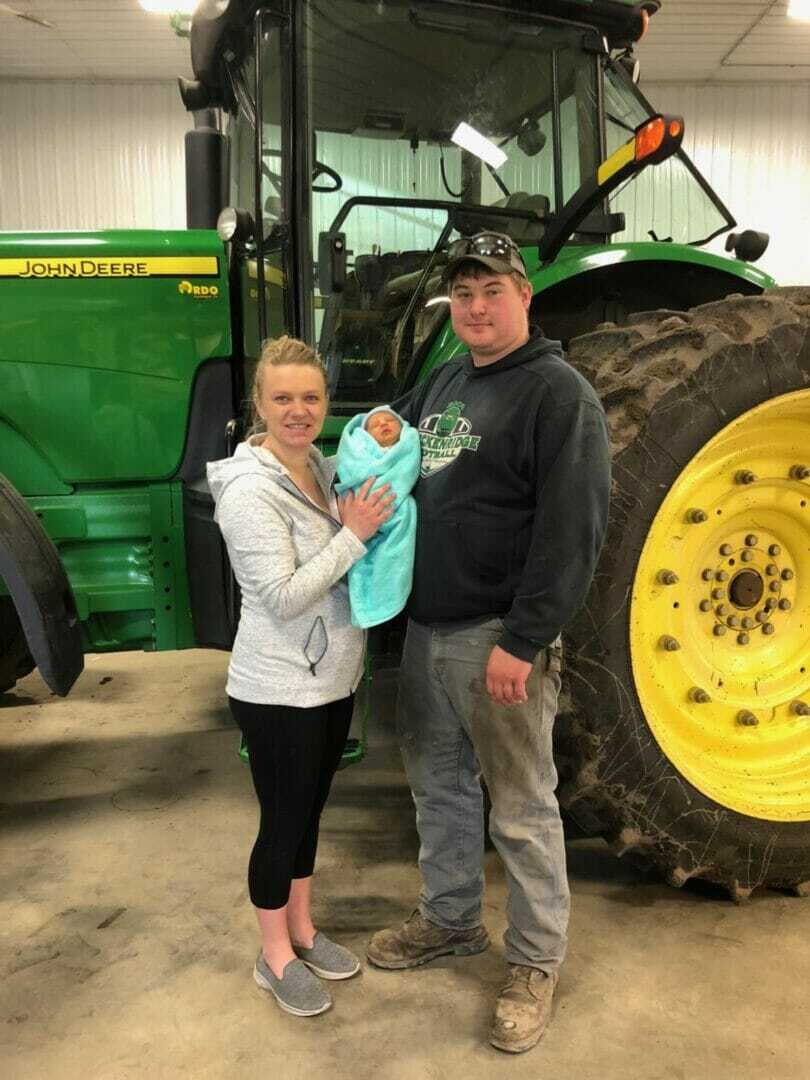
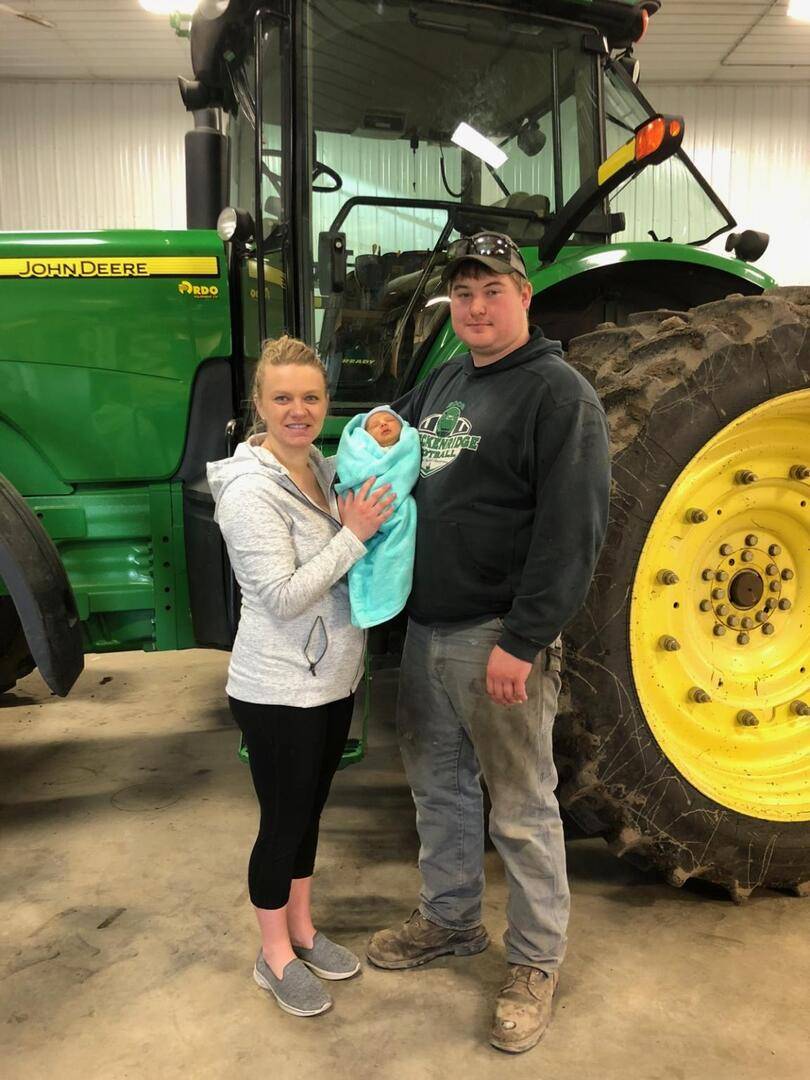
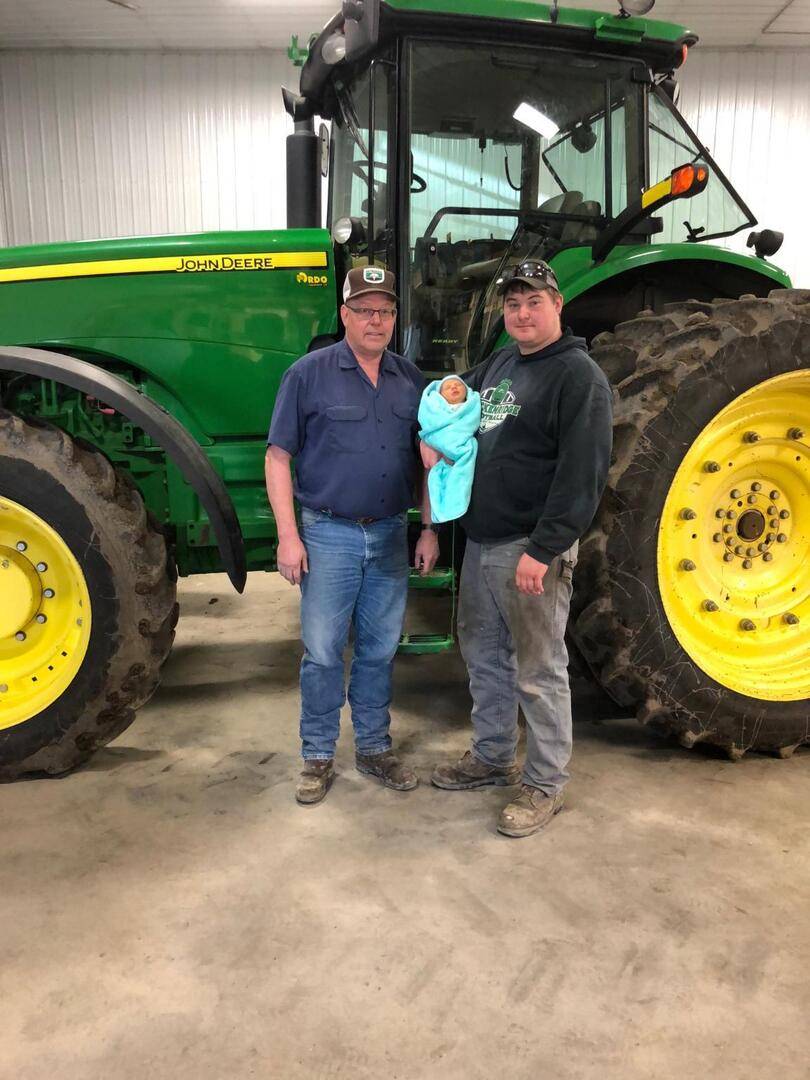
Roots run deep and continue to do so as Latham® dealer Dave Bergquist and his wife, Chloe, recently welcomed their new baby boy into the world.
The Bergquists have followed a “like father, like son,” motto throughout generations. This makes the birth of their son, Briar, even more exciting as they hope add another generation to the Bergquist family farms.
Dave’s great step grandfather started farming in the early 1900s, and they continue to grow their operation. Dave and Mike raise wheat, sugar beets, corn and soybeans in Foxhome, Minn. The 2018 crop year marks Dave’s first year of full-time farming. He’s seeking opportunities to grow the legacy his great step grandfather started.
After completing the John Deere program at North Dakota State College of Science, Dave worked five years as a technician at a John Deere implement dealership. Through hands-on learned both in college and on-the-job, Dave has developed many skills that are much needed on the farm and in his seed dealership.
Taking on a dealership has allowed Dave supplement his income, so he can farm full time. He says he and his family enjoy working with independent, Latham Hi‑Tech Seeds.
“Not only do they offer great products, but Latham Seeds is family owned. Everyone really does treat you like family,” says Dave.
Mike and Dave are point people for their operation, but it really is a family operation. Dave’s four sisters, his mom and his wife pitch in when needed. Chloe also works as a dental hygienist in Foxhome, Minn.
As the Bergquist family grows, Dave looks forward to working and relaxing with family. He enjoys fishing and hunting, so hopes Briar will want to join him in a few years. He and Chloe also enjoy spending time at the lake with her family. The couple met in high school when Dave was playing baseball and Chloe was keeping stats for the team.
After creating memories as a couple for 10 years, they’re looking forward to continuing family traditions and creating memories with their children.
“I grew up wanting to be like my dad,” says Dave. “As someone who you look up to your whole life, it only makes sense to do what you were taught. I really enjoy farming. It’s satisfying to plant seed, watch the plants grow and harvest the year-long accomplishments.”
Today, Chloe, is sharing a family favorite recipe. It is also a tractor-friendly recipe, and it won’t be long before Upper Midwest farmers are in the field!
Just Dig into the FFA, Encourages Experienced Teacher
Whether you’re interested in touring the U.S. Capitol, building your resume, developing your leadership potential or seeing international sites like the Great Barrier Reef, the FFA can take you there! Global Programs allow FFA members to explore different agricultural practices, business practices and cultures in countries around the world. Career Development Events (CDEs) help students develop the abilities to think critically, communicate clearly and perform effectively in a competitive job market.
“If you just a little digging, there is something for everyone. There are programs and activities that will interest students whether they live in town or in the country and whether or not they’re interested in livestock or agronomy,” says Mr. Fred Zenk, who is in 20th year as ag instructor and FFA advisor in Webster, South Dakota. “One of my students placed in the top four nationally in public speaking. Seven students have worked and studied overseas in Africa, China and Europe. There is literally a world of opportunity for FFA members.”
Variety is one reason Mr. Zenk said he became interested in teaching agriculture. “Agriculture education” covers so many subjects: small engine repair, soils, ag mechanics, agronomy and animal science. He also teaches 7th and 8th grade exploratory and Ag Business plus offers an Ag Science for freshman.
“I really enjoy it when students discover their strengths and you see them really start to enjoy their studies. It’s a lot of fun when they start asking questions, desire to learn more and show a genuine interest,” says Mr. Zenk. “I really enjoy watching students develop their potential and gain confidence. There were a few students who had low self esteem and went on to become state FFA officers.”
Mr. Zenk and his wife, Cindy, have four children who also benefitted from participating in the FFA. Their two daughters and two sons had FFA projects in beef and crop production. Mr. Zenk says he knows their FFA experiences have contributed to their career success. Oldest daughter, Crissa, graduated from South Dakota State University (SDSU) and worked for Monsanto. She and her husband own their own feed company plus raise beef cattle and Katahdin sheep. Kyli went into social work and now does accounting. Derek works as a seed production specialist for Kuecker Seed Farm in Webster. Danny works as an agronomist for the newly formed AgTegra Cooperative.
The Zenks share a love of agriculture. As conservation district manager and state soil health coordinator, Cindy Zenk wants to get kids involved with conservation. She coordinates tree plantings and manages CRP acres, so she and Fred work together to identify learning opportunities for students.
One such learning opportunity is Range Judging. There are more than 120 plants in South Dakota that students must identify as part of the state competition. Students must determine if the plant is native or introduced, cool or warm season, perennial or annual, good or bad for grazing, as well as whether it’s used by wildlife and fowl for cover or food.
“Our state has chosen Prairie Grouse as the indicator for wildlife habitat because pheasants aren’t native to South Dakota,” explains Mr. Zenk. “In the Range Land competition, students must identify factors that are important to Prairie Grouse such as nesting cover, brood food, and brood habitat.
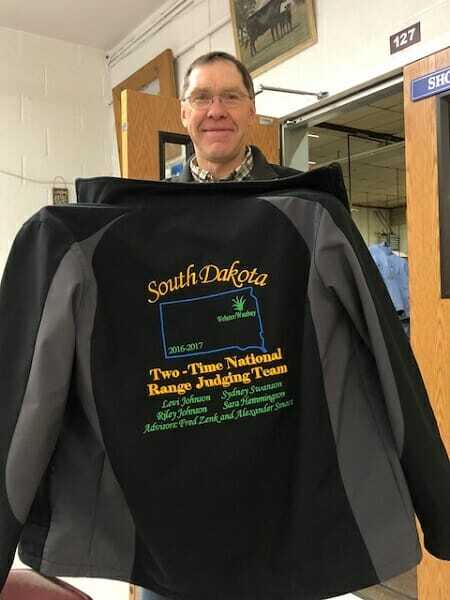
Mr. Zenk coached an FFA Land and Range Judging team in 2016 and co-coached a 4-H Land and Range Judging team in 2017. His two teams qualified for national competition in both 2016 and 2017. The Day County team was named reserve national champion at the National Land and Range Judging Contest on May 4, 2017, in Oklahoma City.
Understanding soils is key for both livestock and crop production. Students studying agriculture at Webster High School must decide which crops they’re going to plant on the 78-acre student-run farm. Their farm has been no-till since 1996. They usually plant oats and soybeans but have planted wheat. This year Mr. Zenk said the students’ biggest decision was whether to plant oats or spring wheat. Students decided to plant oats because the soils where the crop will be planted contains 13 inches of good soil with a level of gravel underneath.
“This area receives just enough moisture to get a 35-pound test weight on oats,” explains Mr. Zenk. “They decided to go with oats and also picked a cover crop mixture.”
Students learn about new agricultural practices and technologies through
“Technology has changed how I teach,” says Mr. Zenk. “We can take so many more ‘field trips’ through the Internet.”
His classes have taken virtual field trips to the Ford Motor Company, Texas Tech, Cornell University, Cal Poly College of Agriculture, Food and Environmental Sciences, Iowa State Veterinary Laboratories and Crops Lab, as well Cat® Equipment to name a few.
Mr. Zenk tells his students, “The harder you work the further you will go.” We salute teachers like Mr. Zenk who inspire the next generation of agriculturists!
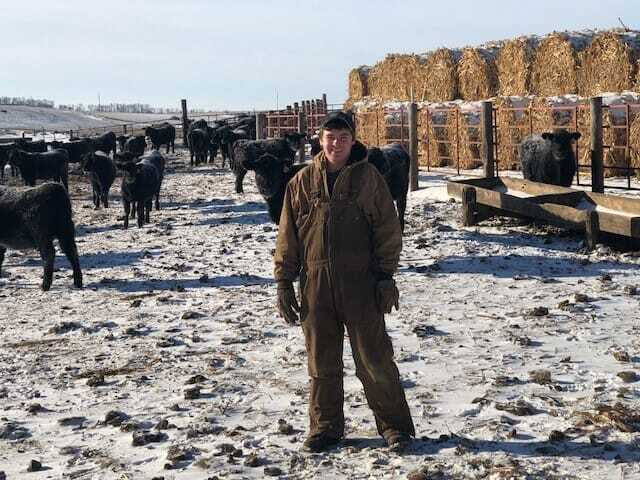
Webster FFA & Day County 4-H Alum Pursues His Passion for Farming
Riley Johnson is a fifth generation farmer in Webster, SD. He says his FFA Supervised Agricultural Experience helped him prepare to raise cattle and crops.
Before Riley Johnson of Webster, South Dakota, was old enough to join the FFA Organization, he was living its creed:
I BELIEVE that to live and work on a good farm, or to be engaged in other agricultural pursuits, is pleasant as well as challenging; for I know the joys and discomforts of agricultural life and hold an inborn fondness for those associations which, even in hours of discouragement, I cannot deny.
“I’ve always wanted to farm and never really had the passion to pursue another job,” says Riley. “I enjoy ag mechanics and welding, but I get to do both of those on the farm any way. I really enjoy growing crops, raising cattle and running equipment.”
From the time he was old enough to shadow his father, Riley has been a part of his family’s family operation. This fifth generation South Dakota farmer started raising crops and Black Angus cattle full-time with his family in May 2017 after he graduated from high school. The three generations that he farms with include Riley’s grandfather, Walter Johnson; his father, Larry; his uncle Wayne; and Wayne’s son, Andy.
“When I was little, I looked up to my dad. I thought it was neat to ride next to him in the big machinery. When I got older, I realized how much hard work and skill really goes into farming. You can’t control the markets or the weather, but you can do your best to raise the best crop and livestock. I like that challenge.”
In addition to working with his family, Riley farms some of his own ground and runs 26 cow/calf pairs. He has had his own cow herd ever since he was old enough to buy bottle calves from his dad. Riley also trades bull calves to his grandpa for heifers.
In addition to the on-the-job training Riley receives from his family members, he says the FFA prepared him well. His FFA Supervised Agricultural Experience (SAE) started in beef production and then transitioned into crop production.
“I really enjoy raising cattle because it’s a year-long journey. Our calves are usually born in April. I enjoy working with the calves and watching them grow. Then we usually put the cows and calves on pasture from the end of May through mid-October. I enjoy riding out to check on them plus I keep a close watch on pasture quality.”
Preparing for the range judging competition helped Riley appreciate the value of pasture quality. He learned to calculate the optimal number of cows to have on pasture. It also helped him become more aware of the types of plants that provide forage for his livestock and habitat for wildlife. If there are too many weeds in the pasture, then plant control is needed. It’s also important not to overgraze pasture or it will hurt the native Prairie Grouse population.
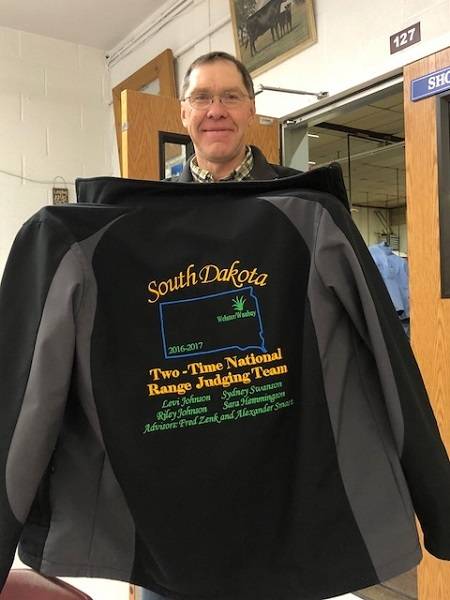
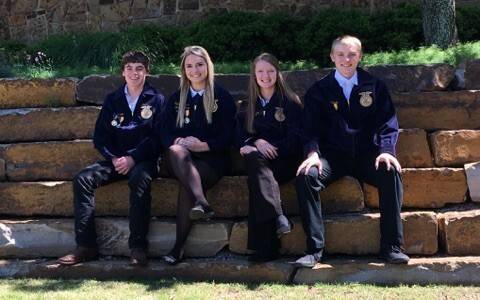
Range judging team with Mr. Fred Zenk, Webster FFA advisor
It’s impressive enough that Riley competed in range judging locally. What’s more impressive, however, is how well he and his Day County team members performed. Coached by both Riley’s FFA Advisor, Mr. Fred Zenk, and SDSU Extension Sheep Field Specialist Dave Ollila, the Day County Range Judging team qualified both in 2016 and 2017 for the national competition.
The FFA creed concludes: “I believe that American agriculture can and will hold true to the best traditions of our national life and that I can exert an influence in my home and community which will stand solid for my part in that inspiring task.”
Riley Johnson has chosen to exert an influence in his home and community.
“I like working with my family,” says Riley. “No one else cares about your business as much as you do. We all to share this experience, and we get to spend every meal together.”
Like any good beef producers, the Johnsons enjoy a homegrown steak on the grill. They also enjoy cooking with beef. When you’ve been out working cattle in these cold temperatures, nothing hits the spot like a warm lunch. Today Riley is sharing with us his favorite recipe for lasagna soup.
Family traditions are important at Latham Hi‑Tech Seeds, as one might guess, as we have been a family-owned company for over 70 years. We’re proud to carry on the tradition of producing high-quality, high-yielding seed that Willard Latham began back in 1947.
With the holidays approaching and Christmas ads airing on TV, it’s difficult not to think of Christmas traditions. One tradition started by Willard’s wife, Evelyn, was giving popcorn balls to each of her 12 grandchildren when the family gathered on Christmas.
We also have a few holiday traditions at Latham Seeds. In the past on the first Friday of December, we host a Christmas potluck lunch. Each employee brings a dish to pass and we share a great meal together. The spread of food is always impressive! Everything from appetizers to desserts have been covered. During this time, each employee places a Christmas ornament with his or her name on the tree in our office lobby. Although Christmas celebrations at the Latham Seeds office will look a little different this year, we are excited about the opportunity to start a couple new Christmas traditions.
In my family, we also have a few traditions. As Thanksgiving ends, everyone gets excited to share the Christmas spirit! My mom, my sister, my aunt and I always go shopping on Black Friday. When we return from shopping, we assemble our Christmas tree while playing our favorite Christmas songs.
Another one of my family’s Christmas traditions is honoring loved ones who are no longer with us. My grandpa passed away in the fall of 2013 after battling ALS. Our church members are encouraged to bring plants or decorations to place by the alter in honor of family members. Each year our family purchases a poinsettia in memory of my Grandpa Jack. It’s a great reminder that he is with us during the Christmas season.
Traditions also provide us with a sense of community. Our neighbors gather at someone’s house on Christmas Eve morning for breakfast. My grandparents started this tradition many years ago, and we’re keeping it going. Everyone brings a dish to share, and we start our day with great company. It is always fun to catch up with everyone and their families!
Then on Christmas Eve night, my grandparents join us for homemade soup and sandwiches. After we finish eating, my sister and I open one present from under the tree. When we were younger, I was always so excited to get a sneak peak of what was to come the next morning. Last year, I got to open an extra special gift. My sister wrapped up pink balloons in a big box. When I opened that box, there was an announcement that she and her husband were expecting a baby girl in the spring! This had the whole family excited and surprised.
While most of these traditions seem small, they are what I look forward to each year! Below are links to a few holiday traditions shared by Latham Marketing Team Members:
We at Latham Seeds wish you all a happy holiday season as you enjoy your own traditions. How do you “Make It Christmas”? We’d love to hear what makes the holidays especially meaningful to you. Feel free to comment with your favorite time-honored traditions.