Latham Hi-Tech Seeds

(641) 692-3258

  • Home
  • Products
    • Corn
    • Soybeans
    • Alfalfa
    • Corn Silage
    • Seed Guide
  • Performance
  • Find a Rep
  • Media
    • Blog
    • News
    • Videos
    • Podcasts
    • TECHTalk
  • About Us
    • Company History
    • Our Mission
    • Careers
    • Become a Rep
    • Sowing Seeds of Hope
  • Contact Us
  • Latham Hi‑Tech Seeds

    Organic Nutrients: Get the Scoop on Why Pig Poop Matters

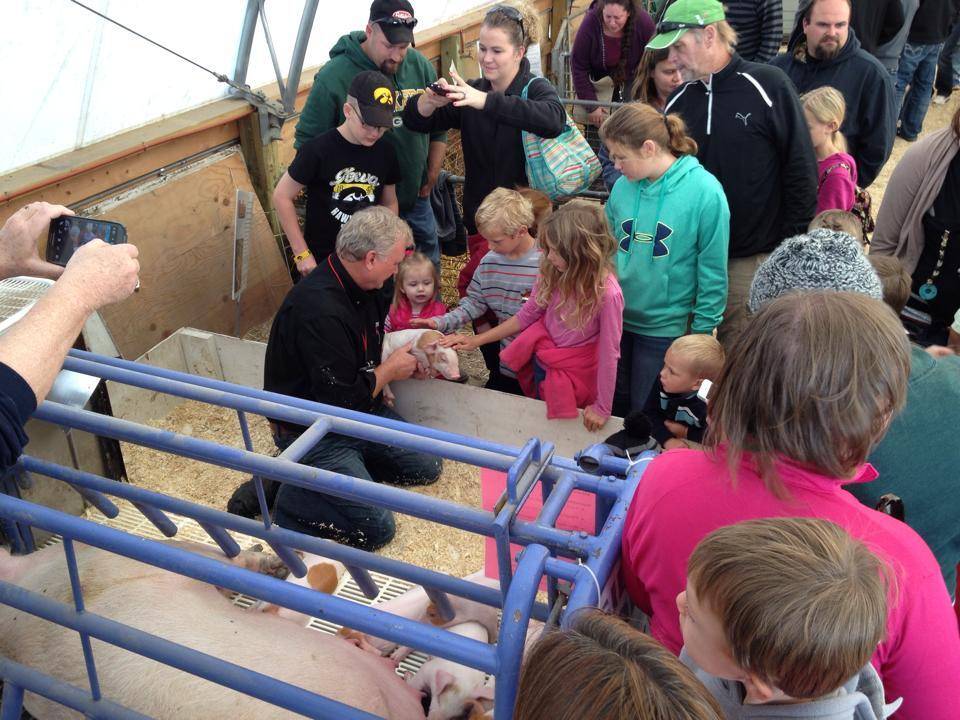
    10592959 10202684849384831 6618016141866569913 n

    Fear of the unknown is always a powerful motivator. Unfortunately, some anti-farm groups and other activists have worked overtime recently to put North Iowans into a tizzy to stop a pork processing plant from being built in our region. Many half-truths and misconceptions were shared online by these folks, so today I’m going to give you my scoop on pig poop!

    One of the naysayers’ biggest objections was that “factory farms” would build more big barns to supply the packing plant with pigs. Of course, more pigs mean more pig poop! The naysayers made it sound like pig farms would be polluting the countryside, and I’ll explain the value of “organic nutrients” in a bit. First, I want to address the degrading term “factory farm.” Ironically, the 98% of farm corporations are family farms. “Farm corporation” is really a business structure. In most cases, family members are the so-called stock holders. Wanda Patsche, who blogs at Minnesota Farm Living, does a great job of explaining the “Top 5 Myths of Farm Corporations.”

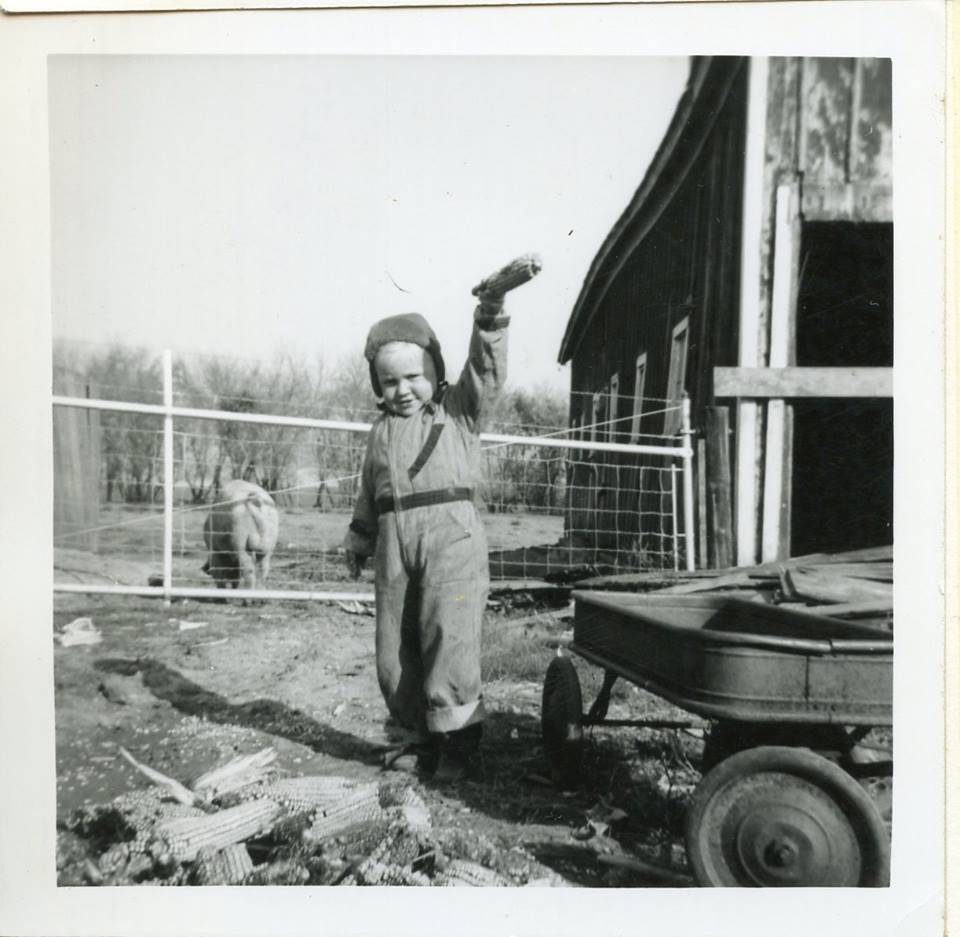
    Now back to pig poop… I’ve mentioned before that I’ve been farming for 60 years. Through the years, farming practices have changed dramatically. When I was younger and my family raised pigs on pasture, we didn’t need to spread any manure. The pigs simply went where they went, but it was a poor way of distributing the “fertilizer.” These organic nutrients definitely weren’t spread evenly across the pasture. (Side note: Poop was commonly used as fertilizer back then because (1) it was readily available. Nearly every farmer raised both crops and livestock; (2) it was free, and everyone was conscientious about making the most of their resources; and (3) commercial fertilizer wasn’t available like it is today.)

    Larry Sailer Musings of a Pig Farmer

    Over time, we changed how we raised pigs. We moved them to the farm yard so we could better control what they ate. I remember hoping for a big rain shower on Fridays, so Mother Nature would clean the feeding lots and save me from using a scoop shovel on Saturday. At that time, we didn’t fully appreciate the value of placing this manure on the field to fertilize the crop. We also didn’t understand that the runoff from these feedlots was eventually running into the creek across the road from our farm buildings.
    58111_4825296592746_1093234020_nWe learned that lesson, so we changed our practices. We also learned the importance of evenly distributing nutrients across all fields. Back in the “good ol’ days,” we saved time and labor by spreading the manure on the fields closest to our pig lots. The fields farthest from the pigs always were the least fertile as a result. We also didn’t factor in the volatility of nitrogen in the fertilizer. Frankly, we didn’t know that nitrogen migrated in water underground. We’ve learned so much about the movement of nutrients through the soil and water.398490_349792411776767_856794458_n
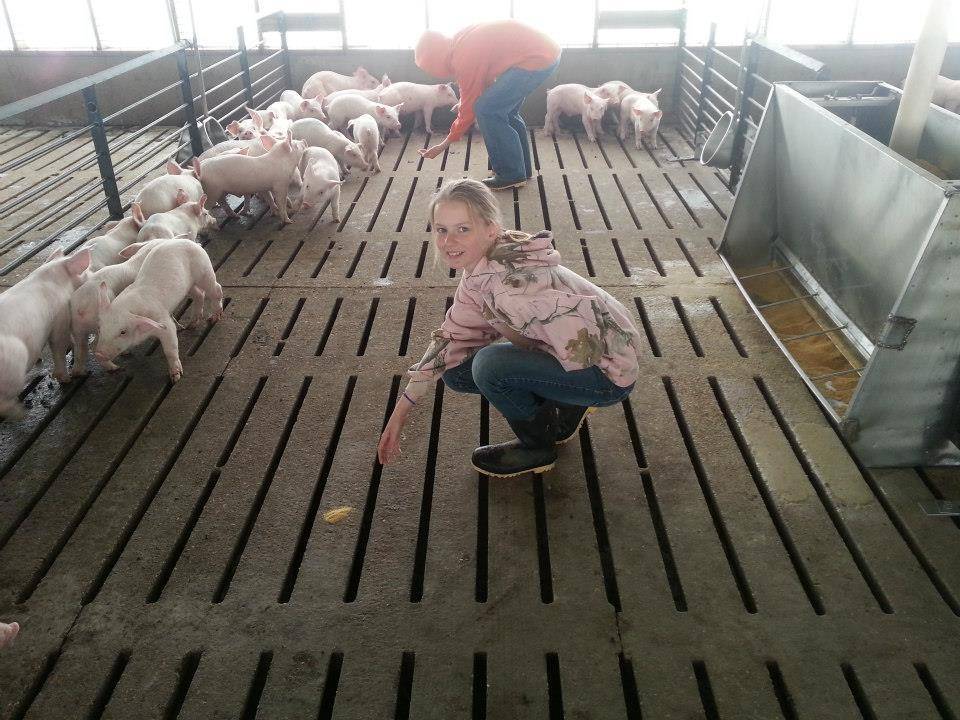
    Today we are very careful how we use fertilizer! Livestock producers are required to file with the State of Iowa a manure management plan, or a poop plan to manage the fertilizer produced by our pigs. While this regulation has many downsides, I’ll focus on the good that has come from it. Today’s livestock farmers are taking an intentional approach to placing very valuable fertilizer, a.k.a. poop, where it may be used by the plants grown for crops. We must soil test and analyze our soils to understand how much poop they need to grow our crops.
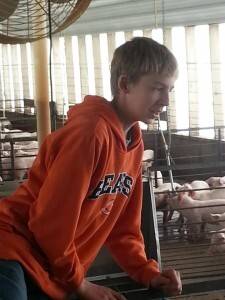
    947182_4825296472743_1506559297_nPig farmers are required to test the pig poop to know how much nutritional value is available to the crops. Then we calculate to determine the right amount of poop to spread on each acre to enhance soil productivity and crop yields. There is a whole lot of science and technology that goes in to using pig poop as fertilizer today! We can use GPS technology to provide the exact amount of plant food for every stalk of corn. Talk about a stark contrast to the days when I would slop the pigs with my Grandpa Jensen! Using a little pail, I’d feed the pigs whey from the Coulter creamery.

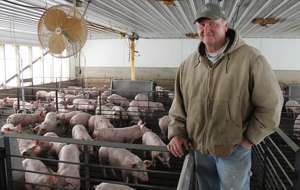
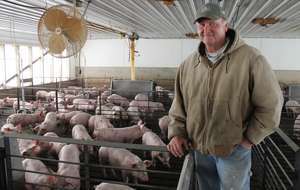
    Today’s pig farmers are doing their best to take care of our resources. Not only do we precisely measure where the poop is placed on a farm field, but the way we store our pig poop also is studied and regulated. Pig manure must be stored in an enclosed tank, so none of the nutrient value is lost. Then the pig poop is taken directly to the field by tank or via an “umbilical cord,” which is a long hose that connects the storage tank to a tillage tool that puts the poop directly in to the soil where crops grow. While inserting manure into the soil greatly helps control the odor, the fact is all poop smells! The good news that smell doesn’t last forever.298262_4825296552745_973456682_n
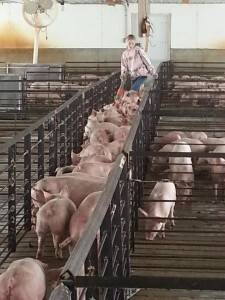
    Pigs and people can exist in harmony. Chances are, most Iowans have no idea that at any given time there are 20 million pigs being raised in our great state. Yes, 20 million! The reason you can drive by so many modern pig barns without realizing there are animals inside is because modern pig barns are a very big improvement over how we raised pigs in the “good ol’ days.” Modern pig farming is better for our environment. It’s better for our pigs. And it’s better for me and all the many people that care for our livestock every day!


     

    Larry Sailer, Musings of a Pig Farmer

    May 24, 2016
    Agriculture, General, Industry News
  • Latham Hi‑Tech Seeds

    Greiman Emphasizes Importance of Cattle Genetics

    524d7b0560fe1.image

    If there is ever an Iowa Hall of Pride for Agriculture, 89-year-old Don Greiman of Garner should be its first inductee. He’s never missed a day of the Iowa State Fair in 49 years! If all goes according to plan, he’ll spend another 11 days at the 2016 Iowa State Fair, giving tours to VIPs like Reba McIntire.

    “One of the most memorable experiences I’ve had was getting to meet Reba one-on-one,” he says with his signature grin. “She was the nicest person to visit with and made me feel so at ease.”

    Through the years, Don has hosted several grandstand entertainers, presidential candidates and national television broadcasters including Martha Stewart and Fox News’ Ainsley Earhardt. Don recalls the daily livestock shows from memory and can tell you the best places on the grounds to grab a corn dog or ice cream. He also gives behind-the-scenes tours as part of his duties as an Iowa State Fair ambassador, a title he’s held since 2011 after he retired from the fair board.

    Don served on the Iowa State Fair Board for 44 years and is only person to have served twice as fair board president. He also was instrumental in forming the Blue Ribbon Foundation in 1993 to help renovate and preserve buildings on the Iowa State Fairgrounds.

    With so many years of making memories at the fair, former Executive Director of the Blue Ribbon Foundation John Putney suggested to Don that he write a book about it. A Blue Ribbon Life: Memories of the Iowa State Fair was co-written with ISU theater professor Jane Cox.

    All proceeds from books sales have – and still do – go toward the Blue Ribbon Foundation. If you love Iowa history, Iowa agriculture and/or the Iowa State Fair, this book is a must read! (It also might make someone a nice Father’s Day gift. Hint. Hint.)

    Copies of Don’s book are available online and during the Iowa State Fair. (SIDE BAR: The Blue Ribbon Foundation was very responsive to the email I submitted from its website. When my order didn’t go through, a quick call to the office got it resolved and my book was in the mail within 24 hours.)

    Don Greiman with his book "A Blue RIbbon Life". Photo credit: Agri-news.com
    Don Greiman with his book “A Blue RIbbon Life”. Photo credit: Agri-news.com

    “A Blue Ribbon Life” also chronicles the beginning of the Greiman family’s cattle herd, which is among the oldest purebred Angus herds in America. Don’s grandfather, Fred Greiman, emigrated from Germany and eventually settled in Garner, Iowa. He developed a reputation for raising the finest horses and worked diligently to build his cattle herd.

    When delivering Shorthorns to market in Chicago, Fred fell in love with the Angus breed. He wanted to add some to his herd because they had smoother body styles with excellent carcass. Fred decided to sell a rail car full of Shorthorns and use the proceeds to purchase an Angus bull from a sale being held in Chicago on the shores of Lake Michigan.

    Those Angus cattle were beautiful but they didn’t come cheap. The opening bid for an Angus yearling bull went for more than Fred’s whole rail car full of cattle brought! Although he didn’t purchase any then, he kept his eyes open for opportunity.

    In 1896, Fred was in the train depot when he saw a poster advertising that a South Dakota farmer was interested in trading a Percheron stallion for an Angus bull. The two farmers corresponded by mail. After some months, they agreed to exchange animals. Fred placed his prize-winning Percheron stud on a railcar and eagerly awaited for the arrival of his Angus bull.

    “My grandfather couldn’t wait for that bull to come in!” explains Don. “When he went to the train station, he found a ‘wild and wooly’ 400-pound bull calf in a crate. It certainly didn’t look to be a good trade at the time, but that bull ended up paying out. He was crossed with Shorthorns cattle and their offspring was sold at a premium.”

    In those days, a farmer would ride the rail with his cattle to Chicago. They’d leave on Saturday afternoon, so the cattle could be fed and watered on Sunday. The sale was then held on Mondays. When Don’s grandpa sold his first crossbred Angus-Shorthorn, he topped the market and was told by the buyer that he’d always be able to merchandise cattle like that…


    (There’s more to this story than can be told in just one blog! Be sure to read “Part II” this Friday on TheFieldPosition.com.)

    Team Latham

    May 23, 2016
    Agriculture, General, Industry News
  • Latham Hi‑Tech Seeds

    Speak Truths about Ag, Even in a Cab!

    ASweeney 111

    Guest blog post by Annette Sweeney, Iowa beef producer

    “I produce the nutritious healthy beef you eat,” was my response to the cabby who asked me what I do for a living. He said, “No way! You can’t be a farmer… you don’t look like one.” Then he went on to say, “I eat meat now and then, but I don’t know very much about cows and stuff.”

    We started to have a dialogue about how beef is part of a healthy diet. I mentioned that beef has special proteins that provide all of the essential building blocks that your body needs. In fact, when my husband hurt his leg, the doctors told us to make sure he ate a lot of protein to help heal his muscles. Also, animal protein is very important for developing children. If children don’t get enough, their development may be hindered.”

    At the next red light he asked, “What about vegetables?” I responded by saying, “Yes, we need fruit, vegetables and dairy. We need common sense on our plates!”

    We continued to discuss a healthy diet. One food group doesn’t give all that your body needs for proper brain and muscle function. The crucial part of healthy eating is having a balanced diet that includes foods from all groups.

    “Meat and poultry have iron, vitamin B12, calcium, vitamin D, zinc and omega-3 fatty acids.  Oh, the whole B12 thing is really important for mind health and digesting nutrients, especially if you are over 50. Beef is a great natural way to get it all those nutrients. ‘And yes,’ I said with a grin as he looked at me through the rear view mirror, ‘I need B12’.”

    He then said, “Wow! Meat has all that stuff. Why has no one put that out there?”

    Cattle producers are trying to spread the great news about beef, but honestly, it’s hard to attract positive attention from mainstream media. Fortunately, May Beef Month and June Steak Month provide opportunities for us to talk about how nutritional beef products are and why raising cattle is good for the environment.

    The cabby and I went on to visit about how cattle are good for the environment. The U.S. beef industry uses 19% less feed, 12% less water, 33% less land and has a 16% lower carbon footprint than production systems of the 1970s. Globally, U.S. livestock production is among the most efficient, which reduces our environmental impact compared to other regions. Without livestock operations, many by-products from food, fiber, fuel production would be wasted. Fragile ecosystems within pastureland would be destroyed to grow foods on land that’s currently unsuitable for crop production.

    This cabby asked great questions. Before I got out, I asked him, “What does a farmer look like?” He just laughed and assured me that he was going to buy steaks that weekend to celebrate. “To celebrate what?” I asked. He responded by saying that he had always liked beef but now he knew why. “Beef is good for me and my family. We’re going to celebrate that!”

    As I headed into the airport, I smiled as I thought about the conversation I had in the cab. If this simple gal from Iowa can visit about truths in agriculture, you can too! For more science-based information about beef, visit www.explorebeef.org and www.beefnutrition.org.

    Gary Geske

    May 16, 2016
    Agriculture, General, Industry News
  • Latham Hi‑Tech Seeds

    Genetic Improvements Lead to Stronger Countries

    Screen Shot 2016 05 10 at 1.18.15 PM

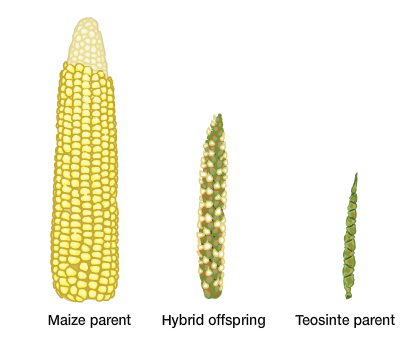
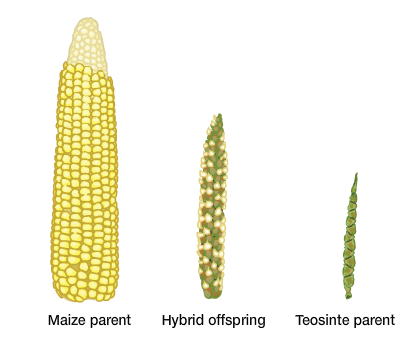
    This time of year farmers demonstrate how strong their faith is. Just imagine spending thousands of dollars on little seeds and putting them into the soil! Watching little corn plants grow is quite amazing. That’s why today I’m going to talk about maize, which is another name for corn.

    Photo source: University of Utah
    Photo source: University of Utah

    Corn originated at least 7,000 years ago in Central Mexico from a plant called teosinte. About the only similarity teosinte has to modern day corn is that it also is a grass. Teosinte was a scraggly looking plant with seeds, or kernels, that look nothing like the big ears of corn I grow today.

    Corn as we know it today would not exist if it weren’t for the humans that cultivated and developed it. Farmers nurtured teosinte, and this whole process can be called genetic improvement. All living things today have gone through some sort of “modification process.” You might be surprised to see the changes that have occurred to wild carrots, bananas and watermelon!

    Dr. Kevin Folta, Professor and Chairman of the Horticultural Sciences Department at the University of Florida, does a good job explaining how/why genetic improvements are made for GMO Answers:

    “Some crops do just fine from genetic improvements obtained through traditional breeding. Those don’t need any GMO assistance. The GMO process just adds a gene or two that add a missing (and important) trait. If you have a good foundation, you don’t need the extra support. That’s important because the testing and deregulation process is long and expensive.

    Therefore, most plants are not amenable to GMO technology, purely for economic reasons. The rigorous regulation, the high cost of R&D, the massive cost of testing and commercialization — these factors strongly deem most plant products unfit for transgenic (GMO) alterations. A trait added has to provide a significant savings for farmers or a huge advantage to consumers in order to be worth pursuing. It takes a long time to make back the R&D/deregulation costs… 

    The only plants in which GMO is applicable for commercialization at this time are those that benefit from a trait that can’t be produced through traditional breeding, and those with a significant possibility of economic return and long-term relevance of the added trait.”

    Corn is one crop where GMO versions are available. We choose to plant GMOs to save crops from costly insect infestations or disease. Let’s go a step farther, and look at the different kinds of corn: popcorn, sweet corn and field corn. The very sweet and tasty corn we call sweet corn is very different from the corn I raise that’s used to feed livestock like my pigs or to produce ethanol. Popcorn developed as man found specific uses for different kinds of corn.

    Can you imagine going to a movie without popcorn? Can you think about late summer without sweet corn? For that matter, can you imagine a summer without grilled pork chops? I know I can’t, and that’s why I’m so grateful that we have so many food choices.

    Most of the corn raised across the Corn Belt has been developed to feed our livestock. As mankind evolved, people improve their diets by adding meat proteins. Studies show that proper nutrition has played a key role in improving human health and increasing life expectancies. The first thing a developing nation today wants is better nutrition, and meat protein is the big ticket! U.S. meat exports are important to our economy.

    This is why, when the government tries to spend us back in to prosperity, it simply doesn’t work. To have a successful economy, you must create wealth. New wealth comes from the earth like minerals, including coal and oil, trees, and crops. Growing corn fits that bill here in the Midwest! We can only eat so much popcorn or sweet corn, but we have proven that field corn – and the meat produced when it’s fed to livestock – creates new wealth.


    Larry Sailer, Musings of a Pig Farmer

    May 10, 2016
    Agriculture, General, Industry News
  • Latham Hi‑Tech Seeds

    Welcome New Ideas & New Business to Make North Iowa Prosper!

    10645050 10152237626296266 6904378055477574444 n

    The last couple of blogs I’ve written have mentioned a processing plant being proposed in Mason City, a small city 45 miles north of my farm. Today I’ve decided to address this issue head on as earlier this week protestors were making the headlines. Plus, the Mason City Council tonight will vote tonight on Prestage Farms’ plan to build a pork processing plant.

    If you Google “Prestage Farms Mason City,” you’ll find that the headlines from March tout the number of jobs this pork harvesting facility will bring to North Iowa. Over time, the headlines become more skeptical. This week, most likely due to protests by a group of small local producers, Central Iowa based activist groups and a few other area residents, the headlines have become more negative.

    I’ve read the letters to the editor and many articles that ran in our regional newspapers. I agree most with what Alicia Schmidt from The Pork Dairies wrote:

    “Adding a new facility close to our farm to sell pigs will create good price competition. Good price competition equals money in our pockets that we use to grow and prosper as farmers. Most importantly, this means more money into the pockets of local small business owners. Prestage Farms brings these opportunities to North Iowa.”

    12592774_975788905824435_7592429400395542066_nTruth is, I have almost 60 years of experience raising pigs, and I have years of experience with building pig barns. I’ve raised pigs just about every way imaginable. I remember going with my grandfather to the Coulter creamery for whey to “slop” the hogs, which was fed as protein in addition to the ear corn that Grandpa fed hogs being raised outdoors. It took a lot longer for pigs being raised this way to reach market weight.
    I also remember sows on pasture using hay racks for shade in the summer to keep cool. I also remember jumping onto those racks to get away from sows, which were chasing me because they were so protective of their piglets. It was a tough way to do chores! Those sows made “nests” in a mud hole to stay cool, and their piglets often drowned if it rained too much.

    Some folks are sharing photos of animals raised outside in a beautiful green grass pasture, but this is not the reality of farming in the “good ol’ days”. There were days when the hot sun baked the land. Other days rain soaked the countryside and thick mud made it a challenge to get around. And this is Iowa, so we also must remember all the snow and sub-zero temperatures those animals faced during a long winter!

    If Facebook would’ve been around when I was raising pigs outside, I’m sure someone would’ve tagged me pictures of knitted sweaters for piglets! That brings up another point… My livestock have never been pets, and there is a difference.

    543105_10151382209115050_1834100237_nBut I’m going to use a pet analogy here in hopes non-pig farmers will better understand modern pig farming methods. Would you leave your little puppy outside overnight on an Iowa winter night during a blizzard? Of course not! Would you protect your dog from being attacked when your pet is either in your yard or on a walk? Of course! We raise our pigs in temperature-controlled barns to maximize animal comfort. We also use gestation stalls to protect sows from other sows, otherwise they will kill each other! In addition, these pigs are given the exact amount of feed they need plus all the fresh water they can drink.

    Now the way I farm – and many other pig farmers raise livestock – is being attacked because a new processing plant being considered. All the progress we have made in farming is being attacked! Unfortunately, people with no experience on the farm are telling the general public how I raise pigs.

    If you have questions about modern pig farming, ask me! I’m willing to share what I do, and I’m willing to explain why I believe Prestage Farms can be good for North Iowa. I’ve lived just south of Mason City all my life. I watched it grow, but lately I’ve seen too many businesses close. It’s time to make an investment in North Iowa!

    This investment in the North Iowa community may not be what everyone thinks is ideal, but “ideal” is really a matter of opinion. This plant will provide local jobs and improve the lives of many people. Here’s what the Storm Lake Chief of Police says about the turkey and pork processing facilities located in that community of 10,900 people, “…the pros far outweigh the cons. It has made this community better, bigger and stronger.”

    Just consider what Prestage could do for the tax base alone! (Proponents say the project will have an economic impact of $750 million on the region through population growth and spending at local businesses.) More working people will be able to buy homes, and that means more kids will be enrolled in school. It means more people will shop in our stores. More than Mason City will benefit as people will commute for jobs. Many of our smaller towns will get a huge boost, and they need it!

    Grain farming is not the only type of farming we need. Business needs diversity, and our farms need diversity. Our people need diversity. Let’s welcome new ideas, new technology, so we can prosper together!

    Supporting Articles and Links:

    • North Iowa Grows Food
    • Why We Should Welcome Prestage with Open Arms
    • Pork Plant will Bring Business
    • Salute the Pig Industry
    • Mason City is More than Retail
    • Supporting Pork Plant is No Brainer
    • Prestage Creates Opportunities
    • Prestage must give $1.4 million over 10 years to Mason City schools
    • Prestage Farms’ Mission Statement
    • Prestage Farms’ Community Responsibility
    • Prestage Farms’ Animal Welfare
    • Prestage Farms’ Environmental Impact

    Larry Sailer, Musings of a Pig Farmer

    May 3, 2016
    Agriculture, General, Industry News
  • Latham Hi‑Tech Seeds

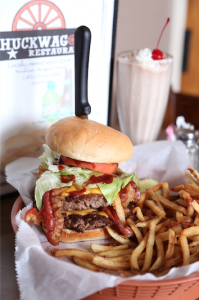
    Iowa’s Best Burger Carries on Chuckwagon Tradition

    Screen Shot 2016 05 02 at 10.55.54 AM

    Guest blog post by Brooke German, Iowa Beef Industry Council

    Image by Larry D. Moore
    Image by Larry D. Moore

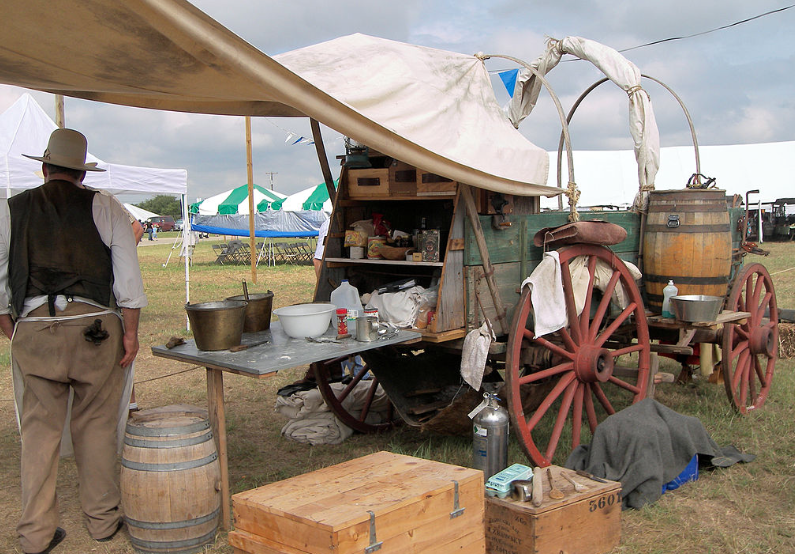
    Chuckwagons first became popular among Texas ranchers after the Civil War. As cattlemen moved their herds across the western United States, they were often on the road for months at a time. An inventive Texas rancher, Charles Goodnight, modified a Studebaker wagon by adding a “chuck box” to the back of the wagon to create a makeshift kitchen.

    Around 150 years after the original chuckwagon made its debut on the western plains, the Chuckwagon Restaurant in Adair started serving up great beef. The restaurant is a favorite for the coffee drinkers in the morning, and the lunch crowd is also mostly locals. In the evening, however, travelers on I-80 between Des Moines and Council Bluffs often stop for supper.

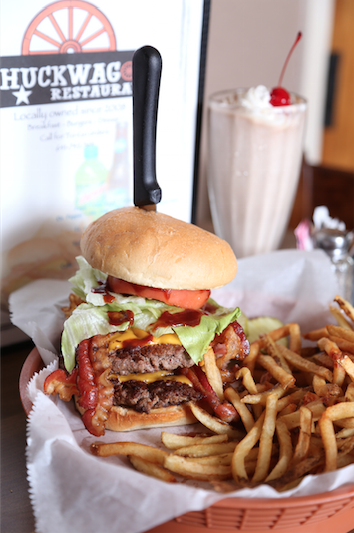
    The burgers served at the Chuckwagon are 6-ounce, hand-pattied Screen Shot 2016-05-02 at 10.55.54 AMCertified Angus Beef®. Cooked on a flat top with house seasoning, they’re made to order and served with toasted buns or grilled bread. Customer favorites include the bacon cheeseburger and the Chuckwagon, a burger served on grilled bread with sautéed onions, mushrooms, bacon, tomato and Thousand Island dressing. Served alongside homemade fries and a classic milkshake, the meal is hard to beat!

    The restaurant, which is clearly visible from Interstate-80 on exit 76, is open from 8 am to 10 pm during the summer. (It’s open 8 am to 9 pm year-round.) Burgers start around $9, but the “Burger of the Week” is $2 off. Breakfast is served all day. Seating capacity is 112 and a patio was added in 2015, so there isn’t usually a wait. However, the Chuckwagon Restaurant is happy to take reservations.

    The Best Burger contest is sponsored by the Iowa Beef Industry Council and Iowa Cattlemen’s Association. Nominations are collected during February and March, and the 10 restaurants with the most nominations are visited by a secret panel of judges. This year’s winner, the Chuckwagon Restaurant, continues a tradition of quality beef that will not disappoint!

    Team Latham

    May 2, 2016
    Agriculture, General, Industry News
  • Latham Hi‑Tech Seeds

    Top 5 Takeaways from Iowa State University

    ISU kilah

    By Kilah Hemesath, Latham Hi‑Tech Seeds Marketing Intern

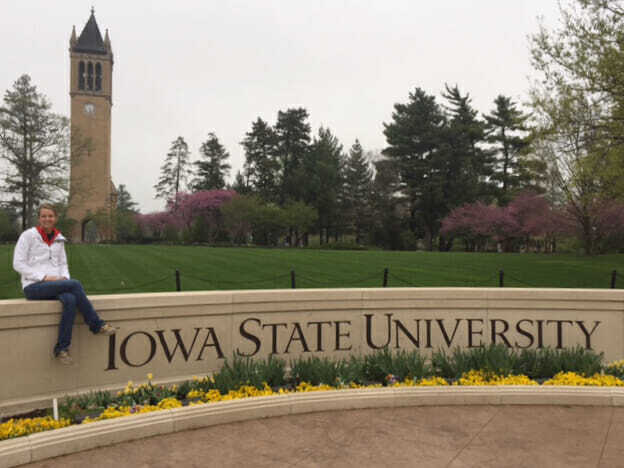
    My life as a college student will soon be a memory. I’ve ISU kilahfound myself growing personally and professionally during my time at Iowa State University (ISU), equipping me with the skills to start my career. From the classmates who turned into friends and the supervisors who turned into mentors, ISU helped create my adventure.
    Looking back on the last four years, I comprised a list of the top 5 takeaways from ISU that are lessons I will carry with me throughout my life.

    1. Be spontaneous
      Living in a new town on your own is one thing, but making the best of it is another! Take advantage of your free time and independence. Be spontaneous! You never know with whom you may cross paths or when you’ll find your next hobby or interest. Give yourself the leeway to be adventurous!
    2. Good things happen when you step outside your comfort zone
      Economics classes have taught me that “high risk creates high reward.” Apply this same concept when you’re on the fence about running for office or applying for an internship. Some of the best things happen when we step outside of our comfort zone and find out what we are truly capable of.
    3. Keep the big picture in mind
      Four years may seem long, but it’s just a flash in the pan compared to the rest of your life. Homework assignments and club meetings can be tedious, so it’s important to keep the end goal in sight. The building blocks of a successful career start with going to school, being involved in clubs and on-campus organizations, as well as completing internships.
    4. Turn negativity into positivity
      It’s easy to become discouraged when a test doesn’t go as planned, or you don’t get the internship you’ve been eyeing for a year. Channeling your energy from a negative outcome into a positive alternative forces you to grow beyond your initial expectations. In disappointing times, remember you can’t control the outcome but you can control the way you react to it!
    5. Don’t Regret the Past
      We all have bumps in the road, but don’t get hung up on them. I believe that every situation leads to a new experience, which has brought me to where I am today. There is always something to improve upon, but look toward the future rather than regretting a past circumstance past. Challenging situations taught me valuable life lessons that helped shape me into who I am today.

    It’s bittersweet knowing that graduation is so close, but I’m ready for a new challenge! I know that the lessons I have learned while attending ISU have helped prepare me for an exciting future. Although driving by campus will never be the same, I know every beginning comes from some other beginnings end.

    Webspec Admin

    April 28, 2016
    Agriculture, General, Industry News
  • Latham Hi‑Tech Seeds

    Building Remodel will Increase Sow Comfort

    LarrySailer AgriNews1

    LarrySailer-AgriNews

    With a new pork processing plant trying to build a new state-of-the-art plant in a town 45 miles north of me, it seems to have stirred up a storm about modern livestock production again. I really thought pig farmers like me were doing a very thorough job of explaining why we farm the way we do, but apparently we have more work to do!

    That’s why today I’m writing about some of the methodical processes I undertake on a daily basis to help update sow farms across the Midwest. After raising hogs for more than 50 years, I’ve returned fulltime to the construction side of pig farming. Currently I’m supervising a large remodel project on gestation barns for a family operation.

    Gestation barns are where the momma pigs return after their litters of pigs are weaned. We want to provide as much comfort as possible and reduce stress for these sows whose litters have been newly weaned. I’m not going to use a word such as happy when I talk about an animal because too many people think of an animal in people terms. However, I put this in terms of animal health and care.

    A very critical time when caring for sows is right after their pigs have been weaned. Animals need to be as “stress” free as possible, so animal comfort is a one of our primary goals. That’s why the timing of weaning is so important. Before weaning pigs, farmers must consider: (1) What is best for the little pigs; (2) When the little pigs can start eating feed; and (3) The time that is it best for the sow.

    All of these questions are being considered as we remodel the gestation buildings because taking the very best care of the sow pigs is critical to the success of a pig operation.

    Another critical part of my job is disease control. About 30 construction workers are working on the remodel, so we must make sure a disease isn’t brought in to this sow herd. If there are sows in the rooms where we are working, my workers must “shower in.” This process means a worker cannot bring even a cell phone in to the sow unit. The tool and parts we need must be disinfected and then wrapped in a tarp overnight to make sure potential diseases are killed.

    Pigs are removed as we remodel the barns. While this helps us get the work done, we’re also feeling the pressure to finish the work on schedule. If the barn remodel isn’t done on time, the cycle will be disrupted. The farrowing rooms won’t be kept full and our efficiency will decrease. Empty birthing rooms equal lost production for pig farmers, and it affects our operation all the way through the nursery and finish barns.

    Our company is committed to deliver a certain number of pigs to market, so the processing plants can run smoothly and efficiently. (See how the entire industry is intertwined?) We’re also trying to break disease cycles simply by keeping barns empty and disinfecting them, just like an operating room in a hospital!

    I’ve talked before about all the systems (feed, water and air) that it takes to keep our pigs in a stress-free environment. Hopefully, today’s blog helps explains more about how complex it really is. It takes extensive work to do what’s right for our pigs, the environment and our people!

    Larry Sailer, Musings of a Pig Farmer

    April 26, 2016
    Agriculture, General, Industry News
  • Latham Hi‑Tech Seeds

    The Top 4 Reasons to Join NAMA

    IMG 3967

    by Kilah Hemesath, Latham Hi‑Tech Seeds Marketing Intern

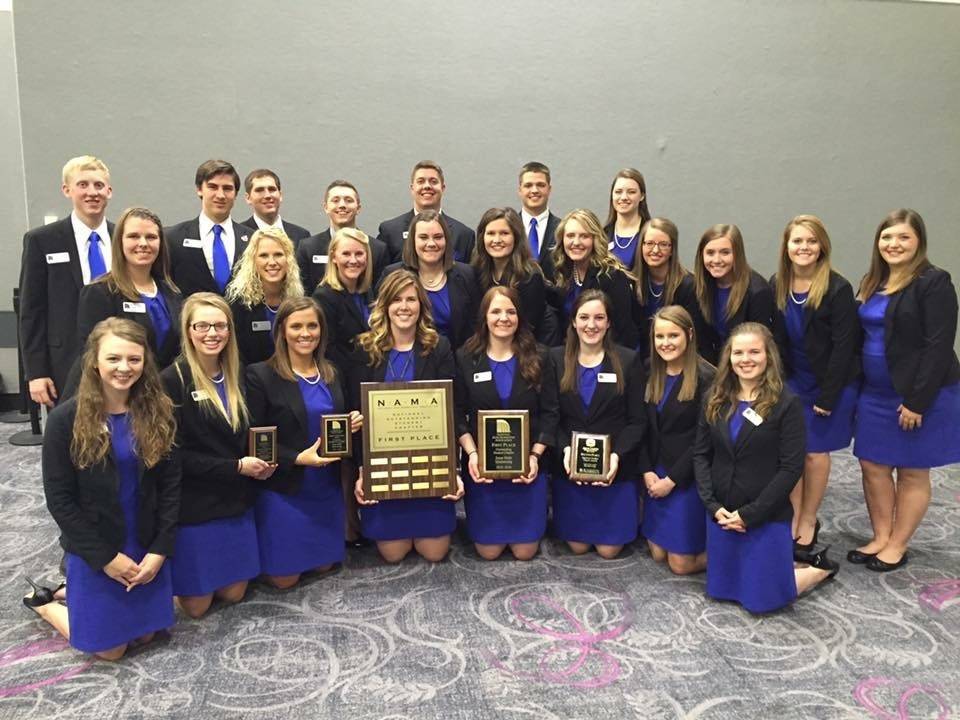
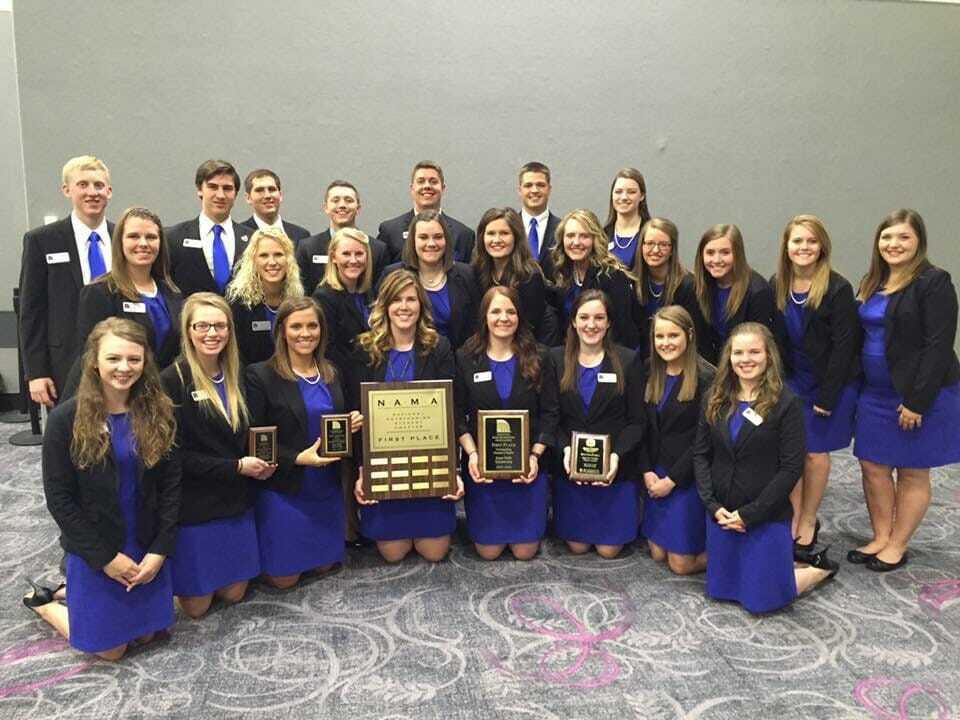
    “It’s never too late to try something new” is what my advisor told me during the second week of school last fall. My decision to become part of the ISU’s National Agri-Marketing Association (NAMA) Marketing Team was a spontaneous one that turned out to be a highlight of my college career.

    As a part of the marketing team, we developed a three-year marketing plan rollout for a new product, including marketing materials and a final presentation for competition. The 2016 competition took place in Kansas City, Missouri from April 12 – 15. I have included the top 4 reasons why any college student should become a part of the NAMA club or marketing team.

    1. You will make life-long friends.

    Being on the NAMA Marketing Team, I spent countless hours with the same group of people. While spending so much time together, the only option is to become friends! I would not have had the opportunity to meet and interact with such talented people if I would not have been involved in NAMA.

    1. Gain skills that are not taught in the classroom.

    NAMA offers real world experience that is not taught in the classroom. This isn’t due to lack of curriculum, but because of the complexity of our project. It required our team to identify a market potential and target market for our product, perform secondary and primary research, then develop a presentation and marketing materials and plan for competition, judged upon by professionals in the industry.

    1. You will become apart of something larger than yourself

    Achieving a personal goal is satisfactory, but NAMA gives you the chance do so on a larger level. While being a part of NAMA, you are constantly surrounded by people with the same passion as you, working towards the same end goal.

    1. Networking, networking, networking

    There’s not better place to network than a conference of students and professionals in the same industry! The student competition is just one portion of the conference; there are break out sessions and mingling events for professionals as well. Networking is key when building your brand in the industry.

    The ISU NAMA Marketing Team made it past the first round and into the semi-finals! Although we did not advance into the finals, the skills gained and lessons learned served all students well. Consider these pointes when contemplating on joining any extra circular activity. Just remember, it’s never too late to try something new!

    IMG_3967

    Webspec Admin

    April 21, 2016
    Agriculture, General, Industry News
  • Latham Hi‑Tech Seeds

    Food Choice Today Affects Hunger Tomorrow

    IStock 000022894424 Large

    Hunger and the 20 million kids that starve every year are on the top of my mind again this week because of so many uninformed decisions being made by people who simply do not realize what effect they can have.

    Again in the news, an African nation is letting its people starve rather than allow food aid from sources connected to genetically modified organisms (GMOs). Not one person has proven to have been harmed by this GMO technology, yet millions of adults and children are dying every year because a government decides not to accept U.S. food aid.

    The EPA seems to always be in my news feed. Now this agency is taking heat, once again, for funding anti-farm billboards that state farmers need more regulations. While this may be a little more subtle, it’s an example of how federal regulations makes food more difficult and expensive to grow. Kids starve because of this agencies policies!

    The misinformation being taught in our schools is concerning too. This week I read schools are teaching kids that grazing cattle is more environmentally friendly than feeding corn to cattle. This sways opinions and, during their formative years, children misunderstand how food is raised. This too, affects how food may be grown in the future. Honestly, the most efficient and productive way to raise cattle depends largely on geography. In Iowa, it’s more efficient to raise corn on our productive ground and then feed that corn to our cattle. There are some areas, especially out west, where crops cannot grow today. However, cattle can convert forage from 75 percent of the land that cannot grow food. Rangeland can be managed properly if the government doesn’t get in the way.

    Agriculture can lead to economic development opportunities until information gets misrepresented or politicians get overly involved. Such is the case currently in North Iowa where there is an opportunity to bring a processing plant to process pork that would potentially employ 2,000 people. Think of what these jobs could mean to local school enrollments and dollars spent in local stores!

    Half our citizens are on some type of assistance. Kids need to eat two meals in school because there aren’t getting the proper nutrition at home. Yet, many North Iowans say they don’t want “the type of jobs” that a processing facility would bring. They’re raising concerns about the smell and pollution.

    When the opportunity comes to help with these problems presents itself, they look for the downside. Why? Is the number of food insecure families here due to a lack of jobs? Or is it a lack of understanding of how food is raised? Or how nutritious food is prepared?

    How do we make it possible for all to eat? This election can make a difference! Politics get old… but we can’t ignore the fact that kids are going hungry! How can you make a difference? Get involved!

    Larry Sailer, Musings of a Pig Farmer

    April 19, 2016
    Agriculture, General, Industry News
Previous Page
1 … 17 18 19 20 21 … 85
Next Page

Latham Hi‑Tech Seeds

131 180th Street | Alexander, IA 50420

(641) 692-3258

SIGNUP FOR OUR NEWSLETTER
  • Contact
  • Legal
  • Dealer Center
  • Seedware Login
  • Latham Gear

© 2025 Latham Hi‑Tech Seeds. All rights reserved. | Iowa Web Design by Webspec | Privacy Policy

Latham® Hi-Tech Seeds is a trademark of M.S. Technologies, L.L.C., 103 Avenue D, West Point, IA 52656.