Latham Hi-Tech Seeds

(641) 692-3258

  • Home
  • Products
    • Corn
    • Soybeans
    • Alfalfa
    • Corn Silage
    • Seed Guide
  • Performance
  • Find a Rep
  • Media
    • Blog
    • News
    • Videos
    • Podcasts
    • TECHTalk
  • About Us
    • Company History
    • Our Mission
    • Careers
    • Become a Rep
    • Sowing Seeds of Hope
  • Contact Us
  • Latham Hi‑Tech Seeds

    Ways to Avoid Goss's Wilt in 2012

    Goss’s Wilt, which has plagued Nebraska corn fields since 1969, has been spotted in Iowa this season.  Iowa farmers are searching for ways to protect yield potential yet this season, as well as avoid the problem in 2012, says ISU Plant Pathologist Alison Robertson.

    There are three products that Robertson says she’s heard Iowa corn growers are trying to treat Goss’s Wilt: Procidic, Kocide and Intercept.  Procidic is advertised as a broad spectrum fungicide and bactericide.  However, Robertson isn’t aware of any published data for the effect of Procidic against bacterial diseases or use on corn. Kocide is not labeled for use on corn to manage Goss’s Wilt, so Robertson said it should not be used.  A third product that Iowa growers are reportedly trying is Intercept.  There is very little information available on this product, but it’s reportedly been used in Florida to control citrus canker, which is also caused by a bacterium.

    Robertson is monitoring a corn field in Gilbert, Iowa, that had an application of Procidic, as well as an earlier application of Stratego YLD. She says she also will be evaluating fields where Intercept has been applied.  At the end of the growing season, ISU researchers will study the effect of both products on Goss’s Wilt disease development and general plant health of the corn.

    “Continuous corn production together with minimum tillage practices have in part contributed to the epidemic of Goss’s wilt we are witnessing in 2011,” says Robertson in a recent Wallaces Farmer article.  “Other factors include susceptible germplasm and stormy weather.”

    To avoid Goss’s Wilt in 2012, farmers should keep recommended management practices in mind.  Best practices include growing resistant corn hybrids, using crop rotation and crop residue management.
    Team Latham

    August 15, 2011
    Agronomics, Corn, Crop, Disease, General
  • Latham Hi‑Tech Seeds

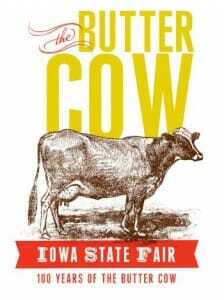
    It’s State Fair Time… Time to Pat the Butter!

    Butter cow

    Nothing compares to the Iowa State Fair, Aug. 11-21!  Where else could you watch celebrities build awe-inspiring exhibits with Canstruction®, one of the world’s most unique food charities?  Or eat a multi-course meal on a stick including cheese cube appetizers, fruit kabobs, pork chop entrées and fried Twinkies for dessert? Where else could you visit Crystal Studios and see the live production of a top-rated farm broadcast?

    Be sure to tune into “The Big Show” on Monday, August 16, between 11:30 a.m. and 1:00 p.m. as I’ll be a guest of Mark Pearson and Bob Quinn.

    Next week I’ll experience all of this and more!  One of my first stops on the fairgrounds will be at 1040 WHO Radio’s Crystal Studios.  Be sure to tune into “The Big Show” on Monday, August 16, between 11:30 a.m. and 1:00 p.m. as I’ll be a guest of Mark Pearson and Bob Quinn. I never know exactly what we’ll be discussing on-air, but I’ll be sure to provide an update on Latham Hi‑Tech Seeds’ / WHO Radio Crop Tour 2011 stops.

    My next stop on the fairgrounds will be in the Agriculture Building.  This year marks the 100th anniversary of the butter cow, so I can’t wait to see what’s in store for this milestone celebration.  “While other state fairs may mimic the butter cow or tout other creamy creations, none has gained as much fame as the original,” said Iowa State Fair President Gary Slater in an AP article on Aug. 10.  “None of the others have become that one thing that when you think of the fair like you do here at the Iowa State Fair.  It’s become our icon.”

    I’ll go from the iconic butter cow exhibit to a brand new exhibit by Iowa Food & Family featuring Canstruction.  Located in the south entrance of the Varied Industries Building, this exhibit will feature a larger-than-life replica of the butter cow made from canned food items.  Throughout the week, celebrities like Iowa Secretary of Bill Northey and ISU’s beloved mascot, Cy, will be help build works of art from canned foods.  After the fair, all canned food items will be donated to the Iowa Food Bank Association.  You can even participate by bringing your own non-perishable food items to this special exhibit.

    Yes, indeed, nothing compares to the Iowa State Fair!  As a tribute the fair – and in honor of National Peach Month – today I’m sharing with you one of my daughter’s favorite breakfast foods.  She loves the wholesome goodness of these Honey Peach Muffins.  And what goes better with muffins than Real® butter?  Try your hand at making these pretty, yet simple, star-shaped pats of butter or whip up some home-made butter in a jar.

    What is your favorite thing to do, see or eat at the state fair?

    Team Latham

    August 12, 2011
    Agriculture, General, Industry News
  • Latham Hi‑Tech Seeds

    In-Field Earworm Studies Underway

    Some people “paint the town.”  At Latham Hi‑Tech Seeds headquarters in Alexander, we’re painting the corn fields!

    Research Technician Gary Bennett and I used ½-inch paint brushes to apply nearly 500 earworm larvae to approximately 70 ears each of seven different Latham® hybrids.  These hybrids featured various technologies and trait packages, including Agrisure Viptera™ 3111 and Genuity® VT Triple PRO™.

    Our research objective is to record the level of corn earworm protection offered by the different hybrid traits and technologies.  We’ll be taking field notes to record feeding and crop damage every couple weeks.  Watch for photo updates soon!

    [youtube]http://www.youtube.com/watch?v=Yi_G7l0-v4Y&feature=channel_video_title[/youtube]

    Webspec Admin

    August 11, 2011
    Agronomics, Corn, Crop, General, Insects
  • Latham Hi‑Tech Seeds

    "Tipping Back" is a Sign of Heat Stress

    Farmers across the state are starting to see “tipping back,” where kernels aren’t filling all the way to the end of an ear of corn.  In this video report, Latham’s Corn Product Specialist explains why high temperatures for prolonged periods during key corn developmental stages have attributed to the amount of tipping back that’s evident this season.

    Stress can result in tipping back, agrees Iowa State University (ISU) Extension Corn Agronomist Roger Elmore.  Kernels may not have pollinated in the first place or pollinated kernels may have been aborted around milk stage or blister stage.  For more information on what causes tipping back, click here to read a related Wallaces Farmer article.  To read how tipping back affected yields in 2010, click here.

    Night-time temperatures after silking greatly impact yield.  Cool night-time temperatures after silking in 2009 resulted in the highest average statewide corn yield ever recorded in Iowa.  On the contrary, warm night-time temperatures contributed to lost yield in 2010.

    [youtube]http://www.youtube.com/watch?v=4sJ1aRzFLTU&feature=channel_video_title[/youtube]

    Team Latham

    August 9, 2011
    Agronomics, Corn, Crop, Disease, Drought, General, Weather
  • Latham Hi‑Tech Seeds

    Together We Can, A Celebration of Food and Farming

    Aaron Putze
    Director of External Relations &
    Coordinator, Iowa Food & Family Project
    Iowa Soybean Association
    aputze@iasoybeans.com

    There are few celebrations more enjoyable and meaningful than the Iowa State Fair! After all, it’s not just every day that you can enjoy a pork chop on a stick, fried Twinkies and a full menu of entertainment – both new and old – that’s perfect for people of all ages.

    Speaking of new, the Iowa Food & Family Project (www.iowafoodandfamily.com) will make its debut in a big way at this year’s Fair by bringing together thousands of canned food items and a committed team of volunteers. Together, they’ll create a first-of-its-kind exhibit at one of the most popular celebrations of food, fun and agriculture in America!

    We’re calling it “Together We CAN!” – a celebration of food and farming benefiting the Iowa Food Bank Association, and you’re invited to be a part of the festivities!

    The exhibit will feature the awe-inspiring work of Canstruction®, one of the world’s most unique food charities. Canstruction is a non-profit organization that holds annual design-and-build competitions to construct giant-sized structures made entirely of canned food. Since 1992, Canstruction has contributed more than 15 million pounds of food to community food banks.

    Located in the south atrium of the Varied Industries Building 9 a.m. – 9 p.m. daily, this must-see exhibit will include larger-than-life replicas of the Iowa State Fair butter cow (in honor of its 100th anniversary), a milk carton, market-size hog and landscape of soybeans and corn fields — all sculpted from thousands of cans of food (the actual build will take place Aug. 11-14). Following the fair, all food items used in the exhibit will be donated to the Iowa Food Bank Association (IFBA) benefiting Iowans struggling against hunger.

    The purpose of the exhibit is to encourage conversations about farming, inspire greater awareness of the commitment of Iowa farmers to providing healthy food for everyone and provide a helping hand to people and families struggling with hunger.

    You’re cordially invited to stop by and view this extremely innovative and unique exhibit. In addition to seeing an incredible work of art and donating to the Iowa Food Bank Association, you can also receive a free gift and watch “Celebrity Builders” lend a hand during the exhibits “Canstruction!” They include “Cy,” Iowa Ag Secretary Bill Northey, Des Moines native Rebecca Meyer (the Season 8 at-home $100,000 winner of NBC’s “The Biggest Loser”) and members of Casting Crowns, a Grammy Award-winning contemporary Christian rock band (see our web site for a complete list of Celebrity Builders!).

    We’re looking forward to engaging fairgoers about the miracle of food and introducing them to the people who provide it! In the meantime, be sure to “friend” the Iowa Food & Family Project at www.facebook.com/foodnfamilies and check out our web site for more details!

    See you at the Iowa State Fair!

    Gary Geske

    August 8, 2011
    Agriculture, General, Industry News
  • Latham Hi‑Tech Seeds

    It’s August: Let the Hogs Loose!

    Motorcycle view1

    Summer is the perfect time to let loose, right? That’s why Latham Hi‑Tech Seeds is getting ready to let the hogs loose along The Great River Road!

    Latham Hi‑Tech Seeds is hosting its 3rd Annual Freedom of Independence Ride on Saturday, August 27. Riders will learn about exciting new Latham® seed products as we travel some of the most scenic roads in northeast Iowa and southwest Wisconsin.

    Open to all farmers – Latham Seeds customers or not – it’s a great way to mix and pleasure before the harvest rush. We’ll start in Prairie du Chien at noon with grilled lunch.  Then we’ll visit four Latham Technology Showcase plots for agronomic insights and a look at new seed technologies. We’ll ferry across the Mighty Mississippi before returning to Prairie Du Chien for a hog roast around 6:00 PM.

    Latham holds independence close to heart.  And nothing shows an independent spirit like an American farmer – except perhaps an American farmer on a Harley or one who’s showing some “muscle.”  By request, we’re welcoming muscle cars for friends who want share the spirit in their four-wheeled beauties.

    Come join the fun!  Rev it up with Latham Hi‑Tech Seeds on Saturday, August 27.  Register today as the number of riders/drivers is limited!

    In honor of our upcoming ride and hog roast, today we’re featuring a recipe for pulled pork sandwiches by one of America’s most renowned grill masters.  Bobby Flay is known for having fun while cooking up bold, vibrant flavors.  And “fun, bold and vibrant” certainly describes Latham’s Freedom of Independence Ride.  Enjoy!

    In my humble opinion, nothing goes with barbecue quite like a slice of homemade peach cobbler or pie.  Here’s a link to my favorite, fool-proof and delicious recipe for Colorado Peach pie.

    Gary Geske

    August 5, 2011
    General, Pork, Recipes
  • Latham Hi‑Tech Seeds

    Seeing Signs of Goss' Wilt in Latham Country

    Guest Blogged by John Toft
    CCA, Tekemah, NE

    Symptoms of Goss’ Wilt were reported earlier this growing season in Nebraska and Iowa.  With all of the storm damage in these areas, including hail and straight-line winds, it’s no wonder that we’re receiving even more reports now of Goss’ Wilt.  Stalk bruising and leaf shredding provide ways for pathogens to enter the corn plant.  High night-time temperatures, which we’ve also experienced recently, favor the spread of Goss’ Wilt.

    Goss’ Wilt causes large lesions that start on the leave’s margins and eventually encompass the entire leaf.  These lesions look very similar to Gray Leaf Spot injury.  One simple, but not fool-proof, way to diagnose the difference is that Goss’ will have a waxy appearance due to the different

    Note the waxy, shiny appearance to the lesions caused by Goss' Wilt

    pathogens that cause the disease.  Gray Leaf Spot is caused by a fungus while Goss’ is caused by a bacterium, which means Goss’ Wilt cannot be controlled by a fungicide.  Effective control measures include crop rotation, tillage and hybrids that show genetic resistance.  Latham’s 2012 lineup has a number of hybrids with excellent disease packages, so keep this in mind as you make your seed decisions in the coming months.

    The bacterium responsible for Goss’ Wilt may infect the xylem, or water-conducting tissues of the plant, which results in wilting and death.

    Seed selection is most likely going to play an even more important role as Goss’ Wilt becomes more prevalent.  Bacterial wilt was first reported in Nebraska more than 40 years ago, and the list of states affected keeps growing.  Goss’ Wilt has been identified in Kansas, Colorado, Wyoming, South Dakota and Iowa.  The disease has also been confirmed in Illinois and Wisconsin, according to a NebGuide article, “Goss’s Bacterial Wilt and Leaf Blight of Corn,” published by the University of Nebraska—Lincoln Extension.

    Gary Geske

    August 2, 2011
    Agronomics, Corn, Crop, Disease, General
  • Latham Hi‑Tech Seeds

    Scouting for SDS is Important

    Sudden Death Syndrome (SDS) typically appears during the last week of July or the first week of August in Latham Country, so farmers are being advised to keep their eyes open for this yield-robbing disease.  Cool, wet conditions at planting time can contribute to the severity of SDS.

    “Although we do not expect SDS to be as widespread or as severe as the 2010 growing season, there have been some Iowa counties that have received higher-than-normal precipitation,” said ISU Plant Pathologist Alison Robertson in a recent Wallaces Farmer article. “We expect the risk of SDS in these counties to be higher since the development of this disease is favored by wet conditions.”

    Scouting for SDS is important for several reasons:

    1. Identifying fields or parts of fields with SDS can help with future management practices. These management tactics include reducing soil compaction since the disease has been associated with compacted soil; planting fields with a history of SDS towards the end of a planting schedule when soils may be warmer and drier; and testing for the presence of soybean cyst nematodes.
    2. Cyst nematode is usually, but not always, associated with SDS. You may see more severe cases of SDS in soybean varieties that are SCN-susceptible. When selecting soybean seed, it’s best to read through the SDS score rather than judge a bean solely by SCN tolerance.
    3. Planting resistant varieties, or avoiding very susceptible varieties, is the most effective way to reduce losses from SDS. Keeping good field records from year-to-year will help determine which characteristics are most crucial when selecting soybean varieties to plant in a given field in a given year.  The following Latham® varieties carry excellent scores for SDS tolerance:
    • L1568R2
    • L1584R2
    • L1773L
    • L1783R2
    • L1800RX
    • L1884R2
    • L1936R
    • L2084R2
    • L2085R
    • L2183R2
    • L2275R2
    • L2283R2
    • L2438R2
    • L2560R
    • L2585R2
    • L2686L
    • L2767R2
    • E2784R2
    • L2875R
    • L2983R2
    • L2987L
    • L3157R
    • L3268R2
    • L3287L
    • L3385R2

    As you prepare to walk your fields, these videos shot last season by Soybean Product Manager Mark Grundmeier will explain what symptoms of SDS to look for in your fields.  You might also enjoy watching Mark’s brief, but informative, videos on SDS management and prevention.

    [youtube]http://www.youtube.com/watch?v=_Sdx4EqpNw4&feature=channel_video_title[/youtube]

    [youtube]http://www.youtube.com/watch?v=IgQYwdnU788&feature=channel_video_title[/youtube]

    [youtube]http://www.youtube.com/watch?v=_kvxo3D3SQ0&feature=channel_video_title[/youtube]

    [youtube]http://www.youtube.com/watch?v=V9_pXGl7y_Y&feature=channel_video_title[/youtube]

    Team Latham

    August 1, 2011
    Agronomics, Crop, Disease, General, Soybeans
  • Latham Hi‑Tech Seeds

    Savor the Moment: August is National Peach Month

    Those of you who know me well, know that I believe in savoring the moment – literally.  I make time to enjoy life’s simple pleasures like a good summer-time read and a home-cooked meal.  That’s why I especially enjoy best-selling author Debbie Macomber’s series and her virtual cookbook.

    “In case you haven’t guessed, I love food,” exclaims Debbie in the introduction to her online cookbook.  “That’s why I include a recipe section here for those who enjoy cooking and eating as much as I do.”

    Raspberry Peach Cobbler

    My sentiments exactly!  These two sentences succinctly describe why I started featuring recipes each Friday on TheFieldPosition.com.  So, you can only imagine how excited I was recently when I saw this recipe online for Raspberry Peach Cobbler.  It caught my attention because: I love raspberries; I love peaches; and August is National Peach Month.  Plus, this cobbler is made with fruit and yogurt – it has to be good for you, right? 🙂  (That’s what I’m going to tell myself when I go back for seconds!)

    Another recipe that’s sure to make you desire seconds is my mom’s Rice Crispy Chicken.  It’s an easy way to feed a large number or people when entertaining at home, or it can be prepared ahead of time and enjoyed as picnic fare.

    I love picnics, whether they’re summer picnics or fall picnics. Fall also makes me think of riding combines when customers harvest their Latham® top-performing products, as well as the September release of the next book in Debbie Macomber’s Cedar Cove Series, 1105 Yakima Street.  There’s just so much to look forward to!  But, in the meantime, I’m going to savor today and what’s left of summer.

    How do you plan to “savor the moment”?  What would you like to cross off your “must see or must do” list before Labor Day arrives?

    Team Latham

    July 29, 2011
    Desserts, General, Recipes
  • Latham Hi‑Tech Seeds

    Help Save Glyphosate

    Glyphosate has been called the world’s greatest herbicide because its overwhelming use and acceptance has made it the most widely used product on the market today.  Dr. Stephen Powles, world-renowned expert on weed resistance, takes it one step further by saying that glyphosate is to weed control in agriculture as penicillin is to disease and infection treatment in medicine.  Both are considered miracle products and given the distinction of being a “once-in-a-100 year discovery.”

    So what can be done to help preserve the use of this wonderful chemistry?  According to many weed scientists in the Upper Midwest, there are some basic steps that every farmer should take to prevent the onslaught of glyphosate-resistant weeds:

    • Know your weeds and know your fields. Closely monitor problem areas with tough-to-control weeds or what may be considered escapes or misses.
    • Start with clean fields. Use tillage, residual herbicides and/or burndown applications of herbicides to control all emerged weeds before planting.
    • Apply herbicides correctly. Proper application methods and rates are crucial to season-long control.  The three most important factors are timing, timing and timing!
    • Control weed escapes. Because of the long-term ramifications of this problem, farmers can no longer be satisfied with “economic thresholds” of weed control.
    • Reduce the seed bank. Surviving weeds must not be allowed to set seed and thereby become the dominant weed species.
    • Clean equipment. Prevent the spread of these resistant weeds at all cost.

    No single tactic will protect the potential crop yield nor deter the evolution of herbicide-resistant weed populations, said ISU Extension Crop Weed Specialist Mike Owen, in a blog article he posted earlier this season. Be proactive and manage herbicide resistance before it becomes a major problem. Diversity of tactics is the key to consistent weed management and high crop yields.

    Webspec Admin

    July 28, 2011
    General, Herbicide Technology, Industry News
Previous Page
1 … 123 124 125 126 127 … 159
Next Page

Latham Hi‑Tech Seeds

131 180th Street | Alexander, IA 50420

(641) 692-3258

SIGNUP FOR OUR NEWSLETTER
  • Contact
  • Legal
  • Dealer Center
  • Seedware Login
  • Latham Gear

© 2025 Latham Hi‑Tech Seeds. All rights reserved. | Iowa Web Design by Webspec | Privacy Policy

Latham® Hi-Tech Seeds is a trademark of M.S. Technologies, L.L.C., 103 Avenue D, West Point, IA 52656.