Take a look across Latham Country! We’re coming to you every week.
Latham Hi‑Tech Seed’s Corn Plot going in Northern Iowa!


Take a look across Latham Country! We’re coming to you every week.
Latham Hi‑Tech Seed’s Corn Plot going in Northern Iowa!

 By the time Latham Hi‑Tech Seeds offers a new corn hybrid, the number of places it has traveled in its developmental process is pretty “a-maize-ing.”
Let’s look at the developmental timeline and how your bag of corn seed gets so many frequent flyer miles. It can take at least five years to create a new hybrid with a new seed parent. These new corn lines like to travel. As a breeder, I become the travel agent coordinating their travel plans.
What are some of the popular destinations for these lucky kernels? We use fields in Hawaii, Mexico, Chile and Argentina. By using these countries, we can plant fields year-round to accelerate our development process. In some cases, we can get three growing seasons in one year.
We use these locations to develop new parents, remake successful hybrids, create new experimental hybrids to test each year and produce hybrid for new releases. No one country can efficiently meet all our needs, so using multiple locations allows us to do different processes to deliver a new product to you.
Your family uses passports to travel and gets inspected by the TSA to get on the plane. A corn family needs similar documents for travel. The difference is that your family typically can travel and get into a country within a day. Each seed shipment we send or receive needs its own inspection and unique documentation, depending on where it’s going. Seed is further inspected upon arriving at its destination. This trip can take up to a week or more if its paperwork isn’t accepted. Delays can affect whether the seed arrives home in time.
The next time you look at a bag of Latham brand hybrid seed corn, know that it might have as many airline miles as you do. Unfortunately, I haven’t found a way to collect and use those frequent flyer perks!
Did you enjoy this article? We want to (TECH)talk with you! Sign up for our newsletter to receive agronomy articles (and delicious recipes) in your inbox! We’ll talk soon.


One reason Latham Hi‑Tech Seeds opened its Premier Agronomy Center on the Latham family’s Iowa Century farm was to collect data using real-world practices and to research solutions for real-world problems. More farmers are interested in biologicals to reduce fertilizer and other input costs and/or to build soil health.
A biological product, or biofertilizer, contains living microorganisms that promote fertilizer efficiency or plant growth. Most of these products are naturally occurring in the environment but likely do not occur in high amounts in your field.
At Latham’s Premier Agronomy Center in 2022, we used Pivot Bio PROVEN® and Azotic Envita® on corn. Both nitrogen-producing bacteria products were trialed on a large scale and applied in-furrow with LH 5245 VT2 PRO RIB. PROVEN yielded 213.1 bushels per acre (bu/A), and Envita yielded 208.1 bu/A while the untreated LH 5245 yielded 206.2 bu/A. (Also please note that I applied about 40 lbs per acre less nitrogen on all the biological products, so I saved about $20 to $30 per acre when accounting for the product cost.) We have seen similar past results with PROVEN on our farm despite the dry conditions we have had. Envita also may be sprayed over the crop in-season — a process that our team will try in 2023.
Another biological/foliar product that I’ve used on my own farm for soybeans is BW Advance from BW Fusion. This product has foliar nutrients plus biologicals. When applied around soybean reproduction time, it can help reduce flower and pod abortion plus reduce moisture loss during drought stress. It takes about a 1.5 bu/A yield increase to pay for the product at current soybean prices. In 2022, I saw an average of 2.3 bu/A advantage. Keep in mind, 2022 was very dry and this particular field has some underlying fertility issues.
If you are going to try biologicals, you must take care of pH and other soil fertility deficiencies. The microbes in your soil, especially bacteria and fungi, thrive based on proper pH and physical soil environment. For example, if you have a pH of 5.0 or heavily compacted soils, you’re not going to see a boost in soil life until you correct those issues.
This year I used two foliar/soil-applied products, Midwest Bio-Tech’s Chandler Soil and TerraMax’s Ag Soft. The goal of these products is for compaction alleviation and residue management. I’m using these products on our cover crop and no-till plots. During the next few years, I will share results and show any soil structure changes. We also use seed-applied products, including Talc U.S.A.’s Microsurge inoculant and Encompass, as well as TerraMax’s Vertex and Micro MX.
How will we know which products may benefit our farm the most? Our plan is to try them! I will share soil health tests and how they can aid us in continuing to decipher the complex world of biologicals.
Did you enjoy this article? We want to (TECH)talk with you! Sign up for our newsletter to receive agronomy articles in your inbox! We’ll talk soon.
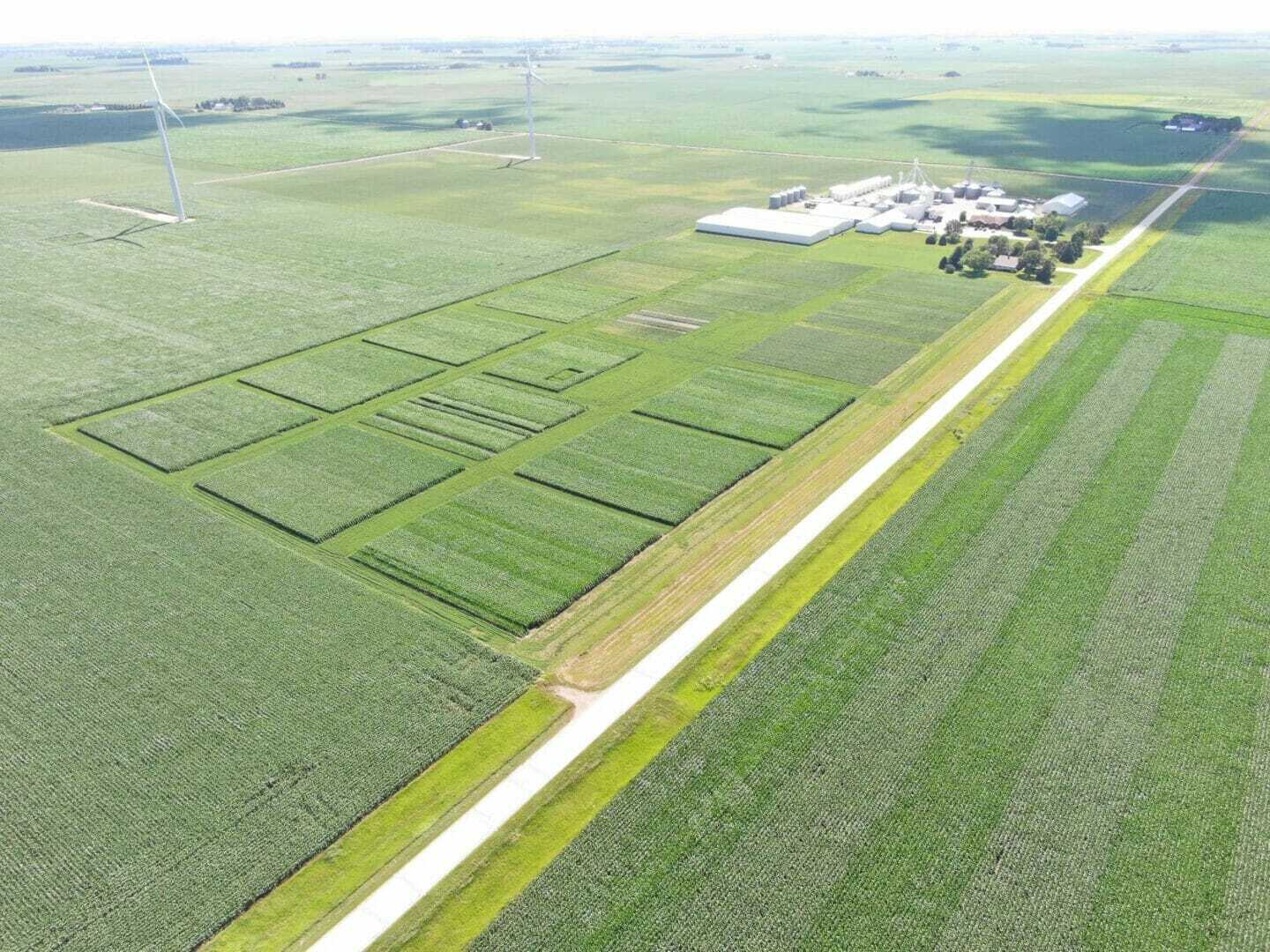
At the Latham Premier Agronomy Center, we have many demonstrations including different corn planting dates and planting depths to show how these two important factors influence yield year after year. Research shows that 50 to 75% of corn yield increases during the past 70 years came from genetic advancements, which leaves 25 to 50% of that yield increase to changes we’ve made to our farming practices.
Planting date and planting depth are cultural practices that have led to increased corn yield. Fifty years ago, farmers were talking about planting earlier than mid-May. Today we talk about planting earlier than April 15!
Our adapted hybrids produce the best yields when planted in the first week to 10 days of May. This is usually due to disease, stand loss or slow growth early in the corn life cycle. This is something we know well, and it’s why Latham Hi‑Tech Seeds includes emergence and early vigor scores in our product guide.
Matching the right hybrid to the right field and planting it at the right time can lead to outstanding yields – but only if you also plant at the proper depth. Planting corn at the proper depth allows the crown to establish approximately three-fourths of an inch below the soil surface.
Why is crown development so crucial? If the crown is pushed to the soil surface due to shallow planting, at least one set of nodal roots typically establishes above ground. We want nodal roots to develop below ground to anchor the plant and to also increase the corn plant’s drought tolerance. Corn should be planted about 2.5 inches deep, which allows it to establish the crown just below the soil surface. Shallow planting depth causes issues with germination due to dry soils.
We look forward to harvesting our demo plots at Latham’s Premier Agronomy Center and sharing results with you throughout the summer. Have a safe spring season!
Did you enjoy this article? We want to (TECH)talk with you! Sign up for our newsletter to receive agronomy articles (and delicious recipes) in your inbox! We’ll talk soon.
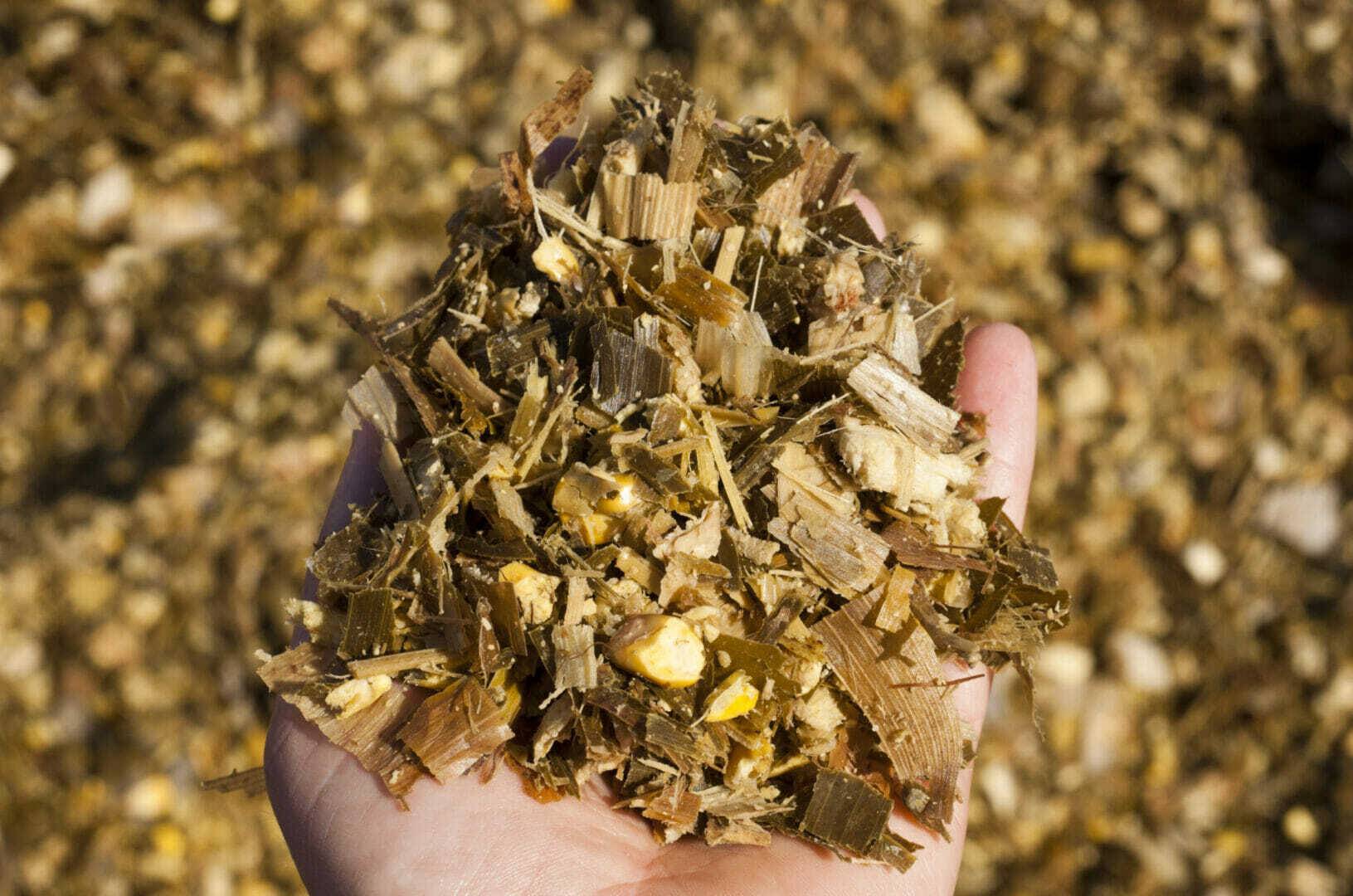

“Price is what you pay, but value is what you get.”
This adage holds true for corn silage research, too. That’s why Latham Hi‑Tech Seeds builds knowledge from previous years of corn silage research.
Latham Seeds has several locations across the Midwest where we evaluate corn silage grain yield plus these three important factors:
1. Economic impact to the livestock producers. Corn silage and alfalfa are more complex than cash grain crops as we look for high value in the fields and at the feed bunk. Research continually refines the impacts on beef and dairy on tonnage, fiber digestibility and starch digestibility.

Economic Benefit to Starch Digestibility. There is a lot of research about starch digestibility in beef and dairy. Less than 3% fecal starch is optimum. A study at University of Pennsylvania revealed a 0.72 pounds of milk/day decrease for every 1% increase of fecal starch. This equate to about $65,000 annually for a 1,000-cow dairy.
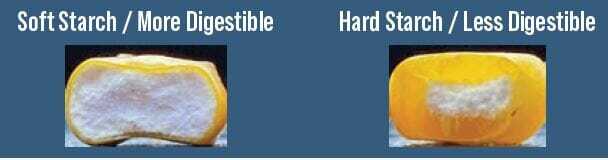
Economic Benefit to Fiber Digestibility. Generally, every point increase in fiber digestibility on a feed report is neutral detergent fiber digestibility (NDFD). A dairy cow can produce up to one-half pound more milk per day. When you factor that across 1,000 cows in a dairy for 365 days, having 1 point better digestion can have an economic impact of approximately $45,000 per year!
In review, consider factors beyond raw grain yield when evaluating corn silage hybrids. Selecting hybrids that have demonstrated better digestibility can be helpful to a livestock producer’s bottom line. Feel free to contact me if I can be of assistance as you’re writing early orders.
Phil Long, precision agronomy advisor, is scouting in the corn field. He highlights unique characteristics you could see with corn rootworm damage. You may be looking for the wrong thing!
Latham Hi‑Tech Seeds’ Premier Agronomy Center at our company headquarters in North Iowa provides us with opportunities to collect data on real-world challenges. It also provides us with an opportunity to talk about the exciting new Latham® products, as well as management practices, that help you raise more bushels. This year we have 18 different plots (10 corn and 8 soybean) to demonstrate different techniques.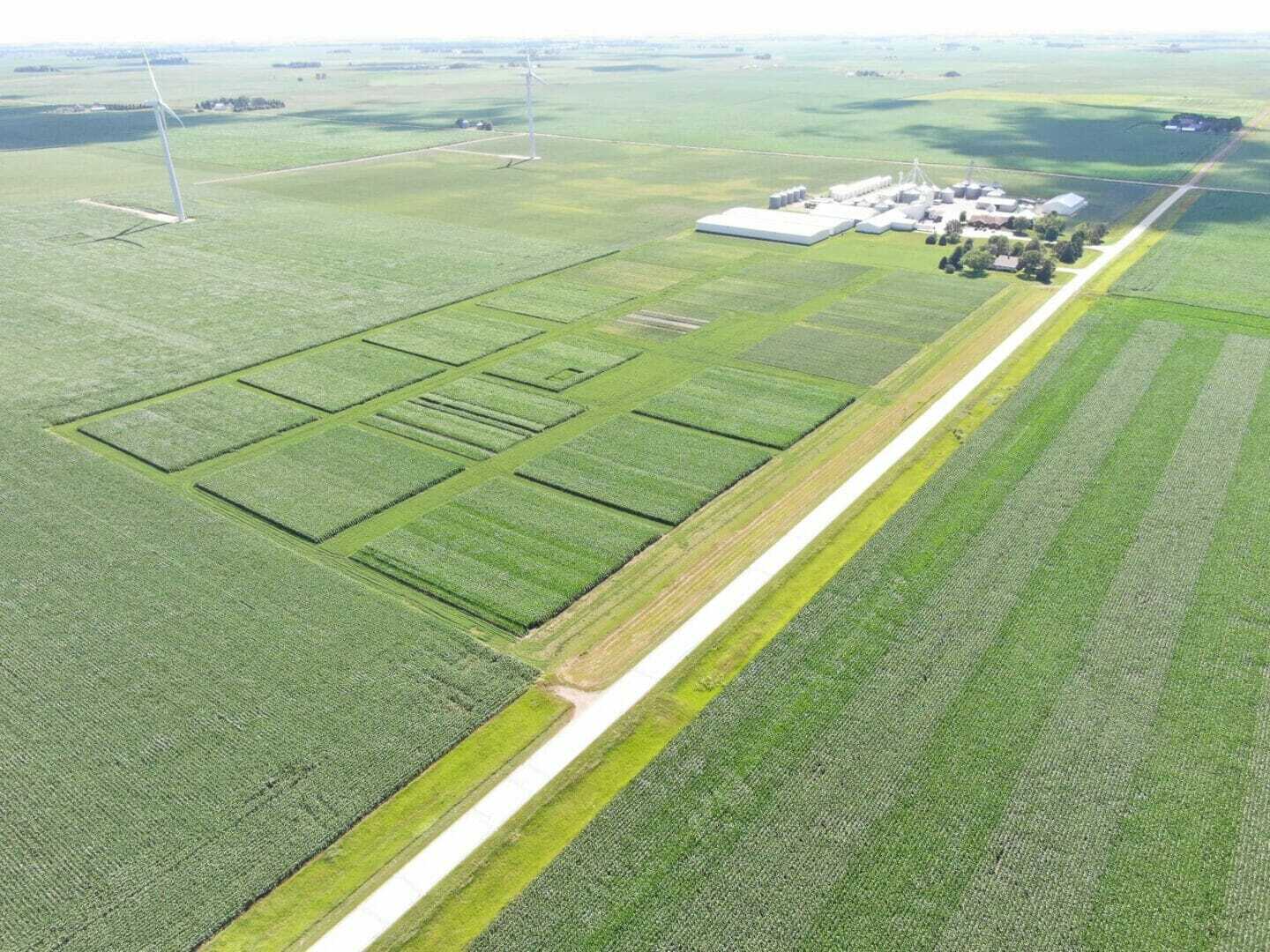
Interested in seeing Latham’s Premier Agronomy Center? Plan a visit! Latham Dealers are encouraged to make arrangements with their regional sales manager (RSM), so they can bring their customers throughout the growing season. We will be open for public tours on Thursday, Sept. 8, at 4 p.m.
Here’s what you can see inside Latham’s Premier Agronomy Center… As you drive west on 180th Street in Alexander, Iowa, you will see our Latham Showcase plots featuring our top corn and soybean products. Next to that are corn and soybean seed treatment demonstration plots. I also planted my hybrid stress research up front. Twenty different Latham hybrids were planted from 22,000 to 36,000 plants per acre, so we can pinpoint when each hybrid flexes and how we can better manage them in-season.
The second tier of plots contains high-yield plots (corn/beans) where we “throw the kitchen sink at it,” so to speak, to try to add some extra bushels. Our soybean Iron Deficiency Chlorosis (IDC) plot uses tactics like in-furrow chelated iron products with increasing population to overcome the challenges IDC can bring. We have a silage demonstration plot with a planting date demonstration. You’ll also see a sneak peak of Latham’s corn breeding program alongside some great observation plots featuring planting depth.
The third tier of plots are “long-term plots” that include cover crops, no-till and continuous corn. These practices come with many challenges, so we have several different products/treatments including in-furrow fertilizer, biologicals, in-furrow fungicide, and biological products for providing nitrogen to corn. We also have included herbicide demonstrations, showing how cover crops can increase water infiltration during pounding rains, as well as also reduce herbicide costs and improve weed control in soybeans.
All growing season long we’re providing opportunities to learn from our demonstrations in the Premier Agronomy Center. Follow @LathamSeeds on Facebook, Twitter, Instagram and YouTube. We share our weekly “Ask the Agronomist” videos, as well as season-specific information.
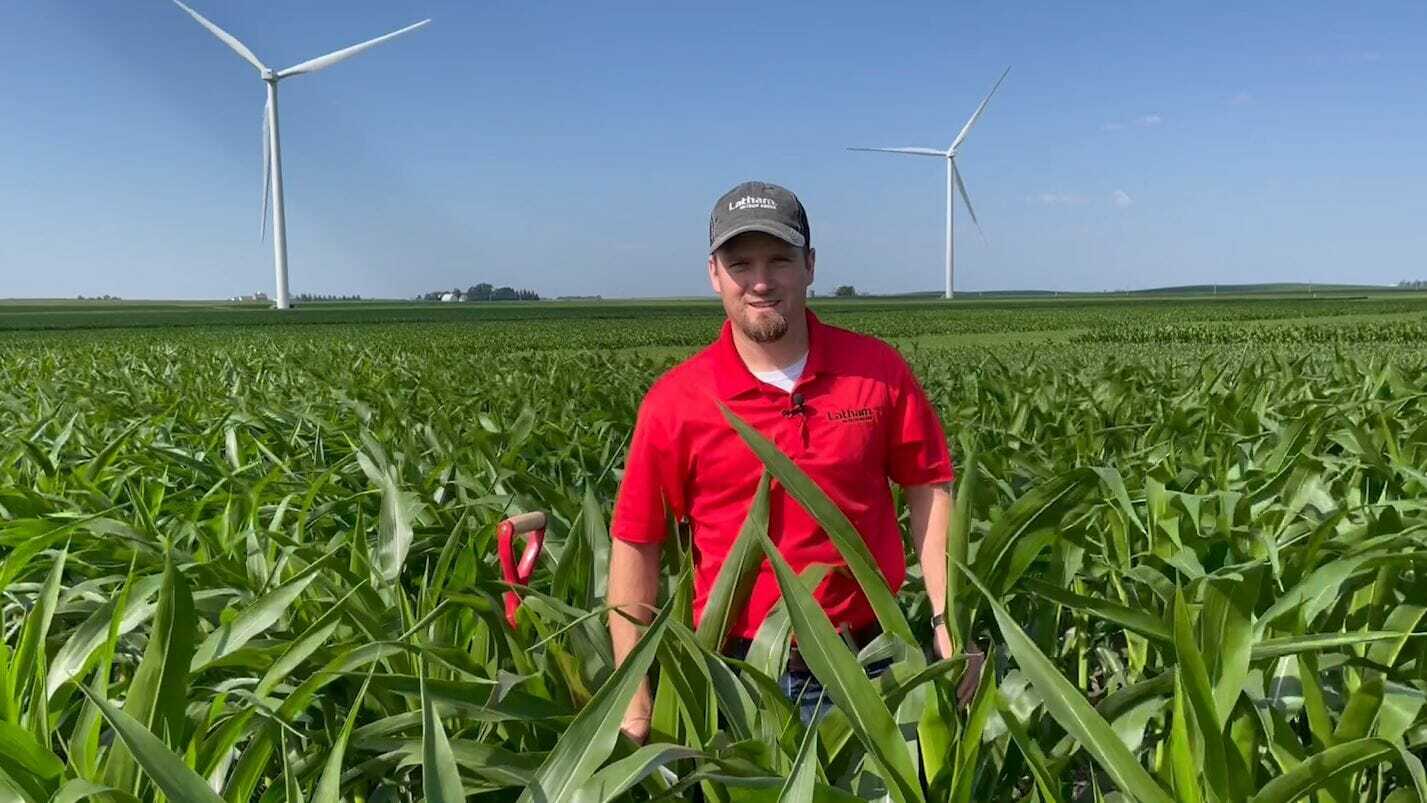
Phil Long is in the field this week looking at the rapid growth phase of corn. He also shares what to scout for this time of year and how to send in a proper tissue test. Check out the video or read the article below to learn more.
With current input and commodity prices, we must get the most from each crop. To help your crop reach its potential, start with fertility. Regular soil tests are great, but the next step is in-season tissue testing.
Tissue testing supplements your soil test. You shouldn’t take a tissue test without a current soil test in hand. Once you take the tissue test, compare it to your soil test. See where the two tests match. Then make plans to address those needs either this season or next season.
Tissue testing every two weeks shows how your crop is developing throughout the season. If you only can tissue test once or twice, I recommend pulling a sample early (V4 for corn or soybeans) and before grain fill (R1 for corn and R3 for soybeans). This will give you a good understanding of what needs are not being met during crucial development stages.
Here are some tips on how to use tissue testing to your advantage this season:
Check out other corn videos and articles on The Field Position.

It’s been a tough start to the 2022 season with delayed planting and cool weather. Phil Long, precision agronomy advisor, unpacks GDUs across Latham Country and when corn and soybean stands will really take off. Check out more agronomy videos.
The rain is causing some planting delays in Latham Country, so we thought we’d take a look at our alfalfa stand! Phil Long, precision agronomy advisor, dives into how to evaluate an alfalfa stand and how to gauge growth. Subscribe to Latham Seed’s YouTube Channel today!