Latham Hi-Tech Seeds

(641) 692-3258

  • Home
  • Products
    • Corn
    • Soybeans
    • Alfalfa
    • Corn Silage
    • Seed Guide
  • Performance
  • Find a Rep
  • Media
    • Blog
    • News
    • Videos
    • Podcasts
    • TECHTalk
  • About Us
    • Company History
    • Our Mission
    • Careers
    • Become a Rep
    • Sowing Seeds of Hope
  • Contact Us
  • Latham Hi‑Tech Seeds

    O + D = W

    2012homecominglogo

    It’s that time of year when communities show their hometown pride by turning ot for Friday night football games.  Saturday I’ll be heading to Ames, Iowa, where I’ll be celebrating Iowa State’s 100th Homecoming – and hopefully a Cyclone victory.  Whether or not ISU gets the “W” will depend on how well they play as a team – on both sides of the fields.

    Regardless of how good a particular football team is, I’m sure you’ll agree that it can’t win on the gridiron by having only a strong offense or a strong defense. It takes both!

    The same is true whether you’re planting in a corn field or a soybean field.  Remember to plant a minimum or four different seed numbers, with a mixture of offensive and defensive traits.  You also want to make you have a mix of maturities to further reduce your risk.

    As you finalize your seed purchases for 2013, remember:

    1. Diversify your crop plan.
    2. Protect 2013 Yields with Traits.  NOTE:  Not all traited products are created equal.
    3. Respect the refuge.
    4. Plant the right trait for your situation.

    John Latham, President

    October 25, 2012
    Agronomics, Corn, Crop, Soybeans
  • Latham Hi‑Tech Seeds

    Status of 2013 Seed Supply

    LathamBags

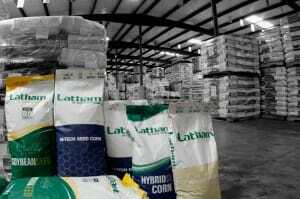
    An early fall harvest means many farmers have finished (or are nearly finished) with fall tillage and ready to confirm their 2013 seed selections.  That’s why I’d like to take this opportunity to assure you that Latham Hi‑Tech Seeds has adequate supplies to meet your needs for 2013.

    As an independent seed company, Latham Hi‑Tech Seeds is able to source genetics and traits form multiple providers.  We were fortunate to have corn production acres in eight states, which allowed us to spread the risk of crop failure in one particular region.  Most of the soils in these production areas are heavy, and the lighter soils were irrigated.  We further mitigated our risk by crop planning for three times more than our estimated sales.

    Latham is more than able to meet demand for Hi‑Tech Hybrids even though 2012 yields overall were lower than we had originally estimated.  While a few hybrids are still in short supply, we’re planning to produce additional quantities of these hybrids in South American this winter.

    We’re also pleased to share with you that soybean harvest went better than we had expected, given the extremely hot and dry conditions we faced in North Central Iowa this past growing season.  Supplies will be tight on certain brands, but overall, our production growers harvested more bushels than we had expected.  Dry years often result in small seed size and lower germinations from cracked seed coats.  While it’s too early to tell about seed quality for 2013 planting, we take great pride in our hands-on soybean production strategy.

    Latham’s production process has allowed us to produce the highest quality soybean seed over the past couple of years.  Our plant is built to be as gentle as possible on the soybeans, so we are hoping this can help overcome the dry conditions.  (Some of our handling equipment is the same as that used by a maker of corn flakes.  You know it’s gentle if it keeps a corn flake intact!)

    Last season farmers who planted Latham® Hi‑Tech Soybeans noticed a drastic difference when our soybeans had 10% higher germination than our competitors.  We heard more than one customer tell us he was surprised when the actual germination was higher than the number we had placed on the tag.  The reverse situation occurred on the competitor’s soybeans, and the tag on the bag actually showed the germination to be 4% better than the true germ.

    Every bag of Latham® soybeans is stamped with the word “quality.”  It’s a word by which we measure our work – from product selection to service.  Dedication to quality is at our foundation.  And after 65 years of service, it’ become our mantra.  Thank you for partnering with Latham.  Here’s to 2013!

    John Latham, President

    October 15, 2012
    Crop, General, Soybeans
  • Latham Hi‑Tech Seeds

    Charcoal Rot in Soybeans

    As if yield losses to dry weather stress weren’t enough, the drought of 2012 has brought another problem to the forefront of soybean producers in the Upper Midwest – Charcoal Rot. Also known as dry weather wilt, this is a soil-borne root and stem disease that usually develops in mid-to-late summer when plants are under severe heat and drought stress. Not since 2003 has there been an outbreak of this disease that had a major impact on yields and the effect on this year’s crop could be the worst in recent memory.

    Spores overwinter in plant tissue and can survive for several years in dry soil. Infected plants often appear yellow, wilted and stunted. These symptoms are very similar to other yield-robbing problems that farmers experience in our growing region, so they may go unnoticed or could be attributed to other pests like Soybean Cyst Nematode (SCN), Brown Stem Rot, Sudden Death Syndrome or even Iron Chlorosis. One fairly easy method of identification is to dig up soybean roots and take a knife to gently scrape off the epidermis (outer layer) of the root. Gray-colored lines or striations present throughout the root tissue are an indication of Charcoal Rot.

    There are no viable methods to manage this disease other than to do your best to insure ample moisture for your crop throughout the growing season. Anything that reduces soil moisture, including unnecessary tillage passes or excessive tillage, will add to the impact of the disease. There is no known varietal resistance available on the market today, however, there are some soybean cultivars that show tolerance to Charcoal Rot. Contact me or your local Latham® representative for more information.

    Webspec Admin

    October 8, 2012
    Agronomics, Crop, Disease, Fungicide, General, Soybeans
  • Latham Hi‑Tech Seeds

    Green Stem Syndrome in Soybeans

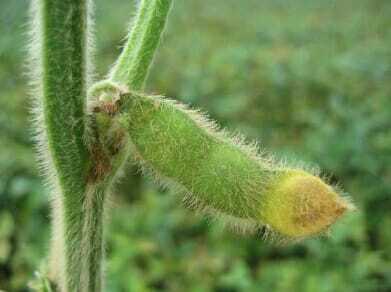
    Bean drought1
    Photo courtesy Shaun Casteel, Purdue University

    Drought stress during the growing season contributed to the Green Stem Syndrome in Soybeans that’s apparent in certain fields this fall. In some areas, pods and/or seeds were aborted. Plants that abort pods or seeds then redistribute sugars and nutrients, thereby increasing the concentration of photosynthate in the stem and causing it to retain the green color longer.

    Harvesting soybeans with green stems can be a challenge. Green stems are difficult to cut and are known to plug up combines, so combine operators must proceed at slow speeds – and with caution. Combine must be properly adjusted, and the cutting knife must be sharp.

    Sometimes just certain areas of a field – mostly low-lying areas or areas protected by shelter belts, groves or buildings – may be affected by Green Stem Syndrome. In some cases, local soybean growers went around these areas and will come back to harvest them at a later date.

    Depending on the severity of the green stem syndrome, certain soybean fields may need a killing frost before they’re harvested. However, waiting for such a frost may lead to additional yield loss if pods shatter during harvest. Fields should be monitored and harvested according to moisture content.

    About 90% of the green stems I’ve seen in my lifetime are caused by some environmental issue. Diseases also can cause it. However, other factors like herbicide injury or nutrient deficiencies are not usually a major factor.

    Webspec Admin

    October 1, 2012
    Agronomics, Crop, Disease, General, Soybeans
  • Latham Hi‑Tech Seeds

    Iron Chlorosis is Serious Threat to Soybeans

    Ironcholorsis

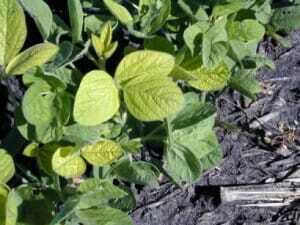
    I’ve received an unusually high number of calls this spring from people, who have noticed all the “yellow soybean fields.” These fields are exhibiting Iron Deficiency Chlorosis (IDC).

    Contrary to popular thought, IDC is not a disease as there are no pathogens, fungi or viruses that can be blamed for this condition. Rather, IDC is a function of the soil type common in the area we call the “Des Moines Lobe.” This area covers most of Central Iowa, continuing north into Minnesota and even further north and west into the Red River Valley region. These soils typically contain some areas that are poorly-drained and also have higher-than-normal pH values.

    This is one of the worst years for IDC in recent memory. Unfortunately, once IDC is noticed in a field, it’s too late to really manage it properly this season. Avoid applying chemicals on these areas that will damage the already-stunted and chlorotic plants. Then be proactive when choosing future soybean varieties for these fields.

    Iron chlorosis symptom – soybean. Photo © John E. Sawyer

    There is no such thing as complete resistance to IDC, however, some soybean brands (i.e. varieties) are better than others at handling this condition. Because Latham Hi‑Tech Seeds is headquartered right in the heart of North Central Iowa where Iron Chlorosis is a familiar challenge to us, we have always tried to choose soybean genetics that have the best possible scores against this condition.

    Latham® soybean brands like L1585R2, L1783R2, L1985R2 and L2183R2 have all demonstrated that they belong in this elite class of defensive products that are designed to give the best possible performance under some of the toughest conditions that our soybean seed customers run into. This is just one more example of our commitment to bringing the highest performing seed products with the best trait values to all of Latham Country!

    Webspec Admin

    July 2, 2012
    Agronomics, Crop, Fertility, General, Soybeans
  • Latham Hi‑Tech Seeds

    Soybean Wind Damage

    Recent strong wind events have also taken their toll on soybean seedlings. Shown below is damage post-storm. While it may appear to be bean leaf beetle feeding, it is in fact wind damage. No course of action is needed at this time, but farmers should be vigilant is scouting for potential disease invasion later on in the growing season.

    Webspec Admin

    May 29, 2012
    Crop, General, Season, Soybeans, Weather
  • Latham Hi‑Tech Seeds

    Extend Weed Control with New Xtend Crop System

    Water hemp, giant ragweed and marestail have become nightmares for farmers who have experienced weed resistance.  Although it’s been a bigger problem in the South, we’re also seeing signs of weed resistance right here in the Midwest.

    Fortunately, there will soon be another “tool in the toolbox” to help fight weed resistance.  Pending regulatory approvals, the Roundup Ready® Xtend Crop System is expected to be available to U.S. farmers for 2014 planting.

    The Xtend Crop System is Monsanto’s newest Genuity® soybean trait that includes tolerance to dicamba herbicide.  It will be stacked with the current Genuity® Roundup Ready 2 Soybean trait technology.  Roundup Xtend is an enhanced dicamba and glyphosate herbicide premix that will help farmers manage weeds before planting and during the season as an over-the-top option.

    Dual modes of action in Xtend will give farmers another choice for broad control of glyphosate-resistant and tough-to-control broadleaf weeds.  And as the crop system’s name implies, it will extend application and planting flexibility.  It also will extend the window for post-emergence applications.

    We’re optimistic that Xtend will also help save glyphosate and extend the life of high-yielding Genuity Roundup Ready 2 Yield Soybeans.  Diversity of tactics is key to consistent weed management and high crop yields, says ISU Extension Crop Weed Specialist Mike Owen.  In a blog article, Dr. Owen says no single tactic will protect the potential crop yield nor deter the evolution of herbicide-resistant weed populations.

    As farmers make plans for their 2012 soybean weed control programs, Seed-2-Soil® team lead Peter Bixel recommends using FULL rates of pre-emergence herbicides. Research shows that a pre-emergence herbicide applied before soybean planting reduced late-season waterhemp density by 97 percent!  Click here for more information on how you can enhance your weed management program this season.

    Team Latham

    March 14, 2012
    Agronomics, Crop, General, Herbicide Technology, Industry News, Soybeans, Weed Control
  • Latham Hi‑Tech Seeds

    Sometimes the late bird can still catch a worm

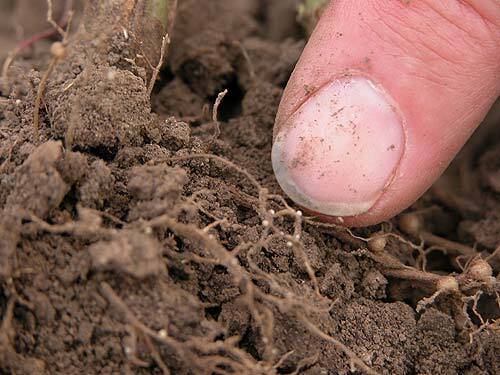
    An article published on wallacesfarmer.com this week highlighted that there’s still time to test soil for the presence of soybean cyst nematode (SCN). The small, plant-parasitic roundworm feeds on roots and can cause significant yield losses, especially in dry growing seasons.

    While SCN is a devastating pest, its risk is often overlooked because SCN damage isn’t readily apparent during growing seasons with excess moisture. SCN is an incredibly persistent pest, however, and adequate moisture or not, has the ability to live more than a decade in infested soils without the presence of soybeans, and produce more than three generations in just one growing season.

    In a recent Iowa State University Integrated Crop Management article, Greg Tylka, with the Department of Plant Pathology and Microbiology, highlighted the need to remain offensive against SCN, this year especially.

    “As we approach spring planting season, increased vigilance about SCN is warranted for the 2012 growing season because of the dry soil conditions statewide,” Greg said. SCN can cause substantial yield loss to susceptible soybean varieties under dry soil conditions, even when SCN egg population densities are low. If soybeans will be produced in 2012 in fields infested with SCN, high-yielding, SCN-resistant varieties should be grown.”

    For more information about SCN, and to find tips for collecting a soil sample to detect whether or not it’s present in your field, visit http://farmprogress.com/wallaces-farmer-story-still-time-check-fields-scn-9-57633.


    Team Latham

    March 1, 2012
    Agronomics, Crop, Disease, General, Insects, Soybeans
  • Latham Hi‑Tech Seeds

    Golden Opportunity Awaits Soybean Growers

    The USDA, on Dec. 16, 2011, announced it had deregulated the biotech trait MON 87705, which is found in Monsanto’s Vistive® Gold soybeans.

    Many Latham customers are familiar with the first generation of Vistive (low-linolenic) soybeans that produced an oil which reduced the trans-fat levels in food products. This new wave of soybeans will produce an oil that is more similar to olive oil in its content and usefulness, yet will be much easier and cheaper to produce.

    In addition to maintaining next-to-zero trans fats in their food products, Vistive Gold soybean oil will allow food companies to significantly reduce saturated fats. As an example, French fries cooked in the fry oil/shortening commonly used results in 23.4% saturated fats and 15.7% trans-fat. Using oil from Vistive Gold soybeans will lower those numbers to 13.2% for saturated fast and 0.3% for trans-fat! Additional testing within the food industry has shown that Vistive Gold soybean oil also has excellent stability and flavor.
    This new oil from the Vistive Gold soybeans will enable U.S. soybean growers to compete once again for food oil business while also helping provide a healthier lifestyle for themselves and for consumers. Over the past several years, other vegetable oils including palm, sunflower and canola have taken away a fairly large portion of the global food oils market that soybean oil once held. This was, in large part, due to the heart-healthy consciousness of the general public and the FDA’s mandate for displaying the percentage of trans fats on food product labels.

    Soybean varieties that carry the Vistive Gold trait are currently in the Phase 4 (pre-launch) stage of development. Monsanto has also announced that this new trait will be combined with its current Genuity® Roundup Ready® 2 Yield technology, giving farmers soybean varieties that deliver excellent agronomic and yield performance.

    Keep watching our website and our blog, TheFieldPosition.com, for updates on this exciting new “golden opportunity”!

    Webspec Admin

    January 11, 2012
    Agriculture, Crop, General, Industry News, Soybeans
  • Latham Hi‑Tech Seeds

    Soybean Selection: It’s an Internal Battle!

    It’s not often that a company shares its “internal battles,” but today we’re airing one!  Just as many football teams across the nation are preparing for bowl games this holiday season, the product team at Latham Hi‑Tech Seeds is trying to determine the value of both offense and defense.

    “Defense is the best offense there is!” says Latham Product Manager Mark Grundmeier.  He stands by the defensive power of L2183R2. This Genuity® Roundup Ready 2 Yield® soybean has the best defensive package in the industry. It has the industry’s best store (1.5 on a scale of 1 to 5, with 1 being the best) for Iron Chlorosis.  Place it on medium to heavy soils and Marks says it’s tough to beat.

    President John Latham, on the other hand, insists that Latham® Hi‑Tech Soybeans L2182R2 is the way to go. “Offense, offense, offense,” chants John.  He wants to raise 80-bushel beans and insists that L2182R2 is the way to do it.  While L2182R2 is a great offensive product, John says it also has a solid defense package.

    Which matters more, offense or defense?  Our Seed-2-Soil® specialist says that one of the best predictors of a soybean product’s performance is its field position.  “Just as it is on the gridiron, a good field position makes it easier for the offense to score,” says Peter Bixel, team lead for Latham’s Seed-2-Soil program.  “Teams with poor defenses provide poor field position, which allows their offense to gain more yards but probably results in fewer points scored.  Placement can help soybean products maximize yield potential.”

    Can soybean growers – and championship football teams alike – benefit from having both a strong offense and a strong defense?  Watch the video link below to see Mark and John go “head to head” on this issue.

    [youtube]http://www.youtube.com/watch?v=TtQoUEhaQjU&feature=related[/youtube]

    Team Latham

    December 21, 2011
    Agronomics, Corn, Crop, General, Soybeans
Previous Page
1 … 26 27 28 29 30 … 32
Next Page

Latham Hi‑Tech Seeds

131 180th Street | Alexander, IA 50420

(641) 692-3258

SIGNUP FOR OUR NEWSLETTER
  • Contact
  • Legal
  • Dealer Center
  • Seedware Login
  • Latham Gear

© 2025 Latham Hi‑Tech Seeds. All rights reserved. | Iowa Web Design by Webspec | Privacy Policy

Latham® Hi-Tech Seeds is a trademark of M.S. Technologies, L.L.C., 103 Avenue D, West Point, IA 52656.